Bathroom Storage Ideas: 23 Smart Ways to Organize by Zone
Most bathrooms don’t have a clutter problem so much as a “where does this go?” problem. The toothbrush cup, three half-empty hand soaps, a hair dryer with nowhere to live, and a stack of towels balanced on the tank lid. Add a second person and the whole thing doubles.
These bathroom storage ideas are organized by where they go: the vanity, the cabinet under the sink, the toilet area, walls and doors, the shower, and the towels. Pick the zone that bugs you most and start there. There’s also a quick guide below for renters, pedestal-sink bathrooms, and shared spaces, plus a short list of mistakes that make good storage fail.
Before You Buy Anything: A 10-Minute Storage Plan
The fastest way to waste money on bathroom storage is to buy baskets first and figure out what goes in them later. A short audit fixes that.
- Empty one area at a time. Start with the counter, then the drawers, then under the sink. Toss anything expired, dried out, or duplicated.
- Sort what’s left by how often you use it. Daily items (toothbrush, face wash, deodorant) need to be reachable in a second. Weekly items (masks, nail tools, razors) can sit a bit further away. Backup stock (extra toilet paper, spare shampoo, cleaning supplies) can live high up, low down, or out of the room altogether.
- Measure three things. Check how far the wall can hold a shelf before it blocks you, how far the door swings, and how much floor you need to walk, sit, and clean around the toilet. Take those numbers shopping, because “slim” on a product page can still be too deep for your room.
That’s it. Once you know what you actually own and how often you reach for it, most of the choices below become easy.
Vanity and Counter Storage Ideas
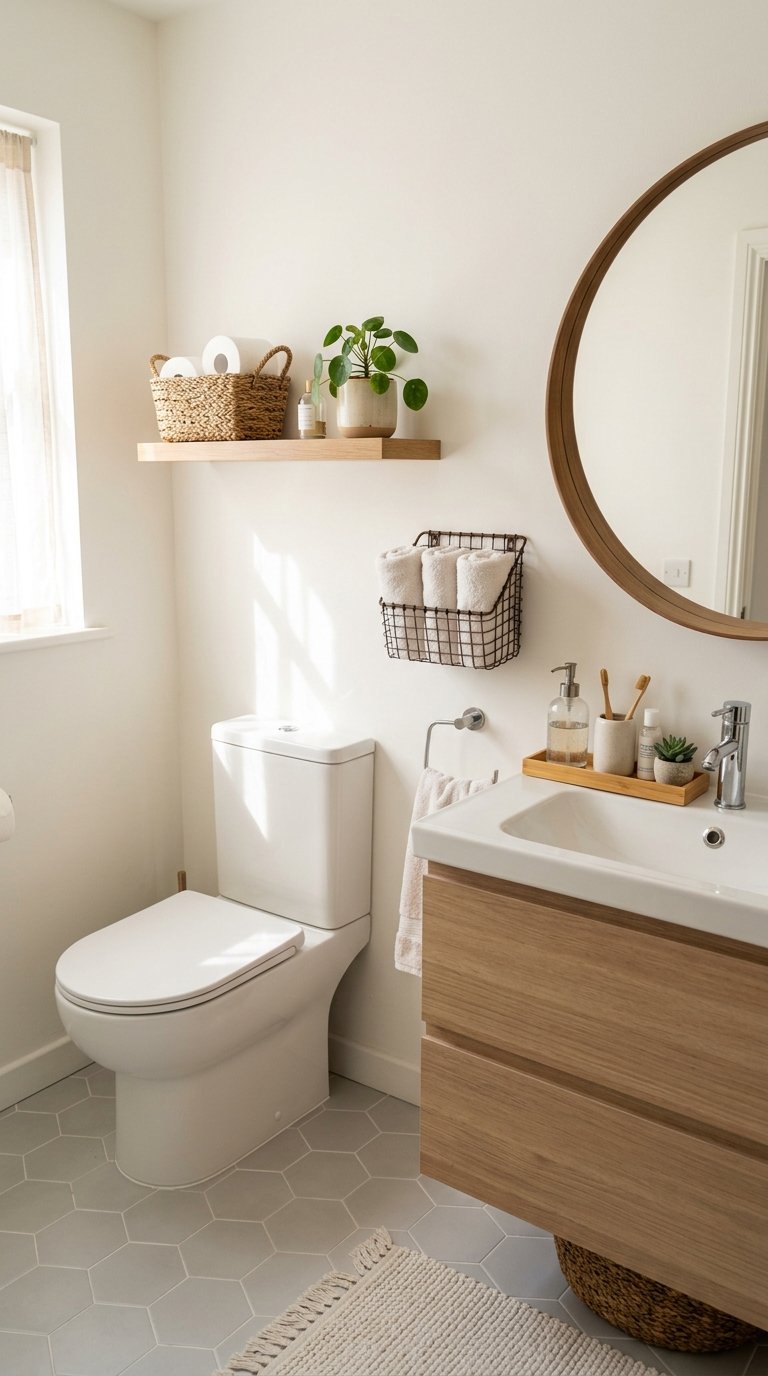
The vanity is where you spend the most time, so it’s where clutter shows first. The aim isn’t more storage. It’s making the daily stuff easy to reach and everything else easy to hide.
1. Divide Drawers by Routine
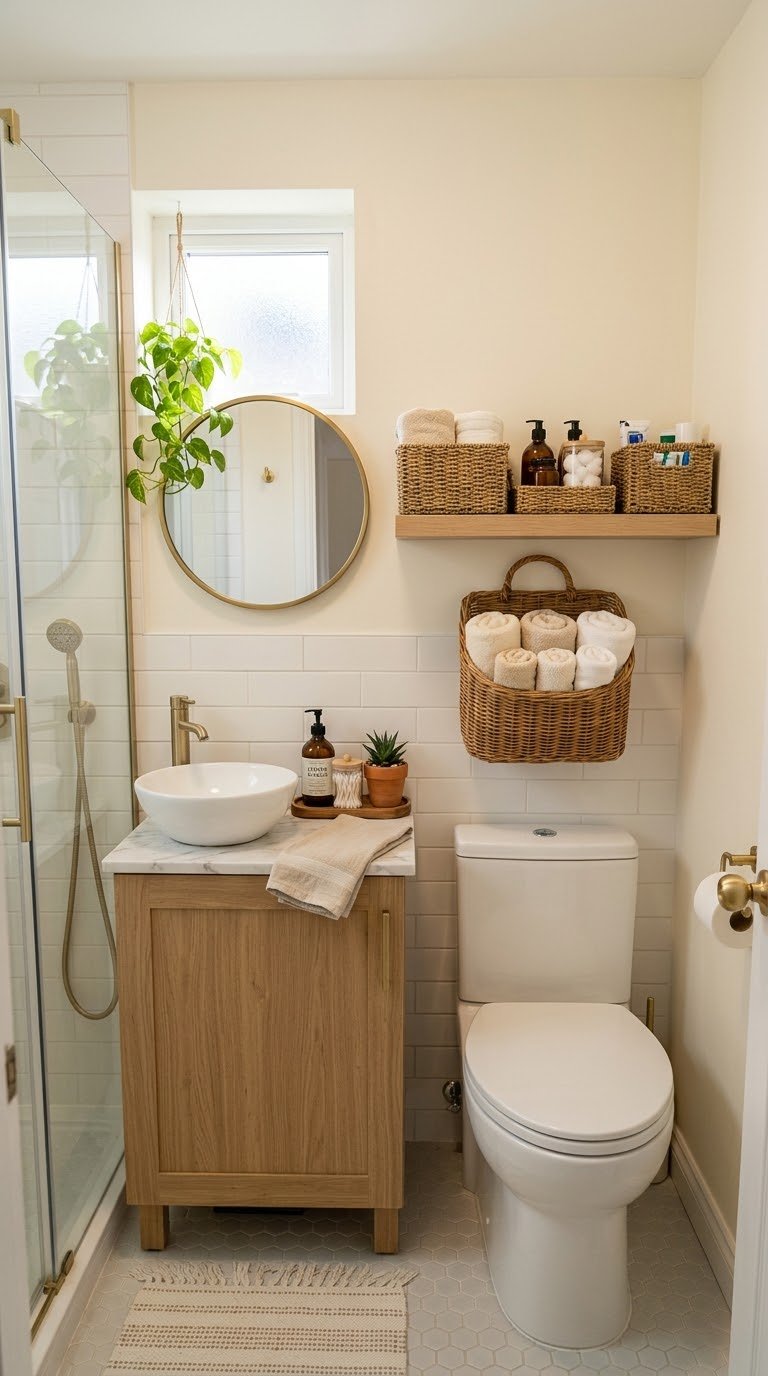
Drawer dividers are everywhere, but most people use them the same way they’d sort a junk drawer: all the small things in one section, all the bigger things in another. A better approach is dividing by routine. One section holds everything for your morning (toothbrush, moisturizer, deodorant), another holds evening skincare, another holds hair items like elastics, clips, and brush.
This works because you’re not hunting. You open the drawer, reach into the “morning” zone, and you’re done. Shallow organizers or even repurposed desk trays work well if your vanity didn’t come with dividers. Keep the layout simple, and don’t pack every inch, because a drawer that’s too tight turns into a wall you have to dig through.
2. Add a Toe-Kick Drawer
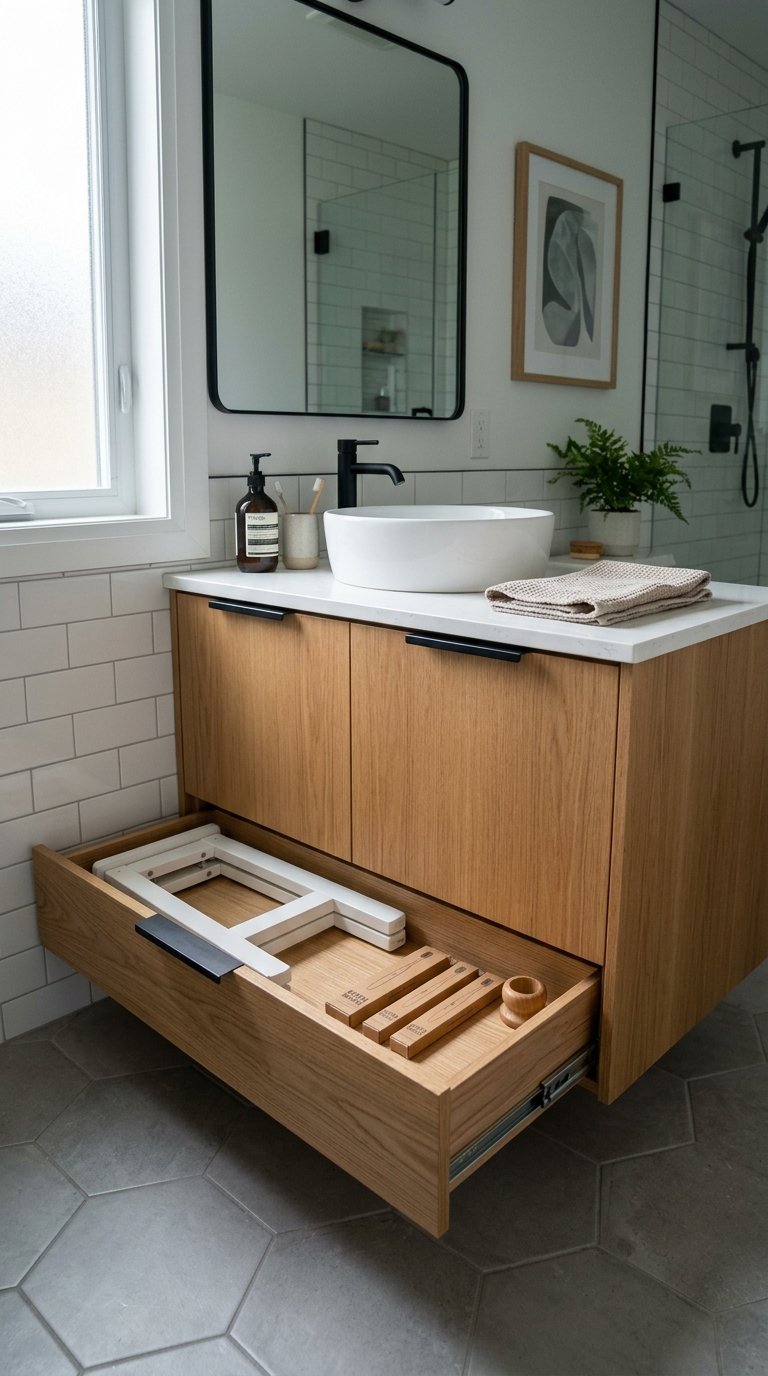
The strip along the base of a vanity is dead space in most bathrooms. In some vanities, that space can be turned into a shallow drawer, perfect for flat items like spare toothbrushes, a step stool for kids, or a hair-tool storage tray.
This one isn’t a quick fix. It usually needs a vanity designed for it or a custom-cabinet modification, so it makes the most sense if you’re already replacing the vanity or having work done. If you’re not remodeling, skip to idea 3, which does a similar job without changing the cabinet.
3. Mount an Organizer Inside a Cabinet Door
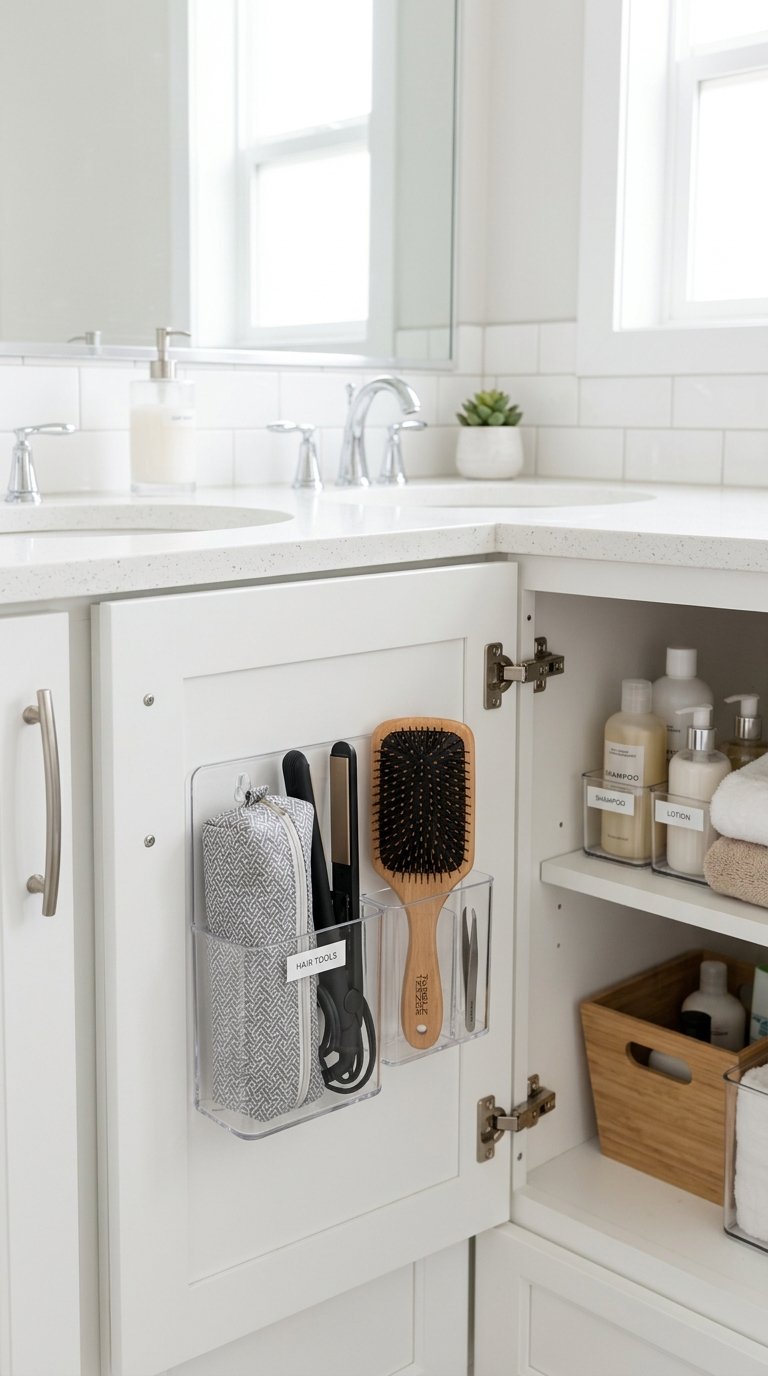
The inside of a vanity door is free real estate. A slim rack or pocket organizer holds items that would otherwise clutter drawers: nail files, tweezers, a hairbrush, or hair ties.
Hot tools deserve special mention. A heat-safe silicone holder or pouch lets you tuck away a curling iron or straightener without waiting forever for it to cool. Always unplug the tool and let it cool before it goes in, and don’t mount anything so close to the opening that the door catches the cord. If you’re fastening anything permanently, check the cabinet door’s thickness first so screws don’t poke through the face.
4. Keep One Tray on the Counter, and Nothing Else
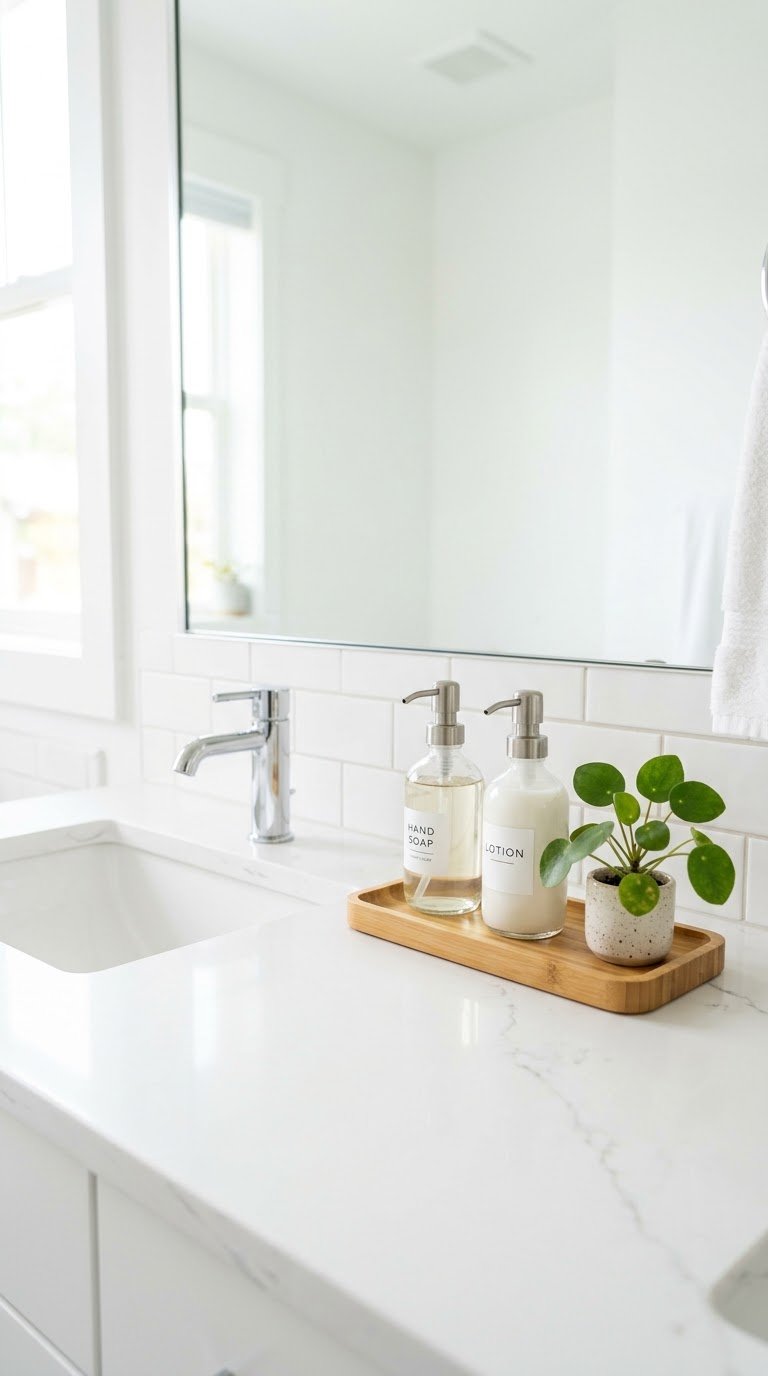
A tray turns a scattering of items into a single, deliberate group. Put the two or three things you use daily (hand soap, a small plant or candle, maybe a lotion) on one tray and let everything else live in a drawer or cabinet.
The tray also makes cleaning faster. Lift it, wipe, set it back. If you’re tempted to add a second tray or “just one more thing,” that’s usually a sign something belongs in a drawer.
Under-Sink Storage Ideas (Including Pedestal Sinks)
The cabinet under the sink is usually the messiest spot in the room. Pipes eat the middle, bottles tip over, and the back disappears into darkness. Working with the plumbing instead of around it helps a lot.
Here’s a simple setup order that works for most cabinets:
- Clear the cabinet and wipe it down.
- Place a sliding organizer or two-tier shelf over the plumbing.
- Group items by category (cleaning, spare toiletries, first aid) in separate bins.
- Put the items you use weekly in front, and backups in the back.
- Add hooks or a tension rod to the inside of the door for bottles you want off the floor.
5. Use a Two-Tier Sliding Organizer Around the Pipes
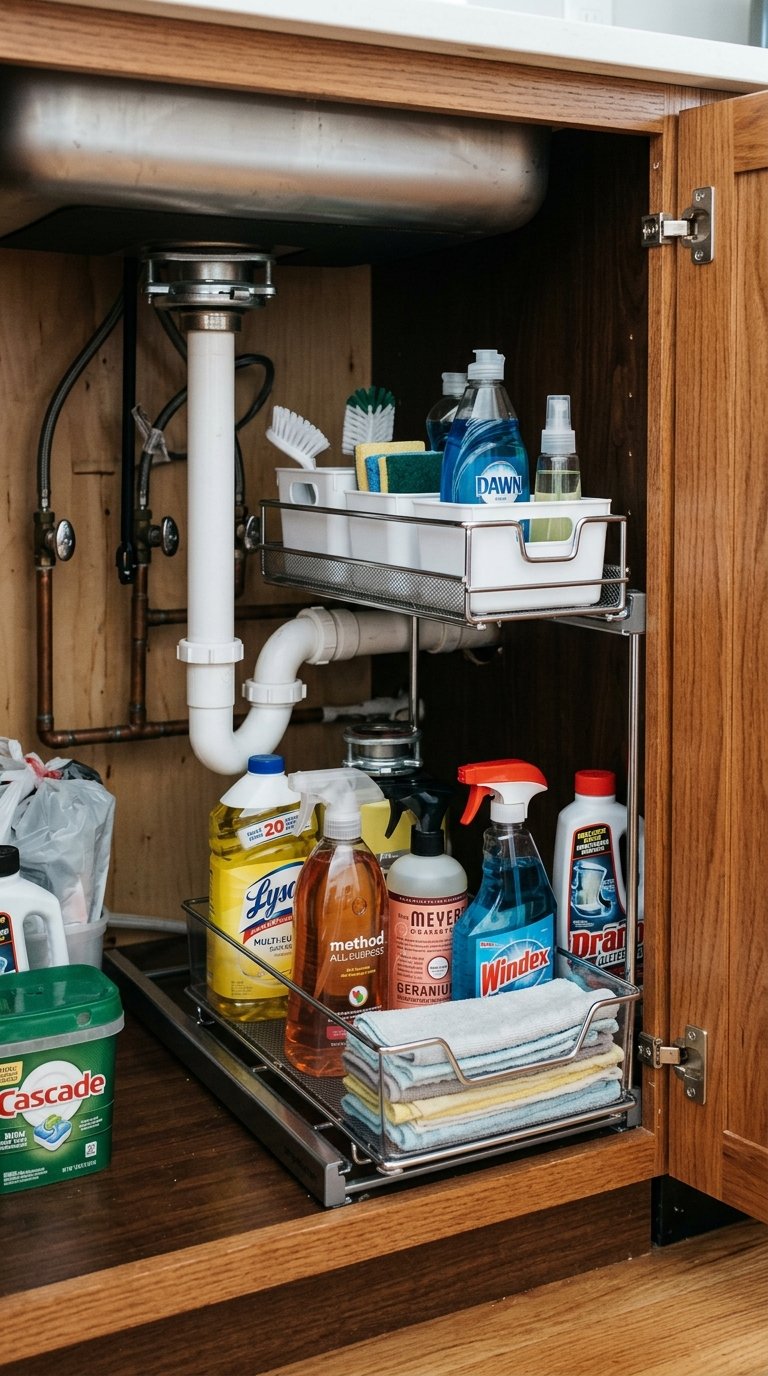
A U-shaped or sliding organizer is built to fit around the drain, so you get usable shelf space on both sides instead of a hole in the middle. The sliding feature matters too, since it lets you pull items forward instead of reaching blindly into the back.
Look for organizers with a lip or sides so bottles don’t tip, and choose a material that handles moisture. Acrylic, plastic, and coated metal are safer bets under a sink, where small leaks and condensation are common.
6. Hang Spray Bottles From a Tension Rod
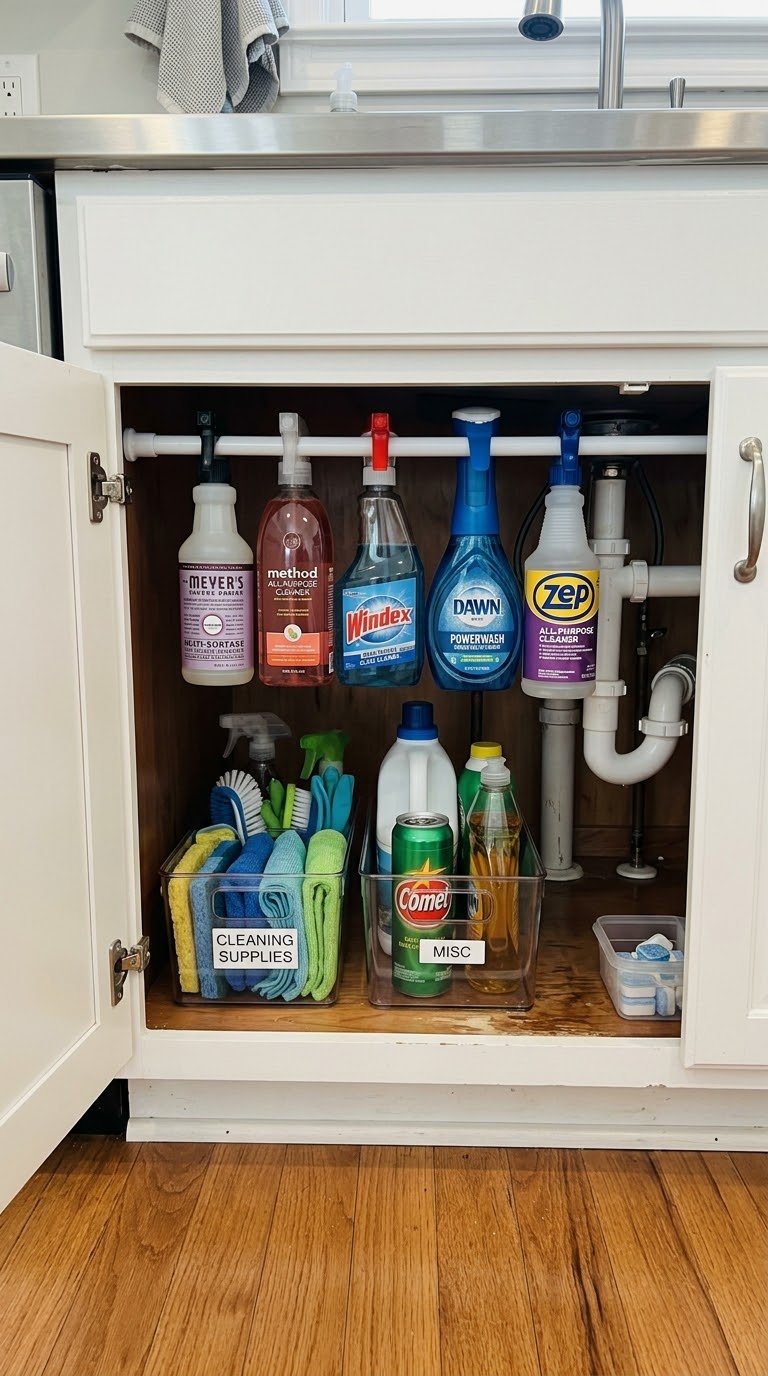
Spray bottles take up a lot of floor space for how little they hold. A tension rod fixed across the cabinet lets you hang them by the trigger, which frees up room below for bins.
The rod needs to sit above or beside the plumbing, and the bottles shouldn’t be so heavy that the rod slips. Test it with full bottles before trusting it, and keep any cleaning products out of children’s reach, with a child-safe latch on the cabinet if little ones are around.
7. Add a Turntable for the Back Corners
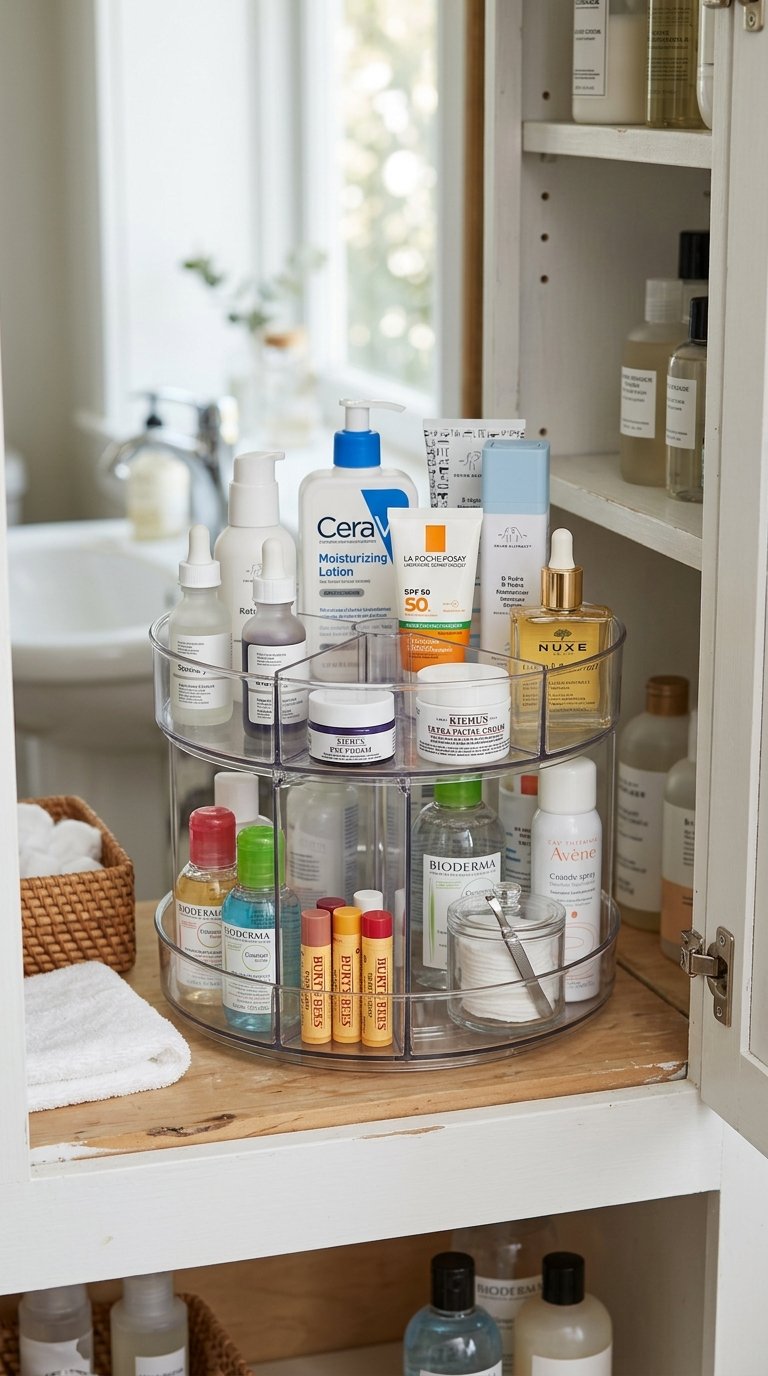
Corners and deep cabinets lose items to the back. A turntable (sometimes called a lazy Susan) brings them back into reach with a spin. It’s especially handy for lotions, hair products, and skincare, where lots of small bottles pile up.
A divided turntable helps if you have a mix of sizes. Stick to ones with a rim, since smooth, flat surfaces send bottles flying when you spin them fast.
8. Stack Lidded Baskets Under a Pedestal Sink
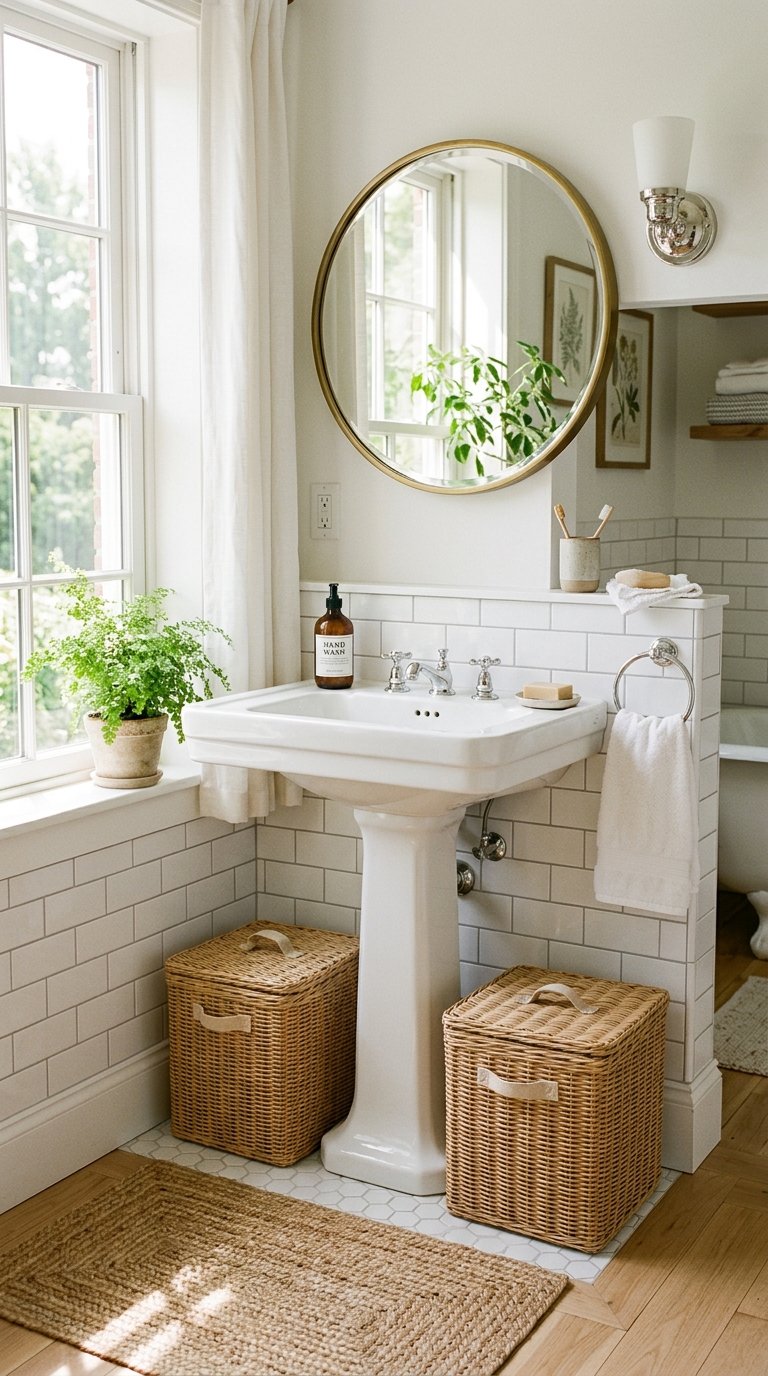
A pedestal sink looks lovely and holds nothing. The open space beneath it, though, can become real storage with a few lidded baskets or bins, stacked or set side by side.
Lids make the stack look intentional rather than messy, and they keep out dust and splashes. Choose baskets that handle humidity: plastic, coated wire, or sealed materials. Natural wicker looks great but can hold moisture, so it works better a bit higher up and away from the floor. Keep the baskets clear of the pipes, so you can still reach the shutoff valves if something leaks.
Storage Around the Toilet
The toilet area is where most small bathrooms find their extra storage, because the wall above it often sits empty. It’s also the area where fit matters most, since a cabinet that’s too deep or a shelf that’s too low turns into a daily nuisance.
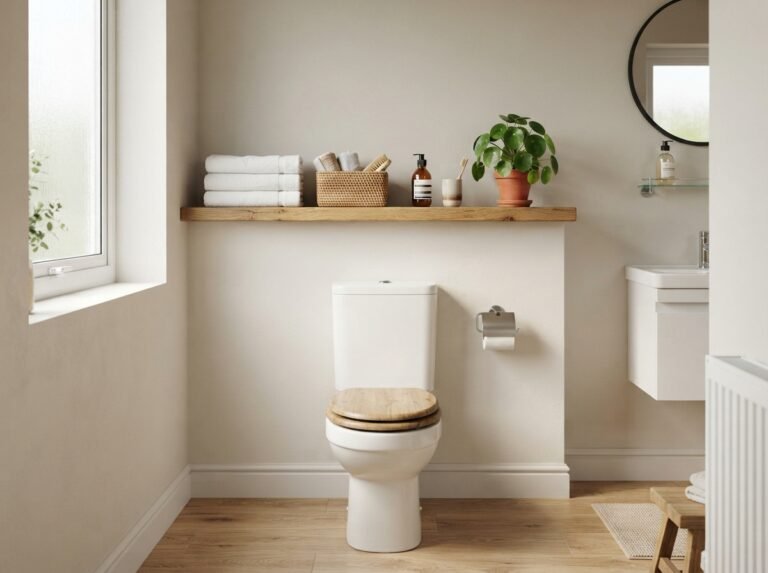
Above a toilet, you can store spare toilet paper, hand towels, a small first-aid kit, extra toiletries, or decorative items. The best option depends on how much you want to hide and how much space you have.
9. Install a Closed Over-the-Toilet Cabinet
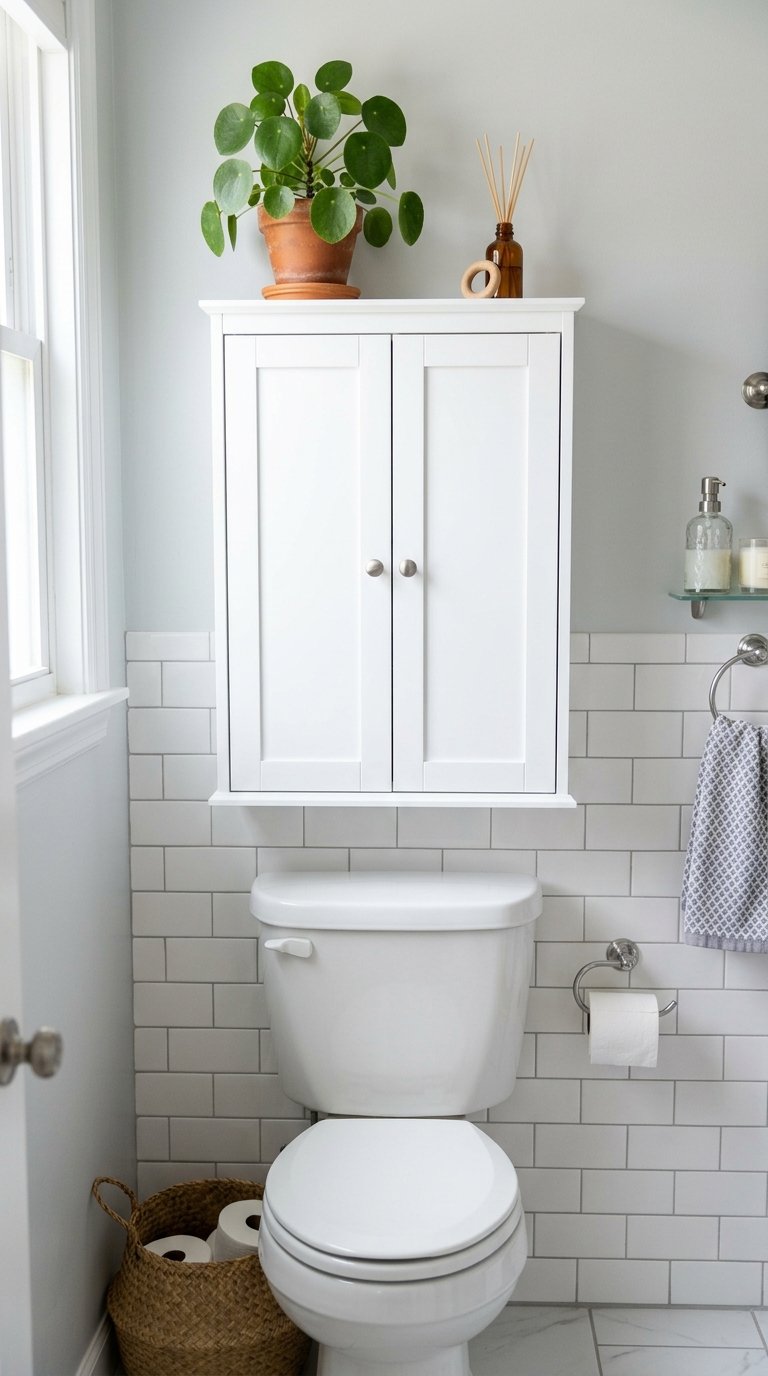
A cabinet with doors keeps clutter out of sight, which makes it the best choice if you want the bathroom to look calm. It handles odds and ends well: spare rolls, cleaning wipes, a few extra toiletries.
Before buying, check the door swing. A cabinet that opens into the shower curtain or a nearby wall is a headache. Also make sure the lowest shelf sits high enough that you can still lift the tank lid if you ever need to reach the toilet’s inner workings.
10. Hang Shallow Floating Shelves With Baskets
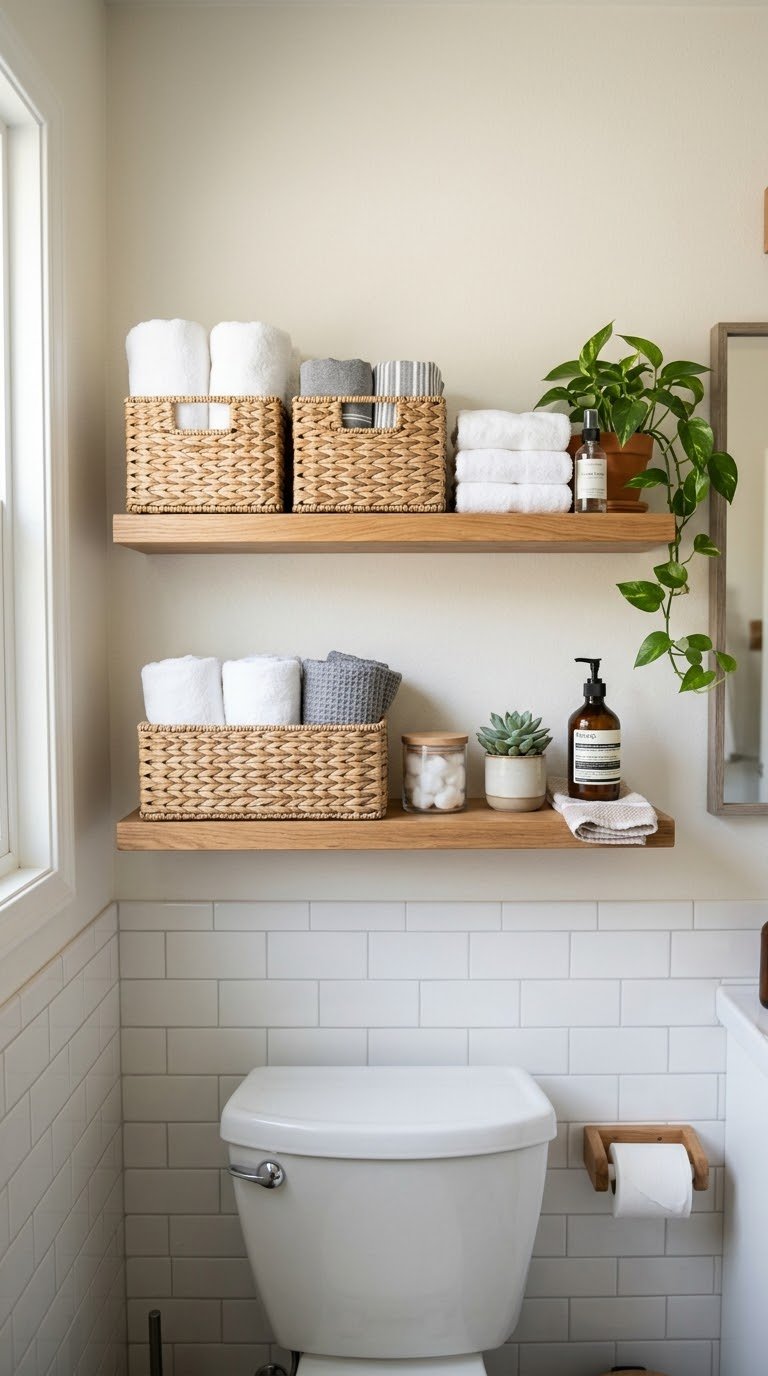
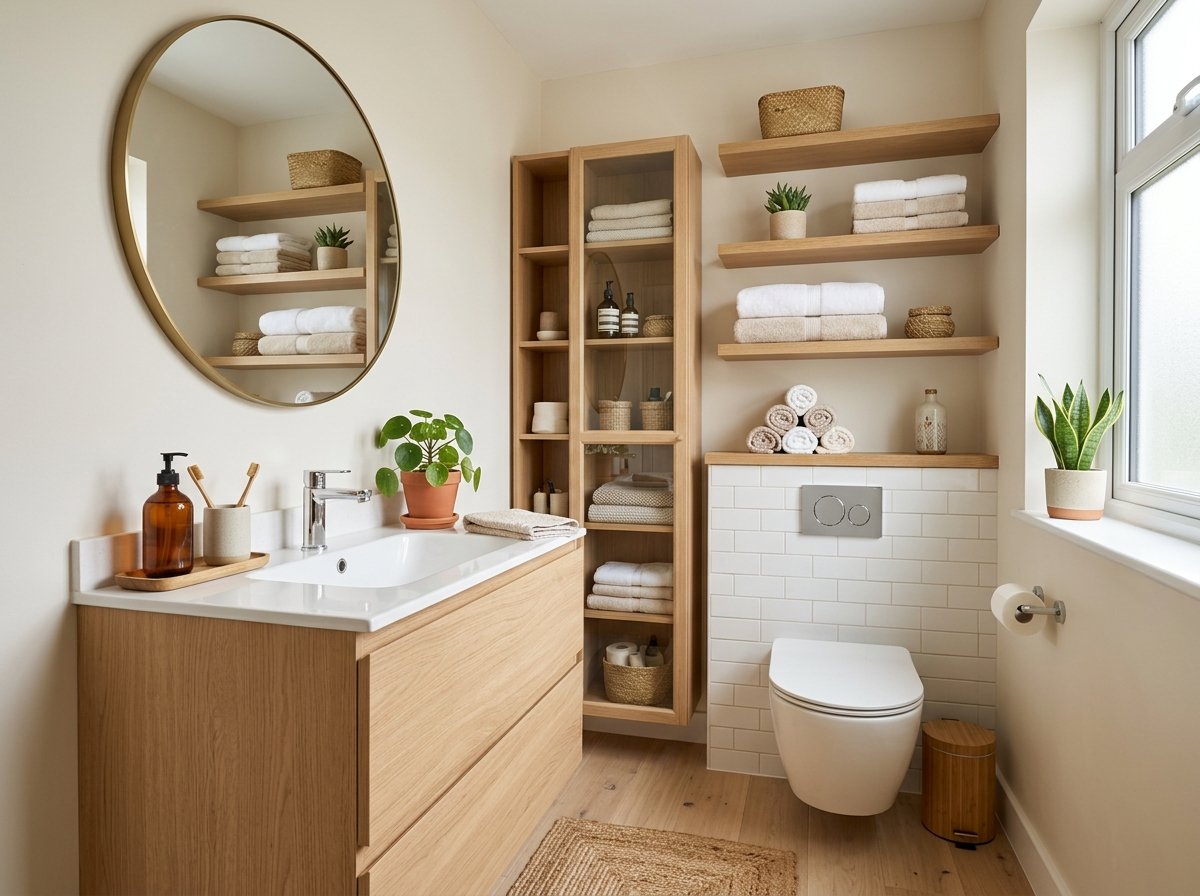
Open shelves feel lighter than a cabinet, which helps in a really tight space. Two or three narrow shelves, each with a basket or a neat stack of folded towels, give you usable storage without a heavy, boxy look.
Keep them shallow so you won’t bump your head or feel crowded when you sit down. Put the items you reach for every day on the lowest shelf and backup rolls higher up. Use anchors rated for the wall type, and fasten into studs when you can.
11. Slide a Slim Freestanding Unit Beside the Toilet
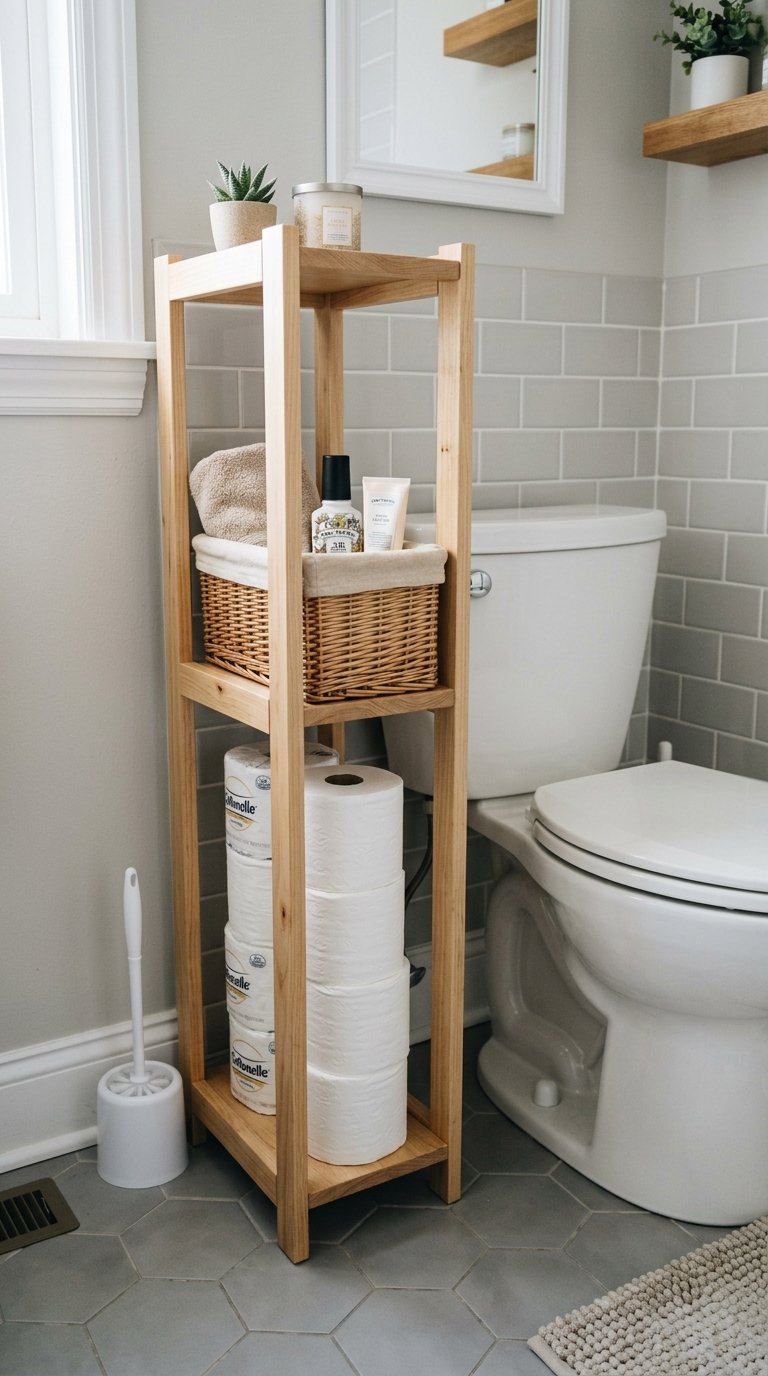
If you can’t drill, or if the wall above the toilet is taken by a window or art, a slim tower beside the toilet is a useful workaround. Some hold a toilet paper roll plus a basket for a brush or wipes, while others stack a few shelves.
Measure the gap between the toilet and the wall carefully, because you still need room to sit comfortably and clean around the base. Look for a unit with feet or a base wide enough to stay steady, since a tall, narrow tower can feel wobbly in a busy bathroom.
12. Recess a Niche Between the Studs
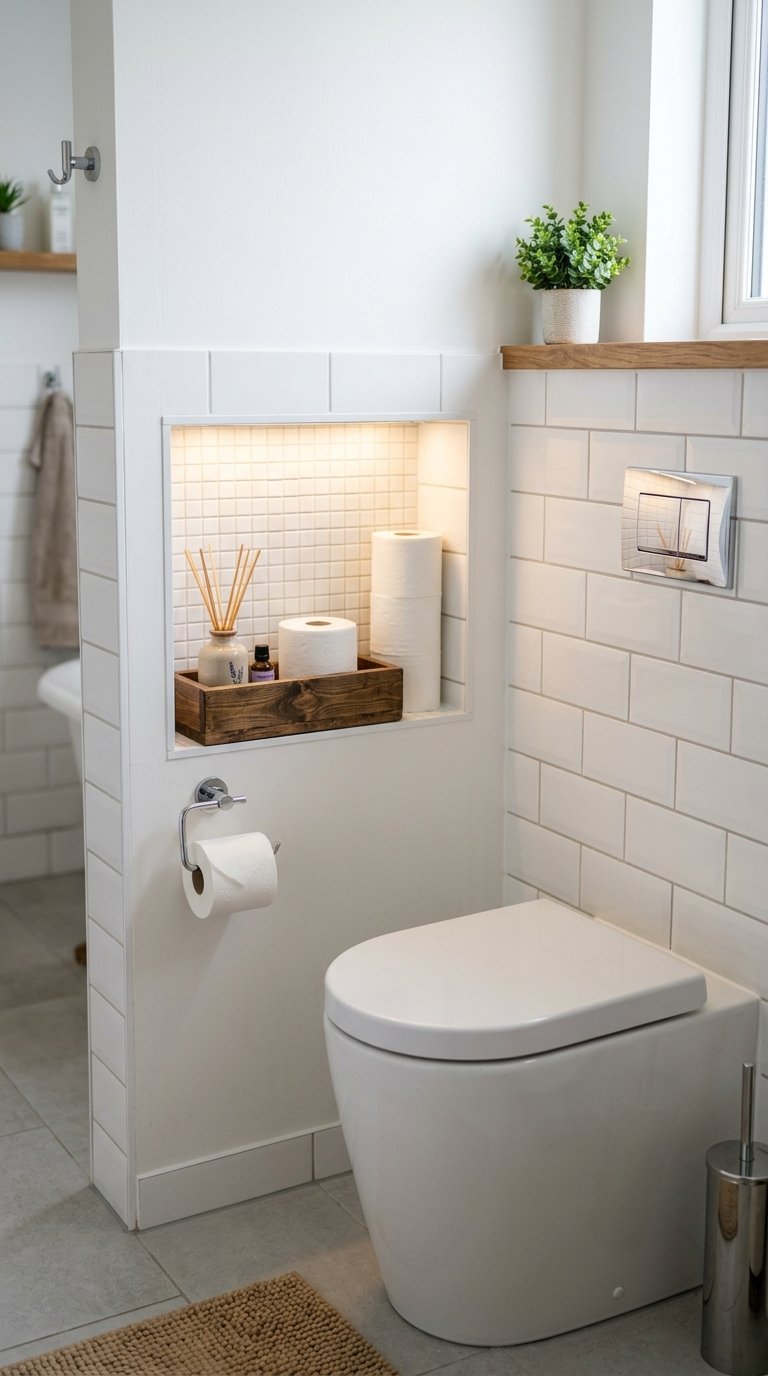
If you’re remodeling or opening a wall, a recessed niche tucks shelves into the wall itself, so nothing sticks out. It’s a good fit for small essentials: spare rolls, a small tray, or a few toiletries.
A niche needs the wall to be free of plumbing, wiring, and structural elements, so this is a job for someone who can check what’s behind the drywall. When it works, it’s the cleanest option in this list, since it adds storage without taking any floor or wall space.
Walls, Doors, and Corners
When floor space is gone, the walls and doors take over. These ideas use areas that most people walk past without noticing.
13. Add a Rail System Behind the Door
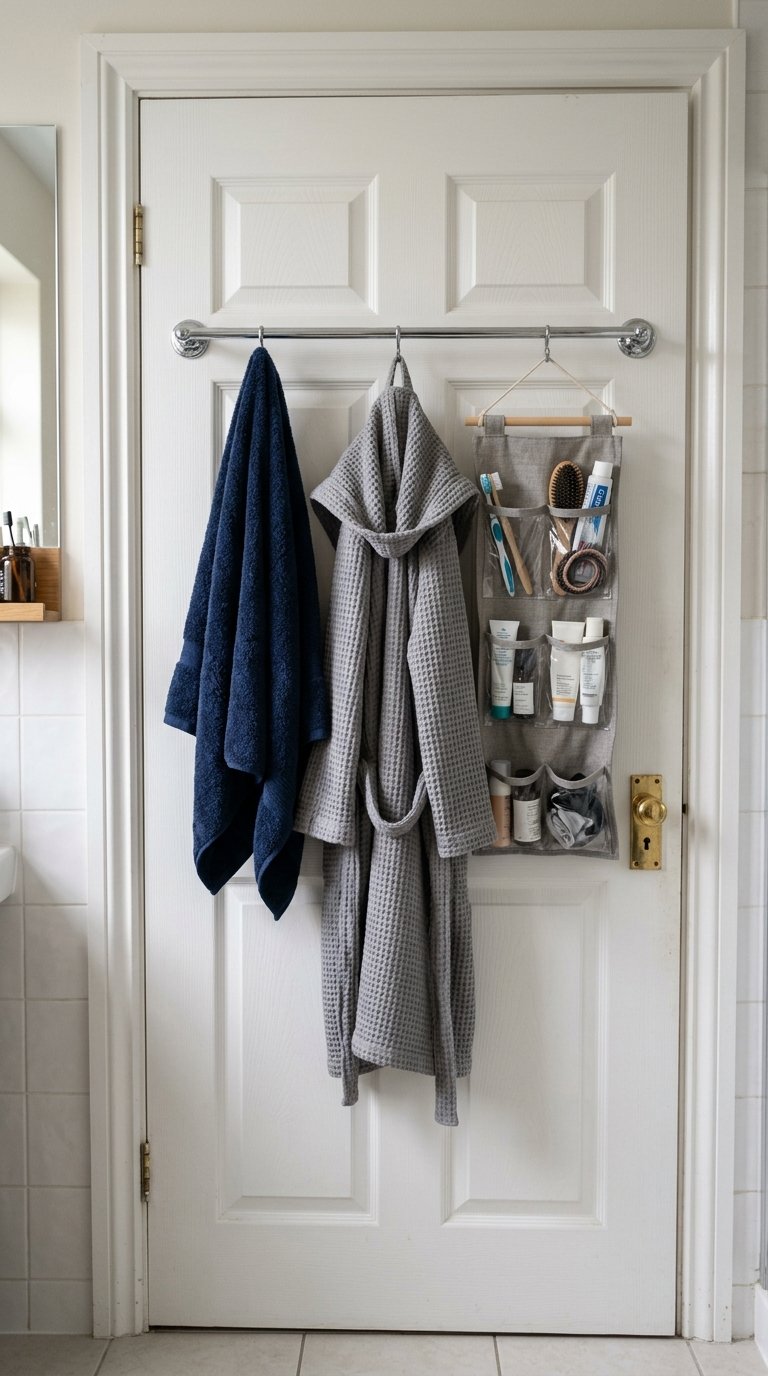
The back of the bathroom door is often wasted, which is a shame. A rail with hooks or small baskets turns it into a flexible storage spot.
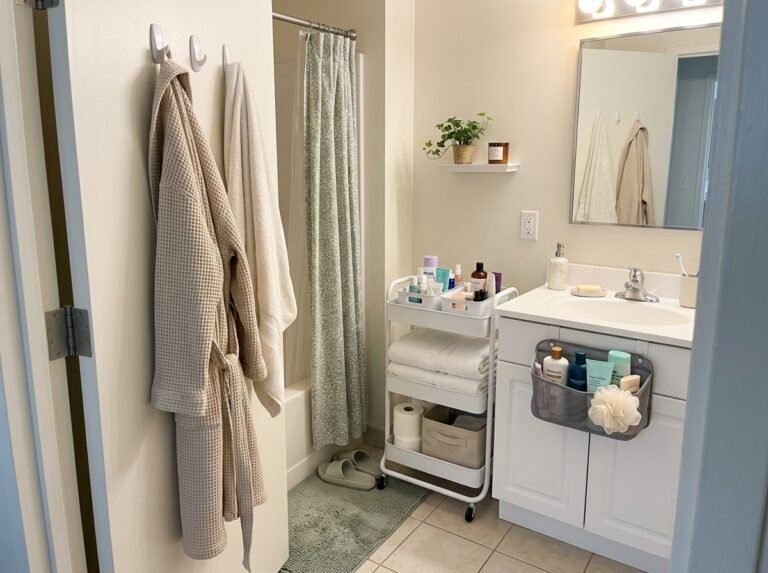
A simple hierarchy helps: a robe on the top hook, towels in the middle, and a small hanging pocket for hair ties or a brush at a lower height. Check the door’s weight capacity and thickness. A hollow-core door can only hold so much, and heavy, wet towels add up. An over-the-door version avoids drilling, which is useful for renters, but check the clearance so the door still closes properly.
14. Mount a Peg Rail With a Ledge Above
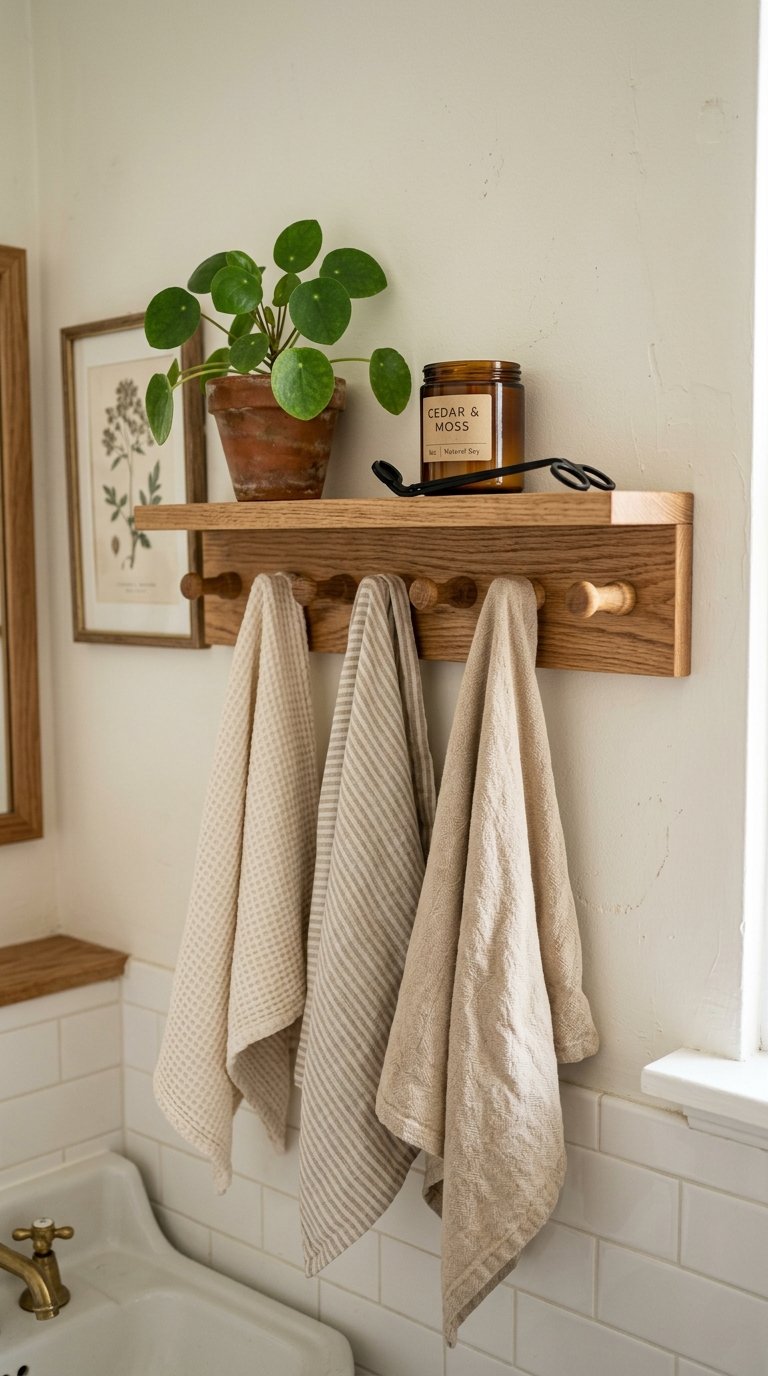
A peg rail offers several staggered hooks in one slim strip, so it holds more than a single towel hook, and the pegs let family members hang towels at different heights. Add a narrow ledge above it and you’ve got a spot for a small plant, candle, or jar of cotton balls.
This setup also adds character, which matters if you want storage that doubles as decor. Wood looks warm, but in a damp bathroom, choose a sealed or painted finish, or go with metal.
15. Put a Shelf Above the Doorframe
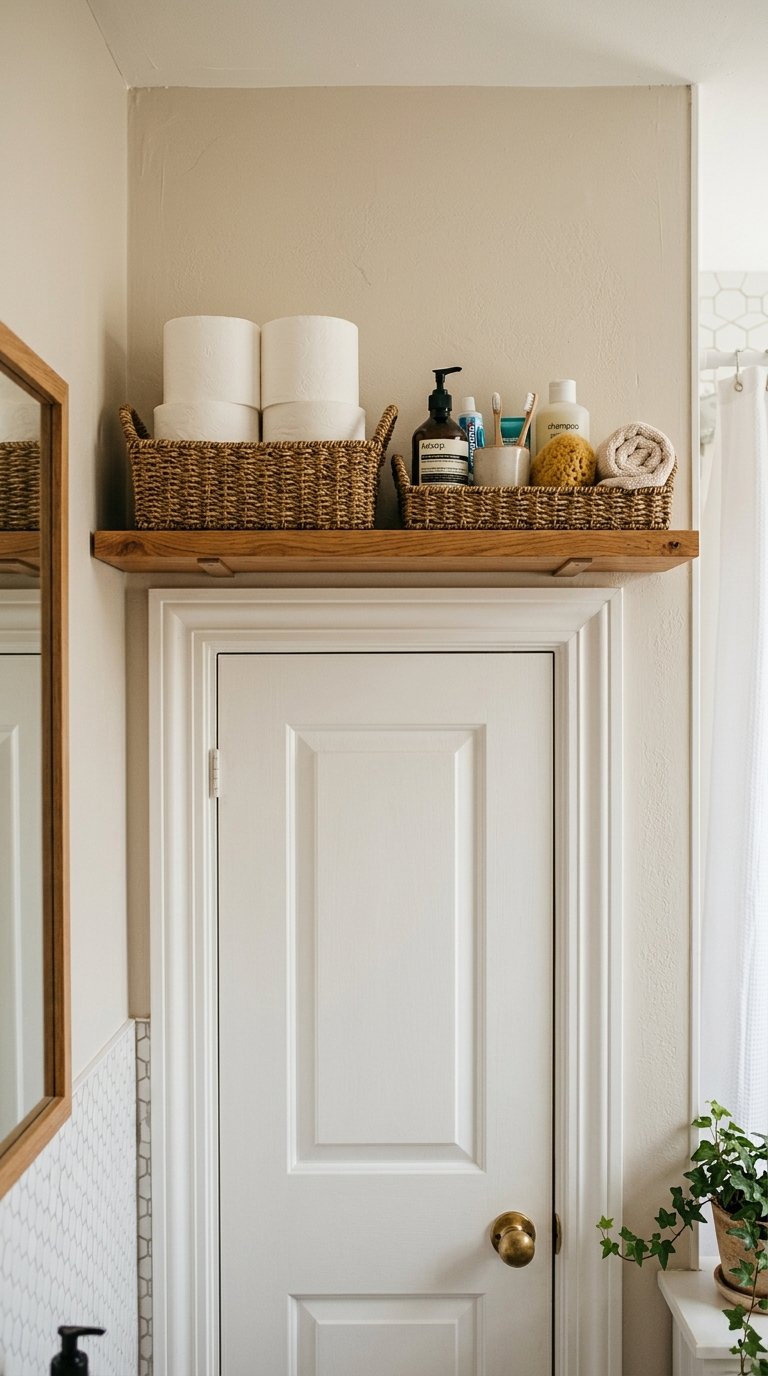
The space above the door is high, which makes it perfect for things you need only now and then: extra toilet paper, bulk toiletries, or seasonal items. You won’t reach it every day, and that’s the point.
Keep what goes up there light, since a heavy item sitting above your head is a bad idea. A narrow shelf with a small lip keeps things from sliding off. This is also a good spot for items you’d rather keep out of reach of small children, though don’t store anything hazardous where it could fall.
16. Install a Corner Shelf
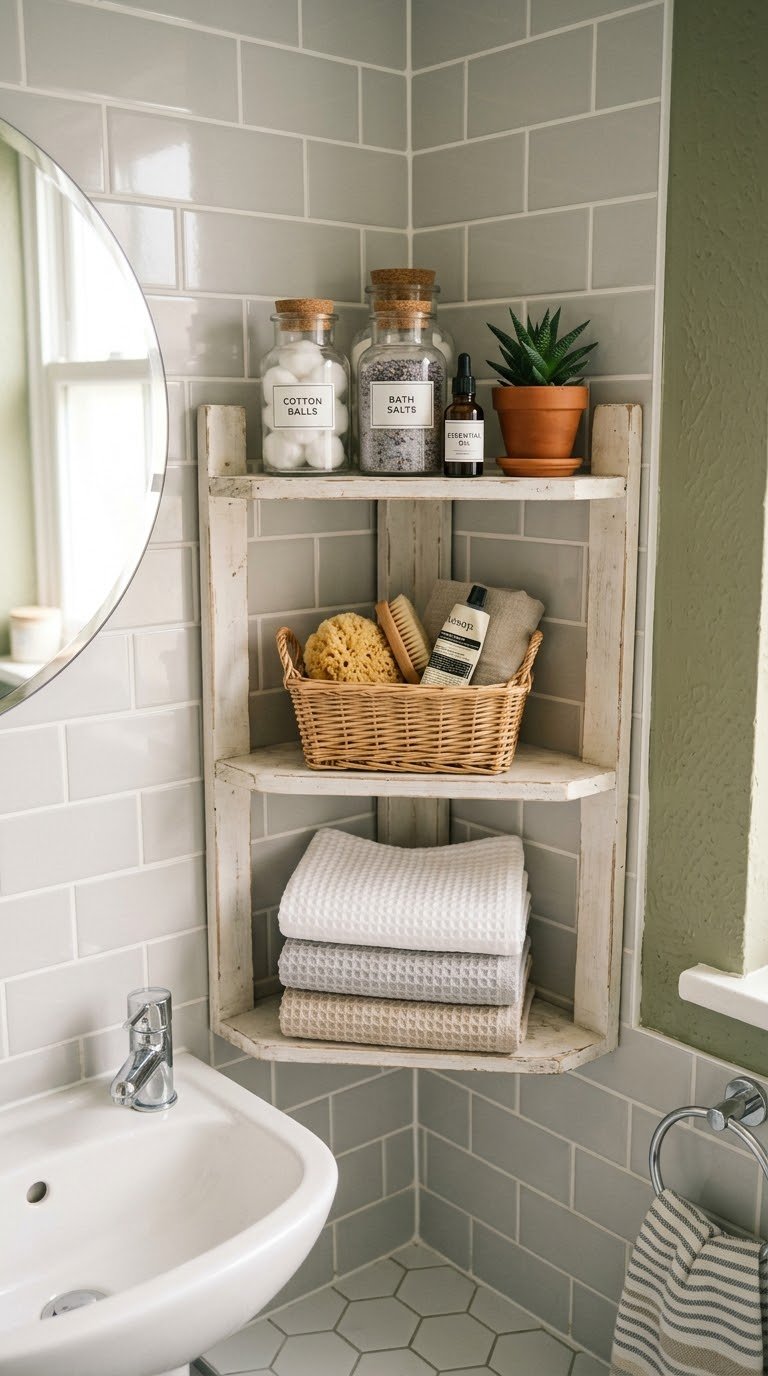
Corners are often wasted in small bathrooms. A corner shelf, either floating or freestanding, gives you a place for jars, baskets, or folded hand towels without taking up wall space in the middle of the room.
Corner units suit narrow bathrooms and powder rooms, where a bulky cabinet would feel crowded. Choose rounded edges if the corner is near a walkway, and leave a little breathing room so the room doesn’t feel cramped.
Shower and Tub Storage
Shower storage gets overlooked in many storage lists, even though it’s where bottles, razors, and washcloths pile up. Here, moisture matters more than anywhere else, so pick materials that resist rust and mildew.
17. Build in a Shower Niche
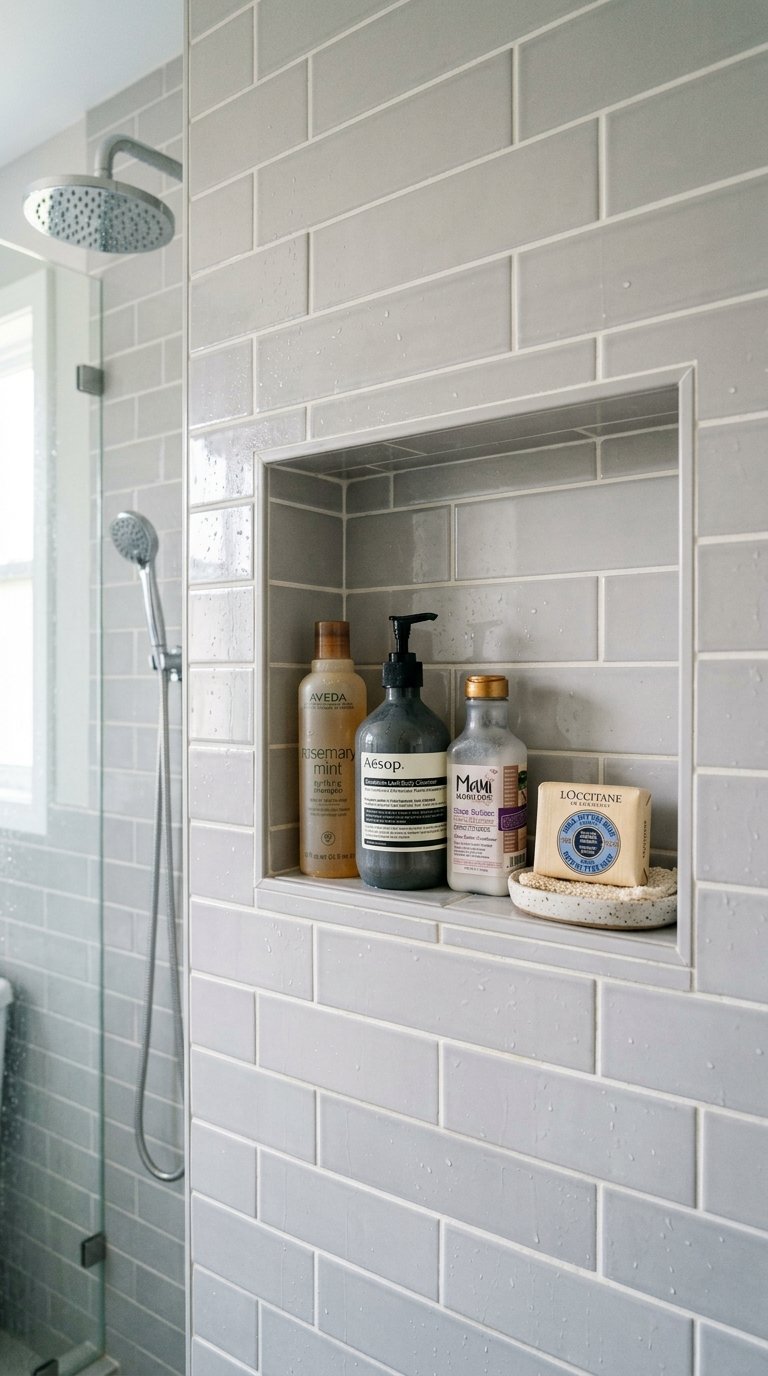
A built-in niche sits inside the wall and holds shampoo, soap, and razors without anything sticking out. It’s the neatest option, and it keeps bottles off the tub edge.
Niches are a remodeling project, since they need to be framed and waterproofed properly. A tile installer can tell you how to set one up so water drains instead of sitting in it, and where it can go without hitting plumbing. If you’re renovating anyway, plan it early.
18. Use a Tension-Pole Corner Shelf
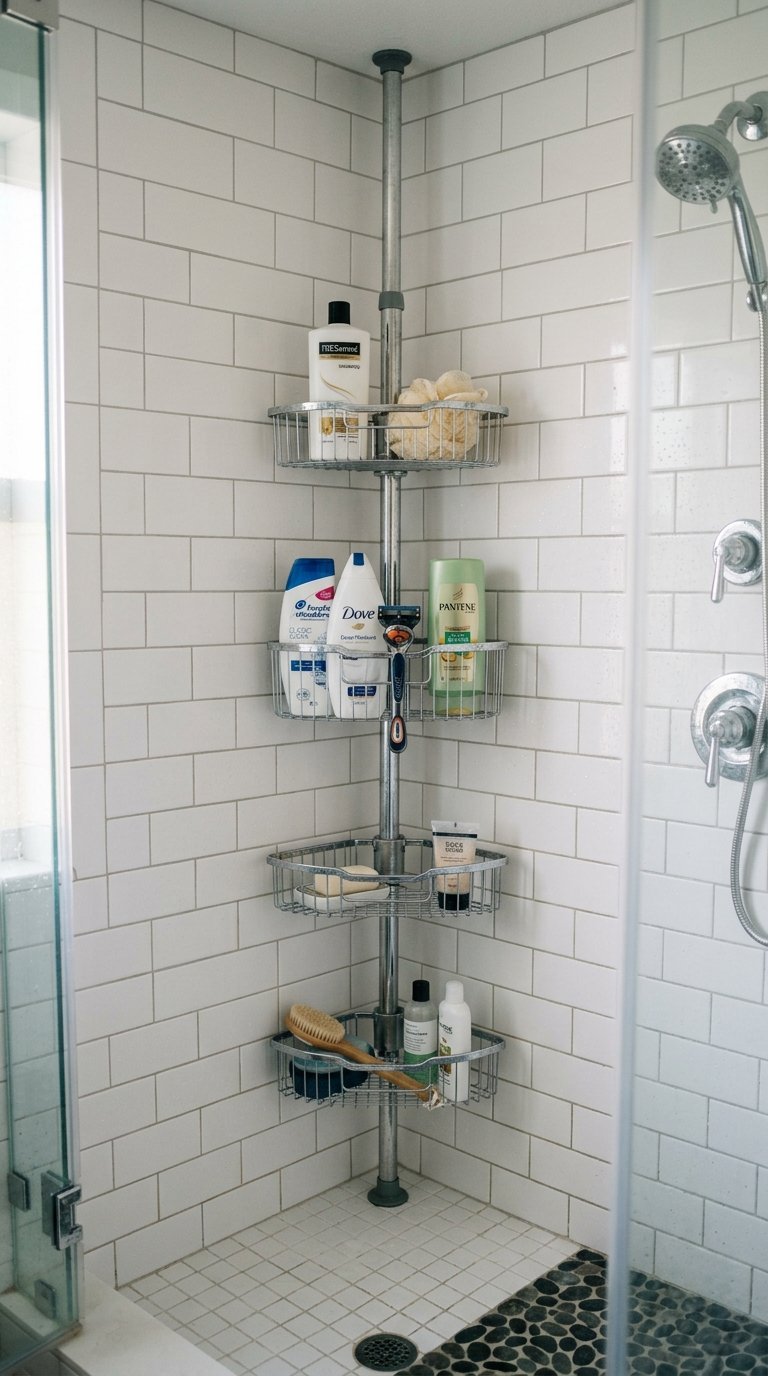
A tension pole wedges between the floor and ceiling and holds shelves or baskets in the corner of the shower. It needs no drilling, which makes it a strong pick for renters.
It does depend on your ceiling: it works best with a standard flat ceiling and a stable floor. Check the weight rating and avoid overloading the top shelves, because tall poles can tip if they’re top-heavy. Rust-resistant finishes last longer in a steamy shower.
19. Hang a Caddy Over the Shower Rod
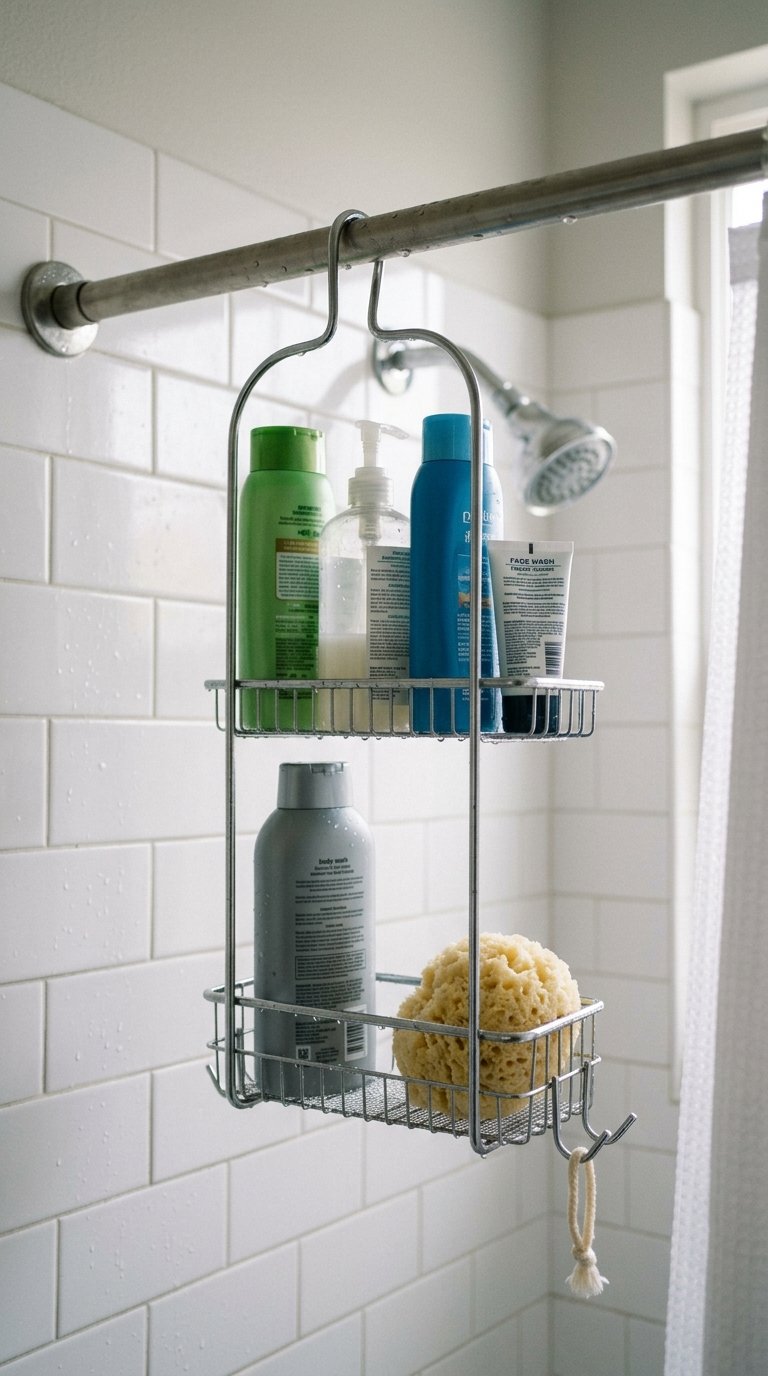
A hanging caddy slips over the shower rod or showerhead and holds bottles at easy reach. It’s inexpensive and quick to set up, with no tools required.
Look for one with drainage holes so water doesn’t pool in the bottom, and choose a material that won’t rust. Heavy full-size bottles can weigh down the rod, so decant bulk shampoo into smaller pump bottles if the rod sags. In a shared bathroom, give each person their own caddy to keep products from mixing.
20. Try a Pull-Out Hamper or Under-Tub Storage
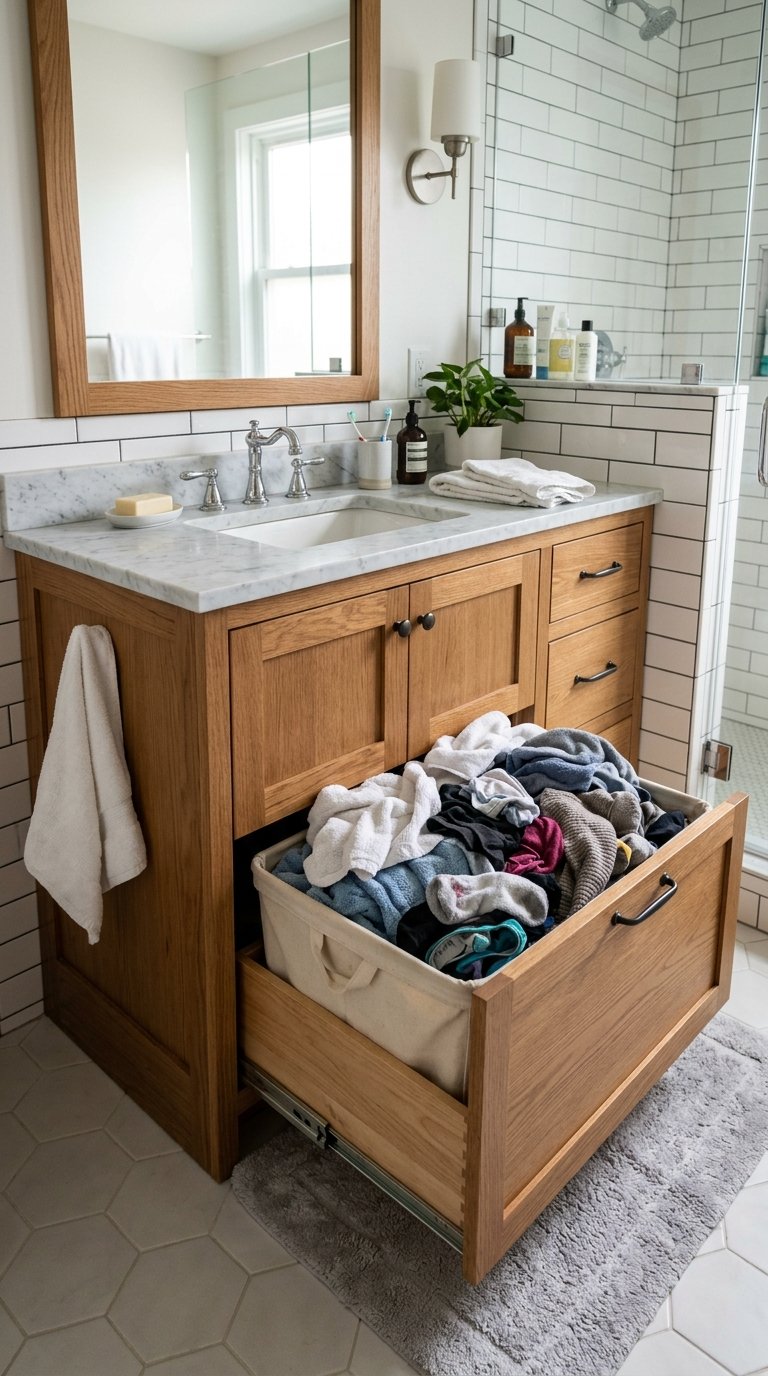
A pull-out hamper hides dirty laundry in a cabinet or vanity base, which keeps clothes off the floor and out of sight. If your tub has an accessible panel or an open base, that hollow space underneath can hold bins for bulky, rarely used items like extra cleaning supplies.
Hampers work best when the cabinet is already deep enough, so measure first. Under-tub storage only suits certain setups, and the area can be damp, so use waterproof bins and keep anything important off the floor.
Common Bathroom Storage Mistakes
Even good ideas fail when a few details go wrong. These are the ones that come up most.
- Ignoring moisture. Untreated wood can warp, uncoated metal can rust, and natural fibers can hold dampness. Match the material to how close it sits to water.
- Trusting adhesive too much. Hooks and shelves have weight ratings, and wet towels weigh more than dry ones. When in doubt, use a screw-in option.
- Overstuffing baskets. If you have to push things in, the system is already failing. Leave a little empty space.
- Blocking access. A shelf over the toilet shouldn’t stop you from lifting the tank lid, and a basket under the sink shouldn’t cover the shutoff valves.
- Buying before measuring. Door swing, wall depth, and floor clearance decide whether something works. Measure with the door open and closed.
FAQs
How do I add storage to a bathroom with no cabinets or linen closet?
Start with the walls and the back of the door. Floating shelves, a rail behind the door, a slim freestanding unit, and a shelf above the doorframe all work without cabinetry. Keep spare towels and backup supplies in another part of the house.
What storage works best with a pedestal sink?
Lidded baskets under the sink, a shelf above the toilet, and a rail or hooks behind the door cover most needs. A small tray on the sink edge handles the items you use daily.
Can adhesive hooks hold wet towels?
It depends on the hook’s rating and how humid your bathroom is. Wet towels are heavy, and steam can weaken some adhesives over time. For heavy or daily-use items, screws are the safer choice. If you rent, pick a high-capacity hook and test it before relying on it.
What materials hold up best in a humid bathroom?
Acrylic, plastic, stainless steel, and powder-coated metal handle moisture well. Wood and rattan can work if they’re sealed and kept away from direct water. Avoid anything that stays damp, since that’s where mildew starts.
How much clearance should I leave around a toilet when adding a shelf or cabinet?
Leave enough room to sit, stand, and clean comfortably, and keep the lowest shelf high enough to lift the tank lid. Measure with the door open, and check how far a cabinet door swings before you buy.
Where should I store backup toiletries if I have no room?
Use a shelf above the doorframe, a bin in a hall closet, or a basket in a bedroom. Keep only what you’ll use in the next week or two in the bathroom.
How do I stop baskets and bins from getting damp or moldy?
Choose materials with airflow or moisture resistance, keep them off wet floors, and don’t put damp items inside. If a basket does get wet, let it dry completely before refilling.
Conclusion
Bathroom storage ideas work best when they match how you use the room. A drawer divided by routine, a pair of baskets under a pedestal sink, a rail behind the door: none of them is complicated, and each one fixes a specific, daily annoyance.
Pick one zone this week. Clear it out, sort what’s left by how often you use it, and add the one piece of storage that solves the problem. Once that spot stays tidy, moving on to the next one is much easier.