College Bathroom Ideas: 20 Cozy Dorm and Shared-Space Updates
Most college bathroom ideas assume you can paint the walls and add a vanity. In a dorm, you usually can’t. You get a shower stall, a sink, and a hook if you’re lucky, and you share it all with a lot of other people.
That changes what “decorating” means. In a community dorm bathroom, you style what you carry. In a suite, apartment, or shared house, you can also add storage, light, and texture. This guide covers dorm bathroom storage, roommate systems, drying and ventilation, and cozy touches that fit housing rules. Start with your setup, then pick what fits.
Ideas for the Walk-to-the-Bathroom Routine
1. A Mesh Shower Caddy That Drains and Dries
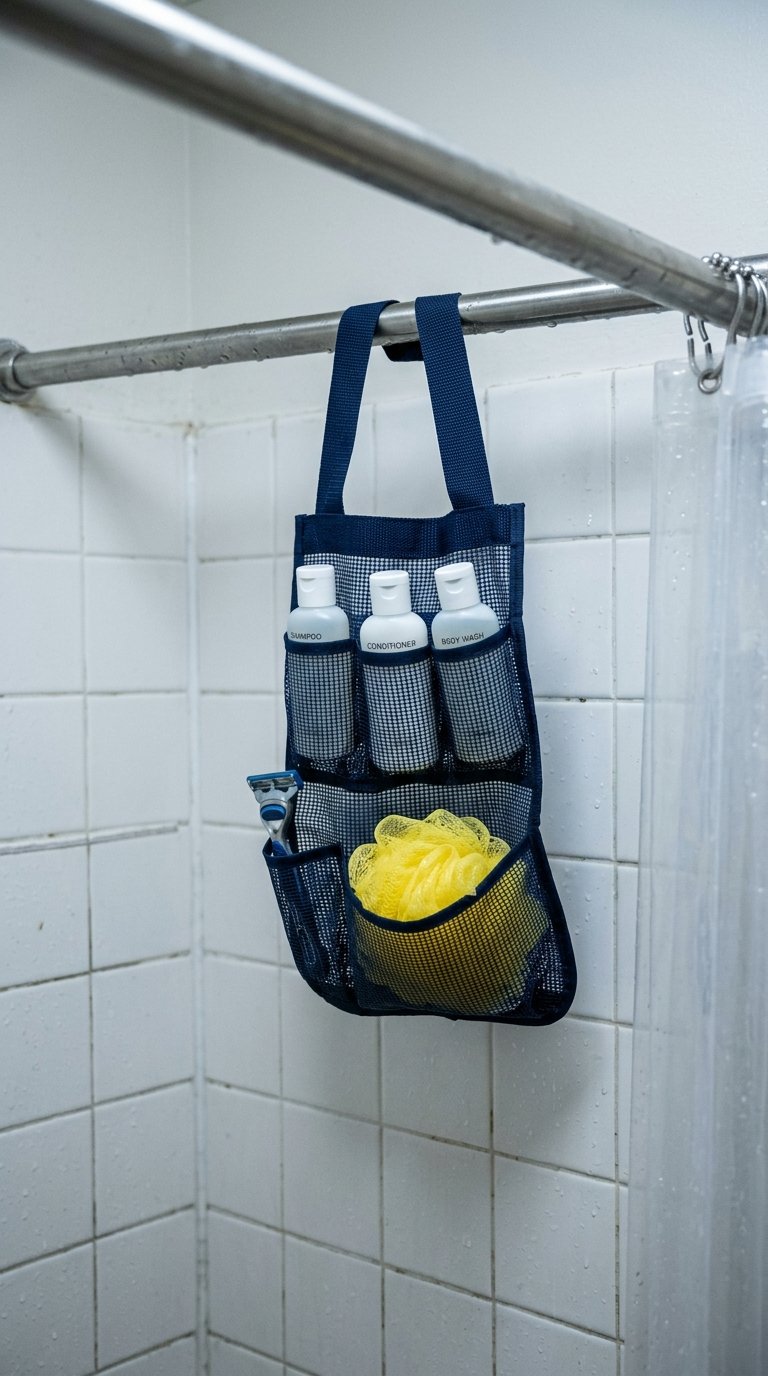
A mesh caddy is the base of most dorm bathroom routines. Water runs straight through it, so shampoo bottles don’t sit in a puddle, and the whole thing dries between showers.
Choose one with a sturdy handle and enough pockets to separate shampoo, conditioner, body wash, and a razor. Fill it only with what you use every week. A caddy crammed with half-empty bottles gets heavy fast, and it is awkward to carry down a long hallway.
Hang it on the shower hook or bar when you finish, so it can drip dry. In a community bathroom, take it back to your room afterward so nobody borrows from it.
Tips
- Pick mesh or open-grid material over solid plastic, which traps water.
- Decant products into small, labeled travel bottles to cut weight.
- Put a small hook on the handle for a loofah or washcloth.
- Wipe the base weekly to stop soap residue building up.
2. A Bathroom Tote or Bag You Pack Once
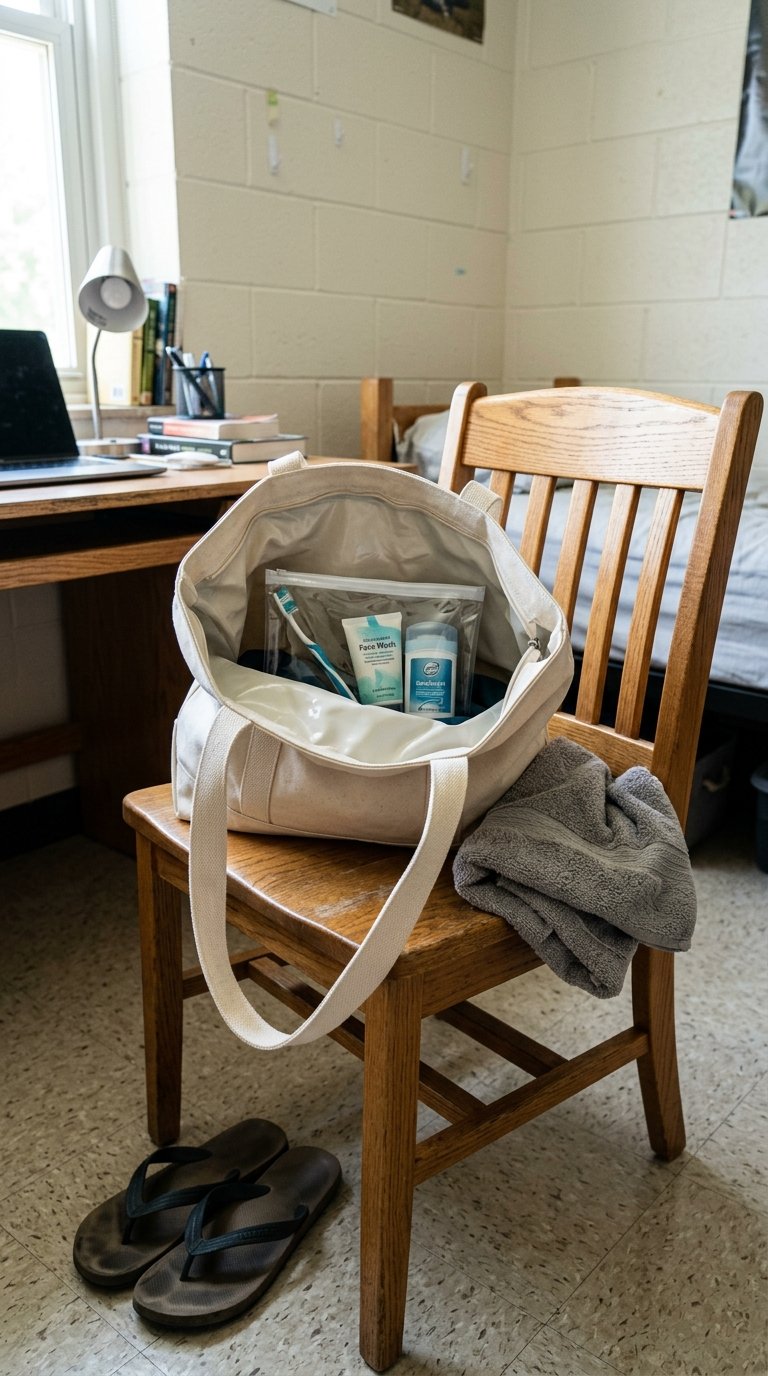
A dedicated bathroom bag keeps your routine simple. Pack it with the things that never change, such as toothbrush, face wash, deodorant, and hair ties, so you grab one thing and go.
Choose a bag with a wipe-clean lining and a zip top. A mesh zip pouch inside holds small items that would otherwise sink to the bottom. Keep the bag on a hook or shelf by your door, not on the bed.
If your school’s walk is long, a tote with a shoulder strap leaves your hands free for a towel and clothes.
Tips
- Use a clear zip pouch for daily skin care, so you can see what’s inside.
- Add a small pack of tissues and a spare hair tie.
- Wash the bag lining wipes every couple of weeks.
- Keep one pouch for travel, one for the dorm.
3. Quick-Dry Shower Shoes and a Place to Store Them

Shower shoes protect your feet in shared stalls, and they stay useful all year. Choose a pair that dries quickly and has grip on wet floors, such as a closed-back foam or rubber style.
The overlooked part is where they live. Wet shoes dumped by your bed make a damp spot. Store them in a ventilated place: a mesh shoe bag on a hook, a shoe rack by the door, or the side of your tote.
Rinse them occasionally and let them dry fully before they go back in a bag.
Tips
- Pick a pair in a bright color so they don’t get mixed up on the shower floor.
- Hang them by the heel loop to drain.
- Leave them in the open air, not the bottom of a closet.
- Replace them when the sole wears smooth.
4. A Hook System for Robe and Towel

Hooks solve two problems: where to hang a robe in a community bathroom, and where a towel can dry in your room. A robe lets you walk back in comfort without dressing fully in a damp stall.
Place hooks at different heights, one for the robe, one for the towel, so they don’t overlap and stay damp. In your room, hang them on the back of the door, on a hook strip, or on a freestanding rack.
In the bathroom, use the hook the building provides, or bring a portable one that hangs over a stall door.
Tips
- Keep a robe lightweight, such as cotton waffle, so it dries fast.
- Use a hook rail so a towel can hang open, not bunched.
- Rotate towels so one is always fully dry.
- Hang robe and towel on separate hooks.
5. A Waterproof Pouch for Clean Clothes
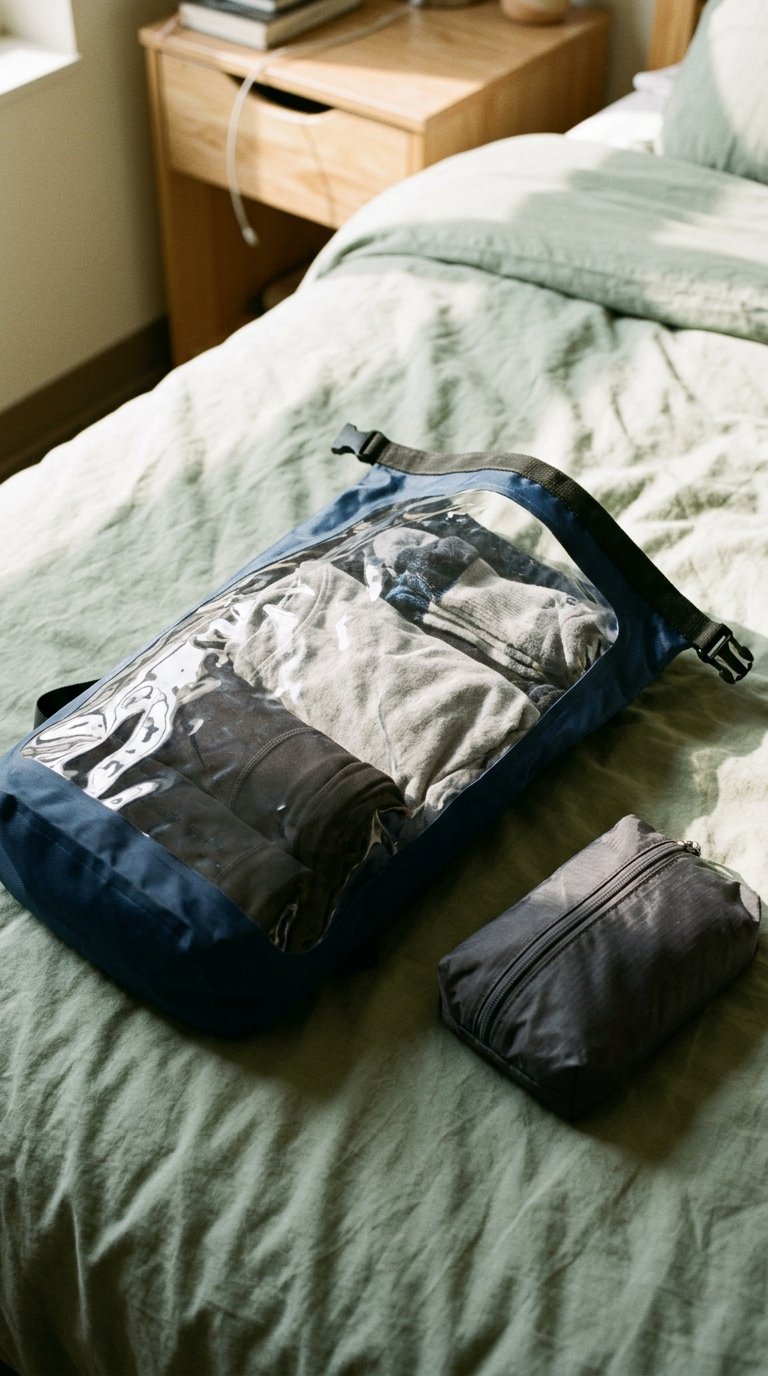
Dressing in a shared bathroom is easier if your clean clothes stay dry. A waterproof pouch, dry bag, or lidded bin keeps them clean through steam and splashes.
Pack the next outfit in order, so you put it on without digging. Add underwear, socks, and any accessories you need, so you don’t make two trips.
Use a hook or stall ledge, not the floor. If the building offers a dry bench or changing area, use it.
Tips and tricks
- Roll clothes to save space and reduce wrinkles.
- Put a small zip bag inside for a wet swimsuit or damp towel.
- Choose a pouch with a clear window, so you can find the right outfit.
- Pack a spare pair of socks.
Storage Ideas That Work Without Drilling
6. An Over-the-Door Organizer
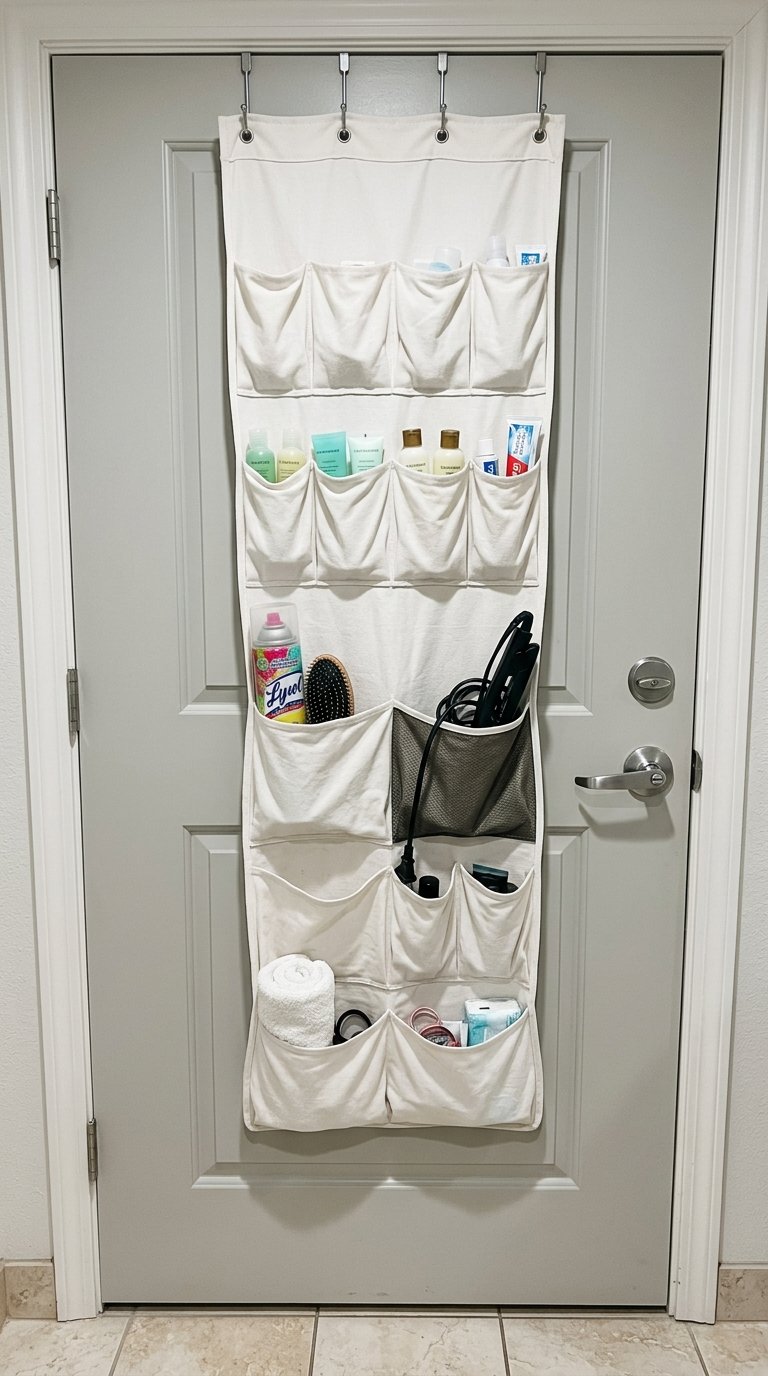
An over-the-door organizer is the fastest way to add dorm bathroom storage without touching the wall. It hangs on the top edge of a door and gives you pockets or shelves for bottles, hair tools, and cleaning supplies.
Measure your door’s thickness before you buy, since some hooks fit only standard doors. Choose a model with a gap-free fit so the door still closes. Use the lowest pockets for heavy items and the top for light ones.
This works best on a suite or apartment bathroom door, or a bedroom door if the bathroom is shared.
Tips
- Place daily items at eye level, and backups at the bottom.
- Use clear pockets so you can see what’s inside.
- Add small hooks on the outside edge for a towel or bag.
- Check that it doesn’t scratch the door finish.
7. Adhesive Hooks (Used the Right Way)
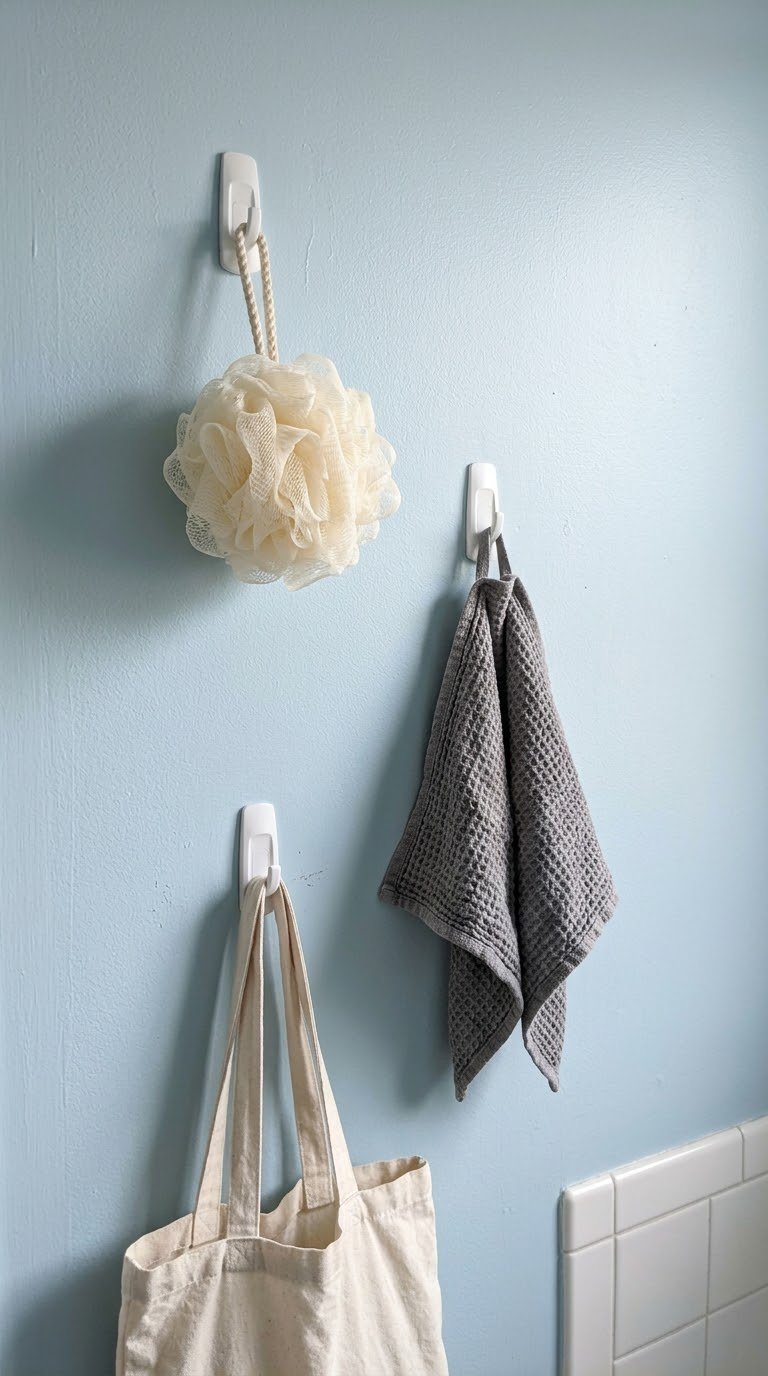
Removable adhesive hooks are good for towels, loofahs, and light bags. They fail when people ignore the weight rating or stick them to the wrong surface.
Clean the wall with rubbing alcohol and let it dry. Press the strip firmly for the time on the package, then wait before hanging anything. Choose hooks rated for bathroom moisture. Textured or painted cinder block can reject adhesive, so test one in a hidden spot.
Keep the load well under the rating, and don’t hang wet, heavy towels on small hooks.
Tips
- Stick to tile or smooth, painted surfaces when you can.
- Remove strips slowly, pulling the tab straight down.
- Use a few small hooks, not one overloaded hook.
- Ask your housing office if adhesive is allowed.
8. A Tension-Rod Shelf in the Shower Corner

Where the shower is yours (suite, private, or apartment), a tension rod and a hanging basket give you shelf space without drilling. Wedge the rod between two walls, hang a basket or a shower caddy, and you have storage in a spot that’s usually wasted.
Choose a rod with rubber ends so it doesn’t slip, and tighten it firmly. Keep the load light, since a loaded rod can fall.
Rust-resistant or stainless metal lasts longer in steam.
Want more shelf space than a tension rod gives you? These bathroom shelf ideas show 20 ways to add storage in any size bathroom. Several suit a suite or apartment without tools.
Tips
- Test the rod’s grip before loading it.
- Hang heavier items closer to the wall.
- Use S-hooks for razors, brushes, and washcloths.
- Check and re-tighten monthly.
9. A Slim Rolling Cart

A narrow rolling cart is useful in a suite or apartment bathroom with limited floor space and no cabinets. It holds towels, toiletries, and extras, and it rolls out of the way.
Measure the gap between the sink, toilet, and wall first. A cart around the width of a small gap can slot beside the toilet or by the tub. Choose a rust-proof frame and shelves with a lip.
Keep daily items on top and backups lower.
Tips
- Lock the wheels when you’re using it.
- Put rolled towels on the middle shelf for easy reach.
- Use a small bin on the cart for loose items.
- Skip carts if the floor is wet often.
10. Labeled Bins Under the Sink
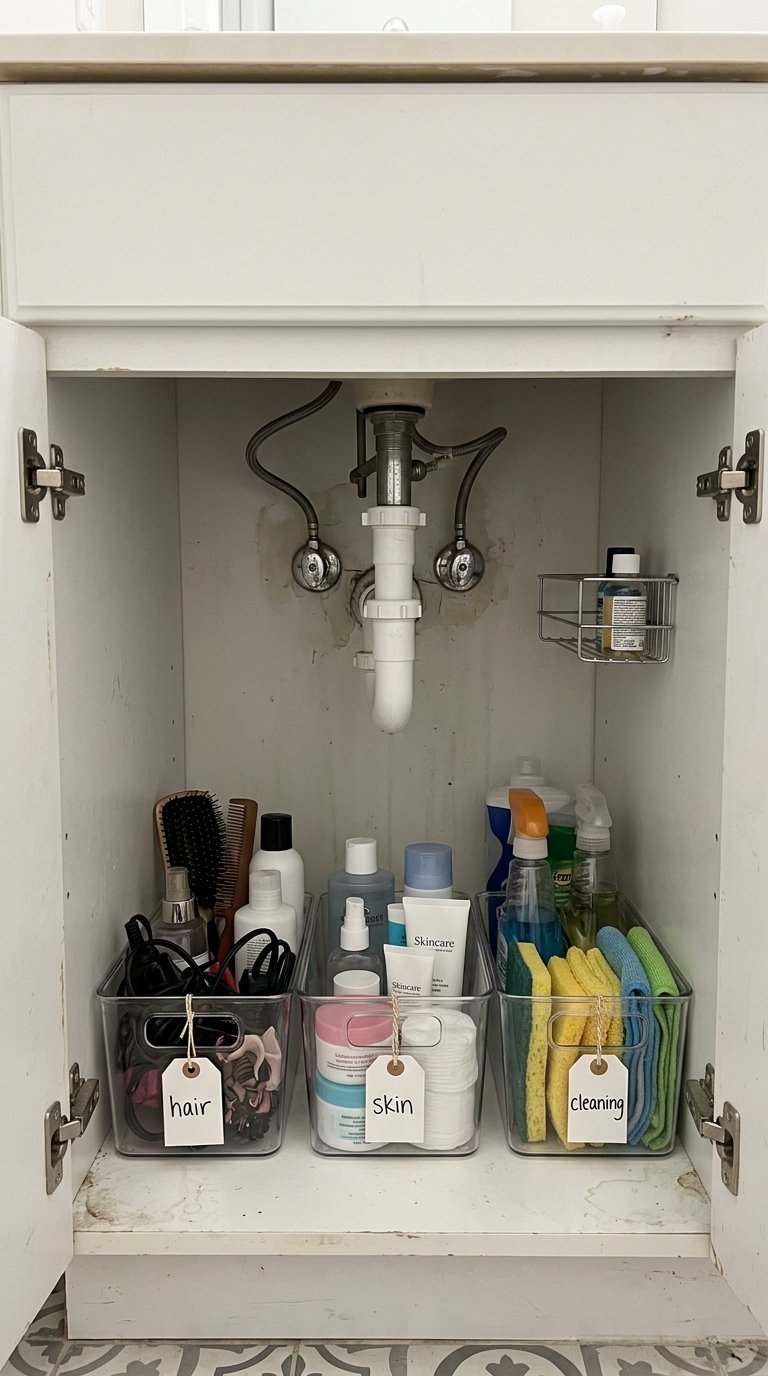
Under-sink space is easy to waste. Without bins, bottles tip and spill, and you lose items at the back. Add two or three small, open bins, one for hair, one for skin care, one for cleaning supplies.
Measure around the pipes before buying. A bin with a cut-out or a stackable shelf can fit around plumbing. Label the front so roommates, if you share, can find things.
Keep cleaning supplies apart from personal items, and keep them away from heat.
Not sure where each item should live? This guide to bathroom storage ideas sorts 23 smart solutions by zone: sink, shower, and toilet. It makes it easy to plan before you buy anything.
- Use plastic bins that wipe clean.
- Put the heaviest items at the back.
- Check for leaks regularly.
- Move items up if the cabinet is damp.
Roommate-Friendly Systems
11. Color-Coded Towels and Caddies
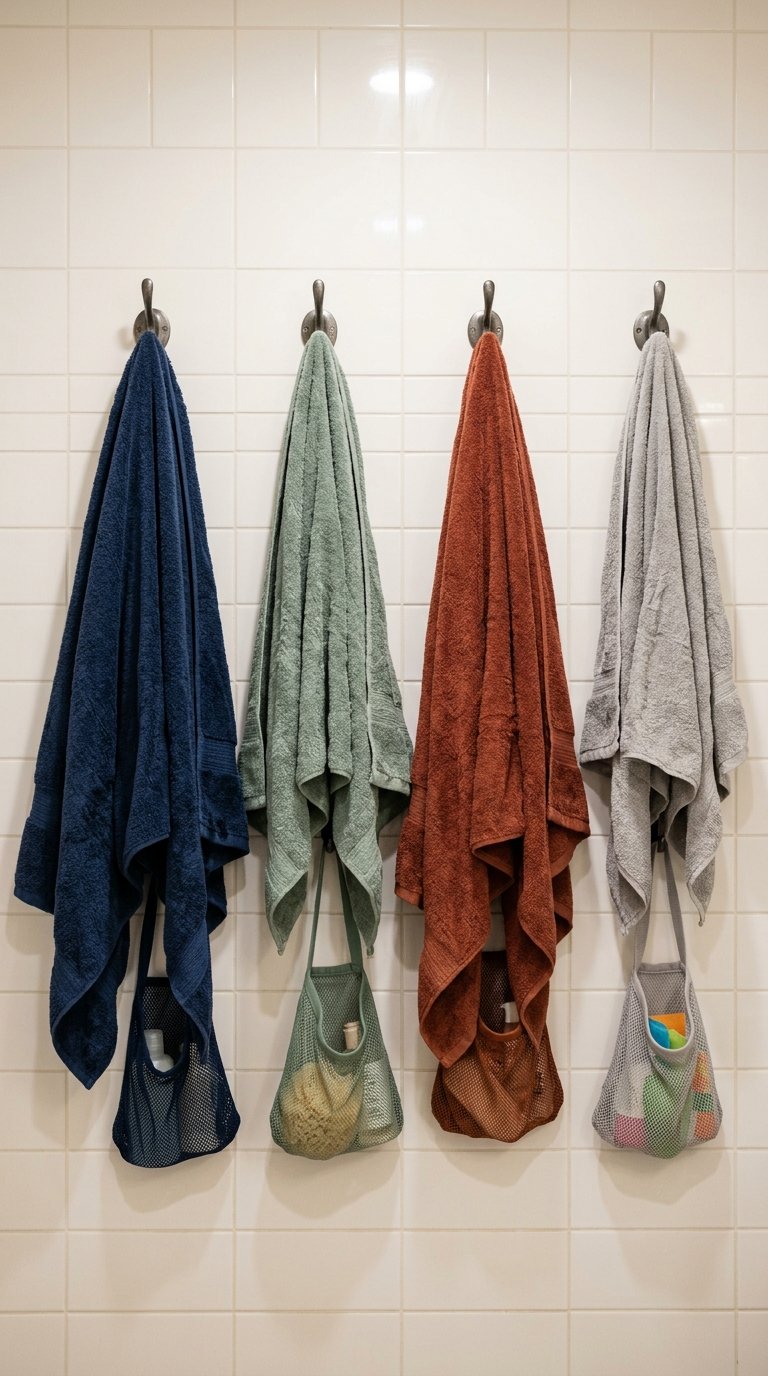
Mix-ups happen fast when everyone owns white towels and black bottles. A simple color system fixes it. Each person picks one color for their towel, caddy, and toothbrush holder.
Choose colors that are easy to tell apart, such as navy, sage, rust, and gray, not three shades of blue. Keep the rule simple, so it lasts past the first week.
It also helps with laundry, since you can spot your own pile at a glance.
Tips
- Agree on colors before anyone buys.
- Use colored tape or labels on bottles, if needed.
- Match the hook to the color.
- Keep a spare in your own color.
12. Labeled Shelf Zones

If you share a shelf, divide it. Give each person a clear zone, using bins, trays, or a strip of tape, so nobody’s products creep across.
Put shared items, such as toilet paper and cleaning spray, in a middle zone. Use a label or a small sign so guests can follow it.
Agree on the system early, and review it if it stops working.
Tips
- Use identical trays, so it looks tidy.
- Keep each zone the same size.
- Write names on the front, not the lid.
- Set a spot for lost-and-found items.
13. A Simple Cleaning Rota With a Supply Caddy

A cleaning rota works when it is small. Rotate tasks weekly, such as sink and counter, mirror, floor, and toilet, so nobody does everything.
Keep supplies in one caddy that’s easy to carry: a spray cleaner, gloves, a cloth, and a toilet brush. Store it under the sink or on a hook.
Write the rota on a whiteboard or phone note, and keep it short.
Tips
- Rotate tasks, not just days.
- Set a standard: “wipe the sink after use.”
- Check supplies monthly.
- Agree on products first, in case of allergies.
Keep It Fresh and Dry
14. A Towel-Drying Routine
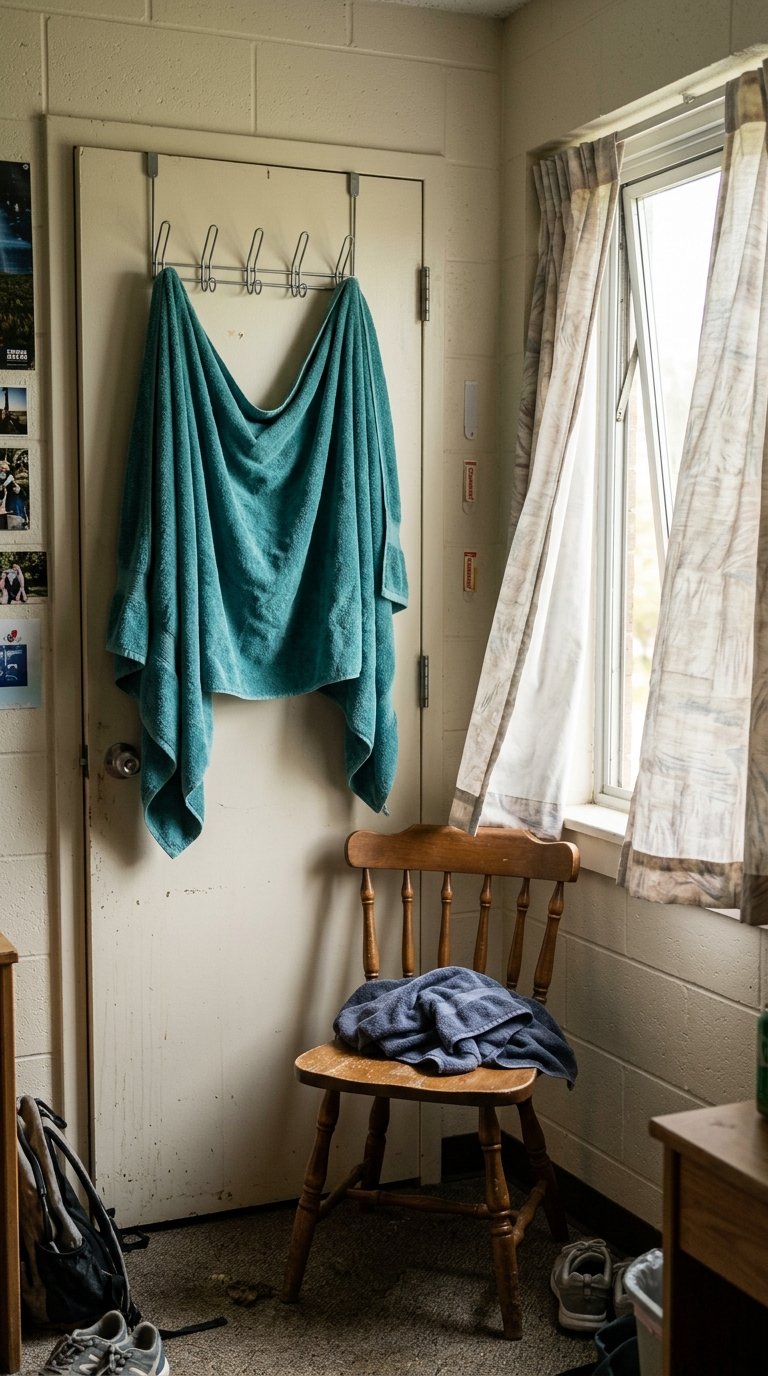
Damp towels cause most dorm bathroom smells. Hang a towel open, not folded or bunched, so air reaches both sides. Use a hook, a rail, or the back of a chair.
Rotate between two towels so one is always dry. Wash towels weekly, or when they smell, and dry them fully before they go back in a closed drawer.
A small drying rack by a window helps in rooms with little airflow.
Tips
- Spread the towel across the hook, not in a lump.
- Don’t hang it in a sealed closet.
- Use quick-dry microfiber if you share a small room.
- Wash on hot if the fabric allows.
15. Air It Out After Every Shower
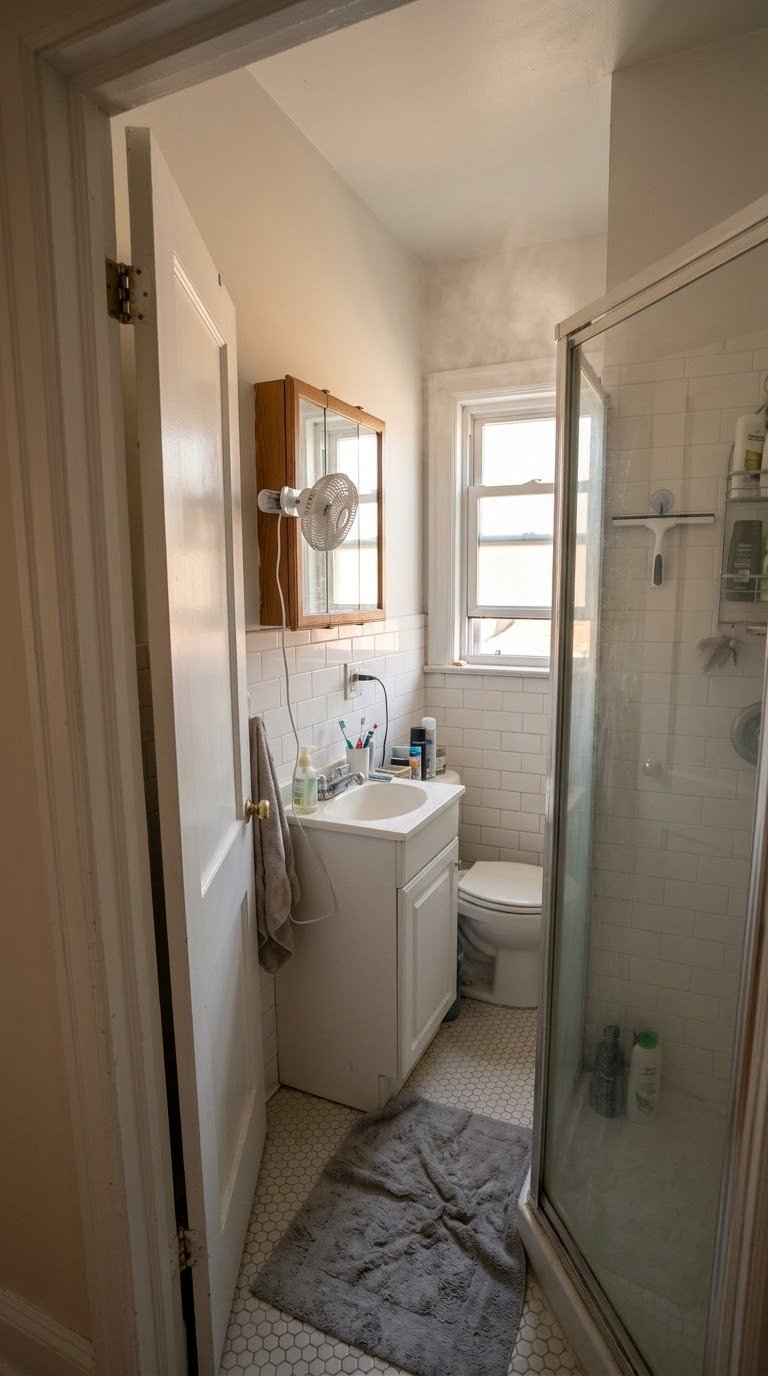
Steam stays when the room is sealed. Open a window if you have one, turn on the exhaust fan, and leave the door open after you shower, if privacy and rules allow.
In a bathroom with no fan, a small battery-powered or USB fan can move air. A squeegee on the shower wall removes water fast, so less is left to evaporate.
Moisture absorbers help in closets, but they don’t replace airflow.
Tips
- Run the fan for about 20 minutes afterward, if the unit allows.
- Squeegee the glass or tile.
- Keep wet items out of drawers.
- Report a broken fan to maintenance.
16. Shower Curtain and Liner Care
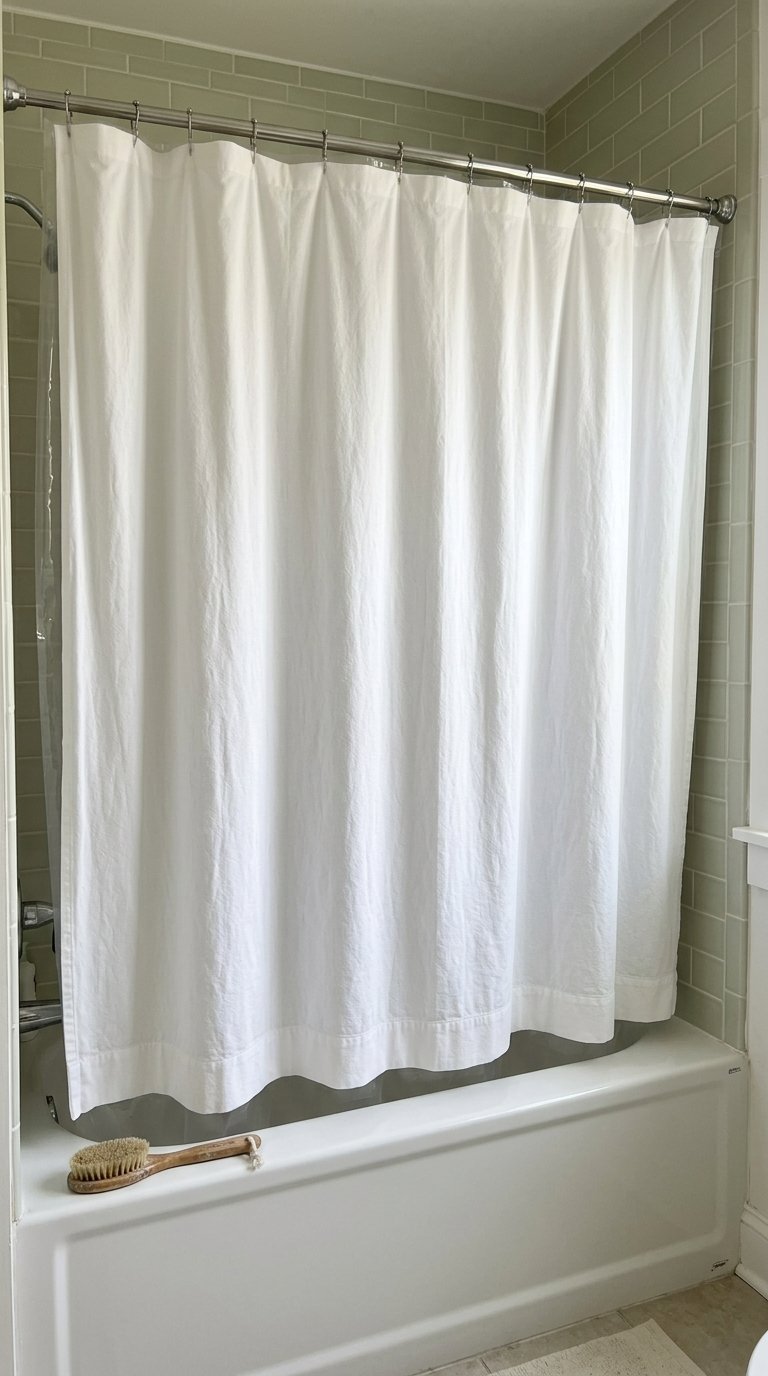
Mildew often starts on the shower curtain, especially the bottom hem. After each shower, pull the curtain flat so it dries, instead of leaving it bunched on one end.
Wash fabric curtains and liners as the label allows. Replace a liner when stains won’t come out. Pick a mildew-resistant fabric or a quick-dry polyester.
Add magnets or weights if the curtain blows in.
Tips and tricks
- Spread it open after each shower.
- Wipe the hem with a damp cloth weekly.
- Keep the liner inside the tub.
- Replace rings that snag.
- Cozy Touches Within the Rules
17. A Washable Textile Set in One Palette
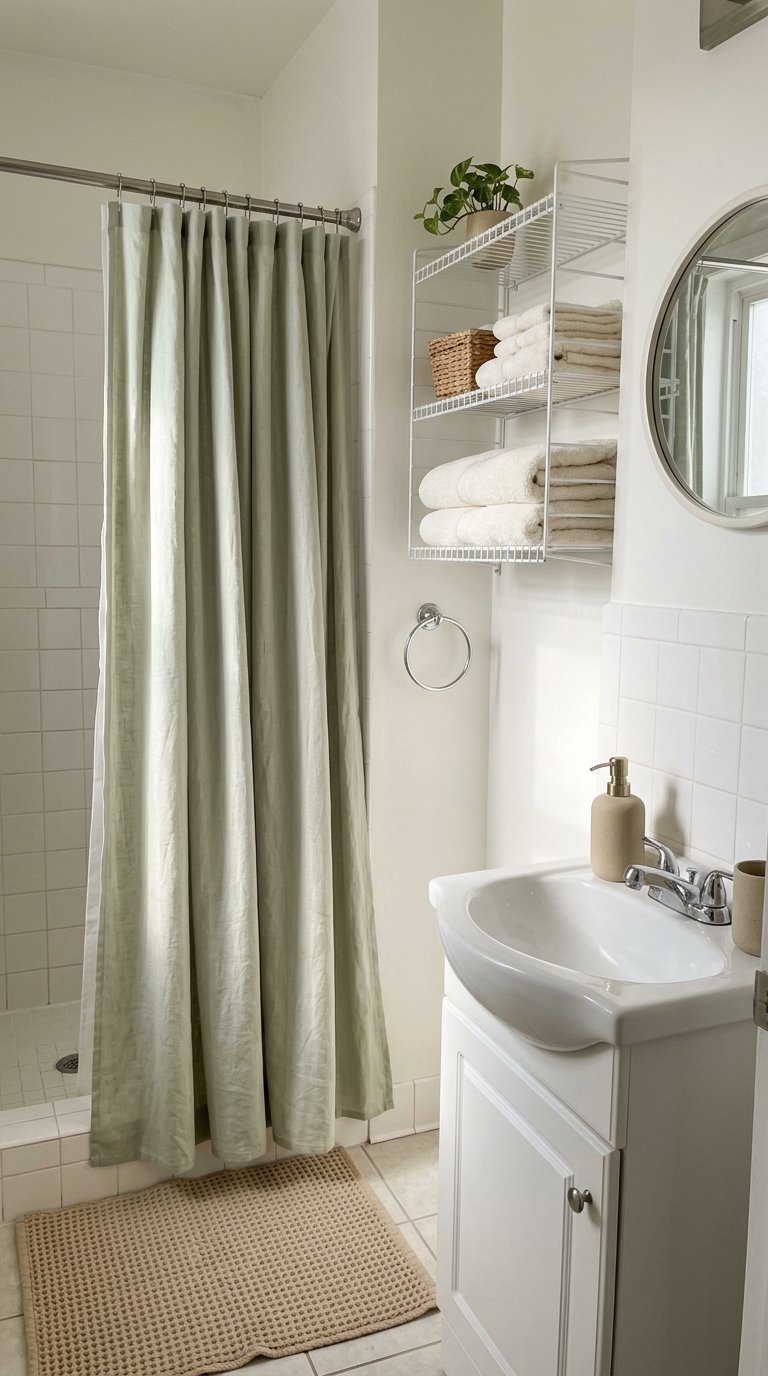
Textiles make a bathroom feel cared for. Choose a curtain, bath mat, and towels in the same palette, such as soft sage, warm white, and sand, so the room reads as one scheme.
Keep everything machine-washable and quick-drying. Thick cotton mats look good, but they hold water, so choose a thinner mat in a shared bathroom.
A patterned curtain with plain towels is easier to live with than pattern on everything.
Tips
- Pick two colors and one accent.
- Wash mats weekly in shared use.
- Match the curtain to the towels, not the mat.
- Keep a spare set for laundry day.
18. Rule-Aware Lighting
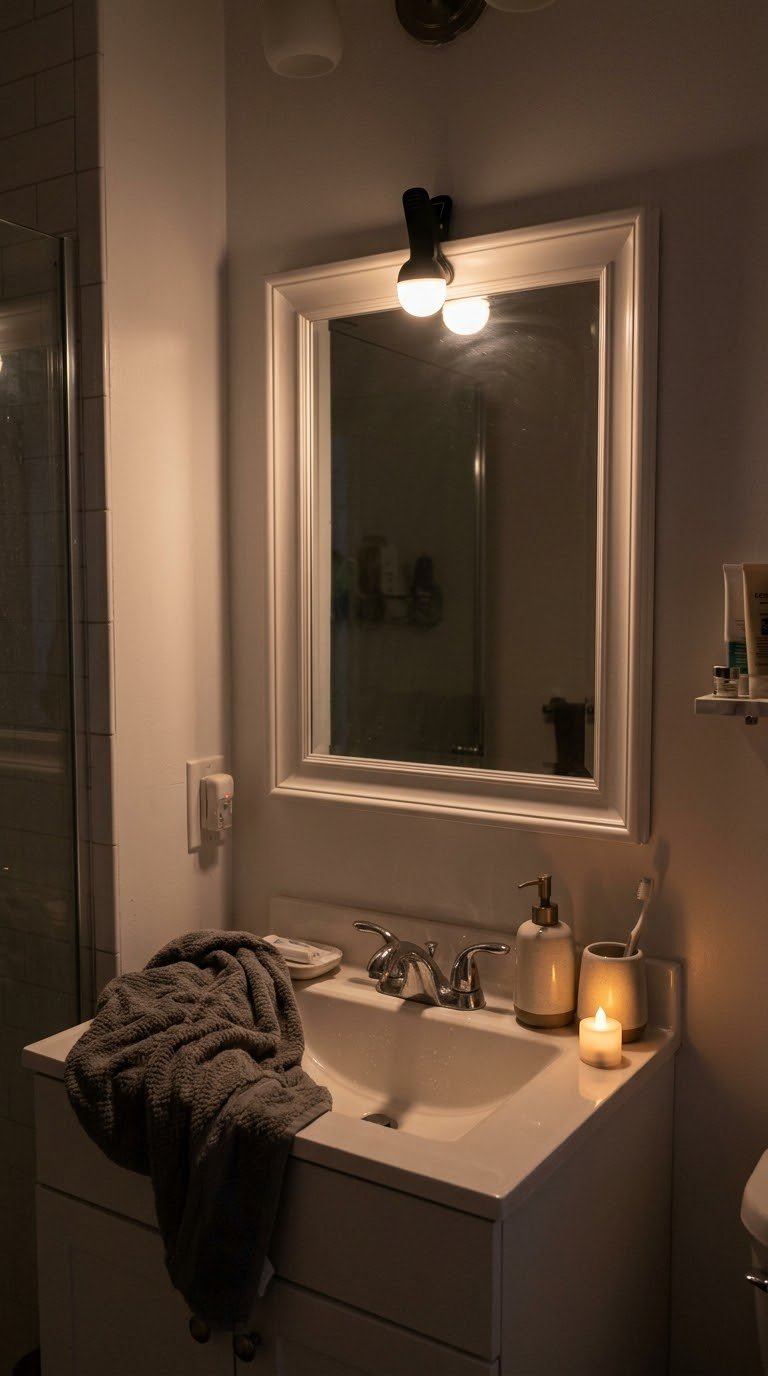
Light changes how a small bathroom feels. Many housing offices restrict string lights and plug-in devices, especially near water, so check first.
Safer options include battery-powered LED lights, a warm-toned bulb in a fixture you’re allowed to change, and a lit mirror that clips on. Keep every light away from wet areas.
A softer glow makes a harsh bathroom feel calmer in the evening.
Tips and tricks
- Use warm white bulbs, not cool white.
- Keep batteries out of splash zones.
- Don’t cover vents or fixtures.
- Ask your RA before you hang anything.
College Apartment Bathroom Updates
19. A Renter-Safe Mirror and Light Swap
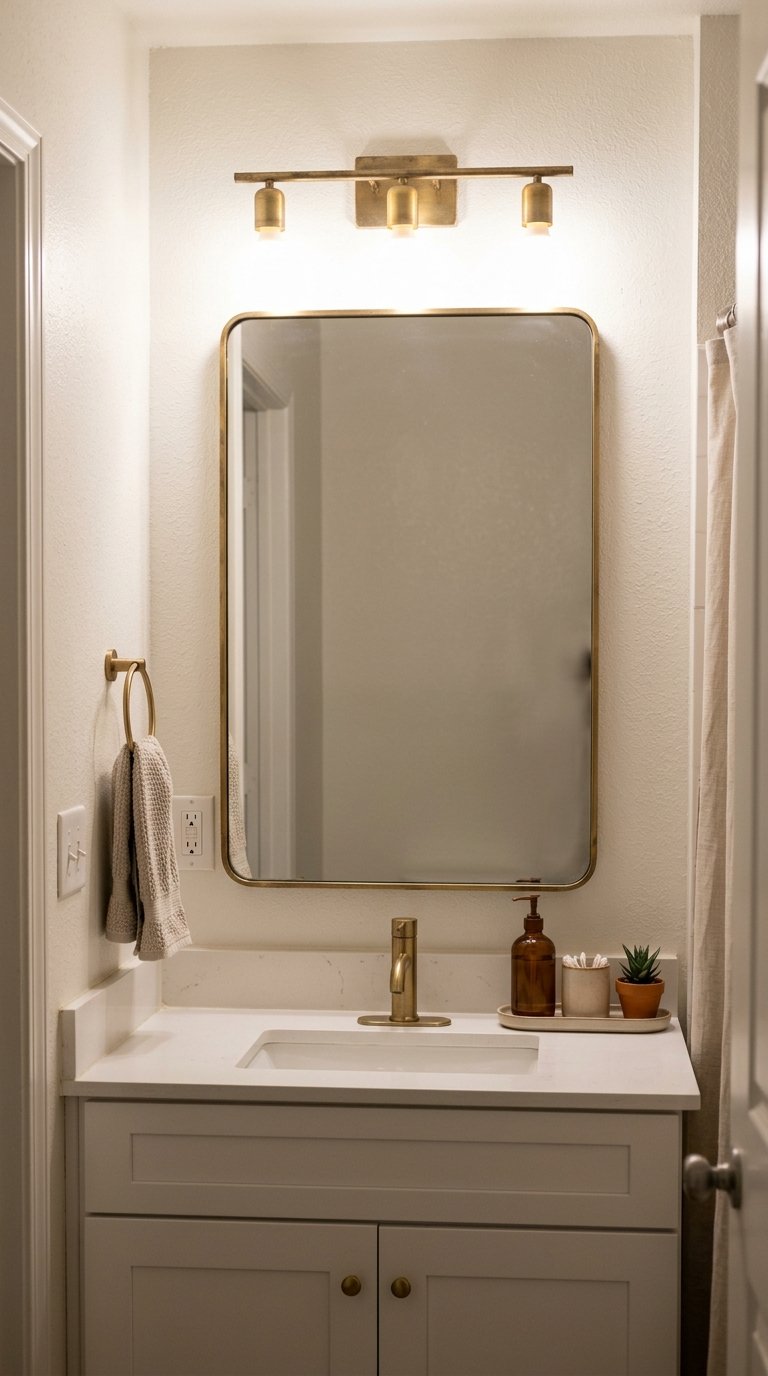
In an off-campus apartment, the mirror and light fixture set the tone. A framed mirror hung over a builder-grade one, or a mirror frame added to the existing glass, changes the whole wall.
Swap a plain bulb for a warmer one, or add a removable shade if the fixture allows. Check your lease before changing anything wired.
Keep the old parts so you can restore them when you leave.
Tips
- Use mirror clips or a frame kit made for the job.
- Choose bulbs rated for the fixture.
- Photograph the original for your deposit.
- Don’t paint over fixtures without permission.
20. Removable Updates for Walls and Floors
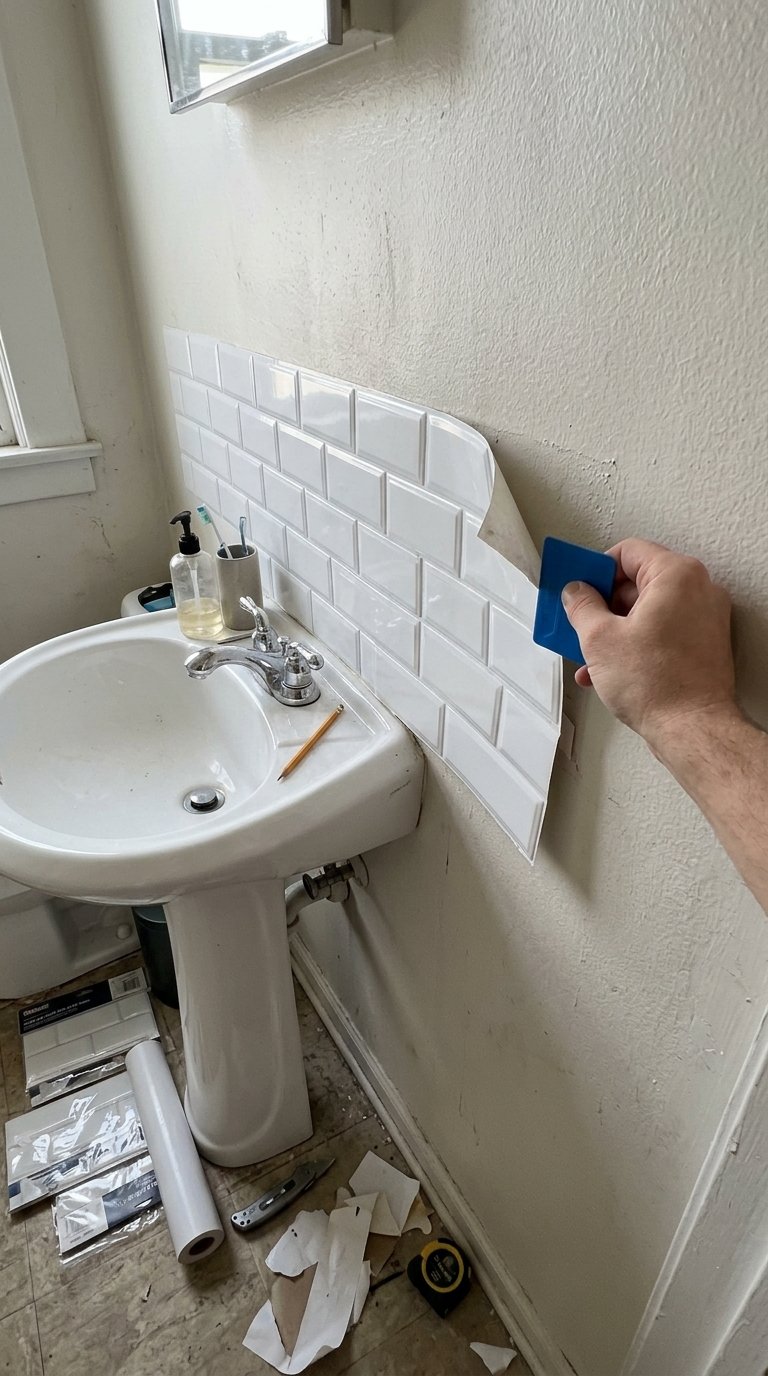
If the room looks dated, removable updates help. Peel-and-stick tile on a backsplash, removable wallpaper on one wall, or a stick-on floor tile in a small area can change the look.
These work best on smooth, clean, dry surfaces. They are less reliable around heavy steam, and they vary in how they come off. Test a small piece in a hidden spot first.
Get permission from your landlord, and keep spare pieces for repairs.
Tips
- Clean and dry the wall fully first.
- Start in a corner, and smooth air bubbles outward.
- Avoid the shower wall unless the product says it is rated.
- Keep the leftover material.
A Short Essentials Checklist
If you are packing for the first time, start with these:
- Mesh shower caddy
- Quick-dry shower shoes
- Two towels
- Robe or wrap
- Bathroom tote or bag
- Shower curtain and liner (if your room needs one)
- Hooks (check adhesive rules)
- Small bath mat
- Hamper or laundry bag
- Small toiletry bottles
- Waterproof pouch for clean clothes
Tips
- Buy the basics first and add decor later.
- Check your housing’s list before buying a shower curtain.
- Pack items in the order you will use them.
FAQs
Can I decorate a community dorm bathroom?
Usually not the walls or fixtures. You can style what you carry: your caddy, towel, robe, shoes, and bag. Ask your RA before you hang or stick anything.
What should I carry to a shared bathroom, and in what?
Use one bag with a caddy inside. Pack toiletries, a towel, shower shoes, and a waterproof pouch for clean clothes. A single trip keeps the routine simple.
How do I stop my towels from smelling in a dorm?
Hang the towel open so it dries fully. Rotate between two towels, wash weekly, and don’t store it damp in a closed space.
Are fairy lights allowed in dorm bathrooms?
Many schools limit them, especially near water or in bathrooms. Check your housing rules first. Battery LEDs are often a safer option, but you still need approval.
How do roommates share bathroom storage fairly?
Divide space with labeled trays or bins, give each person the same-sized zone, and keep a middle zone for shared items. Review it after a few weeks.
Do I need shower shoes?
In shared showers, most people use them for hygiene and grip. Choose a quick-dry pair, and let them dry between uses.
What should I buy before move-in?
Buy the essentials: caddy, towels, shower shoes, and a bag. Wait on decor and bulky storage until you see the room and learn the rules.
How do I make a college apartment bathroom feel less dingy?
Start with light, a mirror, and textiles. Add a warm bulb, a framed mirror, and a matched set of towels and a curtain. Use removable updates if the surfaces are dated.
What is a good no-drill way to add storage?
Use an over-the-door organizer, a tension rod, adhesive hooks within their weight rating, or a slim rolling cart.
What should I leave at home?
Skip bulky items you can’t store, anything that breaks housing rules, and decor you can’t take down easily.
Conclusion
You don’t need every idea here. Start with the setup you actually have, then fix the biggest daily annoyance, whether that is carrying everything, finding space, or a damp smell.
For a community bathroom, put your effort into a good caddy, a dry routine, and a bag you pack once. For a suite or apartment, add storage zones and one cozy upgrade, like lighting or textiles. Make one change, see how it feels, and add more when you need them.