
20 Mid-Century Bathroom Ideas That Blend Retro Charm with Modern Style
Mid-Century Bathroom Ideas work best when a bathroom feels warm, clean, and easy to use. The style comes from the 1950s and 1960s, but it does not need to look old. Think warm wood, simple shapes, a little retro colour, and modern taps and showers that work well every day.
This guide gives you 20 ideas you can mix and match. You do not need all of them. Pick one base change, such as a wood vanity, and one accent, such as a brass light or a pastel tile wall. That is often enough to give the room a clear mid-century feel without a full remodel.
How to Read Your Bathroom Before You Go Mid-Century
Look at your bathroom before you buy anything. Note its size, light, and current tile. Check where the plumbing sits, how much storage you need, and how much you can spend. A small bathroom needs different choices from a large one, and a rental needs changes you can undo.
Also think about cleaning and daily use. A busy family bathroom needs closed storage and easy-to-clean tile. A guest bathroom can take a bolder wall or a patterned wallpaper. When you know the room, the budget, and the limits, your retro choices will fit the real room, not just a photo.
Mid-Century Bathroom Ideas
1. Start With Warm Wood as the Retro Base
Warm wood is the fastest way to make a bathroom feel mid-century. Use it in a vanity, a mirror frame, or a few shelves. Walnut and teak tones work well, and they look warm next to white walls. Keep wood away from constant splashing, so it stays in good shape.
Start with wood first, then add colour. A wood vanity and a wood mirror frame can carry the whole look, even before you change tile or paint. If the wood is dark, balance it with white walls and a light floor, so the room does not feel dark or heavy.

2. A Floating Walnut Vanity That Keeps the Floor Open
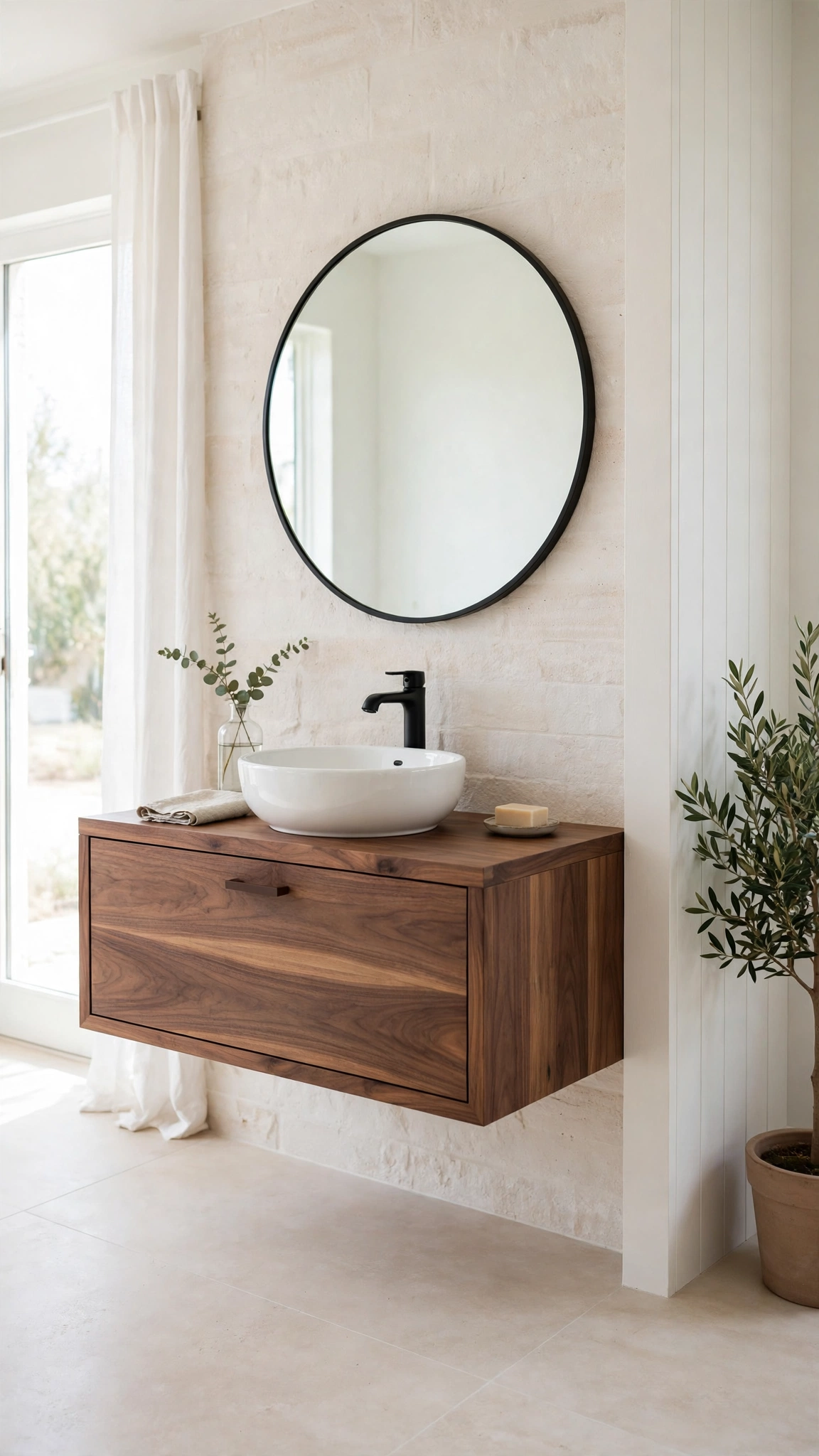
A floating walnut vanity hangs on the wall, with clear floor space below it. This makes the room feel larger and lighter, and it makes cleaning the floor much easier. It suits small bathrooms well, and it also works in family bathrooms.
Check wall and plumbing support before you fit one. Keep drawers for daily items, so the counter stays clear. Pair the vanity with a simple vessel or undermount sink, and a round mirror above it, for a clean mid-century look.
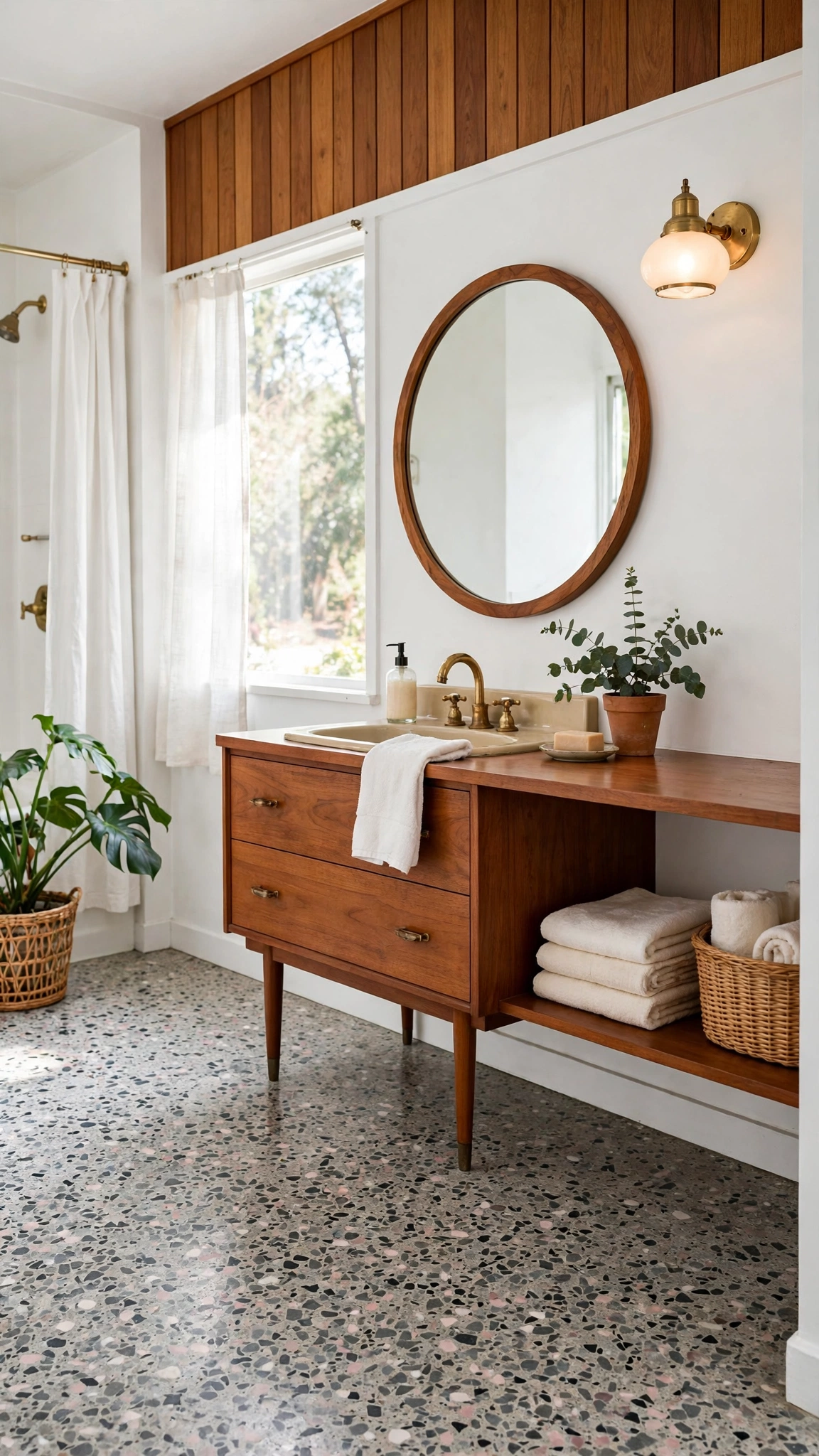
3. Terrazzo That Brings Back the Classic Mid-Century Floor
Terrazzo is a speckled floor that was common in mid-century homes. It looks classic, bright, and a little playful. Keep walls white and wood warm, so the floor can lead the room. The speckles add interest without a loud pattern.
Pick a speckle size that suits your room. Small speckles suit small rooms, and larger speckles suit larger rooms. Test a sample in your real light, and ask about sealing and cleaning, so you know how to care for it over time.
- Choose a speckle size that fits your room size, not just the sample you like in the shop.
- Test the sample in daylight and evening light before you commit to the whole floor.
4. A Freestanding Tub With Clean, Curved Lines
A freestanding tub with simple, curved lines can be the calm centre of a larger bathroom. Keep walls plain and add wood accents around it, so the tub looks like a simple shape, not a themed piece. This idea needs space, so measure first.
Check floor space, plumbing access, and cleaning space around the tub. You need room to walk around it and clean behind it. Keep taps simple, in brass or matte black, so the tub stays the main focus.

5. Bold Colour on One Wall, Calm White Everywhere Else
One bold wall is often better than bold colour everywhere. Pick mint, mustard, turquoise, or soft pink for the wall you see first from the door. Keep other walls, the floor, and fixtures calm and white. This rule keeps the room stylish, not loud.
Test the colour in daylight and evening light before you commit. Paint or tile can look different at night. Keep towels and accessories in white or wood tones, so the bold wall stays the star of the room.

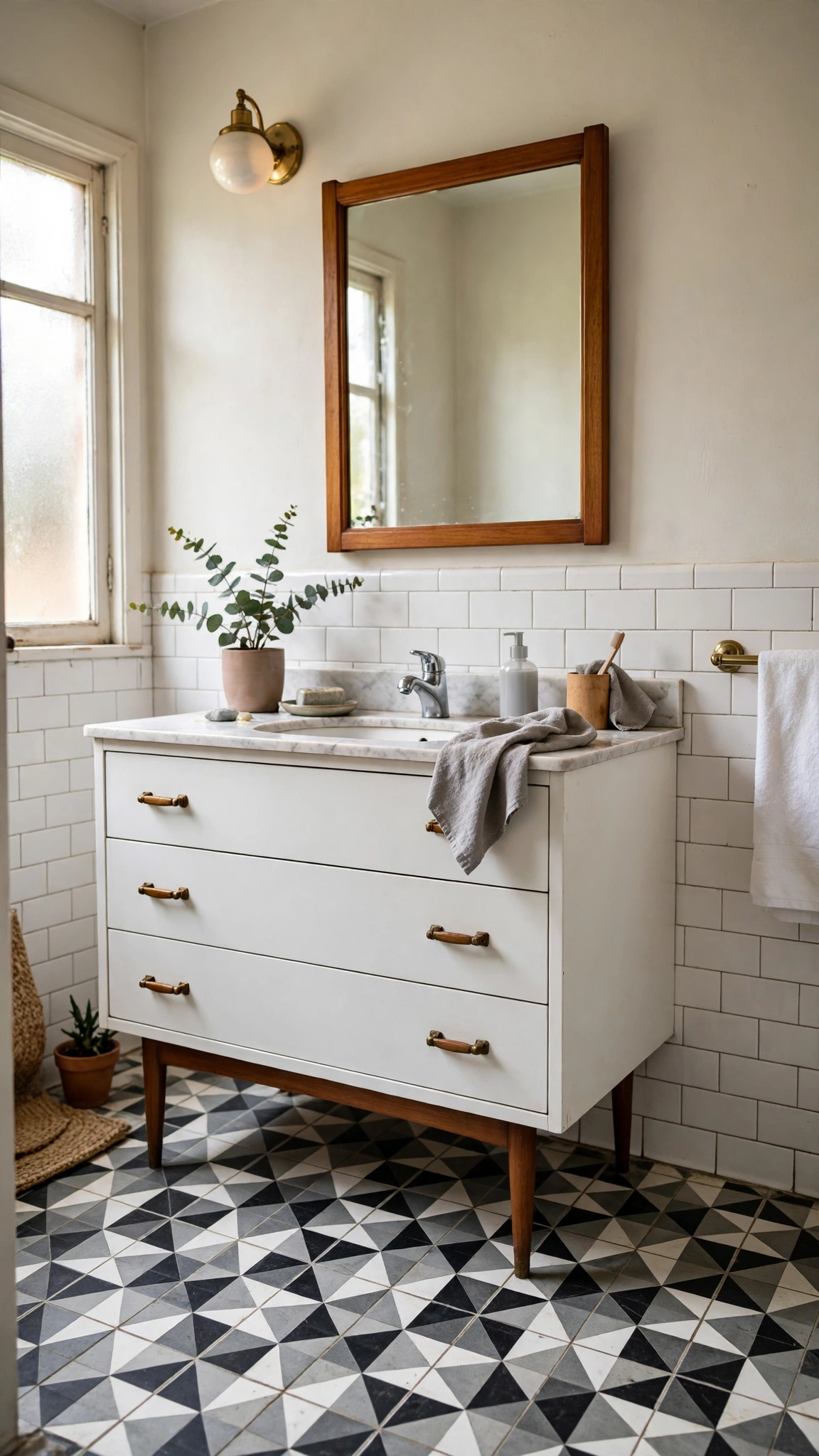
6. Geometric Floor Tile in Black, White and Grey
A black, white, and grey geometric floor adds pattern without colour overload. The pattern gives the room interest, while plain walls keep it calm. This is a good choice if you like mid-century pattern but want a calm room.
Pick a pattern size that suits your room size. Small patterns suit small rooms. Use a grout colour that hides dirt, so the floor stays looking clean. Keep wall tile plain white or pale grey, so the floor pattern does not fight with the walls.
7. A Vessel Sink on a Simple Wood Counter
A white vessel sink on a simple wood counter is a low-cost way to change a plain vanity. The sink sits on top of the counter, so it becomes a small focal point. You can often keep the old vanity base and just change the top and sink.
Check counter height and tap height, so washing your hands stays comfortable. Keep the counter clear, except for one soap dish or a small tray. Match the tap finish to other fixtures in the room, so the update looks planned.

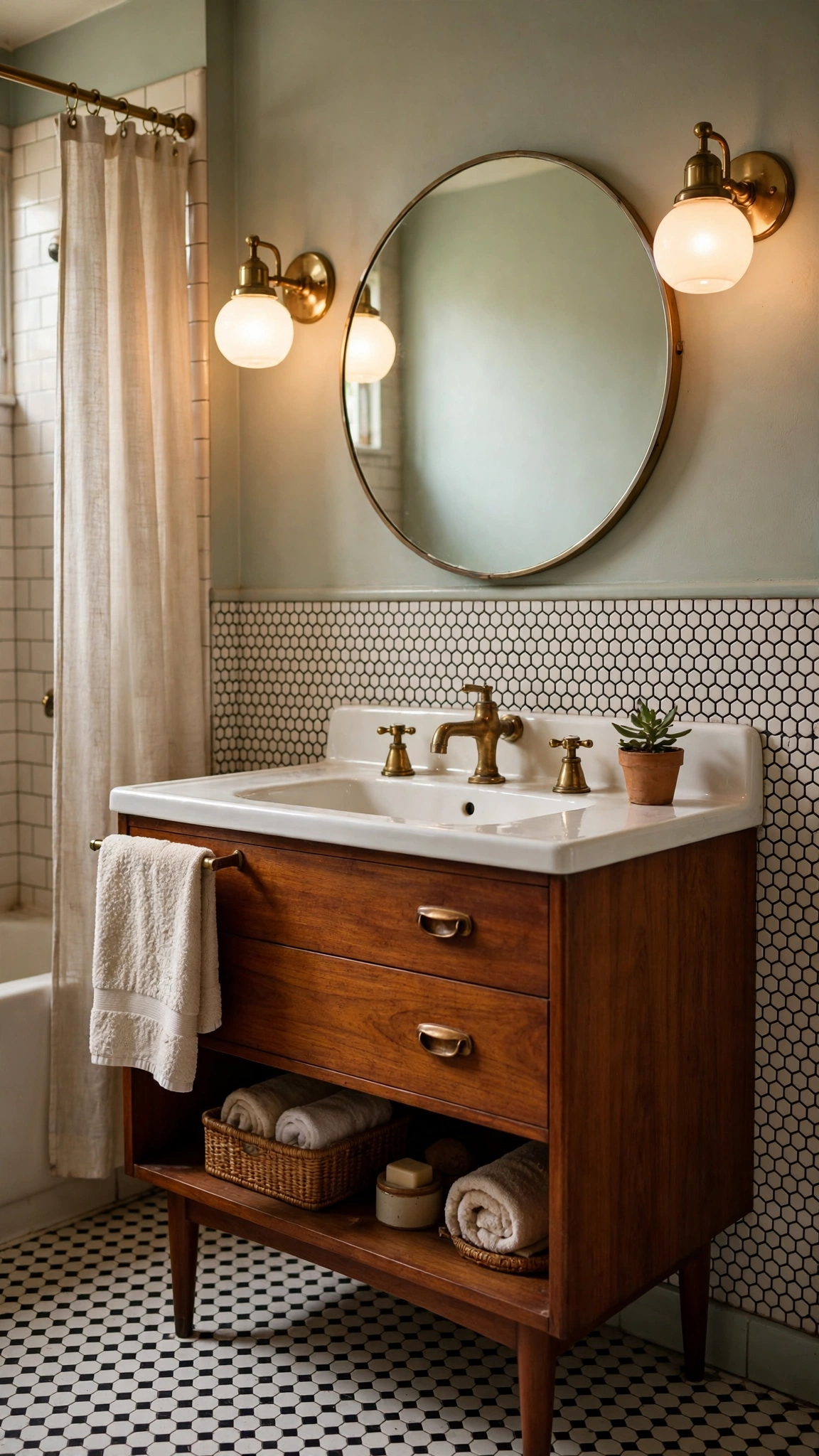
8. Brass Fixtures and Lighting for a Warm Retro Glow
Brass taps, handles, and lights give a warm retro glow. Use one metal finish through the room, rather than mixing many metals. When brass repeats in two or three places, the room feels planned and warm.
Choose lacquered brass for easier care, where you can. Repeat brass in taps and at least one light fitting. Keep other metals minimal, so brass stays the main metal in the room.
9. A Starburst or Sputnik Light as the Room’s Feature
A starburst or sputnik brass light can be the one feature in the room. Hang it above the mirror or in the centre of the room, and keep everything else simple. One strong light is enough, and it stops the room from feeling busy.
Check ceiling height and light placement before you buy. A large light needs room above it. Pair it with calm wall lights or a simple mirror light, and choose warm bulbs for a soft glow in the evening.
- Hang the feature light where it can be seen, but where it will not get in the way.
- Use warm bulbs, so the light feels soft, not harsh, in a small room.

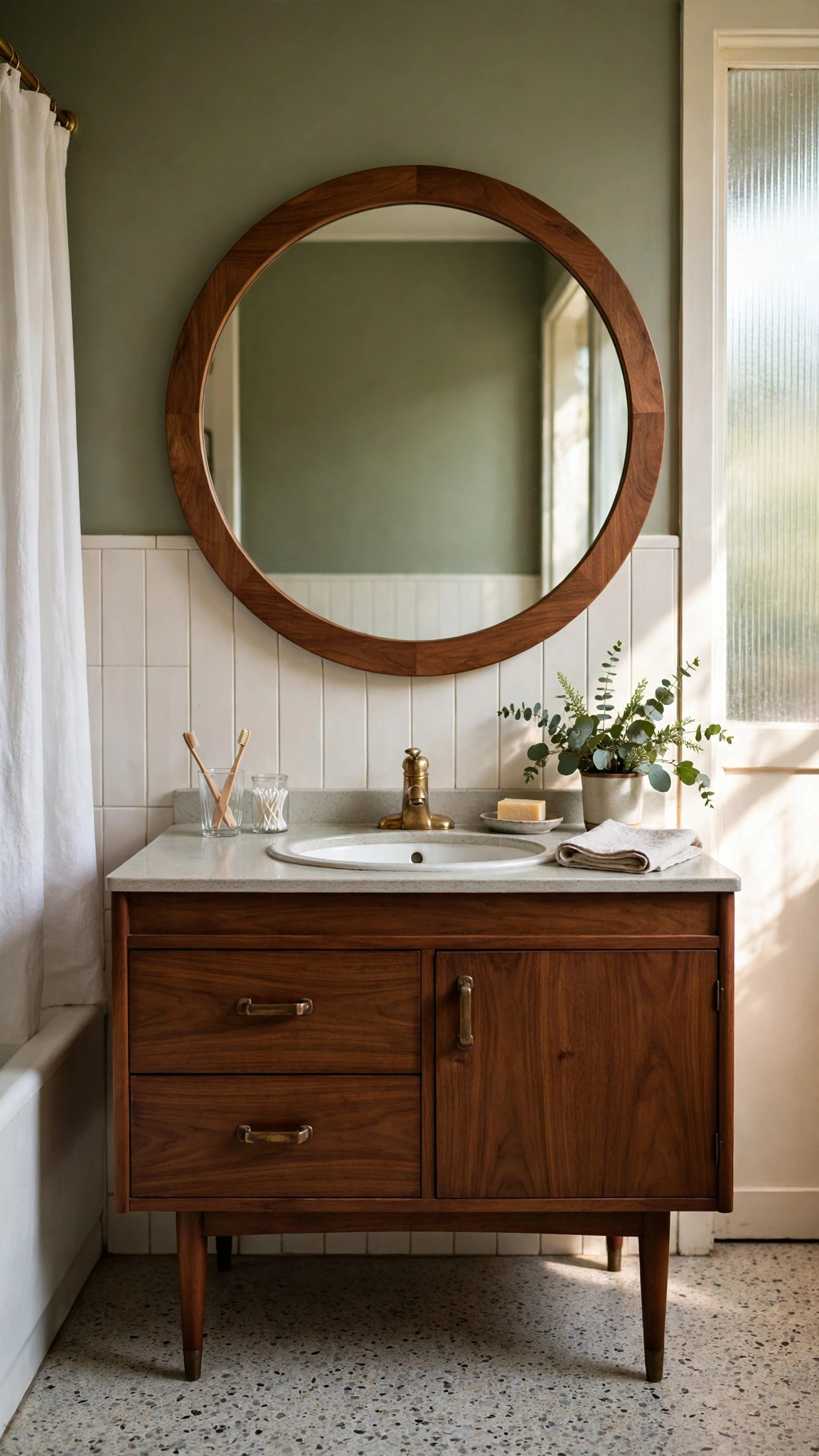
10. A Large Round or Arched Mirror Over the Vanity
A large round or arched mirror softens the straight lines of a mid-century bathroom. The curve adds a gentle shape, and a wood or brass frame ties it to the vanity. This is a simple change with a big effect.
Size the mirror to fit your vanity width. Hang it at eye level, so it is useful every day. Match the frame finish to your taps or lights, so the mirror looks like part of the room, not an afterthought.
11. Vertical Subway Tile for a Taller, Cleaner Wall
White subway tile laid vertically makes walls feel taller and cleaner. This is a cheap mid-century cue, because it changes the pattern, not the material. It works well in showers and splash zones.
Use a grout colour close to the tile for a calm look, or dark grout for a bolder pattern. Keep the tile in shower and splash zones, where it is most useful. Plain walls elsewhere will keep the room calm and bright.
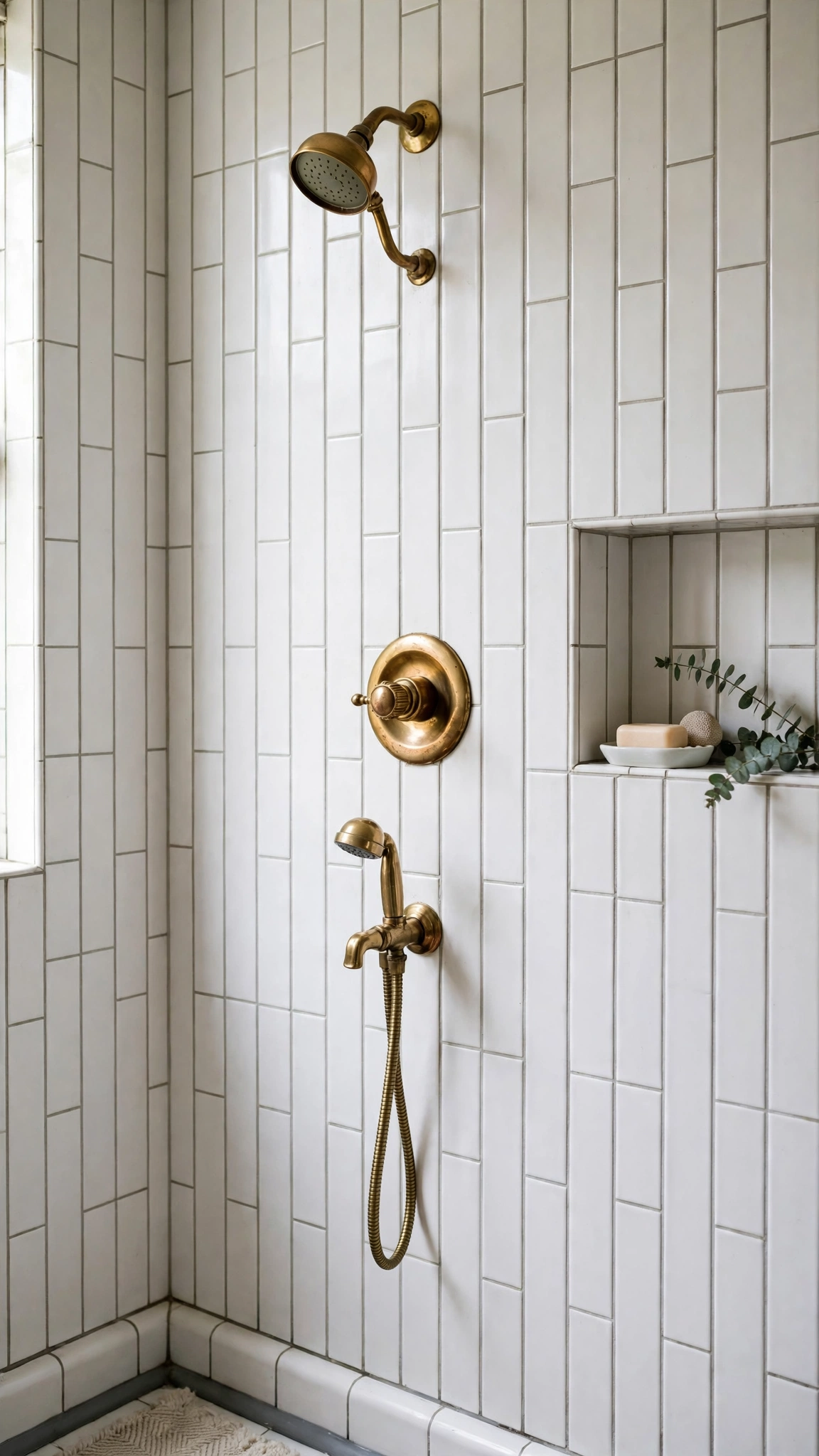
12. A Walk-In Shower With Glass and a Teak Bench
A walk-in shower with clear glass and a teak bench mixes modern ease with retro warmth. Glass keeps the room open, and teak adds warm wood inside the shower. This suits readers who want a shower that is easy to use and nice to look at.
Check drainage, glass cleaning, and bench height before you plan it. Add a niche for bottles, so they do not sit on the floor. Use simple brass or black shower fittings, and keep the tile plain, so the glass and wood can lead.

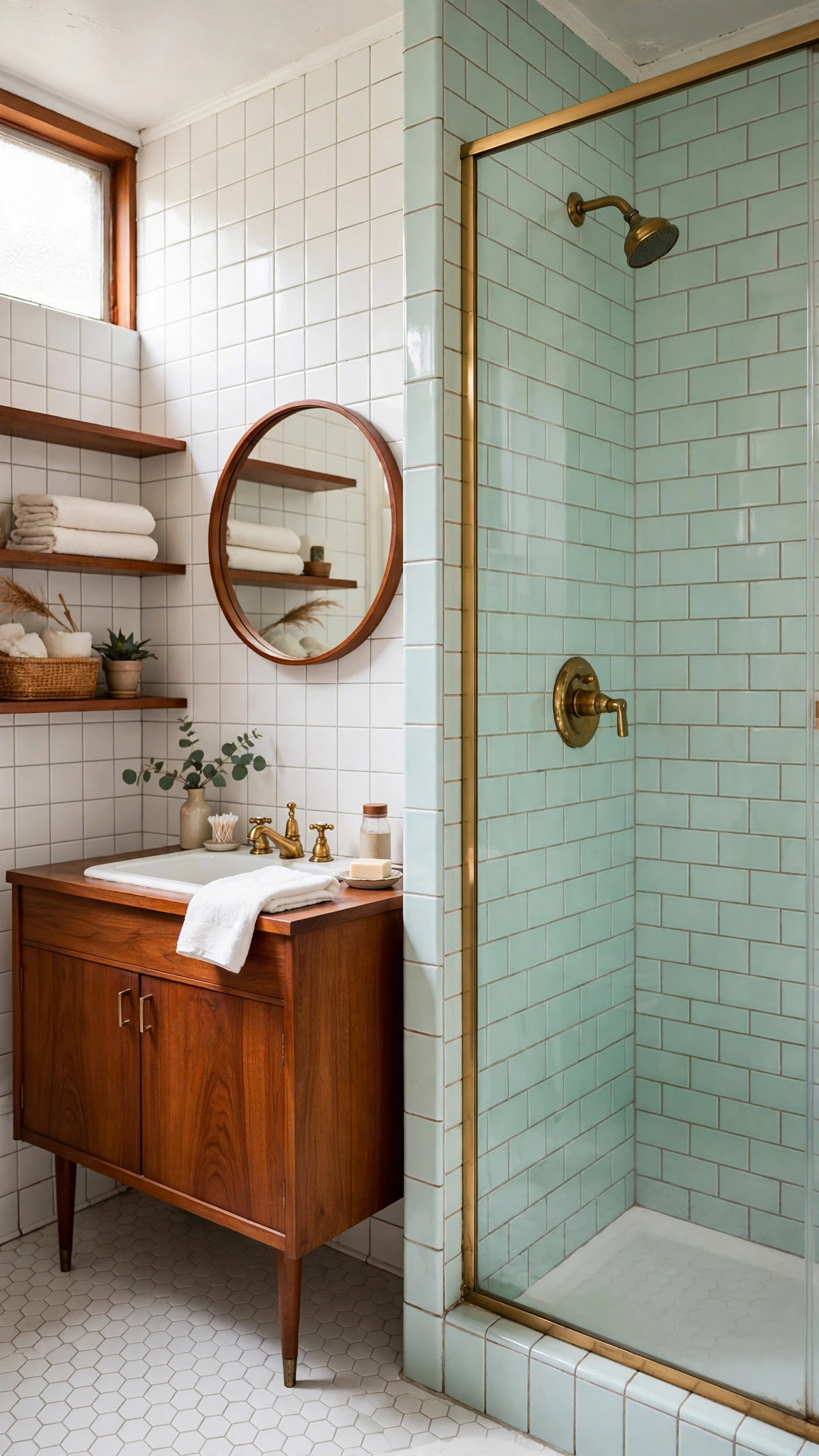
13. Retro Pastel Tiles in Mint, Pink or Turquoise
Pastel tiles in mint, pink, or turquoise add retro colour in a soft way. Use them in one zone, such as a shower wall or a vanity splashback. One pastel zone keeps the bathroom bright, while a whole pastel room can feel too much.
Limit pastel tile to that one zone, and balance it with white tile and warm wood. Check the pastel shade in daylight before you buy, because pastel colours change a lot in different light. Keep towels white, so the pastel tile stands out cleanly.
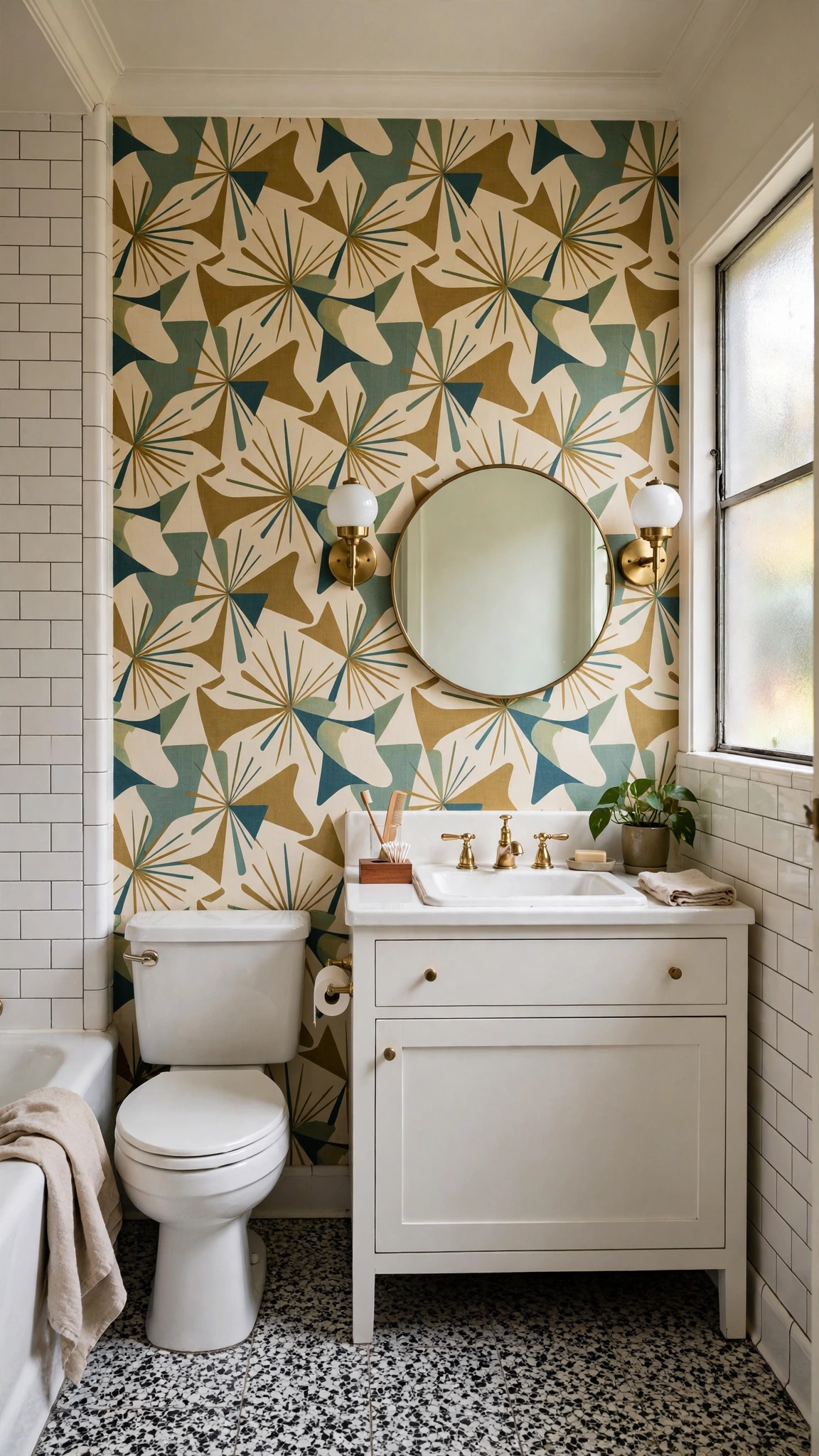
14. Patterned Wallpaper on One Feature Wall
Patterned wallpaper on one dry feature wall adds mid-century pattern without a tile change. Pick a mid-century pattern you like, and keep tile and paint plain elsewhere. This is a good accent, but it needs the right wall.
Choose wallpaper made for bathrooms, and keep it off shower walls. Make sure the room has good ventilation, so steam does not peel the paper. Pair a bold pattern with plain towels and fixtures, so the wall does not fight with the rest of the room.
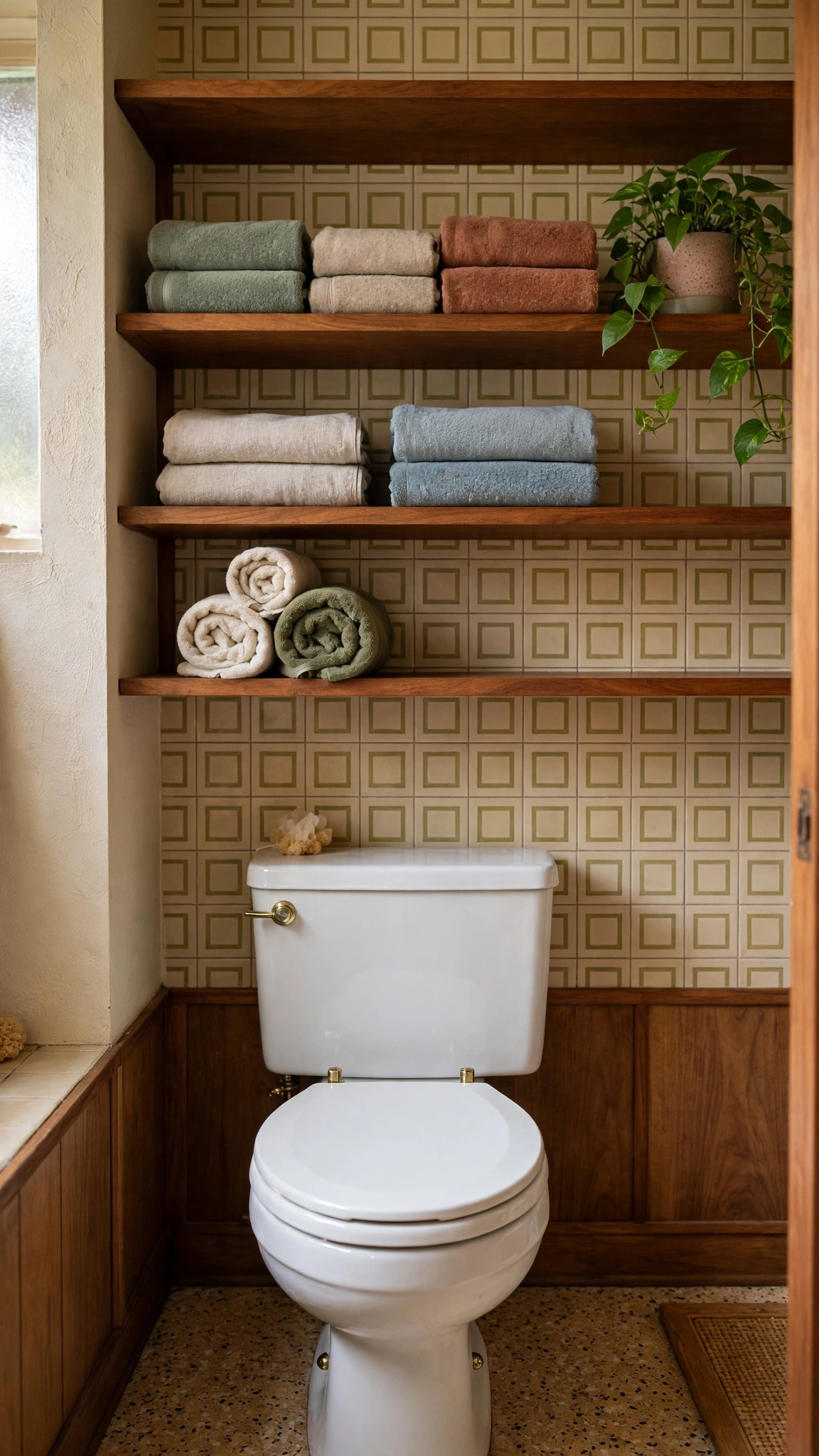
15. Open Shelving in Wood for Towels and Plants
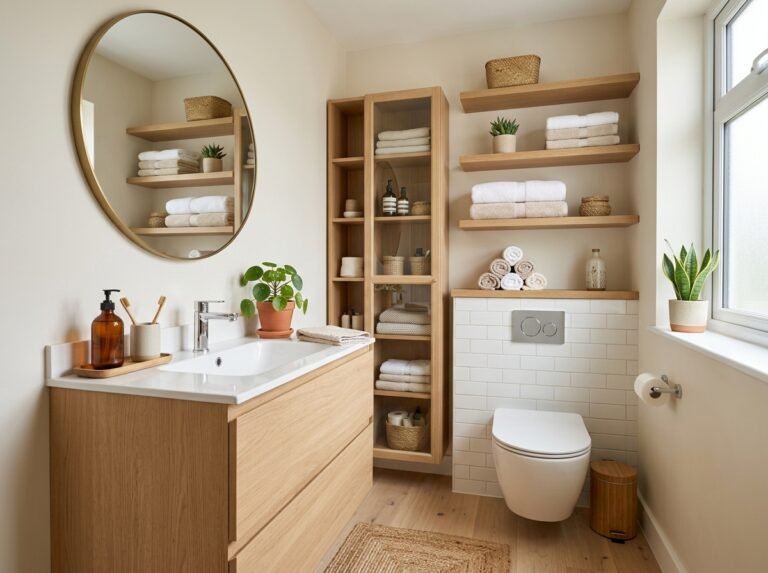
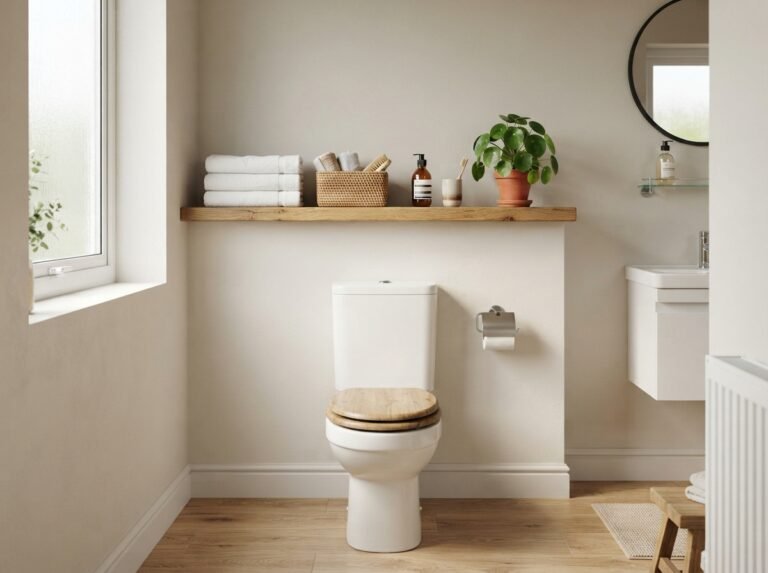
Open wood shelves add warmth without a bulky cabinet. Use them for folded towels, a plant, and a few styled items. They suit the space above a toilet or beside a vanity, where a closed cabinet would feel heavy.
Keep shelves out of direct splash zones, so wood and towels stay dry. Limit items on each shelf, and use baskets or folded towels to keep the look tidy. Closed storage elsewhere will hold clutter, so open shelves can stay calm.
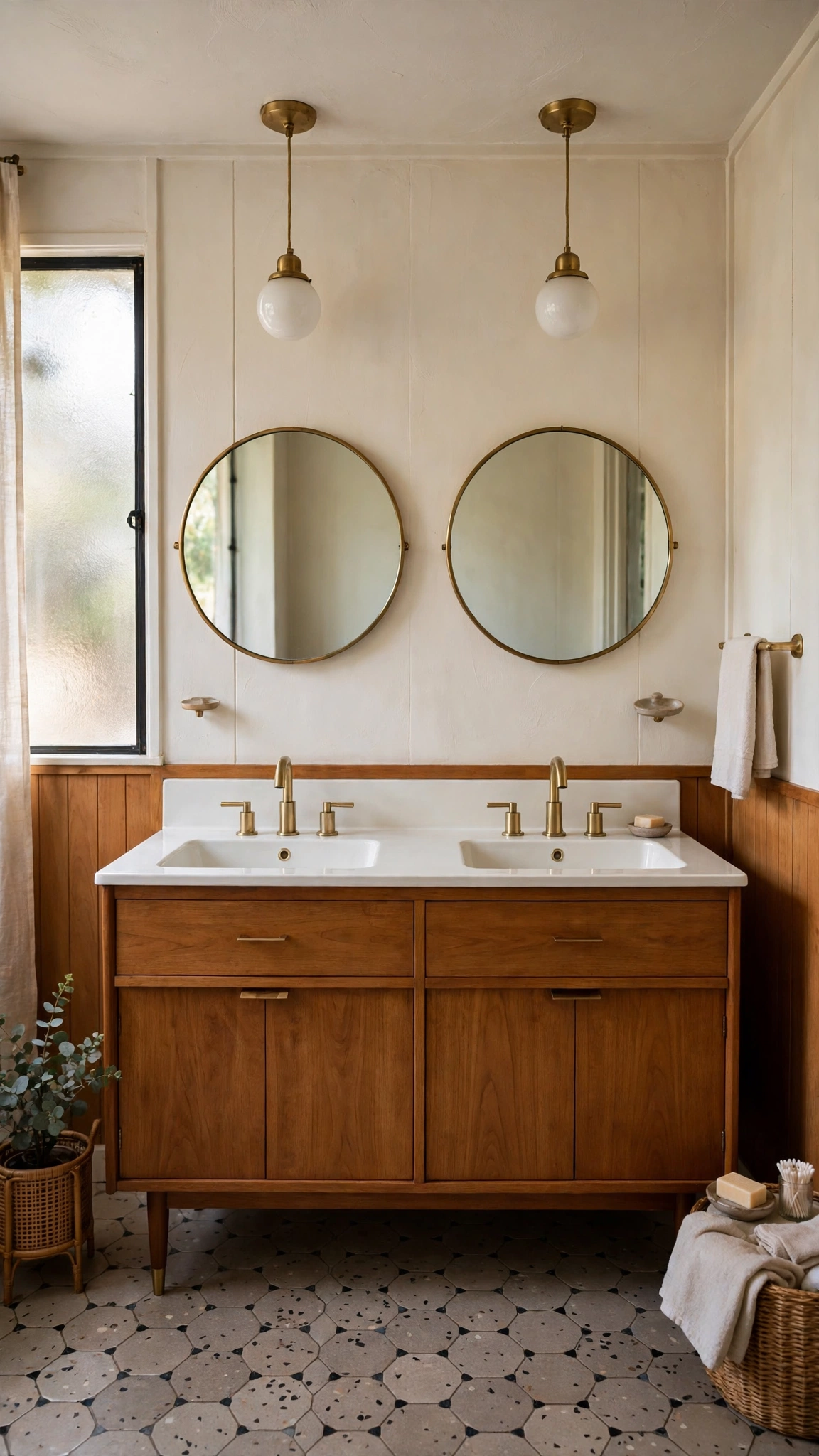
16. A Double Vanity That Still Feels Light
A double vanity with warm wood and two simple sinks suits a shared bathroom. Keep clear space below or between the basins, so it does not look like a heavy box. Two people can use it at once, and the room can still feel light.
Check width, mirror size, and storage for each person before you buy. Keep taps and mirrors matched, so the two sides look like one design. Leave counter space clear between basins, where you can, for daily items.
17. Black Accents to Ground the Retro Colours
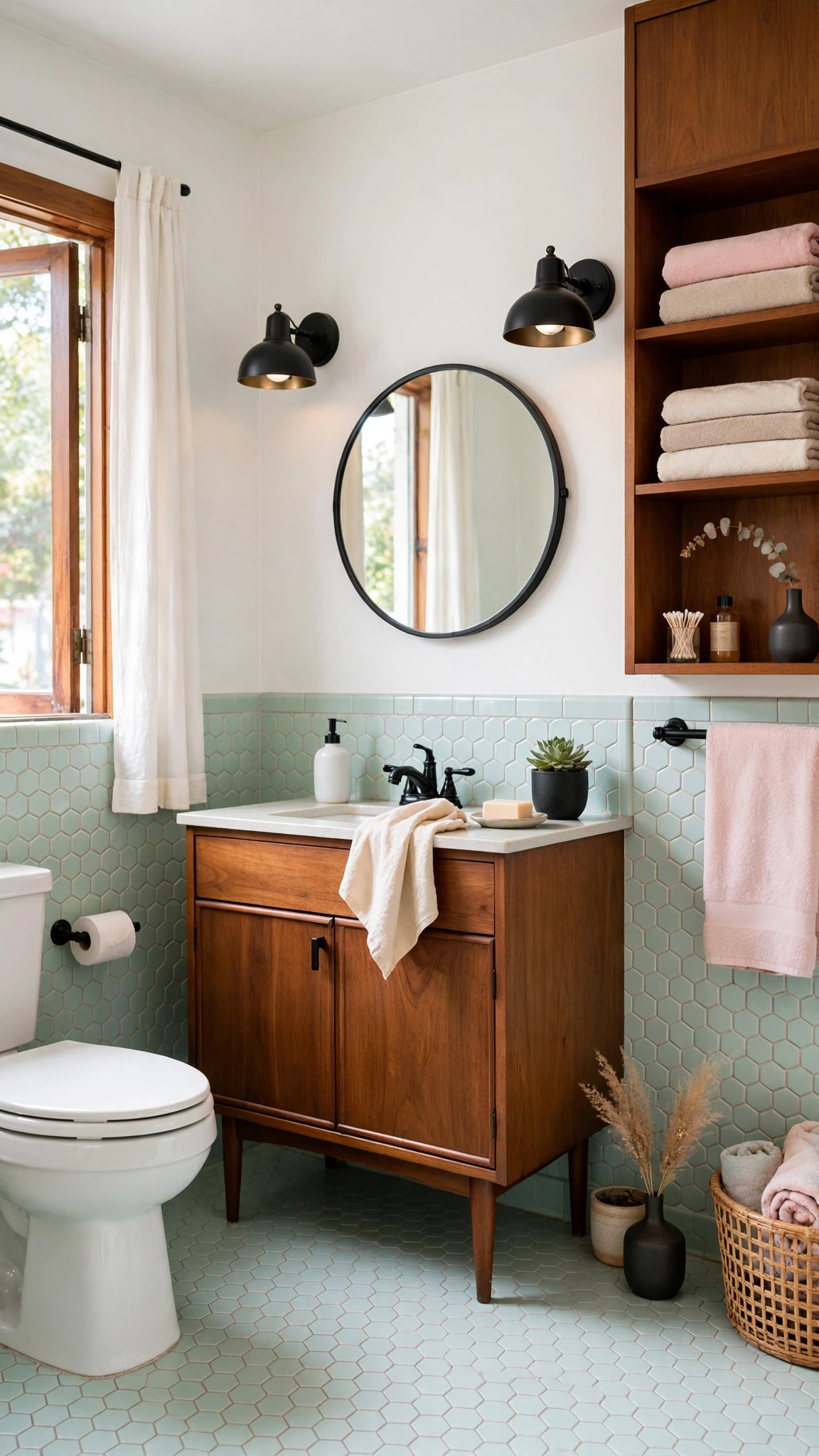
Small black accents ground retro colours and stop them from feeling too sweet. Use black in tap handles, a mirror frame, light fittings, or cabinet pulls. A little black goes a long way, so use it sparingly, not as a main colour.
Repeat black in two or three small places, and keep it matte for a modern feel. Balance it with warm wood and white, so the room stays warm. Black works well with pastel tile, because it gives the soft colour a clear edge.
- Repeat black in two or three small spots, such as pulls, a mirror frame, and a light fitting.
- Keep black matte and small, so it grounds the room without making it feel dark.
18. A Small Bathroom Layout That Follows Mid-Century Rules
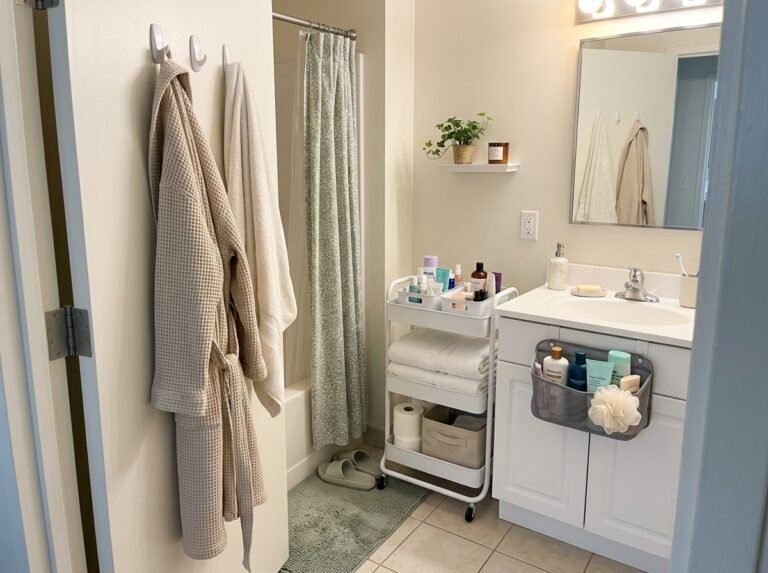
In a small bathroom, layout comes first, decoration second. Use a floating vanity, a large mirror, a glass shower, and clear floor space. These steps make the room feel larger before you add any colour.
Keep the door swing and storage clear, and use light walls. Pick compact fixtures that fit your real measurements, not just the shop display. A small room with a clear layout and one retro accent often feels better than a small room full of retro pieces.
19. Plants and Natural Texture to Soften the Retro Look
Plants and natural texture soften retro lines and colour. A plant, a woven basket, a linen towel, or a wood tray adds warmth in a small way. Keep it light, so the bathroom stays easy to clean.
Pick plants that suit bathroom light and humidity, and keep pots off wet surfaces. Limit texture to two or three items, so the room does not feel cluttered. A plant near the window and a linen towel on a rail is often enough.
20. Modern Storage That Hides the Clutter, Keeps the Style
Modern hidden storage is the modern half of this mix. Use vanity drawers, a medicine cabinet, and a shower niche, so clutter stays out of sight. The retro styling stays visible, while daily items stay hidden.
Plan one closed spot for each daily routine, such as morning washing and evening care. Keep countertops clear, except for one tray. Check drawer depth for tall bottles, so storage works in real daily use, not just in a photo.
How to Choose the Right Mid-Century Bathroom Setup
Choose by your main need first, then by room size, light, and budget. If you want a warm vanity, start there. If you want bolder tile, start with one wall or floor. If your room is small, start with layout, a floating vanity, and a large mirror.
Build in a gradual order that fits your budget. Start with cheap updates, such as a mirror, lights, and paint. Then change the vanity or taps. Tile and plumbing changes come last, when you are sure of the look and the cost.
Common Mid-Century Bathroom Mistakes to Avoid
Too many retro pieces at once is the most common mistake. A wood vanity, bold tile, patterned wallpaper, and a starburst light together can look themed, not stylish. Pick one base and one accent, then add more slowly.
Bold tile everywhere is another mistake, especially in a small room. So is ignoring storage, or picking finishes that are hard to clean. Do not start with plumbing before cheap updates, because a mirror or light change may give you much of the look for much less cost.
FAQS
What is a mid-century bathroom?
A mid-century bathroom is a bathroom with clean lines, warm wood, simple shapes, and a touch of retro colour or tile. It mixes those retro pieces with modern taps, toilets, and showers, so the room feels warm and stylish, not old or over-themed.
Can I get a mid-century look without a full remodel?
Yes, you can. Start with a new mirror, warm light, paint, and simple accessories, and add a shower curtain in a retro pattern. Those small changes carry much of the look. You can change the vanity or taps later, when your budget allows, without a full remodel.
What colours work best in a mid-century bathroom?
Use warm wood and white as your base, then add one retro colour, such as mint, mustard, turquoise, or soft pink. Keep other walls, floors, and fixtures calm. This one-colour rule stops the room from feeling busy, and it makes the retro colour stand out in a good way.
What tile suits a mid-century bathroom?
Terrazzo, geometric, hexagon, and subway tiles all suit a mid-century bathroom. Use terrazzo or a bold geometric tile on the floor, and keep wall tile simple. Pick a grout colour that hides dirt well, so the room stays easy to clean in daily use.
How do I mix retro and modern in a bathroom?
Keep retro pieces in wood, tile, and lighting, and keep modern pieces in taps, toilets, showers, and storage. This split works well, because the eye sees the retro style, while daily use stays easy and modern. Avoid too many retro pieces at once, or the room can start to feel themed.
How do I update a small mid-century bathroom?
Use a floating vanity, a large mirror, a glass shower, light walls, and closed storage in a small mid-century bathroom. Keep the floor clear and pick compact fixtures that fit your real measurements. These steps make the room feel larger, even with retro tile and warm wood in it.
How do I care for brass fixtures in a bathroom?
Wipe brass fixtures after use, and avoid harsh cleaners unless the finish allows them. First, check if your brass is lacquered or unlacquered, because the two need different care in a wet room. Gentle cleaning keeps brass warm and bright, and it helps stop water marks from building up.
Final Thoughts
Start with your main need, not with a long shopping list. If a warm vanity matters most, begin there. If bolder tile matters most, begin with one wall or floor. If your room is small, begin with layout. If budget matters most, begin with a mirror, a light, or paint.
Then add more over time, one change at a time. Pick one wood tone, one tile or colour accent, and one light or mirror change. Use the room for a week of daily life before you judge it, and add only the pieces that still feel right.