
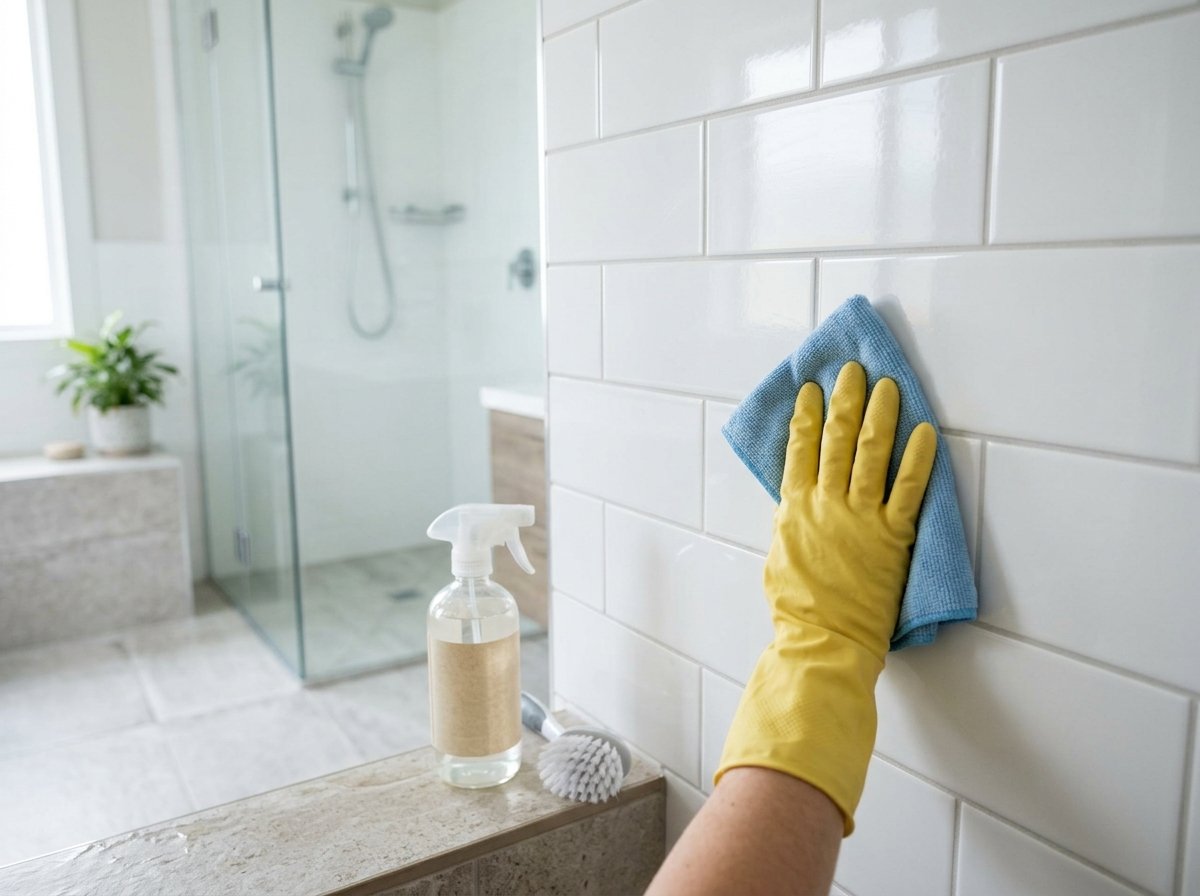
How to Clean Bathroom Tiles: Easy Steps for Walls, Floors & Grout
Knowing how to clean bathroom tiles the right way saves you time and keeps the surface from getting damaged. Soap scum, water spots, dark grout, and mold build up fast in a room that is wet every day. The good news is that most tile cleaning needs simple tools and a gentle method, not hard scrubbing. This guide shows you how to clean bathroom wall tiles, floor tiles, and grout step by step. It also covers stain removal, safe home remedies, and easy habits that keep tiles clean for longer.
Quick Answer: How to Clean Bathroom Tiles in 5 Steps
If you only need the short version, follow these steps:
- Open a window or turn on the fan. Fresh air makes cleaning safer.
- Remove loose dirt. Sweep or vacuum floors, and wipe wall tiles with a dry cloth.
- Apply a gentle cleaner. Use a pH-neutral tile cleaner, or a mild dish soap mixed with warm water.
- Scrub lightly. Use a soft sponge or brush and work in small sections.
- Rinse and dry. Clean water removes leftover residue, and a microfiber cloth prevents streaks.
The sections below explain each step in more detail, plus what to do for grout, mold, and tough stains.
What You Need Before You Start
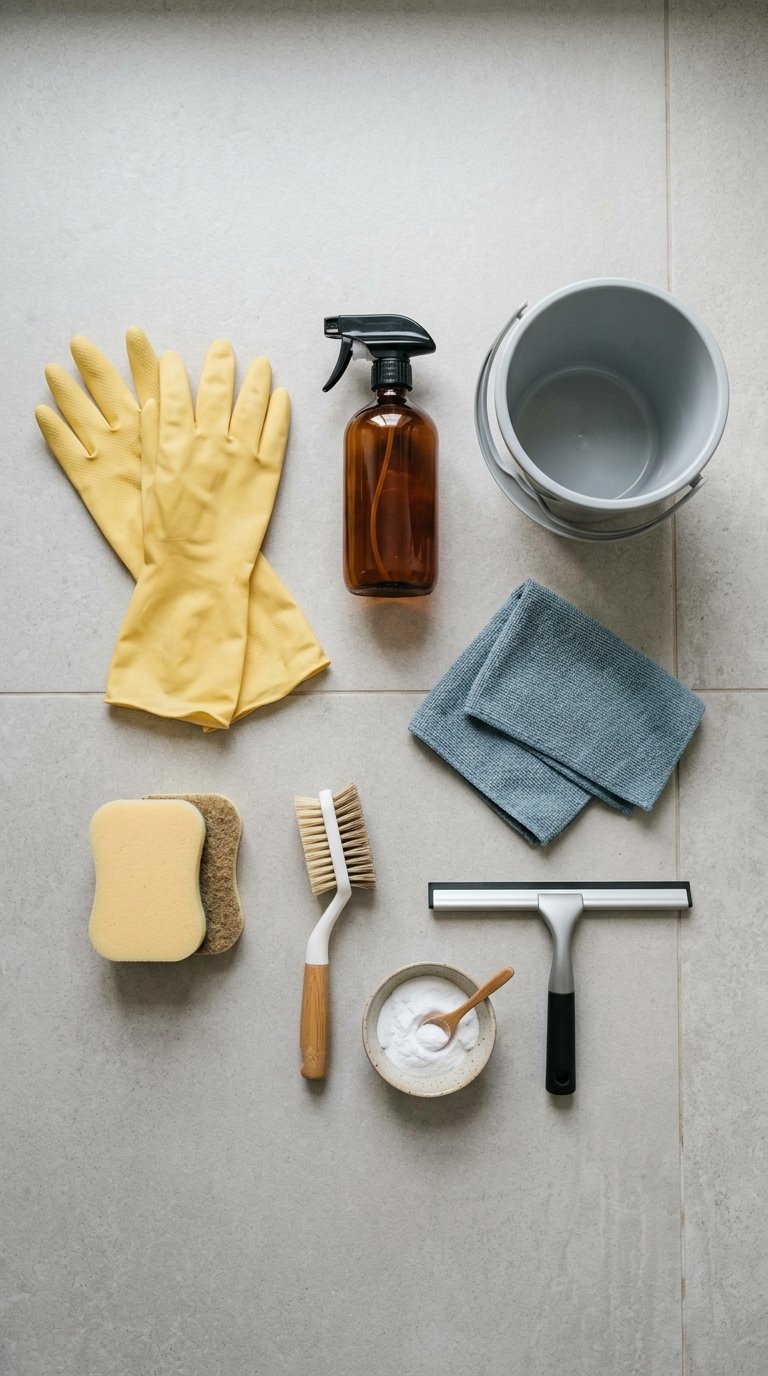
You don’t need many tools. Most of them are probably already at home.
- A pH-neutral tile cleaner, or mild dish soap
- A bucket and warm water
- A soft sponge and a microfiber cloth
- A soft-bristle brush or an old toothbrush for grout
- A squeegee for glass and glossy tiles
- A mop for floors
- Rubber gloves
- Baking soda for paste cleaning
Avoid steel wool and hard scouring pads. They scratch glazed tiles and can leave marks that collect more dirt.
Check Your Tile Type First
Different tiles need different care. Before you start, find out what you have. If you’re not sure, test any cleaner on a small hidden spot first, such as a corner behind the door, and wait a few minutes to see if it changes the surface.
Ceramic and Porcelain Tiles
These are the most common bathroom tiles, and they handle most gentle cleaners well. Use a pH-neutral cleaner or mild soap solution. Avoid abrasive powders and hard pads, which can dull the glaze.
Natural Stone Tiles (Marble, Travertine)
Natural stone is more sensitive. Acids such as vinegar and lemon juice can etch the surface and leave dull spots. Use a cleaner made for natural stone, and wipe spills quickly.
Glass and Glossy Tiles
These show water spots and streaks easily. Clean them with a soft cloth and a mild cleaner, then dry with a squeegee or microfiber cloth to prevent marks.
Textured or Non-Slip Tiles
The raised texture traps dirt, so use a soft brush to lift it out. Rinse well, because leftover soap can make the floor slippery.
How to Clean Bathroom Wall Tiles

Shower walls collect soap scum, body oils, and water spots. Here’s how to clean them without damaging the surface.
- Warm the room slightly (optional). Run a hot shower for a few minutes with the door closed, then turn it off. Warm tiles can make soap scum easier to loosen.
- Open a window or turn on the fan. Good airflow helps while you use cleaning products.
- Spray your cleaner in sections. Start at the top and work down. Smaller sections keep the cleaner from drying on the tile.
- Let it sit for a few minutes. Check the product label for the right time.
- Scrub gently. Use a soft sponge and light pressure. Pay extra attention to corners and areas near the faucet.
- Rinse with clean water. Use a cup, a spray bottle or the showerhead. Leftover cleaner can attract new dirt.
- Dry the tiles. Wipe with a microfiber cloth or squeegee to prevent streaks.
For tiles high on the wall, use a long-handled sponge instead of stretching or standing on a slippery surface.
How to Clean Bathroom Floor Tiles
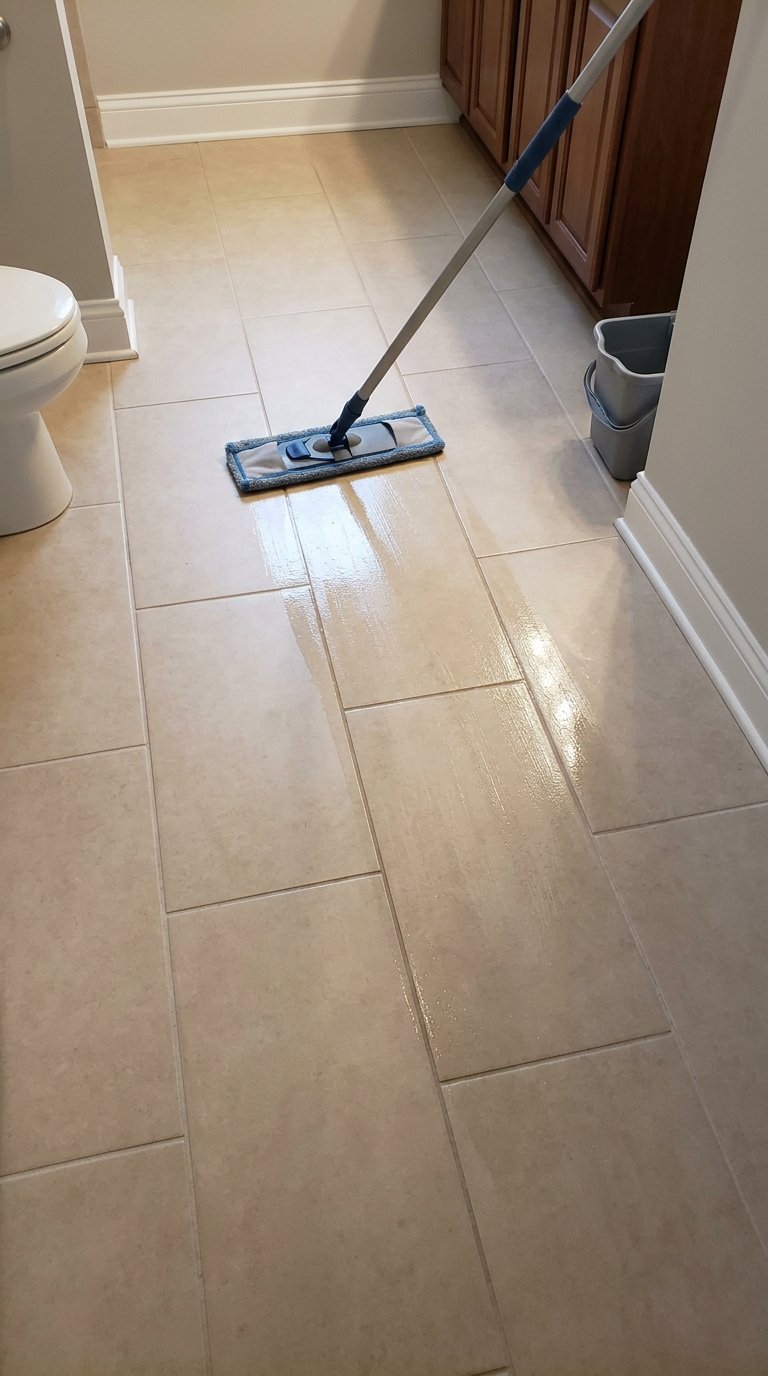
Bathroom floors collect hair, dust, soap residue, and footprints. They need a slightly different method from wall tiles.
- Clear the floor. Move bath mats, bins and anything else out of the way.
- Sweep or vacuum first. Hair and dust turn into mud when mixed with water, so remove them dry.
- Mix your cleaner. Use a pH-neutral floor cleaner in warm water, following the label for the right amount.
- Mop in sections. Start at the far corner and work toward the door. Wring the mop well so you don’t flood the floor.
- Clean the corners and edges. Use a soft brush near the toilet base, the tub edge, and the drain.
- Rinse the floor. Go over it with a mop dipped in clean water to remove leftover cleaner.
- Dry the floor. Use a dry mop or towel, and keep the fan running for a while.
Wet tile is slippery, so wear shoes with grip and keep the area clear until the floor is dry.
How to Clean Grout Between Bathroom Tiles
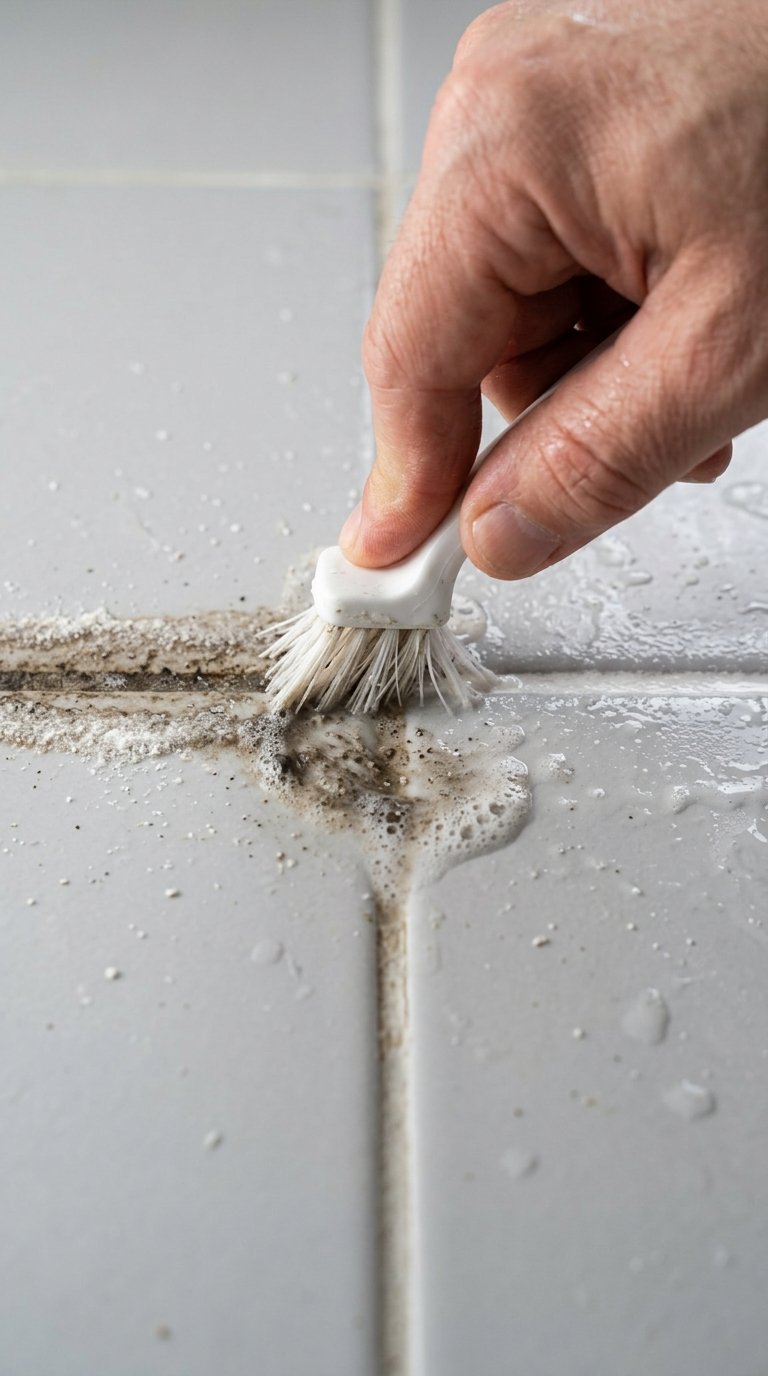
Grout is porous, so it absorbs dirt and moisture faster than the tile around it. That’s why grout looks dark even when the tile is clean.
Everyday Grout Cleaning
- Mix baking soda with a little water to make a thick paste.
- Spread the paste along the grout lines.
- Leave it for about 10 to 15 minutes.
- Scrub with a soft brush or old toothbrush.
- Wipe with a damp cloth, then rinse and dry.
Deep Cleaning Stained Grout
If the grout is still dark, use a cleaner made for grout, or a hydrogen peroxide solution on light-colored grout. Test a small area first, because some products can lighten or discolor grout. Scrub with a stiff nylon brush, not a metal one, which wears away the grout.
When to Reseal Grout
Sealed grout resists stains and moisture better. If water soaks into the grout instead of beading on top, it may need resealing. Clean and dry the grout fully before you apply a sealer, then follow the product instructions.
How to Remove Soap Scum, Hard Water Stains and Mold
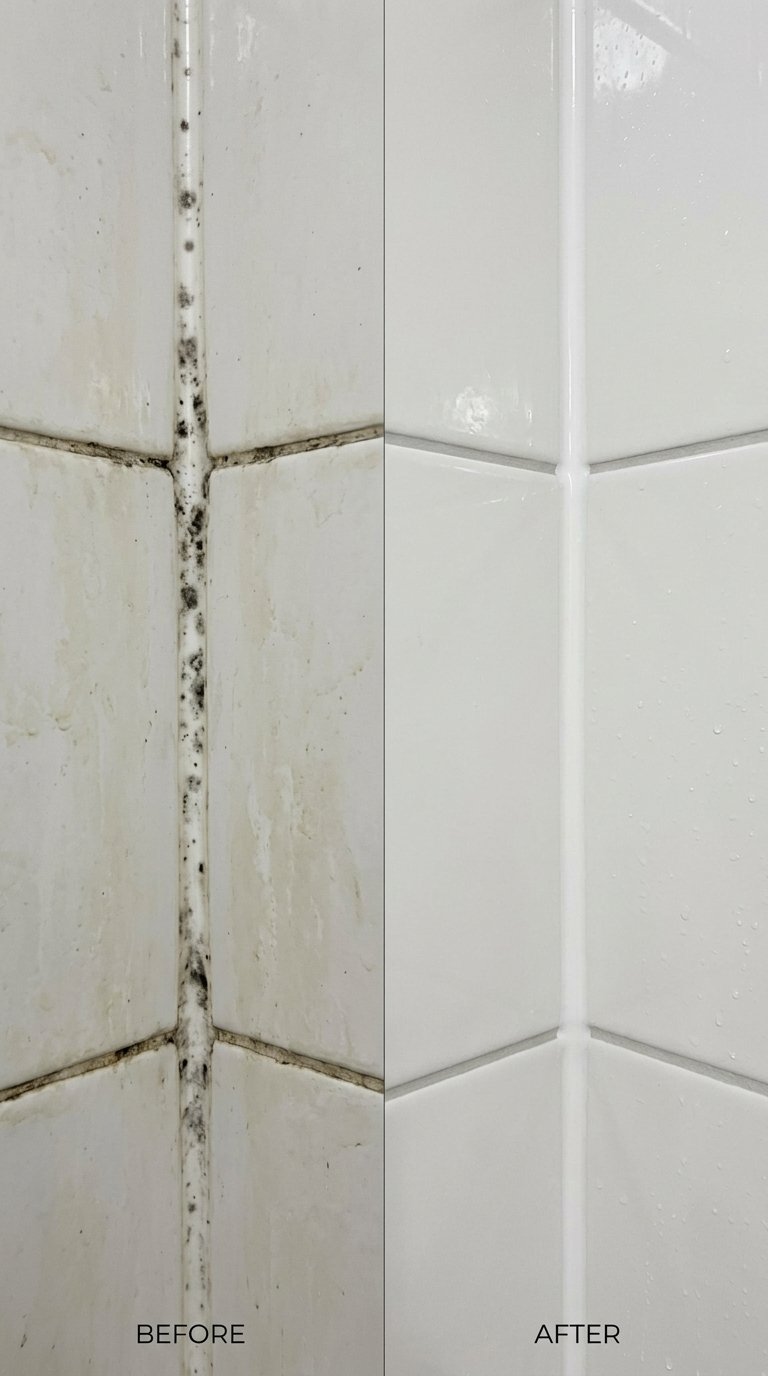
Some stains need a more targeted method. Here’s how to handle the most common ones.
Soap Scum
Soap scum is a chalky film left by soap and minerals in water. Spray a bathroom cleaner made for soap scum, or mild dish soap with warm water. Let it sit for a few minutes, scrub gently, and rinse well. Dry with a squeegee afterward to stop it coming back quickly.
Hard Water Stains and Limescale
Hard water leaves white or cloudy deposits. On ceramic and porcelain, a mix of equal parts white vinegar and water can dissolve them. Spray it, wait a few minutes, wipe, and rinse. Do not use vinegar on natural stone. For stone, choose a stone-safe descaler.
Mold and Mildew
Mold grows in damp, warm places, especially in grout and corners.
- Ventilate the room and wear gloves.
- Spray a mold cleaner or a hydrogen peroxide solution on the area.
- Let it sit for the time listed on the label.
- Scrub gently with a soft brush.
- Rinse well and dry the area completely.
If mold covers a large area, keeps returning or appears on walls behind the tile, there may be a moisture problem. In that case, find the source of the leak or poor ventilation, or ask a professional.
Home Remedies: What Works and What to Avoid
Many people prefer simple home ingredients. Some work well, but only on the right surface.
Baking soda is mild and works well as a paste on ceramic and porcelain grout. It’s a good first step for light stains.
White vinegar helps dissolve hard water deposits and soap film on ceramic and porcelain. Dilute it with water, don’t leave it sitting for long, and avoid it on natural stone. Overusing acid on grout can also wear it down over time.
Lemon juice is also acidic, so the same rules apply: keep it away from natural stone.
Dish soap is a safe, gentle option for regular cleaning on most tiles.
These remedies are helpful for light cleaning, but they won’t always remove heavy buildup. For deep stains, a product made for tile can save you time and effort.
Safety: Never Mix These Cleaners
Mixing cleaning products can create harmful fumes. Keep these rules in mind:
- Never mix bleach and ammonia. The mixture releases toxic gas.
- Never mix bleach and vinegar. This can also release dangerous fumes.
- Don’t combine different cleaners. Use one product at a time and rinse the surface well before using another.
- Ventilate the room. Open a window and run the exhaust fan.
- Wear gloves. Add eye protection when you spray overhead.
- Follow the label. Always read the product instructions, especially about dilution and contact time.
If you’re unsure about a product, stick with mild soap and water.
How Often Should You Clean Bathroom Tiles?
There’s no single schedule for every home, because it depends on how many people use the bathroom and how much steam and moisture it gets. A simple routine works for most households:
- After showers: Wipe or squeegee the walls and glass to reduce water spots.
- Weekly: Clean the floor and wipe the wall tiles around the shower.
- Monthly: Do a deeper clean, including grout lines and corners.
- Once or twice a year: Check grout and caulk, and reseal if needed.
If you see soap scum or mold forming earlier, clean sooner. Small, frequent cleaning is easier than scrubbing heavy buildup.
How to Keep Bathroom Tiles Clean Longer
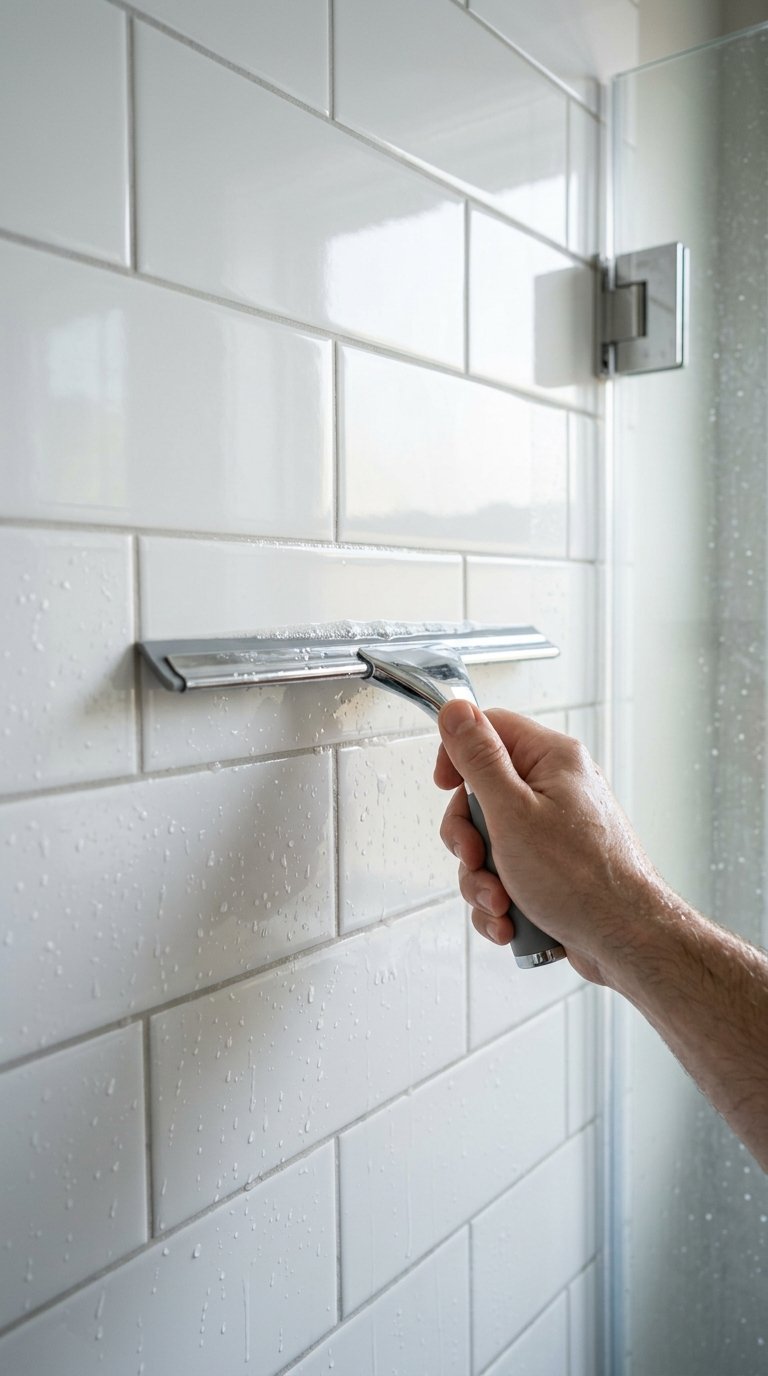
A few habits reduce how often you need to deep clean.
- Squeegee after showers. It removes water before minerals and soap can dry on the surface.
- Run the exhaust fan. Leave it on during the shower and for a while after, so moisture leaves the room.
- Leave the door open. Air movement helps the room dry faster.
- Hang towels and mats to dry. Damp fabric keeps the room humid.
- Wipe splashes near the sink. Toothpaste and soap marks are easier to remove when fresh.
- Seal grout when needed. Sealed grout absorbs less water and stains less.
Common Mistakes to Avoid
- Using abrasive pads. They scratch glazed tile and make dirt stick more easily.
- Using vinegar or lemon on natural stone. The acid can cause dull marks.
- Mixing cleaning products. This can create harmful fumes.
- Skipping the rinse. Leftover cleaner leaves a film that attracts dirt.
- Using too much water on floors. Water can seep into grout and edges.
- Ignoring ventilation. Poor airflow encourages mold and slows drying.
- Using a metal brush on grout. It damages the grout and makes it dirty faster.
FAQs
Can I use vinegar on all bathroom tiles?
No. Diluted vinegar works on most ceramic and porcelain tiles, but you should avoid it on natural stone such as marble or travertine. Acids can etch stone and leave dull spots. If you’re unsure, test a small hidden area first.
Is baking soda safe on tile and grout?
Yes, in most cases. Baking soda is mild, and it works well as a paste on ceramic and porcelain grout. Scrub gently with a soft brush and rinse well.
How do I clean bathroom tiles without scrubbing hard?
Let the cleaner sit on the surface for a few minutes before you wipe. Warm tiles and a soft sponge also help loosen soap scum without heavy pressure.
Why do my bathroom tiles look cloudy after cleaning?
Cloudy tiles often come from leftover cleaner or hard water minerals. Rinse thoroughly with clean water, and dry the surface with a microfiber cloth. For mineral deposits on ceramic or porcelain, a diluted vinegar solution may help.
How do I clean black or dark bathroom tiles without streaks?
Dark tiles show water spots and residue clearly. Use a mild cleaner, rinse well and dry right away with a clean microfiber cloth or squeegee.
Can I mix bleach and vinegar?
No. Mixing bleach with vinegar, ammonia or other cleaners can release dangerous fumes. Use one product at a time, rinse the surface and keep the room ventilated.
How do I stop mold from coming back on tiles?
Reduce moisture. Run the exhaust fan, squeegee wet surfaces, dry towels outside the bathroom and fix any leaks. Keeping grout sealed also helps.
How do I clean textured or non-slip floor tiles?
Use a soft brush so the bristles reach into the texture, then mop and rinse well. Leftover soap can make the floor slippery, so thorough rinsing is important.
How often should I reseal grout?
It depends on the grout, the sealer and how wet the area gets. A simple test is to drop a little water on the grout. If it soaks in quickly, it’s time to reseal. Follow the sealer’s instructions.
Conclusion
Clean bathroom tiles don’t need harsh products or hard scrubbing. Start by checking your tile type, use a gentle cleaner, work in small sections and rinse well. Treat grout, soap scum and mold with the right method for each, and never mix cleaning products.
If your tiles are very dirty, start with the walls, then the floor, then the grout. After that, a quick squeegee after showers and good ventilation will keep them cleaner for much longer.






One Comment