
Wall Tapestry for Bedroom: 18 Ideas, Size Guide & How to Hang One
A blank wall above the bed makes a bedroom feel unfinished, and a wall tapestry for the bedroom fixes that faster than almost any other piece of decor. Fabric covers a large area, softens hard walls, adds color and texture, and hangs without a heavy frame. The hard part is choosing the right size, style, and hanging method for your room.
This guide covers bedroom tapestry ideas for every layout, from a tapestry behind the bed to small-room and renter-friendly setups. You’ll also find fabric advice and styling details that make the finished wall look planned, not pinned up.
How to Choose a Wall Tapestry for Your Bedroom
Start with the wall, not the design. Measure the width of your headboard or the empty wall space, then decide whether the tapestry should be horizontal or vertical. A wide, horizontal tapestry wall hanging suits the wall above a bed. A vertical one works on narrow walls, beside shelving or in a corner.
Next, think about mood. Boho wall tapestry designs add texture and warmth, neutral woven pieces keep a bedroom calm, and dark landscapes make it feel cozy and enclosed. Match the main tapestry color to something already in the room, such as bedding, curtains, or a rug, so the wall feels connected to the rest of your bedroom wall decor.
Finally, check how you’ll hang it. Rental walls, thin fabric, and heavy woven pieces all need different methods, which the later sections cover. Whether you want a large tapestry for a master bedroom or a small one for a guest room, these three choices (size, style, hanging method) decide how good the result looks.
If you want a more permanent look on the wall behind the bed, peel-and-stick wall murals are another way to fill the space without a frame.
1. Hang a Tapestry Behind the Bed as a Headboard
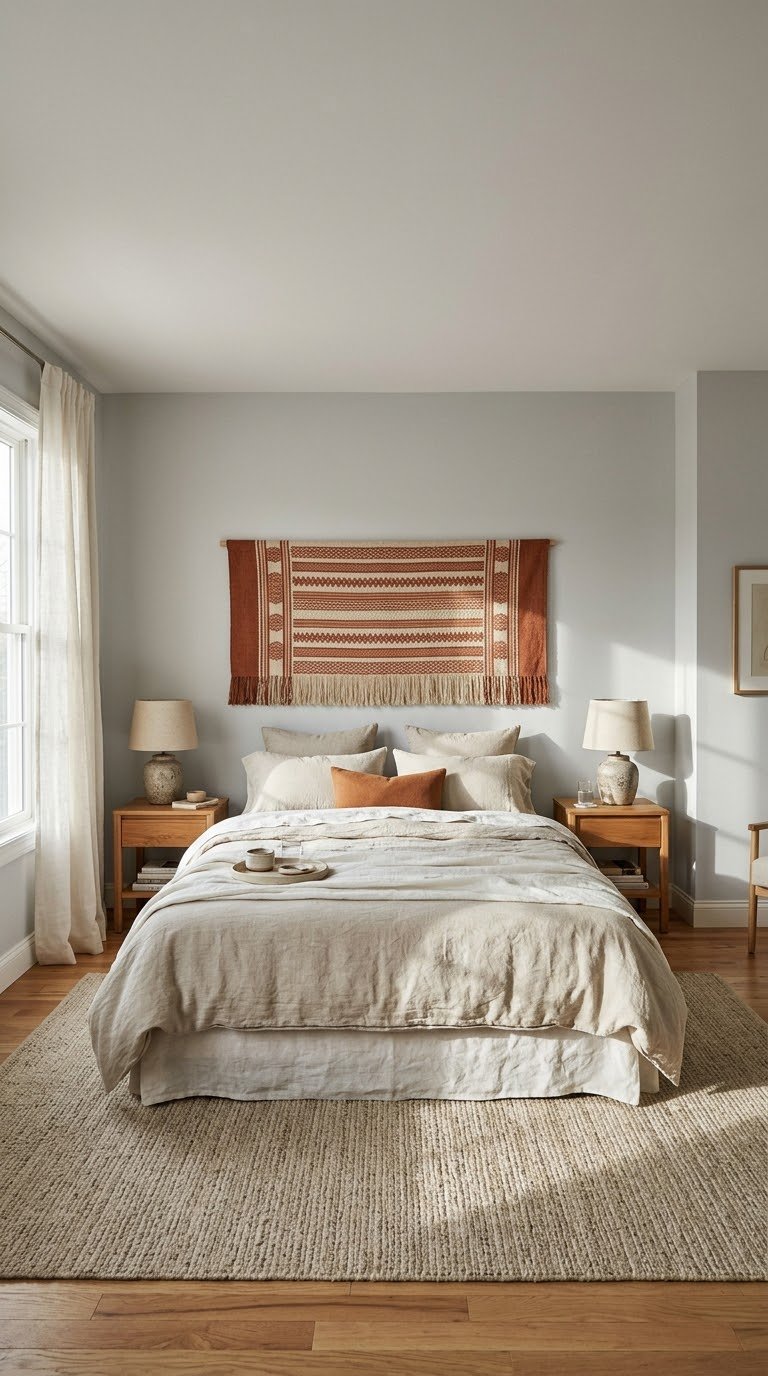
The most popular placement is also one of the most useful. If your bed has no headboard, or a plain one, a tapestry behind the bed gives the wall a focal point and makes the bed look anchored.
Center the tapestry on the bed. Make it at least as wide as the headboard, and a few inches wider if possible, so it doesn’t look undersized. Hang it so the lower edge sits just behind the top of the pillows or headboard. A gap of a few inches above the mattress looks tidy, while a tapestry hung too high floats away from the bed.
The trade-off is pillows rubbing the fabric. Choose a tightly woven piece, or keep the lower edge slightly above pillow height.
2. Drop a Tapestry from the Ceiling for a Canopy Effect

If you want height, hang the tapestry from a rod or hooks near the ceiling and let it fall behind the bed. It draws the eye upward, which helps a bedroom with lower ceilings feel taller and gives the bed a defined, softer backdrop.
Use a lightweight fabric so it falls evenly. Sheer cotton, gauze or thin printed fabric drapes better than thick woven pieces. A rod with clip rings or a wooden dowel keeps the top edge straight. Leave a few inches of space between the fabric and any wall lamp or vent to avoid heat or fire risks.
This style suits bohemian and romantic bedrooms. In a very small room, keep the fabric light-colored so it doesn’t feel heavy.
3. Use a Tapestry Over the Bedroom Window

A tapestry can double as a window treatment, which helps in rentals where you can’t replace the curtains. Hang it from a curtain rod or tension rod so it covers the window frame and falls to the sill or floor.
Choose a lighter fabric if you still want daylight. A thicker tapestry blocks most of the light, which is useful for night-shift sleepers and east-facing bedrooms, but it will not fully replace blackout curtains. Direct sun also fades dyes over time, so avoid placing a favorite piece where it faces strong afternoon light all day.
For a clean look, mount the rod a few inches above the window frame and keep the hems straight.
4. Create a Reading Nook with a Side-Wall Tapestry

An empty wall beside a chair or window seat is a good place for a vertical tapestry. It gives the corner a reason to exist and makes the nook feel separate from the rest of the room.
Pick a tapestry about as tall as the chair back plus the space above it, and hang it close to the seat so the two read as one group. Add a floor lamp or a small wall sconce to the side, and keep the palette consistent with the chair’s upholstery.
A narrow tapestry here also saves wall space for the bed wall, so each wall gets a different job.
5. Place a Tapestry Above a Dresser or Desk

If your bed wall is taken by windows or a door, move the tapestry to the dresser or desk wall. It works like a large piece of art above a piece of furniture, and it gives a plain dresser top a clear backdrop for mirrors, trays and lamps.
Keep the tapestry about two-thirds the width of the furniture beneath it, and leave a hand’s width of space above the dresser. A tapestry that spans the full width can look heavy, while one that’s too small looks lost.
Be careful with a desk wall. Busy patterns behind a laptop can be distracting during video calls, so choose a calm, low-contrast design.
6. Try a Boho Woven Tapestry with Fringe and Texture
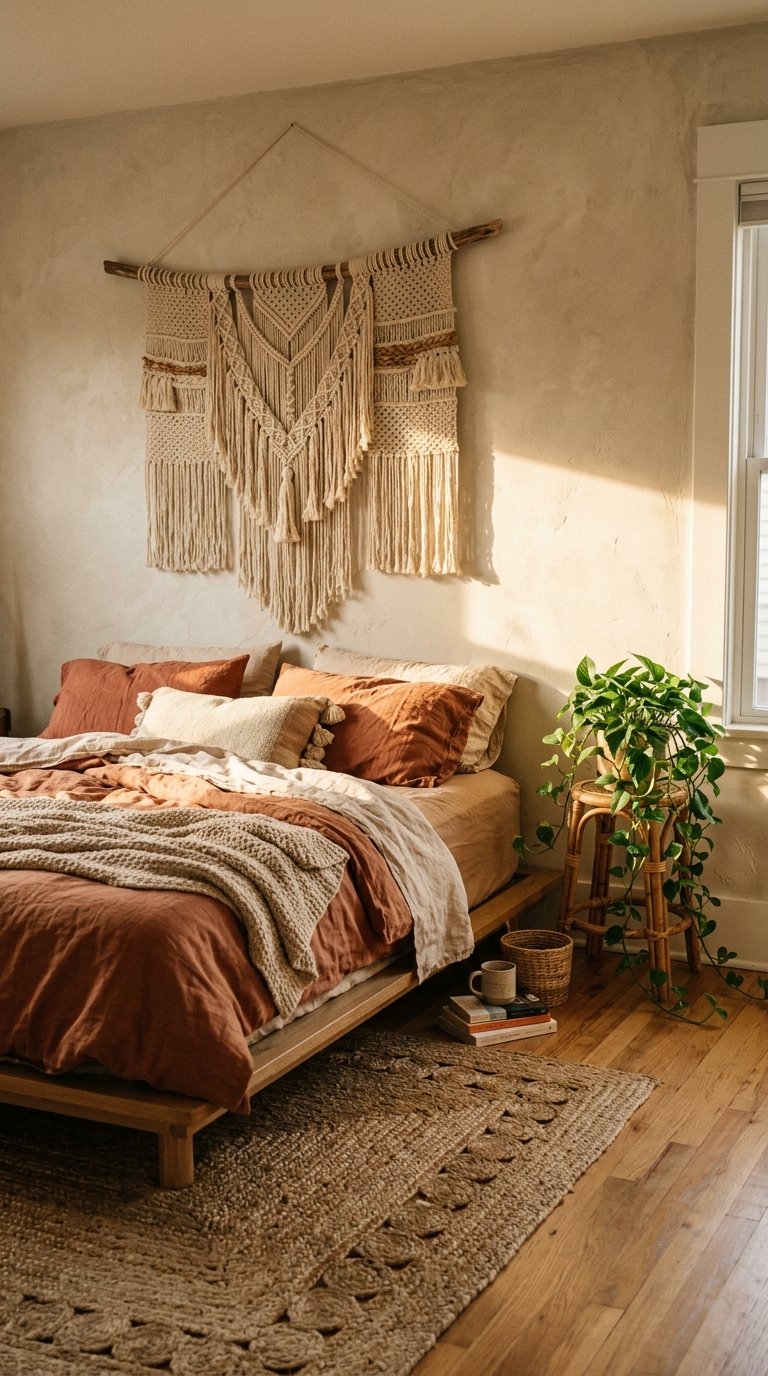
Boho tapestries work because they add texture, not only pattern. A cotton woven piece with fringe, tassels or macramé details gives a flat wall depth and pairs well with rattan, jute rugs and linen.
Keep the rest of the room simpler than the tapestry. If the wall already has a lot of pattern, choose plain bedding in cream, terracotta or sand. A few plants and a wood bedside table finish the look without crowding it.
The downside is dust. Fringe and heavy weaves collect it, so vacuum them lightly with a brush attachment every few weeks.
7. Choose a Neutral, Minimalist Tapestry for a Calm Bedroom
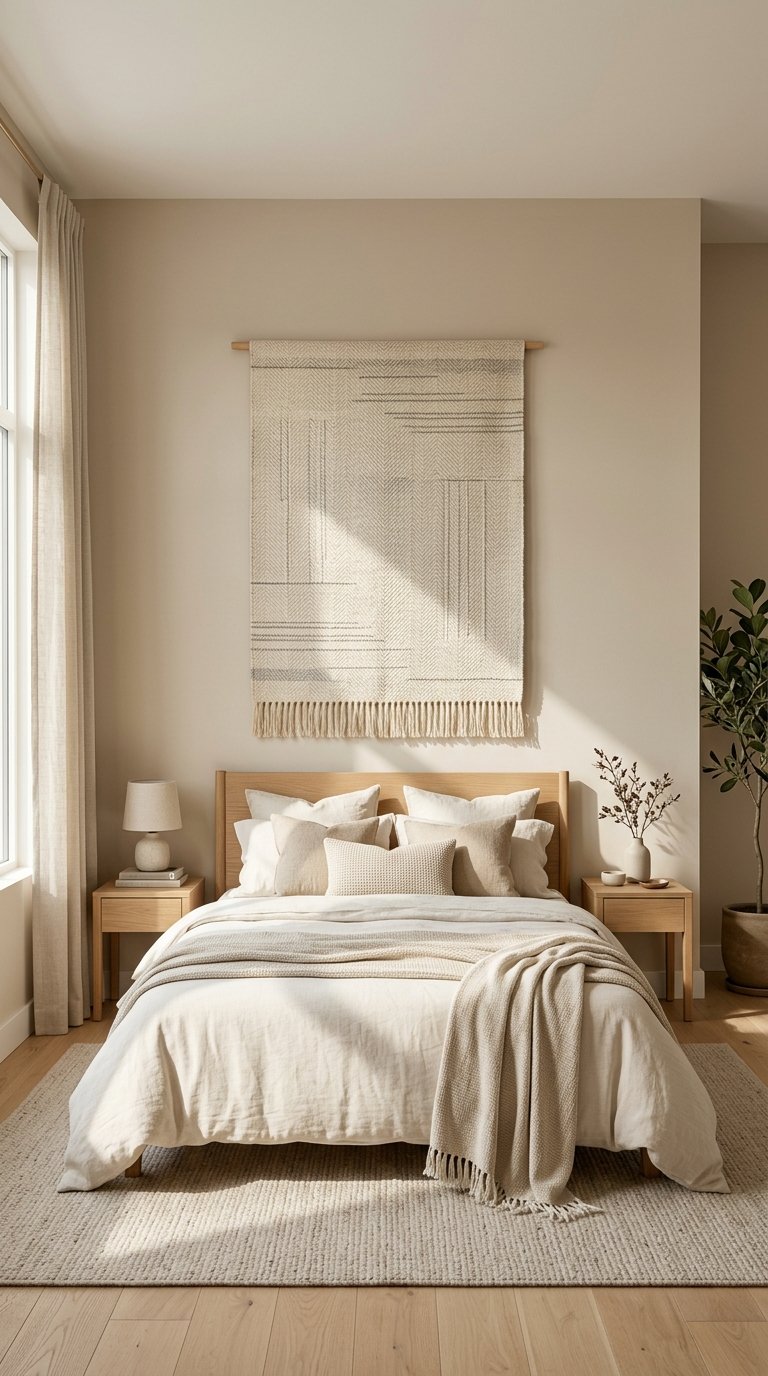
Not every tapestry needs a loud print. A neutral woven piece in cream, oat or soft gray adds warmth without competing with the bed or furniture, and it suits modern and minimalist bedrooms where color is kept low.
Look for subtle texture, like a herringbone weave, a tonal geometric pattern or a simple line design. Use one tapestry and leave the surrounding wall bare. Matching its tone to the bedding creates a quiet, layered look.
This idea also helps small bedrooms feel less crowded, because a light, low-contrast piece won’t visually shrink the wall.
8. Go Dark and Moody with a Deep-Toned Tapestry
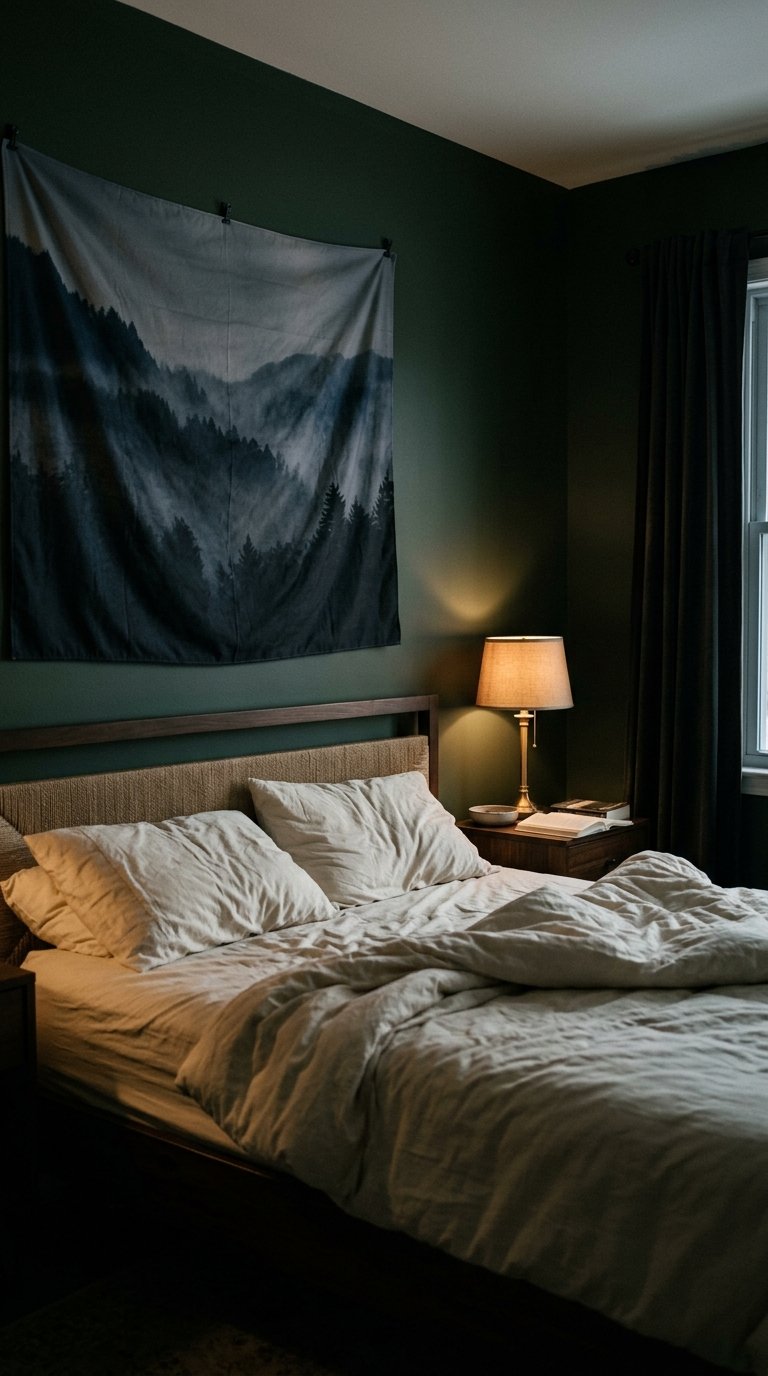
Dark tapestries in navy, forest green, charcoal, or black make a bedroom feel enclosed and restful. They look best in rooms with enough light, or on a wall painted a similar deep shade so the edges blend in.
Pair them with warm lighting and softer bedding, like a cream duvet or textured throw, so the room doesn’t turn heavy. Brass or wood details help balance the darkness.
In a small room with weak daylight, a very dark tapestry can make the wall feel closer. If that’s your bedroom, choose a deep tone with some visible pattern or lighter detail.
9. Hang a Vintage or French-Style Tapestry

Pastoral scenes, woven gardens and faded florals suit traditional bedrooms and anyone who likes a collected look. They pair naturally with linen bedding, painted wood furniture and soft, muted colors.
A real antique tapestry can be heavy and delicate, so use a rod with proper support or mount it on a wooden batten rather than pushing pins through old fabric. Modern reproductions are lighter and easier to hang.
Keep the surrounding decor quiet. A vintage tapestry already carries a lot of detail.
10. Bring in a Forest or Mountain Landscape

Landscape tapestries tend to feel calm because they act like a window to another place. Forests, mountains, lakes, and misty valleys work well, especially in cool colors like green, blue, and soft gray.
For sleep-friendly rooms, choose low contrast and avoid very busy, high-detail scenes that tire the eye. A horizontal landscape fits the space above a bed, while a vertical forest scene works in a narrow nook.
Wood furniture, green plants, and warm lighting echo the theme without making it look like a themed room.
11. Add a Celestial Tapestry with Moon Phases or Stars

Moon phases, suns, and star charts give a bedroom a quiet, graphic look. Black and white versions work in modern spaces, and warm gold on navy suits cozy rooms.
Because the pattern repeats, a celestial tapestry looks neat even in a small bedroom. It also pairs well with simple bedding. Add a soft bedside lamp and avoid layering it with several other busy patterns.
One practical tip: check that the fabric is opaque. Thin printed fabric can show wall marks or outlets behind it.
12. Use a Vertical Tapestry in a Small Bedroom
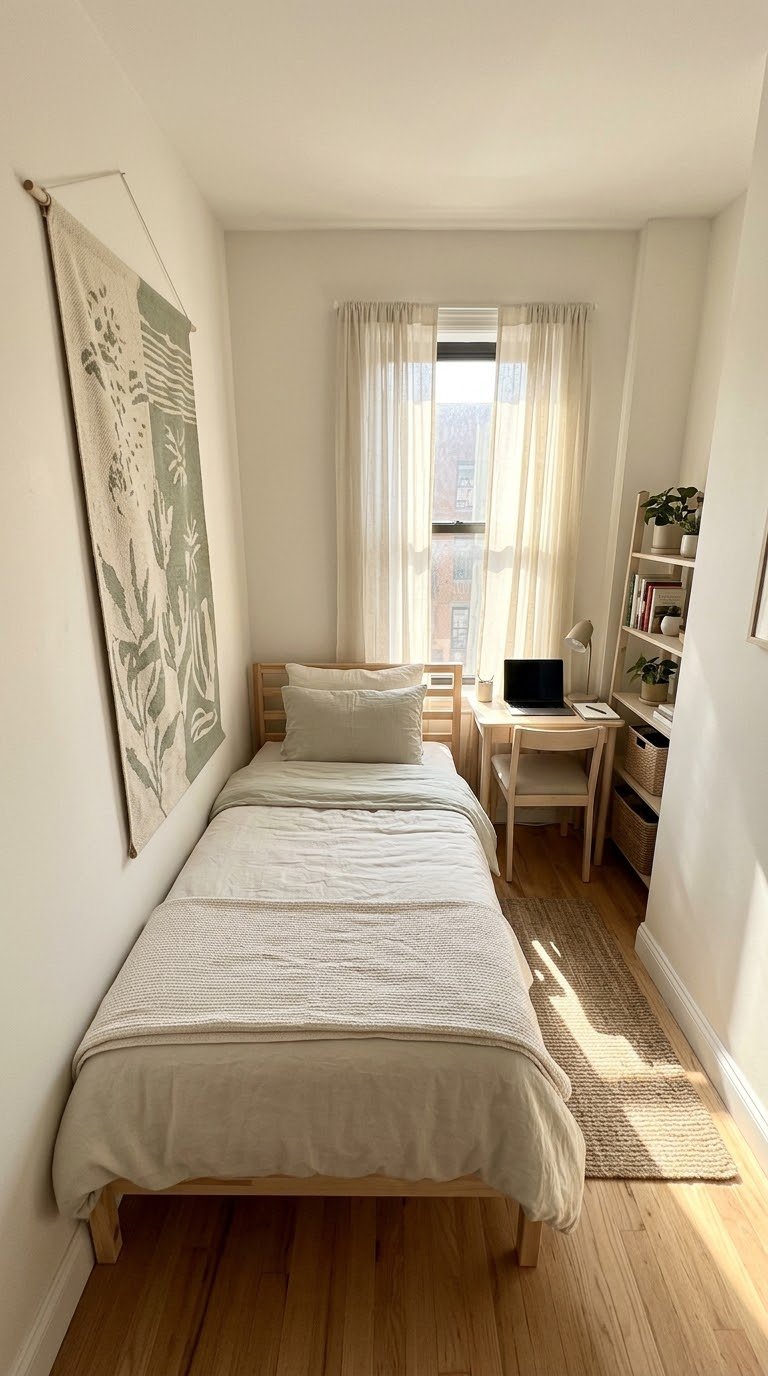
In a small bedroom, wall space is limited, so scale matters. A tall, narrow tapestry draws the eye up and makes the ceiling feel higher, which helps rooms with a narrow bed or low furniture.
Hang it beside the bed or on the wall opposite the door, and use light colors to keep the room open. Skip several small decorations around it. One strong vertical piece looks cleaner than many tiny ones.
If you want it above the bed, choose a tapestry that matches the bed’s width and avoid leaving it floating high above the pillows.
A tall, narrow piece keeps the wall light, and it pairs well with other ways to make a tiny room feel bigger, like lighter bedding and less clutter.
13. Match the Tapestry Size to Your Bed
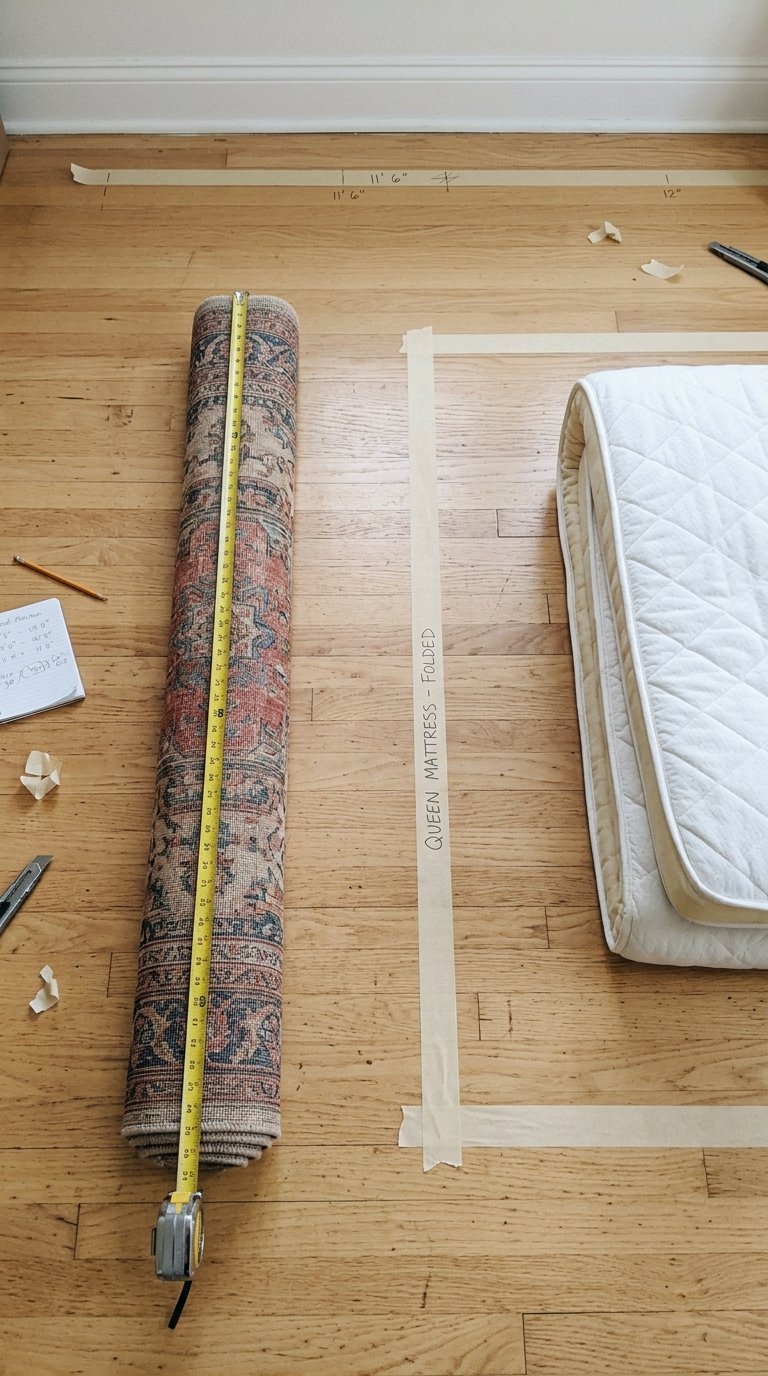
Size is where many tapestry walls go wrong. Standard US mattress widths give you a starting point: a twin is about 38 inches wide, a full about 54, a queen about 60, and a king about 76. Your tapestry should be at least as wide as the headboard, and a little wider usually looks best.
- Twin (about 38 in): Choose a tapestry equal to or slightly wider than the headboard.
- Full (about 54 in): Choose one equal to or a few inches wider than the headboard.
- Queen (about 60 in): Choose one at least as wide as the bed, ideally wider.
- King (about 76 in): Choose a large tapestry, or hang two side by side.
Tapestry sizes vary by seller, so check the listed dimensions before ordering. If a single piece is too small for a king bed, hang two matching tapestries with a small gap rather than one undersized piece.
14. Pick the Right Fabric and Weave

Material affects how the tapestry hangs, how long it lasts and how you can fix it to the wall. Printed polyester is lightweight and affordable, but it can wrinkle. Cotton drapes softly and works with pins or clips. Linen blends look natural but crease easily. Thick woven or jacquard pieces hold their shape and feel more like art, but they weigh more.
Weave density matters too. Tight weaves can show pinholes if you push nails through them, while loose weaves hide small holes. Heavier fabric needs a rod or a firm backing, not a single adhesive hook.
Keep any tapestry away from long, direct sun, which fades dyes over time.
15. Hang It on a Rod or Dowel for a Clean Look
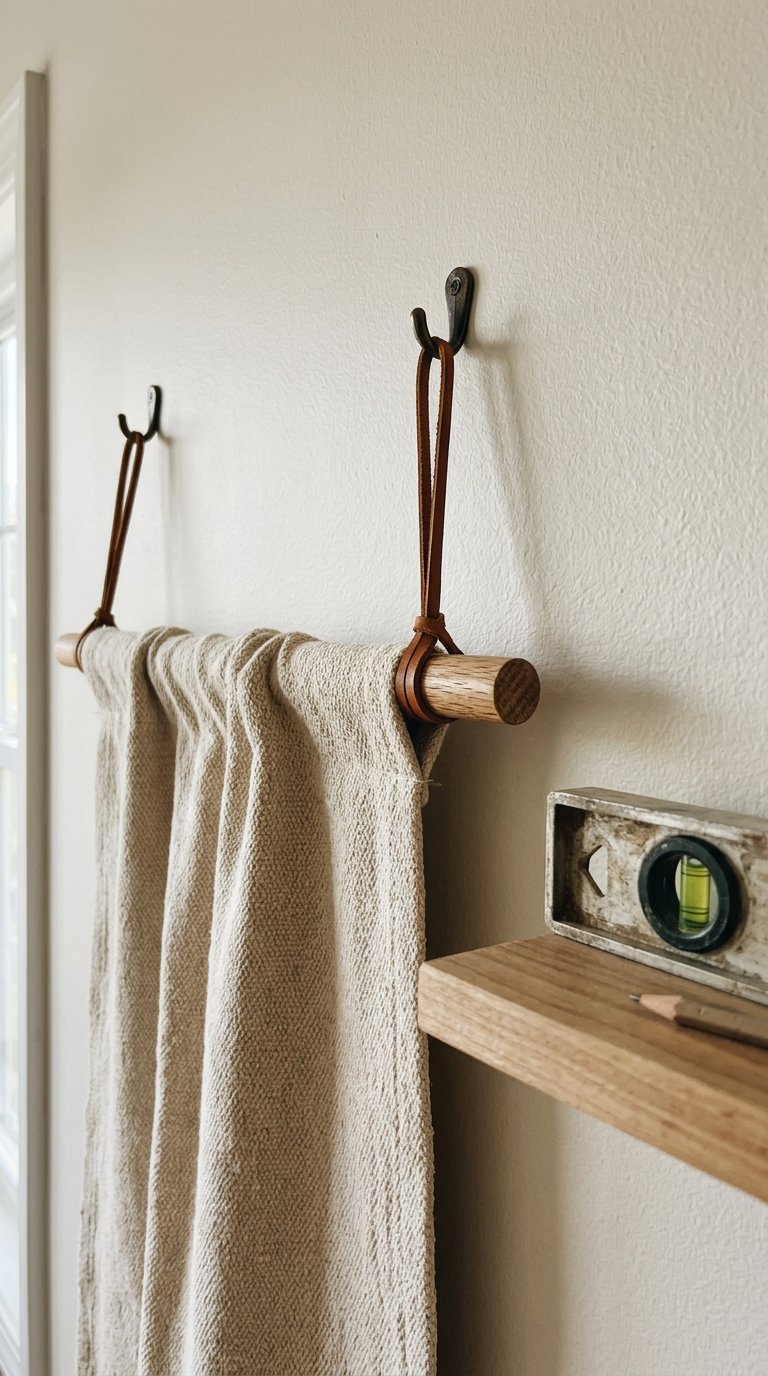
A rod gives the straightest, neatest finish and keeps the fabric flat. It also protects the tapestry from pinholes.
- Measure the tapestry’s top edge and choose a rod slightly wider.
- Slide the rod through the back pocket, or attach clip rings every few inches.
- Mark the wall at both ends with a level.
- Install brackets or hooks, using wall anchors if they don’t hit a stud.
- Lift the tapestry into place and adjust the drape.
Use a curtain rod, a wooden dowel or a decorative hanging rod. For heavier pieces, add a center support so the rod doesn’t bow.
16. Hang a Tapestry Without Nails (Renter-Friendly)
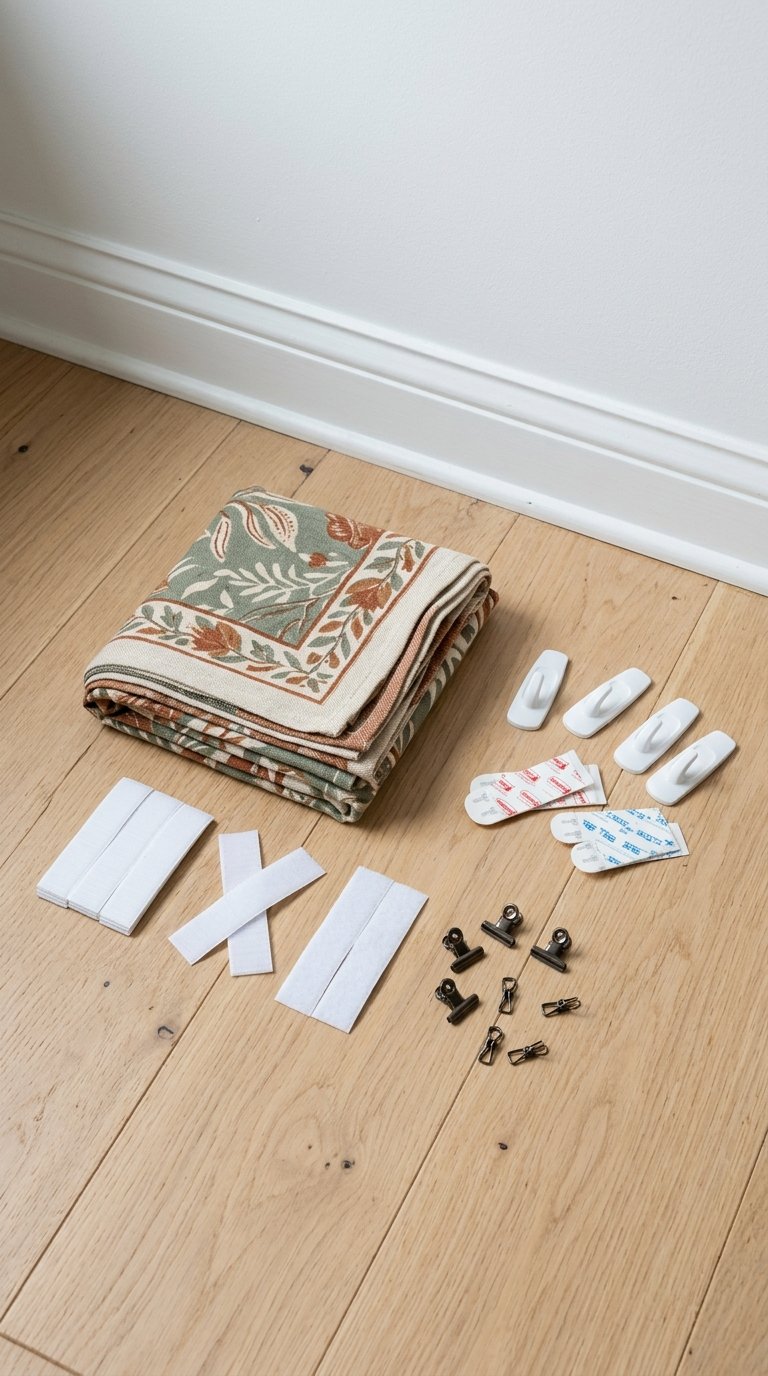
You can hang a tapestry without nails using adhesive hooks, removable strips, or Velcro. Adhesive hooks work well for lightweight fabric. Velcro, with one side on the tapestry and the other on the wall, is a good fit for curved walls or fabric you don’t want to punch.
Prepare the wall first. Clean it, let it dry and press each strip firmly. Don’t use adhesive in humid spots like bathrooms or near heat vents, where it can fail.
Heavy tapestries may pull strips off the wall. In that case, hang a curtain rod from heavy-duty adhesive hooks and let the rod carry the weight.
17. Stretch the Tapestry Over a Frame
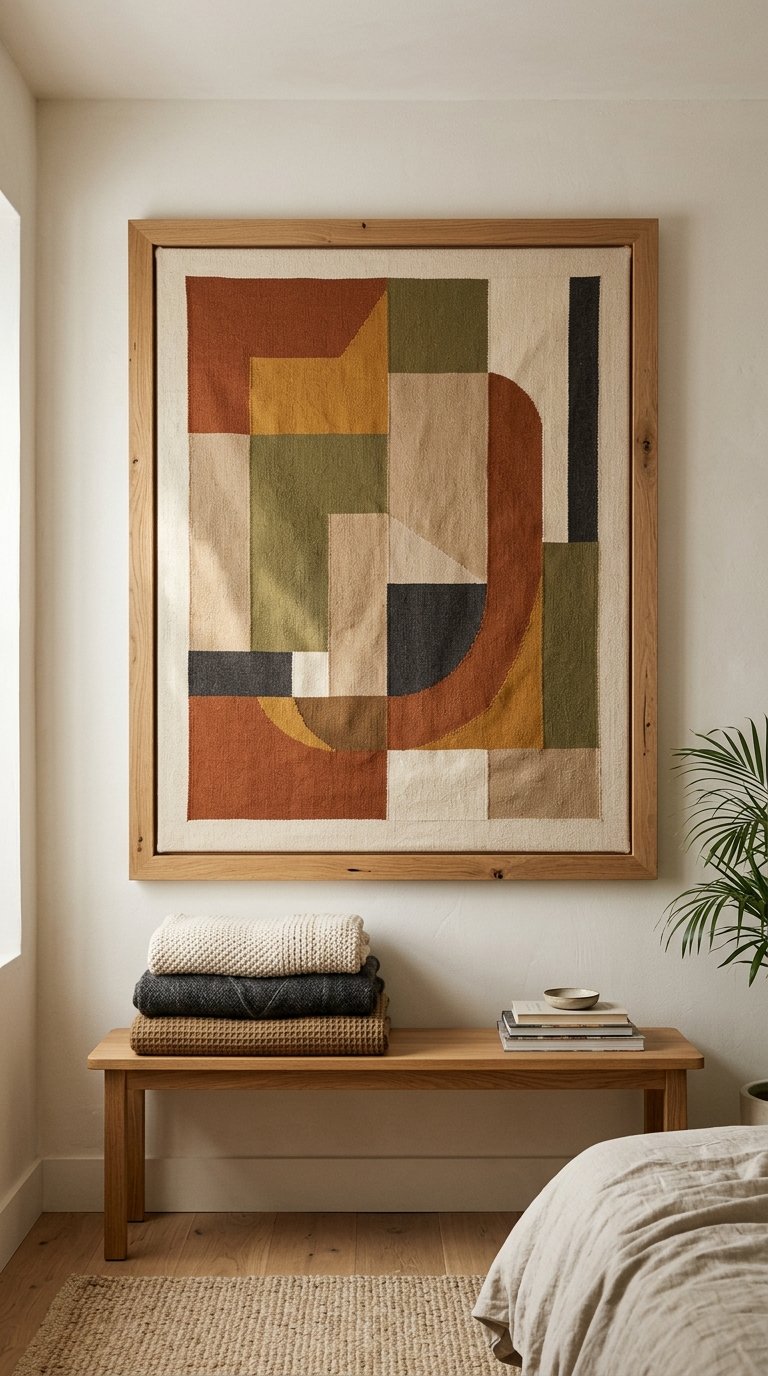
If you want a sharper, more permanent look, stretch the tapestry over a wooden canvas frame or place it in a large shadow box. It turns the fabric into a conventional piece of wall art, and you can hang it with a standard picture hanger.
Pull the fabric evenly and staple it to the back of the frame, working from the center outward. Thrifted frames are a budget-friendly starting point.
The trade-off is that framing hides the edges and fringe, so it suits graphic or landscape designs better than boho pieces.
18. Style the Wall So It Looks Intentional

A tapestry looks best when the details around it are tidy. Steam or iron it on low heat before hanging, and check that the bottom edge hangs straight and the sides don’t curl. A weighted dowel along the bottom can help thin fabrics hang flush.
Then add layers. Warm string lights along the top edge, a sconce at the side or a plant on a nearby stool make the wall feel designed. Keep the color palette to three main tones, and let the tapestry be the strongest pattern in the room.
Avoid crowding it with posters or many small frames. A tapestry works best when it’s the clear focal point.
FAQs
How do you hang a tapestry on a bedroom wall?
Use a rod or dowel for the neatest finish, adhesive hooks or Velcro for a no-nail option, or push pins and clips for lightweight fabric. Mark a level line first, and match the method to the fabric weight.
What size tapestry should I buy for a queen bed?
Choose one at least as wide as the headboard, ideally a few inches wider than the 60-inch mattress. Check the seller’s listed dimensions, because sizes vary.
Can you hang a tapestry without nails?
Yes. Adhesive hooks, removable strips, Velcro or a rod on heavy-duty adhesive hooks all work. Avoid adhesive in humid areas or near heat vents.
How high should a tapestry be above the bed?
Hang it so the lower edge sits just behind the top of the pillows or headboard, with a small gap above the mattress, so it reads as part of the bed.
Can a tapestry replace a headboard?
It can act as one visually. It won’t support your back, but it gives the bed a backdrop and focal point, especially in a rental.
Will adhesive strips damage a tapestry?
Strips on the wall side usually don’t damage the fabric. Heavy tapestries can pull them loose, so use a rod instead for bigger or thicker pieces.
How do you get wrinkles out of a tapestry?
Steam it lightly or iron it on a low setting, depending on the fabric label. Hanging it for a day can also relax mild creases.
Do tapestries help with sound or drafts?
Fabric softens echo a little, but a thin tapestry won’t soundproof a wall. A thick, heavy weave helps slightly with cold walls, too.
Can I wash a tapestry?
Check the care label. Many printed polyester tapestries tolerate gentle machine washing, while woven, vintage or fringed pieces are best spot-cleaned or professionally cleaned.
Can I hang a tapestry in a small bedroom?
Yes. Choose a lighter color, keep it in proportion to the wall and use one tapestry instead of several decorations.
Conclusion
You don’t need all 18 ideas. Start with the wall you see most from the bed, measure it and choose a tapestry size that fits the headboard or furniture below. Then pick a style that matches your bedding and a hanging method that suits your fabric and wall.
If you rent, begin with a rod on adhesive hooks. If you want a more finished look, try a framed or neutral woven piece. One well-sized tapestry usually does more for a bedroom than a collection of small extras.