17 Wall Mural Ideas for Your Bedroom: Painted, Printed, and Peel-and-Stick
A blank wall behind the bed is easy to ignore until you really look at it. A mural is one of the few decor choices that can change how a whole room feels, and it doesn’t always mean hiring an artist or spending a weekend on a ladder.
This guide covers 17 wall murals for bedroom walls, from hand-painted landscapes to printed panels and peel-and-stick options for renters. For each idea you’ll see how it’s usually done, how hard it is, and what it costs compared with the others, so you can pick something that fits your room and your patience. After the ideas, you’ll find tips on placement, calming colors, installation, and mistakes worth avoiding.
What to Know Before You Pick a Bedroom Wall Mural
Painted, Printed, or Peel-and-Stick?
These are the three main ways to get a mural, and each suits a different person.
- Painted. Usually the cheapest if you do it yourself, and the most personal. It takes time and a little confidence with a brush, but simple shapes and tape-based designs are very beginner-friendly.
- Printed wallpaper mural. A large image is printed on panels that you hang like wallpaper. You get a detailed, polished look without painting skills, but you need careful measuring and neat alignment at the seams.
- Peel-and-stick. Adhesive panels that can be removed later, which makes them a good fit for renters. How well they stick, and how cleanly they come off, depends on your wall surface and paint, so read the maker’s instructions first.
Pick the Right Wall and Size
The wall behind the bed is the usual choice, because it’s the first thing you see when you walk in, and it frames the bed. As a rule of thumb, make the mural at least as wide as the bed. A narrow mural over a wide bed tends to look like a stray poster.
Before you commit, sketch the wall to scale or tape a paper outline of the mural in place. It’s a five-minute step that saves a lot of regret.
17 Wall Murals for Bedroom Walls
Nature and Landscape Murals
1. Misty Mountain Landscape
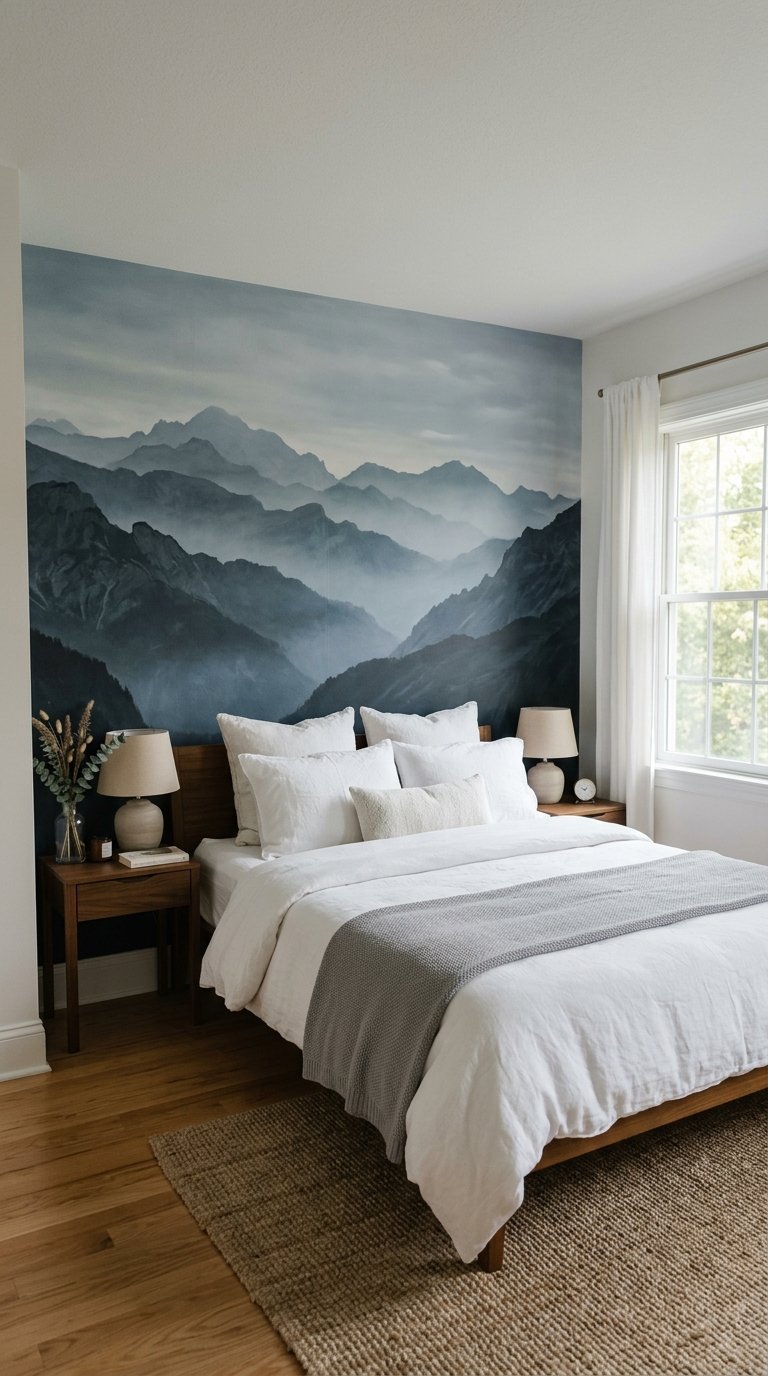
Layered mountain ridges that fade from dark to light give a bedroom a sense of distance, which is helpful in a room that isn’t huge. Use three to five tones of one color (blue-gray and soft green both work well) and paint the farthest ridge lightest. It’s a good first mural because the shapes are forgiving. Nobody notices a slightly wobbly ridge line. Printed versions look great too, especially with a soft sunrise glow.
Method: painted or printed. Difficulty: moderate. Cost: low if painted.
2. Forest or Woodland Scene
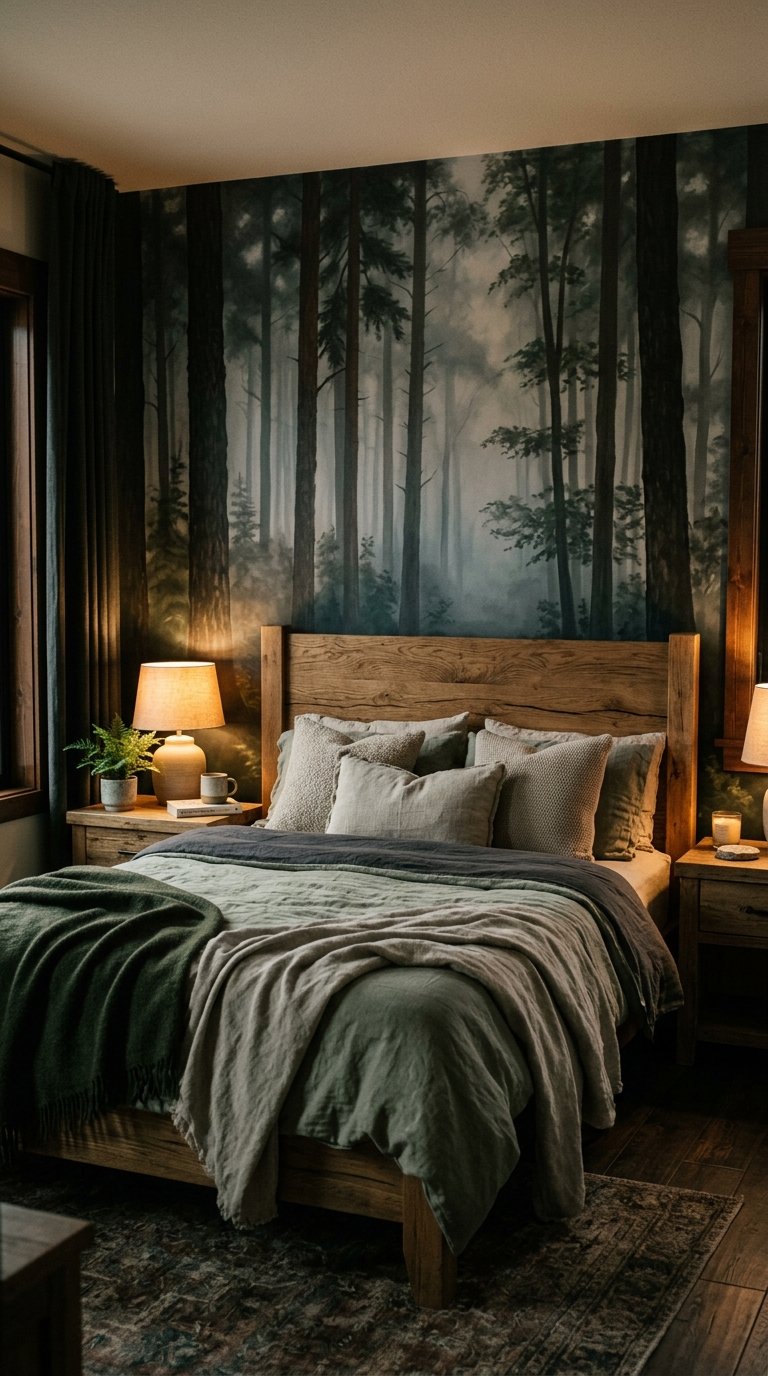
Tree trunks that run from floor to ceiling make a room feel taller and wrap the bed in a quiet, grounded mood. Keep the palette limited, with dark greens, warm browns, and a hint of mist, and leave some plain space so the wall doesn’t get busy. Simple vertical brush strokes for the trunks are easier than they look. Printed forest scenes give you more detail with less work.
Method: painted or printed. Difficulty: moderate to advanced. Cost: low to moderate.
3. Botanical Leaf Mural
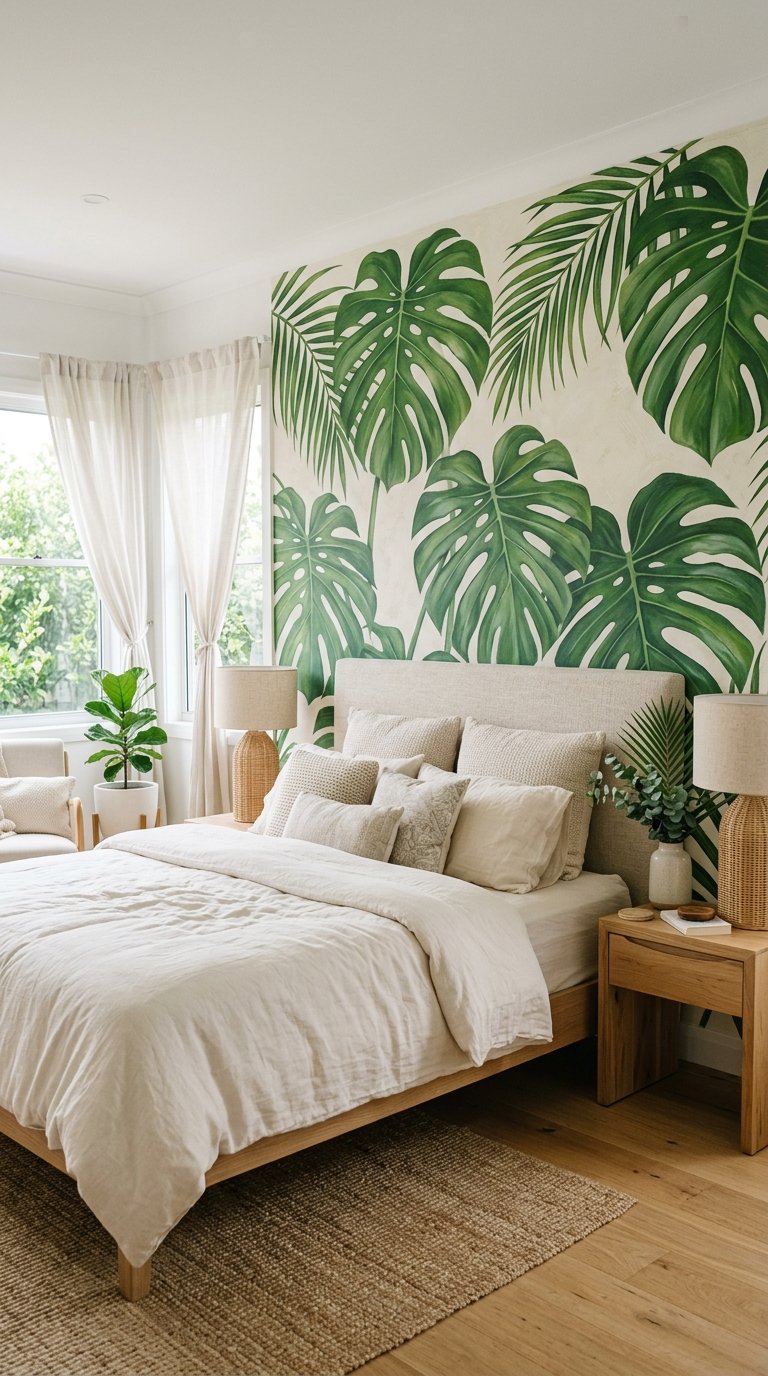
Oversized leaves are one of the easiest ways to wake up a bedroom. A few big monstera or palm leaves in two or three greens can feel fresh without being fussy. Stencils or a traced outline help keep the shapes consistent. Light bedding and natural wood keep the wall from feeling heavy, and a rattan lamp or woven basket nearby adds to the tropical feel.
Method: painted with stencils, printed, or peel-and-stick. Difficulty: easy to moderate. Cost: low to moderate.
4. Floral or Blossom Mural
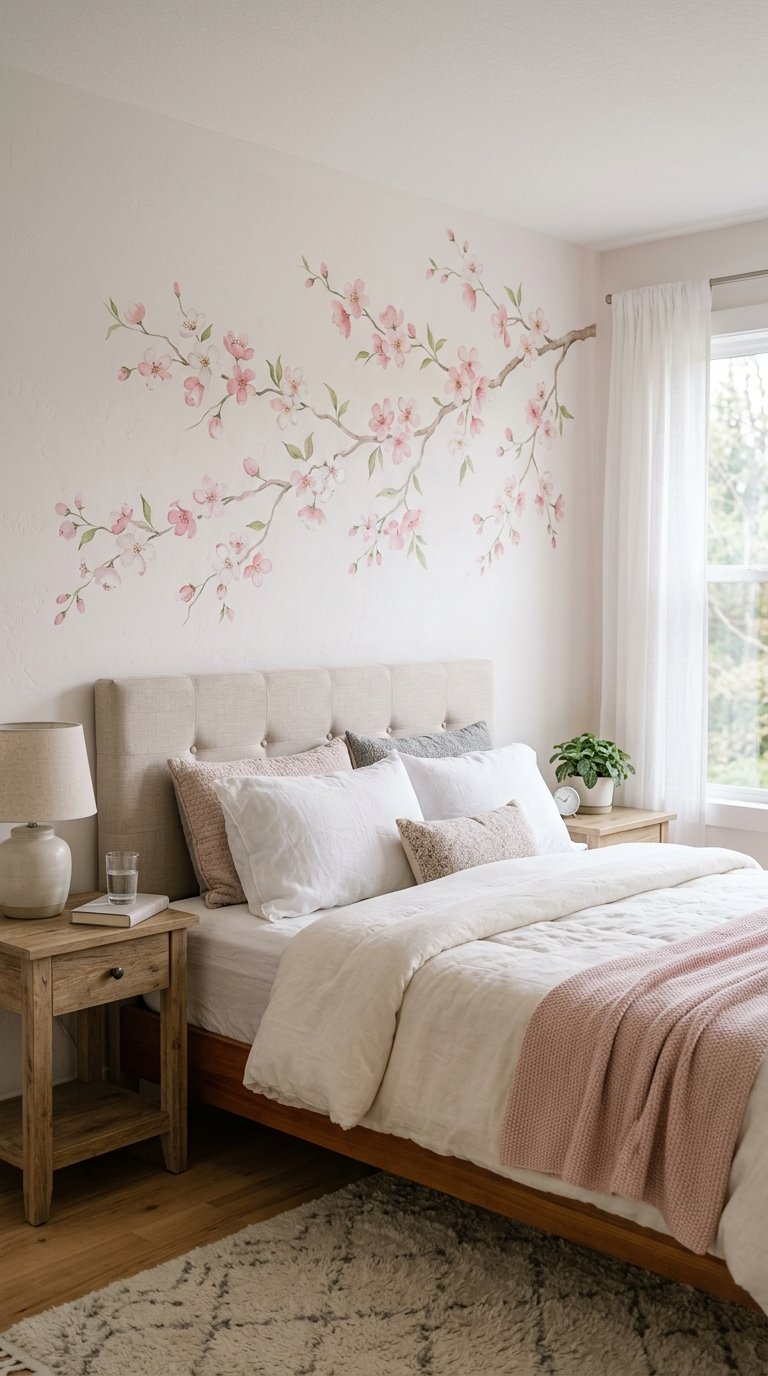
A single branch of cherry blossoms or a loose cluster of peonies above the headboard feels romantic without taking over the room. You don’t have to fill the whole wall. Let the flowers grow from one corner or climb up from behind the bed, and leave plenty of plain wall around them. If you’re not confident painting petals, a watercolor-style printed floral is a safer choice. Keep the rest of the room quiet so the flowers stay the focus.
Method: painted or printed. Difficulty: moderate to advanced if painted. Cost: low to moderate.
5. Seaside or Ocean Waves
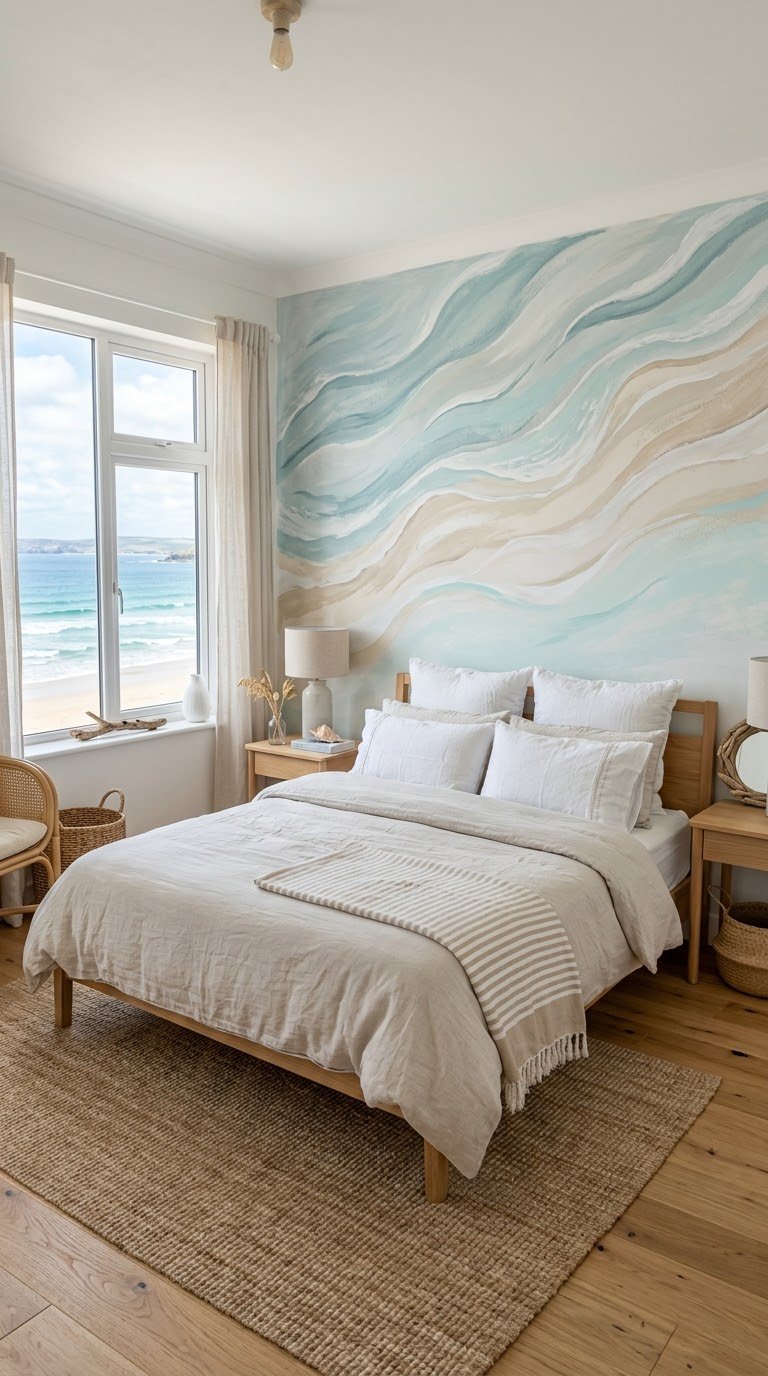
Calm waves, a low horizon line, and sandy neutrals suit a bedroom because there’s nothing busy to look at. A simple version is plenty: two or three bands of blue and a pale sand tone at the bottom. Paint the horizon at a consistent height and use a level so it doesn’t slope. It fits coastal rooms, but it also works in modern bedrooms that could use a little softness.
Method: painted or printed. Difficulty: easy to moderate. Cost: low.
6. Desert Sunset
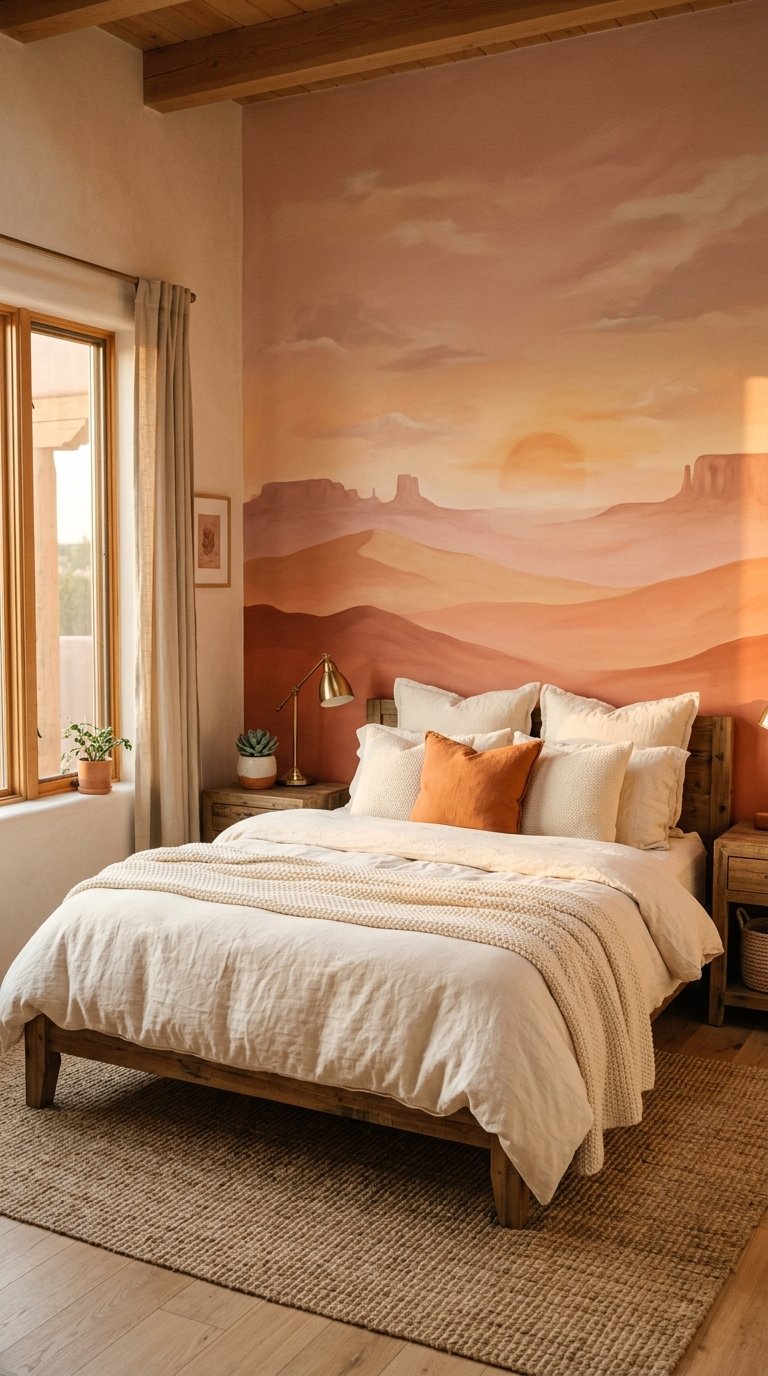
A sunset gradient with a few low dunes or mesas brings in warm color without much detail. Think terracotta, soft peach, and dusty pink fading into a pale sky. Blend the colors while the paint is still wet so the shift looks smooth. Add a cactus silhouette or two if you like, or skip them for a calmer look. Cream bedding and natural textures finish it off.
Method: painted. Difficulty: moderate. Cost: low.
Modern and Abstract Murals
7. Abstract Arches and Organic Shapes
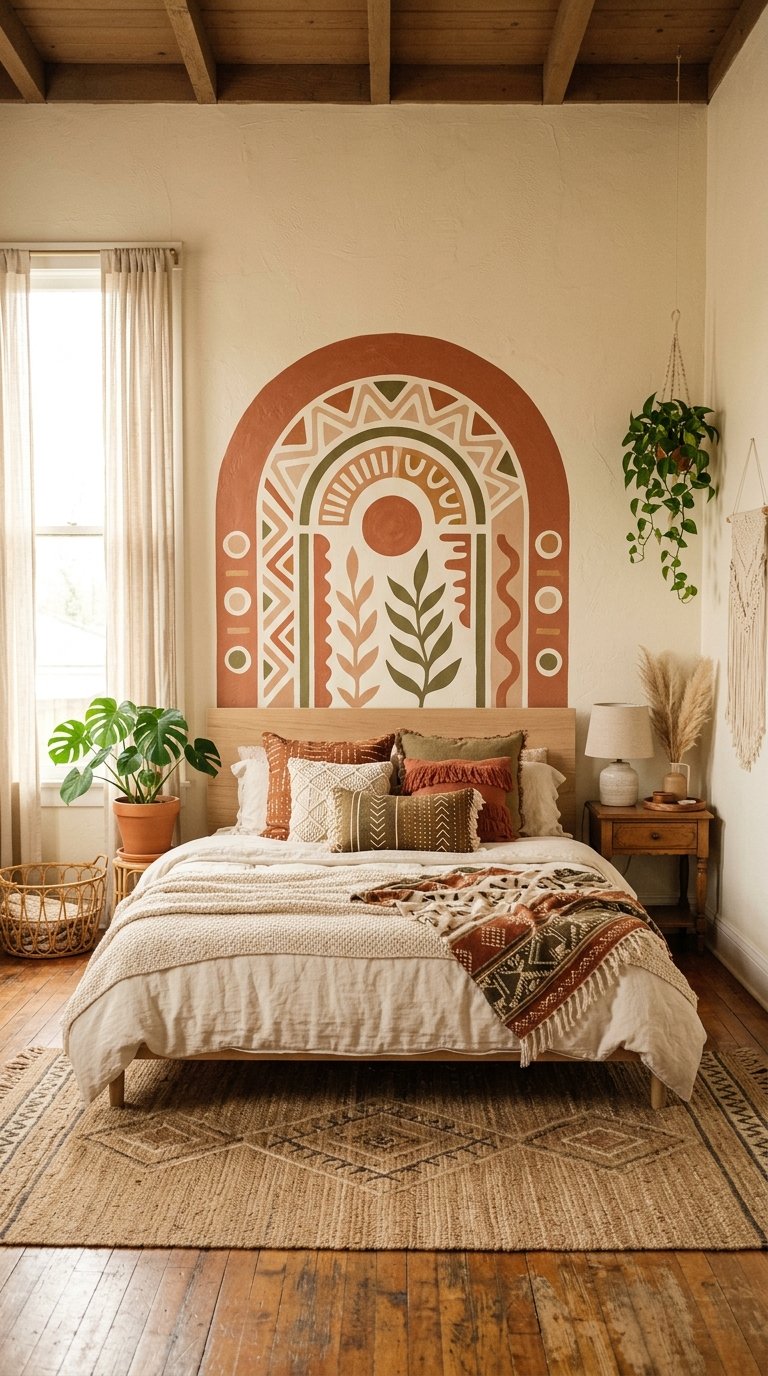
Overlapping arches and curved shapes in muted tones are popular for good reason: they look modern, they hide small mistakes, and you can build them with painter’s tape and a round template. Pick three colors that already appear somewhere in your room, like terracotta, cream, and olive, so the mural feels connected to the rest of the decor. A big arch behind the bed even works as a headboard if you don’t own one.
Method: painted. Difficulty: easy to moderate. Cost: low.
8. Color-Block and Geometric Mural
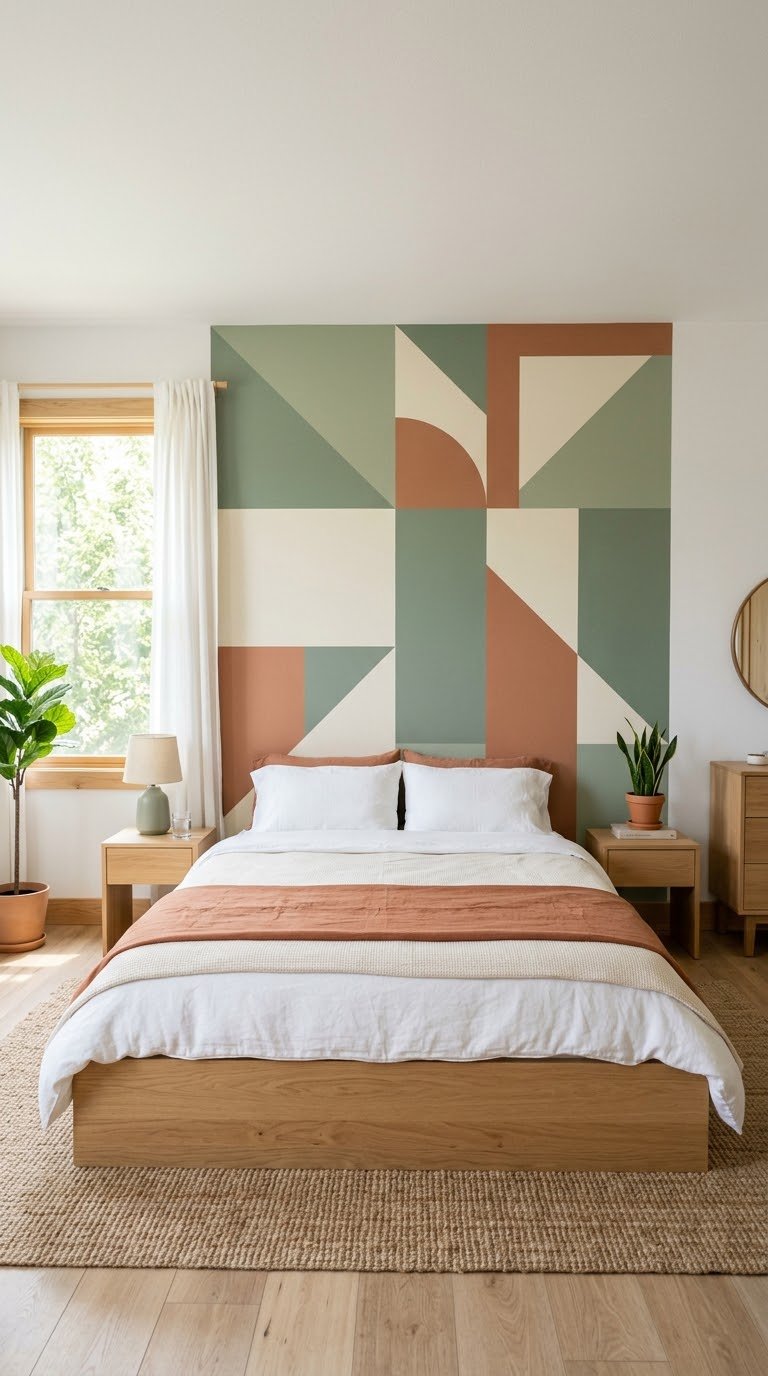
Blocks of color, triangles, or stripes are the most beginner-friendly option. It’s all straight lines and tape, so very little artistic skill is involved. Sketch the layout on paper first and test the proportions with painter’s tape before you paint. Two or three colors are enough. For a bedroom, a calm palette is easier to live with than sharp, high-contrast pairs.
Method: painted. Difficulty: easy. Cost: low.
9. Minimalist Line Art
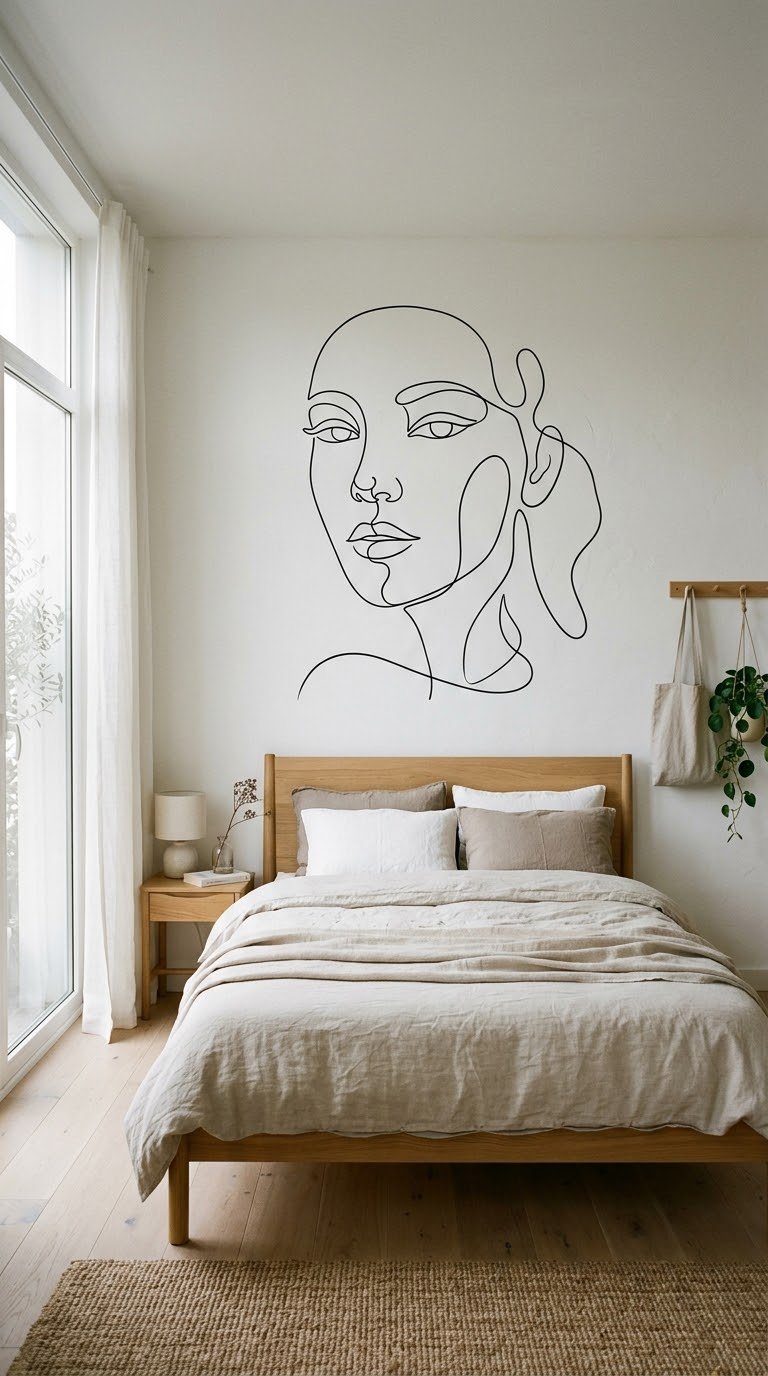
A single flowing line that forms a face, a plant, or an abstract shape looks sophisticated and uses very little paint. The trick is the shape, not the technique, so project a design onto the wall or draw it lightly in chalk before you paint. Black on white is the classic look, though deep green or terracotta can feel softer. A line art mural above the bed pairs well with simple, neutral bedding.
Method: painted (printed versions exist too). Difficulty: moderate. Cost: low.
10. Watercolor Wash or Ombre
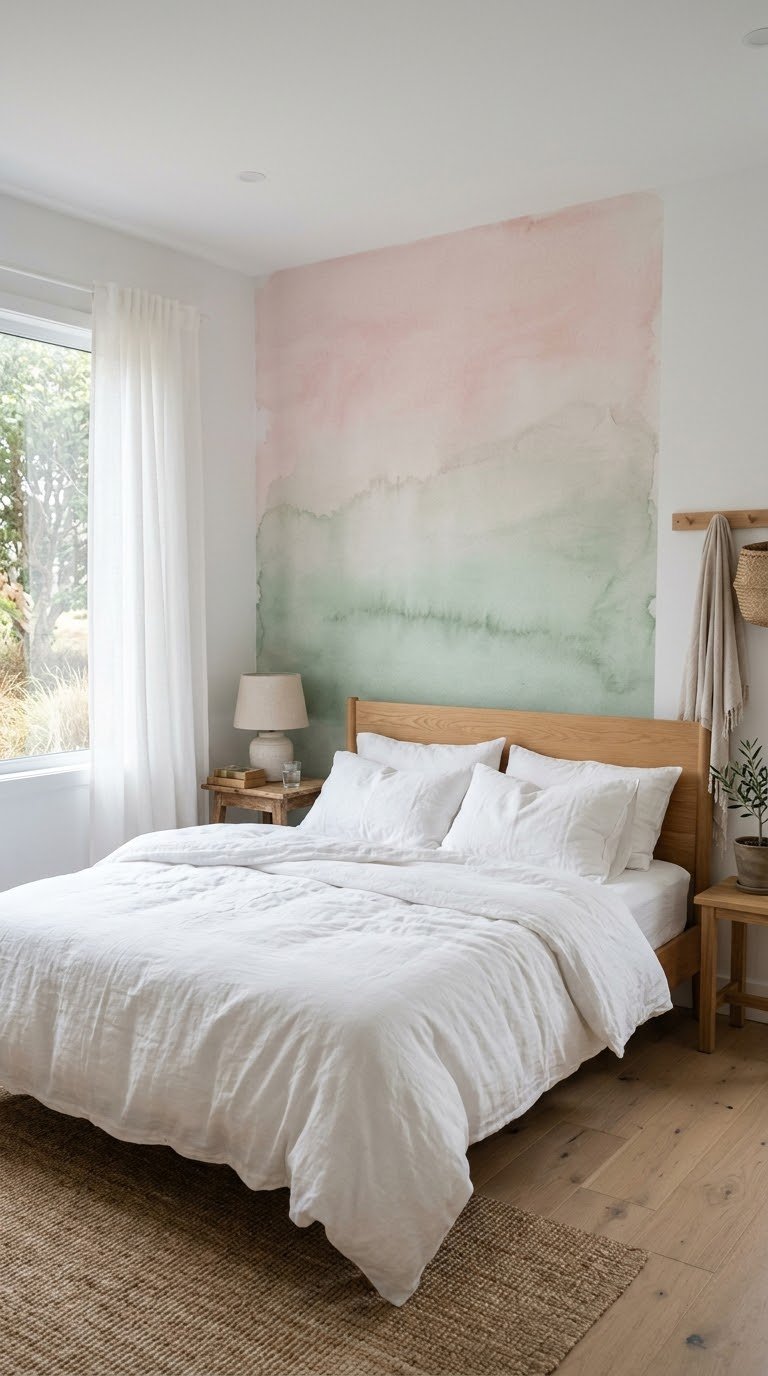
If you don’t want a recognizable picture, a soft wash of color is a restful alternative. Blush fading into sage, or pale blue into cream, gives the wall a dreamy glow. Painting it takes some blending while the paint is wet, and it helps to work in sections. Printed watercolor murals are a good shortcut if you want the same look without the blending.
Method: painted or printed. Difficulty: moderate. Cost: low to moderate.
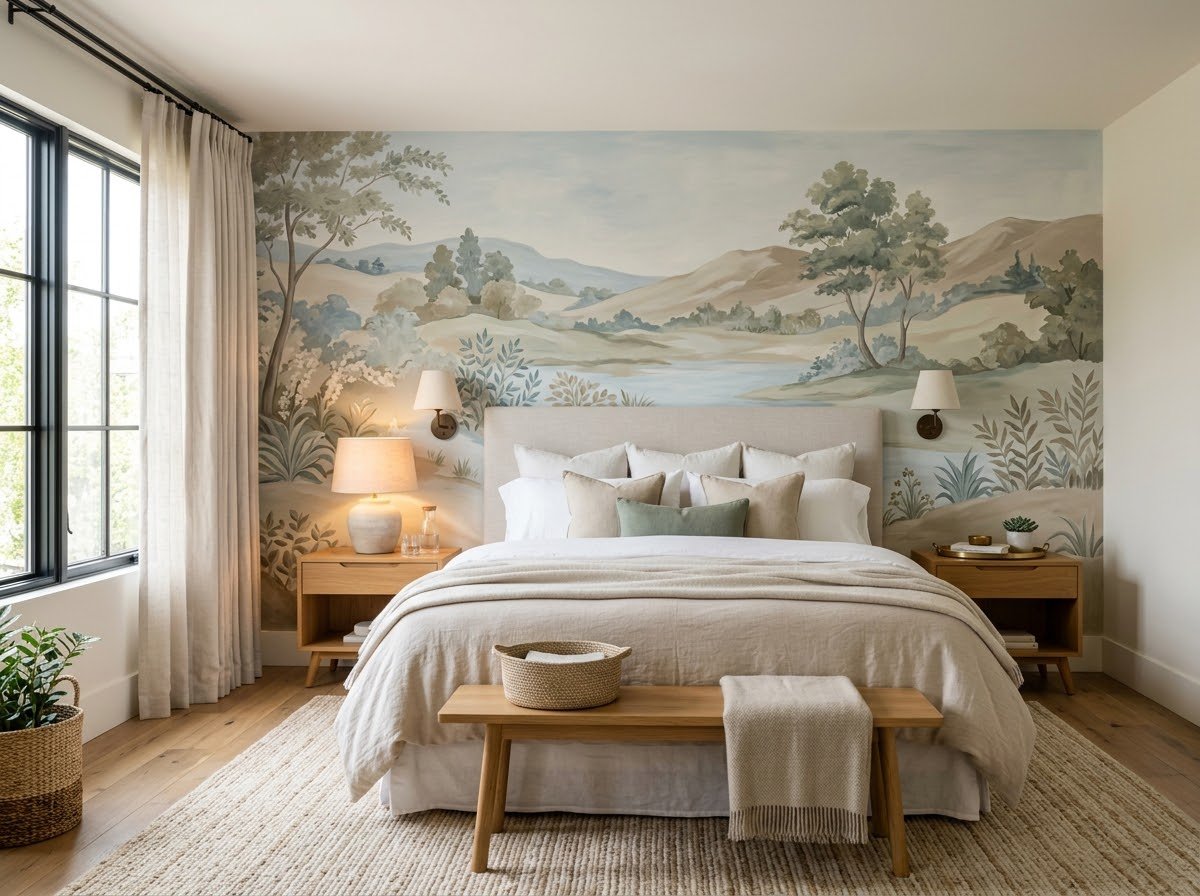
11. Chinoiserie or Traditional Scenic Mural
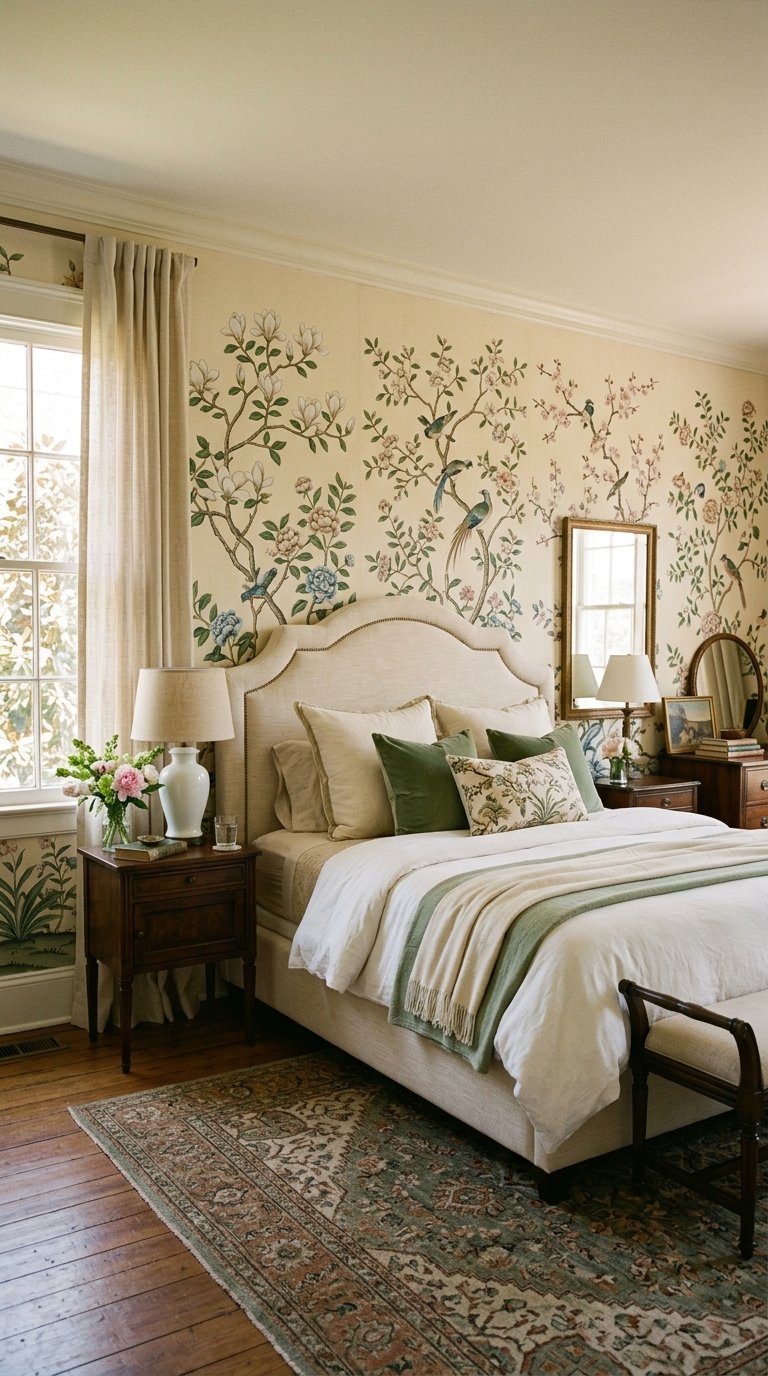
Painted birds, branches, and soft landscapes in the traditional Chinese-inspired style give a bedroom a classic, elegant mood. This look is usually done as a printed or hand-painted wallpaper mural, because the fine detail is hard to fake with a quick DIY paint job. It looks best on a calm, well-proportioned wall with simple furniture. The seams need to line up, so measure carefully or hire an installer.
Method: printed or professionally painted. Difficulty: moderate to advanced. Cost: moderate to high.
12. Night Sky and Celestial Mural
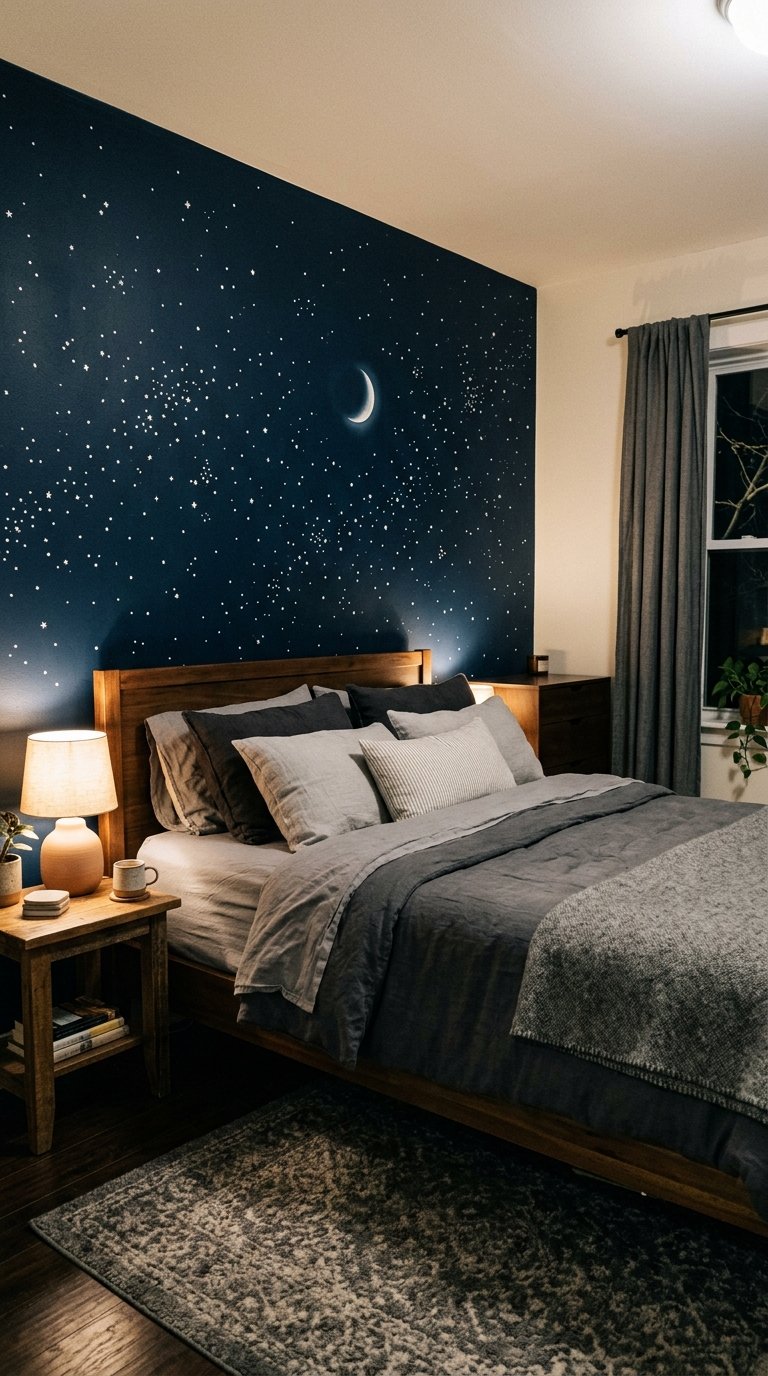
Deep blue, a handful of stars, and maybe a crescent moon make a bedroom feel like bedtime. Keep it simple: a gradient from dark blue to a slightly lighter shade, with small dots of white paint for stars. Too many stars can feel busy, so fewer is better in a room where you want to fall asleep. This idea also works on a ceiling or a sloped attic wall. If you like a glow effect, use it sparingly and test a small patch first.
Method: painted. Difficulty: moderate. Cost: low.
13. Cityscape Skyline
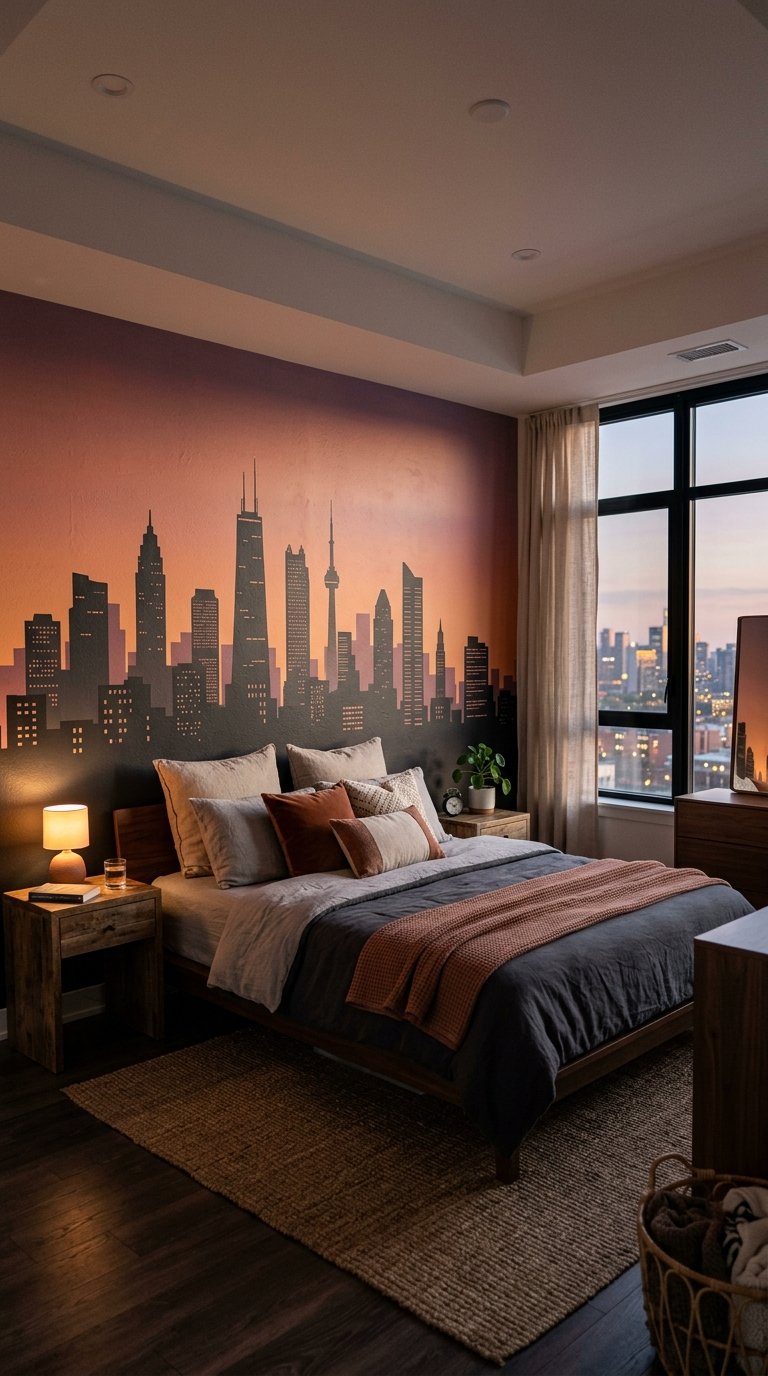
A skyline in silhouette against a sunset or dusk gradient is graphic and easy to simplify. Use one dark color for all the buildings and let the sky carry the color. You can trace a skyline with a projector or just paint rectangles of different heights and add a few details. It suits a teen’s room, a studio apartment, or any modern bedroom that could use some energy.
Method: painted or printed. Difficulty: moderate. Cost: low to moderate.
14. Vintage Map Mural
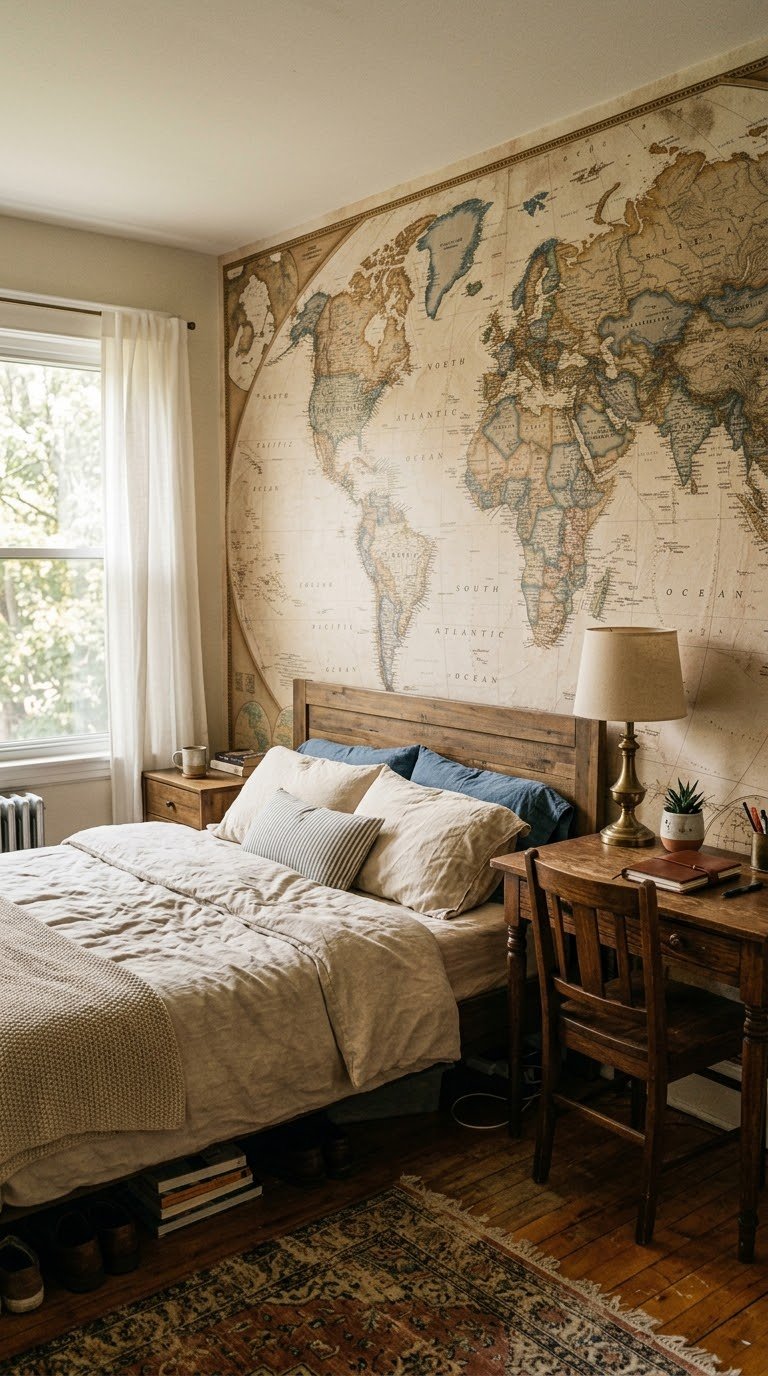
A muted, old-style map adds personality, especially for travelers and book lovers. Printed maps are the easy route, because painting accurate coastlines takes patience. Pick a map in soft tan, gray, or faded blue so it doesn’t overpower the bed. It also looks good behind a desk or a reading corner.
Method: printed (painted is advanced). Difficulty: easy to moderate. Cost: moderate.
15. Whimsical Storybook Scene for Kids
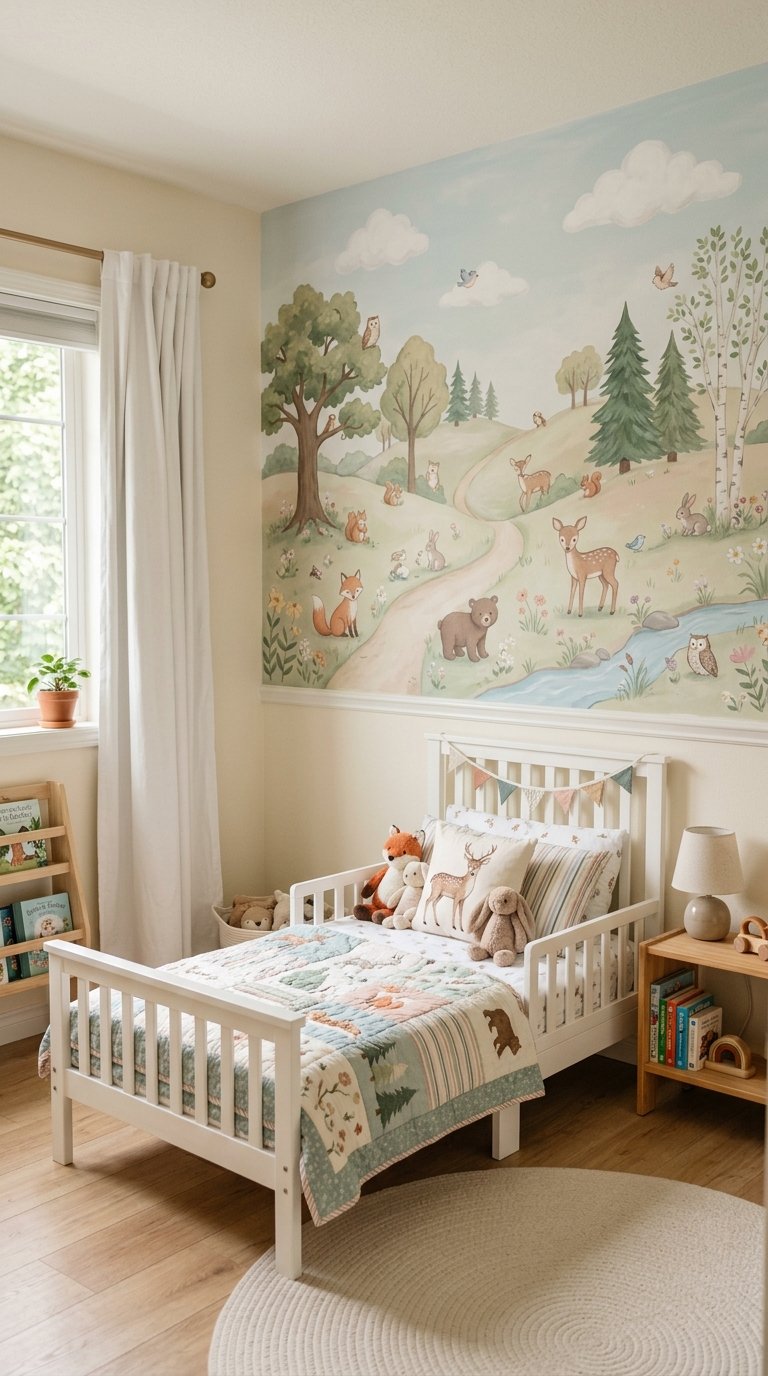
For a child’s room, friendly animals, rolling hills, and soft clouds make a playful focal wall. Pastel or muted colors keep it from feeling overstimulating at bedtime. Painted murals can be added over time, but printed or peel-and-stick versions are easier to swap when tastes change. If you’re planning a nursery, see our guide to nursery mural ideas.
Method: painted, printed, or peel-and-stick. Difficulty: moderate. Cost: low to moderate.
Large-Format and Removable Murals
16. Photographic or Oversized Printed Mural
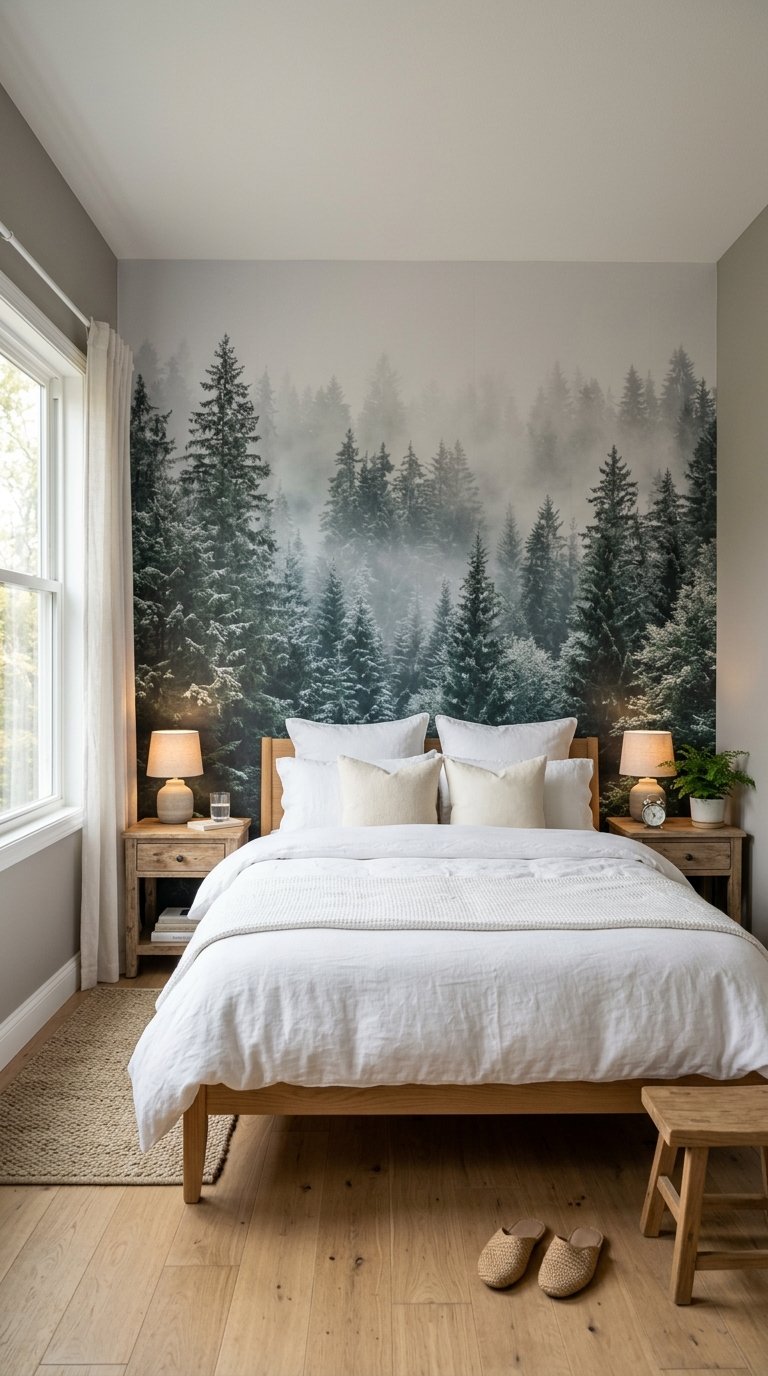
A large photo-style mural, like a forest, a mountain lake, or a city at night, gives you immediate impact without any painting. You order panels cut to your wall size and hang them like wallpaper. Measure the wall twice, check that the image resolution is high enough that it won’t look blurry up close, and plan for some patience when lining up the seams. It’s a good pick when you want realism and don’t trust your brush.
Method: printed. Difficulty: moderate. Cost: moderate to high.
17. Peel-and-Stick Wall Mural
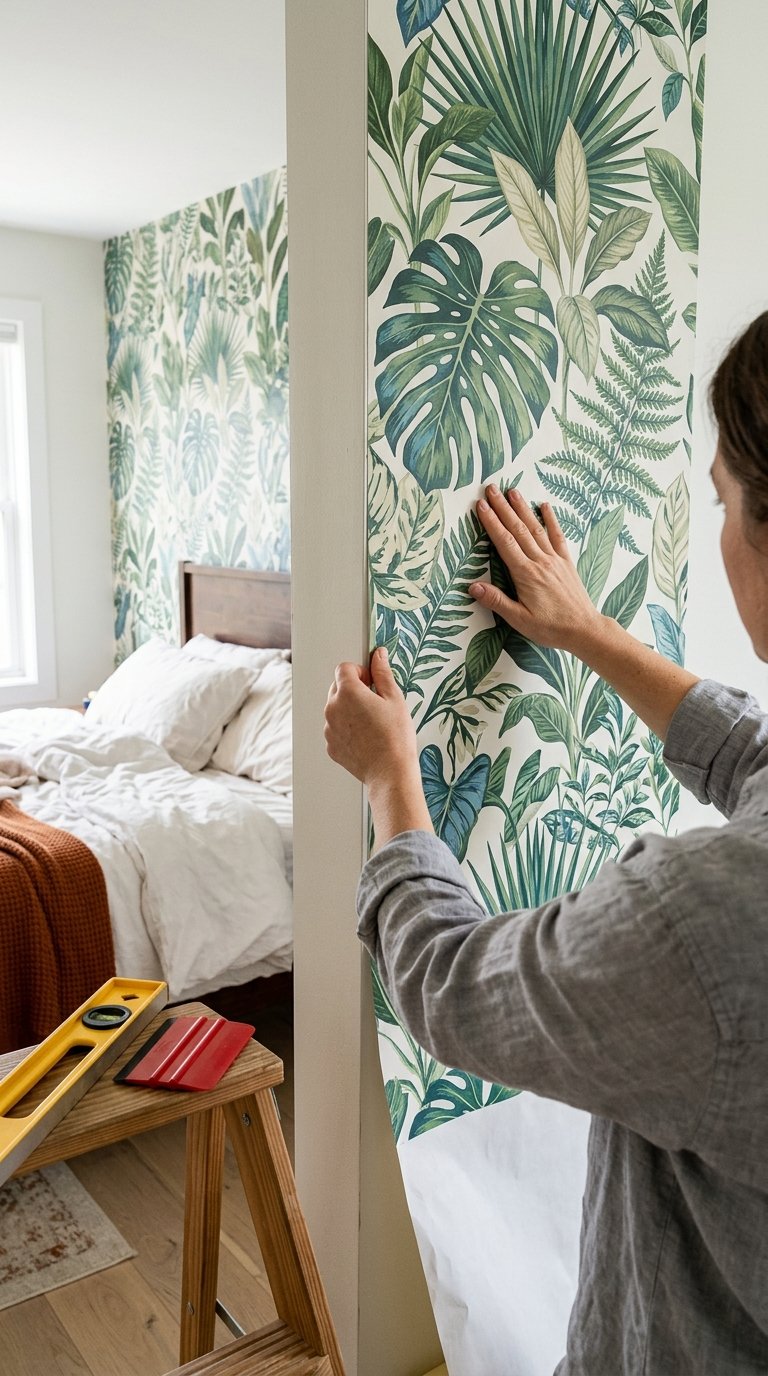
Peel-and-stick murals are the practical choice for renters or anyone who likes to change things up. Clean the wall first, smooth it, and test a hidden spot to see how the adhesive behaves. Use a level for the first panel, because every other panel lines up from it. Textured or freshly painted walls can cause trouble, so follow the manufacturer’s instructions, and keep in mind that removal results vary by wall surface. For more removable options, see our guide to peel-and-stick wallpaper for renters.
Method: peel-and-stick. Difficulty: easy to moderate. Cost: low to moderate.
Where to Put a Mural in Your Bedroom
The headboard wall is the default, but it isn’t the only choice.
- Behind the headboard. The classic spot. Make the mural wider than the bed, or centered on it, so it looks planned.
- A headboard-shaped mural. Paint or apply a big arch or rectangle just behind the bed, and leave the rest of the wall plain. It’s less work than a full wall and works like a built-in headboard. For more placement ideas, see our guide to bedroom accent wall ideas.
- The wall you face from bed. If you look at it every night, it can be a good place for something calm, like a landscape or night sky.
- A nook or alcove. Small recessed areas make a mural feel intentional and don’t need much paint or paper.
- The ceiling. A night sky or soft gradient overhead works especially well in a quiet room, though ceilings are harder to paint or install.
Mural Colors That Feel Calm
Many people find soft blues, muted greens, and warm neutrals easier to relax around than bright, high-contrast colors. That doesn’t mean you have to avoid bold shades. It just helps to keep the saturation down and limit the palette to two or three colors.
- Match undertones. A warm terracotta mural can clash with cool gray bedding. Look at your floor, furniture, and bedding before choosing.
- Repeat one color. Pick one shade from the mural and use it in a pillow, a lamp, or a piece of art so the wall feels connected to the room.
- Go darker with care. Deep colors can feel cozy in a room with good light and warm lamps, but they can close in a small, dim bedroom.
- Check it at night. Paint and prints look different under artificial light, so look at a sample after dark.
How to Paint or Install a Bedroom Mural: The Short Version
Every format starts the same way: a clean, smooth wall. Patch holes, sand rough spots, wipe off dust, and prime if you’re painting, especially over a dark color.
- Plan the design. Sketch it to scale and decide where the mural starts and stops.
- Transfer it to the wall. Use a grid, a projector, a stencil, or a light chalk outline. For simple shapes, painter’s tape and a level are enough.
- Paint in layers. Start with the background, then large shapes, then details. Let each coat dry before taping over it.
- For printed panels, hang them in order, line up the pattern at each seam, and trim the edges as the instructions say.
- For peel-and-stick, start at the top with a level, peel back a small section at a time, and smooth out air bubbles as you go.
Consider hiring a pro for detailed realistic scenes, very high ceilings, delicate wallpapers like chinoiserie, or any printed mural where the seams must be perfect. For a full walkthrough, read our guide to painting a bedroom mural step by step.
How Much Does a Bedroom Mural Cost?
The price depends on the wall size, the format, how much prep the wall needs, and local labor rates, so treat these as general comparisons and get quotes where you live.
- Lowest cost: DIY painted murals, especially color-block, geometric, and gradient designs.
- Moderate cost: peel-and-stick murals, printed wallpaper murals in standard sizes, and watercolor-style prints.
- Higher cost: custom or photographic printed murals, chinoiserie wallpaper, and hand-painted work by a professional muralist.
A professional install usually adds to the cost of a printed mural, but it can save you from misaligned seams.
Common Bedroom Mural Mistakes to Avoid
- Going too small. A mural that’s narrower than the bed can look like a poster. Make it wide enough to feel like it belongs on the wall.
- Skipping prep. Holes, dust, and glossy paint can show through or stop paint and adhesive from sticking.
- Choosing a busy design for a small room. Detailed, high-contrast murals can make tight spaces feel crowded.
- Forgetting the rest of the room. If the bedding, curtains, and art are all busy too, the mural has to compete. Keep the rest simpler.
- Not testing the color. Paint a sample or order a swatch and look at it in the evening before you commit.
- Ignoring seams and level lines. A crooked horizon or mismatched panel is the first thing people notice.
FAQ
Can you put a mural on a textured wall?
Painted murals can work on light texture, though the detail may look softer. Printed and peel-and-stick murals usually need a smooth surface, so check the manufacturer’s guidance and consider smoothing the wall first.
Do murals make a bedroom look smaller?
It depends on the colors and the design. Dark, busy murals can make a small room feel tighter, while light colors, soft gradients, and open scenes like skies or horizons tend to make a room feel more open.
How long does a peel-and-stick mural last?
It varies by product, wall surface, and conditions like humidity. Follow the maker’s instructions and check how the manufacturer describes durability.
Will a peel-and-stick mural damage my walls?
It can, especially on fresh paint or rough surfaces. Test a hidden spot first and follow the removal instructions slowly.
Can you paint over a mural later?
Yes. Clean the wall, fill any damage, and use primer, especially over dark colors, before applying the new paint.
Do I need primer before painting a mural?
Usually, yes. Primer helps the paint stick and keeps old colors from showing through, so it’s especially worth it over dark or glossy walls.
What size should a mural be behind a bed?
A good starting point is at least as wide as the bed, and often wider. Many people continue the design up toward the ceiling to give the bed more presence.
Final Thoughts
The best bedroom mural is one you’ll enjoy waking up to. Start with how much time and skill you want to put in, then pick a format: paint for the lowest cost, printed panels for detail, or peel-and-stick for flexibility. From there, choose a style that fits your room’s light and your own taste, keep the colors calm, and let one wall do the work.
If you’re still weighing options, take another look at our bedroom ideas for kids.