20 Bathroom Shelf Ideas for More Storage in Any Size Bathroom
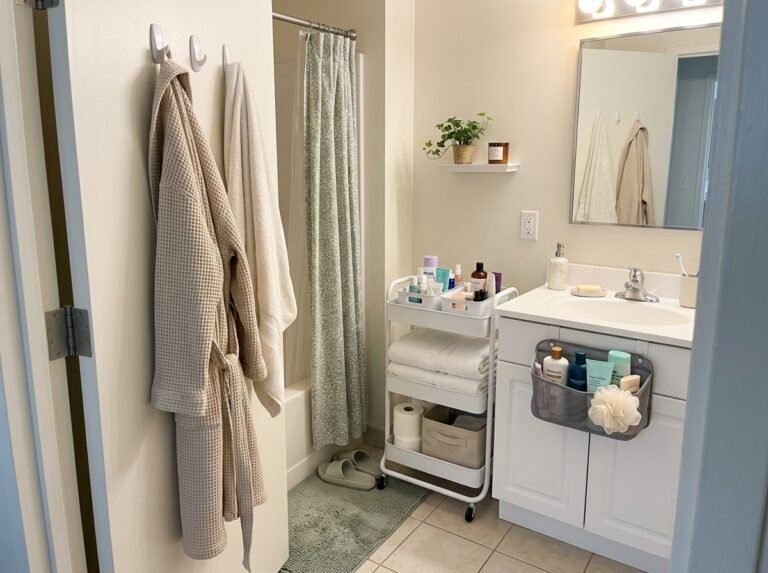
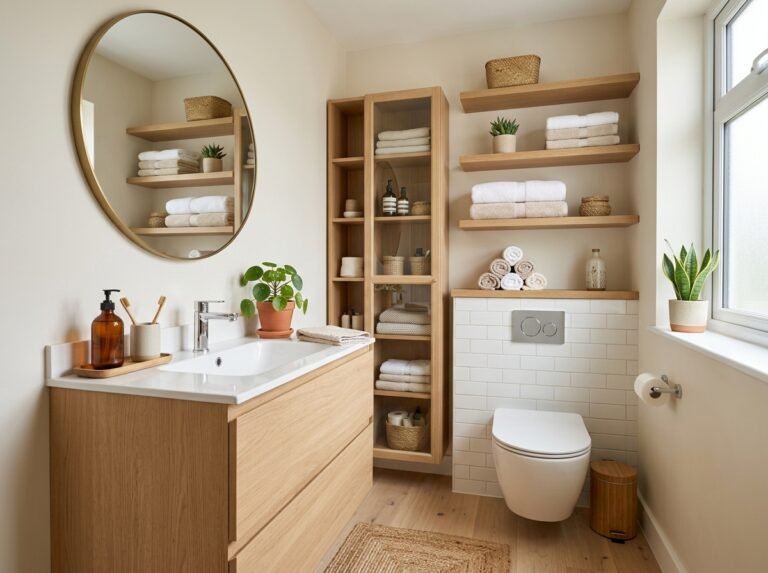
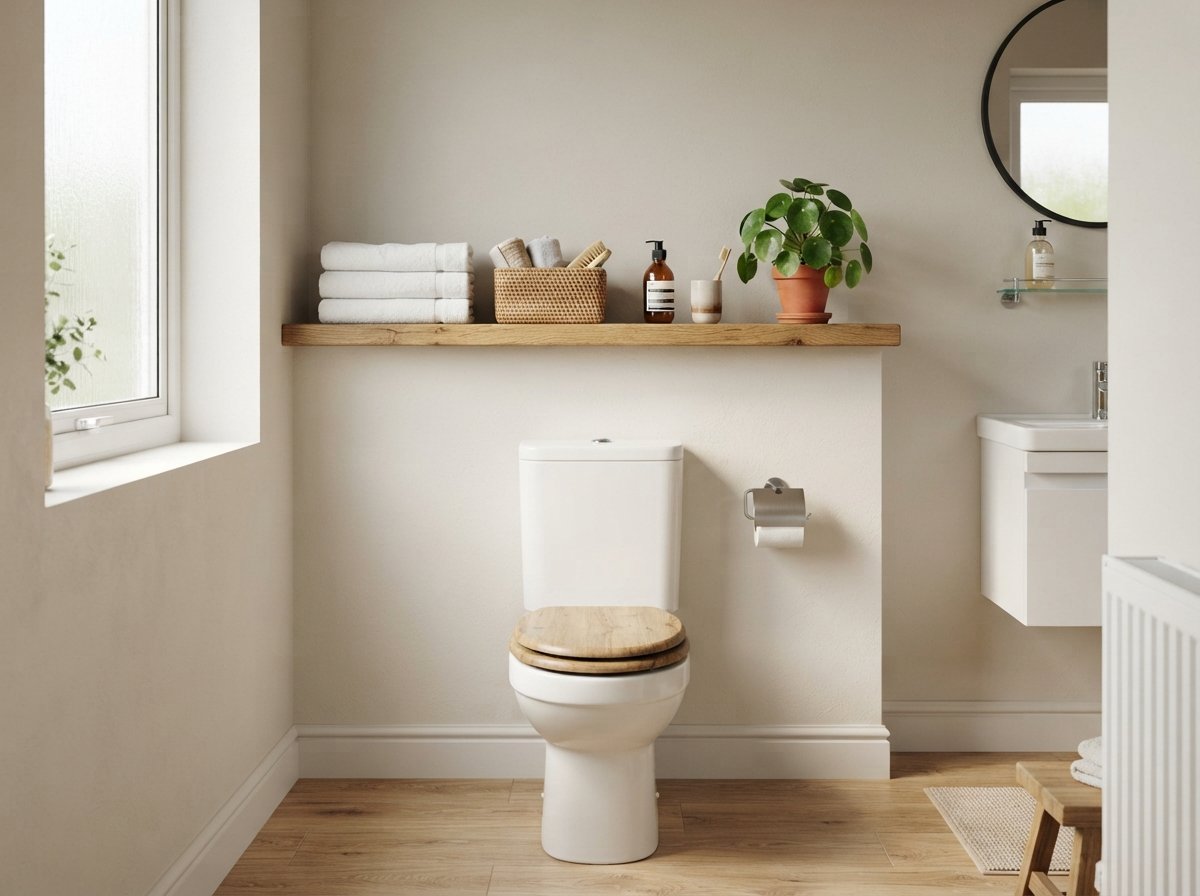
Small bathrooms often have less storage than you need, but that does not always mean you need a bigger cabinet. The walls, corners, space above the toilet, and even the back of the door can provide useful storage when you choose the right shelf.
These bathroom shelf ideas show practical ways to store towels, toilet paper, toiletries, shower products, and everyday essentials without making a small bathroom feel crowded. You’ll find options for areas above the toilet, around the vanity, inside the shower, beside the tub, and in awkward spaces that are easy to overlook.
Before adding a shelf, think about what you actually need to store, how much space you have, and how much moisture the area receives. A shallow shelf may work better than a deep one in a narrow bathroom, while a sealed wood, metal, glass, or tile option can handle humidity better than unfinished materials.
Before You Choose a Shelf
A shelf can look perfect online and still be the wrong size once it reaches your bathroom. Take a few measurements before buying or building anything.
Measure the available space.
Measure the wall width, available height, and depth you can safely use. Check nearby features such as:
- Toilet tank and lid
- Vanity or sink
- Mirror
- Shower or tub
- Door swing
- Window
- Existing towel bars
- Light switches and outlets
If the shelf will sit above the toilet, make sure you can still lift the tank lid for maintenance.
Choose the right shelf depth
For a narrow bathroom, a shelf around 4 to 6 inches deep can hold many everyday bathroom items without sticking too far into the room. Deeper shelves provide more storage but may make a tight walkway feel cramped.
For example, a shallow ledge can work well for candles and small jars, while a deeper shelf is more useful for folded towels or baskets.
Think about weight and mounting
A shelf holding a few decorative items has very different requirements from one holding glass bottles, towels, or heavy storage baskets.
Check the shelf’s weight rating and choose hardware that suits your wall surface. Studs provide strong support, while properly rated wall anchors can work where a stud is not available.
For tall freestanding shelves and over-the-door units, stability matters too. If the manufacturer provides a wall strap or anti-tip hardware, use it.
1. One Floating Shelf Above the Toilet
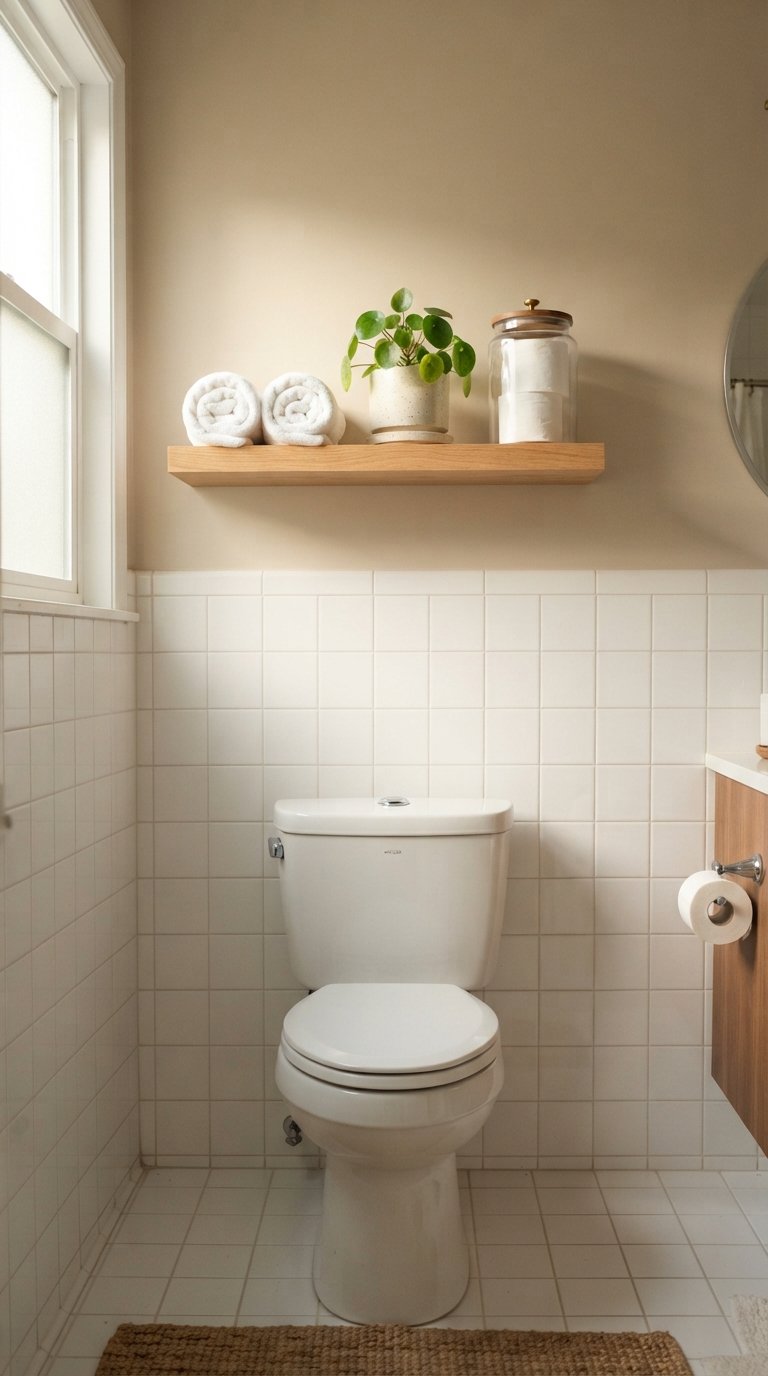
A single shelf keeps the toilet wall calm. Mount it centered over the tank, with enough room below to lift the tank lid and sit comfortably. Guides vary on the exact height, with some suggesting at least 12 inches above the tank and others closer to 18 to 24 inches, so hold a level in place and test it against your own toilet.
Keep the shelf for what you reach for most: a stack of hand towels, a small plant, and one jar of spare toilet paper. Leaving the rest of the wall empty makes a small bathroom look larger.
2. Two Shelves and a Basket Above the Toilet

If one shelf isn’t enough, add a second and leave a gap between them. A gap of 12 to 15 inches fits most bottles and a wide basket with room to reach inside. Put the basket on the lower shelf for backup supplies and keep the upper shelf lighter.
Wicker or fabric baskets hide small clutter, but they can hold damp air, so choose ones with open weaves. Two shelves are a good limit above a toilet. A third starts to feel crowded.
3. A Freestanding Over-the-Toilet Unit

You don’t have to drill to get shelves above the toilet. A freestanding unit has legs that straddle the tank and open shelves above it, so it suits rentals and walls with tile you’d rather not drill.
Check the width against your tank and the space between the legs before you buy. Look for a model with a wall strap, since a tall unit can wobble. Metal frames with glass shelves feel light, while bamboo adds warmth.
4. A Slim Shelf Beside the Toilet

The space next to the toilet often goes unused, especially if there are a few inches of wall. A narrow wall shelf or a slim floor unit fits there without blocking anything.
It works well for the items you grab while sitting, like a spare roll and a small brush holder. Keep it about shoulder height or lower, so you can reach it without stretching, and make sure it doesn’t crowd your knees.
5. A Narrow Ledge Behind the Toilet Tank

A picture-ledge style shelf, very shallow at about 3 to 4 inches, sits close to the wall above the tank. Because it barely sticks out, it suits tight bathrooms where a normal shelf would feel heavy.
Use it for small things: a candle, an air freshener, a framed print leaning back. It won’t hold towels, so treat it as a display strip rather than storage.
6. A Recessed Shelf Between the Studs
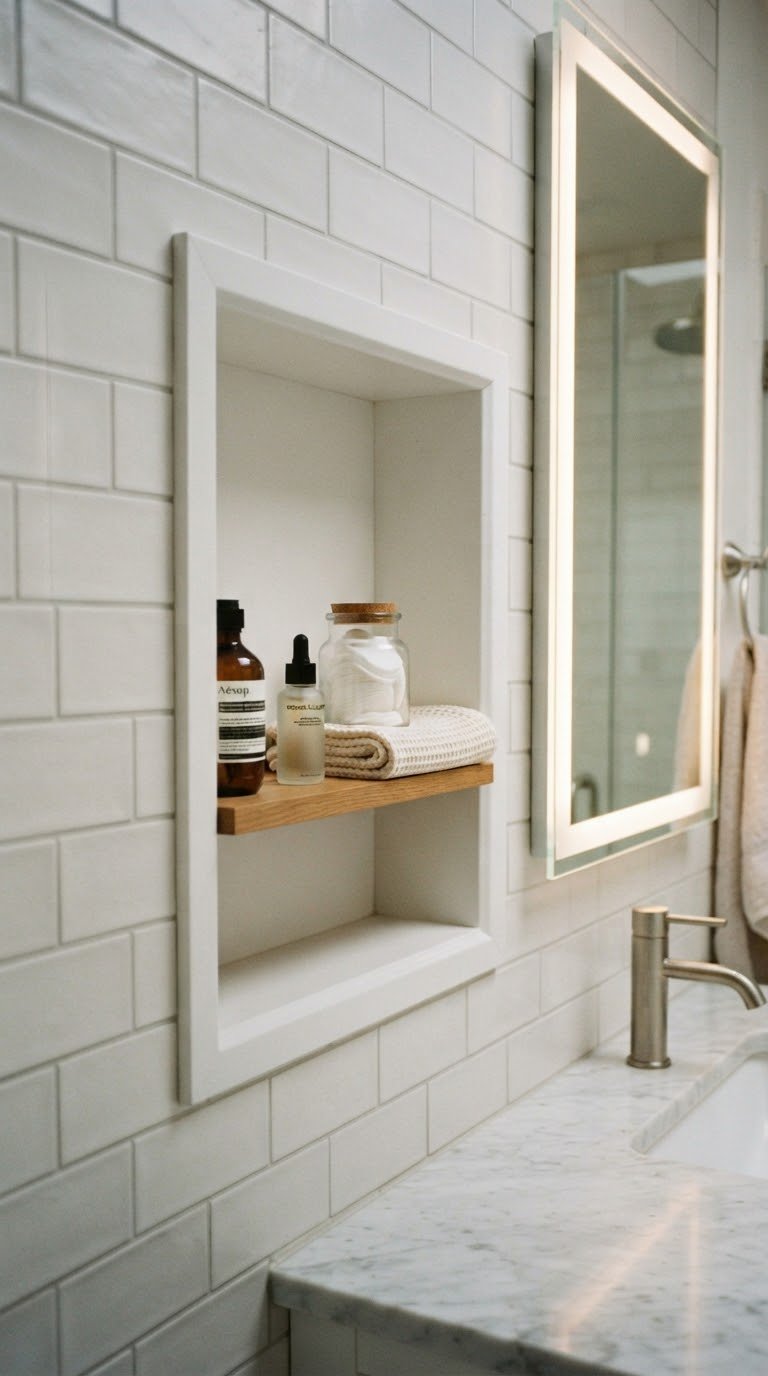
If you’re opening a wall or renovating, a recessed shelf adds storage that takes no room. It sits inside the wall cavity between two studs, so nothing sticks out.
Placed beside the vanity or above the toilet, it holds small bottles, a jar of cotton pads, and rolled washcloths. It is a bigger project than a bracket shelf, and you need to check what’s inside the wall before cutting. Use a stud finder, and get a pro for pipes or wiring.
7. A Mirrored Medicine Cabinet With Open Shelves

This one gives you a mirror and storage in a single piece. Choose a cabinet with both a closed section for things you want hidden and an open shelf for things you use daily.
A recessed cabinet sits flush in the wall, while a surface-mounted one sticks out a few inches and is easier to install. One caution: heat and humidity can affect some medicines, so check the label or ask a pharmacist where to keep them.
8. A Small Shelf Beside or Above the Mirror
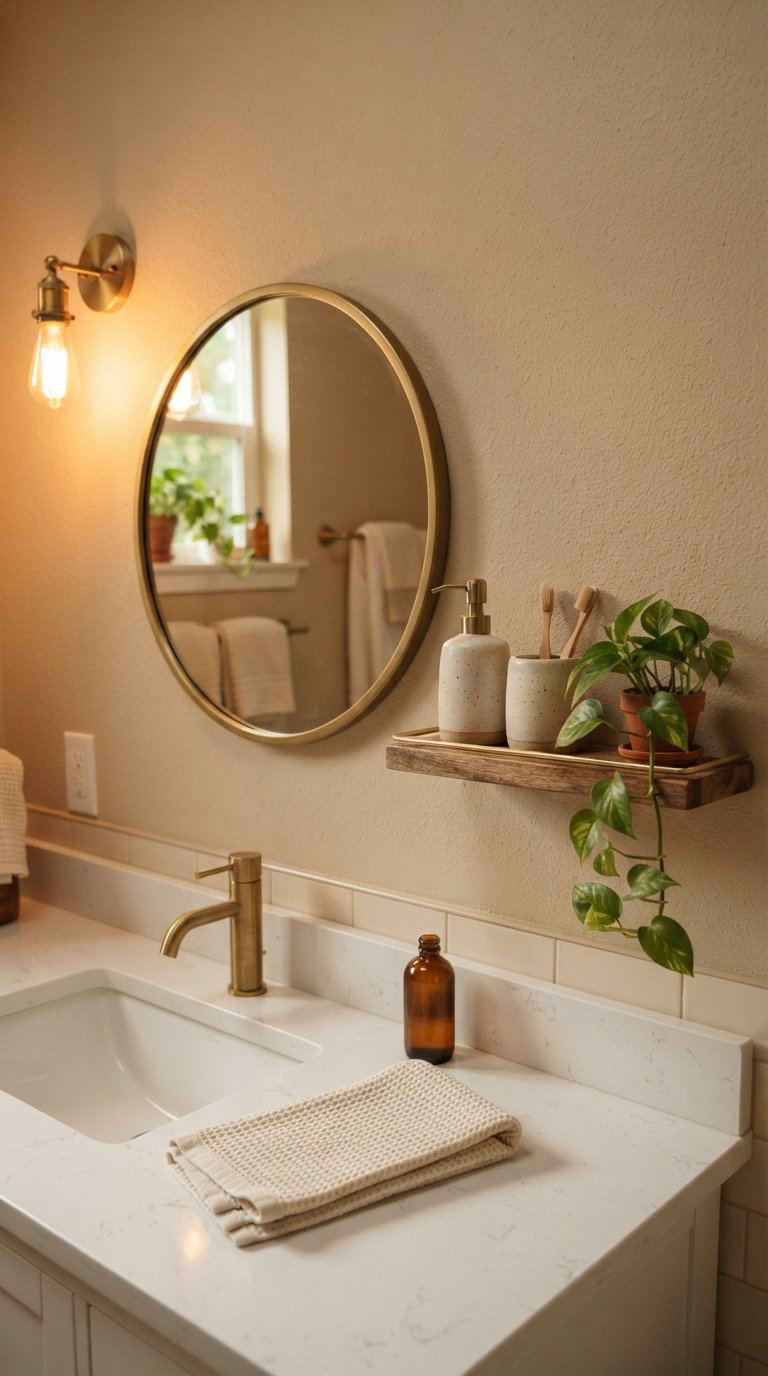
A short shelf next to the mirror keeps the things you use while getting ready right at hand. Think toothbrush, face wash, and hand soap.
Place it close enough to the sink to reach, but not directly over the faucet, where water will splash it. Stay a few inches clear of the mirror edge so it doesn’t look cramped. This is also a good spot for a small plant, which adds a little color.
9. A Ladder Shelf Next to the Vanity

A ladder shelf leans against the wall and gives you several tiers without drilling. It sits well beside a vanity, where it holds towels, baskets, and extra bottles.
The wide base at the bottom narrows toward the top, so it takes little floor space for its height. Put heavier items on the bottom rungs and lighter ones up high. Wood looks good but needs a good seal in a damp bathroom, so metal or bamboo may last longer.
10. A Full-Width Ledge Behind the Sink
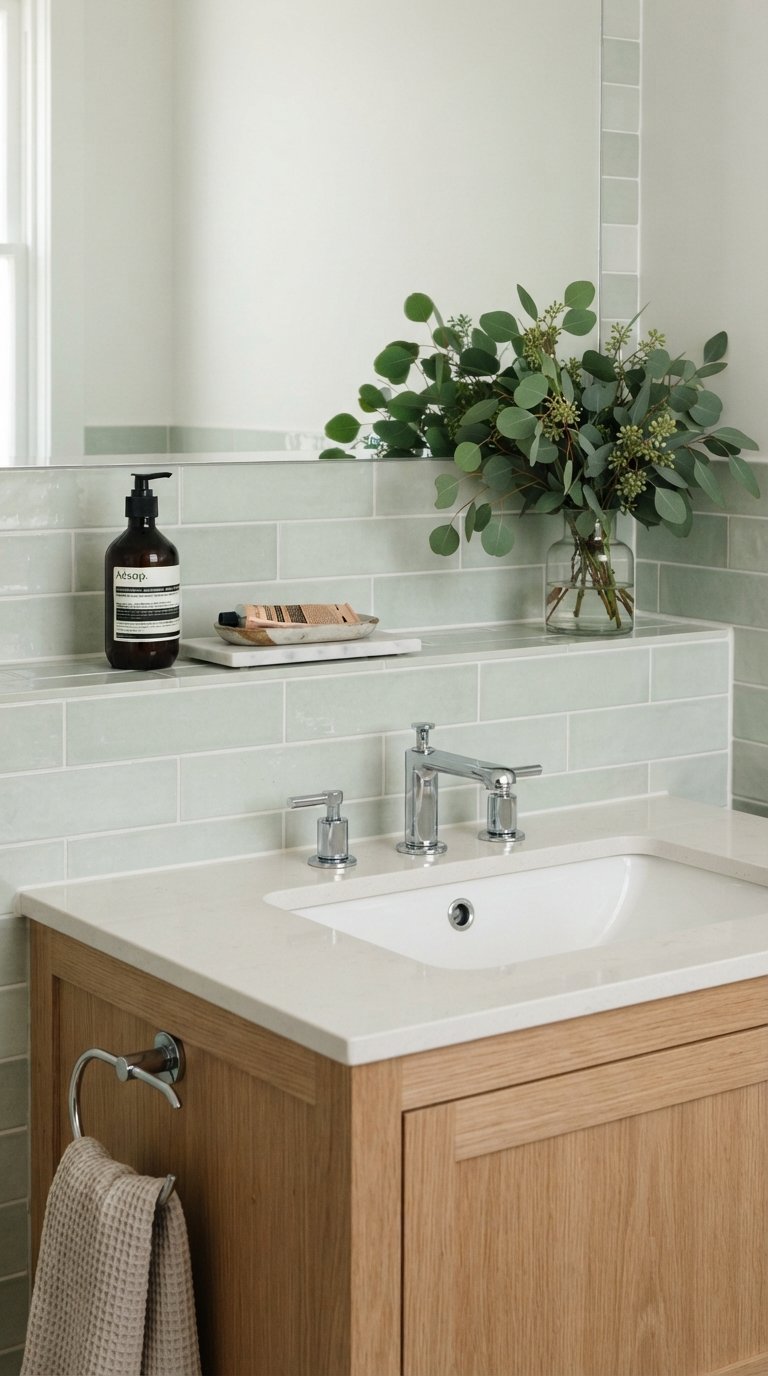
A long, shallow ledge across the wall behind the sink works like a backsplash with storage built in. It holds soap, a tray, and a few decorative items without taking counter space.
Stay a few inches above the faucet and keep the ledge narrow so it doesn’t catch your elbows. A tiled ledge lasts longest here because it handles water splashes easily.
11. A Shower Niche With a Built-In Shelf
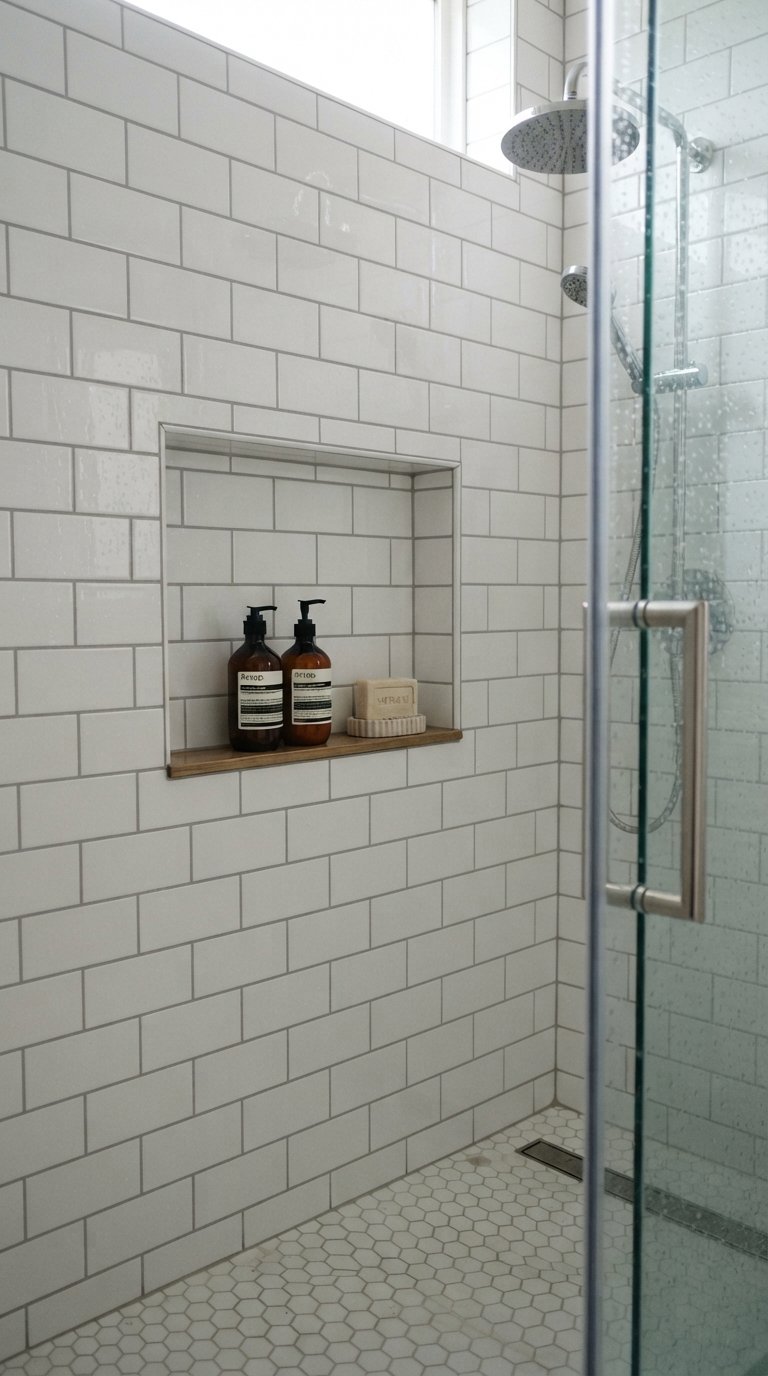
A niche is a recess in the shower wall, usually tiled, that holds shampoo and soap without suction cups or hanging caddies. It keeps bottles out of the way and stays tidy.
If you’re building or remodeling, plan it between the studs and slope the bottom slightly so water drains out. Add a glass or stone shelf in the middle if you want two levels. Place it at a height you can reach without bending.
12. Corner Shelves for the Shower
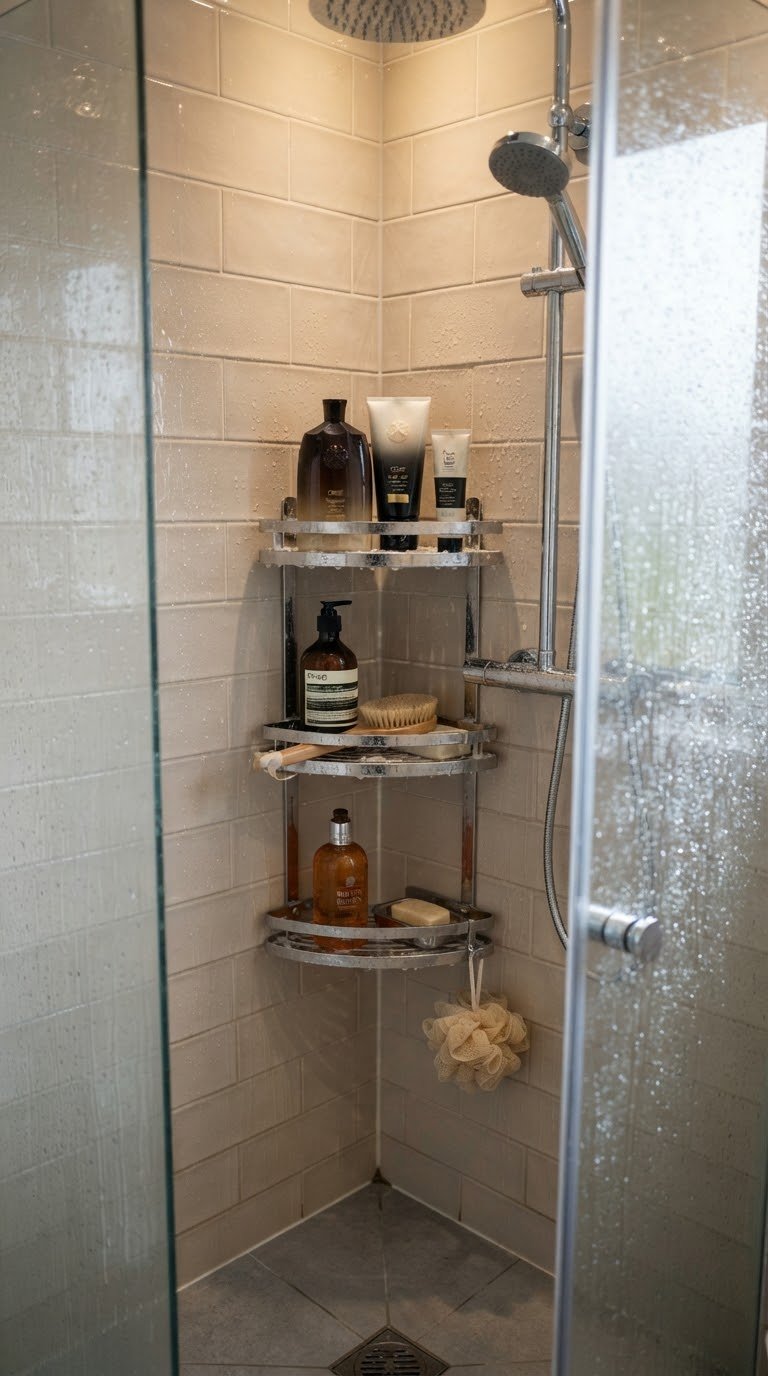
Shower corners are often empty, so a corner shelf fits naturally. You’ll find three main types: tension poles that press floor to ceiling, adhesive shelves that stick to tile, and wall-mounted shelves that screw in.
Tension poles need no drilling but can slip if they’re overloaded. Adhesive models work best on smooth tile, not textured tile. Choose a rust-resistant finish, and keep heavy bottles on the lowest level.
13. A Narrow Shelf Beside the Tub
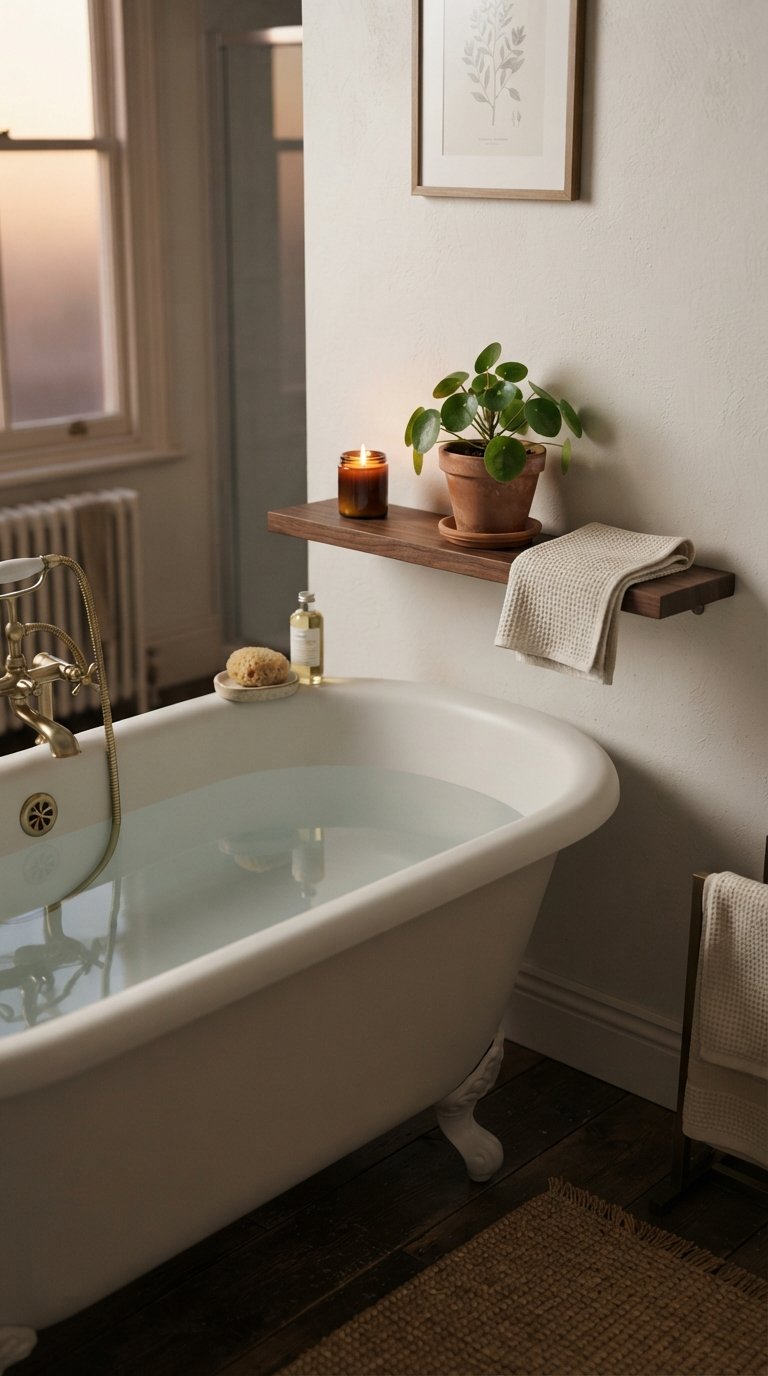
A slim shelf along the tub’s edge holds a candle, a book, or a bath bomb within arm’s reach. It makes baths feel easier without needing a full caddy.
Mount it far enough from the tub to avoid splashes, but close enough to reach from the water. Wood works if it’s sealed, and a metal or stone shelf takes steam better. Keep the load light.
14. An Over-the-Door Rack

When there’s no wall space, use the door. An over-the-door rack hooks over the top edge and hangs on the back with no drilling, so it suits rentals.
Check your door’s thickness and make sure the door still closes without rubbing. If the door swings against a wall, the rack may hit it. Use it for towels, extra toiletries, and cleaning supplies you want out of sight.
15. A Corner Wall Shelf
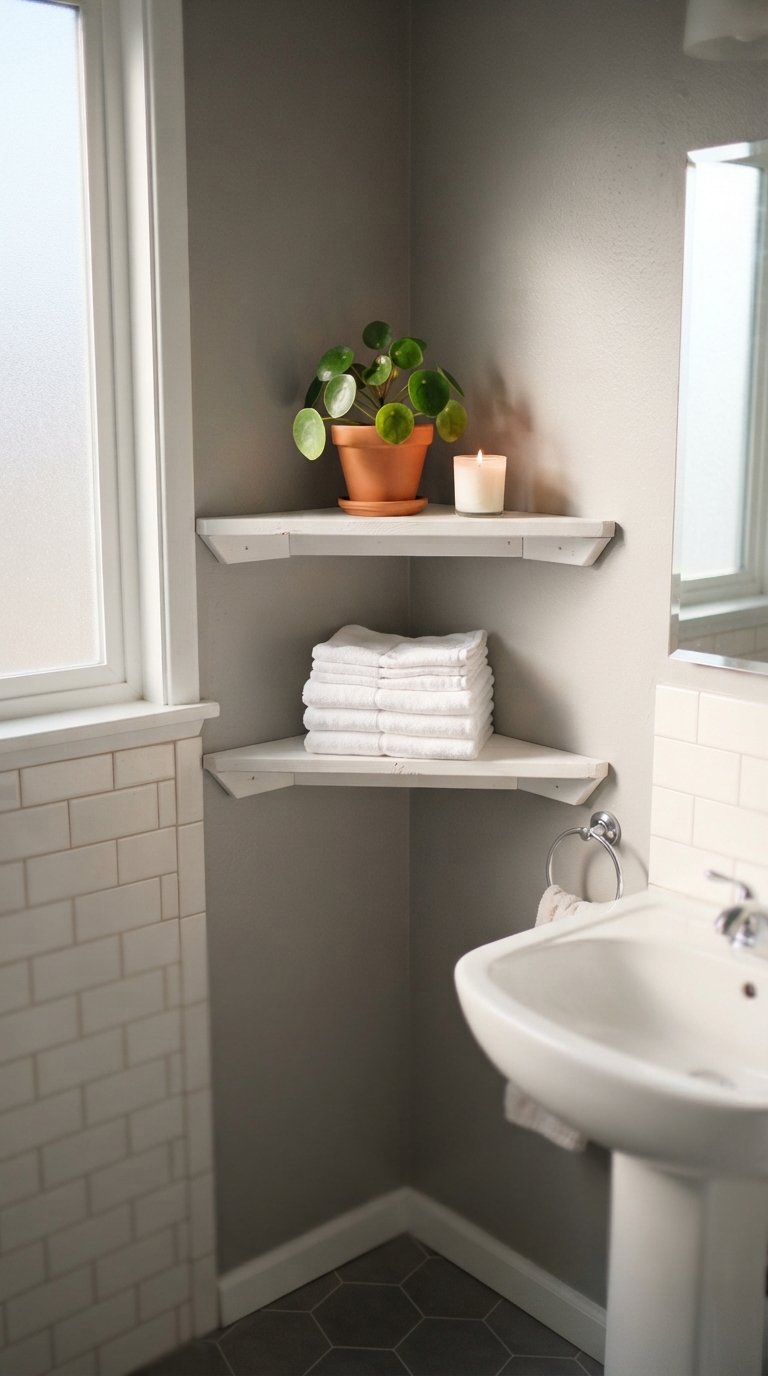
Bathroom corners rarely get used, and a corner wall shelf fits right in. It tucks into the angle of two walls and doesn’t take up wall width.
Use it above the toilet, beside the vanity, or next to the shower. Triangle or curved shelves look good stacked in twos. Because corner shelves are small, treat them as a place for lightweight items like candles, jars, and small plants.
16. A Floating Shelf With Hooks
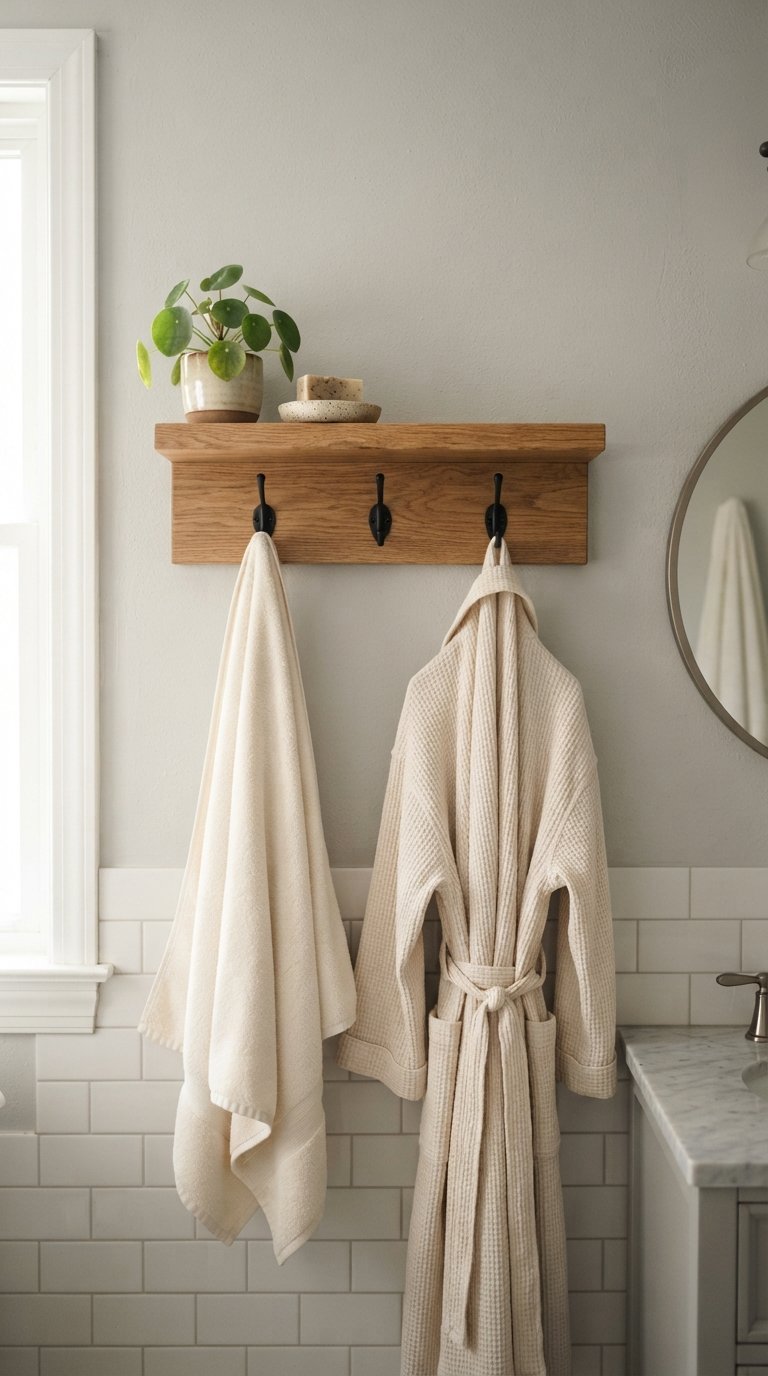
A shelf with hooks underneath gives you a place to put things and a place to hang them. Towels or a robe go on the hooks, and a plant or soap goes on top.
It suits bathrooms with no space for a separate towel bar. Check the weight rating, since wet towels are heavy, and mount it at a height that keeps towels off the floor.
17. A High Shelf Above the Door

The wall above the door is dead space in most bathrooms, and it is a good place for things you rarely need. Spare towels, extra toilet paper, and cleaning refills fit well there.
Use a sturdy shelf mounted into a stud or with proper anchors, and keep the contents light. A bathroom stepstool or a small ladder makes reaching easier. This shelf is about storage, not looking nice, so use matching baskets to keep it neat.
18. A Window Ledge Shelf
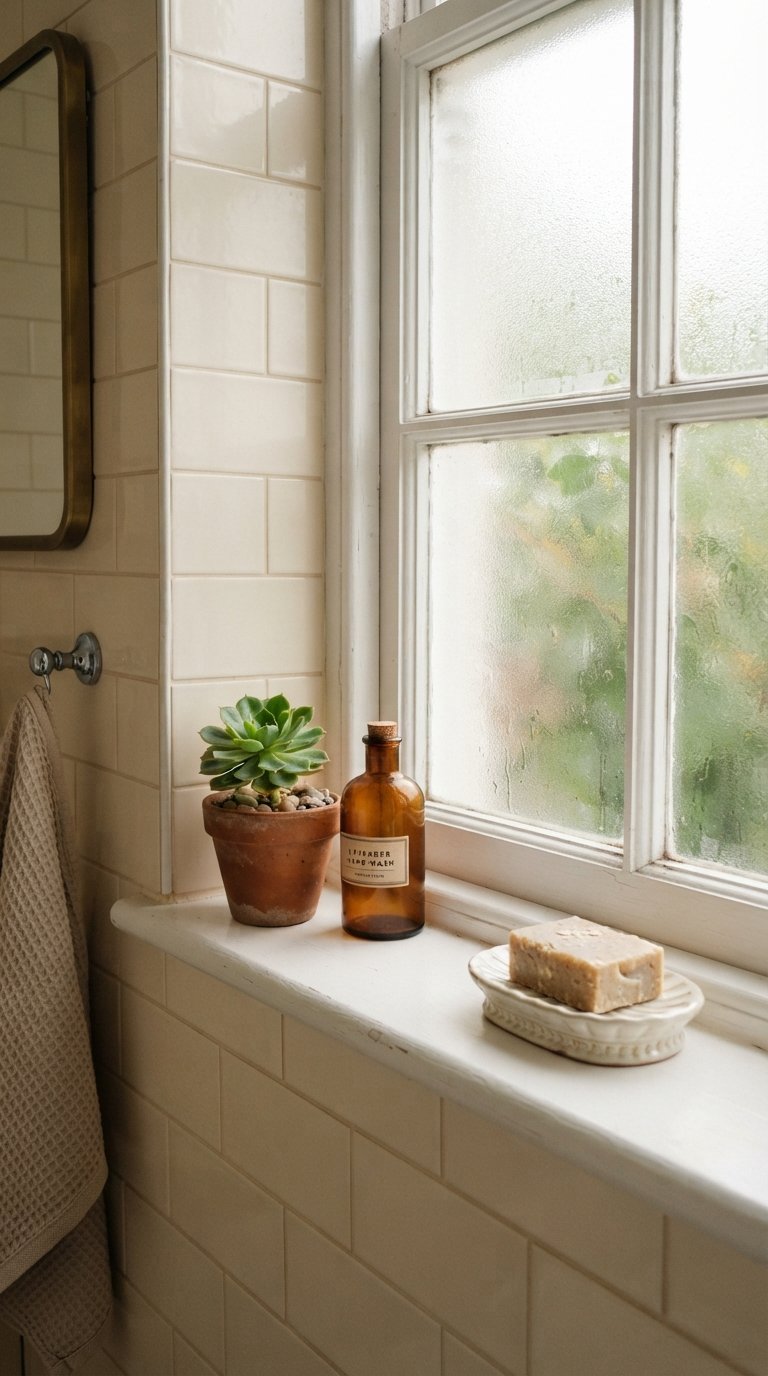
A deep window sill can serve as a shelf with no extra hardware. If the sill is narrow, a slim glass or wood shelf mounted just under it adds a second surface.
Keep the window easy to open and keep items from blocking the light. Plants do well here, but keep paper products and electronics away from condensation.
19. A Bench With Storage
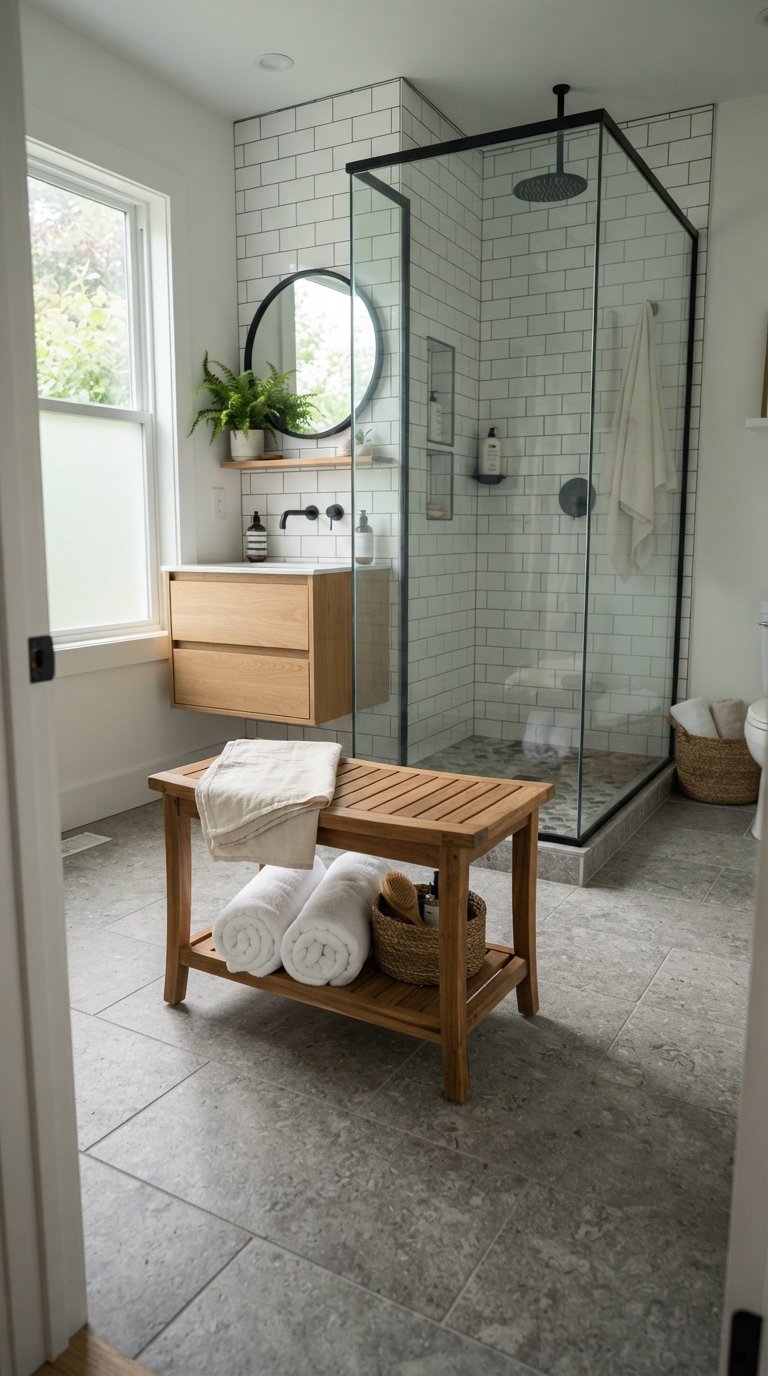
If you have floor space, a bench with a shelf underneath gives you a seat and storage in one piece. It works near a shower or in front of a tub, where you can sit to dry off.
Slatted teak resists moisture well. Put rolled towels or a basket on the lower shelf. Make sure it clears the door swing and leaves enough walking room.
20. A Tall Slim Shelf in a Gap
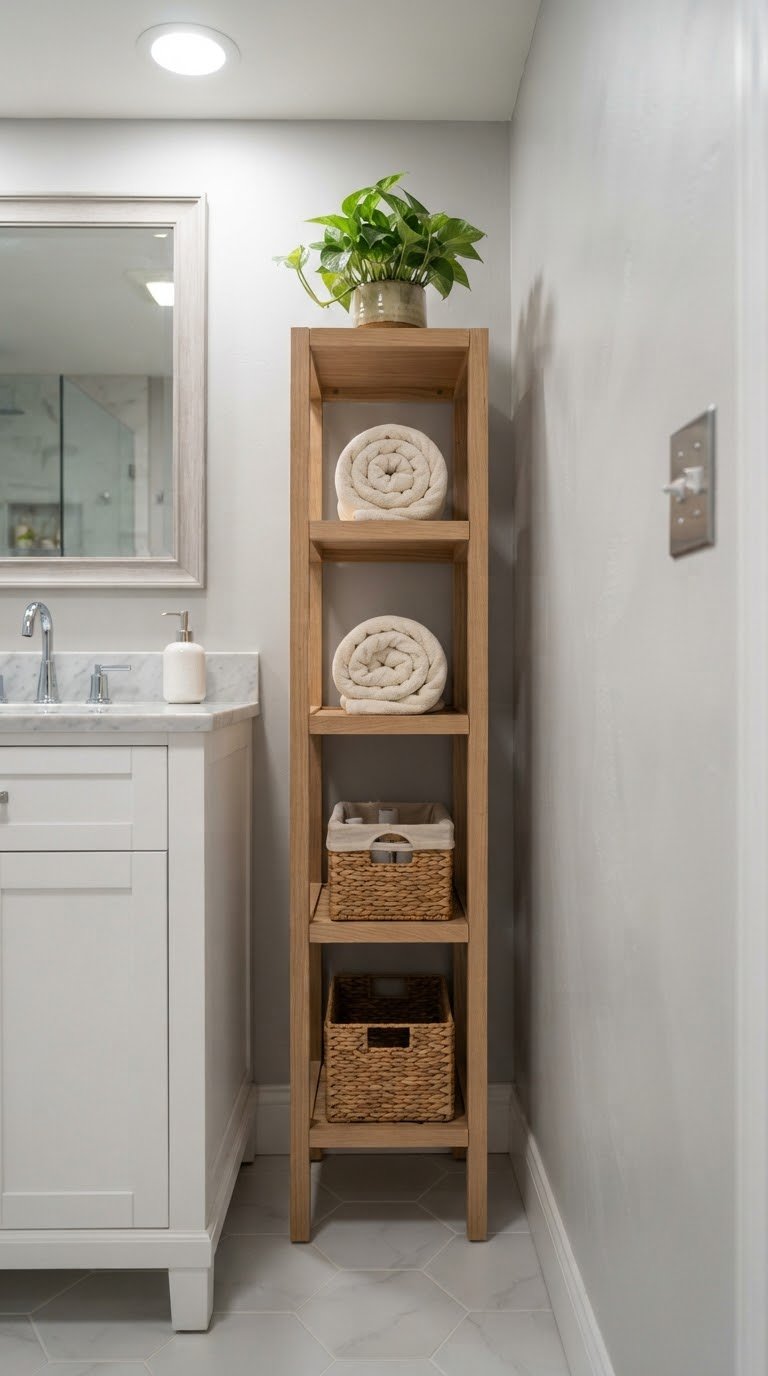
Look for a narrow gap, like the space between a vanity and a wall or beside the toilet. A tall, slim shelf unit can fill it and add storage without feeling bulky.
Even a gap not much wider than a book can hold small baskets and rolled towels. Pick an open unit so it doesn’t look heavy, and secure it to the wall if it’s tall.
How to Style Bathroom Shelves

Open shelves can look messy fast, so give each one a simple plan. Try three items: one useful thing (towels or a jar of cotton pads), one soft thing (a folded washcloth or a basket), and one small touch (a plant or candle).
Match your containers. Glass jars, white ceramic, or the same basket style make a mixed shelf look calm. Leave some space on each shelf, since crowding is the quickest way to make a bathroom feel
Keeping Bathroom Shelves Clean
Wipe shelves weekly with a damp cloth, and dry them afterward so water doesn’t sit. Glass needs a quick pass with glass cleaner to avoid spots. Check metal shelves for rust at the brackets, and re-seal wood shelves if the finish starts to wear.
FAQS
What is the best place to put shelves in a small bathroom?
The best location depends on what you need to store. Above the toilet is useful for towels and toilet paper, while space beside the vanity works well for everyday toiletries. Shower corners, the back of the door, and narrow gaps can also provide storage without using much floor space.
How high should a shelf be above a toilet?
Leave enough clearance to use the toilet comfortably and lift the tank lid when maintenance is needed. Common recommendations vary, so instead of relying on one fixed measurement, hold the shelf in position and check it against your toilet, tank, and household members’ height.
What shelf depth works best in a narrow bathroom?
Around 4 to 6 inches works well for many small bathroom shelves because it provides useful storage without projecting too far into the room. Very shallow ledges can work for decorative items, while deeper shelves are better for baskets and folded towels.
Can floating shelves handle bathroom humidity?
Yes, when the shelf material and finish are appropriate for the environment. Glass, suitable metal, tile, and properly sealed wood can work well in bathrooms. Avoid leaving unfinished wood exposed to repeated moisture.
Are adhesive bathroom shelves strong enough for towels?
They may be suitable for lightweight items, but you should not assume an adhesive shelf can safely hold heavy or wet towels. Check the manufacturer’s weight rating and surface requirements before installation.
How many shelves should I put above a toilet?
For many small bathrooms, one or two shelves are enough. Two shelves can provide useful storage without making the wall feel overloaded. More shelves can work in a larger bathroom, but the available wall height and the size of the objects matter.
Where should I store backup toilet paper and towels?
Store backup supplies somewhere dry and easy to reach when needed. A high shelf above the door, enclosed basket, or over-the-toilet storage unit can work well. Keep paper products away from areas that receive regular water splashes.
Conclusion
The best bathroom shelf ideas are not necessarily the biggest or most decorative ones. A shallow shelf above the toilet, a narrow unit beside the vanity, a shower corner shelf, or even an over-the-door rack can solve a specific storage problem without taking over the room. Start with the area that causes the most clutter and choose a shelf that fits both the available space and the items you need to store.
Measure before buying, pay attention to shelf depth and weight capacity, and choose materials that can handle the humidity of the location. If you are renting, focus on freestanding and no-drill options; if you are remodeling, recessed niches and built-in ledges can make better long-term use of the walls. One well-planned shelf can often make a small bathroom feel noticeably more organized without making it feel crowded.