
18 Red Brick Fireplace Makeover Ideas for a Modern Look
A red brick fireplace can bring warmth, texture, and character to a living room. But if the brick looks dark, dated, or too orange for your decorating style, it can be difficult to make the rest of the room feel pulled together. The good news is that you don’t always need to remove the brick or undertake a full renovation to give your fireplace a fresh look.
These red brick fireplace makeover ideas cover everything from classic white paint and soft limewash to colorful finishes, updated mantels, modern tile, and built-in shelving. Some options change the brick itself, while others make the original brick look more intentional through thoughtful styling.
Before choosing a makeover, consider the condition of your brick, your budget, and whether you regularly use the fireplace. A simple styling update may be enough for a fireplace in good condition, while damaged masonry or a major refacing project may require professional help.
Red Brick Fireplace Makeover Ideas Using Paint and Brick Washes
Paint and brick washes can change the appearance of a fireplace without completely rebuilding it. The right finish depends on whether you want to hide the original red color, soften it, or introduce a new accent shade.
1. Paint Red Brick White for a Bright, Fresh Look

White-painted brick is a classic option for a living room that feels dark or visually heavy. A warm white can soften the orange-red tones, while a cleaner white creates a sharper contrast with dark furniture, black accents, or colorful artwork.
The finish you choose matters. A matte or low-sheen product can help the fireplace feel integrated with the room instead of overly glossy. Because rough brick absorbs paint unevenly, the final result may require careful preparation and more than one coat.
Before painting, remove loose dust and soot, check for moisture or damaged mortar, and select a coating suitable for the specific masonry and temperature conditions. Test the color on a small, inconspicuous area and allow it to dry before deciding whether it works with your floors and furniture.
Styling idea: Pair the white brick with a walnut or oak mantel, a navy sofa, brass accents, and a rust-colored throw. These warmer details keep the room from feeling too stark.
Styling idea: Add a chunky wood mantel, a patterned vintage rug, olive-green cushions, and a ceramic vase filled with branches. The contrast between the lightened brick and richer accessories makes the texture stand out.
3. Use Limewash for an Aged, European-Inspired Finish
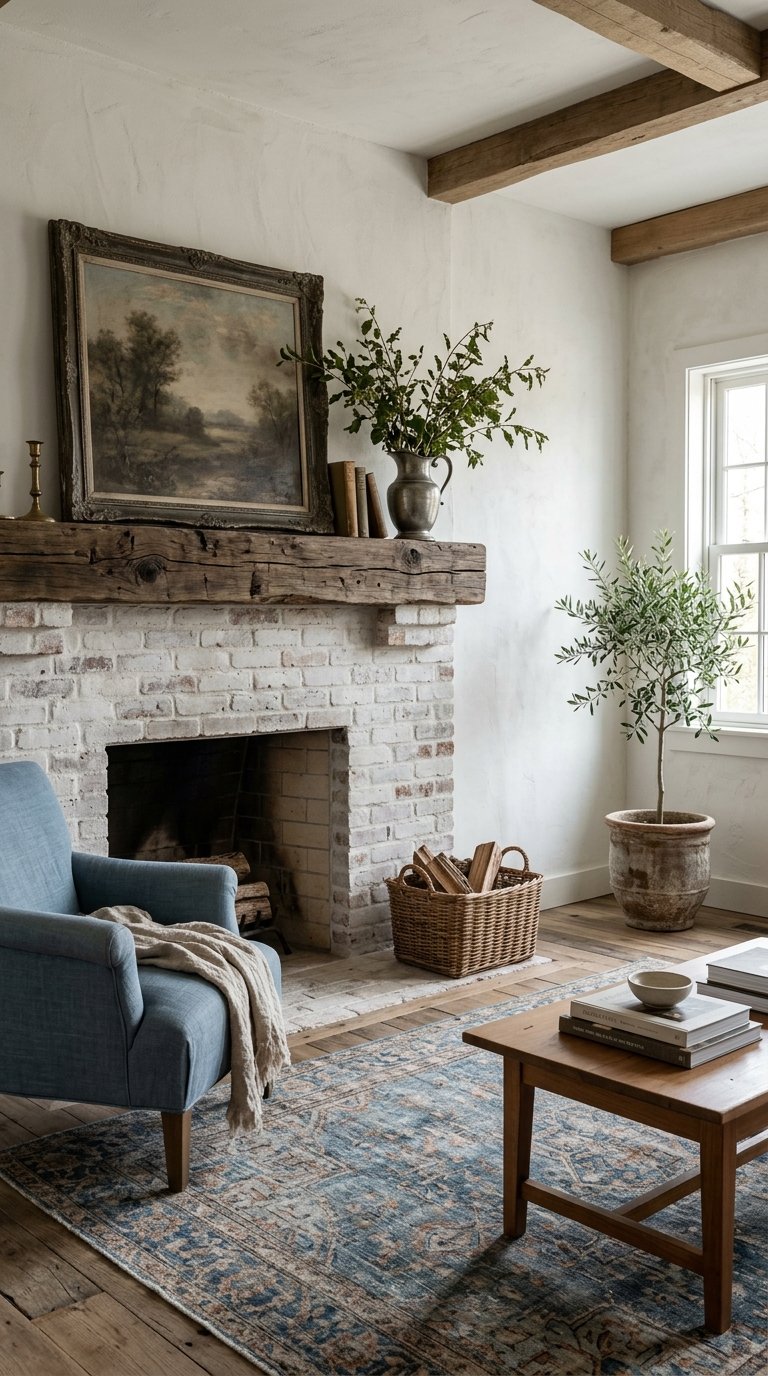
Limewash creates a soft, mineral appearance with subtle variation across the brick. Instead of producing a uniform painted surface, a suitable limewash can give the fireplace a chalky, aged look that suits traditional cottages, Mediterranean interiors, and relaxed European-inspired rooms.
It is particularly worth considering when you want a lighter fireplace without losing all the character of the original masonry. The finish can vary naturally from one brick to another, which adds depth without requiring a strong decorative pattern.
Limewash is not interchangeable with ordinary diluted paint. Check that the chosen product is appropriate for your brick and its existing finish. Some products need porous, unpainted masonry, while previously sealed or painted brick may require a different approach. Follow the manufacturer’s preparation and application instructions.
Styling idea: Combine the finish with an aged timber mantel, muted blue artwork, antique brass accents, and a faded patterned rug. These details create an old-world atmosphere without making the room look overly formal.
4. Add German Schmear for Rustic Cottage Character
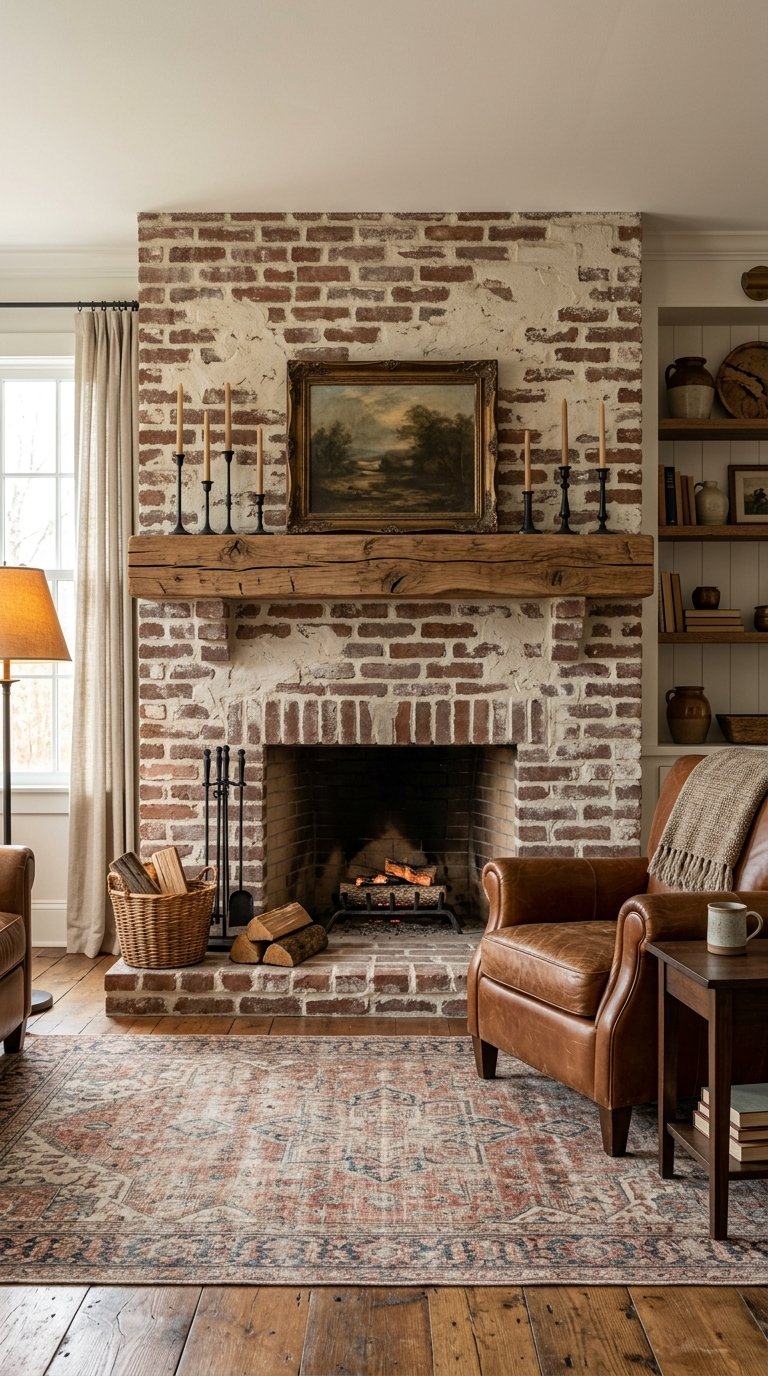
German schmear is a technique in which mortar is applied over brick and worked back to leave an irregular combination of covered and exposed areas. The result has a rough, aged appearance that can make a standard brick fireplace look more like an old masonry feature.
Unlike whitewashing, which uses a wash or coating, traditional German schmear involves mortar. That distinction matters because a real mortar application is difficult to reverse and requires suitable materials and technique. Paint-based faux versions may create a similar visual effect, but they are not the same material or process.
Look at examples of the finished texture before choosing this method. A heavy application creates a more covered, stone-like appearance, while a lighter treatment leaves more of the original brick visible. A qualified professional can help determine whether the existing brick and mortar are suitable for the intended treatment.
Styling idea: A reclaimed wood mantel, black metal candlesticks, a cognac leather chair, and a richly patterned rug complement the irregular finish.
5. Create a Multi-Tone Brick Finish
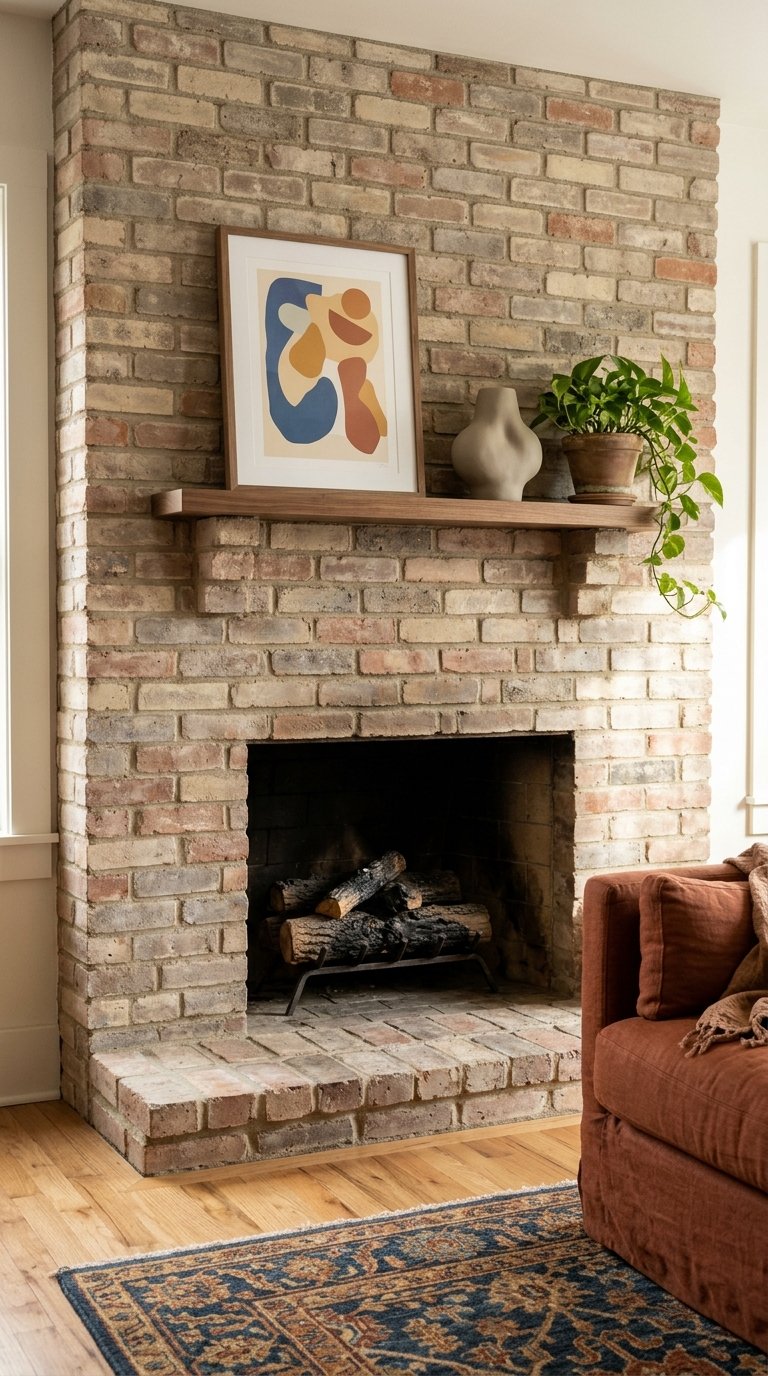
A multi-tone finish is a useful option if you want to tone down bright red brick without making every brick the same color. Carefully chosen shades of warm gray, muted terracotta, sand, and cream can create a more balanced appearance while retaining the visual pattern of the masonry.
The key is to avoid applying colors in a way that makes the bricks look artificially striped. Look at the overall fireplace from across the room, not just close up. The tones should work together as a surface rather than compete for attention.
Before using several colors, create a test area and allow it to dry fully. The appearance depends on the original brick, the coating, and the application method. If the fireplace is already painted, check the condition and compatibility of the existing finish first.
Styling idea: Keep the mantel relatively simple, with one large piece of artwork, a sculptural vase, and a small plant. The varied brick finish already provides plenty of visual detail.
6. Paint the Brick Black for a Moody Modern Fireplace

A black or charcoal fireplace can turn dated red brick into a dramatic focal point. The dark finish creates a strong backdrop for warm wood, colorful artwork, and metallic accents, making it especially appealing in contemporary and eclectic living rooms.
Charcoal is often worth testing alongside true black. It can deliver a similar moody effect while appearing softer in a dim room. A matte or low-sheen finish may also emphasize the brick’s texture differently from a glossy coating.
Before choosing a dark color, consider the amount of natural light in the room and the size of the fireplace. A dark fireplace can look striking in a small room, too, but the balance of wall color, lighting, and furniture becomes especially important.
Styling idea: Pair charcoal brick with a pale oak mantel, a brass-framed mirror, a rust-colored accent chair, and an olive-green plant. The warmer details prevent the dark surface from feeling cold.
7. Choose Warm Greige or Soft Gray
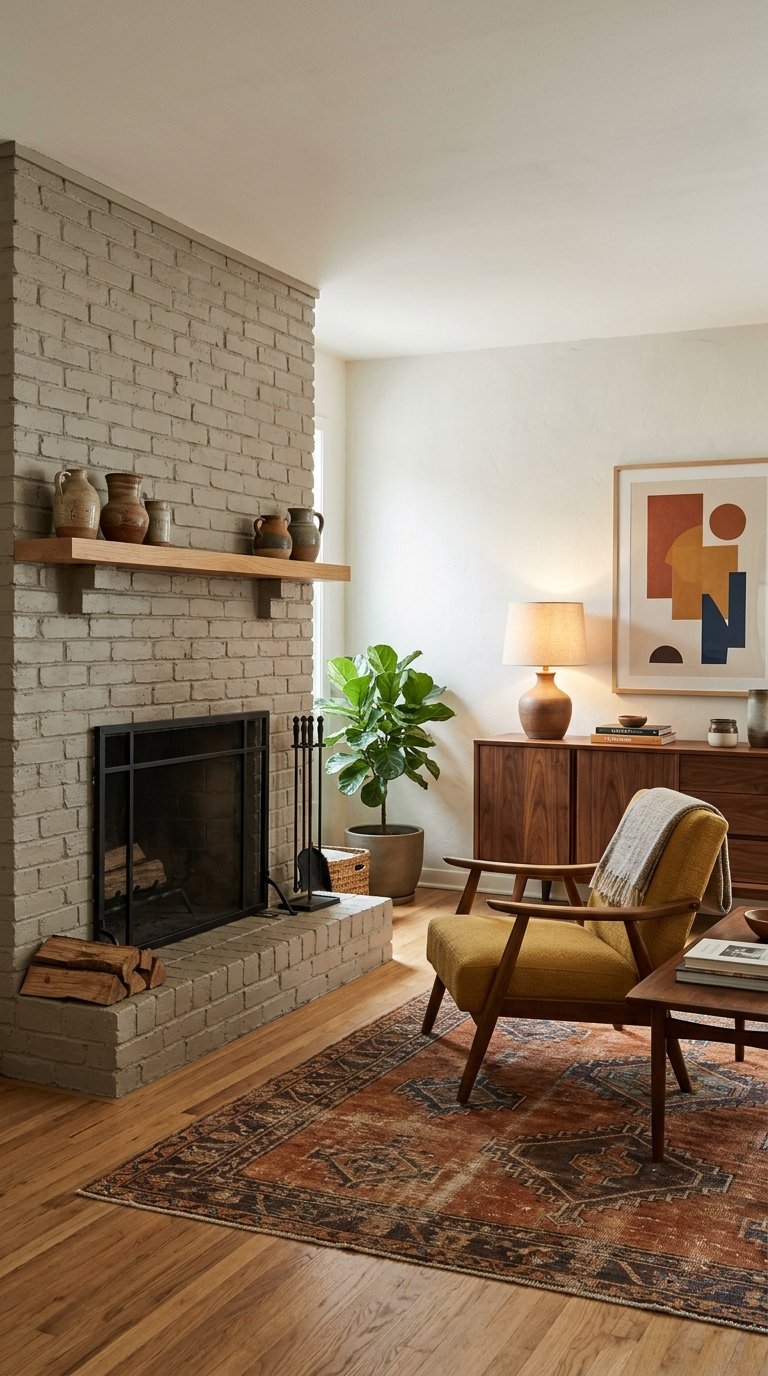
If you prefer a quieter makeover, warm greige or a carefully selected soft gray can reduce the visual intensity of red brick without introducing a bold new color. This approach works well in mid-century homes, living rooms with walnut furniture, and spaces where the fireplace should blend into the surrounding wall.
Undertones are especially important here. Some grays contain cool blue undertones, while others lean toward brown or green. A shade that looks balanced on a paint sample may look very different next to red brick or warm wood flooring.
Test the color beside the actual brick and view it in both daylight and evening lighting. You may prefer a close match to the wall color for a seamless look, or a slightly deeper shade to define the fireplace.
Styling idea: Add walnut furniture, a mustard accent chair, black picture frames, and a vintage geometric rug. These elements give the subdued finish enough contrast to feel intentional.
8. Make a Statement with Sage, Navy, or Blush Brick

Painting a brick fireplace a color other than white or gray can give the living room a more personal look. Sage green feels relaxed and nature-inspired, navy adds depth, and blush creates a softer statement that can work beautifully with vintage or eclectic decor.
Choose the shade according to the rest of the room rather than treating the fireplace as an isolated feature. For example, sage can connect with green cushions and botanical artwork, while navy can echo a patterned rug or dark blue upholstery.
Use sample colors on a small area and check how they look throughout the day. The brick’s texture and underlying color can affect the finished appearance, so the sample needs to be viewed on the actual surface.
Styling idea: For a sage-green fireplace, try a warm wood mantel, blush flowers, colorful framed art, and a vintage rug with pink and blue details. Repeating a few colors elsewhere in the room helps the scheme feel connected.
Ways to Update a Red Brick Fireplace Without Covering the Brick
You don’t have to paint or hide the original masonry to improve its appearance. Cleaning, updating the surrounding finishes, and changing the mantel or hardware can make a noticeable difference while allowing the brick to remain the main feature.
9. Clean and Repair the Natural Red Brick

Sometimes the fireplace looks dated because the brick is dirty, the mortar is deteriorating, or the surrounding decor no longer suits the room. If the masonry is in good condition, cleaning and appropriate repairs may be enough to restore its appearance.
Start by checking for loose mortar, cracked bricks, signs of moisture, or areas that appear to be deteriorating. These issues should be assessed before cosmetic work begins. If the fireplace has not been inspected recently, arrange an appropriate chimney or fireplace inspection before using it.
Use a cleaning method and product suitable for the type of brick and the residue present. Avoid assuming that every household cleaner is safe for masonry. Some brick surfaces can be damaged by harsh chemicals or excessive moisture.
Styling idea: Let the original brick provide the color. Pair it with cream upholstery, olive cushions, a dark wood mantel, and a blue-patterned rug to balance the warm red tones.
10. Refresh the Surrounding Wall, Mirror, and Artwork
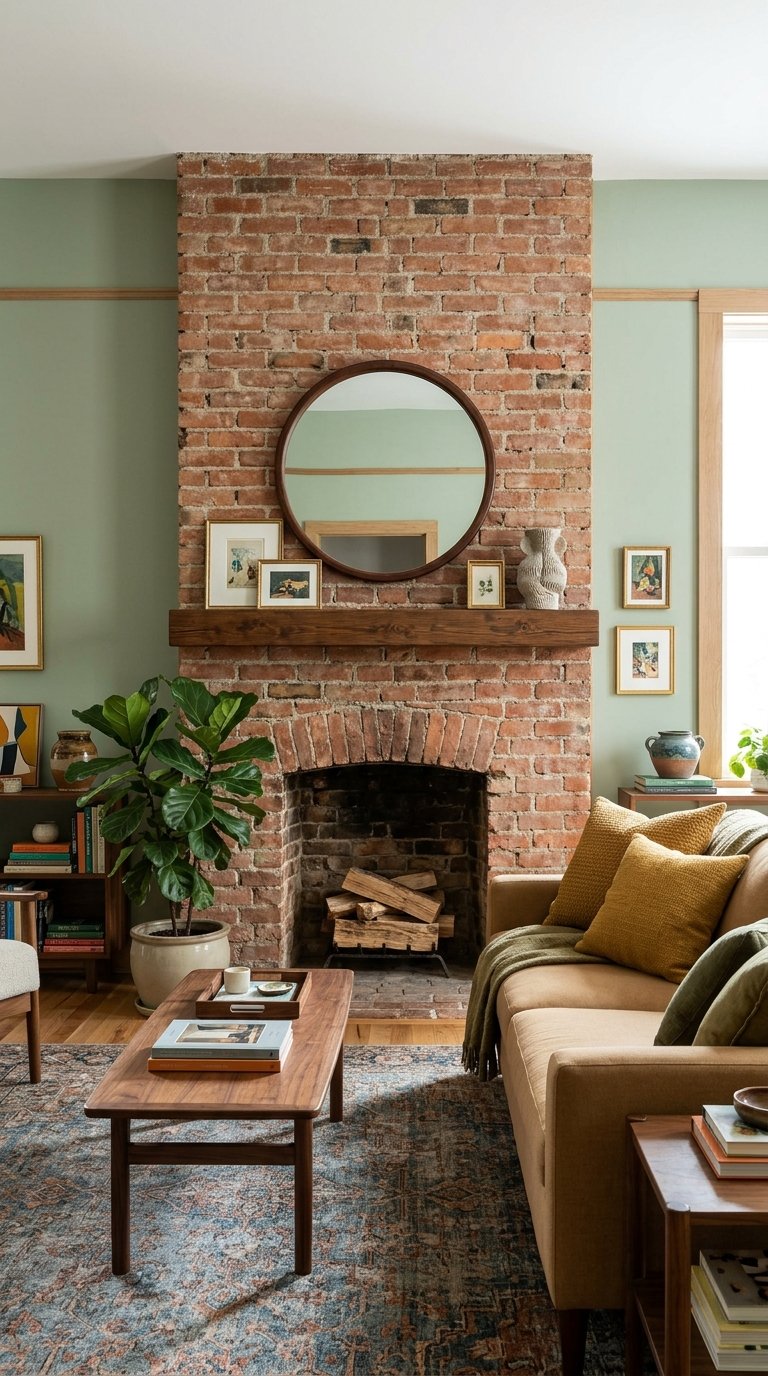
If you like your red brick but dislike how it looks in the room, consider changing the surrounding elements first. Wall color, artwork, lighting, and furniture can all influence whether the fireplace feels dated or thoughtfully integrated.
Warm white, soft sage, muted clay, and selected greige shades can complement red brick. The best option depends on the exact undertones of the brick and the colors already present in the room. Test wall colors directly beside the fireplace instead of choosing them from a sample card alone.
A large mirror or substantial piece of artwork can also create a more balanced focal point above the mantel. If hanging anything is not suitable, consider a securely positioned leaning artwork arrangement where appropriate.
Styling idea: Keep the brick natural, paint the surrounding walls a soft sage, and add a large framed landscape, a warm wood console, and a patterned rug with blue and rust accents.
11. Update the Fireplace Doors, Screen, and Hardware
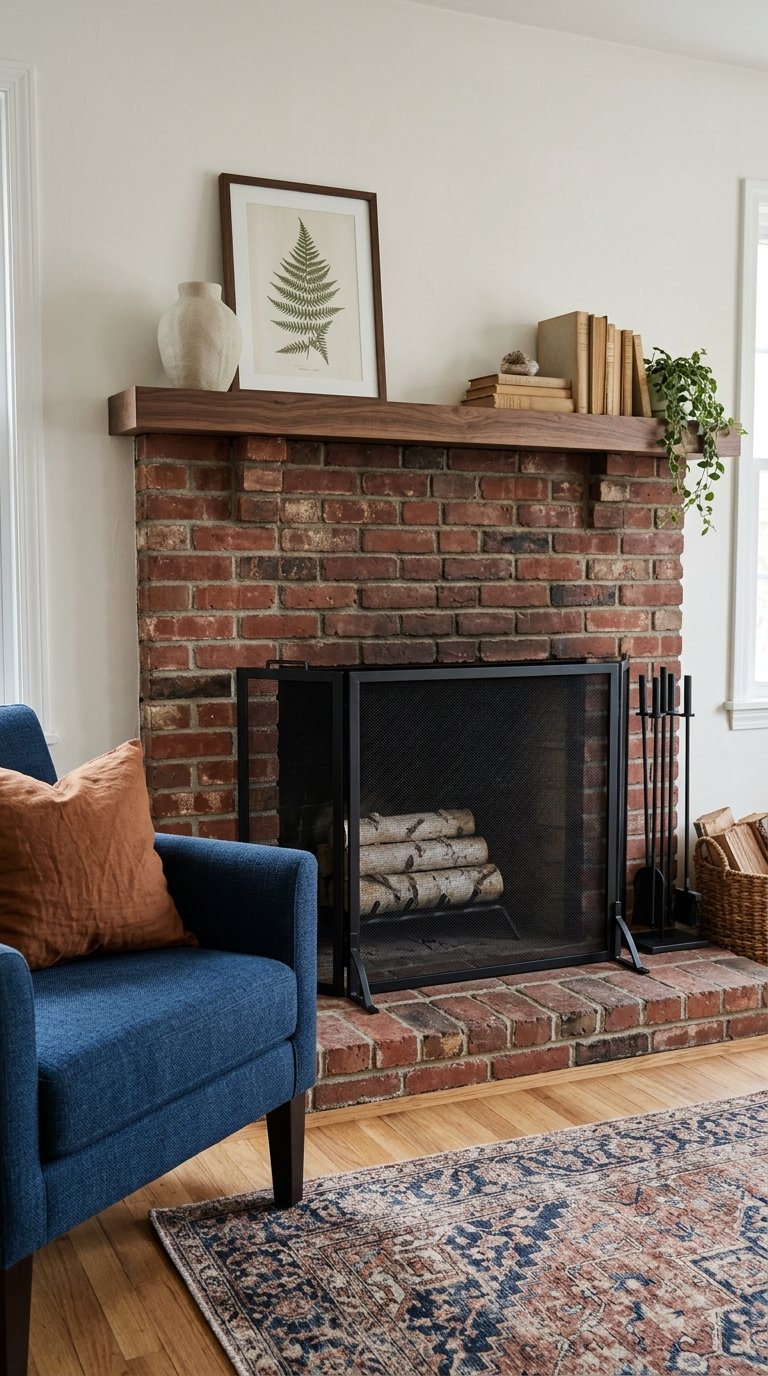
Brass-toned doors, an outdated screen, or worn hardware can make a fireplace look older even when the brick itself is attractive. Updating these details may provide a noticeable improvement without changing the masonry.
Look for a screen or door style that suits the fireplace’s design and intended use. A slim black finish can create a cleaner outline, while a more traditional metal design may better suit an older home. Before removing, replacing, or painting any components, confirm that the product is compatible with the fireplace and its operation.
Never use ordinary paint on a surface exposed to high temperatures. Follow the appliance or fireplace manufacturer’s guidance and use products specifically approved for the intended application.
Styling idea: Keep the brick exposed, use a simple dark screen where appropriate, and add a restrained mantel arrangement with framed art, a ceramic vase, and a small stack of books placed safely away from heat.
12. Replace the Mantel or Refresh the Hearth

A mantel can change the entire character of a brick fireplace. A substantial reclaimed beam introduces rustic warmth, a clean-lined wood shelf suits a modern room, and a painted mantel can create a sharper contrast against the brick.
Scale is important. A mantel that looks too small can seem lost against a large fireplace, while one that is disproportionately deep or thick can overwhelm the wall. Consider the width of the brick surround, the height of the ceiling, and the visual weight of nearby furniture.
The hearth may also need attention. If it is worn or visually busy, an appropriate repair or professionally planned resurfacing could create a more cohesive finish. Any new mantel, hearth material, or decorative treatment must comply with the fireplace’s clearance requirements and local building codes.
Styling idea: Pair a dark walnut mantel with a vintage mirror, a sculptural ceramic vase, and a colorful art print. Let the mantel and brick provide contrast instead of filling every available space with accessories.
Cover or Reface a Red Brick Fireplace for a Bigger Transformation
When paint and styling cannot deliver the look you want, a new surface may be worth considering. These projects can involve more labor and expense, and the existing masonry must be suitable for the chosen installation.
13. Add Shiplap or Wood Paneling Around the Fireplace
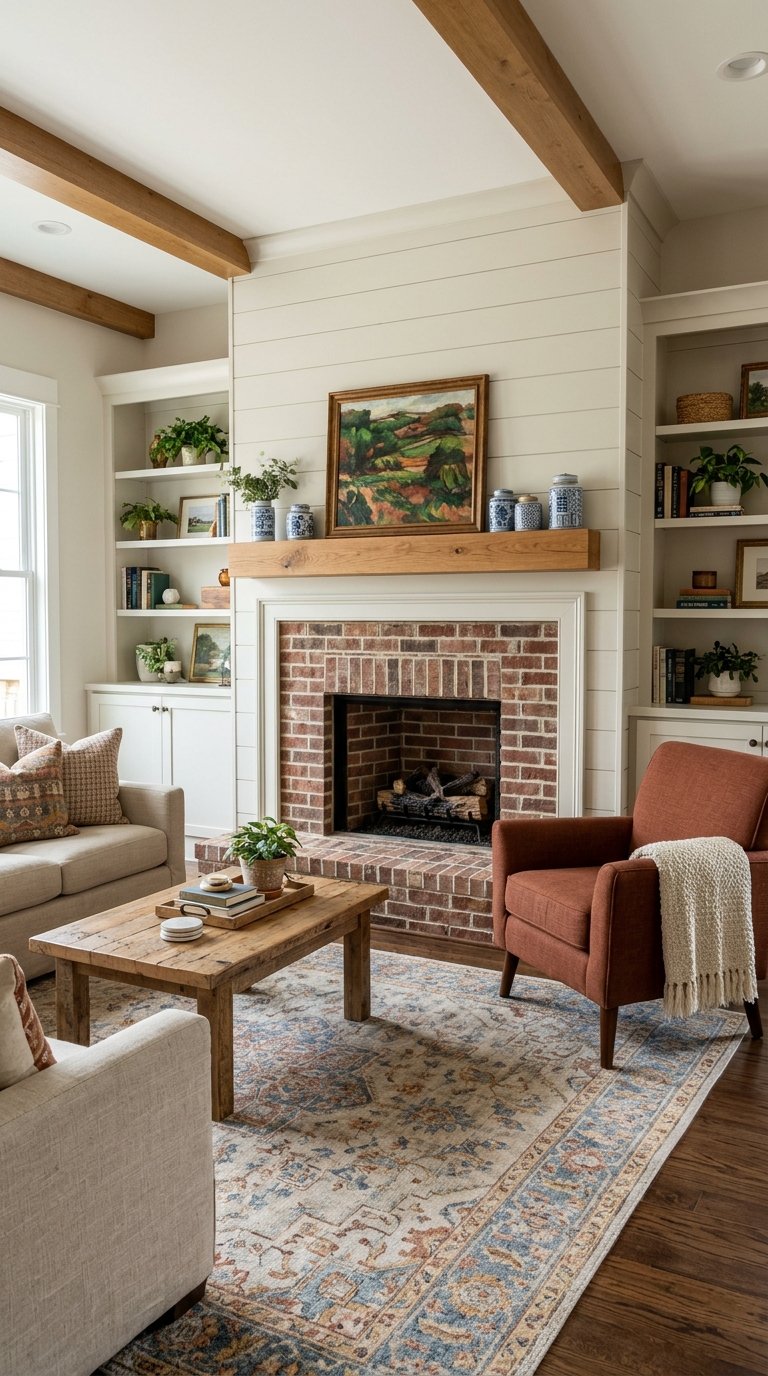
Shiplap and wood paneling can introduce clean lines and a more structured look around an existing fireplace. Depending on the design, the new finish may cover part of the brick or frame the fireplace with a contrasting material.
The important consideration is safety. Wood and other combustible materials cannot be placed wherever they look best in a design photograph. The required clearances depend on the fireplace, its listing and installation instructions, and applicable building codes. Don’t install wood near the firebox without confirming that the proposed design is permitted.
The brick also needs to be evaluated before any covering system is installed. Moisture, unstable masonry, and an unsuitable attachment method can cause problems later. A qualified installer can help determine how the new surface should be supported and where noncombustible materials are required.
Styling idea: Combine a suitable light-colored surround with blue-and-white artwork, warm wood furniture, and a patterned rug. The combination feels fresh without relying on an entirely white room.
14. Use Plaster for a Soft, Organic Finish
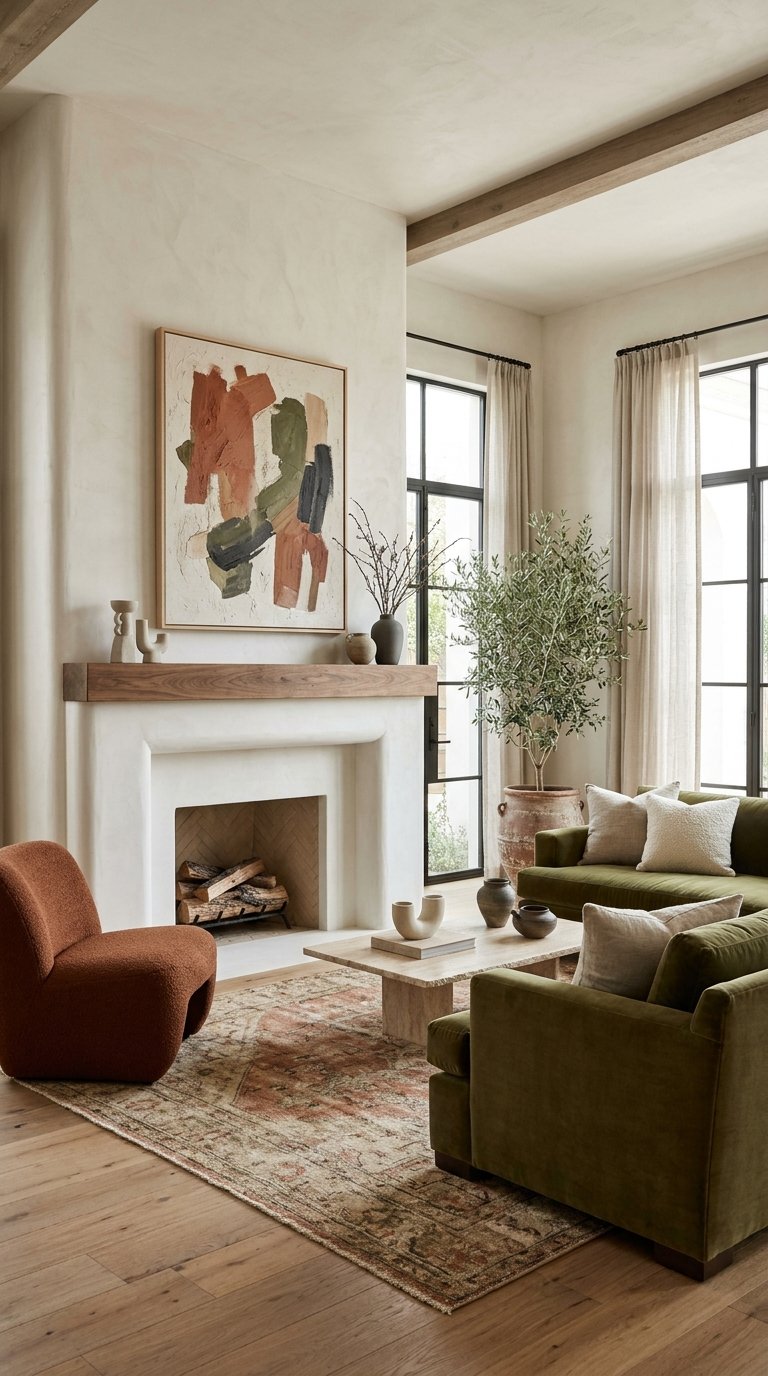
A plaster finish can make a brick fireplace look more like a sculptural architectural feature than a traditional masonry wall. Depending on the chosen material and application, the surface may be smooth and minimal or slightly textured with a handcrafted appearance.
This approach works well with Mediterranean, contemporary organic, and relaxed modern interiors. Warm white, muted clay, and soft earthy tones can complement wood furniture and textured fabrics without competing with the room’s other features.
The substrate and the specific plaster system matter. Brick may need preparation or leveling, and not every plaster product is appropriate for every fireplace surface. A professional can assess the existing brick and help choose a compatible finish, particularly around an active firebox.
Styling idea: Add a walnut mantel where permitted, a large abstract artwork, olive-green upholstery, and a richly textured rug. The smoother fireplace surface creates contrast with the room’s softer materials.
15. Create a Concrete-Look Finish

A concrete-look fireplace can bring a contemporary, architectural feel to a living room. Its appeal comes from the restrained color, subtle surface variation, and clean appearance. Depending on the system, the effect may be created with a cement-based finish or a suitable decorative coating.
Choose the finish with the rest of the room in mind. Pale gray can make the fireplace feel understated, while a deeper charcoal shade creates a stronger focal point. Warm wood, colorful artwork, and layered textiles help prevent the space from feeling overly stark.
Not all concrete-look coatings are suitable for fireplace use, and not every cement product is appropriate for every substrate or heat condition. Check the product’s technical requirements and have the surface assessed before installation.
Styling idea: Keep the fireplace visually clean, then introduce color through a rust-colored chair, walnut furniture, and an abstract print with blue or green accents.
16. Cover the Brick with Stone Veneer

Stone veneer can give a brick fireplace a more textured, rustic, or traditional appearance. Depending on the stone and installation, the result may resemble a cabin fireplace, a country home feature, or a more contemporary stone surround.
Color and scale make a big difference. Gray stone often suits cooler, modern interiors, while warmer brown and cream tones can complement traditional wood furniture. Larger pieces tend to create a calmer surface, whereas smaller stones introduce more texture and visual movement.
Before installation, make sure the existing brick is sound and the proposed system is suitable for the fireplace. Follow the stone manufacturer’s requirements for substrate preparation, attachment, and clearances around the opening. Some installations require professional help to ensure a durable and compliant result.
Styling idea: Let the stone texture take the lead. A simple wood mantel, a restrained arrangement of ceramics, and a colorful patterned rug can make the finished fireplace feel inviting rather than heavy.
17. Use Tile for a Polished Fireplace Makeover

Tile offers a wide range of styles, from marble-look surfaces to handmade-look zellige and bold geometric patterns. It can give a dated fireplace a cleaner, more decorative appearance while introducing color or texture that is difficult to achieve with paint alone.
For a quieter design, choose larger-format tiles with subtle variation. If you prefer an expressive look, smaller tiles or a colorful pattern can make the fireplace a standout feature. Grout color also affects the final appearance: a close match creates a more continuous surface, while contrasting grout emphasizes the tile pattern.
The existing brick must be assessed for stability, flatness, and compatibility with the installation system. The appropriate substrate, adhesive, grout, and tile depend on the location and heat conditions. Confirm that all materials are suitable for the intended fireplace application before work begins.
Styling idea: Try a muted green or blue tile with a simple wood mantel, warm metal accents, and a colorful vintage rug. This gives the fireplace personality without making every element in the room compete for attention.
18. Add Built-In Shelving Around the Fireplace

Built-in shelves can balance a large brick fireplace, add storage, and make an oversized wall feel more thoughtfully designed. They also create a place for books, artwork, baskets, and decorative objects that connect the fireplace with the rest of the room.
The proportions matter. Shelving that is too deep or visually heavy can make the fireplace feel crowded. Plan the width and height around the existing fireplace, the room’s architecture, and the furniture below. Leave the required space around the firebox and avoid placing combustible items where heat could create a hazard.
Choose a cabinet or shelf color that complements the brick. Deep green and navy create a dramatic contrast, while warm white can lighten the overall wall. Wood shelves introduce another natural material and can soften a more formal built-in design.
Styling idea: Arrange books horizontally and vertically, mix in a few colorful ceramics, and leave some open space between objects. A few carefully selected pieces will usually look better than filling every shelf.
How to Prepare a Red Brick Fireplace Before a Makeover
Preparation affects both the appearance and durability of a fireplace makeover. Paint may fail on a dirty surface, a coating may behave unpredictably on damp brick, and new materials may not adhere properly to unstable masonry.
Before starting, work through these checks:
- Inspect the brick and mortar. Look for cracking, loose mortar, crumbling brick, or signs of moisture. Address underlying problems before adding a cosmetic finish.
- Check the fireplace itself. If it is used for burning fuel, arrange the appropriate inspection and maintenance before the next period of use.
- Remove loose dust and debris. Use a suitable brush and vacuum rather than immediately applying a wet cleaner.
- Clean carefully. Choose a masonry-safe cleaning method appropriate for the residue and the type of brick. Follow the product instructions.
- Allow the surface to dry. Don’t apply a coating until the brick meets the product’s moisture and preparation requirements.
- Protect the surrounding room. Cover floors and nearby furniture, and protect surfaces that should not be coated.
- Test the intended finish. Apply it to a small, inconspicuous area and allow it to dry fully before judging the color or texture.
- Check older coatings. In older homes, painted surfaces may contain lead. Follow appropriate lead-safe guidance before sanding, scraping, or disturbing old paint.
A stiff brush, vacuum, suitable cleaning supplies, protective coverings, and the correct application tools may be useful, but the exact materials depend on the makeover you choose.
Fireplace Makeover Safety Tips
A fireplace makeover should improve the room without compromising how the fireplace operates. Safety requirements differ between wood-burning fireplaces, gas units, and electric models, so don’t assume a product suitable for one is appropriate for another.
- Choose compatible materials. Check the manufacturer’s instructions for paints, coatings, tile systems, adhesives, and other products used near the fireplace.
- Respect clearance requirements. Wood mantels, shelves, textiles, artwork, and other combustible items must be positioned according to the applicable requirements for the specific fireplace.
- Don’t cover damaged masonry. Have cracks, loose mortar, moisture problems, or other deterioration assessed before covering the surface.
- Get help with major changes. Refacing, modifying the opening, or installing a new mantel may require a qualified professional.
- Follow inspection and maintenance guidance. Fuel-burning fireplaces and chimneys need appropriate inspection and maintenance. Follow the applicable manufacturer’s guidance and recognized safety recommendations.
- Maintain smoke and carbon monoxide protection. Ensure appropriate alarms are installed and working in accordance with local guidance.
When a design choice conflicts with a manufacturer’s instructions or local building requirements, follow the safety requirements rather than the decorative plan.
Common Red Brick Fireplace Makeover Mistakes to Avoid
Even a well-chosen design can disappoint if the finish, preparation, or scale is wrong. Keep these common mistakes in mind:
- Choosing paint from a sample card alone. Red brick can influence how a color looks. Test it on the actual surface.
- Skipping preparation. Dust, soot, moisture, and unstable masonry can undermine the result.
- Assuming whitewash and limewash are the same. They use different materials and can produce different finishes.
- Using an incompatible coating. A decorative paint is not automatically suitable for a fireplace’s temperature conditions.
- Ignoring undertones. A cool gray may clash with warm wood and orange-red brick. Compare the colors in the room.
- Covering the brick before checking its condition. A new surface will not solve an underlying moisture or masonry problem.
- Adding combustible materials too close to the opening. Check the fireplace’s required clearances before installing a mantel, shelves, or paneling.
- Overdecorating the mantel. Too many small objects can compete with the fireplace. A few pieces with varied heights often create a clearer focal point.
Budget Guide: From Simple Updates to Major Changes
The cost of a red brick fireplace makeover depends on the fireplace’s size, the condition of the masonry, the materials selected, and whether you hire a professional. The following order is a general guide to relative project complexity, not a price estimate.
- Styling and accessories: Changing artwork, decor, or a suitable fireplace screen may be the simplest starting point.
- Painting or washing: These options may require fewer materials than a complete refacing project, but preparation and product compatibility still matter.
- Mantel updates: Replacing or refreshing a mantel can change the look substantially, with installation costs depending on its size and requirements.
- Limewash or German schmear: The materials, application method, and desired texture affect the cost and effort.
- Tile, stone veneer, or paneling: These projects require additional materials and careful installation.
- Plaster, concrete-look finishes, or built-ins: Surface preparation, specialized skills, and custom work may make these more involved projects.
Before committing, compare the total cost of materials, tools, preparation, and installation. If the masonry needs repairs, address those first rather than spending money on a decorative finish that may need to be removed later.
How to Style Your Fireplace After the Makeover
Once the fireplace finish is complete, the surrounding decor can help it feel connected to the rest of the room. Start with one main focal point, such as a mirror or artwork, and build the arrangement around it.
Vary the height and shape of mantel accessories. A tall vase, a lower stack of books, and one sculptural object can create a more balanced display than several objects of the same size. Leave some empty space so the fireplace remains visible.
Use colors that complement the finish:
- White or whitewashed brick: Add warm wood, brass accents, colorful artwork, and greenery.
- Black or charcoal brick: Bring in pale wood, patterned textiles, and warm-colored accessories.
- Natural red brick: Balance the warm brick with sage, muted blue, cream, or olive.
- Stone or plaster: Use textured fabrics and selected decorative pieces to complement the surface without competing with it.
- Colored brick: Repeat one or two tones from the fireplace in cushions, artwork, or a rug to make the palette feel intentional.
You can also refresh the mantel seasonally. Branches, flowers, artwork, or a different arrangement of ceramics can change the atmosphere without requiring another renovation.
FAQS
Can you paint a red brick fireplace that you still use?
It may be possible, but the coating must be suitable for the particular masonry and the temperature conditions in the area where it will be applied. Follow the fireplace and paint manufacturers’ instructions, and seek professional advice if you are unsure which surfaces can be coated.
Why can whitewash make red brick look pink?
A translucent white coating can allow the brick’s red and orange undertones to show through, creating a pinkish appearance. The result depends on the brick and the product. Test a small area, allow it to dry, and adjust the finish before treating the entire fireplace.
What is the difference between limewash and whitewash?
Whitewash commonly refers to a diluted or translucent paint-based finish, while limewash is a mineral-based coating designed for compatible porous surfaces. They have different application requirements and produce different appearances. Check product instructions, particularly if the brick has been painted or sealed.
What wall colors work well with red brick?
Warm white, soft sage, muted clay, and some greige shades can complement red brick. The best choice depends on the brick’s undertones, the room’s natural light, and nearby finishes. Test the paint beside the fireplace before committing to the full wall.
Can you put tile or shiplap over a brick fireplace?
It depends on the existing masonry, the chosen installation system, and the fireplace’s safety requirements. Tile needs a suitable, stable substrate, while shiplap and other wood products must meet combustible-material clearance requirements. Confirm compatibility before installing either material.
Are red brick fireplaces outdated?
Not necessarily. Red brick can work in traditional, rustic, mid-century, and eclectic interiors. If it feels out of place in your room, you can update the surrounding wall color, change the mantel, improve the styling, or choose a suitable surface treatment.
What is the simplest way to update a red brick fireplace on a budget?
Start with the changes that do not require modifying the masonry. Refresh the mantel arrangement, update suitable hardware, improve the surrounding wall color, or rearrange the furniture. If you still want a more dramatic change, compare the preparation and material requirements of painting and brick-wash options.
Final Thoughts
A red brick fireplace doesn’t have to dictate the entire style of your living room. You can lighten the brick with a suitable finish, make it more dramatic with a darker color, preserve its original texture, or create a completely different look with tile, stone, plaster, or built-ins.
The best makeover depends on the condition of the fireplace, your decorating style, and how you use the space. If you’re unsure where to begin, start with a small test area or a simple styling update before committing to a permanent change.
Choose the option that works for your home, check the practical requirements before starting, and build the rest of the room around the finish you love. Save these ideas for inspiration when you’re ready to plan your fireplace update.