
21 Victorian Gothic House Exterior Ideas for a Dramatic, Storybook Home
A Victorian Gothic house exterior has a presence that few other styles can match. Tall pointed windows, steep roofs and carved trim give the house a storybook silhouette, the kind of front view that makes people slow down as they walk past. The style borrows its drama from medieval churches and castles, then softens it for family life with warm colors, porches and gardens.
The look began in the 1800s, when builders revived Gothic details for ordinary homes. They kept the pointed arches and vertical lines of older stone buildings but worked in wood, brick and plaster, so the style could fit a village street as well as a grand estate. That mix of drama and domestic scale is exactly why it still appeals today.
You do not need a castle-sized budget or a full rebuild to borrow from it. The twenty-one ideas below cover windows, roofs, trim, color, porches and lighting, and each one can stand on its own. Pick the features that suit your house and your budget, and build the look one layer at a time.
1. Pointed Arch Windows That Set the Gothic Tone

Nothing says Gothic faster than a pointed arch window. The tall, narrow shape pulls the eye upward and gives even a plain wall a sense of height, which is why these windows are the first detail to get right. If replacing windows is out of reach, pointed arch trim or a shaped top light above a standard window can suggest the same profile from the street.
Keep the glass simple so the shape does the talking. Clear glass with slim muntins suits the style best, and a single stained glass accent in a stair or entry window adds color without turning the facade into a church. Match the trim color across every window so the arches read as one deliberate design.
2. Steep Gables with Ornate Gingerbread Trim

A steep gable is the backbone of a Gothic roofline, and gingerbread trim is what makes it sing. Fretwork bargeboards running along the gable edges catch light and shadow through the day, turning a plain triangle of wall into the most decorated part of the house. The effect works best when the trim is crisp and well painted, since chipped boards undo the charm fast.
Wood gives the most authentic look, but composite boards hold up better in wet weather and need less repainting. Either way, keep the pattern consistent from gable to gable, and paint the trim in your lightest accent color so the carving stands out against the wall. One bold gable is enough on a small house; larger homes can carry two or three.
3. A Tower or Turret as the Focal Point

A tower or turret gives a Gothic house its exclamation mark. Set at a front corner, it breaks up a long facade and creates a vertical anchor that the rest of the house can play against. Round turrets with conical roofs feel softer and more fairytale-like, while square towers read as grander and more formal.
Even a modest turret changes how a house photographs and how it feels from the street. Before adding one, check the roof junctions carefully, since towers create valleys where rain can collect. A well-flashed, simple tower will outlast a fancy one with fussy detailing, and it gives you a cozy round room inside as a bonus.
4. Stained Glass with Jewel Tones
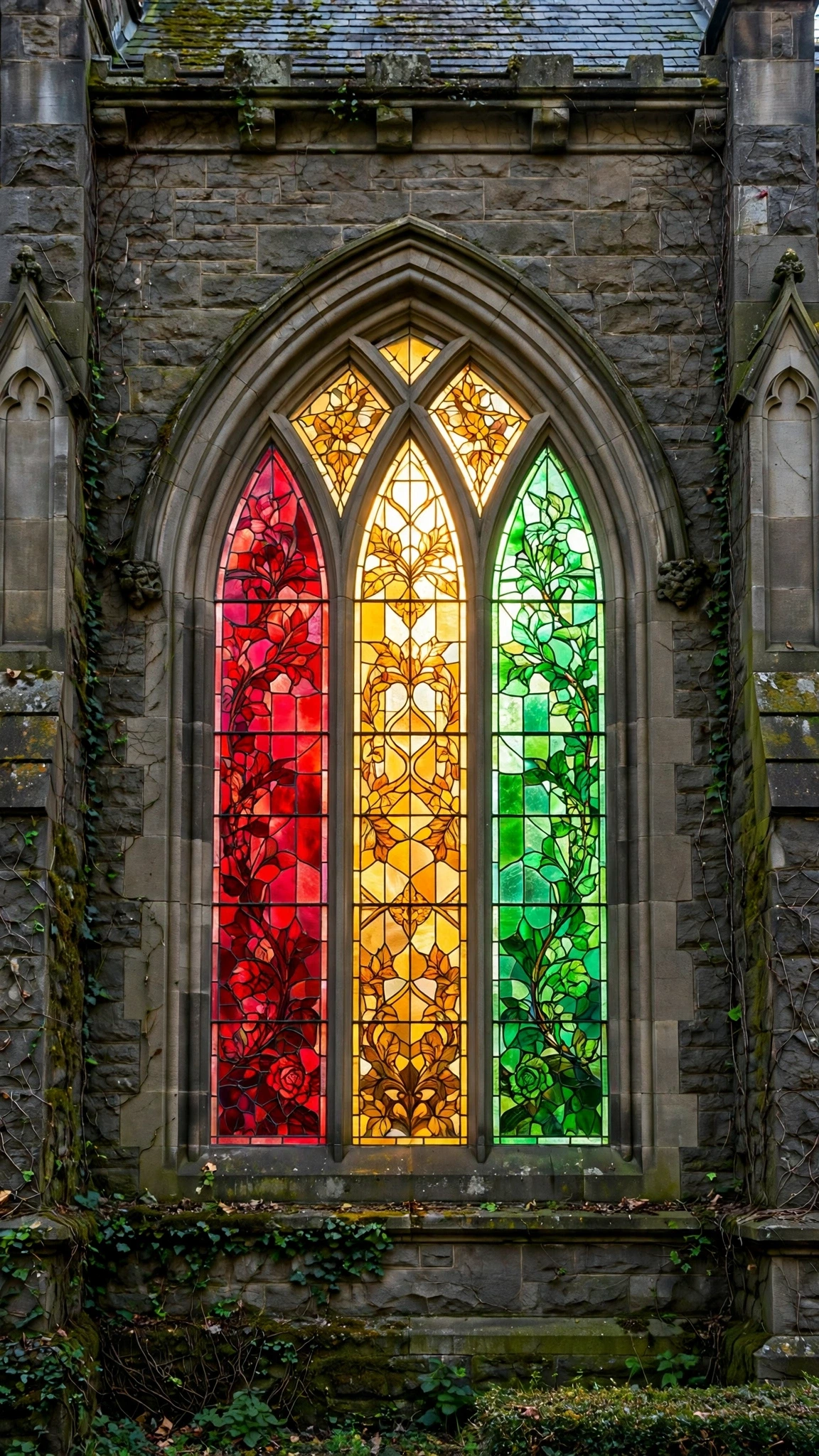
Stained glass brings color to a Gothic exterior in a way paint never quite can. Deep ruby, amber and emerald panels glow when light passes through them, so the windows look alive from both sides of the glass. The front door sidelights, a stair window or a small gable window are the natural spots for it.
Restraint matters here. One or two stained glass windows give the house a jewel-like accent, while stained glass everywhere can make the facade feel busy and heavy. Modern reproduction panels cost far less than antique glass and hold up well outdoors, and a simple geometric or floral pattern suits a home better than a complicated scene.
5. A Dark Palette with Cream or Stone Trim
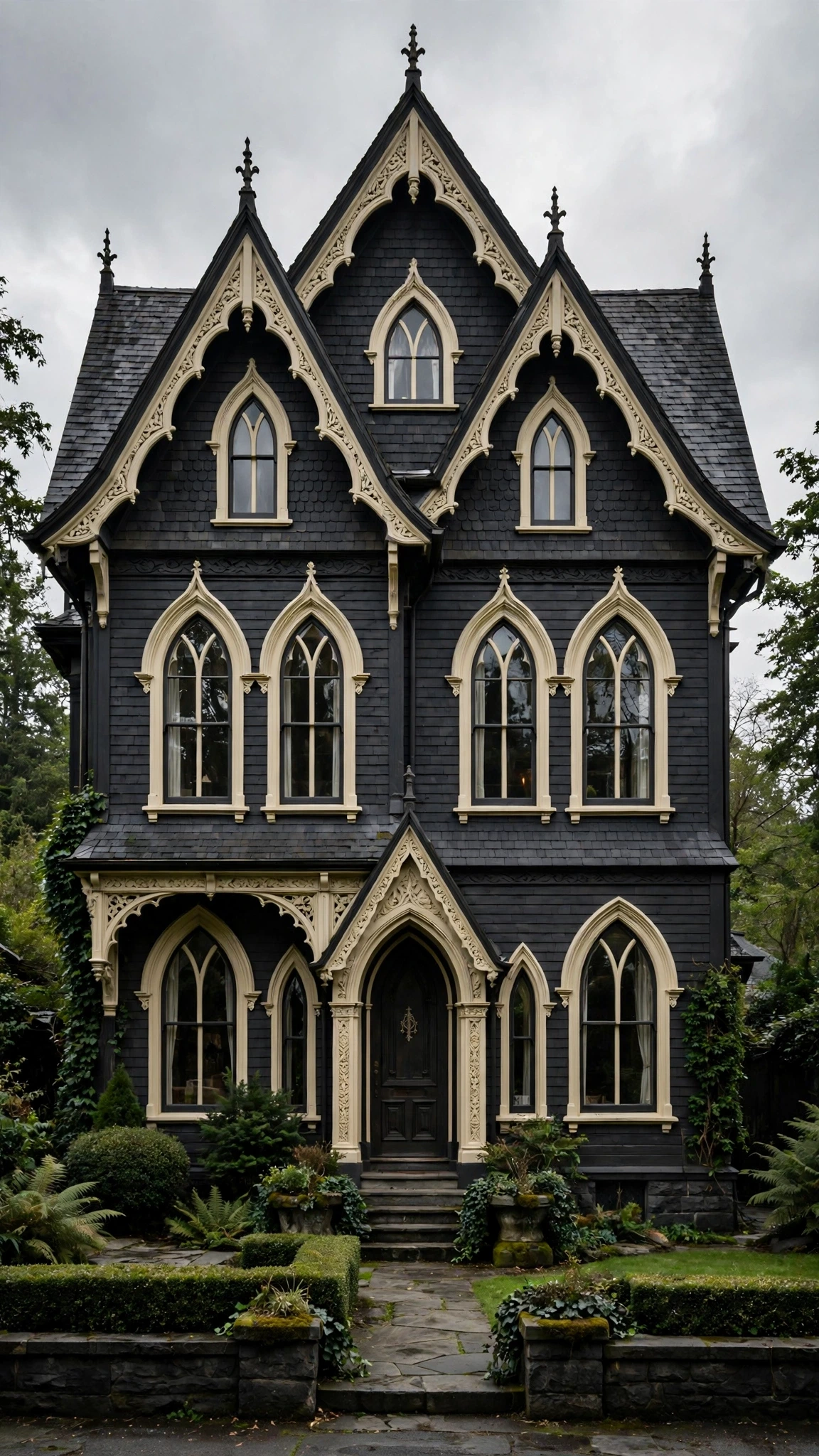
Dark walls are what give a Gothic house its mood, and pale trim is what keeps that mood from turning gloomy. Charcoal, forest green, oxblood or deep navy all suit the style, and each one looks richer when the arches, bargeboards and window frames are picked out in cream, stone or warm white. The contrast is what lets people actually see the ornate details.
Test your colors on a large board and look at it in morning and evening light before committing. Dark paint can shift a lot between sun and shade, and a shade that looks elegant at noon can read as flat black at dusk. A few combinations that work reliably:
- Charcoal walls with cream trim and a black front door
- Forest green walls with stone trim and brass hardware
- Oxblood walls with warm white trim and a slate gray roof
6. Stone Facade with Carved Details
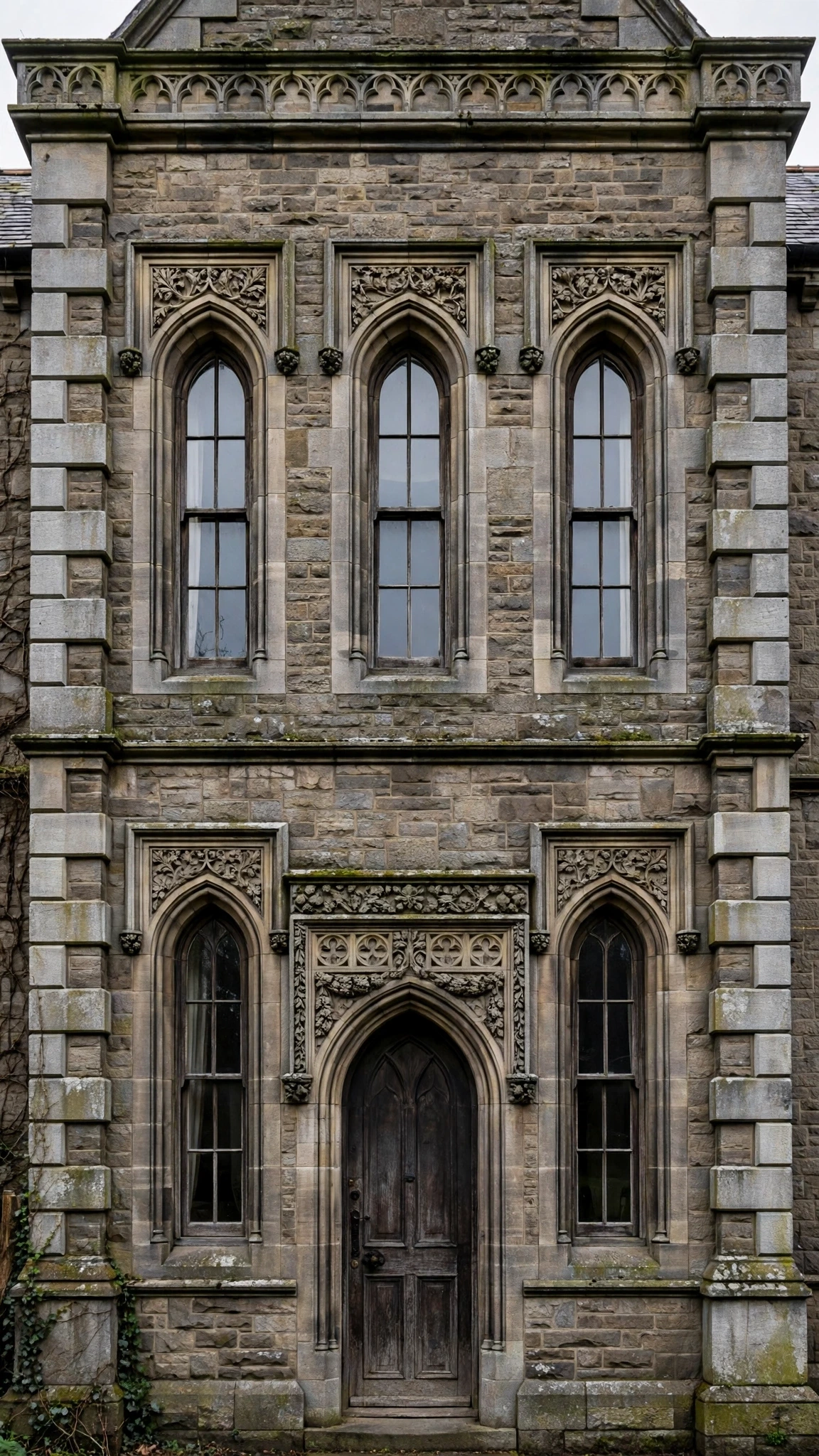
Stone gives a Gothic house weight and age, even when the house itself is fairly new. A full stone facade is the grandest option, but stone veneer on the front wall, or just around the entry and corners, delivers much of the same character for far less money. Quoins at the corners and carved lintels above the windows add the hand-crafted feel the style is known for.
Keep the stone palette to two or three tones so the wall reads as one material rather than a patchwork. Neat, slightly recessed mortar joints look more traditional than wide, smeared ones, and sealing the stone helps it weather evenly. On wood-sided houses, a stone chimney or stone entry surround can anchor the whole design without re-cladding every wall.
7. Wrought-Iron Fence and Gate
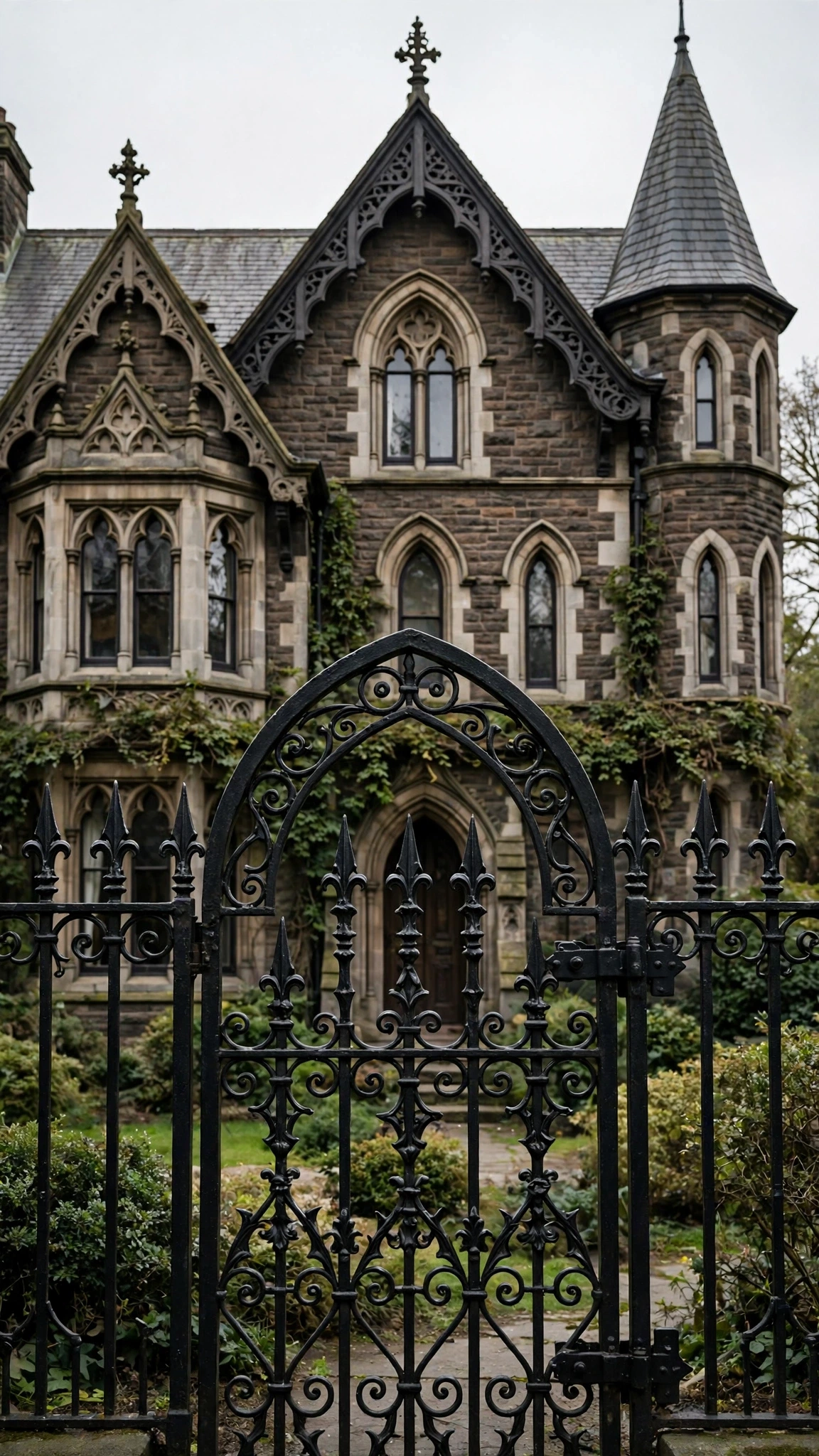
A wrought-iron fence frames a Gothic house the way a good frame suits a painting. Spear-top pickets and an arched gate echo the pointed windows above, and the black iron sits naturally against a dark palette. The fence marks the boundary of the property while leaving the house fully visible, which matters when the facade is the main event.
Keep the fence low enough to see over, around waist height, so the garden and house stay part of the street view. Real wrought iron lasts for decades with occasional rust treatment, and lighter steel or aluminum versions suit tighter budgets. A simple arched gate centered on the walk completes the arrival better than any ornate side railing.
8. Decorative Bargeboards and Finials
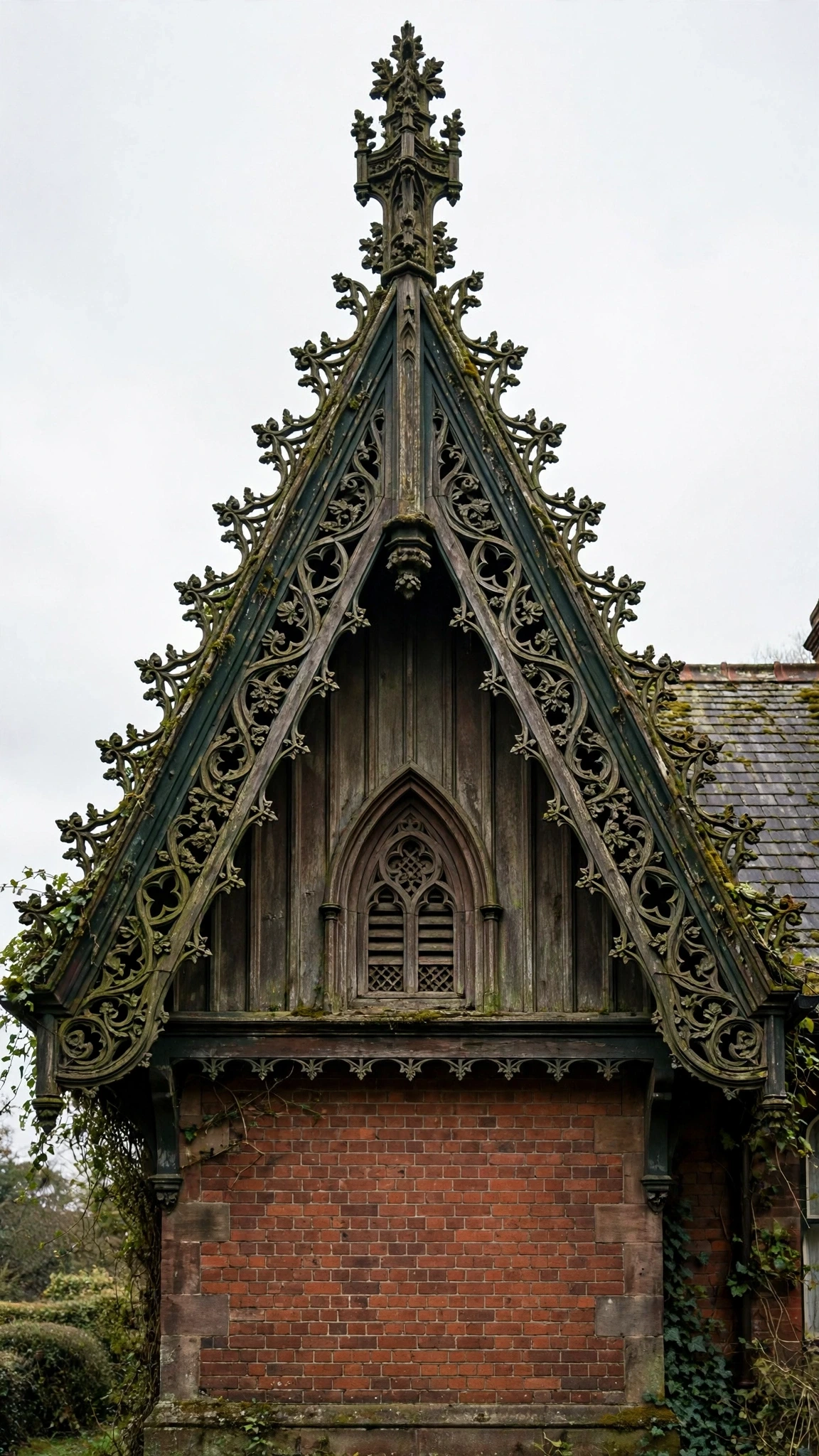
Bargeboards are the decorated boards that run along the sloping edges of a gable, and finials are the turned or carved ornaments that crown the peak. Together they are the jewelry of a Gothic roofline: small in themselves, but they draw the eye upward and finish the roof with intent. A plain gable can feel unfinished next to one dressed this way.
Check existing boards for rot before repainting, since moisture hides behind old paint. Composite replacements copy traditional patterns closely and spare you the repainting cycle, while wood suits purists who enjoy the upkeep. Paint bargeboards and finials in the trim color, and keep the pattern the same across every gable so the roofline feels designed rather than decorated at random.
9. Grand Arched Entry Door

The front door is where a Gothic house makes its first promise, so give it some ceremony. A pointed or rounded arch door in a deep color, dressed with iron hinges, a ring handle and studded details, immediately tells visitors what kind of house this is. A pair of lanterns on either side and a stone or brick step complete the entry.
Scale is the thing to watch. The door should feel generous next to the windows around it, and a transom window above it adds height without widening the opening. If a new arched door is too costly, an arched trim surround and bold paint color over the existing door can carry much of the same effect, especially when the hardware is upgraded to match.
10. Wraparound Porch with Spindlework
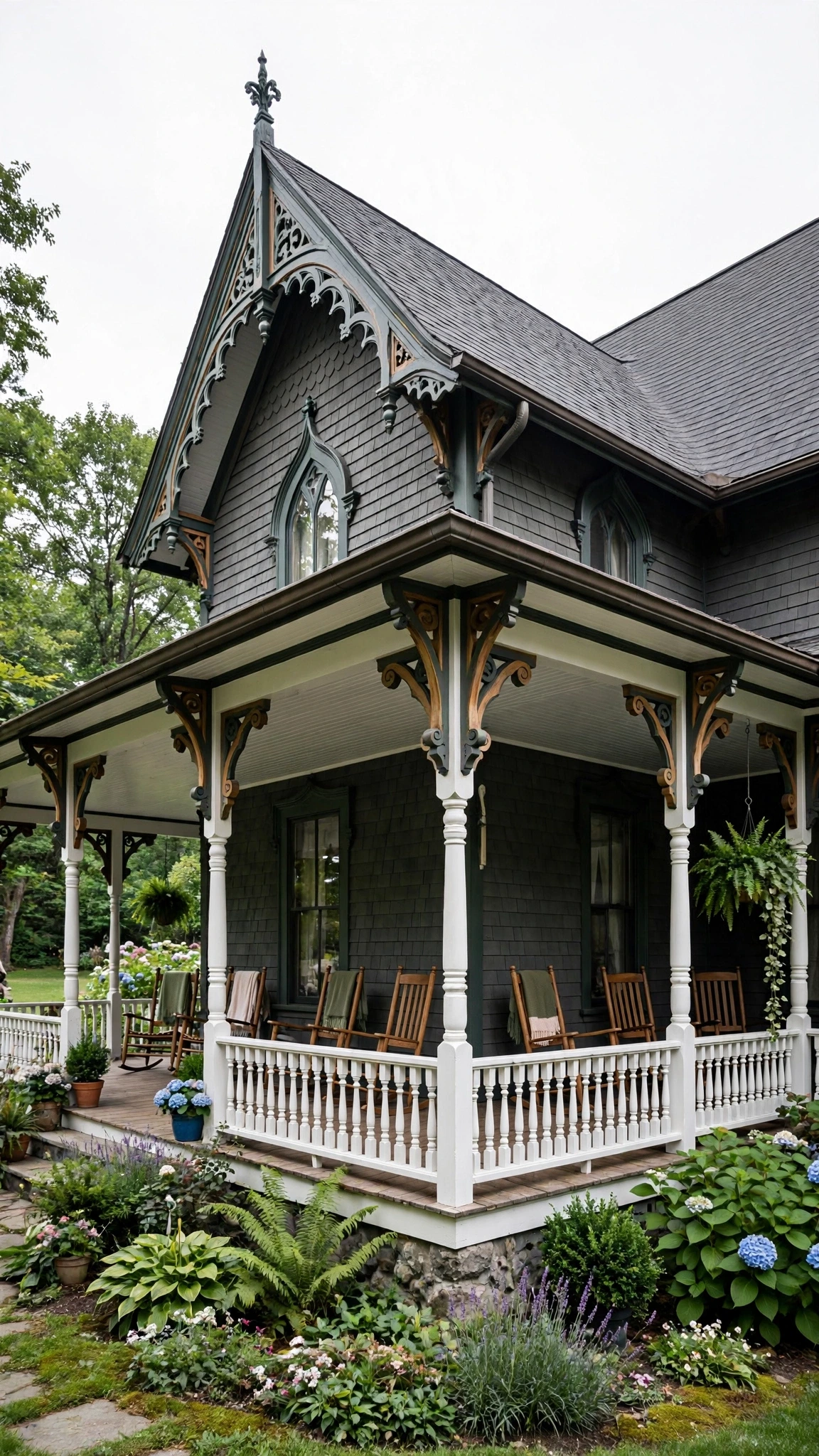
A wraparound porch softens the tall, vertical lines of a Gothic house with a comfortable horizontal layer. Turned spindles, decorative brackets and a pierced frieze under the porch roof echo the gingerbread trim above, tying the whole facade together. A beadboard ceiling painted in a pale color brightens the space underneath.
Keep the porch furniture simple and sturdy so the architecture stays the star. Wooden rocking chairs, a wrought-iron bench and a few potted plants suit the style far better than bright plastic seating. Paint the railings and spindles in the trim color, and leave the porch floor in a natural wood tone or a deep stain that grounds the whole structure.
11. Bay or Oriel Window for Depth
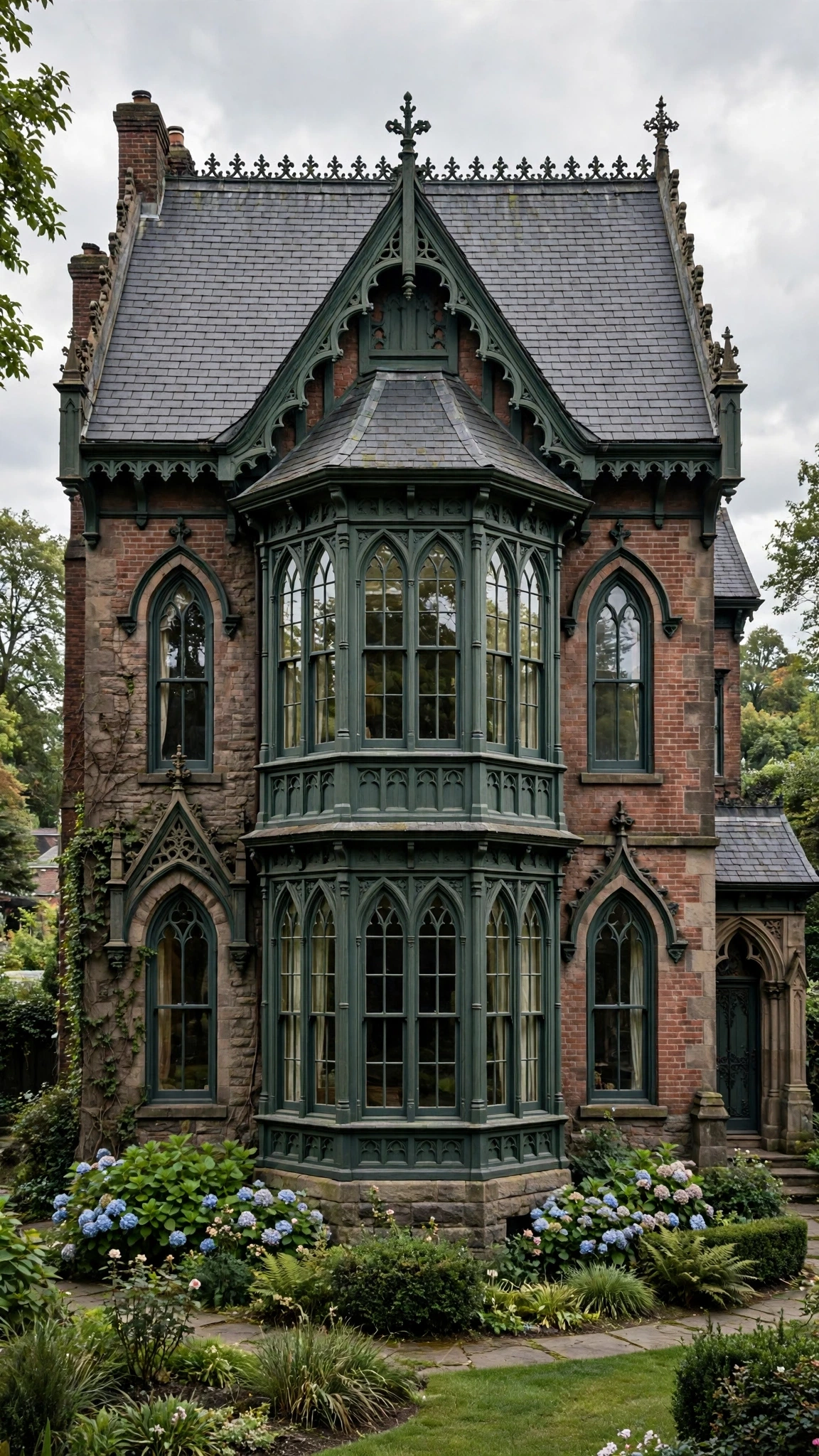
A projecting window adds depth to a flat facade and gives the rooms inside a wider view and more light. A ground-floor bay window creates a cozy nook for reading or plants, while an upper-floor oriel window, supported on brackets, adds a jewel-box detail that suits the Gothic love of projection and shadow. Both break up long walls beautifully.
Dress the projection with the same trim as the rest of the house so it reads as part of the design rather than an add-on. A small pitched or hipped roof over the bay, with matching shingles, finishes the shape, and window boxes with trailing plants soften the base. On narrow lots, even a shallow oriel of a foot or two makes a visible difference.
12. Twin Towers for a Symmetrical Facade
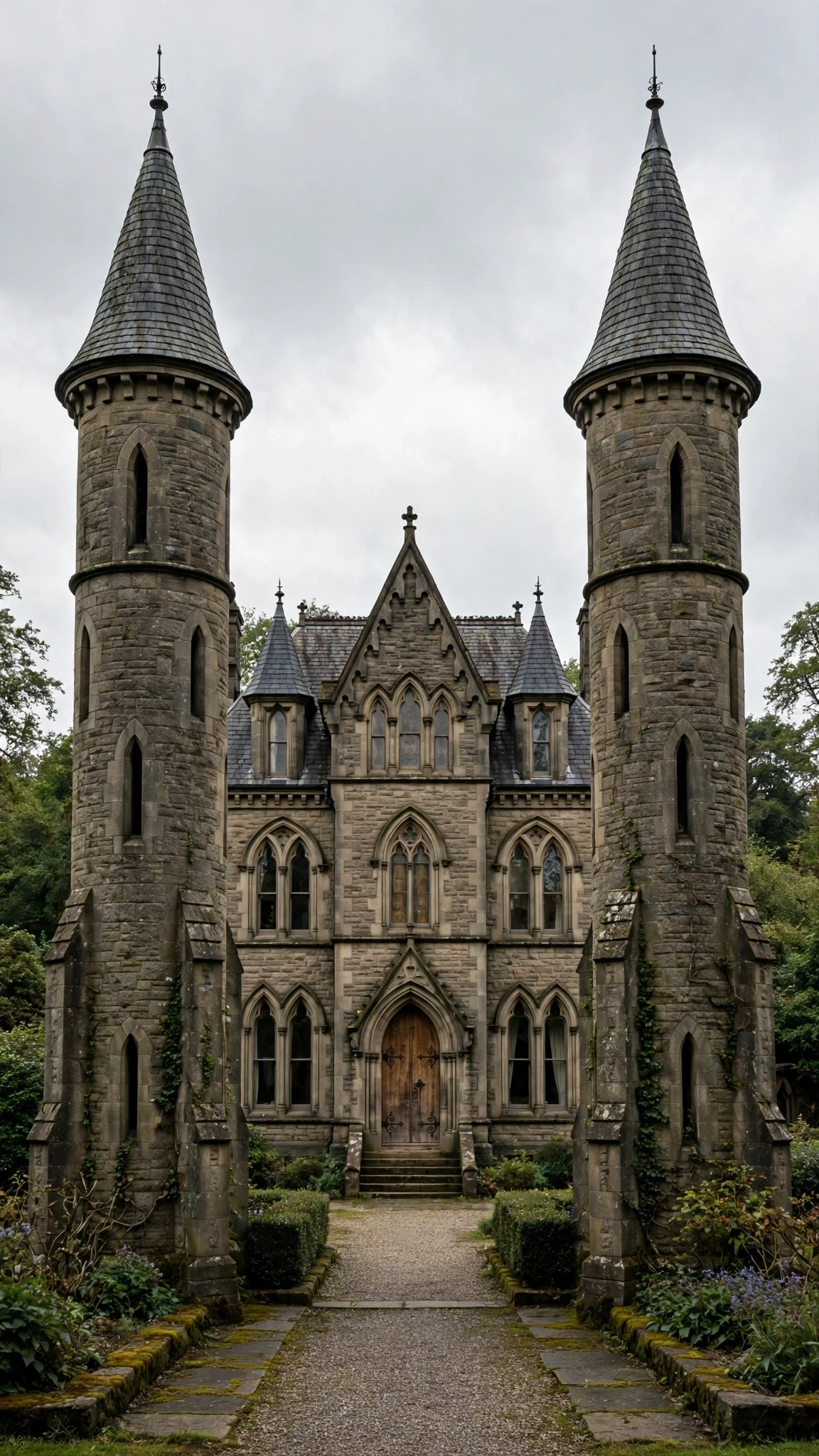
Twin towers give a Gothic house a rare sense of balance and occasion. Flanking the entry or the ends of the facade, they frame the house like a pair of bookends and make the whole composition feel intentional from a distance. The symmetry suits larger homes and corner lots, where both towers can be seen at once.
Balance the grandeur with restraint elsewhere. When two towers already carry the drama, simpler trim, a calmer color palette and a plain stretch of wall between them keep the house from feeling overloaded. Match the tower roofs in shape and material, and let one tower hold the main stair or entry so the pair feels functional as well as decorative.
13. Board-and-Batten Siding in Deep Tones

Board-and-batten siding suits Gothic houses because its vertical lines echo the style’s upward pull. Wide boards with narrow battens over the joints create a rhythm of light and shadow that flat siding never manages, and the texture reads well even from the far side of the street. Deep tones like charcoal, forest green or dark plum make the vertical pattern feel richer.
Fiber-cement boards offer the look with far less upkeep than wood, which matters on tall walls that are awkward to repaint. Run the siding vertically on the main walls and save horizontal siding, if you use it at all, for porch ceilings or gable infills where the contrast adds interest. Keep the battens evenly spaced, since uneven gaps are the first thing the eye catches.
14. Slate Roof with Patterned Shingles
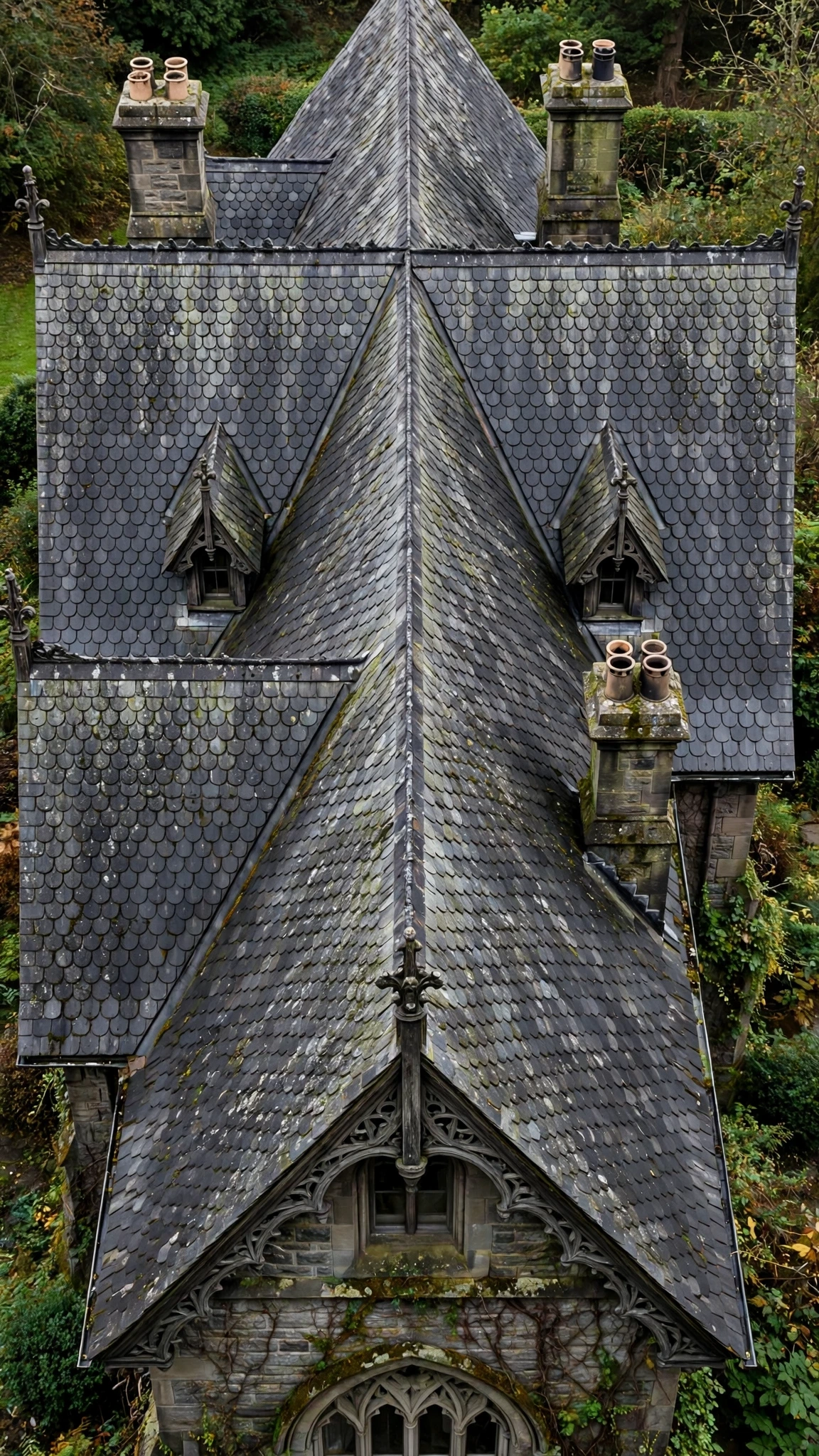
A slate roof is the crowning layer of a Gothic house, and its steep pitch puts it on full display. Natural slate lasts for generations and weathers to a soft gray that suits dark walls beautifully. Patterned courses, such as scalloped or fish-scale shingles on a gable or tower, add a decorative band that rewards a closer look.
Budget changes the material more than the look. Architectural asphalt shingles made to mimic slate, or fiber-cement slates, give a similar texture at a fraction of the cost and weight. Whatever you choose, keep the roof color in the same family as the walls, dark gray with dark walls or muted green with green walls, so the roof and walls feel like one composition.
15. Rose Window as a Centerpiece
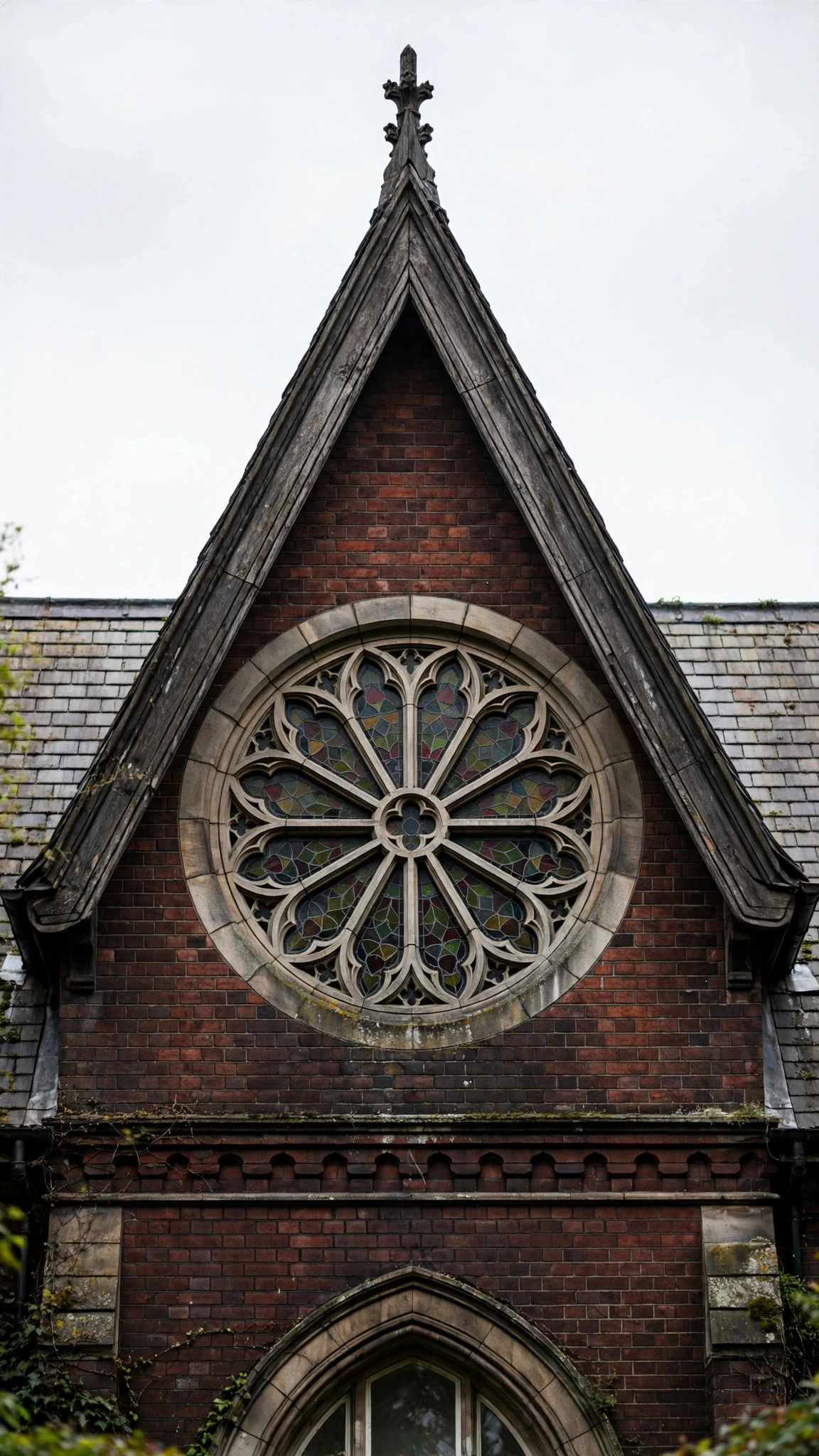
A rose window is a round window with radiating tracery, and on a Gothic house it works like a piece of jewelry worn exactly once. Placed high in a front gable or on a tower, it catches the eye without competing with the pointed windows below. Clear glass keeps it subtle, while stained glass turns it into a glowing medallion at dusk.
One rose window is plenty, and its size should suit the gable it sits in rather than dominating it. A simple tracery pattern of spokes and small circles reads cleanly from the street, while very fine stonework can blur into a gray disc at a distance. Frame it in the trim color so the circle stands out against the wall behind it.
16. Gargoyle and Grotesque Accents in Moderation

Gargoyles and grotesques are the playful, slightly eerie punctuation of Gothic architecture. A single carved figure at a roof corner, above a gate or beside a downspout gives the house character and a talking point, and stone or cast-stone versions weather gracefully. They were originally waterspouts, so placing one where it can actually shed water feels authentic.
Moderation is what separates character from theme park. One or two figures, placed high and kept small relative to the house, read as a knowing nod to the style. A crowd of them at eye level, or figures on every corner, quickly turns the facade into a costume. Choose weathered stone tones rather than bright finishes, and let the carving speak for itself.
17. Old-World Garden with Roses and Ivy
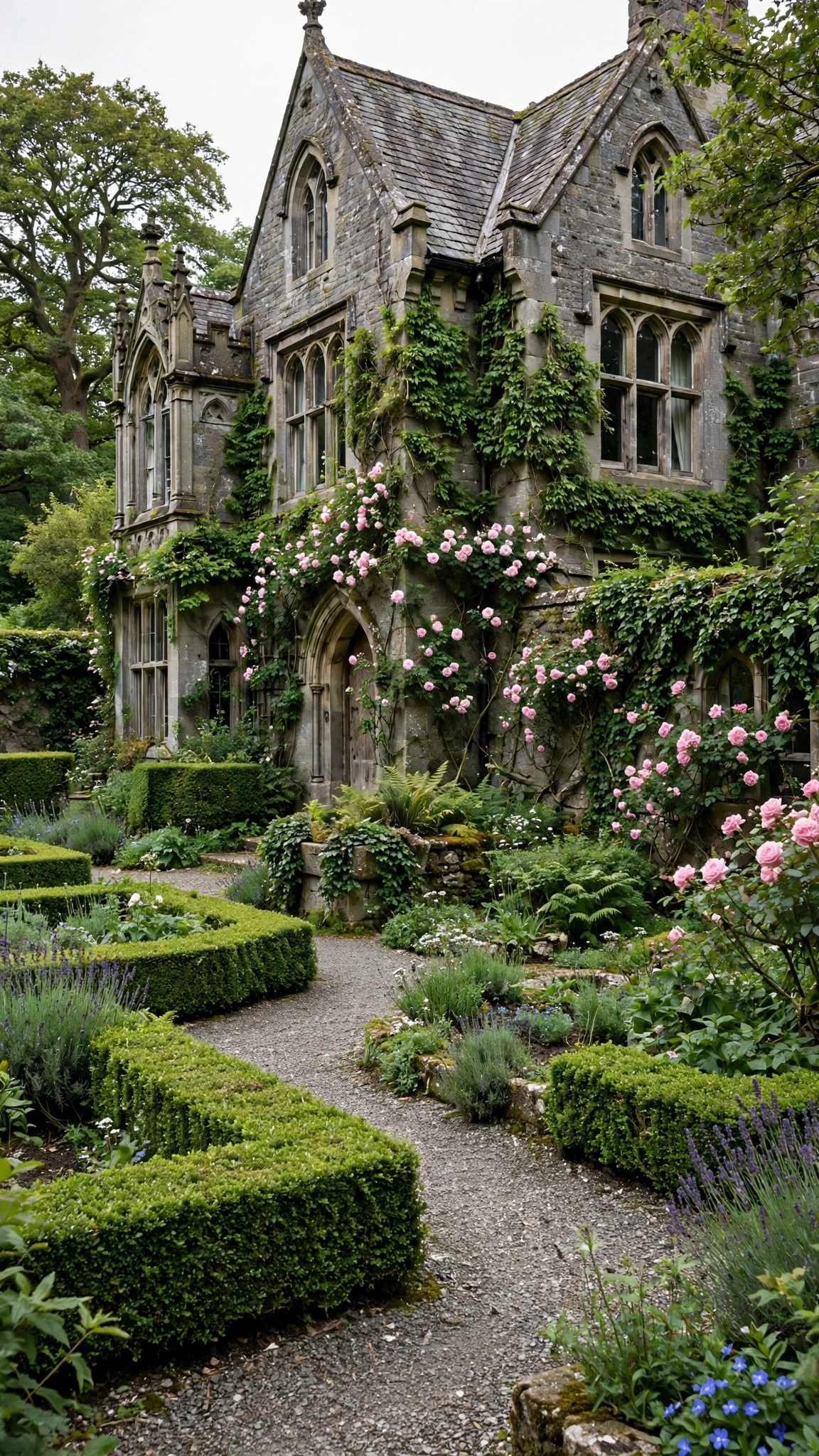
A Gothic house deserves a garden that looks established rather than newly planted. Climbing roses on the walls, ivy softening a stone corner, boxwood balls along the walk and gravel paths between beds all build the slightly wild, romantic feeling the style calls for. The planting should look like it has been there for years, even if it has not.
Give the garden structure so the wildness reads as tended rather than neglected. A low stone wall, a simple iron gate and clipped boxwood hold the shape, while roses and trailing plants provide the softness. Keep ivy off fresh mortar and painted wood, where it traps moisture, and prune it away from windows and gutters so the house itself stays visible and dry.
18. Carriage-Style Entry or Porte-Cochere

A porte-cochere is a covered entry wide enough for a car or carriage to pass through, and it gives a Gothic house a grand arrival. Timber brackets, arched openings and a steep little roof of its own let it echo the main house while standing as a feature in its own right. Guests arrive sheltered from rain, and the entry gains a sense of occasion.
The feature needs space to work, so it suits larger lots and wider drives best. On a smaller property, a simple covered porch with the same arched brackets delivers much of the feeling without the footprint. Match the porte-cochere roof and trim to the house exactly, since a mismatched side structure reads as an afterthought rather than a design choice.
19. Lantern Lighting for a Warm Glow
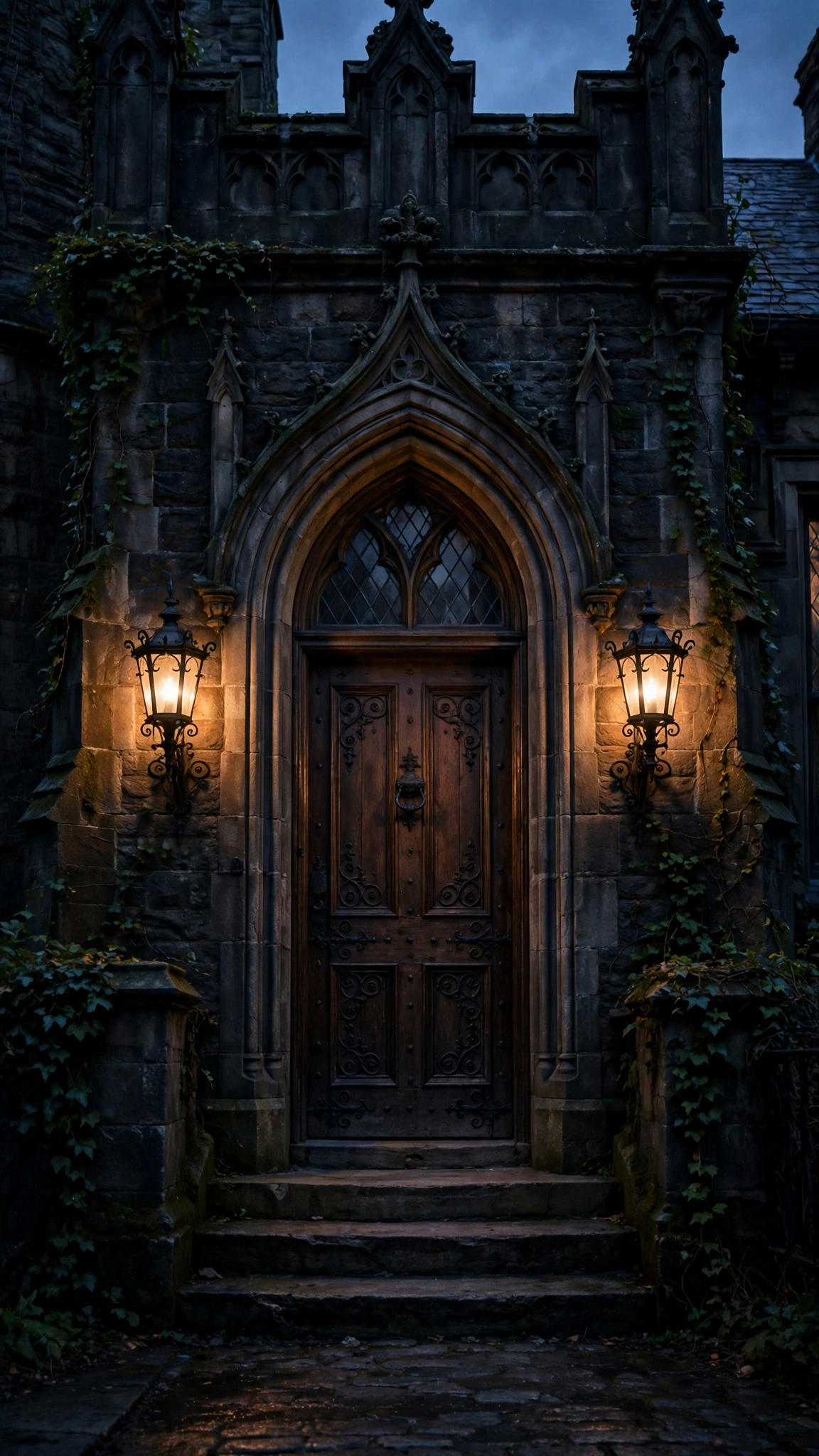
Lanterns are the light fittings a Gothic house was made for. Wrought-iron lanterns flanking the front door, lining the walk and hanging from the porch ceiling throw a warm, flickering-feeling glow that suits dark walls far better than bright modern floods. The light picks out the trim and stonework instead of washing the whole facade flat.
Warm white bulbs, around the color of candlelight, keep the mood right, and dusk sensors or timers mean the display happens on its own each evening. Hang entry lanterns at eye level or just above, so they light faces as well as walls, and use the same lantern style across the property so the lighting feels like part of the architecture.
20. Small Gothic Touches for a Modest House
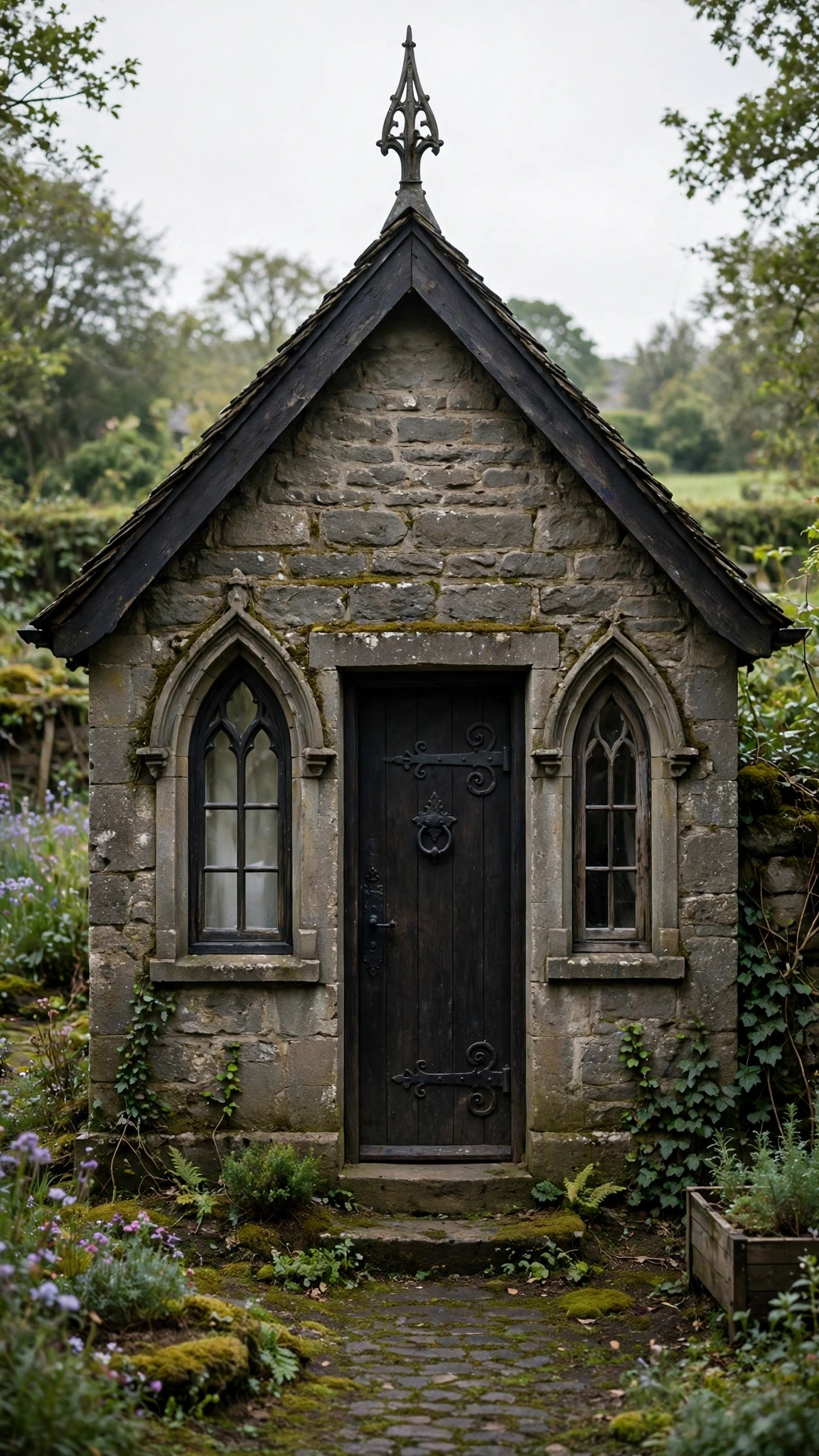
A modest house does not need towers or stone walls to borrow the Gothic feeling. A few well-chosen details, kept in scale with the building, can shift the whole character of a small facade without structural work or a large budget. The trick is choosing details that people notice from the street and repeating them consistently. Details that work well at small scale include:
- Pointed arch trim on the front windows
- A single finial on the front gable
- A dark door color with iron hardware
- Lantern-style lights at the entry
- An arched garden gate in the front fence
Start with two or three of these and live with them for a season before adding more. Small houses look best when the Gothic touches feel like a quiet accent rather than a costume, and a restrained start leaves room to build the look gradually.
21. Evening Lighting Plan for a Dramatic Facade
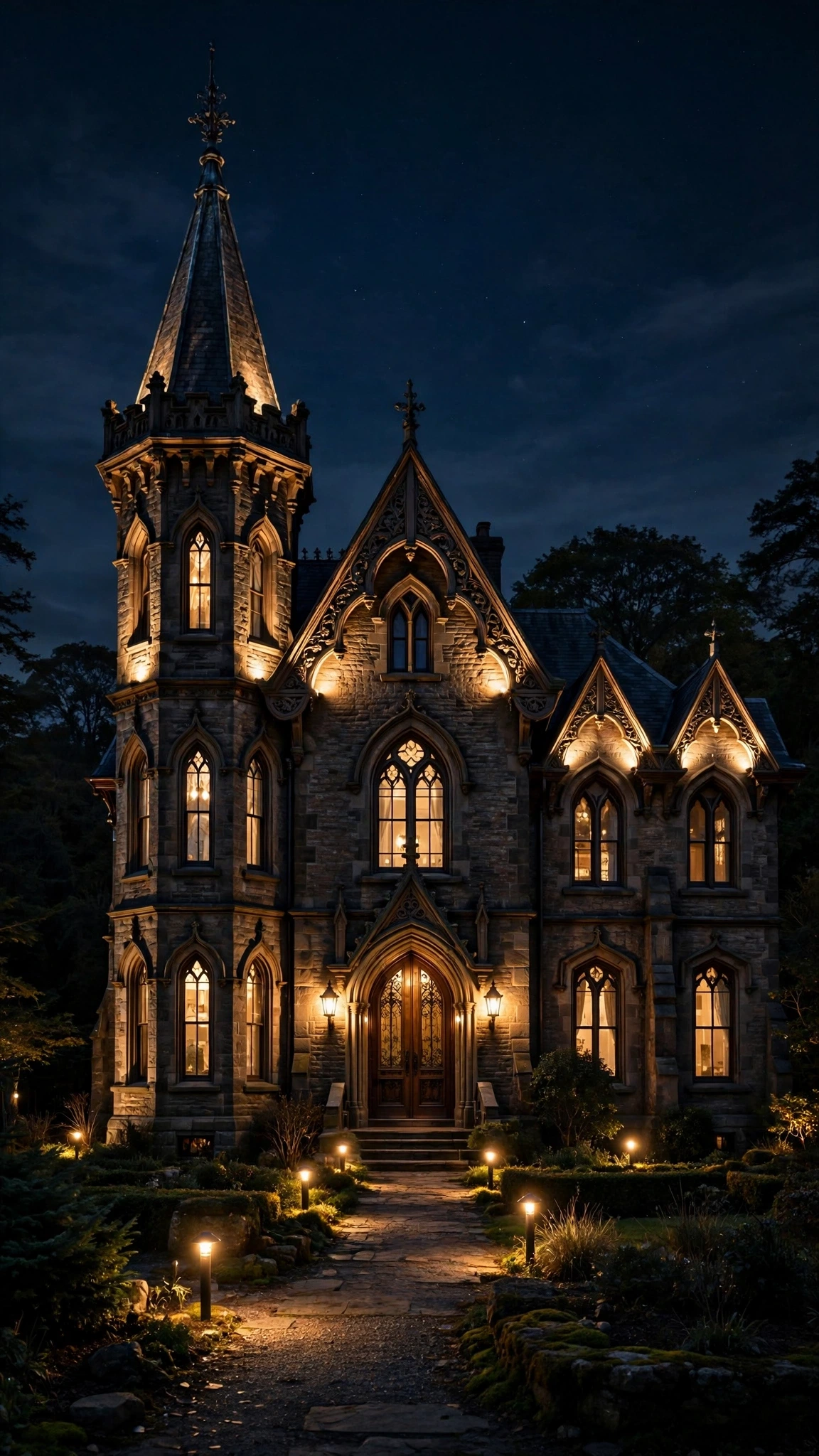
Evening is when a Gothic house earns its drama, and a lighting plan makes sure it earns it well. Layer three kinds of light: low path lights to guide visitors safely, warm lanterns at the entry for a welcoming glow, and a few uplights aimed at the tower, gables or stonework to show off the architecture. Together they turn a dark facade into a scene rather than a shadow.
Test the plan after dark before fixing anything in place. Walk the property at night and look for harsh spots, dark gaps and light spilling into neighbors’ windows, then adjust the angles and brightness until the house glows evenly. Timers and dimmers help here, since a softer light suits the style better than a harsh one, and a house that glows gently looks dramatic without looking staged.
How to Plan a Victorian Gothic Exterior Without Overdoing It
Start by choosing three or four hero features and letting everything else support them. A tower, pointed windows and a dark palette already carry plenty of drama, so the trim, fence and garden can stay simpler and let those features lead. When every surface competes for attention, the house feels busy rather than grand, and the eye finds nowhere to rest.
Sketch your ideas over a photo of your own house before buying anything. Mark where the eye lands first, which walls look flat, and which details already work, then add features one at a time in that order. Phasing the work this way also spreads the cost, and living with each change for a while shows you what the house actually needs next.
Keeping a Gothic Exterior Looking Its Best
Ornate exteriors reward a short, regular routine. Once a year, walk the house and check the trim paint, the roof valleys around towers, the gutters, the ironwork for rust and the ivy for creeping mortar damage. Small repairs made early stay cheap, while the same jobs left for five years can turn into full replacements.
Treat the materials according to their needs rather than on one schedule. Wood trim wants repainting before it peels, iron wants rust treatment at the first orange spot, and slate or stone mostly wants a gentle wash and clear gutters. A house that looks effortlessly old and grand usually has an owner who treats upkeep as part of the design, not as an afterthought.
FAQS
What defines a Victorian Gothic house exterior?
A Victorian Gothic house exterior is defined by pointed arch windows, steep gables, ornate trim and a tall, vertical shape borrowed from medieval churches and castles. Look for lancet windows, decorative bargeboards, finials, towers or turrets, and rich colors paired with stone or wood trim.
What colors work best for a Victorian Gothic exterior?
Deep, muted colors work best for a Victorian Gothic exterior, such as charcoal, forest green, oxblood, navy or dark plum, balanced with cream, stone or warm white trim. The dark body color gives the house its drama, while the lighter trim keeps the ornate details visible instead of letting them disappear into shadow.
How can I add Gothic details without a full remodel?
You can add Gothic character without a full remodel by starting with the details people notice first: pointed arch window trim, decorative bargeboards, a bold arched door color, finials and lantern-style lights. These surface changes cost far less than structural work, yet they shift the whole feel of the facade toward the Gothic style.
Are Victorian Gothic houses expensive to maintain?
Victorian Gothic houses can cost more to maintain than a plain modern house, mainly because ornate wood trim, steep roofs and stained glass need regular painting, sealing and repair. Choosing durable materials, such as fiber-cement trim, slate-look roofing and composite details, keeps the look while cutting down on the most frequent upkeep jobs.
How do you keep a dark Gothic exterior from looking gloomy?
A dark Gothic exterior stays welcoming when warm light, pale trim and living plants break up the shadows. Cream window frames, glowing lanterns, light-colored stone steps and climbing roses or green shrubs soften the dark walls, so the house reads as dramatic and storybook-like rather than heavy or closed in.
What kind of porch suits a Victorian Gothic house?
A wraparound or deep front porch suits a Victorian Gothic house best, with turned spindles, decorative brackets and a beadboard ceiling that echo the ornate trim elsewhere on the facade. Keep the furniture simple and sturdy, such as wooden rockers or a wrought-iron bench, so the porch feels inviting without competing with the architecture.
Can a small house carry the Victorian Gothic look?
Yes, a small house can carry the Victorian Gothic look well, as long as the details stay in scale with the building. One pointed arch window, a single finial, dark paint with cream trim and a lantern-lit entry give a modest cottage the same storybook character as a grand towered house, without overwhelming its size.
Conclusion
A Victorian Gothic house exterior proves that drama and warmth can share the same facade. The pointed windows, steep gables, carved trim and glowing lanterns each do a small job on their own, and together they create a home that feels storied and welcoming in every season. The style has lasted for well over a century because it balances grandeur with domestic comfort.
Start with the feature that would change your own house the most, whether that is a bolder door, a darker palette or a lantern-lit porch, and build from there. Gothic exteriors reward patience: each thoughtful layer adds depth, and before long the house you once thought of as plain will be the one neighbors stop to admire.