
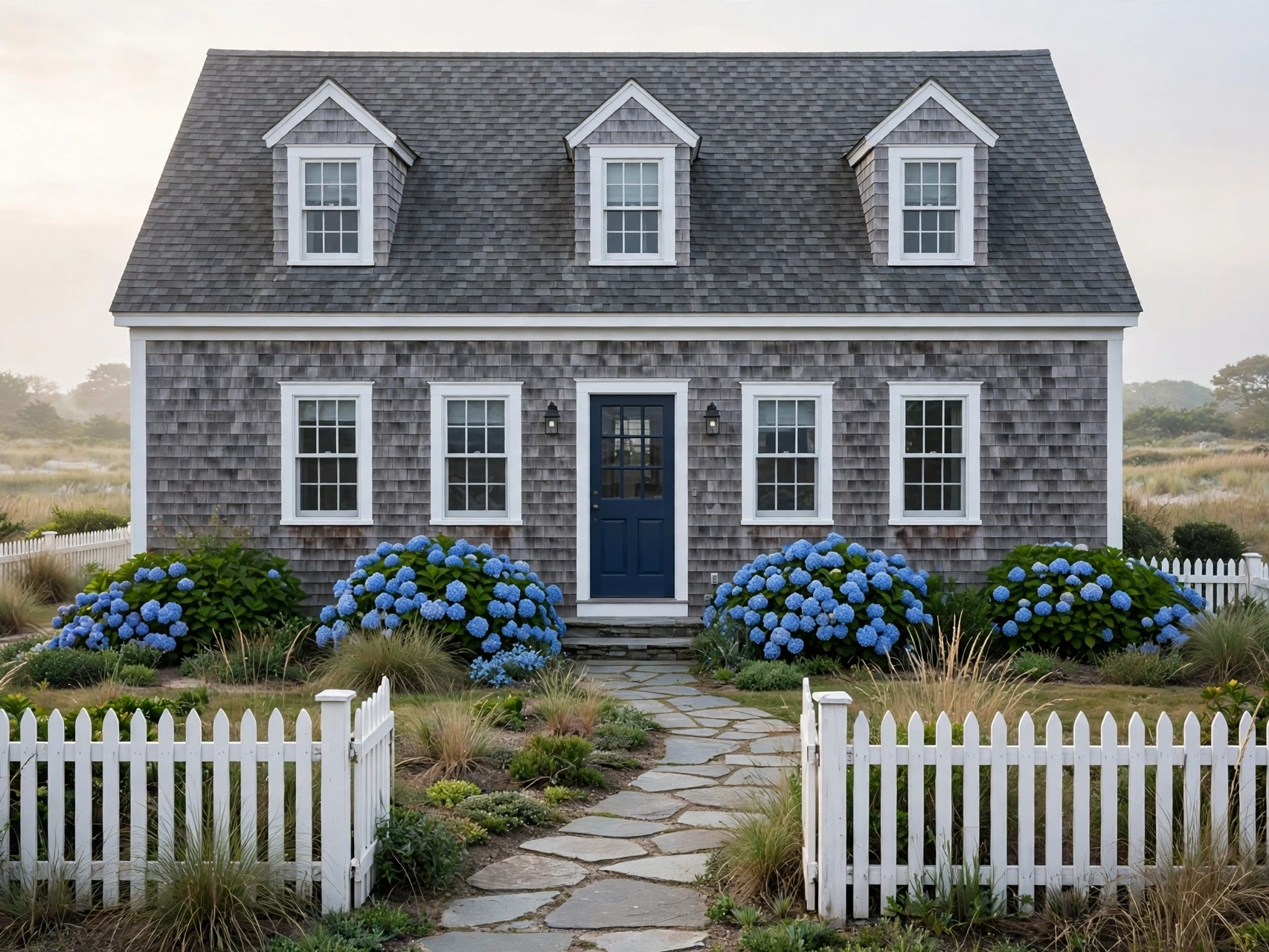
21 Cape Cod House Exterior Landscaping Ideas for a Charming Coastal Yard
Cape Cod house exterior landscaping works best when it respects two things: the home’s low, symmetrical shape and the conditions of the yard around it. A Cape Cod sits close to the ground under a steep roof, with a centered door and evenly spaced windows, so plants need to stay in scale and the layout should echo that calm symmetry. On the shore, sun, salt wind, and sandy soil shape every choice. Inland, you can grow a wider range of plants, but the same principles of scale, repetition, and honest materials still apply.
The 21 ideas below cover the entry walk, foundation planting, flower beds, privacy and structure, and outdoor living. Each one names specific plants or materials and says how to adapt it if your Cape Cod is inland. After the ideas, you will find a native plant table, a planning guide, local rules worth checking, and a seasonal care routine.
You do not need to do everything at once. Pick the entry walk first, add one flower bed you love, then one privacy or seating feature, and let the rest grow in over several seasons.
1. Native Beach Grass Border Along the Front Walk
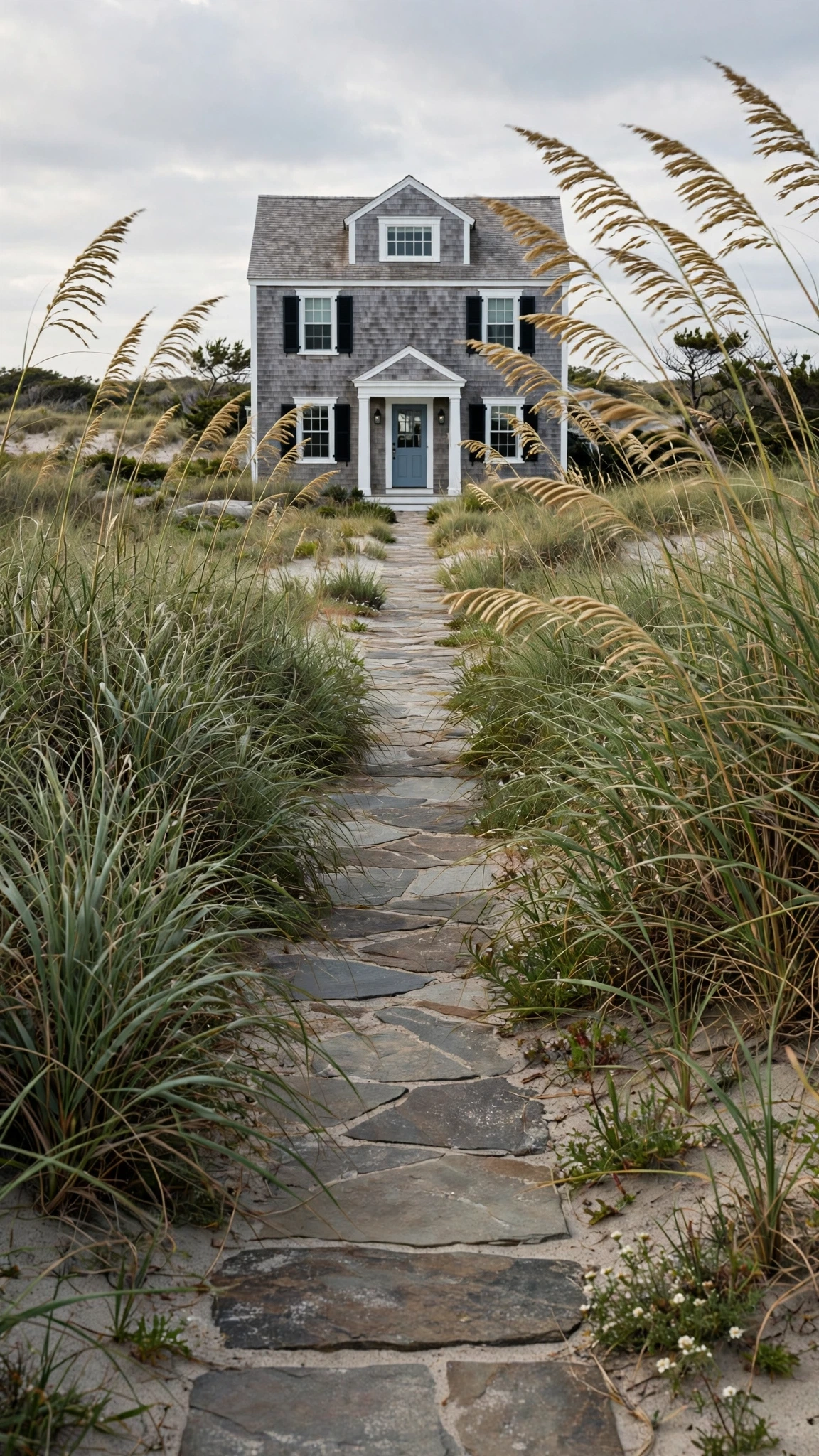
Native grasses bending in the wind give a Cape Cod front walk instant coastal character. Little bluestem, switchgrass, and American beachgrass tolerate salt spray and sandy soil, and a loose band beside the walk adds movement against the formal lines of the house. Plant beachgrass 12 to 18 inches apart and remember it spreads by rhizomes, so use clump-forming little bluestem where you want the border to stay put.
Give new plants regular water through their first summer, then cut the grasses back in early spring before fresh blades appear. They stand golden through winter, which gives the front of the house shape when little else is growing. Inland: little bluestem and switchgrass thrive in any sunny, well-drained bed.
2. Hydrangea Hedge Along the Foundation
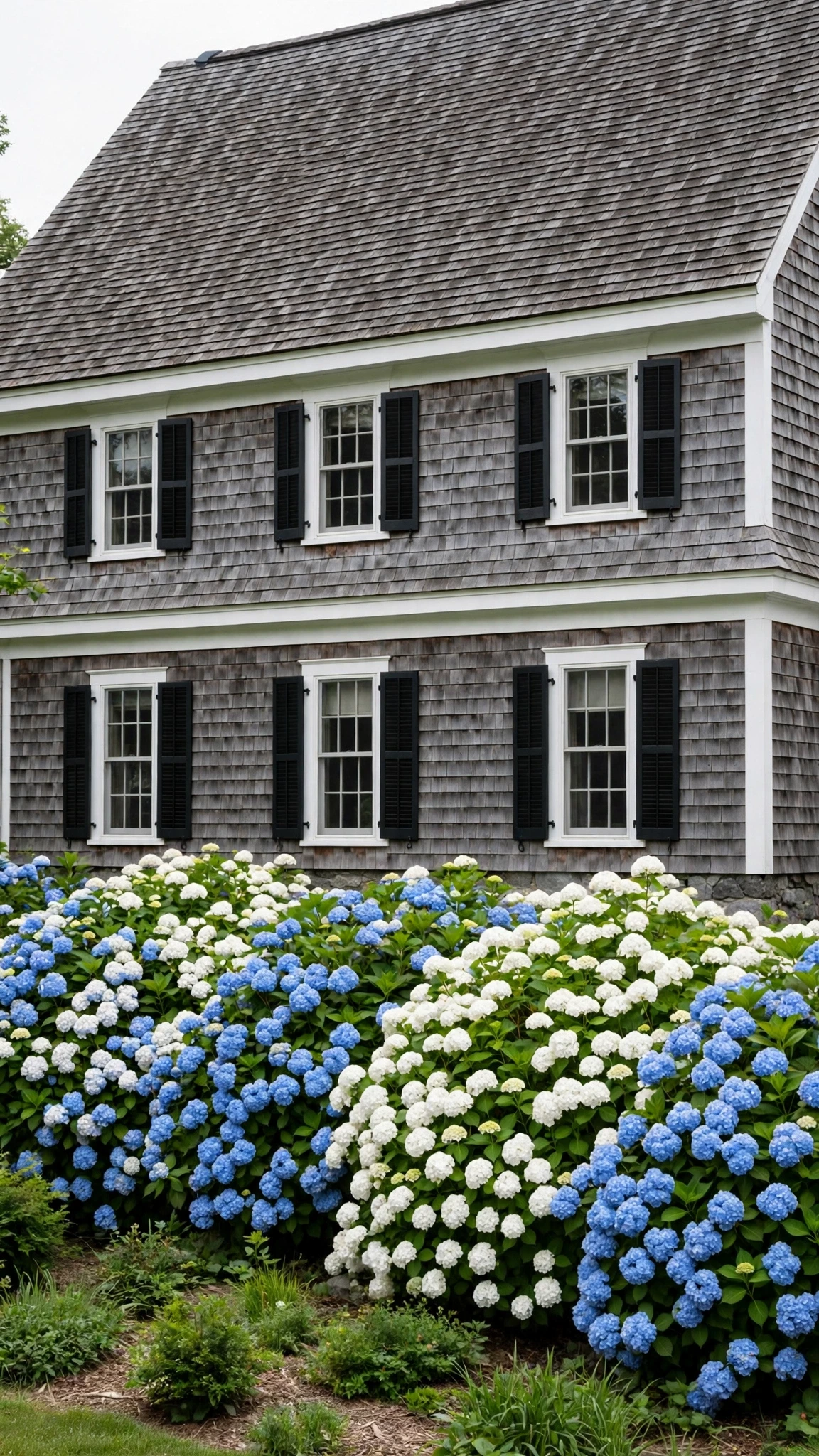
A hedge of blue and white hydrangeas softens the foundation and balances the steep roof above it. Because a Cape Cod’s windows sit low, choose compact varieties that mature at three to four feet so the shrubs stay below the window sills, and plant them about three feet from the wall so air can circulate. Morning sun with afternoon shade suits them best.
Water deeply during dry spells and mulch thickly to hold moisture in sandy soil. Most varieties set buds on old wood, so prune only spent blooms and dead stems in early spring. Blue flowers need acidic soil, so keep crushed shell and lime away from them.
3. White Picket Fence with Climbing Roses at the Gate
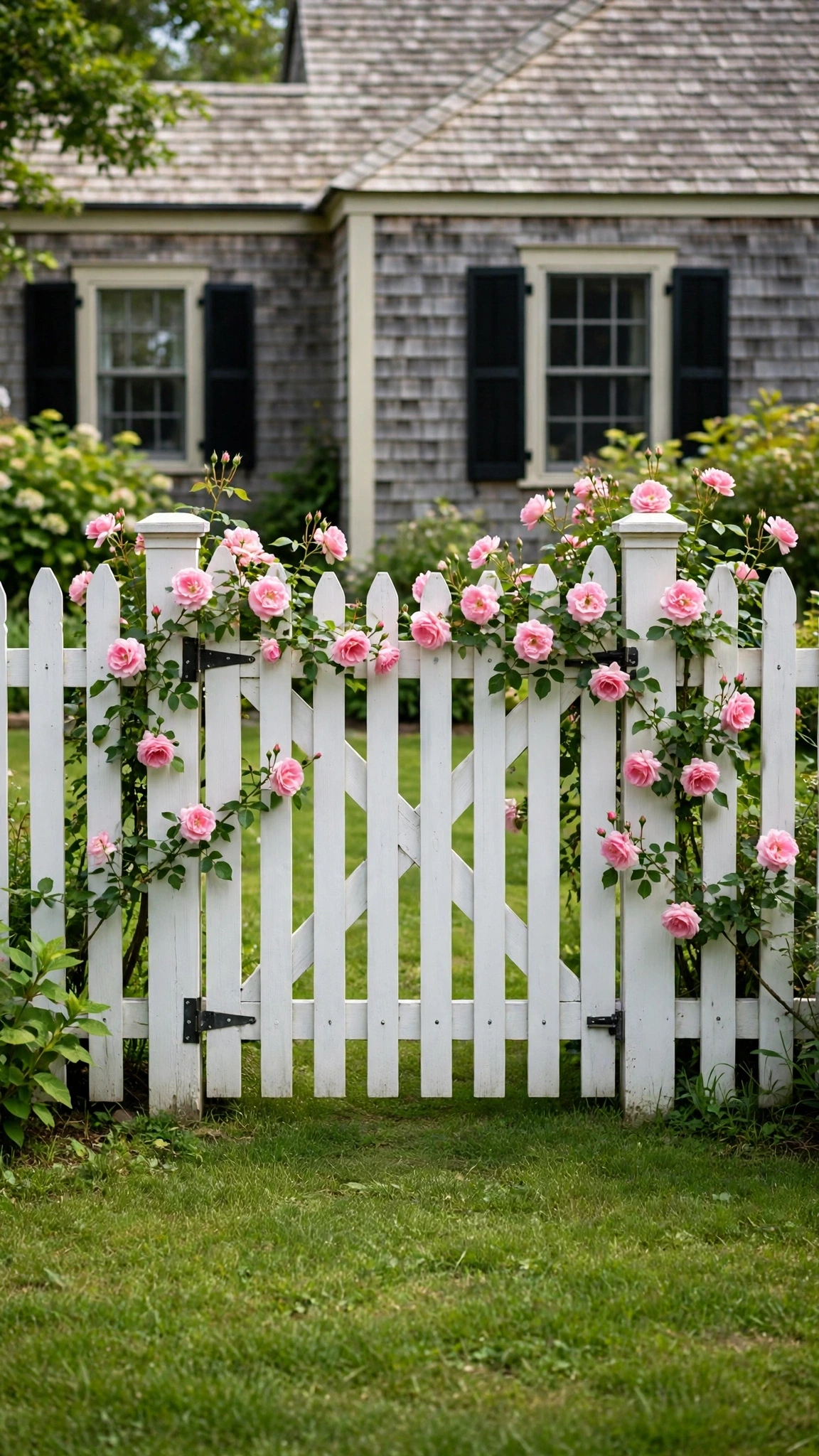
A low white picket fence suits the cottage scale of a Cape Cod, especially when roses soften the gate posts. Keep the fence around three feet high so it marks the boundary without hiding the house, and let the gate become the focal point with a simple arch or a pair of sturdy posts.
Salt wind is hard on delicate roses, so choose tough varieties and plant them in the most sheltered spot the fence allows. Tie canes sideways as they grow so blooms spread along the run. Prune dead or crossing canes after flowering and feed with compost in spring. Inland: a wider range of climbing roses will do well.
4. Stepping Stone Path with Thyme Joints
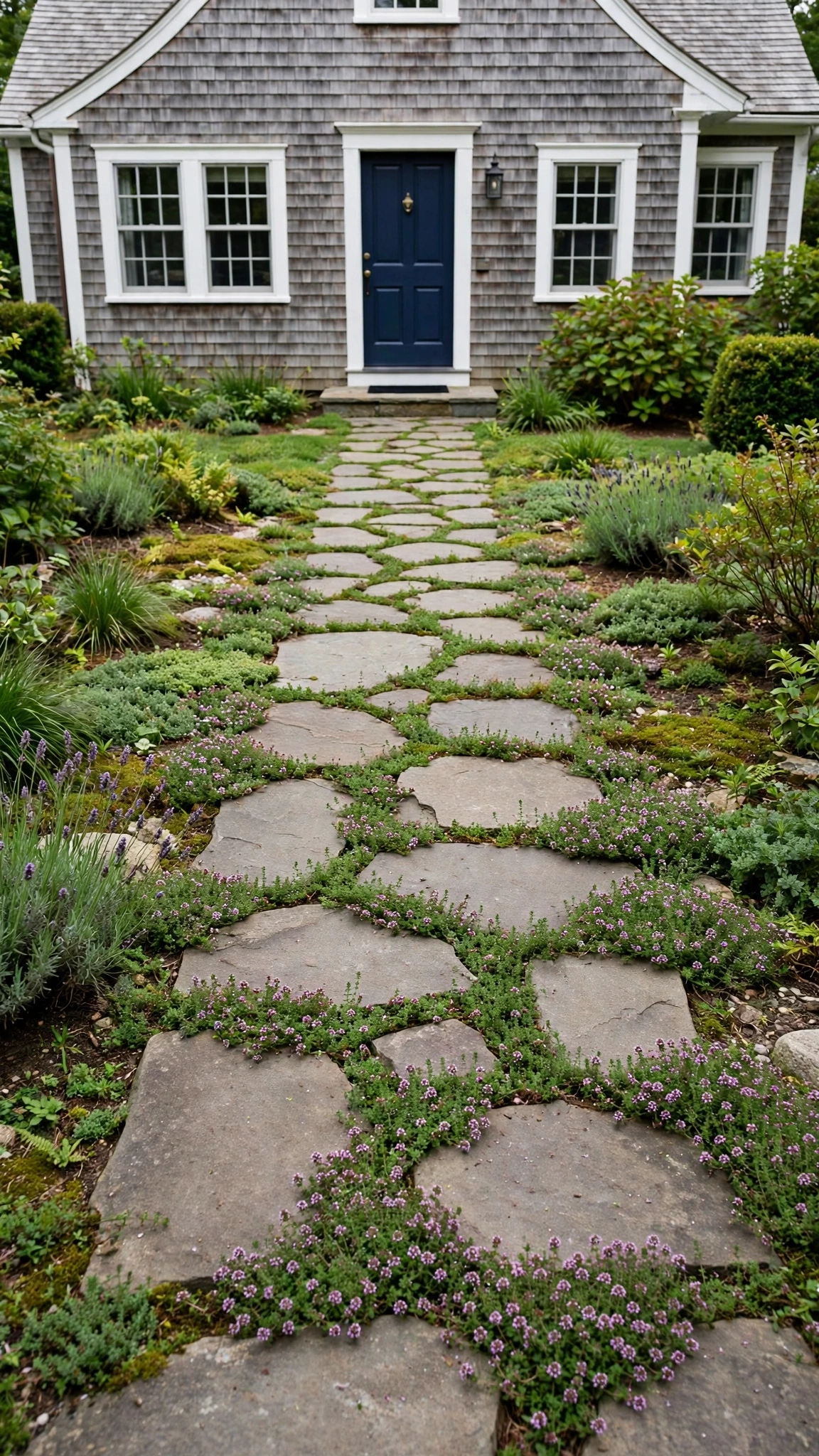
Flat natural stones with creeping thyme in the joints turn a plain walk into a small sensory pleasure. Set the stones on compacted gravel with gaps of two to three inches, wide enough for thyme to spread but narrow enough that a heel never catches. Warm gray or buff stone sits comfortably against cedar shingles.
Thyme wants full sun and sharp drainage, which sandy coastal yards usually provide. Water the joints until it roots, then trim only the runners that creep over the stone faces. It stays low and evergreen in mild winters, so the path looks tidy for most of the year.
5. Crushed Shell Walkway Edging
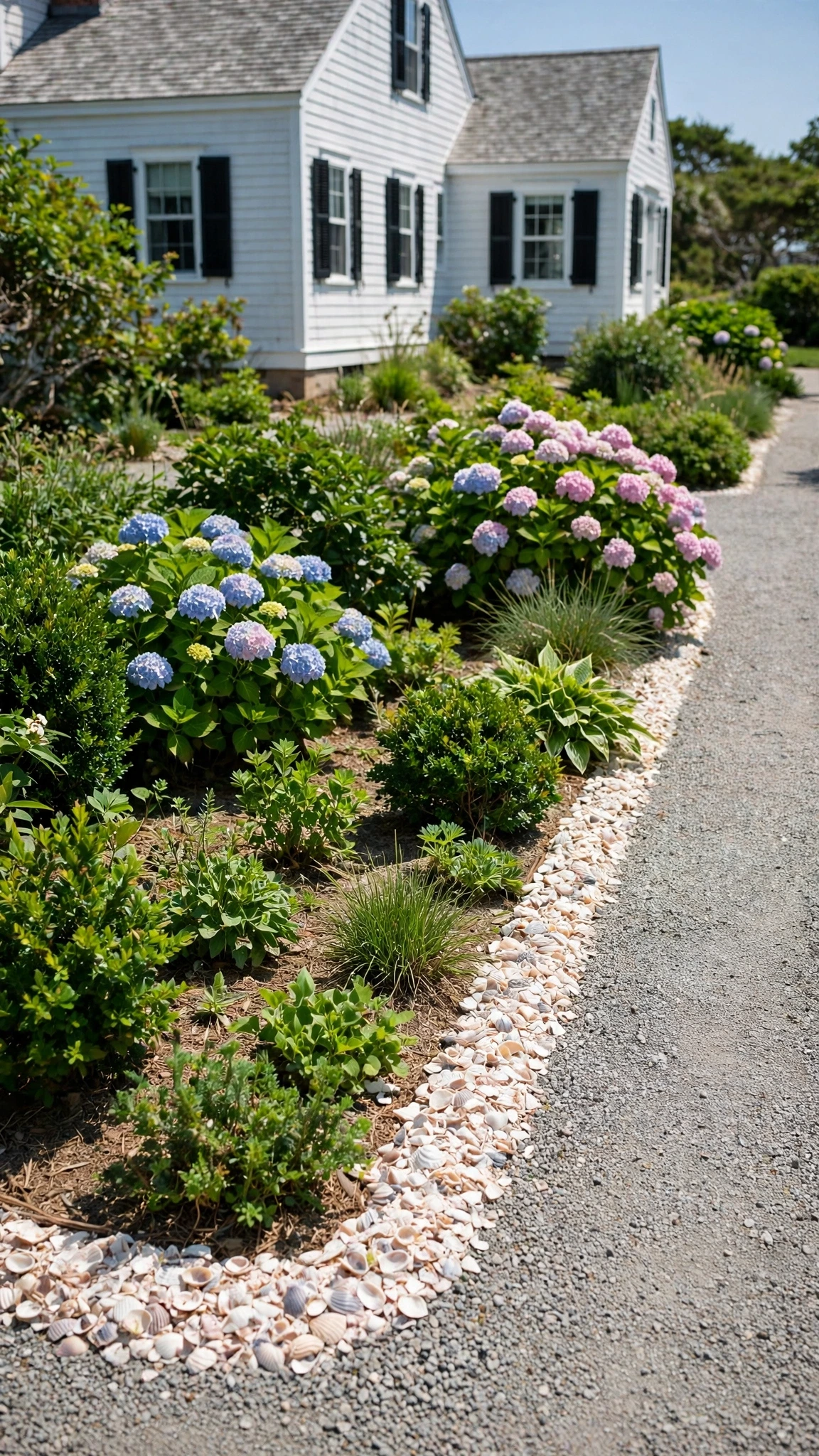
Pale crushed shell edging brightens beds and paths in a way that feels unmistakably coastal. Spread it three inches deep inside a firm edging restraint, metal or stone, so it stays where you put it instead of drifting onto the lawn or walk. The pale color bounces light into shady beds and sets off green foliage beautifully, and it pairs naturally with gray shingles, white trim, and weathered wood.
Shell edging is practical as well as pretty. It drains fast after rain, discourages weeds when kept thick enough, and slowly breaks down to add calcium to the soil. Top it up once a year, usually in spring, and rake it level after heavy storms. For a small front yard this one material can tie the whole landscape together, linking the walk, the beds, and the porch steps in a single coastal palette.
6. Dune Grass and Driftwood Accent Bed
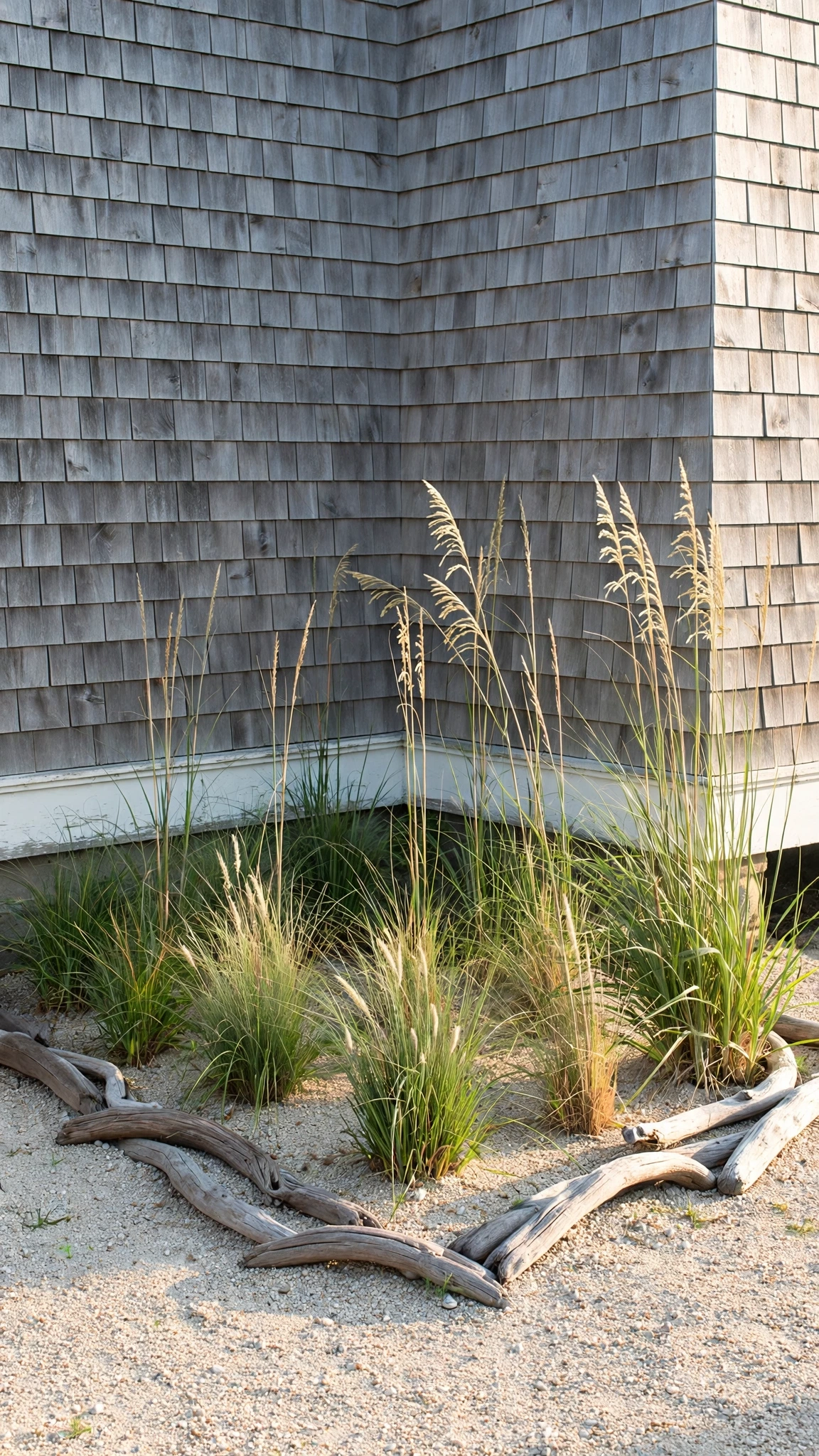
A small bed of grasses and a weathered piece of driftwood gives a house corner the feel of a found coastal sculpture. Anchor the driftwood firmly so a winter gale cannot shift it, and mix two or three heights: little bluestem at the back, lower blue fescue in front. Note that removing driftwood from public beaches is restricted in many protected areas, so source it legally.
A mulch of pale gravel echoes the beach, and one or two smooth stones repeat the driftwood’s gray. Keep the bed simple and let the materials do the work.
7. Coastal Perennial Border in Blues and Whites
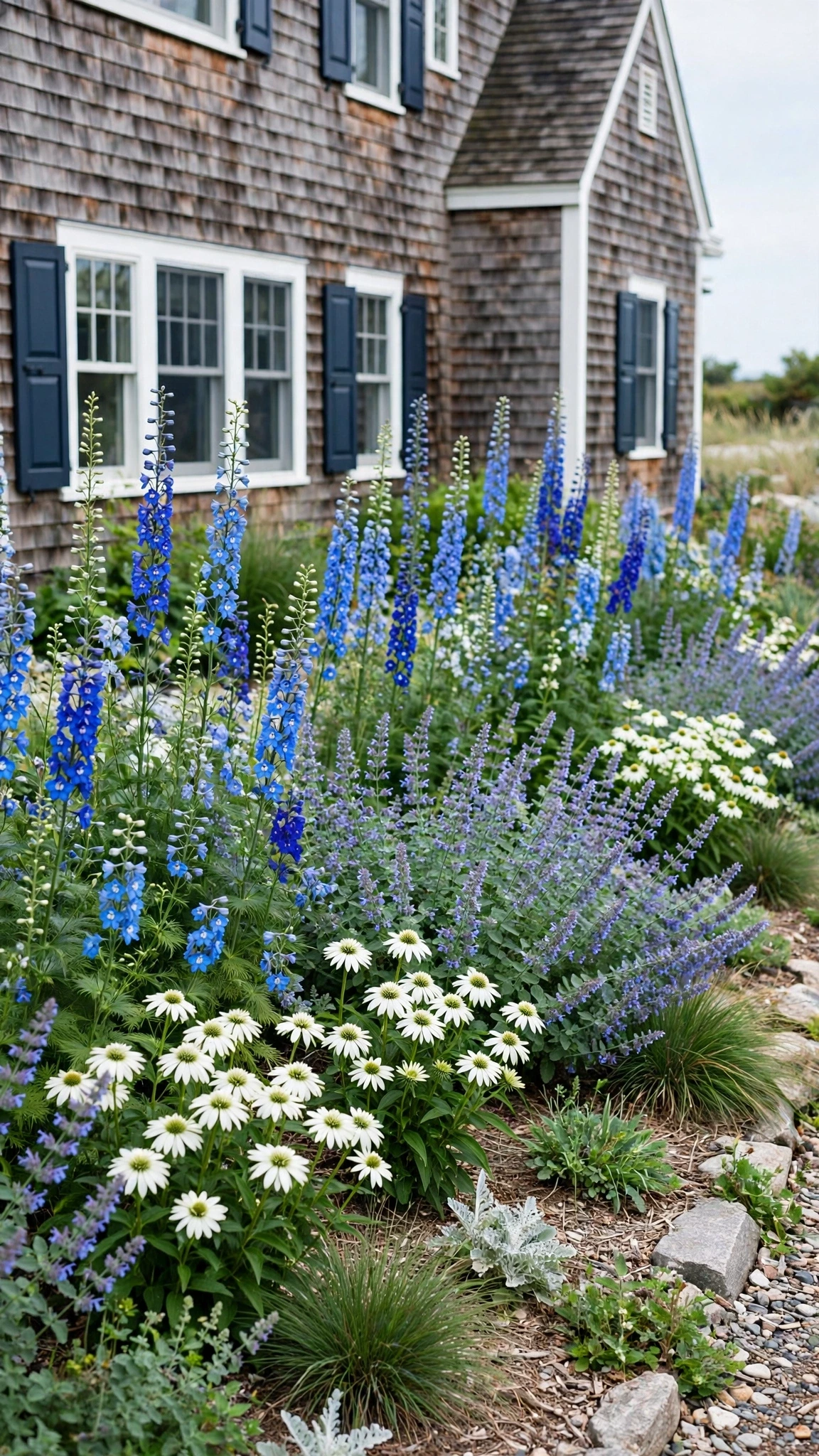
A perennial border in blues and whites echoes sea and sky without shouting. Layer by height: salvia or baptisia at the back, catmint and white coneflower in the middle, and low alyssum or blue fescue along the front. Delphinium looks lovely but struggles in coastal wind and needs staking, so leave it for sheltered inland beds.
Stagger bloom times so something flowers from late spring to early fall, and repeat plants in drifts of three or five. Space them generously for airflow in humid summers. One spring cleanup and a mulch refresh each year is enough.
8. Boxwood-Lined Entry Walk
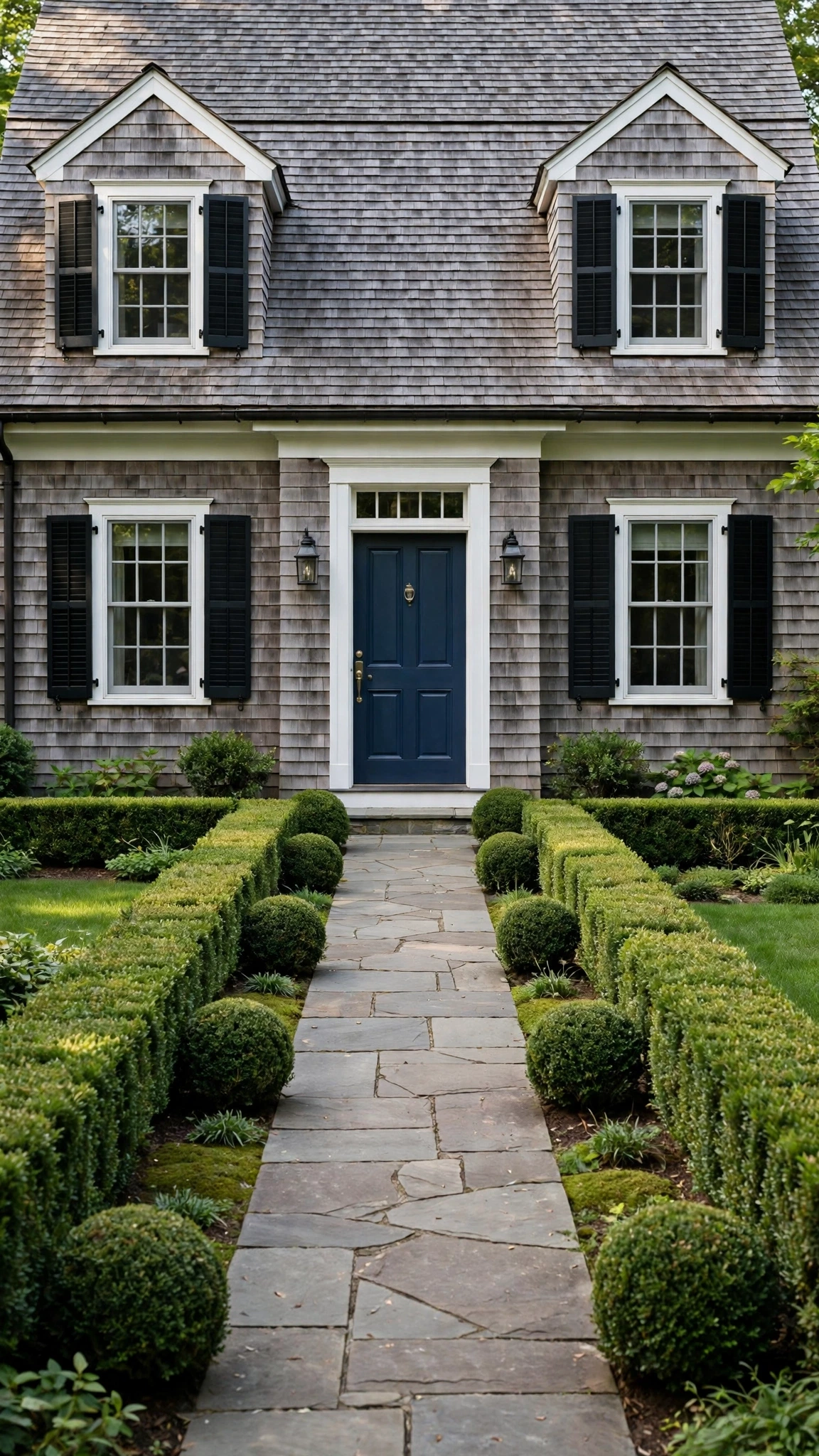
Clipped boxwood along the entry walk gives a relaxed coastal house a touch of formal structure that suits the Cape Cod’s symmetry. Keep mature height around knee level so the walk feels open and the door stays visible. Boxwood stays green through winter in sheltered spots, but exposed plants can bronze in cold wind, and boxwood blight is a concern in the Northeast.
Inkberry holly is a native evergreen that tolerates salt and clips just as neatly, so consider it for windy sites. Whichever you choose, shape lightly in late spring and midsummer rather than shearing hard once.
9. Stone Retaining Wall with Cascading Plants

Where a yard slopes, a low natural stone wall turns a problem grade into a garden feature. Keep a dry-stack wall under two feet, set it on a compacted gravel footing, and tuck trailing plants such as creeping phlox and low sedums into the top so they spill over the face.
Drainage decides whether a wall lasts, so backfill with gravel and leave small gaps for water to escape. Higher or load-bearing walls need professional design and sometimes a permit, so check before building.
10. Shady Fern and Hosta Corner Under Trees
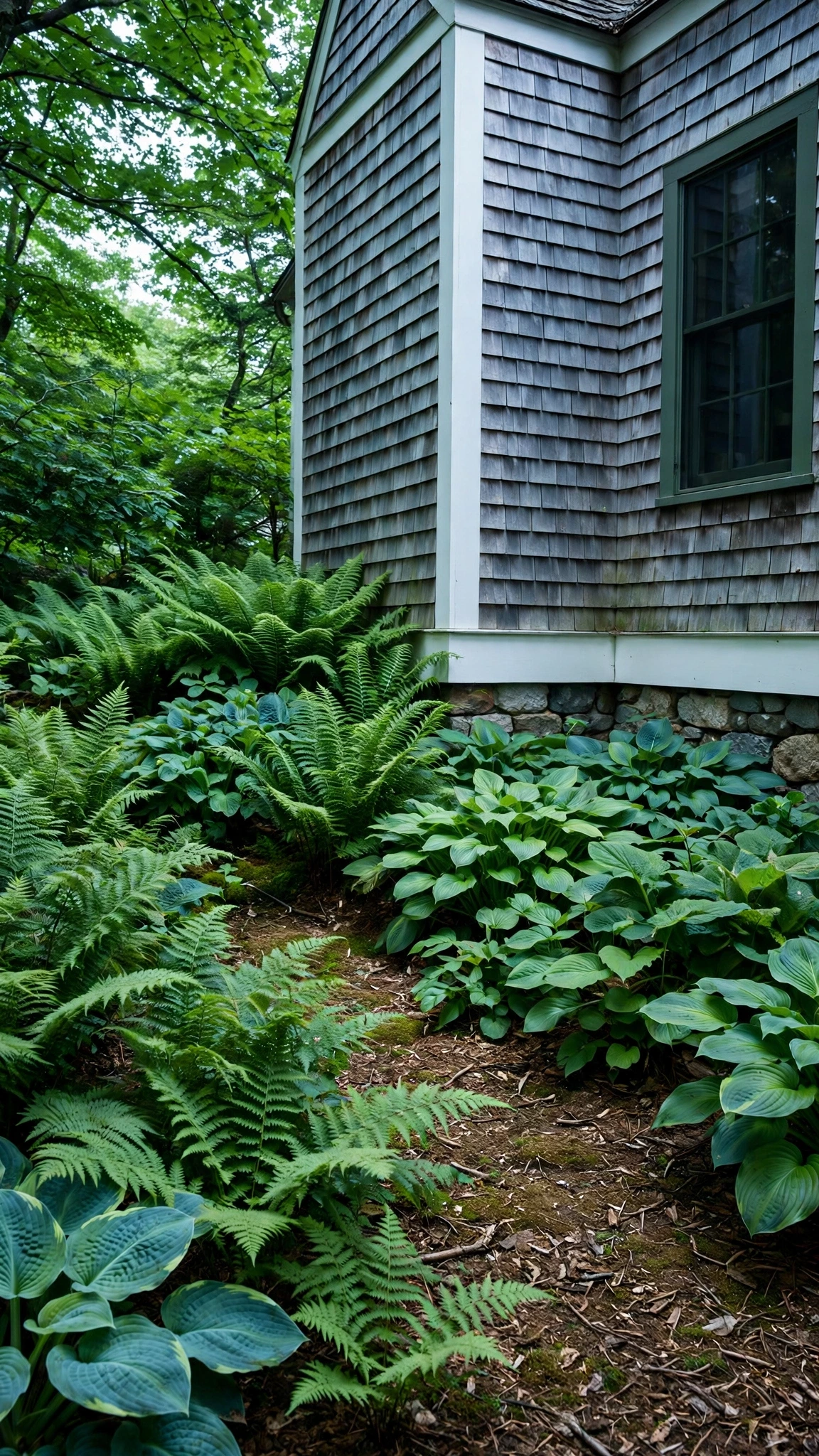
The shaded side of a Cape Cod is often written off, yet it can become the prettiest corner. Layer ostrich ferns at the back, hostas in the middle, and foamflower or astilbe at the front, and mulch thickly to hold moisture. The cool greens look lush against gray shingles.
In deer country, hostas are a favorite snack, so swap in ferns, summersweet, or sweet woodruff if browsing is a problem. Divide overgrown hostas every few years in spring and check for slugs after rain.
11. Sunny Cottage Flower Bed by the Porch
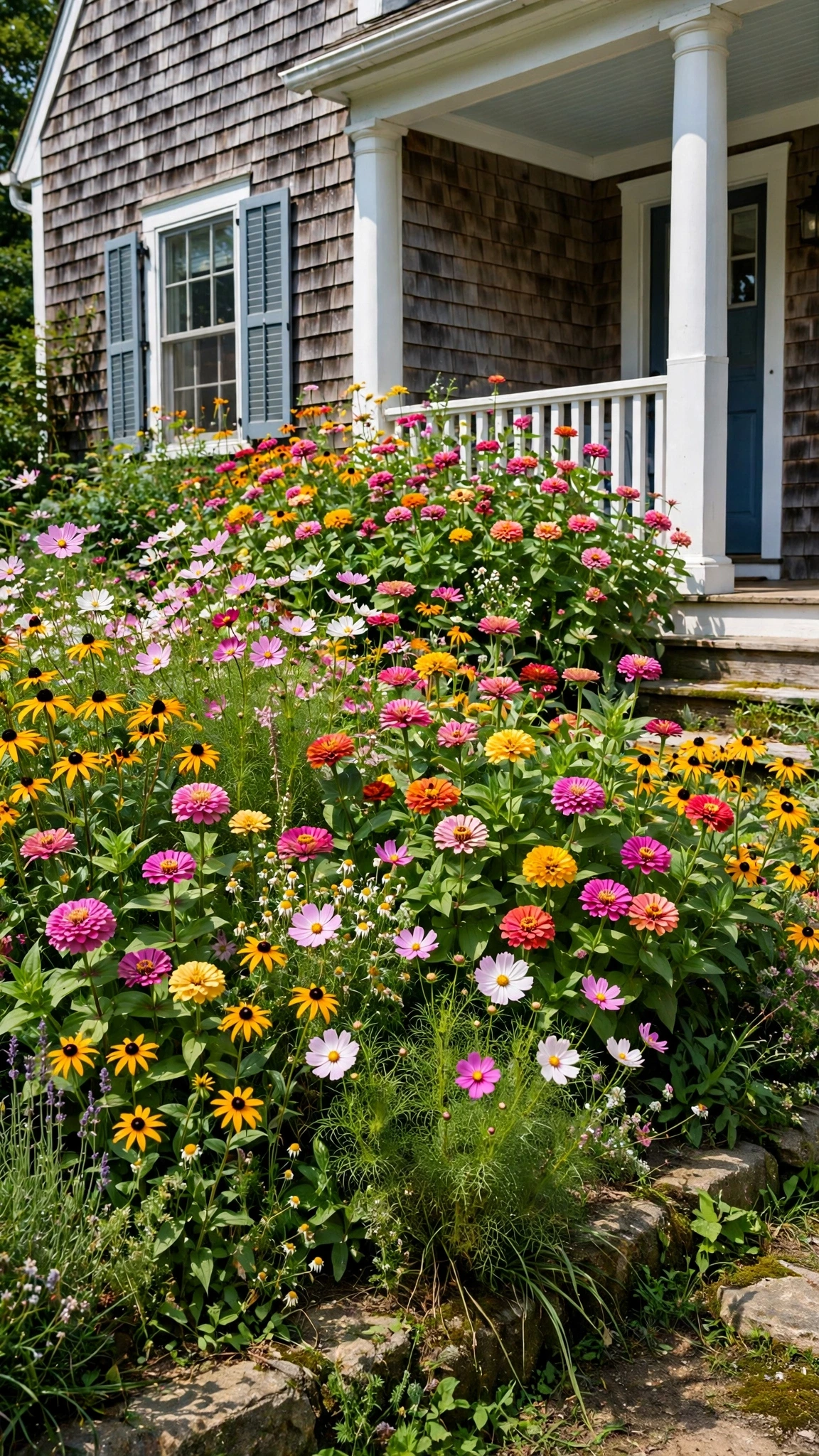
A loose, cheerful flower bed beside the porch softens the house edge and gives visitors color at eye level. Mix cottage favorites like zinnias, cosmos, black-eyed Susans, and salvias in a sunny spot, letting tall stems rise at the back and shorter blooms spill toward the walk. Keep the footprint modest; even a bed three feet deep can overflow with flowers, and leave a narrow path behind it so you can reach the back plants for deadheading.
Cottage beds look abundant rather than fussy, so resist the urge to over-plan them. Stake only the tallest stems before a summer storm, deadhead weekly to keep blooms coming, and add a few spring bulbs in fall for early color next year. By midsummer, the bed buzzes with pollinators and frames the porch with exactly the relaxed abundance a coastal cottage deserves.
12. Ornamental Grass Screen for Privacy
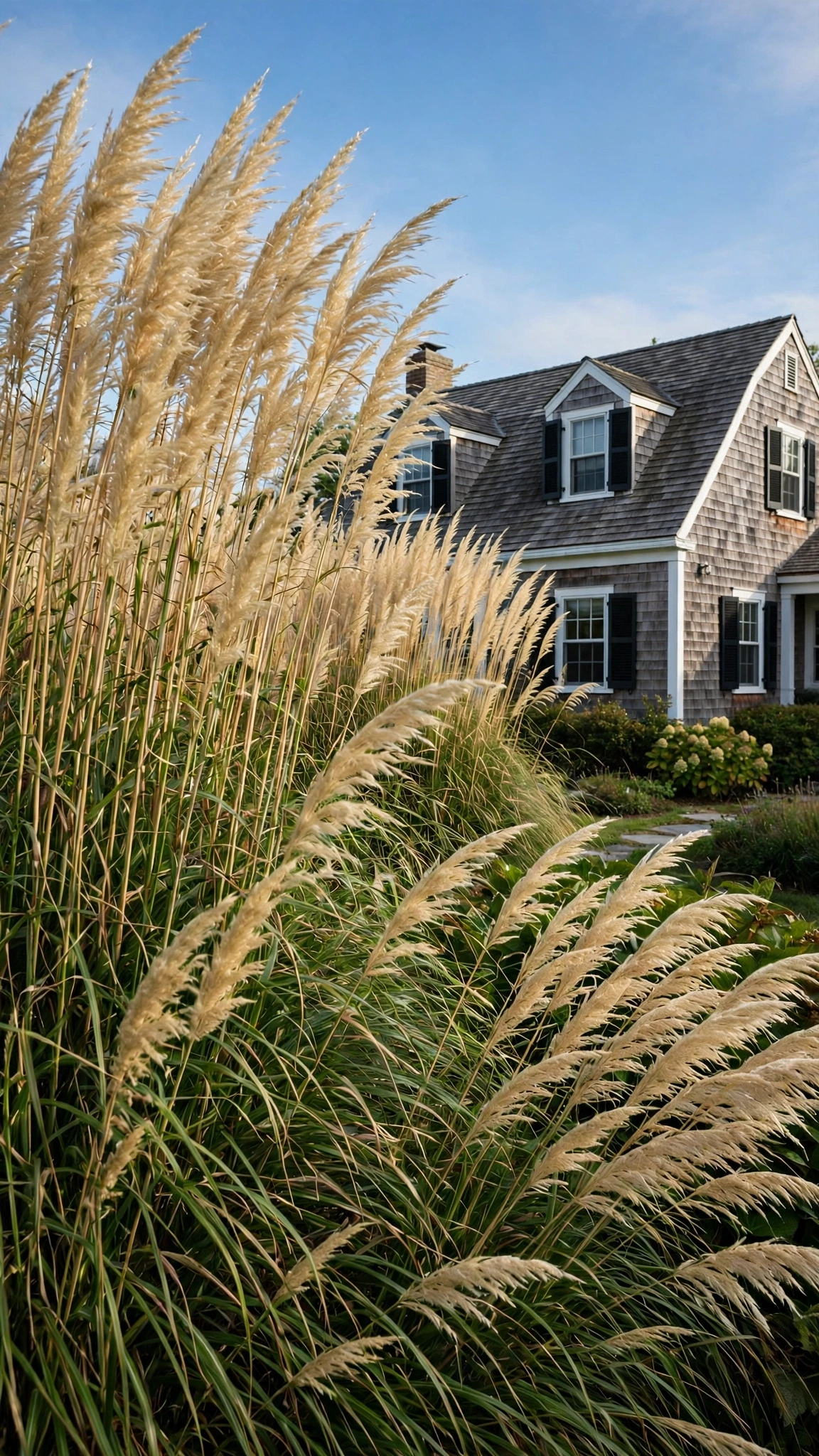
When a neighbor’s window or a busy street sits too close, a loose row of tall grasses screens the view without a wall. Use switchgrass or little bluestem in a staggered double row about three feet apart. Avoid Miscanthus sinensis, which is considered invasive in parts of the Northeast.
Most tall grasses reach six feet by late summer, so plan the height honestly. Cut the row back to a few inches each spring and divide crowded clumps every three or four years.
13. Herb and Edible Border Near the Kitchen Side
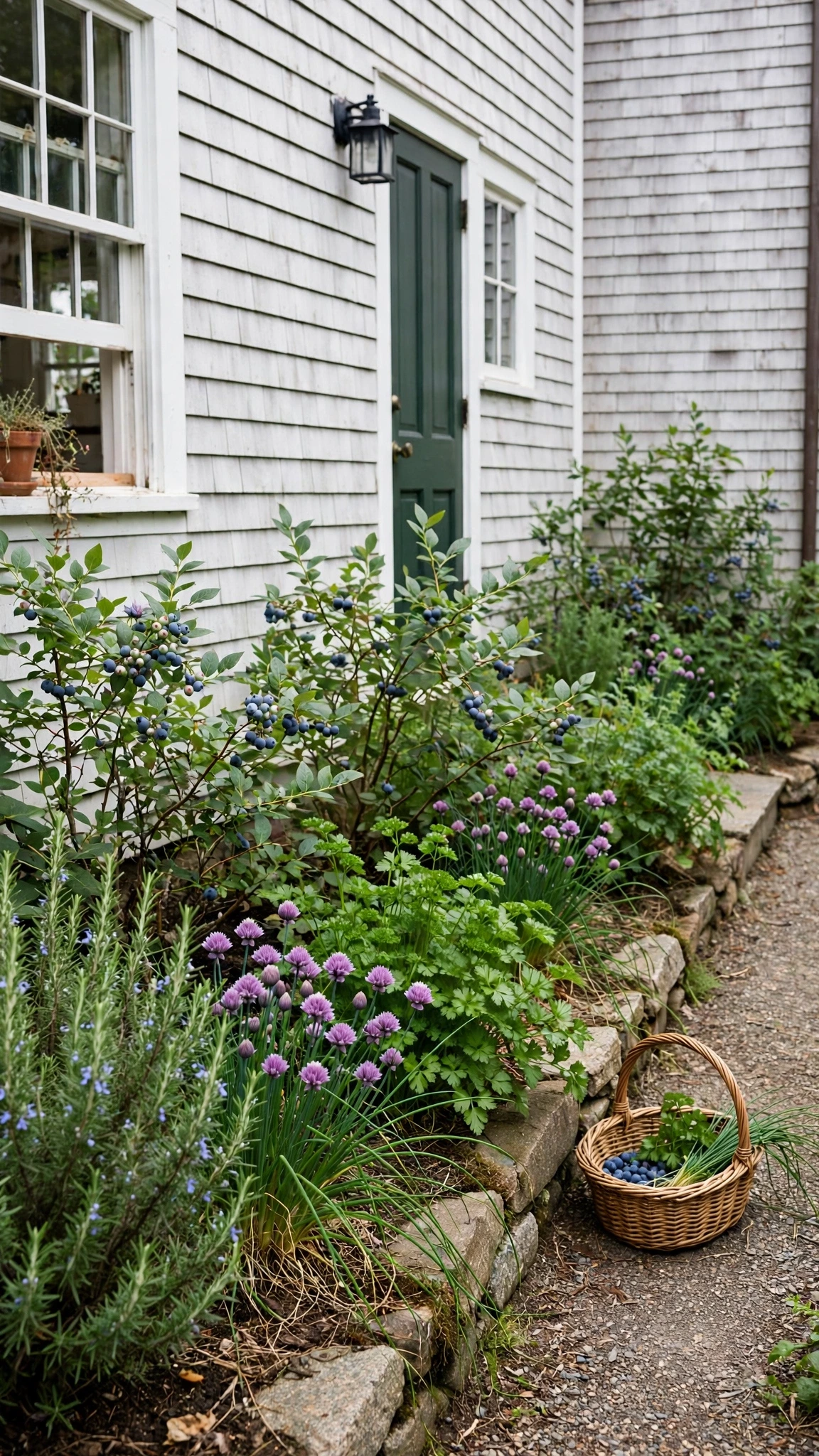
A border of herbs, berries, and greens within easy reach of the kitchen door turns a side yard into a working garden that still looks tidy. Plant rosemary, thyme, chives, and parsley along the front edge where you can snip them while cooking, with blueberries or currants behind and a few rows of lettuce or kale tucked between. Raise the soil slightly with compost, since coastal sand drains fast and herbs prefer a richer mix, and edge the bed with stone or brick to keep it crisp.
Keep paths wide enough for a basket and a pair of feet, and harvest often, since regular picking keeps herbs bushy and productive. Most herbs tolerate coastal sun and wind well, though basil and tender greens appreciate a sheltered corner or a large pot you can move. The reward is a border that feeds the kitchen all season and smells wonderful every time you brush past it.
14. Trellis with Clematis Beside the Garage

A plain garage wall is a missed opportunity, and a trellis with clematis turns it into a vertical flower show. Fix a sturdy wooden or metal trellis a few inches off the wall so air circulates behind it, and plant two clematis varieties with different bloom times, one for early summer and one for fall, so the wall stays colorful for months. Train the vines sideways along the trellis wires rather than straight up, which spreads blooms across the whole panel.
Clematis likes its head in the sun and its roots in the shade, so mulch the base well and shade it with a low shrub or a flat stone. Water at the base during dry spells, and prune according to each variety’s group, cutting hard in spring only for the varieties that bloom on new wood. Within two seasons a bare garage wall becomes a flowering backdrop that costs almost no ground space at all.
15. Fire Pit Seating Nook in the Side Yard
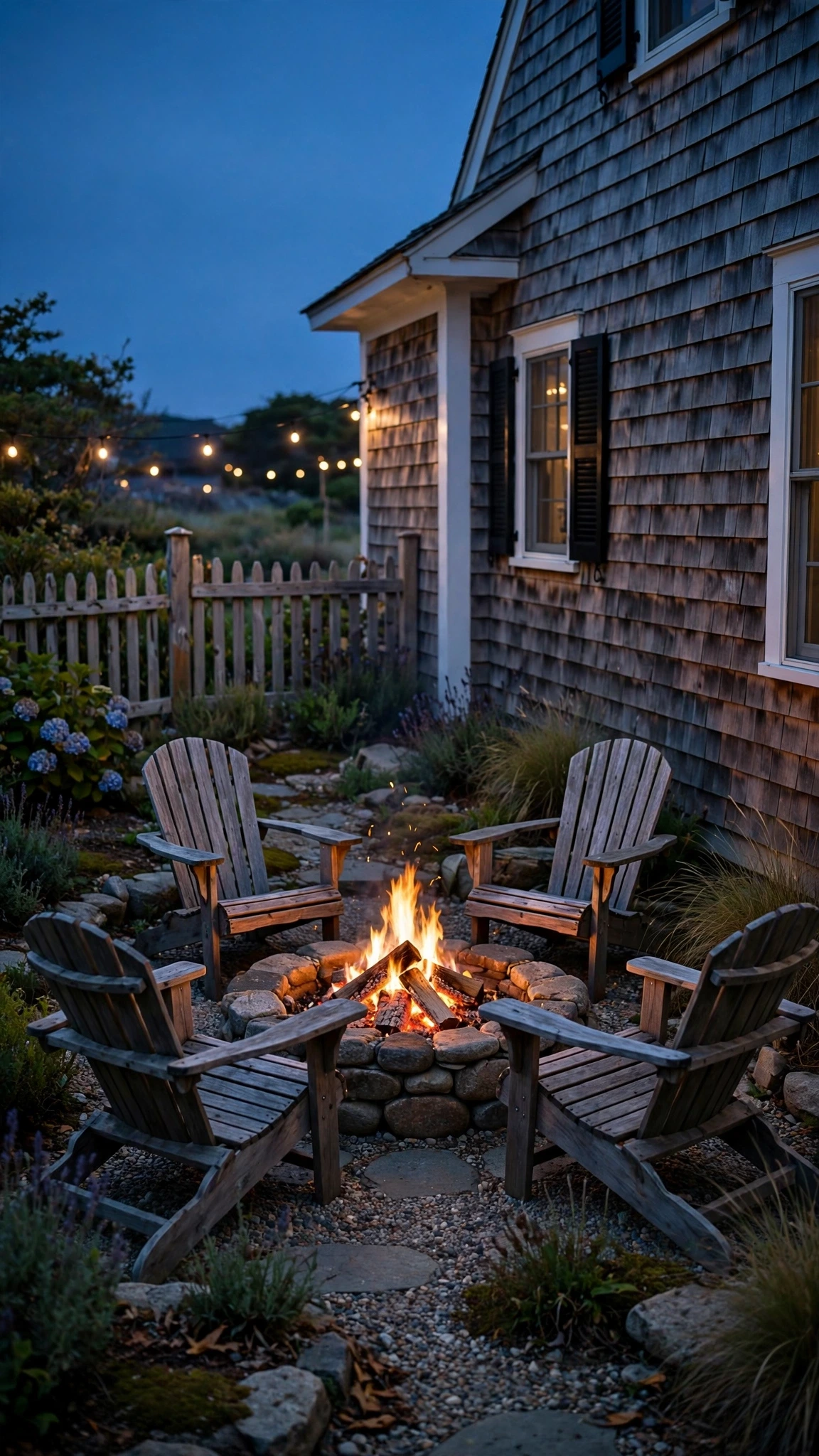
A small stone fire pit ring with wooden chairs tucked into a sheltered side yard gives a Cape Cod home an evening gathering spot sized for a real yard. Choose a flat, open patch away from overhanging branches and the house wall, lay a simple gravel or stone pad for the chairs, and ring the pit with fieldstone that matches the house’s coastal palette. Four Adirondack chairs and a small side table are plenty, since a nook feels cozier than a sprawling patio.
Before the first fire, check local rules on open flames and setbacks, and keep the pit clear of dry grasses and low branches. A windbreak of grasses or shrubs on the prevailing wind side makes the nook far more comfortable on breezy coastal evenings, and a lidded metal screen keeps sparks contained. On a cool night, with the pit lit and the house glowing behind you, this small corner becomes the yard’s favorite room.
16. Water-Wise Gravel Garden with Boulders
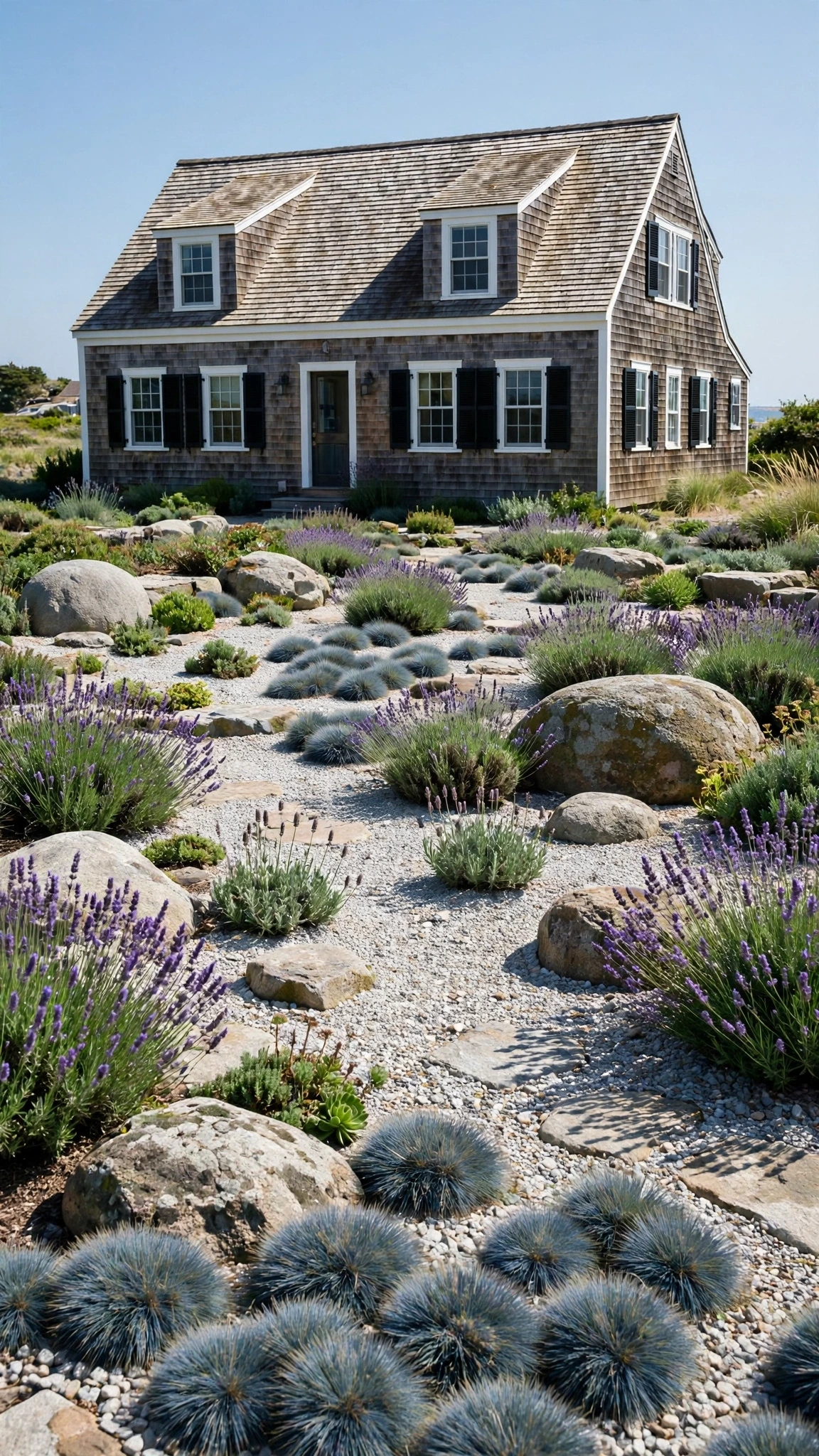
For a dry, sunny strip where lawn would struggle, a gravel garden with boulders and drought-tough plants looks coastal and asks for very little water. Lay landscape fabric to slow weeds, spread gravel three inches deep, and set two or three boulders of different sizes as anchors, half-buried so they look like they belong there. Fill around them with lavender, sedum, blue fescue, and ornamental grasses that thrive in sun and sharp drainage.
Gravel gardens suit sandy coastal soil because they never stay soggy, and they stay tidy with an occasional rake and a yearly top-up of stone. Space plants generously so each one reads against the pale gravel, and avoid thirsty varieties that would look out of place in a dry bed. The result is a low-water landscape that still feels lush, with stone and silver-green foliage echoing the beach just beyond the yard.
17. Container Grouping at the Front Steps
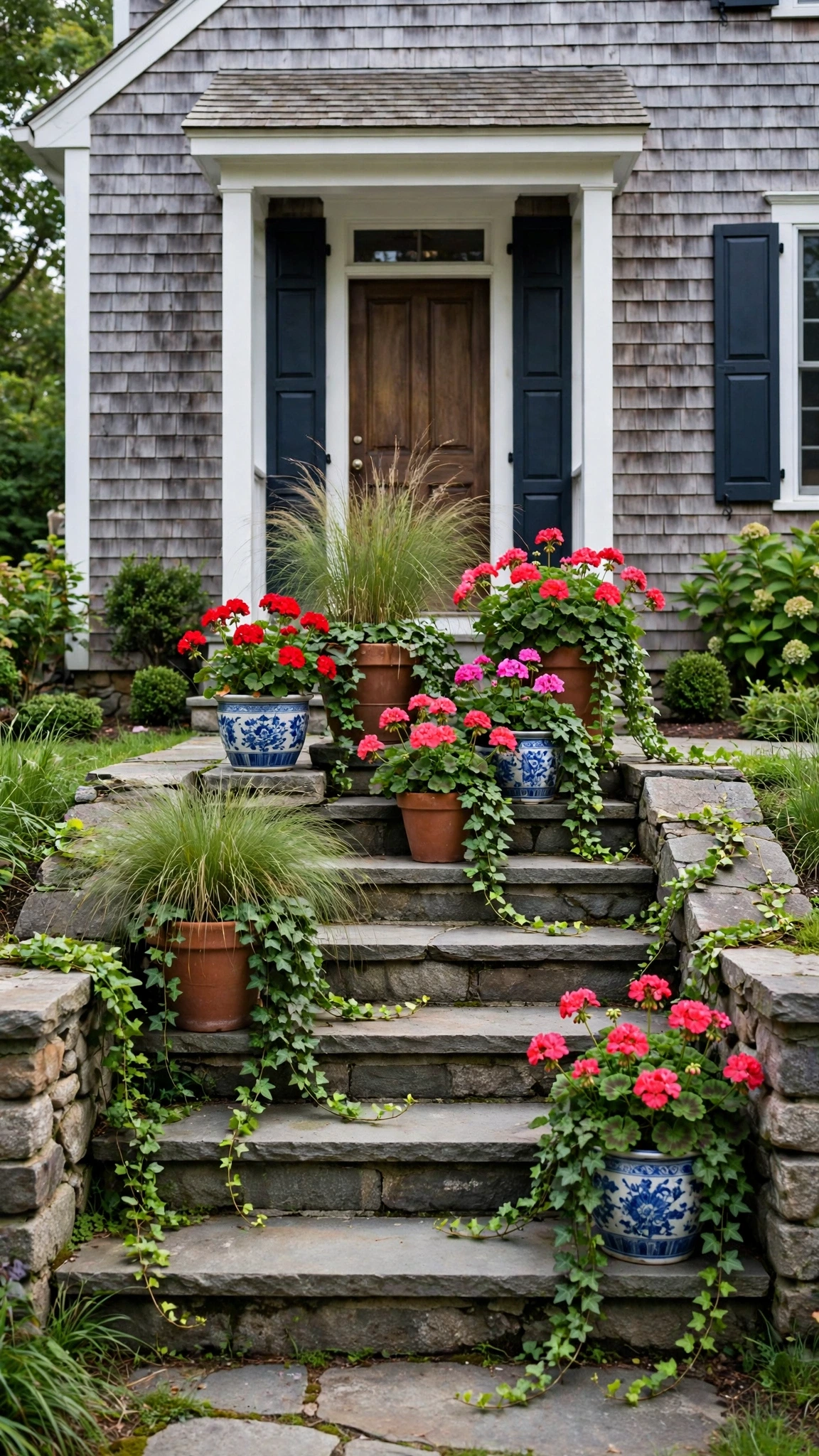
A layered group of pots flanking the front steps delivers instant color that can change with every season. Combine three pot sizes in coastal colors, weathered terracotta, soft blue, and crisp white, and plant each with a thriller, a filler, and a spiller: a tall grass or agave in the center, mounding geraniums or petunias around it, and trailing ivy or sweet potato vine over the rim. Odd-numbered groupings look natural, so cluster three pots on one side and two on the other rather than mirroring them exactly.
Containers dry out fast in coastal wind, so choose pots with drainage holes and water deeply whenever the top inch of soil feels dry. Swap the planting each season, spring pansies, summer geraniums, fall mums, and evergreen sprigs with berries for winter, and the steps never look tired. For a small front yard, pots are the fastest way to add color without digging a single bed.
18. Solar Path Lights Along a Curving Walk
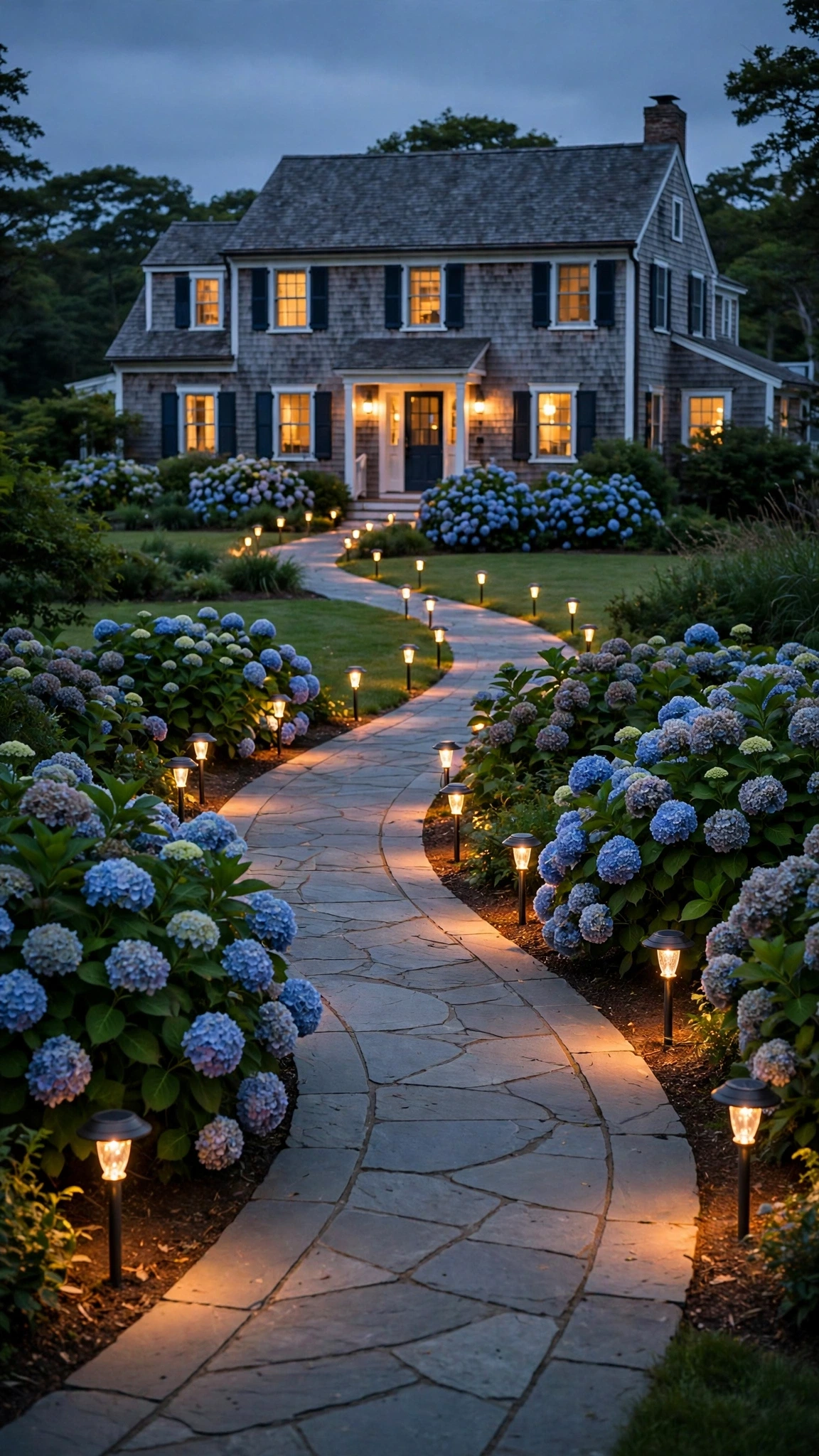
Low solar lights tracing a gentle curve to the door give a Cape Cod yard evening charm with no wiring at all. Space the lights six to eight feet apart and stagger them slightly from side to side, so the line feels organic rather than runway-straight, and choose warm white bulbs that flatter shingle siding instead of harsh blue-white ones. Place each light where it gets direct sun during the day, since shaded lights charge poorly and fade early.
Solar lights need almost no care beyond a quick wipe of the panels each spring and fresh rechargeable batteries every year or two. They mark the walk safely for evening visitors, draw the eye toward the front door after dark, and make the whole front yard feel welcoming long after sunset. For a small budget, a single set of lights along the main walk delivers more evening curb appeal than almost any other single addition.
19. Seasonal Color Rotation Bed
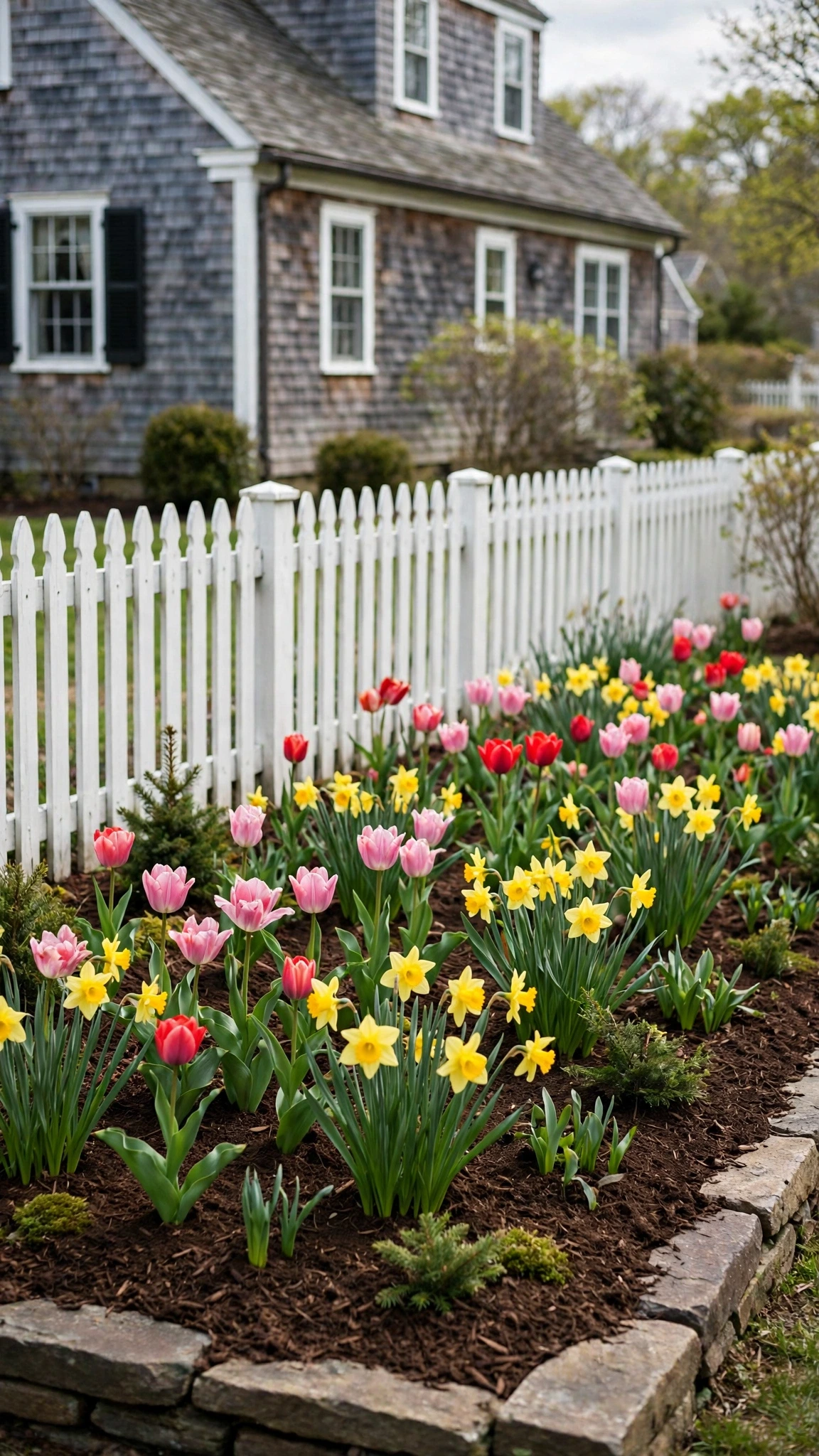
One bed planned to change with the seasons never looks empty, and it saves you from replanting the whole yard four times a year. Layer spring bulbs deep in fall, tulips and daffodils at the bottom, then plant summer annuals above them and finish with fall mums as the summer blooms fade. Mulch the bed well to protect the bulbs and hold moisture, and mark the bulb spots with small stakes so you never dig through them by accident.
Succession planting is the whole trick, so keep a simple note of what went where and when it bloomed. As each season’s stars fade, pull them promptly and tuck in the next round, and the bed rolls from spring color to summer abundance to autumn warmth without a gap. For gardeners short on space, this single hard-working bed delivers the variety of four gardens in one.
20. Rain Garden Swale for a Low Wet Spot
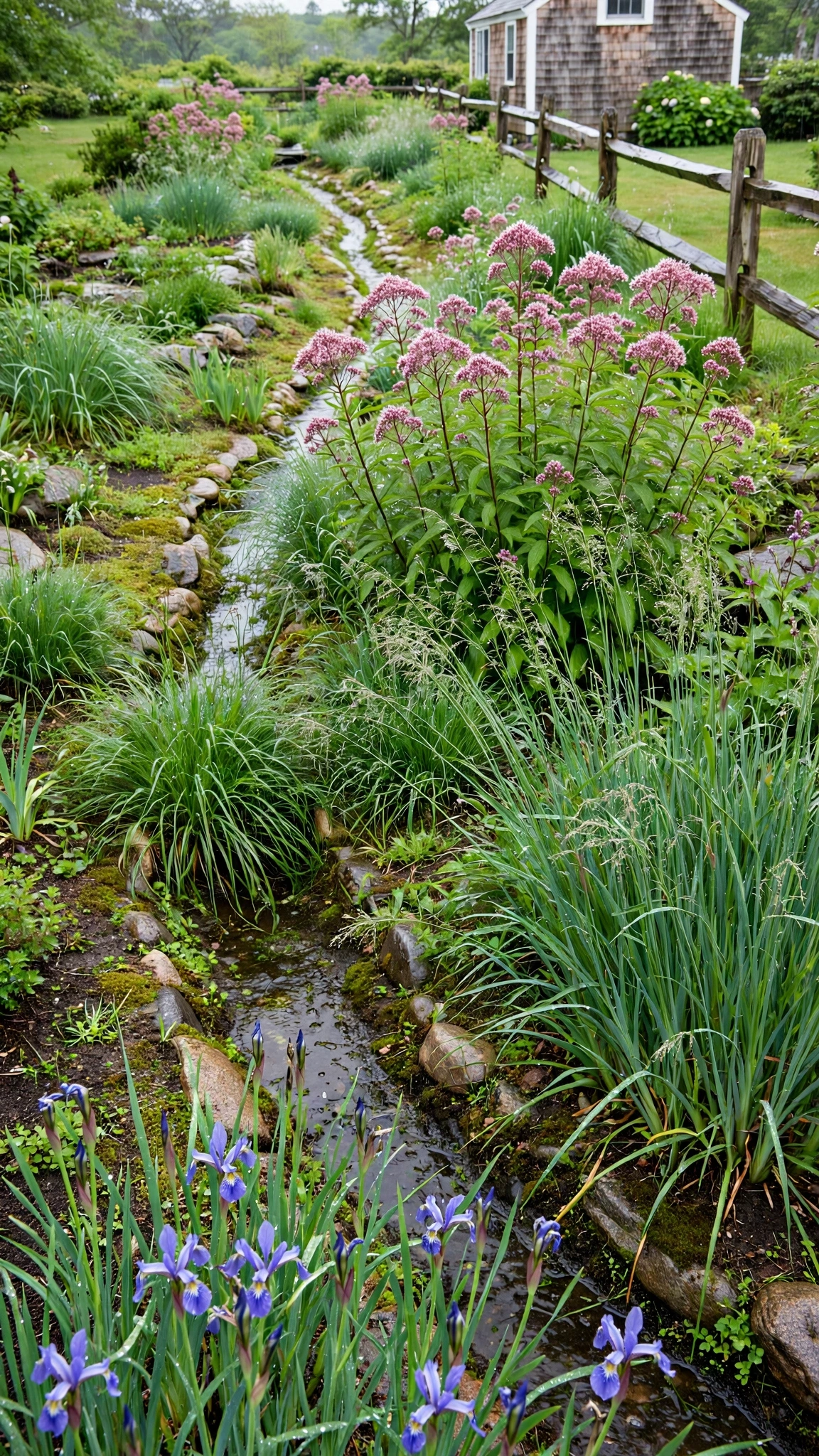
A soggy corner where roof runoff collects can become a garden feature instead of a muddy problem. Dig a shallow swale, no deeper than six inches, in the low spot and plant it with moisture-loving natives like iris, Joe Pye weed, and switchgrass that tolerate both wet feet after rain and dry spells between storms. Shape the swale so water enters from the downspout area and exits slowly toward a safe overflow point, never toward the foundation.
Site the swale at least ten feet from the house and check that the soil drains within a day or two after rain, since standing water breeds mosquitoes. A gravel inlet where the downspout meets the swale slows the flow and filters debris, and a mulch of shredded bark holds moisture for the plants. Within a season, the wettest corner of the yard becomes one of its lushest, a planted hollow that handles runoff beautifully.
21. Discovery Trail Through the Back Garden with a Reading Bench

A narrow winding trail through the back garden turns the yard from something you look at into somewhere you wander. Lay a path just wide enough for one person, using wood chips or stepping stones, and let it curve past beds and grasses so the destination stays hidden until the last turn. At the quiet end, place a simple wooden bench in dappled shade, angled toward a favorite view rather than back at the house.
Keep the trail surface soft and natural, and edge it loosely with stones or low plants so it blends into the garden instead of cutting through it. A bench in shade invites long sits, so plant a small tree or tall shrub nearby if no natural shade exists. This final idea costs little and changes how the whole yard feels, giving you a private corner for morning coffee and a path worth walking every day.
How to Plan a Coastal Landscape That Fits Your Cape Cod Home
Good coastal landscaping starts before you buy a single plant, with a walk around the yard at different times of day. Note where the sun falls, where the wind hits hardest, where salt spray reaches, and where water pools after rain, since those four facts decide almost every plant and material choice. Sketch the walk, the main beds, and one or two focal points on paper first, keeping the layout simple and leaving open lawn or gravel where the eye needs rest.
Phase the work so the project stays enjoyable and affordable. Start with the entry walk and foundation planting, since those shape first impressions, then move to the side yard and privacy screening, and finally the back garden and seating spots. Buying plants in small groups each season also lets you learn what thrives in your particular patch of coast before committing to the whole yard.
FAQS
What plants grow best around a Cape Cod house?
Hydrangeas, beach grass, ornamental grasses, boxwood, and native coastal perennials grow best around a Cape Cod house because they tolerate sun, wind, and sandy soil. Choose plants rated for your coastal exposure, give new plantings regular water until established, and mulch to hold moisture in fast-draining sand.
How do I landscape a coastal front yard that gets salt wind?
Start with salt-tolerant natives like beach grass, bayberry, and rugosa roses, and shelter more tender plants behind grasses or low shrubs that break the wind. Improve sandy soil with compost, mulch beds thickly to hold moisture, and rinse salt spray off broadleaf shrubs after strong coastal storms.
What is the best ground cover for sandy coastal soil?
Creeping thyme between stepping stones, beach grass on sunny banks, and low juniper on slopes all handle sandy coastal soil well. Each needs sharp drainage, which sand naturally provides, and full sun to part shade. Water new ground cover regularly until roots take hold, then cut back once plants are established.
How can I add privacy to a Cape Cod yard without a tall fence?
Plant a loose row of tall ornamental grasses, layer mid-height shrubs behind them, and add a trellis with clematis or climbing roses where you need screening fast. This layered screen softens views, moves in the breeze, and keeps the yard feeling open instead of walled in.
Is a Cape Cod coastal garden low maintenance?
Yes, a Cape Cod coastal garden stays low maintenance when native plants, gravel, and ornamental grasses do most of the work. Expect seasonal pruning, a spring mulch refresh, and cutting grasses back once a year. Avoid thirsty lawns and delicate plants that need constant watering in salt wind.
How do I make a small Cape Cod front yard look bigger?
Use one curving path instead of several straight ones, layer beds by height so the eye travels deeper, and pick a single focal point like a bench or a small tree. Add vertical accents with a trellis or tall grasses, and keep the palette simple so the space reads as one calm garden.
What should I plant for year-round color in a coastal yard?
Combine evergreen shrubs like boxwood and juniper for winter structure, spring bulbs for early color, summer hydrangeas for big blooms, and fall mums for late warmth. Ornamental grasses add texture through every season, and a few pots by the door let you swap seasonal color without replanting beds.
Conclusion
The best Cape Cod house exterior landscaping suits both the house and its setting: plants scaled to a low roofline, hardy natives that handle your conditions, and materials like stone, shell, and weathered wood. When the yard and the home speak the same language, the whole property feels settled and welcoming.
Start with the entry walk, add one flower bed you love, and build from there across the seasons. Before long you will have a yard that looks beautiful, asks for sensible upkeep, and feels like it has always belonged to the house


