19 Christmas Table Setting Ideas for a Warm, Festive Holiday Dinner
A Christmas table isn’t a display piece. It’s where people sit for two hours to eat, talk, and pass dishes back and forth. A setup that blocks faces, crowds the food, or drips wax onto the cloth has failed at its real job, no matter how good it looks in photos. The tables guests remember are built in layers, and every layer has to earn its place.
This guide follows the order hosts actually work in: base layers for color and mood, low centerpieces that keep conversation easy, place settings, candlelight, and finishing touches. It also covers common problems like small tables, tight budgets, kids and pets, and the fear of a table looking too bare or overdone. Pick a style direction first, then build layer by layer, and test every choice with one question: can guests still see each other and reach the food comfortably? If yes, your table is ready.
1. A Layered Linen Base That Makes Everything Else Look Intentional
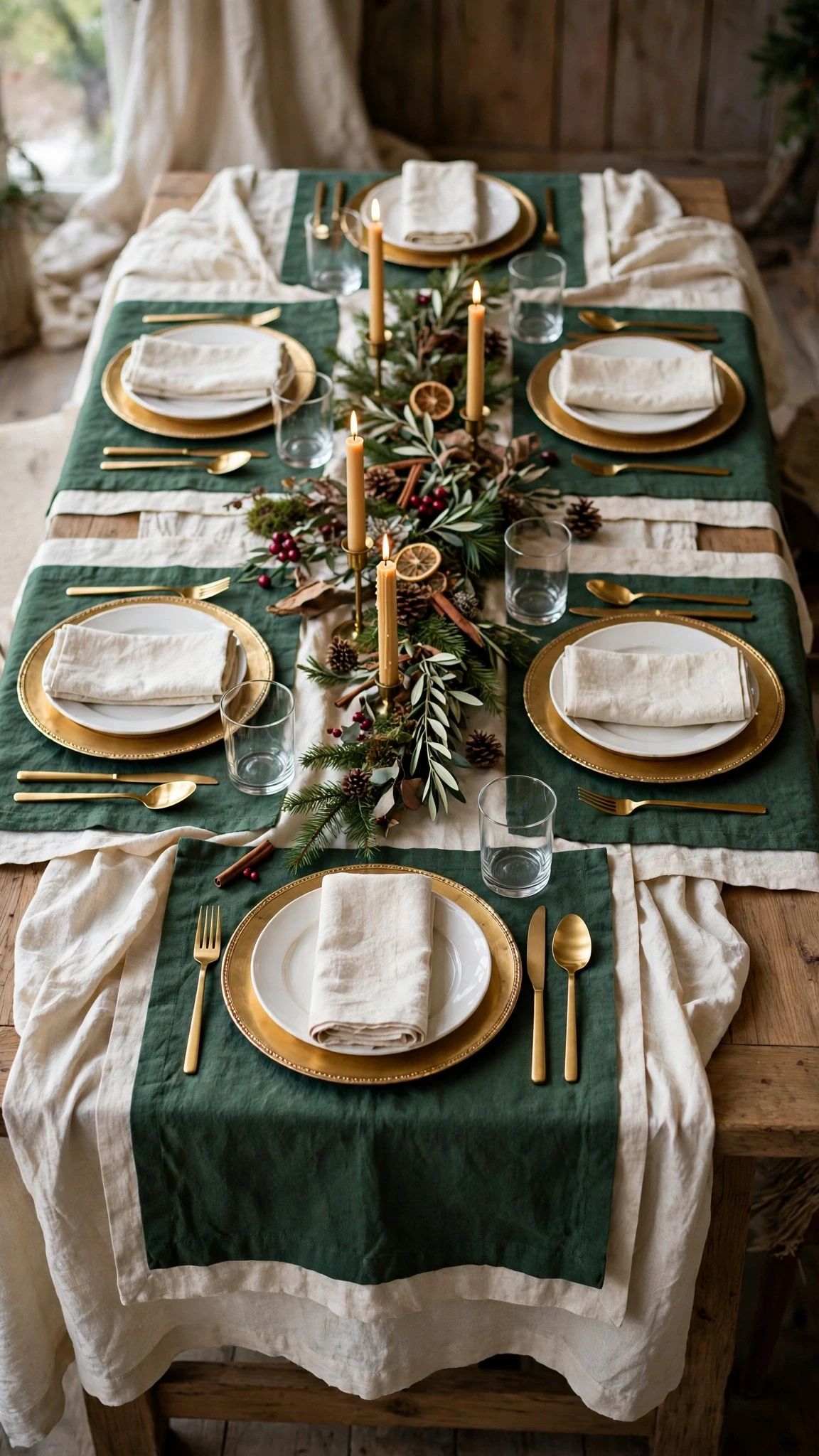
Start with two layers of linen instead of one, and the whole table immediately looks considered. A plain tablecloth in cream, ivory, or soft gray sets a calm background, and a second layer, a contrasting cloth folded as a runner or a placemat at each place, adds depth without adding clutter.
The contrast does the visual work, which means the centerpiece and place settings can stay simple and the table still reads as finished.
Choose washable fabrics, because Christmas dinner always ends with a spill, and let the cloth drape evenly on all sides rather than pooling at one end.
Keep the palette to two main colors at this stage; a third color can arrive later through napkins or candles, but a base with too many colors fights everything placed on top of it. When the base is calm, every layer above it looks intentional.
2. A Runner Down the Middle to Anchor the Table
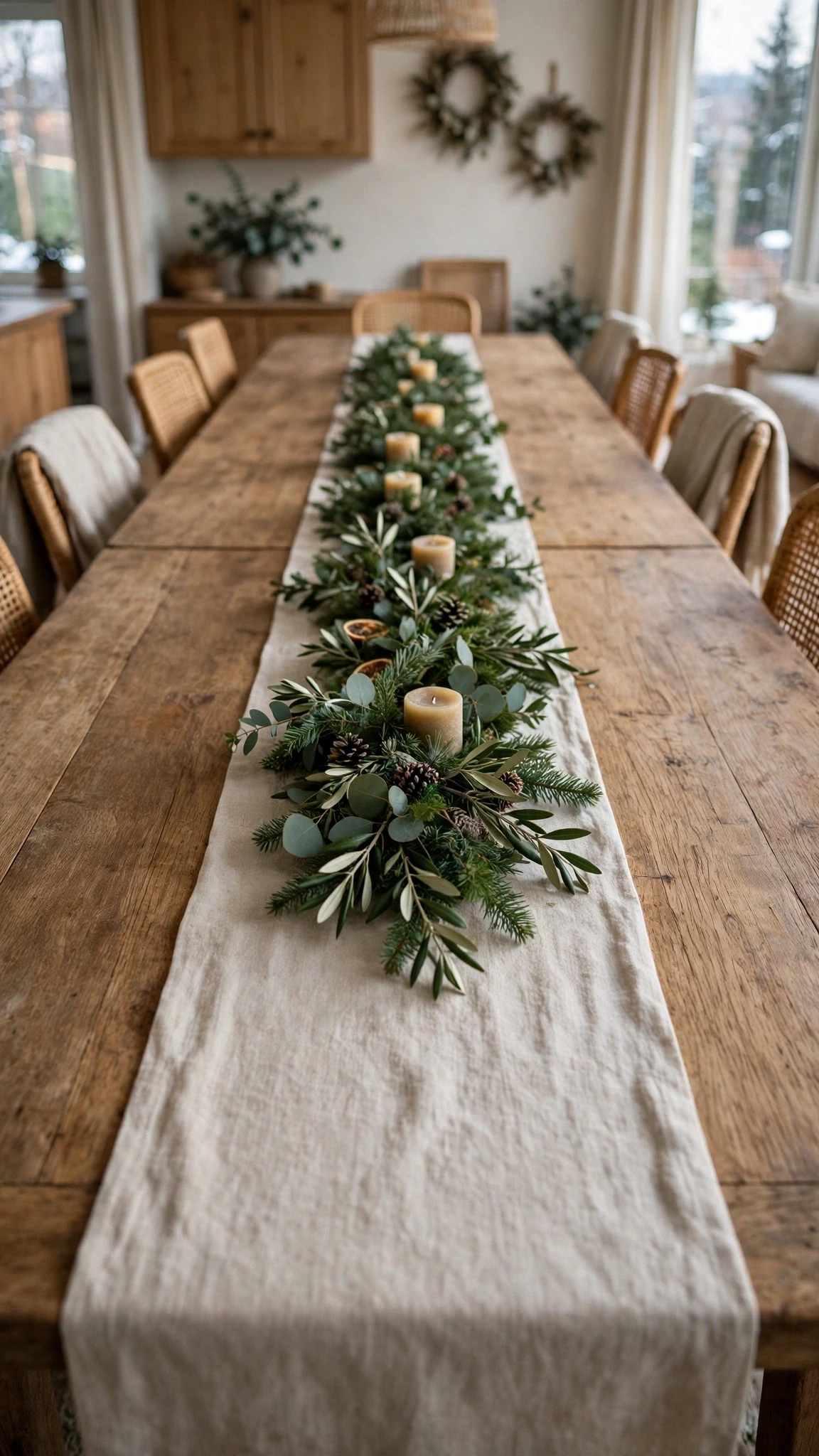
A runner down the middle gives the table a center line, and that line is a planning tool as much as a decoration. It marks where the centerpiece belongs and, just as importantly, where serving dishes must not go, so the table keeps clear landing spots for platters and bowls. Without that boundary, centerpieces tend to sprawl until there is nowhere left to put the food.
Size the runner to the table: roughly one-third of the table’s width, with a short overhang at each end, and bare table showing at the sides for plates and elbows.
A plain runner suits a busy centerpiece, while a patterned runner carries a quiet one, but the two should never compete. If the table is round, skip the runner entirely and let a single centerpiece hold the middle.
3. Chargers That Frame Each Plate Without Matching Everything
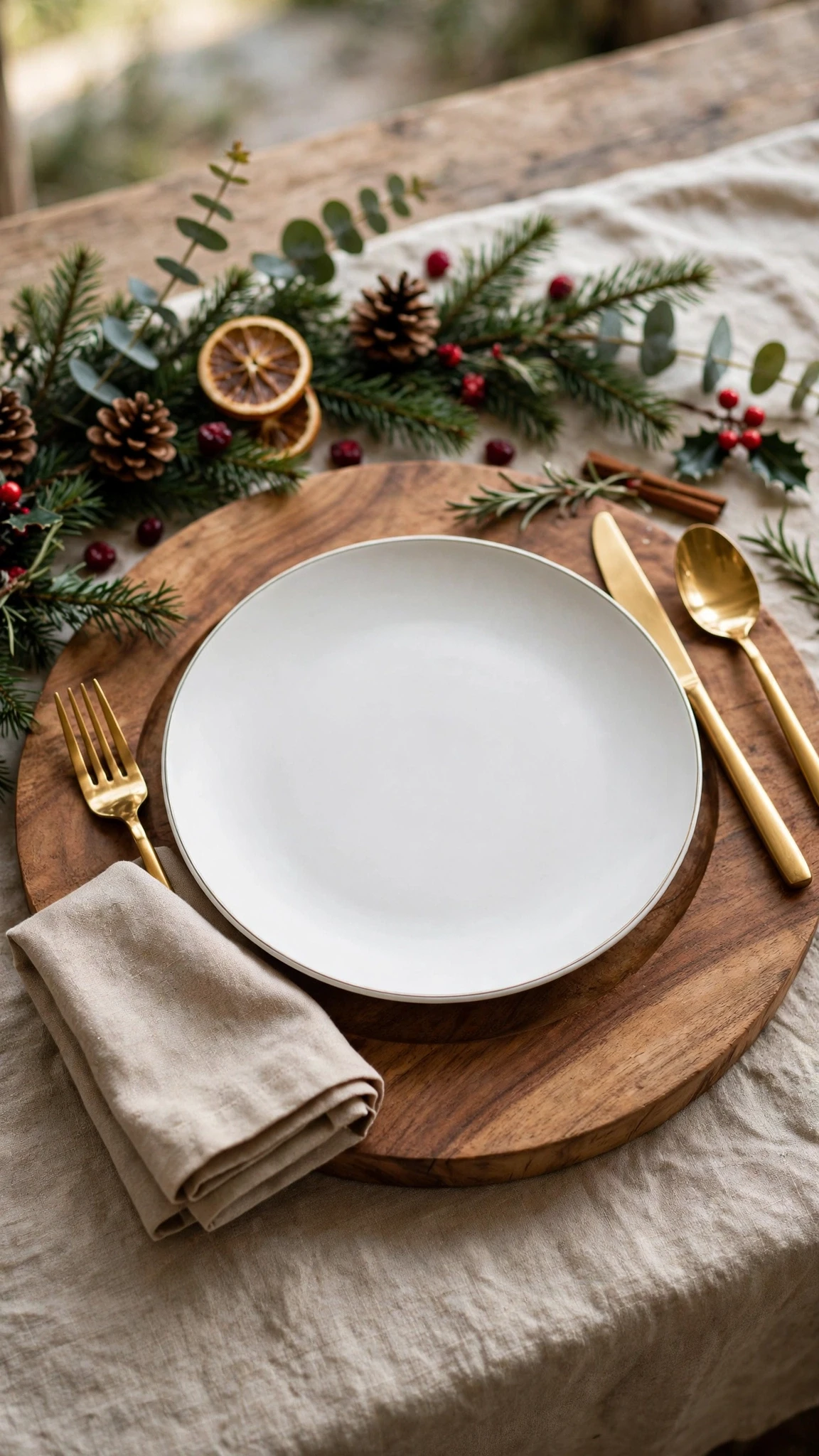
A charger under each dinner plate frames the setting the way a mat frames a photograph, and it protects the linen from hot plates and spills.
Chargers also let you mix materials without the table looking accidental: wood chargers at some places and brass or rattan at others read as collected over time, especially when the plates themselves match.
Match the charger to the plate, not the other way around, leaving about an inch of charger visible all around the plate for the frame to show.
Remove chargers before dessert so the table feels less formal as the evening loosens up, and borrow or thrift them if buying a full set feels wasteful for one meal a year. A charger is a frame, not a dish, so it never needs to match the food it sits under.
4. A Low Evergreen Centerpiece Guests Can Actually See Over
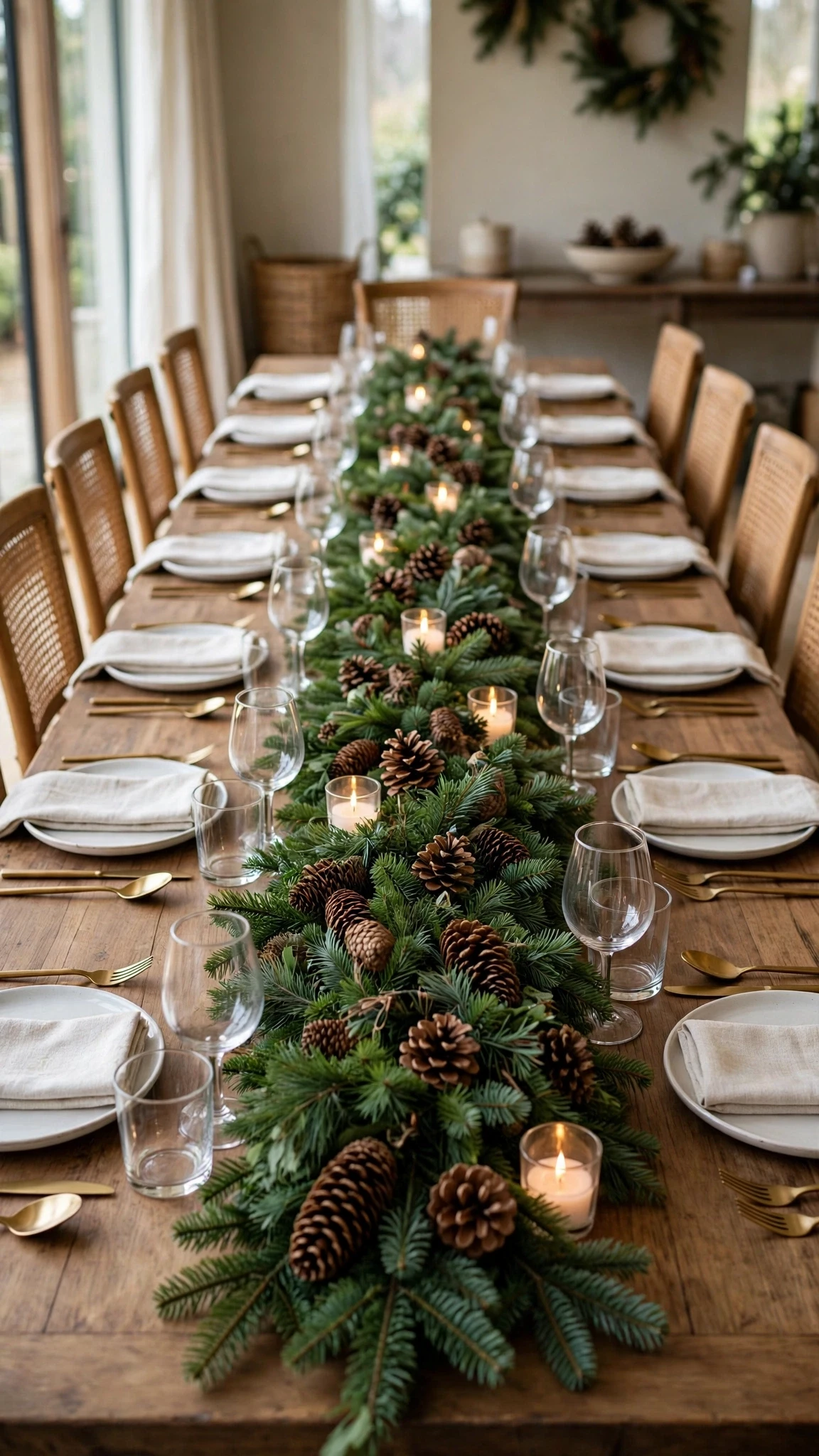
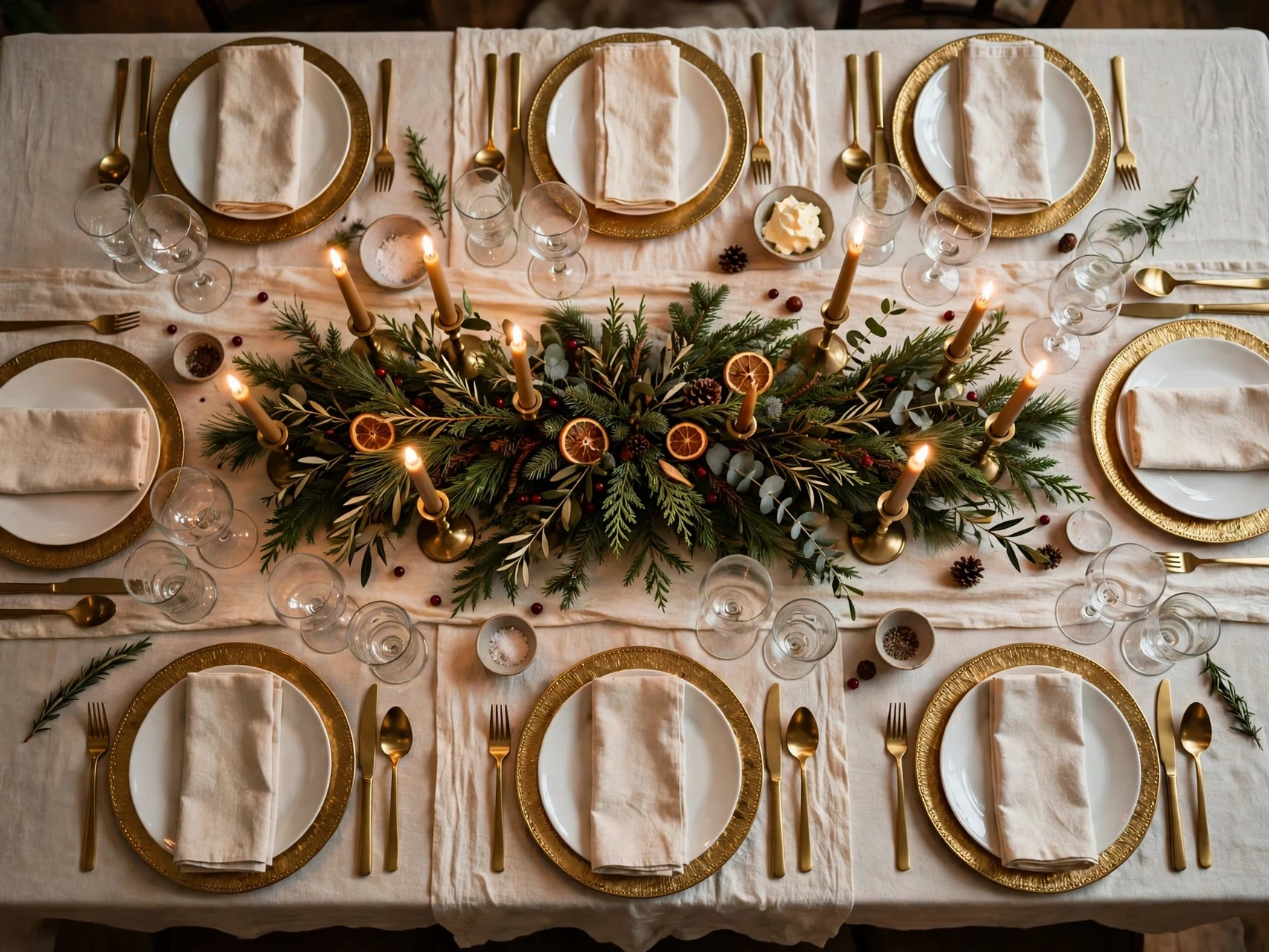
The safest centerpiece rule is also the simplest: nothing should rise above eye level when guests are seated. A long, low arrangement of fresh fir, cedar, or eucalyptus down the center gives the table its Christmas scent and color while leaving every face visible, and it costs far less than a tall floral arrangement that blocks half the conversation.
Build the greenery on a tray or a folded runner so it lifts off in one move when serving dishes arrive, and tuck pinecones, dried orange slices, or a few berries into the gaps for color.
Mist the foliage lightly on the morning of the meal to slow drying, and keep the arrangement narrow, no wider than the space between the plates, so elbows and glasses stay clear.
5. A Low Bowl of Floating Candles and Greenery
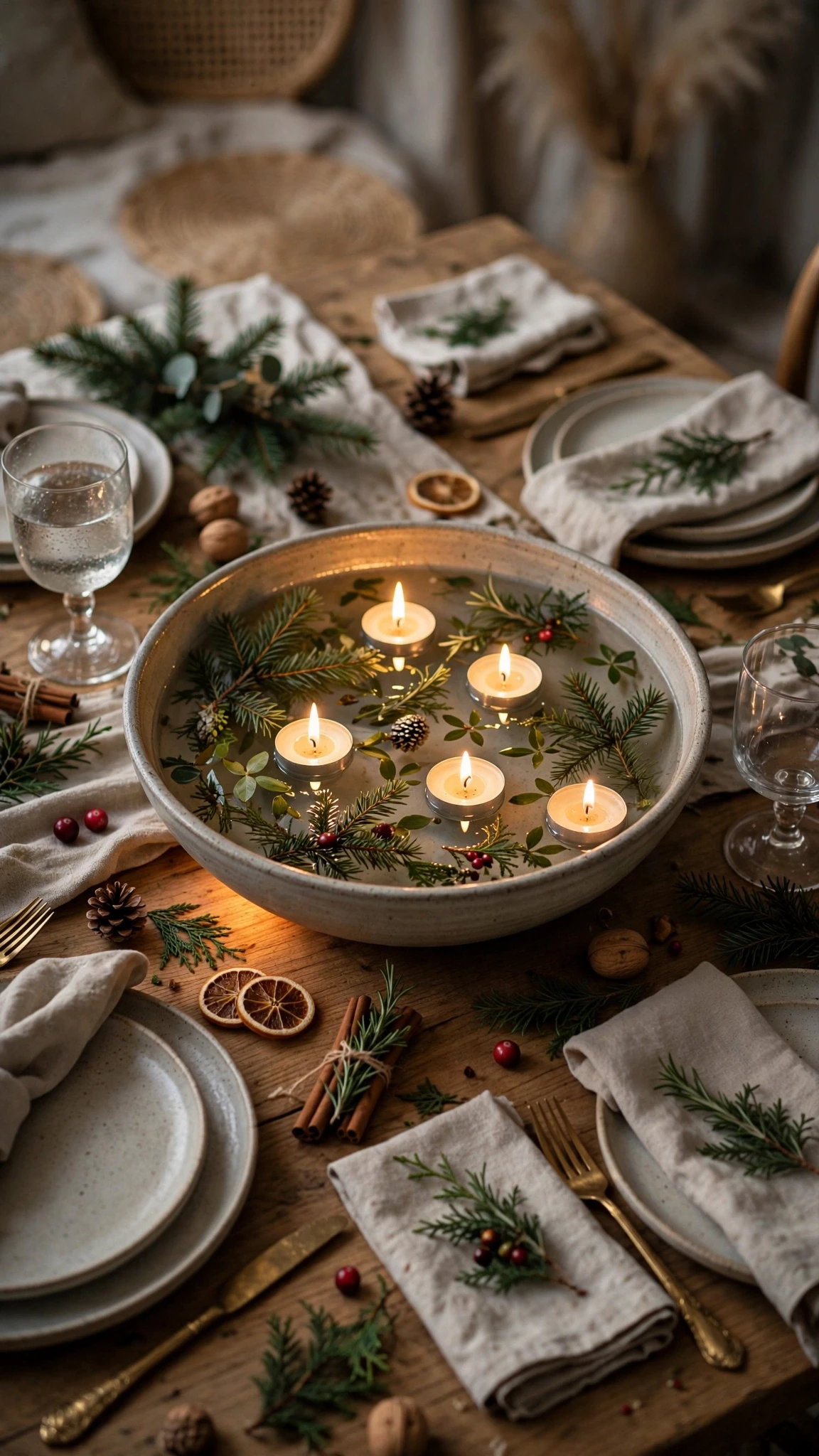
A wide, shallow bowl of water with floating candles and a few sprigs of greenery puts glow at table level, where it flatters faces instead of glaring from above. It suits tables where tall candlesticks would feel formal or wobbly, and it takes about five minutes to assemble from a bowl you already own.
Choose a bowl heavy enough not to slide, fill it two-thirds full, and keep floating candles clear of foliage so flames never touch a leaf.
Light the candles just before guests sit down, and place the bowl where no one has to reach across it for food. One bowl suits a small table; a long table can carry two, spaced evenly, rather than one oversized arrangement.
6. A Living Herb Centerpiece Guests Can Snip and Smell
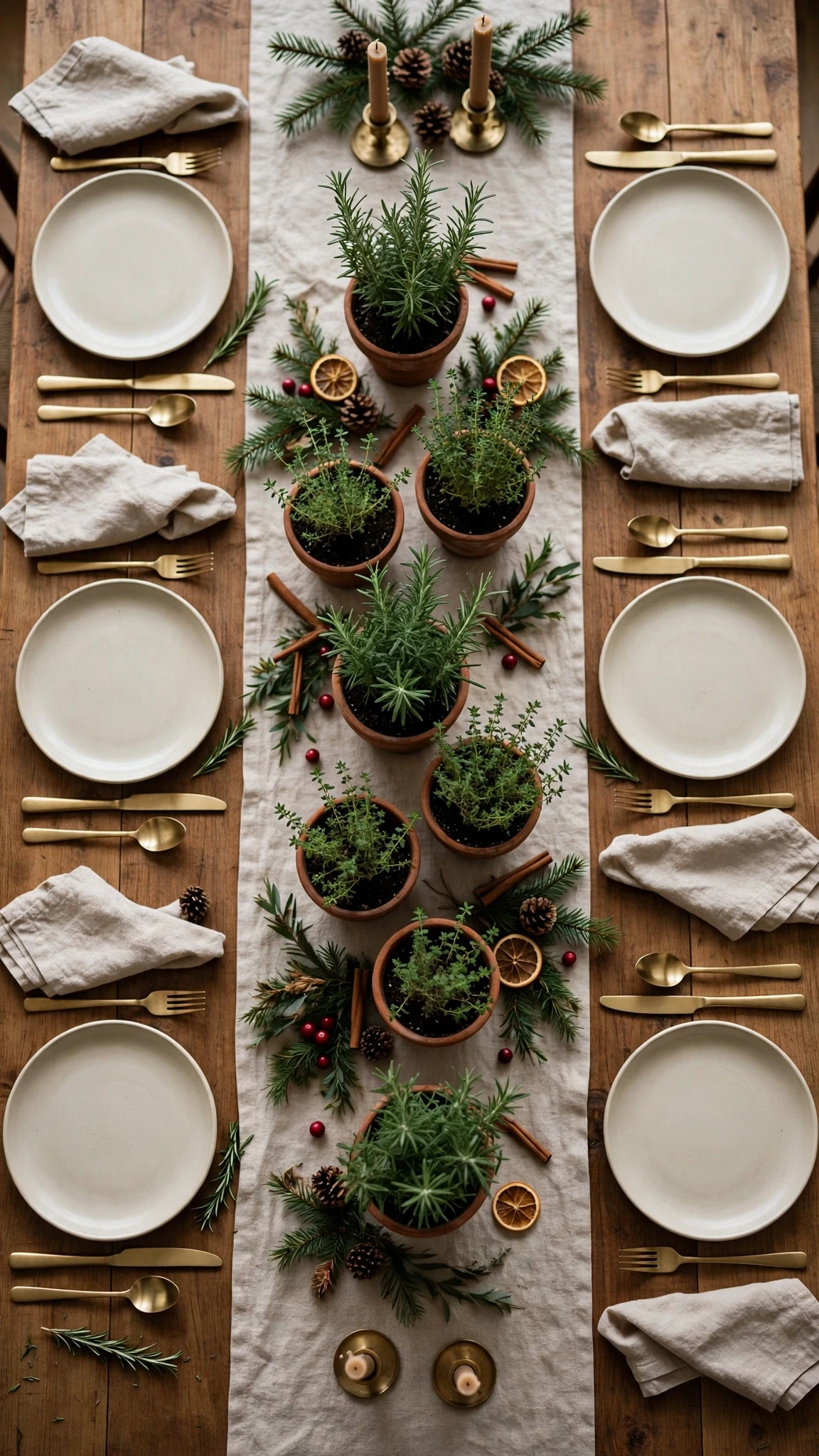
Small potted herbs down the center make a centerpiece guests can touch, smell, and even snip onto their plates, which gives the table a living quality no cut arrangement can match.
Rosemary, thyme, and sage hold their shape indoors, smell wonderful when brushed, and cost little from a garden center or a windowsill.
Group pots in odd numbers, three or five down a long table, and keep them compact so they never rise above eye level. Water them before the meal so soil stays put, and slip plain terracotta pots into slightly larger decorative ones if the plastic nursery pots spoil the look.
At the end of the evening, guests can take a pot home, which turns the centerpiece into a favor as well.
7. A Tiered Stand That Lifts Fruit and Ornaments Off the Table
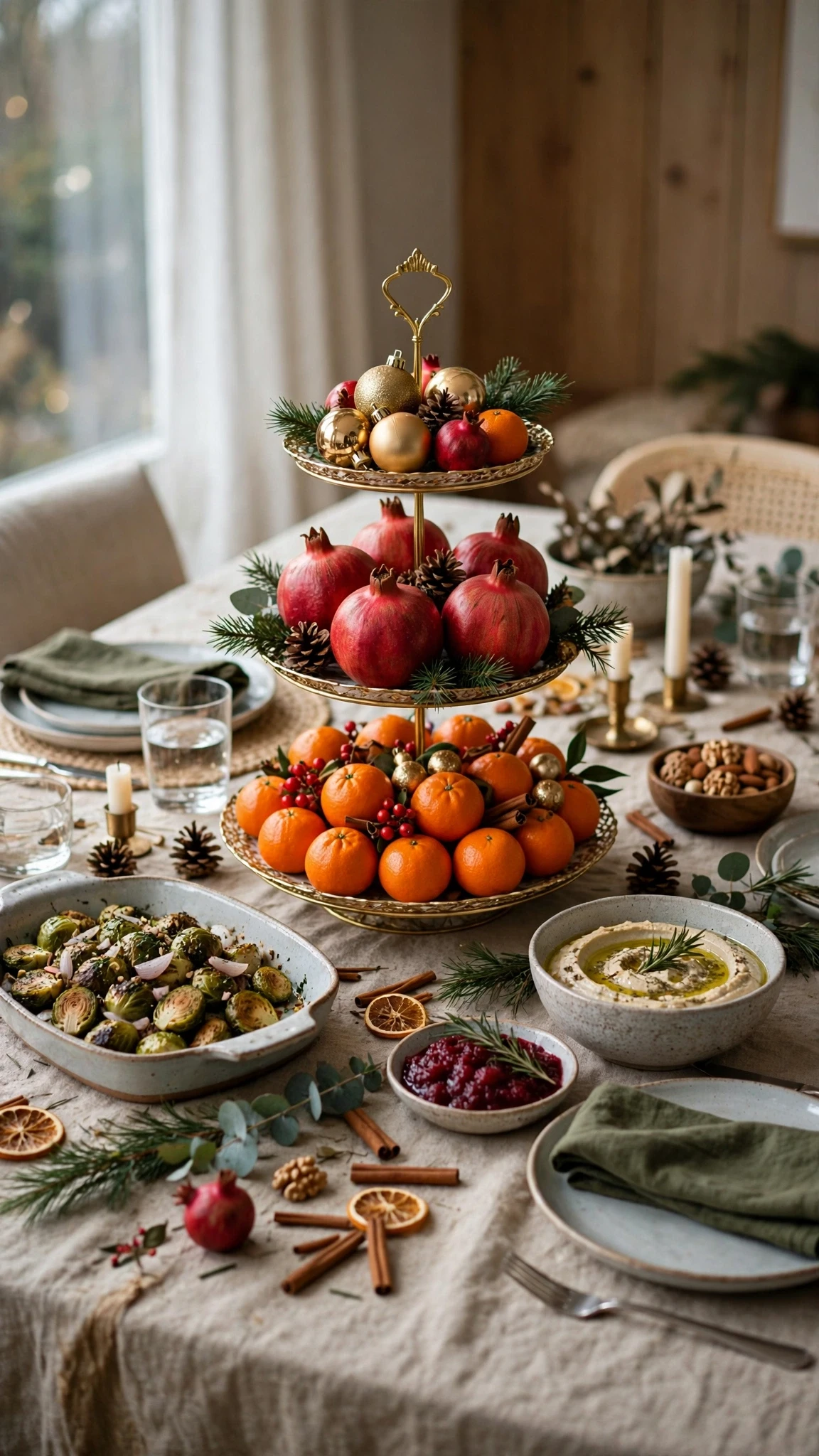
A two or three tier stand lifts fruit, ornaments, and greenery above the surface without taking any extra table footprint, which makes it the best centerpiece for a table that must also hold serving dishes.
The height comes from the stand itself, so the table gains vertical interest while the space between plates stays open.Keep the stand stable and low enough to see past, balancing weight across the tiers so it never tips when someone reaches for a clementine.
Fill it with fruit that holds up indoors, such as pomegranates, clementines, and small apples, mixed with a few shatterproof ornaments and sprigs of greenery. A tiered stand also packs away in minutes, which matters when the table needs clearing for dessert.
8. Napkin Folds That Hold a Small Gift or a Handwritten Note
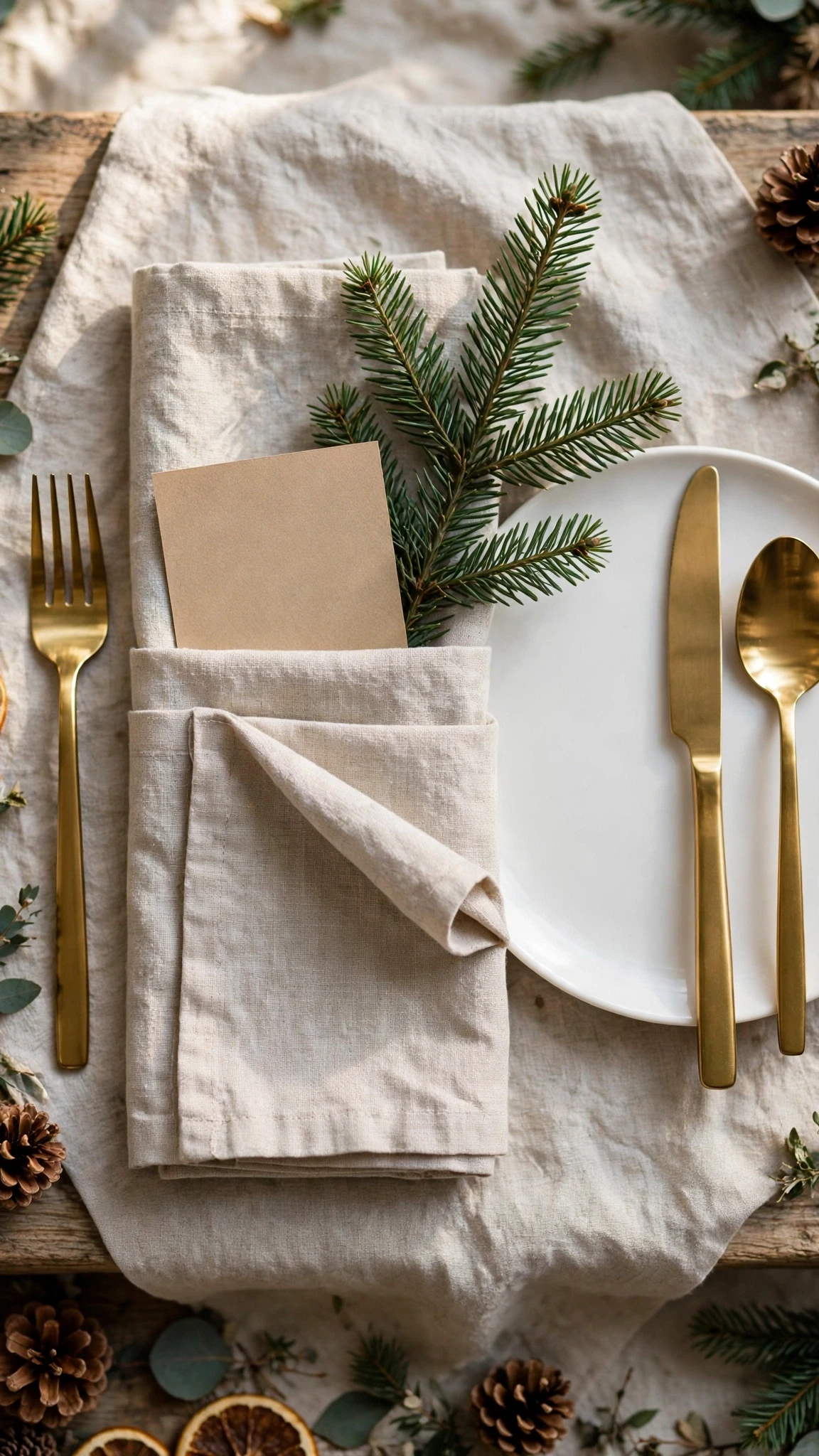
A napkin folded with a pocket turns each place setting into a small surprise, holding a handwritten note, a tiny gift, or a sprig of fir. Guests notice it the moment they sit down, and it costs nothing beyond the napkin itself, which makes it one of the highest-impact details on the whole table.
Use one simple fold that works with any napkin size, a rectangle folded into a pocket, and keep whatever goes inside light so the pocket holds its shape through the meal.
Write notes in advance; one line per guest is plenty, and tuck the sprig or gift in last so nothing wilts or slides out while the table waits. A pocket fold looks generous without demanding any real skill.
9. Personal Place Cards Guests Can Take Home
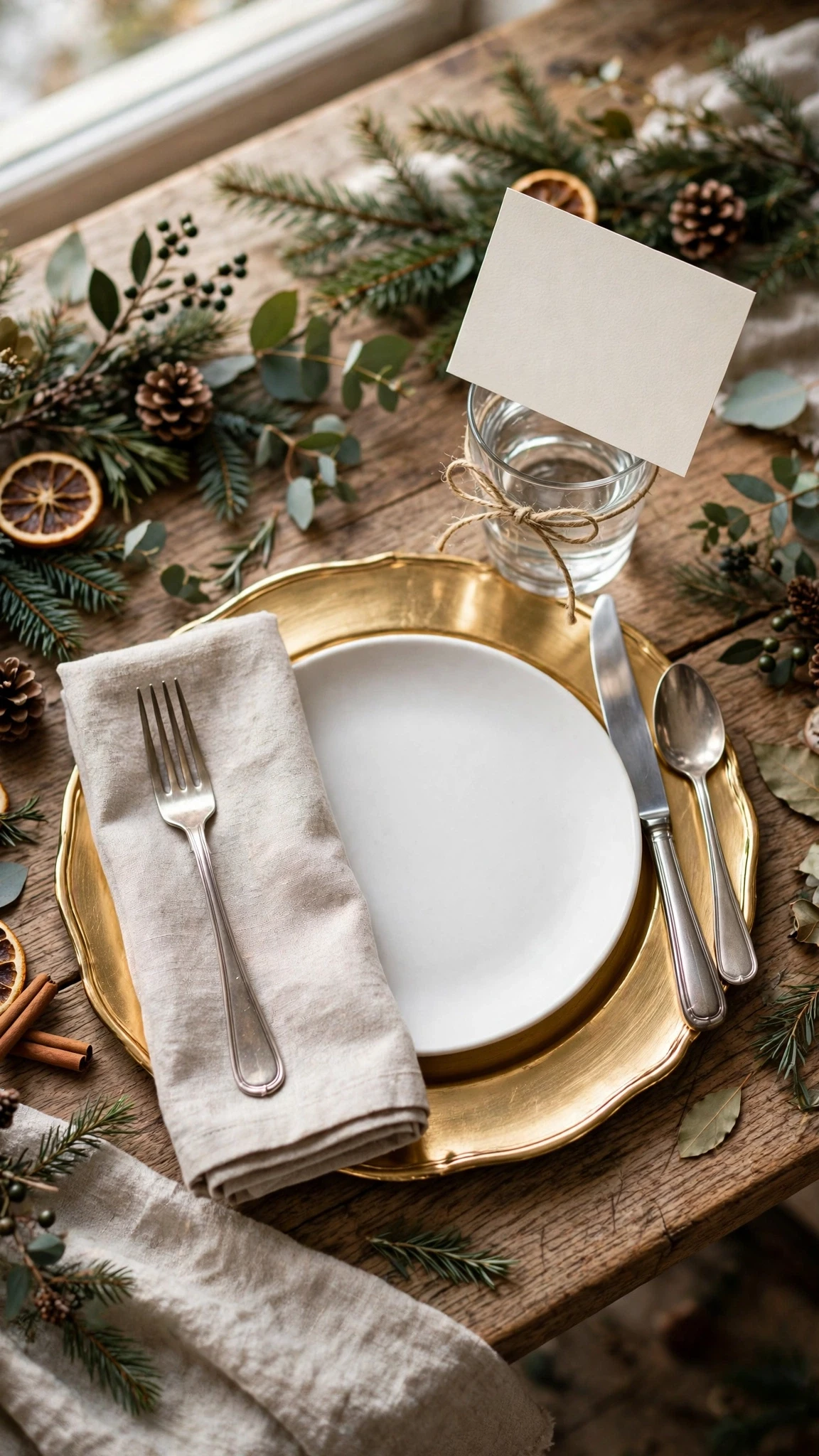
A handwritten name tag at each place does two jobs at once: it settles the seating plan before anyone hovers awkwardly, and it gives each guest something to take home.
Sturdy card, legible handwriting, and a simple tie of twine or ribbon are all it takes, and the cards cost almost nothing.
Place each card where guests see it on arrival, leaning against the water glass or lying flat on the plate, never hidden behind a centerpiece. Write names large enough to read from standing height, and keep the design in the table’s colors so the cards look like part of the setting rather than an office afterthought.
Guests who keep their card remember the evening longer, which is a good return on ten minutes of writing.
10. Mixed Plates and Glasses for a Collected, Not Matched, Table
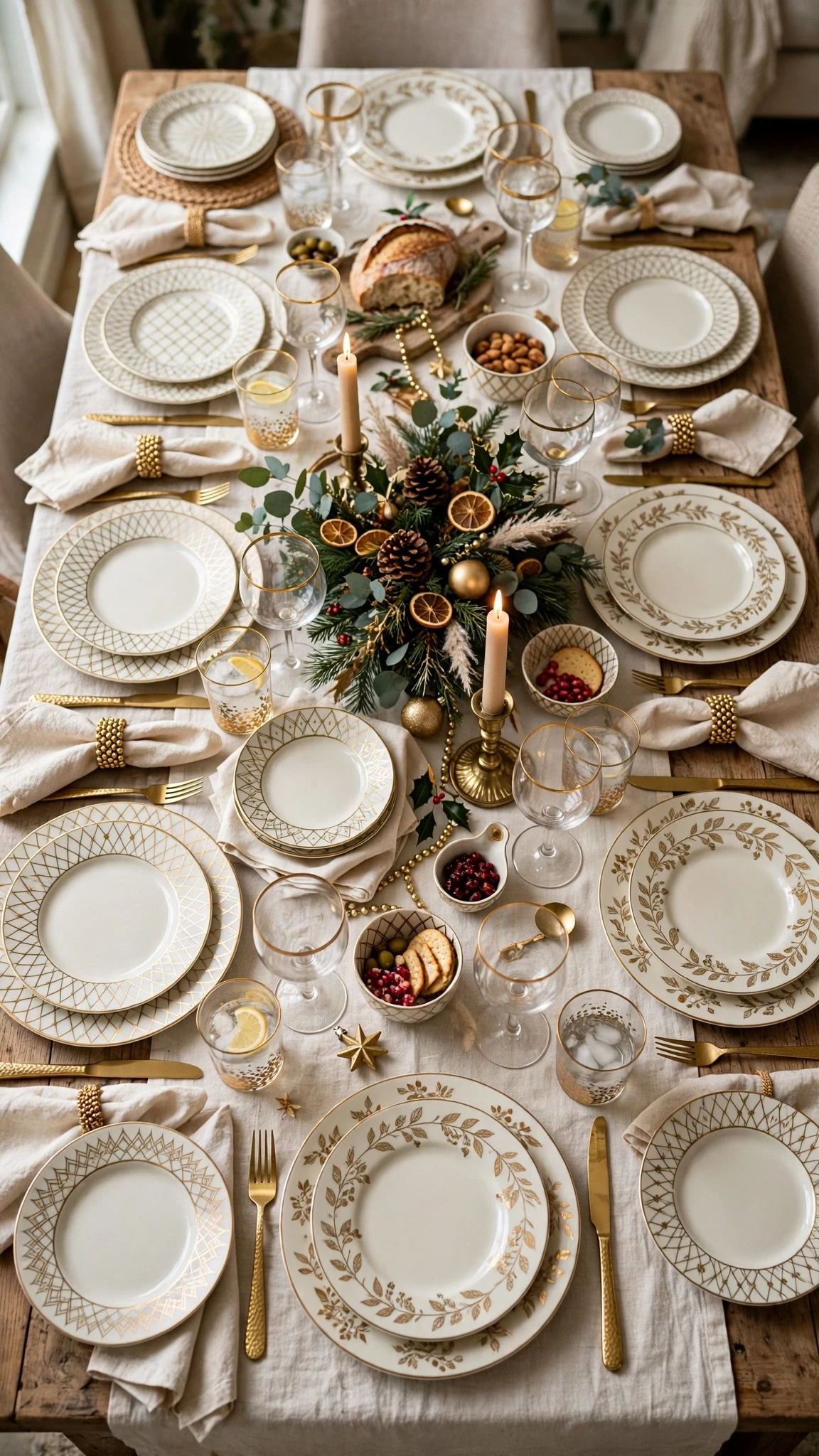
Plates and glasses that coordinate in color without matching exactly give a table the feeling of being gathered over time, which suits Christmas far better than a showroom set. Two plate patterns at most, held together by one unifying color, keep the mix calm, while a single glassware shape across all places stops the table from looking cluttered.
Start with what you own and fill gaps with borrowed or thrifted pieces in the same color family, rather than buying a full new set for one dinner.
White plates calm a busy table, while a colored salad plate on top of a plain dinner plate adds the festive note without a big spend. The test is simple: if the table looks collected rather than chaotic from the doorway, the mix works.
11. A Child-Friendly Place Setting That Still Looks Festive
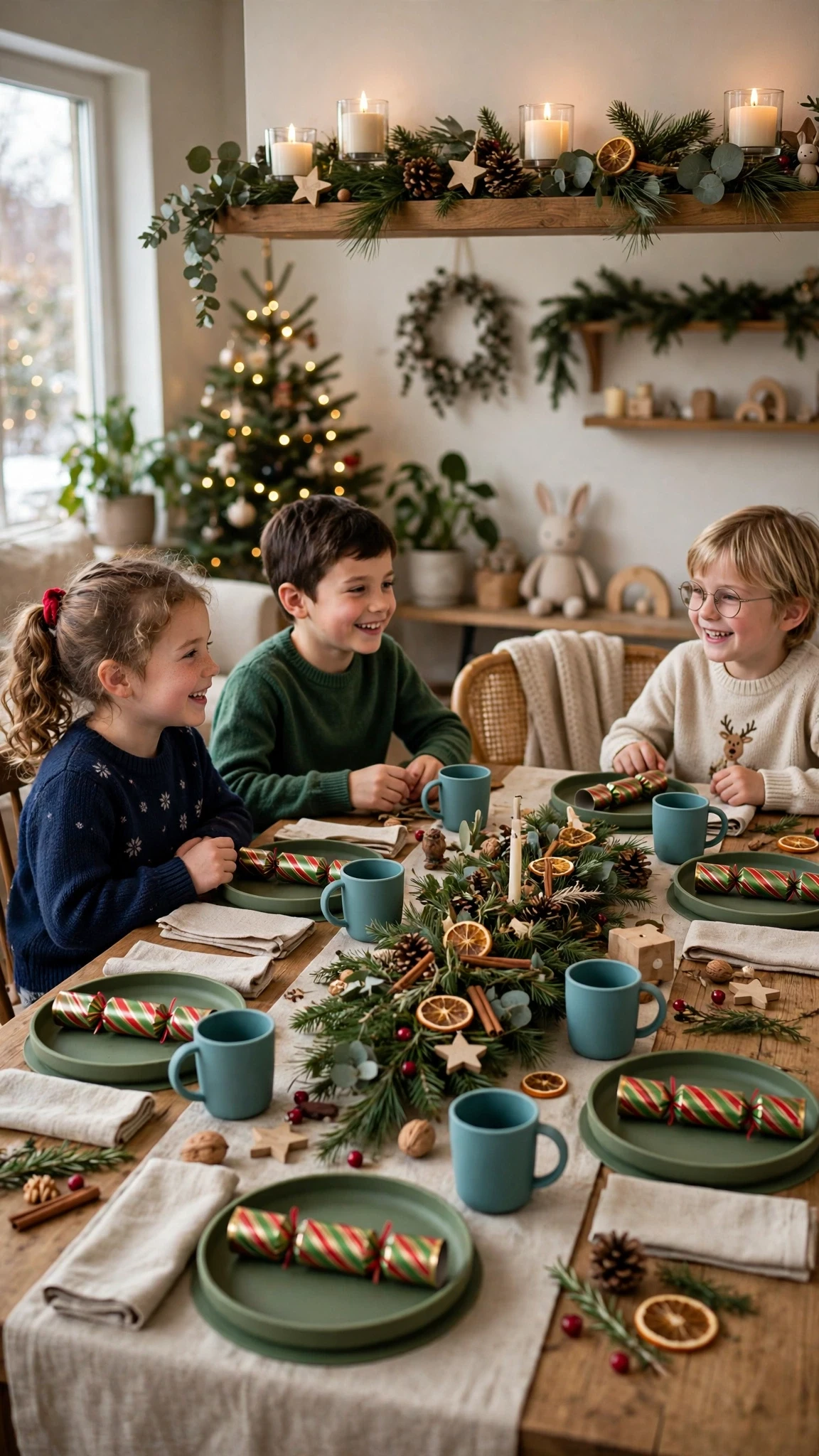
Children deserve a place at the beautiful table, not a separate table with plastic cups while adults eat from the good dishes. A child-friendly setting uses sturdy cups, unbreakable plates, and nothing small enough to swallow, and it keeps candles and glass well out of reach, so younger guests feel included without the adults spending the meal on guard.
Add one small delight at each child’s place, a cracker to pull, a tiny activity, or a wrapped sweet, so children have something to do while adults talk.
Keep their settings near a parent rather than clustered at one end, and skip loose ornaments or berries within grabbing range. A table that welcomes children is a table everyone relaxes at, which is the whole point of the evening.
12. Candlesticks at Three Heights for a Warm, Even Glow
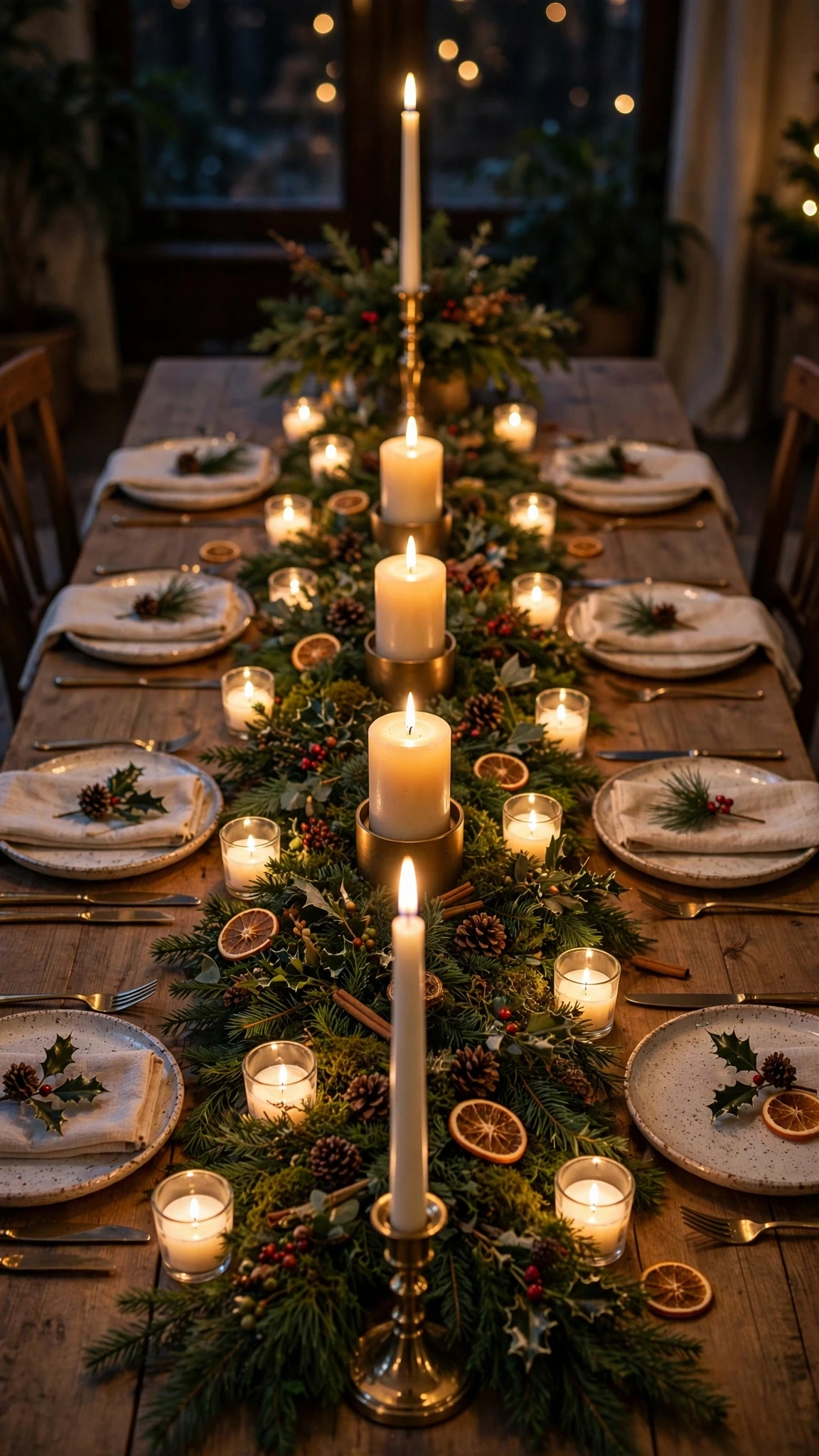
Candlesticks grouped at three heights, low, medium, and tall, spread light across the table the way a single row of matching candles never does. The mix creates depth and shadow, and it lets you place light exactly where faces need it instead of lining flames down the center like a runway.
Use unscented candles near food, since scented ones clash with the meal, and space holders so no flame sits directly above a plate or under a low-hanging decoration.
Trim wicks before lighting, and light from the center outward so you never reach across a lit candle. The three heights to aim for:
- Low votives or tea lights tucked into the greenery for a soft base glow
- Medium pillar candles in glass holders at the center of each cluster
- Tall tapers in sturdy holders at the ends, clear of sleeves and serving dishes
13. Fairy Lights Woven Through Foliage for a Soft Evening Glow
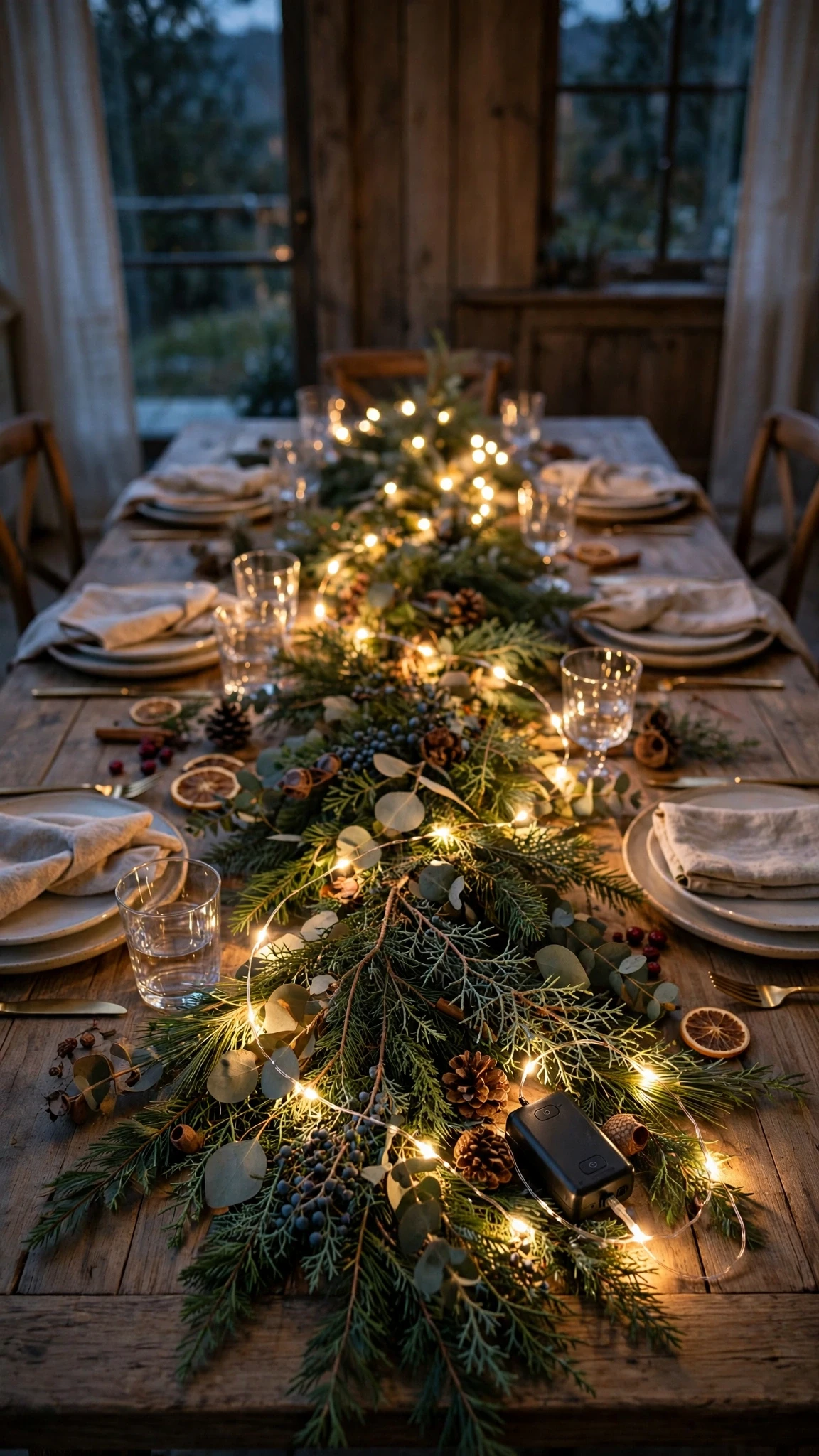
Battery fairy lights woven through the greenery runner give a table its evening glow without a single open flame, which makes them the best choice for long evenings, homes with children or pets, and tables crowded with dry foliage.
Warm white lights flatter food and faces, while cool white ones can make a warm room feel chilly, so check the color before buying.
Hide battery packs under the runner or behind a centerpiece bowl, and test the lights before guests arrive, since a dead strand discovered at dinner is hard to fix gracefully.
Weave lights loosely rather than wrapping them tight, so the greenery still shows, and keep the wire clear of plates and glasses. Fairy lights also stay on after candles are blown out, which stretches the glow into dessert and coffee.
14. Glass Shades Over Every Open Flame
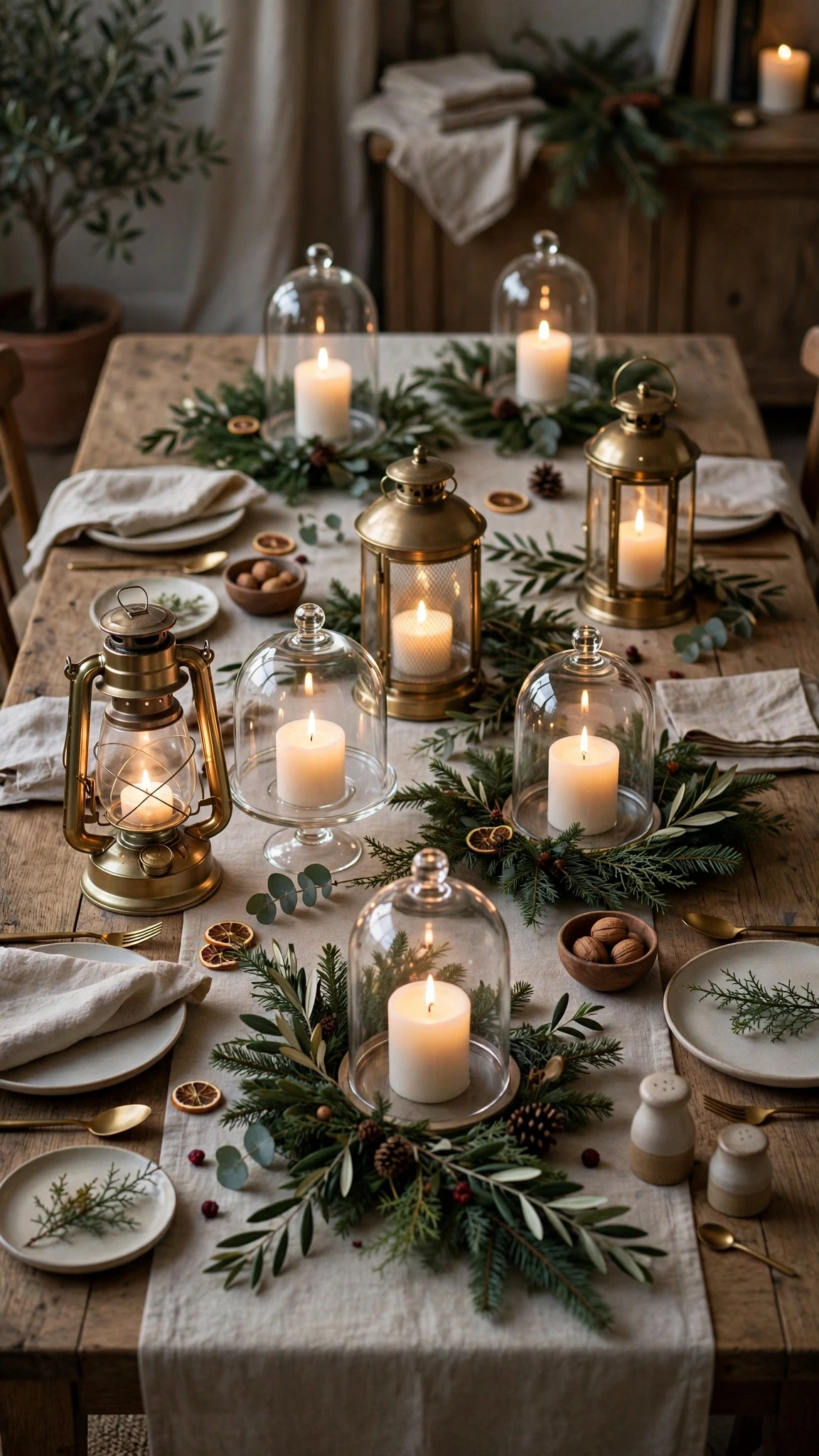
A glass shade, chimney, or lantern over every candle on the table turns safety into a design choice rather than an afterthought. Shades protect flames from drafts, brushing sleeves, curious children, and pets, and they make candlelight look softer and more deliberate, since the glass catches and spreads the glow.
Choose shades tall enough to clear the flame comfortably, and keep them clear of foliage and napkins, since glass gets hot. Never leave a lit table unattended, even with shades in place, and blow out every candle before guests leave the room.
Shades suit every style, from simple glass cylinders on a natural table to brass lanterns on a jewel-tone one, so safety never has to look plain.
15. A Small-Table Plan With Fewer, Taller Pieces
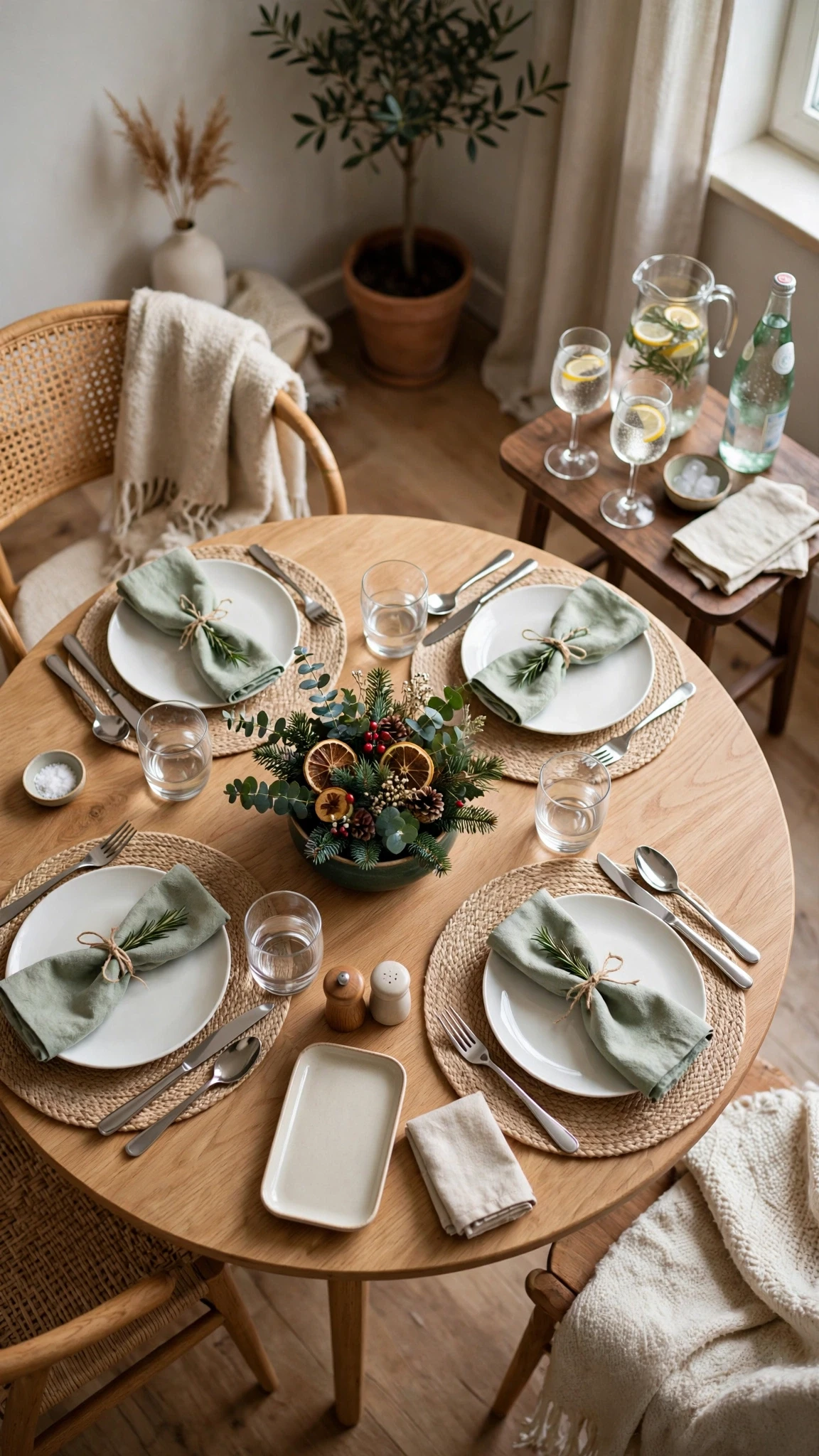
A small or round table needs editing, not shrinking: one compact vertical piece replaces the long runner and sprawling centerpiece, and everything that does not earn its space leaves the table.
A single bowl, a small stand, or one potted herb holds the middle, while serving dishes keep the room they need and guests keep their elbow room.
Measure the serving space before decorating, not after, and move drinks to a side table or a nearby counter so the table holds only food, plates, and one centerpiece.
Keep place settings simple, skip chargers if they crowd the plates, and choose one vertical accent instead of spreading small decorations along the whole surface. A small table set this way feels generous rather than cramped, because nothing on it fights for room.
16. A Budget Table Built From What You Already Own
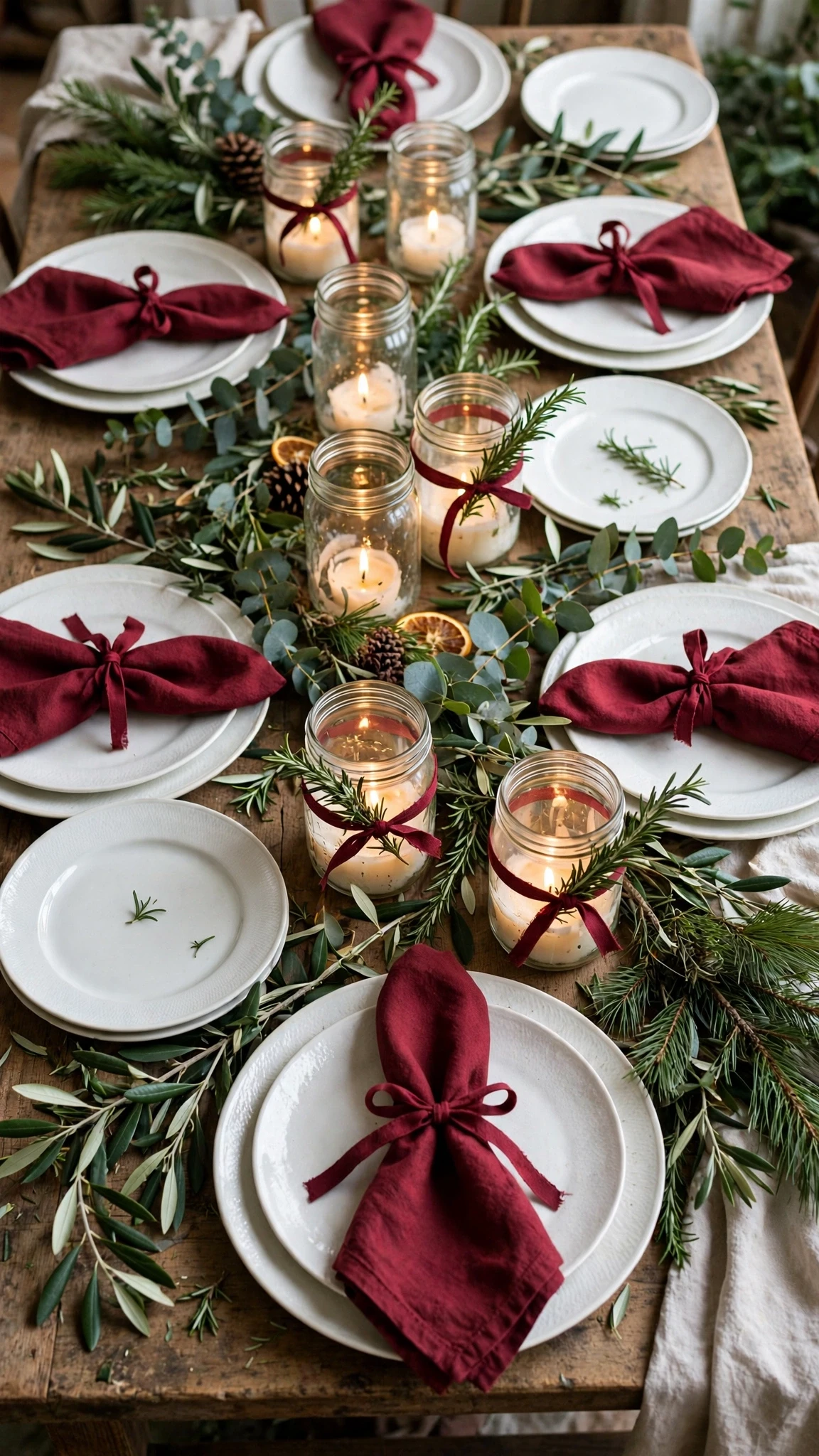
A festive table does not require a shopping trip. Everyday white plates, jars from the cupboard, candles you already own, and greenery cut from the garden or a neighbor’s hedge can carry the whole look, as long as one strong color ties them together. The audit comes first: open every cupboard before buying anything, because most hosts already own a Christmas table in pieces.
Spend only where the eye actually lands, which means candles and fresh foliage first, since they make the biggest visual difference for the least money.
Use jars as candle holders, tie napkins with ribbon from the wrapping drawer, and let one color, burgundy, deep green, or gold, run through napkins, ribbon, and a few ornaments. A table built this way looks personal rather than cheap, because every piece on it has a reason to be there.
17. A Jewel-Tone Table in Burgundy, Emerald, and Gold
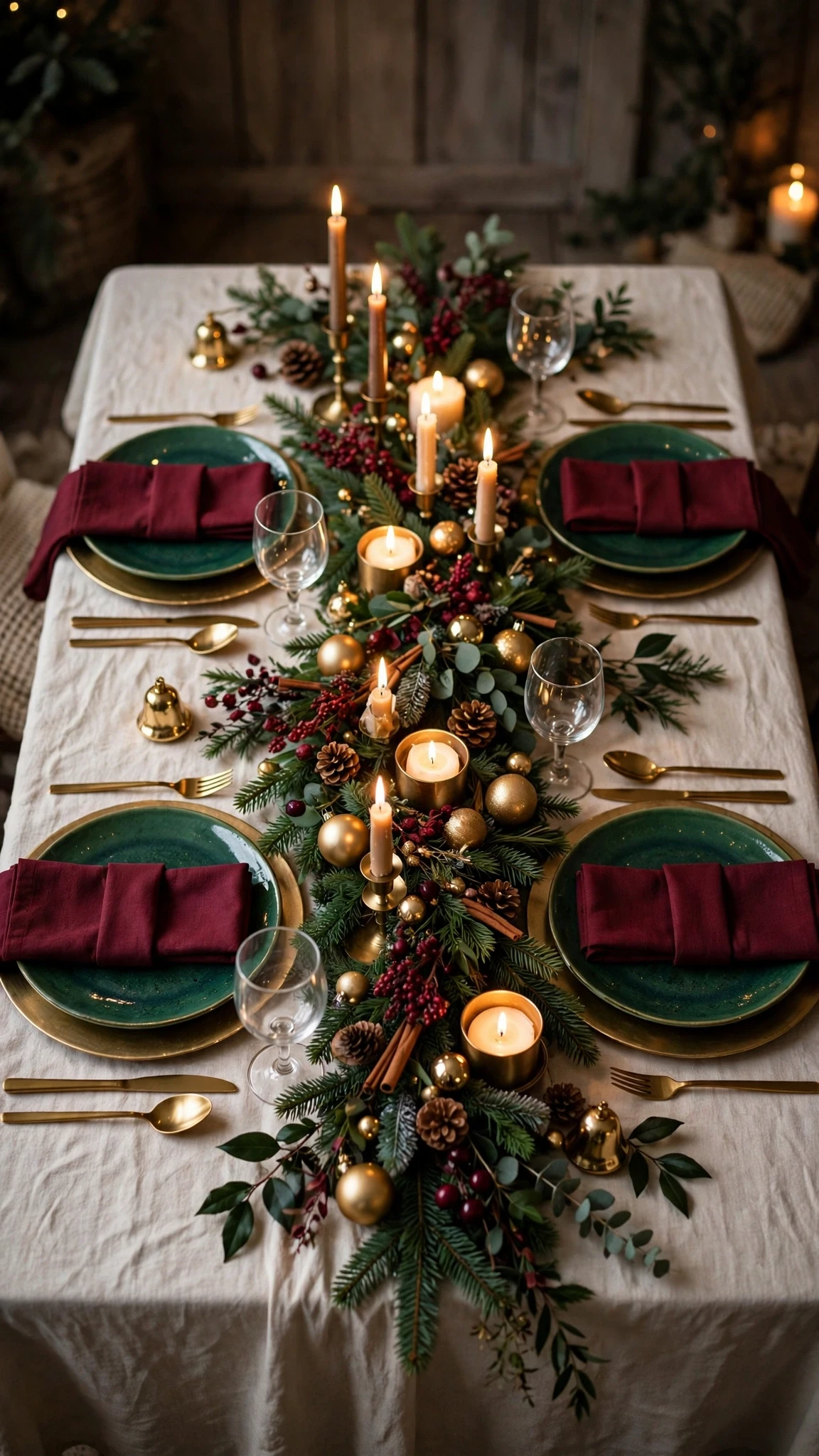
Deep jewel colors carried through napkins, plates, and candlelight give a table a rich, warm glow that pale palettes cannot match. Burgundy napkins, emerald plates or glasses, and gold flatware form the core trio, and the trick is restraint: two jewel tones plus gold is plenty, while a third jewel tone tips the table from rich into busy.
Keep the tablecloth neutral, cream or soft ivory, so the colors glow against it instead of competing with it, and use warm white light only, since cool light dulls burgundy and emerald.
Gold chargers or gold-rimmed glasses carry the metallic note, and a few sprigs of greenery stop the palette from feeling heavy. A jewel-tone table suits evening dinners best, when candlelight does most of the work.
18. A Natural, Neutral Table With Wood, Linen, and Greenery
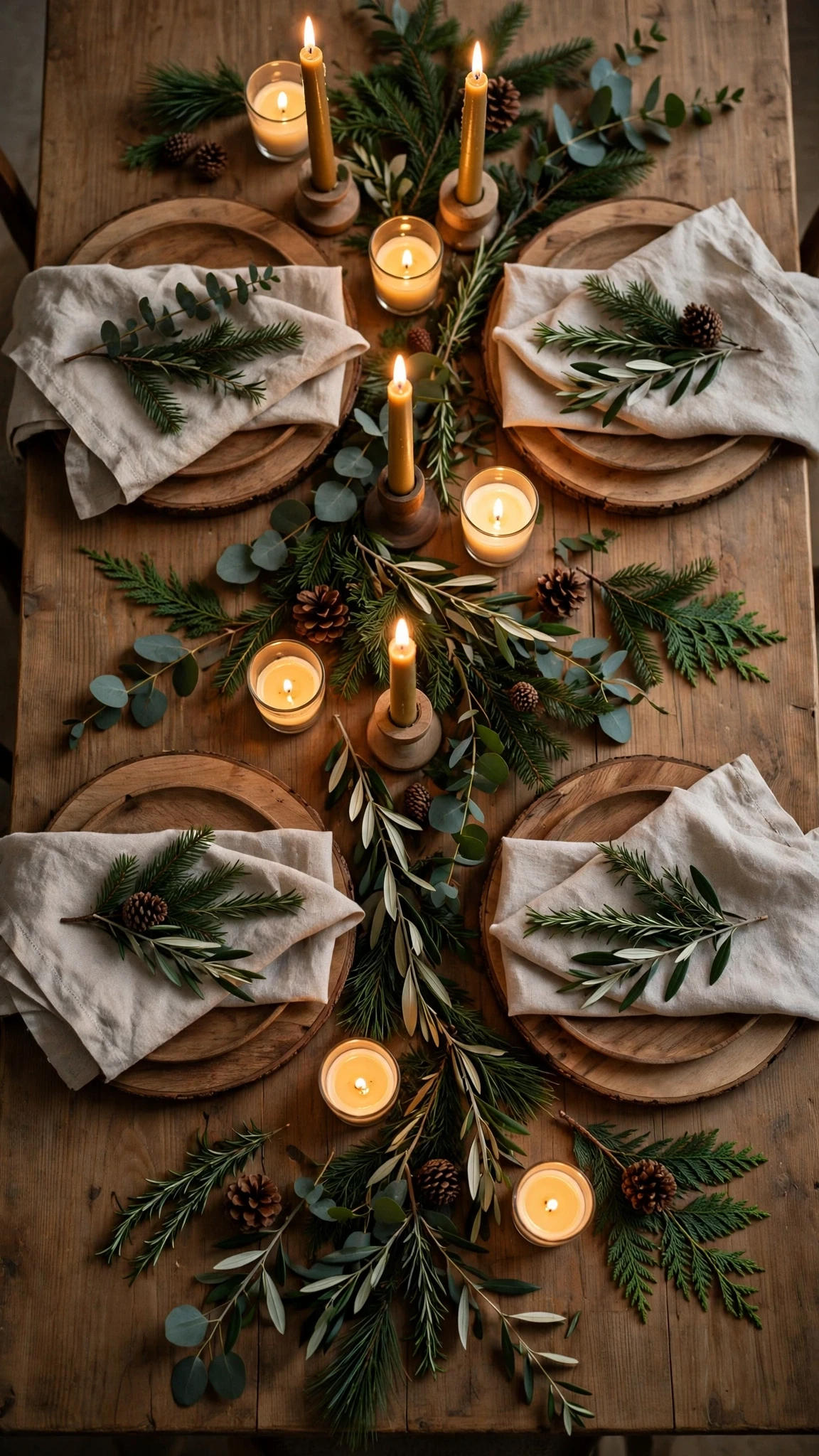
A calm table built from wood, undyed linen, and fresh greenery uses texture in place of color, which suits hosts who find bright Christmas palettes tiring.
Wooden boards as chargers, linen napkins without rings, and greenery as the only decoration create a table that feels quiet and grounded, and the lack of color makes the food itself the brightest thing on the table.
Keep the palette to wood tones, cream, and green, and let candlelight supply the warmth that color usually provides. Greenery does the decorative work here, so choose it well: a mix of fir and eucalyptus beats a single flat garland, and a few pinecones add shape without adding color.
A natural table also ages gracefully through the evening, since nothing on it can clash with a dish someone brings.
19. Small Take-Home Favors That End the Meal on a Sweet Note
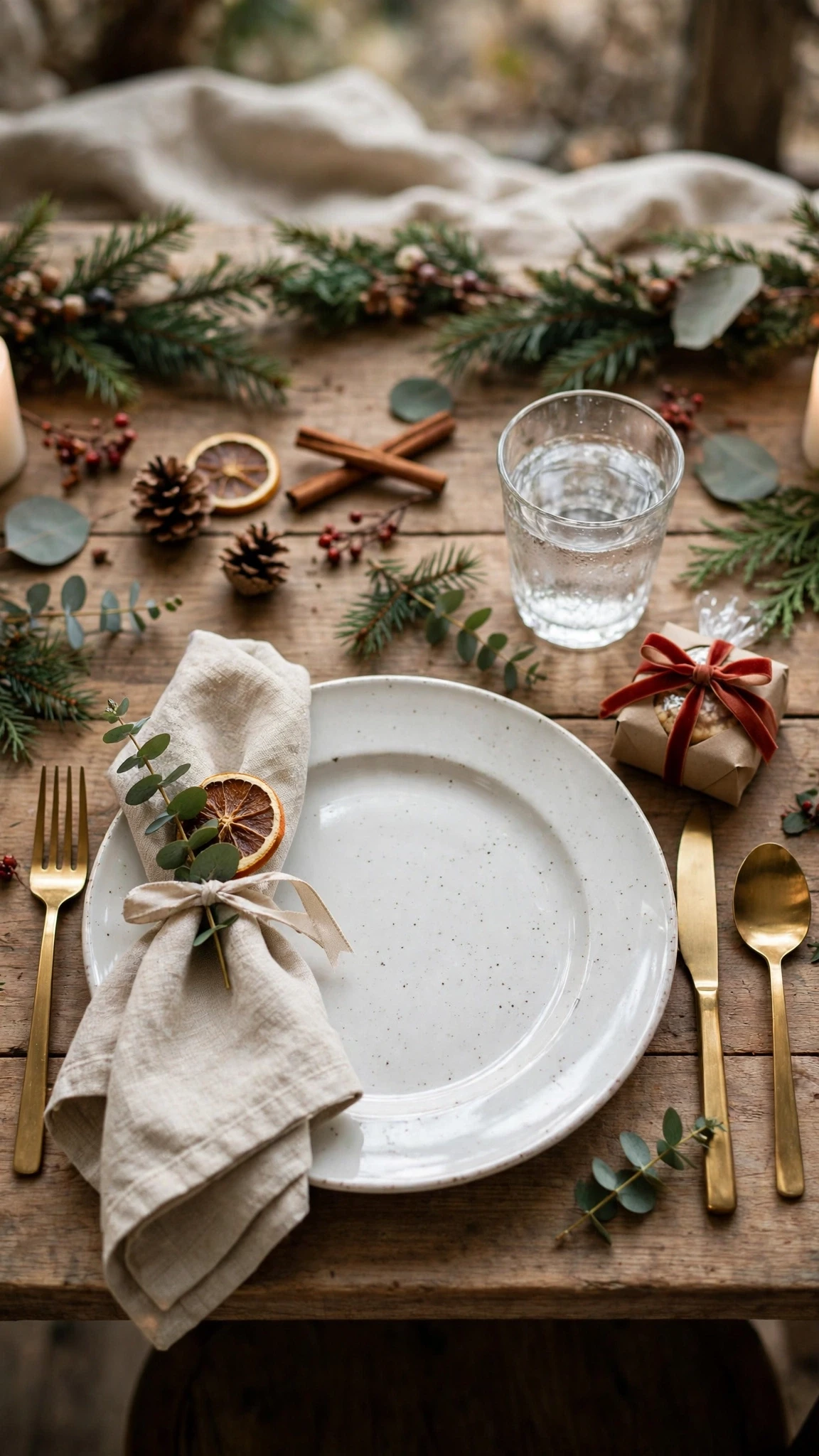
A tiny wrapped treat or ornament at each place gives the meal a last impression, planned as part of the setting rather than an afterthought.
Guests remember the favor long after the plates are cleared, and it costs little: a wrapped chocolate, a small ornament, or a packet of seeds in the table’s colors all work.
Keep favors flat or small so they never crowd the plate, and prepare them days ahead so the day of the meal stays calm. Wrap them in the table’s colors, burgundy ribbon on a jewel-tone table or twine on a natural one, and place them where guests see them when they sit down, not buried under a napkin. A favor is the table’s goodbye, so make it as considered as its hello.
Keeping Guests Comfortable: Heights, Spacing, and Serving Room
Guest comfort is the test every table choice should pass. Keep centerpieces below eye level when seated, leave about two feet of table edge per guest so elbows do not collide, and make sure every guest can reach a serving dish or have one passed without standing. Tall, wide, or sprawling decorations fail this test no matter how beautiful they look in a photograph.
Serving dishes need a home of their own, either a clear stretch in the middle of the table or a side table within arm’s reach, and drinks belong where they cannot be knocked over by a passing platter. Leave a little empty space on the table on purpose; a table with breathing room feels generous, while a table packed edge to edge feels stressful even before the food arrives.
FAQS
How do you set a Christmas table step by step?
Start with the tablecloth and runner, then add chargers and plates, then the centerpiece, then napkins and place cards, and finish with candles and glasses last. Keep the centerpiece low, leave room for serving dishes, and set glasses to the right of each plate. Do the base layer a day early and add greenery and candles on the day.
What should be on a Christmas dinner table?
A Christmas dinner table needs a cloth or runner, a charger and plate at each place, cutlery, a water glass and a wine glass, a cloth napkin, and one low centerpiece. Add place cards for assigned seats, plus candles or fairy lights for warmth. Leave clear space for serving dishes, and keep tall or scented items away from the food.
How do you decorate a Christmas table on a budget?
Start with what you already own: everyday plates, jars for candle holders, and greenery cut from the garden. Choose one strong color, such as burgundy or deep green, and carry it through napkins and ribbon. Borrow chargers or a runner, and spend only on candles and fresh foliage, which make the biggest visual difference for the least money.
How do you set a Christmas table for a small space?
For a small table, skip the long runner and use one compact centerpiece, such as a single bowl or a small stand, so serving dishes still fit. Move drinks to a side table, keep place settings simple, and choose one vertical accent instead of spreading decor along the whole table. Measure the serving space before decorating, not after.
What color scheme works best for a Christmas table?
The best Christmas table color scheme is two main colors plus one metallic, such as deep green and ivory with gold, or burgundy and cream with brass. Two colors keep the table calm and cohesive, while the metallic adds warmth and light. Neutral tablecloths let jewel tones or natural greens glow, and warm white lighting flatters almost every palette.
Conclusion
A Christmas table setting does not need to be grand to feel special. Choose one style direction, jewel tones or natural neutrals, keep the centerpiece low, and build the table in layers, checking each choice against guest comfort. The tables people remember are rarely the most elaborate ones; they are the ones where conversation flowed, food was easy to reach, and nobody worried about knocking something over.
Start with the base layer a day early, add greenery and candles on the day, and leave yourself time to sit down before guests arrive. A table built for conversation beats a table built only for photographs, and the best compliment a host can get is guests lingering long after the plates are cleared.