
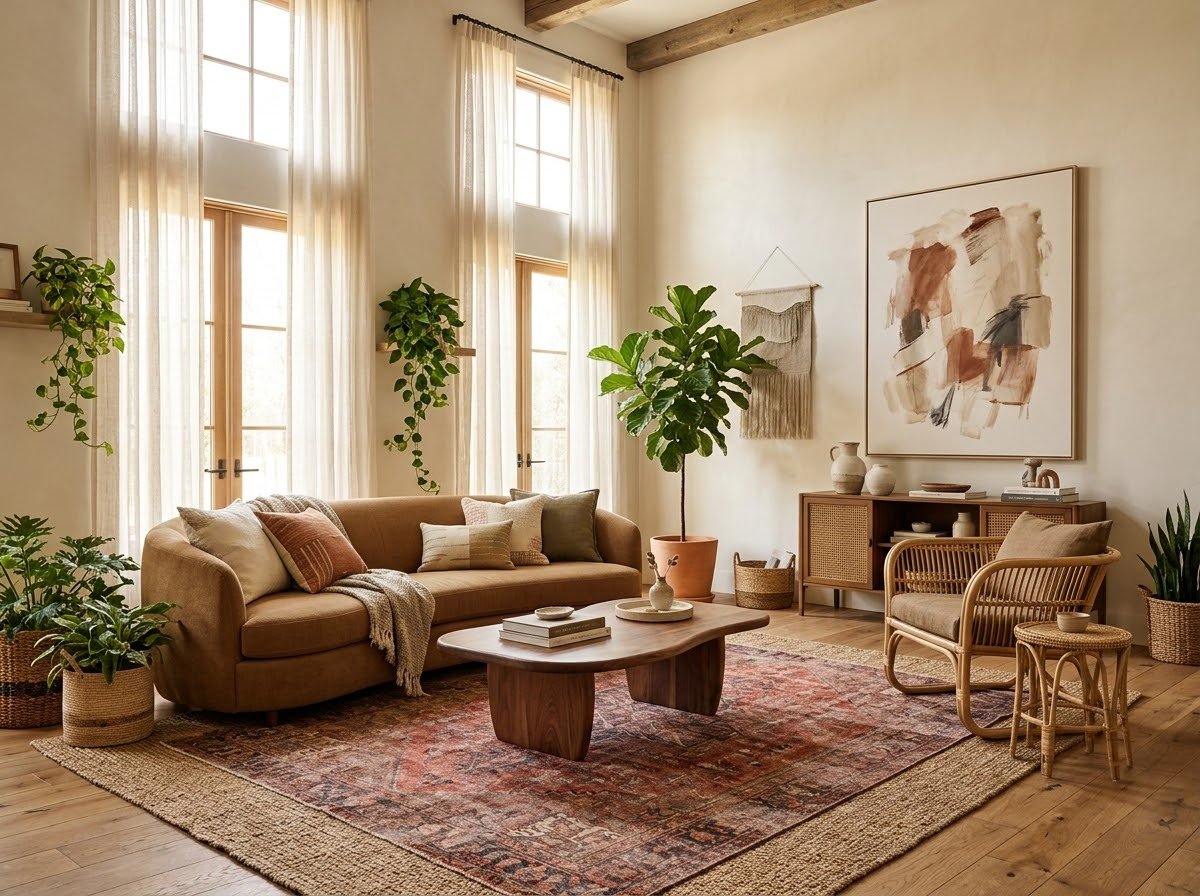
20 Boho Living Room Ideas for a Layered, Warm, and Collected Home
A boho living room feels inviting because it brings together natural materials, layered textiles, collected decor, and personal details without looking overly coordinated. From vintage rugs and rattan furniture to colorful cushions and leafy plants, bohemian style gives you plenty of room to express your personality.
The secret is knowing how to combine these elements without making the space feel crowded. You can create a relaxed boho living room in a small apartment, a rental home, or a spacious family room by choosing the right colors, balancing patterns, and paying attention to furniture placement.
These 20 boho living room ideas cover everything from warm color palettes and layered rugs to modern, moody, and budget-friendly styles. Use them as inspiration to create a room that feels comfortable, collected, and genuinely yours.
Boho Living Room Ideas That Start With a Warm Foundation
1. Build a Warm Neutral Base With Three Accent Colors
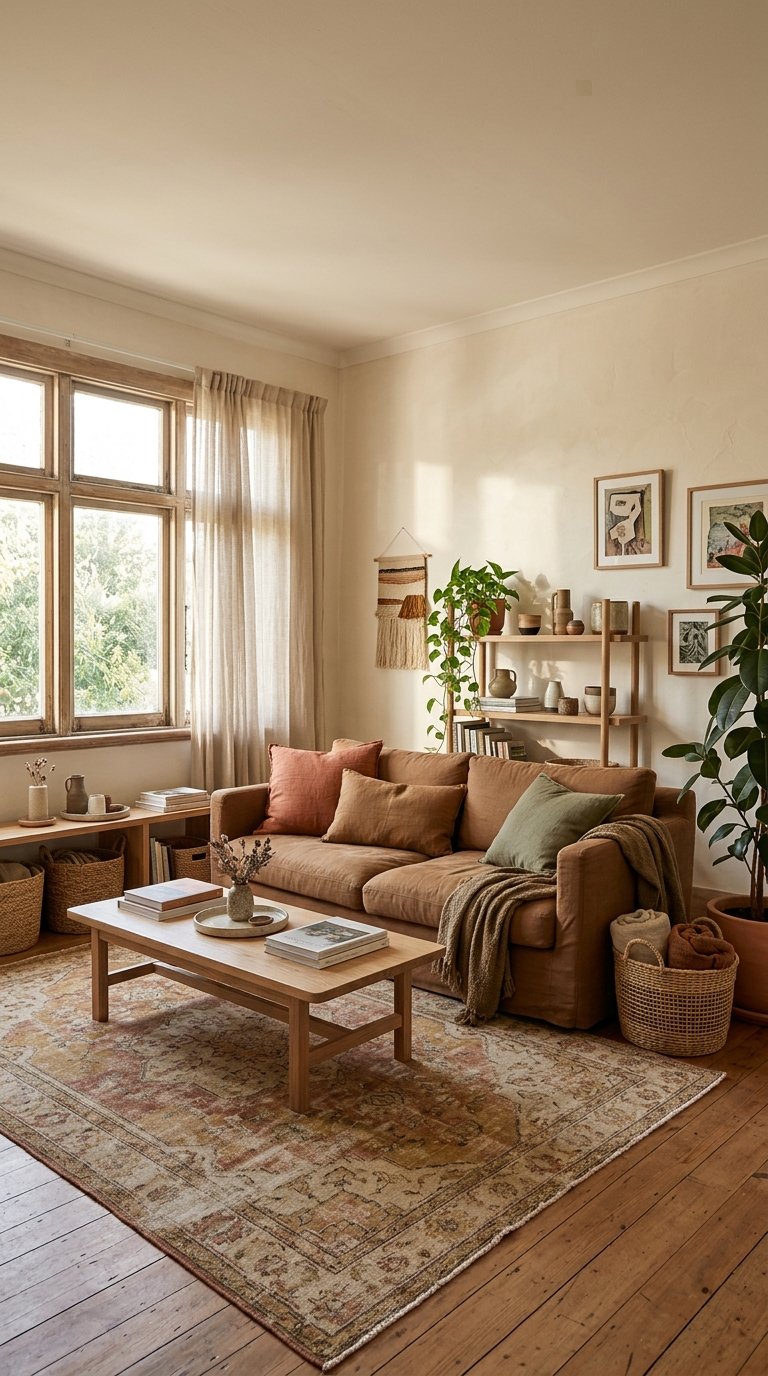
A warm foundation makes it easier to combine different bohemian textures and decorative pieces. Start with a main color such as warm white, sand, oatmeal, or soft taupe, then introduce two or three accent colors to give the room personality.
Terracotta, olive green, rust, dusty pink, and mustard yellow work particularly well with natural wood and woven materials. You do not need to use every color equally. Choose one dominant accent, repeat a second color through smaller accessories, and let the third appear in occasional details.
For example, a terracotta cushion, an olive-green throw, and a patterned rust-colored rug can bring an otherwise simple living room to life. If your walls are already colorful, keep the larger furniture pieces calmer so the room still feels balanced.
2. Layer a Vintage Kilim Rug Over a Natural Jute Rug

Layering rugs is an easy way to add depth and character to a bohemian living room. A large jute or sisal rug creates a natural foundation, while a smaller vintage kilim introduces color, pattern, and a collected look.
Choose rugs that complement each other rather than compete. A plain woven base works well with a kilim featuring geometric motifs, faded reds, muted blues, or earthy orange tones. Make sure the top rug is large enough to feel intentional instead of looking like a small mat floating in the middle of the room.
Place the layered rugs beneath the coffee table and, where the layout allows, extend them toward the front legs of the sofa and chairs. A suitable rug pad can help reduce slipping, although the right choice depends on the floor and rug materials. In a small room, a single generously sized patterned rug may be more practical than multiple layers.
3. Choose a Low, Textured Sofa for a Relaxed Look
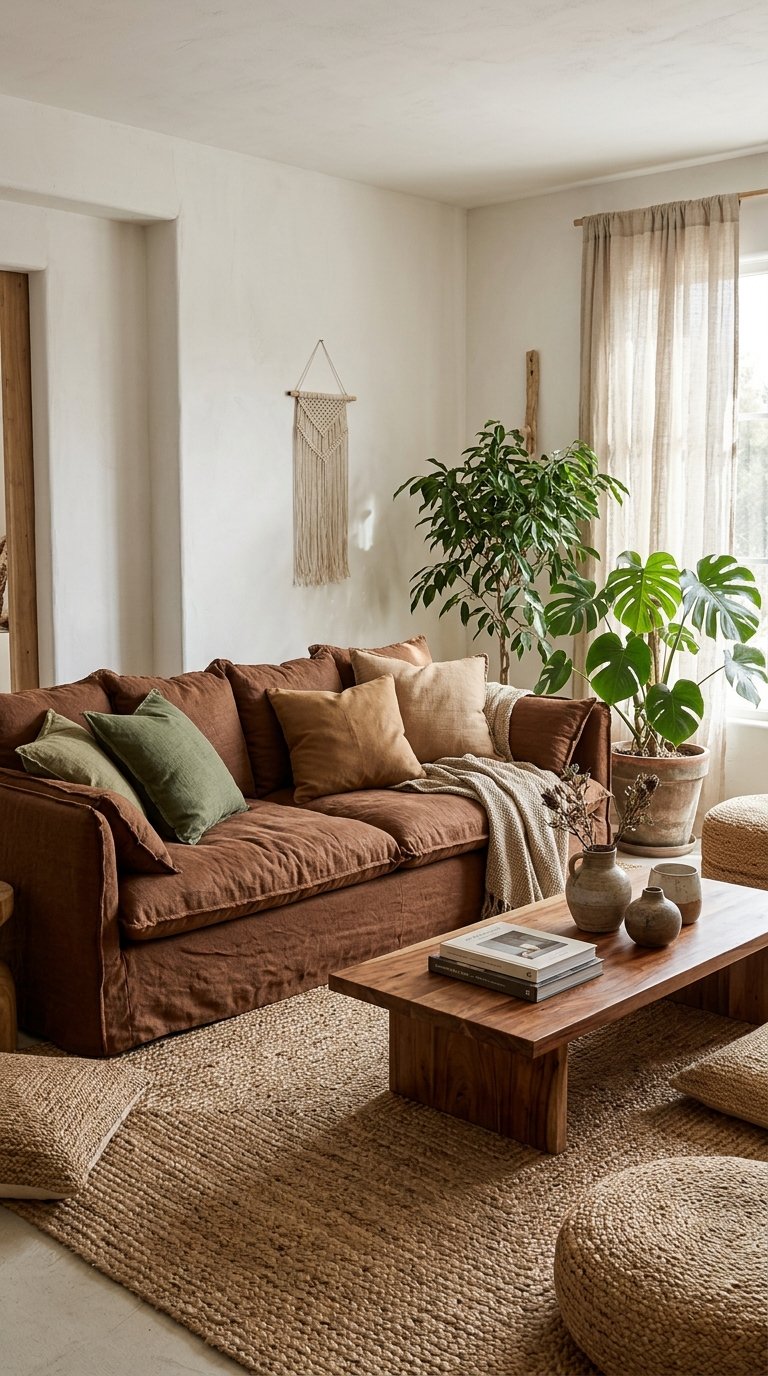
A low-profile sofa can give a bohemian living room a relaxed, lounge-like atmosphere. Look for a design with simple lines, comfortable cushions, and tactile upholstery such as cotton, linen blends, or textured fabric. A low sofa pairs naturally with woven rugs, wooden coffee tables, floor cushions, and oversized pillows.
Color depends on the mood you want to create. Rust, moss green, caramel, muted plum, and tobacco brown can make the sofa a statement piece, while oatmeal or warm gray gives colorful accessories more room to stand out. If you have children or pets, consider a durable, easy-to-clean upholstery fabric rather than choosing based on appearance alone.
Keep the surrounding furniture proportional to the sofa. A very low seat may look awkward beside a tall, bulky coffee table, so compare the heights before buying. If replacing your sofa is not practical, textured throws and carefully selected cushions can help give your existing furniture a more bohemian feel.
4. Add a Natural-Material Coffee Table
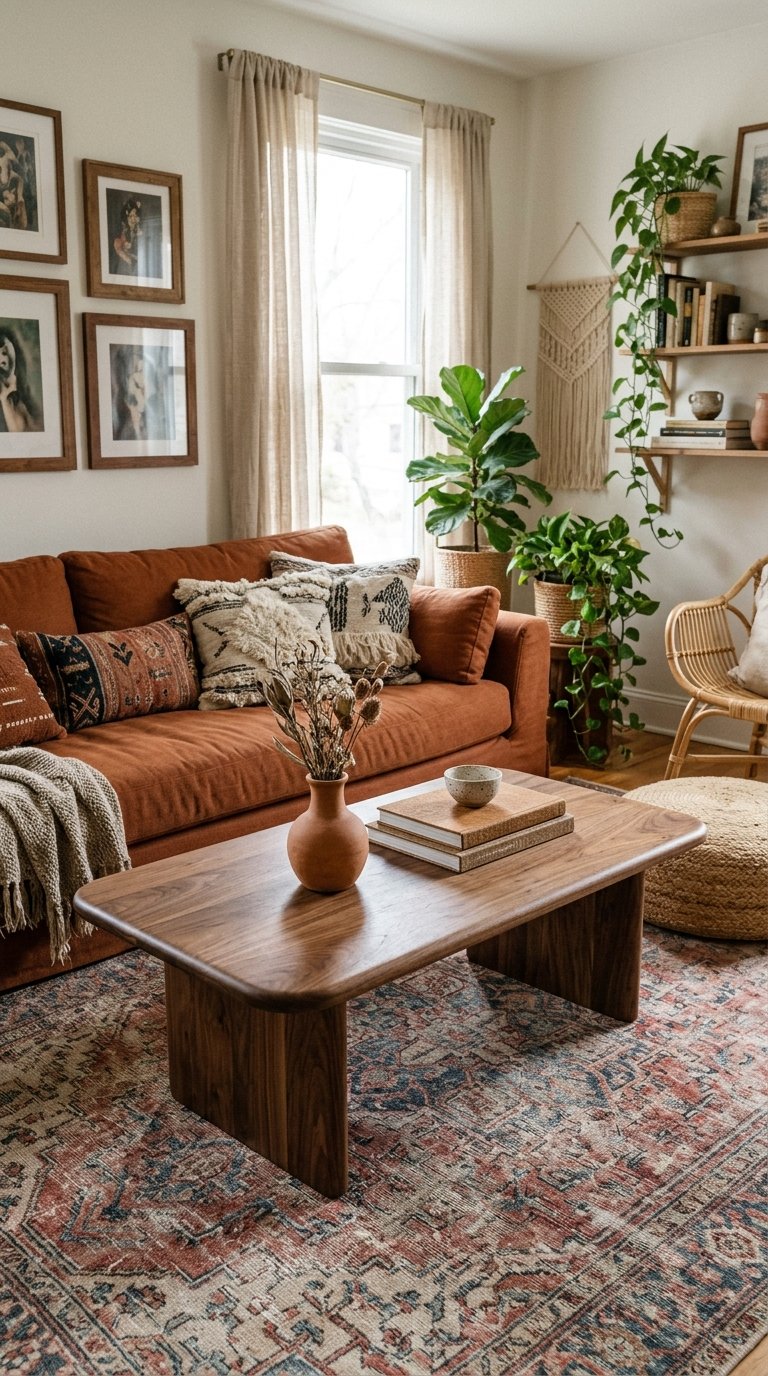
A coffee table made from wood, rattan, bamboo, or another natural material helps connect the different textures in a boho living room. A solid wood table creates a grounded, substantial look, while a woven or open-frame design feels lighter and can suit smaller rooms.
Choose a shape that works with your layout. A round table can make movement easier around a compact seating area, while a rectangular table may fit better in front of a longer sofa. Leave enough room to walk around it comfortably and reach drinks or books without stretching across the seating area.
Style the surface with a small tray, a ceramic vase, a few books, or a handmade bowl. Keep some of the tabletop visible so the natural finish remains part of the design. If your sofa, rug, and cushions already have busy patterns, a simple wooden coffee table can provide a welcome visual pause.
Layering Texture, Pattern, and Color Without the Chaos
5. Mix Three Patterns Around One Shared Color
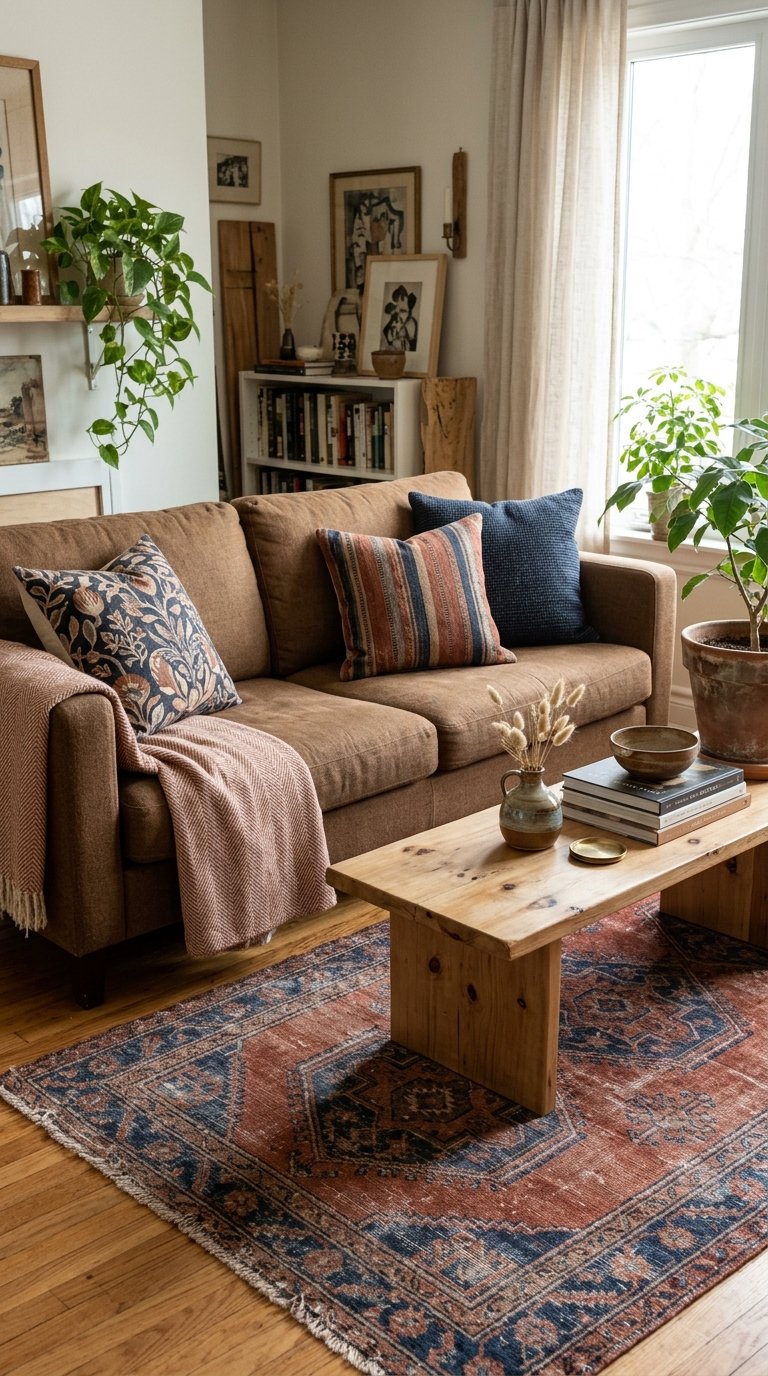
Pattern mixing gives a bohemian living room its collected character, but the room feels more cohesive when the patterns share a visual connection. One useful approach is to combine three different pattern types, such as geometric, botanical, and small-scale stripes, while repeating a color across them.
For instance, a patterned rug might feature rust and navy, the cushions could include a rust botanical print, and a throw could introduce a subtle navy stripe. The designs remain different, but the repeated colors help them work together. Varying the scale also prevents the patterns from competing for attention.
Begin with one patterned item you genuinely like, then select the remaining pieces around it. If the rug is visually busy, choose smaller or quieter prints for the cushions. You can always introduce a solid-colored throw to create breathing room between patterns.
6. Create a Lounge Corner With Floor Cushions and Poufs

Floor cushions and poufs make a boho living room feel informal and flexible. They can provide extra seating for guests, create a comfortable reading corner, or give a large room a relaxed conversation area without adding another full-size chair.
Choose cushions in different textures but keep their colors connected to the rest of the room. A leather pouf, a woven floor cushion, and a rust-colored cotton pillow can look interesting together because each brings a different material into the mix. A low tray nearby can turn the corner into a useful place for tea, books, or a casual evening with friends.
In a small living room, keep floor seating movable and avoid placing it in the main walking path. Store extra cushions in a large basket when they are not needed. If you have young children, choose sturdy pieces without sharp edges or small decorative parts that could become loose.
7. Build a Gallery Wall With Art, Woven Pieces, and Personal Finds

A boho gallery wall can combine framed artwork, photographs, small woven hangings, and objects collected during travels. This approach gives the room personality because the display reflects individual interests instead of looking like a matching set purchased all at once.
Choose a loose color theme to connect the pieces. Warm wood frames, black accents, muted landscapes, botanical illustrations, and woven textures can work together without being identical. Lay the arrangement on the floor first, or cut paper templates to test the layout before putting holes in the wall.
Mixing shapes and sizes creates a more relaxed composition, but keep enough space between pieces for each one to be seen. If you rent your home, use suitable removable hanging products only after checking their weight limits and compatibility with your wall surface. Lightweight woven pieces may be easier to hang than heavy decorative objects.
8. Make One Rattan or Cane Piece the Star
Rattan and cane furniture bring visible texture to a living room without requiring lots of small accessories. A cane-front cabinet, a rattan accent chair, or a woven-front sideboard can become the main feature in a room with otherwise simple furniture.
Let the piece stand out by giving it enough space around it. A cane cabinet looks especially effective against a colored wall or beside a plant with broad leaves. You can add a ceramic lamp or a few books on top, but avoid covering every surface with woven baskets and matching accessories.
If your room already contains a jute rug, wicker baskets, and several woven light shades, choose just one additional statement piece. Too many similar textures can make the design feel repetitive. The goal is to create contrast between natural materials, smooth surfaces, and soft fabrics.
Lighting, Plants, and Natural Elements That Set the Boho Mood
9. Layer Warm Lighting at Three Different Heights
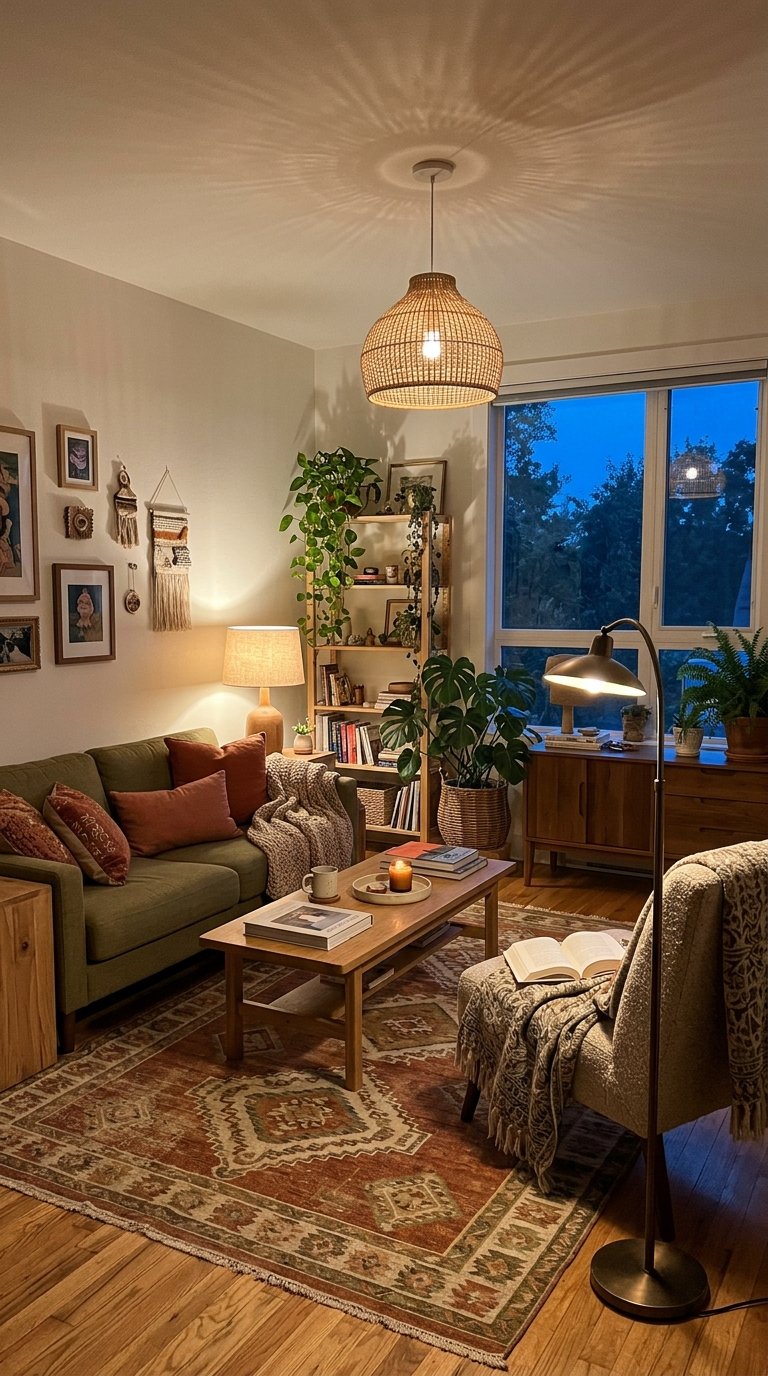
Lighting changes how a boho living room feels throughout the day. Instead of relying entirely on a single ceiling fixture, combine overhead lighting with a floor lamp and a table lamp to create softer pools of light around the room.
A woven pendant can introduce texture overhead, while a fabric-shaded table lamp adds a warm glow beside the sofa. A floor lamp near a reading chair provides useful task lighting. Choose bulbs that suit the atmosphere you want, and check the fixture’s recommendations before selecting bulb types or brightness levels.
Think about how you use the room after sunset. A reading corner needs enough light for comfortable reading, while lighting near a television should avoid distracting glare. Multiple light sources make the space more adaptable than one bright ceiling light alone.
10. Arrange Indoor Plants at Different Heights

Plants add organic shapes and fresh color to a bohemian living room. Rather than lining every plant along a windowsill, arrange a few at different heights to create a more natural composition. A taller floor plant can anchor a corner, a medium plant can sit on a stand, and a smaller pot can add greenery to a shelf.
Choose plants according to the actual light and conditions in your room. A sunny window, a shaded corner, and a room with limited natural light will suit different plants, so check their needs before buying. Attractive containers in terracotta, glazed green ceramic, woven baskets with suitable inner pots, or handmade pottery can complement the rest of your decor.
Leave some surfaces and corners open. A few well-placed plants usually look more intentional than filling every available space with foliage. If you share your home with pets, verify that each plant is safe for the animals that may chew or touch it.
11. Style Open Shelves With Ceramics, Books, and Dried Stems

Open shelving gives you space to display objects that tell a story about your home. In a boho living room, mix books, handmade ceramics, small framed art, and a vase of dried stems instead of filling every shelf with identical accessories.
Vary the height and shape of objects to keep the arrangement interesting. A stack of books can raise a small ceramic piece, while a larger vase can balance a group of smaller objects nearby. Repeat a few colors from the room, but allow different finishes and forms to add character.
Leave some space on each shelf. If every inch is covered, the display can become visually noisy and collect more dust. Secure tall shelving properly, especially in homes with children or pets, and keep heavy objects on stable shelves.
12. Use Sheer Curtains With Woven Window Shades

Window treatments can soften a boho living room and help connect the indoor space with the natural materials used elsewhere. Sheer curtains diffuse daylight, while woven shades add texture and provide more control over privacy and light.
Consider the room’s exposure before choosing a combination. In a bright space, woven shades may help manage glare, while sheer panels soften the window without making it feel closed off. In a room that needs more privacy, you may want a lined curtain or another appropriate window treatment rather than relying on sheer fabric alone.
Choose curtain lengths and hardware that suit the window and ceiling height. Natural-looking linen blends, cotton, and woven finishes can complement wood furniture and patterned rugs. Avoid using heavy window treatments if the room is already small and receives limited daylight.
Boho Living Room Styles to Match Your Taste
13. Try Modern Minimalist Boho With Fewer, Better Pieces
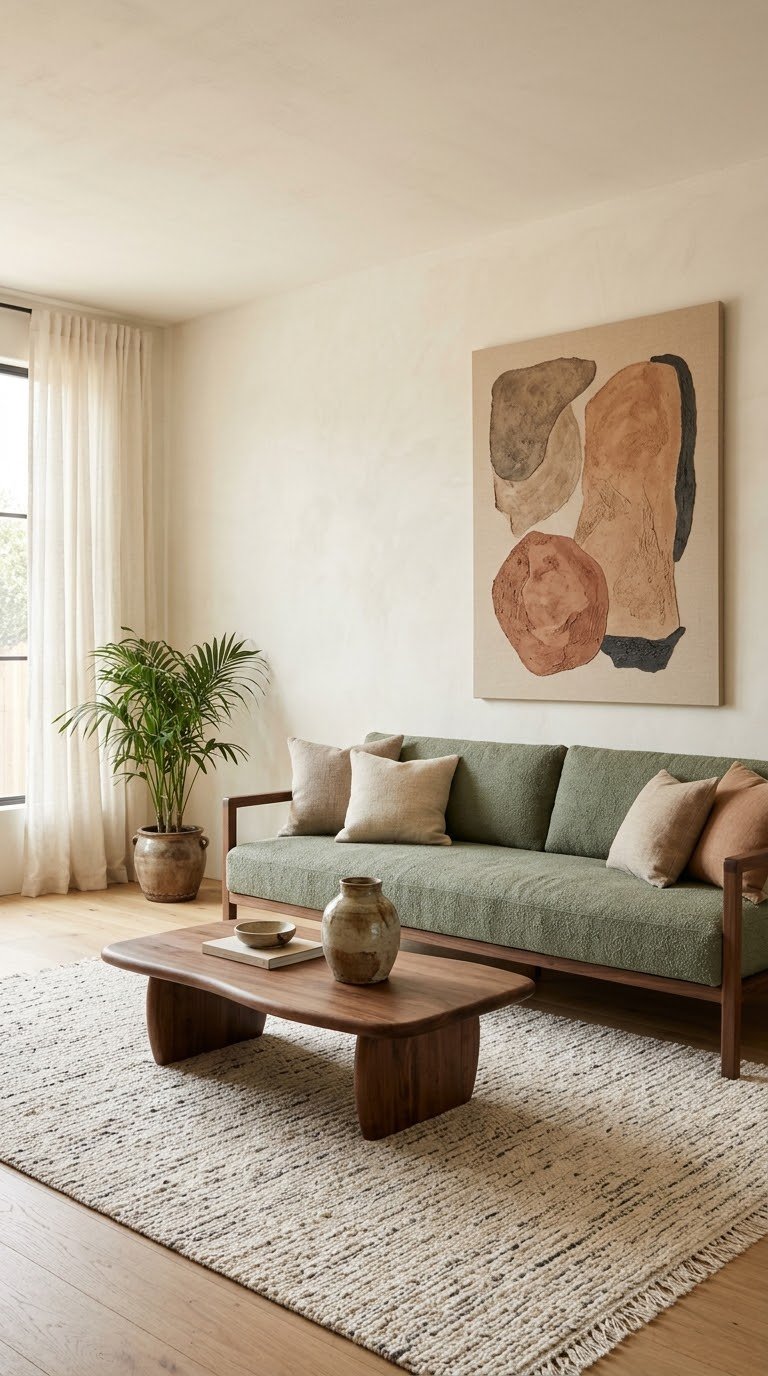
Modern minimalist boho combines the warmth of bohemian materials with the simplicity of a more restrained layout. Instead of filling the room with numerous decorative objects, choose a few pieces with interesting texture, shape, or craftsmanship.
A simple sofa, a sculptural wooden coffee table, one large piece of artwork, and a textured rug can establish the style. Add character through a handmade vase, a woven accent chair, or a single statement plant. A limited palette of warm white, walnut, muted green, and clay can keep the space calm without making it look flat.
This approach works especially well in smaller homes or for people who enjoy boho decor but dislike clutter. Focus on pieces that are useful or meaningful, and allow the furniture and materials to stand out rather than competing with a large collection of accessories.
14. Create a Dark, Moody Boho Living Room
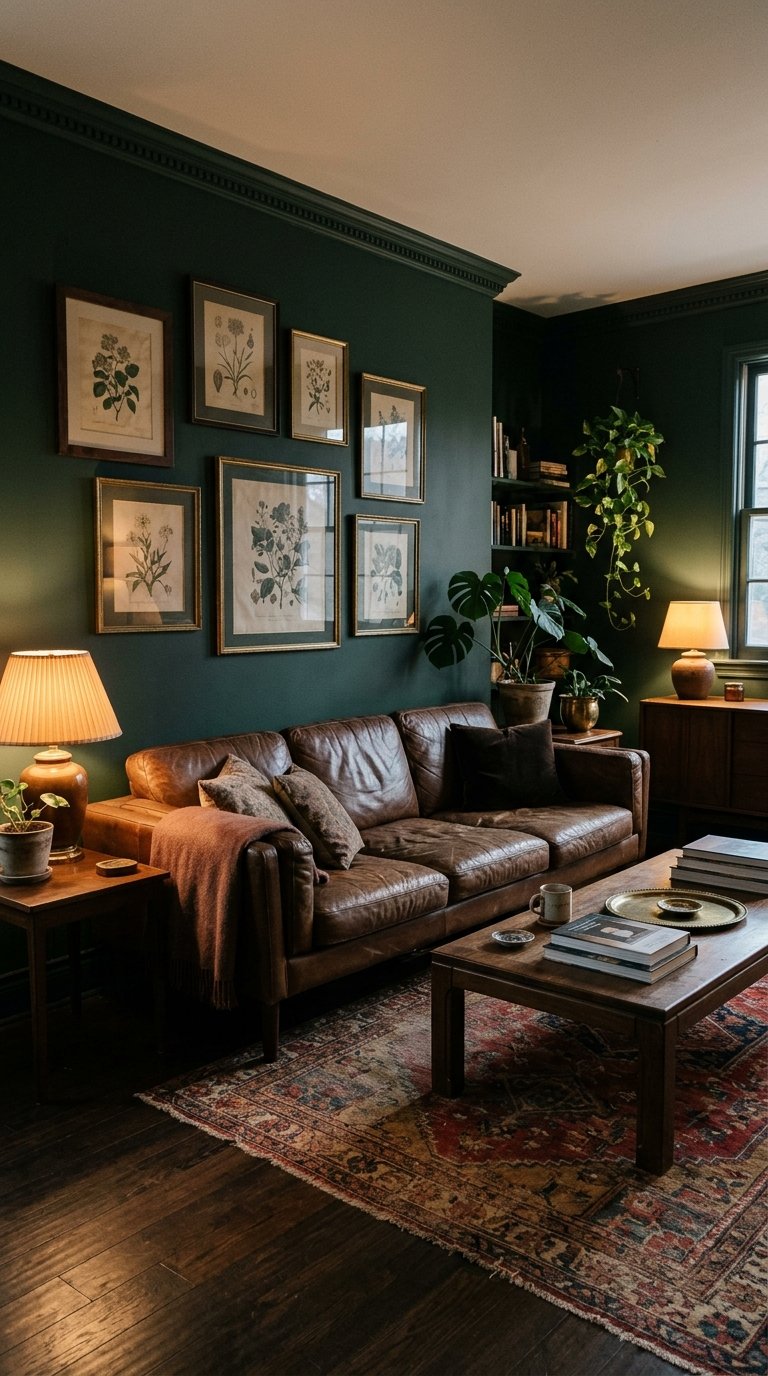
Dark boho decor brings depth and a more dramatic personality to the living room. Deep forest green, charcoal, burgundy, tobacco brown, and warm black can create a rich backdrop for vintage textiles, wood furniture, and brass or antique-finish accents.
You do not have to paint every wall dark to achieve this look. A deep green feature wall, a dark sofa, or a large vintage rug can establish the mood while lighter curtains and carefully placed lamps prevent the room from feeling closed in. Walnut furniture and warm-toned artwork add contrast without breaking the palette.
Consider the amount of daylight your room receives. In a dim room, use several light sources and include a few reflective or lighter surfaces to balance the darker colors. The aim is a layered, intimate atmosphere rather than a space where furniture and details disappear into the shadows.
15. Bring in Retro 1970s Boho Colors and Shapes
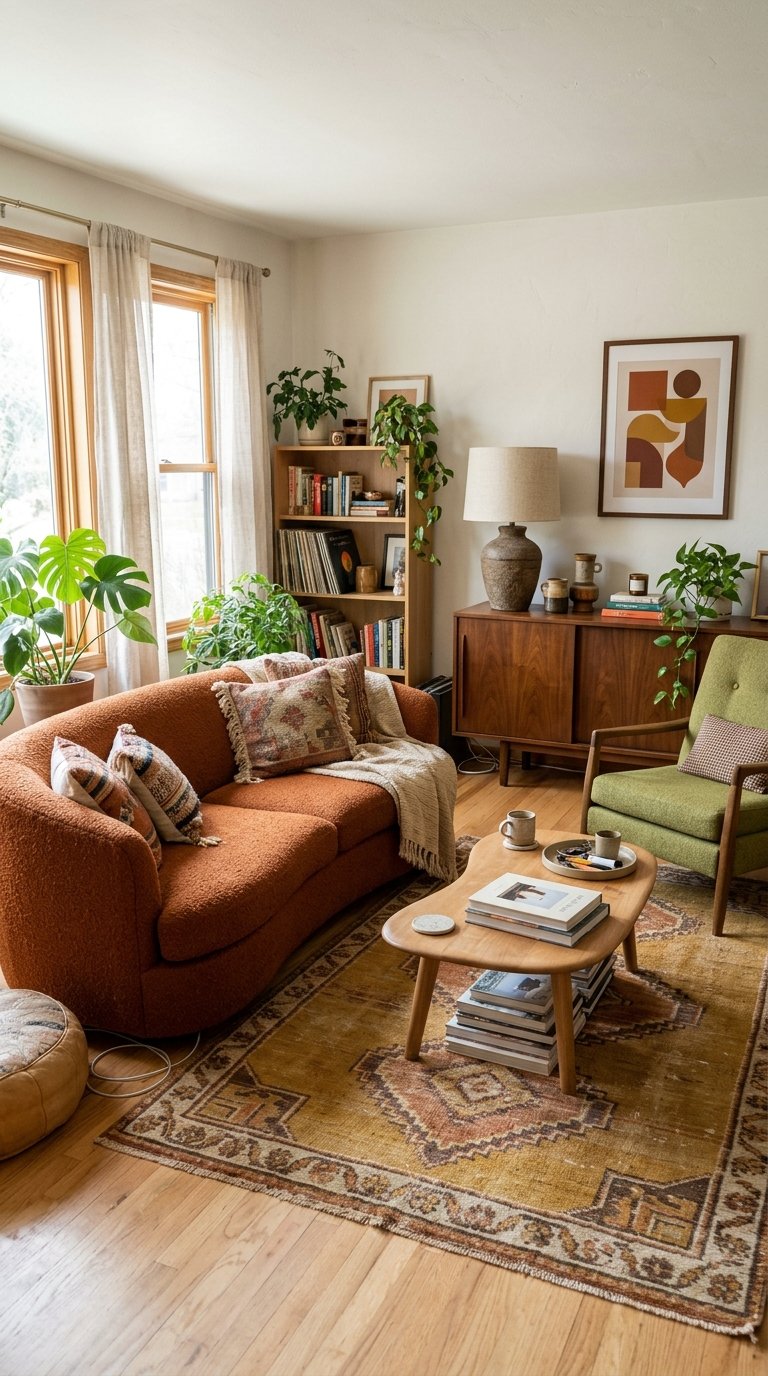
A 1970s-inspired boho living room uses earthy colors, rounded shapes, and vintage-looking materials to create a relaxed retro atmosphere. Think burnt orange, mustard yellow, avocado green, walnut wood, and low-slung furniture paired with geometric prints or abstract artwork.
Start with one or two recognizable retro elements rather than recreating an entire period room. A curved accent chair, a vintage-style rug, or a walnut sideboard can establish the look. Then mix in contemporary lighting or simple cushions to keep the space from feeling like a themed set.
Pay attention to proportion and contrast. Several large, rounded pieces can make a small room feel heavy, so balance them with open-legged furniture or a lighter coffee table. If genuine vintage furniture is outside your budget, secondhand shops and carefully chosen modern reproductions can provide a similar visual direction.
16. Blend Boho Decor With Farmhouse Warmth
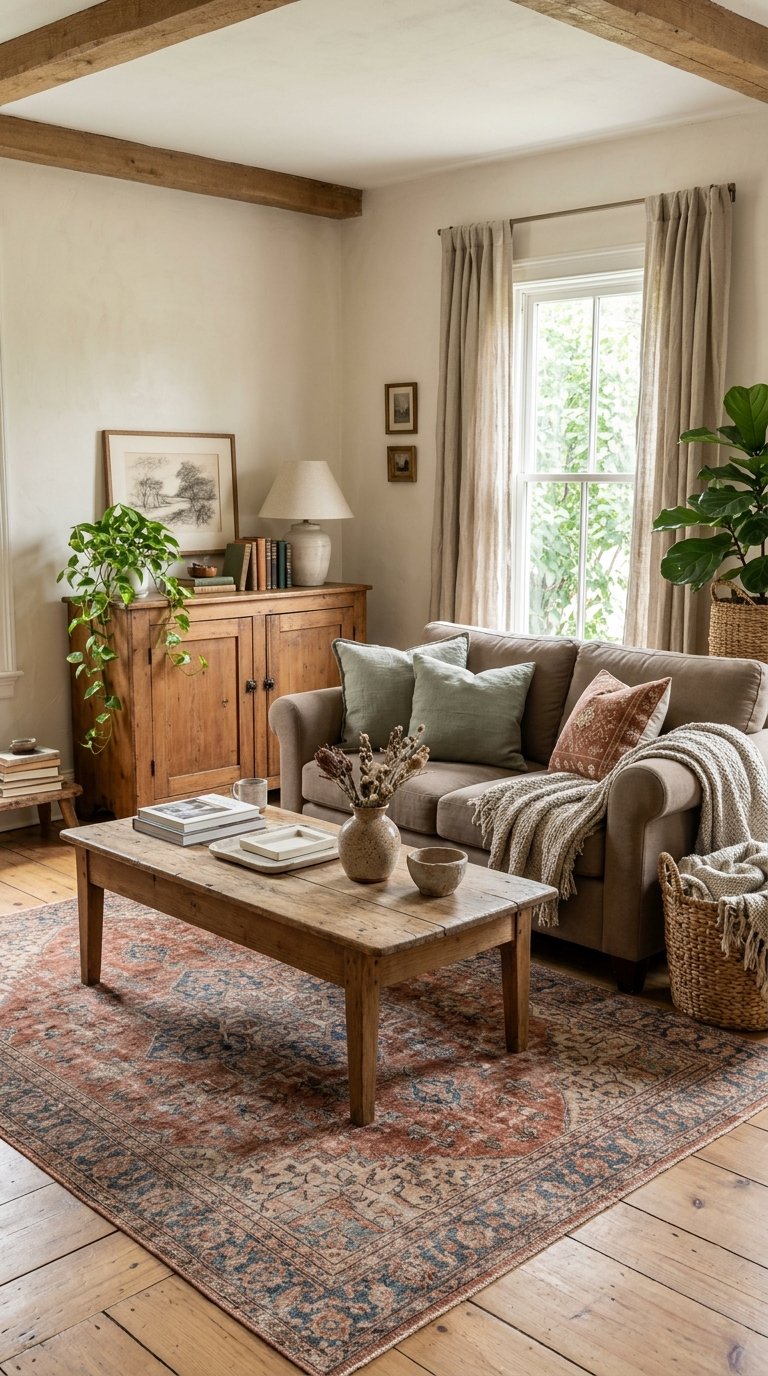
Boho farmhouse style combines rustic materials with the layered textures and personal details of bohemian decor. Weathered wood, woven baskets, relaxed cotton fabrics, vintage-inspired rugs, and handmade ceramics can create a room that feels welcoming rather than overly rustic.
A reclaimed-wood coffee table or a simple wooden sideboard gives the space a farmhouse foundation. Add patterned cushions, a colorful rug, and a few collected accessories to bring in the bohemian side. You can also use muted sage, dusty blue, terracotta, or warm brown to keep the palette from becoming entirely cream and white.
Balance rough and soft materials. If the room already contains heavy timber furniture, introduce lightweight curtains, textured cushions, or a rounded upholstered chair. This contrast makes the room more comfortable and prevents the rustic details from overpowering the space.
Small Boho Living Room Ideas for Renters and Budgets
17. Make a Small Living Room Feel Open With Smart Furniture Choices

Small boho living rooms benefit from furniture that suits the available floor space. A compact sofa, an open-legged coffee table, and a narrow side table can provide the comfort you need without blocking movement. Choose fewer, appropriately sized pieces instead of squeezing oversized furniture into every corner.
Use vertical space to add personality. Wall art, a tall plant suited to the room’s light, or a slim bookcase can draw the eye upward while leaving more of the floor clear. A mirror may also help reflect available daylight, depending on its placement and what it reflects.
Before buying furniture, measure the room and map out the main walking routes. Make sure doors can open and that people can move between the sofa, coffee table, and entrance comfortably. A small room does not have to be entirely neutral; a colorful rug or a few patterned cushions can provide character without requiring extra furniture.
18. Decorate a Rental Living Room Without Drilling Holes
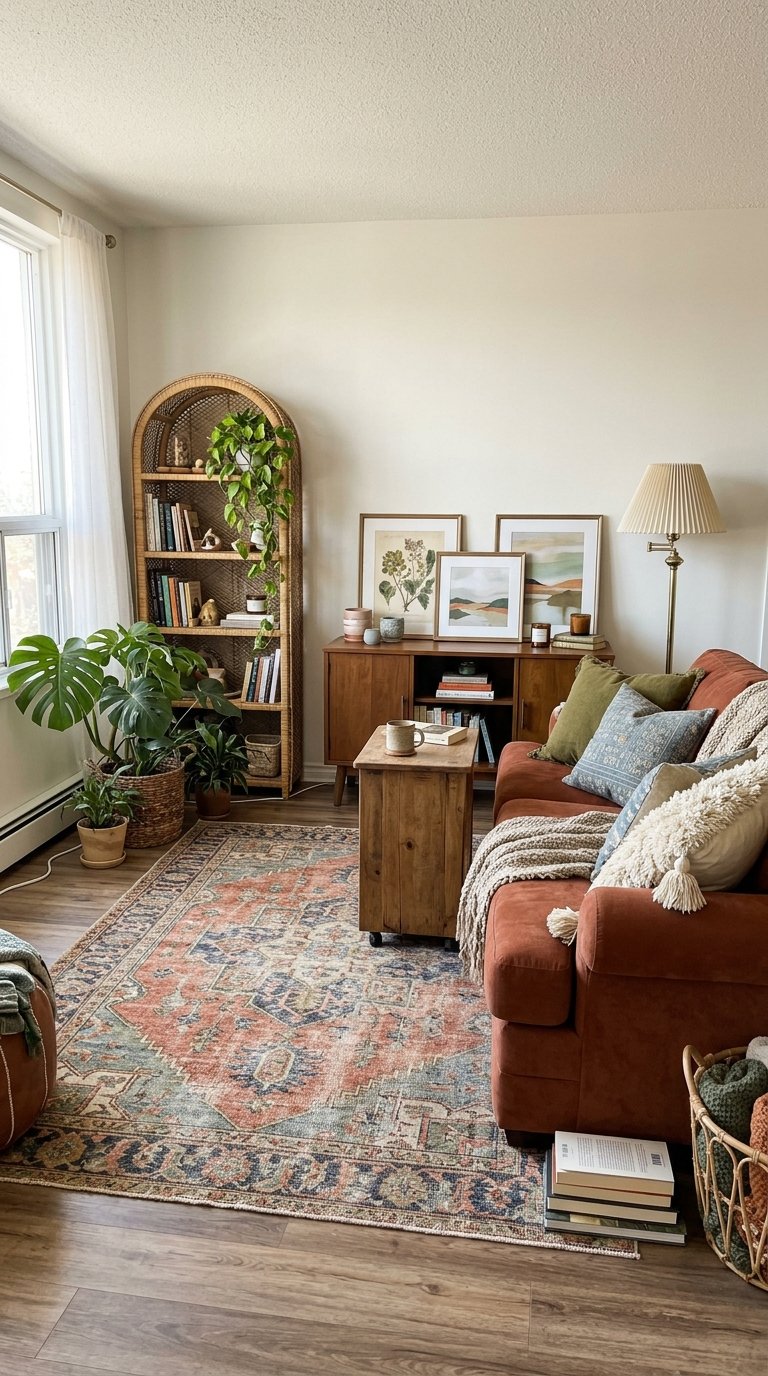
You can create a distinctive boho living room in a rental without making permanent changes to the walls. Focus on movable furniture, textiles, floor lamps, freestanding shelves, and decor that can travel with you when you move.
Lean framed artwork securely on a console or shelf where appropriate, use freestanding mirrors, and bring color into the room through cushions, rugs, throws, and curtains installed with renter-approved hardware. Removable hooks or adhesive products may work for some lightweight items, but always check the product’s weight limit and whether it is suitable for your wall finish.
A renter-friendly design can still feel personal. Try a patterned rug, a rattan accent chair, a colorful floor cushion, or a collection of objects arranged on a sideboard. Keep valuable or fragile items secure, and follow your lease terms before changing fixtures or making any alterations.
19. Decorate on a Budget With Thrifted Finds and Simple DIY Updates

You do not need to buy a complete furniture set to create a bohemian living room. Secondhand shops, flea markets, local resale listings, and items you already own can provide the mix of materials and personal details that make this style feel collected.
Look for useful pieces with good structure, such as a solid-wood side table, a vintage lamp, a woven basket, or a distinctive frame. A clean, sturdy secondhand item can be more valuable than a new decorative object that adds little function. Before buying upholstered furniture, inspect its condition carefully and consider cleaning, repair, or pest concerns.
You can also refresh your current decor with small changes. Rearrange artwork, add a colorful cushion cover, style a basket beside the sofa, or move a plant into a more suitable spot. Spend first on items you use every day, then add decorative pieces gradually as you find ones you genuinely like.
20. Style the TV Wall, So It Fits the Boho Look
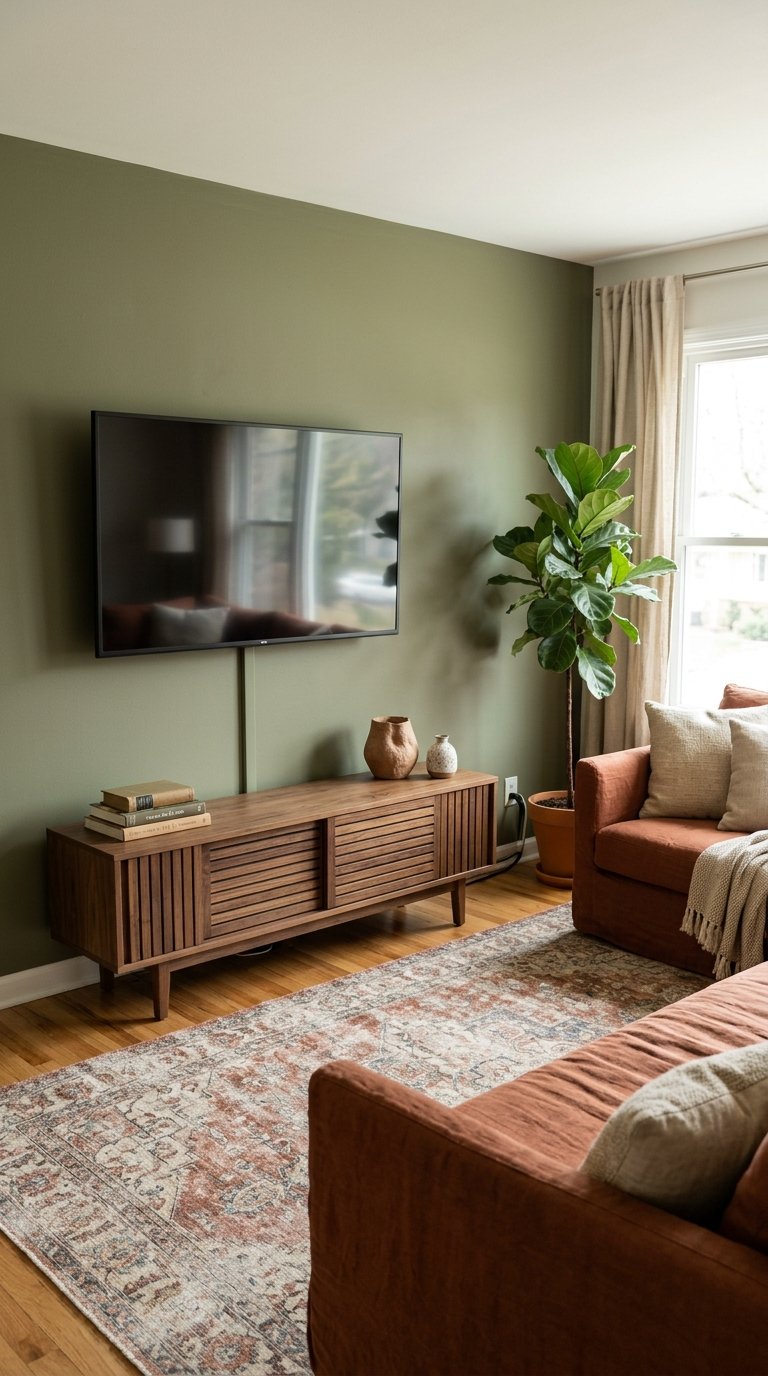
A television can feel visually dominant in a boho living room, especially when surrounded by many small decorative objects. A cleaner arrangement helps it sit comfortably alongside the room’s natural textures and collected accessories.
If your layout allows, place the TV above or on a low wooden media console with simple lines. Style the surrounding area with a small number of objects, such as a ceramic vase, a short stack of books, or a woven basket nearby. Keep decor away from the screen and ventilation areas, and make sure the television is mounted or placed securely according to its instructions.
You can soften the overall wall with artwork nearby, a textured wall finish, or a plant positioned where it will receive suitable light. Avoid overcrowding the space with too many frames and accessories. A restrained arrangement gives the TV wall a more intentional appearance and keeps the living room practical for everyday use.
How to Keep a Boho Living Room Collected, Not Cluttered
A boho living room can contain many textures and personal objects without feeling messy, but each item needs a reason to be there. Start by identifying the pieces that contribute the most to the room’s character, such as a favorite rug, a distinctive chair, or a collection of artwork. Let these pieces lead the design rather than adding accessories simply to fill empty spaces.
Use a mix of open and quiet areas. A gallery wall can be visually rich, while the nearby sofa and coffee table remain relatively simple. If your shelves are full of books and ceramics, leave the adjacent wall less decorated so the room has room to breathe.
Storage also makes a difference. Woven baskets can hold throws, magazines, or everyday items, while closed cabinets hide things that do not need to be displayed. Review your accessories occasionally and remove pieces that no longer suit the room or serve a useful purpose.
Common Boho Living Room Decorating Mistakes to Avoid
One common mistake is treating every boho element as essential. Rattan, jute, macramé, plants, patterned rugs, and colorful cushions can all suit this style, but using every one repeatedly may make the room feel predictable. Choose a few key textures and introduce contrast with smooth wood, plain fabric, ceramics, or metal accents.
Another problem is ignoring scale. A tiny rug beneath a large sofa can make the seating area look disconnected, while an oversized coffee table may restrict movement. Measure the room before buying large pieces, and consider how doors, windows, and walking paths affect the layout.
Finally, avoid choosing decor only because it looks good in a photograph. Consider cleaning requirements, durability, natural light, household needs, and the way you actually use the room. A beautiful boho living room should still be comfortable for reading, entertaining, relaxing, and everyday life.
FAQs
What makes a living room boho?
A boho living room usually combines natural materials, layered textiles, varied patterns, plants, and personal decorative pieces. Rather than relying on a perfectly matched furniture set, the style brings together elements with different textures, finishes, and influences.
The result can be colorful, earthy, minimalist, or dramatic. The most successful rooms have some visual connection between their colors and materials, even when individual pieces are different.
What colors work best in a boho living room?
Terracotta, rust, olive green, mustard, warm brown, dusty pink, and muted blue can all work well in a boho living room. Warm white, sand, or taupe can provide a foundation, while deeper shades create a more dramatic look.
Choose colors based on your existing furniture, lighting, and preferred mood. Repeating a few shades across cushions, rugs, artwork, and accessories helps the room feel coordinated without making every item match.
How do I keep a boho living room from looking cluttered?
Start with a few main pieces, then add accessories in deliberate layers. Keep some surfaces clear, leave breathing room between decorative objects, and avoid filling every wall or corner.
Use baskets and closed storage for everyday items that do not need to be on display. If the room feels too busy, remove a few accessories before buying anything new.
Can I create a boho living room in a small space?
Yes. A small boho living room can use a compact sofa, a suitable rug, a round or open-legged coffee table, and a few well-chosen accessories. Vertical artwork and appropriately sized shelving can add personality without taking up much floor space.
Keep the main walking routes clear and avoid furniture that is too large for the room. Color and texture can still make a small space feel distinctive, so there is no need to rely entirely on plain neutrals.
How do you layer rugs in a boho living room?
A common approach is to place a large, simple natural-fiber rug beneath a smaller patterned rug. Jute or sisal provides texture, while a vintage kilim or another patterned rug adds color and detail.
Choose sizes that suit the seating arrangement and use a compatible rug pad when appropriate. If layering makes the room feel crowded or creates a tripping hazard, one well-sized rug may be the better option.
How should I decorate a TV wall in a boho living room?
Use a simple media console made from wood or another natural-looking material, then add a small number of decorative objects around it. A nearby plant or a carefully arranged piece of artwork can connect the TV area with the rest of the room.
Keep the television secure, leave its ventilation areas unobstructed, and avoid placing accessories where they interfere with viewing or daily use. A clean arrangement usually looks more intentional than a crowded collection of small objects.
Is boho living room decor still in style?
Boho decor remains a flexible design approach because it can adapt to different tastes, budgets, and homes. Some people prefer colorful vintage textiles and collected accessories, while others choose a more modern, restrained version with natural wood, simple furniture, and a few tactile details.
Rather than following every trend, choose the elements that suit your home and lifestyle. Personal artwork, useful furniture, natural textures, and a considered color palette can create a room that feels individual instead of tied to one particular moment.
Final Thoughts
The most inviting boho living rooms are built through thoughtful layers, not simply by adding more decor. A well-chosen rug, comfortable seating, warm lighting, natural materials, and a few meaningful objects can create a room that feels relaxed and personal.
Start with one change that suits your space and budget, whether that means introducing a patterned rug, rearranging your cushions, adding a plant, or creating a small reading corner. Build from there, paying attention to color, scale, and the way each piece works with the rest of the room.
Save your favorite ideas for inspiration, then adapt them to your own home. Your boho living room does not need to look like anyone else’s; it needs to feel comfortable, useful, and unmistakably yours.

