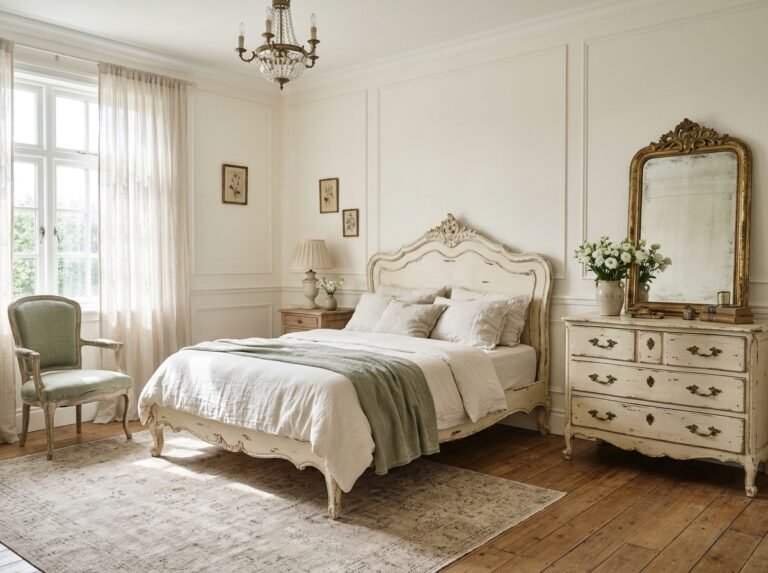
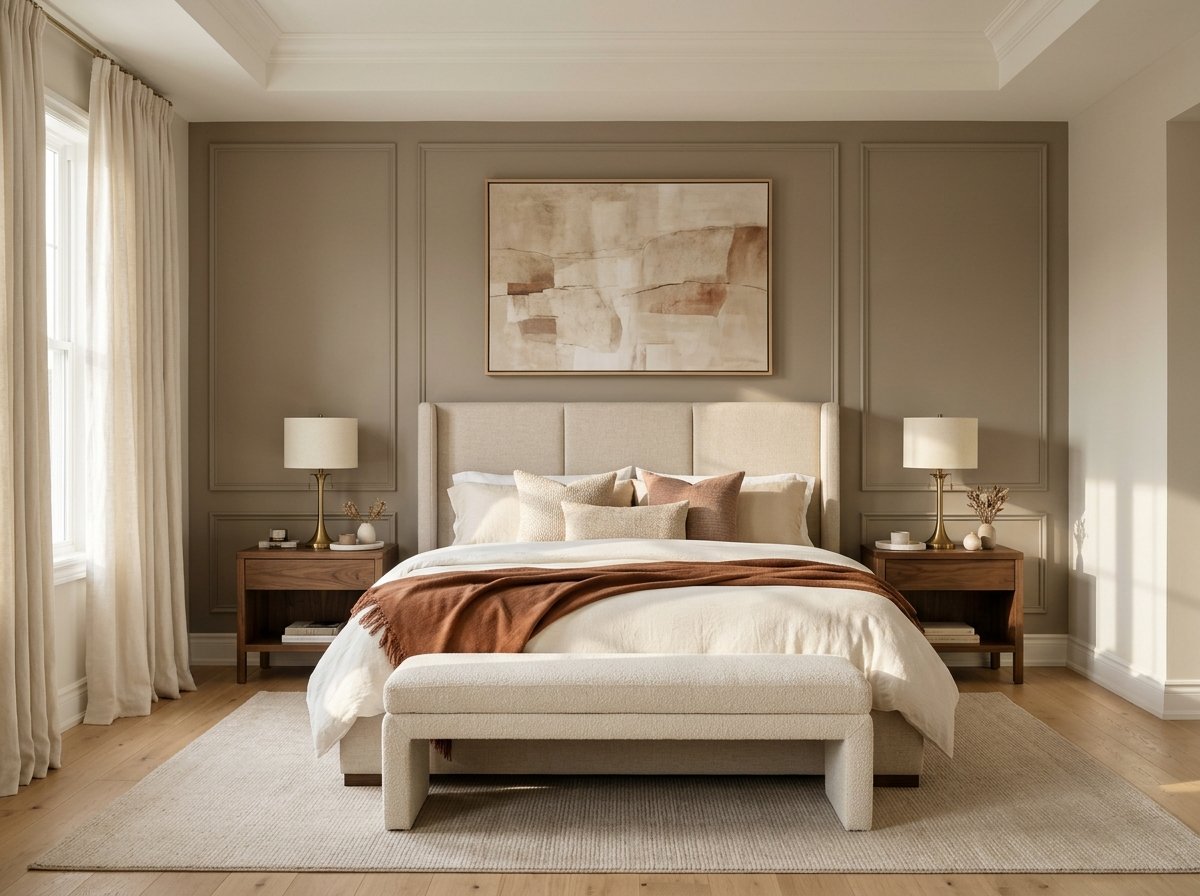
Master Bedroom Ideas: 20 Ways to Get a Cozy, Finished Look
Plenty of master bedrooms sleep perfectly well and still feel unfinished. The bed is there, the nightstands are there, and something is missing. Usually it isn’t more stuff. It’s a few decisions made in the right order: where the bed sits, what happens on the wall behind it, which colors hold the room together, and how the light behaves after dark.
These master bedroom ideas follow that order, from layout to bed wall to color to lighting to layers and storage. Each idea says what to buy or change and who it suits, with lower-cost and renter-friendly versions throughout. Use it as a build list, or jump to the part your room needs most.
Master Bedroom Ideas:
1. Center the bed on the strongest wall with matched nightstands
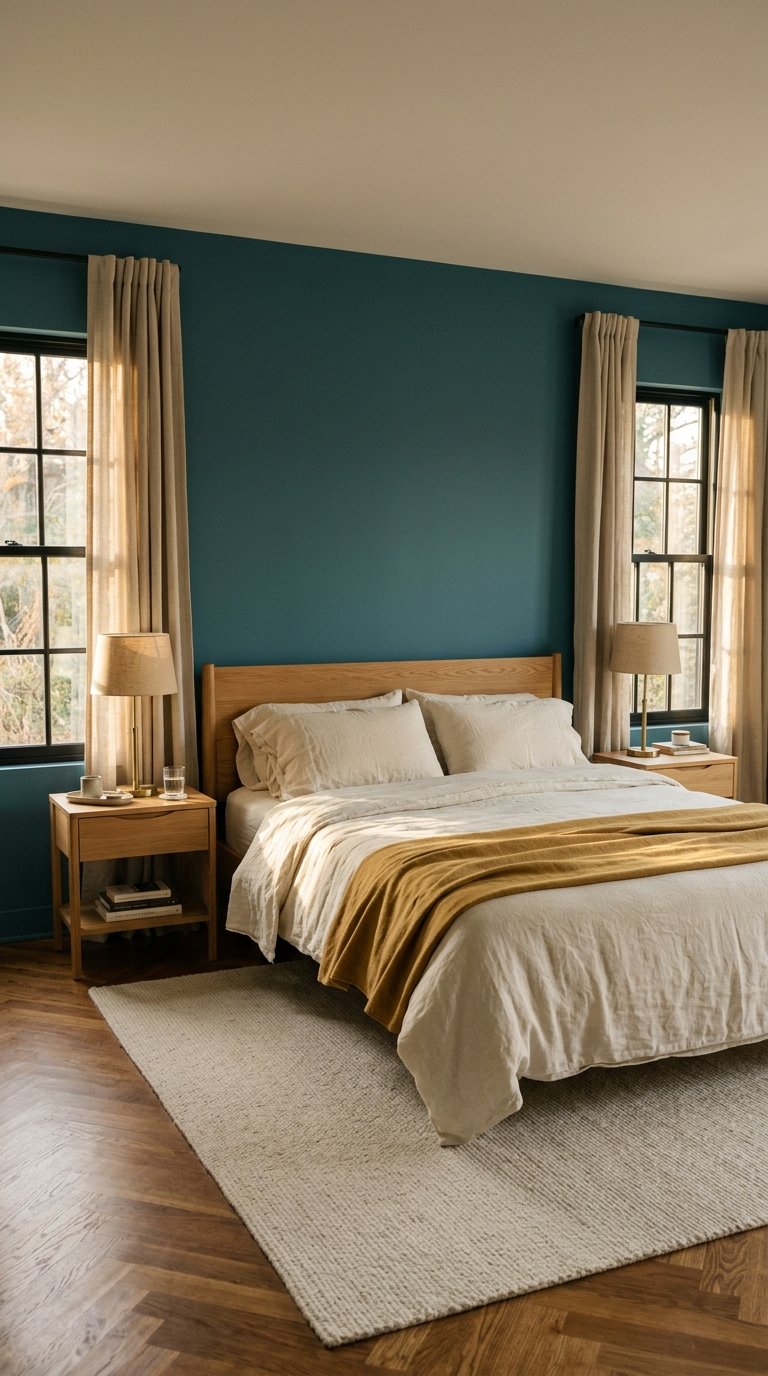
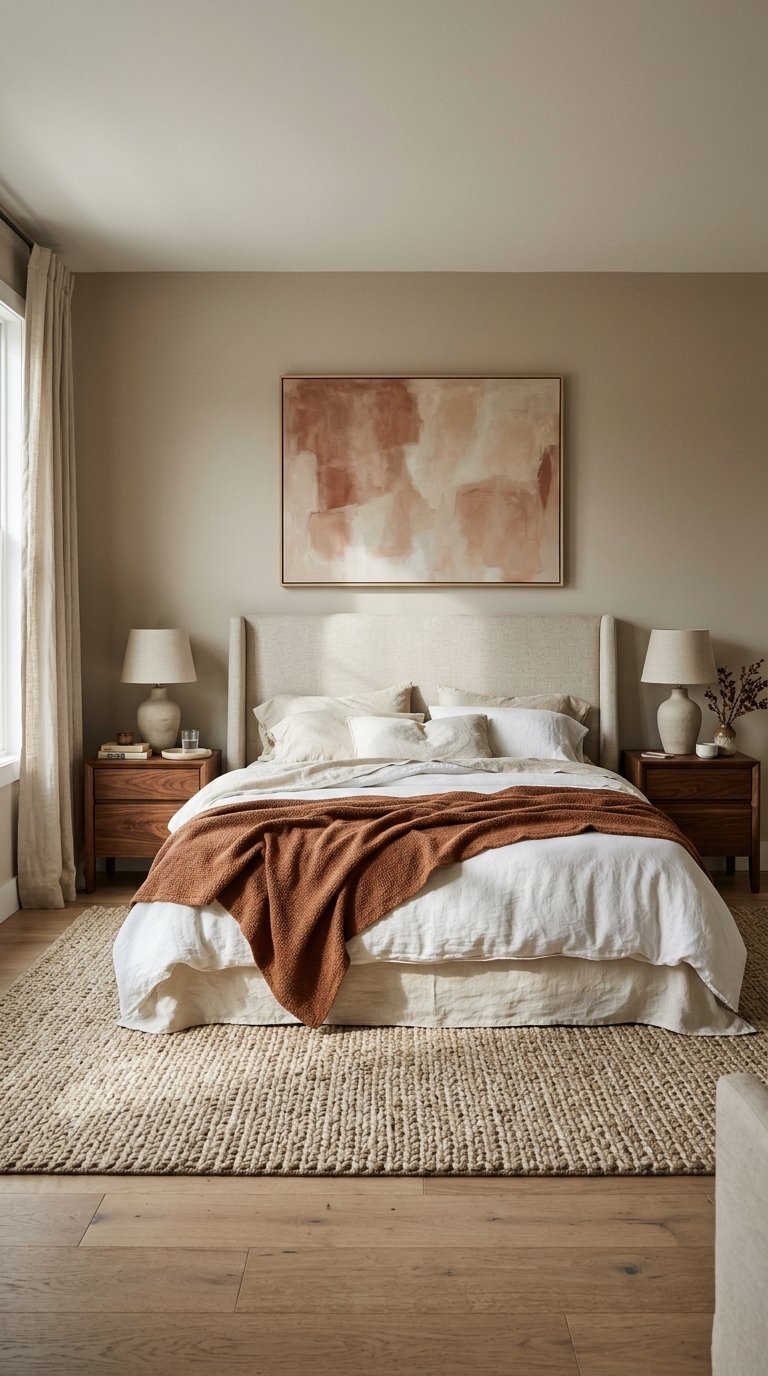
The strongest wall is the one that’s solid, unbroken by a window or door, and faces you as you enter. Centering the bed there creates a symmetrical focal point and leaves a path on each side. Pair it with nightstands of a similar height and visual weight. They don’t have to be identical, but they should read as a set.
A practical sequence: place the bed first, then add nightstands flush to each side, then check the side clearance. If the bed is tight to a side wall, a single nightstand and a wall-mounted light on the wall side is often cleaner than forcing a pair. For a hotel feel, keep the surfaces calm. A lamp or sconce, one small object and a tray beats a crowd of small things.
2. Use wall-mounted nightstands and sconces in a tight room

When floor space is the problem, take the furniture off the floor. Floating shelves or wall-mounted nightstands free up the area underneath, which makes the room look larger and gives you space for a small basket or charger. Pair them with wall-mounted or plug-in sconces so you don’t need a lamp on the surface at all.
This works especially well when a king bed fills most of a small room. Keep the shelf depth modest, around 10 to 12 inches, so nobody bumps it at night. Hardwired sconces and heavy wall-mounted fixtures should be installed following product instructions and local requirements. Renters can use plug-in versions with cord covers instead.
3. Zone a large room for sleeping, sitting and dressing
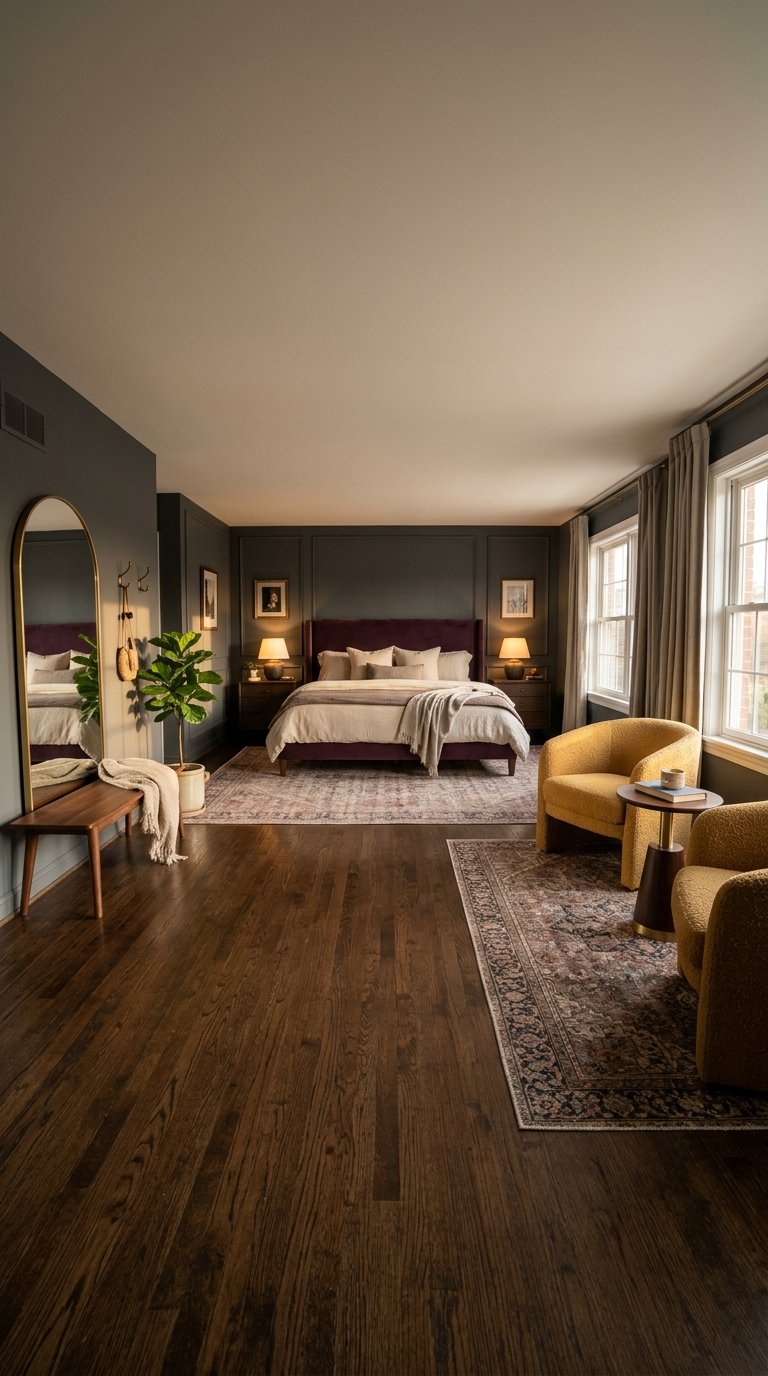
A large room can feel strangely empty because the bed floats in the middle of too much floor. Divide it into zones instead. The sleeping area anchors the bed wall, the sitting zone uses two chairs or a loveseat with a small table near a window, and a dressing corner holds a mirror, a bench or a desk.
Use rugs and furniture to mark each zone rather than walls. A large rug anchors the bed, while a smaller rug under the chairs defines the seating area. Keep traffic paths clear between zones. If the pieces start to crowd, drop the one you’d use least.
Bed Wall Ideas (The Focal Point)
The wall behind the bed is the largest uninterrupted surface in the room, and it’s where the room either looks designed or doesn’t. Each idea below carries a quick tag so you can compare effort, cost and whether it suits a rental.
4. Paint a headboard shape on the wall
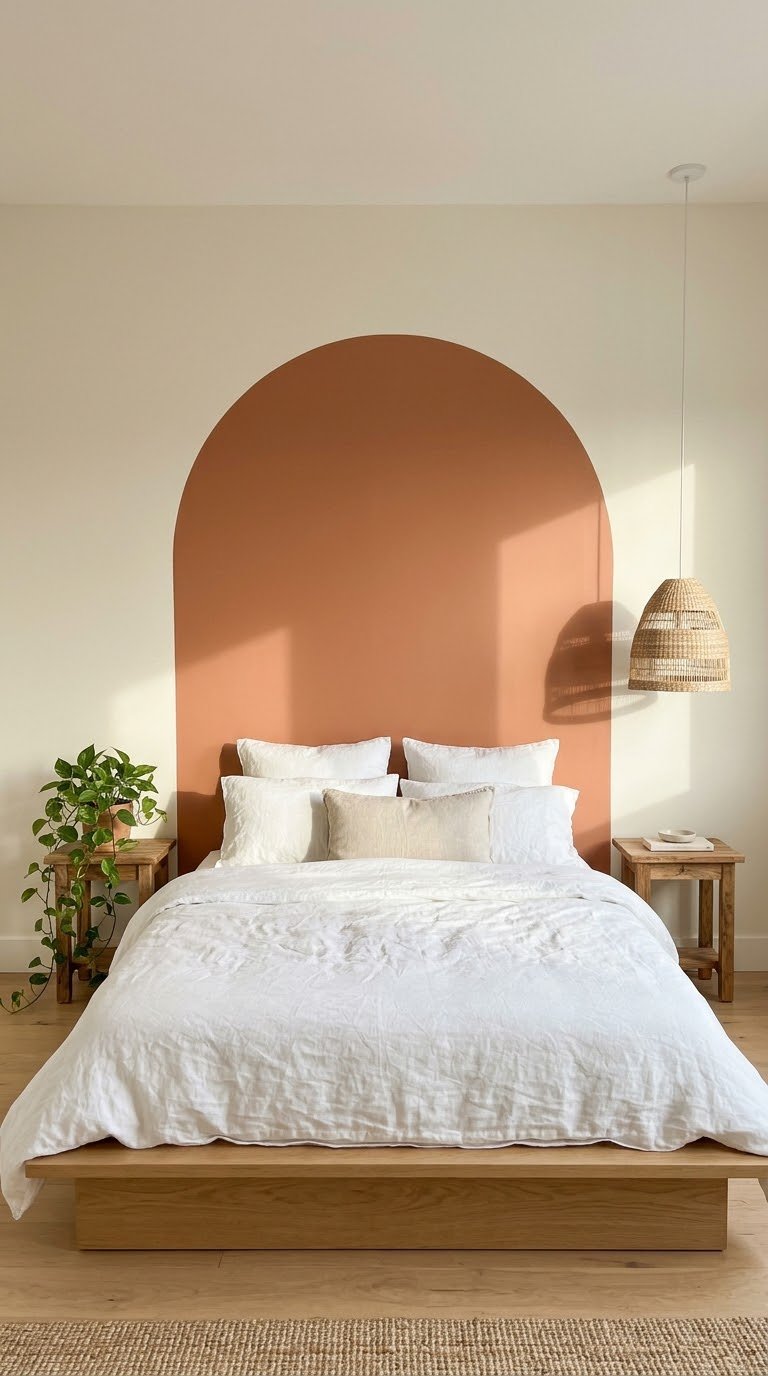
Effort: low to medium. Cost: low. Renter-friendly: only with landlord approval.
A painted arch or rectangle behind the bed gives you a “headboard” without buying one. Choose a color that contrasts with the wall, such as deep terracotta on cream, or forest green on soft white. Make the shape slightly wider than the bed and tall enough to frame the pillows. Painter’s tape and a level do most of the work.
Use matte or eggshell paint and a clean edge. Rounded arches look softer, while squared shapes feel more architectural. If you rent, a large piece of painted plywood or a removable panel can fake the effect.
5. Choose a tall upholstered headboard
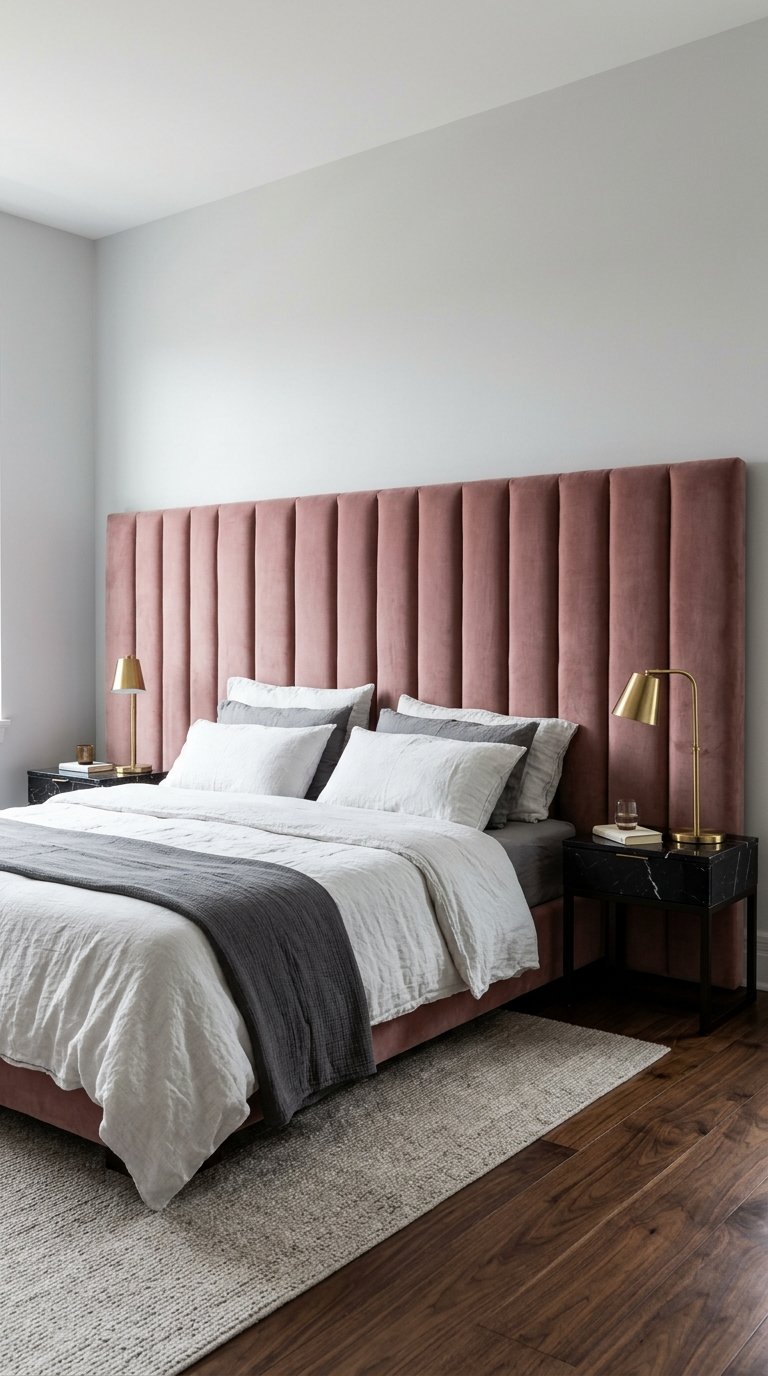
Effort: low. Cost: medium to high. Renter-friendly: yes.
A tall upholstered headboard instantly gives the bed a hotel look, because it adds height and softness in one move. As a guideline, choose one at least as wide as the bed, and slightly wider if you can. Taller styles work well in rooms with higher ceilings, while low ceilings call for a slimmer profile.
Performance fabrics and tightly woven linen blends hold up better against hair, oils and daily contact than loose weaves. Channel tufting or a vertical stitch pattern adds structure without fuss. If the price is steep, a fabric-wrapped panel from plywood, batting and upholstery fabric is a realistic DIY.
6. Build a slat or paneled wall
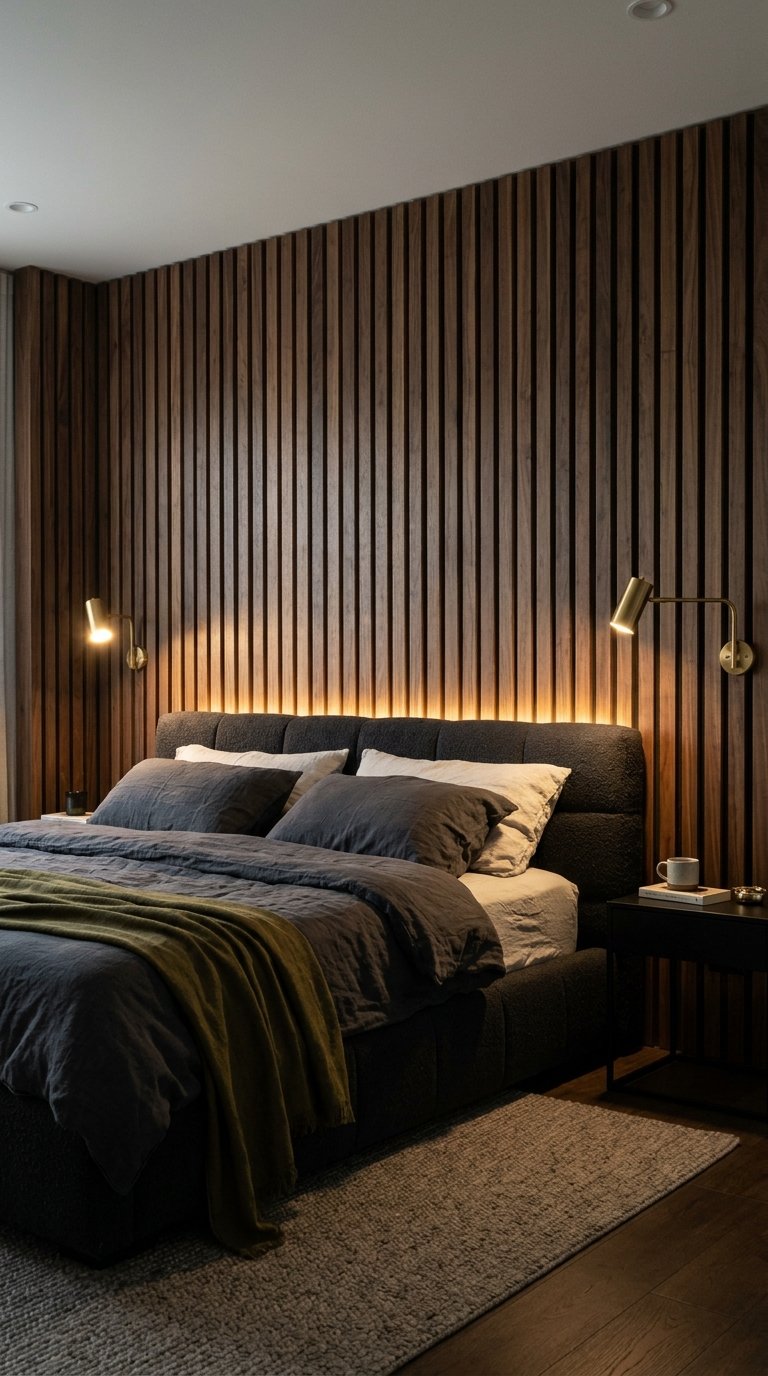
Effort: medium to high. Cost: medium. Renter-friendly: peel-and-stick versions only.
Vertical wood slats or classic paneling add depth and texture, and they photograph well. Slats suit modern and Japandi rooms in oak or walnut tones. Painted board-and-batten or picture-frame molding suits traditional rooms and looks especially good in deep colors.
Measure carefully and plan around outlets and switches. Panels can be painted the same color as the wall for subtle shadow play. Renters can use peel-and-stick wood-look panels, though they should check adhesive instructions and lease rules first.
7. Add a limewash or plaster-look wall
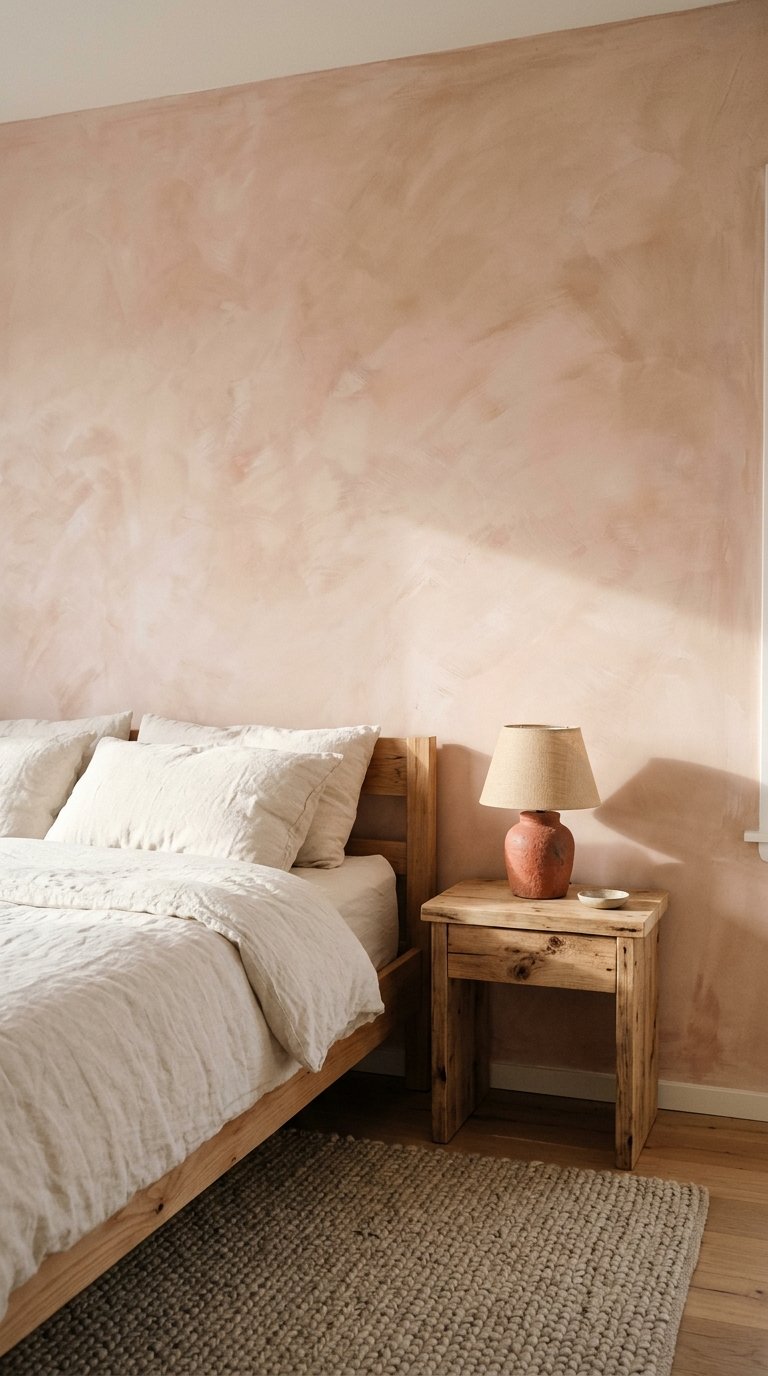
Effort: medium. Cost: low to medium. Renter-friendly: no.
Limewash and plaster-look finishes give walls a soft, cloudy variation that flat paint can’t match. They suit warm neutrals, clay tones and muted greens, and they make a bed wall feel handmade. The finish is typically matte, so it’s forgiving of imperfect walls.
Application technique matters, and results vary by product, so follow the manufacturer’s directions and test a sample board first. Keep the rest of the room simple, because the wall is already doing the work. Linen bedding and wood nightstands complement it well.
8. Hang wallpaper behind the bed only
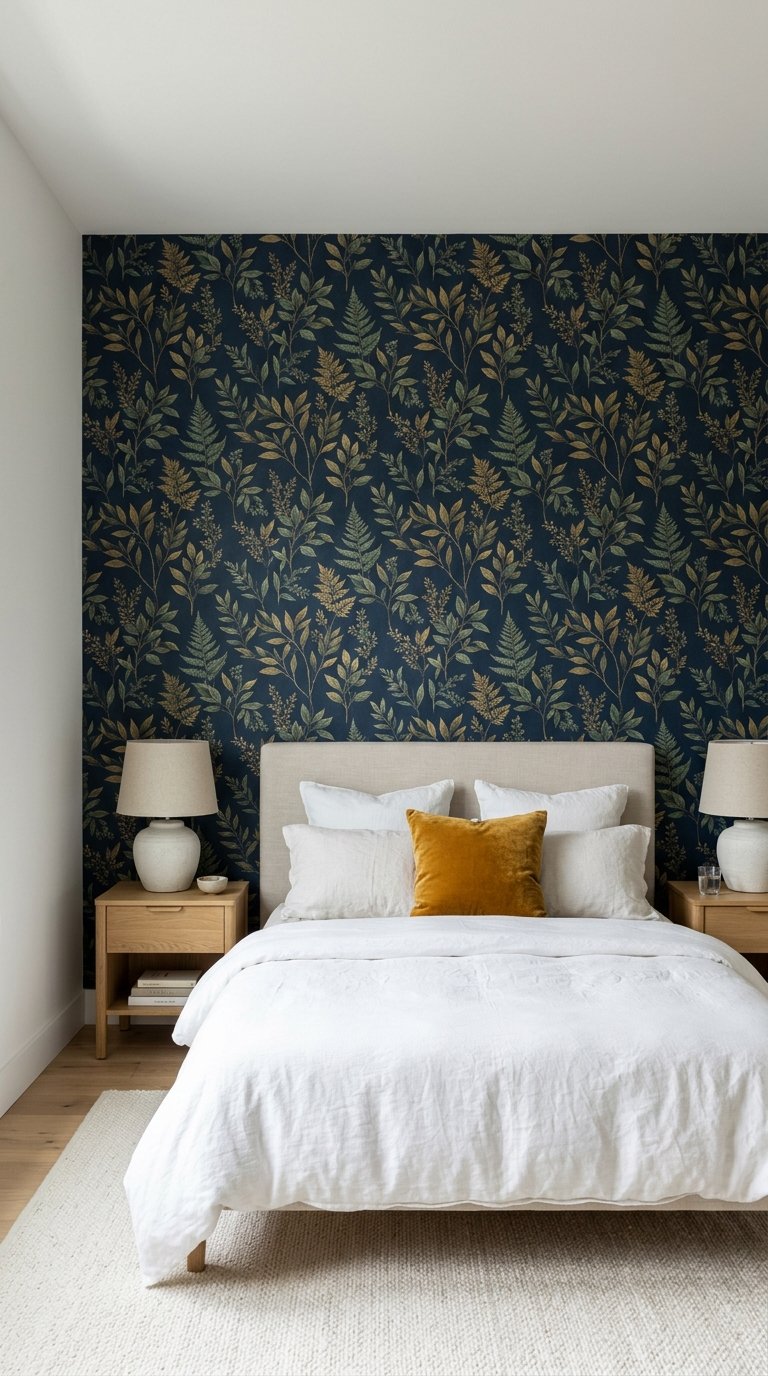
Effort: medium. Cost: low to medium. Renter-friendly: removable wallpaper.
Papering just the bed wall keeps the cost down while adding color or pattern exactly where the eye goes first. Botanical prints, grasscloth textures and small geometric patterns all work. In a small room, choose a pattern with good breathing room, because dense designs can feel loud at night.
Removable wallpaper is a good option for rentals, though how cleanly it comes off depends on the wall surface and the product. Frame the paper with plain bedding and quiet nightstands so the print stays the star.
Color and Palette Ideas
A palette is easier to execute when you treat it as a formula: one main wall color, one accent, and three textures. The textures keep a restrained palette from looking flat.
9. Warm tonal neutrals

Warm neutrals, such as oatmeal, mushroom, soft taupe and cream, create the calm, finished look people associate with boutique hotels. The key is undertone. Hold paint samples next to your bedding and wood tones, and check them in morning and evening light, since a cool white can look gray beside a warm cream.
For one wall color, one accent and three textures, try mushroom walls, a rust throw as the accent, and linen, wool and boucle as the textures. Keep the sheen matte or eggshell on the walls and add contrast with one darker piece, such as a charcoal lamp base or a walnut nightstand.
10. Muted sage or olive green
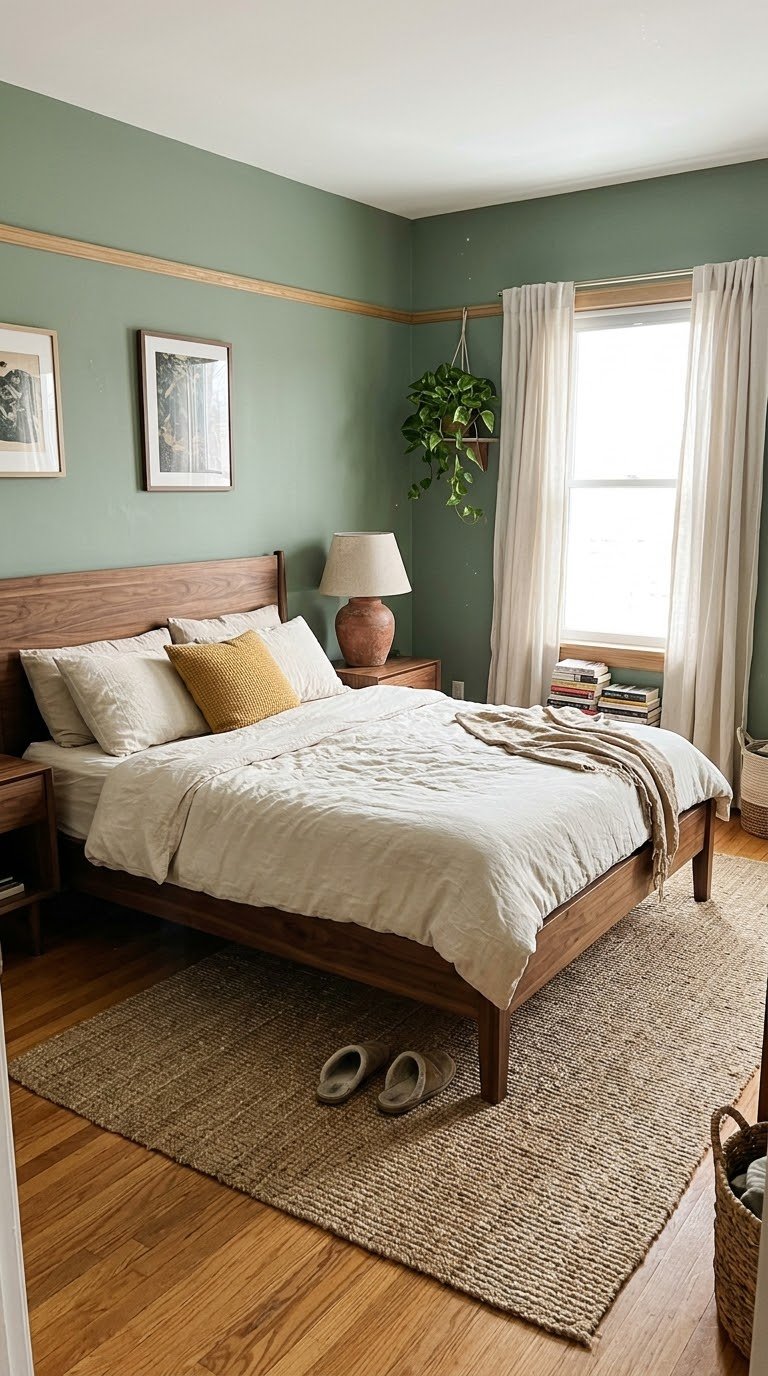
Sage and olive are restful, and they pair naturally with wood, brass and cream. They work in both bright and dim rooms, though they read grayer in low light and fresher in daylight. Test a large sample before committing.
A workable scheme is sage walls, white or cream bedding, a deep brown or walnut wood tone, and one warm accent such as terracotta or mustard. Natural fibers like jute, cotton and linen keep the room grounded. Avoid mixing too many greens. Let one shade lead and keep the others as small accents.
11. Deep blue or charcoal for a moody room

Deep blue and charcoal turn a bedroom into a cocoon, which suits cozy, evening-focused rooms. Moody rooms work best when light is controlled. Use warm bulbs, bedside sconces and a dimmer so the walls glow rather than swallow the room.
On the ceiling, you have two valid choices. Many designers keep it lighter to preserve a sense of height, while others paint it the same deep color for a wrapped effect. In a small or north-facing room, either can work, so test both with samples. Balance the darkness with lighter bedding, a pale rug and a few brass or wood accents.
Lighting Plan for a Master Bedroom
Good bedroom lighting works in layers: ambient light for the whole room, task light for reading, and accent light for mood. Most rooms rely on a single ceiling fixture, which is why they feel flat in the evening. Build in this order:
- Set the ambient layer with an overhead fixture, ideally on a dimmer.
- Add task light beside the bed for reading, using sconces, swing-arm lamps or table lamps.
- Add an accent layer, such as a small lamp on a dresser or a picture light over art.
- Choose warm bulbs throughout so the layers match.
12. Add bedside sconces or swing-arm lamps
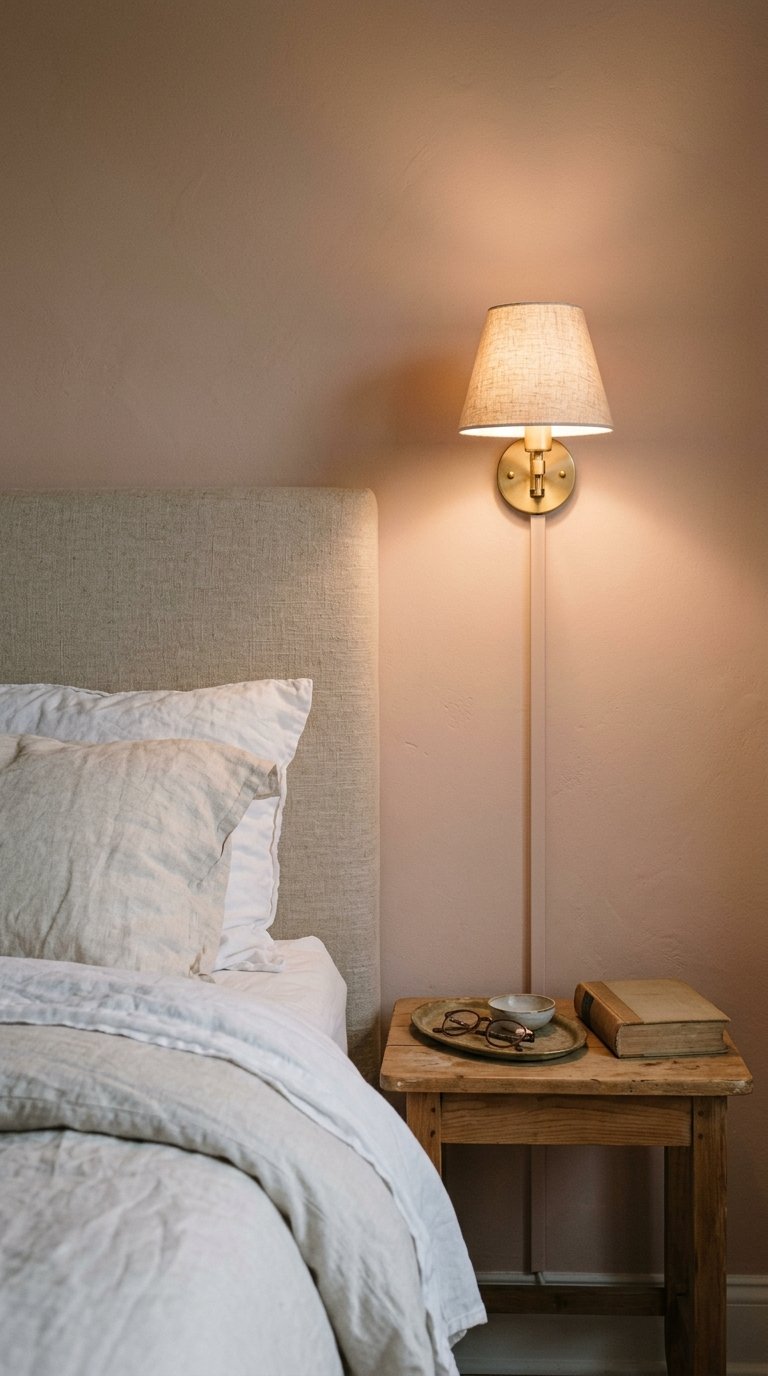
Sconces and swing-arm lamps free the nightstand and put light where you need it. As a guideline, mount them so the light sits near shoulder height when you’re sitting up in bed, then adjust for your own height and pillows. Separate switches or controls on each side mean one partner can read while the other sleeps.
Hardwired fixtures should be installed following the product instructions and local requirements. If you rent or don’t want to hire an electrician, plug-in sconces with a cord cover are a tidy alternative. Linen or fabric shades soften the light and add to the hotel feel.
13. Put the overhead light on a dimmer with warm bulbs
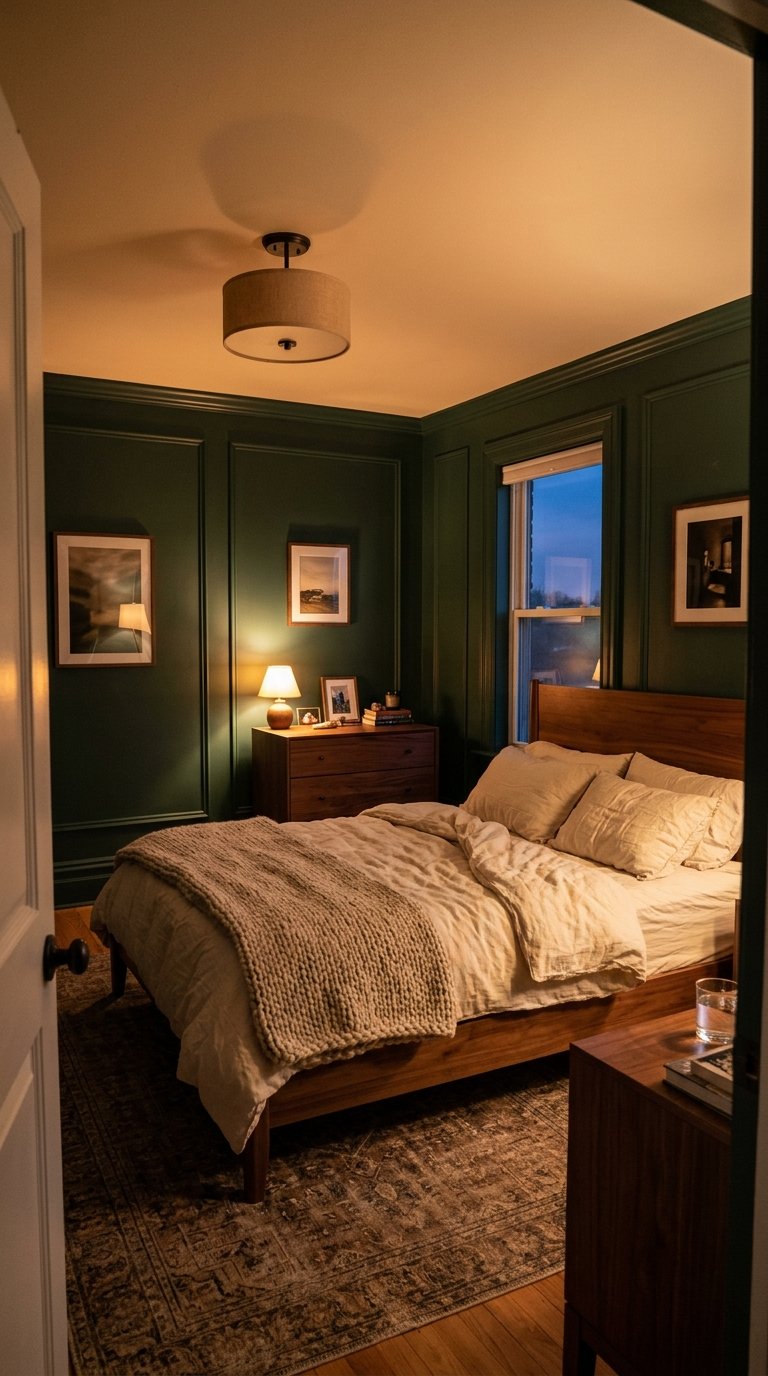
A dimmer is one of the most effective upgrades for a bedroom, because it turns a harsh overhead light into a soft evening glow. Pair it with warm white bulbs, often labeled around 2700K, for a cozy tone. Check that the bulbs are dimmable and compatible with the dimmer.
If you can’t install a dimmer, smart bulbs or plug-in lamps with dimming controls give a similar effect. Mixing bulb colors in one room looks messy, so keep them consistent. The goal is a room that shifts easily from morning bright to bedtime soft.
14. Light a reading corner with a floor lamp
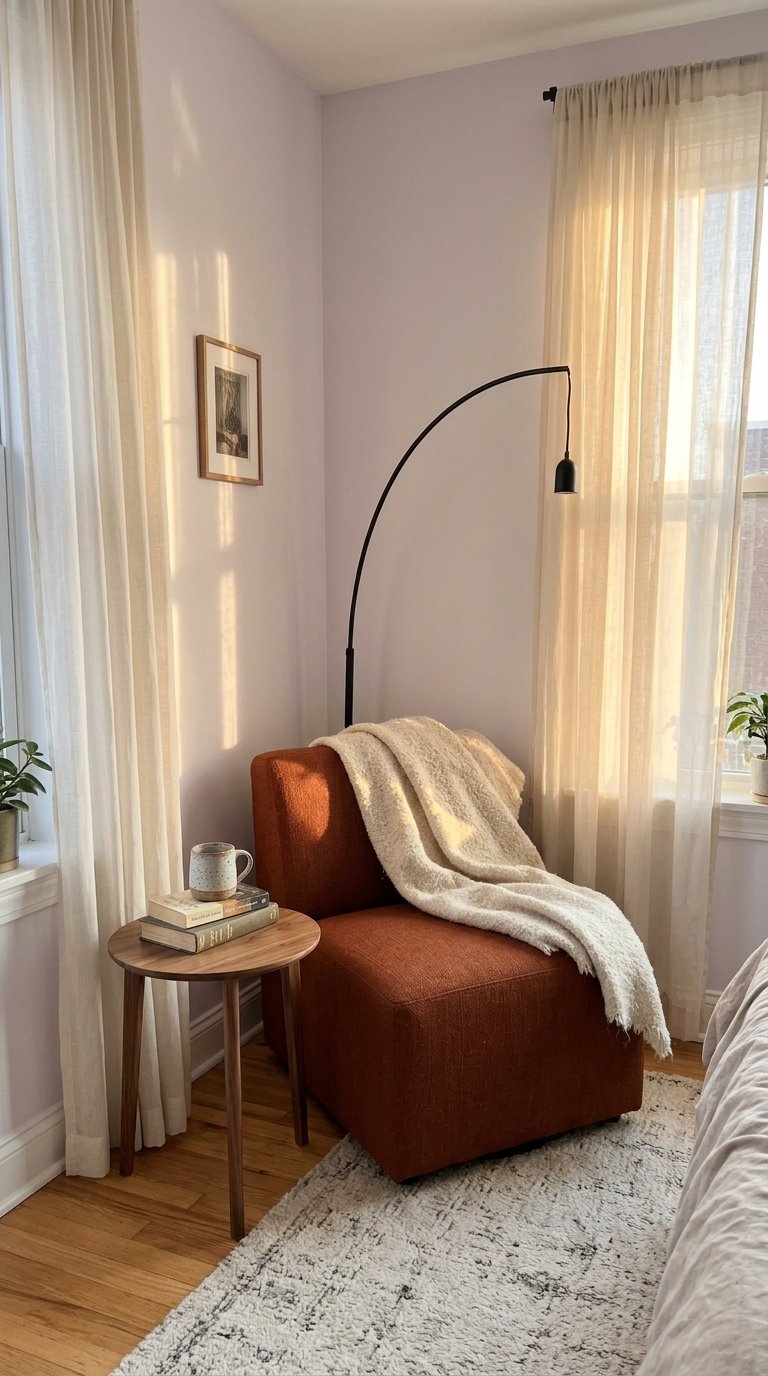
A reading corner doesn’t need much room. A chair, a floor lamp and a small side table can fit in a corner roughly 3 by 3 feet. Choose a chair that’s comfortable but compact, such as a slipper chair or a small armchair, and angle it slightly toward the room.
A floor lamp with an adjustable arm gives direct light for reading, and a warm bulb keeps it relaxing. Skip the large ottoman and extra decor if the corner is tight. A throw blanket and a short stack of books are enough.
Bedding, Rugs and Curtains That Make It Feel Luxurious
This is where the hotel look gets built, and it’s mostly about layers, proportion and fit rather than expensive fabrics.
15. Stack bedding the hotel way
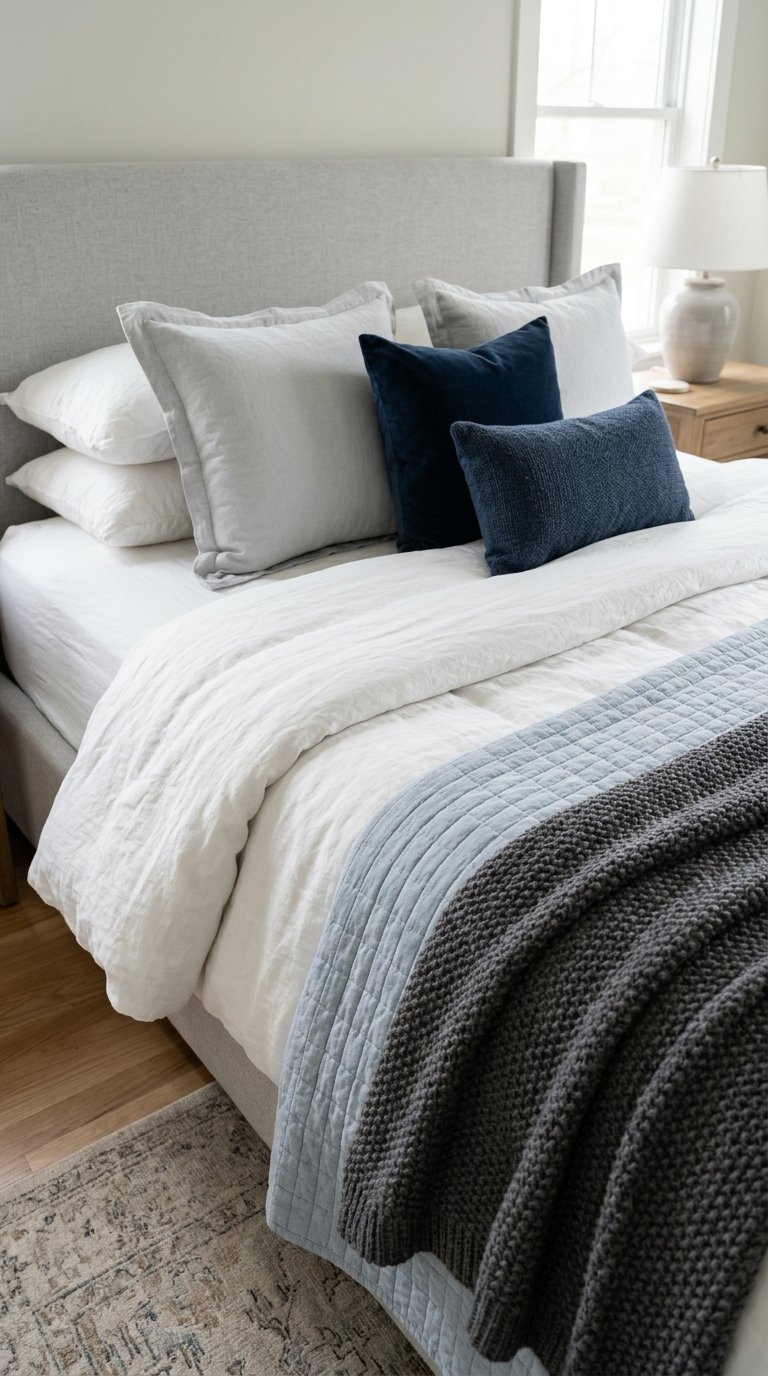
Layering gives a bed depth without clutter. Build it in this order:
- Fitted sheet and flat sheet, or just a fitted sheet for a simpler version
- Duvet or comforter, folded back or pulled to the headboard
- Coverlet or quilt folded across the lower third
- Throw draped at the foot or a corner
- Pillows: sleeping pillows, then shams, then one or two accent pillows
A budget version needs only three layers: a duvet, a coverlet or quilt and a good pillow arrangement. Stick to a restrained palette and vary the texture, such as smooth cotton against nubby wool, so the bed looks rich rather than busy. Choose washable layers so the bed stays easy to live with.
16. Size the rug so it extends past the bed sides
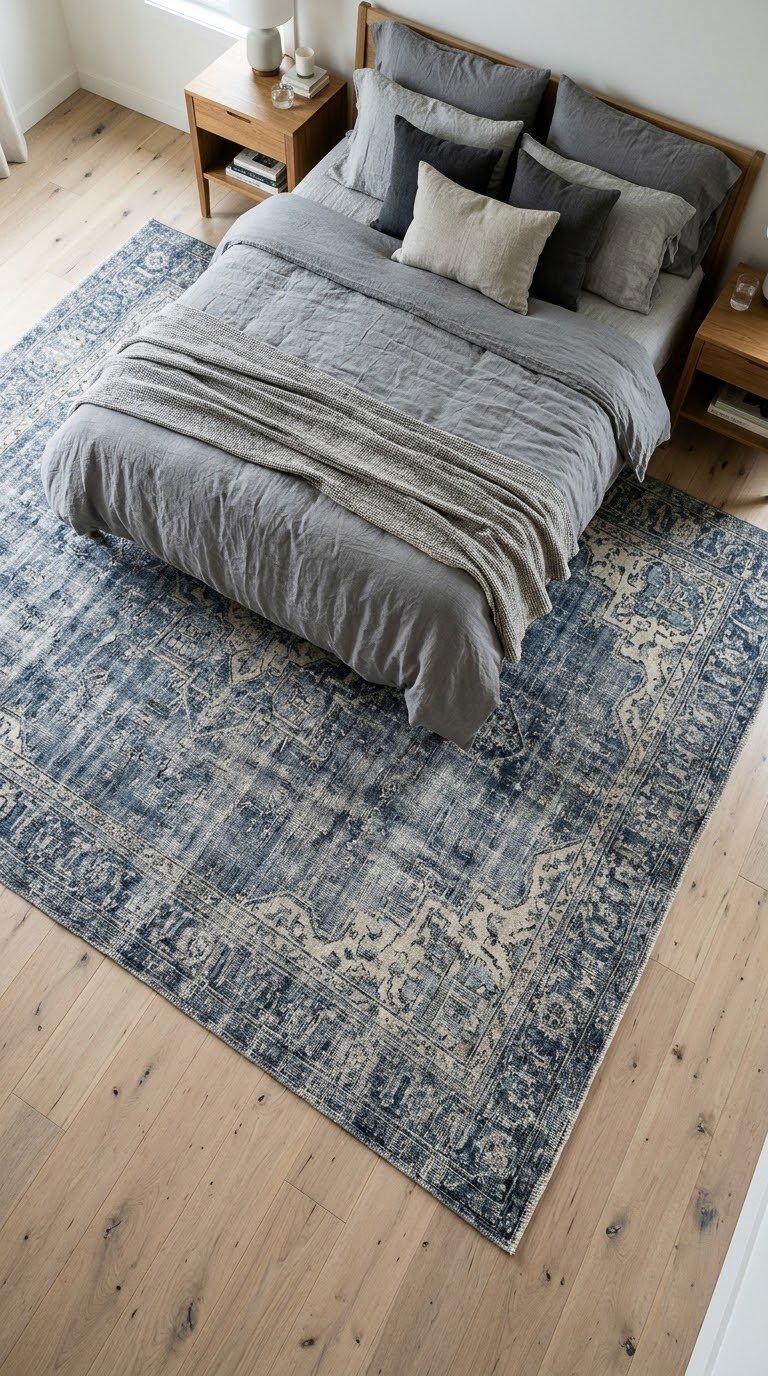
An undersized rug is a common reason a bedroom feels off. A rug that extends well past the sides of the bed anchors the furniture and gives your feet a soft landing. A common guideline is to extend it roughly 18 to 24 inches beyond each side and the foot, though room size and door swings may limit this.
As a rough guide, many people use an 8 by 10 foot rug under a queen bed and a 9 by 12 foot rug under a king, with the rug placed so it covers the lower two-thirds of the bed and nightstands sit partly on or off it. Always measure your own room and check that doors can open over the rug. Low-pile or flatweave rugs are easier to clean and don’t catch drawers.
17. Hang floor-length curtains high and wide, with a blackout liner
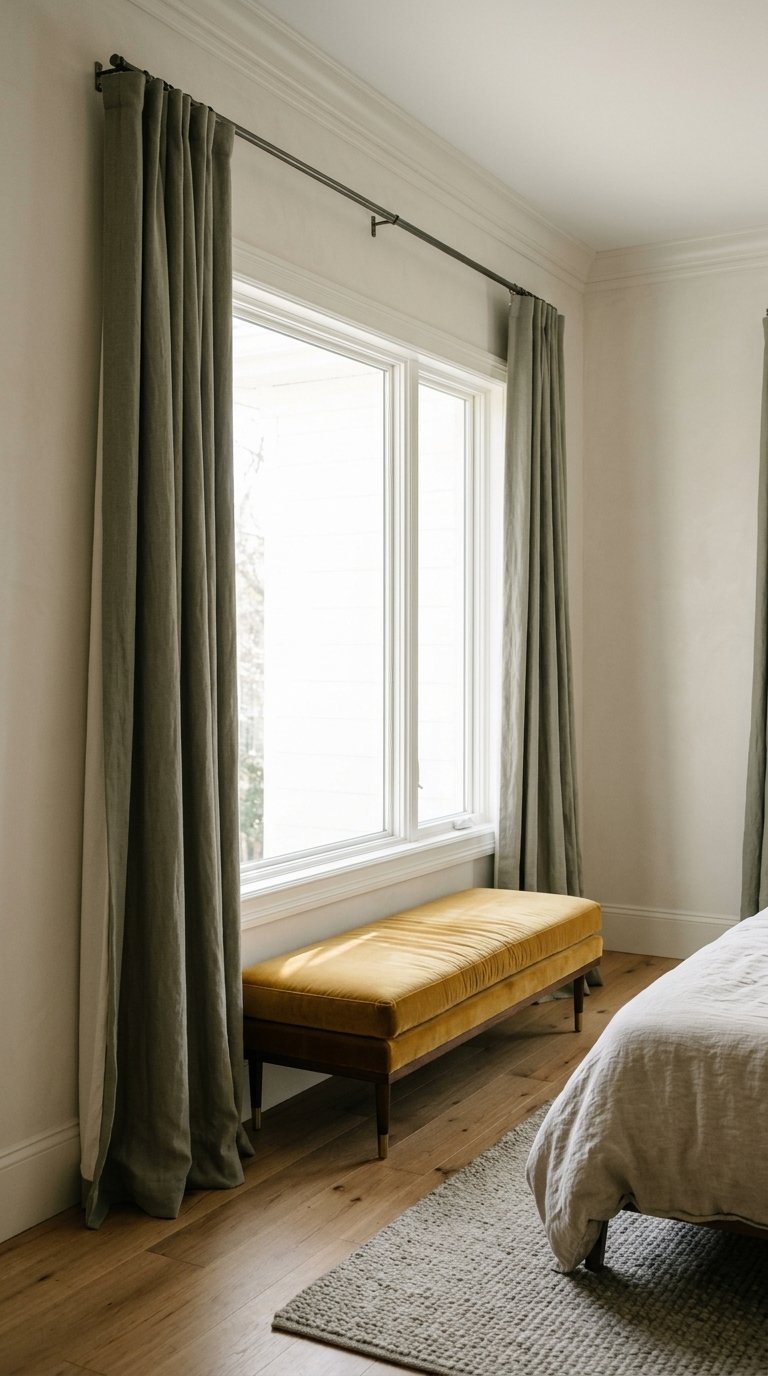
Curtains hung higher and wider than the window make the window look larger and the ceiling taller. A common approach is to mount the rod closer to the ceiling than the window frame and extend it beyond the frame on each side so the fabric clears the glass when open. Let the panels reach the floor or just kiss it.
Add a blackout liner or choose blackout panels if you need darker mornings. Choose fuller panels in linen blends or heavy cotton for a hotel look, and consider a sheer layer if you want daytime softness. Test the hang before hemming, since fabric and rods affect the final length.
Storage and Clutter Control
A calm room depends on stuff having a home. These three ideas cover the most common problems: the nightstand, the foot of the bed and the missing closet.
18. Organize the nightstand into three zones

Divide the nightstand by purpose. The surface is for what you want to see, like a lamp, a small tray and one nice object. The drawer holds things you reach for at night, such as lip balm, a notebook and earplugs. The third zone is charging, handled with a cord tray or an inside-drawer charging solution if there’s room.
A small tray keeps the surface from looking messy, because contained items read as intentional. Keep a clear edge so there’s room for a glass of water. If your nightstand has no drawer, add a slim basket on a shelf beneath or a small bedside caddy.
19. Use a storage bench or ottoman at the foot of the bed

A bench at the foot of the bed adds seating, a landing spot for a throw and hidden storage for blankets, spare pillows or shoes. Choose one slightly narrower than the bed so it looks deliberate. Upholstery that coordinates with the headboard or picks up an accent color makes it feel finished.
Check the clearance at the foot of the bed before you buy. If the walkway gets tight, a slim bench is better than a deep chest. In a rental, it’s a good way to add storage without drilling or building.
20. Create a dressing corner without construction

If you lack a closet or want a dedicated spot to get ready, use freestanding pieces. A slim wardrobe or open clothing rail, a mirror and a stool or small bench can turn a corner into a dressing area. Add a small lamp and a tray for jewelry or daily items.
Keep it tidy by limiting what’s on display. Baskets or bins on the lower shelf hide the clutter, and a floor-length mirror makes the corner feel intentional. This setup also moves with you if you rent.
Master Bedroom Ideas on a Budget
The most convincing budget bedroom spends first on what you see and touch most. Use this priority order, and refer back to the numbered ideas above.
- Low spend: Start with a duvet and layered bedding (idea 15), warm bulbs and a dimmer or smart bulb (13), and a painted headboard shape or a simple wall color (4 and 9). These changes give the strongest visual lift per dollar.
- Mid spend: Add a properly sized rug (16), floor-length curtains with a blackout liner (17), plug-in sconces or swing-arm lamps (12) and a storage bench (19). This tier fixes proportion and lighting, the two things budget rooms most often miss.
- Splurge: Invest in a tall upholstered headboard (5), a slat or paneled wall (6) or a limewash finish (7), and a quality mattress and linens if you haven’t already. Save these for last, since they cost more and matter less if the basics aren’t in place.
When in doubt, buy the item you’ll touch every day first.
Renter-Friendly Master Bedroom Ideas
You can get a lot of the look without changing the walls. These reversible swaps tie back to the numbered ideas, and it’s still smart to check your lease before using adhesives.
- Use a freestanding or fabric-wrapped headboard instead of painting (idea 5).
- Try removable wallpaper or peel-and-stick panels behind the bed (6 and 8).
- Swap hardwired lights for plug-in sconces with cord covers (12).
- Add a floor lamp and a small chair for a reading corner (14).
- Use curtains to add height and softness (17).
- Choose a storage bench and freestanding wardrobe (19 and 20).
- Layer a large rug over existing flooring (16).
- Use large leaning art or mirrors instead of drilling into walls.
Adapt It to Your Situation
Small master bedrooms
Check door swing before anything else. If the door hits the bed, consider moving the bed or switching to a door that swings the other way. A king bed can fit in a small room if you use wall-mounted nightstands (idea 2) and keep the rest of the furniture minimal.
Large master bedrooms
Avoid a floating bed in the middle of the room. Anchor it with a large rug and a strong wall treatment, then use zones (idea 3) to make the extra space useful.
Couples with different tastes
Agree on a shared palette, then let each person choose separate textures, such as one side’s throw and the other side’s lamp. Matching nightstands and bedding keep the room cohesive, while small personal items add individuality.
Light sleepers
Prioritize blackout curtains or liners (17), warm low-level lighting (13) and a rug to soften sound. Separate bedside lights (12) let one partner read without waking the other.
A cozy fall and winter refresh
You don’t need a new bed to get a cozier room. Swap lighter bedding for flannel or wool, add a heavier throw, and use warm bulbs and a dimmer. A deeper accent color, like rust or forest green in pillows, shifts the mood quickly, and the pieces can go back into storage in spring.
Final Styling Checklist
Run through this list when the room feels nearly done but not quite.
- Art above the bed is sized to roughly two-thirds of the headboard width, and hung a few inches above it.
- A mirror is placed where it reflects light or a pleasant view, not directly opposite the bed.
- Nightstands are the right height relative to the mattress, and the surfaces hold only what you use.
- The rug extends past the bed sides, and doors clear it.
- Curtains hang high and wide and reach the floor.
- Light bulbs are warm and consistent, and the overhead light dims.
- There is one living thing, such as a plant or fresh stems in a vase.
- There is one meaningful object, such as a framed photo, a book or a keepsake.
Master Bedroom Ideas FAQ
1. How do you make a master bedroom feel like a hotel without spending much?
Focus on layered bedding, warm lighting and a clean surface. A white or neutral duvet, a few textured layers and matching lamps get you most of the way, and a dimmer adds the glow.
2. Should a master bedroom be darker or lighter?
It depends on the room and how you use it. Lighter colors help small or dim rooms feel open, while darker colors create a cocoon in rooms with good control over light. Test large samples at different times of day.
3. Can a king bed fit in a small master bedroom?
Often yes, if you plan around door swings and use wall-mounted nightstands. Measure the room, mark the bed’s footprint on the floor with tape and check that you can walk around it comfortably.
4. How do you decorate a master bedroom for two people with different tastes?
Share a palette and mix personal touches through textiles and small accessories. Matching major pieces keeps the room calm while each person adds their own details.
5. What is the best bulb color for a master bedroom?
Warm white bulbs, often around 2700K, are a common choice for a relaxing tone. Choose dimmable bulbs if you’re using a dimmer, and keep all bulbs in the room similar.
6. How high should art hang above the bed?
A common guideline is a few inches above the headboard, with the art centered over the bed. Adjust for ceiling height and furniture, and lay the art on the bed first to check proportions.
7. Should nightstands match?
They don’t have to, but they should feel balanced in height, scale and visual weight. Mismatched pairs work when they share a color, material or shape.
8. What can renters change in a master bedroom without losing a deposit?
Rugs, curtains, plug-in lighting, freestanding storage and large leaning art are generally safe. Check your lease before using adhesives or removable wallpaper.
9. Is it “master bedroom” or “primary bedroom” now?
Both are used. Many brands and publications now prefer “primary bedroom,” while “master bedroom” remains widely searched. Either way, it refers to the main bedroom of the home.
10. How do you stop a master bedroom from looking cluttered when storage is limited?
Give everything a container, such as trays on nightstands, baskets under benches and a closed wardrobe or bins in a dressing corner. Edit the surfaces, and keep decor to a few items.
Conclusion
A finished master bedroom comes from sequence more than spending. Settle the layout first, give the bed wall a focal point, choose a palette you can live with, then add light, layers and storage. If budget is tight, begin with bedding, warm bulbs and a rug that fits.
Choose two or three ideas from this list that suit your room and start there. Save the ones that appeal to you, test paint and fabrics in your own light, and let the room come together over a few weekends rather than all at once.