
15 Large Master Bedroom Ideas to Fill a Big Room Beautifully
These large master bedroom ideas are for a room that sounds like a dream — until you live in it. A big master bedroom with a small bed lost in the middle, bare walls, and one lonely rug feels empty, not luxurious. The real problem with a large bedroom is not filling it. It is making it feel warm and finished without crowding it.
Most large bedrooms go wrong in the same way: furniture that is too small for the room, everything pushed against the walls, one small rug in the middle of a big floor, and one ceiling light trying to do the work of five. This article fixes those things with 15 ideas that work in real big rooms, with sizes and placement for each one.
Start by zoning the room, add one large rug, then build a sitting area. Those three moves alone change the room completely — and the rest of the ideas build on them, one at a time.
The 3 Best Large Master Bedroom Ideas to Start With
- Zone the room first — split it into sleep, sitting,g and dressing areas before buying anything.
- One large rug under the bed — it anchors the sleep zone and stops the floor from feeling bare.
- A sitting area with two chairs — it fills the empty half of the room and gives it a purpose.
1. A Big Bed With a Tall Headboard That Anchors the Room
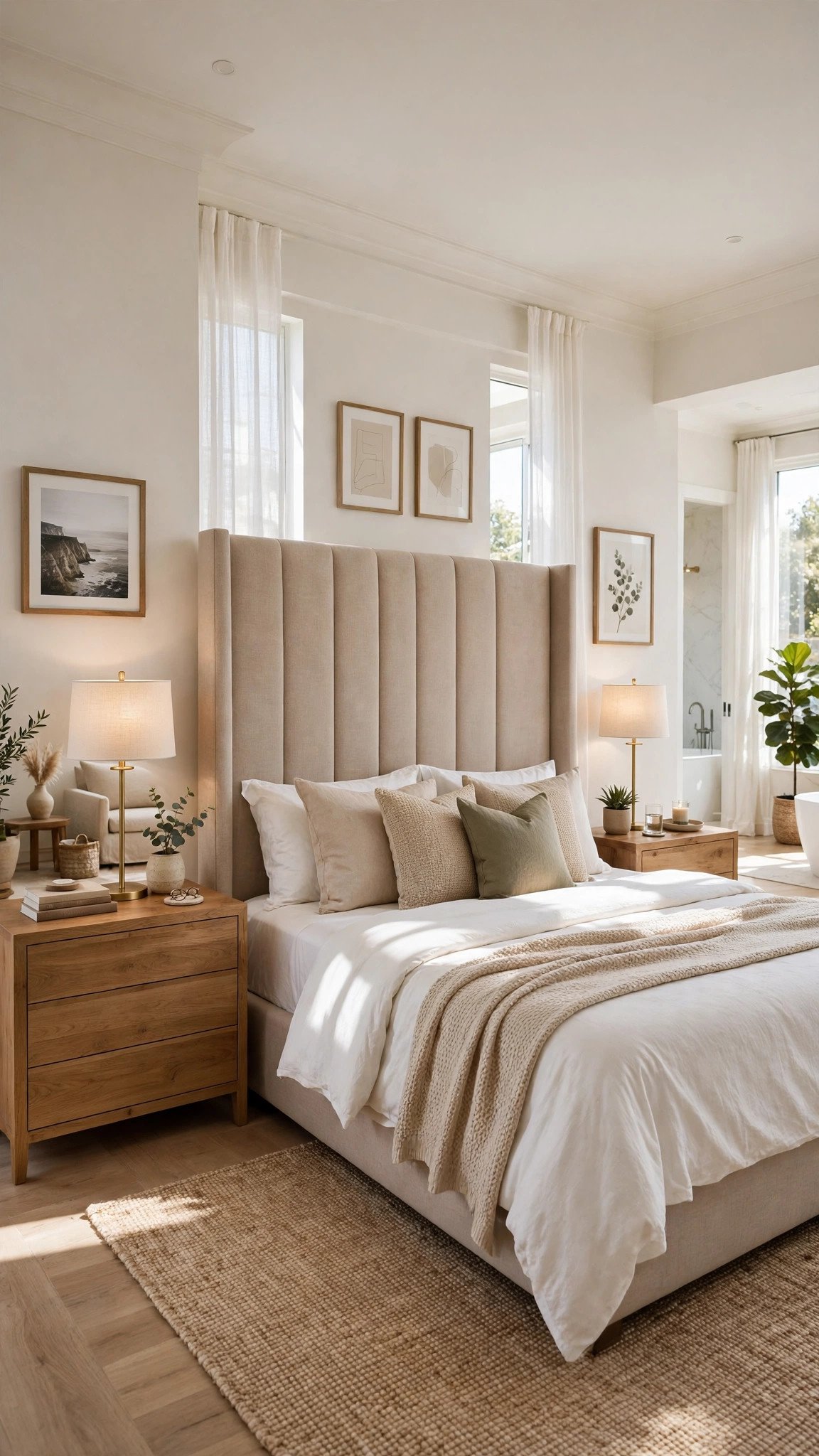
A large room needs a bed with presence — a tall upholstered headboard or a solid wood frame, with a king bed if the room allows it. A small bed looks lost in a big room, like a boat in the middle of a lake. The bed is the anchor of the room, and in a large room it has to be big enough to hold the space.
A king bed suits most large master bedrooms — it fills the wall properly and leaves room for wide nightstands on both sides. The headboard should be tall, at least 24 inches above the mattress, so the bed has height as well as width. Flank it with wide nightstands and lamps that match the scale of the bed; small nightstands beside a king bed look like a mistake. These large bedroom ideas start with the bed because everything else in the room is measured against it.
2. Split the Room Into Zones for Sleeping, Sitting and Dressing
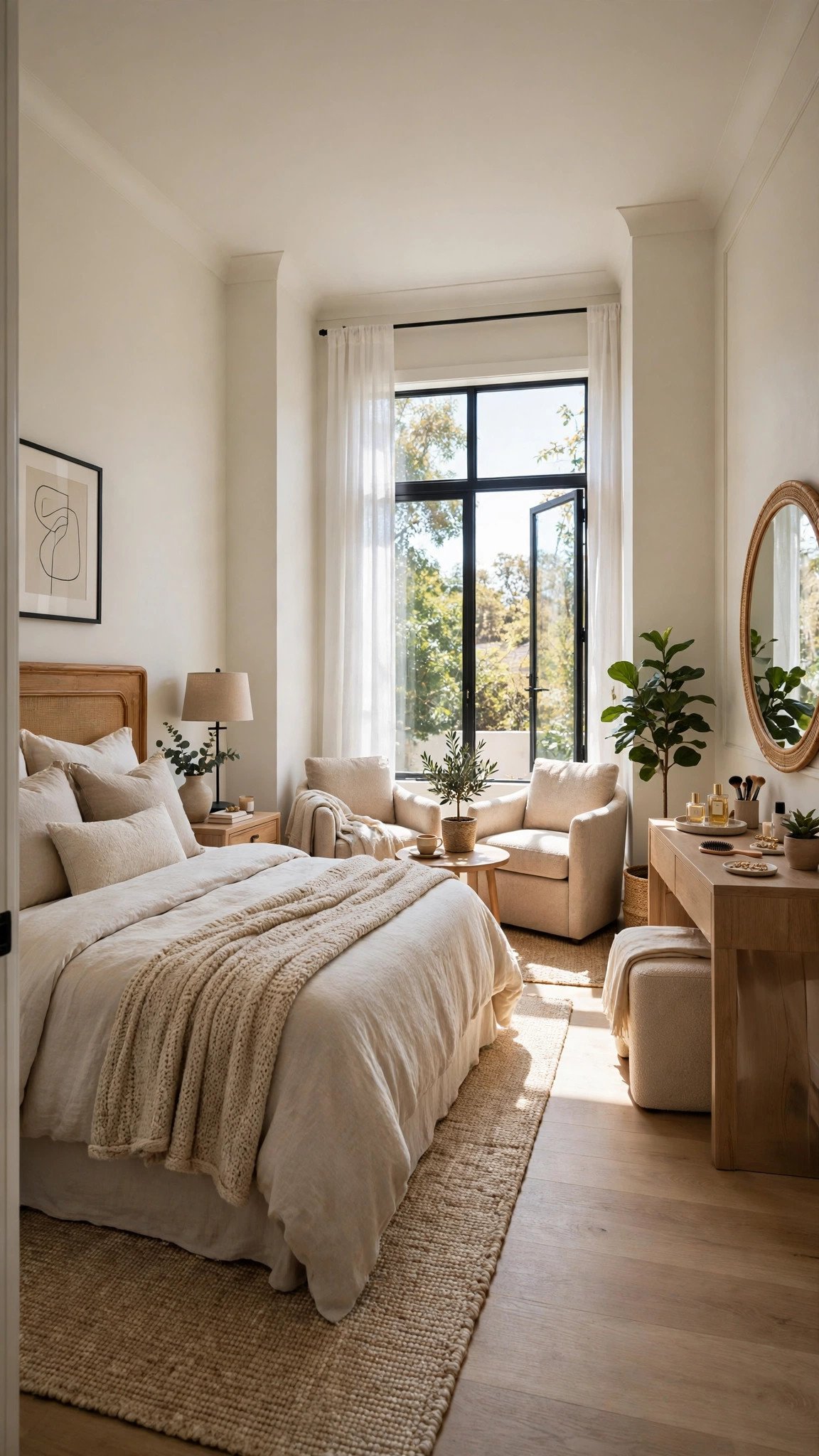
The single most useful of all large bedroom ideas: draw invisible lines and give each part of the room a job. The bed area is for sleeping, one corner is for sitting, another is for dressing. Zoning stops the room feeling like one big empty box and makes every square foot useful.
Mark the zones before you buy anything — use painter’s tape on the floor or just move the furniture and live with it for a week. The sleep zone holds the bed, the rug, and the nightstands. The sitting zone holds two chairs and a small table near a window. The dressing zone holds the wardrobe, the mirror,r and the vanity. Each zone needs its own light, its own rug or floor covering, and a clear path between zones. When every part of the room has a job, the room stops feeling empty and starts feeling like a home.
3. A Sitting Area With Two Armchairs and a Small Table
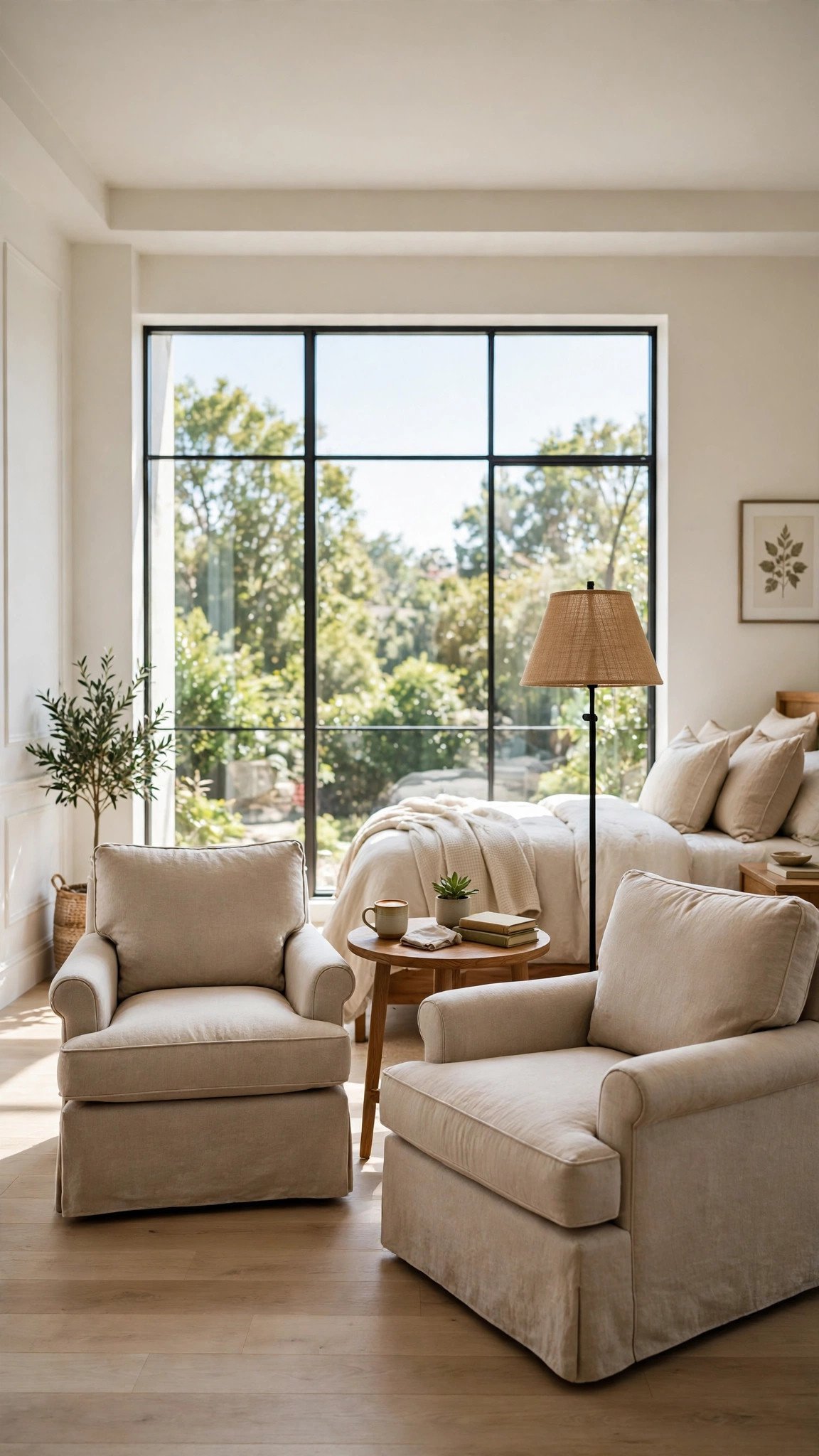
Two comfortable armchairs and a small side table near a window turn dead space into the best seat in the house. Face the chairs toward each other or toward the view, add a floor lamp, and the room gains a second purpose — morning coffee, reading, or quiet talk before bed. A sitting area is what makes a large bedroom feel like a suite instead of a warehouse.
Place the chairs where the light is best, usually near the largest window, and leave enough space behind them to walk past. A small round table between the chairs holds two cups and a book, and a floor lamp behind one chair gives you reading light without lighting the whole room. Keep the chairs in the same style family as the bed — if the bed is modern, the chairs should be modern too — so the two zones feel like one room, not two rooms pushed together.
4. A Reading Corner by the Window
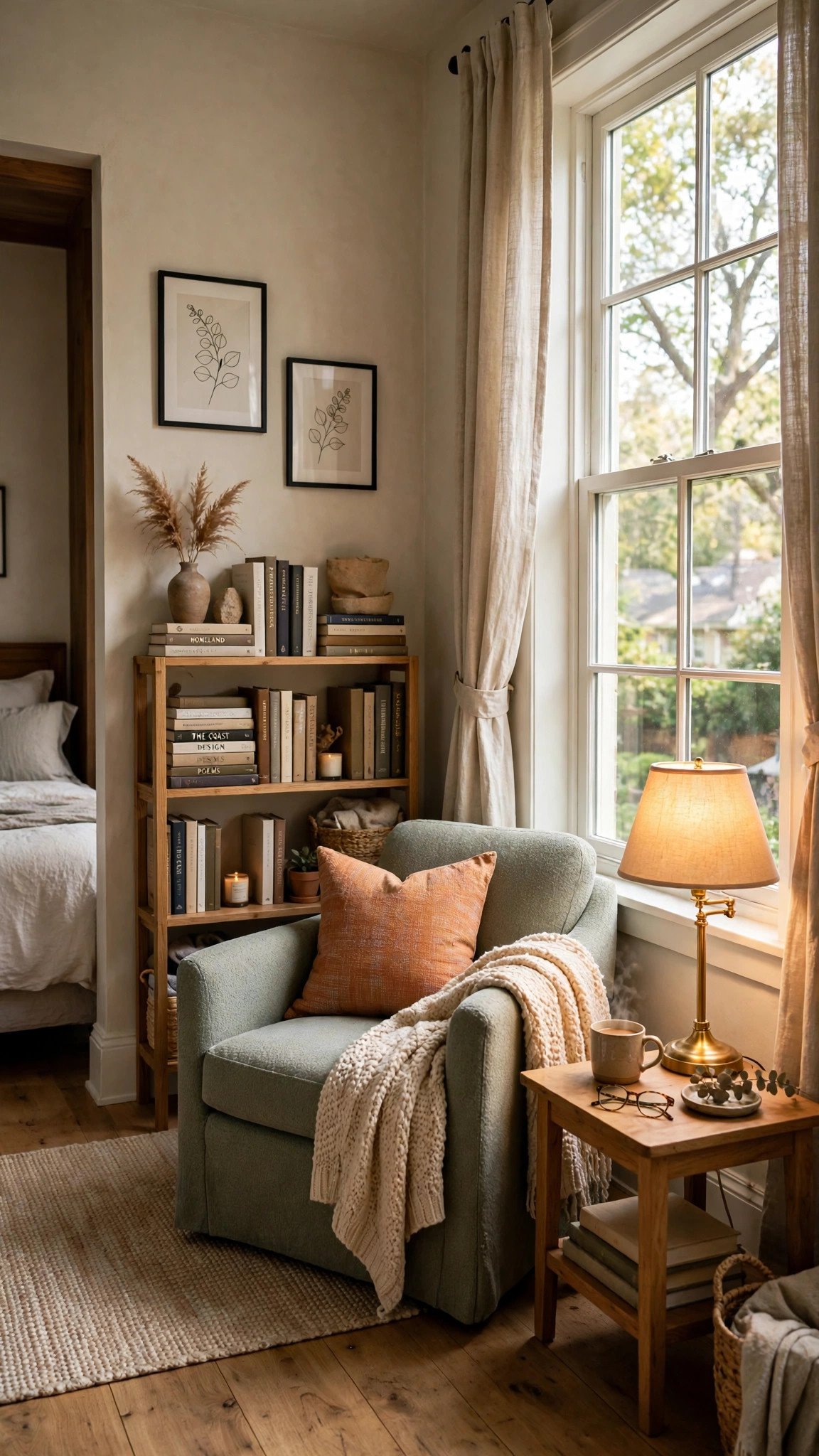
A single armchair, a small bookshelf or basket of books, and a good reading lamp by the brightest window is the cheapest zone to build, and it fills a corner that would otherwise stay bare. A reading corner needs almost nothing — one chair, one light, one place for a book — but it gives the room a personal spot that feels like it belongs to you alone.
Keep the chair angled to the light, not flat against the wall, so you can read without squinting and the chair looks placed, not parked. A small basket beside the chair holds the books you are reading, and a floor lamp with an adjustable arm gives you direct light. If the room already has a sitting area with two chairs, put the reading corner in a different corner — a large room has room for both, and each corner gets its own purpose.
5. Large Furniture That Fits the Scale of the Room
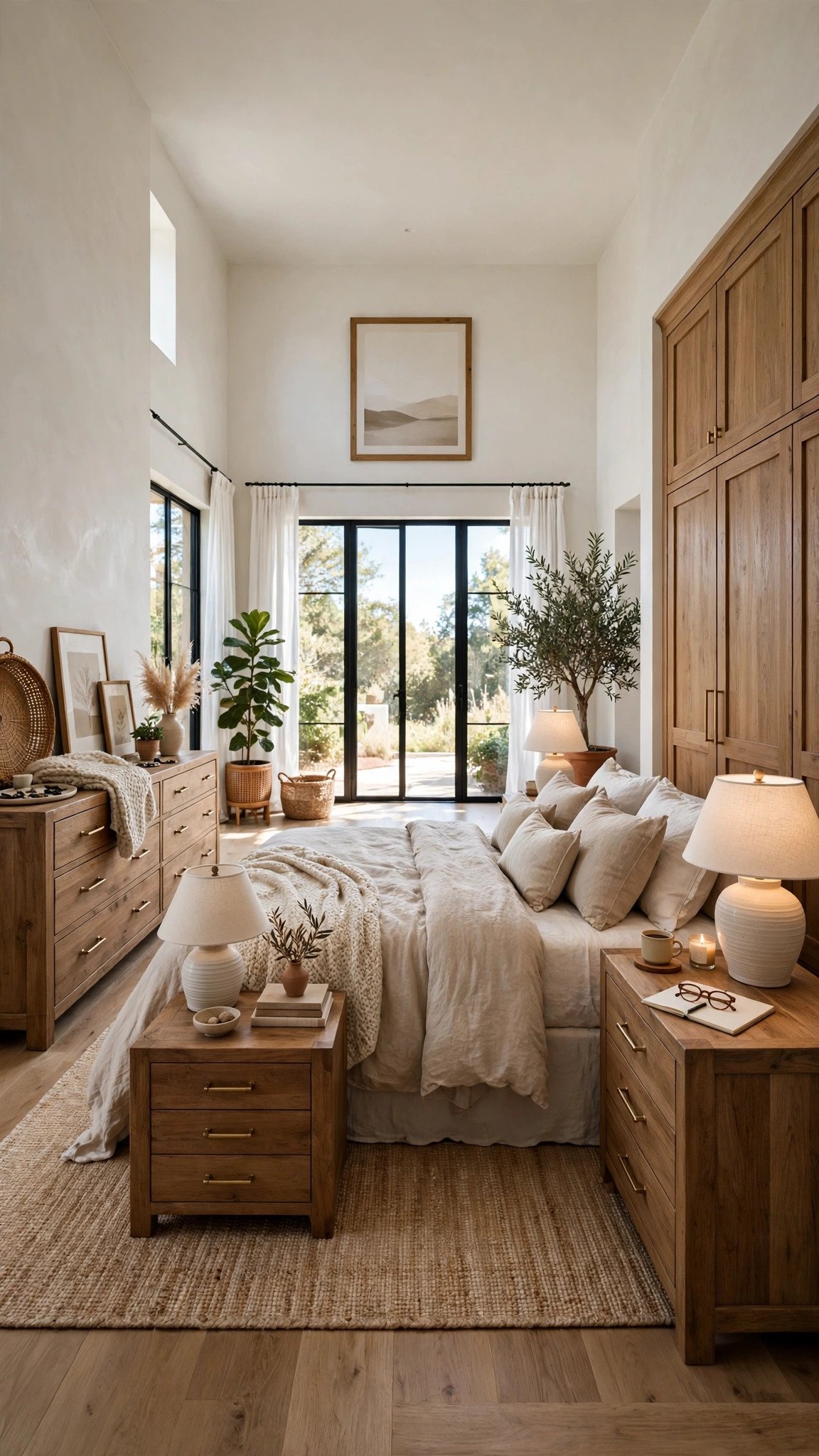
In a big room, normal-size furniture looks like doll furniture. Choose a wide dresser, a tall wardrobe, and chunky nightstands — master bedroom furniture ideas that match the room, not fight it. One large piece beats three small pieces that get lost, because scale is what makes a big room feel intentional.
Measure before you buy: a dresser for a large room should be at least 60 inches wide, nightstands at least 24 inches wide, and the wardrobe tall enough to use the wall height. If the furniture is too small, the room swallows it, and the walls look bare no matter how much you buy. Buy the big pieces first — bed, rug, dresser — because they set the scale, and everything smaller follows them. A large room with correctly scaled furniture feels full with fewer pieces than a small room needs.
6. A Dressing Area With a Vanity and a Tall Mirror
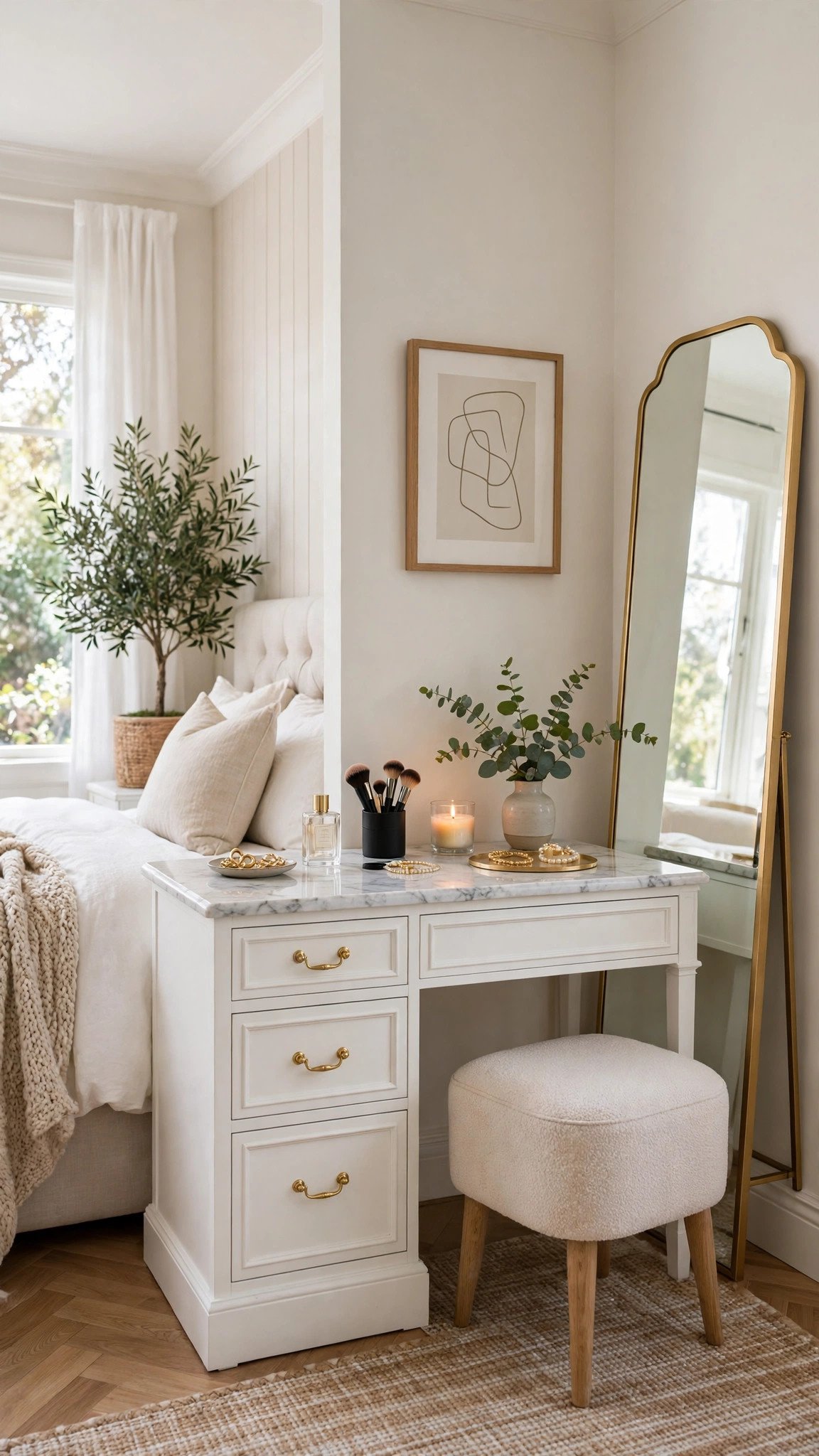
A dressing table, a stool, and a tall mirror in a quiet corner give the room a luxury-hotel feel and keep clutter off the main surfaces. This is where a large master bedroom earns its size — a dressing area needs space, and this room has it. A vanity turns the daily routine into a calm moment instead of a rush over a crowded nightstand.
Place the dressing area where the daylight is best, near a window, and add one warm lamp so it works in the evening too. Keep only the few things you use every day on the table — a brush, a small tray for jewellery, a vase — and store the rest in a drawer. A tall mirror, leaning or standing, makes the corner feel bigger and lets you see the whole outfit at once. The dressing area is the zone that makes a large bedroom feel like it was designed for living, not just for sleeping.
7. A Small Workspace Nook in a Quiet Corner
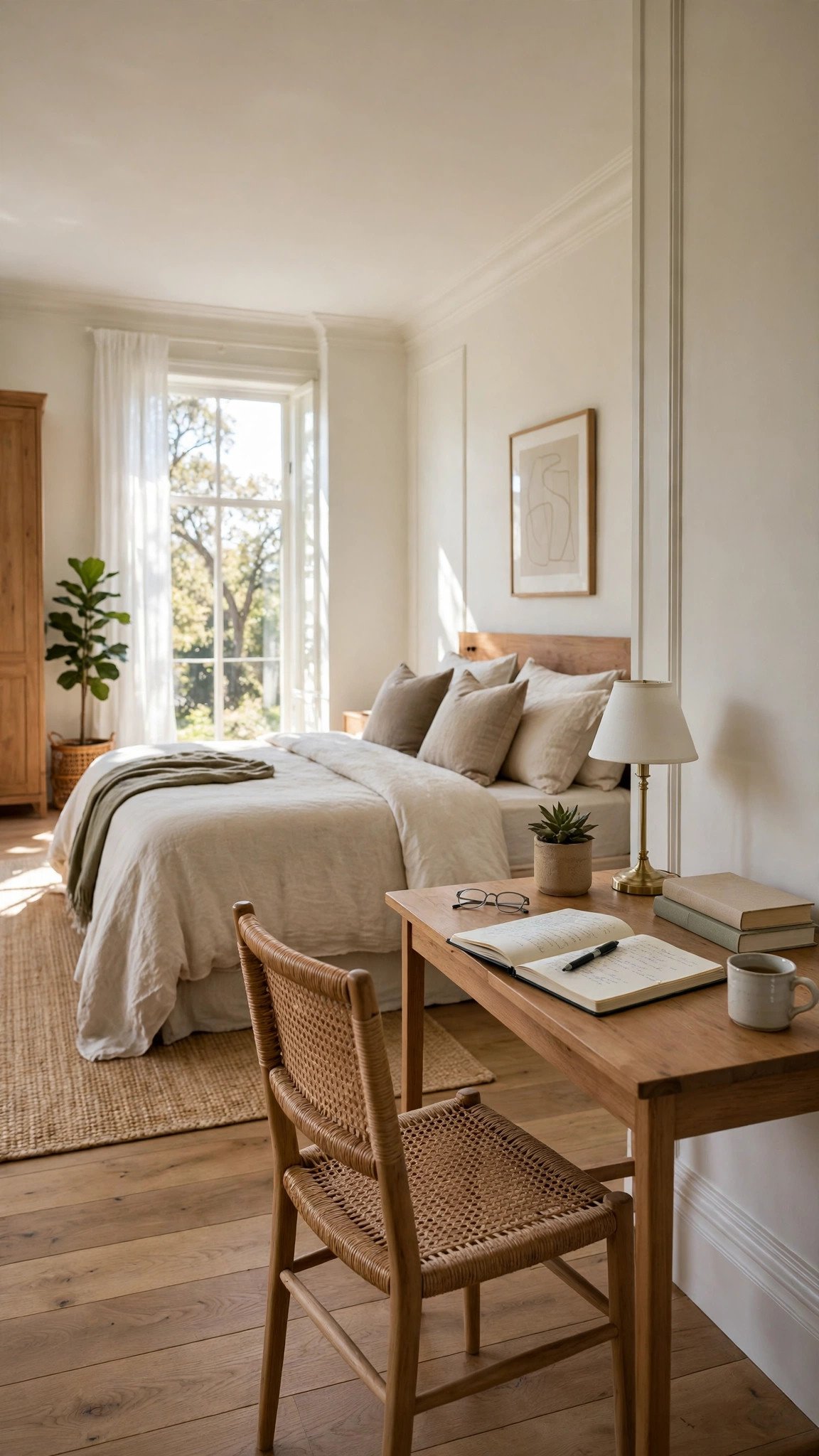
A slim desk and a comfortable chair in the far corner make a calm place to write, plan, or work, without turning the bedroom into an office. Keep it small and tidy — one desk, one lamp, one chair — and screen it with a plant or a folding screen if you want it out of sight at night. A workspace nook gives the room a third purpose, and it uses the corner that would otherwise collect clutter.
Choose the quietest corner, away from the bed, so work does not follow you into sleep. A slim desk, no wider than 48 inches, fits most corners without dominating the room. Keep only what you need on it — a laptop, a notebook, a lamp — and put everything else in a drawer. If the desk starts to spread, the nook stops being a nook and becomes an office, so edit it weekly and keep it small.
8. One Large Rug Under the Bed, Not a Small One
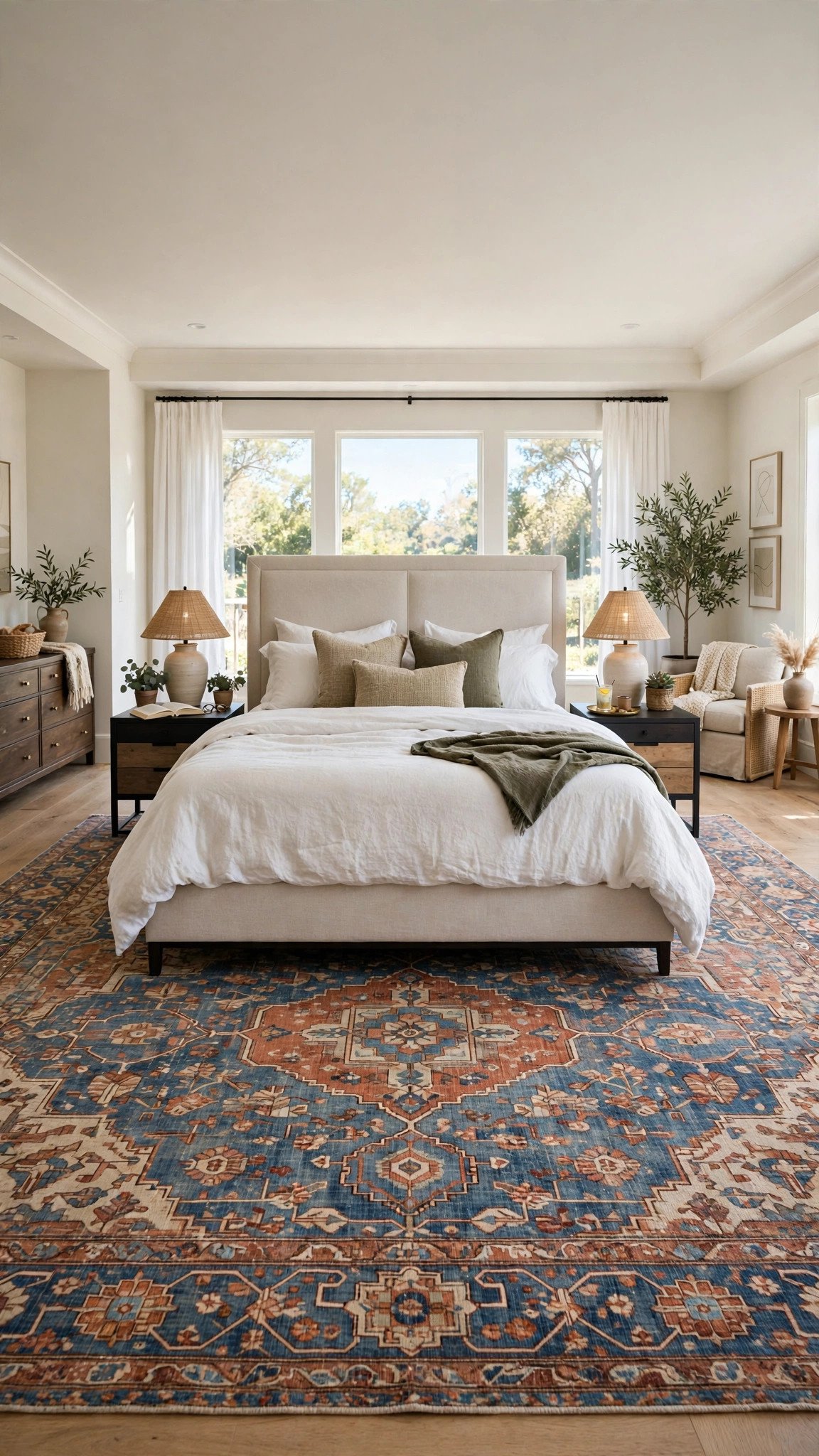
A rug should reach past the sides of the bed and under the nightstands — in a large bedroom, a small rug makes the room look even emptier. One big rug defines the sleep zone, softens the floor, and ties the bed, nightstands, and bench together into one group. It is the single piece that makes the sleep zone feel like a room inside the room.
Use a rug at least 9 by 12 feet for a king bed, reaching past both sides of the bed and under the nightstands. A small rug under a big bed looks like a mat, and it makes the floor around it feel even barer. Choose a low-pile rug in a warm neutral or a soft pattern, so it blends with the bedding and does not fight it. These large master bedroom ideas work because they fix what you see every morning — a big rug makes the whole sleep zone feel finished the moment you wake up.
9. Statement Lighting: A Big Chandelier or Pendant
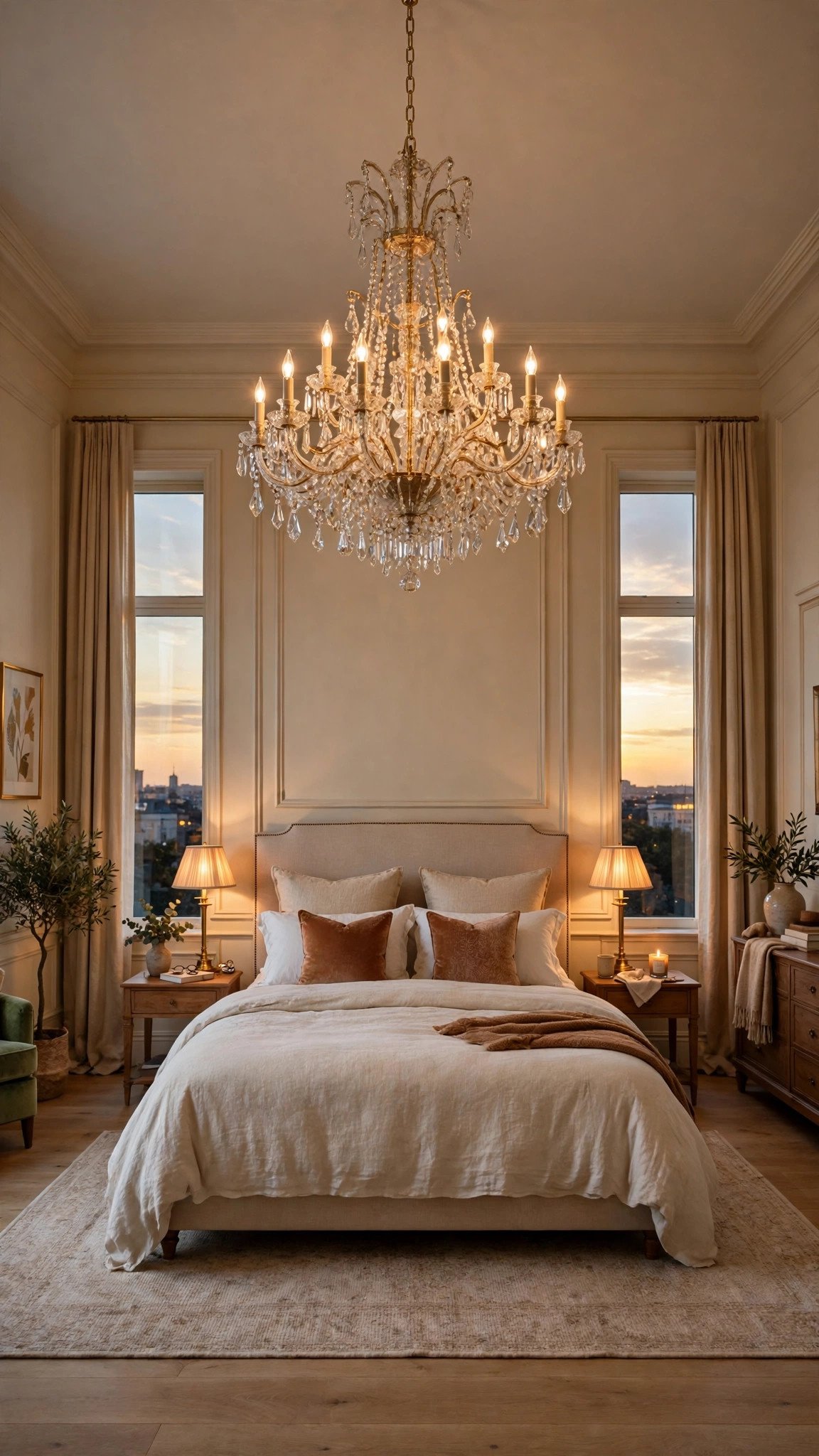
A small ceiling light disappears in a large room. A large chandelier or pendant over the centre of the room, or above the bed, fills the empty air above and gives the room a focal point. In a big room, the ceiling is the largest empty surface, and a statement light is the only thing that can fill it.
Hang the chandelier over the centre of the room or above the bed, low enough to see and admire, on a dimmer. A large fixture suits a large room — a small pendant in a big room looks like a mistake, the same way small furniture does. Add dimmers so the same light works for bright mornings and soft evenings. A chandelier is the jewellery of a large bedroom, and it is the piece your eye goes to first when you walk in.
10. Fill Empty Walls With Oversized Art

Bare walls are what make a big room feel cold. One large canvas, a big framed print, or a gallery row above the bed fills the wall in one move. Avoid lots of tiny frames scattered around — one bold piece suits a large wall far better, because scale is what makes art work in a big room.
Hang one large canvas above the bed, wider than half the bed, or a row of three matching frames on the longest wall. The art should be big enough to read from the door — if you have to walk up to it to see it, it is too small for the wall. Pick art with a colour from the bedding, so the wall and the bed feel planned together. A large room with one bold piece of art feels designed; the same room with ten tiny frames feels like a hallway.
11. A Bench or Settee at the Foot of the Bed
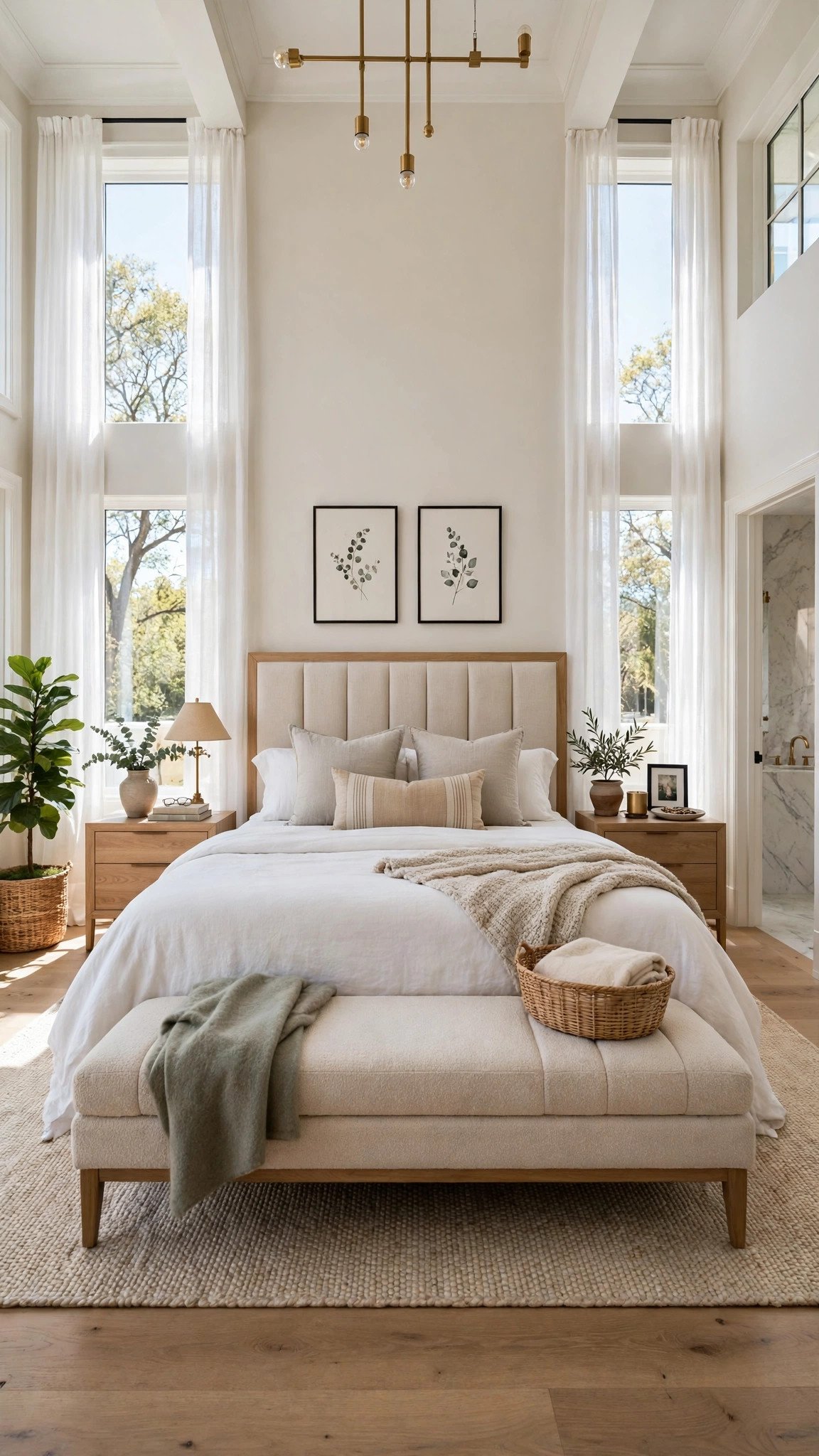
The space at the end of the bed is free real estate in a large room. A bench or a small settee there gives you somewhere to sit, lay out clothes, or place a tray, and it bridges the gap between the bed and the rest of the room. Without it, the foot of the bed is a dead zone — too far from the bed to use, too close to the door to ignore.
Choose a bench slightly narrower than the bed, so it looks deliberate, and upholster it in a fabric that matches the headboard or picks up an accent colour. A storage bench hides blankets and spare pillows, while an open bench is better for laying out tomorrow’s clothes. Check the clearance before you buy — you need at least 24 inches of walking space past the bench, or the room feels cramped instead of grand.
12. Smart Storage That Keeps a Big Room Tidy
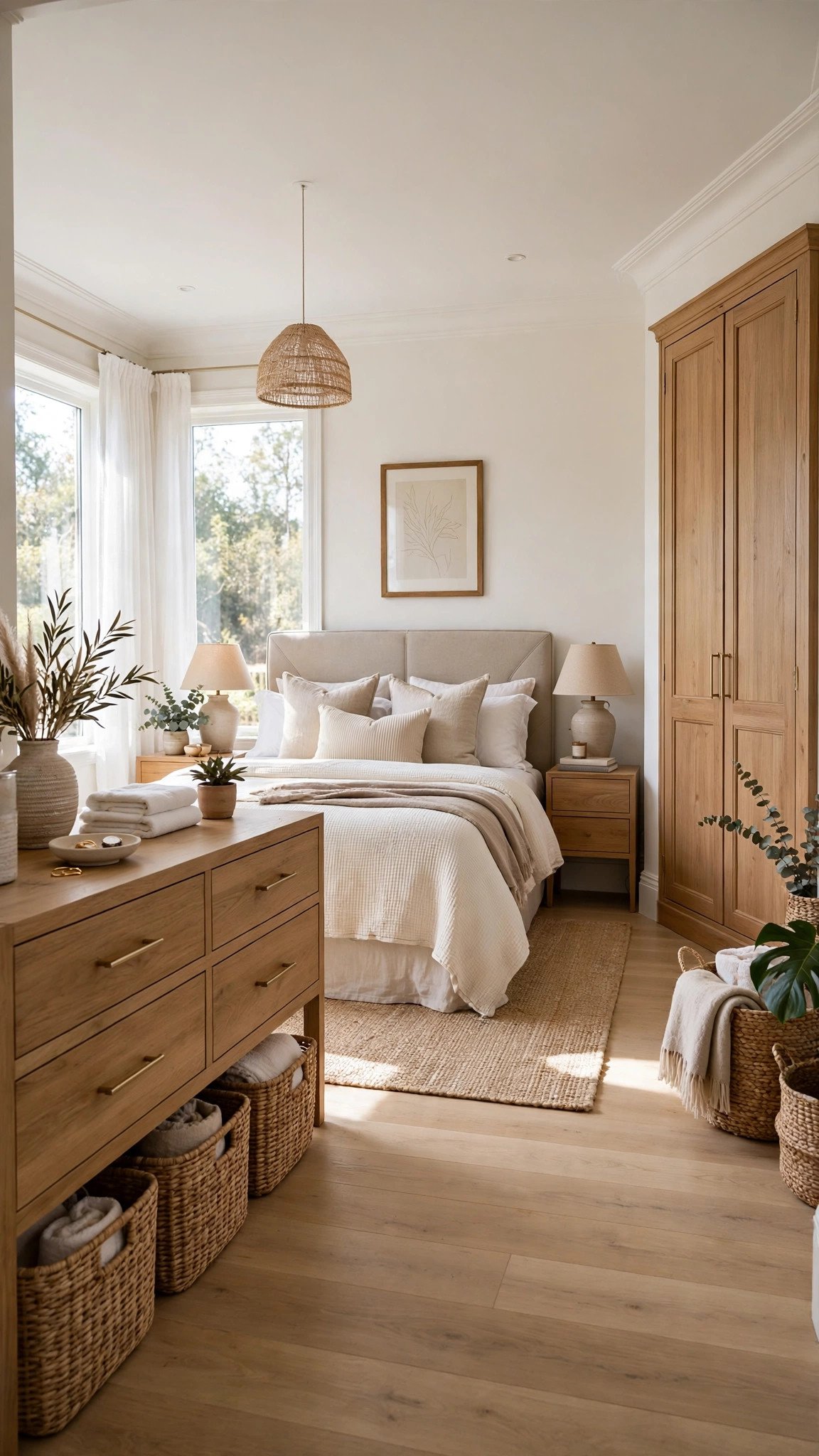
A big room collects clutter fast, because there is always somewhere to drop things. A wide dresser, a wardrobe with real hanging space, and a few baskets or boxes keep clothes, bedding,g and books in their place. Storage is what keeps a large master bedroom feeling calm instead of messy — without it, the room fills up with stuff faster than any small room.
Plan the storage before you place the furniture. The wardrobe goes on a side wall, the dresser opposite the bed or beside the wardrobe, and baskets go where clutter lands — by the door for shoes, by the bed for books, in the dressing area for accessories. A big room needs more storage, not less, because there is more surface for things to spread across. When everything has a home, the room stays calm, and the size feels like a gift instead of a burden.
13. Warm Layers That Make a Big Room Feel Cozy

A large room feels cozy through warmth, not through more furniture. Deep wall colours, wood tones, heavy curtains, a thick throw, ow and layered bedding all soften the space. This is the heart of large bedroom decorating ideas — fill the feeling of the room, not just the floor. A big room with warm layers feels like a cabin; the same room with cold surfaces feels like a hall.
Paint one wall in a deep, warm colour — deep green, navy, or warm charcoal — and keep the other walls light, so the room feels wrapped rather than closed in. Add wood in the furniture, heavy curtains on the windows, and layered bedding in warm neutrals. A thick throw at the foot of the bed and a wool rug underfoot do more for coziness than any extra piece of furniture. Warmth is what makes a big room feel like home, and it comes from colour, fabric and light, not from filling the floor.
14. A Room Divider or Screen to Shape the Space
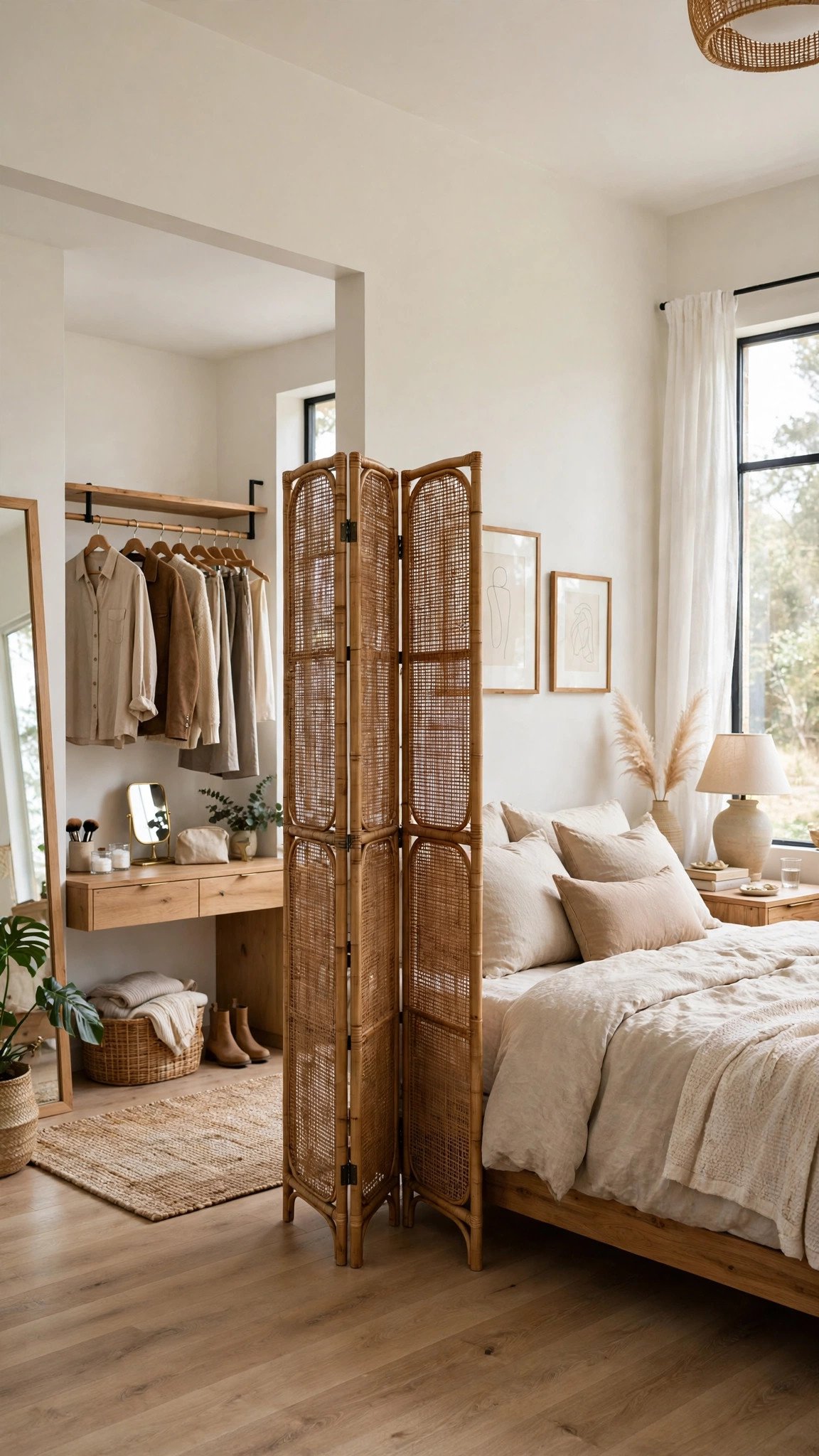
A folding screen or a tall open shelf softly separates the dressing area or workspace from the sleep zone, without building a wall. It is movable, so you can change the layout whenever you like, and it adds height and pattern to a flat, open room. A divider is the gentlest way to zone a large room, because it suggests a boundary without closing the space off.
Place the screen between the sleep zone and the dressing area or workspace, angled slightly so it feels placed, not parked. A rattan or fabric screen adds warmth, while an open shelf adds storage and lets light through. Keep the screen tall enough to matter — at least 5 feet — or it looks like a decoration rather than a divider. If the room feels too open even after zoning, a screen is the piece that finally makes it feel shaped.
15. Layered Lighting for Soft Evenings
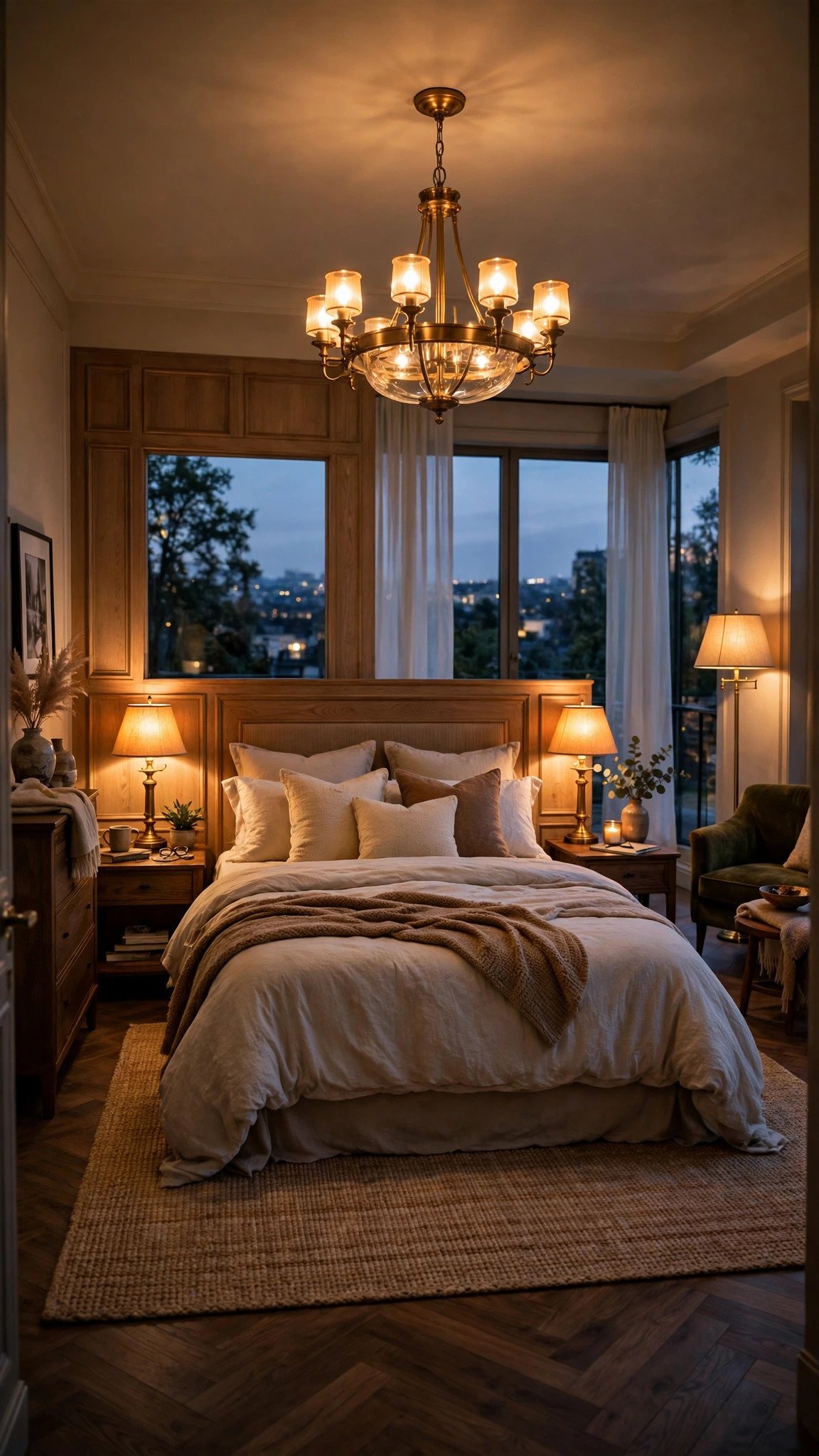
One ceiling light is never enough in a large bedroom. Layer it — bedside lamps, a floor lamp by the chairs, and a small lamp on the dresser — so every zone has its own soft light. Warm bulbs and dimmers turn a big, bright room into a calm place to sleep. A large room with one light feels like a hall; the same room with five warm lights feels like a home.
Give each zone its own light: two bedside lamps for the sleep zone, a floor lamp for the sitting area, a small lamp for the dresser. Use warm bulbs throughout so all the layers match, and put the main light on a dimmer. The goal is a room that shifts from bright morning to soft evening with one touch, and that only happens when the light is layered. Layered lighting is the final idea because it is the one that makes all the others work after dark.
Which Large Master Bedroom Idea Fits Your Room?
- If the room feels empty: start with zoning and a large rug. Split the room into sleep, sitting, ing and dressing zones, then anchor the sleep zone with a rug that reaches past the bed.
- If the room feels cold: start with warm layers and layered lighting. Deep wall colours, wood, heavy curtains, plants, and five warm lights make a big room feel cozy without adding furniture.
- If you need function: start with the dressing area or the workspace nook. A large room earns its size when every corner has a job.
- If the budget is small: start with the reading corner and oversized art. One chair, one lamp, and one big canvas change the room for very little money.
Pick 2 or 3 ideas, not all 15 at once. A large bedroom improves fastest when you fix the biggest problem first — emptiness, coldness, or missing function — and then add the rest one idea at a time. Large master bedroom ideas work best when they match the room you actually have, not the room in a photo.
Plan Your Large Master Bedroom in 4 Simple Steps
Step 1: Clear the room and measure it. Move everything out, measure the walls, the windows, and the doors, so the furniture you buy fits the real space. A tape measure and a sketch on paper prevent the most expensive mistake — furniture that does not fit.
Step 2: Mark out the zones. Sleep, sit, dress — mark them with tape or furniture before buying anything. Live with the zones for a week and see if they feel right before you commit.
Step 3: Buy the big pieces first. Bed, rug, dresser — the big pieces set the scale, and everything smaller follows them. Buy small pieces first, and the room will swallow them.
Step 4: Add light, art, and soft layers last. Lamps, art, curtains, throws, and flowers are the cheapest part of the design and the part you will change most often. Live with the room for a week before adding more, and the room will tell you what it still needs.
FAQS
How do I stop a large master bedroom from feeling empty?
Zone the room into sleep, sitting, and dressing areas, use one large rug under the bed, and add a sitting area with two chairs. The room feels full when every part has a job, and empty when it is one big open box with nothing in the middle.
What is the best layout for a large master bedroom?
Anchor the bed on the main wall with wide nightstands, define the sleep zone with a large rug, then place a sitting area near a window and a dressing area on the opposite side, with clear walking paths between the zones.
What size rug should I use in a large master bedroom?
A rug at least 9 by 12 feet for a king bed, reaching past both sides of the bed and under the nightstands. A small rug makes a big room look emptier, because it draws the eye to how bare the floor is around it.
What furniture should a large master bedroom have?
A king bed with a tall headboard, two wide nightstands, a large dresser, a wardrobe, two armchairs with a small table, and a bench at the foot of the bed. Buy the big pieces first, since they set the scale for everything else.
How can I make a big bedroom cozy without crowding it?
Add warmth, not clutter — deep wall colours, wood, heavy curtains, layered bedding and soft layered lighting make a big room feel cozy while the floor stays open. Warmth comes from colour, fabric and light, not from more furniture. A thick throw at the foot of the bed and a wool rug underfoot help too.
Is it worth remodeling a large master bedroom?
A full master bedroom remodel is worth it only if the layout is wrong — most large bedrooms improve far more from new zoning, larger furniture and better lighting than from building work. Try zoning and furniture first, and remodel only if the room still does not work.
What size bed is best for a large master bedroom?
A king bed suits most large master bedrooms — it fills the wall properly and leaves room for wide nightstands on both sides. A queen bed in a large room looks lost, unless the room is only slightly larger than average.
Conclusion
A large master bedroom is a gift when every part of it has a purpose. Zone the room, lay one large rug, build a sitting area, and the empty feeling disappears — not because you filled the room, but because you gave it a shape. These 15 large master bedroom ideas all work the same way: they give the room jobs to do, not just things to hold.
Start with zoning, one large rug and a sitting area, then add the rest one idea at a time. The goal is not to fill the room. It is to make it feel like home — warm, calm, and completely yours.