13 Closet Inspo Ideas for a Neat, Beautiful Wardrobe You Will Love
A good closet should make getting dressed easier, not harder. These closet inspo ideas use smart storage, simple zones, and a few affordable fixes to turn an ordinary wardrobe into a dream closet. You do not need a full renovation or custom cabinetry. A few thoughtful changes can make the space feel much more useful.
The ideas below work for small reach-in closets, narrow walk-ins, and awkward corners. Pick the ones that match your space and your budget. Fix the spot that frustrates you most first, then build from there.
1. Organize Your Closet by Outfit, Not by Type
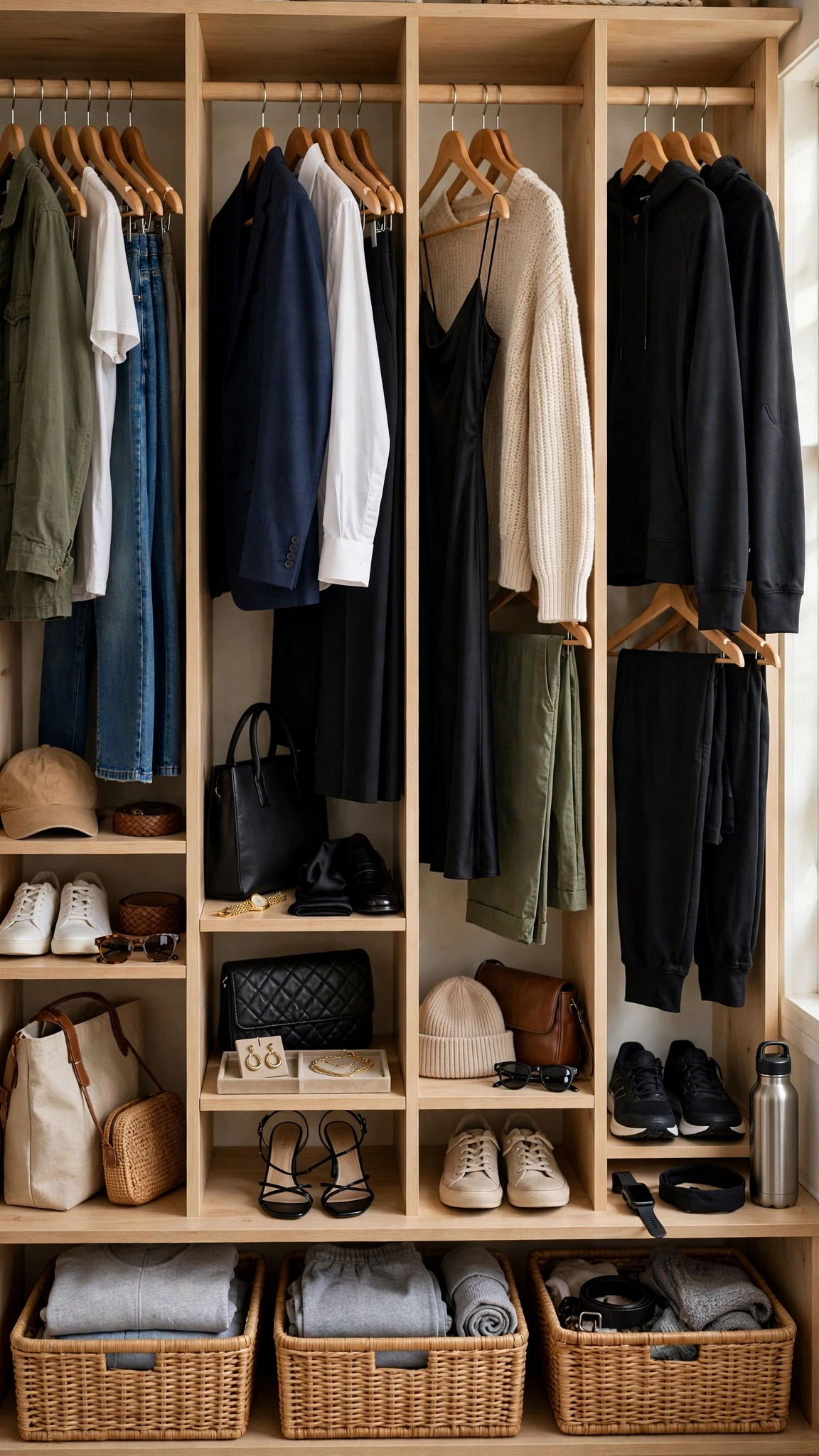
Most closets group clothes only by type — all shirts together, all trousers together. Try grouping your most-worn pieces into complete outfits instead. Keep the trousers, top, jacket, and accessories that work together in the same section. Busy mornings get faster, and you stop wearing the same few combinations every week.
Leave a little space between outfit groups so garments stay easy to remove. Use one consistent hanger style throughout the closet. Matching hangers make the groupings look intentional instead of cluttered.
2. Put a Shoe Rack Above Your Clothes
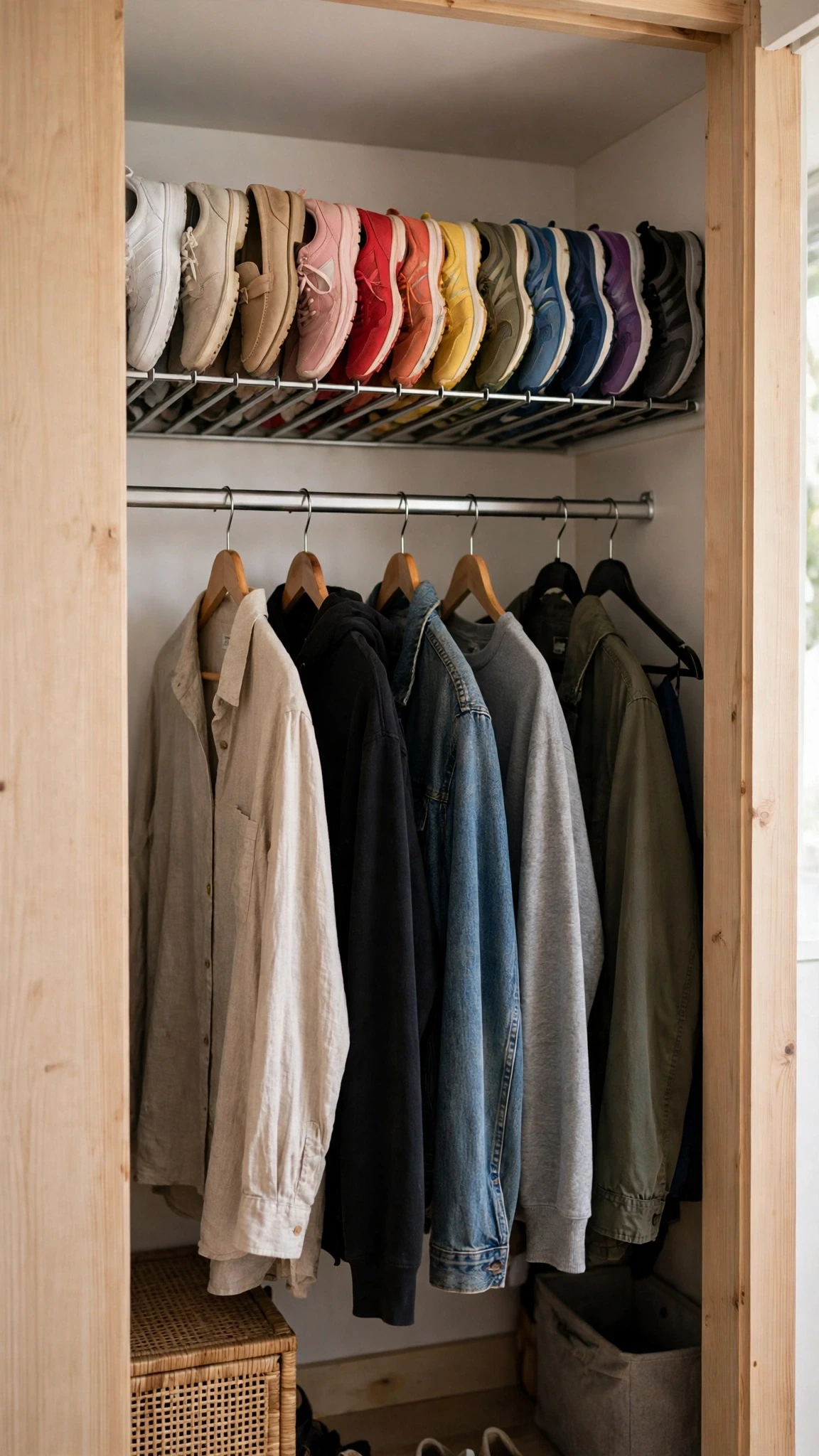
The wall space above a clothing rail is often wasted, especially in smaller closets. A slim shoe rack or shallow shelf can turn that unused area into valuable storage. Keep everyday pairs closer to the floor for easy access, and put less-worn shoes higher up.
Measure the clearance above your hanging clothes before you install anything. You need enough vertical room to remove garments without hitting the shoes. Arrange shoes by color or by how often you wear them, not just wherever they fit.
3. Build a Closet Around Your Work Week
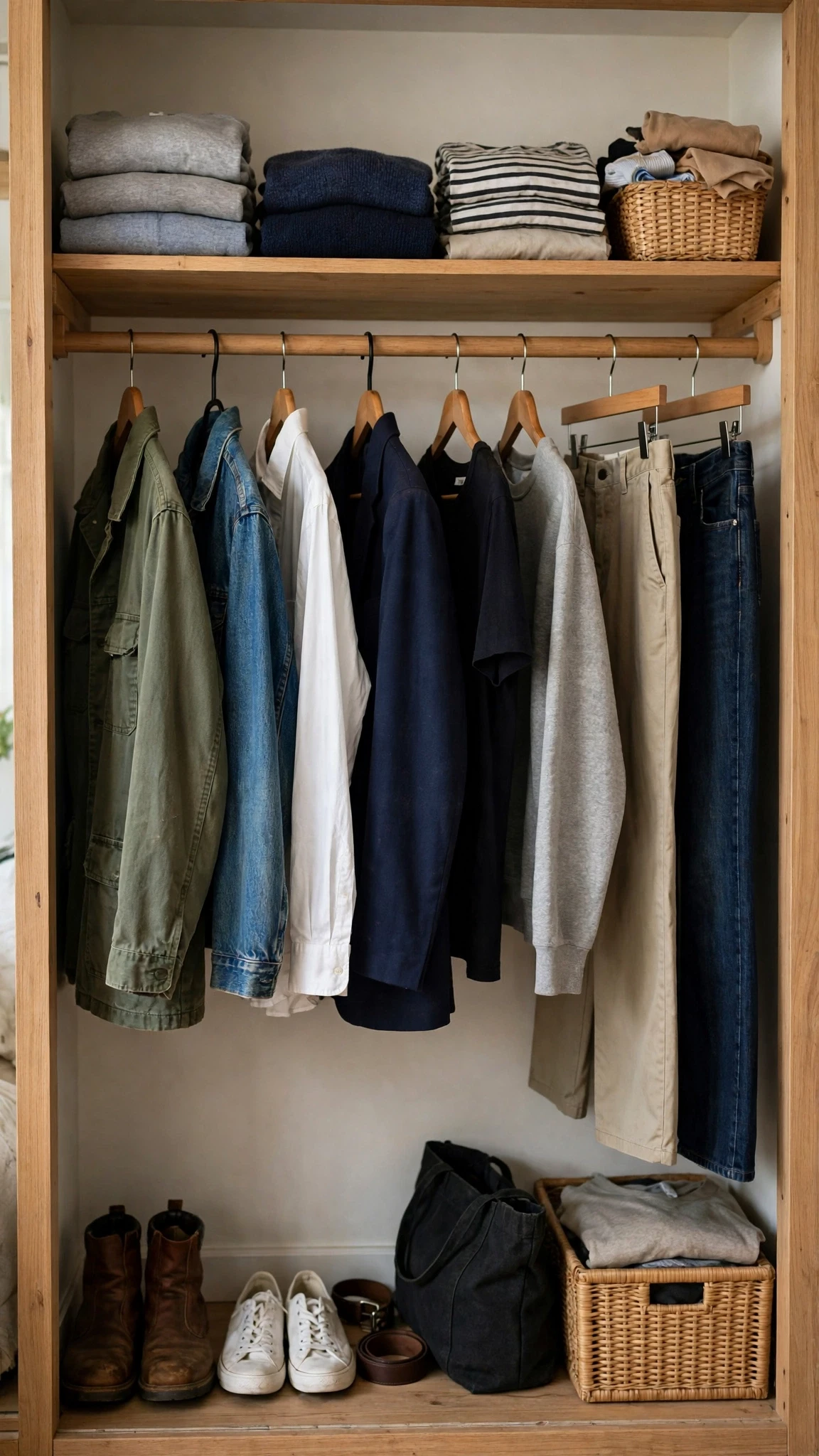
A working closet is designed around the way you actually dress. Put workwear, everyday basics, and frequently used accessories in the easiest-to-reach areas. Move seasonal items higher up or farther back. This keeps your morning routine fast, especially when the closet is small or shared.
Identify the clothes you wear most during the week and give those pieces prime hanging and shelf space. Keep neutral everyday basics together, and place statement pieces nearby so complete outfits come together quickly.
4. Try a Floating Wardrobe for a Small Room
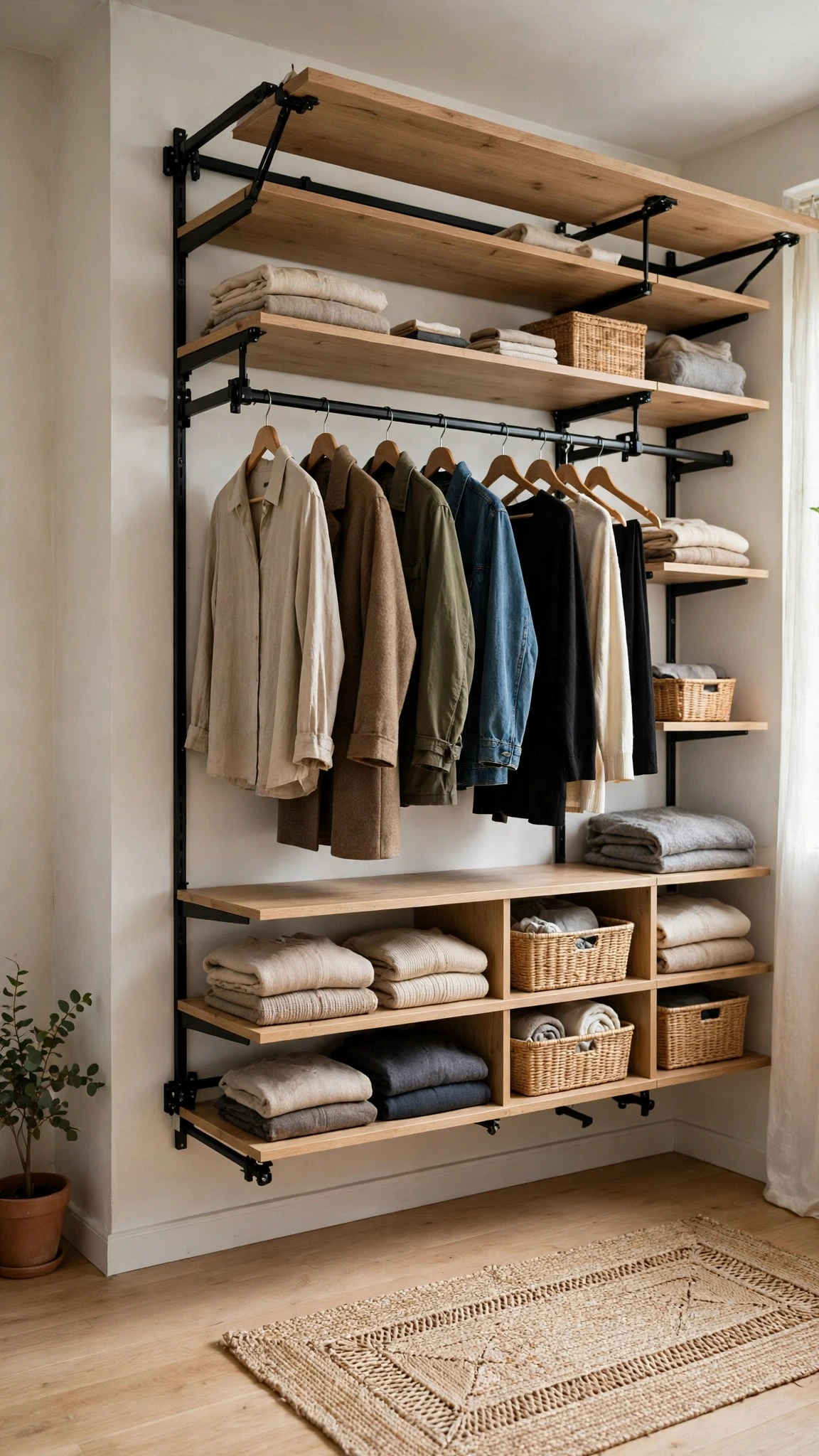
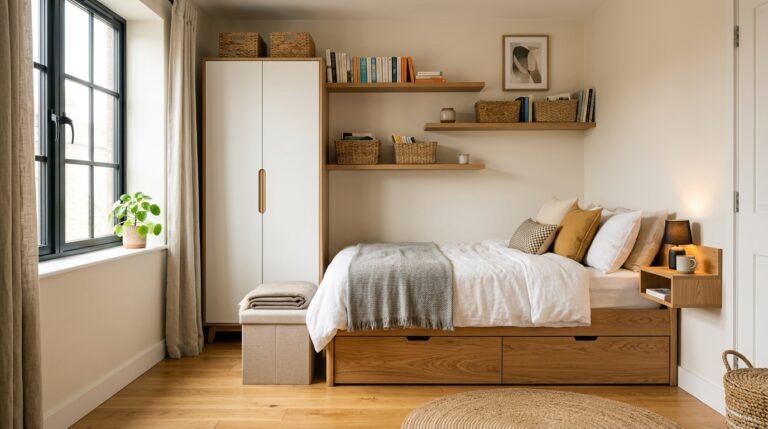
A floating wardrobe works well when a bulky wardrobe would overwhelm the room. Wall-mounted rails and shelves create storage while leaving some floor visible, so a compact bedroom feels more open. This approach suits renters and anyone who wants a simple open wardrobe system.
Find the wall studs or use proper anchors before attaching the rails. Install shelves above the hanging area for folded clothes and accessories. Avoid overcrowding the rail — a little breathing room between garments makes an open wardrobe look cleaner and easier to use.
5. Double Your Storage in a Small Closet
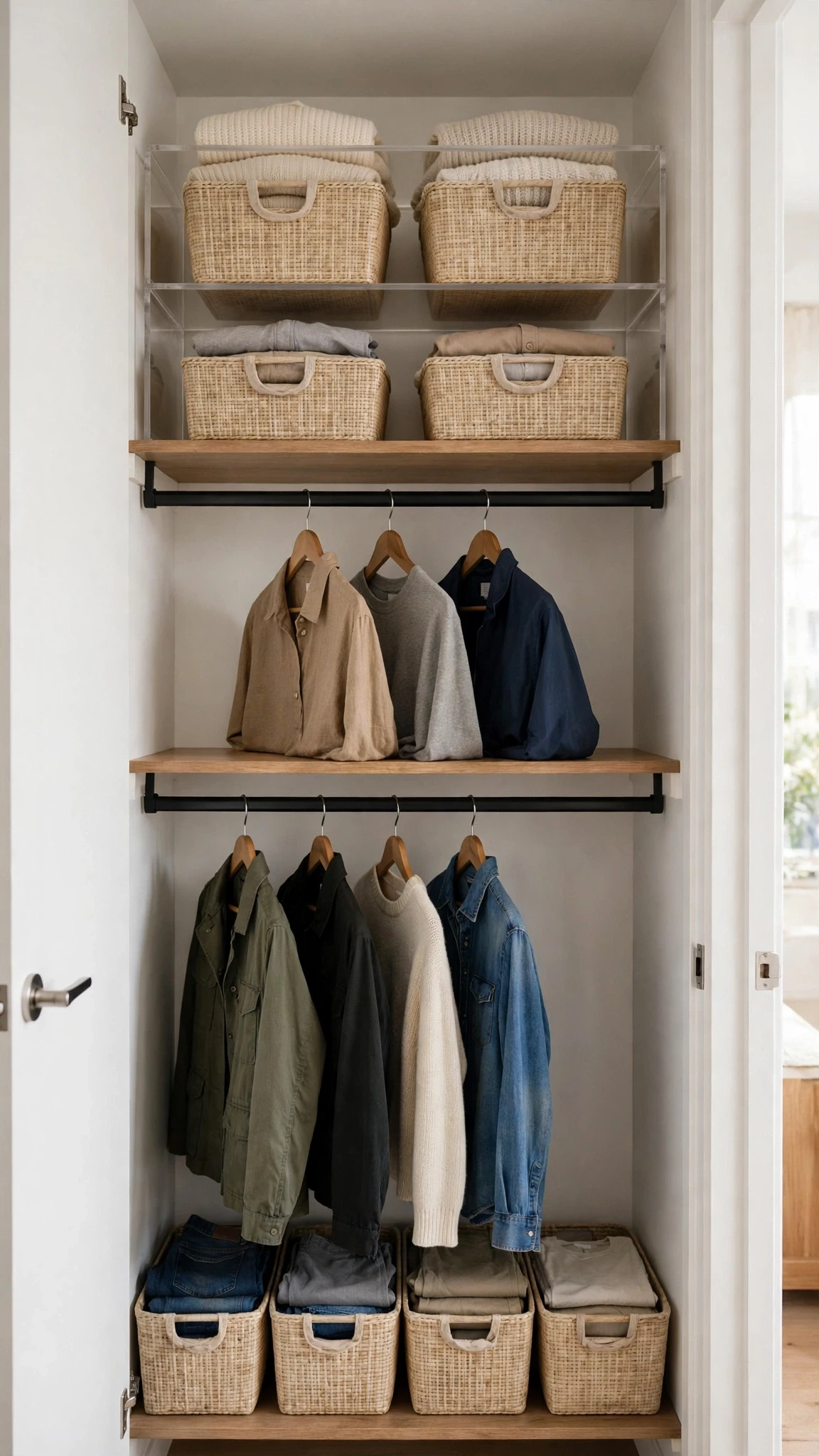
Small closet storage is mostly about using vertical and hidden space. A second hanging rail, an over-door organizer, shelf risers, and slim baskets can add a lot of capacity without making the closet hard to navigate. The key is adding storage selectively, not filling every empty space.
Start with vertical space first, then add organizers to the door and unused corners. Test each addition before buying more. Use matching bins on upper shelves to contain smaller items and make the closet look less cluttered.
6. Make a Narrow Galley Closet Easy to Use
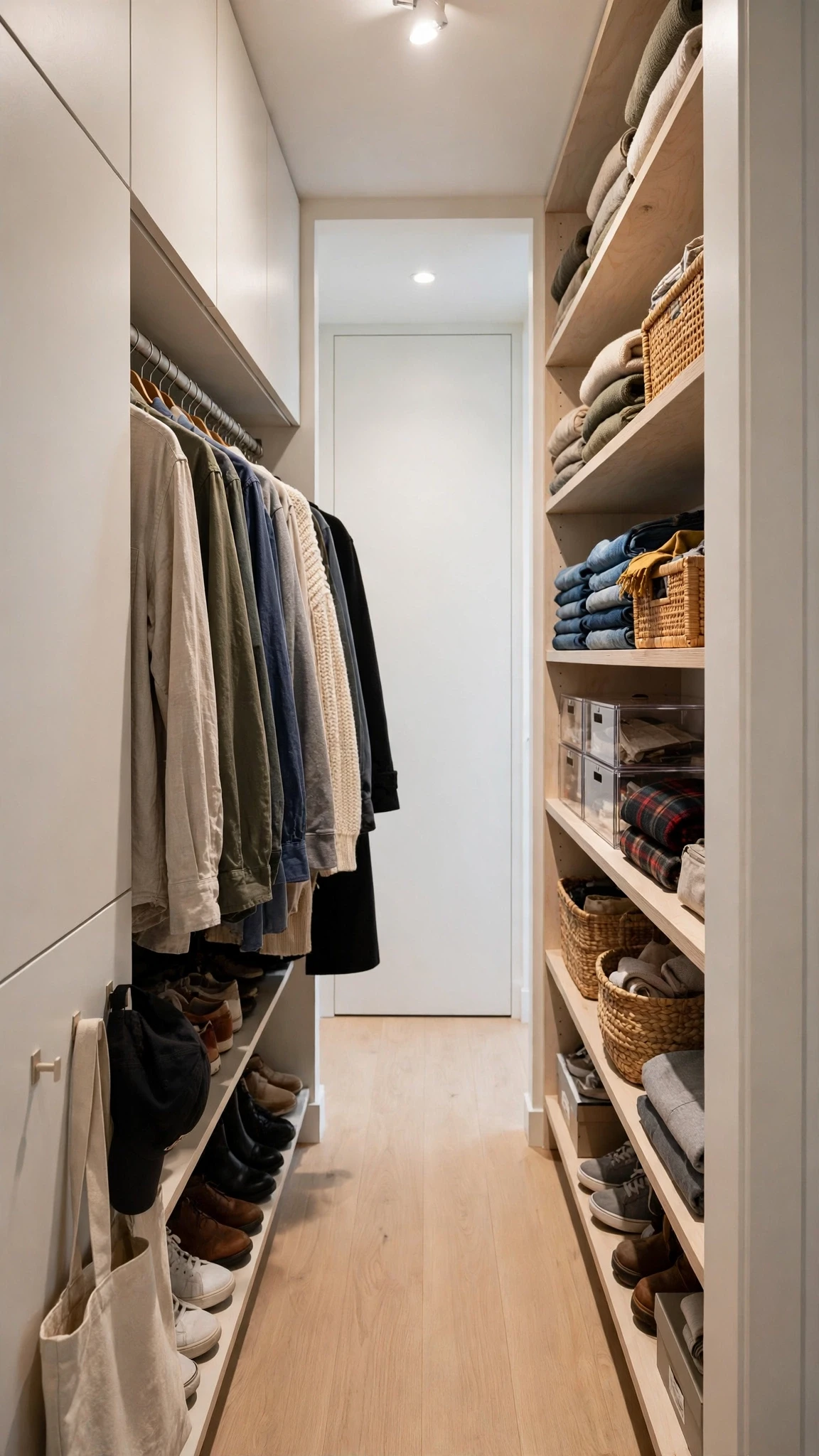
A narrow galley closet needs careful planning, because deep storage can quickly become hard to reach. Keep frequently used clothing along the easiest-access wall, and reserve the opposite side for shallow shelves, shoes, or accessories. Clear walking space matters more than squeezing in another large storage unit.
Measure the walkway before installing anything. Choose storage that leaves comfortable standing and turning space in the center. Use the same storage finish on both sides so the narrow layout still looks cohesive.
7. Organize With Baskets on a Budget
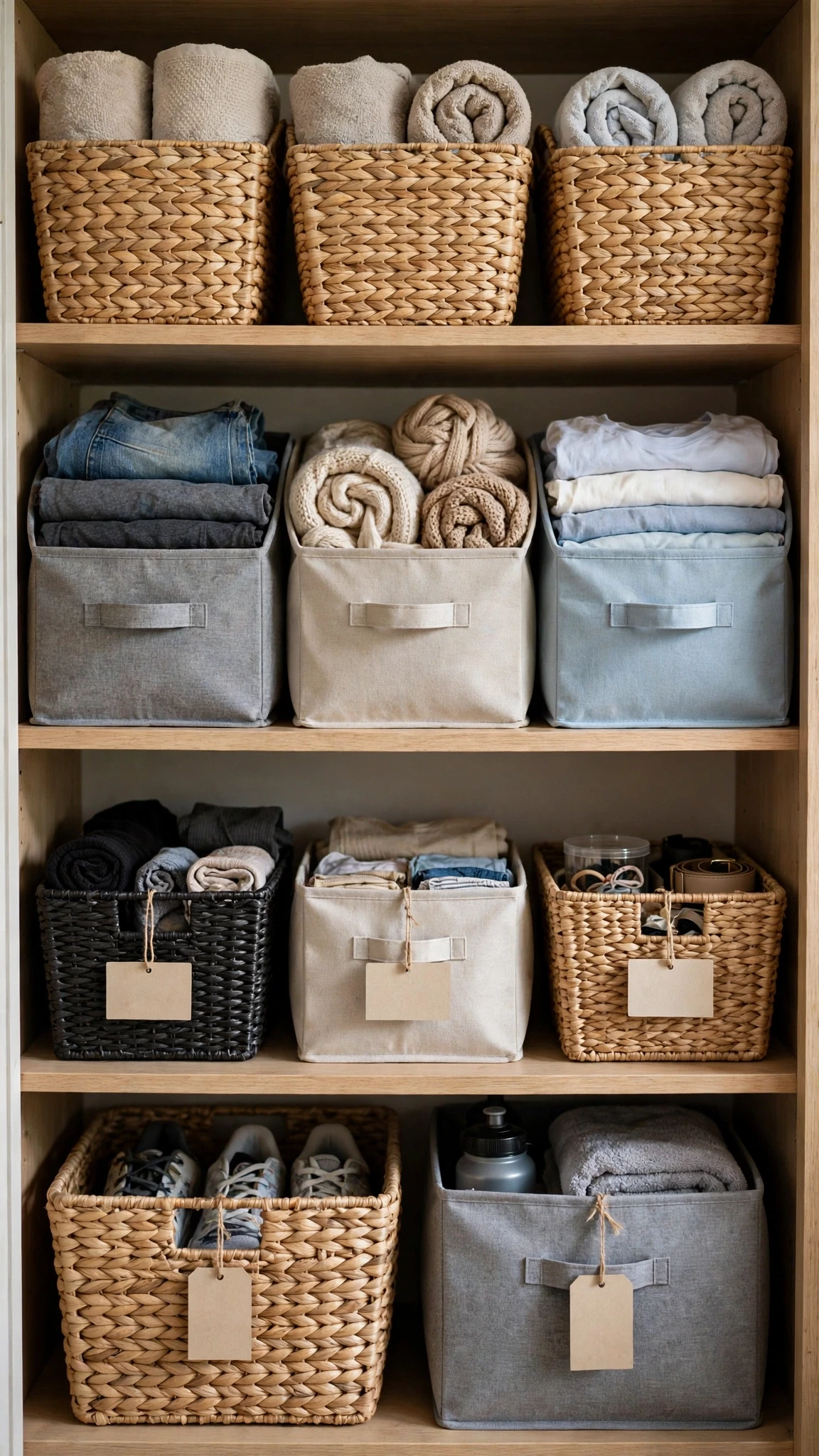
You do not need custom cabinetry to make a closet feel organized. Affordable baskets, fabric cubes, tension rods, and simple shelf dividers can solve many everyday storage problems. The trick is giving each container a specific purpose instead of using baskets as places to hide random clutter.
Measure your existing shelves first, then buy containers that fit closely together without wasting space. Choose two or three complementary storage colors rather than mixing many unrelated patterns and finishes.
8. Turn Wasted Space Into Storage
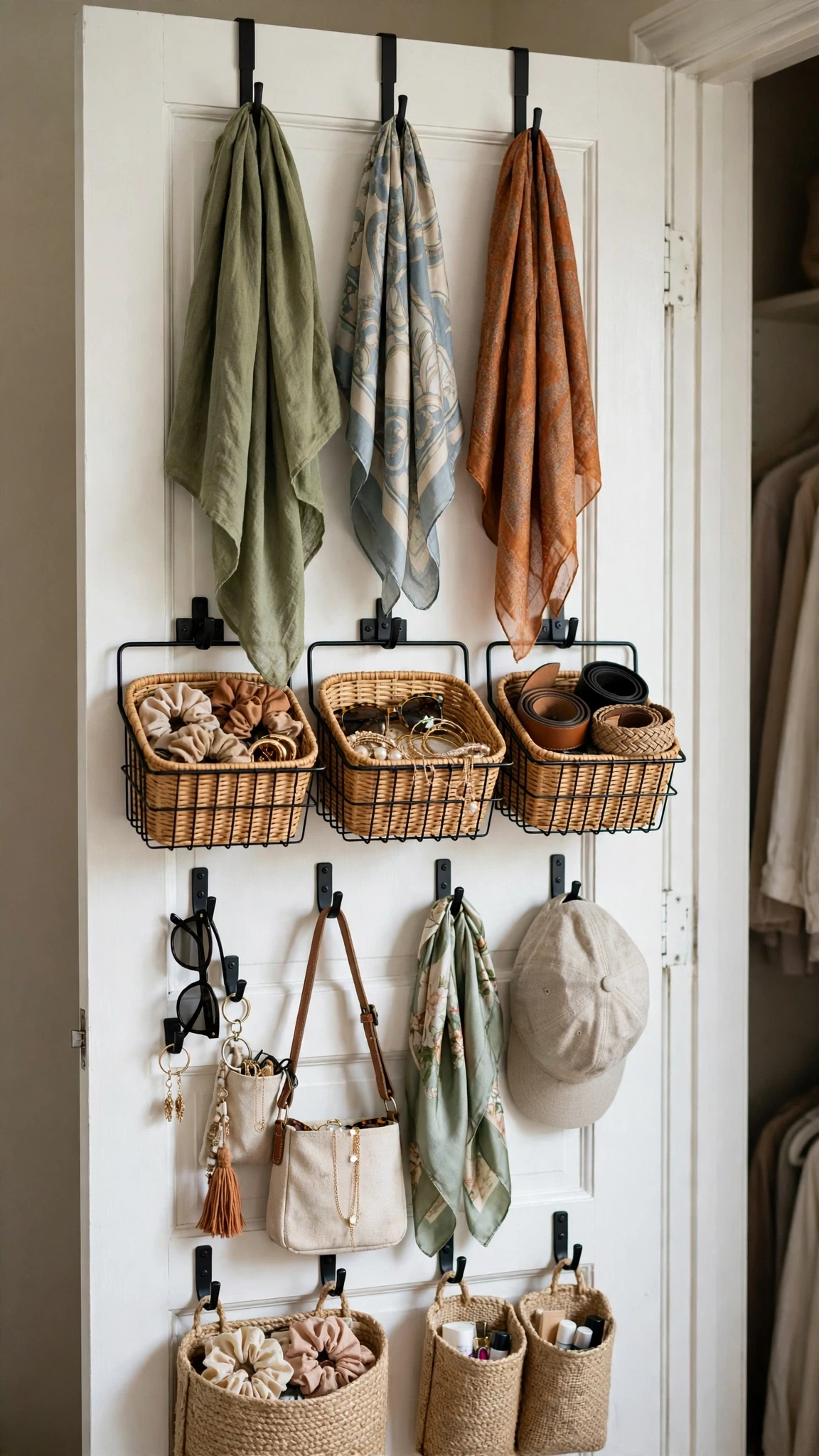
Empty closet space often hides above shelves, beside hanging clothes, or on the back of the door. These overlooked areas are perfect for accessories, folded bags, scarves, and smaller seasonal pieces. Using them carefully adds storage without making the main closet harder to access.
Walk through the closet and find every unused vertical surface. Add storage only where it will not interfere with doors, drawers, or hanging clothes. Keep visually busy accessories inside matching containers so the extra storage still looks neat.
9. Fix Hanging Space With a Second Rail
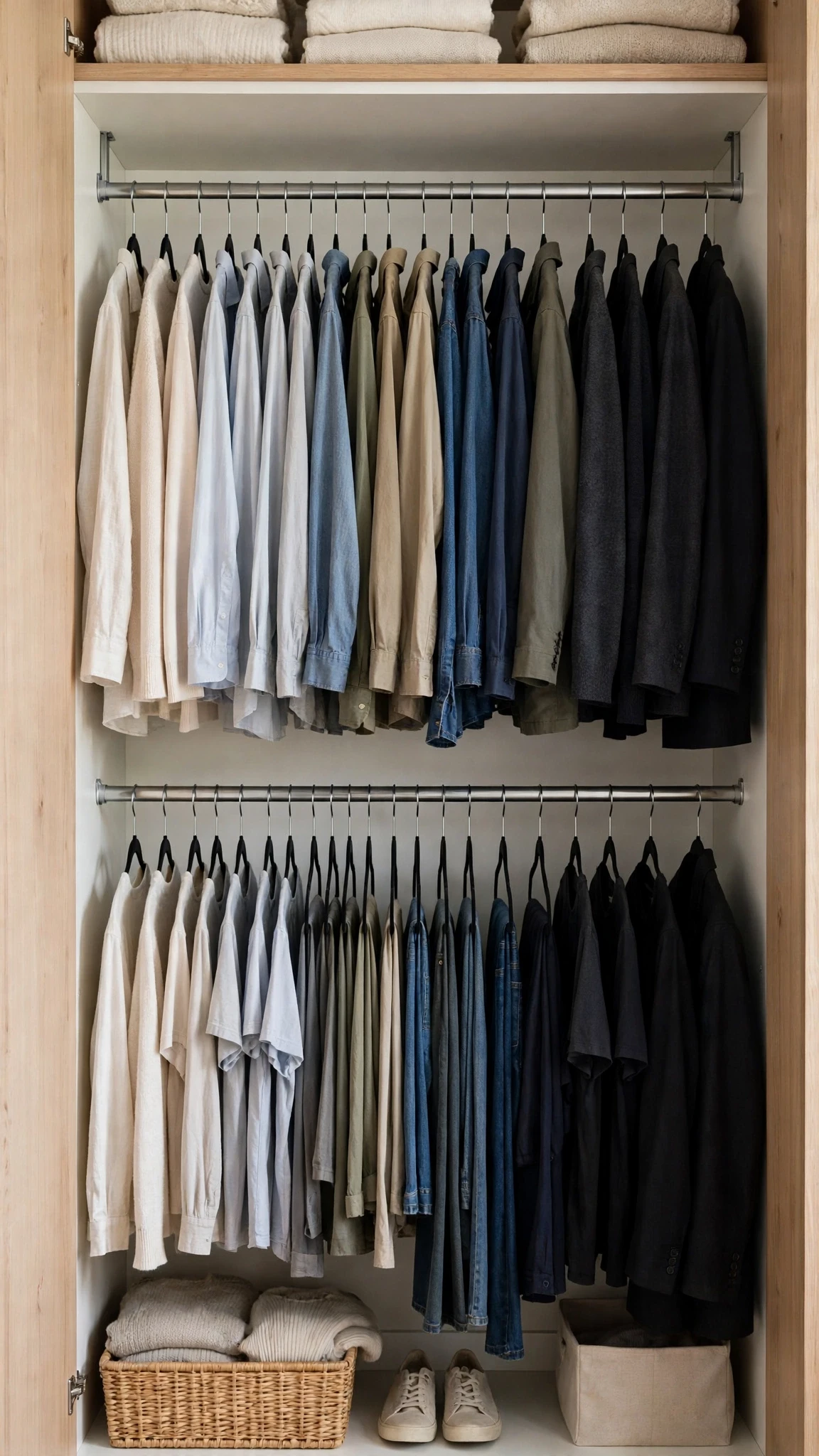
When hanging space is limited, rethink how garments are suspended. Cascading hangers, a double hanging rod, and compact garment organizers can increase capacity while keeping clothes visible. Avoid cramming too many pieces together, because tightly packed clothing becomes harder to maintain and often ends up on the floor.
Remove bulky hangers first, then separate long garments from shorter pieces. Add a second rail beneath shorter clothing where the height allows it. Arrange clothes from light to dark or by category after installing the extra hanging space.
10. Give Accessories Their Own Wall
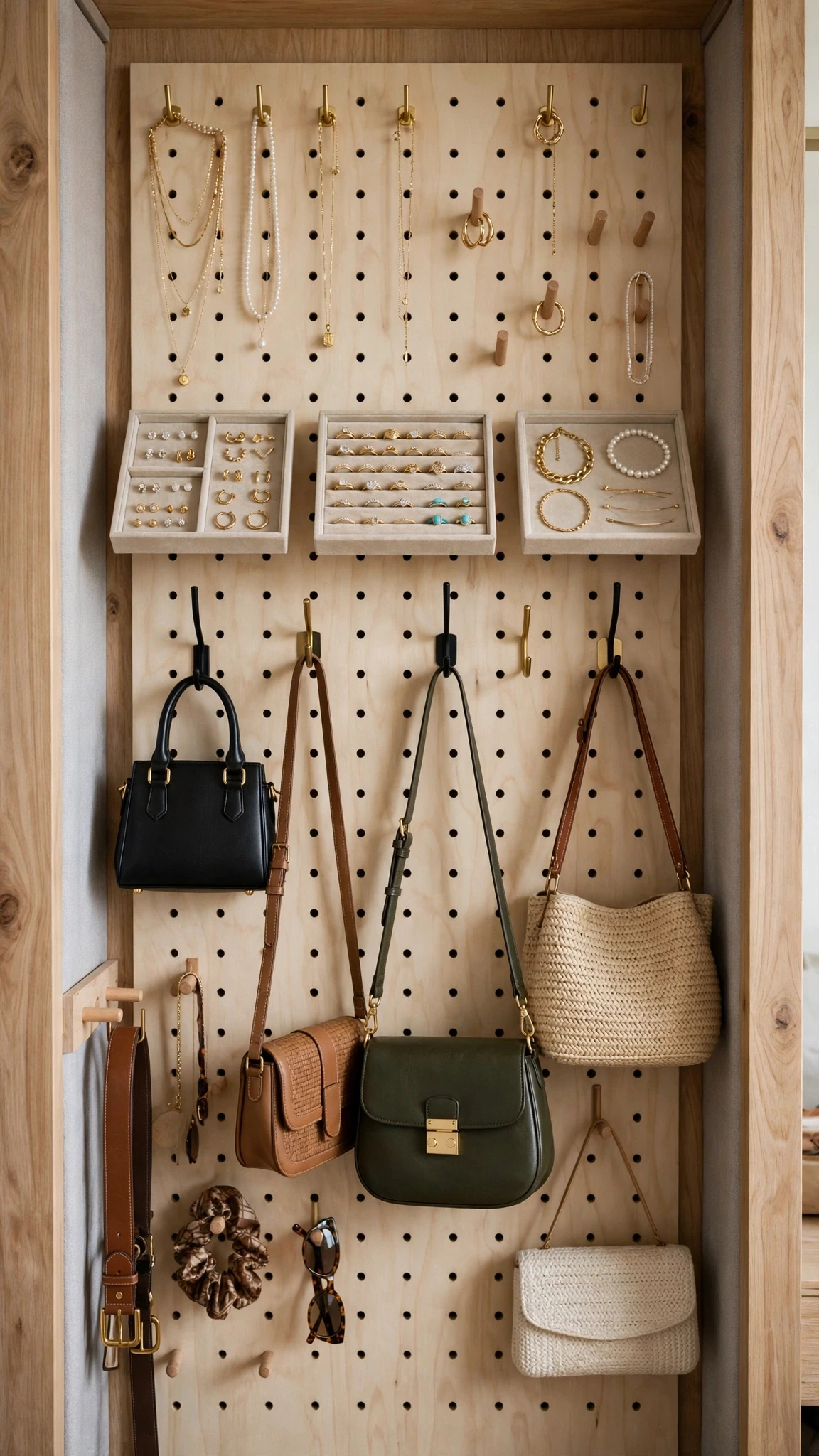
Jewelry, belts, scarves, and handbags can eat up valuable drawer space when stored poorly. A small accessory wall keeps these pieces visible and stops them from tangling. Even a narrow section of wall inside or beside the closet can become a useful display and organization zone.
Place everyday accessories at eye level and reserve higher sections for items you use less often. Keep delicate jewelry away from areas where clothing frequently catches. Group accessories by type and use small trays so the display looks organized rather than crowded.
11. Add Pull-Out Baskets to Deep Shelves
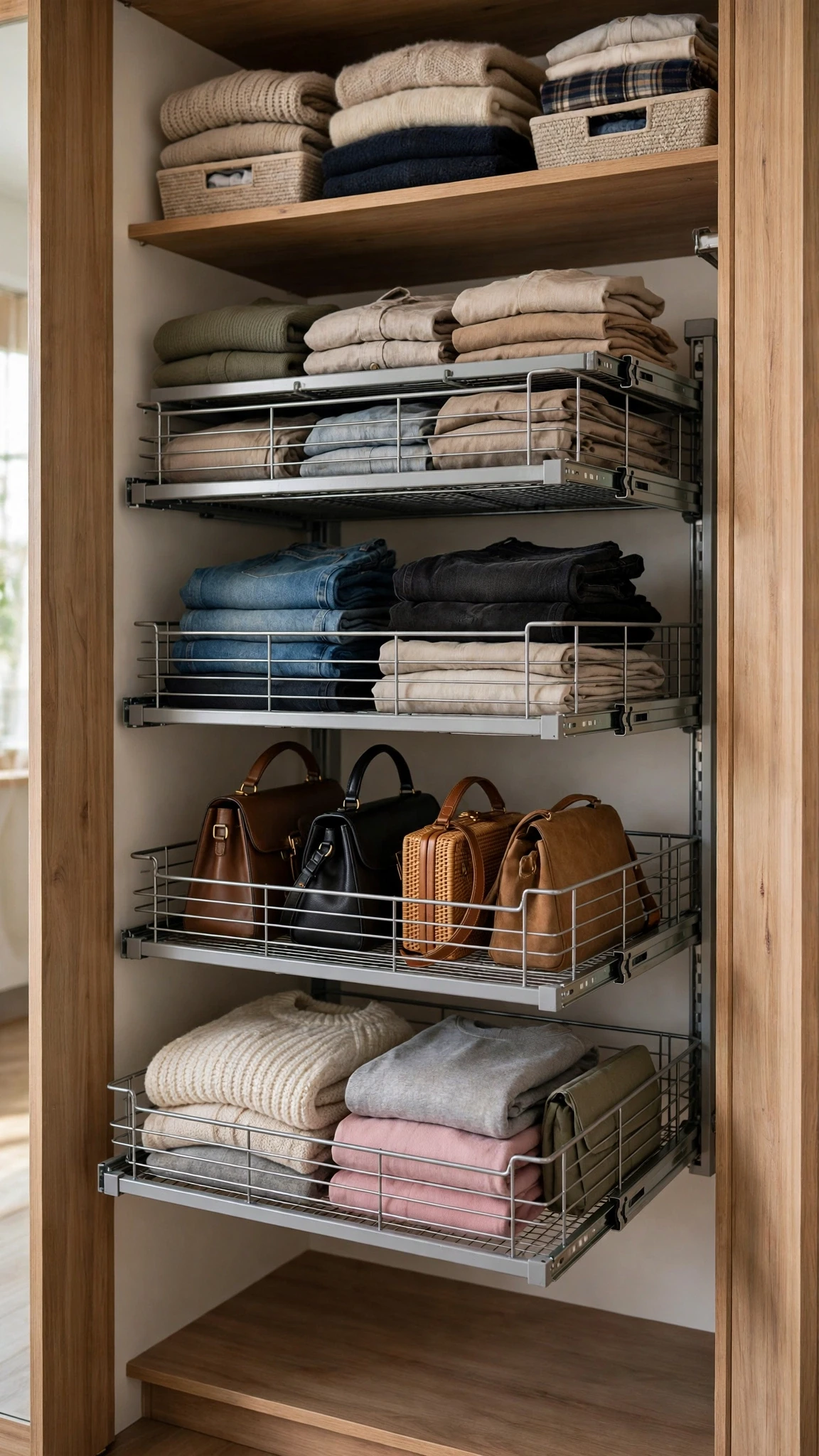
Deep closet shelves look spacious but create a practical problem: items disappear toward the back. Pull-out baskets or sliding drawers solve this by letting you reach the entire shelf without removing everything in front. They work especially well for folded clothing, handbags, and seasonal accessories.
Measure shelf depth and width carefully before buying. Install one pull-out unit first to confirm that it runs smoothly. Use identical baskets across a long shelf to create a built-in look without the cost of custom cabinetry.
12. Store Seasonal Clothes in Clear Boxes
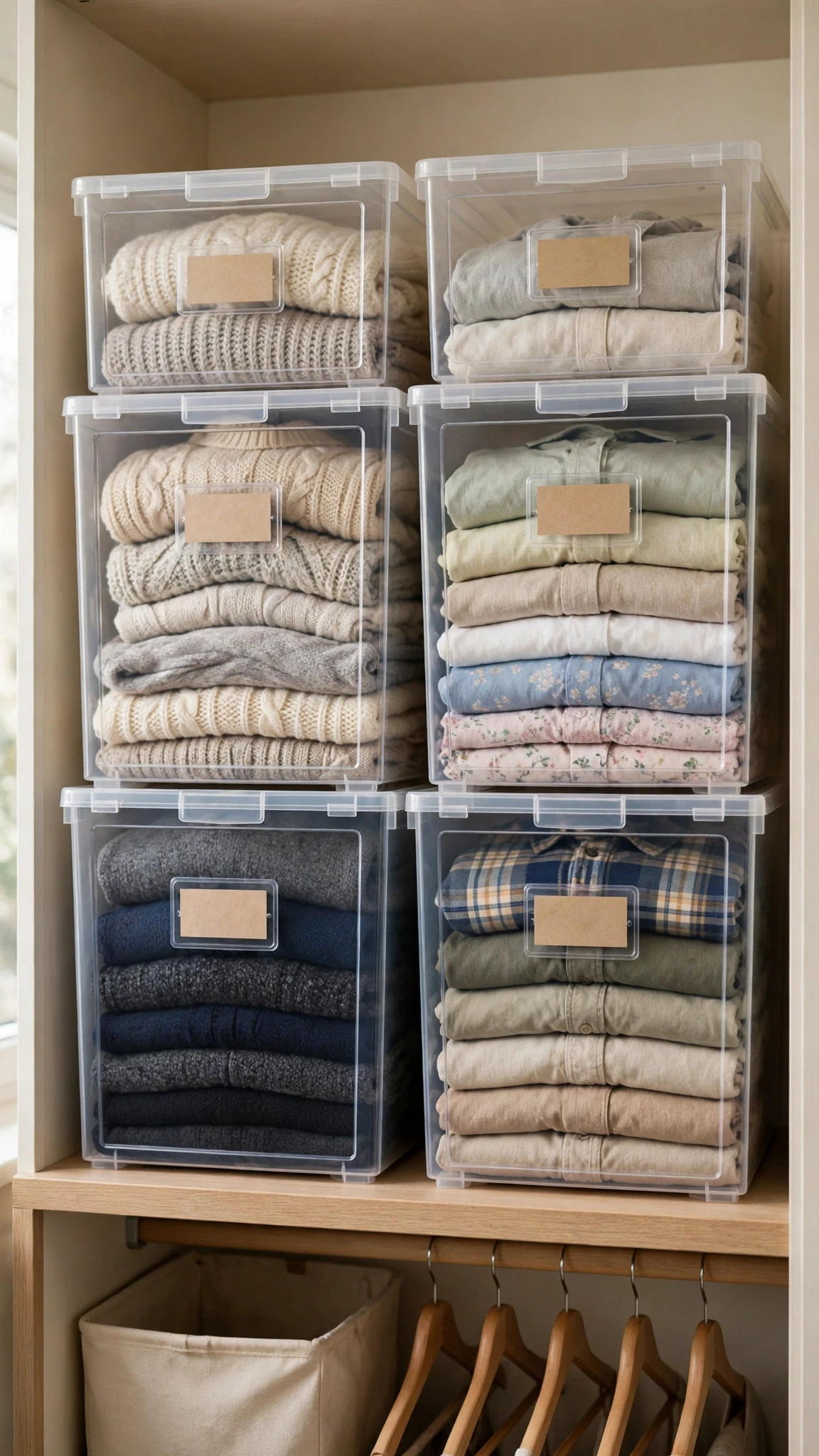
Seasonal clothing is easier to manage when stored away from everyday pieces. Clear containers let you see what is inside without opening every box, and compact stacking keeps shelves organized. Store bulky winter pieces or special-occasion clothing higher up when they are not needed regularly.
Wash and completely dry clothing before storing it. Fold pieces neatly, label each container, and keep similar seasonal categories together. Label the front rather than the top, so you can identify containers even when they are stacked.
13. Design Your Closet Around Your Daily Routine
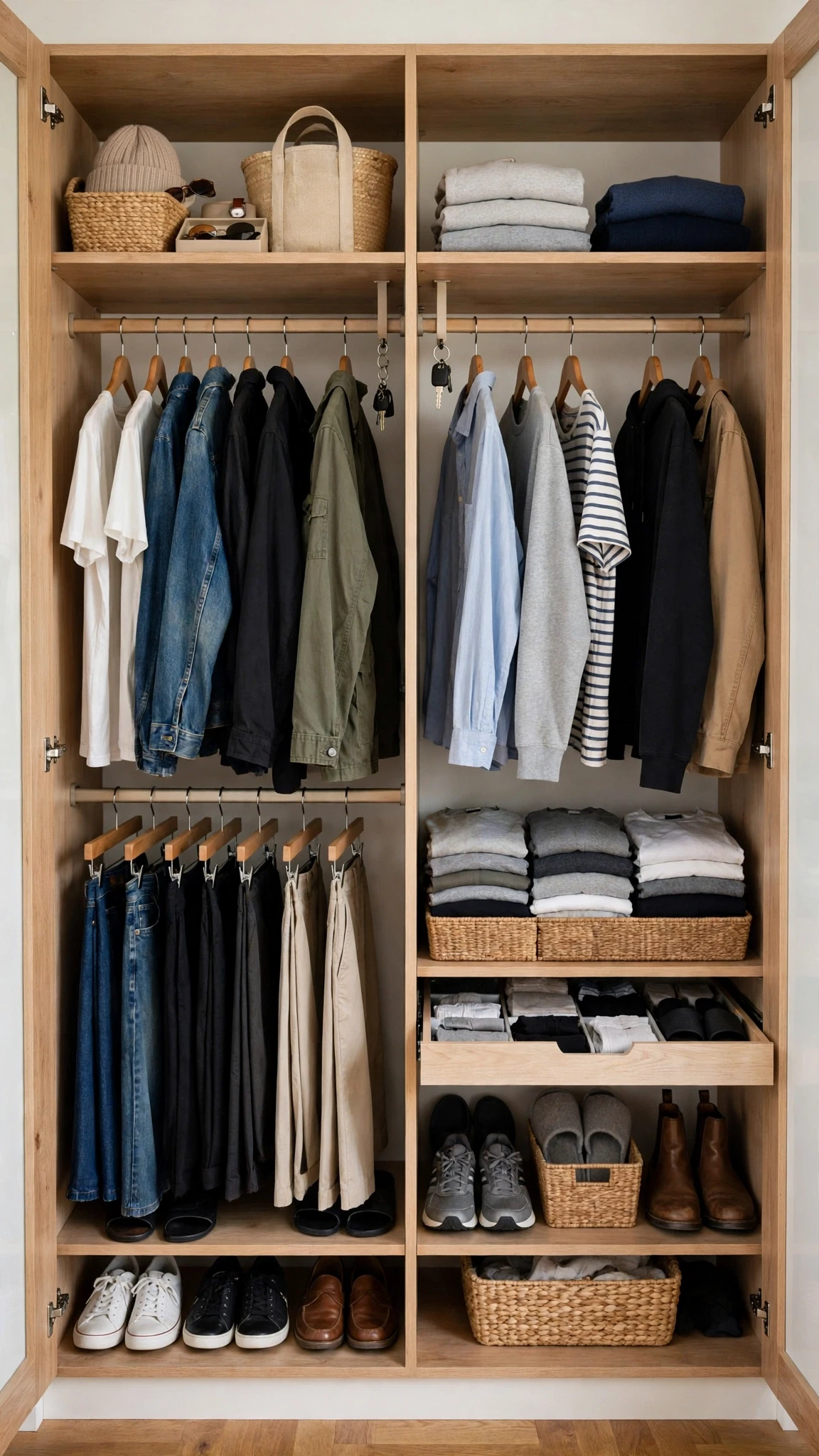
The most successful closet is built around real habits, not an idealized organization system. If you reach for certain shoes every day, keep them near the entrance. If you prefer folded clothes, prioritize drawers and shelves instead of forcing everything onto hangers. Designing around your routine makes organization much easier to maintain.
Track which clothing and accessories you use most over a typical week. Move those items into the easiest-to-reach zones and relocate rarely used pieces. Leave a small amount of space in each category, so you have room to put things away without immediately creating clutter.
Plan Your Closet Makeover in 4 Simple Steps
A good closet makeover starts with a simple plan. First, declutter before you buy anything — remove what you no longer wear. Second, measure everything: rail heights, shelf depths, and door clearance. Third, fix the spot that frustrates you most, whether that is shoes, hanging space, or accessories. Fourth, buy one storage unit and test it before buying more. Follow this order and you will spend less money on organizers that do not fit.
Closet Mistakes to Avoid
- Buying bins before decluttering. Storage cannot fix a closet that holds too much.
- Filling every space. A closet needs breathing room to stay usable.
- Mixing many hanger styles. Mismatched hangers make even a tidy closet look messy.
- Skipping labels. Unlabeled boxes get opened, searched, and left messy.
- Forgetting lighting. A dark closet hides clothes, so add a small light if you can.
FAQS
How can I make a small closet look bigger?
Use slim hangers, light-colored storage, vertical shelving, and consistent containers. Keep the floor and the main hanging areas relatively open. A closet with breathing room and matching storage feels significantly larger and less crowded than a packed one. Leave the floor clear and let the light reach every corner.
What is the best way to organize clothes in a small closet?
Start with the clothes you wear most. Separate everyday, work, occasion, and seasonal pieces, then use vertical storage and double hanging space where possible. Give every category a clear home so putting clothes away stays quick and simple. Review the system each season and move what you no longer reach for.
How do I use empty closet space?
Look above hanging rails, behind doors, beside shelves, and in unused corners. These areas can hold hooks, shallow shelves, baskets, shoe storage, or accessory organizers. Add storage only where it will not block doors, drawers, or hanging clothes. A few small additions in these spots can add a surprising amount of room.
Are open wardrobes practical?
Yes, provided you keep them edited and organized. Open wardrobes work particularly well for frequently worn clothing, but seasonal and visually bulky items may be better kept in closed storage. Keep the rail uncrowded so the open display looks calm.
How often should I reorganize my closet?
A small seasonal reset is usually enough. During each reset, remove items you no longer use, rotate seasonal clothing, and adjust storage if your daily routine has changed. A quick reset four times a year keeps the closet from slowly sliding back into clutter.
How do I organize a shared closet?
Split the closet into clear zones, one side per person, and give each person their own baskets and hooks. Use labels so shared shelves stay separate. Keep shared items like bags or seasonal boxes in one agreed spot, and review the split when one side starts overflowing.
How do I add closet storage without drilling?
Use tension rods, over-door hooks, freestanding shelf units, and stackable bins that need no screws. Adhesive hooks work for light accessories, and a freestanding garment rail adds hanging space anywhere. These options suit renters and leave no holes behind. Measure the space first so every piece fits without forcing it in.
Conclusion
A great closet does not have to be expensive or perfectly designed from the beginning. The most useful improvements usually come from noticing where your current system fails and fixing those specific problems. Try one or two ideas first, see how they work with your daily routine, and build from there.
Whether you are working with a tiny closet or simply want a more organized wardrobe, thoughtful storage can make getting dressed easier and keep your bedroom feeling calmer. Start with the area that frustrates you most, make a small change, and enjoy the difference.