13 Fall Outdoor Planter Ideas for a Warm, Welcoming Autumn Porch
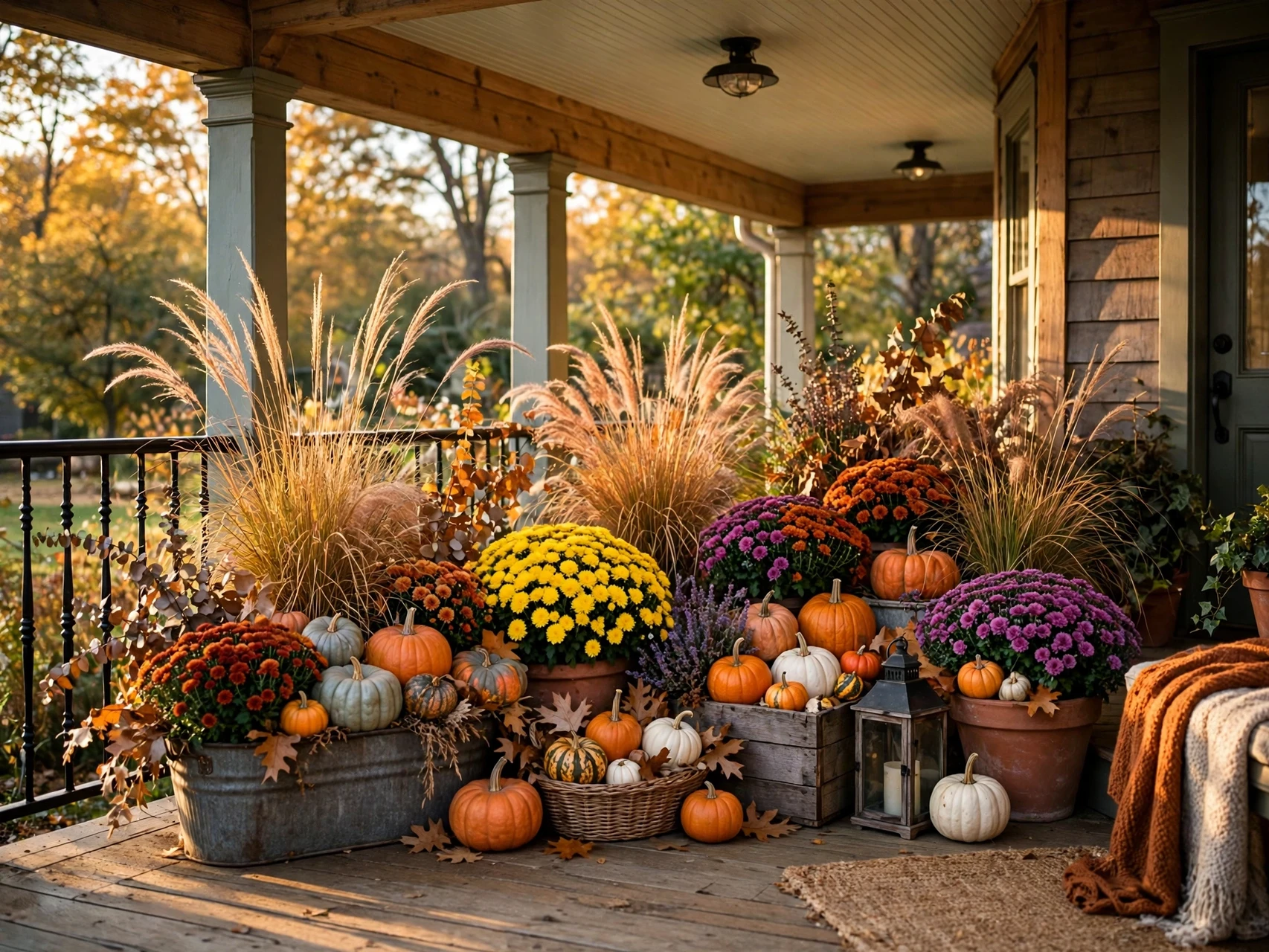
Fall is the best season to refresh your outdoor pots. These fall outdoor planter ideas use mums, pumpkins, grasses, and simple containers to make a porch feel warm and welcoming. You do not need expensive decor or a big budget. A few good plants and the right pot can change the whole entryway.
The ideas below cover baskets, buckets, crates, and classic pots. Pick the ones that fit your porch and your budget. Start with one arrangement, then build around it with repeated colors. A porch that feels collected grows one pot at a time.
1. Fill a Rustic Basket With Fall Mums
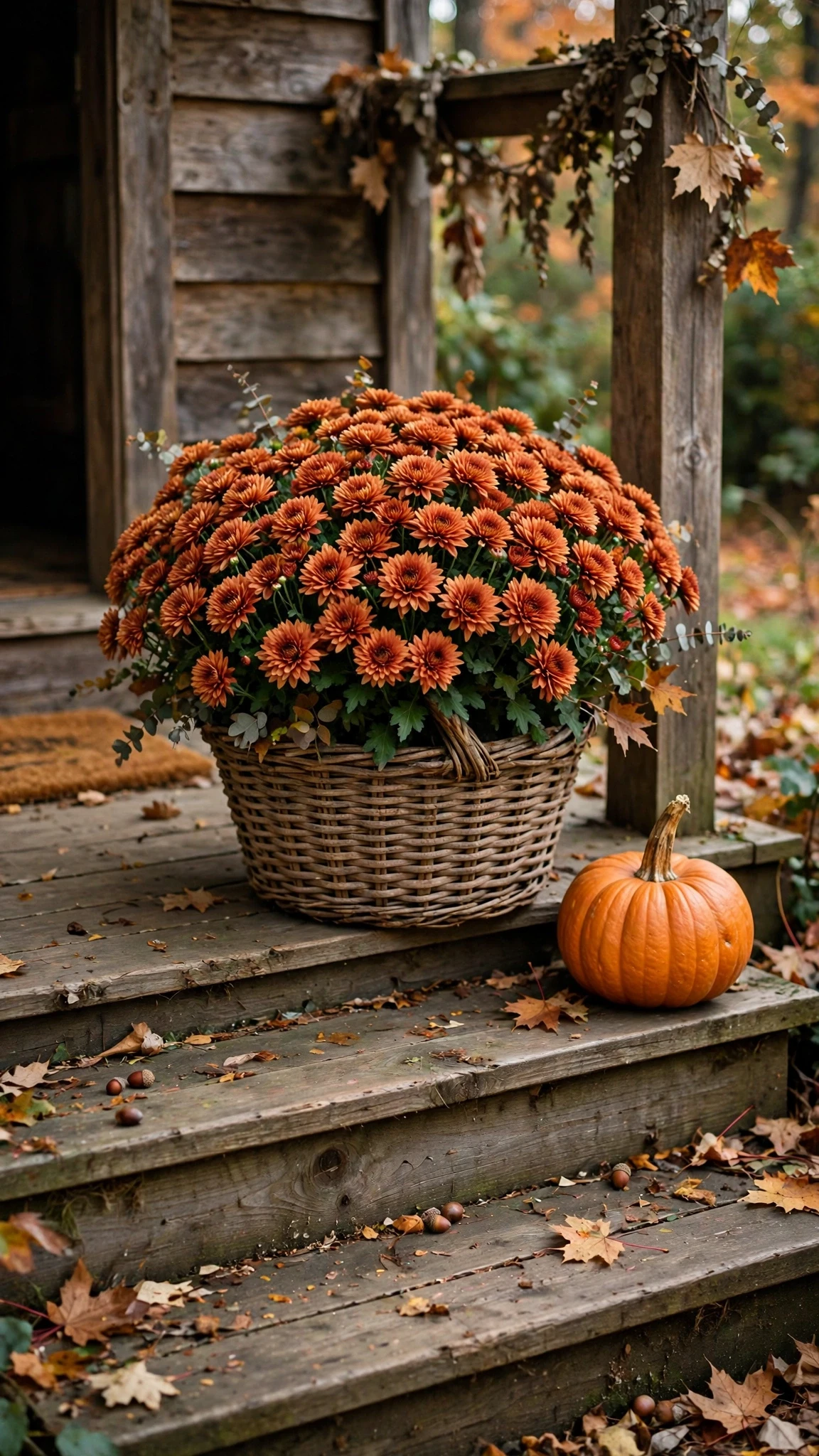
A woven basket makes ordinary mums feel warm and thoughtful. Pick a full mum in rust, burgundy, cream, or gold. Set the nursery pot inside the basket instead of planting straight into it. That protects the basket from moisture and makes it easy to swap plants later.
Tuck a few dried stems or trailing leaves around the base to soften the edges. Add a small pumpkin beside the pot for extra fall charm. Choose a basket a little wider than the mum so the arrangement looks full, not squeezed.
2. Build a Tall Tiered Pot With Three Heights
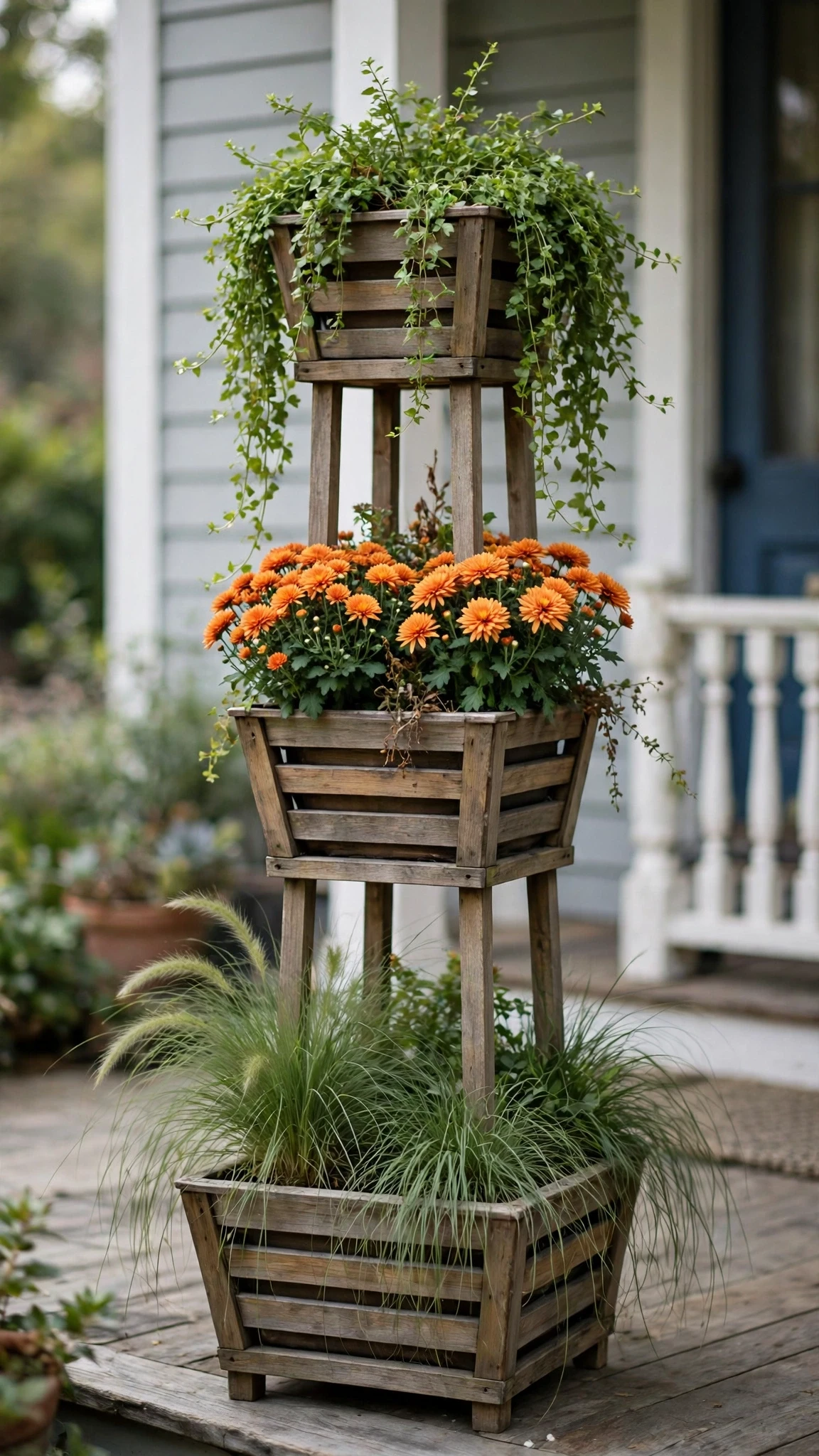
A tall planter looks best with three heights. Put ornamental grass at the back for height, a compact mum in front for color, and a trailing plant along one side. That mix keeps the pot from looking flat from the street. Use plants with different textures, not three round, dense shapes.
Fill the planter with fresh potting mix and water well after planting. Repeat the same grass or mum color in nearby pots, so separate containers feel like one planned porch display.
3. Turn a Metal Bucket Into a Fall Flower Pot
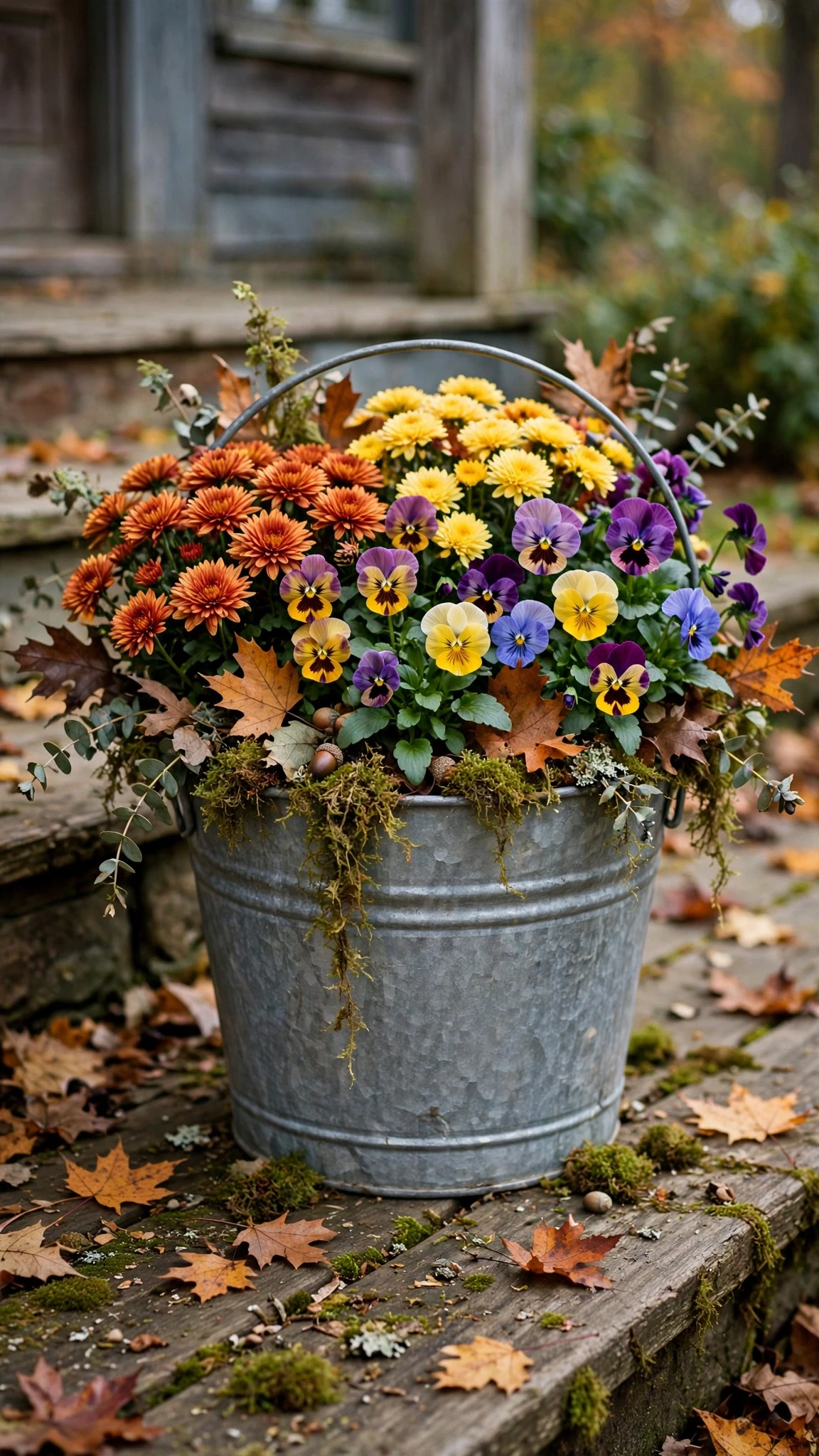
An old galvanized bucket makes a lovely fall flower pot. Its soft grey finish looks beautiful next to warm fall colors. Pick a bucket deep enough for the roots, and make sure water can drain out. If there is no drainage hole, keep the plant in its nursery pot and lift it slightly above any standing water.
Place the plant inside at its normal soil level. Fill the gaps with moss or fall leaves, and check the drainage after watering. Line a few mismatched metal buckets along the steps for a relaxed, farmhouse-style display.
4. Pair Pumpkins With Mums in One Wide Pot
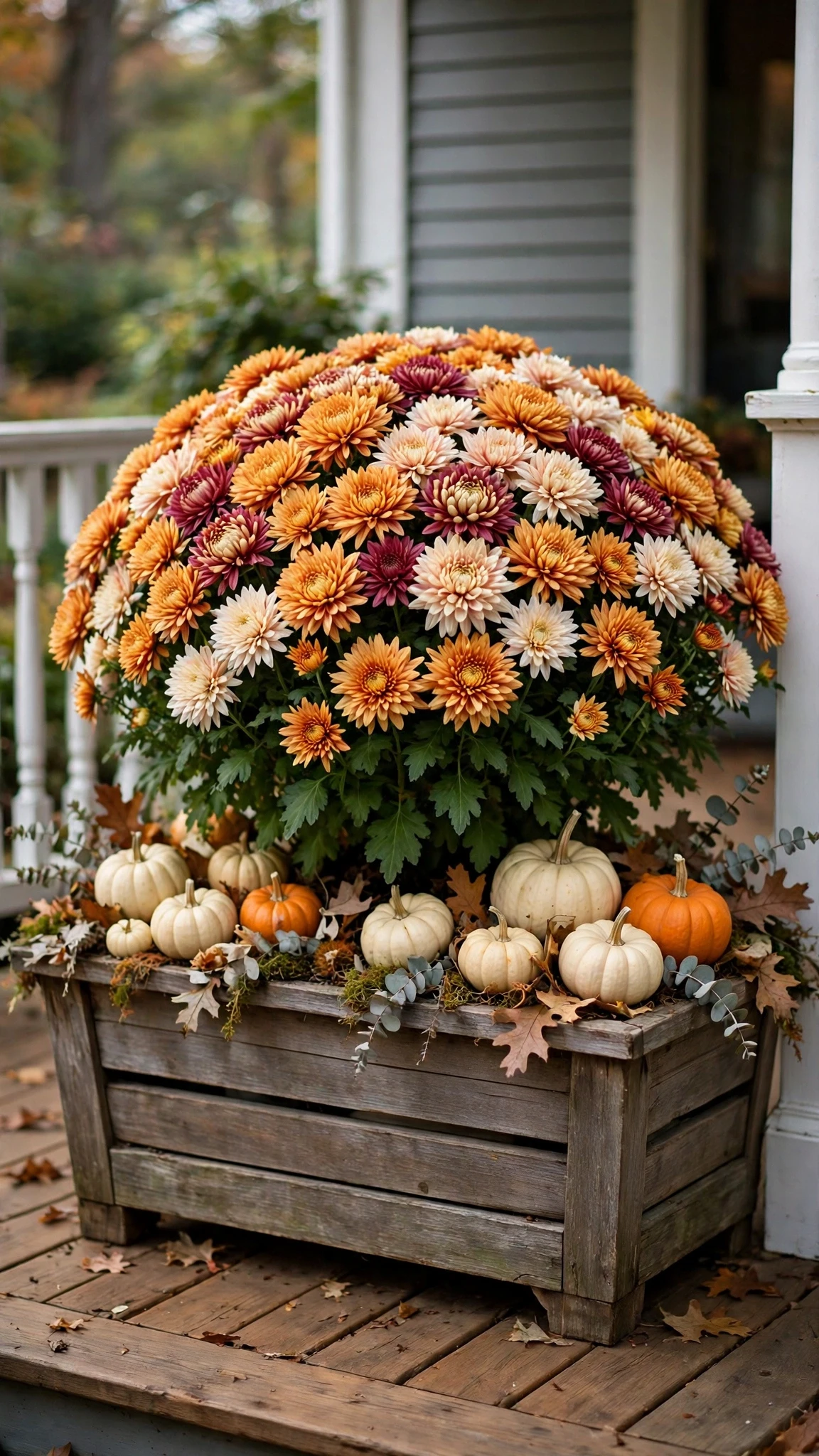
Pumpkins and mums together make a full fall arrangement with very little work. Plant one large mum in the middle of a wide pot. Set small pumpkins around the soil in cream, green, muted orange, or tan. Add two or three twigs upright for height.
Do not pile too many heavy pumpkins into one pot. Packed soil blocks air and makes watering hard. Keep the pumpkin colors to two or three shades. A restrained palette looks more polished than every color at once.
5. Go Moody With Burgundy and Purple
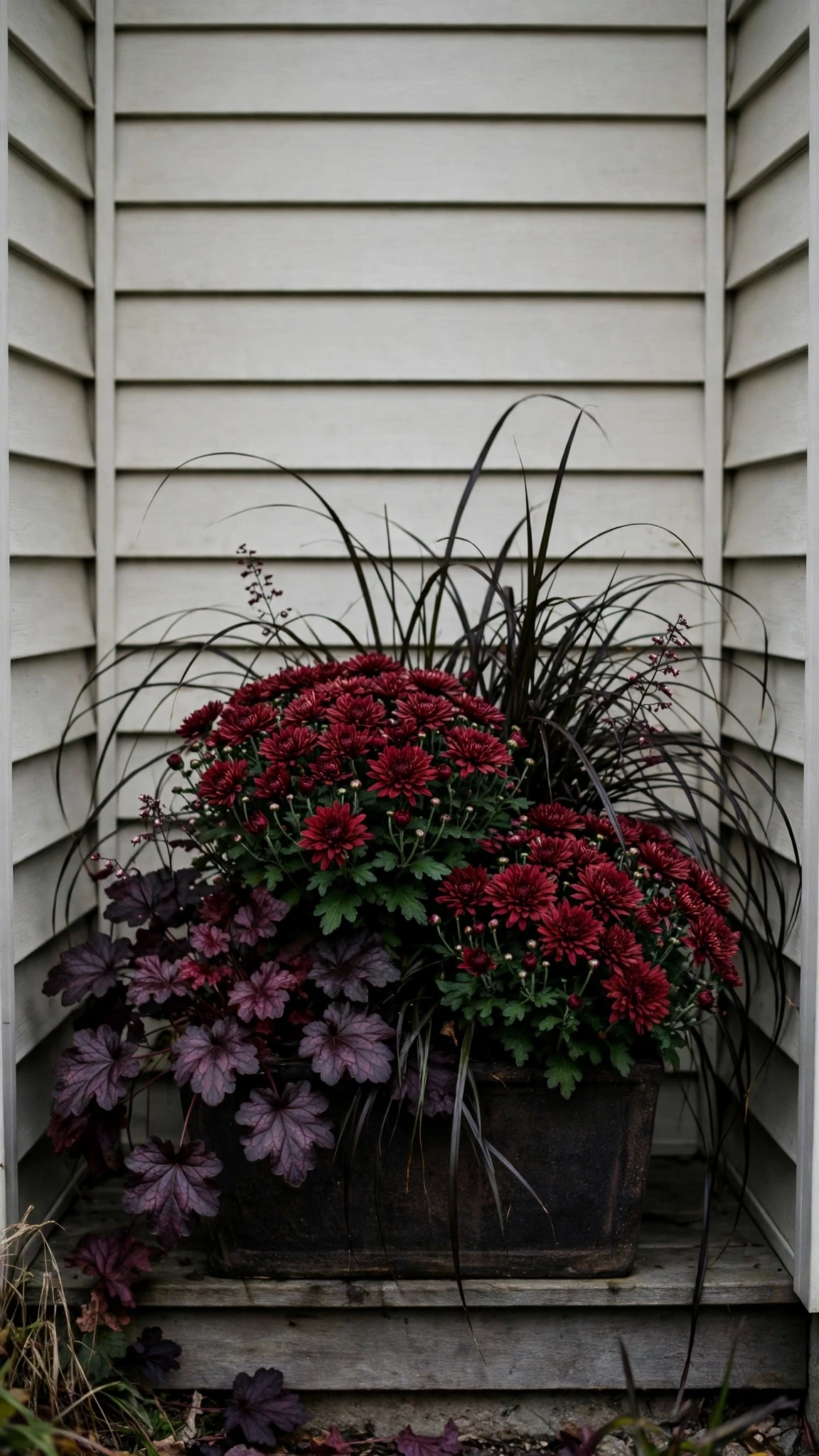
For a bold fall look, pair burgundy flowers with deep purple foliage and dark grasses. This mix stands out beautifully against light-colored siding. Put the tallest grass at the back, the mum slightly forward, and purple leaves around the sides. Good drainage matters even more in cool, wet weather.
Repeat the burgundy or purple in a small porch item, like a doormat or a cushion. That small repeat connects the planter to the rest of the entryway and makes the whole porch feel planned.
6. Layer Flowers in a Wooden Crate
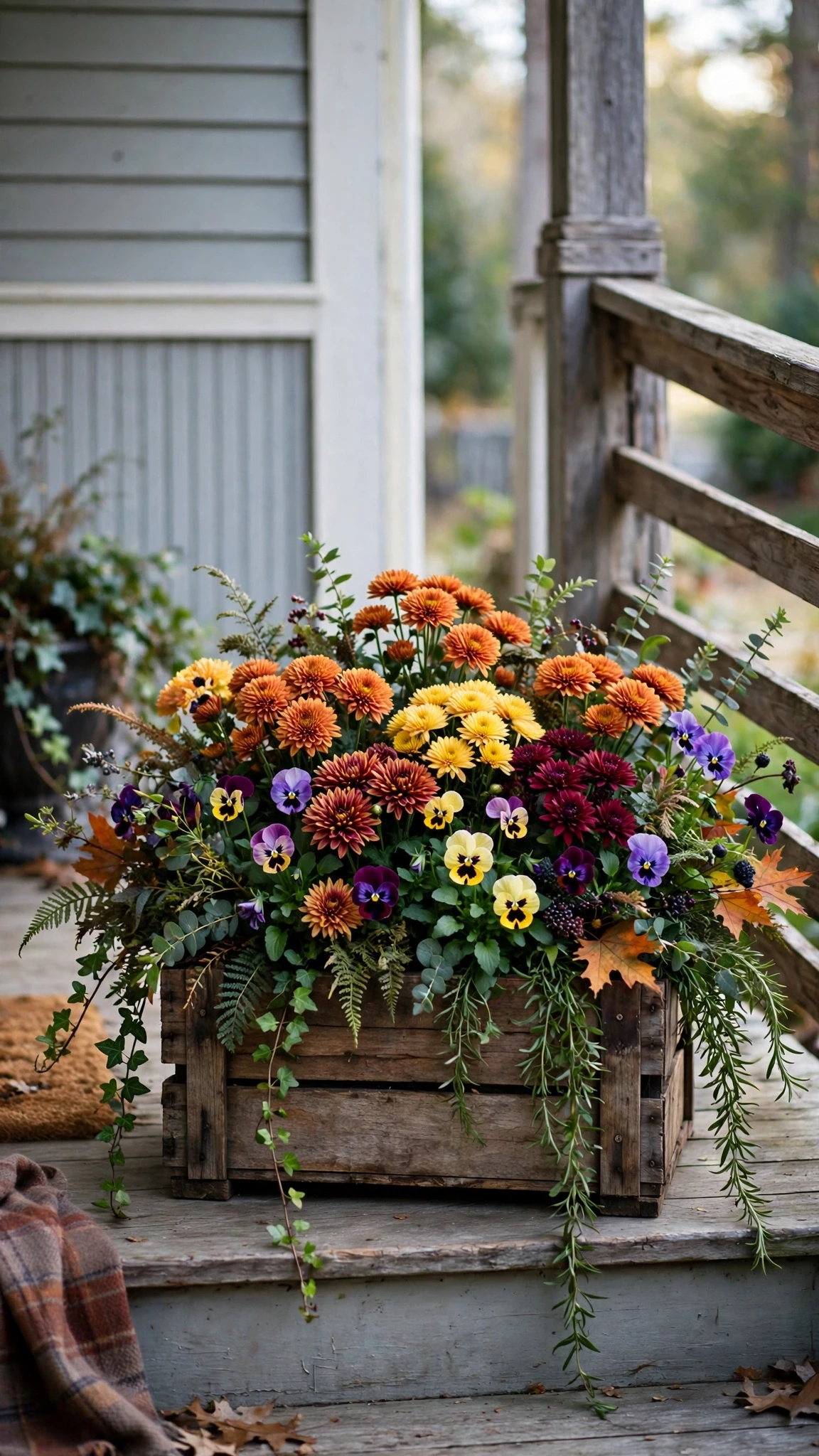
A wooden crate is a casual, garden-style home for fall flowers. Pick a sturdy crate deep enough for several nursery pots. Line it with a waterproof liner so moisture does not damage the wood. Plant mums with pansies and trailing greenery for a layered look.
Arrange the plants tallest at the back and shortest at the front. Leave a little wood showing so the crate does not look overcrowded. A weathered or plain crate works best, because the flowers should stay the focus.
7. Add Tall Cornstalks for a Grand Entrance
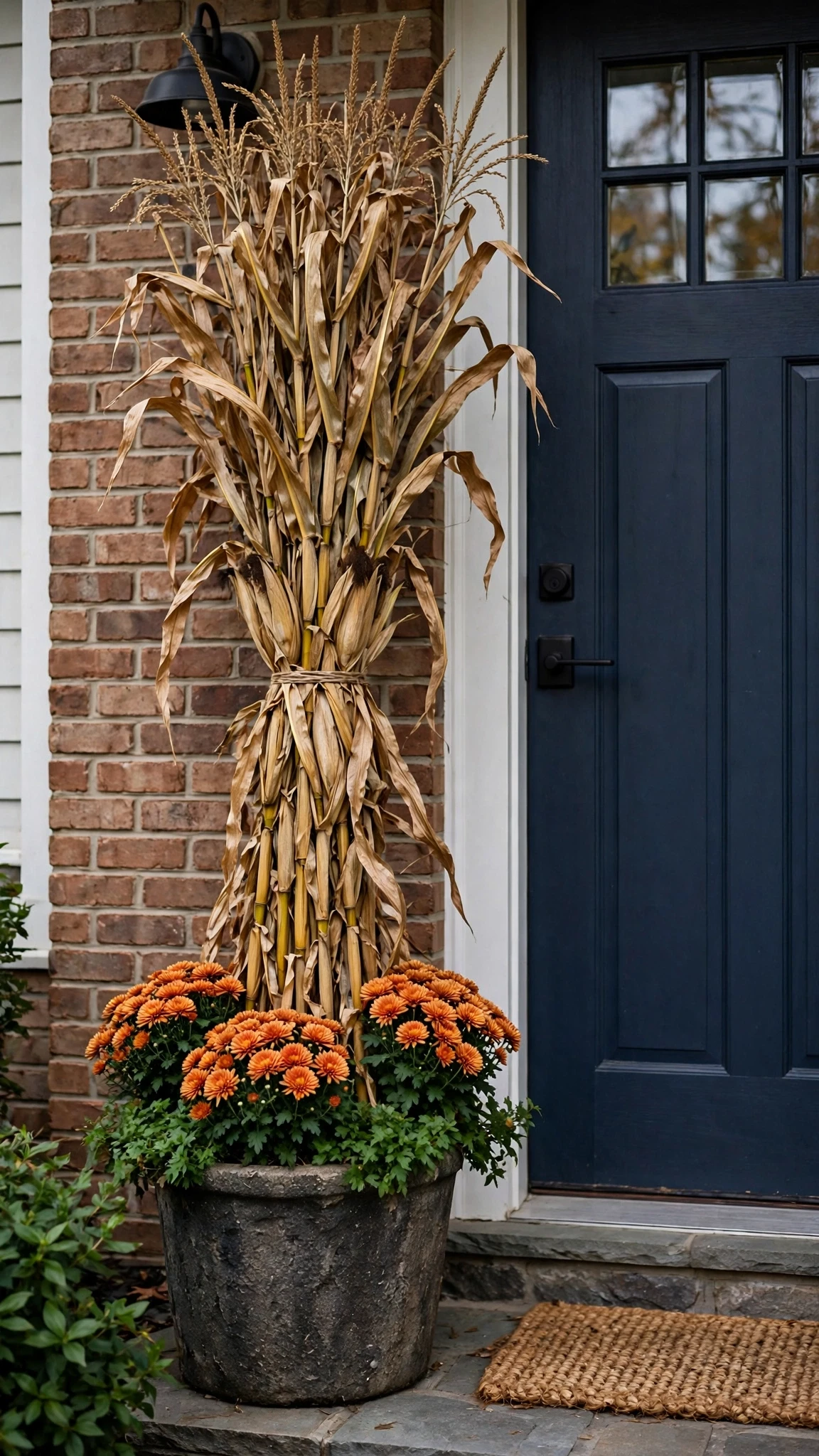
Tall stems can turn a plain planter into a striking entrance feature. Use dried corn stalks, tall ornamental grass, or bundled branches behind a low mum. The height works best beside a front door. Tie the stems firmly so wind cannot loosen them.
Use a large, heavy planter so the arrangement stays stable on an open porch. Keep the stems away from the door swing and the walkway. One pumpkin near the front finishes the look without adding clutter.
8. Keep It Soft With a Cream and White Planter
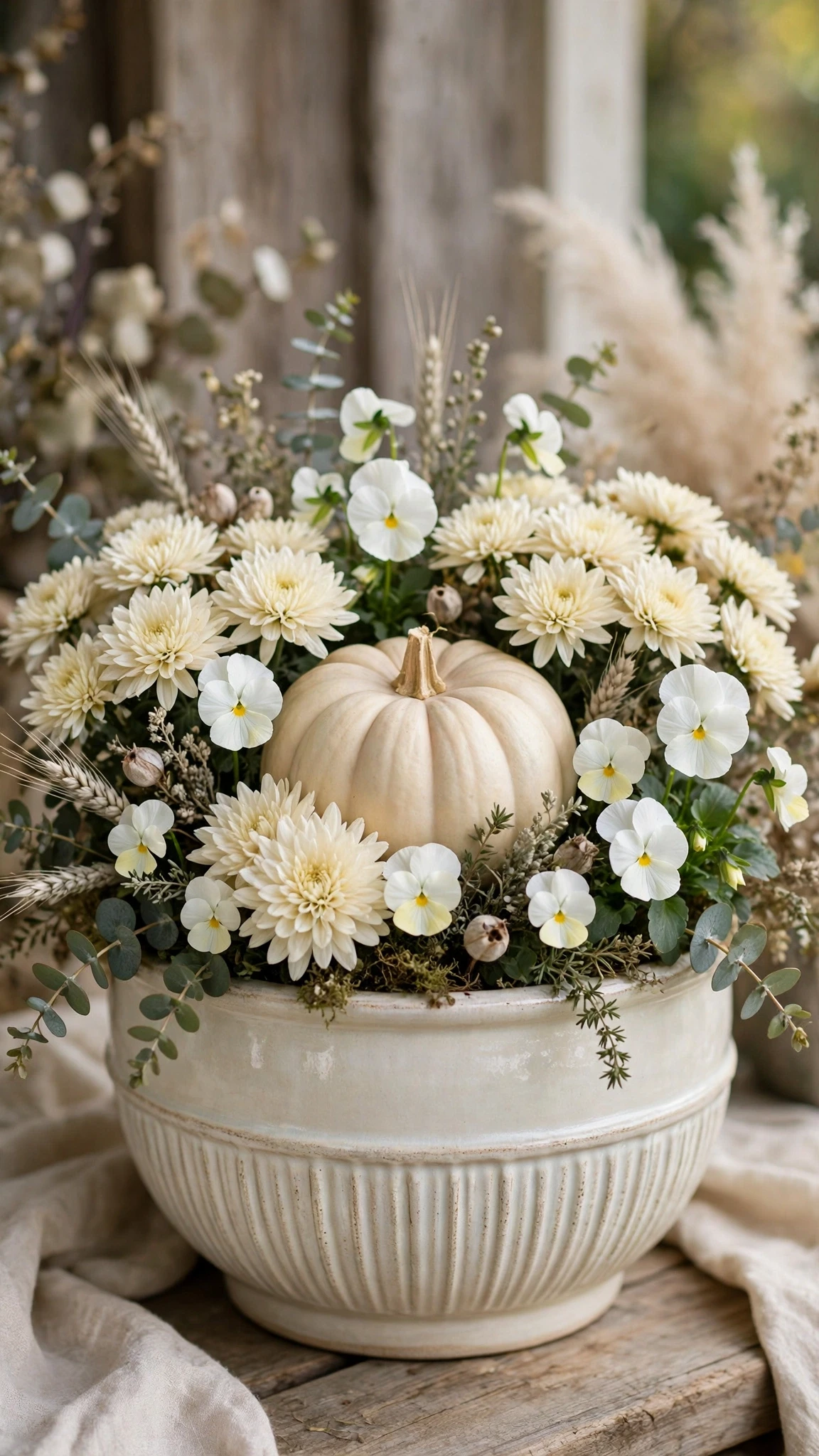
Fall does not have to mean bright orange. A neutral planter with cream mums, white pansies, dusty green leaves, and pale pumpkins feels soft and calm. This look suits modern, cottage, and Scandinavian-style homes. Keep the palette small and add interest through texture, not more objects.
Plant the mum in the center and smaller flowers around it. Set the pale pumpkin slightly off-center. Use different shades of ivory, cream, and beige instead of one flat white, so the arrangement stays warm.
9. Mix Herbs and Flowers in One Useful Pot
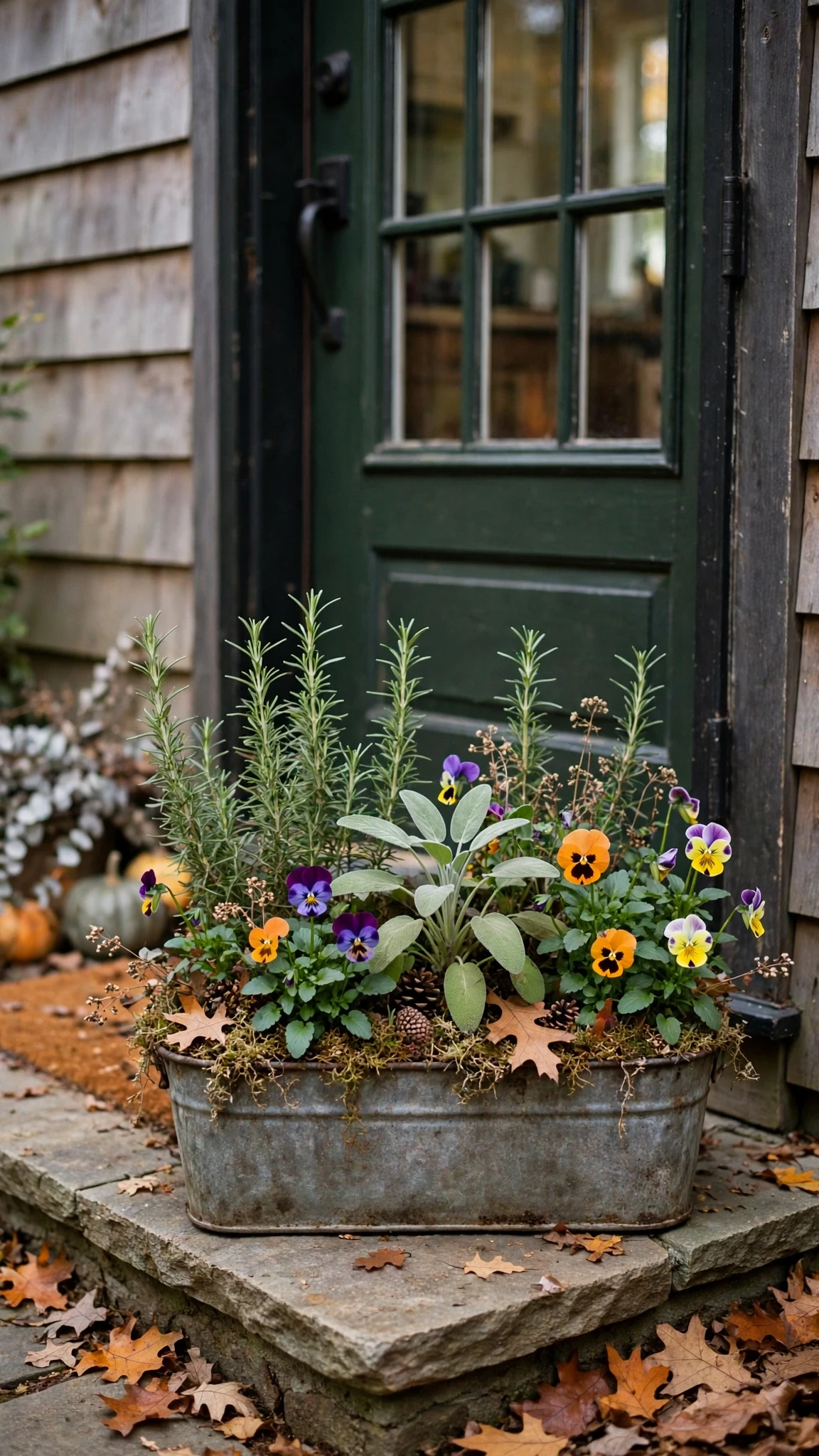
A fall planter can be useful as well as pretty. Mix rosemary, sage, and thyme with pansies or mums. The herbs give scent and green texture, and the flowers add color. Group plants with similar watering needs together so care stays simple. Herbs like rosemary hate sitting in wet soil, so drainage matters.
Put herbs toward the back and flowers toward the front. Leave room between plants for air and for picking herbs. Place the pot near the kitchen door so the herbs are easy to grab while cooking.
10. Plant a Wheelbarrow You Can Move
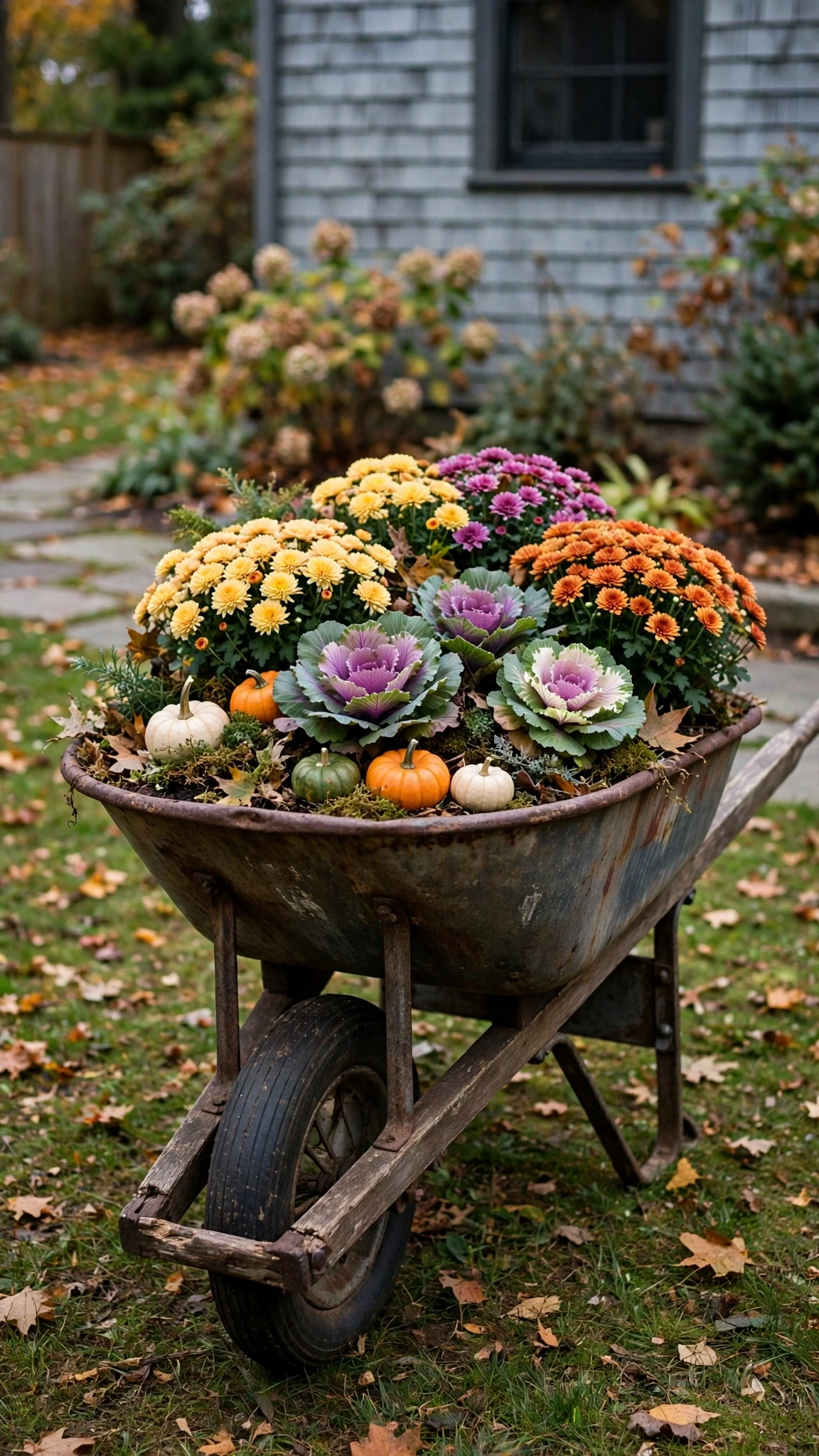
An old wheelbarrow makes a charming fall planter that you can move. Fill it with mums, ornamental cabbage, trailing leaves, and small pumpkins. When cold weather comes, you can wheel it to a sheltered spot. That makes it one of the most practical fall planters.
Make sure water can drain out, and do not fill it with heavy soil if you want to move it later. Put the tallest plants at the back and smaller ones along the front edge. Angle it slightly toward the walkway so visitors can see the whole planting.
11. Let Ornamental Cabbage Steal the Show
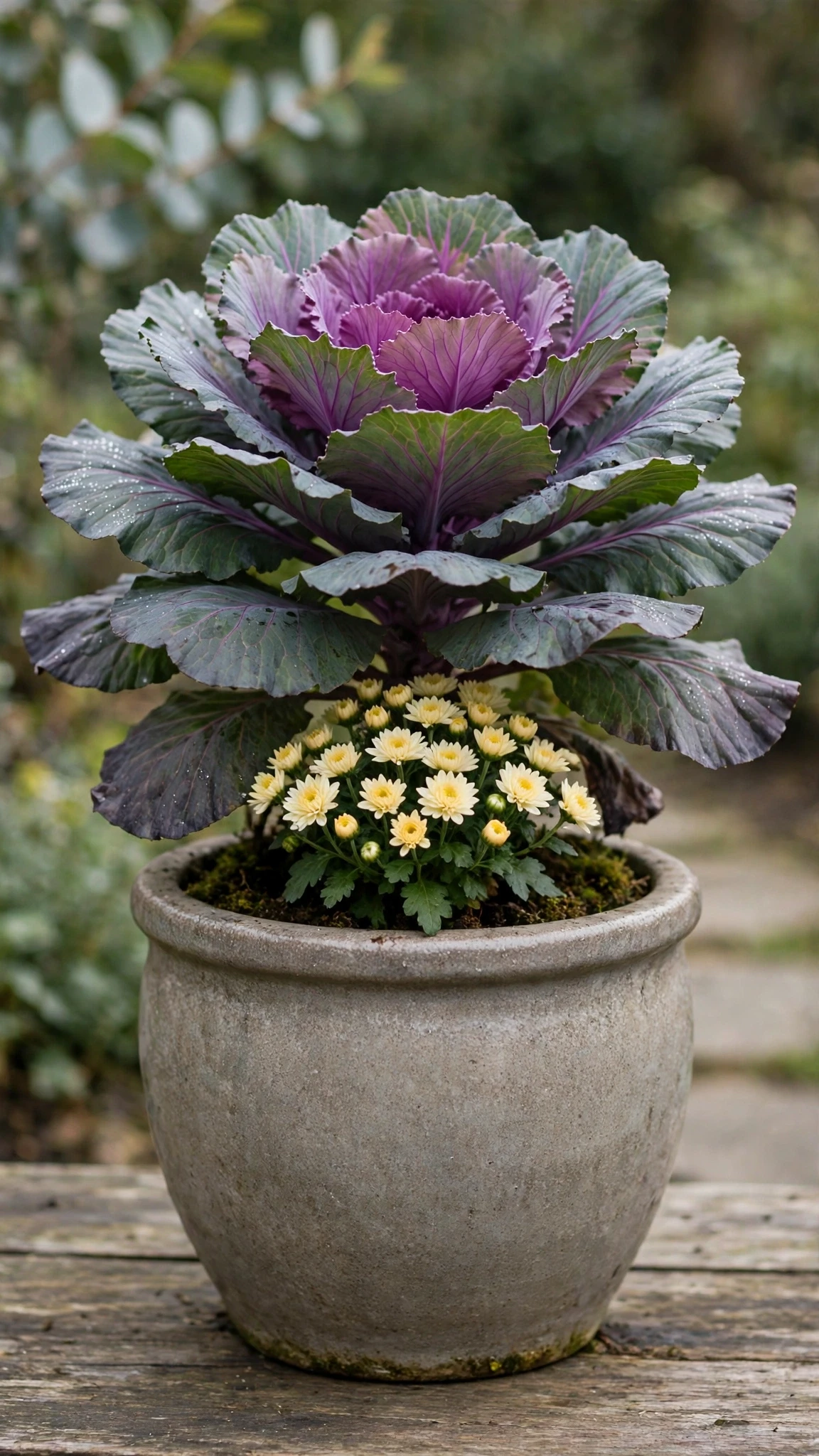
Ornamental cabbage and kale bring bold texture and color long after summer flowers fade. Their wide leaves make a strong focal point, especially with small mums or trailing plants nearby. Set the cabbage slightly off-center and give it space, because mature leaves spread wide.
Do not bury the center growing point too deep when planting. Pick a simple container, because the layered leaves already give plenty of detail. Water slowly until the moisture reaches the roots.
12. Add Dried Branches for Height and Shape
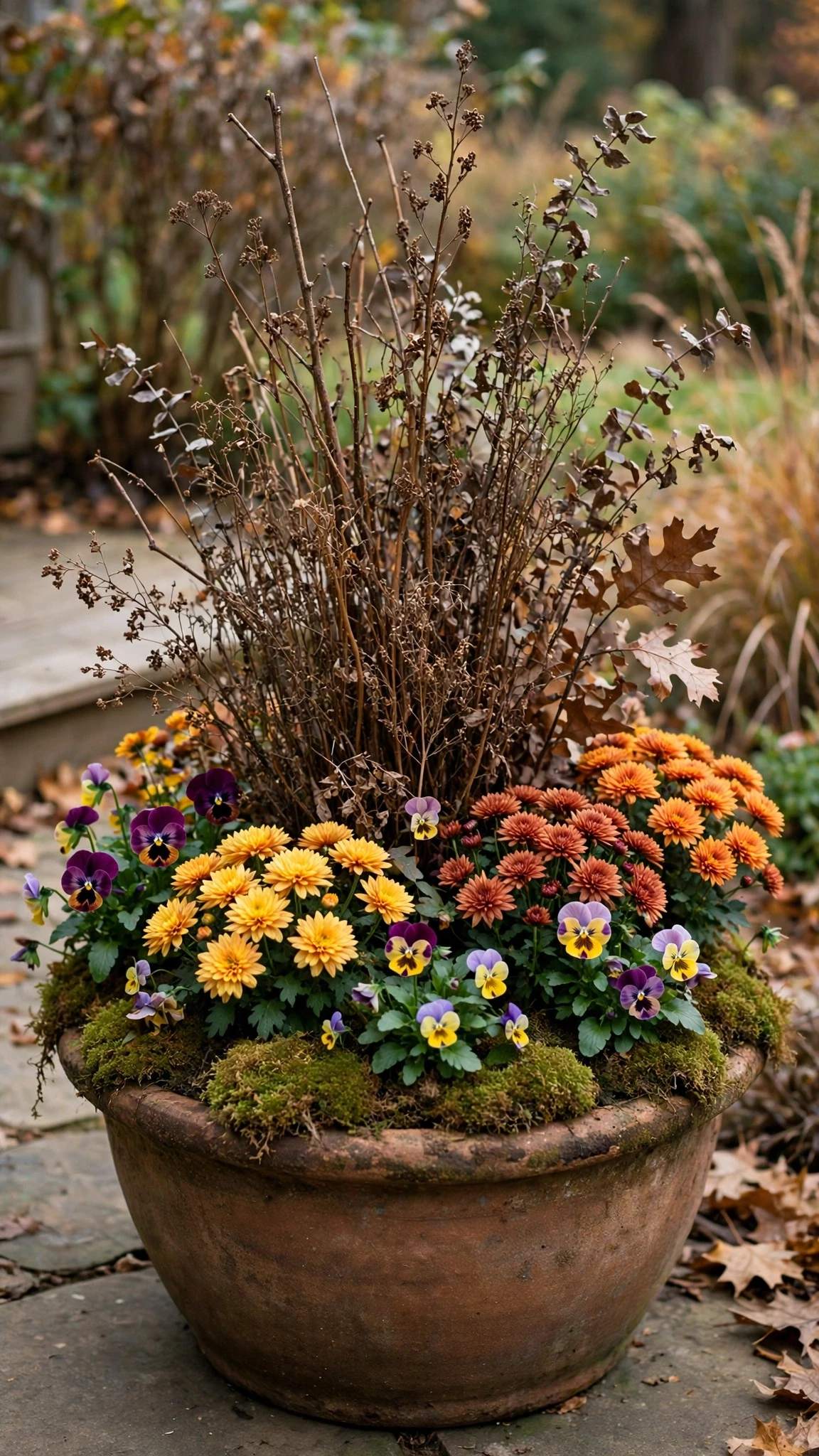
Dried branches add height and shape to a fall pot without fighting the flowers. Pick branches with small twigs or seed heads and anchor them firmly in the center of a large container. Plant mums or pansies around the base and finish with moss over the soil.
Use uneven branch heights instead of cutting them all the same length. That looks more natural, like branches gathered from the garden. Remove any brittle pieces that could fall onto the walkway.
13. Group Three Pots With One Repeated Color
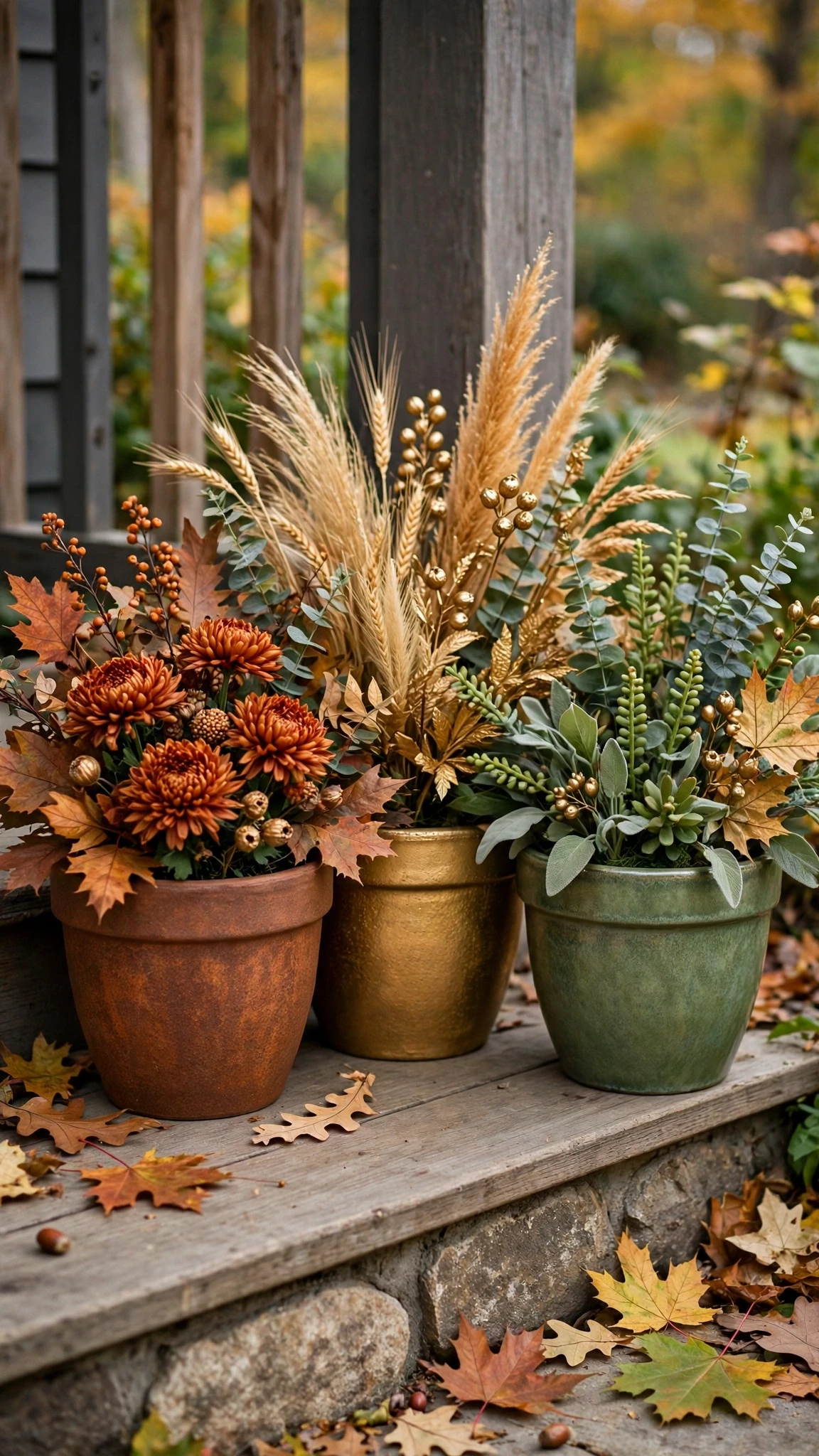
Instead of one giant planter, group three pots with one repeated fall color. Try rust mums, golden grasses, and soft green leaves across three containers. Vary the heights and textures while keeping the colors connected. This works beautifully on wide steps or porches.
Make one pot fuller, one taller, and one lower. Repeat at least two colors across the pots. Put the tallest container closest to the door and lower ones toward the outer edge. The rhythm makes the porch feel planned without every pot looking the same.
Plan Your Fall Planters in 4 Simple Steps
A good fall porch starts with a simple plan. First, pick your pots and place them where they get the right sun. Second, choose one color story, like rust and gold or cream and green. Third, plant tallest first, then fill in with color and trailing plants. Fourth, set the pots by the door and steps, leaving the walkway clear. Follow this order, and the porch comes together without wasted money or extra work.
Fall Planter Mistakes to Avoid
- Overcrowding the pots. Every plant needs air and room to grow.
- Using garden soil in containers. Potting mix drains better and stays light.
- Forgetting drainage holes. Wet roots rot fast in cool weather.
- Using every fall color at once. Two or three shades look more polished.
- Ignoring frost. Cover pots on cold nights or move them to shelter.
FAQS
What flowers work best in fall outdoor planters?
Mums, pansies, ornamental cabbage, ornamental kale, asters, and other cold-tolerant flowers work best in fall outdoor planters. Mix flowers with foliage and grasses to add texture. The container stays interesting even after individual blooms fade. Choose plants that suit your sunlight and local weather for the longest display.
How often should I water fall planters?
Check the soil instead of following a fixed schedule. Cool weather slows evaporation, but wind and sun can still dry pots fast. Water in the morning when the topsoil feels dry, and make sure extra water drains freely from the bottom.
How do I keep fall planters from looking crowded?
Give every plant a clear role: one focal plant, one supporting texture, and one trailing or filling plant. Overplanting may look full at first, but it blocks airflow and turns messy as plants grow. Space gives each plant room to shine.
Can I use garden soil in outdoor containers?
Potting mix is a better choice than garden soil for outdoor containers. It is lighter and made for drainage. Garden soil can pack down inside pots, block oxygen, and make it hard for roots to grow well. Good potting mix gives roots the air and drainage they need to grow strong all season.
How do I make a fall planter look expensive?
Focus on proportion, repetition, and restraint. Use a limited color palette, pick containers in different heights, and repeat one or two colors across your porch. A few well-placed natural pieces usually look more polished than many small decorations. Keep the display simple and let each piece earn its place.
How do I protect fall planters from frost?
Cover pots with a light cloth on cold nights, and move small containers to a sheltered spot near the house. Water the soil before a frost, since damp soil holds warmth better than dry soil. Bring tender plants inside if a hard freeze is coming.
How long do fall planters last?
Fall planters can last six to eight weeks with simple care. Water when the soil is dry, remove faded blooms, and protect pots from hard frost. Replace any tired plant with a fresh mum or pansy to keep the display looking full.
Conclusion
The best fall outdoor planters do not need to be complicated or expensive. A thoughtful mix of seasonal flowers, interesting leaves, natural textures, and the right container can change how a porch feels. Start with one arrangement that fits your space, then build around it with repeated colors and matching textures.
Try one idea this season and make it your own. Fill a basket, set out a pumpkin pot, or group three small pots by the door. Your warm, welcoming autumn porch is closer than you think.