
21 Backyard Fence Ideas That Add Privacy, Style, and Curb Appeal
Backyard fence ideas work best when they solve a clear job first and look good second. A fence can give privacy at the back, welcome visitors at the front, keep a dog safely inside, and make a house look finished from the street. The right choice depends on your yard, your climate, your budget, and how much upkeep you want to live with.
This guide splits that job into three parts: a private back boundary, a welcoming front boundary, and a gate and finishing layer that tie them together. Read the planning section first, then pick two or three ideas that solve your biggest problem. You do not need to use all 21 ideas, and you should not choose a fence from a single photo alone.
Backyard Fence Ideas
1. Horizontal Timber Slats That Make a Yard Feel Wider
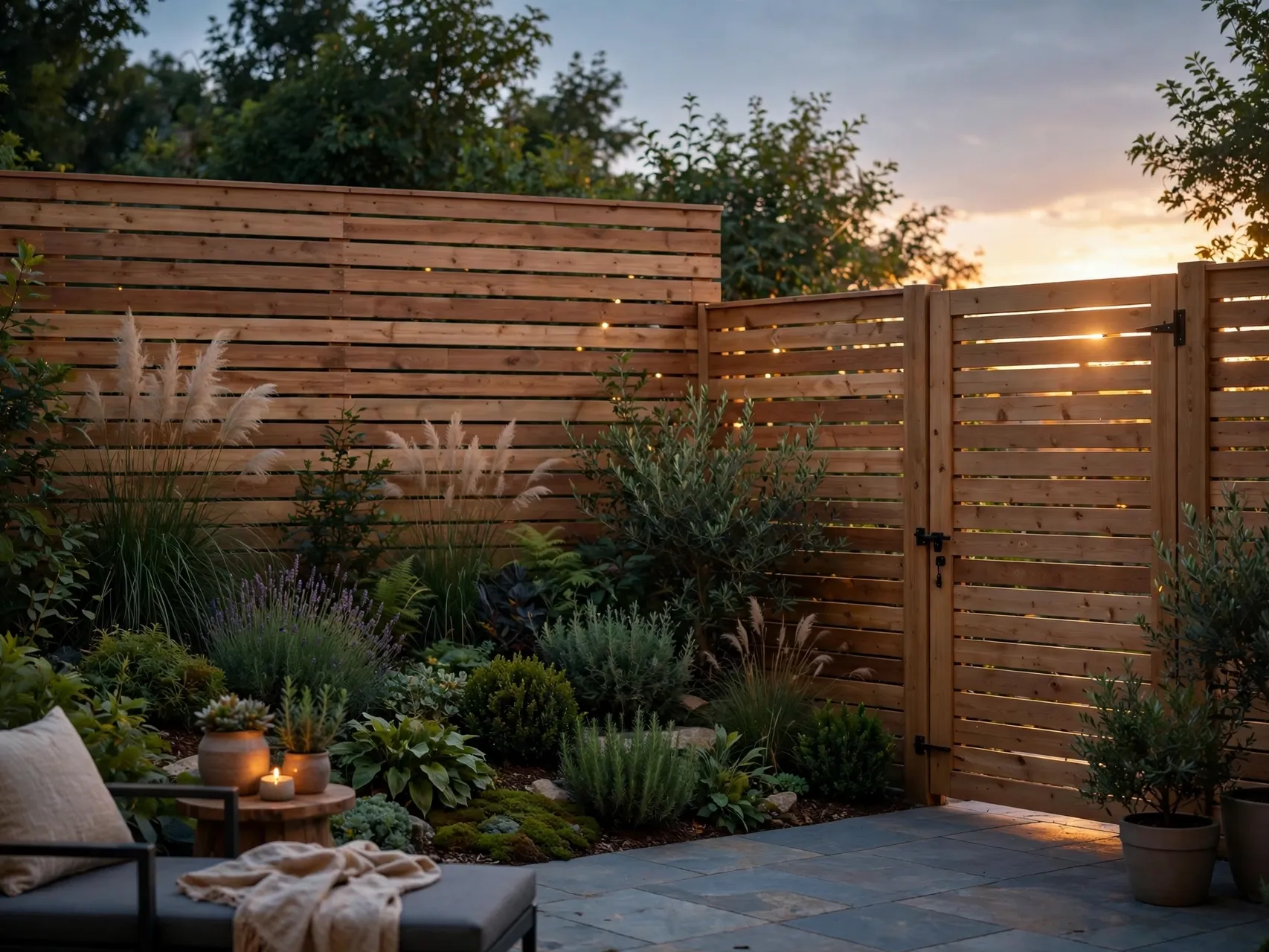
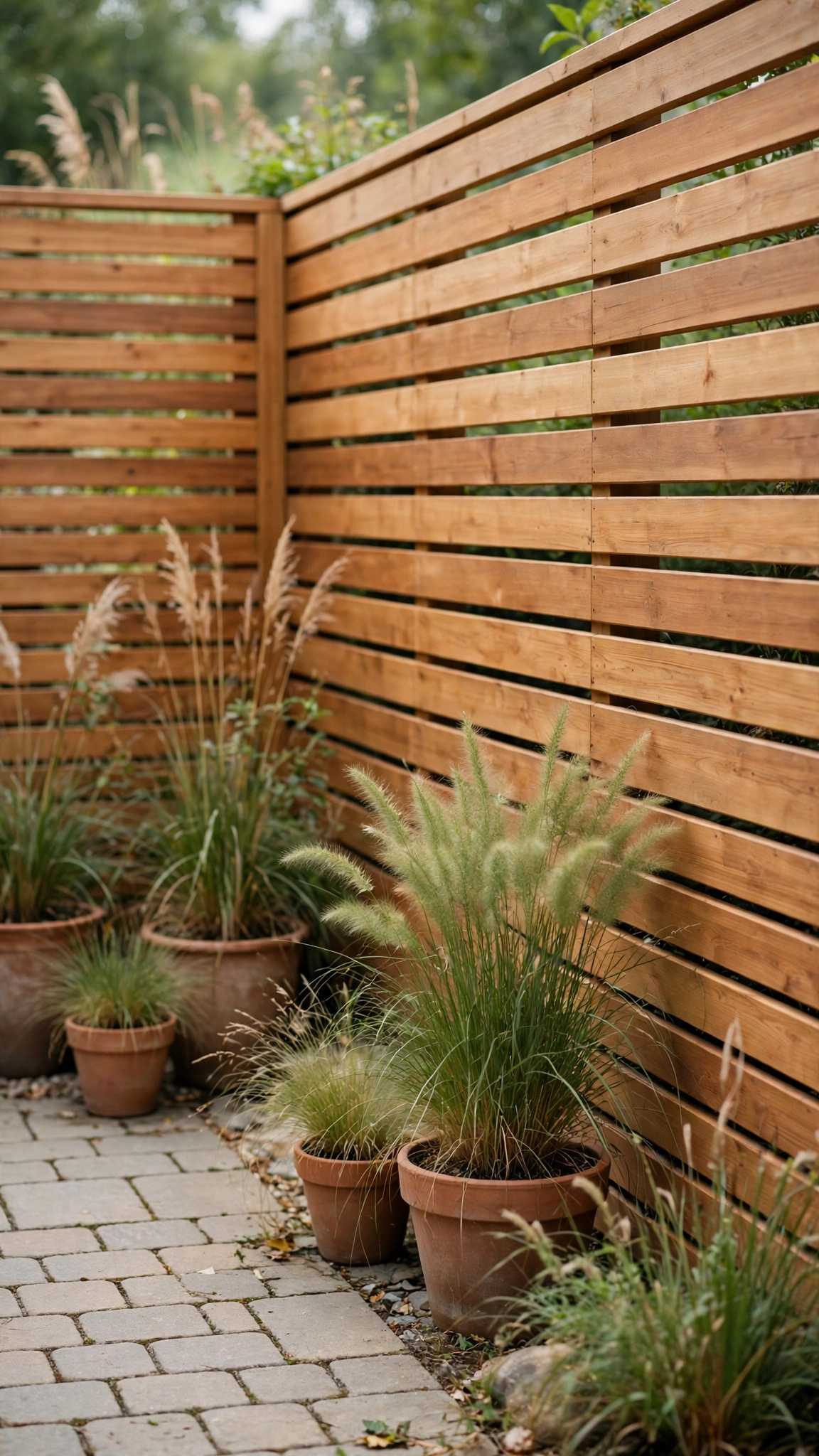
Horizontal timber slats draw the eye across a yard instead of up and down it, so a narrow or small garden can feel wider and calmer. Warm cedar or a similar timber, a clean stain that suits your house trim, and even board spacing give a modern look without a harsh, industrial edge. Planting in front of the slats softens the line and stops the fence from reading as a flat wall.
Horizontal spans need stronger framing than vertical boards, because long boards can sag if the posts and rails are too far apart. Decide early between closed boards for full privacy and small gaps for airflow and light, and keep post positions neat so the horizontal rhythm stays even. A simple cap rail also protects board tops from rain and gives the fence a finished edge.
2. A Fresh Take on the Traditional Picket Boundary
A picket boundary works best as a welcoming front signal, not as a full privacy wall. Spacing, height, and colour change its character completely: wider spacing keeps light and airflow, a flat top feels calmer than a pointed top, and a colour matched to your trim or door makes the boundary feel part of the house. The gate should mirror the picket rhythm, so the entrance does not look like an afterthought.
Keep pickets low enough for the street view and for any front-yard setback rules in your area, and check local rules before you build higher at the front. A planted path, a low hedge behind the pickets, or a simple front yard curb appeal planting strip can make a modest fence feel considered. This idea suits readers who want charm and a clear boundary without shutting the front yard away.

3. Overlapping Boards for Complete Backyard Privacy
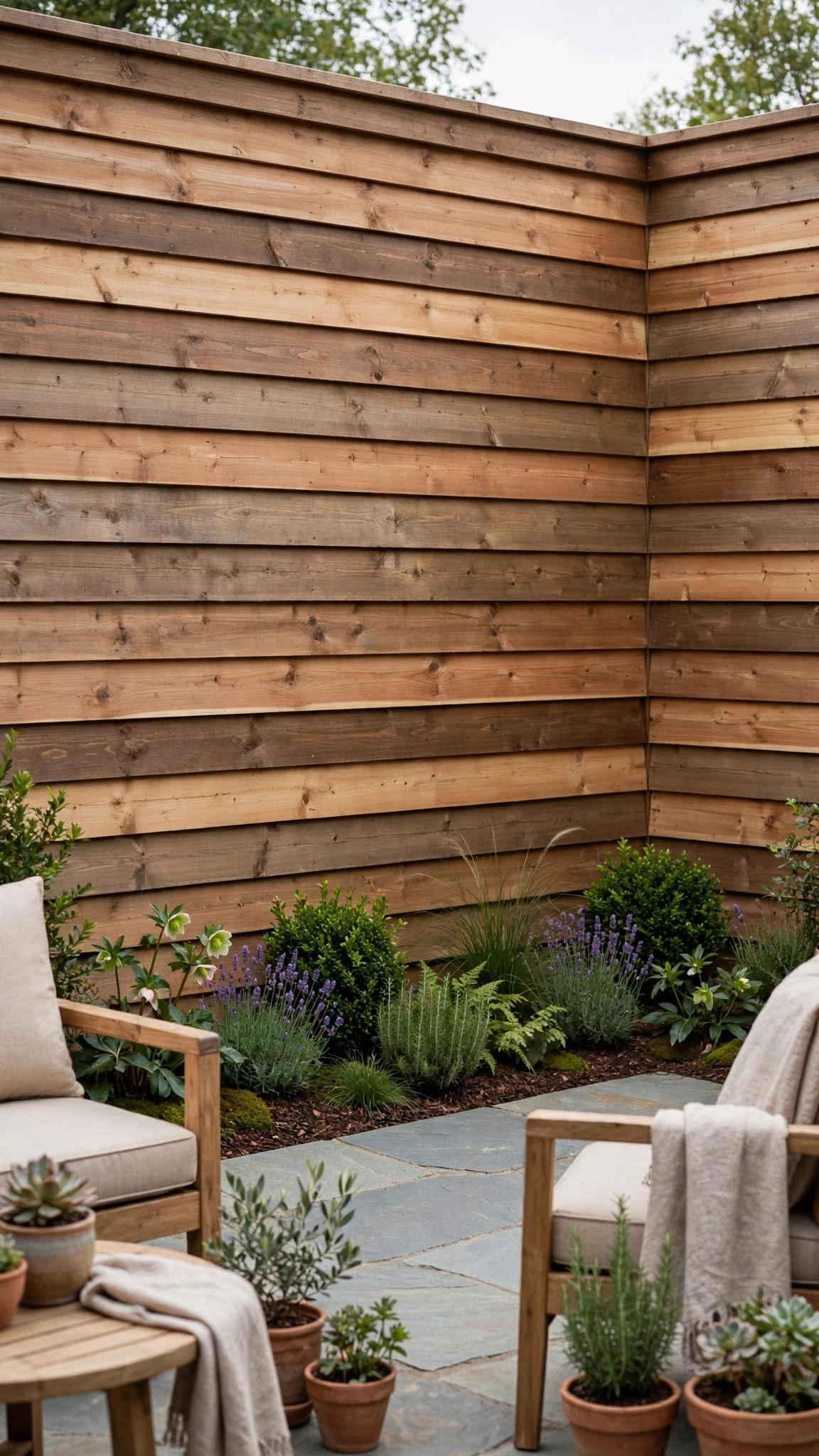
Overlapping boards solve one job very well: no sightline through gaps, even after boards dry and shrink a little. Boards are fixed on alternating sides of the rails, so the fence looks finished from both sides and a neighbour cannot see straight through it. That makes it a strong choice for a back boundary where seating, a patio, or a pool area needs real screening.
The trade-off is material, weight, and wind. Overlapping boards use more timber, take longer to install, and create a solid wall that catches wind, so posts and footings must be sturdy and drainage at the base must stay clear. Add a cap rail to protect the tops, and keep planting a little away from the base so air can move and boards can dry after rain
.
4. Alternating Shadowbox Boards That Let Air Through
Shadowbox boards are fixed on alternate sides of the rails, so the fence looks private from an angle but still lets air pass through small gaps. That balance makes it a practical choice for windy yards where a solid wall has struggled, and for yards that need screening without feeling boxed in. From straight on, the layered boards read as solid; from the side, light and shadow give the fence depth.
Because the look is the same from both sides, it is also a neighbour-friendly option for a shared boundary. Planting in front of the gaps can add extra screening without closing off airflow completely, which helps in narrow backyard ideas where a tall solid wall would feel heavy. Check post strength and board spacing before you commit, and keep the base clear for drainage.
- Use shadowbox boards where wind is a known problem on your boundary.
- Pair them with planting rather than a second solid screen, so airflow stays open.

5. Open Metal Rails for Larger Plots and Views
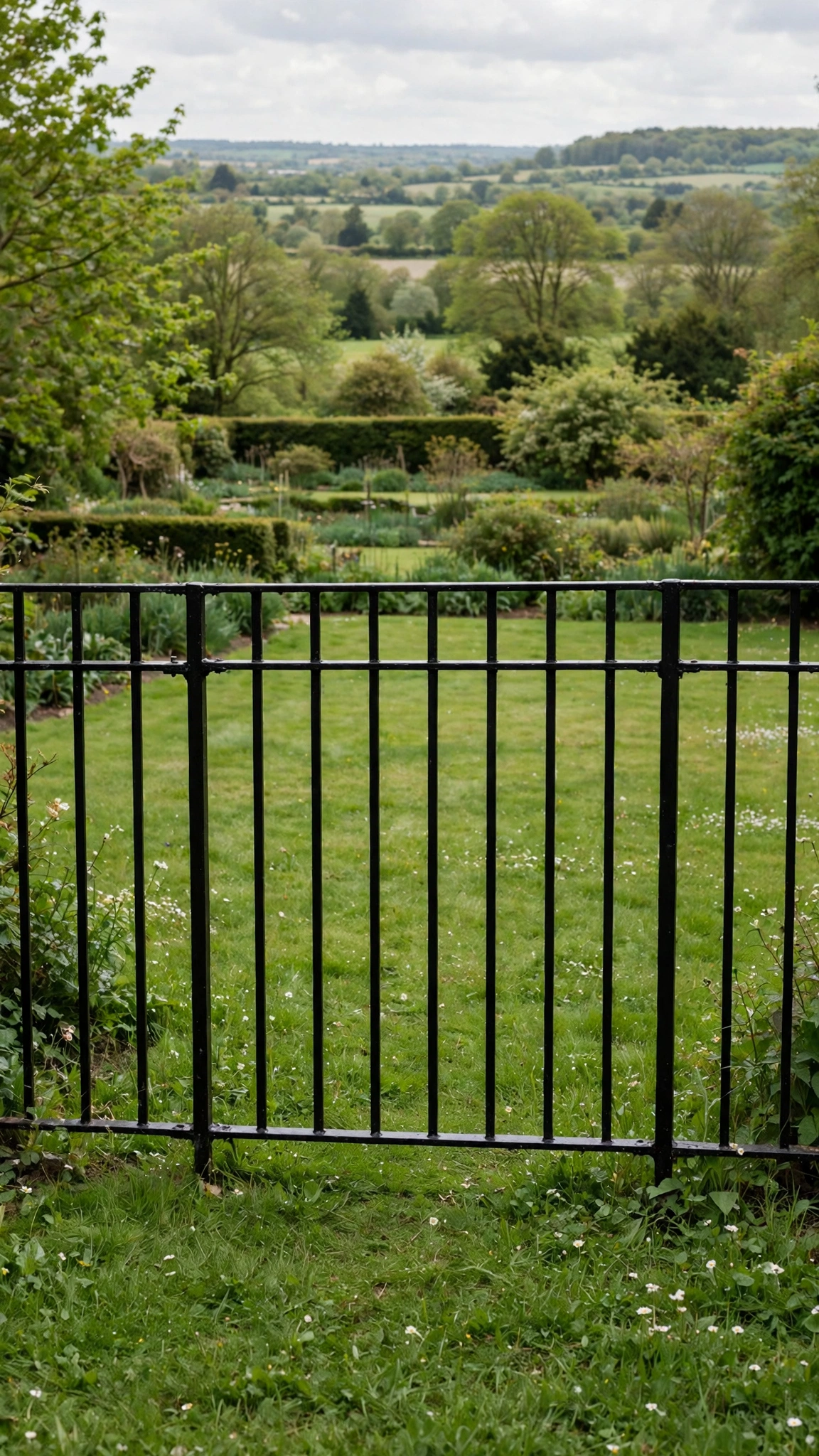
Open metal rails mark a boundary without closing off a view, which suits larger plots, rural edges, and yards where the landscape matters more than privacy. Steel gives strength for longer runs, while aluminium resists rust and needs less upkeep in wet or coastal conditions. The open pattern keeps sightlines long and lets wind pass through, so the fence feels light even on a long boundary.
This idea is not a privacy solution, and it should not be sold as one. Use it where containment, a clear property edge, or a view matters most, and pair it with planting or a hedge if you later want soft screening. Match the gate to the rail pattern, and check latch height and gap size if pets or children will use the yard.
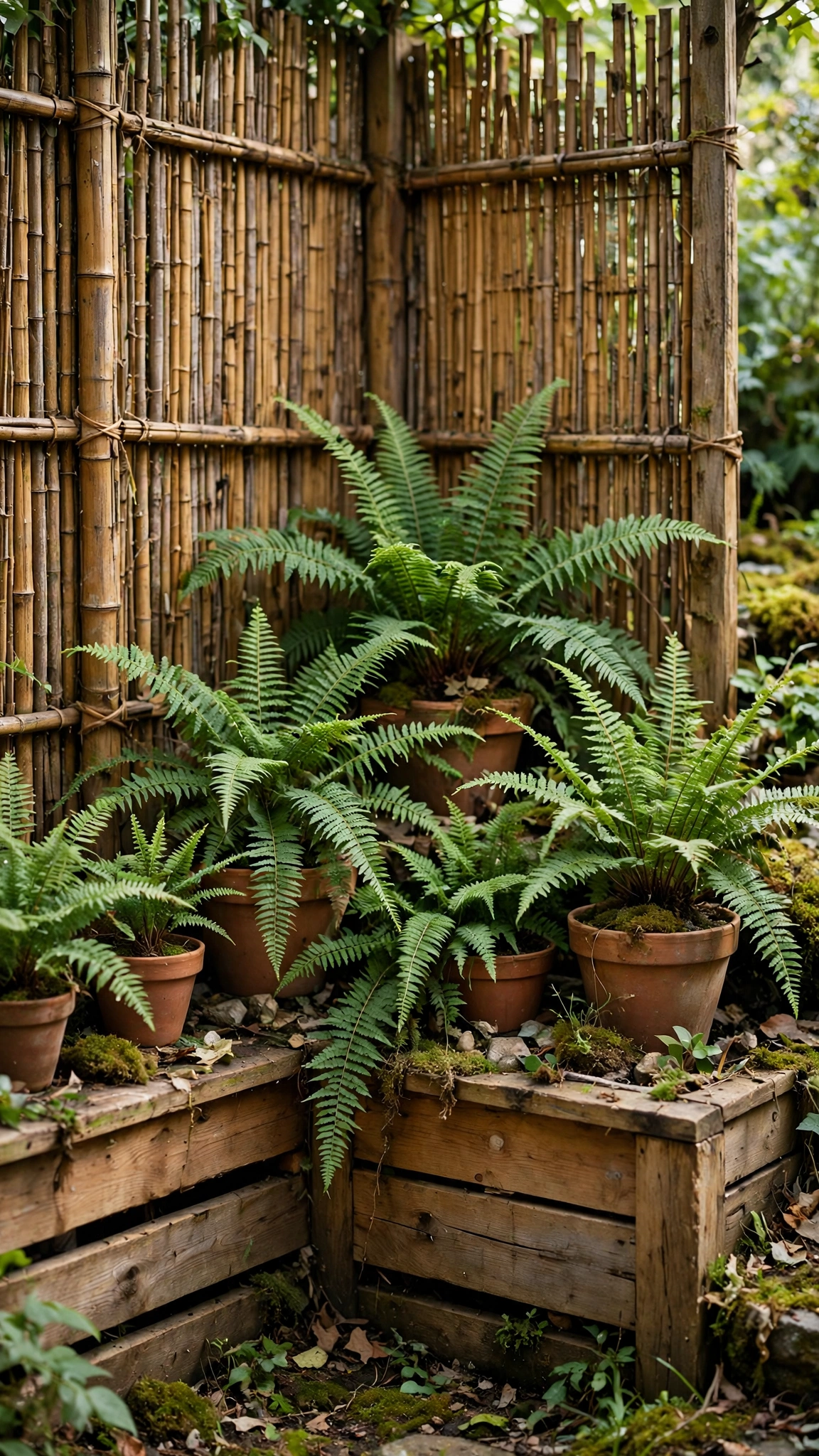
6. Natural Bamboo Screening for a Calm, Tropical Edge
Bamboo screening changes the mood of a yard quickly, adding warmth and a tropical or calm, garden-room feel. It can work as a panel fence or as a cover over an existing fence, which makes it useful for rentals and for readers who want a fast visual change without a full rebuild. Pots, ferns, and soft planting echo the look and stop bamboo from feeling like a flat sheet.
Quality varies a lot, so check thickness, fixing, and weathering before you buy. Bamboo that is fixed too tightly can trap moisture, and cheaper rolls can fade or fray sooner in strong sun. Allow airflow behind the screen, fix it securely against wind, and check landlord permission if you are covering a fence you do not own.
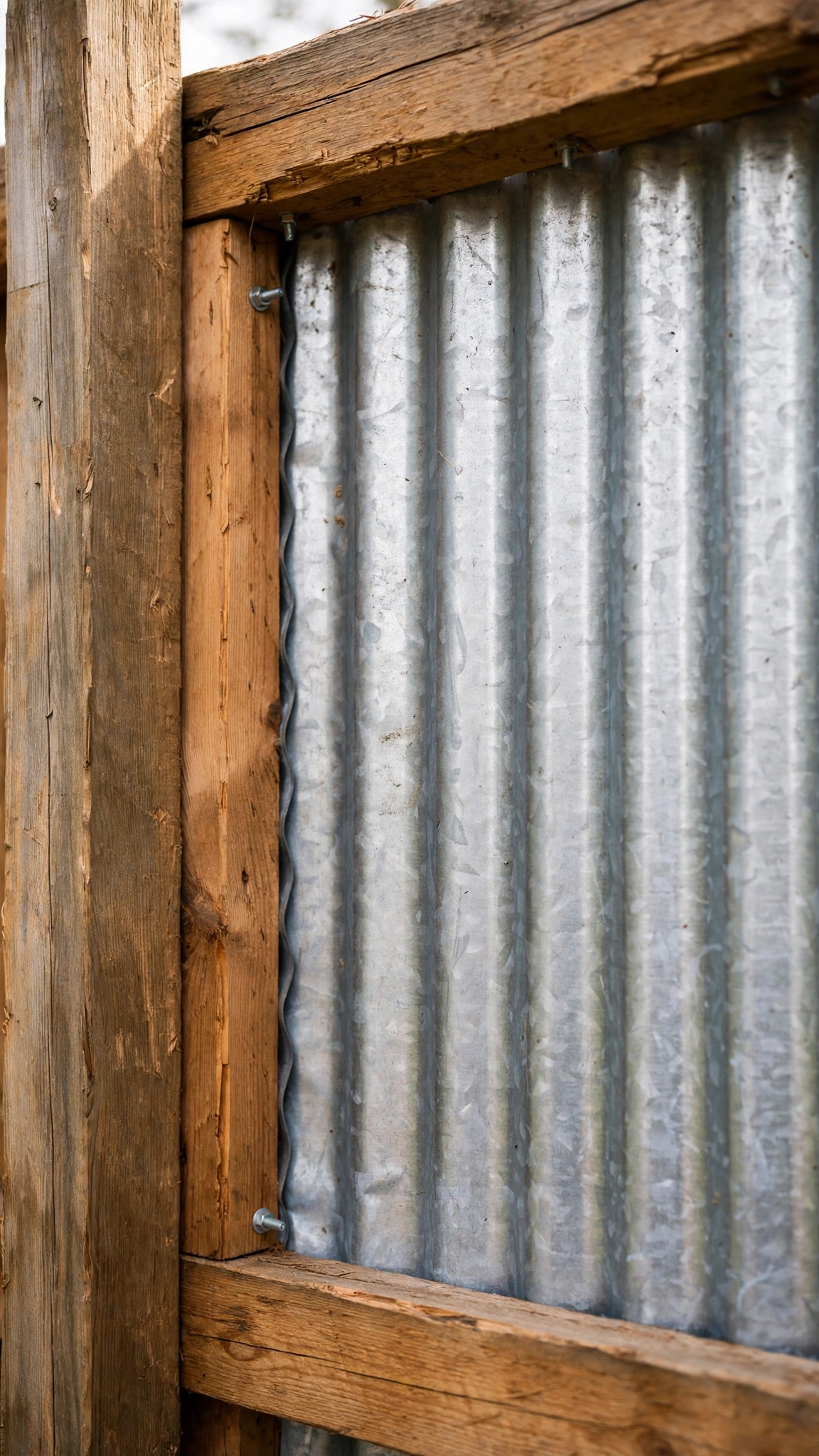
7. Warm Timber Frames Paired With Corrugated Panels
Corrugated metal panels inside warm timber framing give a modern, industrial edge softened by wood. The timber posts, top rail, and frame make the metal feel intentional, while the metal adds durability and a clean, flat surface. Choose a metal colour that suits your house, from a soft grey to a dark charcoal, and keep the timber stain warm rather than orange.
Fix panels so they cannot rattle in the wind, and keep the base clear for drainage so water does not sit against timber or metal. This pairing suits contemporary houses and small urban yards, where a plain timber fence might feel too soft and a plain metal fence too cold. Test one panel in daylight before committing to a full run, because corrugated texture reads very differently in sun and shade.
8. A Living Hedge Boundary That Grows Into Privacy
A living hedge boundary gives privacy that improves with time, softens noise, and feels like garden rather than structure. Dense evergreen shrubs, grown alone or in front of a low fence, can screen a boundary without a tall wall, and seasonal pruning keeps the shape neat. This idea suits readers who can wait for plants to fill in and who enjoy garden upkeep.
Match species to your sun, soil, water, and climate, and space plants for their mature width, not for instant coverage. A temporary screen can help while young plants establish, and regular watering in the first seasons matters more than any single fertiliser. For planting choices that pair with a fence line, see garden privacy planting ideas, and keep access clear for pruning, gates, and neighbours.

9. Low-Upkeep Vinyl Panels in a Wood-Look Finish
Vinyl panels suit readers who want privacy without sealing, staining, or painting every year. A textured wood-look finish avoids the flat plastic look that puts many people off, and washing replaces most upkeep. Colour and cap style matter: a warm wood tone, a neat cap, and sturdy posts make vinyl read as a designed fence rather than a cheap barrier.
Vinyl is not maintenance-free, and quality matters. Check panel thickness, heat behaviour in strong sun, and how the colour holds up over time, because cheaper panels can look hollow or warp. Keep the base clear for drainage, and match the gate to the panel style so the entrance does not break the clean line.

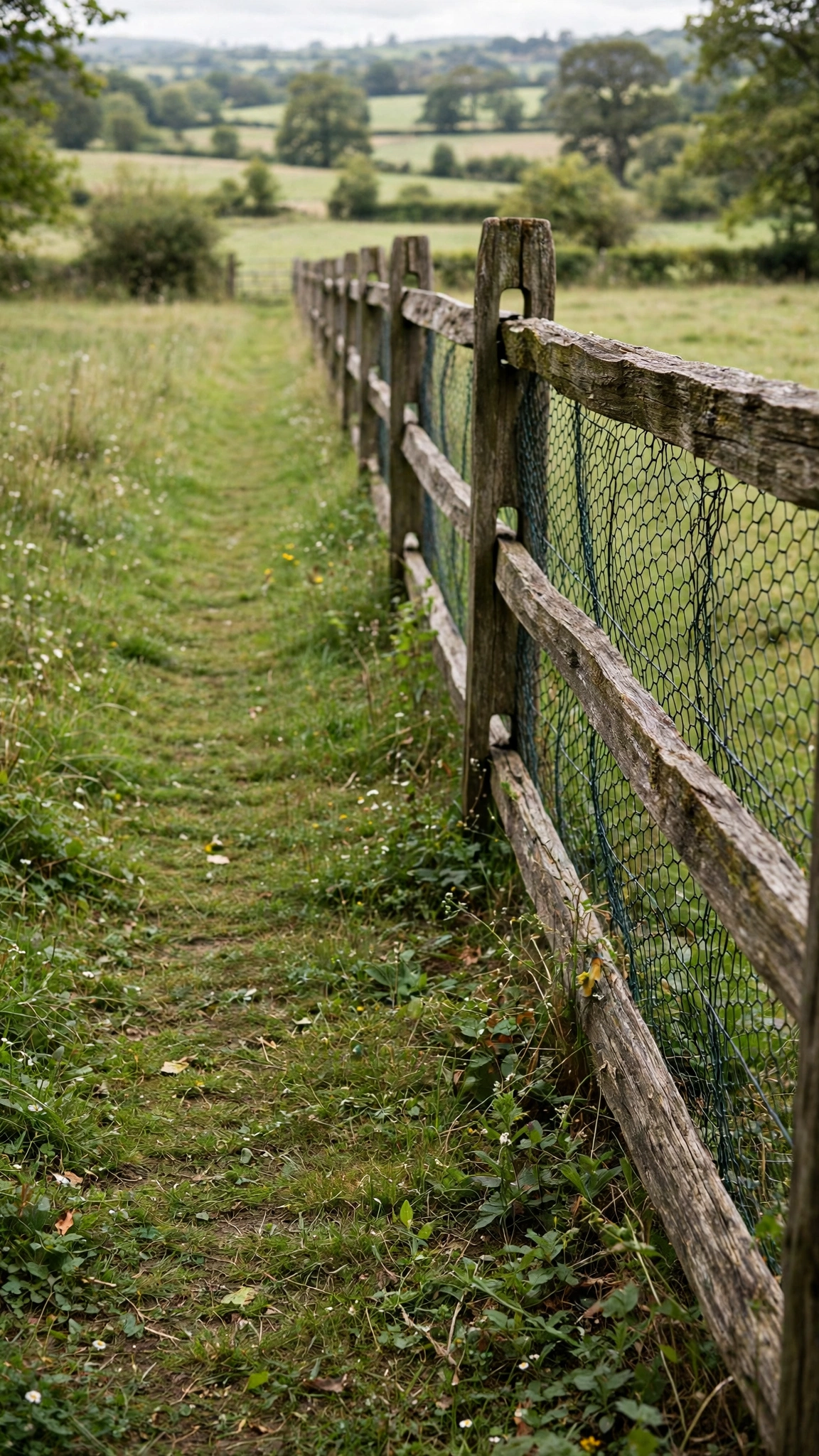
10. Rustic Split Rails With a Practical Mesh Backing
Split rails give a relaxed, countryside boundary at a low upfront cost, and a mesh backing turns that open look into real containment for pets and children. The rails set the character, while neat mesh fixed behind them stops a dog from slipping through without changing the rustic feel from the street. Gates need the same treatment, or the boundary will fail at its weakest point.
Privacy is the clear limit here. Split rails will not screen a patio or block a neighbour’s view, so use them where openness matters more than seclusion. Keep mesh taut and well fixed, check it after storms, and plant grasses or low shrubs in front if you want soft screening without losing the open character.
- Fix mesh behind the rails, not in front, for a cleaner street view.
- Check gate latches and mesh joins first, because pets test those points.
11. A Lattice Crown That Softens a Tall Privacy Wall
A lattice crown adds an open section to the top of a solid privacy fence, letting light and breeze through while softening a boxy wall. It is also a useful upgrade for an existing fence, because you may not need to replace the whole run to change how it feels. Climbers such as jasmine or clematis can grow through the lattice and add scent and softness over time.
Check height rules before you add a topper, because total fence height is what local rules usually measure. Lattice adds weight and wind load, so posts must be strong enough, and climbers need pruning so they do not block gates or weigh down the crown. Keep the lattice depth neat and the fixing clean, or the upgrade will look added on rather than designed.

12. Stone-Filled Gabion Sections for Texture and Sound
Gabion sections are wire cages filled with stone, used as fence runs, pillars, or a feature section near a busy road. Their weight and texture absorb sound better than a thin timber panel, and the stone surface adds shadow and character that changes through the day. This idea suits modern and rustic yards alike, as long as the stone colour suits the house.
Gabions need a level, solid foundation, because they are heavy and unforgiving of a sloping base. Stone size, drainage, and installation effort all affect cost and finish, so compare a full gabion run with gabion pillars plus lighter panels before you commit. Keep planting clear of the cage so the stone texture stays visible, and check access for future repairs.

13. A Bold Paint Colour That Turns a Plain Fence Into a Feature
Colour alone can change a plain timber fence into a feature, and it is often the cheapest design move before a replacement. Dark tones such as matte black, navy, or forest green make green planting stand out and give a garden a calm, designed background. A lighter colour can lift a shaded yard, but it will show dirt and weathering sooner.
Preparation decides the result. Clean, dry timber, a suitable primer or stain, and a test patch on one panel will save a full-run mistake. Paint and stain behave differently on weathered wood, so follow the product guidance for your timber and climate, and repaint only the weathered faces if the rest of the fence still looks sound.

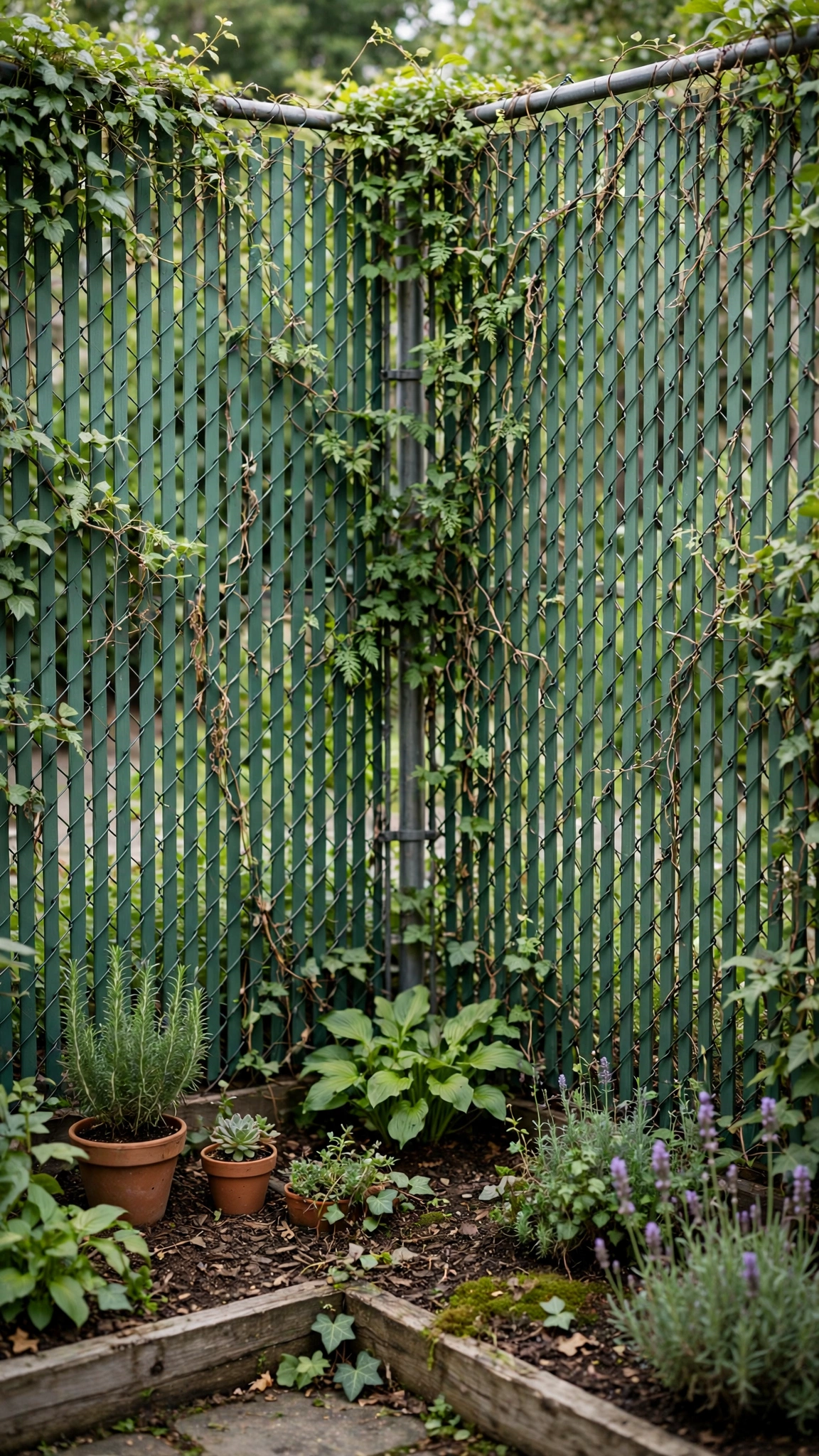
14. A Dressed-Up Chain-Link Fence That Looks Intentional
An existing chain-link fence can be improved without a full replacement, which suits rentals and tight budgets. Privacy slats woven through the mesh, screening fabric, bamboo rolls, or hedge panels can soften the industrial pattern, and vines can add green coverage over time. The key is to make the cover look deliberate, with neat edges and a consistent colour, rather than a patchwork of fixes.
Check weight, wind, and landlord permission before you add heavy screening, because a covered chain-link fence catches more wind than an open one. Fix slats and panels securely, keep gates clear, and trim vines so they do not block latches or spill heavily onto a neighbour’s side. This is a makeover, not a full privacy wall, so set expectations honestly.
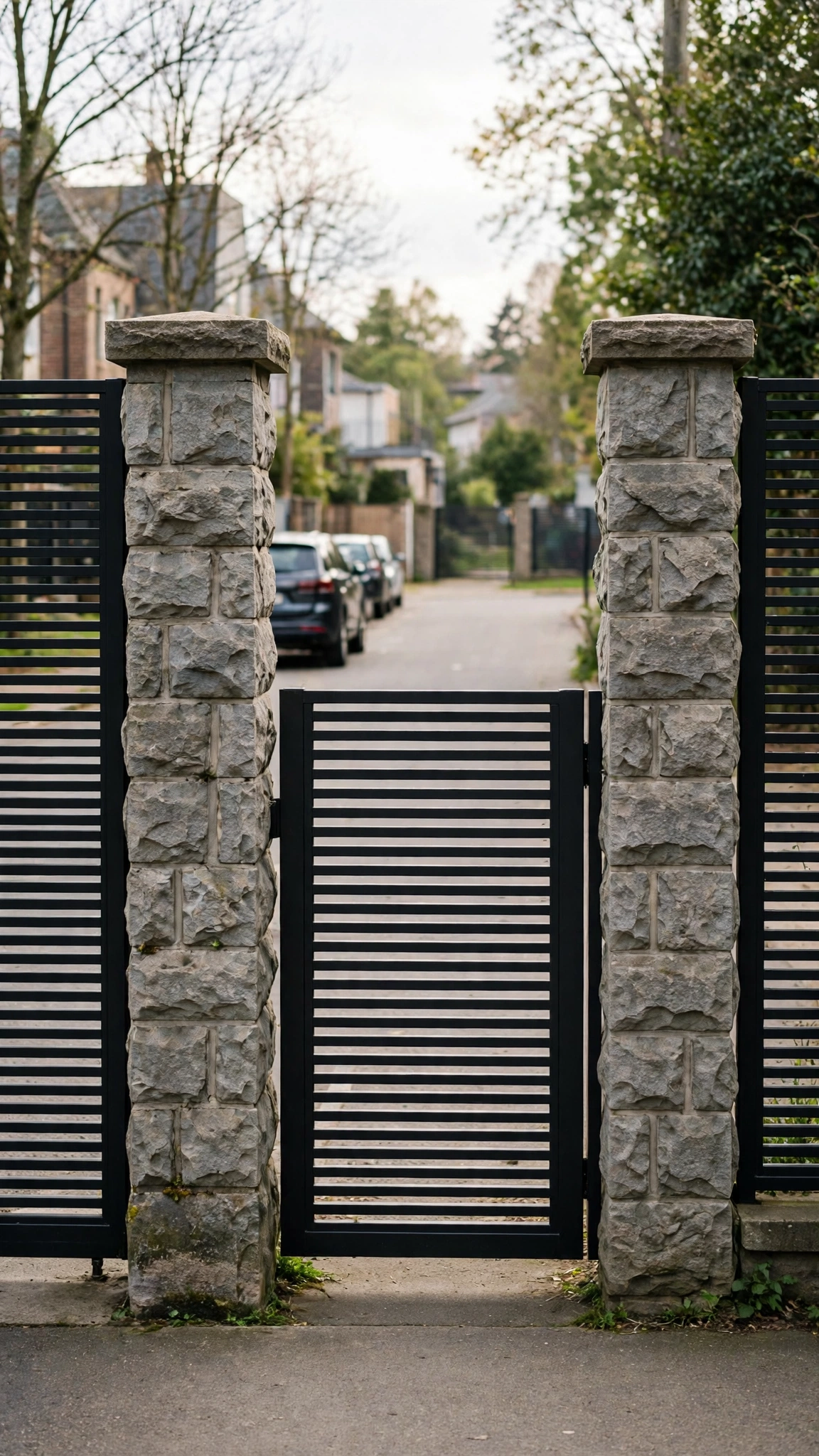
15. Stone Pillars Anchoring Modern Panel Sections
Stone or rendered pillars break a long fence run into designed bays, giving rhythm and a custom, architectural feel. Lighter panels between pillars feel less monotonous, and a gate bay framed by two pillars reads as a clear entrance. Pillar spacing, cap stones, and panel colour should be planned together, or the fence will look like separate pieces.
Footings matter more here than for a plain panel fence, because pillars carry weight and must stay level. Choose a panel material that contrasts gently with stone, such as warm timber or dark metal, and keep the gate bay wide enough for bins and bikes. This idea suits front boundaries and long street-facing runs where curb appeal matters most.
16. Composite Boards That Look Like Wood Without the Annual Sealing
Composite boards give a wood-look finish without a yearly sealing cycle, which suits readers who like timber warmth but not timber upkeep. Colour and texture choice decides whether the result looks like wood or like plastic, so view samples in daylight and check how the boards handle heat and expansion in your climate. Fixing and framing must allow for movement, or boards can buckle or gap unevenly.
Upfront cost is usually higher than basic timber, while long-term upkeep is mainly washing, so compare total effort over several years rather than day-one price alone. Keep the base clear for drainage, match posts and caps to the boards, and use a matching gate so the boundary reads as one material system.

17. Slim Aluminium Slats for a Clean, Contemporary Edge
Slim aluminium slats give a precise, contemporary boundary that will not rust, warp, or need staining. Powder-coated colours stay consistent, and the slim profile suits modern houses, small yards, and coastal or wet climates where timber needs more care. Slat width and gap decide the balance between privacy and airflow, so test the spacing at eye level before you order a full run.
Match posts and gates to the slats, because a mismatched gate will break the clean line. Aluminium is light, which helps installation, but fixings must still be secure against wind and gate sag. This idea works best where a crisp, low-upkeep edge matters more than a rustic or cottage character.

18. Woven Willow Panels for a Soft, Cottage-Garden Boundary
Woven willow or hazel panels give a soft, handmade boundary for cottage gardens and planted yards. The woven texture reads warm and informal, in contrast to hard timber, metal, or stone, and it pairs naturally with roses, herbs, and loose planting. This idea suits garden rooms, side boundaries, and planted yards more than a full street-privacy wall.
Weathering and lifespan depend on panel quality, post strength, and exposure, so fix panels to sturdy posts and keep the base clear for drainage. Height should suit the job: a garden-room boundary can be lower than a street boundary, and planting in front will soften the woven line further. Replace single worn panels promptly, or the whole run will start to look tired.
19. A Stepped Fence That Follows a Sloped Yard Cleanly
A stepped fence follows a slope by keeping each panel level and stepping down the run, which closes gaps underneath and keeps the top line tidy. This matters most for pet containment, because a sloped fence with open gaps underneath fails even if the panels look neat. Post heights should stay even, and each step should be planned so the run does not end with an awkward short panel.
Racked panels, which follow the slope in one diagonal line, suit gentle slopes, while stepped panels suit steeper or uneven ground. Check drainage along the fence line, because water running down a slope can erode the base and expose footings. Walk the slope, measure each step, and agree the approach with neighbours if the boundary is shared.
- Measure each step on site, rather than assuming an even slope.
- Close low-side gaps first, because pets and light escape there.
20. A Matching Gate and Fence Line That Reads as One Design
A gate should be designed with the fence, not added at the end. Same material, same slat direction, same colour, and matching hardware make the entrance read as part of the boundary, while a mismatched gate breaks the whole run. Width matters too: plan for bins, bikes, prams, and wheelbarrows, not just for a person walking through.
Sag-resistant framing, strong hinges, and a latch at a safe height for children and pets will save years of adjustment. Line the path up with the gate, keep planting clear of the swing, and test the latch with wet hands and in winter, when timber moves. A well-made gate is often the detail visitors notice first, even if the fence itself is simple.
21. Fence-Line Lighting and Planting That Finish the Boundary After Dark
Fence-line lighting and layered planting finish a boundary after dark, turning a daytime structure into an evening garden edge. Warm low-voltage or solar lights kept out of the walk, uplighting on planting or pillars, and low shrubs at the base make a fence look designed from inside the yard and from the street. Keep light direction neighbour-friendly, so glow falls on your planting, not into a neighbour’s window.
Planting should soften the base without blocking gates, airflow, or access for repairs. For evening ideas that pair with this finishing layer, see outdoor evening lighting ideas. Solar lights suit spots with enough daylight, while low-voltage lights give a steadier glow where evenings matter most.
How to Choose the Right Backyard Fence Setup
Choose by your main job first, then by material. Full privacy calls for overlapping boards, a hedge, or a lattice crown; street appeal calls for pickets, pillars, or a matching gate; pets call for gap control and a secure latch; a slope calls for a stepped run; low upkeep calls for vinyl, composite, or aluminium. A fence that tries to do every job at once often does none of them well.
Then test the practical fit. Measure the run, check height and HOA rules, confirm the boundary, mark utilities, and compare upkeep honestly for your climate. A cheaper upfront fence that needs yearly sealing may cost more time over several years than a dearer low-upkeep option, while a solid wall in a windy yard may need stronger posts than a semi-open design. Pick two or three ideas that solve your biggest problem, and start with the boundary that matters most.
FAQS
Do I need a permit to build a backyard fence?
Check local building rules and HOA rules before you build, because permit and height rules vary by place. Front yards, corners, pools, and taller fences are more likely to need approval, so confirm height limits and setbacks first, and keep written confirmation with your project notes.
How tall should a backyard fence be for privacy?
For seated privacy, a lower fence may be enough, while standing privacy needs more height and gap control. Slope, neighbour ground level, and gaps matter, and a lattice crown or planting can add perceived privacy without a taller solid wall.
What is the cheapest backyard fence that still looks good?
Split rail, dressed-up chain-link, and simple painted timber are usually cheapest upfront, but upkeep changes the total cost over time. Compare material, installation, painting, and repair effort together, and check gate and post costs before you compare totals, choosing a neat finish over the lowest possible upfront price.
Wood fence or vinyl fence: which needs less upkeep?
Vinyl usually needs less upkeep because it needs washing rather than sealing or staining, while wood needs regular sealing and board care. Climate, panel quality, and installation still matter, so compare upkeep for your yard rather than assuming one material always wins.
How do I stop a wood fence from rotting and warping?
Keep the base clear for drainage, allow airflow, seal or stain on a regular rhythm, protect posts, and replace damaged boards promptly. Climate and wood type affect timing, so inspect after wet seasons and fix small problems before they spread.
Can I mix fence styles around my property without it looking patchy?
Yes, if you keep one shared thread, such as the same material, colour, or post style, across the whole property. Keep the private back and welcoming front jobs separate, and match the gate to the main fence for a cohesive look.
How can I add privacy to an existing fence without replacing it?
Add a lattice topper, privacy slats, screening, bamboo rolls, climbers, or layered planting in front of the fence. Check weight, wind load, height rules, and the neighbour-side appearance before adding a heavy or tall upgrade, and start with the lightest option first, then add layers only if needed.
Final Thoughts
Start with your main job, not with a favourite photo. If privacy matters most, choose overlapping boards, a hedge, or a lattice crown; if street appeal matters most, choose pickets, pillars, or a matching gate; if pets, slope, or low upkeep matter most, let those needs narrow the list first. Confirm boundary, height rules, HOA rules, utilities, and neighbour communication before you choose a material, because those checks shape every good fence.
Then pick two or three ideas that solve your biggest problem, and start with the boundary you use most. Walk the yard, measure the run, check the rules, and picture the fence from inside the yard and from the street. A fence chosen that way will look considered in daylight, work well in the evening, and still feel right after several seasons of use.


5 Comments