
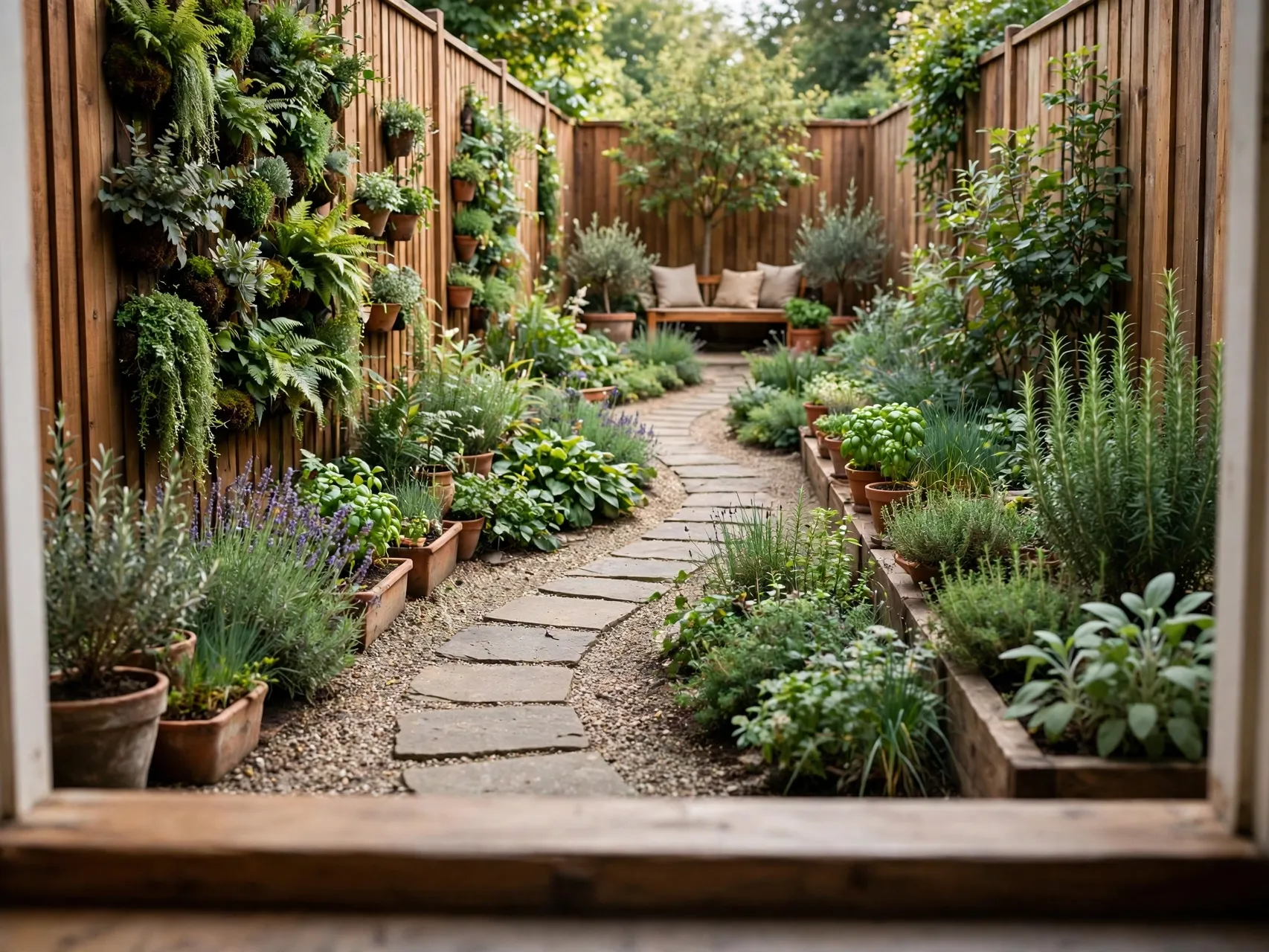
18 Narrow Backyard Ideas to Make a Small Outdoor Space Feel Bigger
A narrow backyard can feel like a corridor with grass, rather than a garden you want to spend time in. These narrow backyard ideas start from a different premise: length is not the problem. When zones, sightlines, height, and one clear destination work together, a long, thin yard reads as a sequence of small outdoor rooms, and every step through it has a reason.
Most narrow yards fail for practical reasons, not for lack of style. Furniture blocks the walk, planting crowds the edges, a straight path races to the back fence, and one solid screen closes the space in. The ideas below fix those problems one job at a time. Read the planning section first, then choose two or three ideas that solve your biggest problem, and add the rest in phases.
Narrow Backyard Ideas That Work With Length, Not Against It
1. Split the Strip Into Three Small Outdoor Rooms
Dividing a long yard into entry, middle, and far-end zones changes how the space reads, because the eye stops seeing one corridor and starts seeing three places. Keep dining near the house, where carrying food is short, put lounging in the middle, where the yard feels most private, and save planting or gathering for the far end, where people have a reason to walk the full length. The walkway stays continuous through all three zones, so the yard still flows, but each zone gets one clear job.
Mark the zones without building walls, which would close a narrow yard in again. A change in ground material, a low planter, a shift in furniture direction, or a slim overhead frame can signal a new room while keeping sightlines open. Keep furniture inside its zone, not spilling into the walk, and the middle of the yard will stay usable instead of becoming a passage between obstacles.
- Put the most-used zone nearest the house, so everyday use feels easy.
- Give each zone one focal piece, such as a table, a bench, or a statement plant, and keep the rest simpler.
2. Angle the Paving So the Eye Travels Further
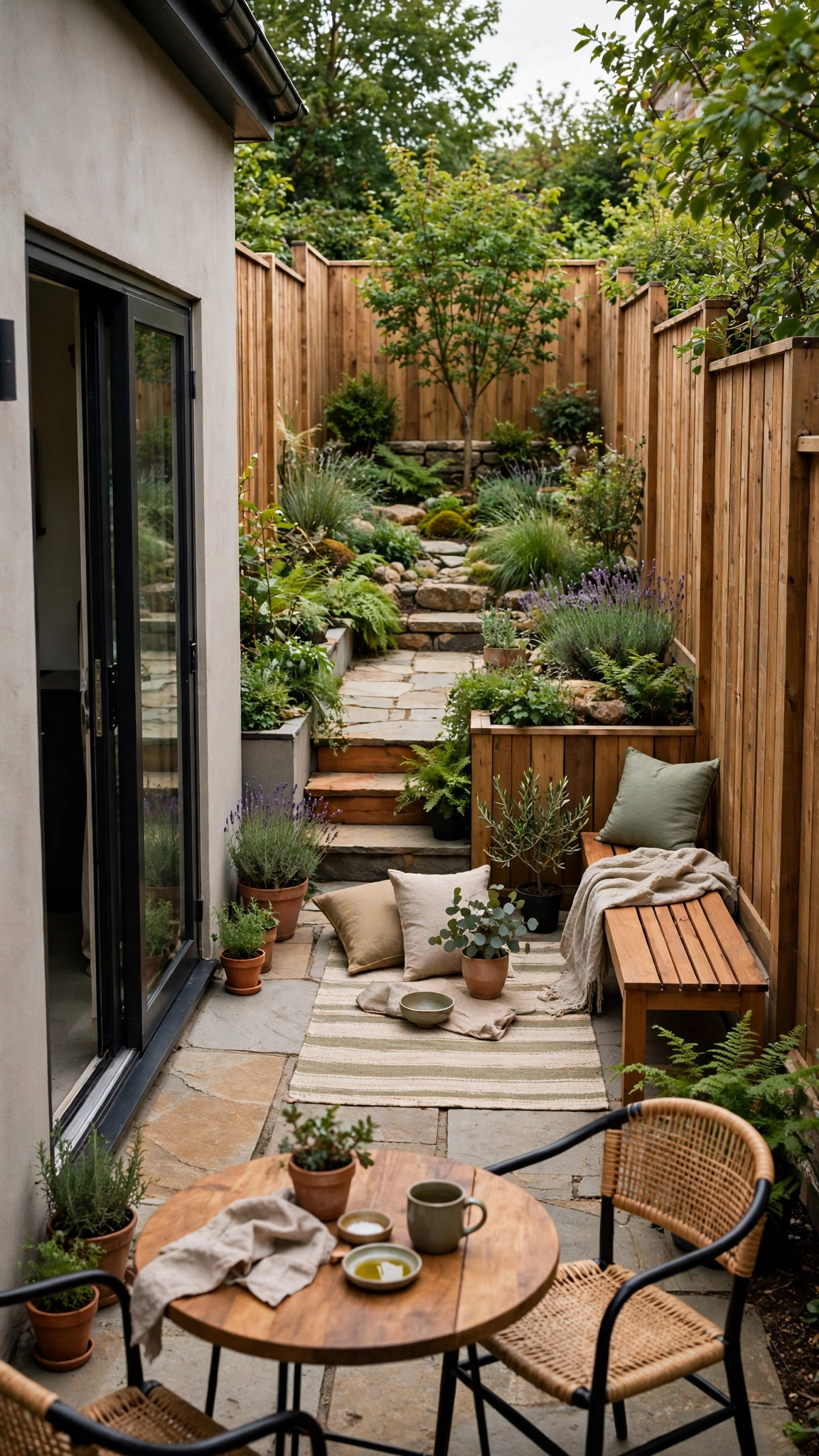
Laying pavers, deck boards, or stepping stones on a diagonal makes the eye follow a longer line than it would across the narrow width, so the yard reads wider without moving a fence. The diagonal also breaks the bowling-lane effect, because lines no longer run straight from side to side or straight down the middle. The pattern works best when it is consistent, so the angle feels intentional rather than accidental.
You do not need to repave the whole yard to test the idea. A diagonal patio section near the house, an angled row of stepping stones through a planting bed, or deck boards laid at an angle in one zone can change how the length reads. Keep joints neat and the surface even, because a diagonal layout draws attention to the ground, and choose one mid-tone material that suits the house rather than adding a second bold pattern that competes with the angle.

3. Bend the Walk So the End Stays Partly Hidden
A straight path to the back fence tells the eye exactly how short the yard is, and it invites a quick glance rather than a walk. A gentle bend or offset halfway down changes that, because the far end stays partly hidden and the yard gains a sense of journey. The walk becomes something to follow, not just a route to the gate, and planting on the outside of the bend adds depth that a straight line cannot offer.
Keep the bend practical as well as pretty. Shift the path a short distance, not in a sharp zigzag, and keep the surface even and wide enough to walk comfortably with a tray or watering can. Flank the outside of the bend with layered planting or a slim trellis, so the turn feels planted rather than paved, and avoid tall pots on the inside of the bend, where they would crowd the walk at the point where people need room to turn.
4. Keep One Ground Material Flowing From Door to Fence
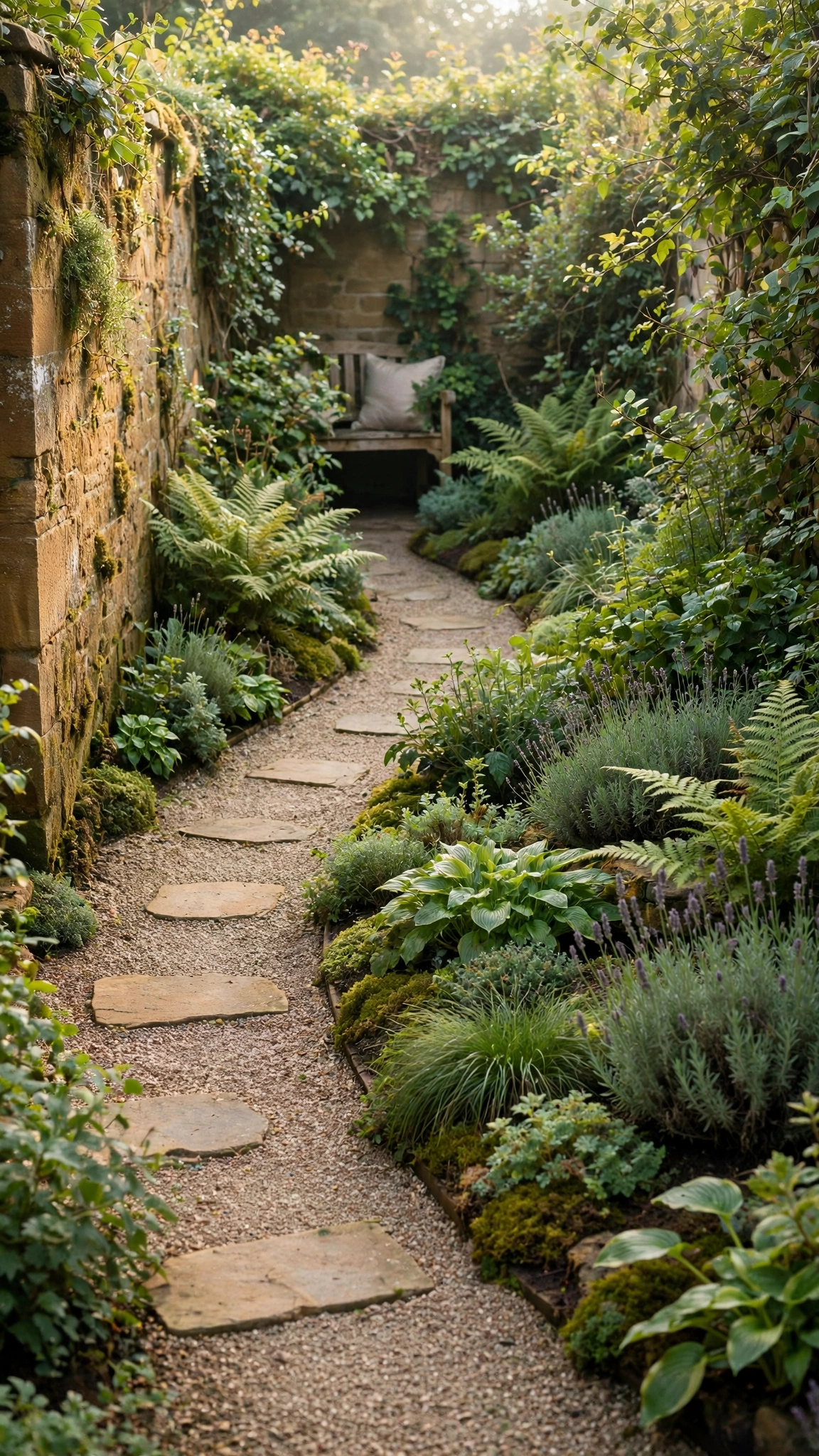
One main ground surface running from the door to the fence stops a narrow yard from reading as a set of chopped-up islands. When the eye follows one continuous material, the length feels longer and the yard feels calmer, because there are fewer visual breaks competing for attention. A light or mid-tone surface also helps reflect light into a shaded strip, which matters where fences block much of the sun.
Choose the surface for drainage, maintenance, and how you actually use the yard, not just for looks. Use a border, an edging strip, or an outdoor rug to mark a seating spot, rather than switching to a completely different material for every zone. That way, the dining nook, the lounging middle, and the far end still feel connected, even though each has its own furniture and planting.

5. Frame the Far End as a Destination, Not a Dead End
Every long yard needs a reason to walk to the far end, or that end will feel like leftover space. A seating spot, a statement tree, a sculpture, or a compact fire feature gives the whole length a purpose, and the yard starts to read as a journey with an arrival point. Keep everything else simpler than the destination, so the eye is drawn forward rather than stopping at the nearest chair or pot.
Place the destination where it can be seen, at least partly, from the house, but not fully revealed from the door if you also use a bending walk. A built-in bench under a small tree, slim chairs around a fire bowl, or a tall planter framing garden art can all work, depending on width and shade.
Check spacing and local rules before adding any fire feature, and keep clearances generous, because a narrow yard leaves little room for error. If a fire feature does not fit safely, a water feature, sculpture, or striking plant can carry the same focal job.
6. Grow Up the Fence With a Layered Vertical Garden
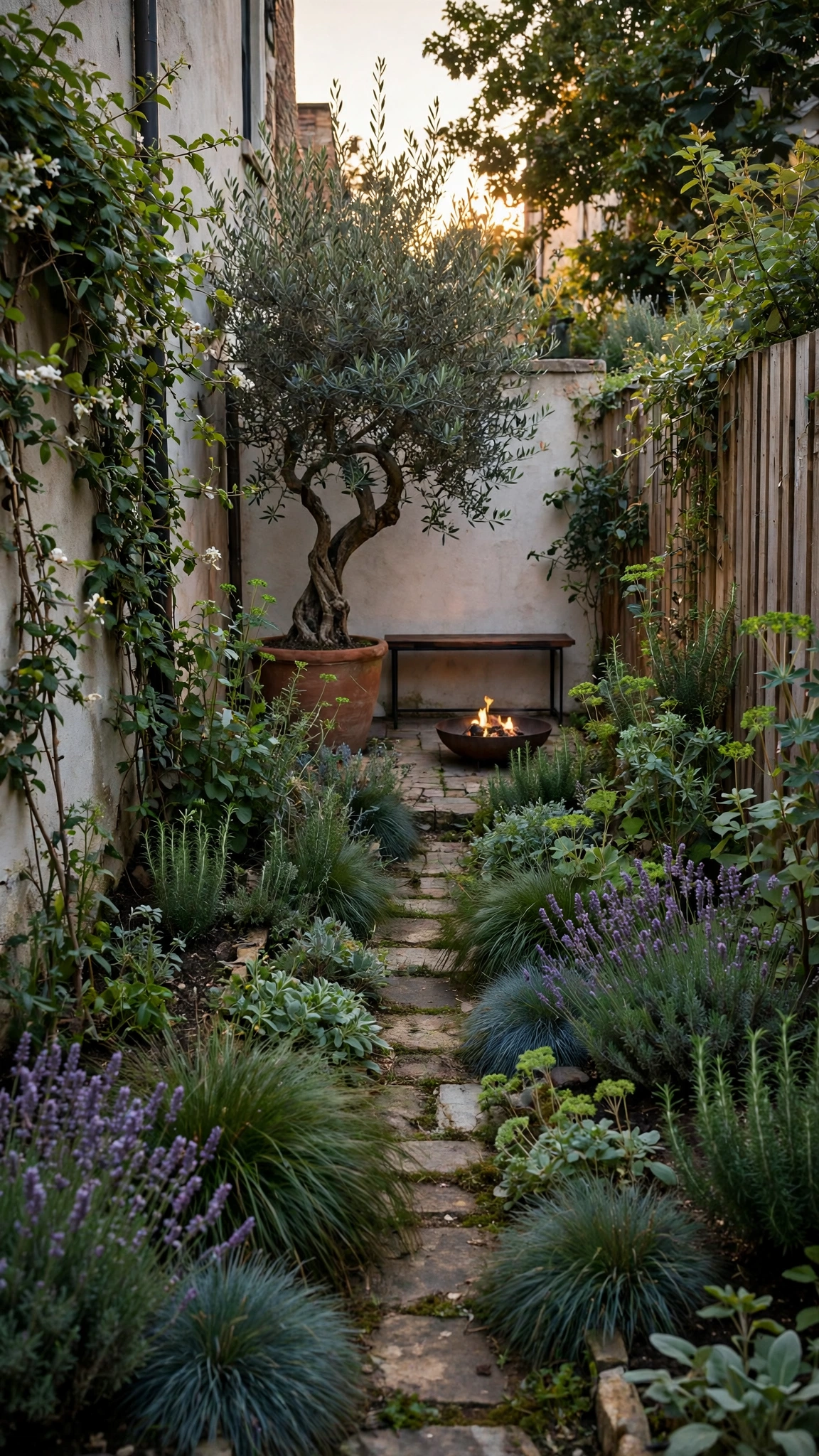
Fences and walls are the most underused planting space in a narrow yard, because growing upward does not take floor space from the walk. A layered vertical garden combines climbers on a trellis, wall pockets or hanging planters at different heights, and tall narrow planters at the base, so the green reads as a living wall rather than a flat row of pots. Three heights together feel lush without crowding the path, while one height alone can look thin.
Leave airflow behind trellises and wall panels, because plants pressed flat against a fence can trap moisture and suffer. Plan watering before you plant, since wall pockets dry out faster than ground beds, and choose climbers suited to the fence’s sun and shade and to your climate and water.
Keep the walk clear below the vertical garden, and prune climbers back from gates and paths. In a rental, freestanding trellis panels and tall planters can give the same effect without permanent fixings, as long as landlord rules allow them.

7. Soften Boundaries With Staggered, Layered Planting
A single solid privacy line, whether fence, hedge, or screen, can make a narrow yard feel boxed in, even when it blocks a view. Staggered, layered planting solves the same problem more gently, because plants at different depths and heights break the view without forming a wall. The eye reads garden, not barrier, and light and air can still filter through in places, which keeps the yard from feeling dark.
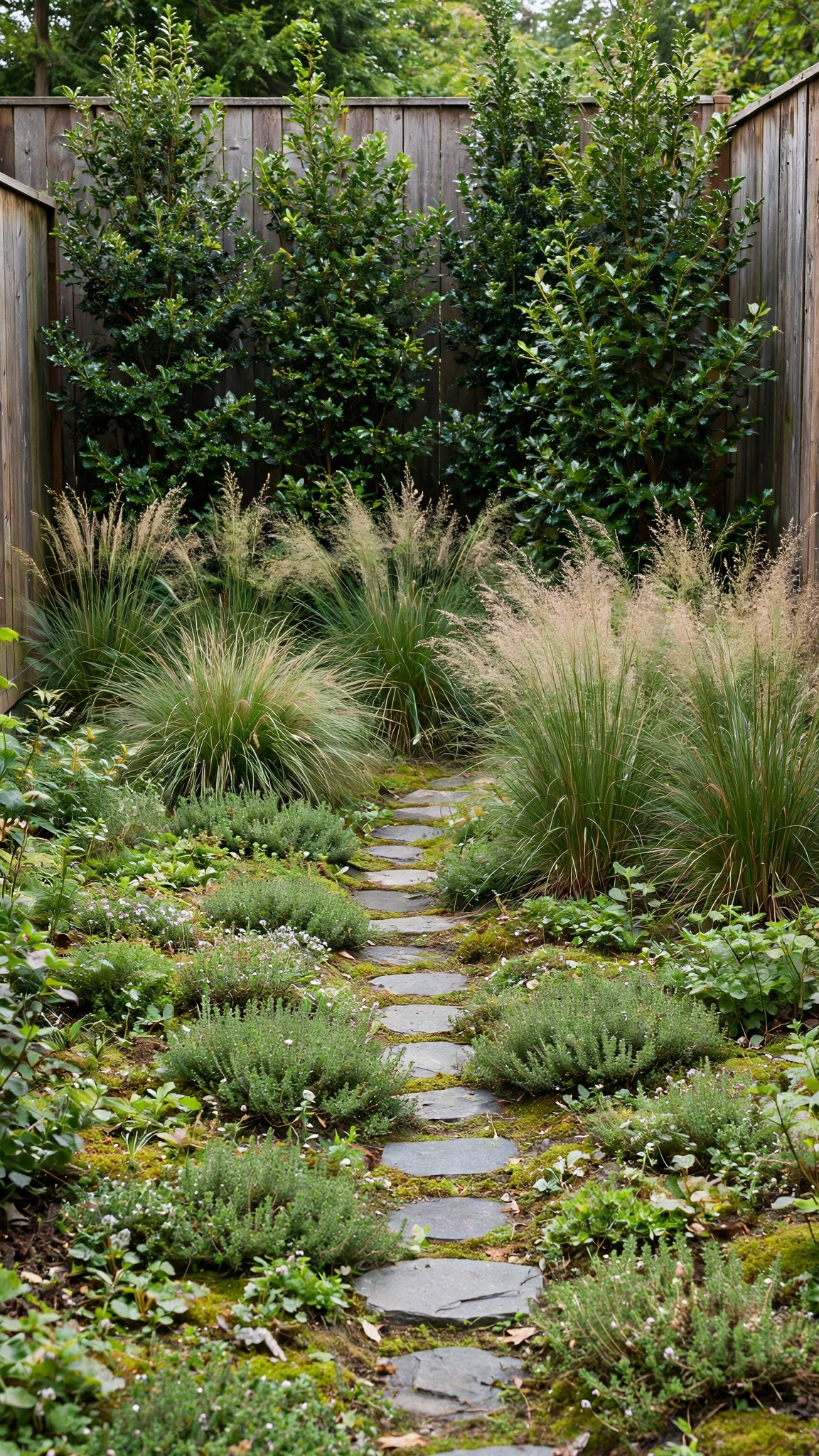
Build the layers with a taller background layer, a mid-height layer, and low ground cover, and repeat a few species rather than collecting many different plants. Columnar shrubs, ornamental grasses, and a slatted screen in one or two places can anchor the layers, while ground cover softens the base. Keep the tallest layer away from the walk, leave gaps where light matters most, such as near seating or a window, and prune for airflow so planting does not block gates, meters, or neighbours’ access.
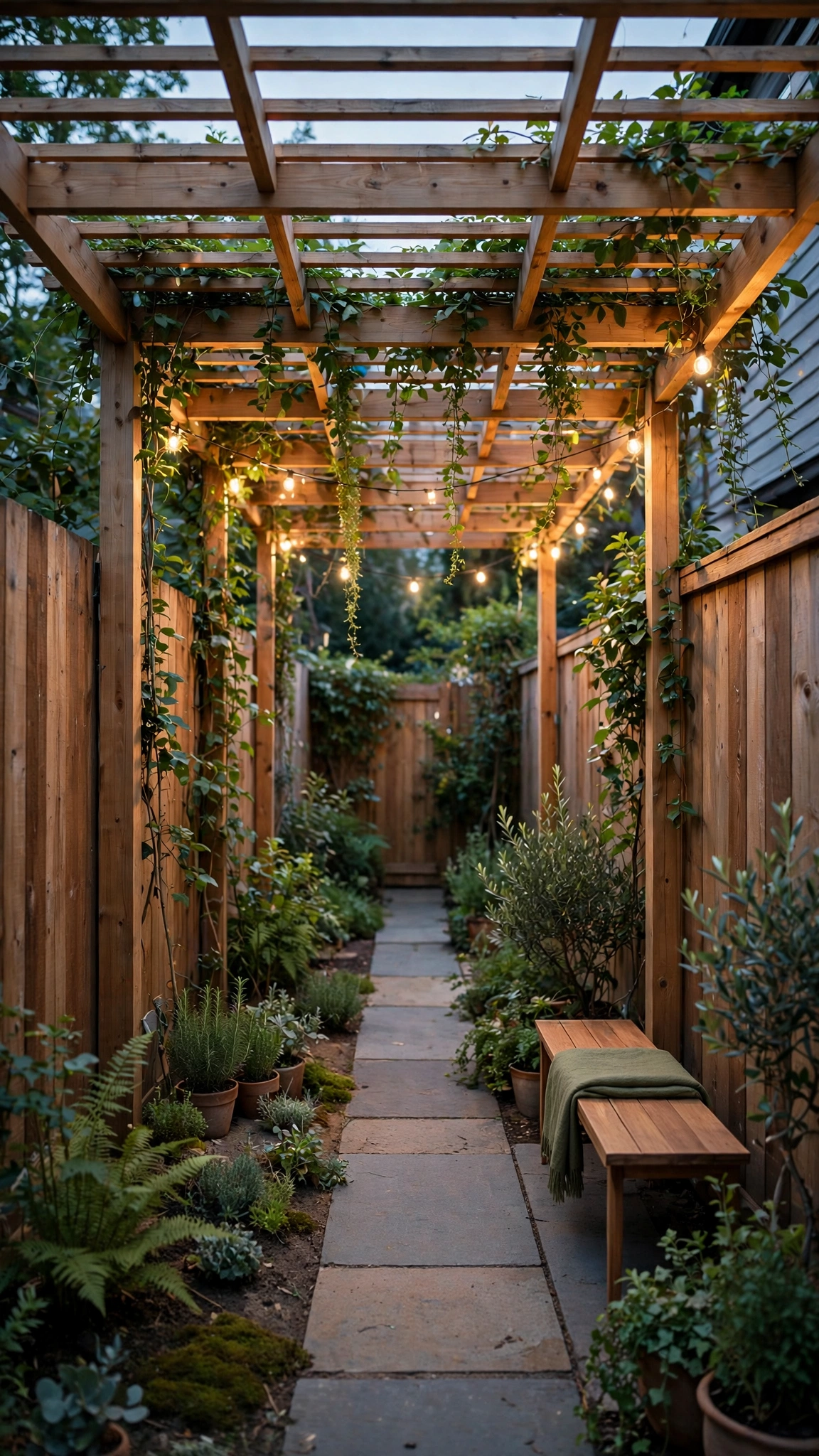
8. Add a Slim Overhead Structure to Give the Yard a Ceiling
A slim pergola, wall-attached canopy, or arbor gives a narrow yard something it usually lacks: a ceiling. That overhead frame marks a zone, adds height, and makes seating feel like a room rather than chairs left in a passage. It can run over a dining nook or a bench, and it can also run along a walkway, turning a plain path into a covered garden walk.
Keep the structure slim and the posts out of the main walkway where possible, because a pergola that forces people to duck or sidestep will feel like an obstacle. Choose open slats or a light canopy over a heavy solid roof, so the zone stays bright, and add climbers or string lights only if they do not make the structure feel heavy or dark.
A wall-attached version can work well where a freestanding pergola would eat too much width, and it keeps the ground clear for planting and seating below.
- Measure post positions against the clear walk before building, and keep a comfortable passing width.
- Match the structure’s material to the fence or house trim, so it reads as part of the garden rather than an add-on.
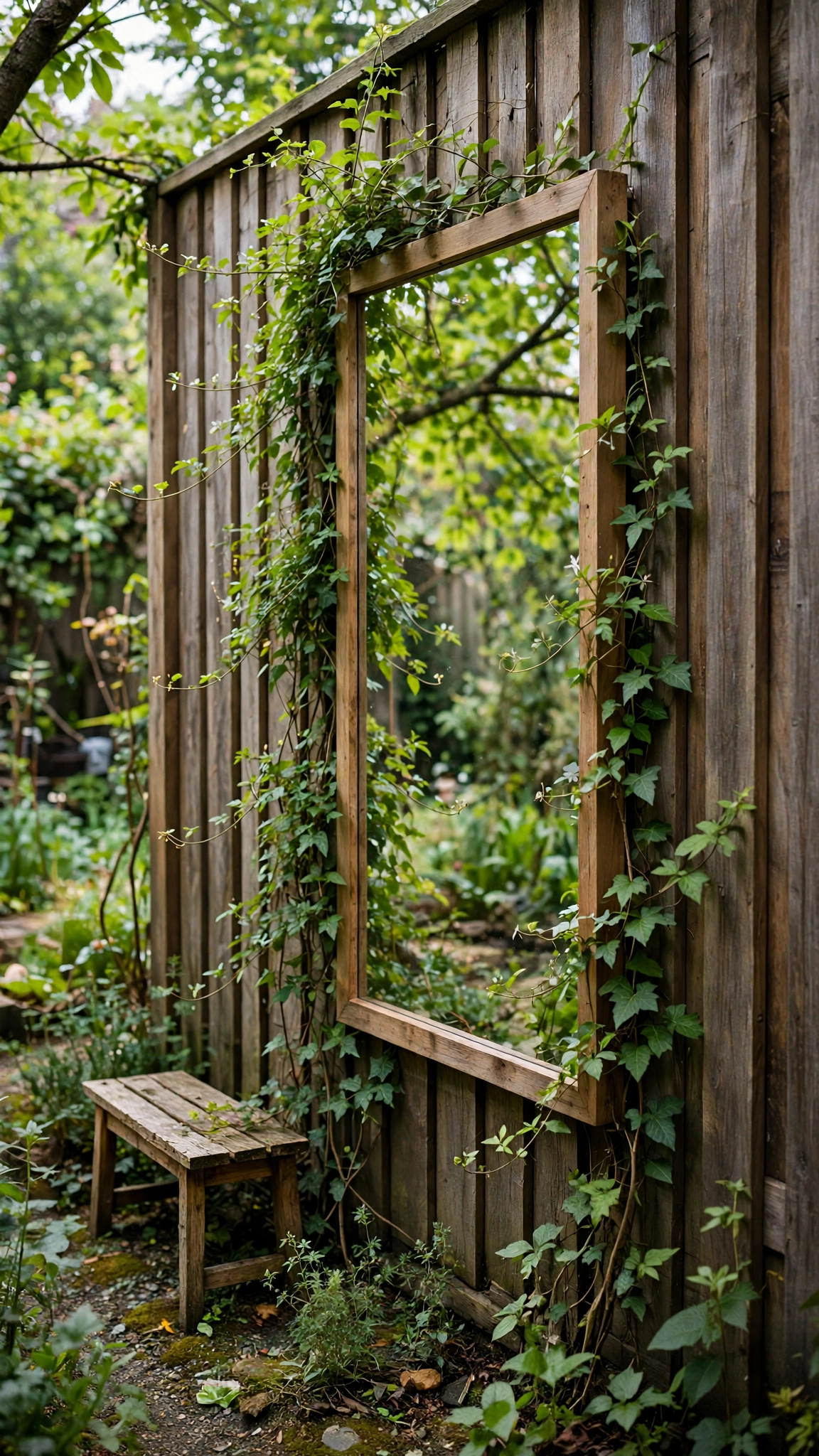
9. Use a Framed Reflective Panel as a Garden Window
A weather-safe reflective panel, framed with planting or timber and mounted on a fence, can read as a window into more garden, rather than as a mirror stuck on a fence. The frame is what makes it look intentional, and the reflection should show greenery, not a neighbour’s window or a blank wall. When it works, the panel adds a sense of depth that a flat fence cannot offer, especially where the far end is close.
Choose outdoor-safe acrylic over ordinary glass for weather resistance, and angle the panel carefully so it reflects planting and sky. Keep the surrounding planting simple, so the effect stays clear, and clean the panel regularly, because a spotted reflection will break the illusion. Use it as one accent, not a row of panels, and if it would reflect a neighbour’s private space, choose a different fence or a different idea, because privacy should work both ways.
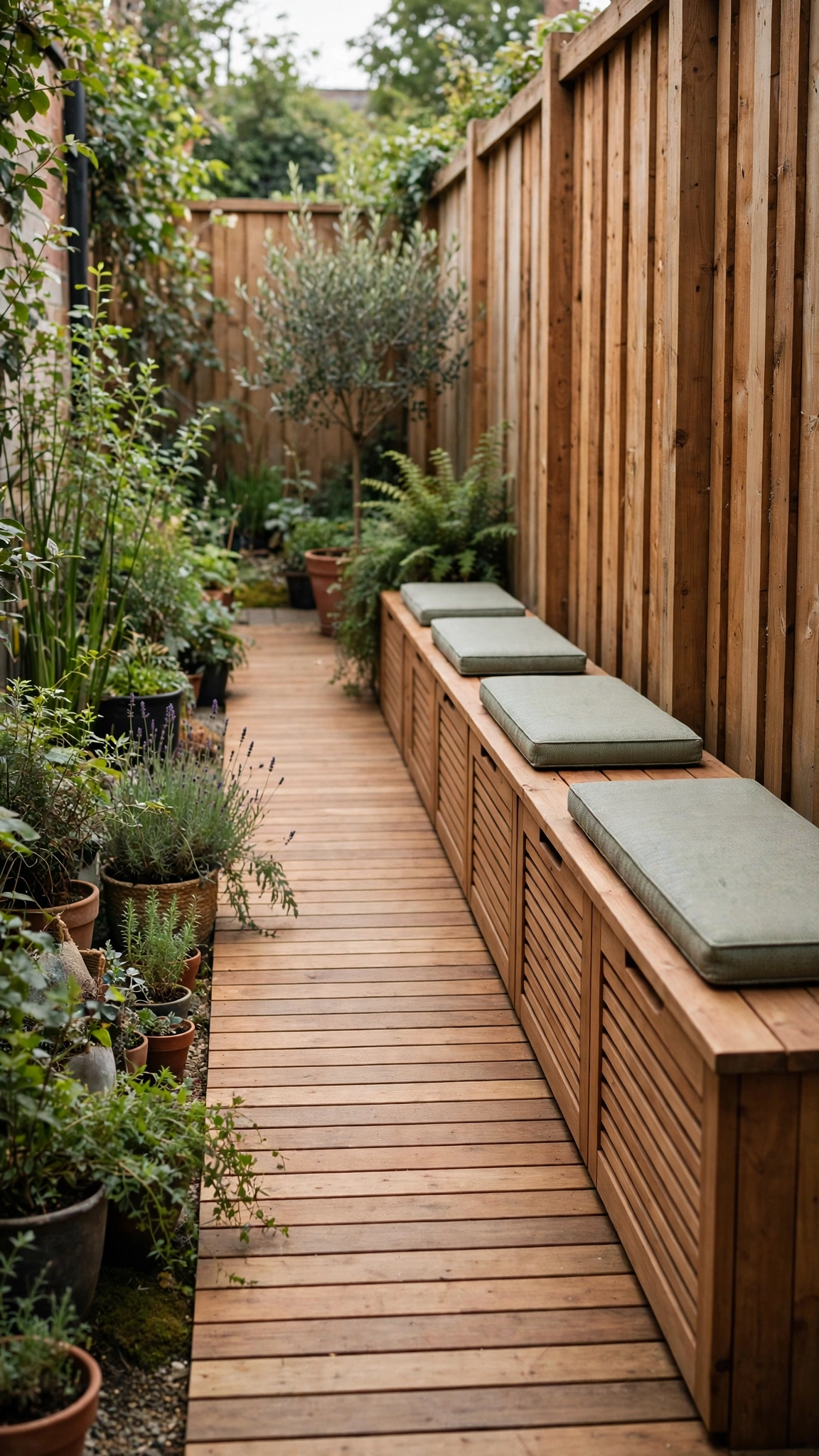
10. Build Seating Into One Edge to Free the Middle
Built-in bench seating along one fence or wall is one of the most practical narrow backyard ideas, because fixed seating removes chairs from the walkway and gives the middle of the yard back. A slim bench with storage below can hold cushions, tools, and lights, and it can run the length of a zone without the clutter of separate chairs. When people sit along the edge, the central walk stays open, and the yard feels roomy even when several people are outside.
Keep the bench depth slim and the height comfortable for sitting, and add weather-resistant cushions in a limited palette so the bench reads as furniture, not as a ledge. Lift-up storage works well for cushions and small tools, but leave ventilation in mind so stored items stay dry. If a full built-in bench is too much, a wall-mounted fold-down seat or a narrow storage bench can offer part of the same benefit in a rental or on a smaller budget.
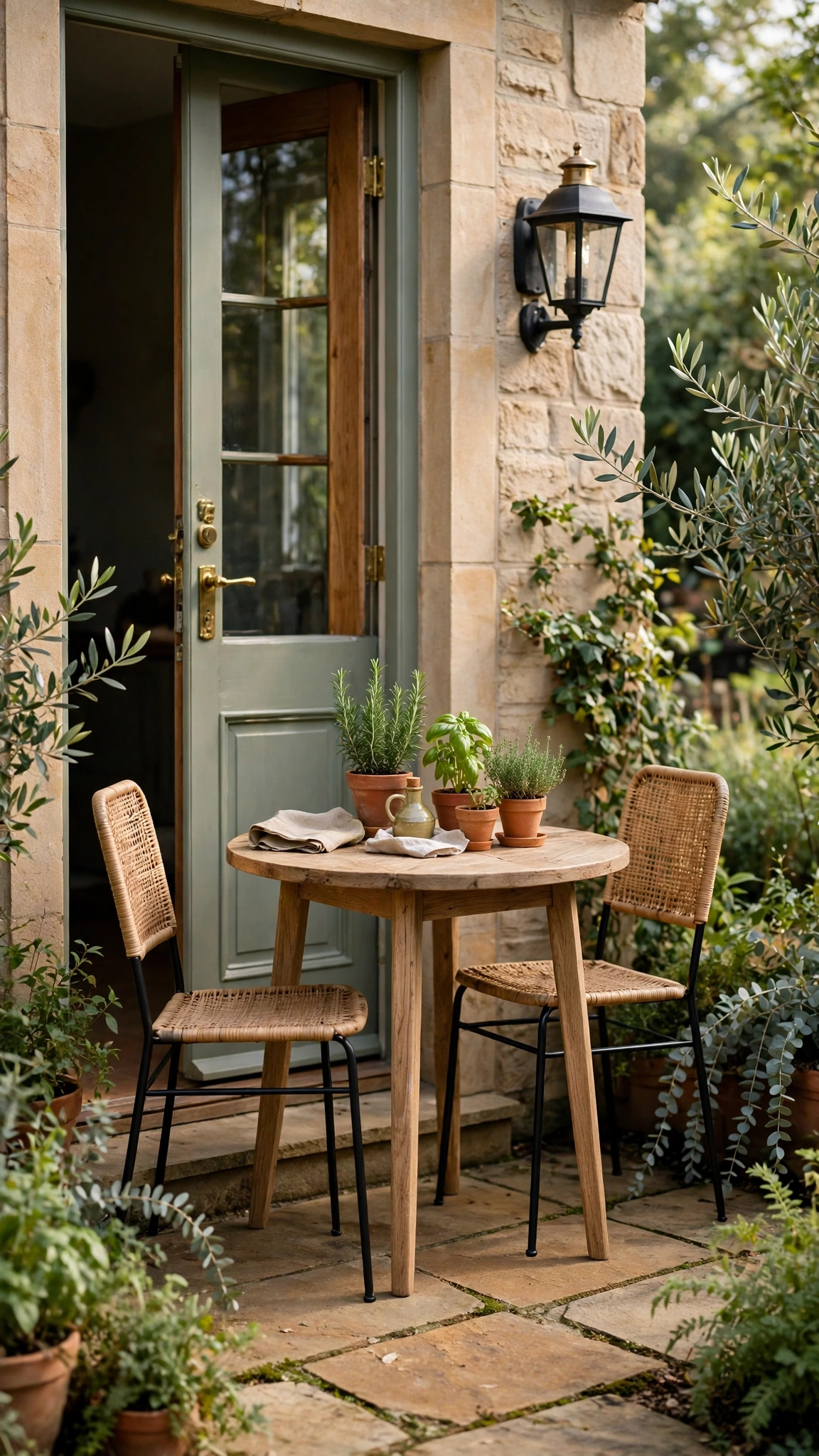
11. Place a Compact Dining Nook Right by the House
Keeping dining close to the back door makes the whole yard work more logically: eat near the house, relax further back, and garden at the far end. Carrying food stays short, shelter is close if weather changes, and the rest of the yard stays open for lounging and planting instead of being taken up by a table in the middle of the walk. A house-side nook also feels like an extension of the kitchen or living room, which helps indoors and outdoors read as one longer space.
A small table for two or four, a wall-mounted fold-down table, or a slim counter can all work, depending on width. Keep the nook out of the main garden walk, and measure the chairs as well as the table, because pulled-out chairs need room that a table plan often forgets. A bistro set suits a very narrow strip, while a drop-leaf table can expand for guests and fold away for everyday use. Add a small rug or a change in surface to mark the nook, and keep the palette calm, so the dining area feels like a room rather than a table left outside.
12. Choose Slim, Foldable, and Stackable Furniture Sized for the Walk
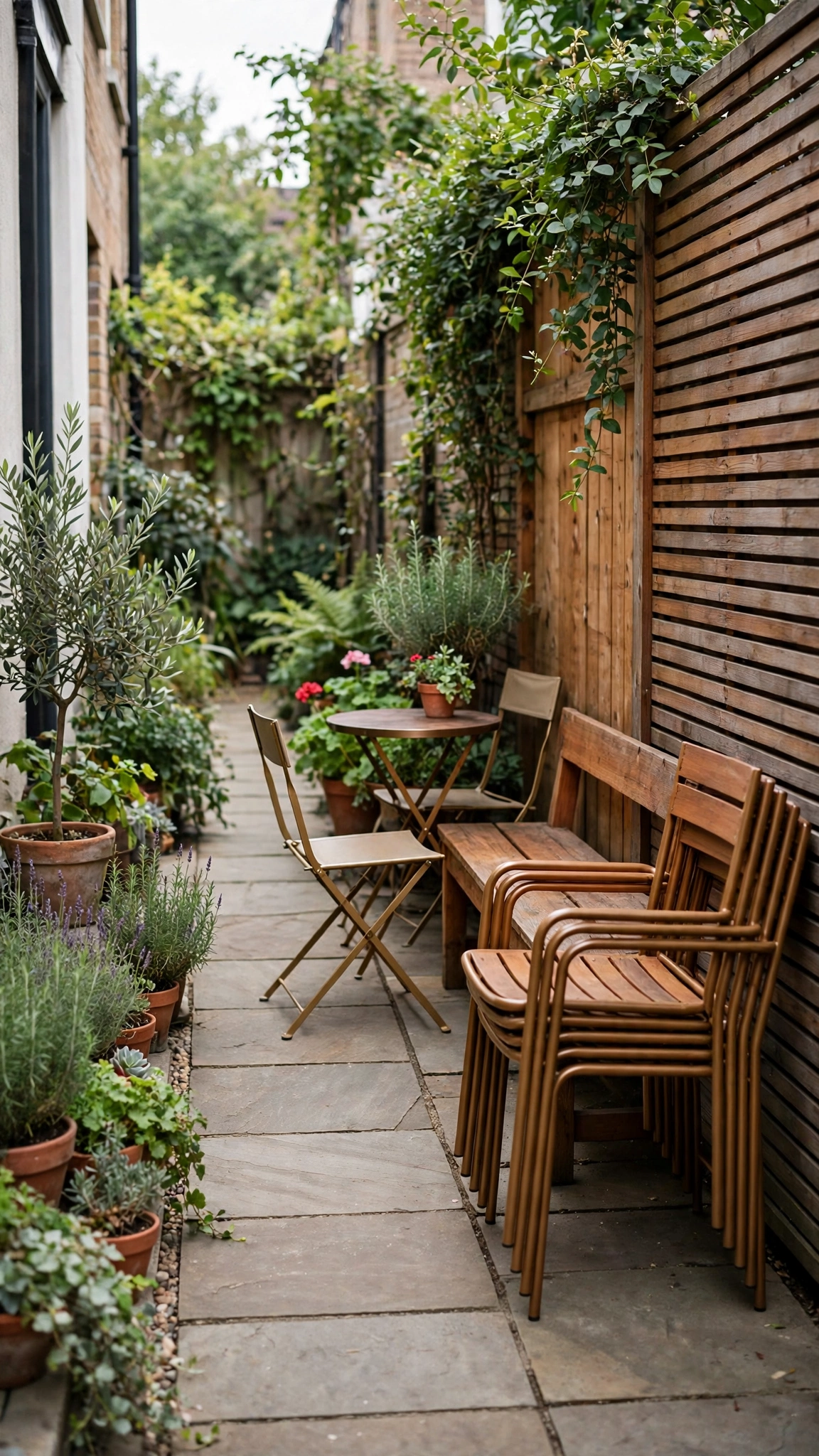
In a narrow yard, furniture should be chosen by walkway width first and by looks second. A beautiful chair that forces everyone to sidestep will quickly feel like a mistake, while a slim, well-scaled piece will disappear into the garden and let planting and light do the work. Measure the clear walk before buying, including gates, steps, and bench depths, and keep that measurement with you when you shop.
Foldable and stackable pieces let the yard change from everyday use to gathering use without permanent clutter. A bistro set, a narrow bench, or stackable chairs can be brought out for guests and stored away after, while a bulky sectional or a full dining set in the middle of the yard will dominate the space all year. Group containers and cushions in a limited palette, so even when furniture is out, the yard still reads as calm, and choose weather-resistant materials that suit your climate.
- Measure the walk, then subtract chair pull-out space, before choosing a table size.
- Prefer pieces that fold, stack, or tuck under a bench, so the yard can return to an open walk.
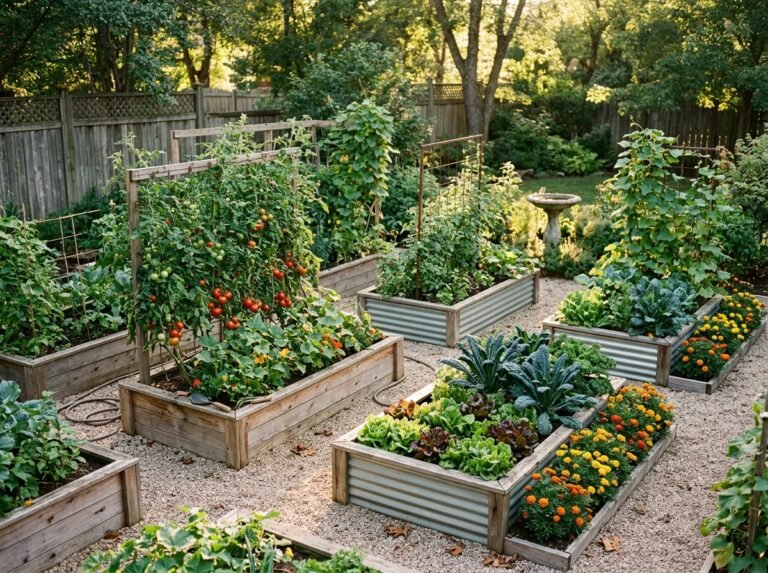
13. Run a Slim Raised Bed Along the Fence for Herbs and Colour
One narrow raised bed along a fence line gives herbs, flowers, or compact vegetables a clear home, without stealing the walkway. A single long bed reads as intentional and can hide an unattractive fence, while many small pots scattered along the walk read as clutter. The continuity of one bed also ties the yard together, because the eye follows the planting line from the house toward the far end.
Keep the bed depth slim, so the walk stays comfortable, and run it for visual continuity rather than breaking it into many short sections. Choose plants that suit the bed’s sun and shade, group herbs near the house-side dining nook where they are easy to pick, and plan simple watering, such as a drip line or a nearby tap, so the bed stays low-maintenance. In a rental, a long planter or matching troughs can give a similar line without digging, as long as drainage and landlord rules are considered.

14. Add a Slim Water Feature for Sound Without Footprint
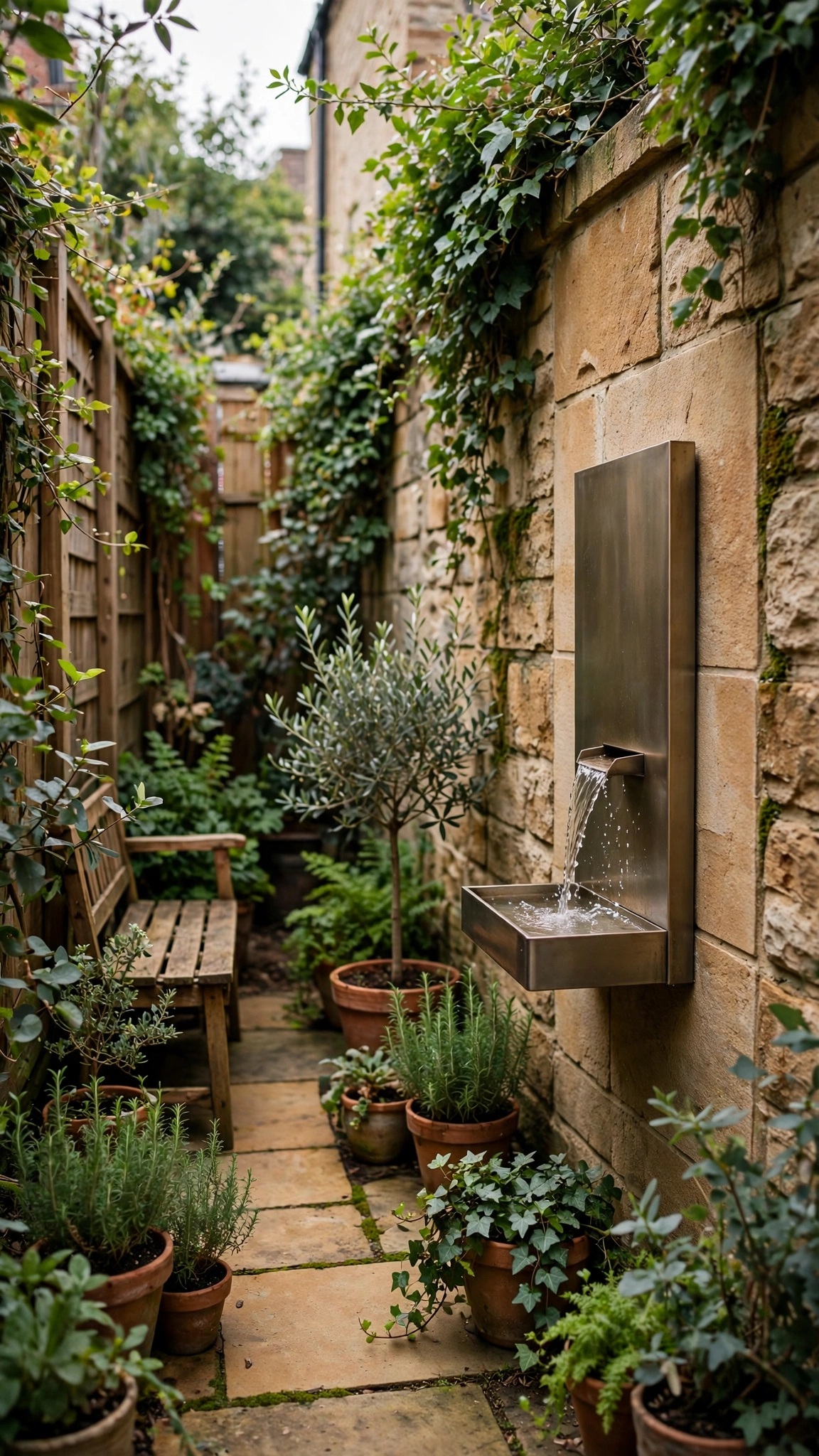
Sound changes how a tight space feels, and a slim water feature can soften nearby traffic or neighbourhood noise without needing a pond or a wide basin. A wall-mounted fountain or a narrow water channel along one edge adds movement and a gentle sound, and it gives a seating zone a focal point that does not take floor space. In a narrow yard, the feature should be heard and glimpsed, not dominate the walk.
Keep the feature slim and near power and water access, and choose a simple design that is easy to clean and maintain. Avoid a large basin in the main walk, because it will become a tripping and cleaning problem, and keep the water sound gentle rather than loud, so conversation stays easy. Check that the feature does not splash seating or planting excessively, and plan winter care for your climate, since outdoor water features need seasonal attention.
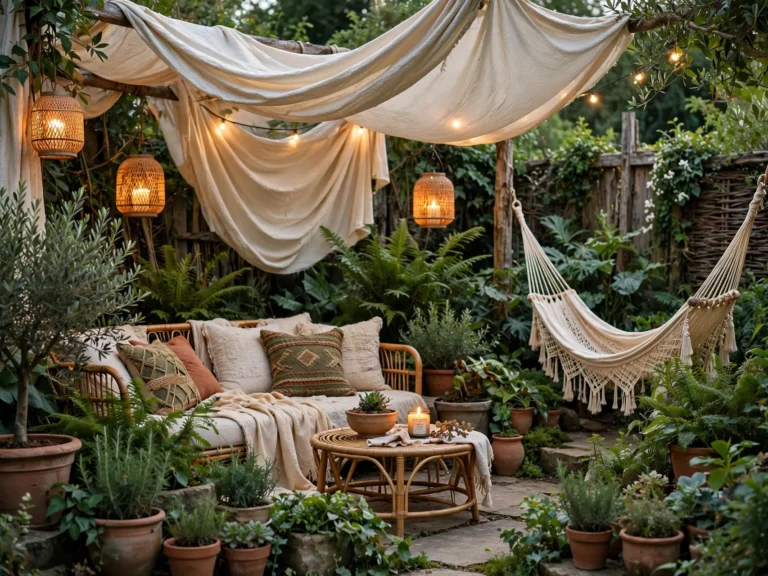
15. Layer Evening Light to Add Depth After Dark
Evening light can do what daylight cannot in a narrow yard: it can draw the eye to the far end and create depth after dark. Layering low path lights, mid-level lanterns, and overhead string lights, with uplighting on a far-end plant or feature, gives the yard three levels of glow instead of one harsh bulb. The path stays safe, seating feels warm, and the far end becomes a destination even at night.
Light the path for safety first, then add feature lighting, and keep the colour temperature warm and consistent, so the yard does not feel like a car park. Low path lights should guide feet without glaring into eyes, lanterns on a bench or table add a human-scale glow, and string lights overhead can define a seating zone or a walkway ceiling. Uplighting a tree, sculpture, or layered planting at the far end pulls the eye forward, which makes the yard feel longer in the evening than it does by day.
- Use solar or low-voltage lights where they suit your yard, and check that fixtures are rated for outdoor use.
- Keep lights out of the main walk, and angle uplights so they highlight planting rather than shining into neighbours’ windows.

16. Keep the Colour Palette Simple and Repeat One Accent
A calm colour palette makes a narrow space feel larger, while too many competing colours make it feel busy and smaller. Limit the yard to two or three coordinating colours across furniture, planters, cushions, and planting, and repeat one accent in at least two zones, so the yard feels connected from door to fence. Warm neutrals plus one repeated accent, such as green planting or terracotta, often work well, because they let the garden itself carry the colour.
Apply the palette consistently, but not rigidly. A terracotta pot near the house, a terracotta planter at the far end, and a cushion in a similar tone will tie the zones together, while a different bright colour in every zone will break the journey. Planting can carry much of the colour, so choose flowers and foliage that fit the palette, rather than adding a new colour with every plant purchase. If you love bold colour, use it as the one repeated accent, and keep the rest calm.
17. Tuck Storage and Utilities Behind Planting or a Slim Screen
Bins, tools, hoses, meters, and air-conditioning units can dominate a narrow walk if they are left where they happen to land. Treating storage as design, rather than as an afterthought, gives those items a screened, accessible home, and frees the walk for people and planting. A slim slatted screen, a planting pocket, or a bench with storage can hide utilities while keeping the yard looking finished.
Plan access first, because screening that blocks a gate, a meter, or a unit will cause trouble later. Leave ventilation and service access clear for air-conditioning units, keep bin lids able to open fully, and keep the screen height only as tall as needed, so it does not become a new solid wall. A slatted screen lets air and some light through, which suits a narrow yard better than a solid panel, and planting in front of the screen softens it further.
- Measure bins and units, including lid swing and service clearance, before building any screen.
- Use the yard’s main palette for screens and storage, so utility areas blend rather than stand out.
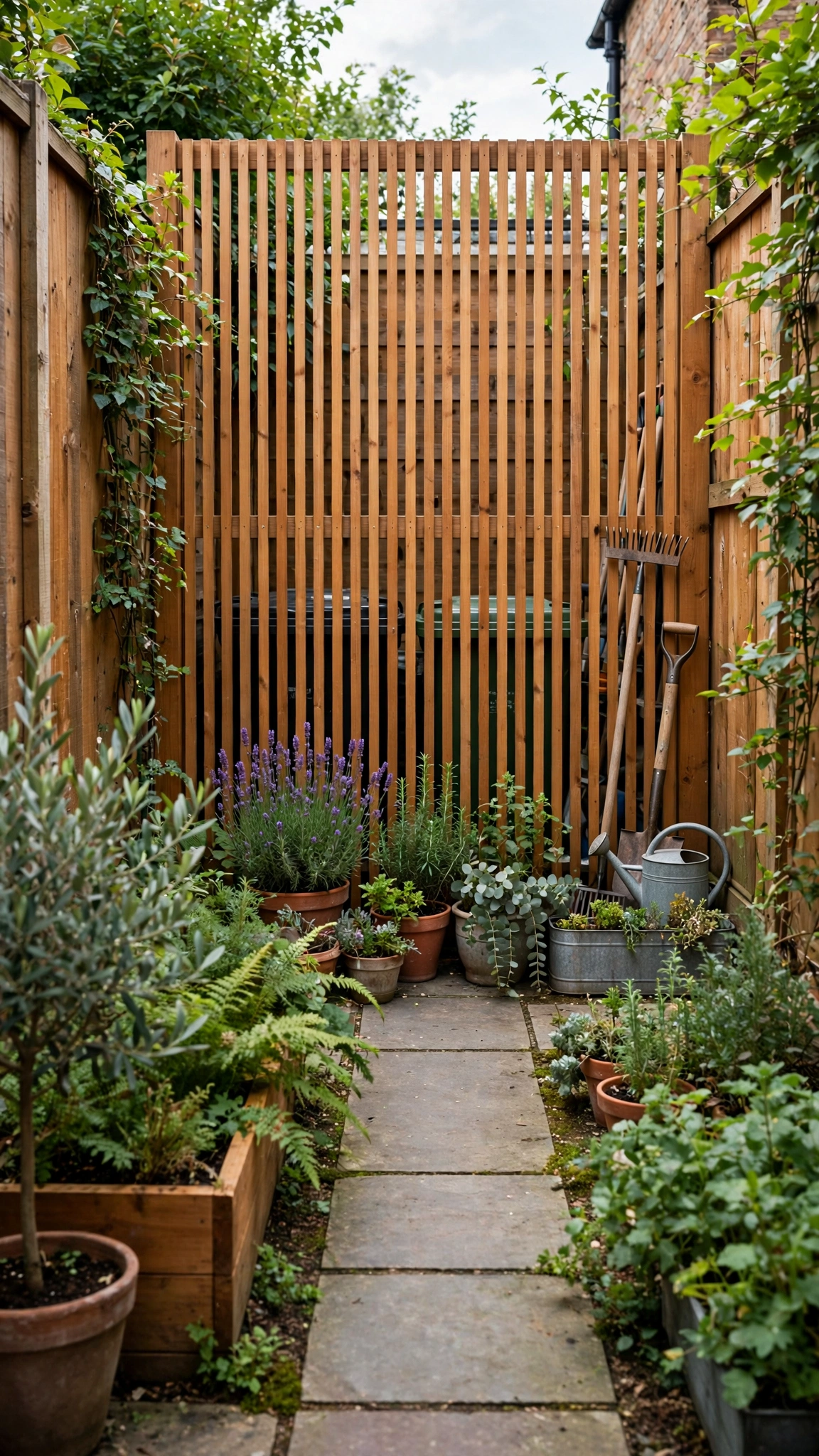
18. Create a Shade Planting Pocket for the Darkest Narrow Stretch
The darkest, fence-bound stretch of a narrow yard is often treated as a problem to hide, but it can become a shade garden with its own character. Layered greens, texture, and a simple path turn shade into the theme, rather than forcing sun-loving plants into a place where they will struggle. Hostas, ferns, and shade-tolerant ground cover, matched to your light, water, and climate, can fill the strip with depth that a sunny border cannot match.
Build the pocket in layers, with taller shade plants at the back, mid-height texture in the middle, and ground cover at the front, and group containers for impact rather than scattering small pots. Keep the path clear and slip-resistant, because shaded paths stay damp longer, and choose a light-coloured fence or edging where possible to lift the gloom. Match plants to actual conditions, noting whether the shade is dry shade under a fence or damp shade near a downspout, because those conditions suit different planting.
How to Choose the Right Narrow Backyard Setup
Choose by width, sun and shade, budget, rental status, maintenance time, and main use, rather than by trying to fit all 19 ideas at once. A yard used mainly for dining needs a house-side nook and slim furniture first, while a yard used mainly for gardening needs a raised bed, vertical planting, and a clear work path first.
A yard with pets or children needs a durable walk and clear sightline, while a yard used mainly in the evening needs layered light and a far-end focal point.
Start with two or three ideas that solve your biggest problem, then add others in phases. If privacy is the main issue, start with staggered planting and a vertical garden. If the yard feels like a corridor, start with zoning, a bending walk, and a far-end destination.
If storage dominates the view, start with screening and a built-in bench. Renters can focus on freestanding trellises, planters, foldable furniture, outdoor rugs, and string lights, which give much of the same effect without permanent changes, as long as landlord rules allow them.
FAQS
How do you make a narrow backyard feel bigger?
Start with zones, longer sightlines, height, and one destination, then add light and a simple palette. Split the yard into small outdoor rooms, angle or bend the path so the far end is not fully visible from the door, grow planting upward on fences, and give the far end a clear reason to walk toward, because layout comes first and decoration alone will not fix a corridor with no rooms or destination.
What is the best first step for a narrow backyard?
Measure width at the narrowest point and length overall, map morning and afternoon sun and shade, and mark doors, gates, bins, meters, and air-conditioning units, noting where water sits after rain and keeping one clear walkway from the house to the back gate. With that map, choose zones and then two or three ideas that solve your biggest problem, whether that is privacy, seating, shade, storage, or a worn lawn.
How do you add privacy to a narrow backyard without blocking light?
Use staggered and layered planting, slatted screens, and trellis climbers, and keep lower sightlines open where light matters. A taller background layer, a mid-height layer, and low ground cover will screen views while letting air and some light through, which reads as garden rather than as a wall, so leave gaps near seating and windows and avoid a solid screen straight across the back unless you have checked how it will affect light and airflow.
What furniture actually fits in a narrow backyard?
Slim, foldable, stackable, and built-in options fit best, because they leave the walk clear and can be stored when not in use. A bistro set, a narrow bench, a drop-leaf table, or a built-in bench along one edge will usually work better than a bulky sectional in the main path, so measure the clear walk and chair pull-out space before buying and group cushions and containers in a limited palette so the seating zone feels calm.
Can you fit a fire feature in a narrow backyard?
Only a compact, well-spaced feature at a suitable end zone, with clearances and local rules checked first. A small fire bowl at the far end, away from fences, planting, and the main walk, can work in some yards, but a large fire pit in the middle of a narrow strip will not, so check local rules, keep clearances generous, and consider a water feature, sculpture, or statement plant as an alternative focal point if a fire feature does not fit safely.
How do you fix drainage and wet spots in a narrow backyard?
Observe where water collects, keep water away from the house, and use permeable surfaces and planting where appropriate. A continuous permeable surface, ground cover, and a clear path can help with light wetness, but persistent pooling, grading problems, or water running toward the house need professional advice, so do not cover a drainage problem with paving or a raised bed and assume it is solved.
What grows well in a narrow, shaded side yard?
Shade-tolerant planting in layered heights, with ground cover and containers grouped for impact, suits a narrow shaded strip best. Hostas, ferns, and other shade-tolerant plants, matched to your light, water, and climate, can fill the strip with texture, while a simple stepping-stone path keeps the walk clear, so group containers rather than scattering small pots and note whether the shade is dry or damp, because those conditions suit different planting.
Final Thoughts
A narrow yard does not need to pretend to be wide. It needs clear zones, longer sightlines, height where it helps, one destination worth walking toward, and a few well-chosen ideas that fit your width, light, and daily life. Start by measuring, mapping light, and keeping the walk clear, then choose two or three ideas that solve your biggest problem first, beginning with the zone nearest the house, so everyday use feels easy.
When the first zones work, the rest of the list becomes easier to judge, because you will know which seating gets used, which planting thrives, and which path feels right. A narrow backyard, treated as a journey with rooms rather than as a failed square, can become a garden you use every day, in daylight and in the evening, without a rebuild. Pick your first three ideas, start small, and let the yard grow into its length.
2 Comments