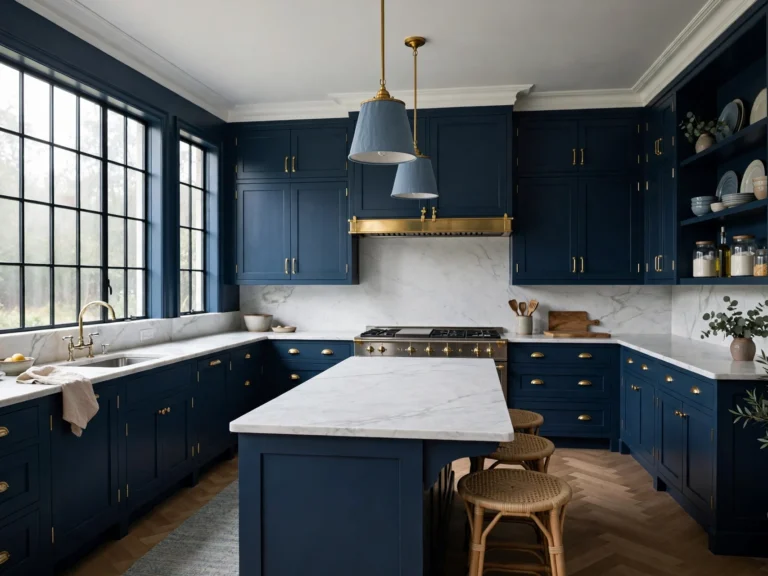
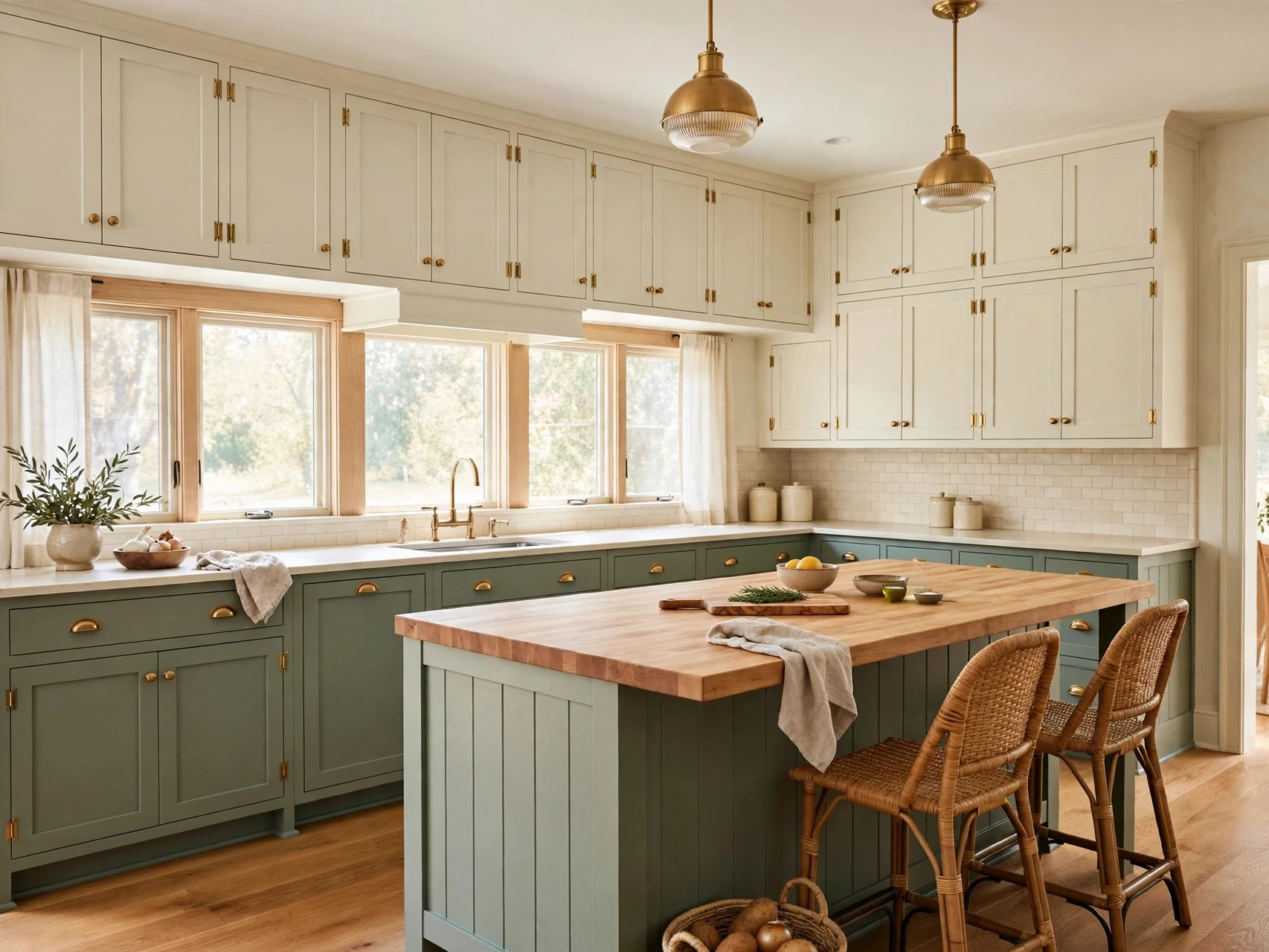
21 Sage Green and Cream Kitchen Ideas for a Calm, Timeless Kitchen
Some kitchens shout. This one does not need to. Sage green and cream sit quietly together, one cool and earthy, the other warm and soft, and the room ends up feeling calm without feeling boring. It is the kind of kitchen where morning coffee tastes a little slower and evening cooking feels less like a chore.
The trick is not to paint everything green and hope for the best. It is about balance: enough sage to feel the colour, enough cream to keep the light, and a bit of warm wood and brass so nothing feels flat. Get that balance right and the kitchen suits almost any home, from a small apartment to a farmhouse.
Below are 21 sage green and cream kitchen ideas, each one a complete look you can borrow as it is or mix with another. Start with the split that suits your light, add the warm details, and finish with the small touches that make it yours.
1. Sage Lowers, Cream Uppers: The Classic Split That Keeps Light
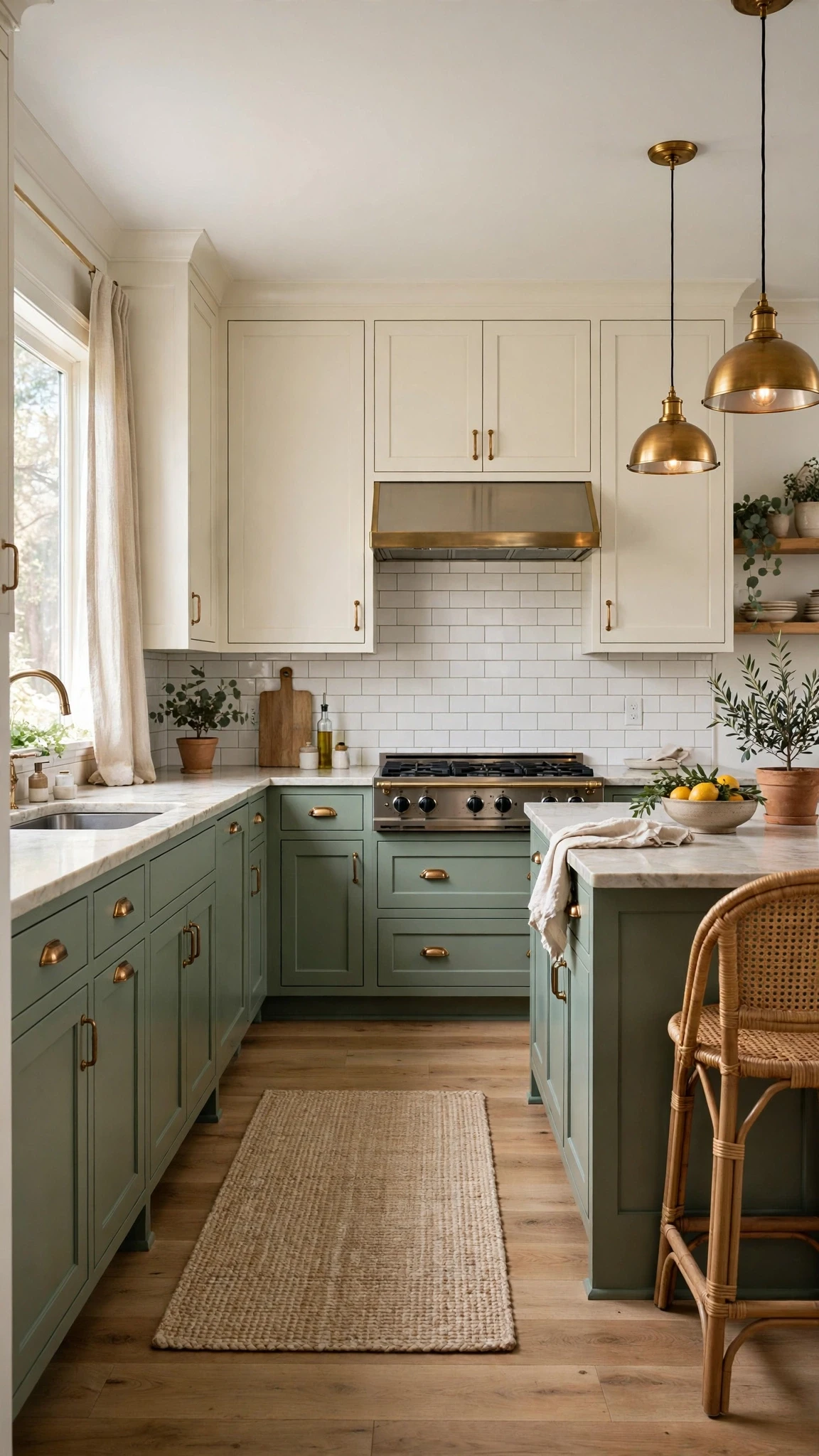
Paint the lower cabinets sage and keep the uppers cream, and the room immediately feels grounded without losing its brightness. The darker colour sits where hands and feet actually live, so marks show less, while the pale uppers draw the eye upward and keep the walls feeling tall.
This split also forgives a lot of decorating mistakes. If your sage leans a little grey or your cream leans a little yellow, the two still sit happily together because neither one has to carry the whole room alone.
2. One Sage Island in an Otherwise Cream Kitchen
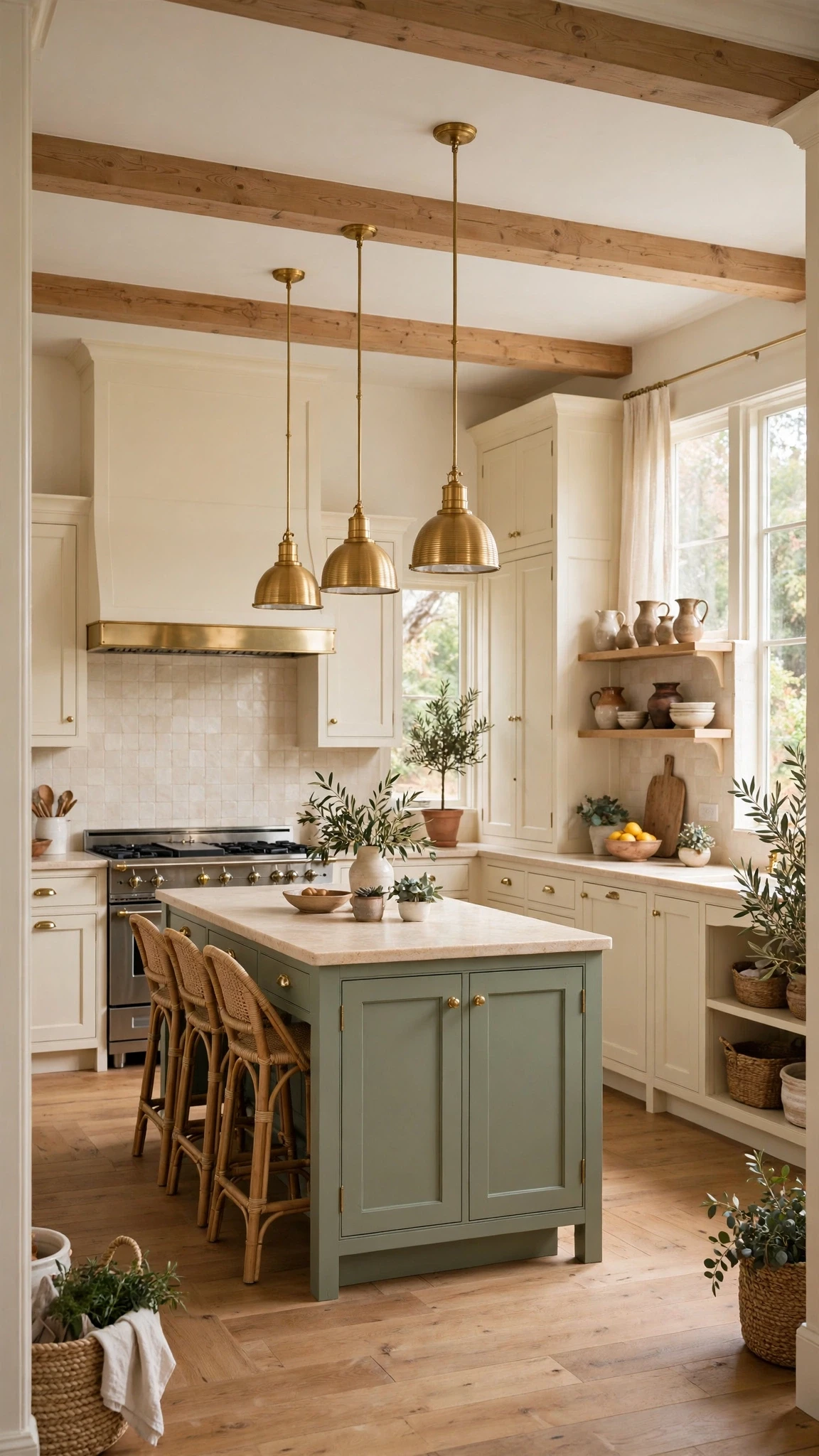
Not ready to commit to green cabinets everywhere? Paint just the island sage and leave the rest cream. One strong piece gives the whole kitchen a centre, and guests will remember it long after they forget the rest of the room.
An island is also the easiest place to test a colour. Live with it for a few weeks, watch it in morning and evening light, and you will know whether you want more sage or whether one island was exactly enough.
3. Cream Walls with Sage Cabinets: The Softest Full-Colour Route
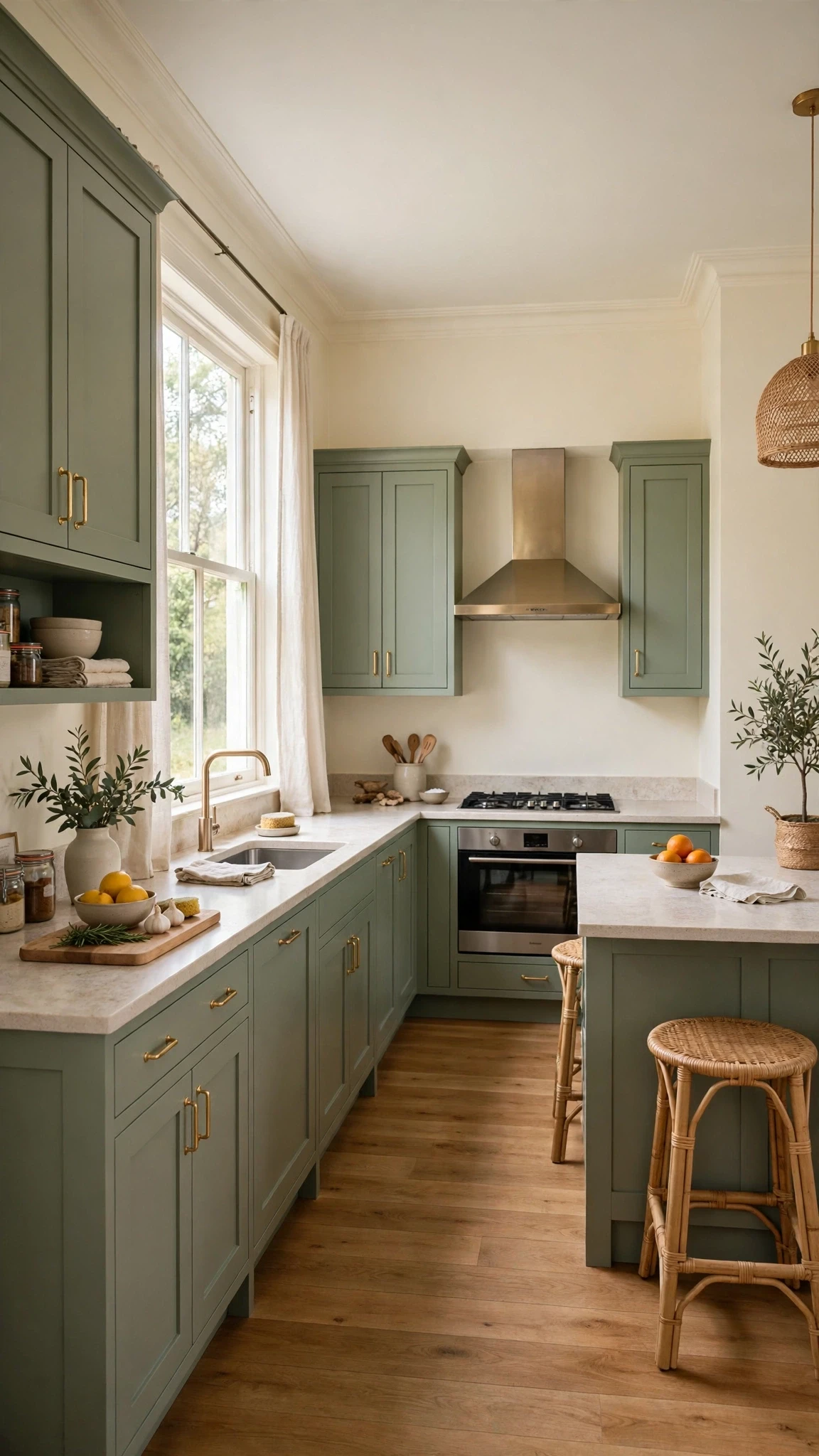
If you want the full sage cabinet look, keep the walls cream rather than white. Pure white next to sage can feel sharp and cold, while cream softens the edges and lets the green settle into the room.
This route works beautifully in kitchens with little natural light. The cream walls bounce what light there is around the room, and the sage cabinets still give you all the colour you wanted.
4. Sage Feature Wall Behind Open Shelving
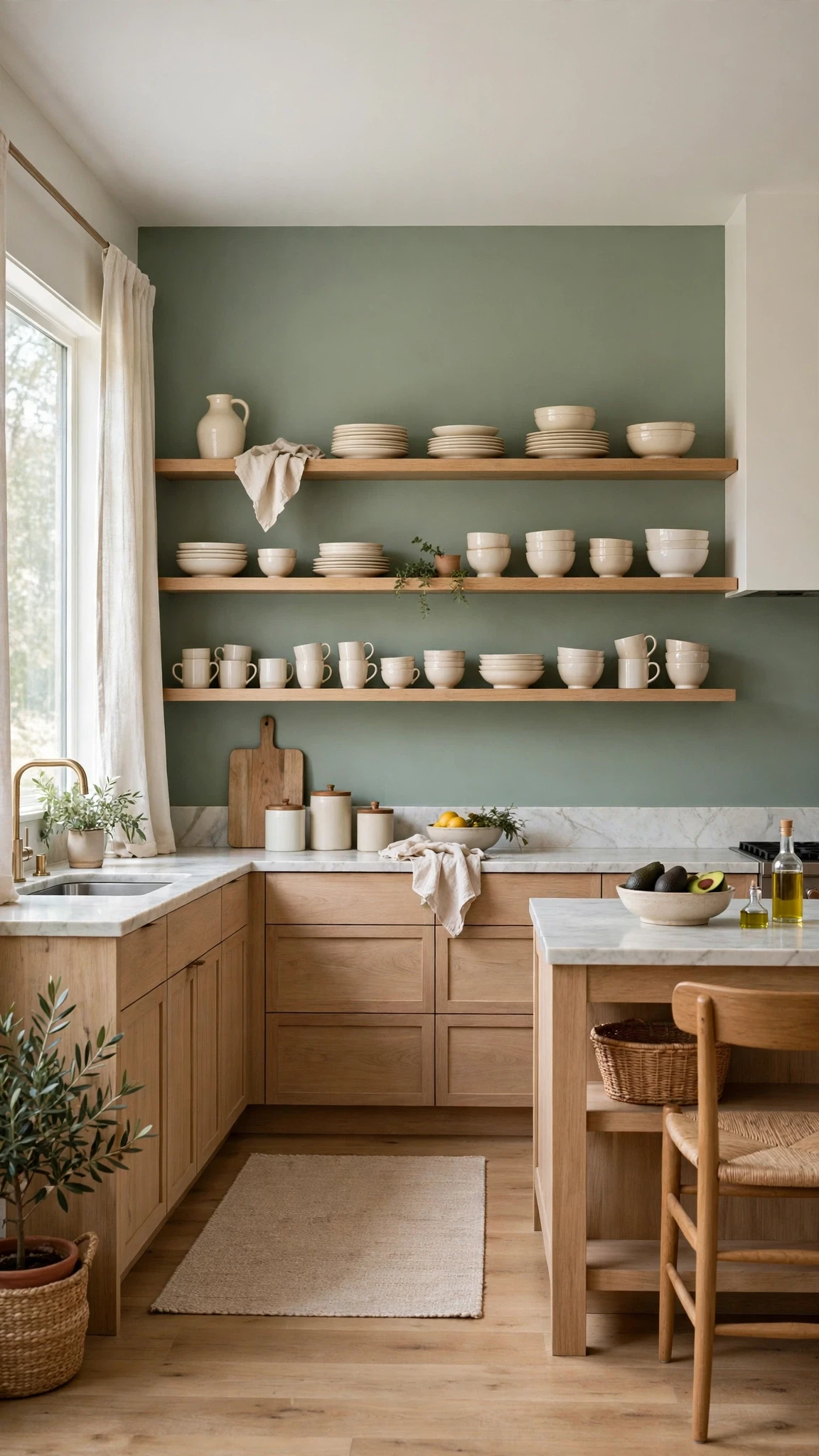
A single sage wall behind open shelves gives you colour without repainting a single cabinet. The shelves break up the colour so it never feels like a block, and your cream dishes and wooden boards become part of the decoration.
This is also a renter-friendly favourite. One wall of paint, or even peel-and-stick panels in a sage tone, changes the whole kitchen, and it is far easier to undo than a full cabinet job.
5. Two-Tone Shaker Cabinets with Matching Cream Trim
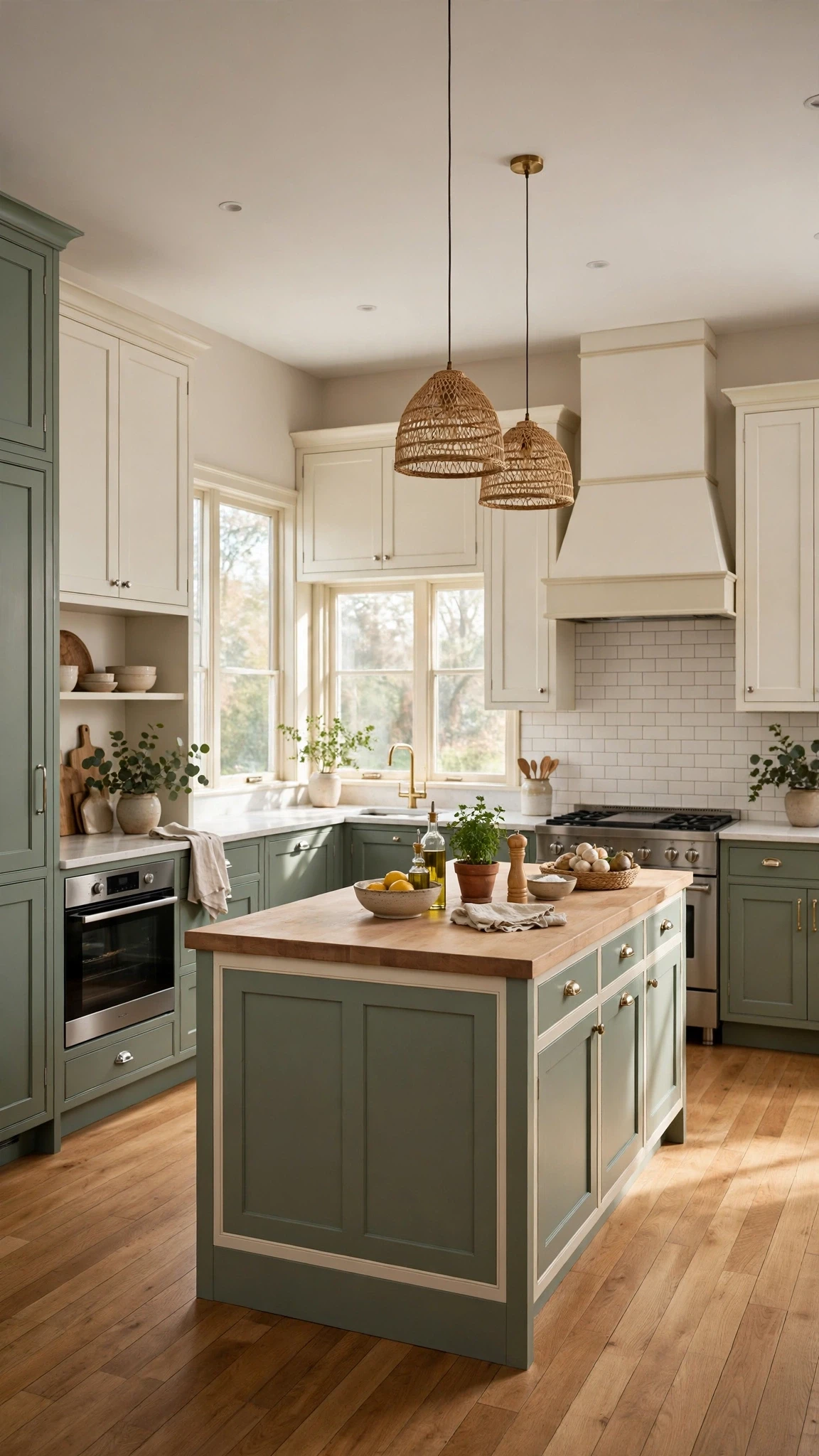
Shaker doors suit this palette perfectly because their simple frames let the colour do the talking. Paint the doors sage, keep the trim and ceiling cream, and the kitchen reads as finished rather than half-painted.
Matching the trim to the cream cabinets, not to a bright white, is the small detail that pulls it together. Everything softens by one step, and the room feels designed instead of assembled.
6. Warm Brass Knobs and Pulls as the Jewellery
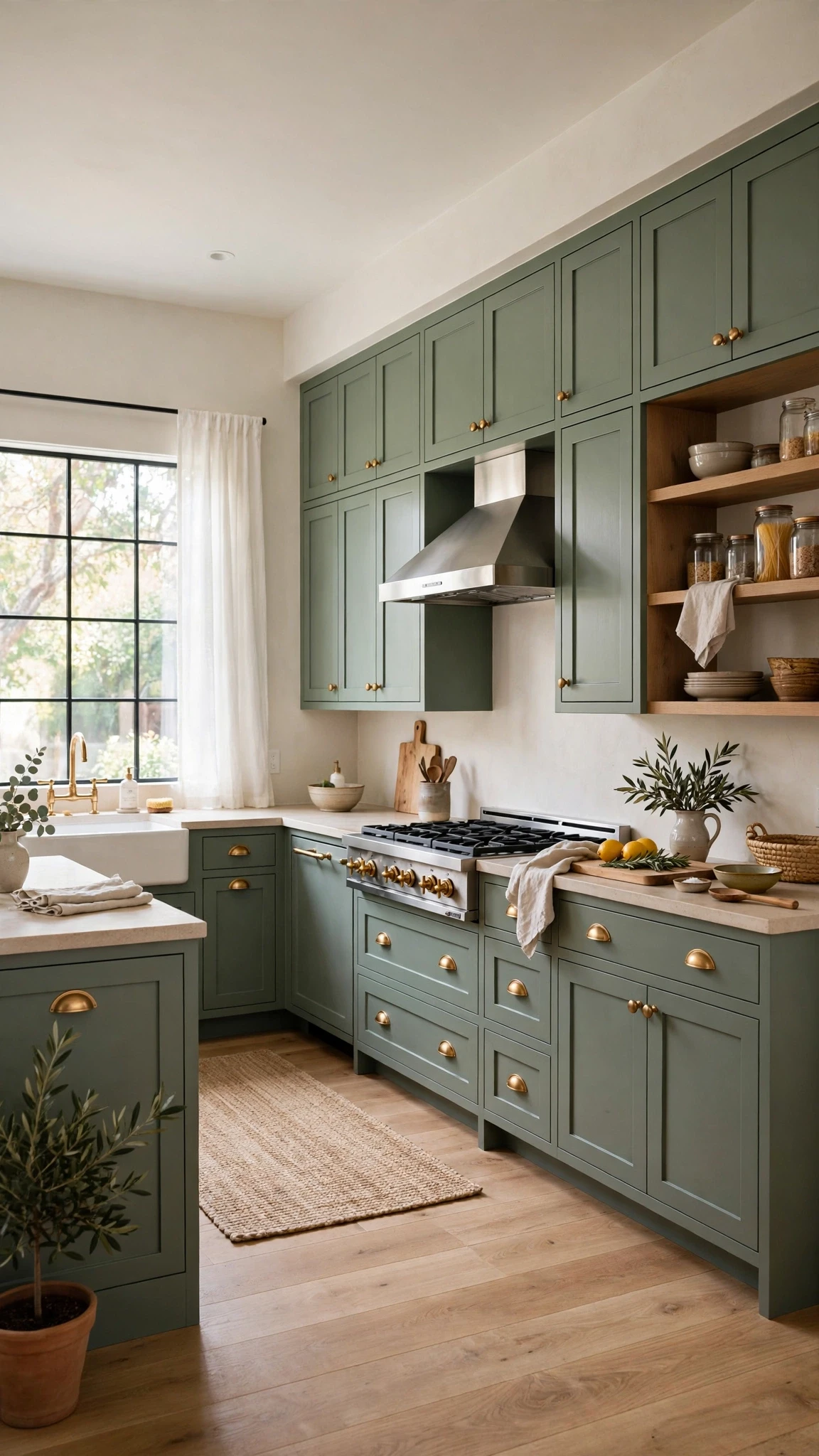
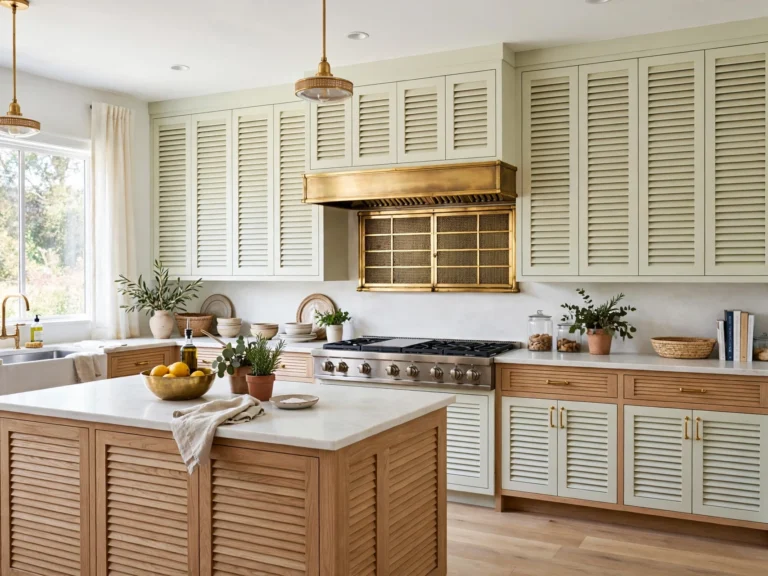
Brass hardwareis the fastest way to warm up sage green. A brushed brass knob against a sage door catches the light gently, and a row of them down a run of cabinets looks like jewellery on a plain dress.
Keep the finish consistent, though. Brass knobs with a copper faucet and chrome hinges will fight each other in a palette this quiet, so pick one warm metal and let it repeat through the room.
7. Butcher Block on the Island, Quartz Everywhere Else
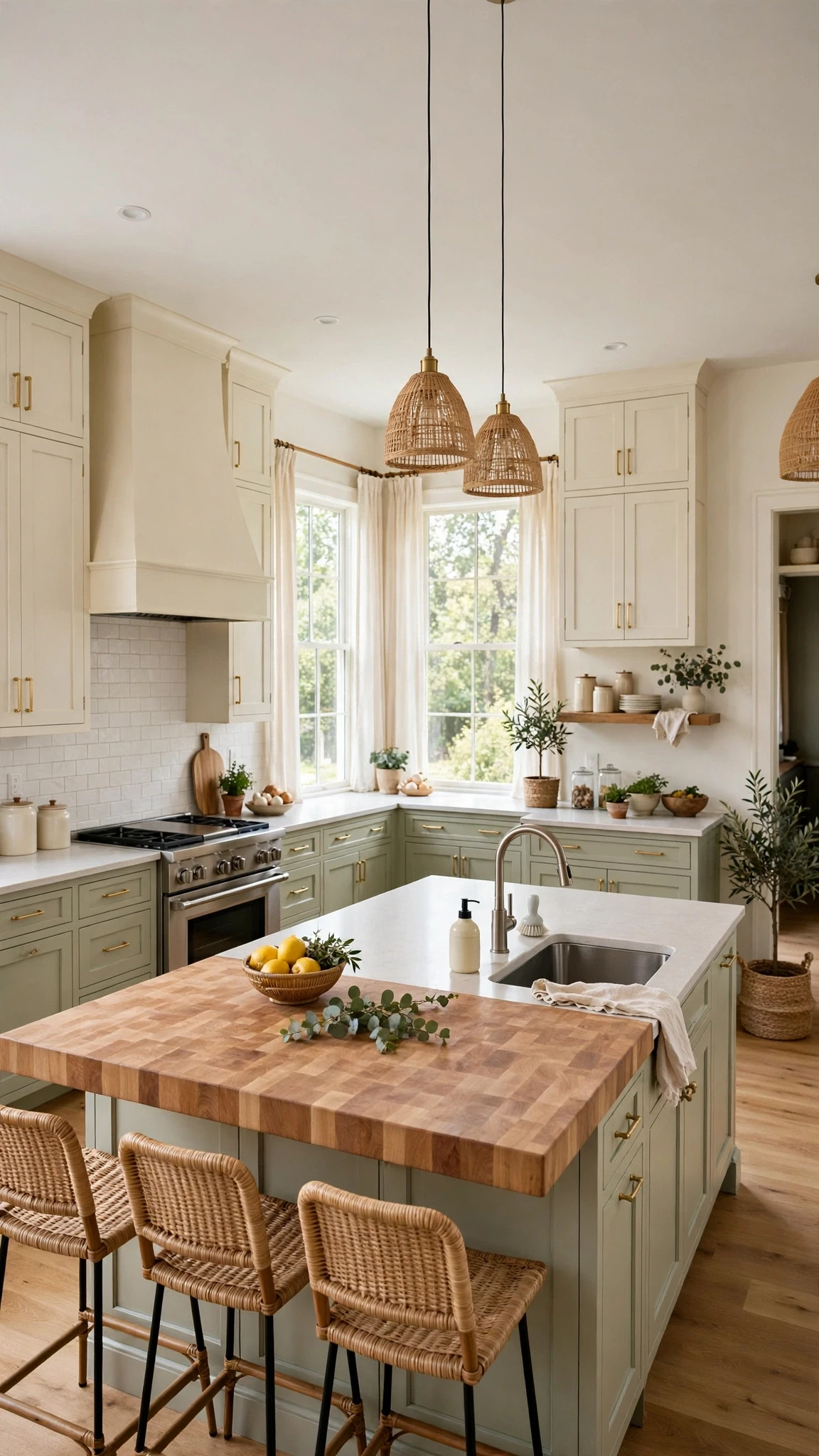
Use butcher block on the island and pale quartz on the surrounding counters, and you get warmth and practicality in one kitchen. The wood island invites chopping, kneading, and lingering, while the quartz handles hot pans and red wine without worry.
The mix also stops the room from feeling too perfect. A lived-in wooden island next to clean quartz counters tells visitors this kitchen is actually cooked in, which is exactly the feeling sage and cream does best.
8. Cream Subway Tile Backsplash with Warm Grout
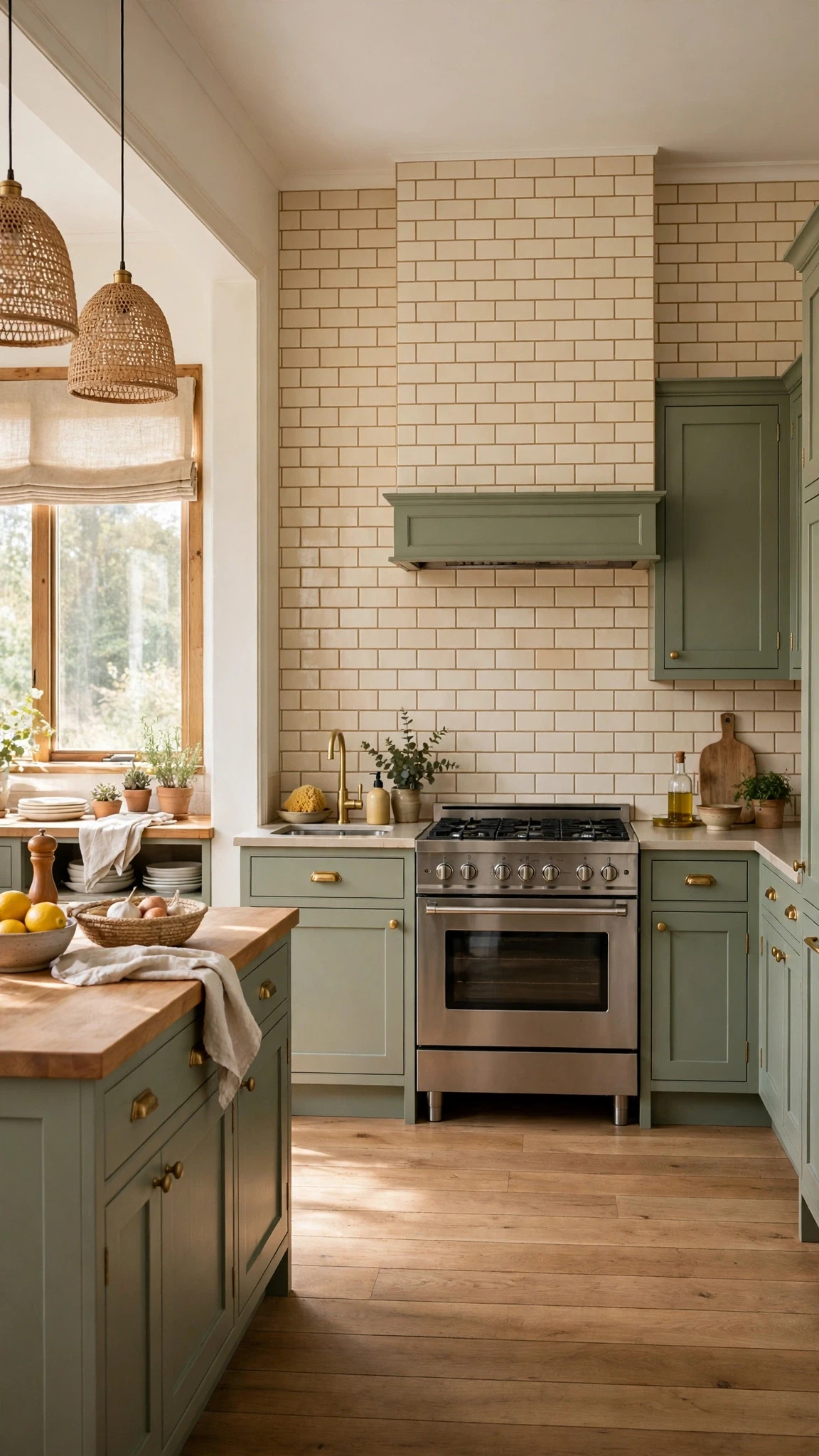
A cream subway tile backsplash is the quiet hero of this palette. It keeps the wall behind the stove clean, reflects light back into the room, and never argues with the cabinets.
Choose a warm grout rather than a bright white one. Warm grout ties the tile to the cream cabinets and stops the backsplash from looking like a separate, colder layer pasted onto a warm room.
9. Botanical or Leaf-Print Tile as One Quiet Feature Strip
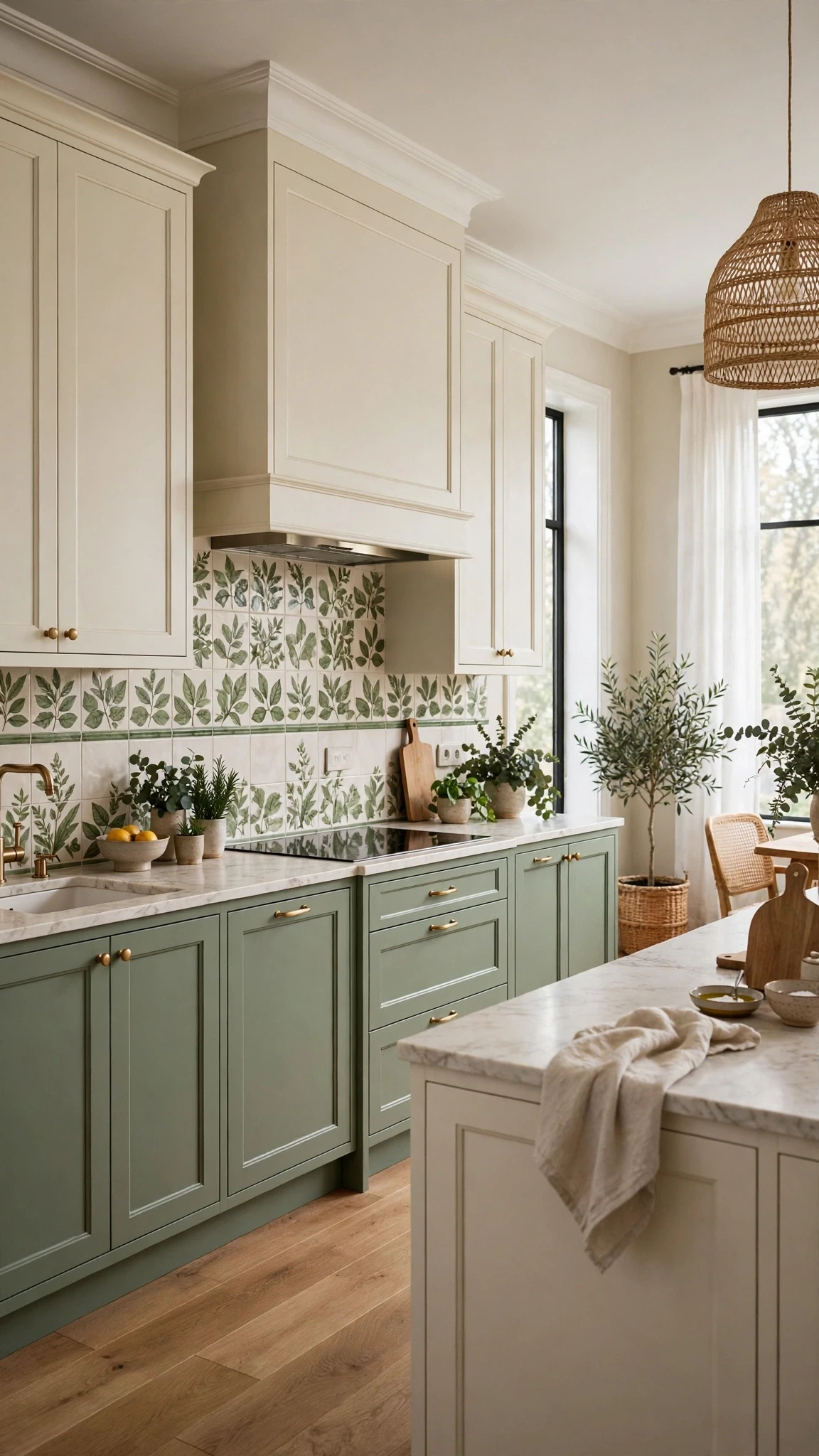
If plain subway tile feels too safe, add one strip of botanical or leaf-print tile behind the stove. A single row of leaves in soft green echoes the cabinets without turning the kitchen into a greenhouse.
Keep the feature strip narrow and low. One row at eye level, framed by plain cream tile, reads as a thoughtful detail, while a whole wall of pattern would steal attention from everything else.
10. Open Wood Shelves to Break Up Painted Cabinets
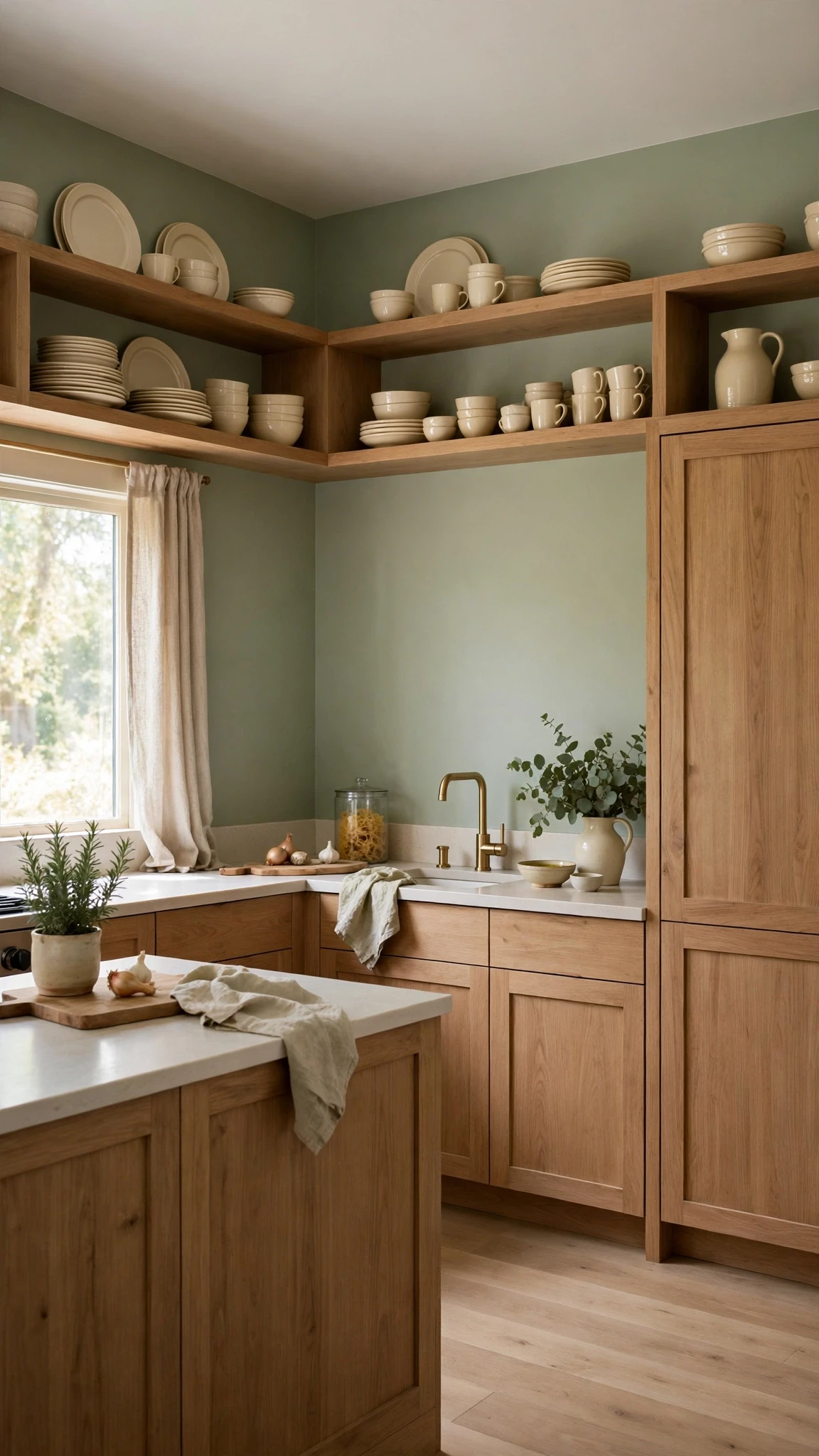
A run of painted cabinets can feel heavy, even in soft colours. Open wood shelves break that weight, give your eyes somewhere to rest, and let you show off the cream dishes and glass jars you actually use.
Style them loosely, not like a shop display. A few stacked bowls, a wooden board leaning at the back, and one small plant are enough; a shelf packed edge to edge will make the whole kitchen feel busy again.
11. A Farmhouse Sink in Cream with a Brass Faucet
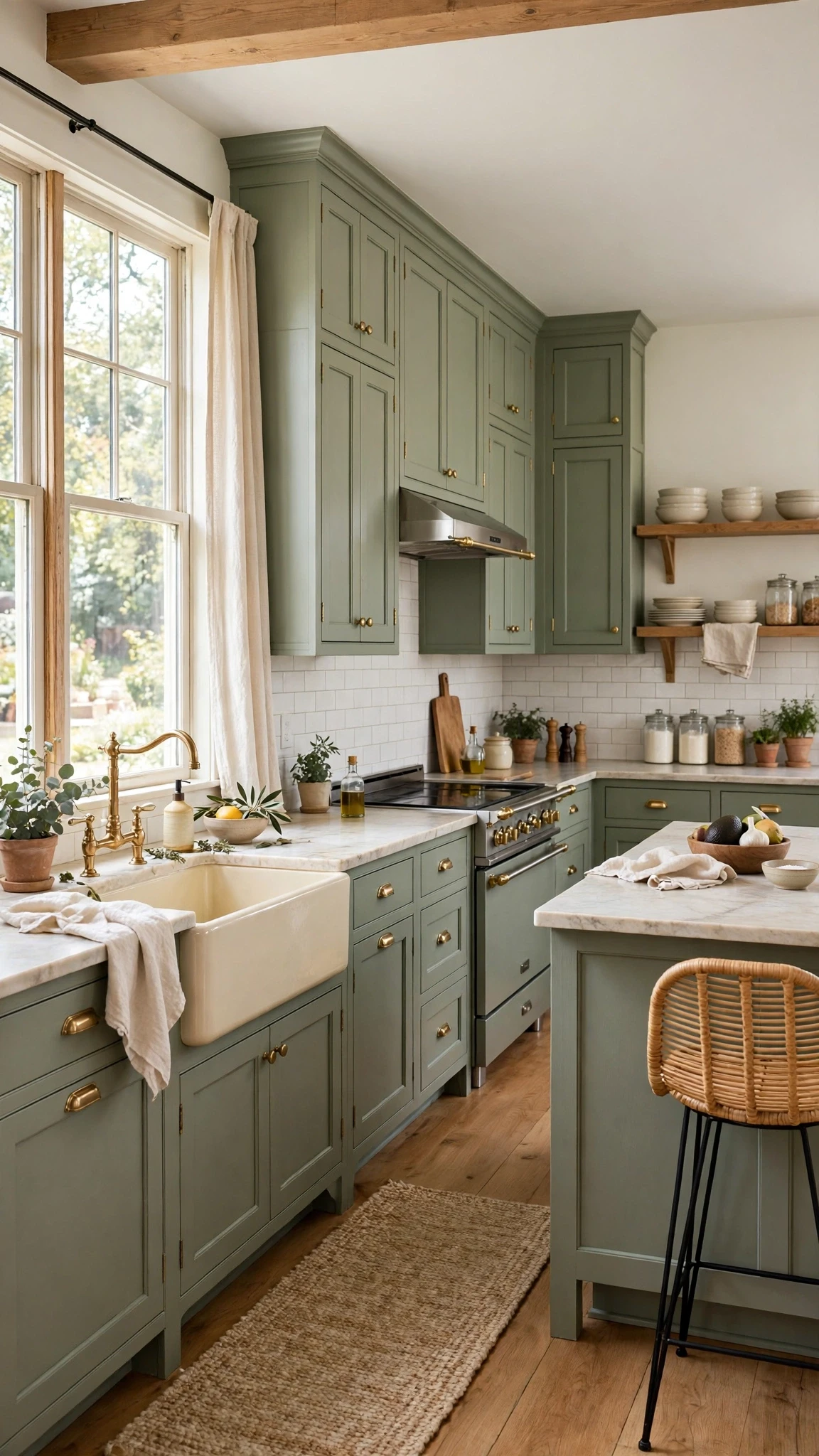
A cream farmhouse sink with a brass faucet is the centrepiece this palette deserves. The deep basin handles big pots easily, the cream porcelain glows against sage cabinets, and the brass faucet ties straight back to your cabinet hardware.
It is a bigger job than swapping knobs, so plan it with any countertop work. Done together, the sink, faucet, and counters arrive as one calm composition instead of three separate decisions.
12. Sage Bar Stools Against a Cream Island
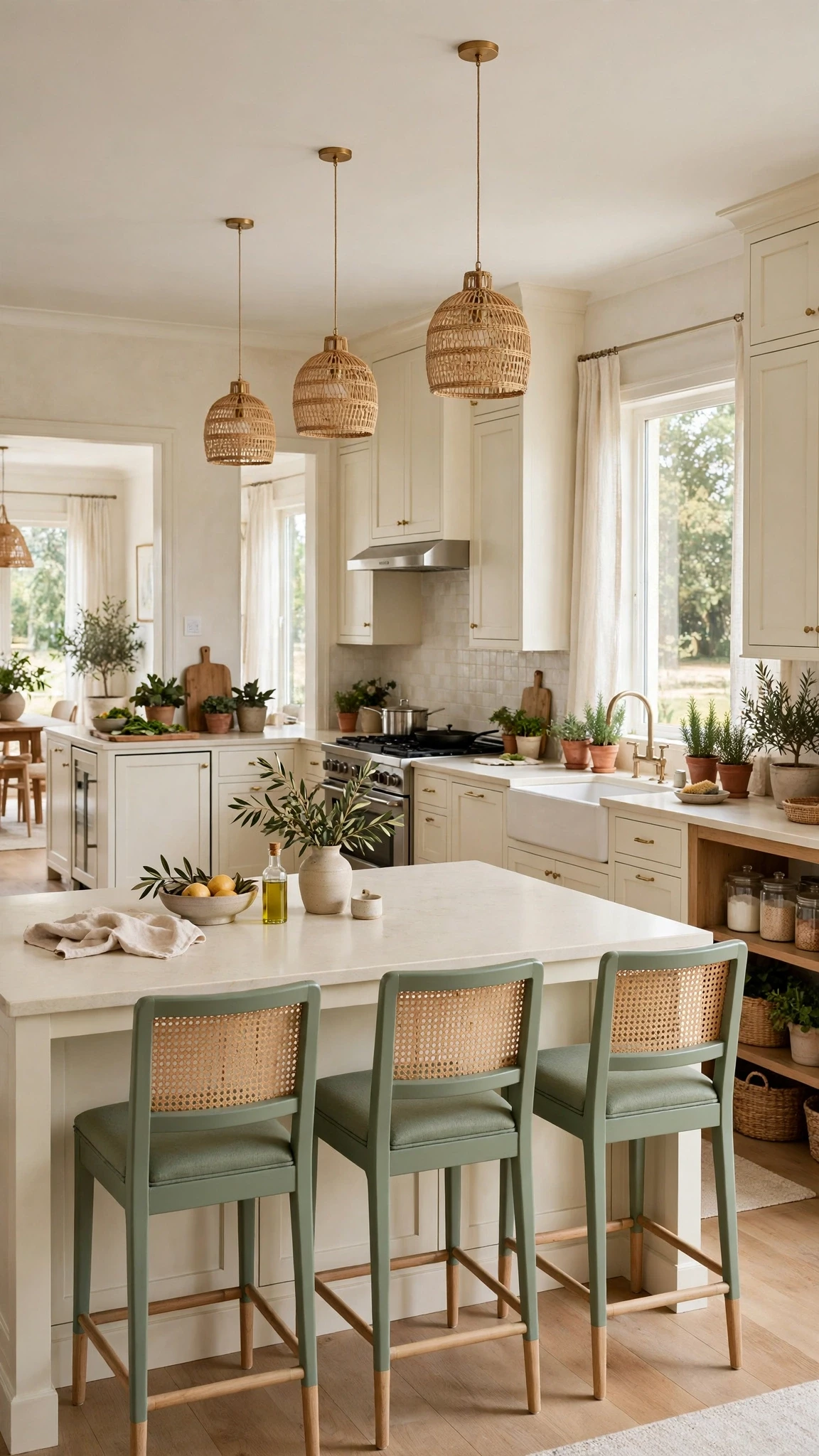
Sage bar stools tucked under a cream island repeat the two-tone story at seating height. The colour travels around the room instead of stopping at the cabinets, and the kitchen feels considered from every angle.
Pick stools you can actually sit on for a long breakfast. A pretty stool that hurts after ten minutes will end up pushed into a corner, while a comfortable one keeps people in the kitchen where they belong.
13. Linen Cafe Curtains to Soften the Window
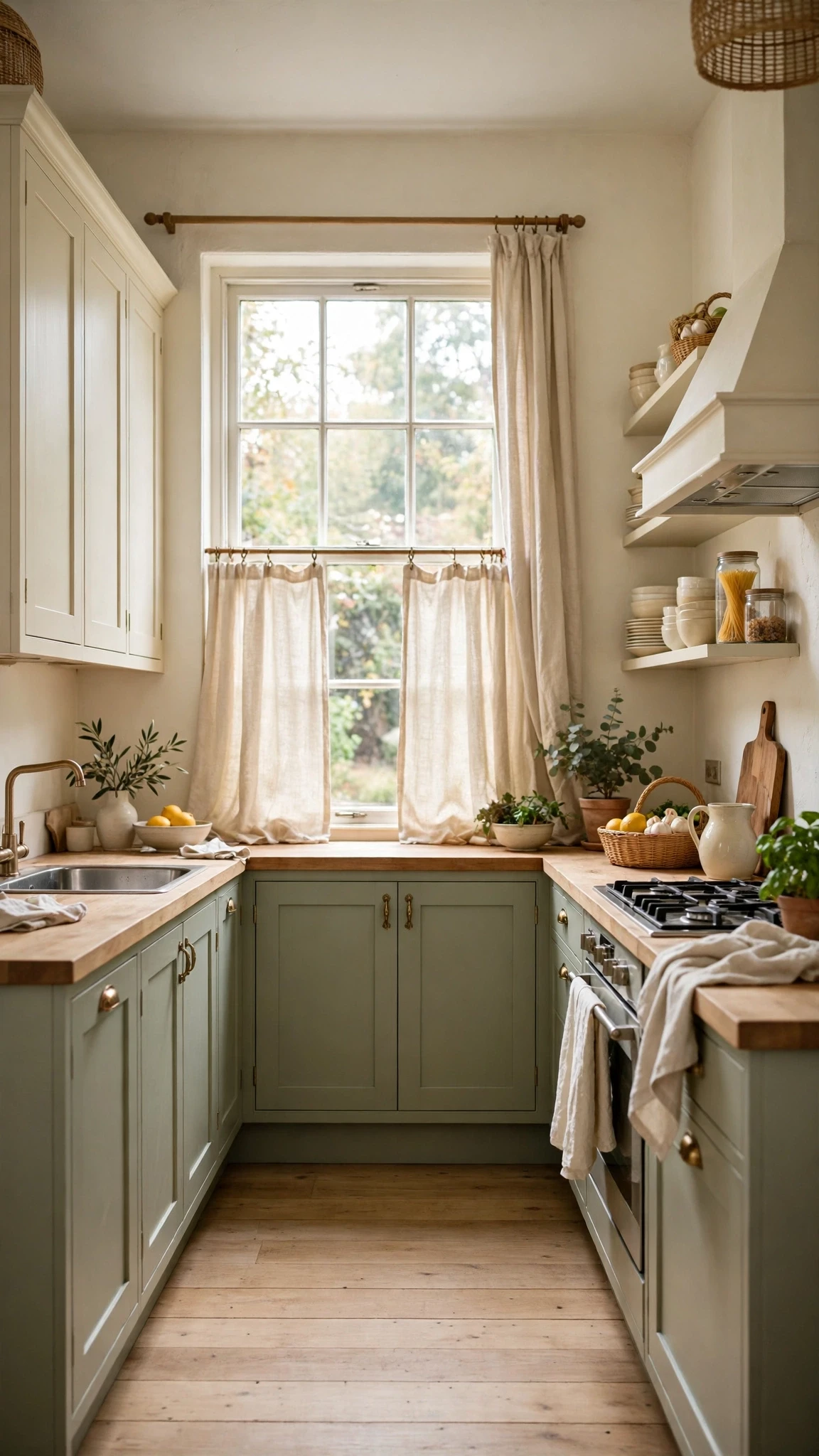
Linen cafe curtains, hung halfway up the window, soften the hardest light in the kitchen without blocking it. The natural fabric fits the earthy sage perfectly, and the room feels dressed rather than bare.
Cream or oatmeal linen works best here. A patterned curtain would add a fourth voice to a palette that only needs three, while plain linen lets the cabinets and wood do the talking.
14. Woven Baskets and Trays for Warm Texture
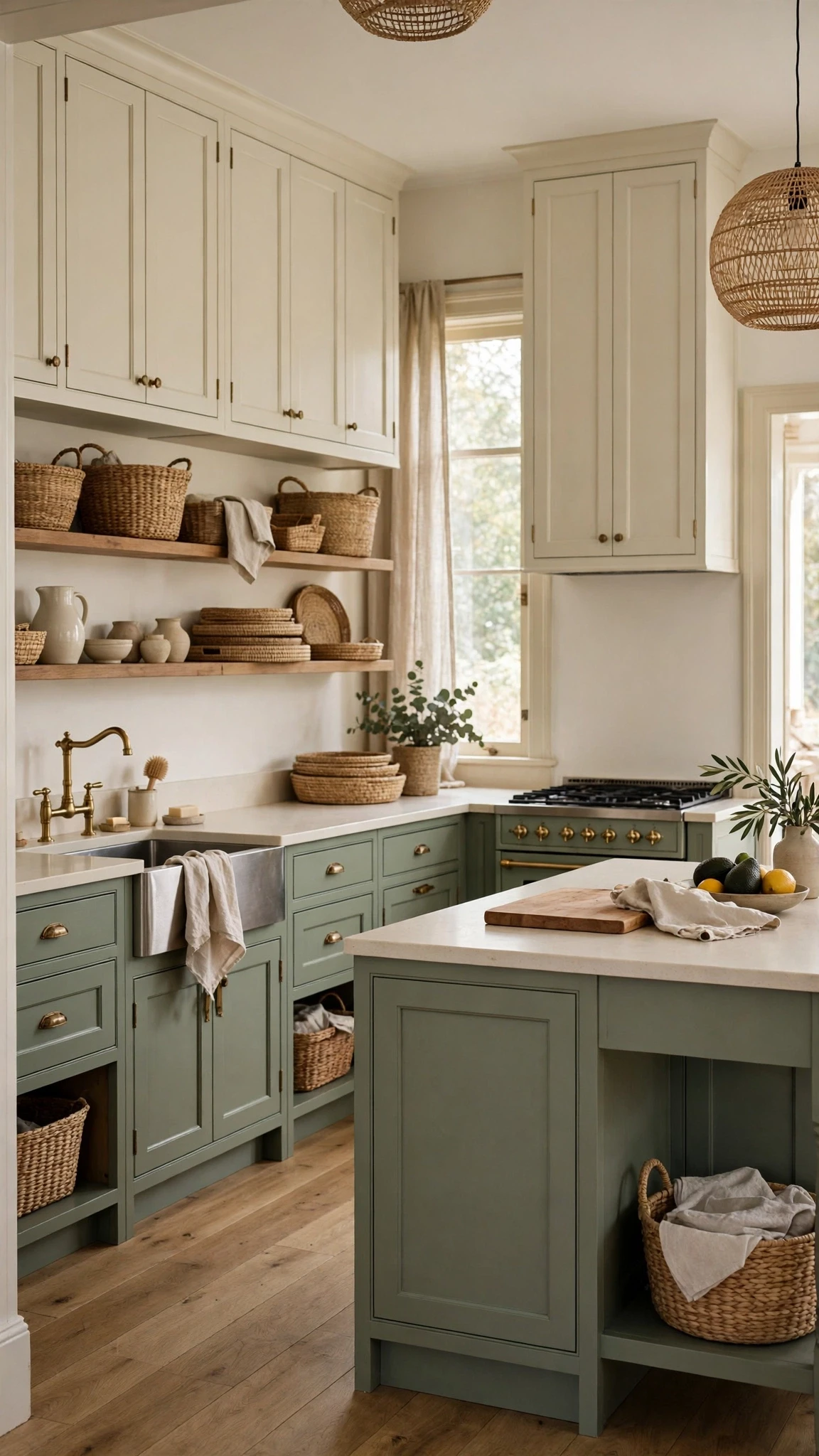
Woven baskets and trays add the texture that painted cabinets cannot. A basket for onions, a tray for oils by the stove, and one large basket for towels bring a handmade warmth that stops the room feeling like a showroom.
Stick to natural, uncoloured weaves. Straw, rattan, and seagrass all sit happily with sage and cream, while bright dyed baskets would pull the eye away from the calm palette you worked to build.
15. Under-Cabinet Lighting That Keeps Sage from Going Muddy
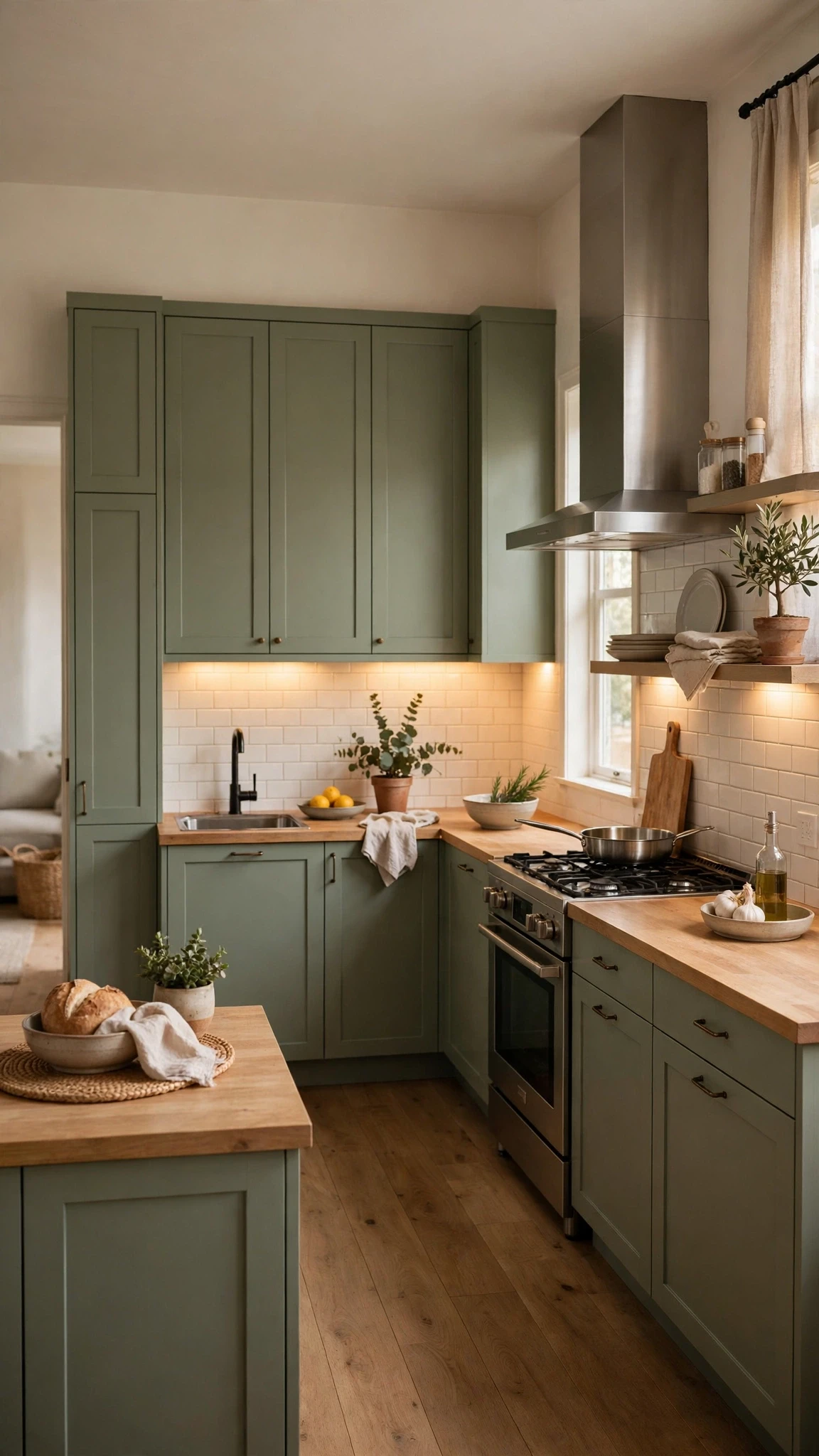
Sage green can turn muddy in poor light, and under-cabinet lighting is the fix. A warm white strip under the uppers lights the counters where you work and lets the sage doors below read as green, not grey.
Choose warm white, around 2700K to 3000K, rather than cool daylight bulbs. Cool light makes sage look washed out and cream look stark, while warm light flatters both colours at once.
16. Pendant Lights in Brass Over the Island
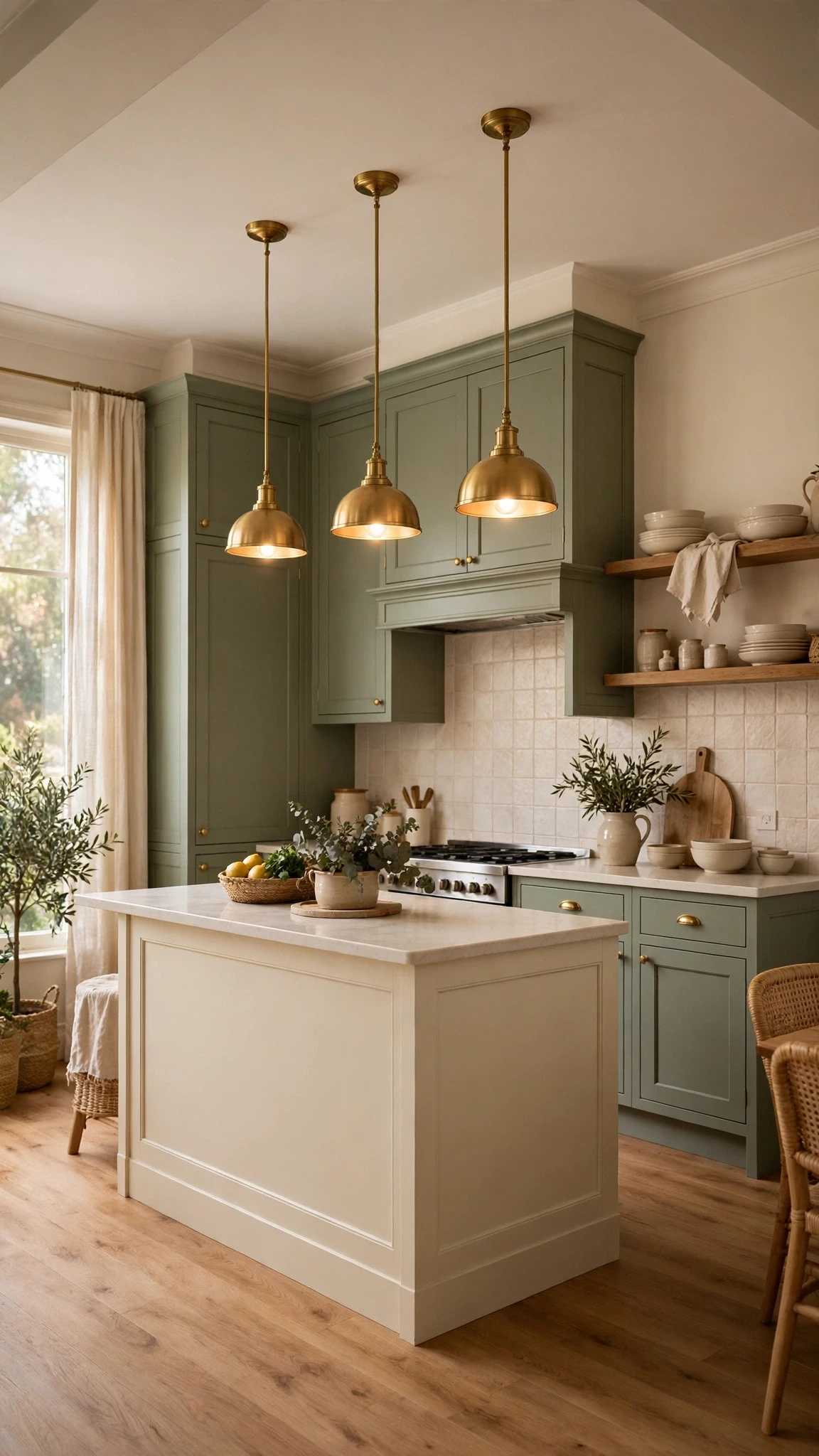
Brass pendants over the island do two jobs: they light the workspace and they repeat the warm metal from your hardware at eye level. Three small pendants in a row suit a long island, while one larger pendant suits a small one.
Hang them low enough to feel intimate but high enough to see across. About thirty inches above the counter is a good starting point, then adjust until the light pools on the island without shining in anyone’s eyes.
17. Cream Dishware on Display Against a Sage Wall
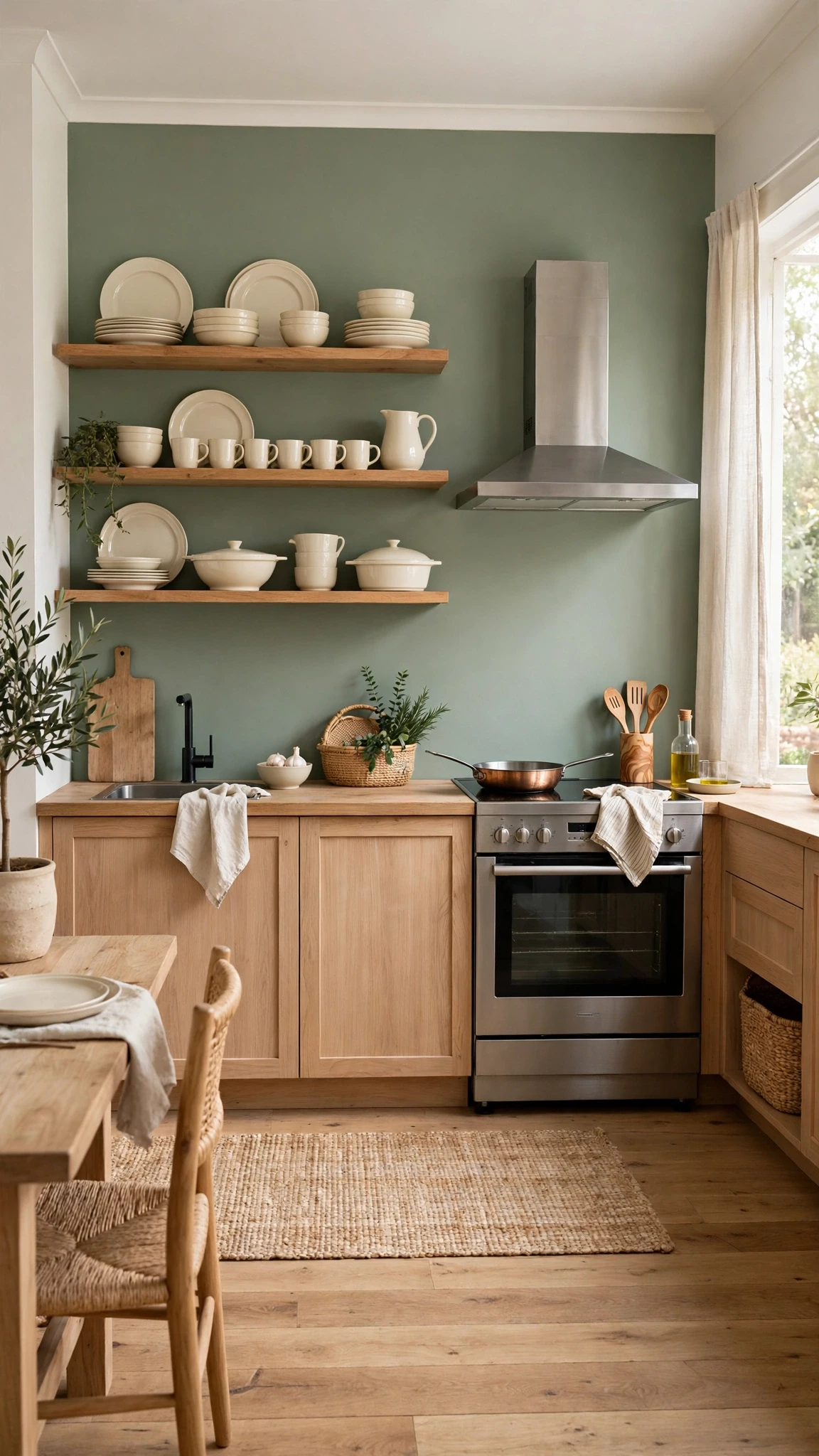
Cream dishware displayed against a sage wall is decoration that costs nothing extra. Stack bowls by size, line up mugs by colour, and let the contrast between cream ceramics and green paint become a feature in itself.
This works best when the display is honest. Show the dishes you actually eat from, not a matching set bought just for the shelf, and the kitchen will feel collected over time rather than staged for a photo.
18. A Small-Kitchen Version: Sage on Lowers Only, Mirrors and Light Uppers
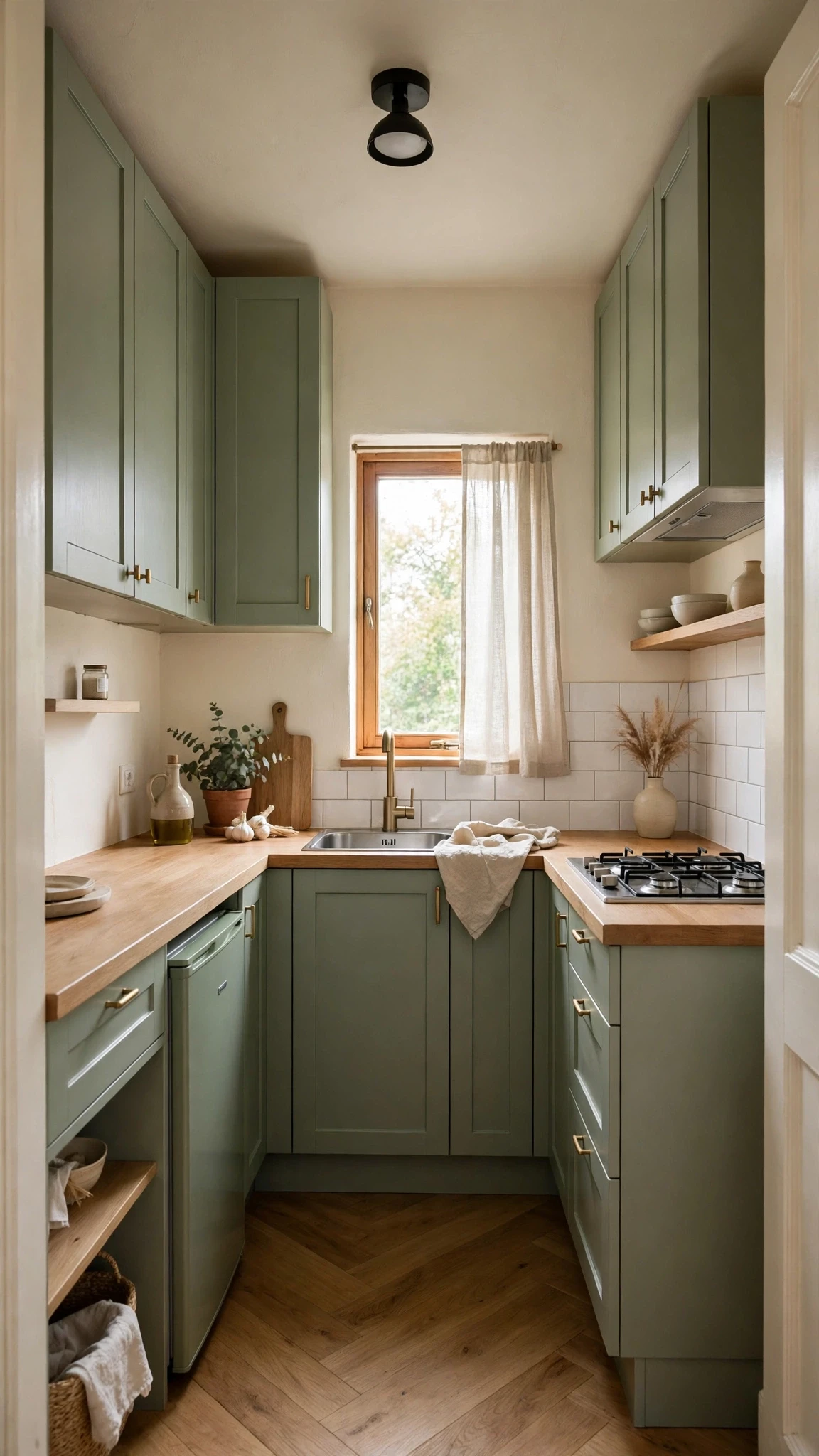
Small kitchens can absolutely wear sage, as long as the green stays low. Paint only the lower cabinets, keep the uppers cream or open, and the room keeps its height while still getting all the colour.
Add one reflective surface to help: a mirrored backsplash strip, glass-front uppers, or even a light countertop. Each one bounces light around the room and stops the lower cabinets from feeling heavy.
19. A Rental Version: Peel-and-Stick Backsplash, Hardware Swap, Sage Accessories
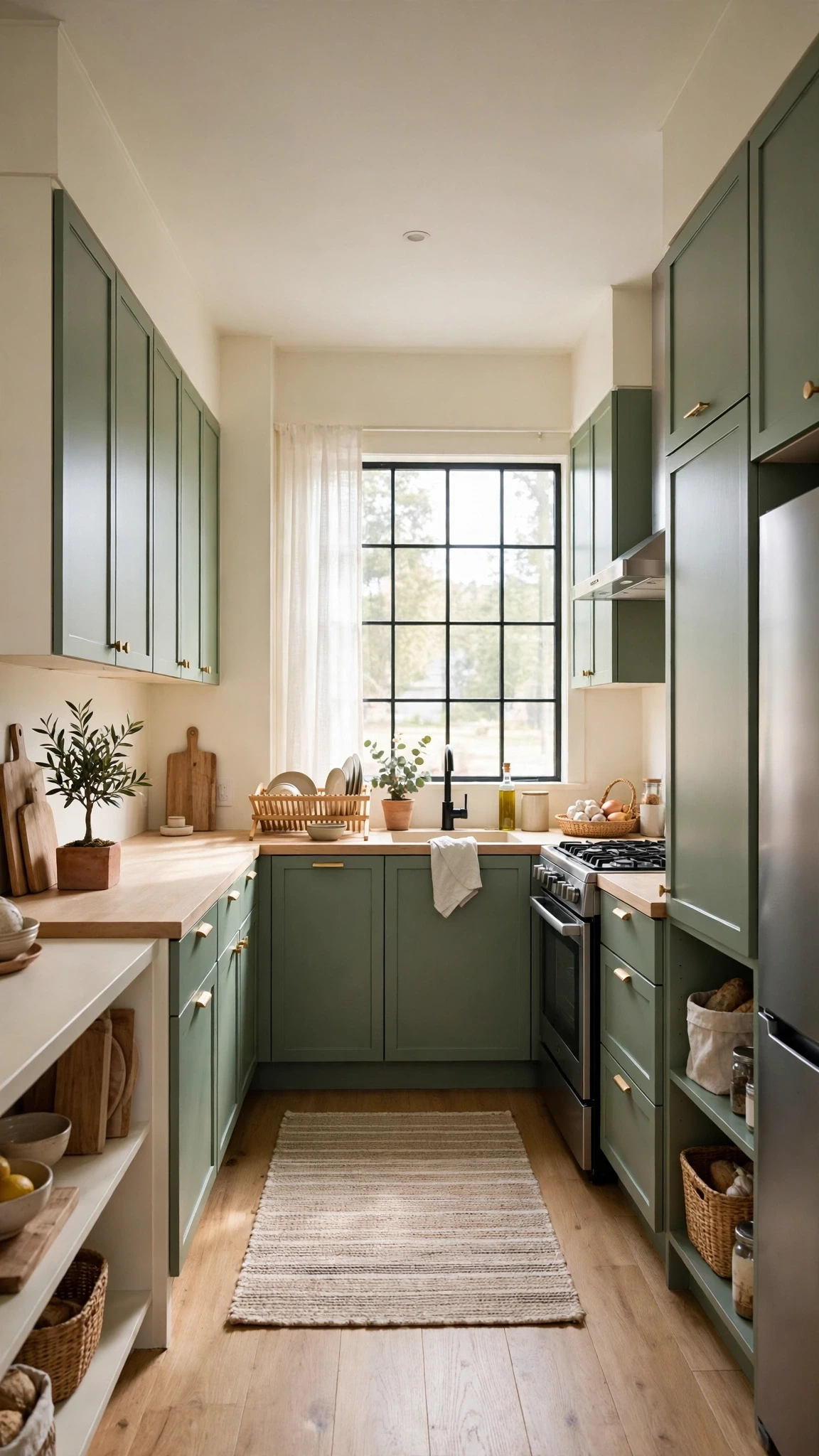
Renters can get this look without touching the cabinets. A peel-and-stick backsplash in cream or soft sage, swapped brass knobs, sage tea towels, and a few green accessories change the whole feeling of the kitchen.
Everything here comes off again when you leave. Keep the original hardware in a labelled bag, photograph the kitchen before you start, and you can hand the place back exactly as you found it.
20. Sage and Cream with One Terracotta Accent So the Room Does Not Go Flat
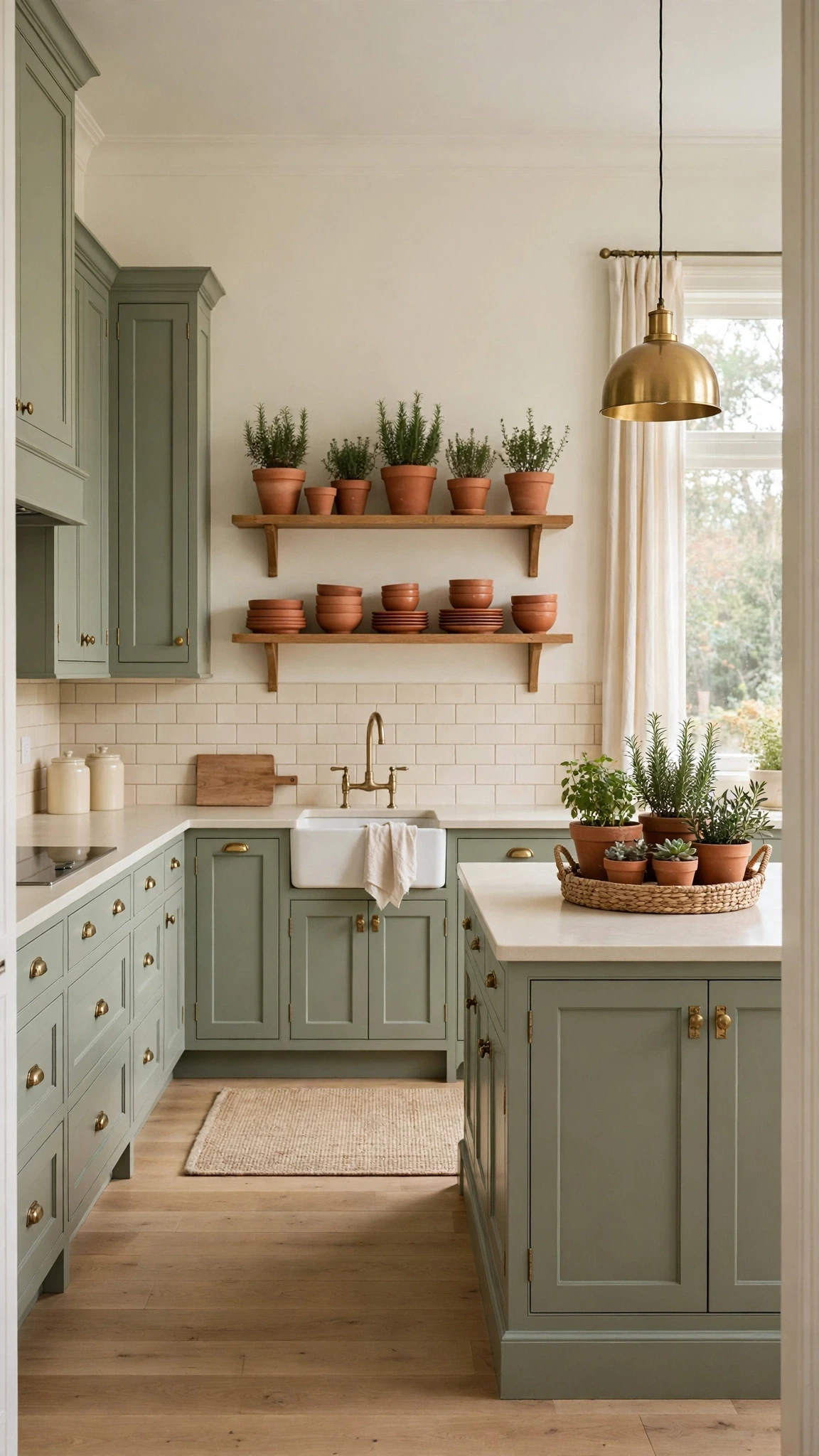
Two quiet colours can sometimes go too quiet. One terracotta accent, a pot, a vase, or a set of plant pots, wakes the palette up without breaking its calm, because terracotta sits naturally next to earthy green.
Keep it to one accent and repeat it once, not five times. A terracotta pot on the sill and a matching one on the shelf is a thread; terracotta everywhere becomes a whole new colour scheme.
21. One Dark Wood Anchor (Table or Beams) to Ground the Pale Palette
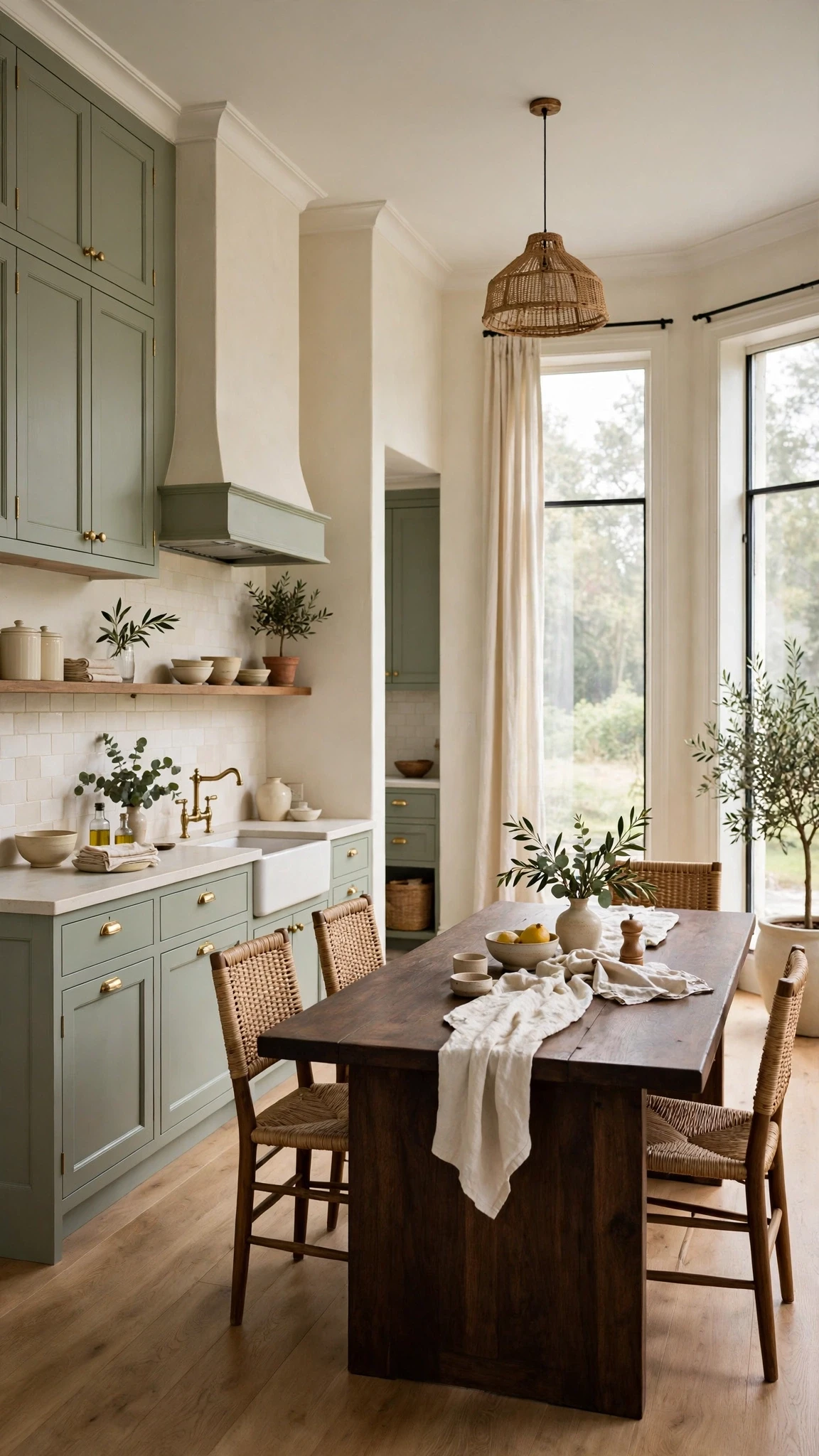
A pale palette needs one dark anchor or it can float away. A dark wood table, a set of exposed beams, or even a walnut chopping board collection gives the room weight and stops the cream from feeling washed out.
The anchor works best when it looks old, or at least well used. A dark table with a few marks tells the story of family meals, and that lived-in feeling is exactly what sage and cream kitchens do best.
A Simple Sage-Cream Ratio That Keeps the Room Calm
Think of the room in rough thirds rather than exact percentages. Let cream lead on walls and uppers, let sage hold the lowers or the island, and let wood and brass make up the warm remainder. When one colour starts to dominate, the room tips, either too green or too pale.
If you are unsure, paint the biggest surface cream and the smallest feature sage first. It is far easier to add another sage door later than to repaint a whole kitchen that went too dark on day one.
Rental-Friendly and Budget Swaps
Start with the cheapest changes and work upward. Swap the hardware first, then the backsplash, then the curtains and accessories, and only repaint when you are sure of the colour. Each step changes the room on its own, so you can stop whenever the budget or the landlord says so.
Test every paint colour on a large board and move it around the room for a few days. Sage shifts dramatically between morning and evening light, and a sample that looked perfect at noon can read muddy by dinner.
FAQs
What cream paint goes best with sage green cabinets?
A warm cream with yellow or beige undertones works best, because it softens sage instead of fighting it. Avoid stark cool whites, which can make sage look grey and the room feel cold. Test the cream next to your sage in both morning and evening light before painting a whole wall.
Is a sage green kitchen still in style?
Yes, sage green is a soft neutral rather than a loud trend colour, so it ages well in kitchens. It has stayed popular because it feels natural and calming, not because of one season’s fashion. Paired with cream, wood, and brass, it reads timeless rather than dated.
How do I keep a sage kitchen from looking dark?
Keep sage on lower cabinets or one feature, use cream on uppers and walls, and add warm under-cabinet lighting. Light counters, open shelves, and one reflective surface also help. If the room has little natural light, limit sage to the island or lowers only.
Should sage go on upper or lower cabinets?
Sage usually works best on lower cabinets, with cream uppers keeping the room light and tall. This split also hides everyday marks better, since lowers take the most wear. If your kitchen is very bright, sage uppers can work, but test the colour in your light first.
What hardware suits sage green cabinets?
Warm brass or brushed gold hardware suits sage green best, because the warm metal balances the cool earthy green. Brushed brass knobs and cup pulls are the safest choice. Avoid mixing several metal finishes in one kitchen, since a quiet palette shows clashes easily.
Can I get this look in a rental without repainting?
Yes, use a peel-and-stick backsplash, swap the cabinet knobs, and add sage accessories like tea towels, curtains, and dishware. These changes transform the feeling of the kitchen and all come off again. Keep the original hardware safe so you can restore the kitchen when you leave.
How do I keep cream cabinets clean near the stove?
Choose a wipeable satin or semi-gloss finish, wipe splashes the same day, and use a washable backsplash behind the stove. A small tray for oils keeps bottles contained, and a weekly wipe with warm soapy water prevents grease building up. Avoid matte finishes near cooking zones, since they trap stains.
Conclusion
A sage green and cream kitchen does not need to be grand to feel special. It needs the right split of colour, a little warm wood, a touch of brass, and light that flatters both shades. Get those few things right and the room will feel calm every single day, not just on the day it is finished.
Start small if you are unsure. One sage island, a brass knob swap, or a cream backsplash can show you whether this palette is yours, and the best kitchens are the ones that grow slowly, one honest change at a time.