
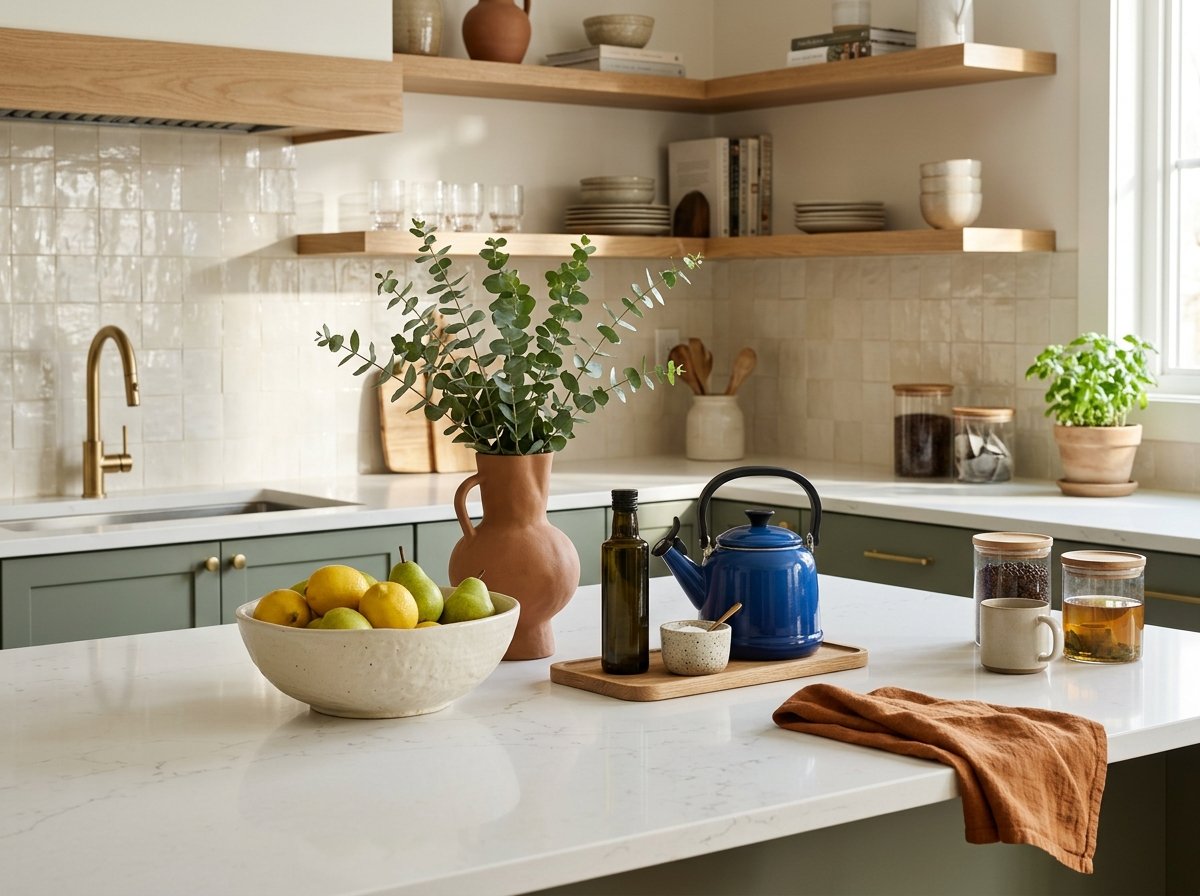
20 Kitchen Counter Decor Ideas That Look Styled, Not Cluttered
Kitchen counter decor has a tougher job than decor anywhere else in the house. The surface has to hold a kettle, a coffee machine and a chopping zone while still looking like someone chose what sits there. When it goes wrong, the counter becomes a drop zone for mail, vitamins and half the pantry, and any decorative object just adds to the pile.
The fix is rarely more stuff. It’s deciding what earns a place, grouping it with intention, and giving each zone its own small setup. The 20 ideas below are organized by function: standout pieces, stove, sink and coffee zones, storage that looks good, islands and tiny counters, and budget-friendly options. Pick the ones that match how you actually cook, and leave the rest.
Kitchen Counter Decor Ideas That Start With One Standout Piece
1. A Footed Fruit Bowl as the Counter’s Edible Centerpiece
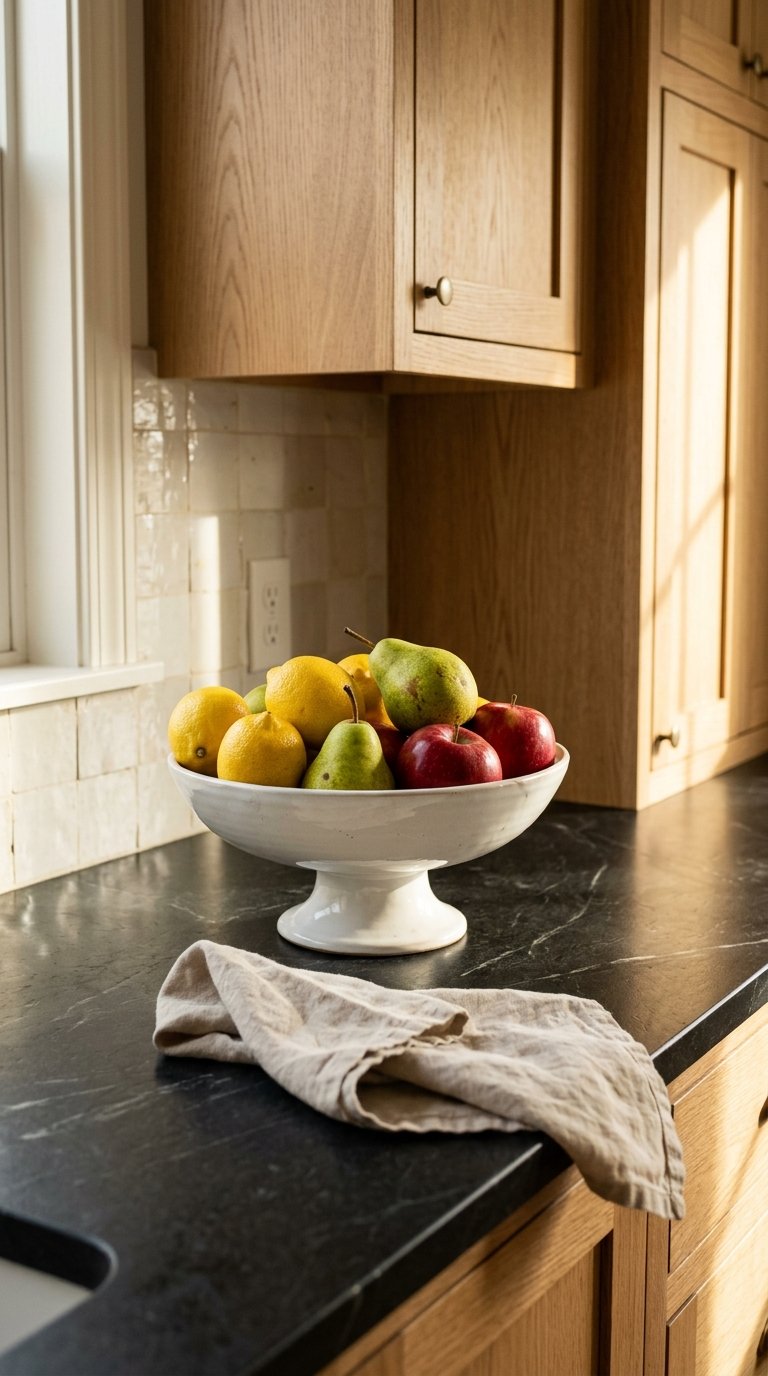
A fruit bowl is decor that refreshes itself, because the produce changes with the season and your shopping. A footed bowl or compote adds height and a sculptural shape that a flat dish can’t, so it works as the focal point without any extra styling. Choose a bowl in a finish that contrasts with the counter: a pale ceramic bowl against dark stone, or a wooden pedestal bowl against white marble.
Think about color when you shop. Lemons and green pears read fresh and bright, while a mix of apples and citrus feels warmer. Some fruit, bananas especially, speeds up the ripening of whatever sits near it, so keep those separate if you want the display to last. Place the bowl away from the stove, wipe it down regularly, and take the produce out at night if you notice pests.
2. A Sculptural Vase with Branches or Dried Stems

One vase with the right stems does more than a cluster of small accessories, because it gives the counter height and a quiet focal point. Dried stems and branches need no water and won’t wilt near a warm stove, which makes them easier to live with than fresh flowers. Pick a vase with a wide, stable base so it won’t tip when you reach past it, and keep the stems below the line of your upper cabinets.
Scale matters here. A vase roughly as tall as your coffee maker or kettle usually looks balanced beside it, while something much taller can feel like it’s competing. Against dark cabinets, pale stems like wheat or bleached grasses show up clearly, and against light cabinets, deeper tones read better. Dust dried stems every few weeks, and replace them if they start to shed.
3. A Cordless Table Lamp for Evening Glow
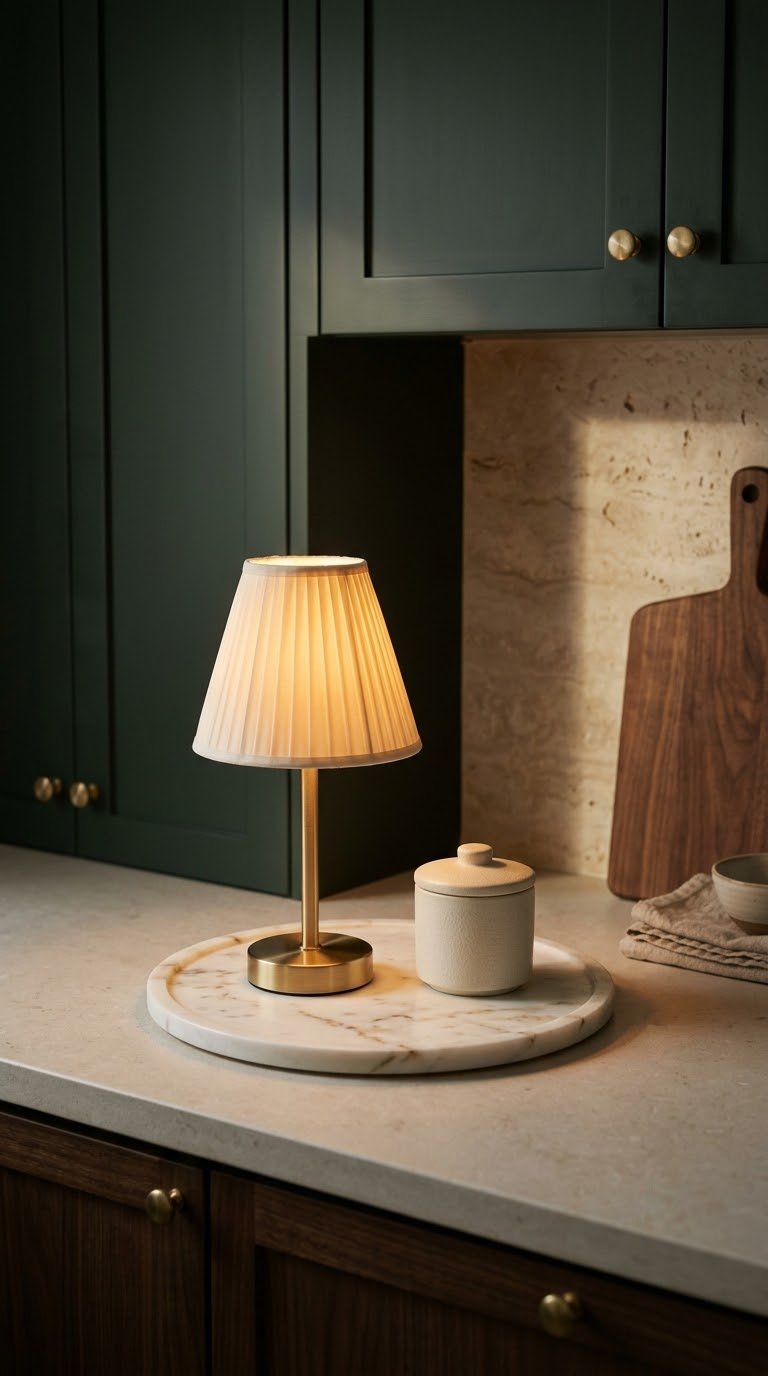
A small lamp changes the mood of a kitchen in the evening, when overhead lights can feel flat. Rechargeable cordless lamps are made for this: with no cord stretching across the counter, you can place one wherever it looks best and move it when you need the space. Sit it on a tray or a small board so it has a defined footprint and is easy to lift out of the way.
Keep it away from the sink and the stove, where splashes and steam are most likely, and check the manufacturer’s guidance on moisture. Warm white bulbs flatter wood, brass and most cabinet colors better than cool ones. A shade in linen or pleated fabric diffuses the light, while a ceramic or metal shade directs it, so choose based on whether you want a soft glow or a task-friendly beam.
4. A Statement Kettle or Toaster in a Considered Color

Appliances take up the most space on most counters, so it helps to treat the one or two you leave out as part of the design. A kettle or toaster in a color you’ve picked on purpose, rather than whatever finish came in the box, can carry the whole palette. Choose a color that already appears elsewhere in the kitchen, such as a bar stool, a tile accent or a dish towel, so it feels connected.
Practical details matter more than usual here. Keep the cord tucked or coiled so it doesn’t trail across the counter, and give kettles room for steam so it doesn’t hit the cabinets above. Appliances you rarely use are better stored in a cabinet, because a styled counter reads as styled only if the things on it look used and chosen.
5. Framed Art or a Cookbook Stand Leaning Against the Backsplash
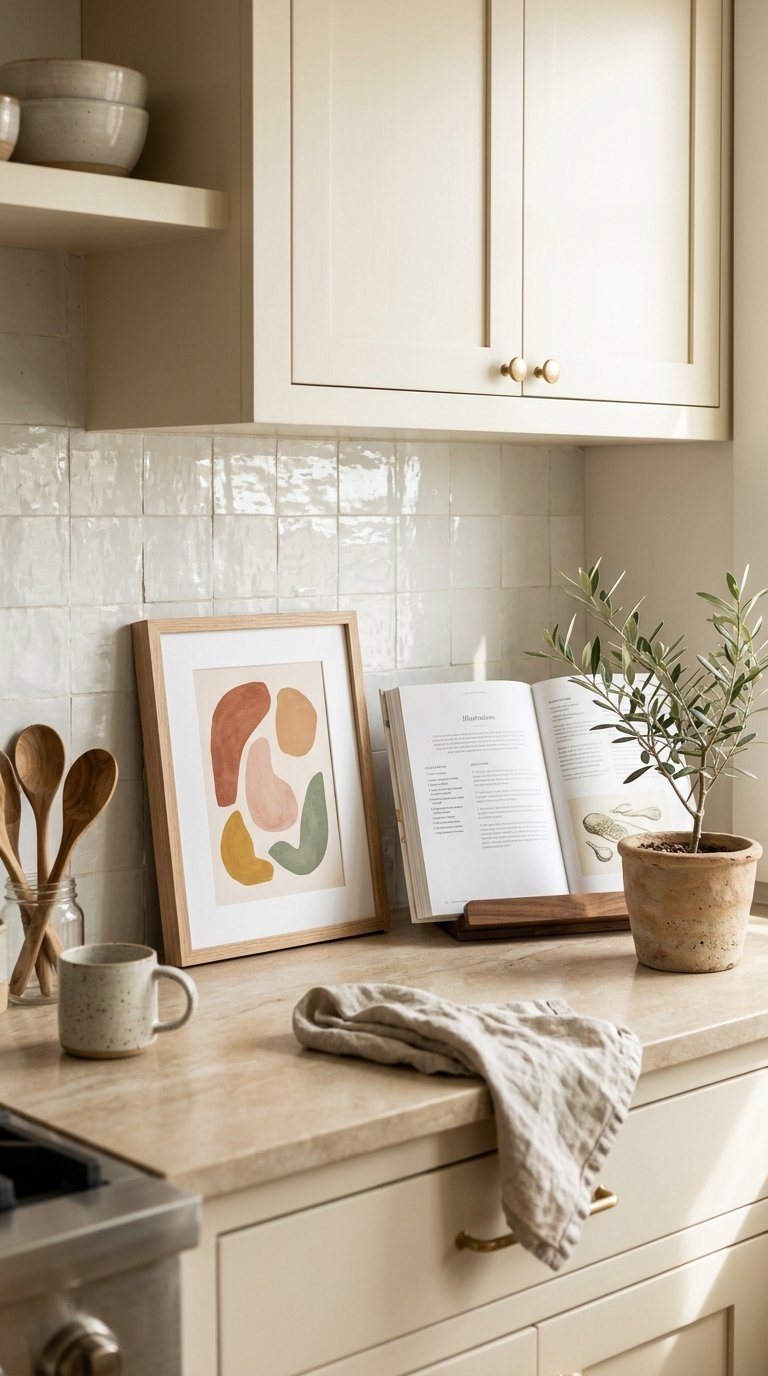
Art on the counter adds personality without drilling anything into the wall, which makes it useful for renters and anyone who likes to rearrange. Lean a small framed print or two against the backsplash, and let one overlap the other slightly so it looks collected rather than hung. A cookbook stand does the same job with more function, holding a favorite recipe open while you cook.
Keep art out of the splatter zone beside the range, and choose a frame with glass or acrylic you can wipe clean. Pull colors from your kitchen, such as terracotta, olive or blush, so the piece feels at home. Swap the print with the seasons for an easy refresh.
Zone-by-Zone Kitchen Counter Styling Ideas
6. A Cooking Station Tray for Oils, Salt and a Pepper Mill

The area next to the stove is where you reach for the same few things every day, so it deserves its own small setup. A tray keeps oil, salt, pepper and a spoon rest in one place, and it lifts out in one move when you need to wipe the counter. Choose a tray with a lip so drips stay put, and a material that cleans easily, such as sealed wood, enamel or stone.
Heat and grease are the practical limits. Keep the tray a sensible distance from the burners, and avoid placing plastic or paper items right beside the flame. Decant oil into a glass cruet and refill it from the bottle, which looks tidier and lets you see how much is left. Keep the group to three or four items so it reads as a station and not a shelf.
7. A Sink-Side Soap Tray with a Brush Holder and Herb Pot

The sink area is where plastic bottles and soggy sponges tend to collect, and it’s often the most visible mess in the kitchen. A small tray gives everything a boundary, and decanting dish soap into a ceramic pump removes the loud branding. Add a brush in a holder that lets it drain, and replace sponges regularly so they stay hygienic.
Pick a tray material that tolerates water, such as stone, glazed ceramic or sealed metal, and wipe underneath it often so moisture doesn’t linger. A single small herb pot adds green, but it needs light and drainage, so check that the spot gets enough daylight. If your sink sits beneath a window, this arrangement can look especially fresh.
8. A Coffee Station Vignette That Looks Styled

A coffee corner does a lot of work every day, so it benefits from being organized and good-looking. Group the machine, canisters, a handful of mugs and a small plant on one tray or a defined section of counter, and it reads as a station and not clutter. Keep sugar, filters and pods in lidded containers so the surface stays clear.
Choose containers in one or two materials, such as glass and ceramic, so the group feels cohesive. Leave a clear spot beside the machine for the pot or cup you’re filling, since a styled station that’s awkward to use will end up crowded. If space is tight, mount a shelf above and store the mugs there.
9. A Baking Corner with a Flour Crock, Scale and Rolling Pin
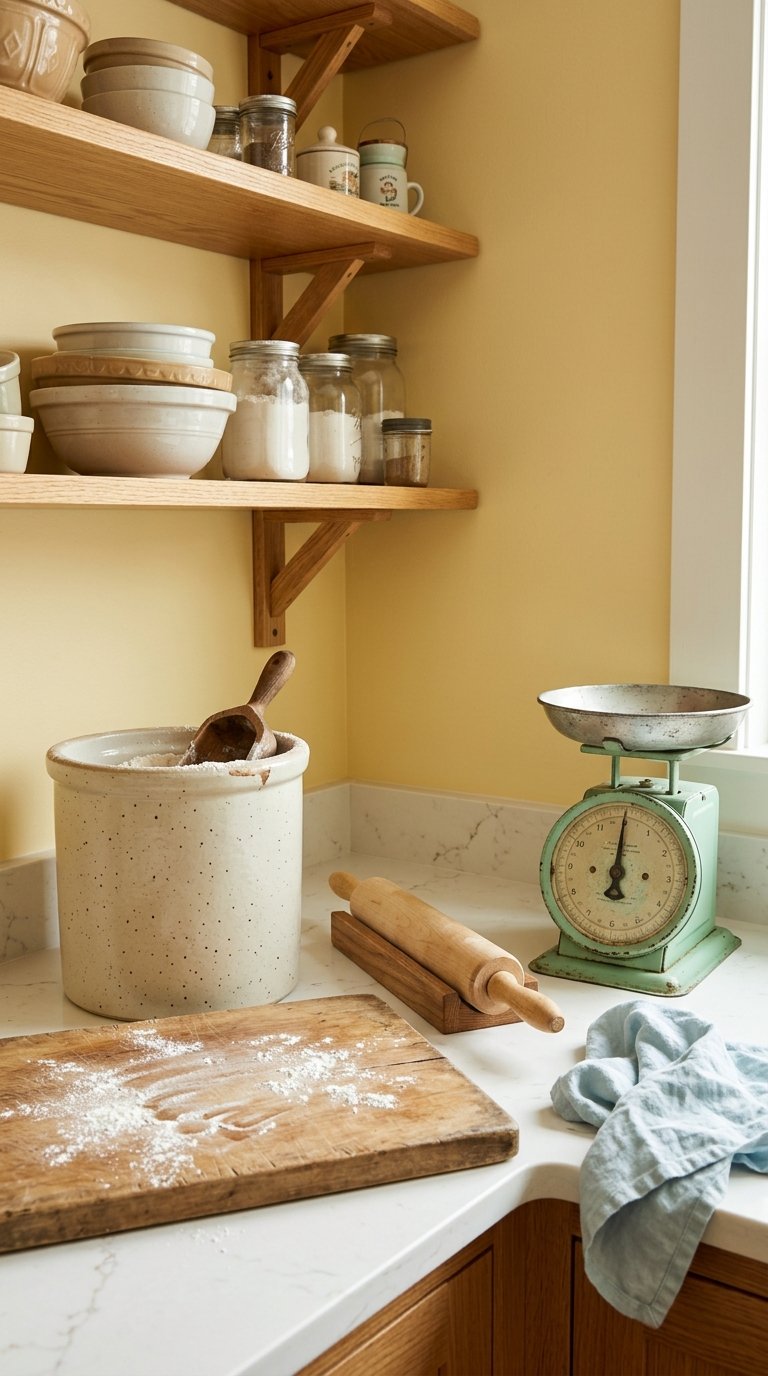
If you bake often, tools that live on the counter can double as decor. A lidded crock for flour, a wooden rolling pin on a small rack and a scale give the corner a clear purpose and a warm, lived-in look. Keep ingredients you use up quickly on display, and store anything slower-moving in a cabinet.
Think about workflow before styling. Leave the surface in front of the crock open so you can work there without moving everything. A stand mixer can join the group if you use it weekly, but if it comes out a few times a year, a cabinet is the better home.
10. A Bread Box and Board Pairing
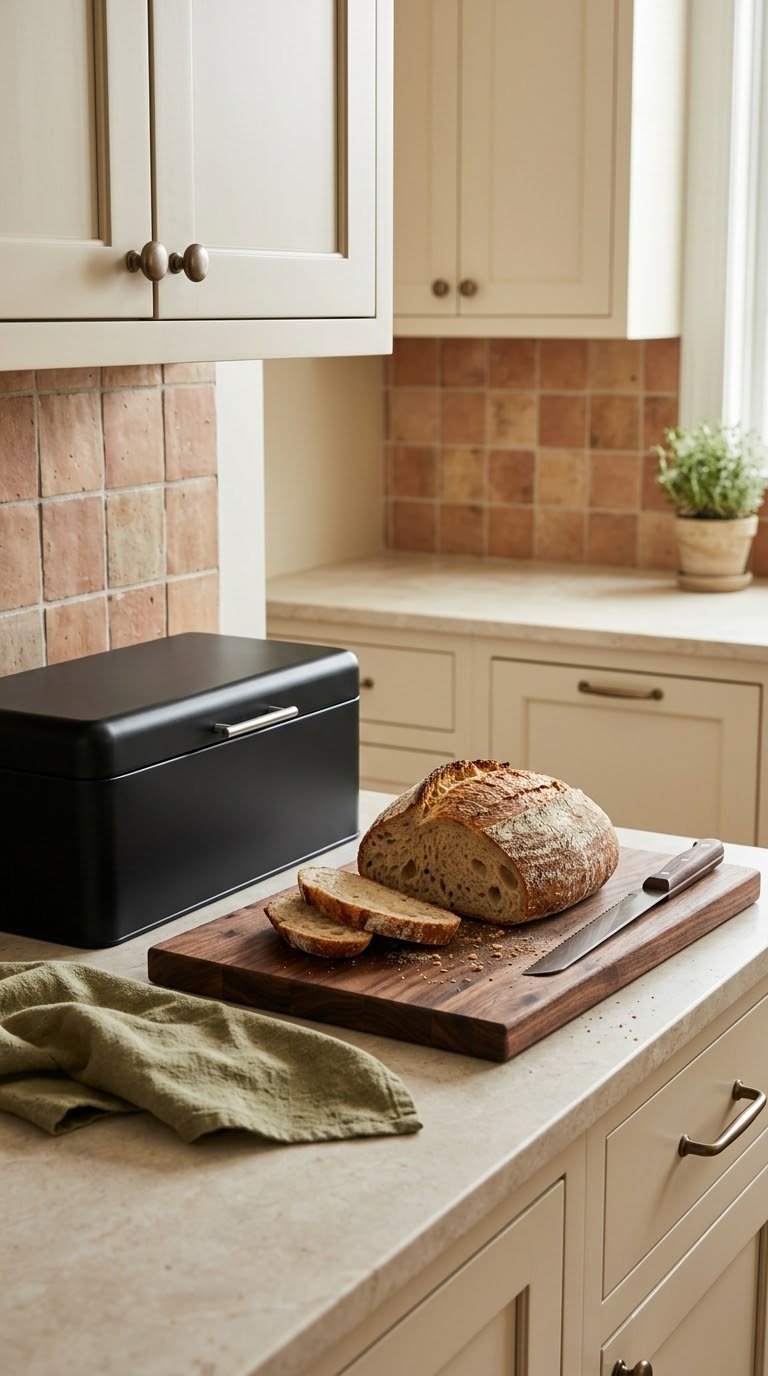
A bread box is one of the more practical decor objects, because it hides a bulky item and gives bread a spot that isn’t a plastic bag. Pair it with a wooden board and a bread knife and you have a small, useful vignette. Choose a box with some ventilation if you keep crusty loaves, since airflow affects how bread stays at its best.
Place it away from the stove, the toaster’s heat, and direct sun, and wipe out crumbs regularly. A matte metal box suits modern kitchens, enamel feels classic, and wood suits farmhouse styles. If you rarely buy bread, skip it and use that space for something you’ll use.
Storage-Meets-Style Kitchen Counter Ideas
11. Glass Apothecary Jars for Pantry Staples with Handwritten Labels
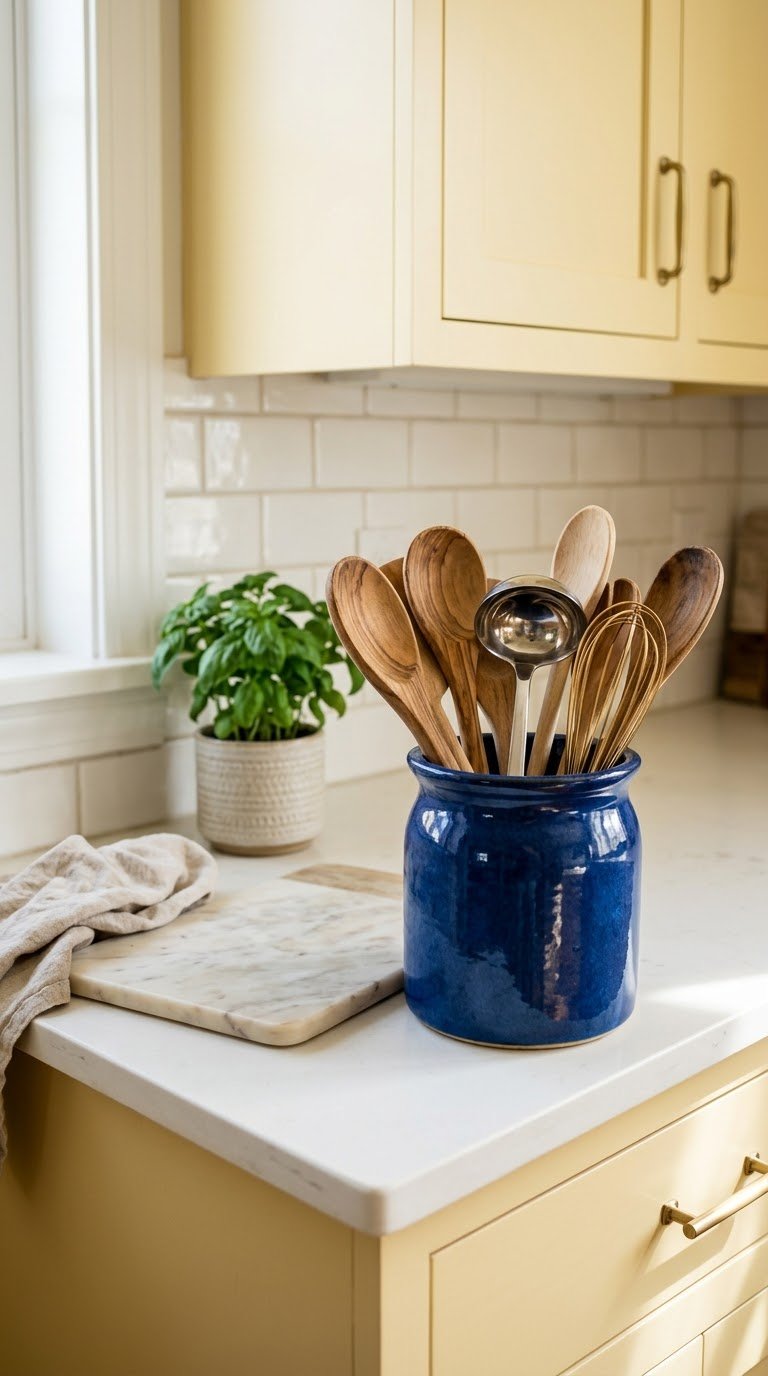
Jars turn everyday staples into a display, and they make it easy to see when you’re running low. Choose airtight lids, and group jars by use: baking items together, breakfast items together. Matching jars look tidy, but a few sizes add rhythm if you keep the lids and labels consistent.
Only put out what you reach for regularly, and keep jars away from the stove and direct sun, which can affect food. Clear labels in your own handwriting add warmth, but make sure they stay legible if the jars are wiped down. A tray beneath the group makes it simple to lift and clean the counter.
12. A Utensil Crock Grouped by Material and Height
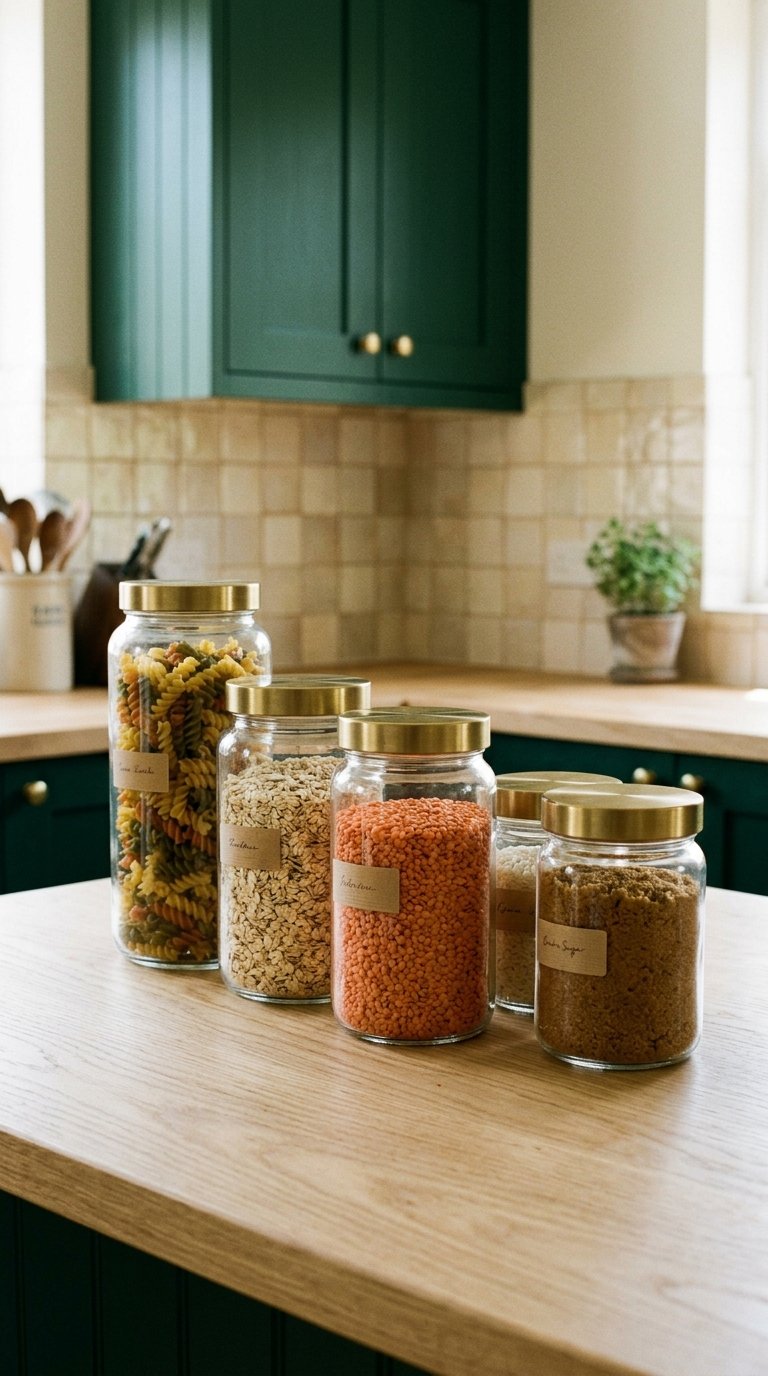
A crock keeps tools within reach and gives you a vertical element on the counter. Pick a heavy, stable crock so it doesn’t tip when you pull out a utensil, and fill it with the tools you actually use. Grouping by material, such as wood with wood and metal with metal, makes the arrangement look deliberate.
Place it near the stove but not directly over a burner, and wash the crock and utensils regularly. Keep the number of utensils modest so the handles don’t turn into a thicket. If a lot of tools live there, consider rotating the less-used ones back into a drawer.
13. Open Produce Baskets and Tiered Stands

Baskets and stands let produce breathe, which is better for some items than sealed containers. Many cooks store onions and potatoes separately and in a cool, dark place, so check storage guidance for each item before putting it on display. A tiered stand holds fruit that ripens quickly, while a basket suits garlic and shallots.
Choose materials that are easy to clean, such as wire, glazed ceramic or woven seagrass you can shake out. Keep the stand out of direct sun and away from the stove to slow spoilage. Produce makes a pretty accent, but it’s also something you’ll use, so keep amounts realistic.
14. A Counter Herb Garden in Matching Pots

Fresh herbs earn their space by being useful, and a row of matching pots looks intentional. Place them where they get good light, since a dim counter will leave them leggy. Use pots with drainage and saucers to protect the counter, and group herbs with similar water needs together.
Keep them away from stove heat, and check whether your plants are safe around pets using a reliable plant list, such as the ASPCA’s. Mint tends to spread, so it’s better in its own pot. If light is limited, a faux herb or two fills in, but fresh ones are more rewarding.
Kitchen Counter Decor Ideas for Islands, Corners and Small Kitchens
15. An Island Centerpiece That Respects Seating and Sightlines

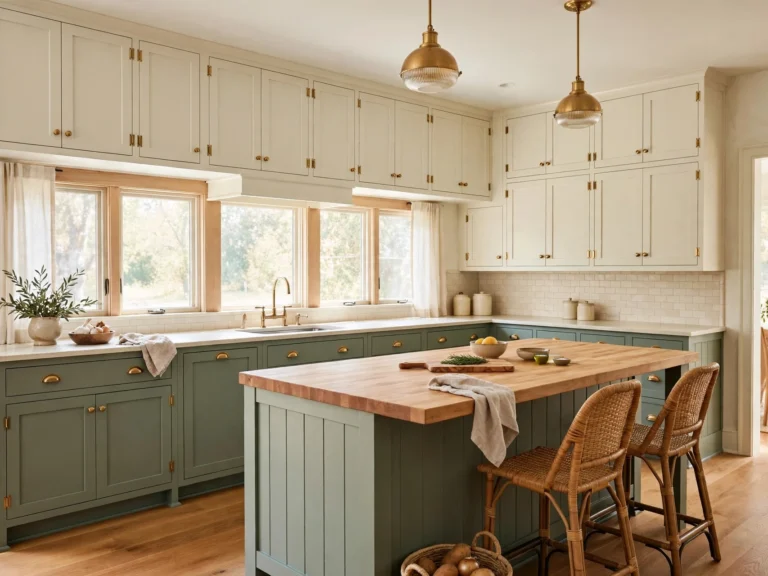
An island is visible from several angles, so its centerpiece should look good from all of them. A long tray gives the arrangement a boundary and lets you move it when you need the surface. Keep it low enough that people on stools can see over it, and leave space in front of each seat so no one has to reach around it.
Echo the pendants above with a matching finish, such as brass or black, to tie the island to the lighting. Fill the tray with a few low items, like bowls, a compote, and a bit of greenery, rather than one tall piece. The island is often the hub of the kitchen, so keep it practical and clear when guests arrive.
16. A Corner Counter Vignette Built on a Triangle

Corners tend to collect odds and ends, so giving them a clear arrangement helps. A simple triangle works: a tall item at the back, a medium piece at one side, and a low object in front. That shape draws the eye into the corner and makes the space look deliberate.
Choose items with different heights and textures, such as a ceramic vase, a wooden board and a bowl of fruit. Don’t push everything against the wall, because pulling a few pieces forward adds depth. Keep the corner reachable, since awkward corners can become dead zones if they’re too styled to use.
17. Vertical Styling for Tiny Counters

When the counter is small, go up. A riser lifts items so you can use the space beneath, and a wall rail or magnetic strip moves things off the surface entirely. Hang mugs, spice tins, or utensils where they’re easy to reach, and keep only a few essentials on the counter.
Choose pieces in a shared palette so the vertical arrangement reads as one unit. Check that what you hang is secure and stable, especially anything heavy. In a tiny kitchen, every item should justify itself, so edit before you add.
18. A Nearly Bare Counter with Just Three Objects

Minimalism works when it’s specific. Choose one hero piece, one functional item and one living or soft element, and store everything else out of sight. The empty counter becomes part of the look and a practical advantage, since you have more room to cook.
This approach suits people who cook often and want a clean workspace, or small kitchens where every inch counts. The key is to keep the three objects in proportion to the counter and to resist adding a fourth. If the counter starts to feel bare, swap a piece rather than add one.
Budget, Renter and Seasonal Kitchen Counter Ideas
19. A Renter- and Budget-Friendly Counter Refresh with Thrifted and DIY Pieces
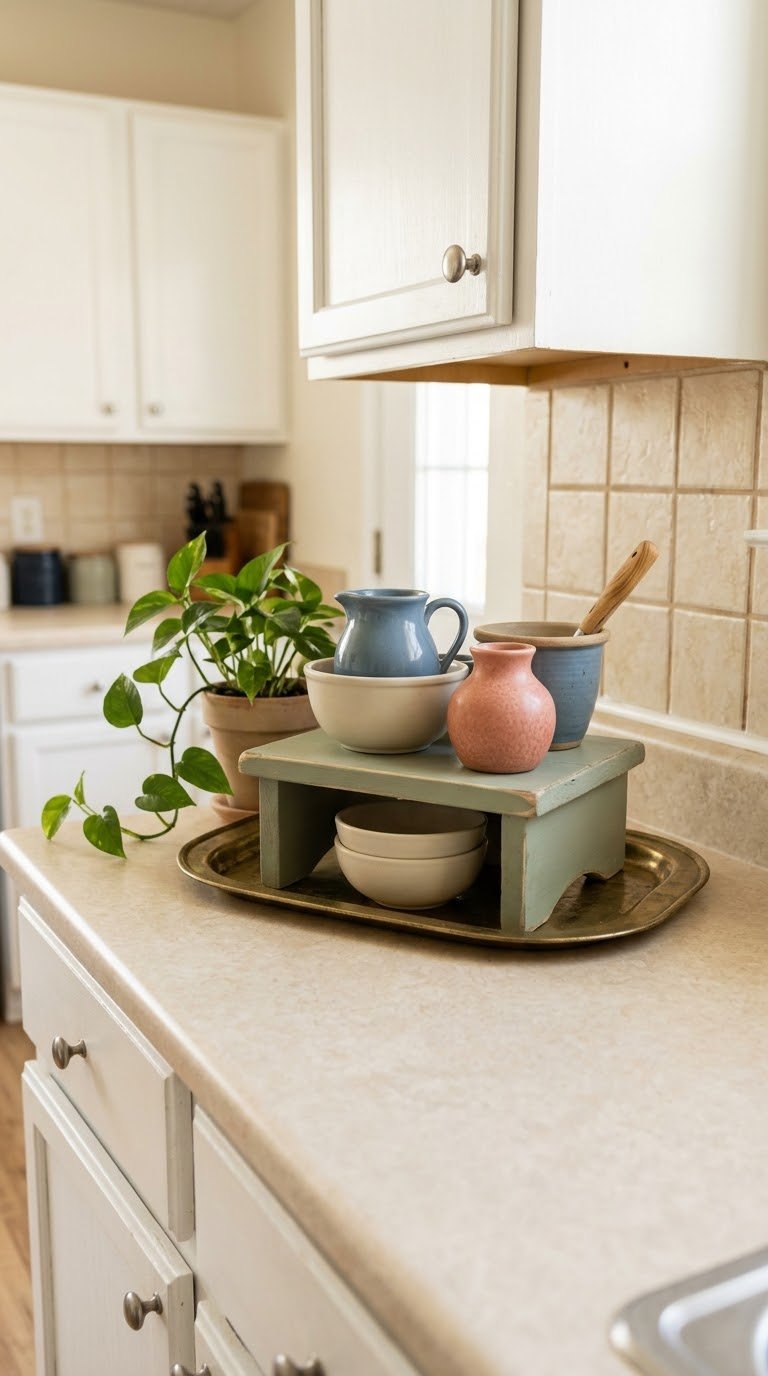
You don’t need new furniture to improve a counter. Thrifted ceramics, a tray from a secondhand shop and a simple painted riser give you the layers that make a counter look styled. Choose pieces in a shared color family so mismatched items feel collected.
For a riser, a wooden board on two blocks or a small crate works well, painted with a durable water-based paint and sealed if it will be wiped. If a thrifted dish will hold food, make sure it’s food-safe, since some decorative pieces aren’t meant for that. Nothing here needs adhesive or drilling, which keeps rental deposits safe.
20. A Four-Season Counter Swap Kit

A refresh doesn’t have to be a redo. Keep a base arrangement and swap three or four small things each season, such as the vase filler, the produce in the bowl, a cloth and a candle. A labeled box in a cabinet holds the extras so they don’t clutter the counter.
In spring, fresh greens and light linen suit the counter, and in summer, citrus and bright produce work well. Autumn leans on dried stems and warm tones, while winter calls for evergreens and candles. For more autumn inspiration, see our fall kitchen decor ideas. Because the base stays the same, the effort is small and the counter always looks considered.
A Simple Kitchen Counter Styling Formula
Most of the ideas above follow the same few principles, which you can apply to any counter.
- Pick one hero piece. A bowl, a vase or a lamp gives the eye somewhere to land.
- Group in threes. Odd-numbered clusters look more natural than lines.
- Vary the height. Mix tall, medium and low items so the arrangement has rhythm.
- Mix textures. Pair smooth ceramic with wood, glass or woven material.
- Leave negative space. Empty counter is part of the design and part of the function.
- Stick to a palette. Pull two or three colors from your cabinets, tile or counter and repeat them.
You don’t need all of these on every counter. Use the ones that help the particular zone you’re working on.
Keeping Decorated Counters Practical: Heat, Cleaning and Food Safety
Style only works if the counter stays usable. Keep decor away from the burners, and don’t place candles, paper or plastic near heat. If you use candles, keep them away from towels and cabinets, and consider flameless versions.
Use trays and risers you can lift when you wipe the counter, and clean beneath decor regularly, since grease and crumbs collect. Keep decorative objects away from the prep area, and don’t place decorative items directly where food touches them unless they’re food-safe. Wash wooden boards and utensils as recommended for the material, and let them dry fully.
FAQS
What should you put on a kitchen counter?
Keep the items you use daily, such as a kettle, oil, salt and a cutting board, then add one or two decor pieces like a vase, a fruit bowl or a small lamp. Group things on a tray or in a crock, and leave your main prep area clear.
How many items should be on a kitchen counter?
There isn’t a fixed number, because it depends on your counter size and how you cook. A good approach is to keep your prep area open, group items in small clusters and edit until the counter feels easy to use. If you can’t work comfortably, remove something.
How do I decorate a small kitchen counter?
Use fewer objects and build vertically with a riser, a wall rail or a magnetic strip. Choose multipurpose pieces, such as a crock that holds utensils, and keep decorative items to one or two. A tray can group small items and make them easier to move.
Are candles and fresh greenery safe near the stove?
It’s better to keep both away from heat. Candles near burners are a fire risk, and fresh plants can wilt in warm, greasy air. Flameless candles and dried or faux stems are safer near the stove, and herbs do better by a sunny window.
How do I style counters on a budget or as a renter?
Use thrifted ceramics, a secondhand tray and a simple painted riser, and add plants and portable pieces. Avoid anything that needs adhesive, drilling, or permanent changes. A seasonal swap box lets you refresh the look without buying much, and our Christmas kitchen ideas give you a ready-made holiday version.
How do I keep decorated counters clean and easy to cook on?
Use trays and risers you can lift, and wipe the counter regularly. Keep decor out of the prep and splatter zones, and choose materials that clean easily. Clear the counter of anything you don’t need before you cook.
How do I choose counter decor colors for my cabinets and countertops?
Pull two or three colors from your existing finishes, such as cabinets, tile, or counters, and repeat them in your decor. Add contrast with a different material or a deeper or lighter tone. Limit accent colors to one or two so the counter stays cohesive. If you have deep cabinet colors, our aubergine kitchen ideas show which tones pair well with them.
Final Thoughts
Good kitchen counter decor starts with editing and ends with a few pieces that earn their place. When each item has a job, whether it’s holding oil by the stove or lighting the room at night, the counter looks styled without losing function. The ideas here cover most zones and situations, so you can build up one area at a time.
If you aren’t sure where to begin, clear one counter and add back only what you use, then try a single idea, such as a tray by the stove or a fruit bowl as a centerpiece. See how it works for a week, adjust, and move on to the next zone. Save the setups you like, and adapt them to your own kitchen, cooking habits, and budget.


2 Comments