
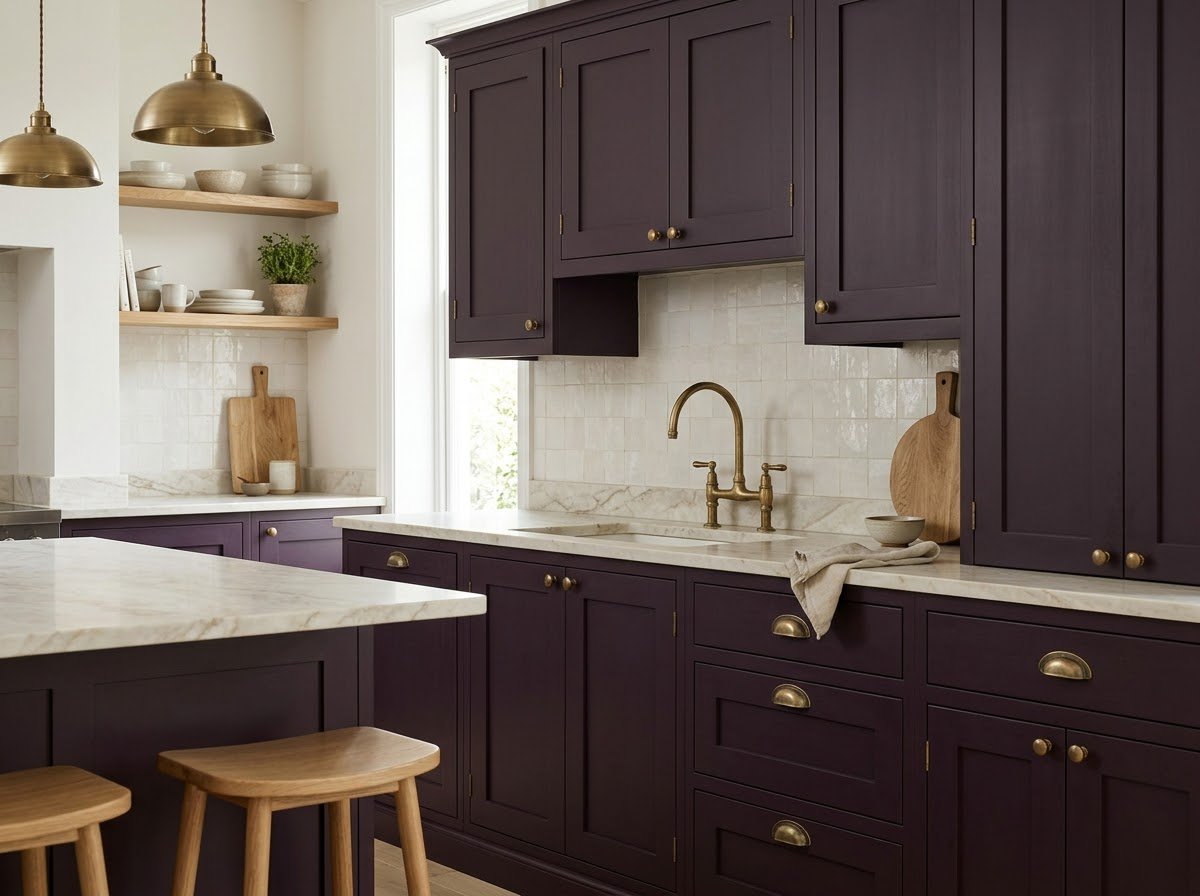
Aubergine Kitchen Ideas: 20 Rich Looks That Don’t Feel Too Dark
Aubergine kitchen ideas appeal to people who want color with real depth, but who worry that dark purple will make the room feel small. It does not have to. When you choose the right undertone, balance it with light surfaces and give it good lighting, an aubergine kitchen feels warm, calm and a little dramatic.
This guide helps you choose the right shade, decide how much aubergine to use, and pair it with countertops, hardware, floors and walls. You will find 20 practical ideas for cabinets, islands, small kitchens and no-paint accents, each with a styling tip. If you call this color eggplant or plum, the same ideas apply.
What an Aubergine Kitchen Looks Like and Why Undertone Matters
Aubergine is a deep purple with brown, red or blue mixed in, and that mix decides how it feels in your kitchen. Two cabinets that both look aubergine in the paint shop can look very different once they sit under your own lights.
Start by deciding which direction you lean:
- Red-based plum: Warm and slightly wine-like. It suits wood, brass and cream, and it feels cozy in the evening.
- Blue-based violet: Cooler and more graphic. It looks sharp with white, stone and matte black, but it can feel cold in a north-facing room.
- Brown-based aubergine: Muted and earthy. It sits well beside oak, linen, olive and terracotta, and it is the easiest to live with.
Paint makers sell shades across this range. For example, Farrow & Ball’s Brinjal is a well-known deep aubergine, while Sherwin-Williams’ Autumn Orchid is a softer, grayer plum that stays away from true dark purple. Use these as reference points when you look at samples.
Styling tip: Hold the sample beside your countertop, floor, and a piece of wood. The undertone shows most clearly next to the materials you already have.
An Aubergine Island with Pale Perimeter Cabinets
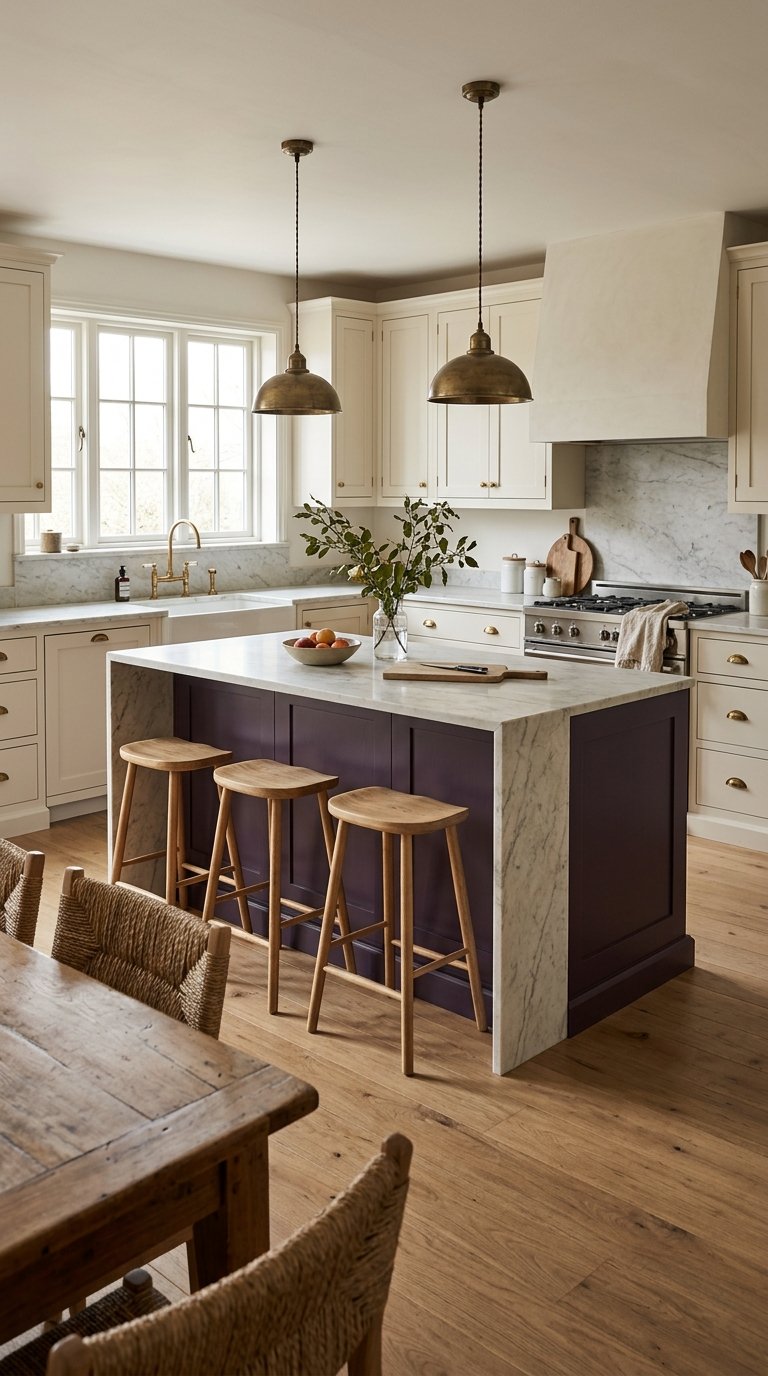
An aubergine island is the easiest way to add the color without taking over the room. Keep the surrounding cabinets in cream, soft white, or warm greige, and let the island act as the anchor.
Choose a stone or wood top that is lighter than the base, so the island does not look like a dark block. Brass pendants above add warmth and echo the cabinet hardware. Leave at least 36 inches of clear walkway around the island so the dark base never feels like it crowds the room.
The trade-off is that the island takes all the wear. Choose a satin finish for easy cleaning.
Styling tip: Repeat the aubergine once in the room, such as in a stool cushion or a bowl on the counter, so the island looks planned.
Aubergine Lower Cabinets with Cream or Wood Uppers
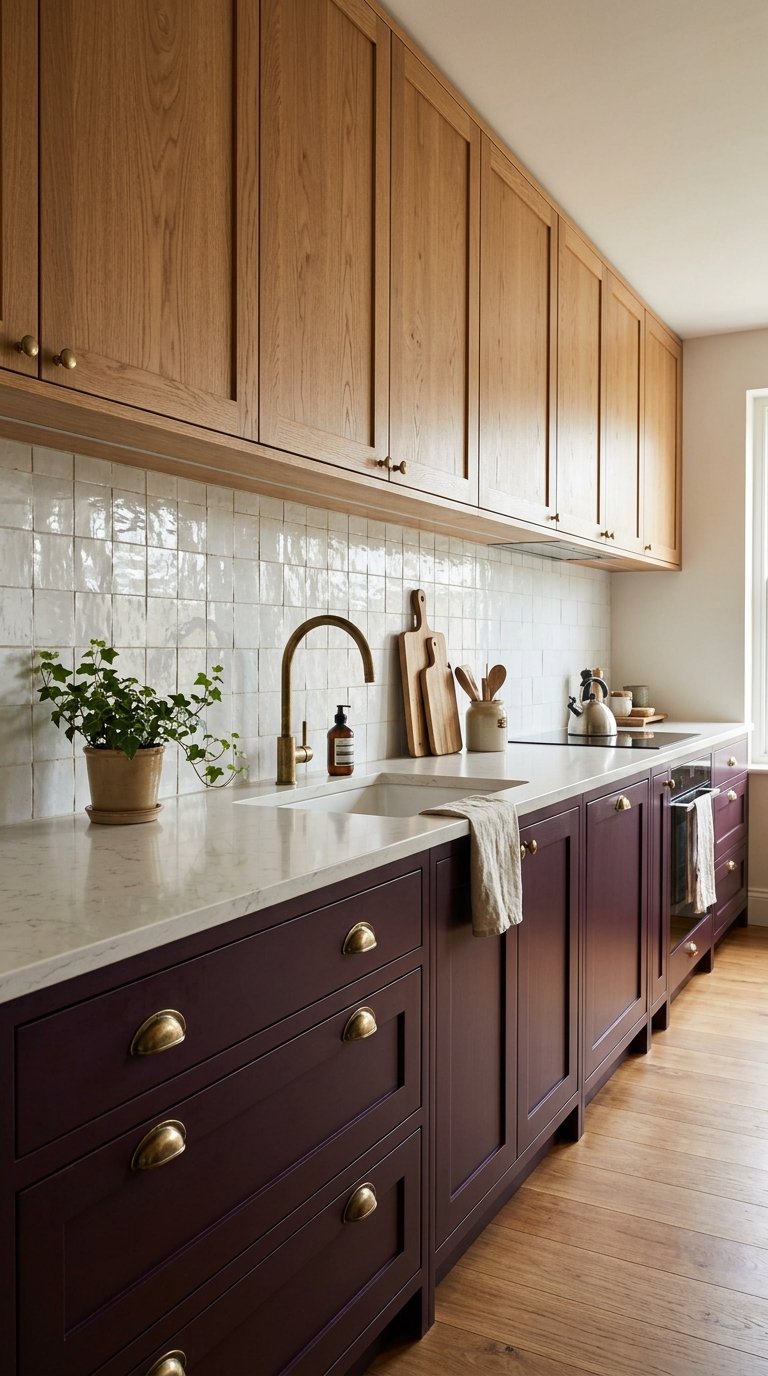
Two-tone aubergine kitchens keep the dark color low, where it grounds the room, and the lighter color high, where it lifts the ceiling line. Cream uppers feel soft and traditional. Natural wood uppers feel earthier and add warmth.
Paint the lowers and any tall pantry cabinets in aubergine, and keep the uppers lighter. A pale backsplash between the two helps the split look clean. If the room is small or has little daylight, this layout is often easier than full aubergine.
The trade-off is that two tones add one more color decision. Keep every other color neutral so the pair stays calm.
Styling tip: Make the countertop a little lighter than the lowers and a little darker than the uppers, so the three levels step up smoothly.
Shaker Cabinets with Brass Cup Pulls
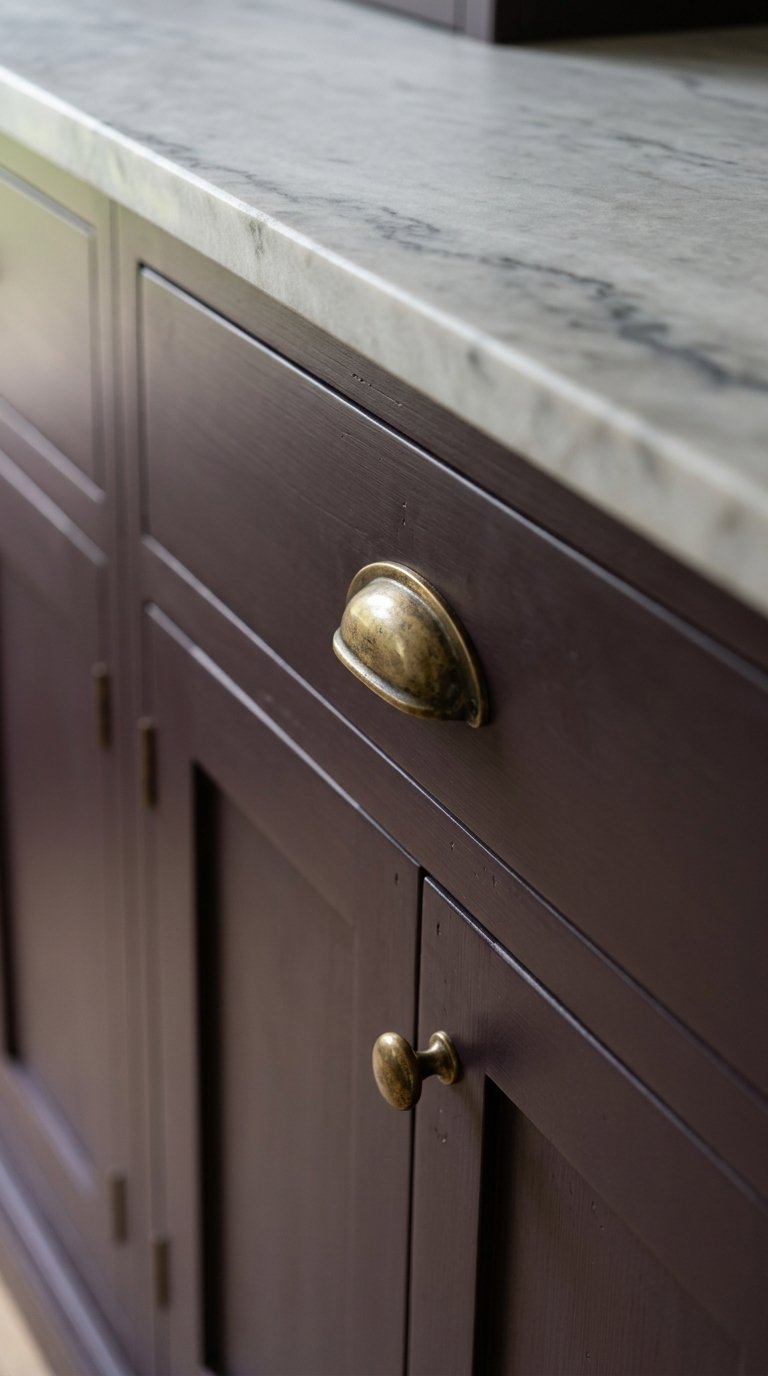
Shaker doors suit aubergine well because the recessed panel catches light and shadow, which adds depth to a dark color. A simple frame style looks classic without looking old-fashioned.
Add brass cup pulls on drawers and small knobs on doors. Aged or brushed brass looks softer against aubergine than a bright polished finish. Keep the hardware consistent across the room so the cabinets read as one set.
This style works in traditional and transitional kitchens. In a very modern kitchen it can look busy next to flat surfaces, so consider handleless doors there instead.
Styling tip: Mix cup pulls on drawers with plain knobs on doors, and keep all of them in one metal.
Handleless Aubergine Cabinets for a Modern Kitchen

Flat-panel, handleless cabinets make aubergine look sleek and architectural. With no pulls to break the surface, the color becomes the focus, and the kitchen reads as clean and quiet.
Keep the room simple. Pair the cabinets with a white or pale stone countertop and a plain backsplash, and add a narrow strip of under-cabinet light to show the color. In handleless kitchens, finger pulls or push-to-open doors replace handles, so check the mechanism before you order.
The trade-off is fingerprints. Dark flat doors tend to show marks, so choose a finish that wipes clean.
Styling tip: Add one warm element, such as a wooden stool or a brass tap, to keep a handleless kitchen from feeling cold.
A Full Aubergine Kitchen with Matching Walls
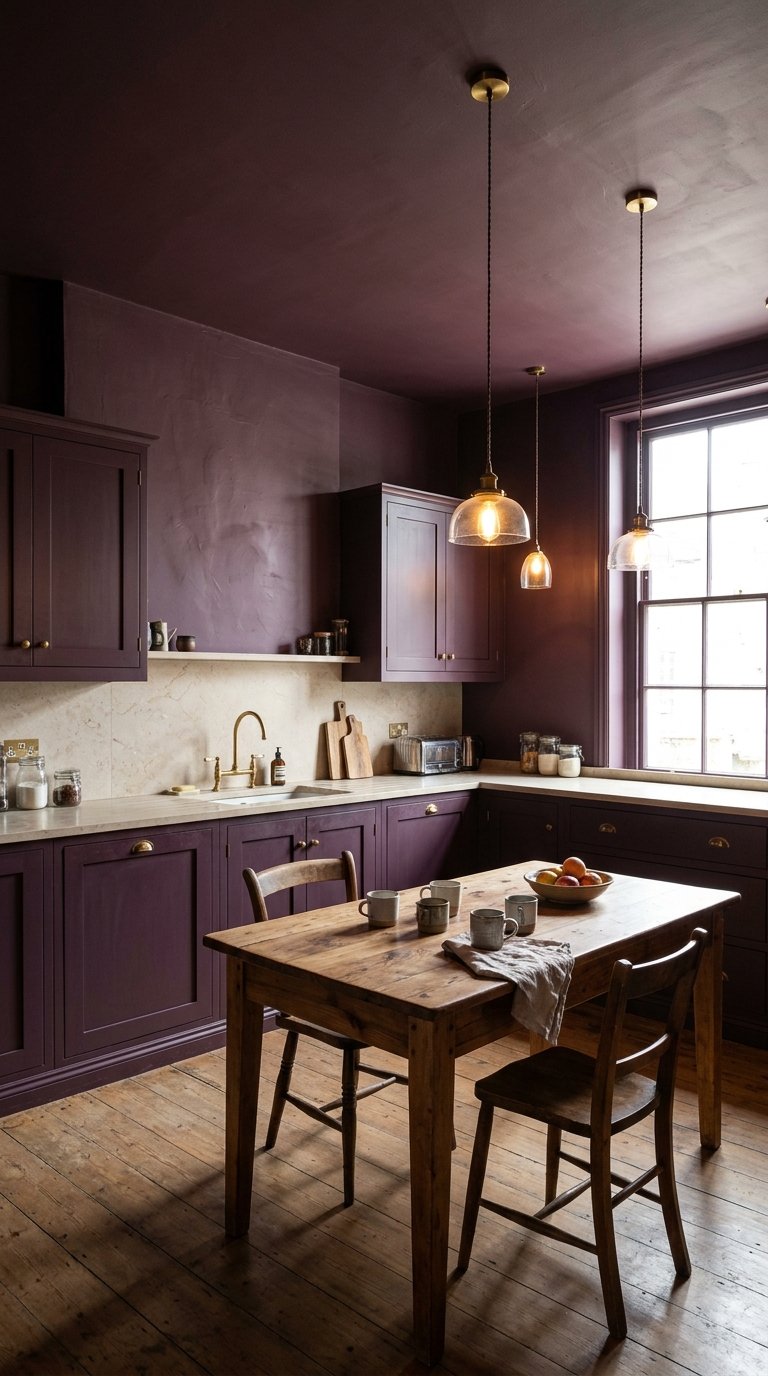
Painting the cabinets and walls in the same aubergine, called color drenching, makes the room feel wrapped and calm. Without a contrast line between cabinets and wall, the space reads as one surface, and the edges disappear.
This works best with plenty of daylight or strong artificial light. Add a light countertop, a wood element and warm bulbs so the room has relief. Skip a stark white ceiling if it looks harsh. A slightly warmer white or a soft cream looks gentler.
The trade-off is commitment. It is the boldest option here, so test large samples first.
Styling tip: Use the same color on the walls in a lower-sheen finish than on the cabinets. The slight change in shine adds depth.
Aubergine and Blush Pink Kitchens
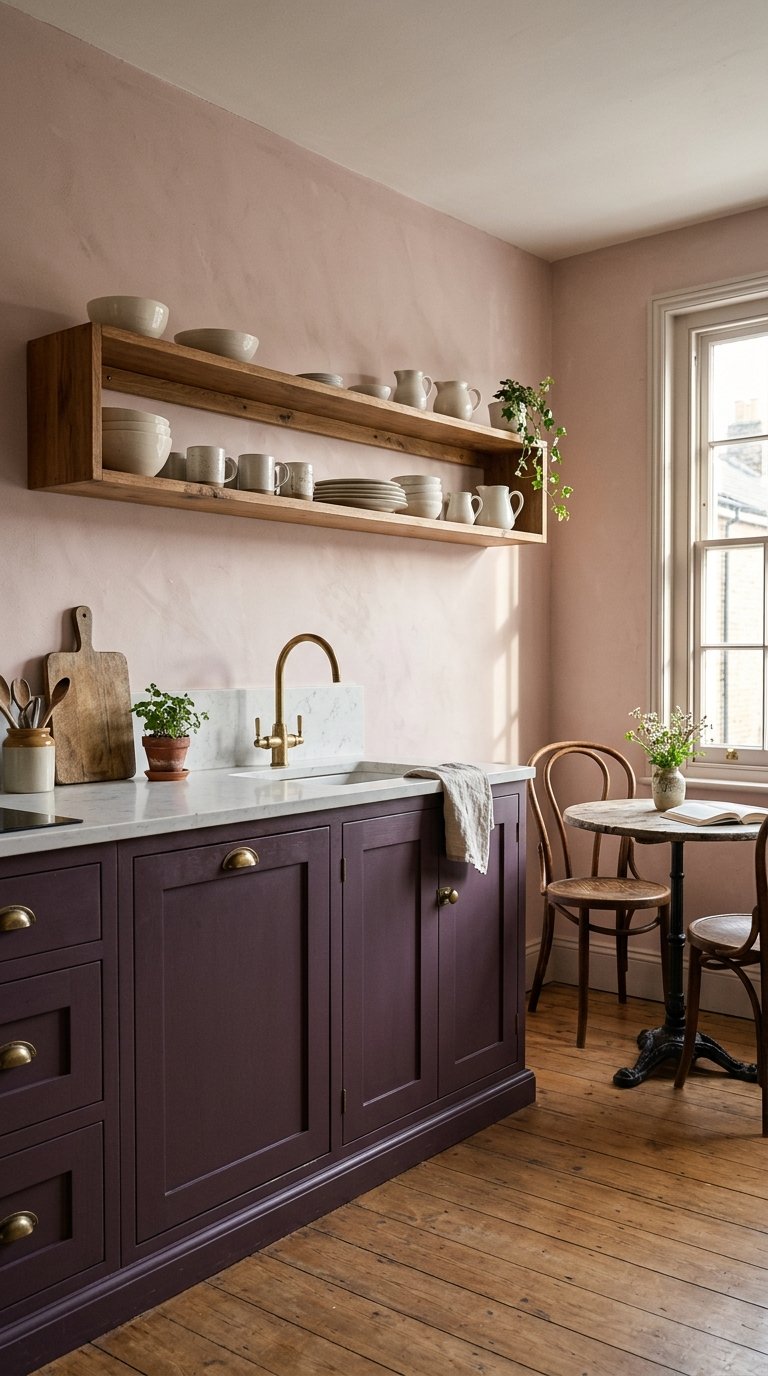
Blush pink softens aubergine and makes the pairing feel modern rather than heavy. A dusty pink wall behind aubergine cabinets creates a warm, slightly vintage look, and the two colors share a purple-red base.
Keep the pink muted and a little gray so it does not look sweet. Add brass hardware, a wood stool and a white or stone countertop. Black or cool chrome tends to fight the warmth, so use them sparingly.
The trade-off is that this combination has a strong personality. It suits people who want a statement kitchen, not a neutral one.
Styling tip: Bring the pink in through a single wall or a pair of towels first, then add more if you like it.
Aubergine and Sage or Olive Green
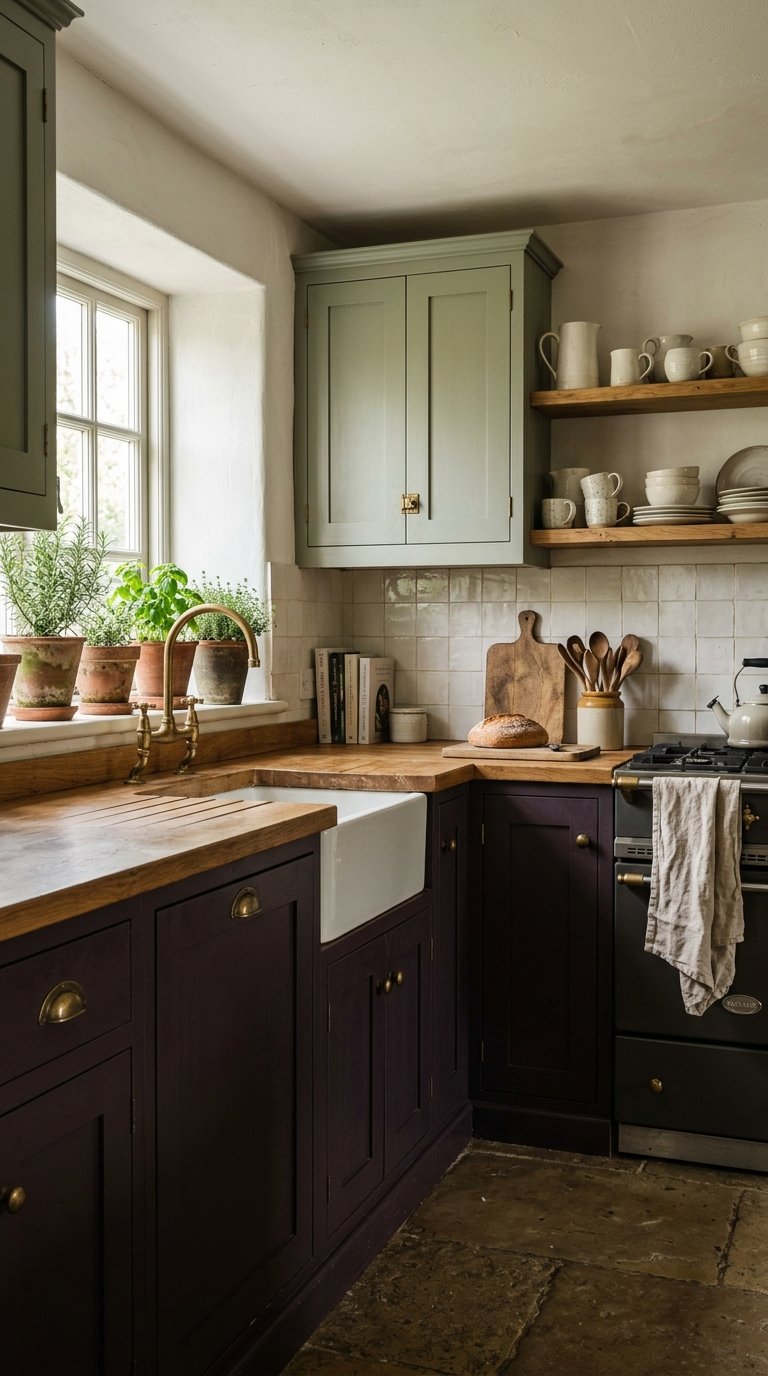
Green sits near purple on the color wheel in a way that feels natural, and a muted sage or olive makes an aubergine kitchen feel more organic. Use aubergine on the lower cabinets and sage on the uppers, or put green on the walls and let the cabinets stay plum.
Keep the green gray-toned. A bright green can look sharp against plum, but a dusty sage or deep olive looks calm. Add wood, linen, and a few plants so the room feels grown rather than decorated.
This pairing suits traditional and cottage-style kitchens best. In a sleek modern kitchen, it can look too soft.
Styling tip: Bring in herbs on the windowsill or a trailing plant on a shelf. Real greenery ties the green and the purple together.
Best Hardware Finish for Aubergine Cabinets
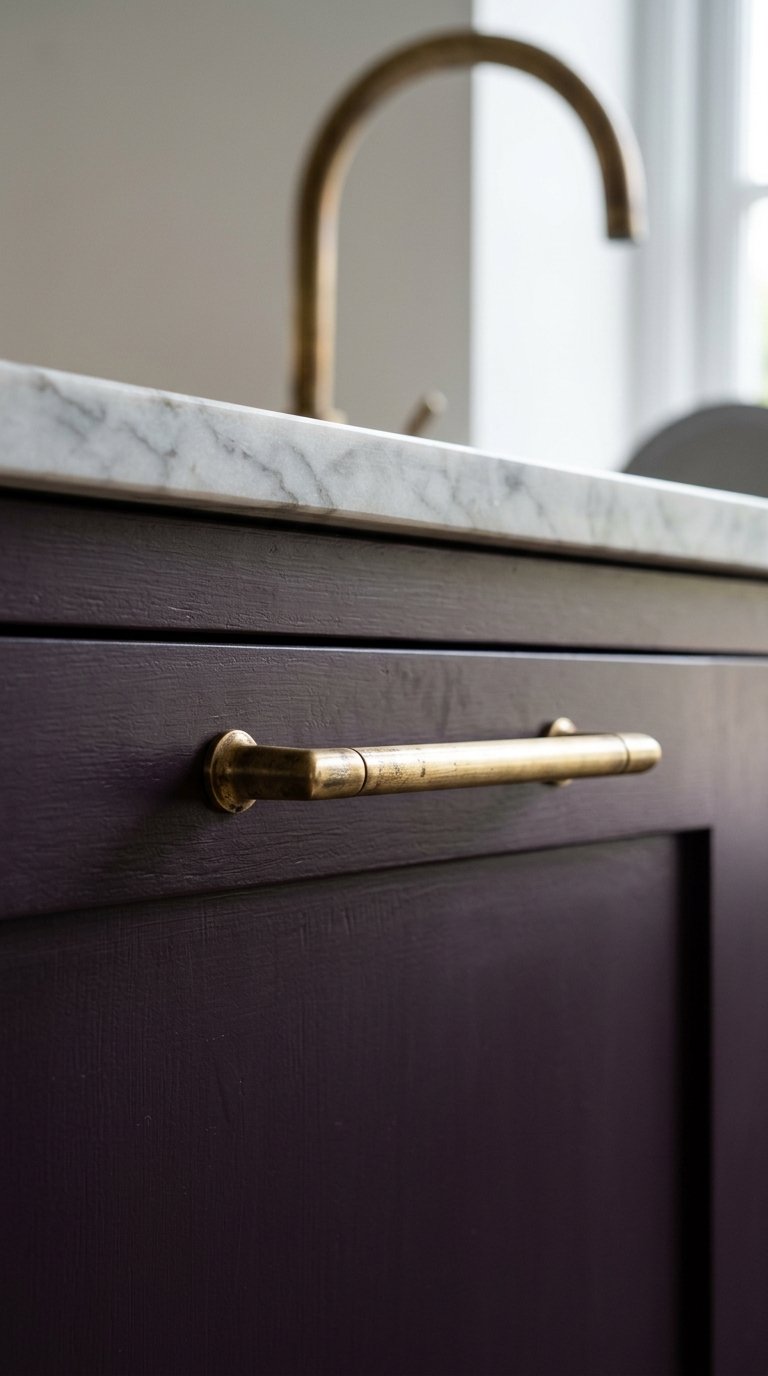
Hardware changes the mood of aubergine more than most people expect. Your choice depends on the undertone you picked.
- Aged or brushed brass: The safest choice. It warms red-based and brown-based aubergine and develops a soft patina.
- Bronze and copper: Richer and slightly redder. They suit deep plum and wood-heavy kitchens.
- Matte black: Crisp and modern. It works well with blue-based violet and light stone counters.
- Polished chrome or cool nickel: Often too cold beside a warm aubergine, so use them only if the rest of the room is cool.
Choose one metal and repeat it on the cabinets, tap and light fittings. Mixing three finishes tends to look busy.
Styling tip: Hold a hardware sample against the cabinet sample in daylight and in the evening, because metal changes more than paint does.
Light Marble or Quartz Countertops with Aubergine Cabinets

A light countertop gives dark cabinets room to breathe. White or cream marble with soft gray or gold veining adds brightness, and a quartz that mimics it gives a similar look with less upkeep.
Choose a warm white rather than a stark, bright one. Stark white can look harsh beside deep plum, while a soft white or cream looks gentler. Honed stone has a quieter surface than polished, and it tends to hide small marks better.
The trade-off is care. Real marble can stain and etch, so it needs sealing and quick wipe-ups. Quartz asks for less.
Styling tip: Pick a slab with a hint of the same warm tone as your hardware, so the metal and the stone feel related.
Butcher Block and Wood with Aubergine

Wood is one of the easiest partners for aubergine because it adds warmth and a natural texture. A butcher block countertop, an oak island top, or a set of wood open shelves all make deep purple feel less formal.
Choose a wood with a warm undertone, such as oak or walnut, and keep it consistent. Too many different woods can look random. Seal wood tops and wipe water spills quickly, because they need more care than stone.
This pairing suits farmhouse, cottage, and traditional kitchens especially well.
Styling tip: Add one wooden chopping board leaned against the backsplash, so the wood shows up in a second place without extra cost.
Backsplash Ideas for an Aubergine Kitchen
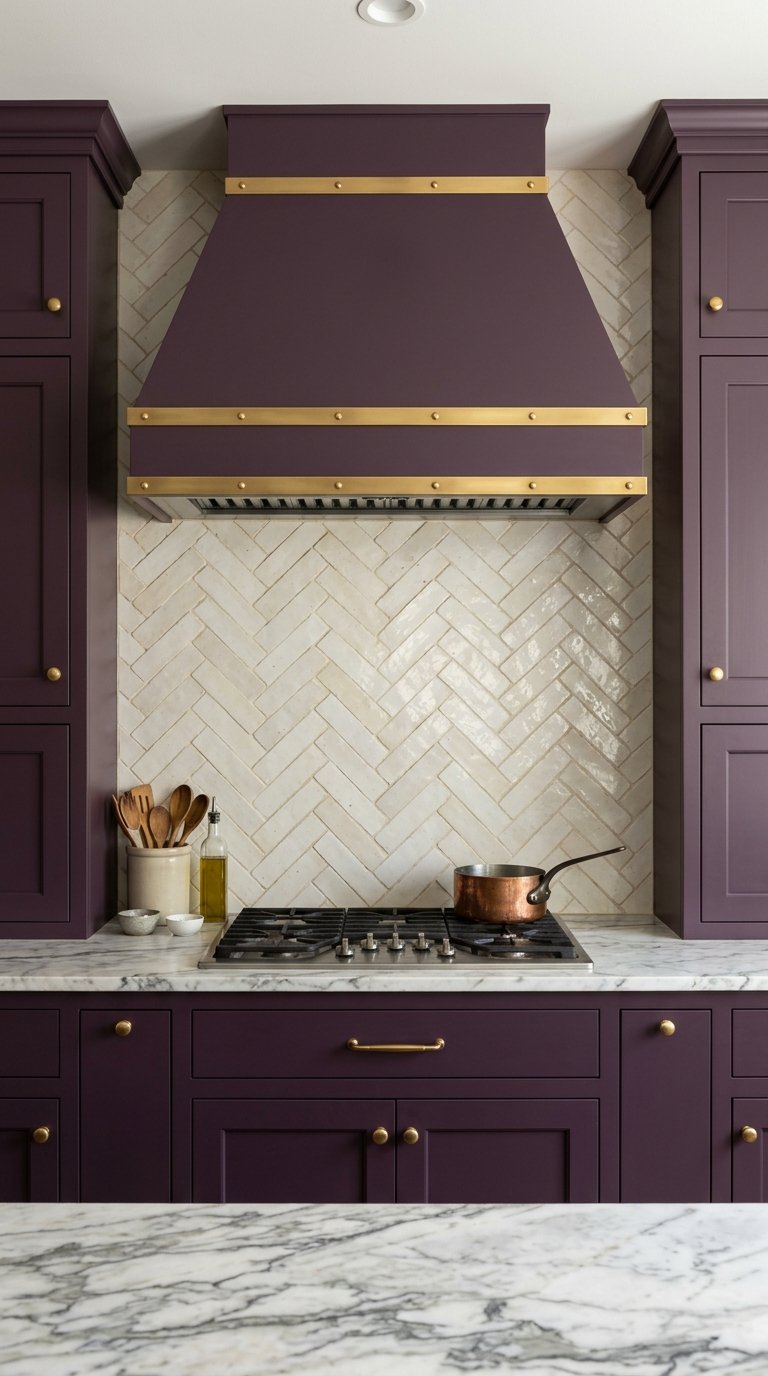
The backsplash sits between your cabinets and countertop, so it controls how much contrast the kitchen has.
- White handmade or zellige tile: Uneven glaze catches light and softens the dark cabinets.
- Herringbone in a pale tone: Adds movement without adding color.
- Cream or warm gray tile: A gentler option if white feels too stark.
- Marble slab: A seamless look that carries the countertop up the wall.
Choose grout that is close to the tile color so the surface stays calm, and avoid very dark grout lines against dark cabinets.
Styling tip: Keep the backsplash light and simple, and let the cabinets be the main feature.
Flooring That Balances Aubergine Cabinets
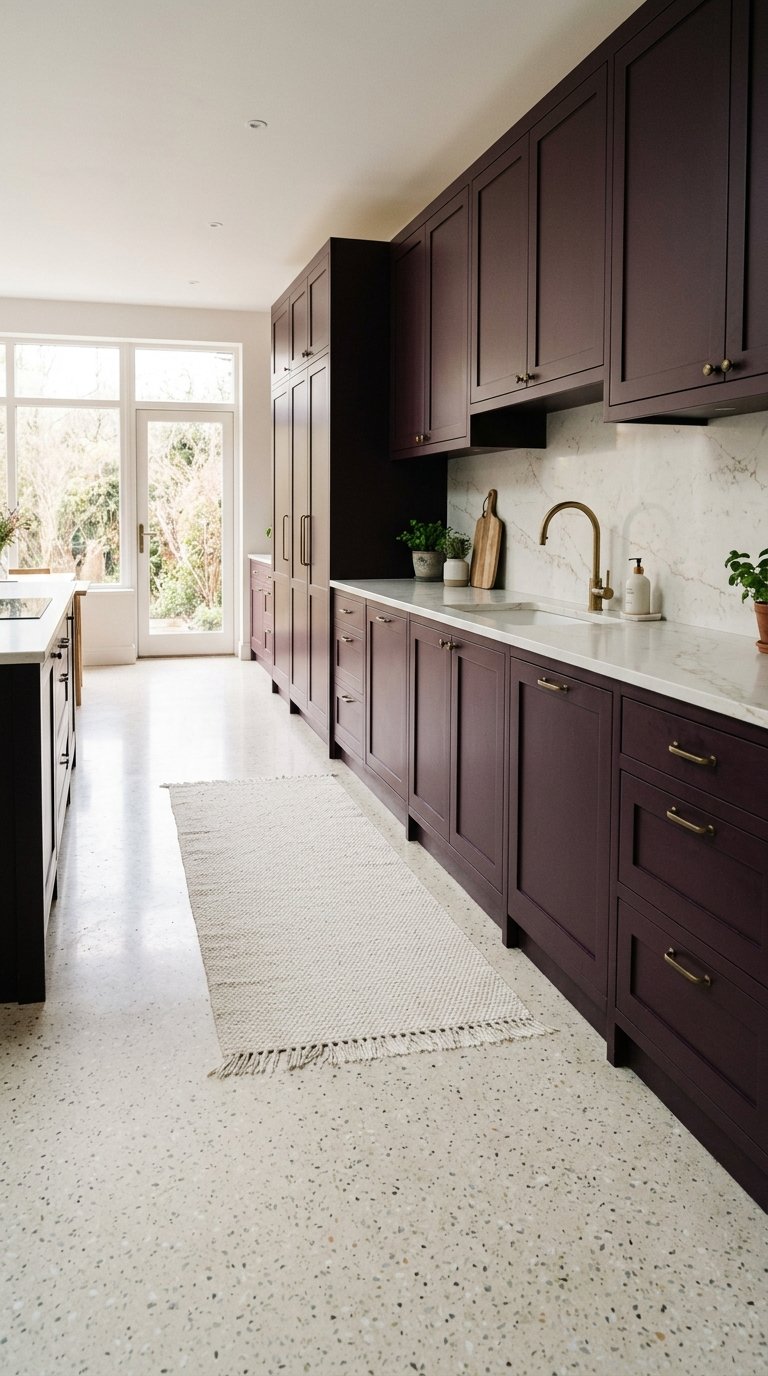
Floors take up a lot of visual space, so they should help lighten a dark kitchen.
- Light or mid-tone oak: Warms the room and keeps it from feeling heavy.
- Pale stone or large-format tile: Reflects light and looks clean.
- Terrazzo in soft cream and gray: Adds playful texture while staying light.
- Dark wood or dark tile: Works only if the room has plenty of daylight, and it can make the space feel very heavy.
If you use a pattern, keep it quiet, so it does not compete with the cabinets.
Styling tip: Add a washable runner in cream or warm neutrals in front of the sink, so the floor stays light where you stand most.
Cream and Greige Walls with Aubergine Kitchen Cabinets

Wall color decides how soft the aubergine looks. Warm cream, soft beige or greige makes the cabinets feel rich without looking severe, and it reflects light into the room.
Avoid a bright, cool white, which can make plum look flat. Choose a white with a touch of warmth, or a pale neutral with a hint of yellow or gray. Paint the ceiling the same color or a half shade lighter for a clean line.
The trade-off is simplicity. A neutral wall asks the cabinets to do all the work, so make sure the color you chose is the one you love.
Styling tip: Hang one framed print with a warm frame to add personality, and keep the rest of the wall empty.
Lighting That Keeps an Aubergine Kitchen Warm
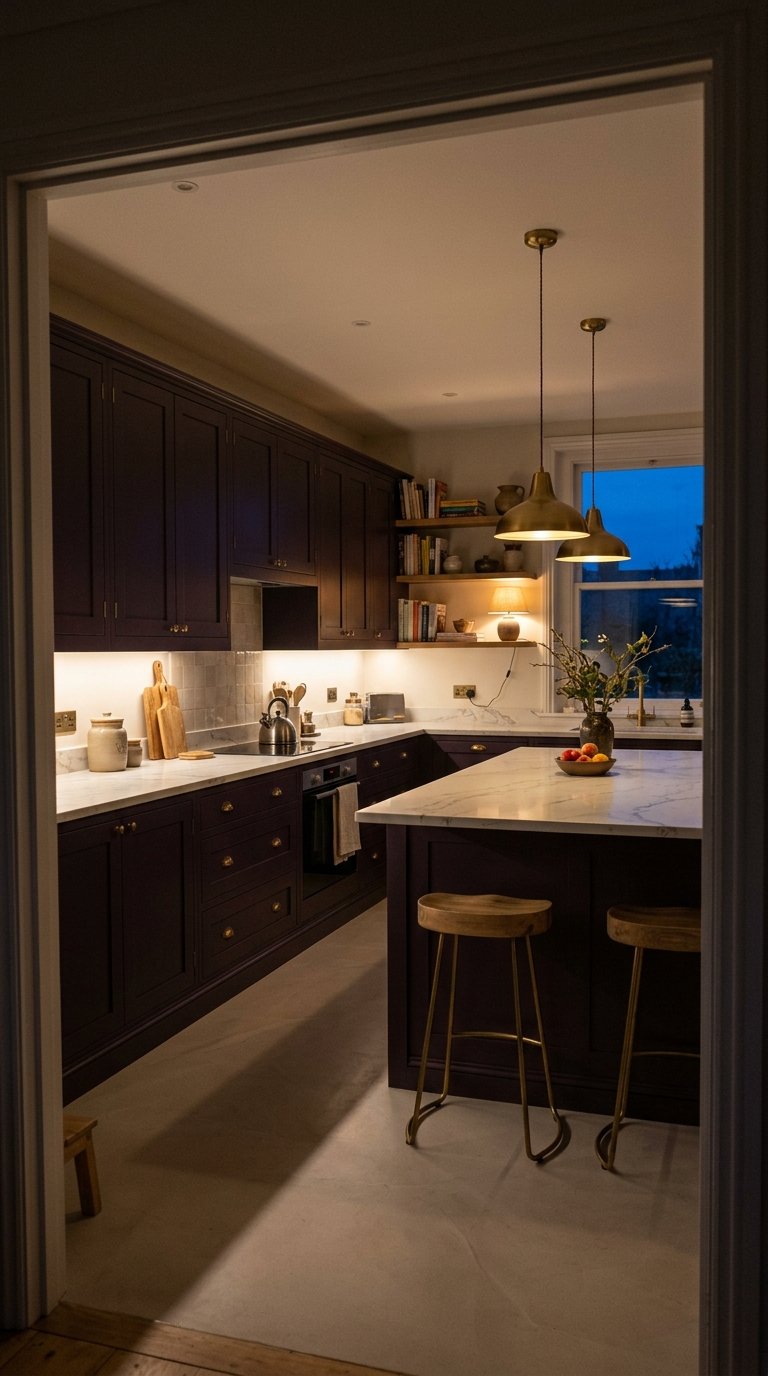
Dark cabinets absorb light, so lighting matters more than in a pale kitchen. Layer it, and choose warm bulbs.
- Warm bulbs: Look for a warm white, around 2700K, which brings out the red in plum and keeps the room cozy.
- Under-cabinet strips: Light the countertop and show the cabinet color.
- Pendants over the island: Brass or opal glass shades add warmth and a focal point.
- A lamp on the counter or shelf: Adds a soft glow in the evening.
Avoid cool white bulbs. They can make aubergine look gray or flat.
If the kitchen has little daylight, plan the lighting before you choose the paint, and test the sample at night.
Styling tip: Put the main lights on dimmers so the room can feel bright for cooking and soft for dinner.
Aubergine in a Small Kitchen

A small aubergine kitchen works when you limit how much of the room is dark. Paint the lower cabinets in aubergine and keep the uppers and walls light. This keeps the ceiling line open and gives the room a base.
Choose a warm cream or soft white for the uppers instead of bright white, which can look harsh beside plum. Use a light countertop, a simple backsplash, and warm lighting. Reflective details, such as a brass tap or a glass-front cabinet, bounce light around.
Skip a dark ceiling and dark floor in a small kitchen, because three dark surfaces together can close the room in.
Styling tip: Replace one or two upper cabinets with open shelves. The gap lightens the wall and lets you add a few pale ceramics.
Aubergine Cabinets in a Galley Kitchen
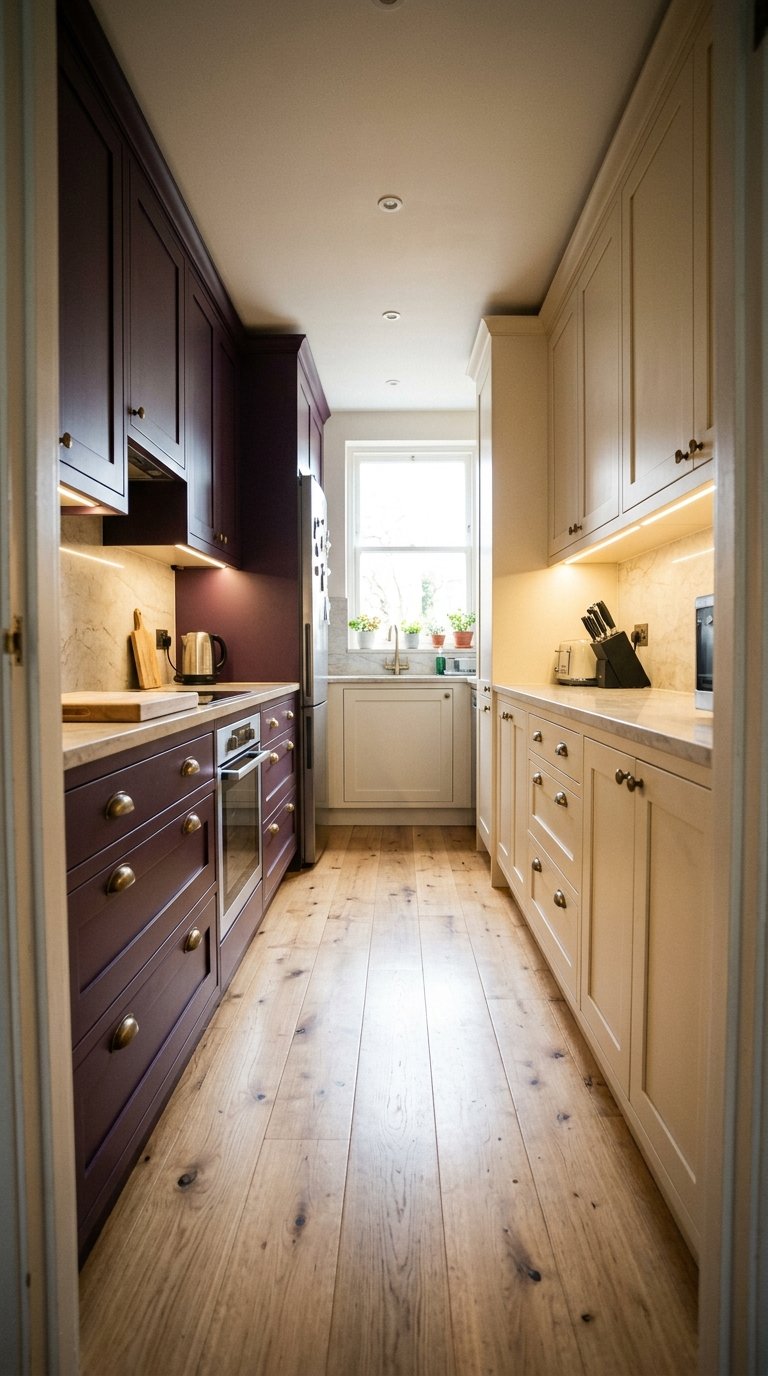
A galley kitchen has two long walls close together, so color on both sides can feel intense. A good way to handle this is to paint one run aubergine and keep the opposite wall lighter.
Try aubergine on the sink side and cream or wood on the cooking side, or aubergine lowers on both with pale uppers. Keep the floor light or mid-tone and add under-cabinet lighting along both runs. A window or glass door at the end helps a lot.
If the galley has little daylight, test the sample at night before you commit.
Styling tip: Add a narrow runner that matches your hardware tone, so the eye travels down the center of the room.
An Aubergine Open-Plan Kitchen with an Island and Stools

In an open-plan room, aubergine can help the kitchen feel like its own zone without building walls. An island in aubergine, with matching or complementary stools, marks where the kitchen ends and the living area begins.
Keep the rest of the room calm so the color does not fight with the sofa and rug. Repeat one aubergine accent, such as a cushion or a vase, in the living area so the two spaces feel linked.
Choose stools in wood, leather or woven rope for texture. Counter-height stools suit a standard island, and bar-height stools suit a raised ledge.
Styling tip: Choose stool seats a few shades lighter than the island, so the stools do not disappear into the cabinet color.
An Aubergine Butler’s Pantry or Scullery
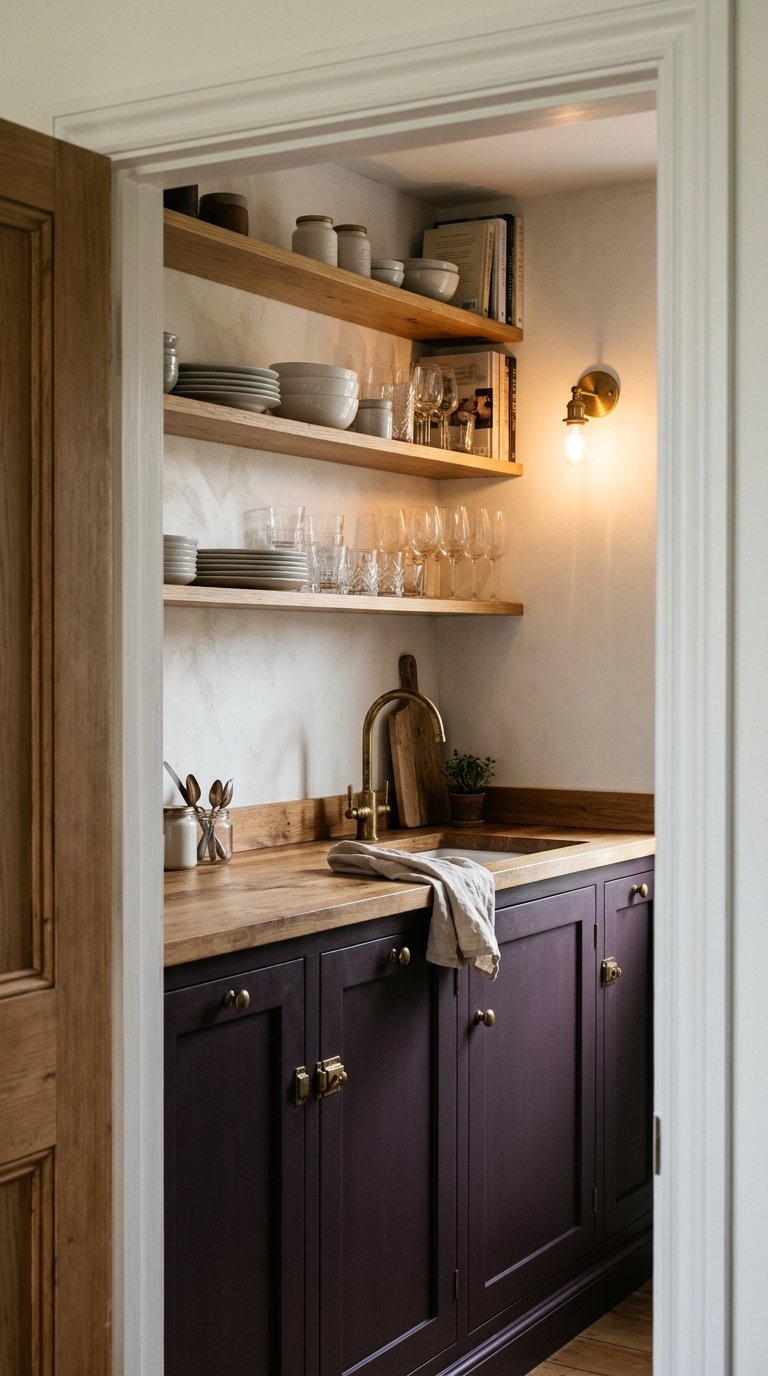
A butler’s pantry or scullery is a good place to try aubergine, because it is a smaller space and often a service room, not the main kitchen. You can go darker and more dramatic without affecting the rest of the home.
Paint the cabinets and shelves in deep aubergine, add a wood or stone counter, and fit a small sink or a coffee station. Open shelves hold glassware and plates, and a pendant or wall light makes the room feel like a jewel box.
The trade-off is light. Many pantries have no window, so use warm, layered lighting.
Styling tip: Line the back of the open shelves with a lighter paint or tile so the glassware stands out against the dark.
One Statement Piece: A Range Hood, Pantry Door or Tall Cabinet Bank

If painting an island still feels like too much, pick one piece and make it aubergine. The best choices are the range hood, a pantry door or a bank of tall cabinets.
A plaster or painted hood in aubergine draws the eye upward and frames the cooking area. A tall pantry door in aubergine looks like furniture. Either one lets the rest of the kitchen stay neutral.
Choose a finish that suits the piece. A hood can handle satin or a bit of sheen, while a pantry door looks best in a soft matte.
Styling tip: Echo the color once on a lower shelf, such as a stack of plum ceramics, so the statement piece does not look alone.
Aubergine Without Painting: Shelves, Stools, Pendants and Textiles

If you rent, or you want to test the color first, add aubergine in pieces you can remove.
- Open shelves: Paint a floating shelf or two in aubergine and style them with cream ceramics.
- Stools: Upholstered counter stools in a plum fabric add color at eye level.
- Pendants: Glass or enamel pendants in a deep plum make a strong focal point.
- Textiles: Dish towels, a runner and a cushion for a window seat bring in the shade cheaply.
- Small appliances and ceramics: A plum kettle or a handful of plum bowls adds just enough.
Keep the rest of the room neutral so the pieces look intentional. Live with them for a few weeks, and you will know whether you want more.
Styling tip: Use the same aubergine in three small places, such as a stool, a towel and a bowl, so they read as a set.
Keeping Aubergine Cabinets Looking Good
Dark paint shows dust, marks, and wear more than a pale one, so a little routine goes a long way.
- Wipe cabinets with a soft damp cloth and a mild cleaner, and avoid harsh scrubbing.
- Dry the surface after you clean, especially near the sink and stove.
- Check the paint maker’s guidance on which cleaners are safe for your finish.
- Keep touch-up paint from the same batch for chips.
- Pay extra attention to handles and the areas around the dishwasher, where hands and moisture build up.
Mistakes to Avoid with Aubergine Kitchens
- Choosing the shade from a small chip. Test a large sample in your own light.
- Pairing with stark white. It can look harsh beside deep plum, so choose a warmer white or cream.
- Using cool chrome with a warm plum. It can look cold, so pick warm metals.
- Going dark everywhere. Cabinets, walls, floor, and ceiling in dark tones can close a small room in.
- Skipping the lighting plan. Dark cabinets need warm, layered light.
- Forgetting the finish. The wrong sheen can mark easily or look too shiny.
FAQs
What colors go best with aubergine kitchen cabinets?
Cream, warm white, soft greige, sage and olive green, and blush pink all work well. Wood tones and warm metals such as brass also pair easily with aubergine.
What countertop goes with aubergine cabinets?
Light countertops give the best balance. White or cream marble or quartz, honed stone and butcher block all look good. Choose a warm white rather than a stark one.
Will aubergine make my kitchen look smaller?
It can if the room is small and every surface is dark. Use aubergine on the lower cabinets or the island, keep the uppers and walls light, and add good lighting.
Does aubergine work in a kitchen with little natural light?
It can, but plan the lighting first. Use warm bulbs, under-cabinet strips and pendants. Test the paint sample at night before you commit.
How do I choose the right aubergine paint shade?
Decide whether you want a red-based plum, a blue-based violet or a brown-based aubergine. Then test large samples next to your countertop and floor, at different times of day.
What finish is best for aubergine kitchen cabinets?
Satin or eggshell is a popular choice for cabinets because it wipes clean more easily. Matte gives a deeper, softer look, and gloss suits a single statement piece. Always use paint made for cabinets.
What hardware goes with aubergine cabinets?
Aged or brushed brass is the safest option. Bronze and copper suit deep plum, and matte black suits a cooler, more modern kitchen.
Conclusion
You do not need to commit to a fully purple room to enjoy an aubergine kitchen. Choose the undertone first, test it in your own light, and decide how much of the color you want.
Start with an island, the lower cabinets or a few accents, and pair them with a light countertop, warm hardware, and soft lighting. If you like the result, you can always add more.


One Comment