15 Fall Kitchen Table Decor Ideas for a Beautiful Autumn Setup
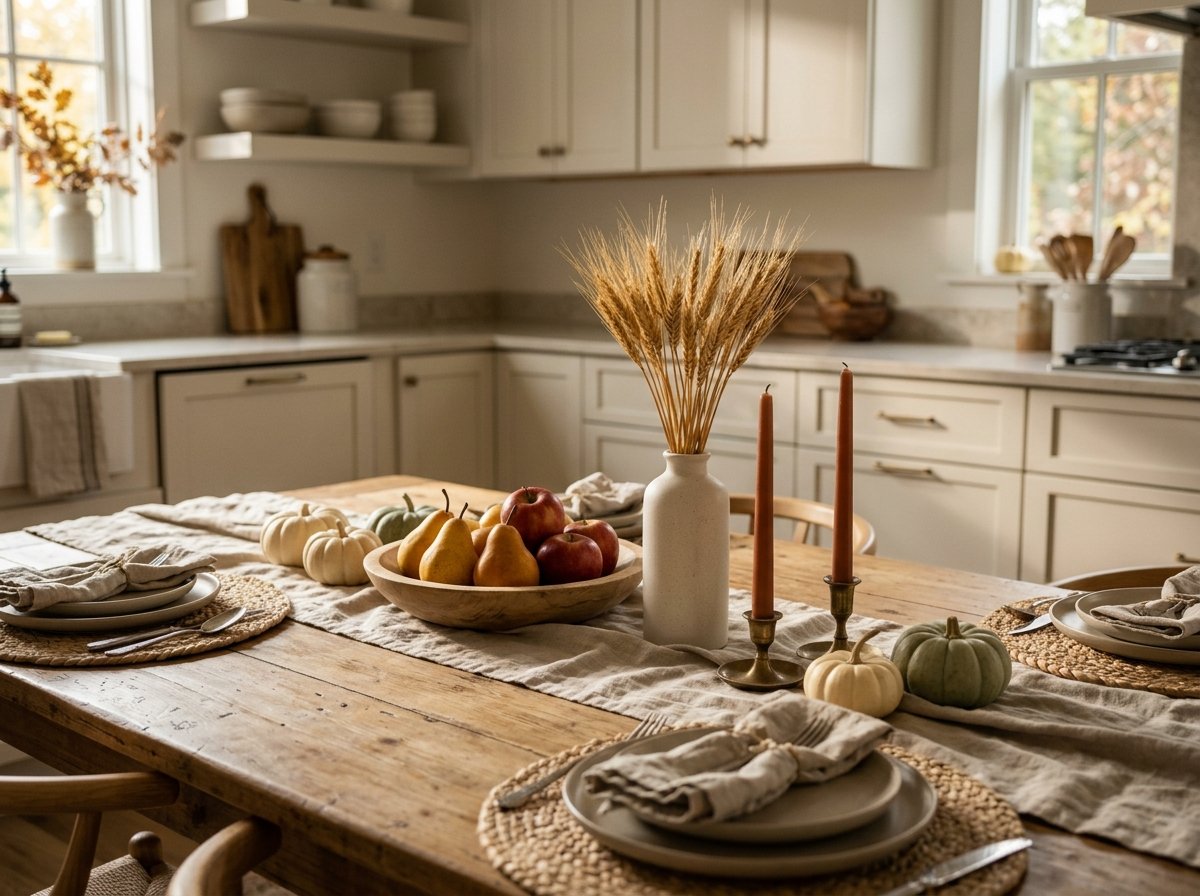
Fall kitchen table decor ideas work best when they respect how the table is actually used. This is the surface where cereal bowls, school folders, and weeknight dinners all land, so an autumn look has to be beautiful and easy to move. A few well-chosen layers, such as a low centerpiece, a textured runner, and warm candlelight, can change the whole kitchen without making it feel like a seasonal display.
In this guide, you’ll find 15 distinct looks, from pumpkin clusters and pear bowls to moody berry tablescapes and solutions for small round tables. Each idea explains what it looks like, how to recreate it, and what to watch for at mealtime. You’ll also get a simple styling formula, a table-shape guide, advice on real, faux, and dried materials, and a three-swap plan for moving from early October to Thanksgiving.
A Simple Fall Table Formula That Works on Any Kitchen Table
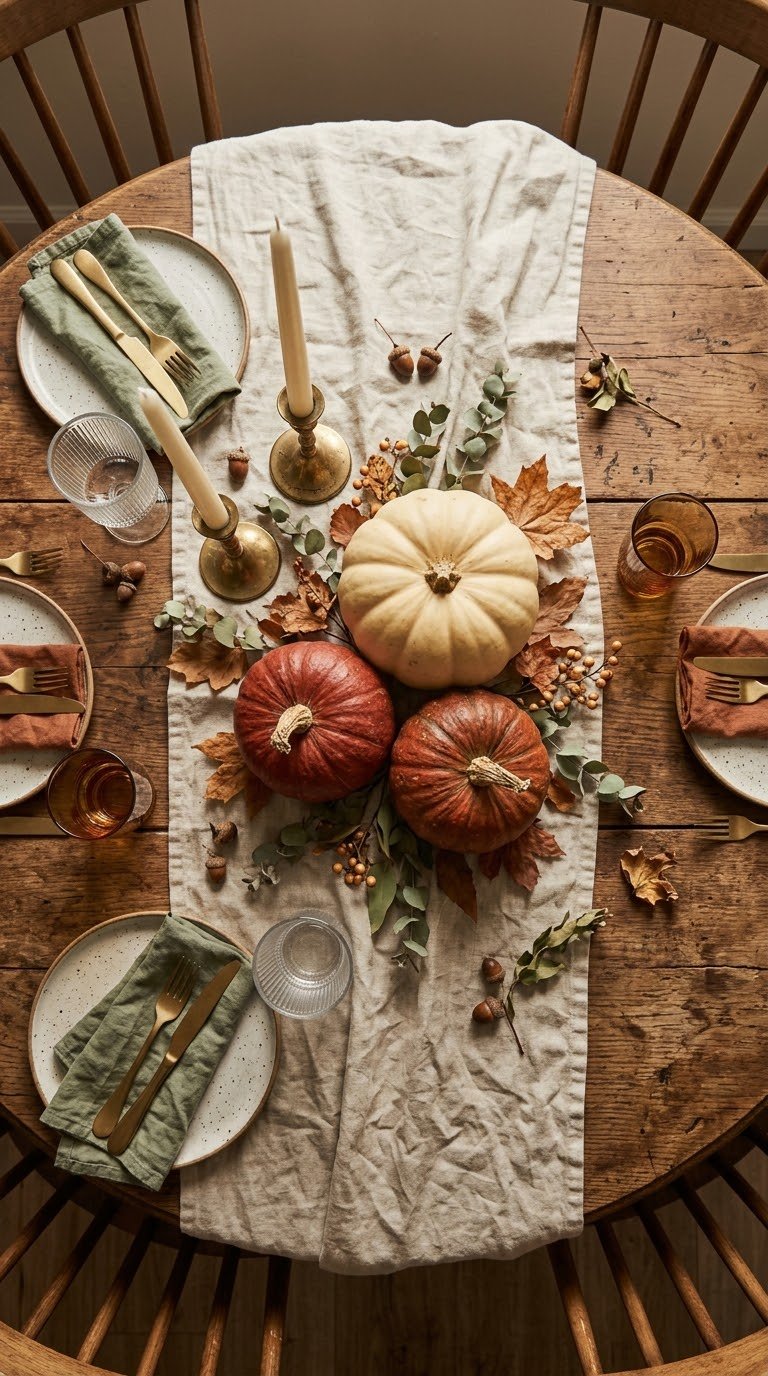
Most tables that look effortless follow a few quiet rules. Once you know them, you can build any look below or invent your own. The formula has four parts: base, height, glow, and color.
The base is your foundation: a runner, placemats, or the bare wood of the table. Start with texture here, because linen, wood, and woven fibers make a table look layered even when there are only a few objects. The height comes from a single focal point. Keep it low enough that people can see each other across the table, and group objects in odd numbers with slightly different heights, since uneven groupings look natural while even ones look staged.
Then add glow with taper candles, a small lamp, or flameless candles, which makes the table inviting as evenings get darker. Finally, choose your color with a simple rule: one main color, one supporting color, and one small accent that appears two or three times, such as cream, sage, and rust.
If a table looks busy, remove one item. If it feels flat, add one texture rather than one more object.
Match the Decor to Your Table Shape and Size
Many fall tables look “off” because the decor doesn’t suit the table. Shape and seating count change what works, and the guide below is a starting point to adjust by eye.
| Table type | What works | What to avoid |
|---|---|---|
| Small round (2 to 4 seats) | One compact centerpiece in the middle, a small tray, or a lazy Susan | Long runners and several small items |
| Larger round | A medium centerpiece or a low cluster of three | Tall arrangements that block views |
| Rectangular (4 to 6 seats) | A runner with one centerpiece, or a row of three small items | Overfilling the center strip |
| Long rectangular (6+ seats) | A repeating line of small bowls and candles | One tiny centerpiece that gets lost |
| Narrow or bistro table | A single vase or candle, with decor on the wall or window | Placemats, runner, and centerpiece together |
Leave breathing room around plates and glasses, because a table that is fully covered stops working as a table. As a general rule, the decor should take up the center and leave the edges free for the meal.
Fall Kitchen Table Decor Ideas, Starting With the Centerpiece
The centerpiece sets the mood, so begin here. Each idea explains how it looks, how to build it, and how it behaves when dinner arrives.
1. A Low Cluster of Mixed-Height Pumpkins in Cream, Sage, and Rust
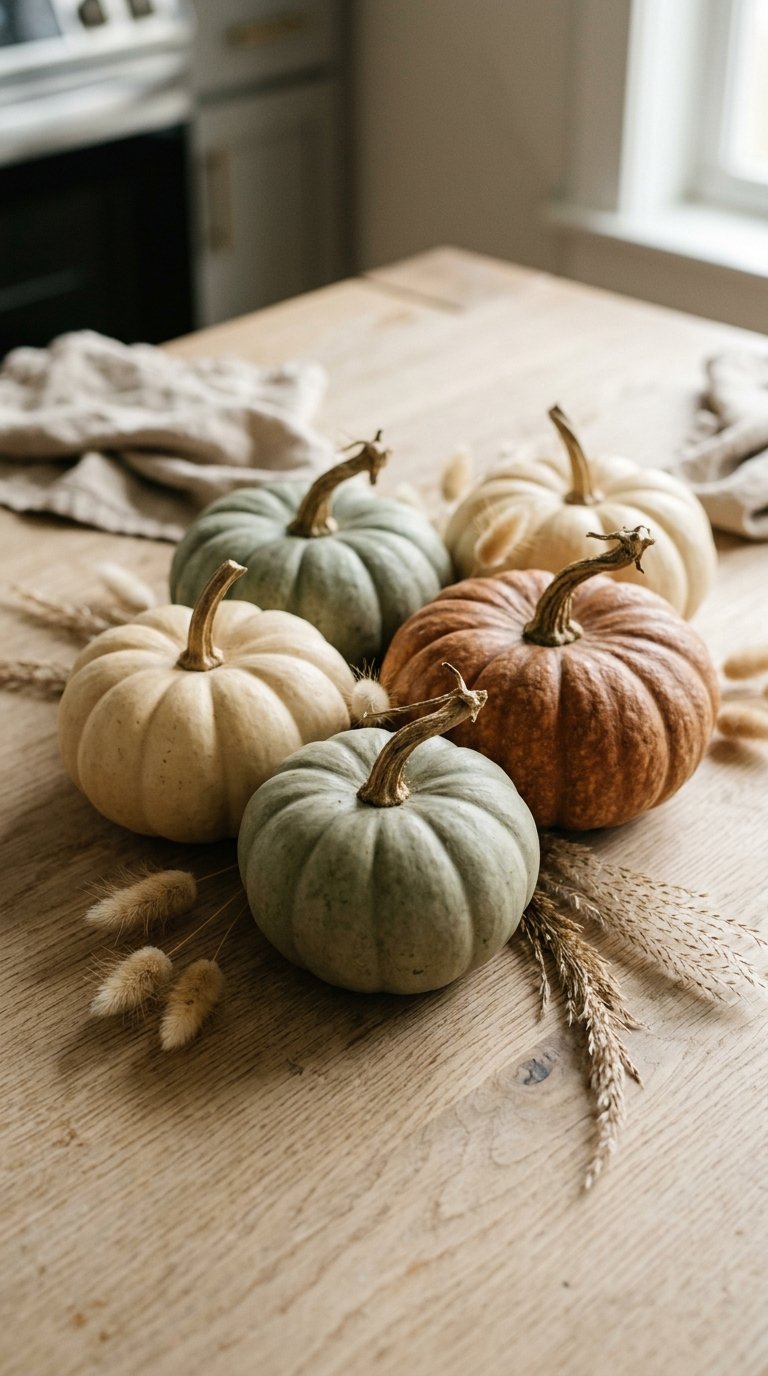
A grouping of three to five pumpkins in different sizes and finishes reads as classic autumn without the heaviness of an all-orange display. Cream and sage pumpkins with one rust or deep orange piece feel calm and current, while ribbed, smooth, and matte surfaces keep the cluster from looking mass-produced. A few dried stems or a small branch tucked between them softens the outlines.
Set the largest pumpkin slightly off center, angle a medium one beside it, and place the smallest in front so the group steps down toward the diners. Odd numbers look more natural than pairs, and a small tray or wood slice underneath makes the arrangement easy to lift at dinnertime. Avoid lining the pumpkins up in a row, which tends to look like a shelf display instead of a centerpiece.
2. A Wooden Bowl of Pears, Apples, and Quince

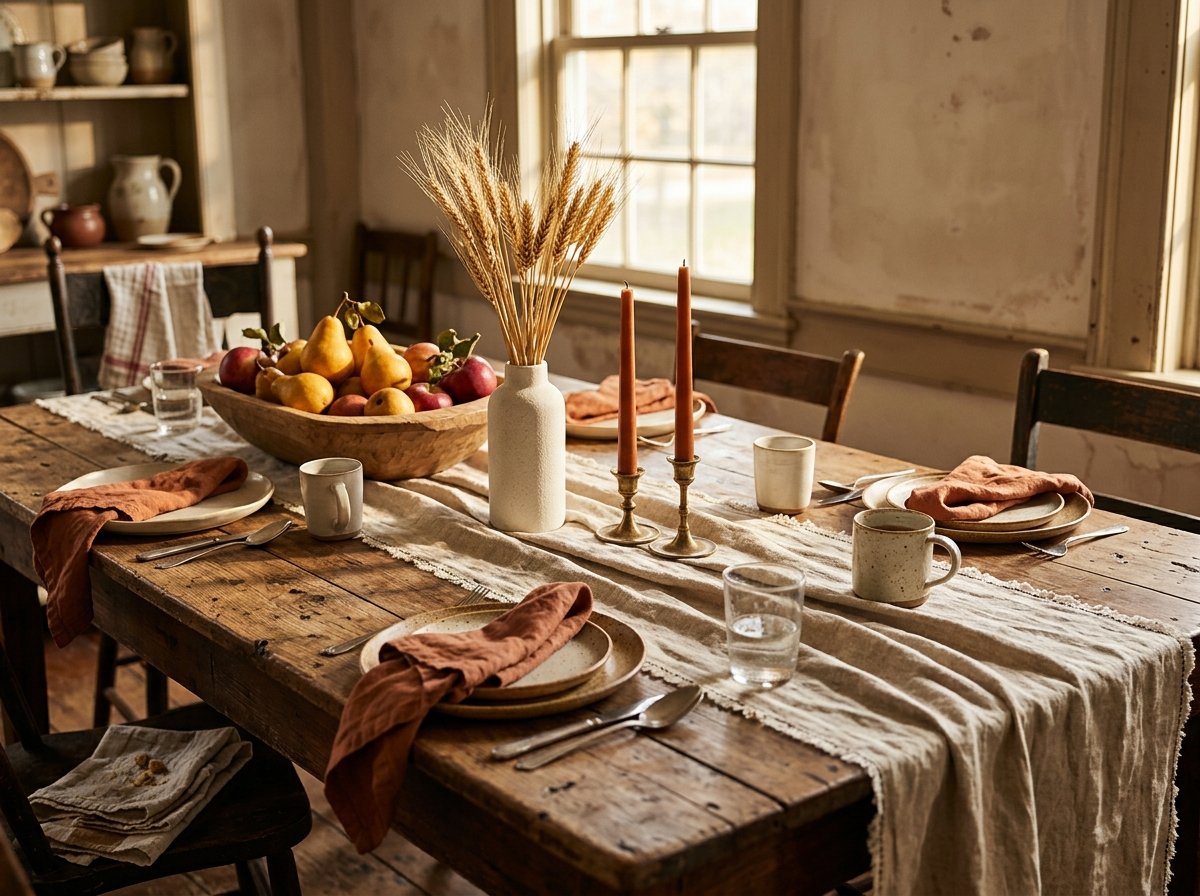
Fruit gives a kitchen table color, scent, and a harvest feeling that faux decor can’t fully copy. A shallow wooden bowl filled with golden pears, red or green apples, and a few quince, if you can find them, looks relaxed and generous. The soft yellows and reds sit well against stoneware plates and warm wood grain.
Choose a wide, shallow bowl so the fruit stays visible, and limit the mix to two or three colors for a deliberate look. Let one or two pieces rest beside the bowl, then add a few leaves or a sprig of rosemary for texture. Slightly underfilling the bowl looks more refined than piling it high, and any bruised piece can be swapped out or simply eaten.
3. Dried Wheat and Bare Branches in a Slim Vase
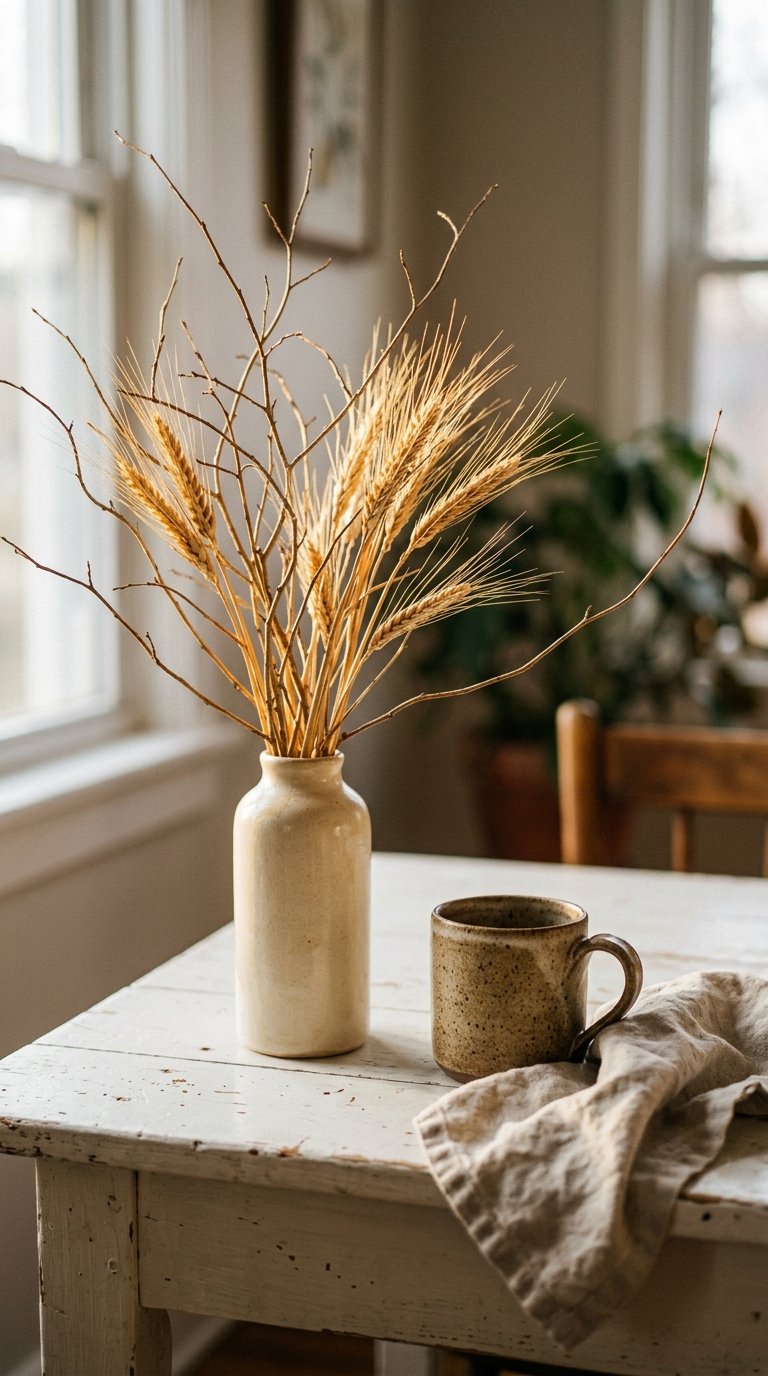
Height doesn’t have to block conversation. A slim vase holding dried wheat, grasses, or a few bare branches adds vertical interest while staying see-through, so people can still talk across the table. Matte stoneware or ceramic in cream, charcoal, or soft clay keeps the focus on the golden stems.
Use an odd number of stems with heights varying by a few inches, and add one branch for an irregular silhouette. Keep the arrangement narrow, roughly the width of your hand, so it doesn’t crowd the settings. Dried materials last all season and need no water, which makes this one of the most practical choices for a table used every day.
4. A Lazy Susan Centerpiece That Spins Out of the Way

A lazy Susan turns decor into something useful. A wooden or rattan base styled with a small pumpkin, a short candle, and a handful of acorns or mini gourds looks complete on its own, so you need fewer extras. At dinner, it holds salt, pepper, and napkins, or it spins condiments toward whoever needs them.
Keep everything inside the edge so nothing slides off when the base turns, and choose stable candle holders rather than tall, wobbly ones. A wood or rattan finish already feels autumnal, which means the decor can stay minimal. If the surface is slick, a thin non-slip pad underneath keeps the arrangement steady.
5. A Cutting-Board or Tray “Stage” for Candles and Fruit
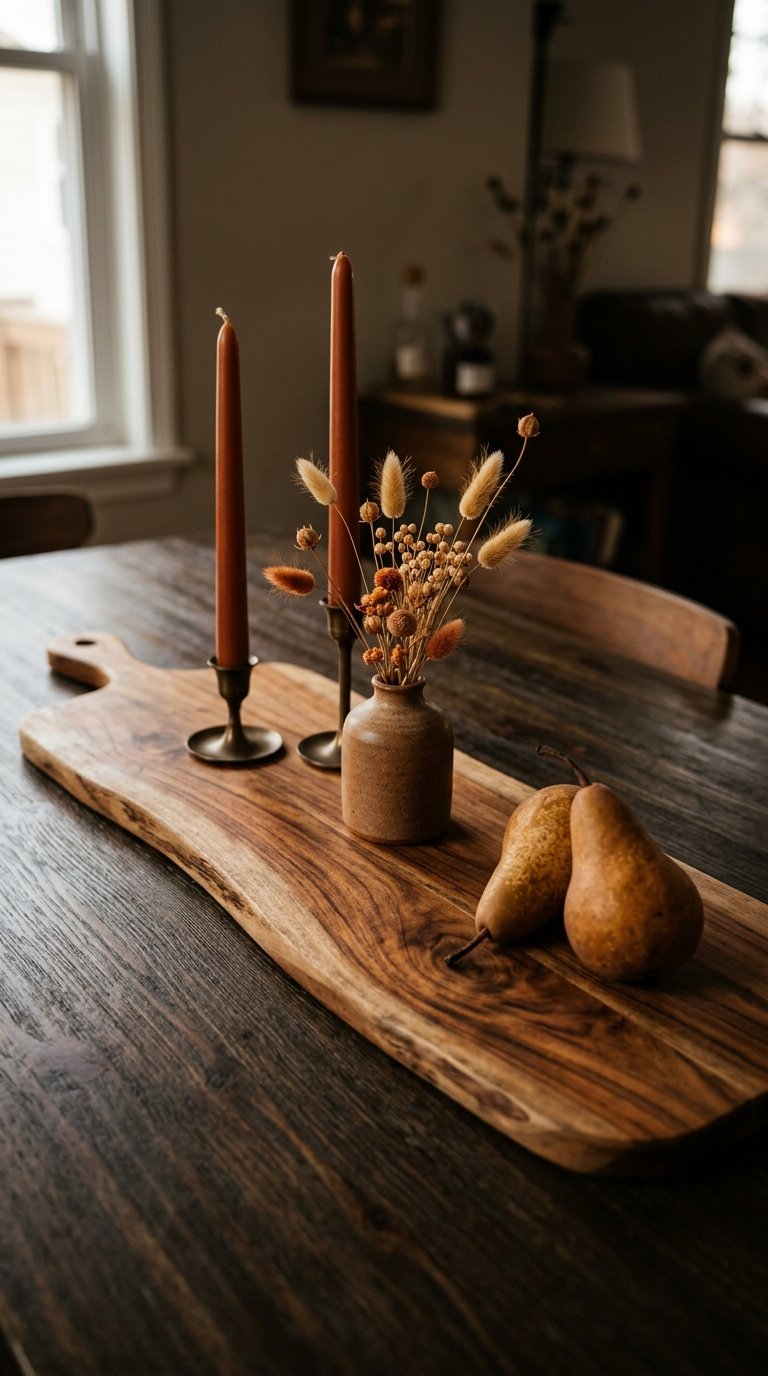
A long board or tray gives a few objects a frame, and the visible border makes a collection of items read as a single arrangement. Two taper candles at one end, a small bud vase in the middle, and a pumpkin or a couple of pears at the other create a natural rhythm. Dark wood, acacia, or a metal tray each gives a different mood.
Leave roughly a third of the board bare, because space makes the arrangement look intentional. Choose items of different heights, with the tallest on one side, so the eye moves along the board. At mealtime, lift the whole board and set it on a counter or sideboard in one move.
6. A Pumpkin Turned Into a Vase for Deep-Red and Mustard Flowers

Turning a pumpkin into a vase combines two autumn staples into one object. A cream or soft green pumpkin filled with burgundy, mustard, and cream blooms looks fresh and a bit unexpected. Chrysanthemums, dahlias, or small garden-style flowers suit the rounded shape well.
Cut the top, scoop out the inside, and place a waterproof liner or small jar inside so the water doesn’t speed up decay. Keep the arrangement compact and rounded, with stems cut short to match the pumpkin’s shape. A faux pumpkin works too and lasts through the season, so you only need to refresh the flowers.
Table Layers That Make Fall Feel Intentional
Once the centerpiece is in place, smaller layers make the table feel finished. They’re also the most practical part of fall decor, since fabric and dishes can be washed and reused all season.
7. A Linen or Woven Runner Sized to the Table
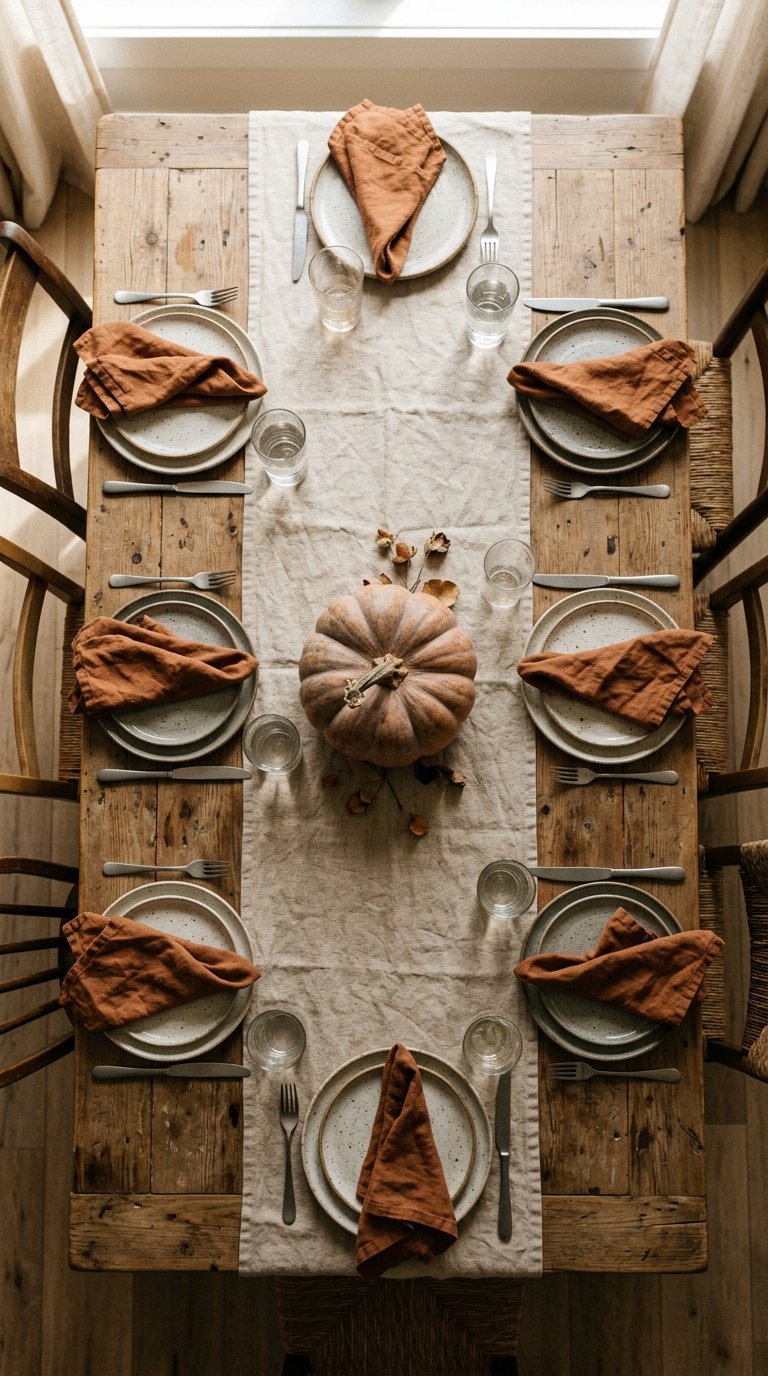
A runner anchors the centerpiece and adds the first layer of texture. Linen, cotton, and woven fibers in oatmeal, rust, or sage all suit autumn, and a slightly rumpled linen feels relaxed and inviting. It also gives pumpkins, bowls, and candles a defined place to sit.
Let the runner extend a few inches past each end of the table, and keep it narrower than the center zone so placemats still fit at the sides. Skip it on small or round tables, where it can crowd the settings, and use placemats on their own. If your table is wood you love, a runner also protects the surface from candle wax and wet fruit.
8. Layered Placemats, Napkins, and Everyday Plates in Autumn Tones

Layering adds richness without more objects. A woven placemat topped with a solid napkin, or a cream placemat with a rust napkin folded across the plate, gives each seat depth. Everyday white or stoneware plates look warm against rust, mustard, and sage.
Choose washable fabrics for a table used daily, and consider patterns that hide stains, such as checks, stripes, and textured weaves. Keep the colors within your palette so the settings tie to the centerpiece. For a family table, cotton napkins in a deeper tone like rust or olive handle spills better than pale colors.
9. Napkin Rings with Natural Details
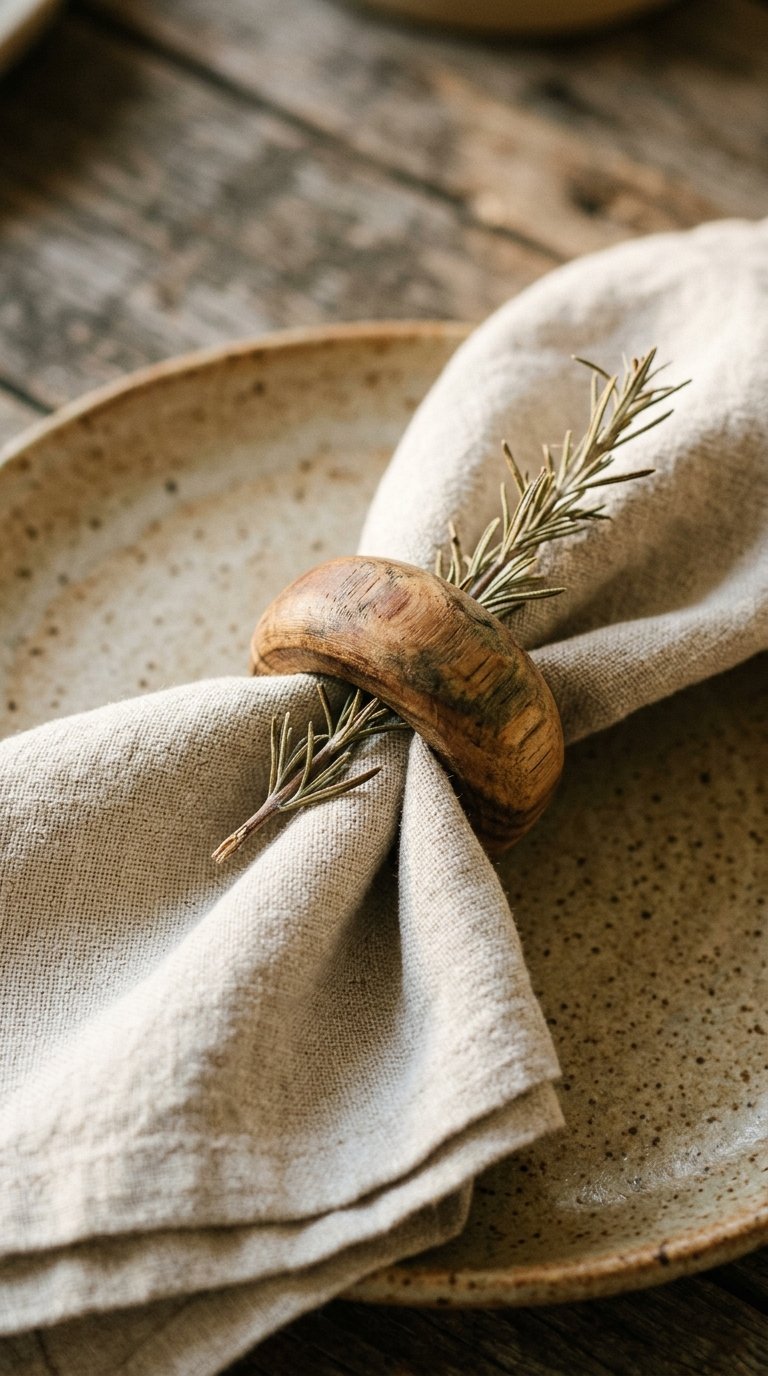
Small details are what make a table feel considered rather than just decorated. Wooden rings, rope, or twine with a sprig of dried rosemary or a small leaf tucked in add texture and a handmade feeling. They look best against linen or cotton napkins in muted tones.
For a low-effort option, simple wood or brass rings work every year and need no assembly. Use the same ring style at every seat so the set feels cohesive, and let the natural sprig be the only variation. If you add fresh herbs, replace them every few days so they don’t wilt.
10. Handwritten Place Cards and Gratitude Notes
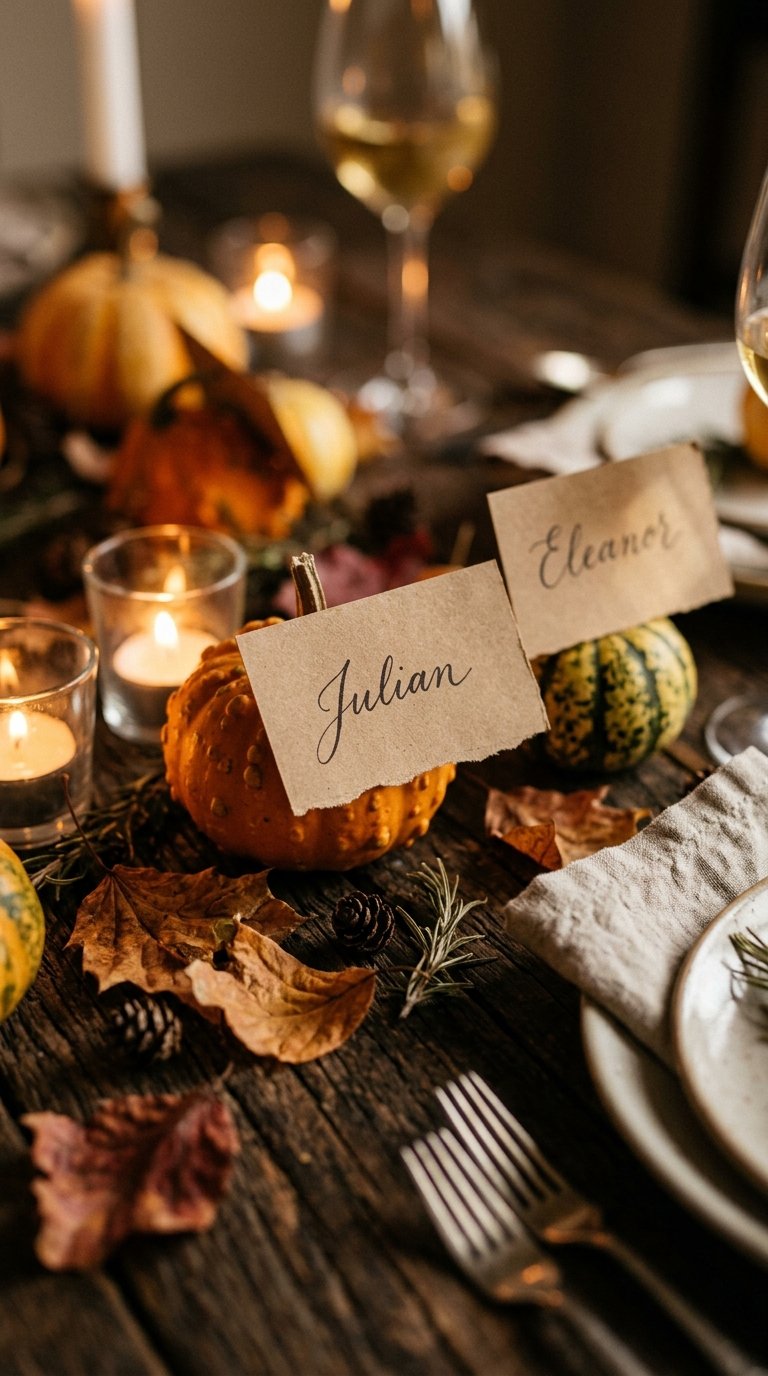
Place cards aren’t only for large gatherings. Small kraft cards with names or a one-word note like “thankful” or “gather” add warmth to an ordinary weeknight, and kids enjoy writing their own. Leaning them against a mini gourd or tucking them into a folded napkin turns each setting into a small moment.
Keep the handwriting simple and consistent, using a dark pen on kraft or cream paper. For a family dinner, a note under each plate can start a conversation, with a question such as what everyone is grateful for. Cards are inexpensive, and you can reuse the same ones by changing the message.
Fall Table Styles and Palettes Beyond Orange
Orange pumpkins are only one way to do autumn. These three directions suit different kitchens, and each can be built from items you may already own.
| Palette | Main colors | Best for | Key materials |
|---|---|---|---|
| Warm neutral | Cream, oatmeal, soft gold | Light, modern, minimalist kitchens | Linen, white pumpkins, pale wood |
| Rust and sage | Terracotta, rust, muted green | Farmhouse and cozy kitchens | Stoneware, woven textures, wheat |
| Moody and rich | Plum, deep red, charcoal | Dark cabinets, dramatic spaces | Dark ceramics, brass, taper candles |
Pick the direction that echoes your cabinets, floors, and walls rather than fighting them. Warm neutrals suit white and pale wood kitchens, earthy rust and sage suit wood tables and stone, and darker palettes look striking against deep cabinetry.
11. A Moody Berry-and-Brass Table in Plum, Burgundy, and Charcoal
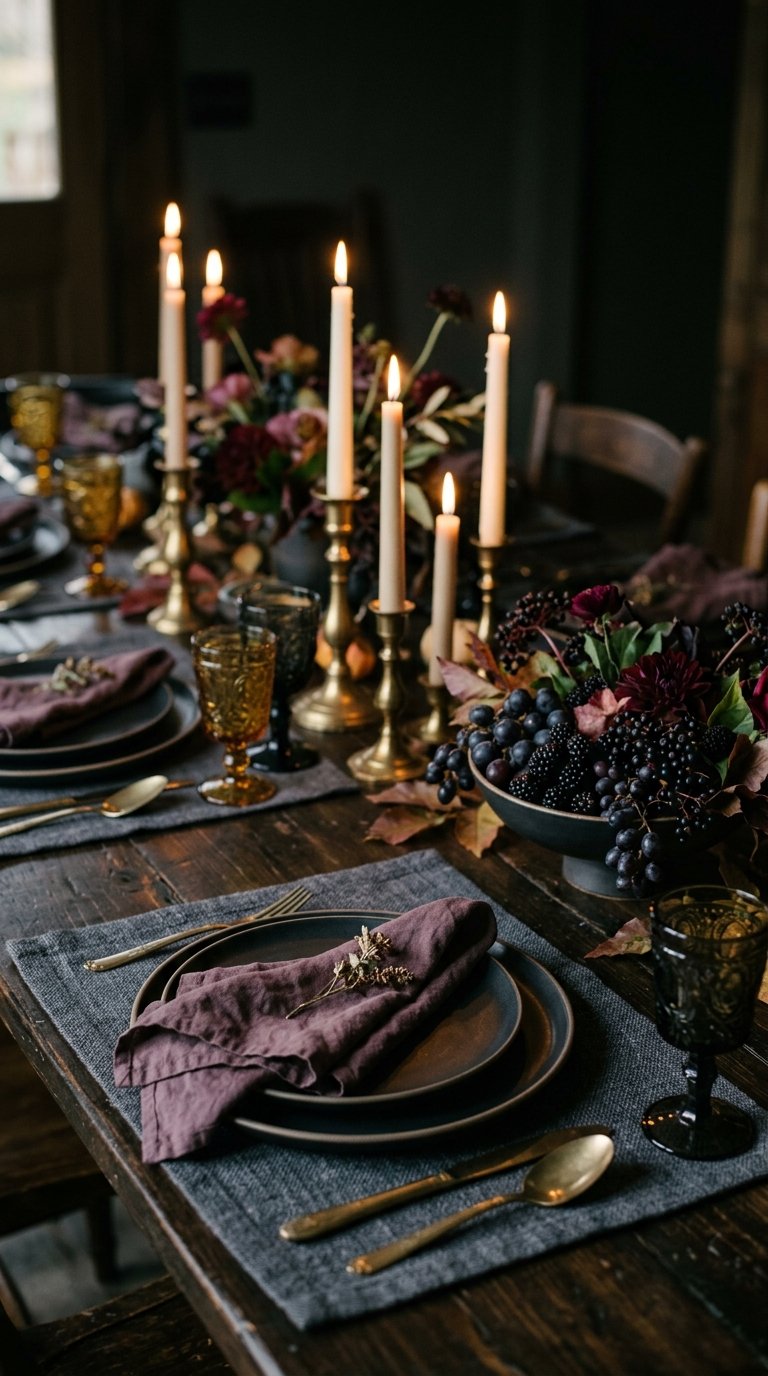
Dark, jewel-toned fall decor feels dramatic and works especially well for evening dinners. Plum or burgundy napkins, charcoal placemats, and brass candlesticks with lit tapers create a rich contrast with a pale or dark wood table. Instead of pumpkins, dark berries, dried dark florals, or deep red dahlias carry the color.
Keep the number of objects low, because dark colors look heavier and can crowd a table quickly. Warm lighting is important, so use candles or a dim lamp rather than bright overhead light. If your table is dark, add a pale linen runner or cream plates so the darker accents stand out.
12. A Harvest Row of Small Bowls and Candles for Long Tables
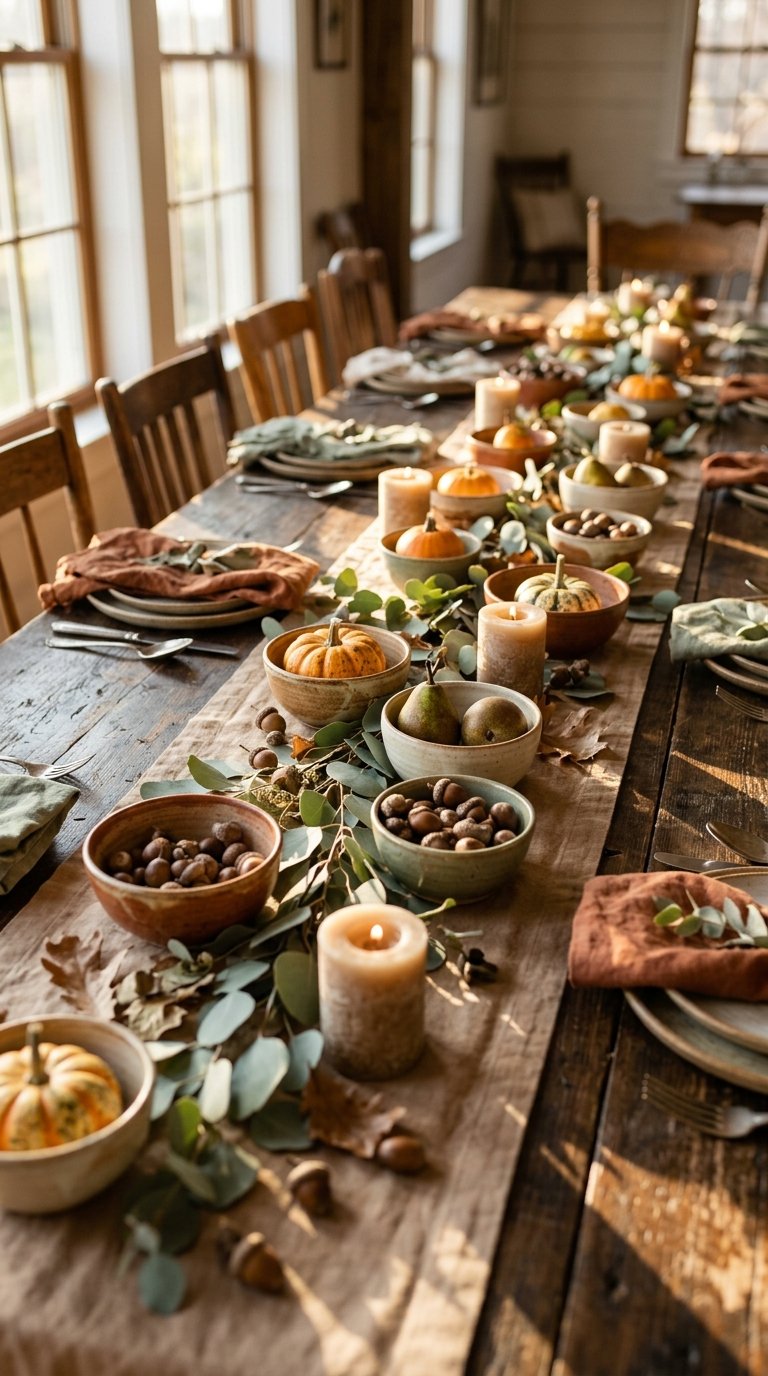
On a long table, one centerpiece can look lost. A repeating row of small elements, such as three low bowls of acorns, mini gourds, and pears, separated by short candles, carries the eye along the length and keeps sightlines open. Rust and sage tones with wheat or eucalyptus make this feel earthy and cohesive.
Space the items evenly but vary the heights slightly so the row doesn’t look mechanical. Use small stoneware bowls or wooden dishes in the same finish, and repeat one accent color in each. If you check pet safety first, you can add greenery along the row, and the whole line can be moved in sections at mealtime.
13. A Tonal, Texture-First Neutral Table
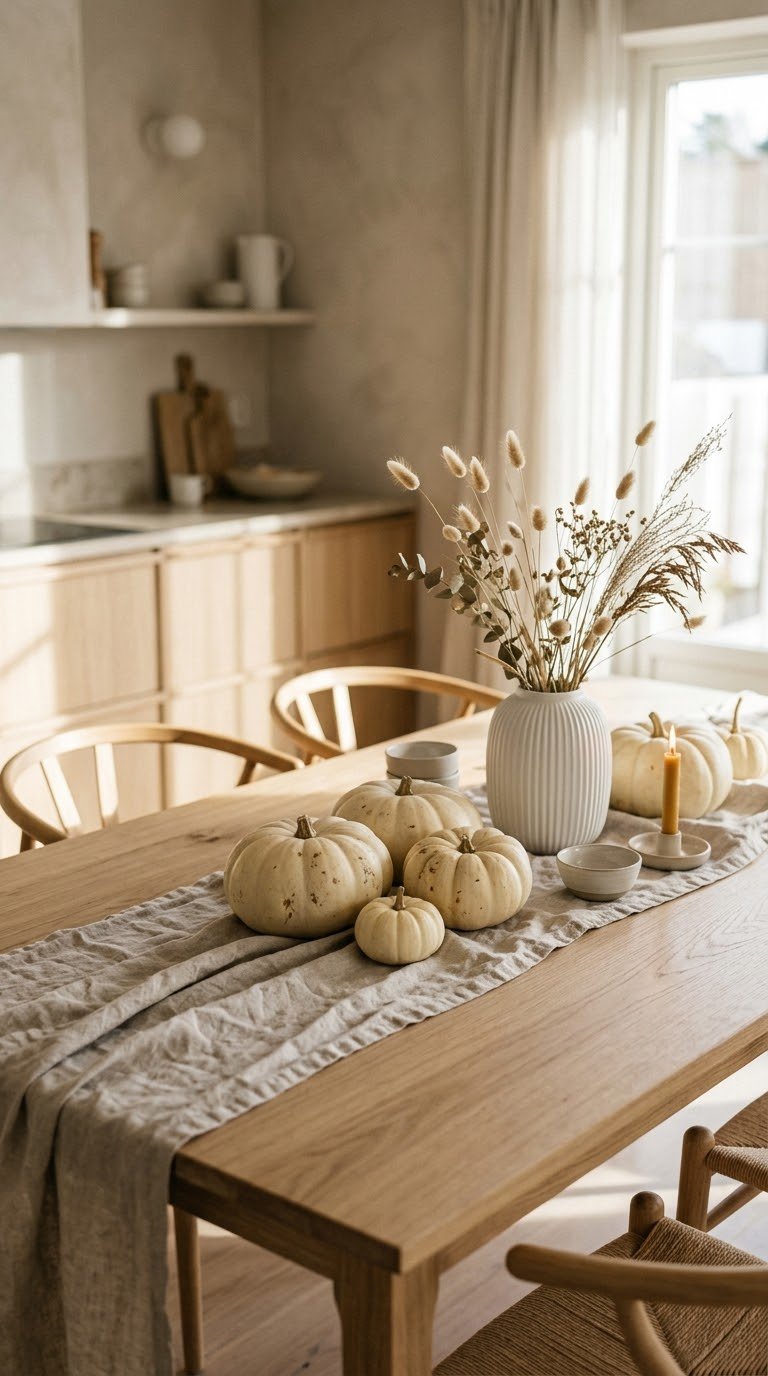
Not every fall table needs strong color. A tonal setup in cream, oatmeal, and soft gold relies on texture instead: a ribbed vase, a woven runner, linen napkins, and white pumpkins with different surfaces. The result feels calm and modern and photographs well in natural light.
Add a single rust or gold accent, such as one napkin color or a candle, so the table doesn’t feel flat. Stick to matte materials, as too many shiny pieces can compete with the soft look. This approach is also easy to carry into winter by swapping the pumpkins for pinecones or evergreen.
Fall Decor for Small and Round Kitchen Tables
Small tables need a lighter hand because every object competes for space. The goal is one statement or a few touches near the table, not many small pieces on it.
14. A Single-Statement Centerpiece for a Small Table
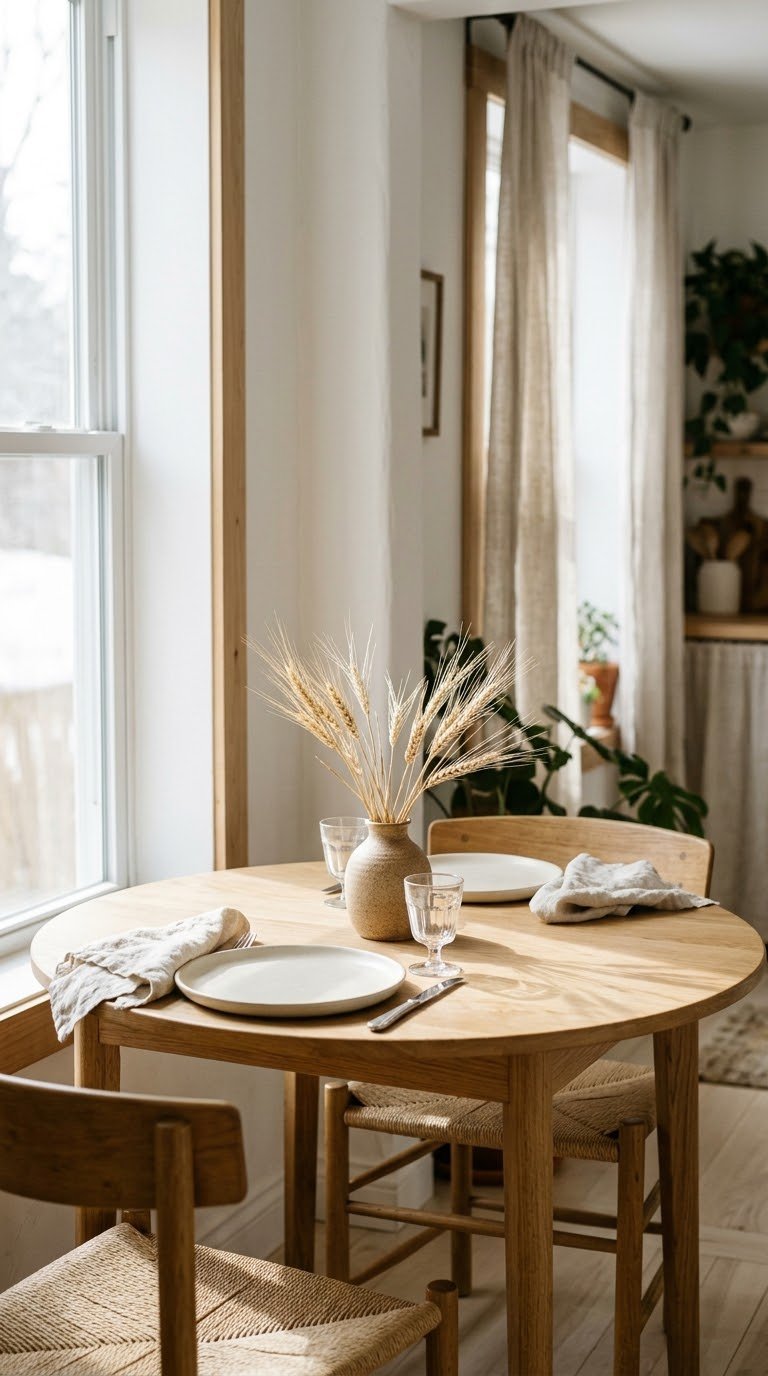
When space is tight, choose one item and give it room. A compact vase of dried stems, one bowl of fruit, or three mini pumpkins on a small tray looks intentional and leaves space for plates. On a round table, a centered arrangement feels natural from every seat.
Skip the runner and rely on placemats or the table surface alone, since a runner plus a centerpiece can crowd a small top. A small lazy Susan helps with sharing food while keeping everything in one footprint. Keep the arrangement low so it doesn’t block views across a short distance.
15. Fall Styling Around the Table: Chairs, Windowsills, and Walls
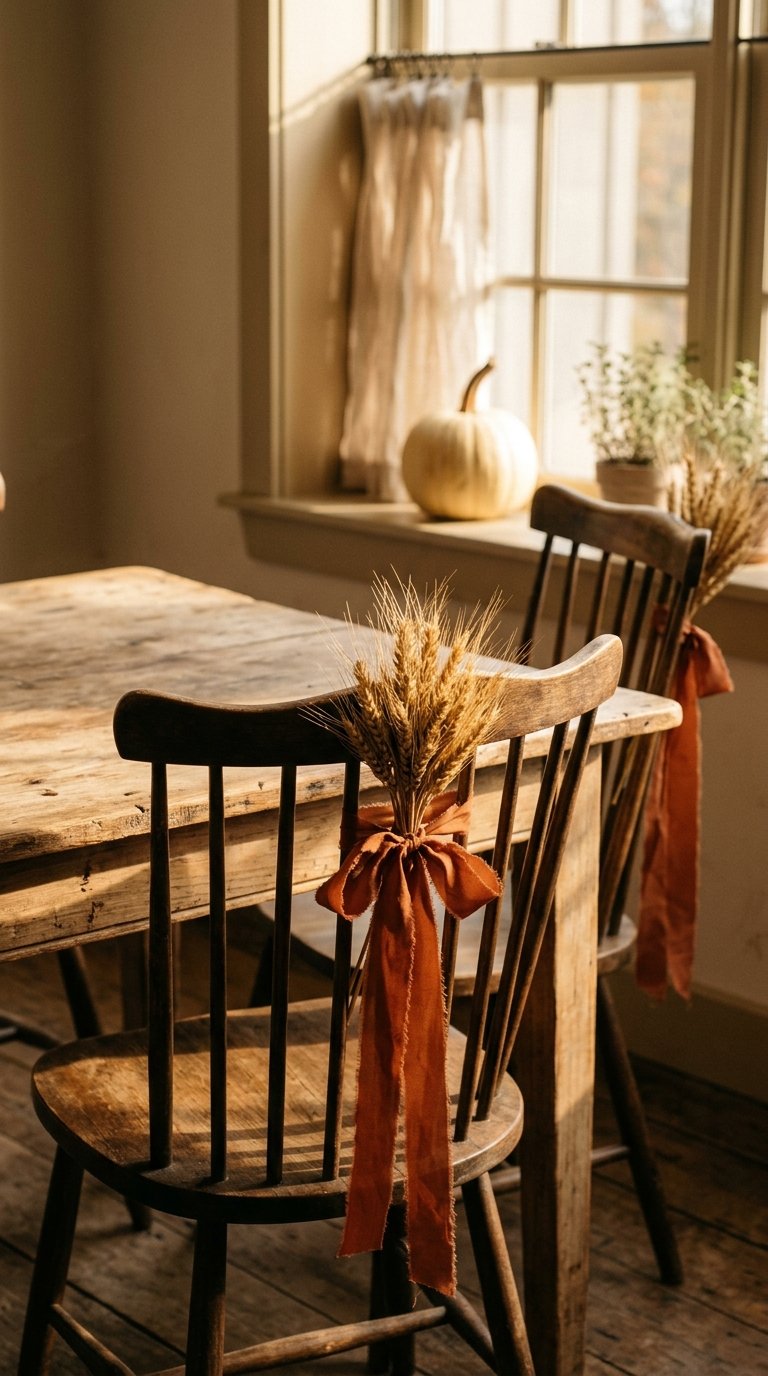
If the table needs to stay almost clear for daily use, move the styling to the surroundings. A small bundle of dried wheat tied to each chair back with ribbon, a pumpkin on a nearby windowsill, or a seasonal print on the wall brings autumn into the nook without taking any table space. The room still feels seasonal, and the table stays ready for meals.
Keep the colors consistent with your napkins or placemats so the touches look connected. Lightweight items work best on chairs, because anything heavy will slide or get in the way. A single rust or gold ribbon repeated on each chair gives a cohesive result.
Real, Faux, or Dried: Choosing Materials for a Table You Use Daily
The right material depends on how long you want the look to last and how much upkeep you can handle. Real items look fresh but need replacing, faux items last all season, and dried items fall in between.
| Type | Pros | Cons | Best for |
|---|---|---|---|
| Real (fruit, pumpkins, flowers) | Fresh look, natural scent, imperfect charm | Needs replacing, can mark surfaces | Short-term styling, hosting |
| Faux | Lasts all season, no upkeep | Can look artificial if low quality | Everyday tables, families |
| Dried | Long-lasting, natural texture | Fragile, can shed | Centerpieces and vases |
Many people mix them, for example a faux pumpkin beside a real pear bowl, or dried stems in a ceramic vase. When choosing faux pieces, look for matte finishes and varied color, since shiny, uniform items tend to look artificial.
Light and Scent: The Details That Make a Fall Table Feel Cozy
Lighting changes how every color on the table looks. Taper candles add height and glow, while flameless candles are a safer option around young children and pets. Keep real flames away from dried stems, leaves, and fabric, and never leave them unattended.
A small lamp nearby can warm up a kitchen at dusk, especially if the overhead light is bright. For scent, fruit, cinnamon sticks, or a simmer pot of apples and spices adds fragrance without candles. Keep scents light at the table itself, since strong ones compete with the food.
Easy Fall Table Decor on a Budget
A seasonal table doesn’t need a large spend. Start by shopping your home for wooden bowls, boards, candlesticks, vases, and linens you already own, since these are often the base of the best looks. Add foraged elements such as branches, leaves, acorns, and dried grasses, checking local rules and avoiding protected areas.
If you want to buy something, choose one lasting piece, such as a good runner or a set of napkins, and style the rest from what you have. Secondhand shops are also useful for vases, bowls, and candle holders in autumn-friendly finishes. Spending on one quality piece usually looks better than many small, cheap items.
Keeping a Fall Table Practical for Families, Kids, and Pets
A table that looks good but doesn’t work will be cleared away quickly. Keep decor on a tray, board, or lazy Susan so you can lift it in one move, and use mats or trays under wet fruit, vases, and candles to prevent rings and wax on the wood.
For children, place breakables toward the center and use sturdy or faux pieces. Some plants and decorative items are unsafe for pets, so check with a vet if you’re unsure. Machine-washable placemats and napkins also save effort, and keeping decor to one focal point helps avoid the common mistakes of too many colors, everything at the same height, or a centerpiece that blocks conversation.
How to Move Your Table from Early Fall to Thanksgiving in Three Swaps
You don’t need to restyle the whole table as the season moves on. Three small changes carry the look forward.
- Swap the focal point. Replace pumpkins with pears, apples, or branches and wheat for a more harvest feel.
- Change the napkins or runner. Move from lighter autumn tones to deeper burgundy, plum, or brown.
- Add light. Increase the number of tapers or add a small lamp for darker evenings.
The base and layout stay the same, so the update takes only a few minutes.
FAQS
How tall should a fall centerpiece be on a kitchen table?
Keep it low enough that people can see each other across the table when seated. If you want height, choose slim or see-through elements such as thin branches or tapers, which add vertical interest without blocking views.
How can I make a fall table look expensive without spending much?
Use a limited palette, natural textures like wood and linen, and avoid clutter. One well-chosen centerpiece with simple layers usually looks better than many small decorative items.
How do I protect a wood table from candles and wet fruit?
Use coasters, trays, or mats under candle holders, vases, and fruit bowls. A runner or board also helps catch wax drips and moisture before they reach the wood.
What fall colors suit a modern kitchen?
Warm neutrals such as cream and oatmeal, with one accent in rust or deep green, feel modern and calm. Matte ceramics and linen add texture without clutter.
Can I decorate a table I eat at every day?
Yes, if the decor is easy to move. Use a tray, board, or lazy Susan, keep the edges clear for plates, and choose washable linens.
Build Your Fall Table One Layer at a Time
The best fall kitchen table is the one you enjoy using. Start with a single centerpiece and one textured layer, such as a linen runner or woven placemats, then add light. If your table is small, pick one statement piece; if it’s long, repeat small elements down the center.
Once the base feels right, change one color, one candle, or one set of napkins as the season moves toward Thanksgiving. Save the ideas that suit your kitchen, and start with whichever takes the least effort today.
SEO Details
SEO Title: 15 Fall Kitchen Table Decor Ideas for a Cozy Autumn Setup
Meta Description: Fall kitchen table decor ideas that look beautiful and still work for real meals: easy centerpieces, cozy layers, and tips for small tables.
URL Slug: fall-kitchen-table-decor-ideas
Primary Keyword: fall kitchen table decor ideas
Suggested Featured Image Filename: fall-kitchen-table-decor-ideas-hero.jpg
Suggested Featured Image Alt Text: Wooden kitchen table styled for fall with a linen runner, bowl of pears and apples, dried wheat vase, and rust taper candles