23 Kitchen Cabinet Ventilation Grill Designs
Open a pantry door on a warm day and you can sometimes feel it straight away: the air inside is stale, a little damp, and nothing like the rest of the kitchen. Spices lose their smell faster, packets go soft at the edges, and a cabinet that houses an oven or a fridge can feel genuinely hot to the touch. Most of us never think about airflow inside a closed box until the box starts causing problems.
A ventilation grill is a small fix with a surprisingly big effect. It is simply an opening, covered in a neat panel, that lets air move in and out of the cabinet. That movement stops moisture from sitting still, lets heat escape, and keeps stored food and dishes in better condition. The good news is that a vent does not have to look like an afterthought. Done well, it becomes part of the door itself.
This article walks through 23 different grill designs, from classic wooden louvers to brass details, rattan panels, and vents you can barely see at all. Every idea works in a real kitchen, and each one suits a different cabinet, style, or budget. Pick the ones that fit your doors, and leave the rest for another day.
1. Wooden Louvers That Look Like Part of the Door
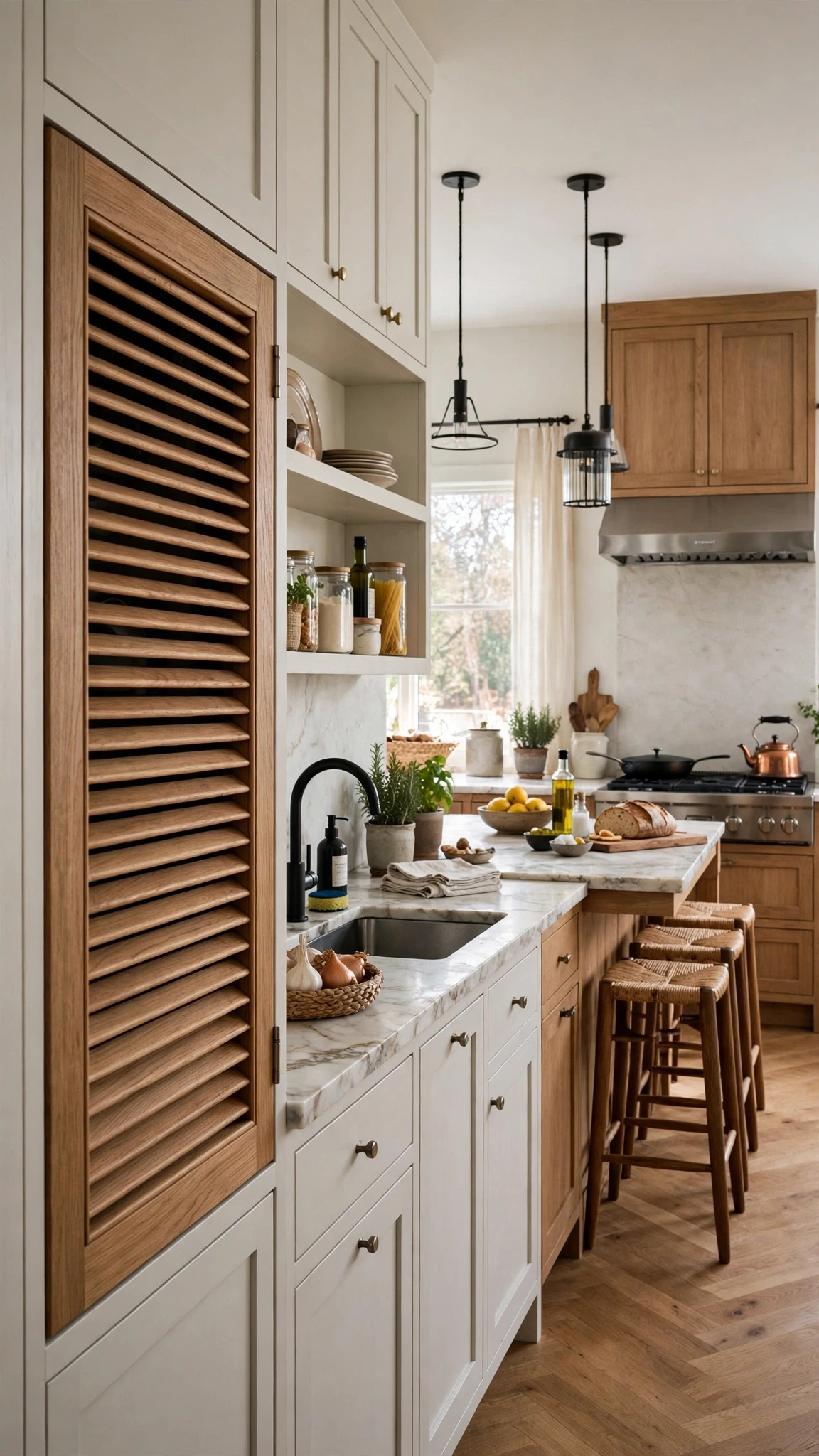
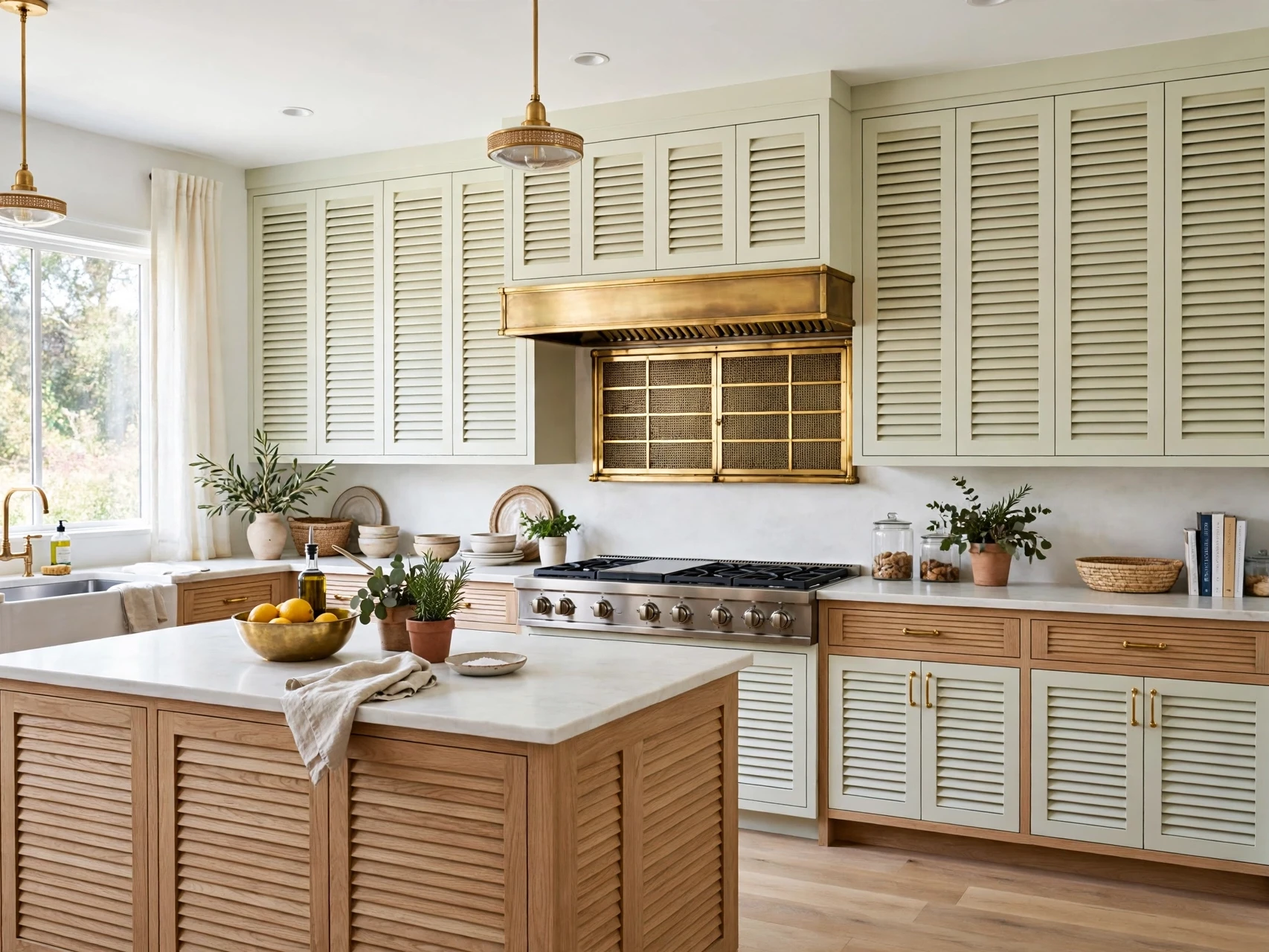
A wooden louvered panel is the easiest place to start, because it already looks like cabinetry. The angled slats are usually set into the door itself, painted or stained to match, so the vent reads as a design detail rather than a repair. Air passes through the gaps while the contents stay mostly out of sight.
It suits traditional and transitional kitchens best, and it is forgiving to fit. Measure the door, cut one clean opening, and fix the panel in place with the slats angled downwards, so dust settles less and the view inside stays hidden.
2. Brass Grills as a Small Jewellery Detail
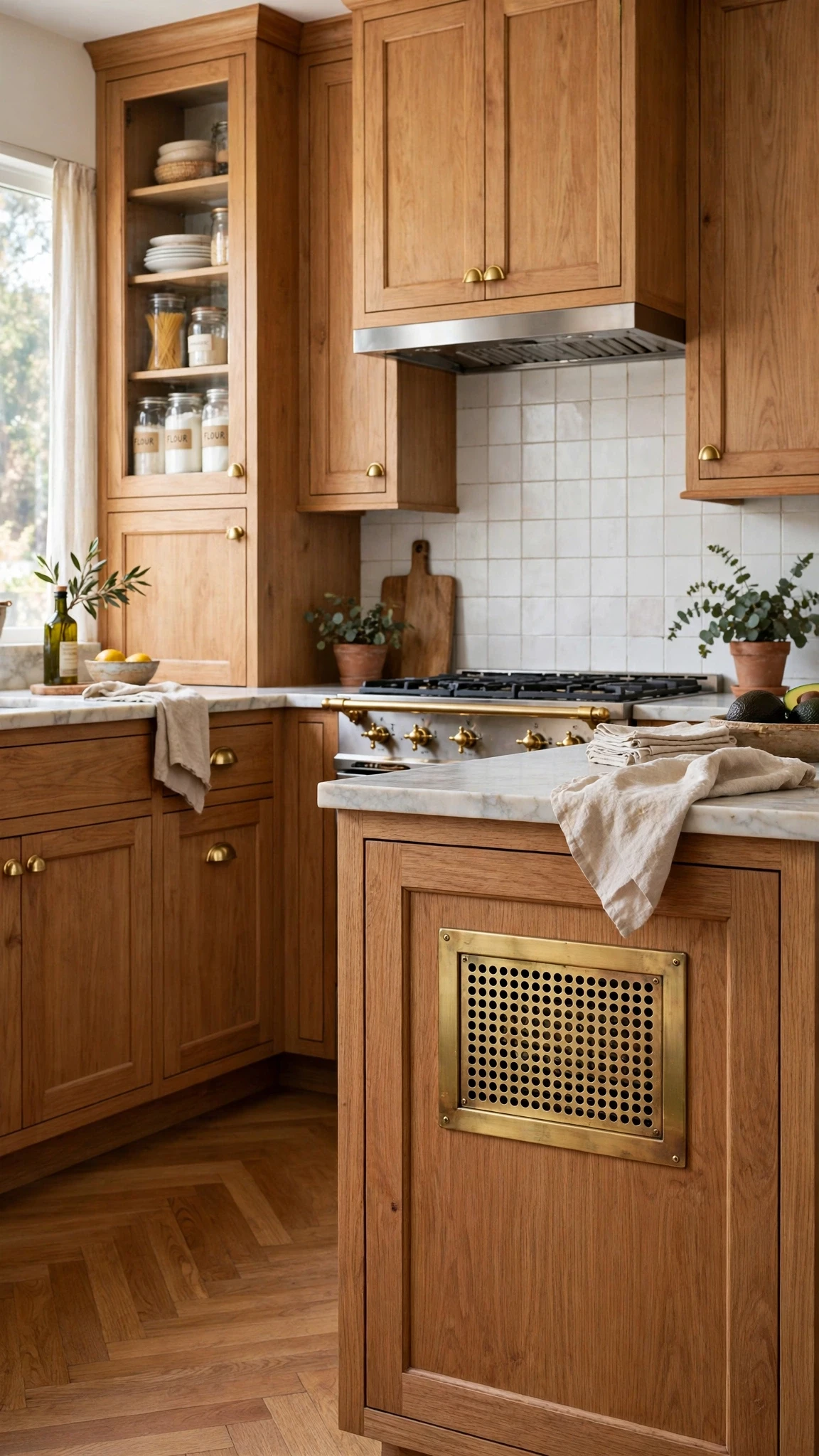
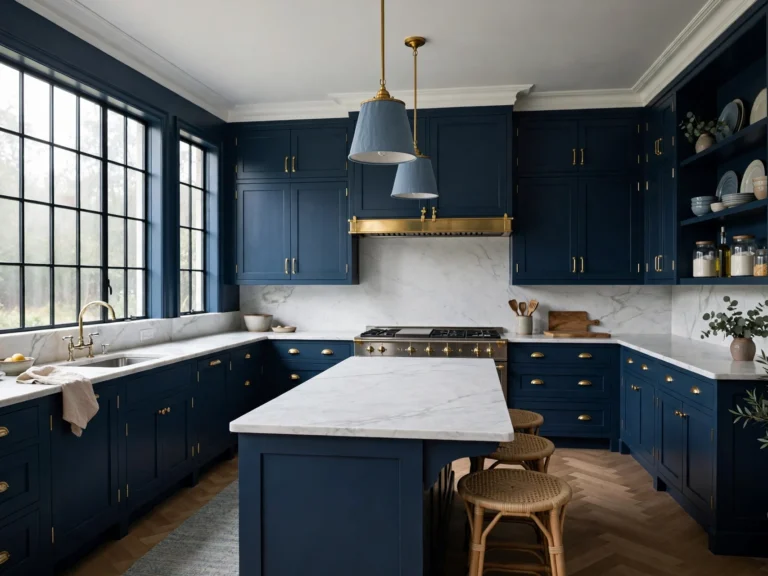
Brass does something a plain vent cannot: it turns a practical hole into a finishing touch. A slim brass grill on a painted door catches the light the same way a handle or a tap does, so the whole kitchen feels more considered. It works especially well on dark green, navy, or cream cabinets.
Brass is also practical, since it resists corrosion and wipes clean with a soft cloth. Keep the panel small and centred, match it to your existing hardware finish, and the vent will look intentional rather than added on.
3. Black Metal Inserts for a Modern Kitchen
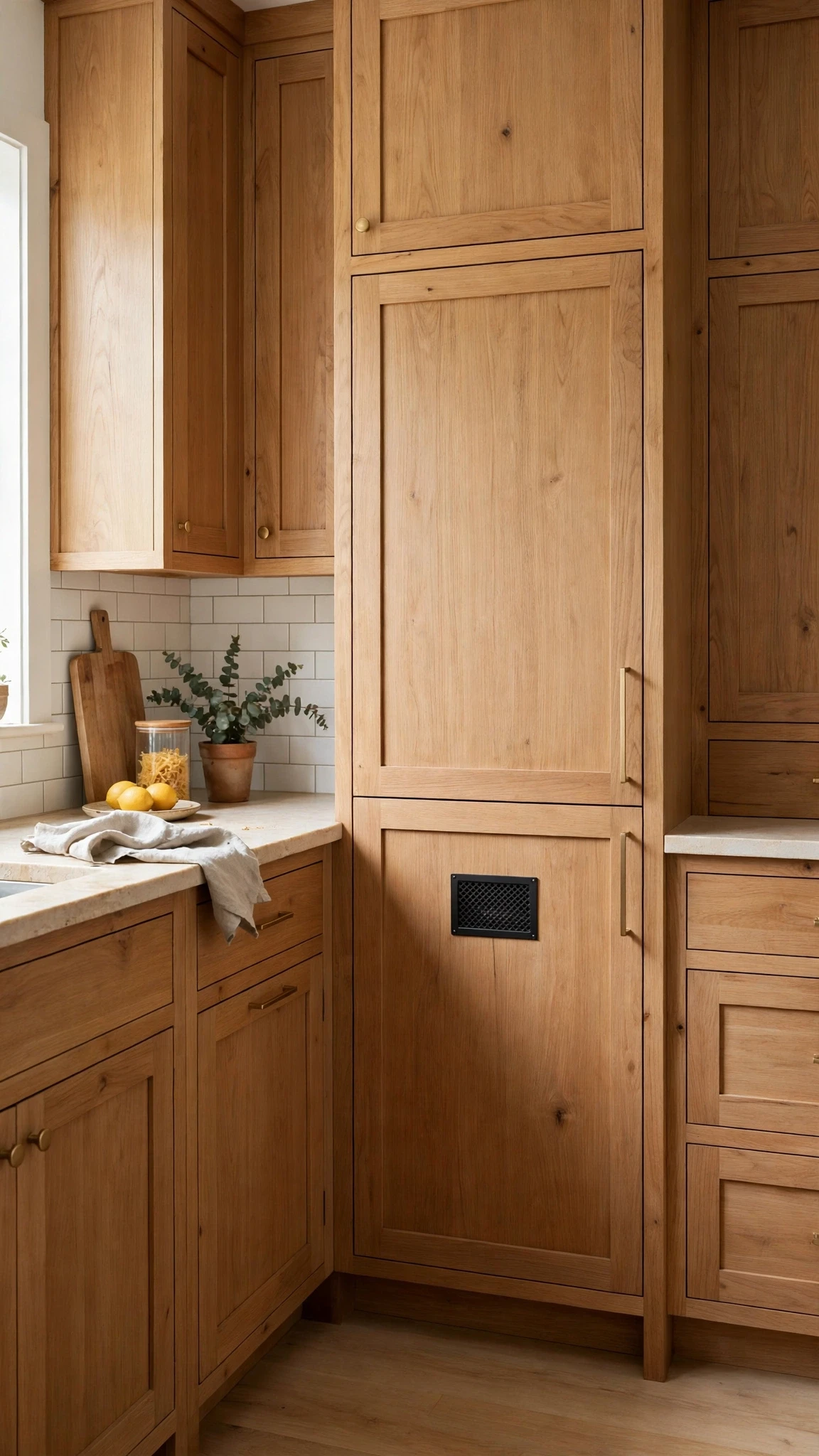
If your kitchen leans modern, a black metal insert keeps the look sharp without shouting. The dark panel sits quietly against white, oak, or grey doors, and the pattern of holes or slots gives the door a bit of texture. It is a good match for black handles, black taps, and other dark hardware.
Metal inserts are strong, easy to clean, and simple to size. Choose a powder-coated finish so the colour stays even, and place the insert where it lines up with the door’s proportions instead of floating randomly in the middle.
4. Laser-Cut Panels That Work Like Art
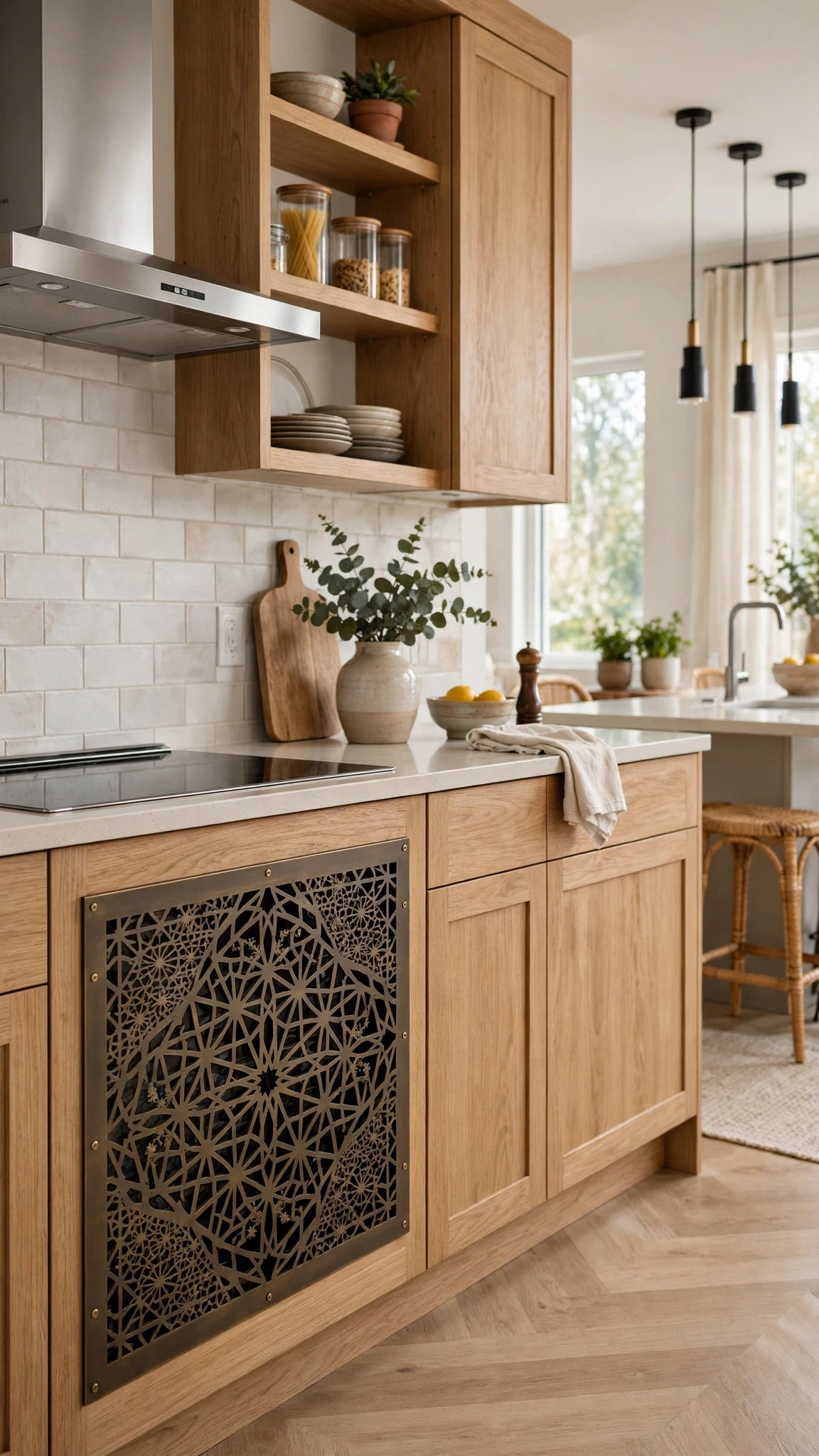
A laser-cut panel is the one to choose when you want the vent to be a feature in its own right. Fine patterns, leaves, lattices, or simple geometric lines are cut cleanly through metal or wood, so air moves freely and the door gains a piece of decoration at the same time. It is a lovely option for a pantry door or an island panel that people actually look at.
Because these panels are made to order, you can match the pattern to something else in the room, like a splashback or a light fitting. Just check that the open area is generous enough for real airflow, since a very dense pattern can look beautiful and still barely breathe.
5. Geometric Cut-Outs for a Bold Door
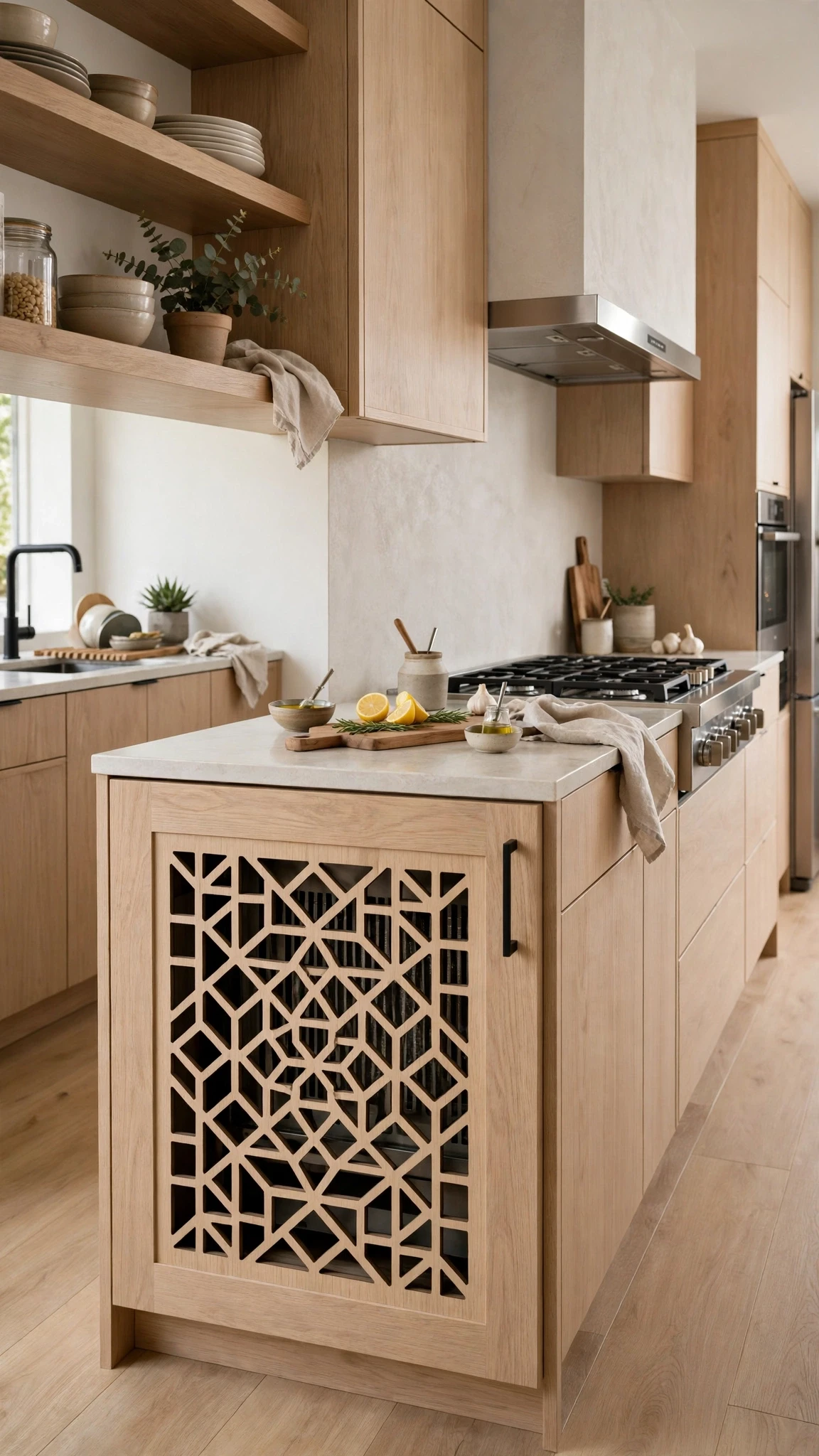
Geometric grills suit kitchens that already have strong shapes, like flat-front doors or a bold island. Triangles, hexagons, or a simple lattice pattern give the door a clear focal point, and the open cuts move plenty of air. They work best on upper cabinets or a tall pantry door, where the pattern is at eye level.
Keep the rest of the door plain so the pattern has room to breathe. One geometric door in a run of plain ones looks deliberate; a whole kitchen of them can feel busy very quickly.
6. Rattan and Cane Panels for a Warm, Airy Feel
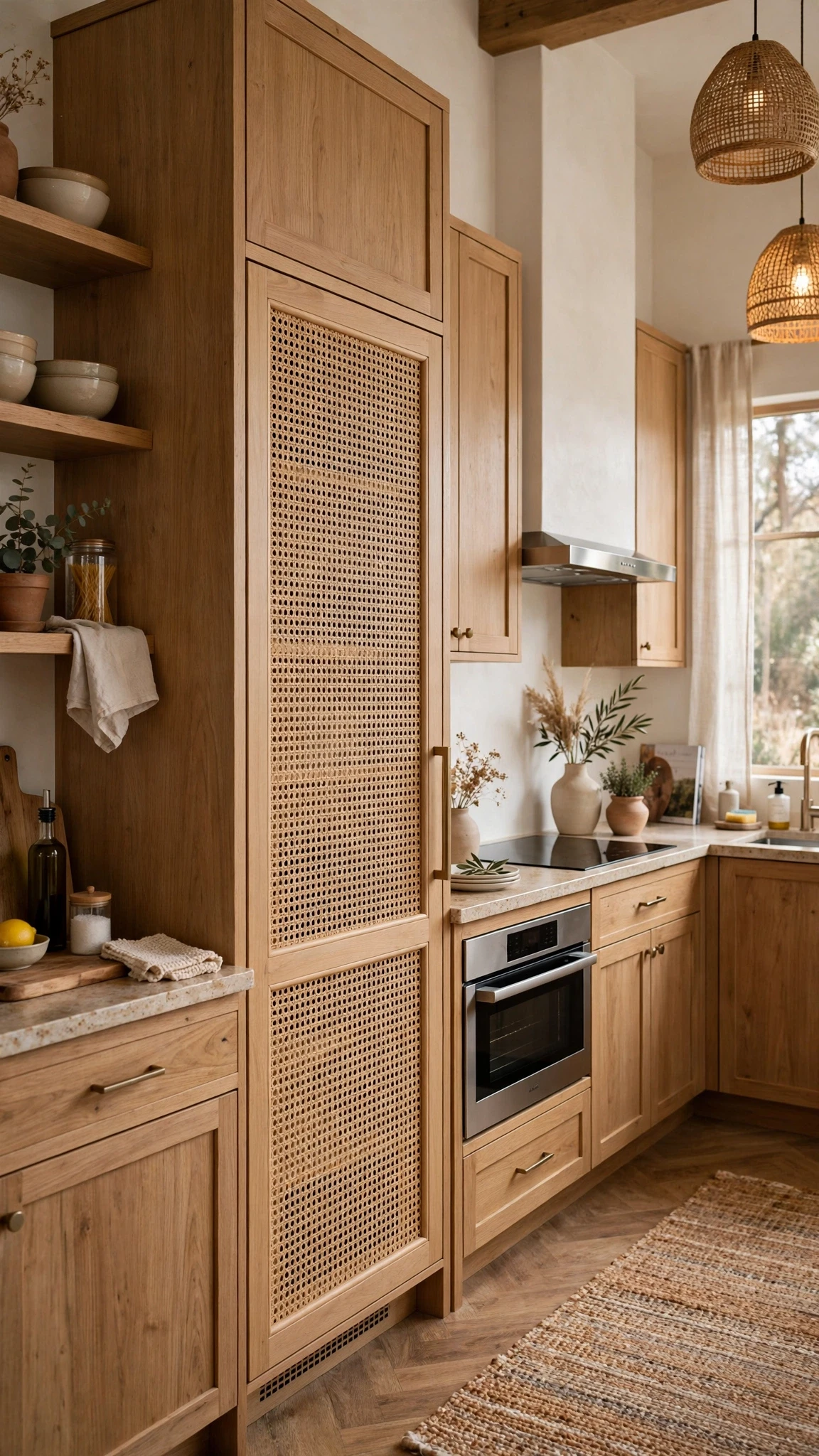
Rattan and cane are naturally breathable, which makes them an easy fit for ventilation. The woven texture lets air through while softening a kitchen that might otherwise feel hard and flat. It suits warm, relaxed kitchens, coastal rooms, and anyone who likes a bit of natural texture.
These panels need a little more care than metal, since they do not like constant steam or splashes. Keep them on upper cabinets or pantry doors away from the hob, dust them with a dry brush, and they will stay looking good for years.
7. Reclaimed Wood Slats for a Rustic Kitchen
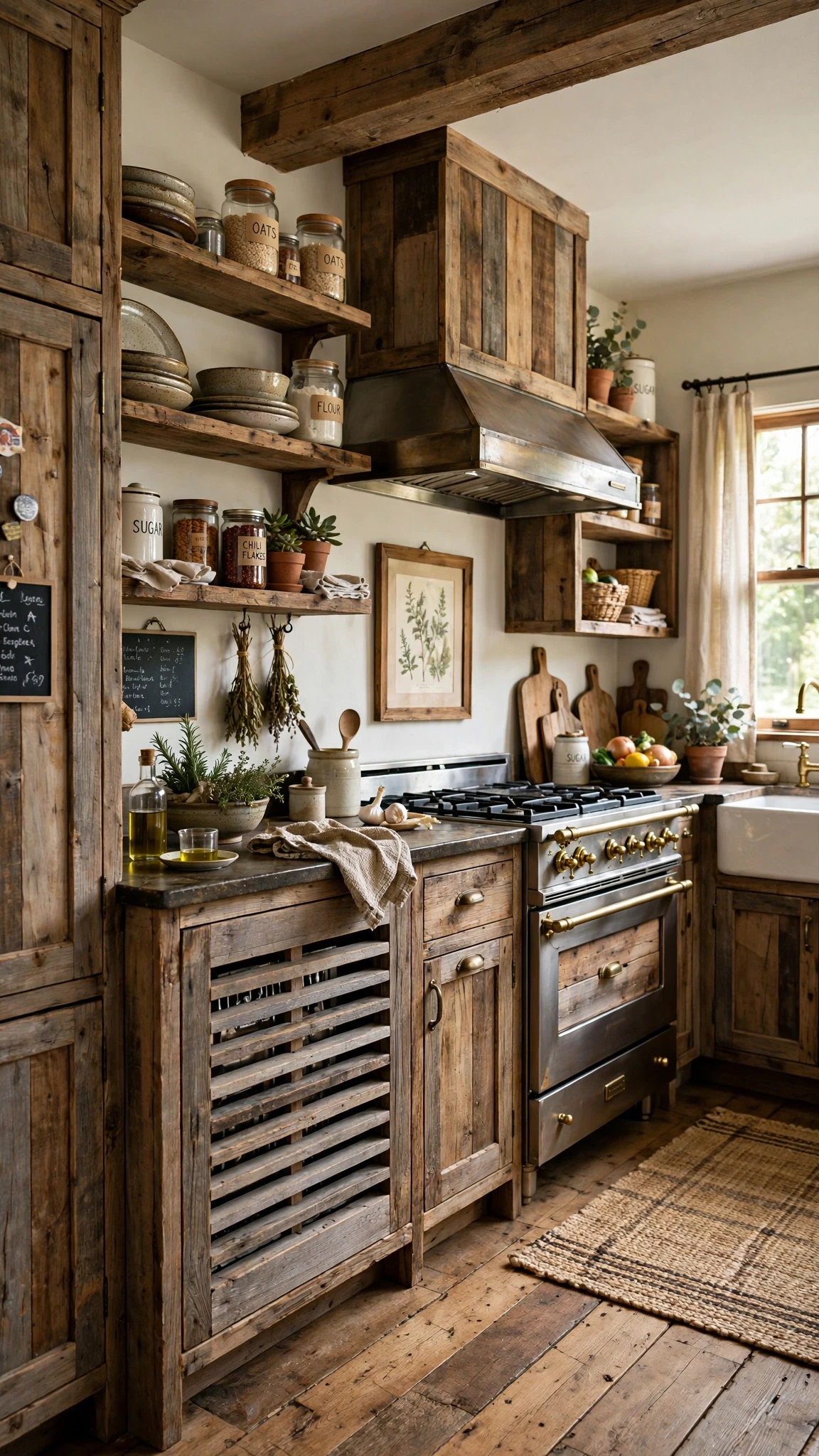
Reclaimed wood brings character that new timber cannot fake: varied grain, small knots, and a warm, lived-in colour. Cut into slats and fitted as a vent panel, it suits farmhouse kitchens, rooms with exposed beams, and homes where stone and wood already do a lot of the talking.
Each panel will look slightly different, which is part of the appeal. Seal the wood well so it handles kitchen humidity, and let the slats sit slightly proud of the door so the shadow lines add depth.
8. Horizontal Slats for a Vintage Look
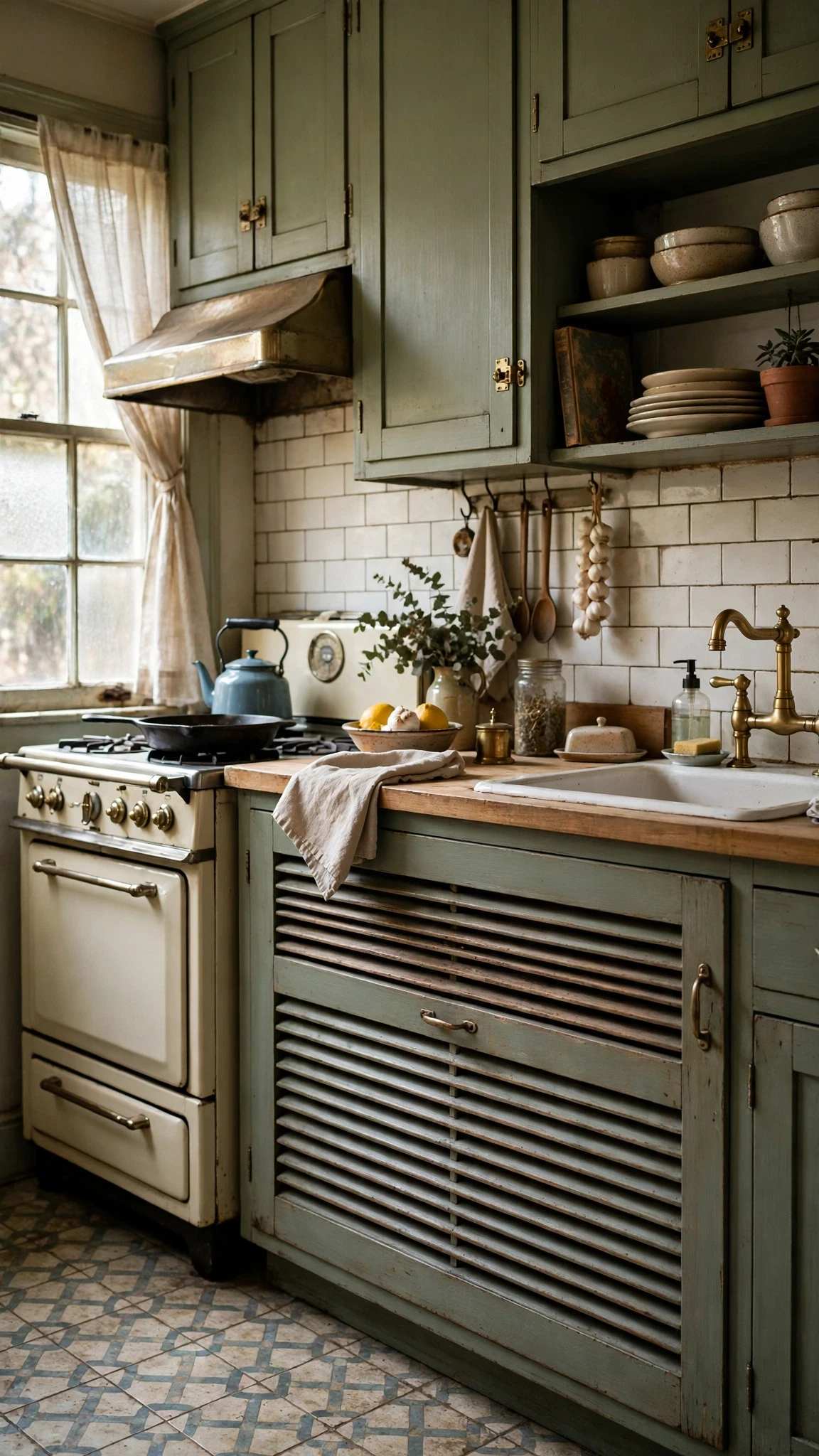
Horizontal slats have a gentle, old-fashioned feel that suits shaker doors and vintage-style kitchens. The lines run calmly across the door, adding texture without competing with the rest of the room. They are a good choice for base cabinets and islands, where a horizontal line feels natural.
Wood slats can be stained to match existing cabinetry, and the gaps can be set wide enough for real airflow. Keep the slats evenly spaced, since uneven gaps are the first thing the eye catches.
9. Slim Vertical Grills for Tall Pantry Doors
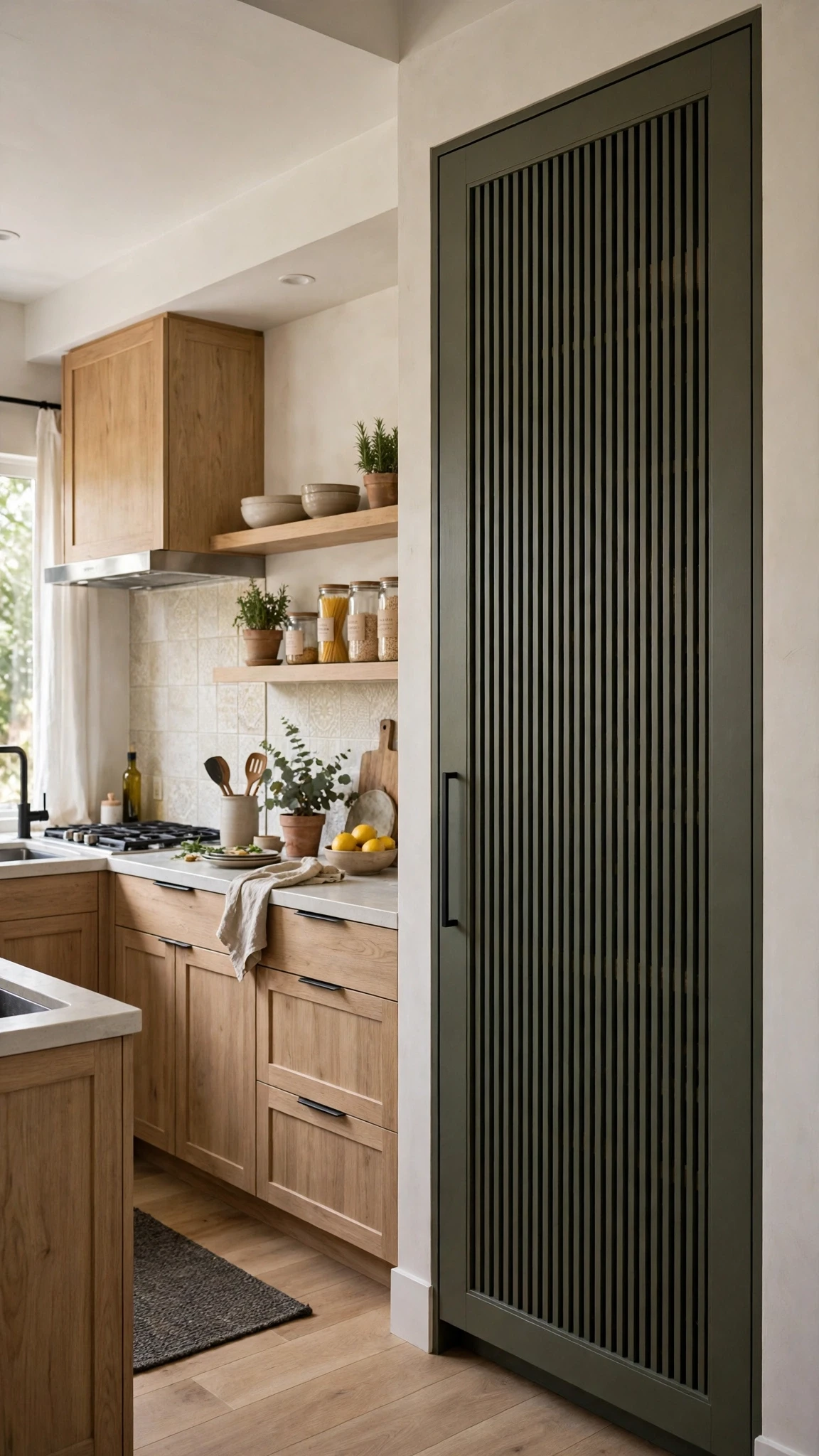
Tall pantry cabinets are the ones that suffer most from still air, because warm air rises and gets trapped at the top. A slim vertical grill lets air travel the full height of the door, from bottom to top, instead of sitting in one warm pocket. It also keeps the door looking sleek, since the panel follows the door’s own long lines.
Place the grill along one edge of the door or in a pair of narrow strips, and pair it with a small gap at the top or bottom of the cabinet if you can. That way air has both an entry and an exit, which is what actually keeps things fresh.
10. Vertical Slat Panels for a Clean Modern Run
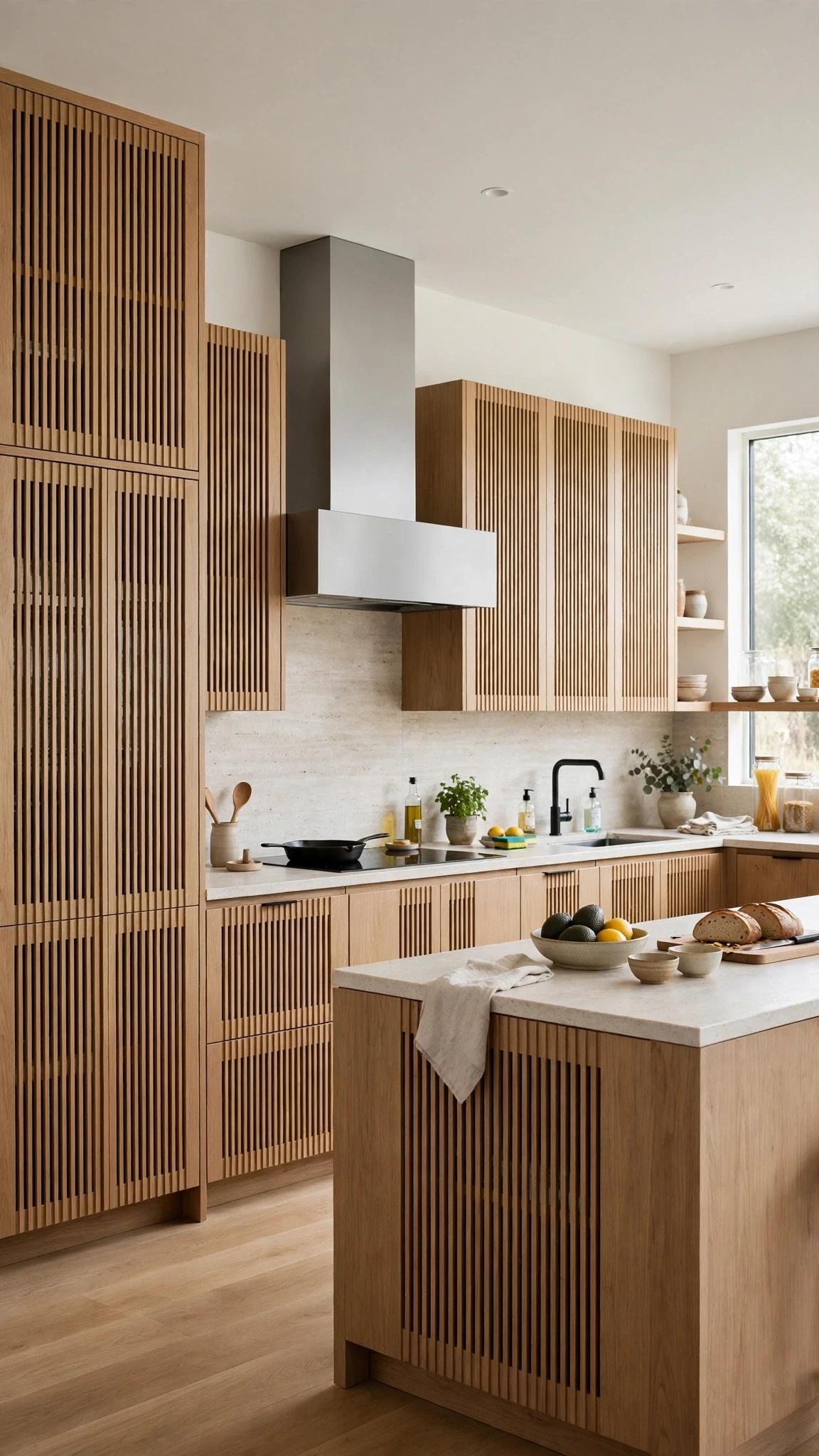
Vertical slats give a modern kitchen a calm, ordered rhythm. A row of tall, even slats on a bank of cabinets looks intentional and tidy, and the gaps between them move air along the whole run. It is a good solution when several tall cabinets sit side by side and all of them need help.
Paint or stain the slats to match the doors exactly, so the vent reads as part of the furniture. Keep the slat width consistent across doors, or the run will look patched together instead of planned.
11. Vents Hidden Behind the Door Moulding
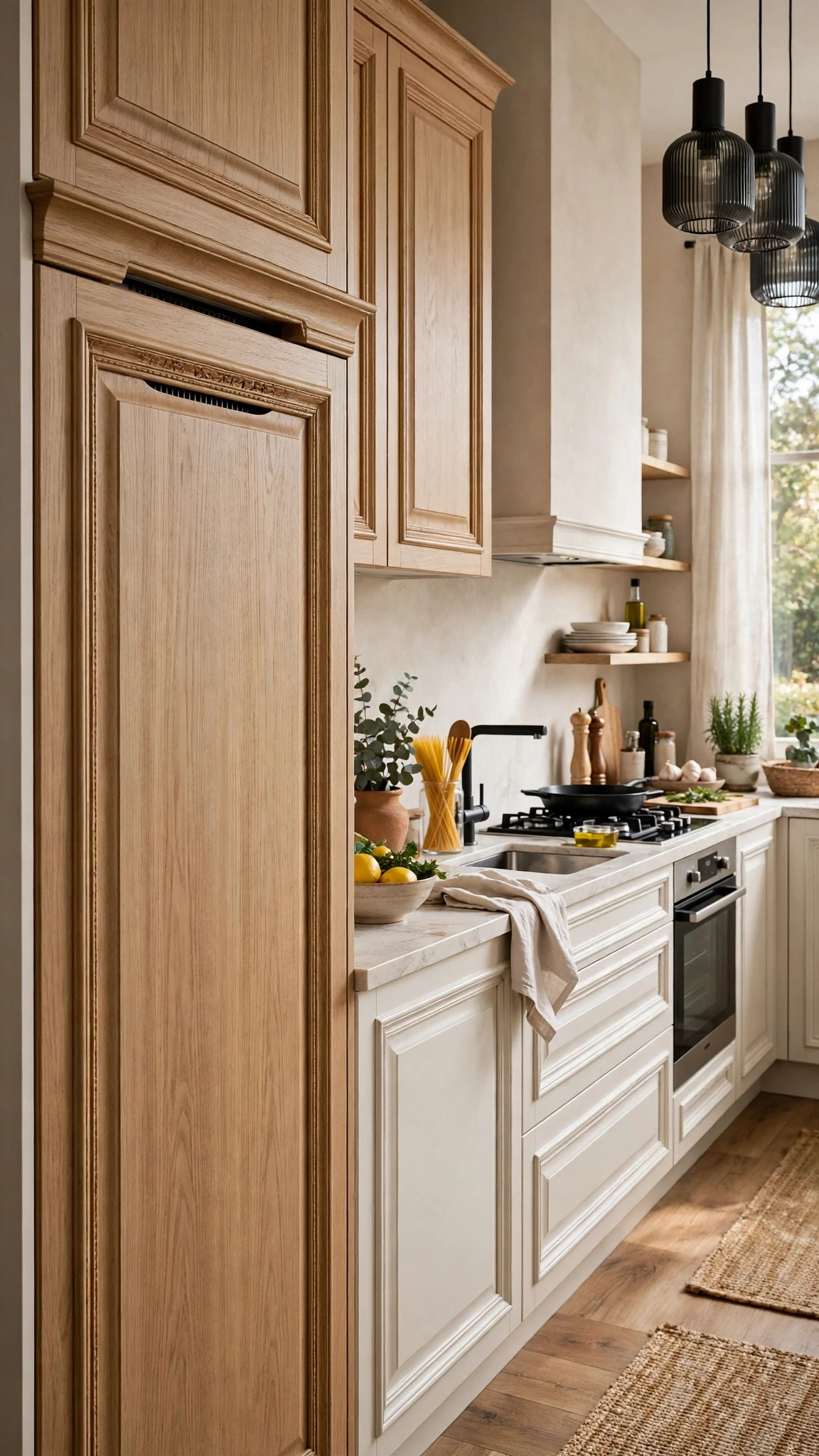
Some kitchens look better with no visible vent at all, and that is where a hidden vent earns its place. The opening sits behind a piece of moulding or trim, so air moves through a shadow gap while the door front stays clean. From a normal standing distance, nobody would know it is there.
This is a more careful job than a surface grill, since the trim has to be measured and cut precisely. But for a high-end kitchen where every door front matters, it is worth the effort, and the airflow is just as real as a visible panel.
12. Toe-Kick Grills You Barely Notice
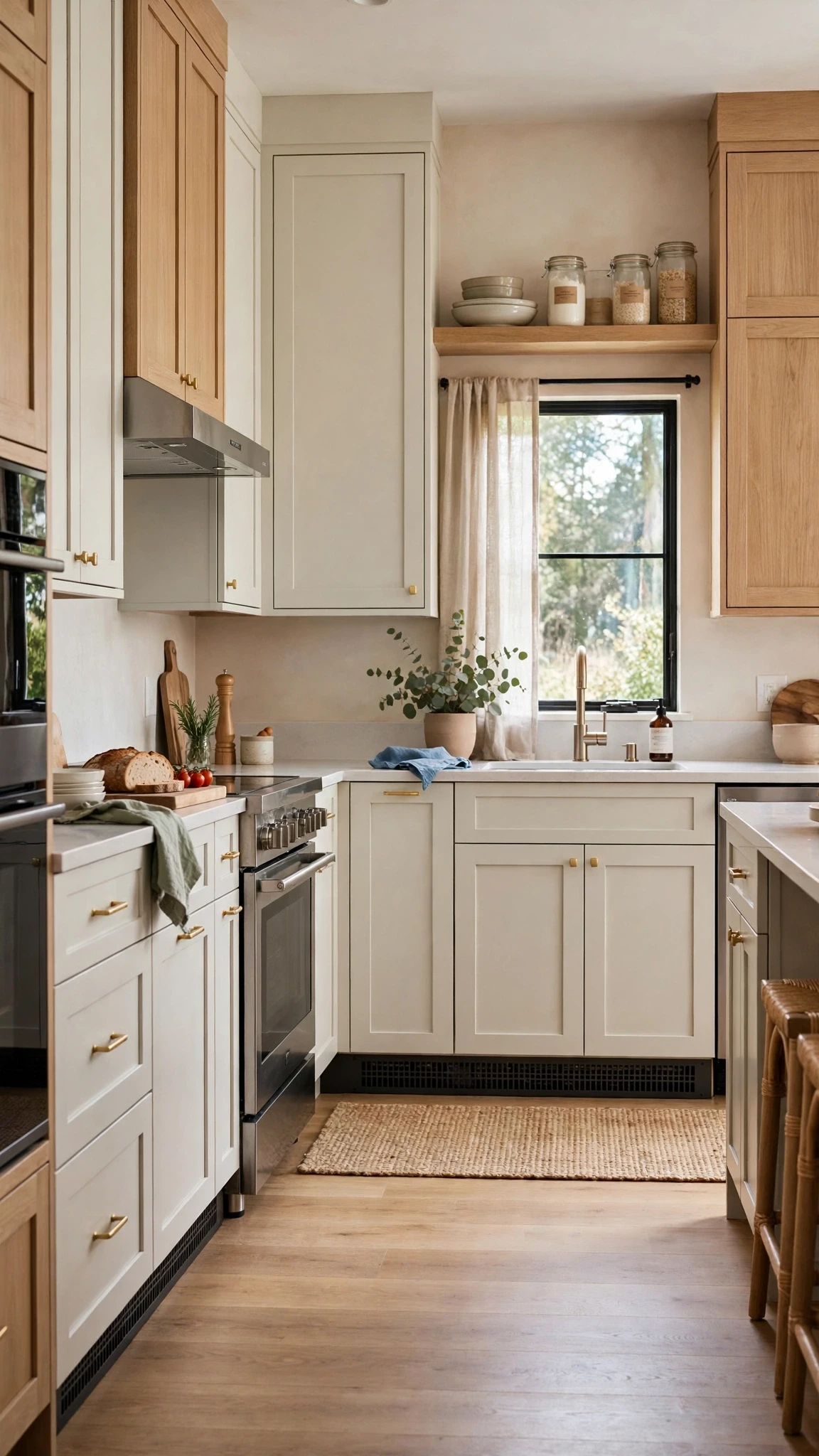
The toe-kick, the recessed strip at the bottom of base cabinets, is one of the most useful places for a vent. Air enters low, travels up through the cabinet, and escapes higher up, which is exactly the path warm, damp air wants to take. Because the grill sits near the floor, it barely registers visually.
Toe-kick grills are also kind to appliances that sit low, like a built-in oven or a warming drawer. Match the panel to the plinth colour, keep it clear of dust and crumbs with a quick vacuum now and then, and it will do its job quietly.
13. Top-Mounted Grills That Let Hot Air Out
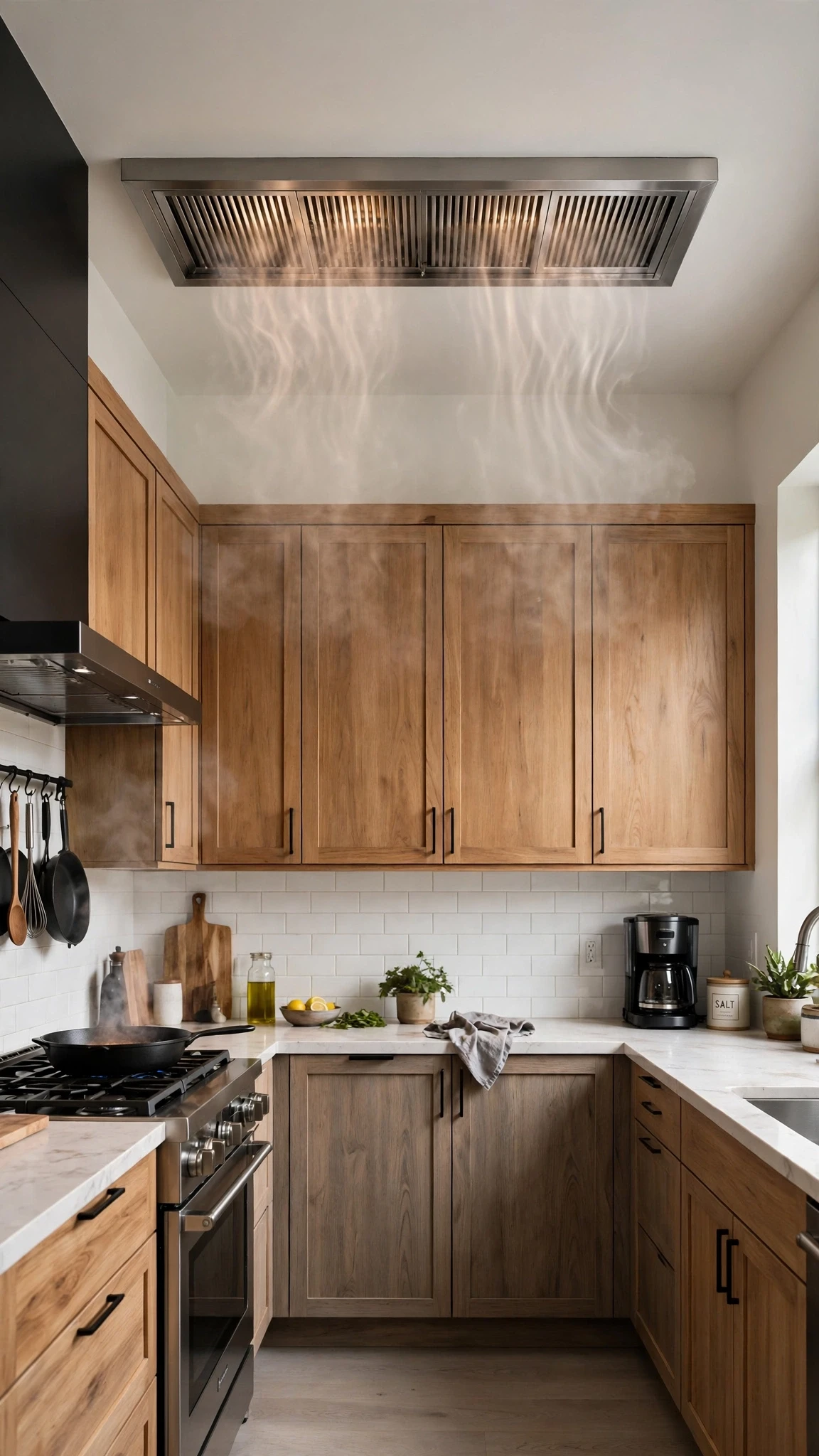
Hot air rises, so a vent at the top of a cabinet is doing the most useful work of all. A top-mounted grill gives that trapped warm air somewhere to go, which matters most above ovens, microwaves, and tall fridge housings. It is a simple panel, often adjustable, fitted into the top rail or the cornice of the cabinet.
Because the grill sits high, it is rarely noticed, which makes it a good partner for a more decorative vent lower down. Together they create a proper through-draught: cool air in at the bottom, warm air out at the top.
14. Hinged Slotted Panels for Easy Cleaning Access
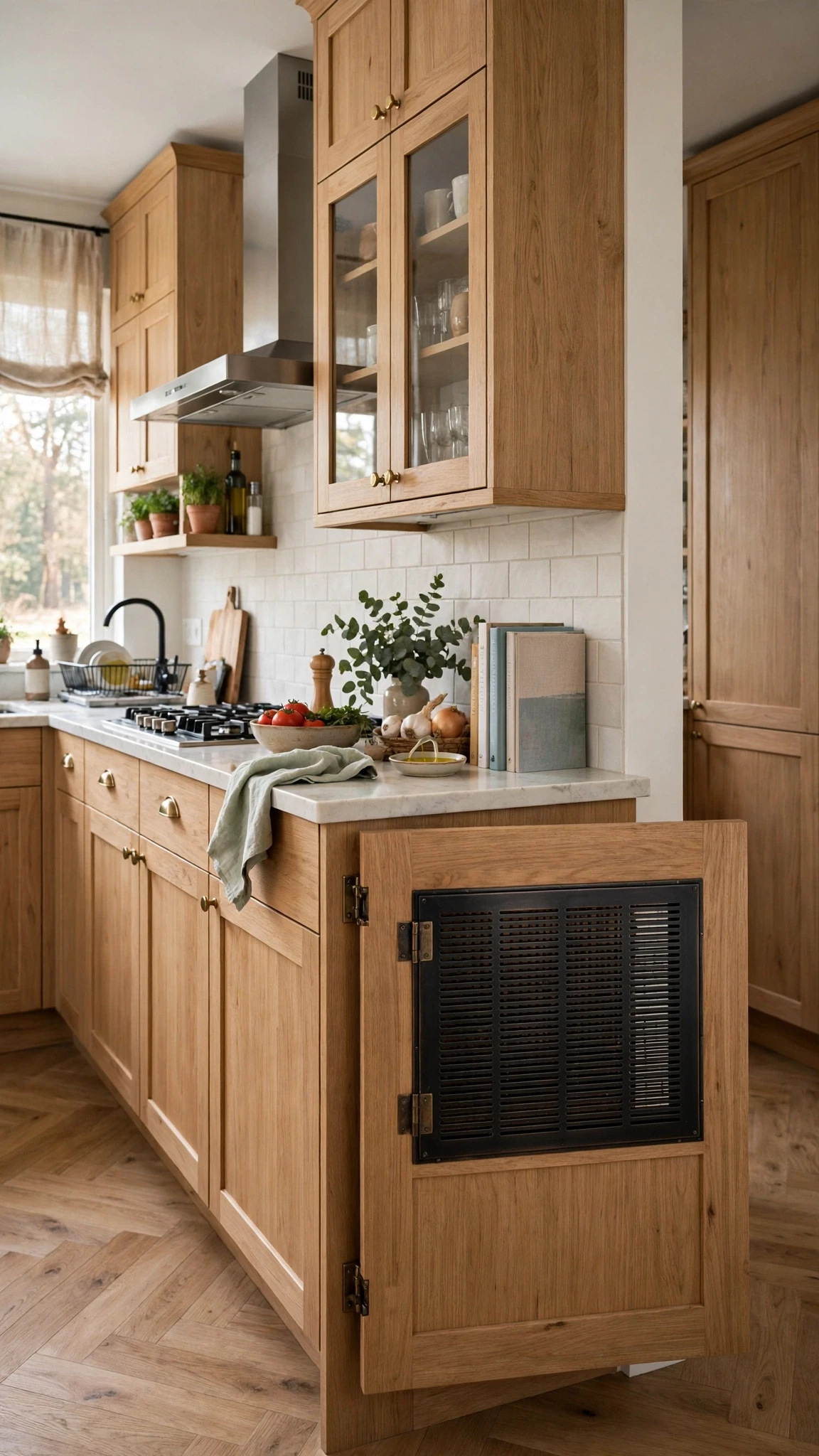
A vent only works if it stays clean, and a hinged panel makes cleaning genuinely easy. The slotted panel swings open on small hidden hinges, so you can wipe the inside, clear dust from the opening, and check the cabinet behind it without tools. It is a practical choice for cabinets that store electronics, small appliances, or anything that sheds dust.
Hinged panels also suit renters and anyone who likes to change things, since they can be fitted and removed without disturbing the door. Keep the hinges small and the panel flush, so it reads as part of the door when closed.
15. Magnetic Panels You Can Lift Off in Seconds
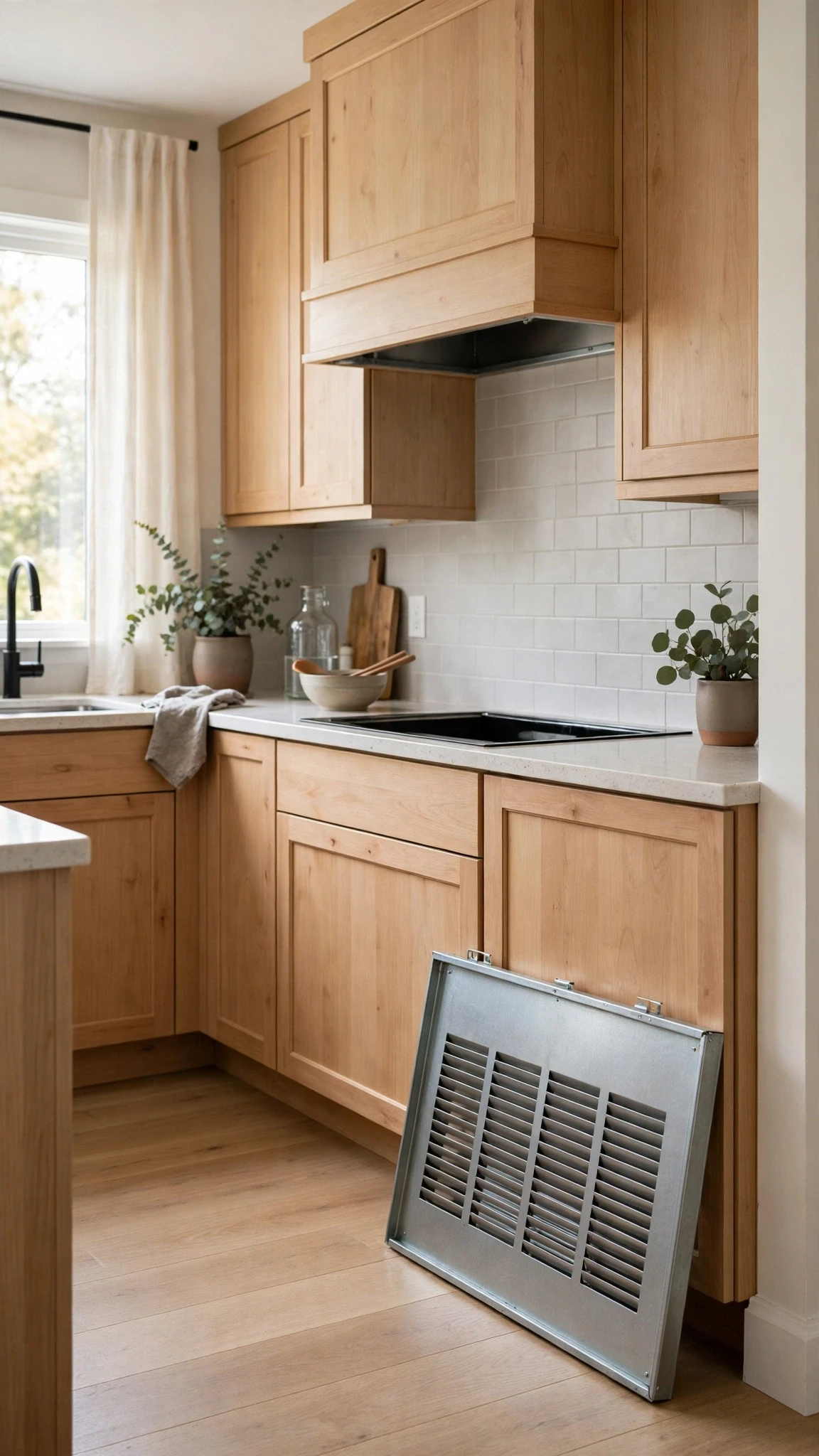
Magnetic vent panels are the simplest of all to live with. The panel holds itself in place with magnets, so you lift it off to clean behind it and press it back in a second. No screws, no tools, and no fuss, which makes them ideal for under-sink cabinets and any door you open often.
They look neat because the panel sits flat against the door, and they come in metal and mesh versions to suit different kitchens. Just check the magnets are strong enough to hold the panel firmly, since a loose panel rattles every time the door closes.
16. Mesh Panels for Appliance Cabinets
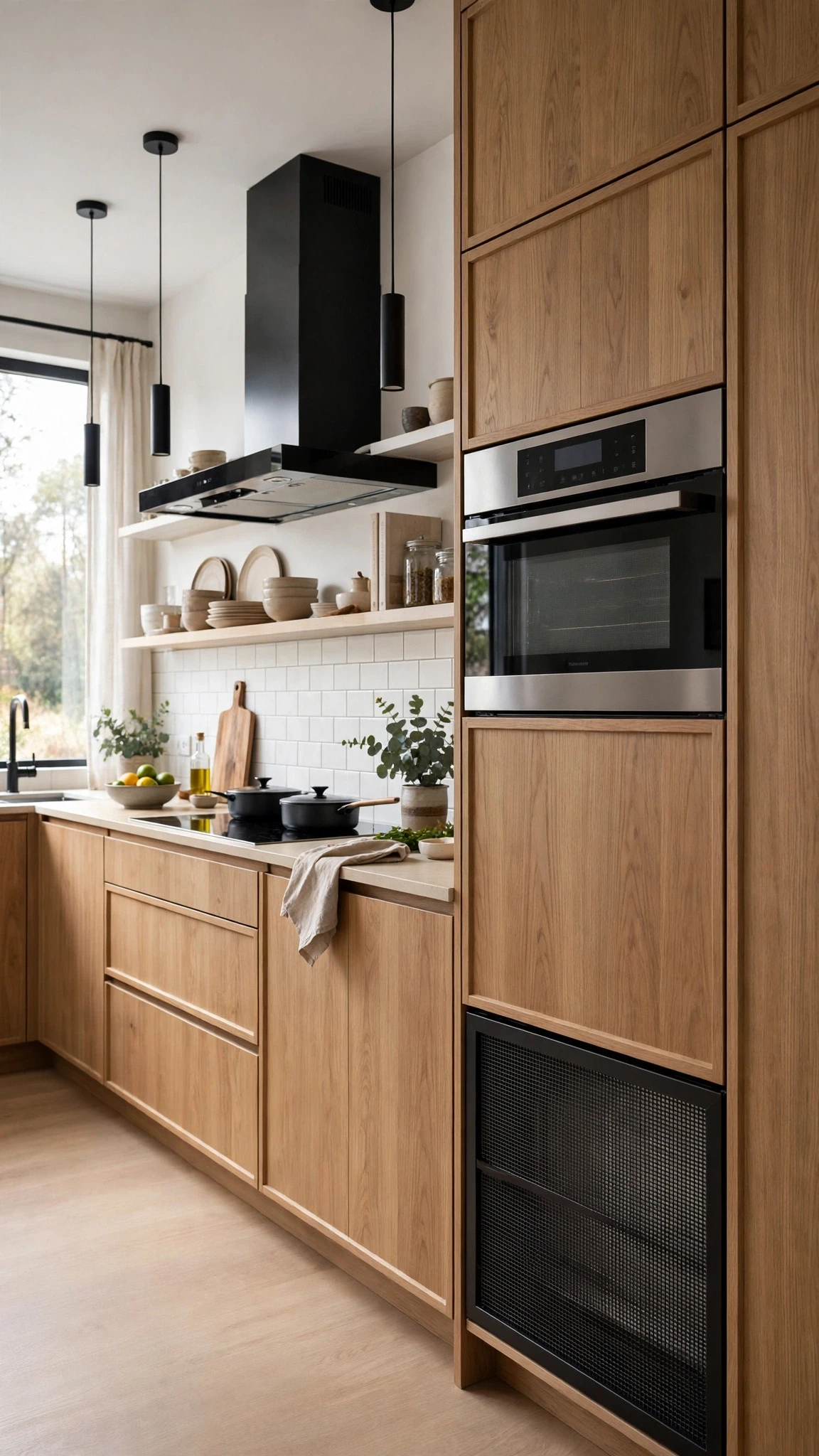
Appliance cabinets need more airflow than a pantry does, because ovens, microwaves, and small fridges all give off heat. A mesh panel gives continuous, even airflow across a wide area while keeping crumbs and small items from falling through. It is strong, easy to wipe, and unobtrusive behind a dark or matching frame.
Mesh works best when it covers a generous area rather than a small patch, since appliances need real air volume, not a token vent. Follow the appliance maker’s clearance guidance too, since a grill helps but does not replace proper spacing.
17. Hidden Vents for Built-In Ovens and Fridges
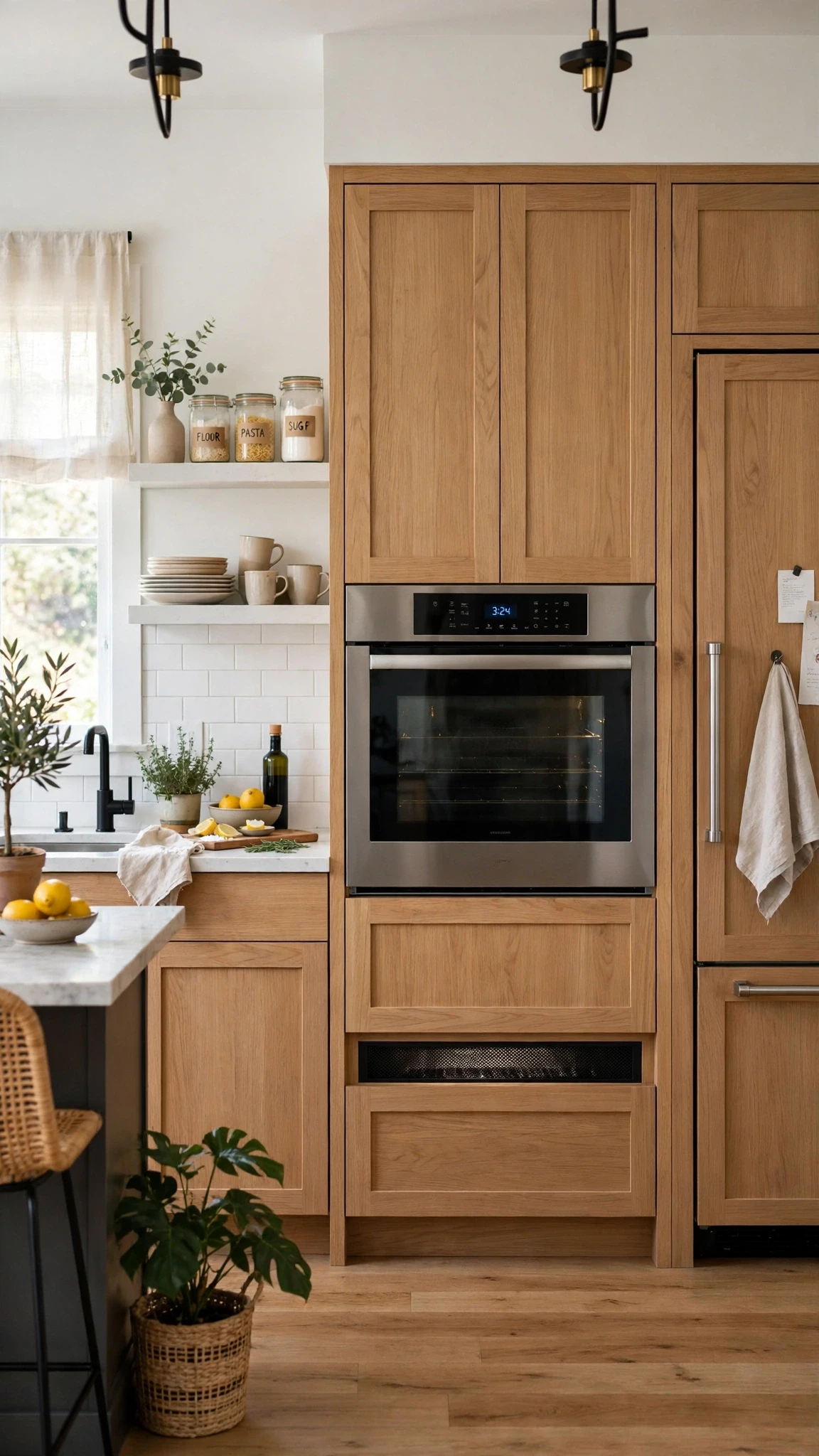
Built-in appliances look wonderful, but they trap heat behind flat panels if nobody plans for it. Hidden vents, placed above or below the appliance housing, let that heat escape without breaking the clean, fitted look. The vent can sit behind a trim piece, in the plinth, or in a shadow gap, so the appliance appears seamless.
This is one area where planning beats fixing afterwards. If you are fitting a new oven or fridge, decide the vent positions before the panels go on, and the appliance will run cooler and last longer.
18. Corner Cabinet Vents for Trapped Air
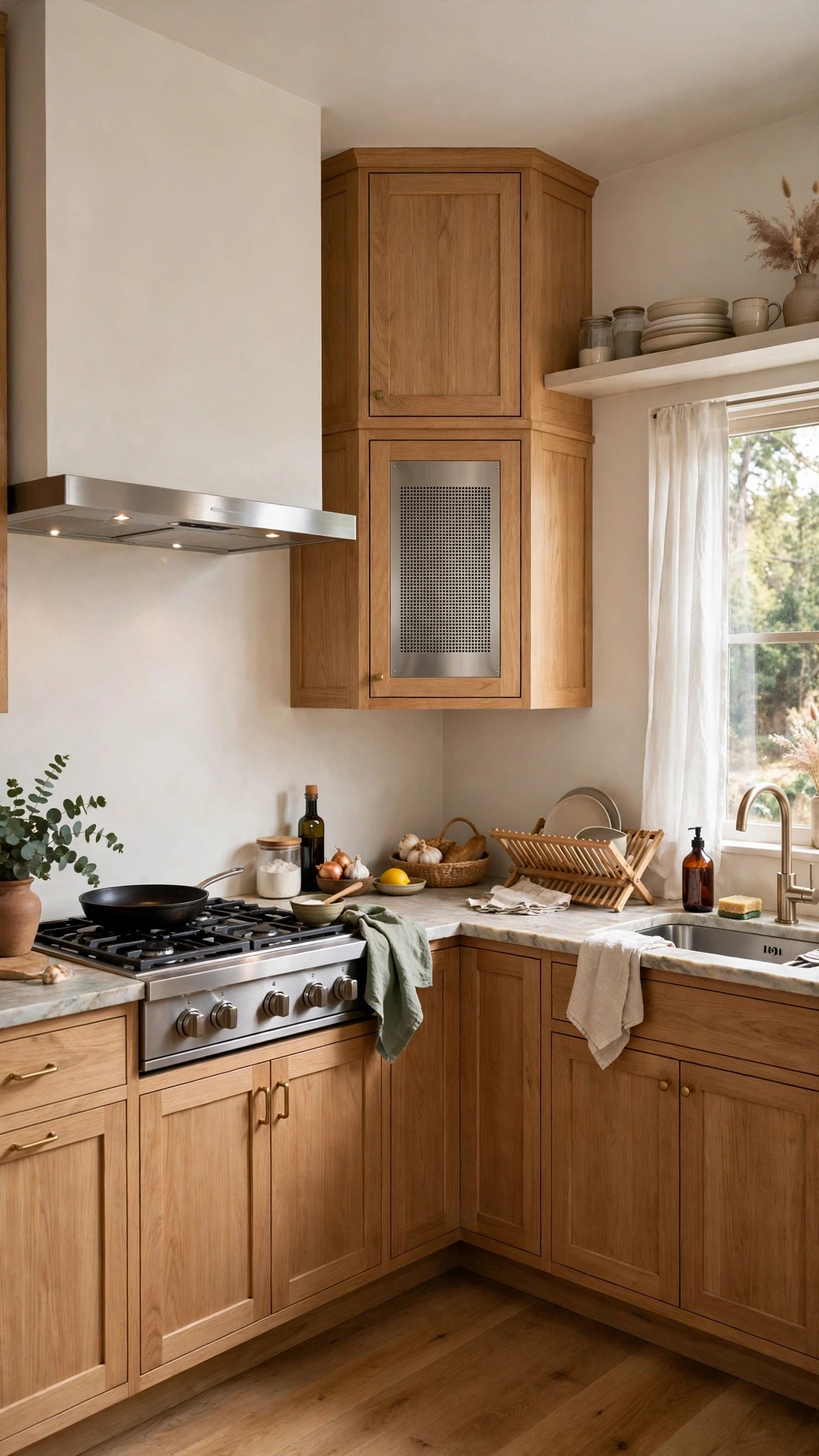
Corner cabinets are the stillest places in a kitchen. Air does not reach them easily, and moisture can sit there unnoticed, which is why corner doors sometimes warp or smell musty first. A vent panel on a corner door or side panel gives that trapped air a way out.
Corner vents work best when they are paired with a second opening, even a small one, so air can actually travel through rather than just sit behind one hole. In an L-shaped or U-shaped kitchen, this one change can make the whole corner run feel fresher.
19. Glass-Front Cabinet Vents That Stop Condensation
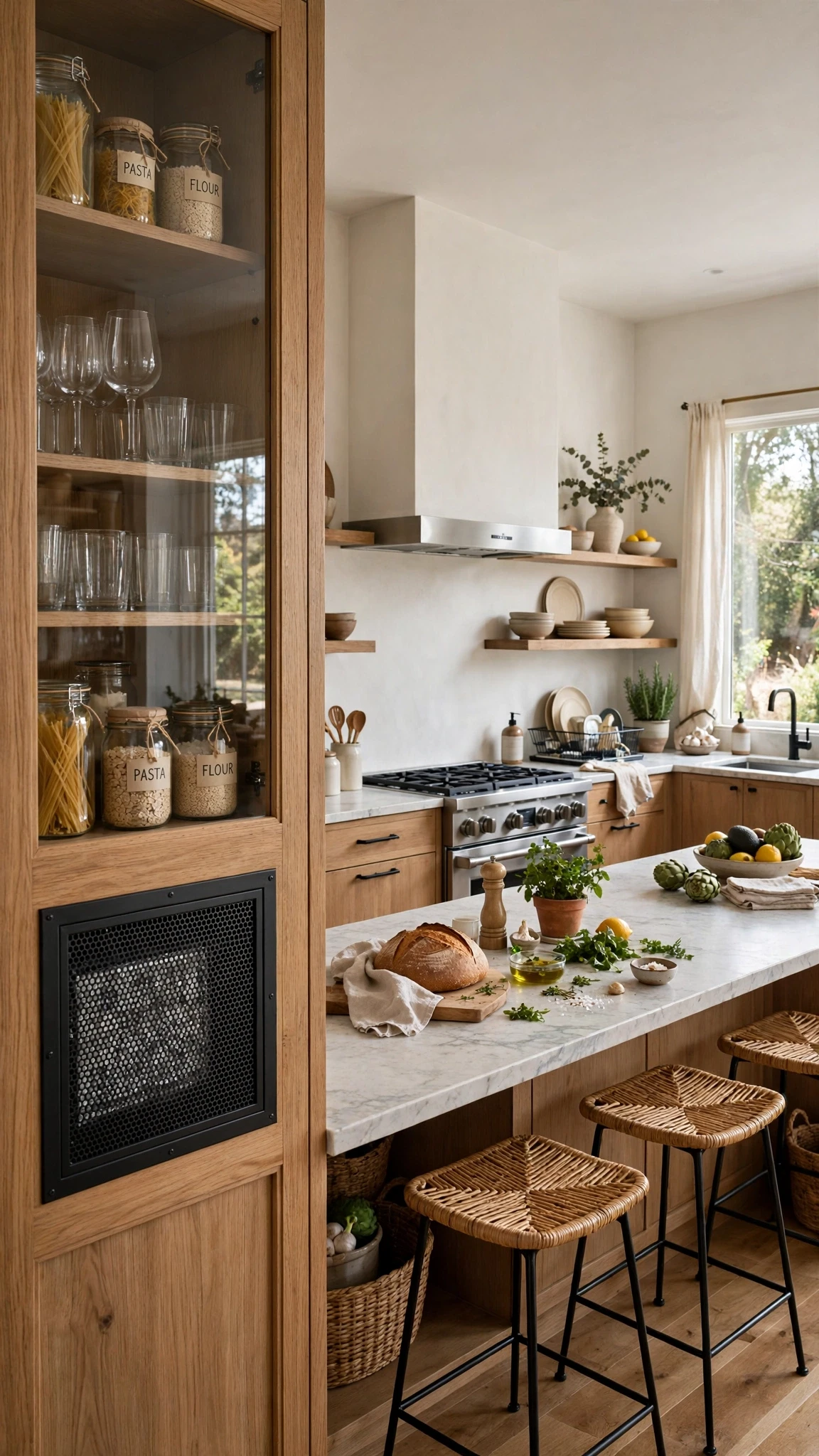
Glass-front cabinets look lovely, but they show condensation quickly when warm, damp air has nowhere to go. A small vent at the top or bottom of the door frame keeps air moving behind the glass, so the panes stay clear and the contents stay dry. The vent itself can be slim and discreet, since it does not need to dominate the door.
Match the vent material to the frame, wood for a wooden frame, metal for a metal one, and keep it at the edge of the door where it will not block the view. The glasses inside will look better for it, and so will the cabinet.
20. Perforated Drawer Fronts for Everyday Drawers
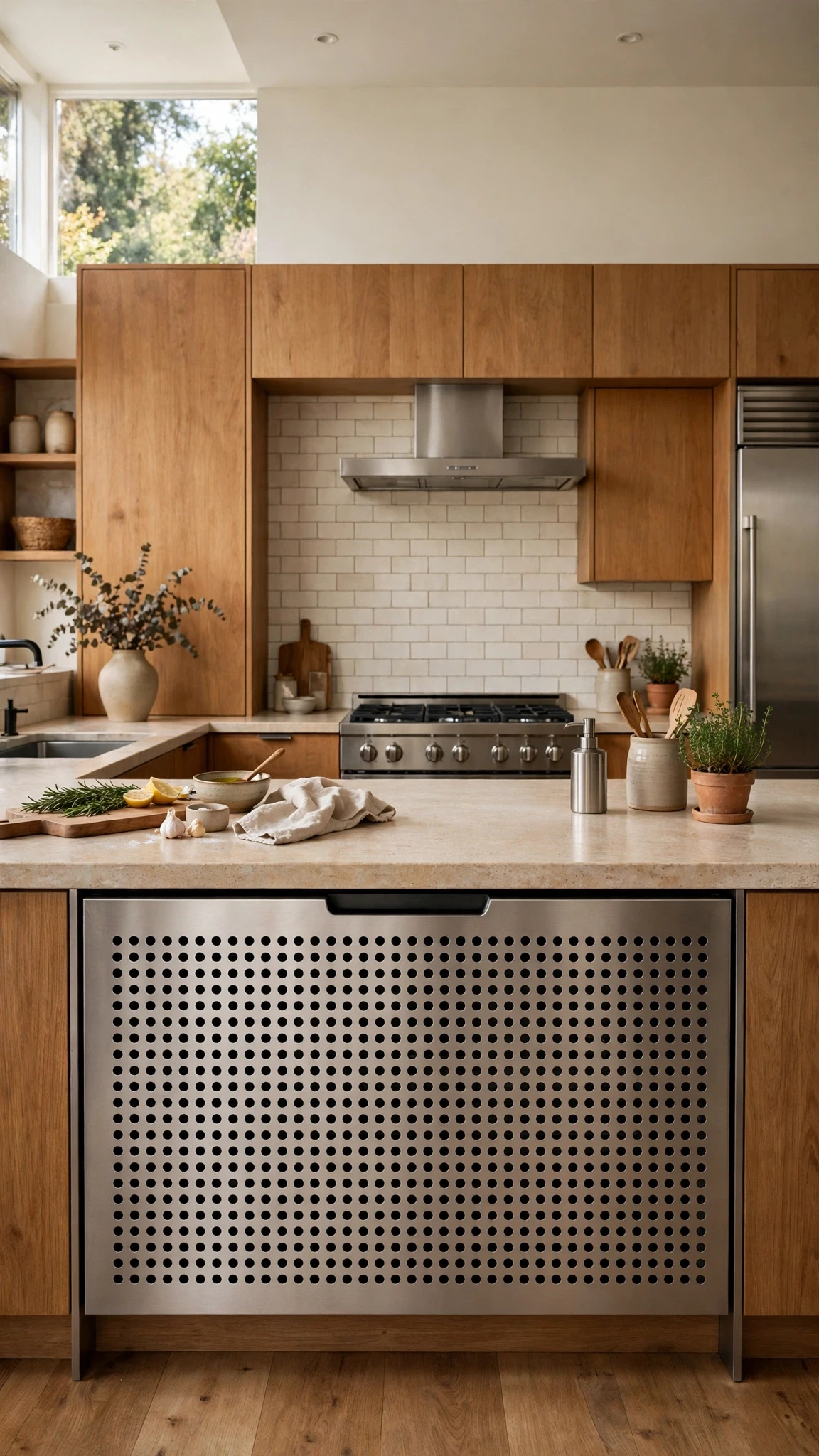
Drawers are often forgotten when people think about ventilation, but a drawer full of linens or pantry staples benefits from airflow too. A perforated metal front, with small holes or a neat pattern, lets air through while staying strong enough for daily use. It also adds a modern, slightly industrial detail to an otherwise plain drawer bank.
Perforated fronts are easy to clean with a damp cloth, and they suit busy kitchens because metal handles knocks better than wood. Keep the hole pattern small enough that nothing pokes through, and the drawer will breathe without looking like a sieve.
21. Open-Back Cabinets with a Grill on the Back Panel
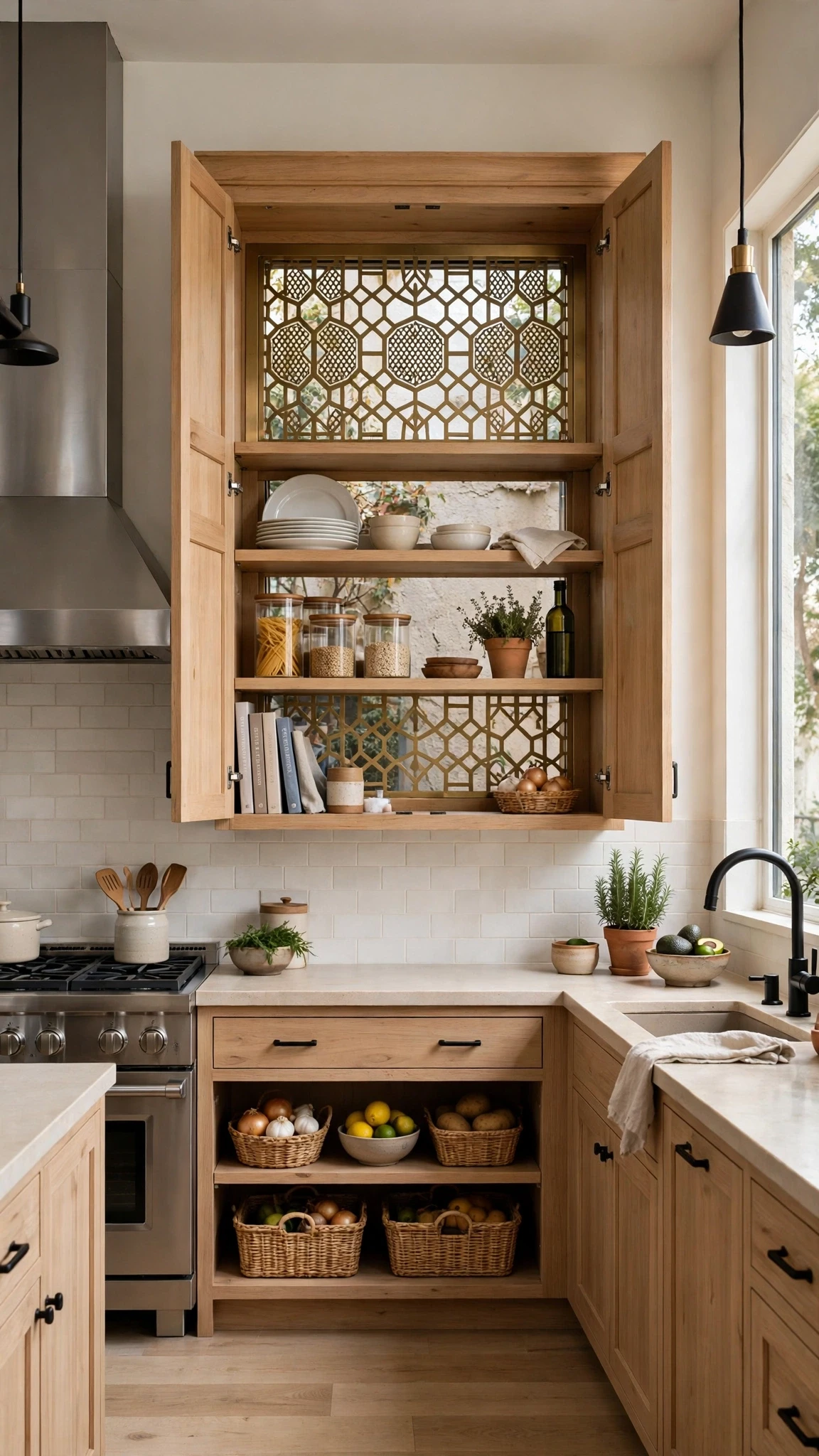
An open-back cabinet already breathes better than a closed one, but adding a grill to the back panel gives it structure and a finished look. The grill stops items from slipping out the back while still letting air pass, and it adds a decorative layer that can be seen from the side or through an open door.
This design suits islands and upper cabinets that are viewed from more than one angle. Choose a grill pattern that complements the cabinet hardware, and the open back will feel like a design choice rather than a missing panel.
22. Adjustable Louvers You Can Open or Close
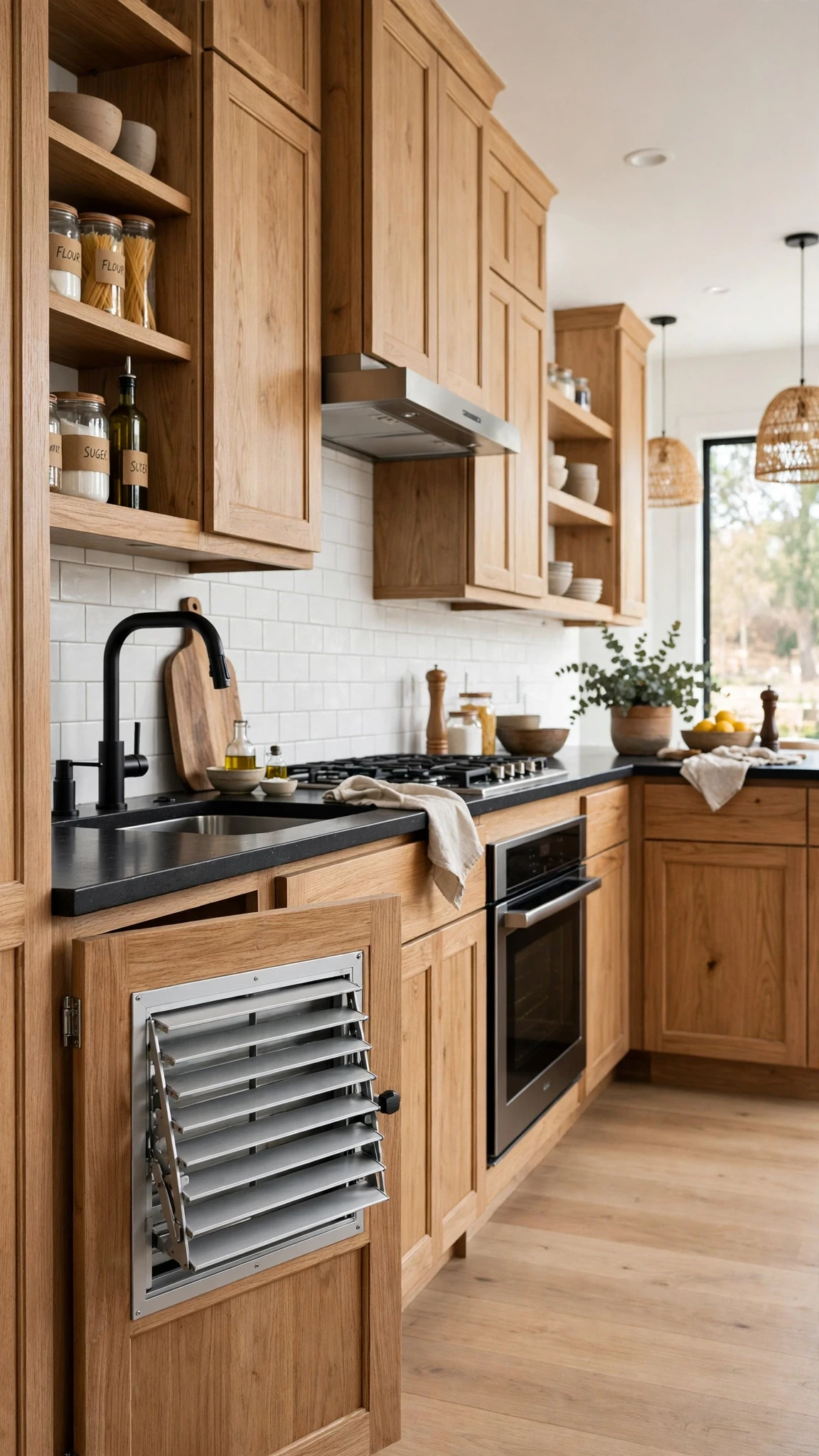
Adjustable louvers give you control that a fixed vent cannot. Tilt the slats open on a hot day or when an appliance is running, and close them down in winter or when you want a neater look. It is a small mechanism, usually a simple lever or a sliding control, but it makes the vent genuinely useful all year round.
These vents suit cabinets that change use through the seasons, like a pantry that holds more in summer or an appliance cabinet that runs harder at weekends. Wood and metal versions both exist, so you can match them to the rest of your kitchen.
23. One Mixed System: Toe-Kick Plus Top Vent Together
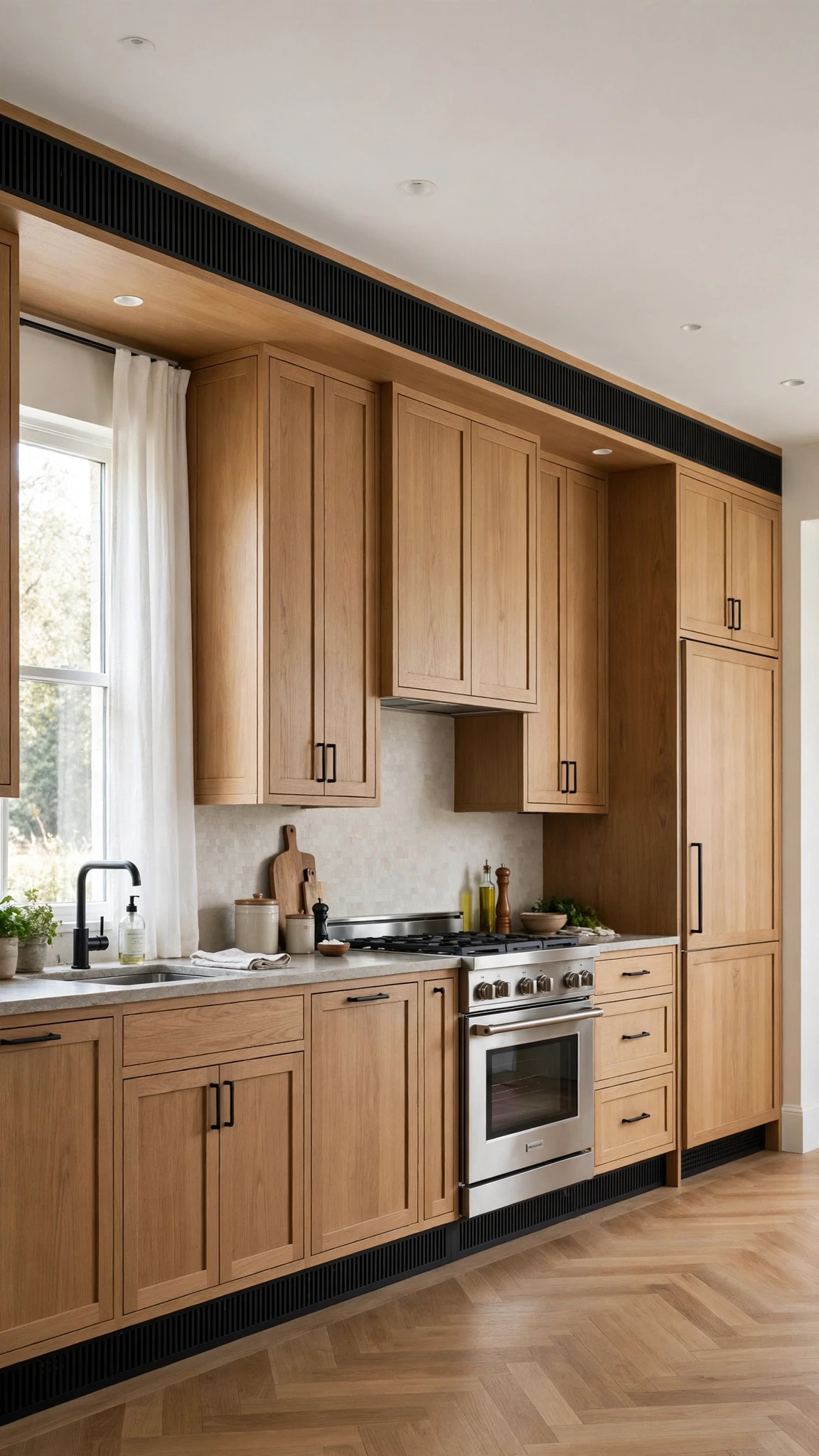
The most effective ventilation is rarely a single grill. A toe-kick vent at the bottom paired with a top-mounted vent at the top creates a natural chimney effect: cool air enters low, warm air leaves high, and the cabinet breathes on its own without any fan. It is the system to choose when one cabinet has a real problem, like a warm pantry or an oven housing.
You can use plain, inexpensive panels for both positions and still get excellent results, since it is the pairing that does the work. Once the two vents are in, the cabinet stays noticeably fresher, and the panels themselves barely show.
Pick the Right Grill for Each Cabinet
Start with the cabinet, not the grill. A tall pantry wants a vertical vent, an appliance housing wants mesh or a hidden vent, a corner cabinet wants a panel that reaches the still air, and a glass-front door wants something slim at the frame edge. Matching the vent to the problem is what makes it work, and it stops you from fitting a decorative panel where a practical one was needed.
Size matters too. A tiny grill on a large cabinet will not move enough air, while an oversized panel can weaken a thin door. As a rough guide, give the vent a generous area relative to the door, keep the opening clear of stored items inside, and make sure air has both a way in and a way out.
Rental-Friendly Vent Swaps
Renters do not have to live with stale cabinets. Magnetic panels lift off without a trace, adhesive mesh panels can be fixed to the inside of a door, and a freestanding toe-kick vent can sit in front of the plinth without any cutting. These options need no drilling, so they come away cleanly when you move out.
If you do want a fitted look, ask your landlord first and offer to leave the vent in place, since better ventilation protects their cabinets too. A small, neat, reversible change is an easy yes for most landlords, and it makes daily cooking noticeably pleasanter.
FAQs
Do kitchen cabinets really need ventilation?
Yes, most closed cabinets benefit from some airflow, because still air traps moisture and heat inside. Without a vent, damp can build up, smells can linger, and wood can warp or peel over time. A simple grill lets air circulate, keeping stored food, dishes, and the cabinet itself in better condition for longer.
Where is the best place to put a cabinet vent?
The best place depends on the cabinet, but air should always have a way in and a way out. Low vents, like toe-kick grills, suit base cabinets, while top vents suit tall and appliance cabinets where heat rises. Corner cabinets need a vent on the door or side panel, and glass-front doors suit a slim vent at the frame edge.
How big should a cabinet ventilation grill be?
A grill should be generous enough to move real air, not just a token slot in the door. Choose a panel that covers a good share of the door area, keep the opening clear of stored items behind it, and pair it with a second vent where possible. When in doubt, go slightly larger.
Can I add a vent to a cabinet door I already have?
Yes, most existing doors can take a vent with careful measuring and cutting. Mark the opening, cut it cleanly, and fit a ready-made grill panel that matches the door material and finish. If you are unsure about cutting, a magnetic or adhesive panel is a no-cut alternative, and a joiner can fit a permanent grill quickly.
Which grill material is easiest to clean?
Metal grills are usually the easiest to clean, since a damp cloth removes dust and grease without damaging the finish. Plastic panels are also simple to wipe, while wood needs gentler cleaning and occasional resealing. Mesh panels suit a soft brush, and magnetic panels are easiest of all because you can lift them off and wash them.
Will a vent let dust or smells into the cabinet?
A vent can let in a little dust, but far less than the moisture and odour problems it prevents. Mesh and louvered panels limit what passes through, and regular wiping keeps the opening clean. Smells actually improve with ventilation, because still air is what lets musty odours build up inside a closed cabinet in the first place.
Do appliance cabinets need a different kind of vent?
Yes, appliance cabinets need stronger airflow than a pantry, because ovens, microwaves, and fridges give off heat. Mesh panels, hidden vents, and paired low and high openings work best here, since they move a larger volume of air. Always follow the appliance maker’s clearance guidance as well, because a grill supports proper spacing but does not replace it.
Conclusion
Ventilation is one of those small kitchen details that quietly changes how a room feels. A cabinet that breathes stays drier, smells fresher, and lasts longer, and the grill itself can be anything from a brass jewel to a vent you never notice. The right choice is simply the one that fits your cabinet, your style, and the way you actually cook.
Start with the cabinet that bothers you most, whether that is a warm pantry, a musty corner, or an oven housing that runs hot. Fit one good vent, or a low and high pair, and you will feel the difference the next time you open the door.