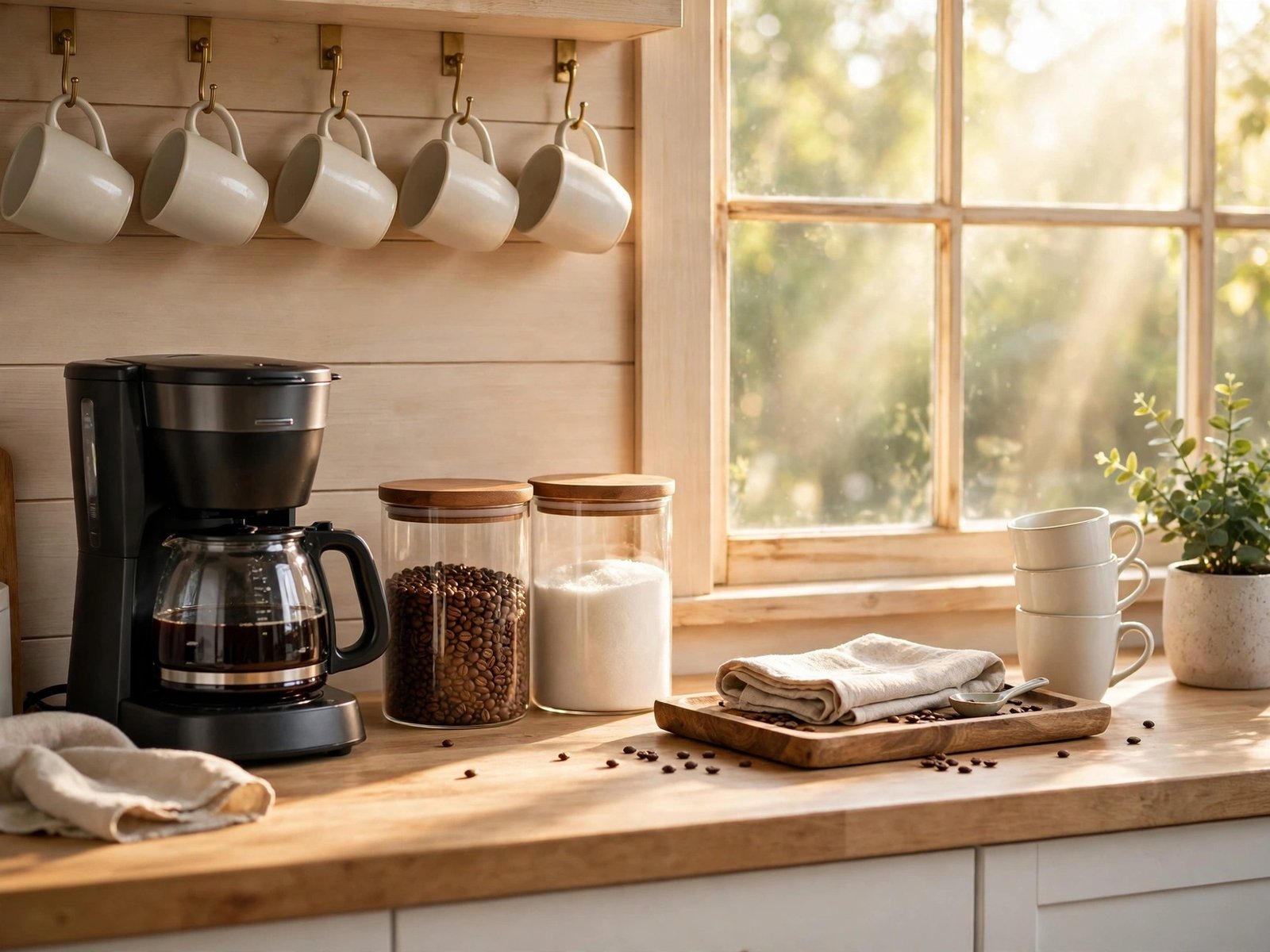
10 Countertop Coffee Bar Ideas to Copy for a Better Morning
If your morning routine involves searching through kitchen cabinets for coffee beans, filters, mugs, and spoons, creating a dedicated coffee corner can make everyday life much easier. A countertop coffee bar brings all your coffee essentials together in one convenient spot while giving your kitchen a more organized and inviting look.
The best part is that you don’t need a large kitchen, expensive appliances, or a complete renovation to create one. A small countertop section, a decorative tray, a few storage containers, and your favorite coffee-making essentials are often enough to get started.
These countertop coffee bar ideas cover different decorating styles, budgets, and kitchen layouts. Whether you prefer a minimal black coffee station, a warm farmhouse setup, a compact coffee garage, or a beautiful espresso corner, you’ll find practical inspiration to create a space that works for your daily routine.
Quick Answer: Best Countertop Coffee Bar Idea at a Glance
The easiest way to create a countertop coffee bar is to choose one clear section of your kitchen counter and organize your coffee essentials on a decorative tray. Place your coffee maker, a few mugs, and small containers for beans or sugar together to create a dedicated station.
For a simple setup:
- Choose a countertop area with easy access to an outlet.
- Place a wooden, marble, or bamboo tray underneath your coffee accessories.
- Keep frequently used mugs, coffee beans, and spoons nearby.
- Use matching containers to organize smaller essentials.
- Add one decorative element, such as a small plant or framed print.
Even a compact countertop area can become a functional coffee station when everything has a designated place.
1. The Minimal Matte Black Station
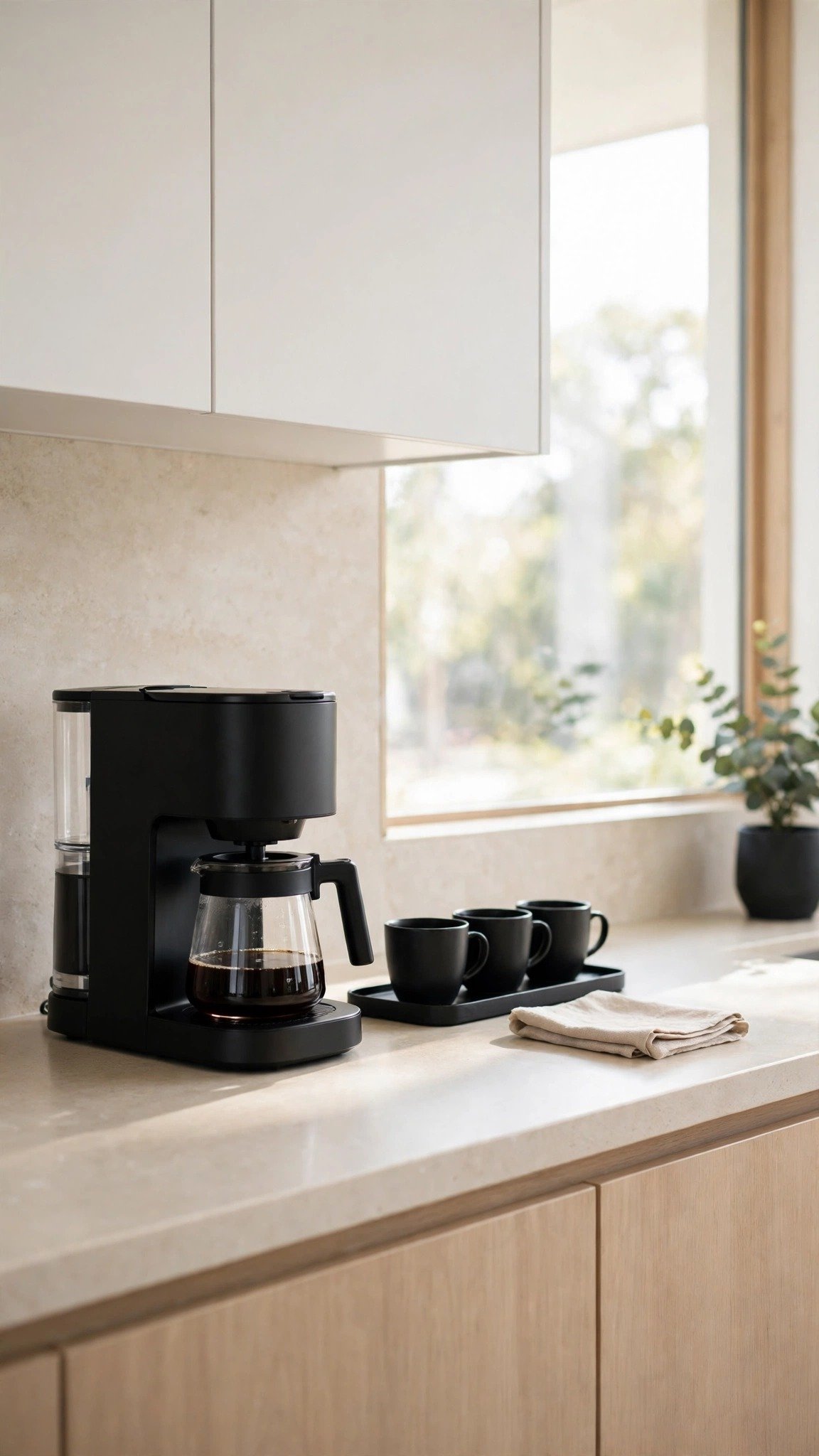
A matte black coffee station is a beautiful choice if you prefer a clean, modern kitchen with a sophisticated look. The combination of dark appliances, simple accessories, and an uncluttered countertop creates a polished appearance without requiring lots of decoration.
Start with a matte black coffee maker or espresso machine and pair it with a matching kettle. A black serving tray can keep smaller accessories together, while a simple mug rack or a few wall hooks provide convenient storage. If your countertop is white or light gray, the contrast will make the black appliances stand out beautifully.
You can soften the overall appearance with a small green plant, wooden accessory, or warm-toned mug. Keep decorative pieces to a minimum so the coffee equipment remains the main feature.
What you need: Matte black coffee maker, matching kettle, black serving tray, mug rack or wall hooks, and one small decorative plant.
2. The Warm Wood and Marble Look
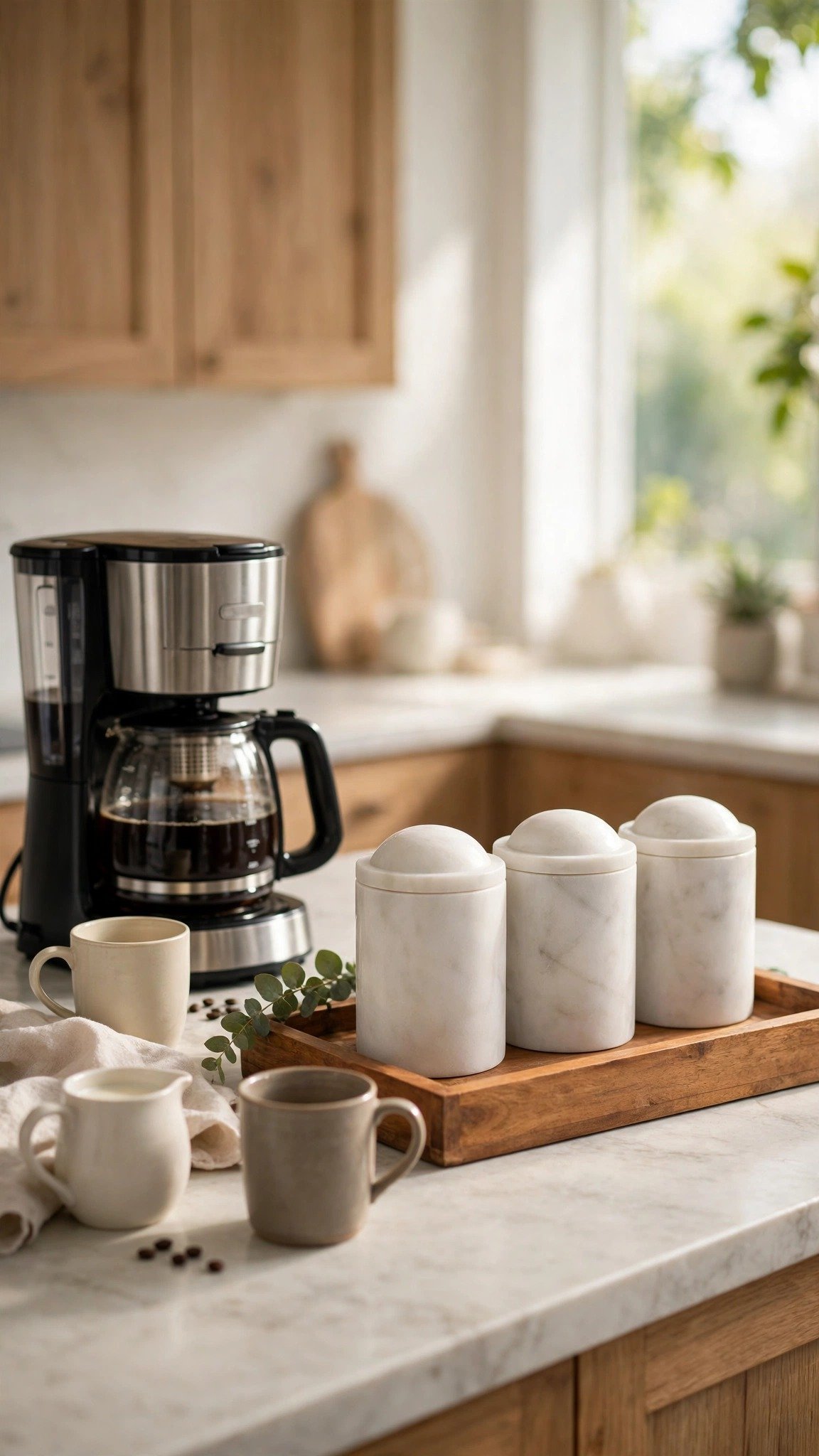
Warm wood and marble create a timeless combination that makes a kitchen coffee corner feel elegant without looking overly formal. The natural grain of wood adds warmth, while marble accessories introduce a clean and refined touch.
Begin with an acacia or walnut serving tray as the foundation of your setup. Add a marble canister for coffee beans, a small ceramic sugar bowl, and a spoon rest in brass or gold tones. A white or stainless steel coffee maker works particularly well with this combination because it balances the warmer materials.
If you have open shelving above the countertop, use it to display a few favorite mugs or small decorative pieces. You can also install a simple mug rack underneath a cabinet shelf to save space. For an affordable version, choose a wood-look tray and marble-effect accessories instead of purchasing expensive natural materials.
What you need: Wooden serving tray, marble canister or accessories, brass spoon rest, white or stainless steel coffee maker, and a small mug rack.
3. The Farmhouse Coffee Bar
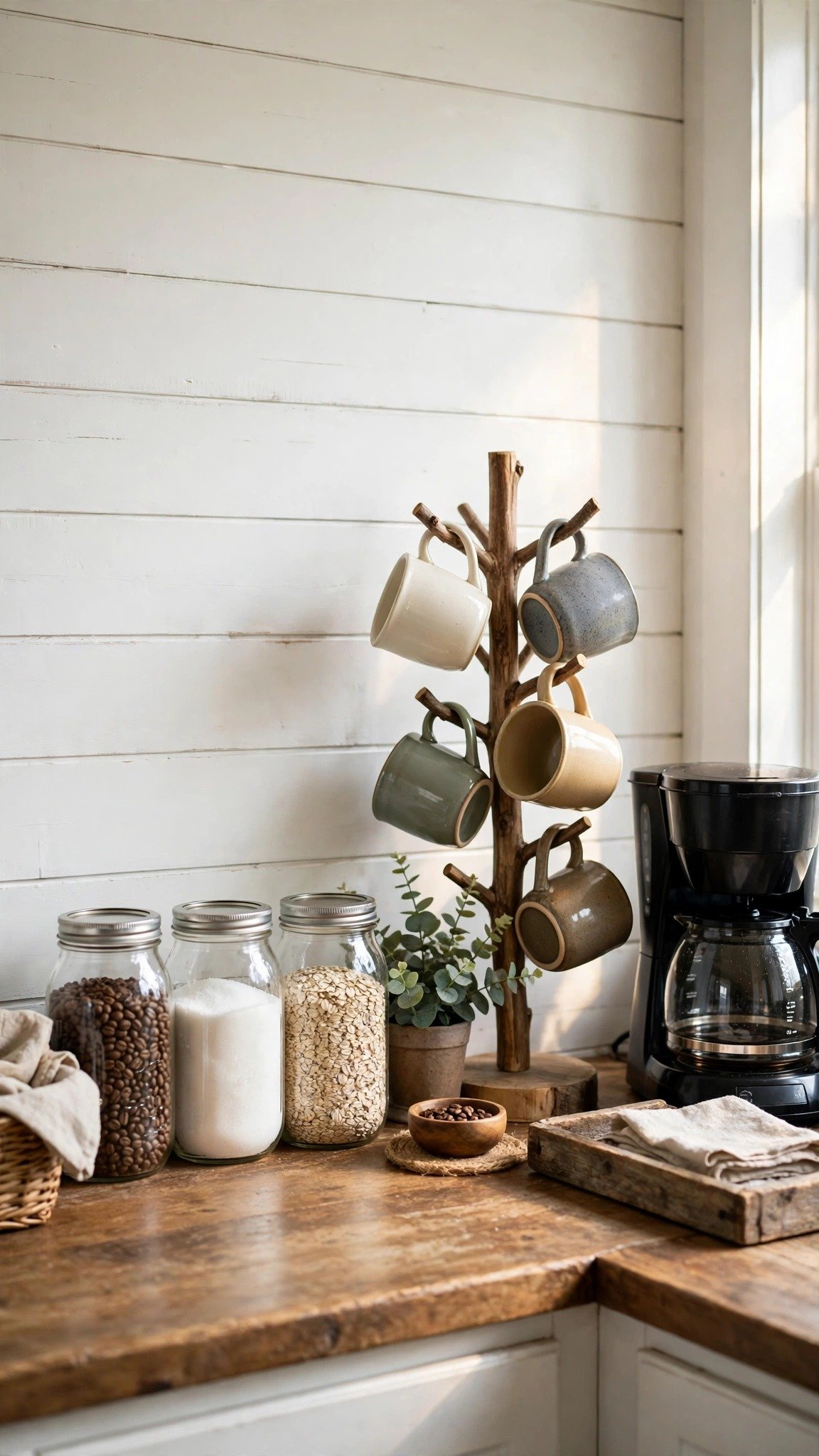
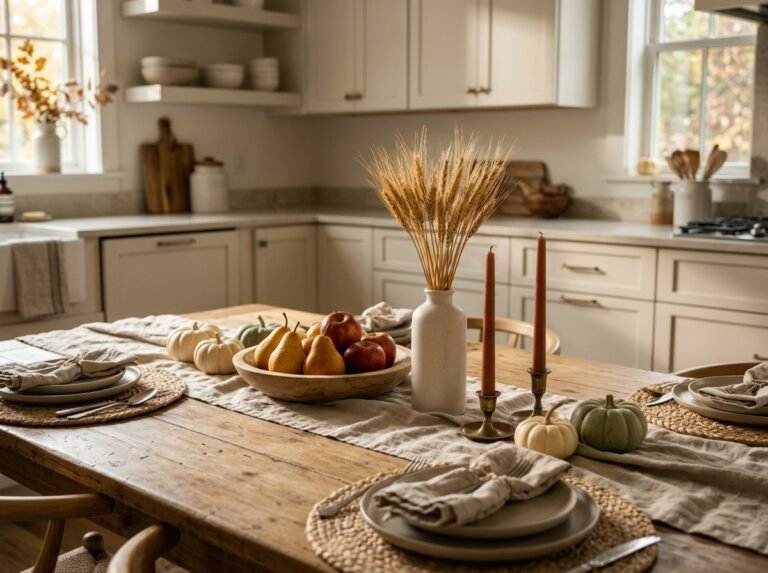
A farmhouse coffee bar brings a cozy, welcoming feeling to the kitchen through natural textures, vintage-inspired accessories, and simple storage solutions. This style works especially well in kitchens with white cabinets, subway tile backsplashes, rustic wood details, or open shelving.
Start with a wooden tray or a small rustic plank to define your coffee station. Use glass mason jars or vintage-style canisters to organize sugar, coffee beans, and other dry ingredients. A galvanized metal mug tree or simple wall hooks can keep everyday cups within easy reach.
To add more farmhouse character, introduce a linen runner, a small potted herb, or a vintage-inspired coffee sign. Warm wood, soft neutral colors, and a few metal accents help create a collected look rather than a setup that feels overly decorated.
Keep the accessories useful and avoid filling every available space. A little open counter space allows the natural textures and vintage details to stand out.
What you need: Wooden tray, mason jars, vintage-style labels, galvanized mug tree, linen runner, small plant, and a drip coffee maker or French press.
4. The Coffee Garage Compact Station
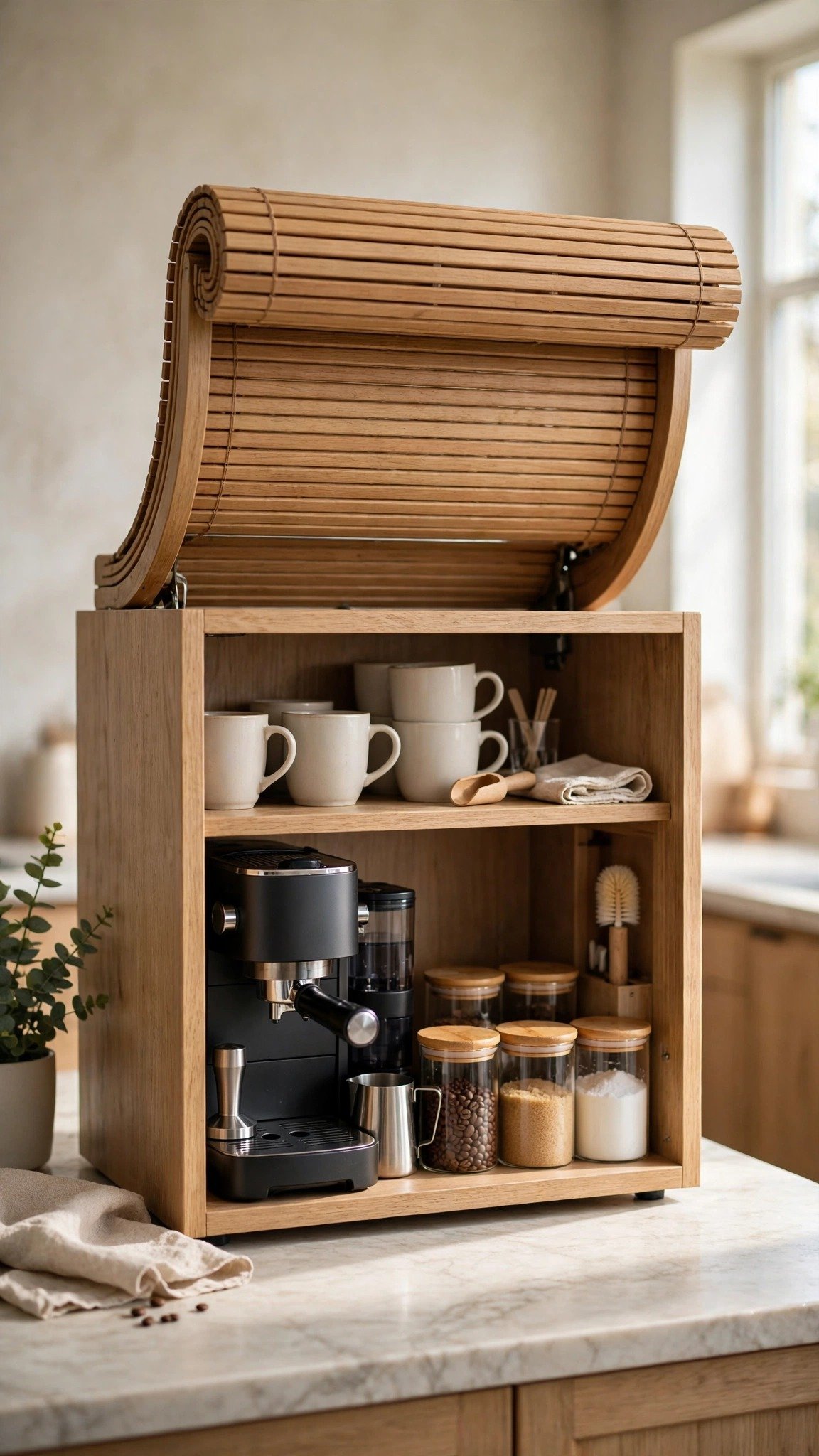
A coffee garage is a clever solution for kitchens where countertop clutter is a constant problem. Instead of leaving every coffee accessory visible, this setup places your coffee-making equipment inside a dedicated cabinet or enclosed storage area.
You can use a built-in appliance garage with a roll-up or hinged door, or adapt an existing cabinet with shelves and small organizers. When the doors are open, everything you need is within reach. Once you’re finished making coffee, you can close the doors to create a cleaner-looking kitchen.
Inside the coffee garage, organize the space into small zones. Keep the coffee machine on a sturdy, level surface, place mugs and canisters on nearby shelves, and use small trays for filters, spoons, and other accessories.
One important detail is ventilation. Coffee machines and kettles can produce heat and steam, so always follow the manufacturer’s clearance and ventilation instructions. Do not operate an appliance inside an enclosed cabinet unless it is designed for that use.
What you need: Appliance garage or suitable cabinet, sturdy shelves, small organizers, coffee maker, mugs, and storage canisters.
5. The Floating Shelf Coffee Station
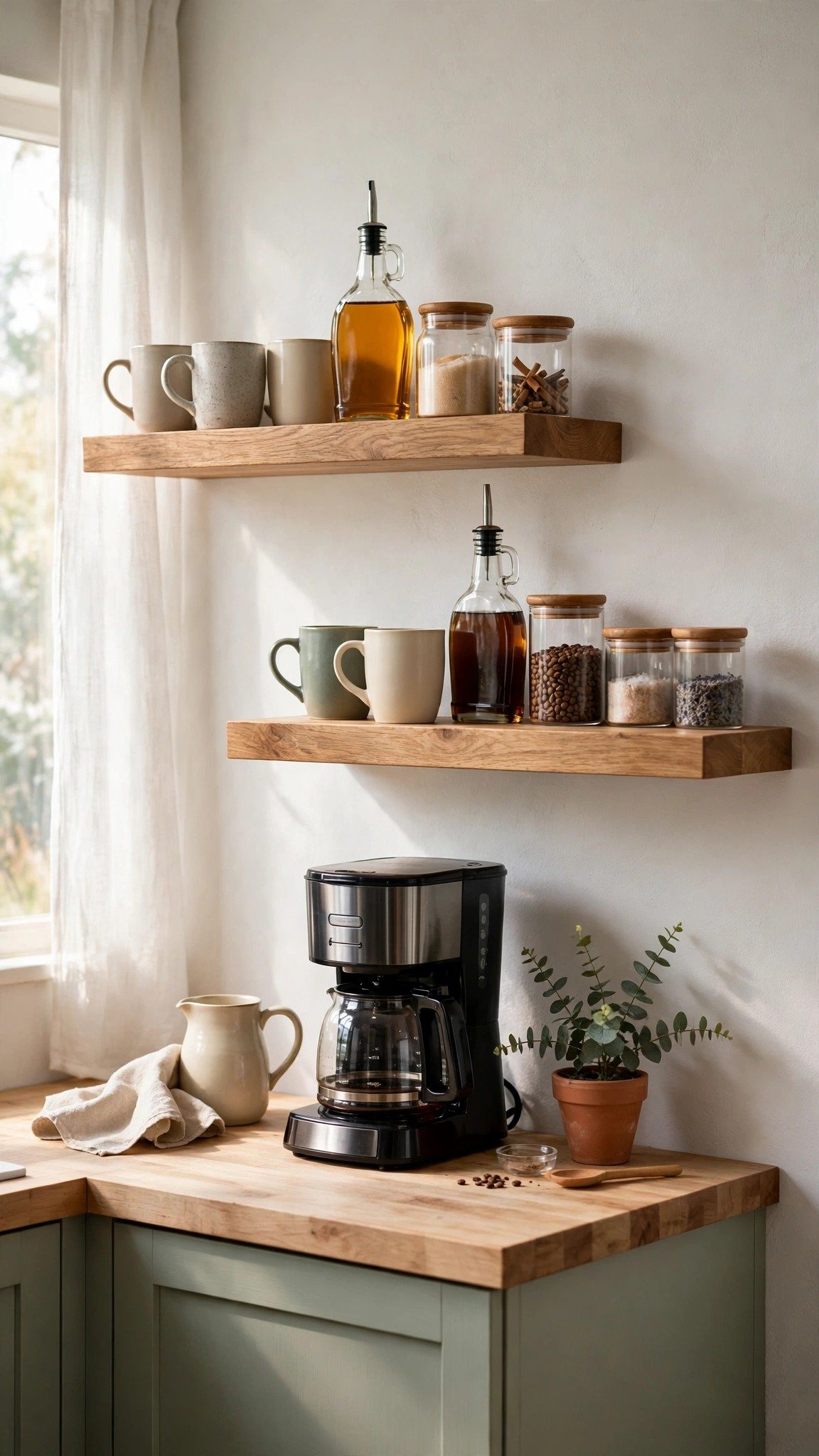
When your kitchen counter space is limited, floating shelves offer a practical way to create a coffee station without sacrificing valuable workspace. By using the wall above your coffee maker, you can keep mugs, accessories, and decorative pieces organized vertically.
Install one or two shelves above a small countertop section. Use the lower shelf for frequently used items such as mugs, coffee filters, and syrup bottles. The upper shelf can hold decorative accessories, a small plant, or a few favorite coffee cups.
For a balanced appearance, mix functional storage with a little decoration. Wooden shelves add warmth to modern kitchens, while black metal brackets create a more industrial look. You can also install hooks underneath a shelf to hang mugs and free up additional space.
Make sure the shelves are securely attached to appropriate wall supports and can safely hold the combined weight of your mugs and accessories. Keep the coffee maker’s required clearance in mind when deciding where to position them.
What you need: Floating shelves, secure brackets, mug hooks, coffee maker, storage canisters, and a few decorative accessories.
6. The Espresso Bar Station

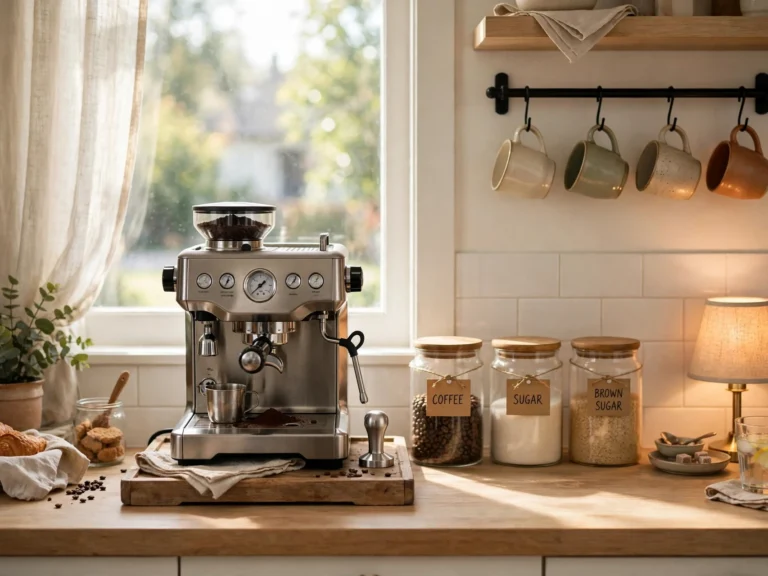
If you enjoy making espresso at home, give your coffee machine a dedicated space where all your brewing accessories are easy to reach. An espresso bar can make your kitchen feel like a small neighborhood café while keeping your daily coffee routine organized.
Start by positioning your espresso machine on a stable countertop with enough room to operate it comfortably. Place a knock box nearby for used coffee grounds and keep your tamper, milk pitcher, and cleaning cloth within easy reach.
A small rack for espresso cups can provide convenient storage without taking up too much counter space. You can also use two slim canisters for coffee beans and other frequently used ingredients. Stainless steel, brushed chrome, and dark wood are attractive material choices for this style.
Don’t forget the practical details. Leave enough room to remove the water reservoir, clean the machine, and move the milk pitcher during preparation. Keeping a small towel beside the machine also makes it easier to wipe away spills and clean the steam wand after use.
What you need: Espresso machine, knock box, tamper, espresso cups, milk pitcher, coffee bean container, and cleaning cloth.
7. The Buffet or Sideboard Bar
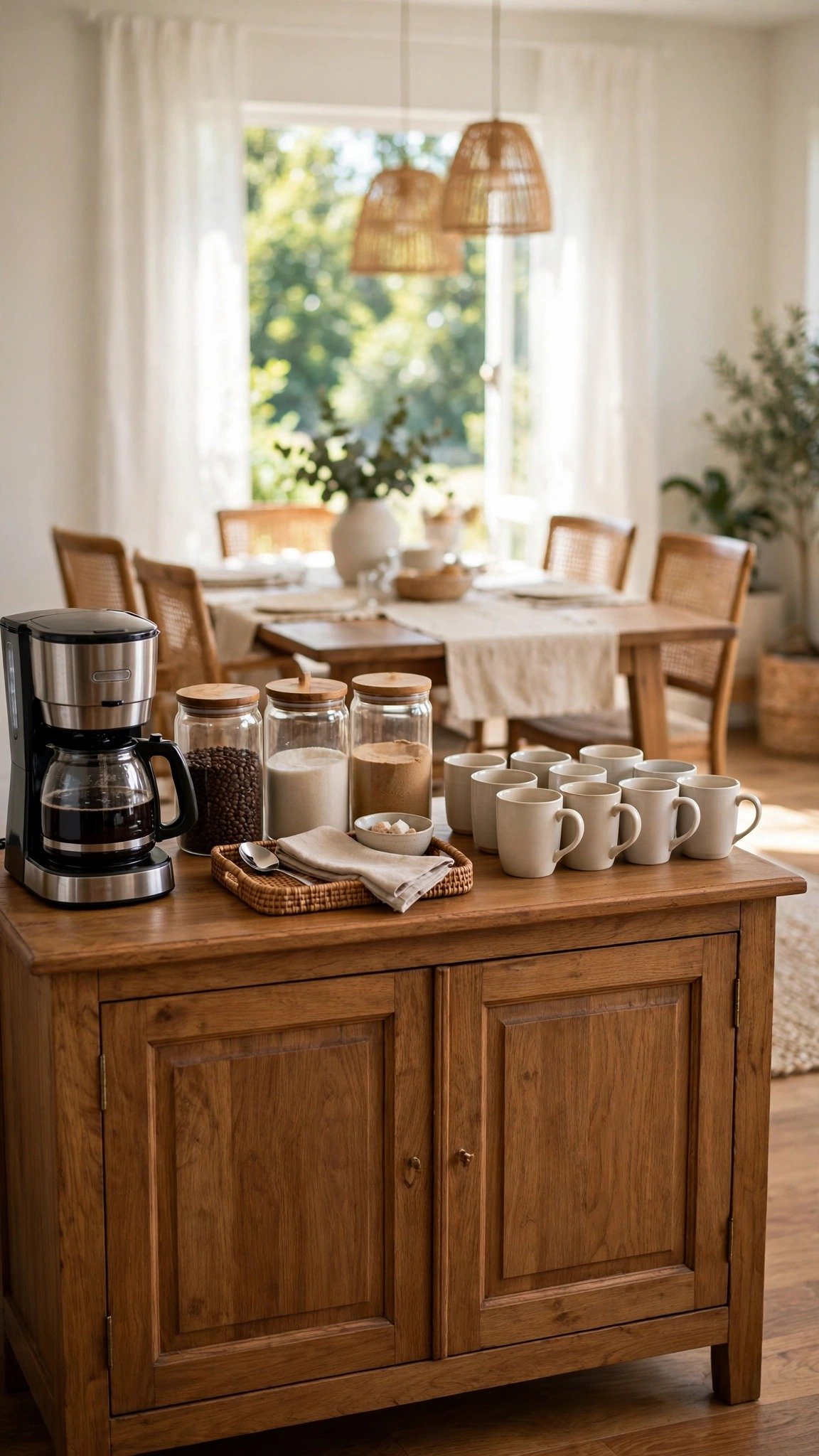
Not all coffee bars have to live on a kitchen counter. If you have a dining room buffet, sideboard, or hutch, you have got a perfect dedicated coffee station with serious storage underneath. The cabinet doors below hide the stuff you do not want to see — extra pods, filters, paper goods — while the top surface has room for a full setup without feeling cluttered.
It takes the coffee habit out of the kitchen, which frees up counter space, and it doubles as a beverage station for guests. Style the top with a tray, your machine, a few mugs, and a small candle or plant. Leave the hutch doors above open for displaying beautiful mugs or glassware. This is the best option when your kitchen counter is already full, but your dining room has space to spare. A small tray on the buffet keeps coffee rings off the wood and makes the whole station easy to move for cleaning.
- What you need: buffet, sideboard or hutch, tray, coffee maker, mugs, small candle or plant, canisters.
>
8. The Open Shelf Mug Display Bar
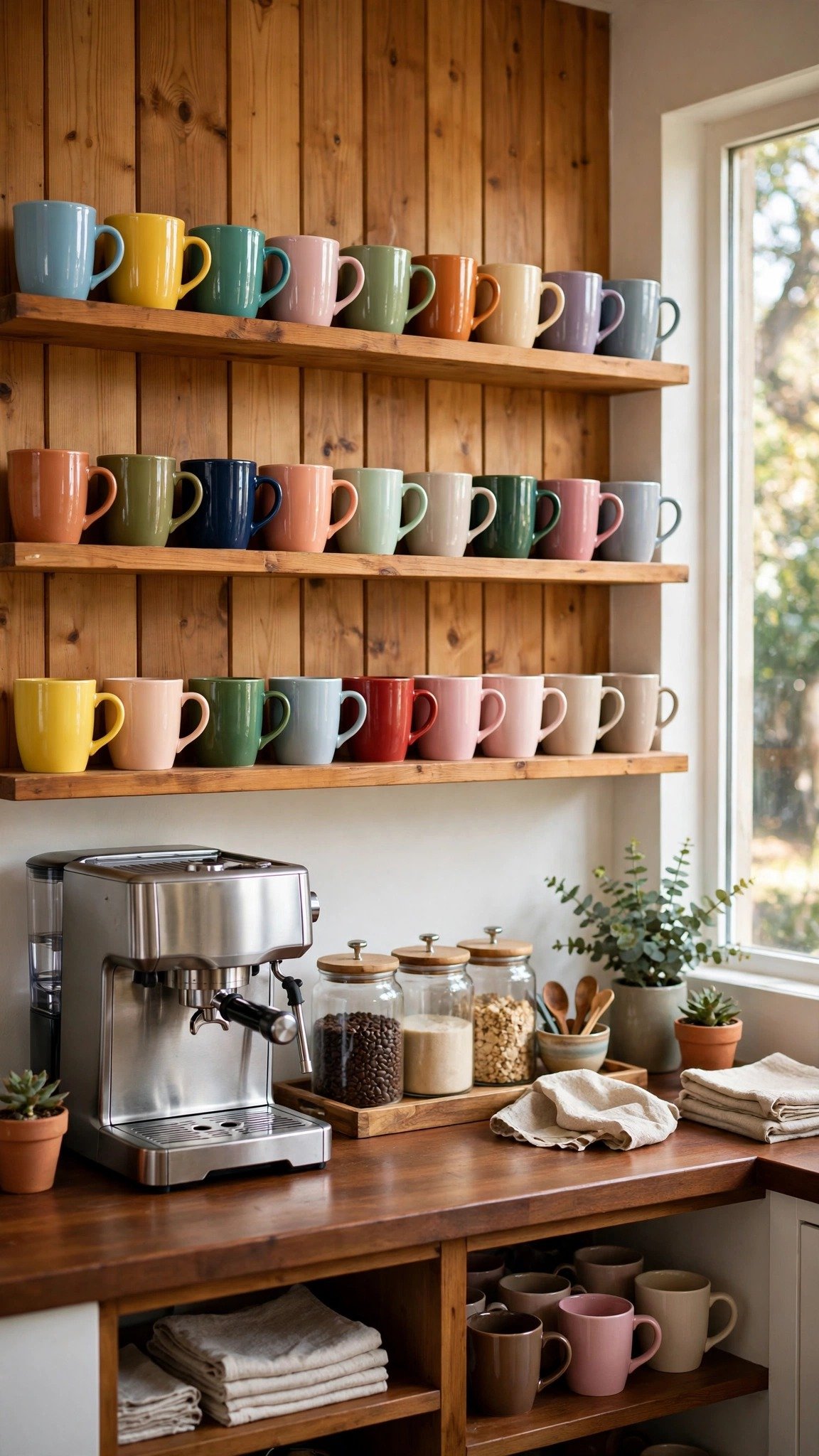
Some people have mug collections that deserve to be seen. If you are one of those people, no shame — mugs are one of life’s great small joys — build your coffee bar around showcasing them. Open shelves above the machine let you arrange mugs by colour, style, or size for a visual display that doubles as functional storage.
Mix in a trailing plant, a small print, or some coffee-themed art between the mugs to make it feel styled rather than just stacked. The trick is to edit your mug collection ruthlessly. Display 8 to 12 of your favorites and keep the rest in the cabinet. A curated selection always looks better than everything you own all at once, and it keeps the bar from feeling cluttered. Leave a little space on each shelf, because a crowded shelf looks like storage, while a shelf with breathing room looks styled.
- What you need: open shelves, 8-12 favourite mugs, trailing plant, small print or coffee art, coffee maker, tray.
9. The Dark and Moody Coffee Corner
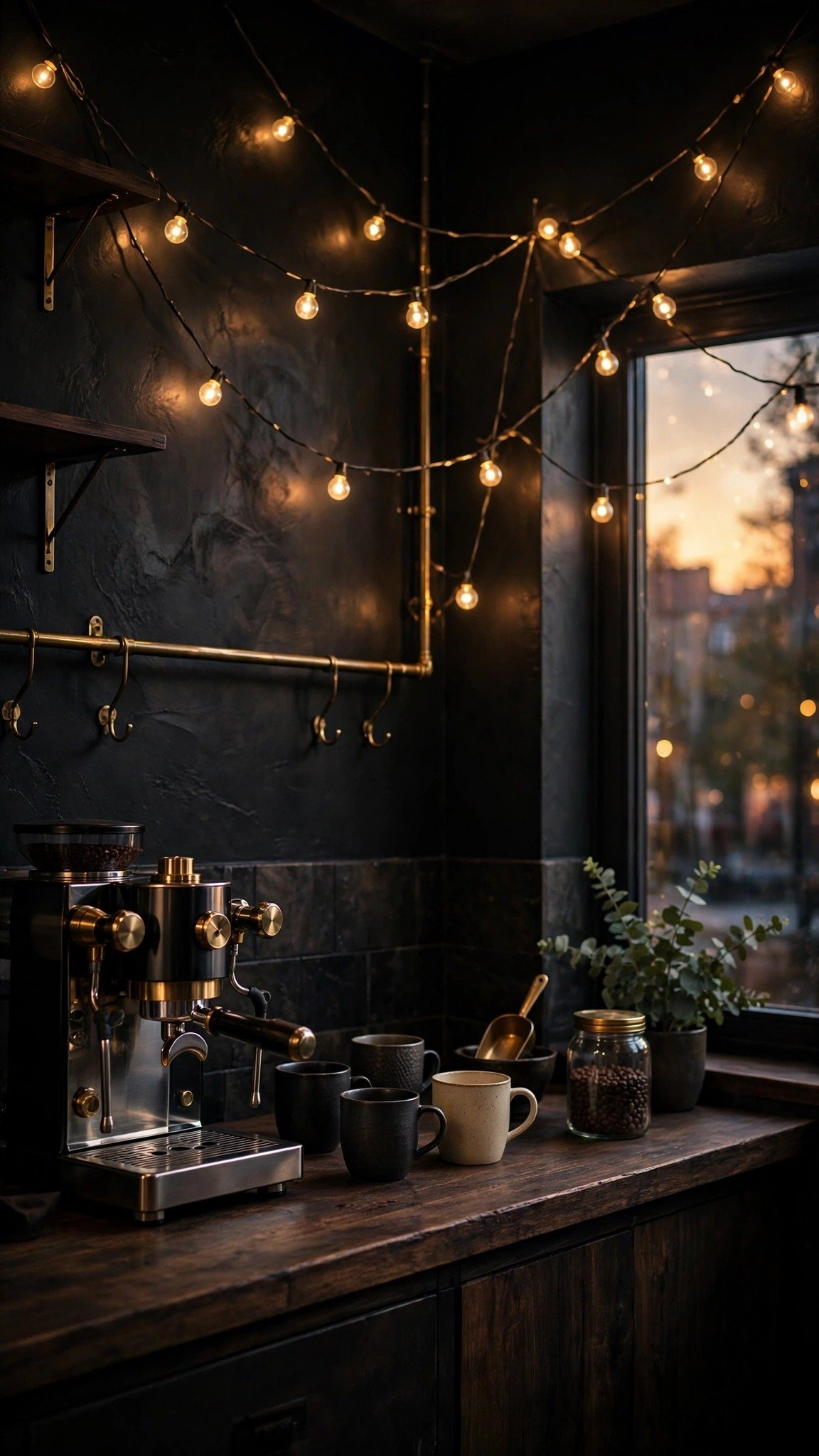
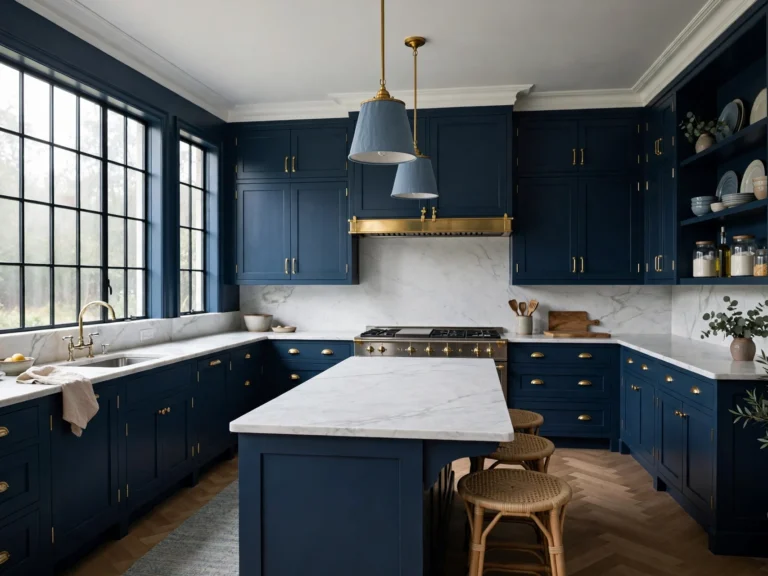
If your kitchen skews dark, or if you just want your coffee bar to feel like a proper café corner, lean into deep, rich tones and dramatic contrast. Deep navy, charcoal, or forest green as the backdrop — paint the wall or add a tile accent — with matte black or dark bronze appliances, copper or brass accents, and Edison-style bulb string lights overhead for atmosphere.
Dark wood shelving and a tray ground the setup, and a copper kettle or brass tray adds warmth against the dark backdrop. This one photographs magnificently, but more importantly, it actually feels like a place you want to hang around in the morning, which is the whole point. Keep the lighting warm and low, and the corner becomes the coziest spot in the kitchen. A small mirror or brass tray behind the machine bounces the warm light around and keeps the dark corner from feeling gloomy.
- What you need: dark paint or tile accent, matte black or dark bronze appliances, copper or brass kettle and tray, Edison-style string lights, dark wood shelving.
10. The Budget Coffee Bar Under $50
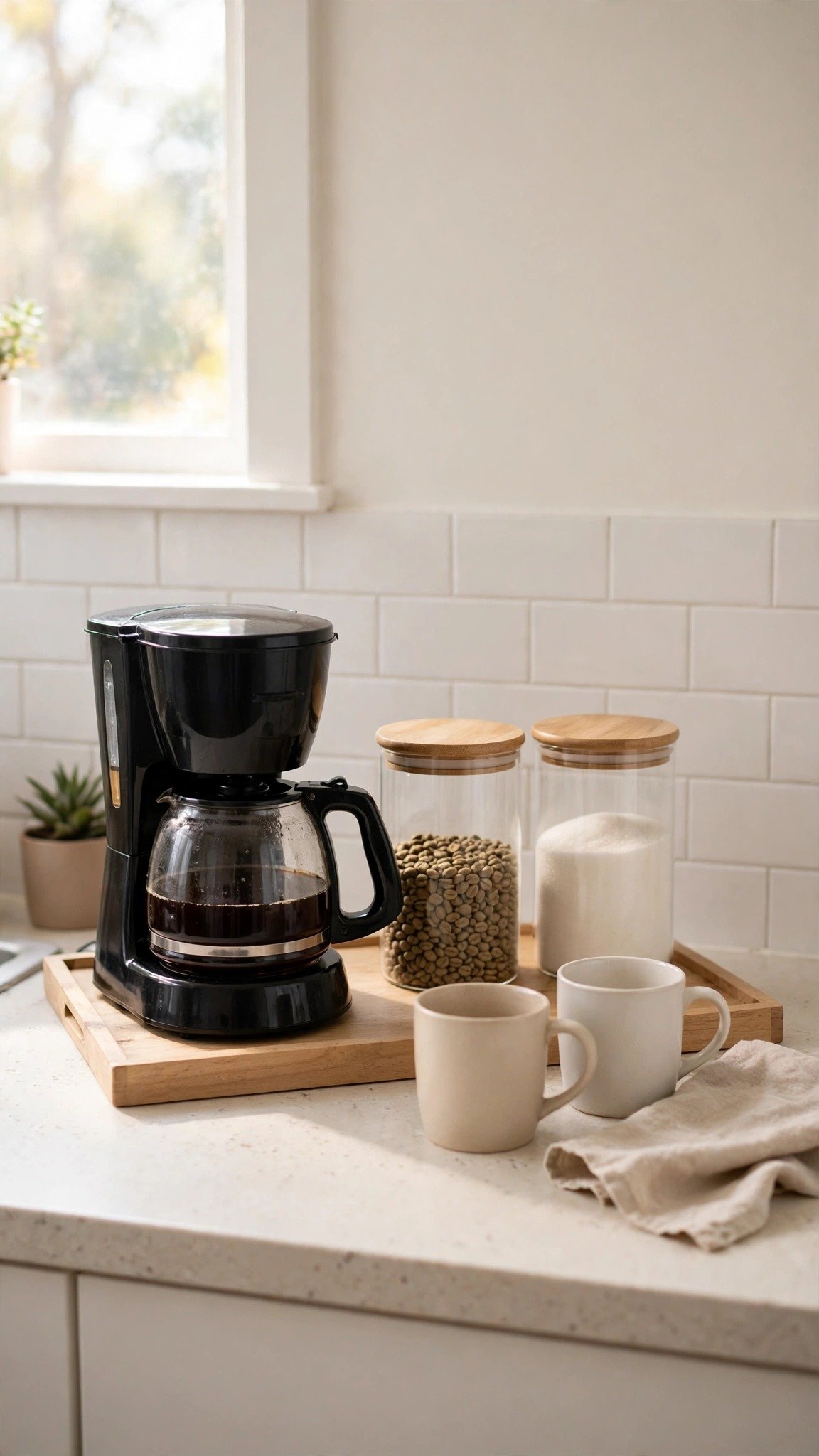
Not all of us are renovating. Here is how to pull together a countertop coffee bar for under $50. A corner of your existing counter, cleared and cleaned, costs nothing. A wooden or bamboo tray from the dollar store, Target, or TJ Maxx costs about $8 to $15. A small set of glass or ceramic canisters for coffee and sugar costs about $10 to $20. S-hooks or a small mug tree from Amazon or Dollar Tree costs about $5 to $10.
Arrange what you already own intentionally on the tray,y and it costs nothing extra. You would be surprised what a tray and 20 minutes of organization can do. It is not about spending money;y, it is about editing and arranging what you have with purpose. This is the best first coffee bar — you can always upgrade pieces later, one at a time. Thrift stores are a great source for the tray and canisters, and a second-hand mug tree costs next to nothing.
- What you need: wooden or bamboo tray, glass or ceramic canisters, S-hooks or small mug tree, coffee maker, mugs you already own.
Which Countertop Coffee Bar Idea Is Right for Your Kitchen?
The best countertop coffee bar idea depends on your kitchen, your counter space, and how serious you are about coffee. A small kitchen benefits most from a coffee garage or floating shelves, because those hide clutter or go vertical instead of eating counter space. A dining room with a spare buffet suits the sideboard bar, which takes coffee out of the kitchen entirely.
If you love espresso, build around the machine and let it be the star. If you love mugs, build around the display. If your budget is tight, the under-$50 tray setup gives you 90 percent of the feeling for almost no money. The right first step is the one that fits the space you actually have, not the kitchen you wish you had.
- Small kitchen, no counter space: The Coffee Garage Compact Station or The Floating Shelf Coffee Station — hidden or vertical.
- Serious espresso drinker: The Espresso Bar Station — built around the machine.
- Mug collector: The Open Shelf Mug Display Bar — show off your favourites.
- Dining room has space: The Buffet or Sideboard Bar — coffee out of the kitchen.
- Dark kitchen or café mood: The Dark and Moody Coffee Corner — drama and warmth.
- Warm, classic kitchen: The Warm Wood and Marble Look or The Farmhouse Coffee Bar — timeless and cozy.
- Tight budget: The Budget Coffee Bar Under $50 — a tray and 20 minutes.
- Modern, minimal kitchen: The Minimal Matte Black Station — clean and edited.
Countertop Coffee Bar Mistakes to Avoid
- Letting the bar sprawl. Without a defined footprint, coffee stuff spreads across the whole counter. A tray or a fixed corner keeps it contained.
- Displaying every mug you own. A curated selection of 8 to 12 favourites always looks better than everything at once. The rest belongs in a cabinet.
- Keeping the coffee bag on the counter. A bag with a chip clip looks messy and lets beans go stale. Decant into glass jars.
- Ignoring cord management. A tangled cord ruins the look of even the prettiest bar. Route the cord behind the machine and keep it short.
- Forgetting the flavor zone. Syrups and creamers left out on the bar clutter it and spoil faster. Keep them refrigerated nearby instead.
- Buying everything at once. A coffee bar is built piece by piece. Start with a tray and what you own, then upgrade one piece at a time.
A countertop coffee bar is not just about aesthetics, though a beautiful morning setup is genuinely a joy. It is about creating a little pocket of intention in your daily routine.
FAQs
How much counter space do I need for a coffee bar?
You can build a good coffee bar on a 24-inch stretch of counter. A tray defines the footprint, the machine sits on it, and mugs and canisters fit around it. If you have even less space, use floating shelves above the machine or a coffee garage that hides the setup.
What is the best coffee bar for a small kitchen?
A coffee garage or a floating shelf station. The coffee garage hides everything behind a door so the counter looks spotless when closed. Floating shelves take storage vertical, so the counter below holds just the machine. Both give you a full bar without eating counter space.
How do I keep my coffee bar from looking cluttered?
Define a footprint with a tray and edit ruthlessly — only what you use every day stays on the counter. Display 8 to 12 mugs at most, decant beans and sugar into matching jars, and keep syrups and creamers in the fridge nearby instead of on the bar.
What should I put on a countertop coffee bar?
The machine, a tray, mugs, canisters for coffee and sugar, spoons, and one small plant or candle. That is the whole list. Anything you use less than once a week — extra pods, filters, backup beans — belongs in a cabinet, not on the bar.
How do I organize a coffee bar like a pro?
Zone it like a barista: a machine zone with just the coffee maker, a prep zone with the grinder and beans, a serve zone with mugs and spoons, and a flavor zone with syrups and sweeteners nearby. Decant everything into matching jars and keep cords routed neatly behind the machine.
Can I make a coffee bar without a coffee machine?
Yes. A pour-over setup, a French press, or even a kettle and a jar of instant coffee can anchor a coffee bar. The bar is about the dedicated spot and the ritual, not the machine. A tray, mugs, canisters, and a small plant make it feel like a real coffee bar.
How do I keep coffee beans fresh on a coffee bar?
Store beans in an airtight glass jar with a tight lid, away from direct sunlight and heat. Keep the jar on the bar for daily use and store the rest of the bag sealed in a cool, dark cabinet. Grind only what you need for each pot so the beans stay fresh longer.
Conclusion
A countertop coffee bar is more than just another kitchen decorating trend. It is a simple way to organize your coffee essentials, make your morning routine more convenient, and add a personal touch to your kitchen.
Whether you prefer a modern matte black station, a warm farmhouse setup, an elegant espresso corner, or an affordable coffee bar made with items you already own, the best design is one that suits your space and everyday habits.
Start with one clear countertop corner, arrange your coffee essentials, and add a few details that reflect your decorating style. You don’t need a complete kitchen makeover to create a welcoming coffee station. Sometimes, a small and thoughtfully organized corner is all it takes to make your mornings feel a little more enjoyable.