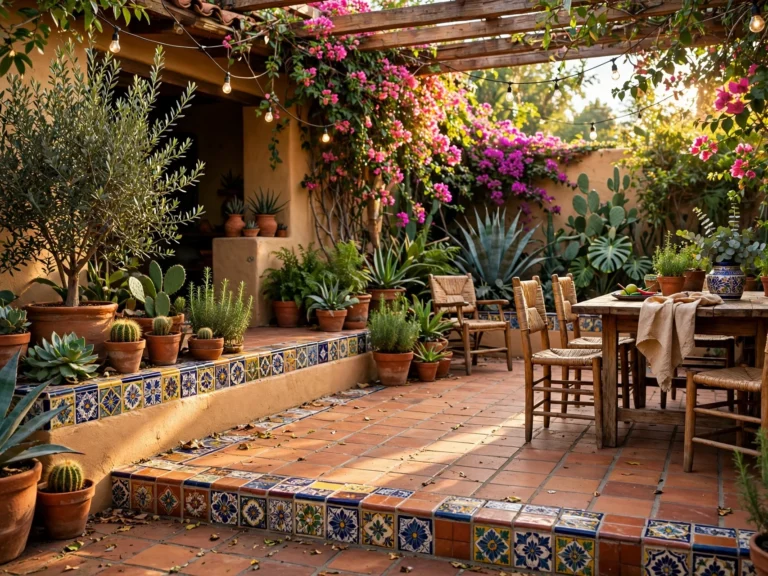
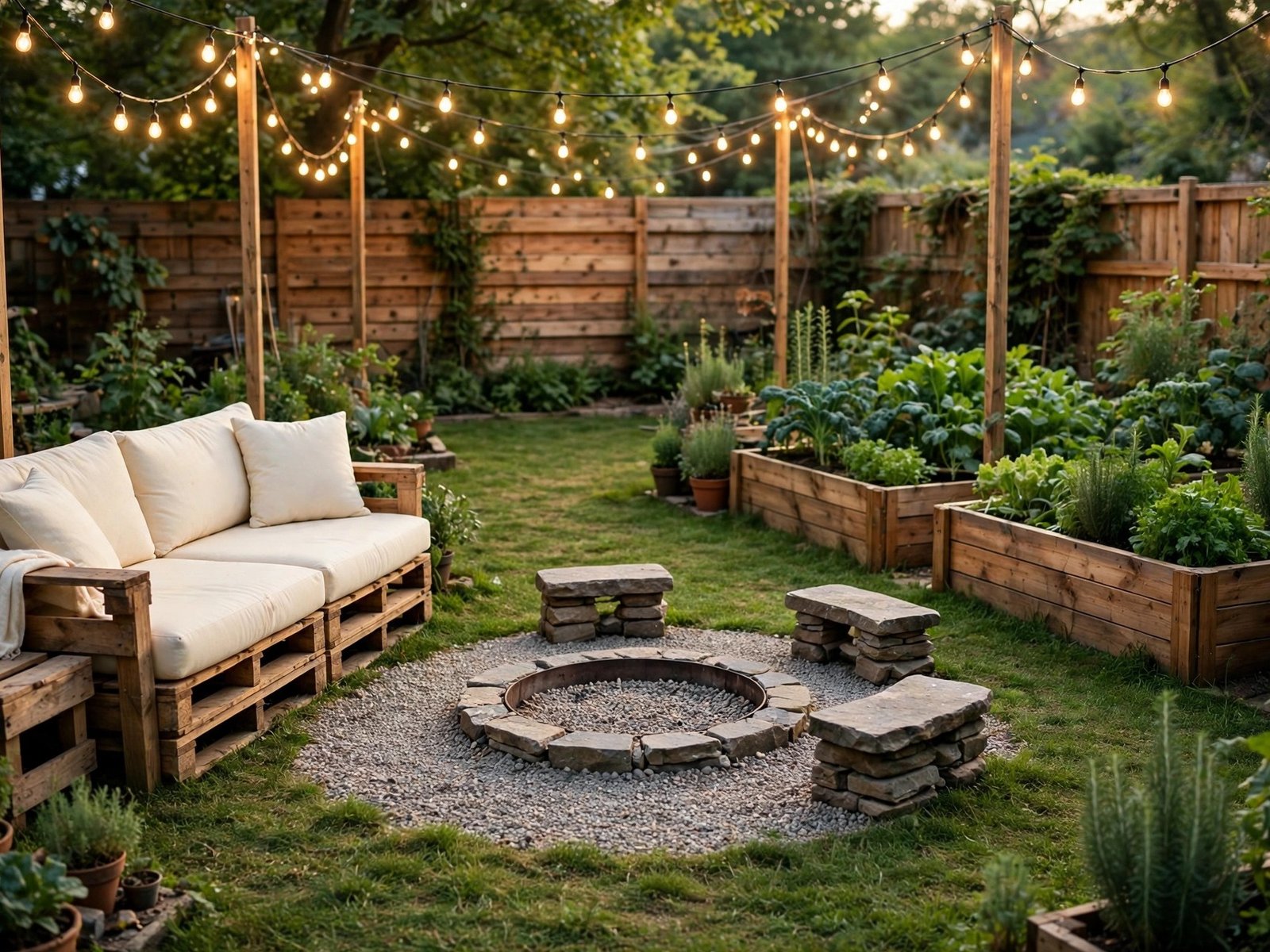
15 DIY Backyard Ideas for a Beautiful Yard on a Budget
A plain backyard with nowhere nice to sit, no evening light, and nothing growing is a wasted space. These 15 DIY backyard ideas fix that, one weekend project at a time. Each one is a real build you can do yourself with basic tools, and each one says how long it takes, how hard it is, and what it costs in plain budget words.
The list covers seating, light, paths, garden beds, storage, and a movie night corner. Every project is for adults and suits a normal yard, and most of them take one weekend or less. You do not need a contractor, and you do not need a big budget — just a free weekend and a few basic tools.
Pick the project that fixes the biggest gap in your yard, gather the materials, and start this weekend. One finished project changes how the whole yard feels, and the next one gets easier.
The 3 Easiest DIY Backyard Ideas to Try First
- Bright painted pots: the cheapest and fastest project here. No power tools, under an hour, and a row of bright pots changes the whole look of a door or path.
- Solar lights in mason jars: no wiring and no batteries to change. Set the jars along a path in the morning, and they glow by themselves after dark.
- A stepping stone path: lay flat stones into the lawn, one afternoon of work, and the yard feels joined together at once.
Pick one of these three and start this weekend. They need the least skill and the least money, and they give the fastest result.
1. A Wooden Pallet Sofa With Thick Outdoor Cushions
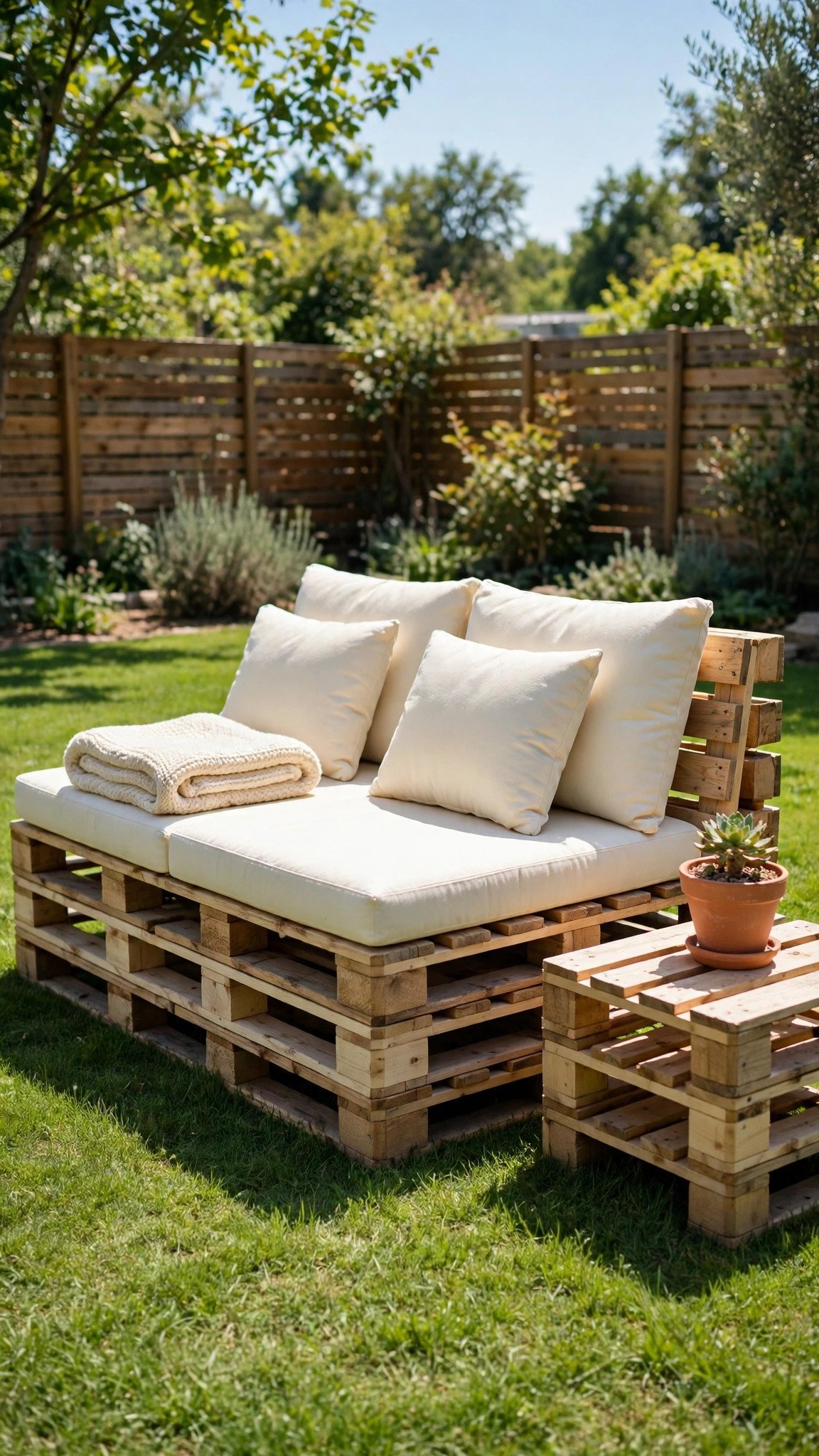
A pallet sofa is seating built from free or cheap wooden pallets, not bought furniture. Two or three stacked pallets form the base, a back row stands upright, and thick outdoor cushions do the comfort work. It looks relaxed and handmade, and it costs far less than a shop-bought outdoor sofa. These diy backyard seating ideas suit anyone who wants a big seat for little money.
Check each pallet for stamps and damage first, and skip any that smell of chemicals or look stained. Sand every edge smooth, seal the wood so it lasts outside, and fix the pallets together with screws so nothing shifts. Add thick outdoor cushions and a small pallet side table beside it. Build time: one weekend. Skill level: beginner-friendly. Budget: low-cost, since pallets are often free.
What you need: 4-6 clean wooden pallets, outdoor screws, sandpaper, wood sealer, thick outdoor cushions, and a small pallet offcut for the side table.
2. A Round Gravel Fire Pit Corner With Low Stone Seats
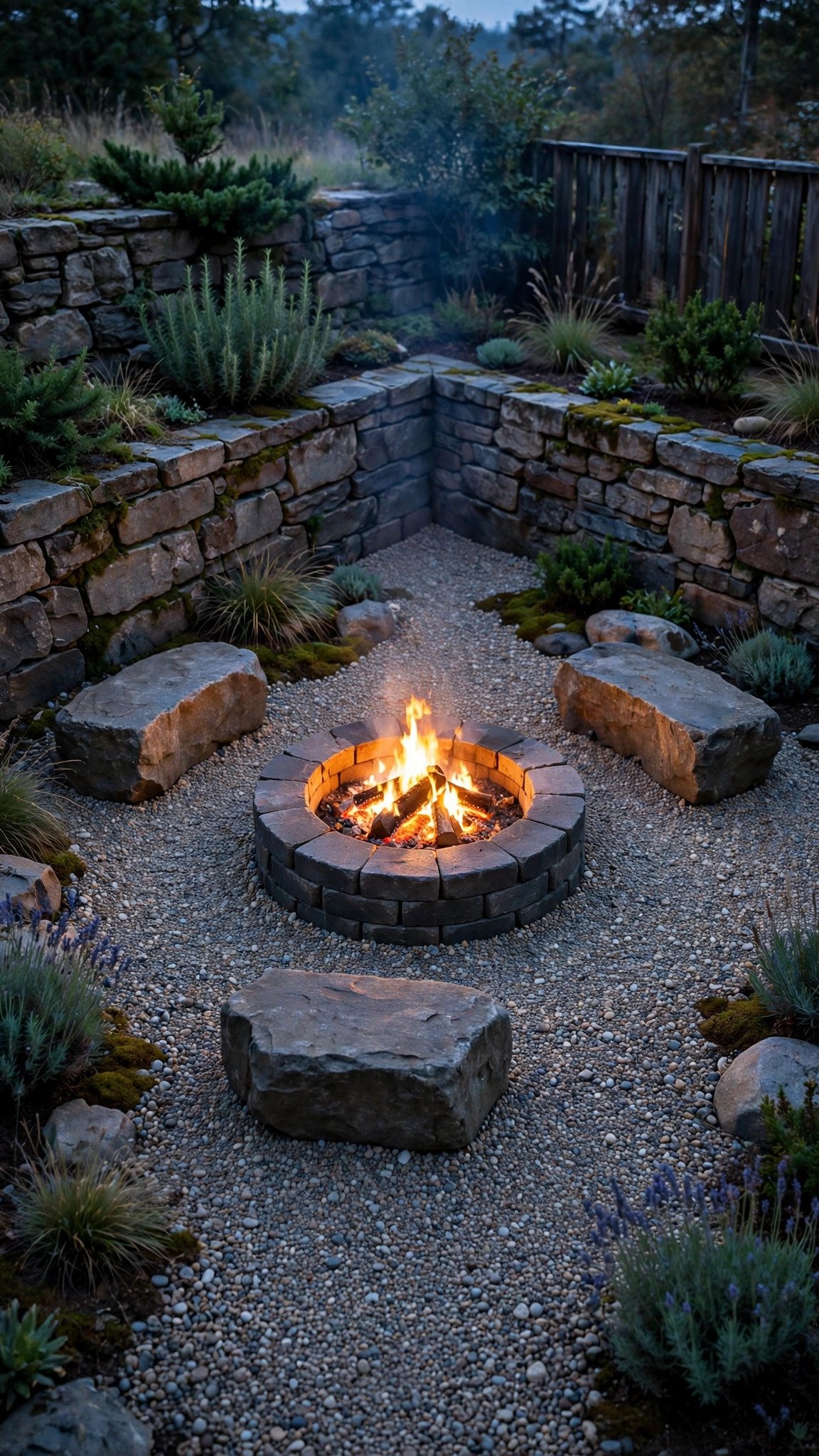
A fire pit corner is a full sitting spot, not just a fire ring. A round gravel circle holds a block fire pit in the middle, with low stone seats around it. The gravel keeps the area tidy and mud-free, and the glow pulls people together on cool evenings. These diy backyard fire pit ideas suit any yard with a clear, open patch of ground.
Pick a spot well away from the house, the fence, and overhanging trees, and check local fire rules before you light the first fire. Level the ground, lay landscape fabric, spread gravel, stack the blocks for the pit, and set the stone seats in a circle. Keep a bucket of sand nearby for safety. Build time: one weekend. Skill level: beginner-friendly. Budget: low-cost to mid-range.
What you need: fire pit blocks, pea gravel, landscape fabric, a level, low natural stone seats, and a bucket of sand.
3. A Small Paver Patio You Can Lay in a Weekend
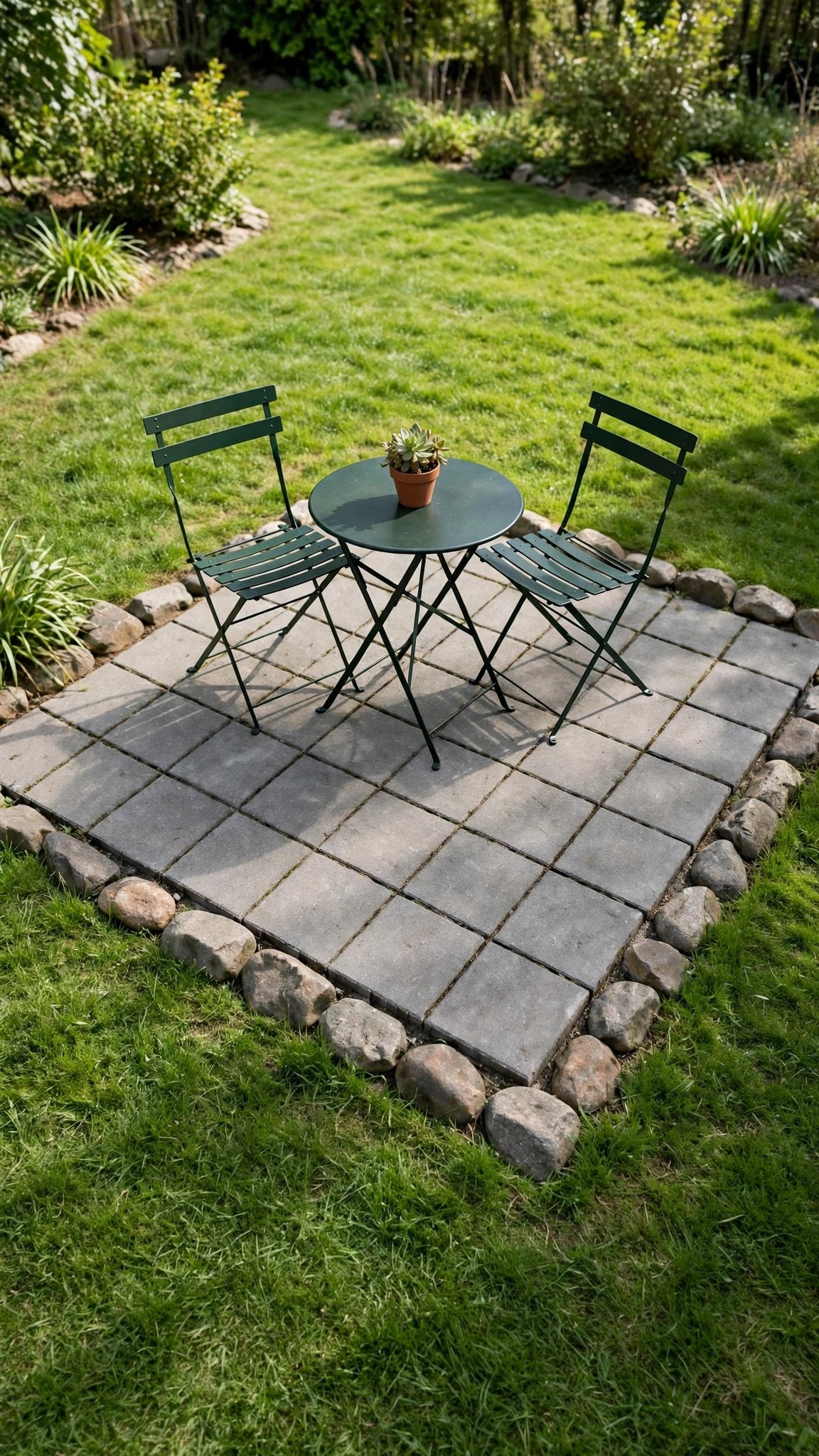
A small paver patio is a flat, solid place for a table and two chairs, built with no concrete pouring and no contractor. Concrete pavers sit over gravel and sand, and the finished square looks neat and permanent. These diy backyard patio ideas suit yards that need a proper sitting spot but cannot fit a full deck.
Mark a small square first, sized for the furniture you already own. Dig a shallow base, add compacted gravel and leveling sand, lay the pavers tight, sweep sand into the gaps, and edge the square with stones so it does not shift. Keep the patio near the back door so carrying food out is easy. Build time: one weekend. Skill level: beginner-friendly. Budget: mid-range.
What you need: concrete pavers, gravel, leveling sand, landscape fabric, edging stones, a level, and a shovel.
4. Warm String Lights Hung From Freestanding Poles
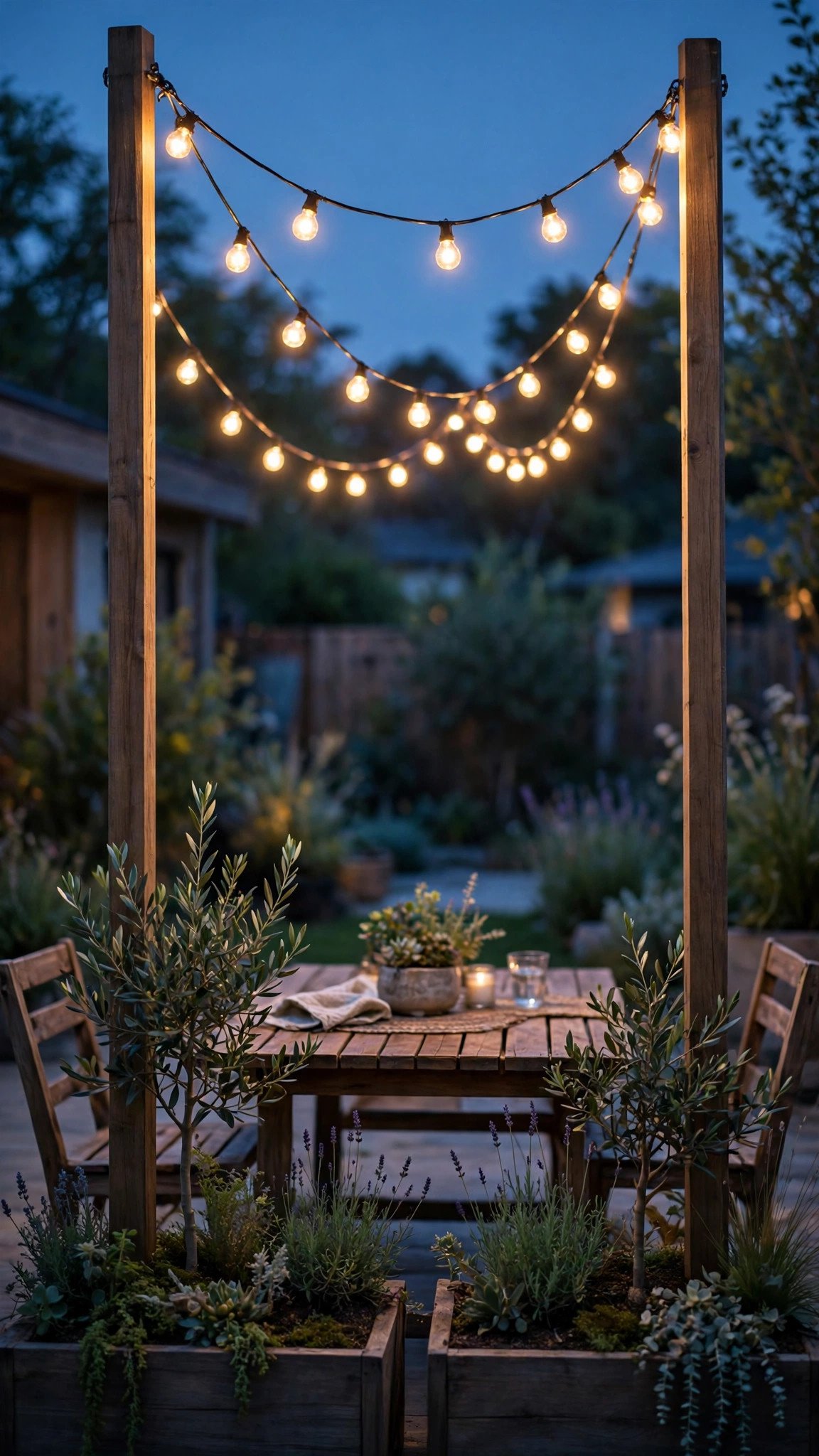
String lights hung from freestanding poles mean the lights can go anywhere, even in the middle of the yard, with no drilling into the house. Tall wooden poles set in heavy planter boxes hold outdoor-rated LED strings with a gentle sag, and the warm glow turns an ordinary patio into a place you want to stay after dark. These diy backyard lighting ideas suit every yard, from a small patio to a big lawn.
Set each post in a heavy planter box with concrete so it cannot tip, and add a hook at the top of each pole. Hang the lights with a gentle sag, keep plugs off the ground, and use a timer so the lights switch themselves on at dusk. Solar strings work where there is no outlet, while plug-in lights stay brighter through the night. Build time: half a day. Skill level: beginner-friendly. Budget: low-cost.
What you need: two tall wooden posts, two large planter boxes, concrete mix, hooks, outdoor-rated LED string lights, and a timer.
5. A Backyard Movie Night Screen on a Simple Frame

A movie night screen is a large white screen on a light wood frame, with a small projector, that folds away after use. It is not a permanent structure — you set it up for the evening, watch a film under the stars, and put it away. This is one of the best backyard entertaining ideas for families who like summer nights outside.
Build a frame about eight feet wide, stretch white blackout fabric tight across it, and set it against a fence or on two posts. Place the projector on a small table a few steps back, and add blankets and floor cushions on the grass in front. Start the film after dark so the picture stays bright. Build time: one afternoon. Skill level: beginner-friendly. Budget: low-cost.
What you need: wood for a simple frame, white blackout fabric, a small projector, a small table, floor cushions, and blankets.
6. Raised Wooden Beds for Vegetables and Flowers

Raised beds make a yard useful every day. Cedar boards form a simple box frame, filled with soil and compost, and the beds sit high enough that you can reach the middle from either side without stepping inside. Plant what the family eats — herbs, lettuce, tomatoes — and add flowers at the ends for colour. These diy backyard garden bed ideas suit anyone who likes fresh food steps from the kitchen.
Use cedar boards, since they resist rot outside, and build the frame on a level spot. Line the base, fill with soil and compost, and mulch the top to hold water in the soil. Water deeply in the morning so the beds stay moist through the day. Build one bed first, learn what grows well, then add more next season. Build time: one weekend. Skill level: beginner-friendly. Budget: low-cost to mid-range.
What you need: cedar boards, screws, a drill, soil and compost, mulch, and a watering can.
7. A Wall of Herbs in Hanging Pockets

A herb wall grows cooking herbs in hanging fabric pockets fixed to a sunny wall or fence, so it fits even a tiny yard or a narrow side strip. Basil, mint, rosemary, parsley, and thyme grow at eye level, steps from the kitchen door, and the green wall looks bright and tidy. This diy herb garden suits small yards best, since it uses vertical space instead of ground space.
Fix the pockets to a sunny wall, fill them with light potting soil, and plant one herb per pocket. Water often, because pockets dry fast in the sun, and label each pocket with a small wooden tag. Keep mint in its own pocket, since it spreads fast and crowds the others out. Build time: under an hour. Skill level: beginner-friendly. Budget: low-cost.
What you need: hanging fabric pockets or small pots, light potting soil, herb plants, small wooden labels, and a watering can.
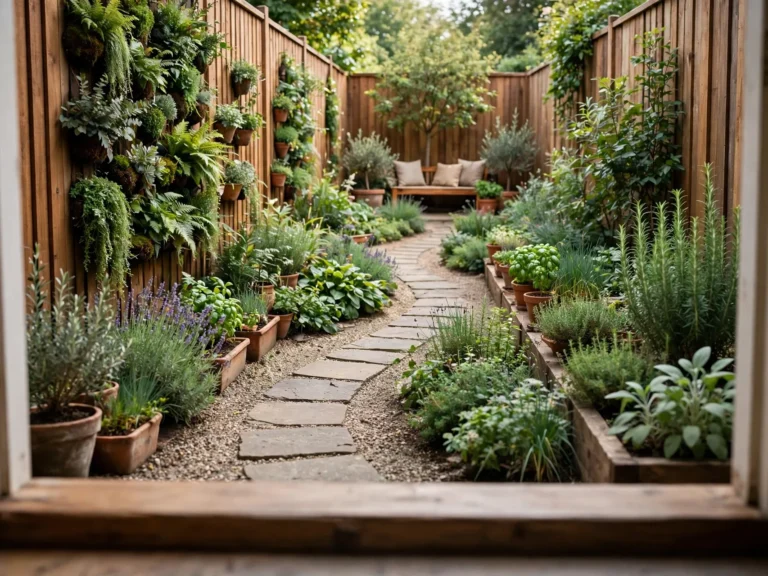
8. A Stepping Stone Path Through the Lawn
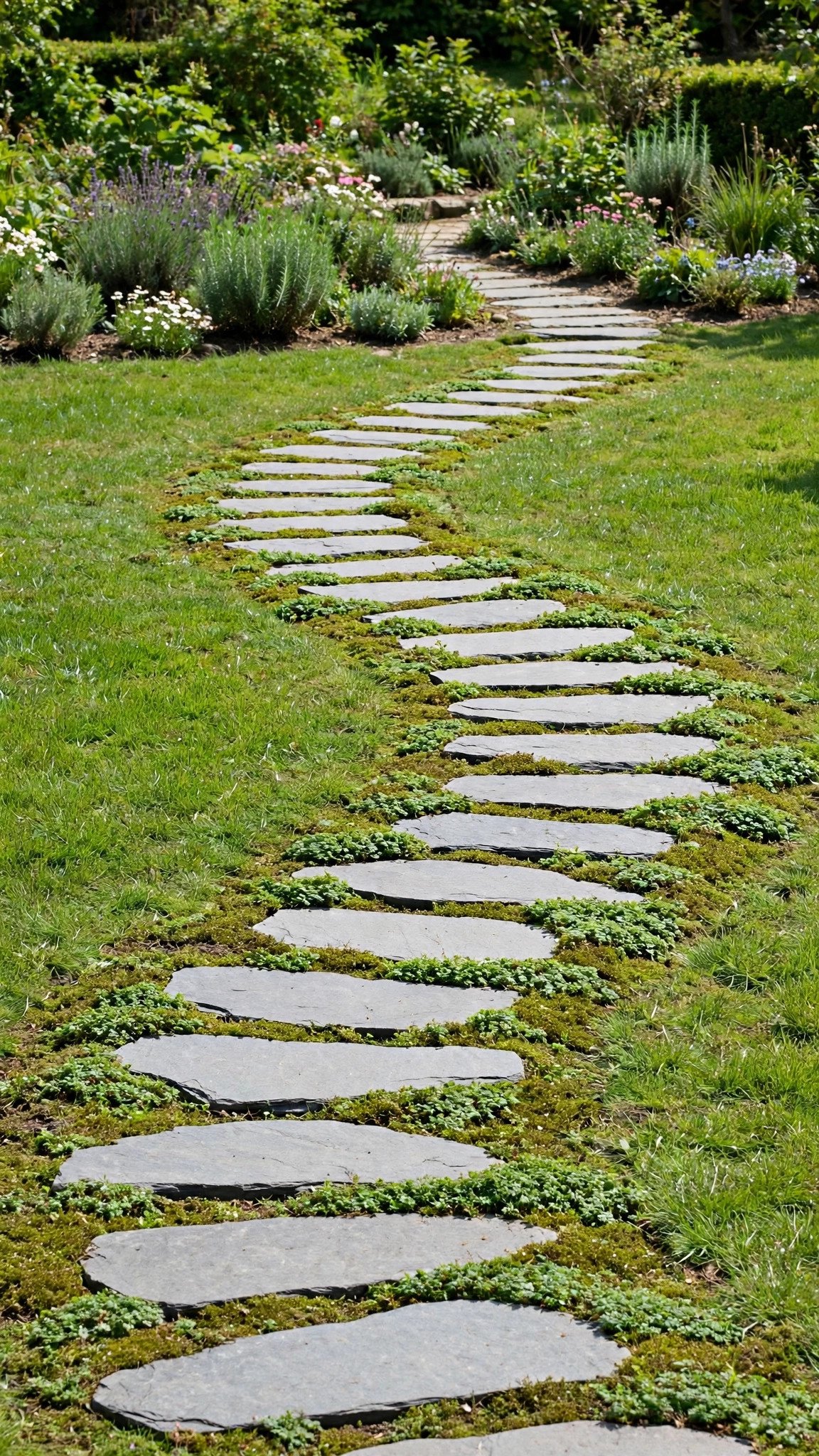
A stepping stone path looks soft and planted, not hard and paved. Flat stones set into the lawn, with low ground cover growing between them, guide the eye from the door to the seating area and protect the grass from worn patches. These diy backyard path ideas suit yards that feel empty or hard to cross.
Lay the stones out first and walk the line, so the spacing feels natural — about one step apart. Cut the turf under each stone, set it level with the grass so the mower passes over it, and fill the gaps with gravel or low ground cover. Edge the path with solar lights if you want it to glow after dark. Build time: one afternoon. Skill level: beginner-friendly. Budget: low-cost.
What you need: flat stepping stones, gravel or low ground cover, a shovel, and a level.
9. A Slatted Wood Screen With Climbing Vines

A slatted wood screen blocks an ugly view without boxing the yard in. Two posts hold horizontal slats with small, even gaps, so light and air still pass through, and climbing vines soften the screen over time. These diy backyard privacy ideas suit yards that face a road, a neighbour’s wall, or a bare fence.
Set two posts deep in concrete and let them cure, then fix the slats with small, even gaps and seal the wood. Plant a fast climber at the base and train it along the slats in the first year, and add large pots at the feet to soften the bottom edge. Trim the vines each spring so light still comes through. Build time: one weekend. Skill level: intermediate. Budget: mid-range.
What you need: two sturdy posts, concrete mix, wood slats, screws, wood stain or sealer, a climbing plant, and two large pots.
10. Bright Painted Pots in a Matching Set
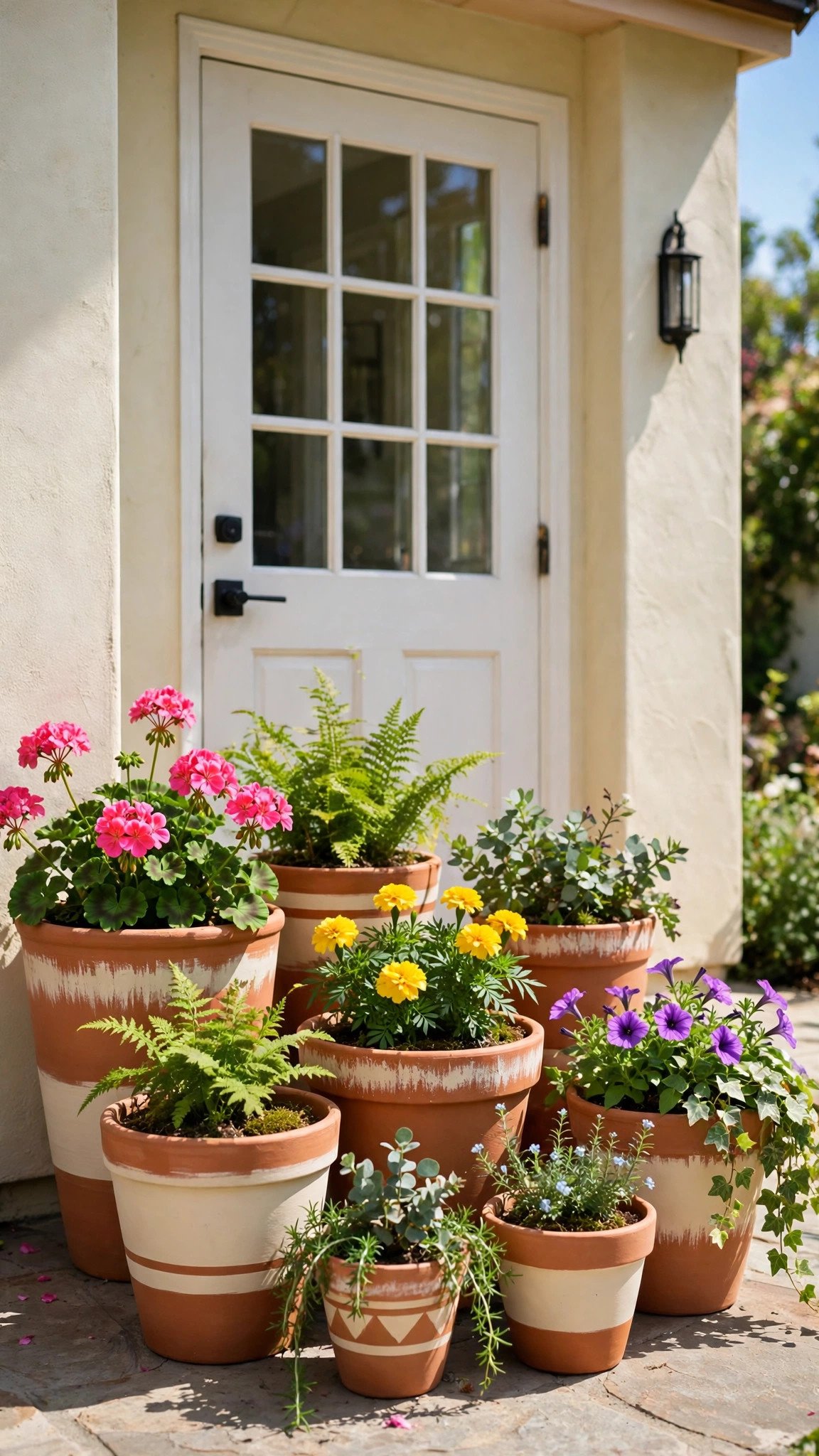
Painted pots are the cheapest project on this list, and the fastest. Plain clay pots painted in one matching colour set, grouped in different sizes by the door or along a path, give the yard a tidy, cheerful look in under an hour. These easy diy backyard ideas suit beginners best, since they need no power tools at all.
Clean the pots first so the paint sticks, tape off patterns if you want stripes, and paint thin coats of outdoor paint. Seal after drying so the colour lasts through rain. Plant one colour family per pot for a tidy look — bright flowers in terracotta pots, green herbs in cream ones. Build time: under an hour. Skill level: beginner-friendly. Budget: low-cost.
What you need: plain clay pots in different sizes, outdoor paint, painter’s tape, brushes, and clear sealer.
11. A Storage Bench That Hides Garden Tools
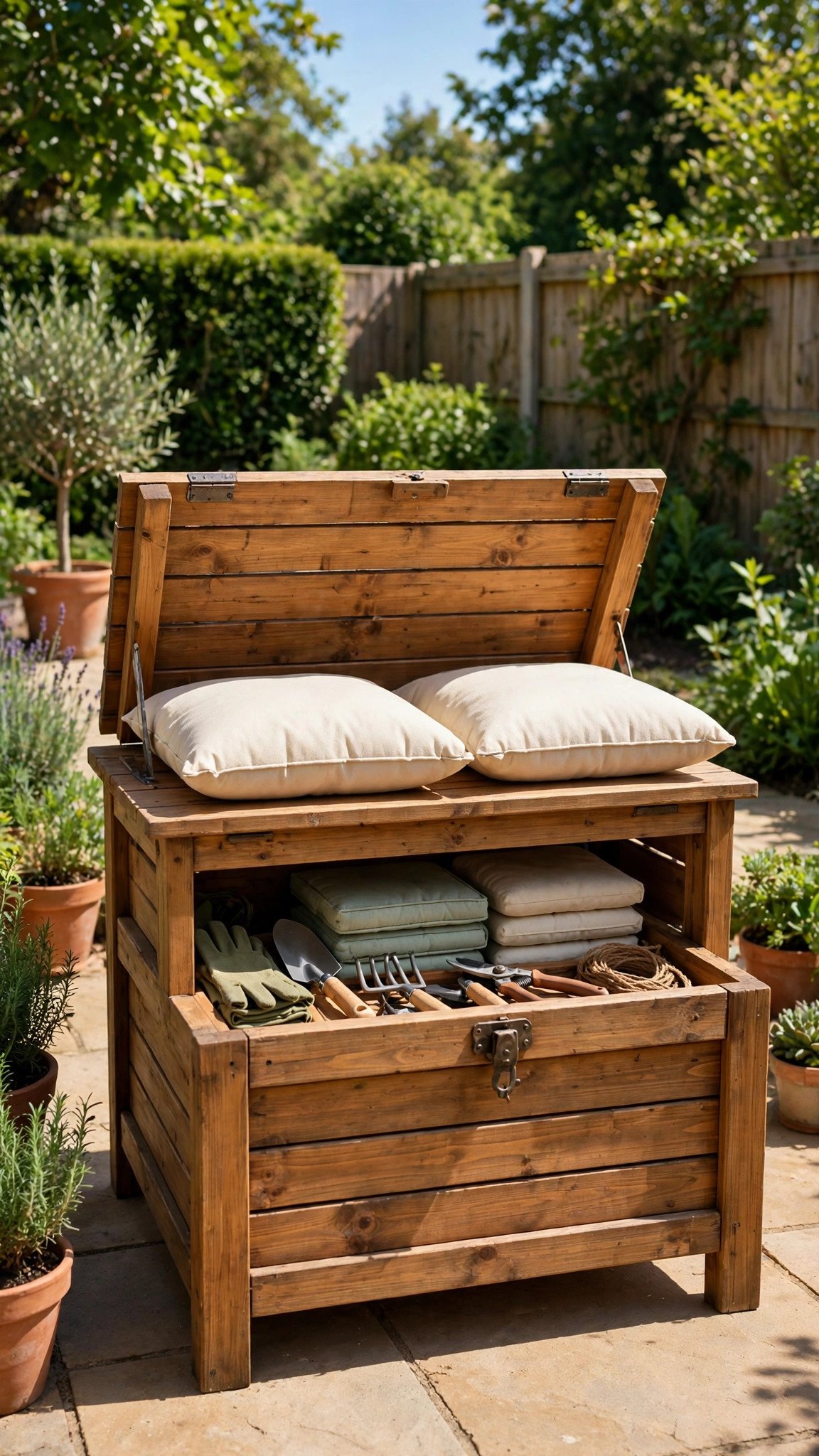
A storage bench is seating plus storage in one build, which suits small yards best. A simple box with a hinged lid holds cushions, tools, and hoses out of sight, while weatherproof cushions on top make it a proper seat. The yard looks tidy, and everything you need stays close at hand. These diy outdoor storage bench ideas suit anyone tired of tools lying on the patio.
Build a simple box with a hinged lid, sand all edges smooth, and paint or stain and seal it well. Add weatherproof cushions on top, and keep heavy tools low inside so the bench stays stable. Check the hinges each season and tighten the screws before they loosen. Build time: one weekend. Skill level: intermediate. Budget: mid-range.
What you need: plywood or boards, hinges, screws, outdoor paint or stain, wood sealer, and weatherproof cushions.
12. Solar Lights in Mason Jars Along the Path
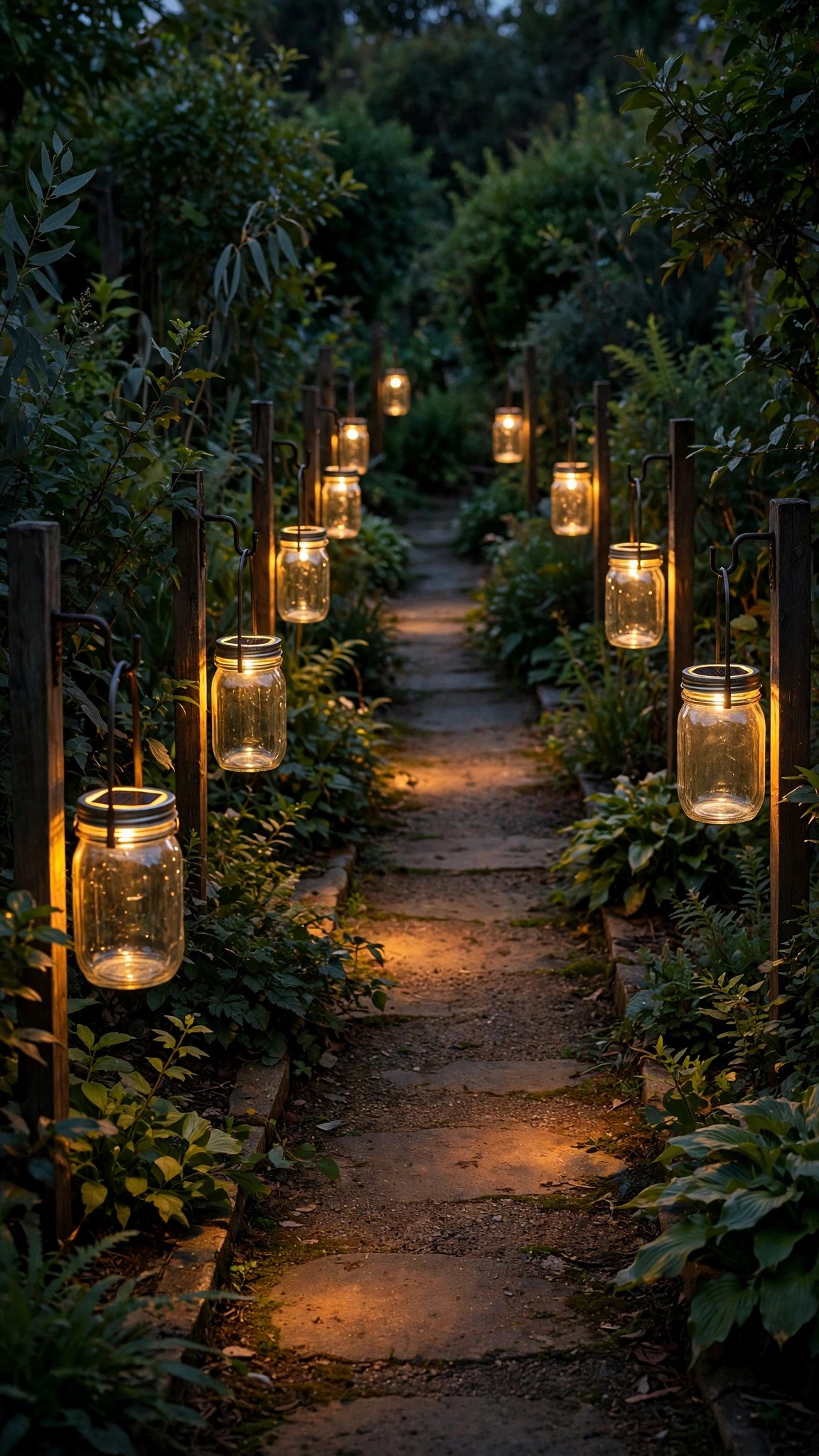
Solar lights in mason jars glow softly along a path after dark, with no wiring and no batteries to change. The jars hang from short hooks or sit on low posts, and each one holds a small solar light that charges through the day. These diy backyard lighting ideas suit paths, beds, and seating corners that need a gentle glow.
Use jars with solar lids, or drop a small solar light inside each plain jar. Hang them from shepherd hooks or set them on short posts, and keep each solar panel facing the sun throughout the day. Group the jars in threes for a fuller look, and space the groups evenly along the path. Build time: under an hour. Skill level: beginner-friendly. Budget: low-cost.
What you need: glass mason jars with solar lids, shepherd hooks or short posts, and a sunny spot for charging.
13. A Potting Bench That Doubles as a Drink Station
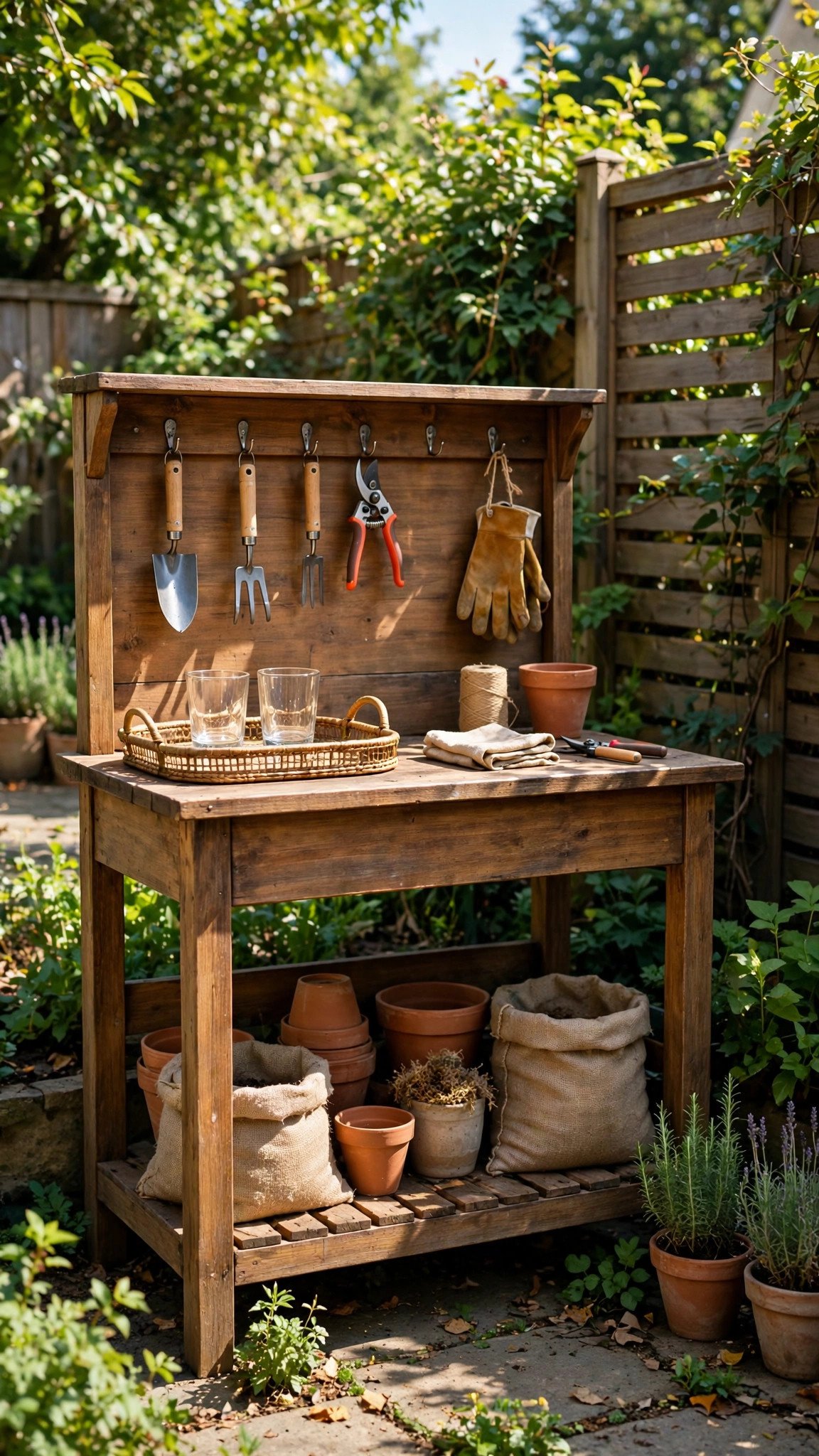
A potting bench is one bench with two jobs — garden work in the morning, party bar in the evening. A waist-high worktop, a lower shelf, and hooks above hold tools and pots by day, and a serving tray with glasses turns the same bench into a drink station at parties. These backyard entertaining ideas suit readers who garden and host in the same yard.
Build a simple frame with a worktop and a lower shelf, add hooks for tools, and seal the wood well. Set the bench near the garden tap so watering and potting are easy. For a party, clear the top, add a tray and glasses, and the bench is ready to serve. Build time: one weekend. Skill level: intermediate. Budget: mid-range.
What you need: wood boards, screws, hooks, wood sealer, a serving tray, and a lower shelf board.
14. A Hammock Hung Between Two Sturdy Posts
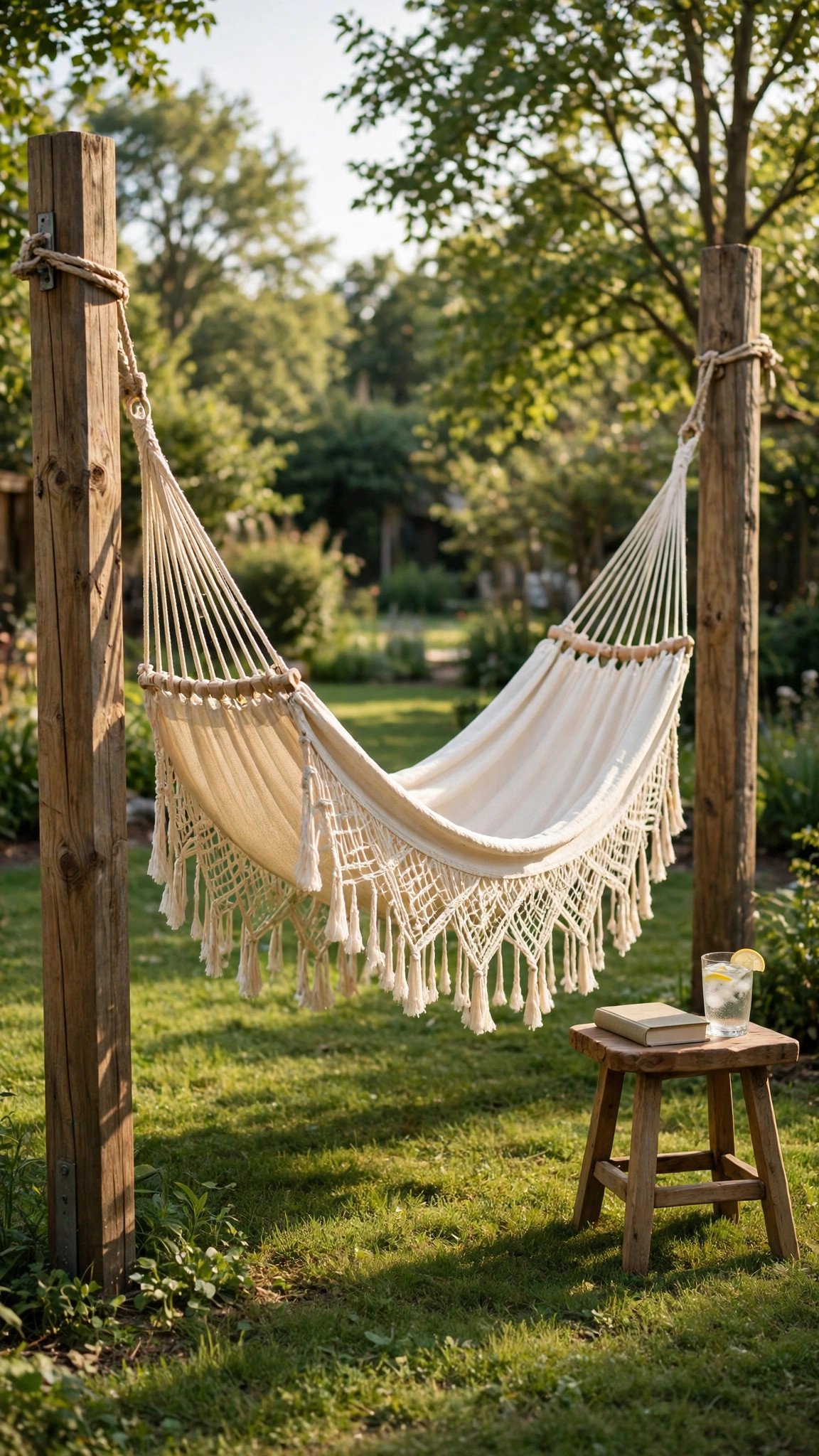
A hammock between two sturdy posts is a rest corner that needs no tree and no big build. Two posts set deep in concrete hold a fabric hammock, with a small side table for a book and a drink, in a sunny or shady spot. This diy backyard hammock suits anyone who wants a quiet place to rest without buying a full swing set.
Set the two posts deep in concrete and let it cure fully before hanging anything. Hang the hammock with strong rope or straps, test the height so it does not touch the ground, and sit in it gently the first time. Take the fabric inside in winter so it stays clean for next year. Build time: half a day, plus concrete curing time. Skill level: beginner-friendly. Budget: low-cost.
- What you need: two sturdy posts, concrete mix, a fabric hammock, strong rope or straps, and a small side table.
15. A Low Wooden Coffee Table for the Patio
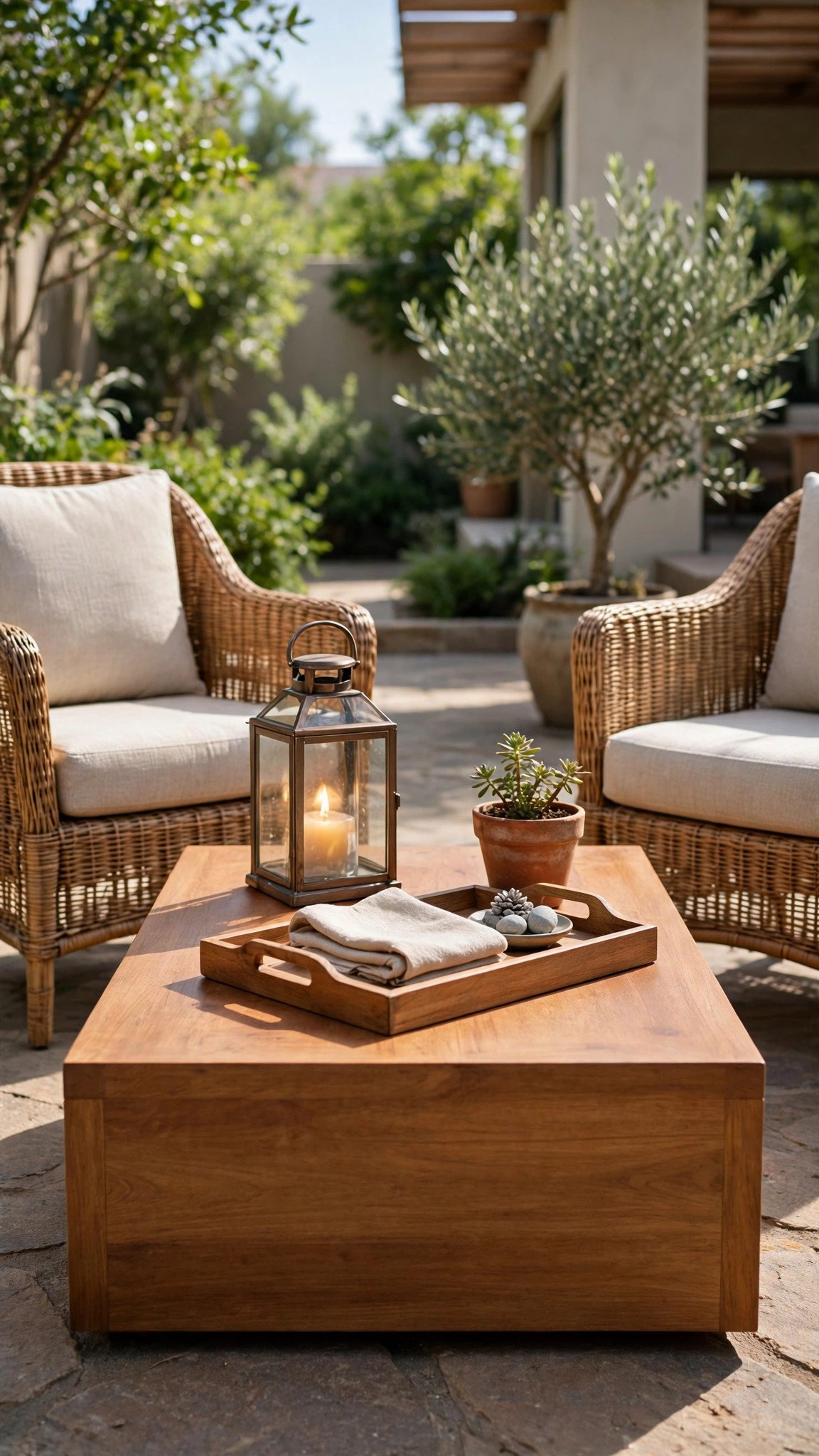
A low wooden coffee table finishes the seating area. It is a simple first woodwork project — straight cuts only, no angles — sized to sit between two chairs or in front of the pallet sofa. A lantern, a small plant, and a tray on top make the patio feel like a living room. This diy outdoor coffee table suits beginners who want one wood project to start with.
Cut the boards to one size, build the top first, then fix short legs underneath. Sand every edge round, stain or paint, and seal well so rain does not mark the top. Style it simply: a lantern, a small potted plant, and a wooden serving tray. Build time: one afternoon. Skill level: beginner-friendly. Budget: low-cost.
What you need: wood boards, screws, sandpaper, outdoor stain or paint, wood sealer, a lantern, and a small potted plant.
Which DIY Backyard Idea Fits Your Yard?
A small yard suits a herb wall, painted pots, solar jars, and a hammock. These projects take little space and make the yard feel calm instead of crowded. Skip big builds here, and let one good project carry the yard.
A big yard suits a fire pit corner, a paver patio, and a movie screen. Big yards need big anchors, or they feel empty. Pick one large project first, then add paths and planting around it over time.
A low-cost first build suits painted pots, solar jars, and stepping stones. Each one costs little and changes the yard fast. Start with the cheapest idea, live with it for a season, then add the next one.
A one-weekend build suits a pallet sofa, raised beds, and a coffee table. These take a full weekend but need only basic tools. Plan the materials on Friday, build on Saturday, and use the yard on Sunday.
A yard built for entertaining suits a fire pit corner, string lights, and a potting bench bar. These three give light, warmth, and a place to serve drinks. Pick the idea that fixes the biggest problem in your yard first.
Plan Your DIY Backyard in 4 Simple Steps
Step 1: Walk the yard and list what is missing. Note where seating, light, storage, green, or a path is needed. These notes decide what to build first, and they stop wasted work later.
Step 2: Pick one project that fixes the biggest gap. Choose the project that fits the budget label and the skill level honestly. A single project is easier to plan and cheaper to build than a whole yard at once.
Step 3: Buy or gather the materials and check the tools. Measure the space first, then buy only what the project needs. Call the utility line before any digging, so no cable or pipe is hit.
Step 4: Build it in one weekend, seal the wood, then live with it. Seal every outdoor wood project so it lasts. Use the yard for a week before starting the next project, so you learn how you truly use the space.
DIY Backyard Mistakes to Avoid
Starting with the hardest project first kills motivation. A big build with new tools takes twice as long as planned, and a half-finished project sits in the yard for months. Start with the easiest idea, finish it, then try a harder one.
Skipping sealer on outdoor wood is a costly mistake. Unsealed wood soaks up rain, warps, and rots within a season. Seal every project, top and bottom, and reapply the sealer every one to two years.
Building before checking local fire and fence rules can mean tearing work down. Fire pits, fences, and screens all have local rules, and they differ by town. Check first, build second.
Digging without calling the utility line is dangerous. Cables and pipes hide just below the surface, and hitting one is costly and unsafe. Call before any digging, even for two posts.
Making paths and patios without a level base means they shift and sink. Gravel and sand under every stone keep the surface flat through rain and frost. Never skip the base to save time.
Planting mint loose in a bed takes over the whole bed within a season. Mint spreads fast through its roots and crowds everything else out. Keep mint in its own pot or pocket, always.
Buying all materials before measuring the space wastes money. A bench that does not fit, or pavers that run short, means a second trip and extra cost. Measure twice, buy once.
Crowding a small yard with too many projects at once makes it feel messy. Five small builds in a tiny yard leave no room to sit. Pick one project, finish it, and live with it before starting the next.
FAQS
What is the easiest DIY backyard idea for beginners?
Painted pots and solar mason jar lights are the easiest ideas for beginners. Both need no power tools, take under an hour, and cost little. A stepping stone path is the next step up, since it needs one afternoon and a shovel.
How much does a DIY backyard project cost?
Most ideas here are low-cost, and a few are mid-range, so the cost depends on the project and the materials. Painted pots and solar jars cost the least, while a paver patio or a storage bench costs more. Reclaimed wood and second-hand finds cut the cost further.
What tools do I need for DIY backyard projects?
A drill, a saw, screws, sandpaper, a level, a shovel, and a measuring tape cover most ideas here. Painted pots, solar jars, and the herb wall need no power tools at all. Buy tools only for the project you are building now.
What wood lasts longest outdoors?
Cedar and pressure-treated lumber last longest outdoors, since they resist moisture, insects, and rot. Seal every project well, top and bottom, and reapply the sealer every one to two years. Avoid untreated indoor wood outside, since it rots fast. Cedar costs more, but it looks good without paint and needs less upkeep.
Do I need a permit for a DIY backyard project?
Small movable builds usually need no permit, but rules differ by town. Check local rules before building fire pits, fences, or anything near a property line. Always call the utility line before digging, even for two posts. A permit is more likely for a large deck, a tall fence, or a permanent structure, so ask the town office first.
How do I keep DIY backyard projects looking good?
Clean each project every season, check the screws and tighten them, and reapply sealer every one to two years. Store cushions inside when it rains, and bring fabric items in for winter so they stay clean. Check the wood for cracks in spring, and sand and reseal any worn spot before the season starts.
Can I do DIY backyard projects in a small yard?
Yes, a small yard suits DIY projects well. A wall of herbs, painted pots, a small paver corner, and string lights all fit small spaces. Pick one project, not five, so the yard stays open and easy to use. Measure the space first, so the project fits with room to walk around it.
Conclusion
A good backyard does not need a full rebuild. It needs one good project at a time — a seat, a light, a path, or a bed — built well and sealed so it lasts. These 15 DIY backyard ideas cover every yard size, budget, and skill level, so there is a starting point for everyone.
Pick the easiest idea that fixes the biggest gap in your yard, gather the materials this week, and build it this weekend. Live with that change for a season, and the next project will be clear. A backyard you built yourself feels better than one you bought.