13 Hippie Garden Ideas for a Relaxed Boho Outdoor Retreat
A hippie garden is more than a decorated yard. It is a peaceful retreat filled with personality, colour, and natural beauty. The best boho gardens feel collected over time rather than perfectly planned. They mix handmade touches, vintage finds, natural materials, colourful textiles, and thriving plants into a relaxed space that invites you to slow down.
The secret is layering. One cushion or one lantern will not make a garden feel bohemian. But a low lounge with layered rugs, plants at different heights, warm lights, and a few handmade pieces will. You do not need a big yard or a big budget — a small patio or a quiet corner can work just as well.
In this guide, you will find 13 hippie garden ideas with boho decor for real yards, with what you need and how to build each one. Whether you have a large backyard, a small patio, or a compact city garden, there is an idea here that fits.
Quick Answer: Best Hippie Garden Idea at a Glance
If you want one answer fast, here it is. A colourful outdoor lounge corner is the best starting point for most yards. It is cheap to build, it works in any size of space, and it instantly gives your garden a bohemian feel. Layer one or two outdoor rugs, add floor cushions and pillows, and finish with lanterns for the evening. You can build the whole corner in a single afternoon with thrifted pieces.
- Best all-round choice: Colourful Outdoor Lounge Corner — cheap, easy, and works anywhere.
- Best for small spaces: Macramé Plant Hangers at Different Heights — uses vertical space, not floor space.
- Best for evening magic: Warm String Lights Across the Garden — the whole garden glows after dark.
- Best for gatherings: Fire Pit Gathering Circle — the heart of any boho garden.
- Best for a calm retreat: Wildflower Meditation Space — soft colour, bees, and quiet.
1. Colourful Outdoor Lounge Corner
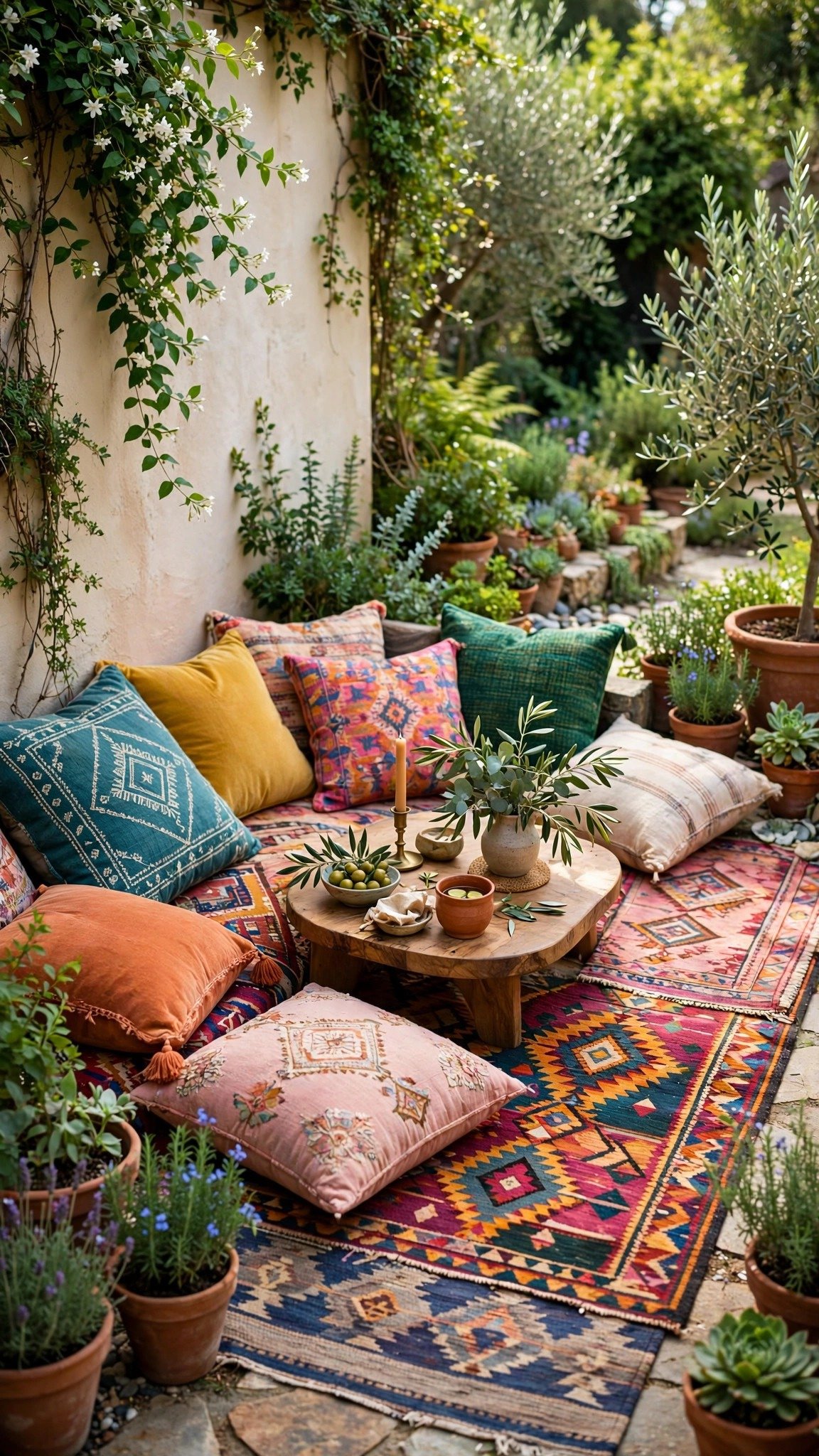
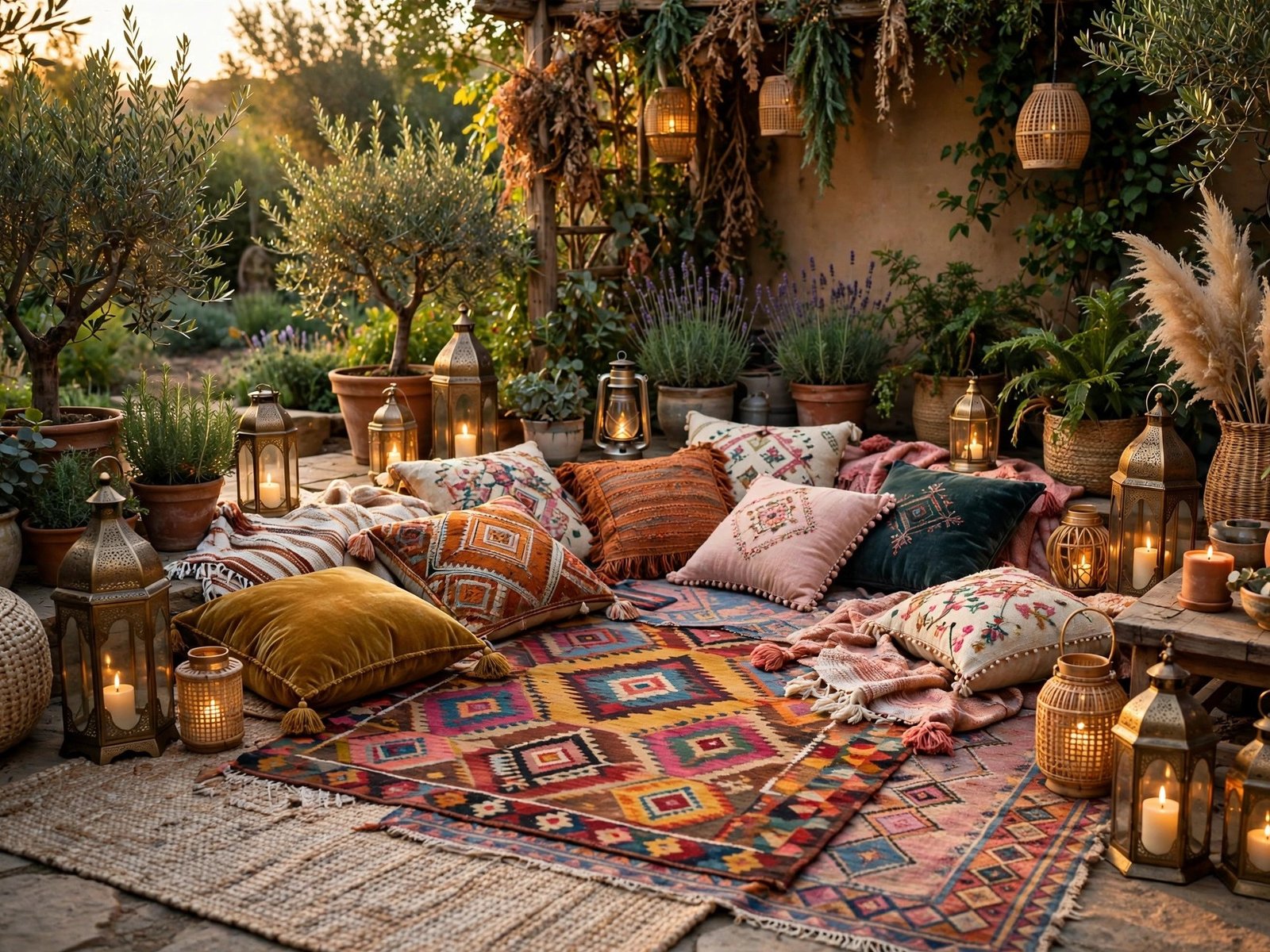
A dedicated lounge corner instantly gives a garden a bohemian personality. Low seating, layered textiles, and comfortable cushions in mixed patterns create a space that feels relaxed rather than staged. Instead of matching furniture sets, use collected pieces that look like they were gathered during travels.
Choose a quiet garden corner and layer one or two outdoor rugs on the ground. Add floor cushions and throw pillows in at least three patterns, keeping one colour palette so the mix looks curated rather than messy. Place a low table in the centre for drinks and books, and arrange lanterns around the seating for evening light. Use weather-resistant fabrics so the cushions survive rain and sun. A lounge corner works on grass, gravel, or a patio, and you can move the pieces around whenever you want a change. A small basket nearby keeps throws and books tidy when the corner is not in use.
- What you need: floor cushions, outdoor rugs, low table, throw pillows, lanterns, weather-resistant fabrics.
2. Macramé Plant Hangers at Different Heights
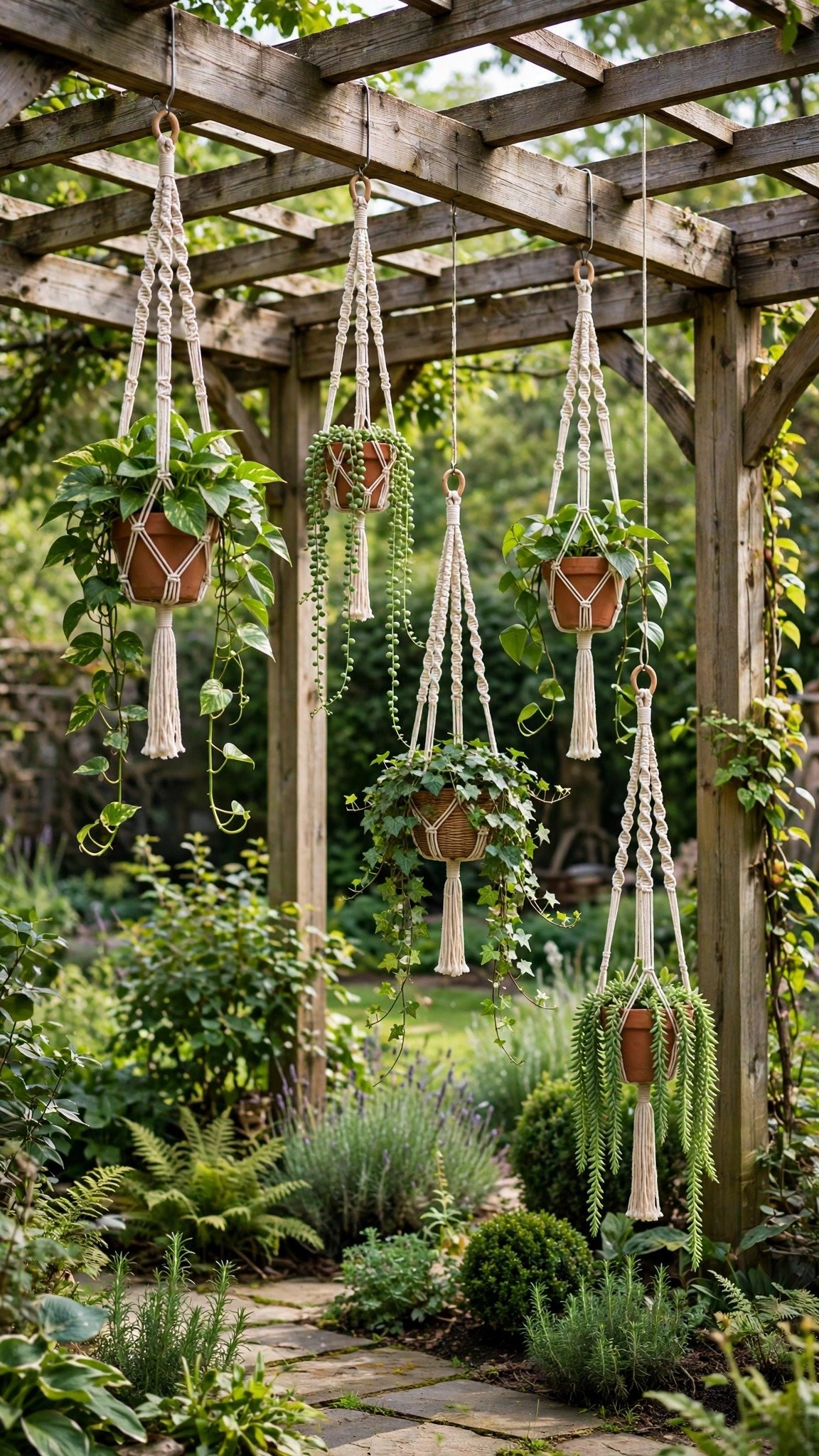
Macramé plant hangers bring texture and movement to a garden while using vertical space. They work especially well in small gardens where floor space is limited. Plants at different heights create depth and make the garden feel lush from every angle.
Install secure hooks on a pergola, a fence, or a sturdy tree branch, and check that each hook can hold the weight of a watered plant. Hang trailing plants at staggered heights — never all at the same level — so the display looks natural and artistic. Use trailing varieties such as pothos, string of pearls, or ivy to soften hard garden structures. Water the hanging plants a little more often than ground plants, since pots dry out faster in the air. A few hangers near a seating area make the whole corner feel like a green room.
- What you need: macramé hangers, hanging baskets, trailing plants, ceiling hooks, strong rope, potting soil.
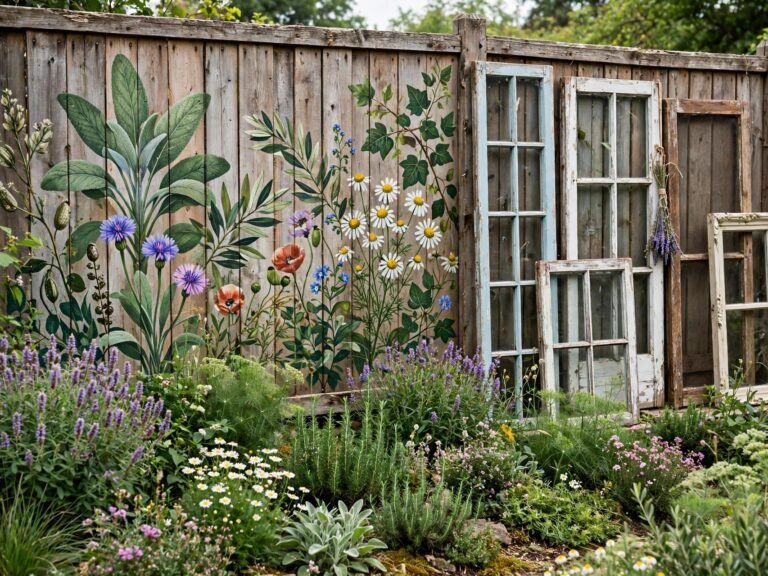
3. Vintage Furniture Garden Nook
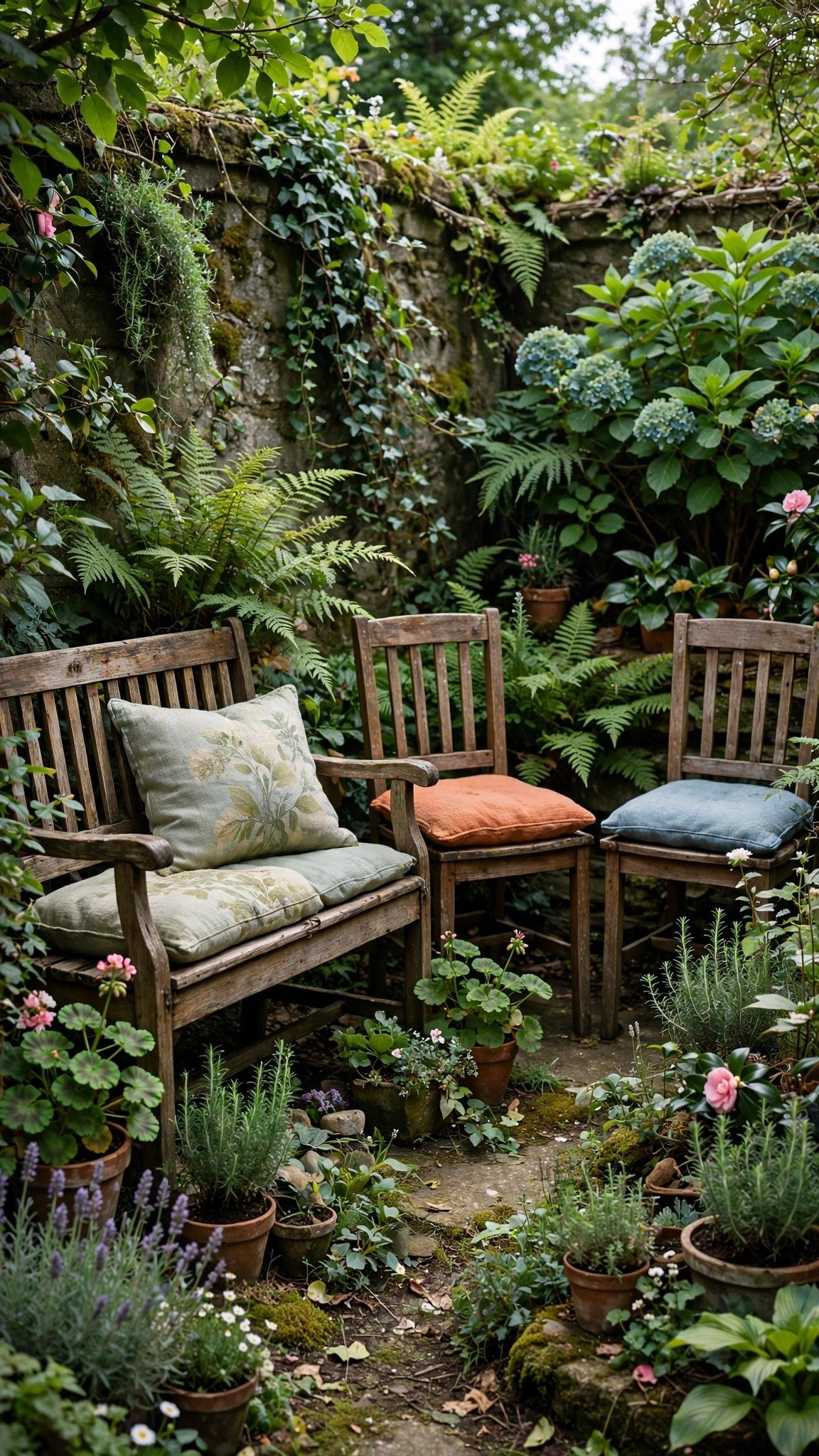
Repurposed vintage furniture adds charm that new pieces often lack. Old chairs, weathered benches, and distressed tables bring character and tell a story. Small imperfections suit the relaxed hippie look and help the garden feel personal rather than showroom-perfect.
Look for solid pieces at thrift shops or flea markets, and restore them lightly while keeping some aged details. A light sanding and a coat of outdoor paint protect the wood without erasing its history. Place the furniture among plants, add decorative cushions for comfort and colour, and set a few plant pots nearby to tie the nook into the garden. Choose pieces with visible wear and texture instead of refinishing every surface until it looks new. A vintage nook needs a dry spot or a cover in heavy rain so the wood lasts longer.
- What you need: vintage chair or bench, small table, outdoor paint, sandpaper, decorative cushions, plant pots.
4. Crystal and Stone Garden Path

Natural stones and decorative crystals can turn a simple path into a magical focal point. This idea suits the free-spirited side of boho design while blending beautifully with plants. The key is subtle placement that feels organic rather than overly decorated.
Lay natural stepping stones through your planting areas, leaving gaps for ground cover plants to grow between them. Place crystals or polished stones alongside the path at irregular intervals, mixing different sizes so the path never looks formal or symmetrical. Add landscape fabric under gravel sections to stop weeds, and use garden edging to keep the path shape clear. Keep the crystals small and tucked near plants rather than lined up in a row — the magic comes from discovering them as you walk. A stone path also keeps your shoes clean after rain. Children love spotting the crystals, which makes the path a small adventure every time.
- What you need: natural stepping stones, decorative crystals, gravel, garden edging, landscape fabric, ground cover plants.
5. Bohemian Hammock Retreat
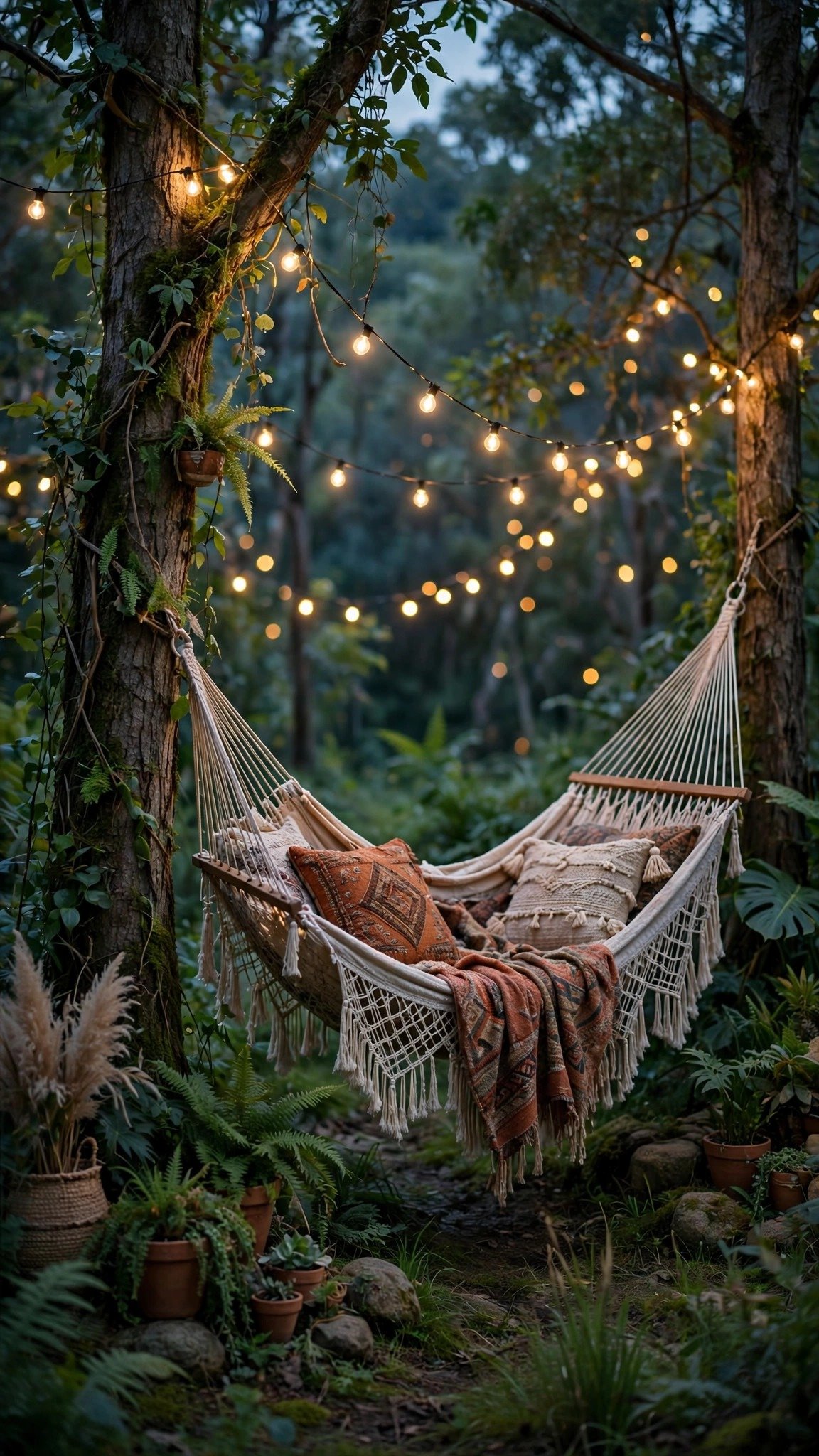
Few garden features say hippie living like a hammock. It encourages relaxation and creates a destination inside the landscape. The most inviting hammock spaces include surrounding plants, shade, and small accessories that make the area feel like an outdoor room.
Secure the hammock between two strong trees with tree straps, or use a sturdy stand if you have no suitable trees. Position it where filtered sunlight gives a comfortable mix of light and shade, and add a small side table for drinks or a book. Hang string lights nearby and place shade plants around the area to make it feel sheltered. Add outdoor pillows for comfort, and keep a light blanket close by for cool evenings. A hammock retreat works best in a quiet corner away from the main path.
- What you need: hammock, tree straps or stand, outdoor pillows, side table, string lights, shade plants.
6. Warm String Lights Across the Garden
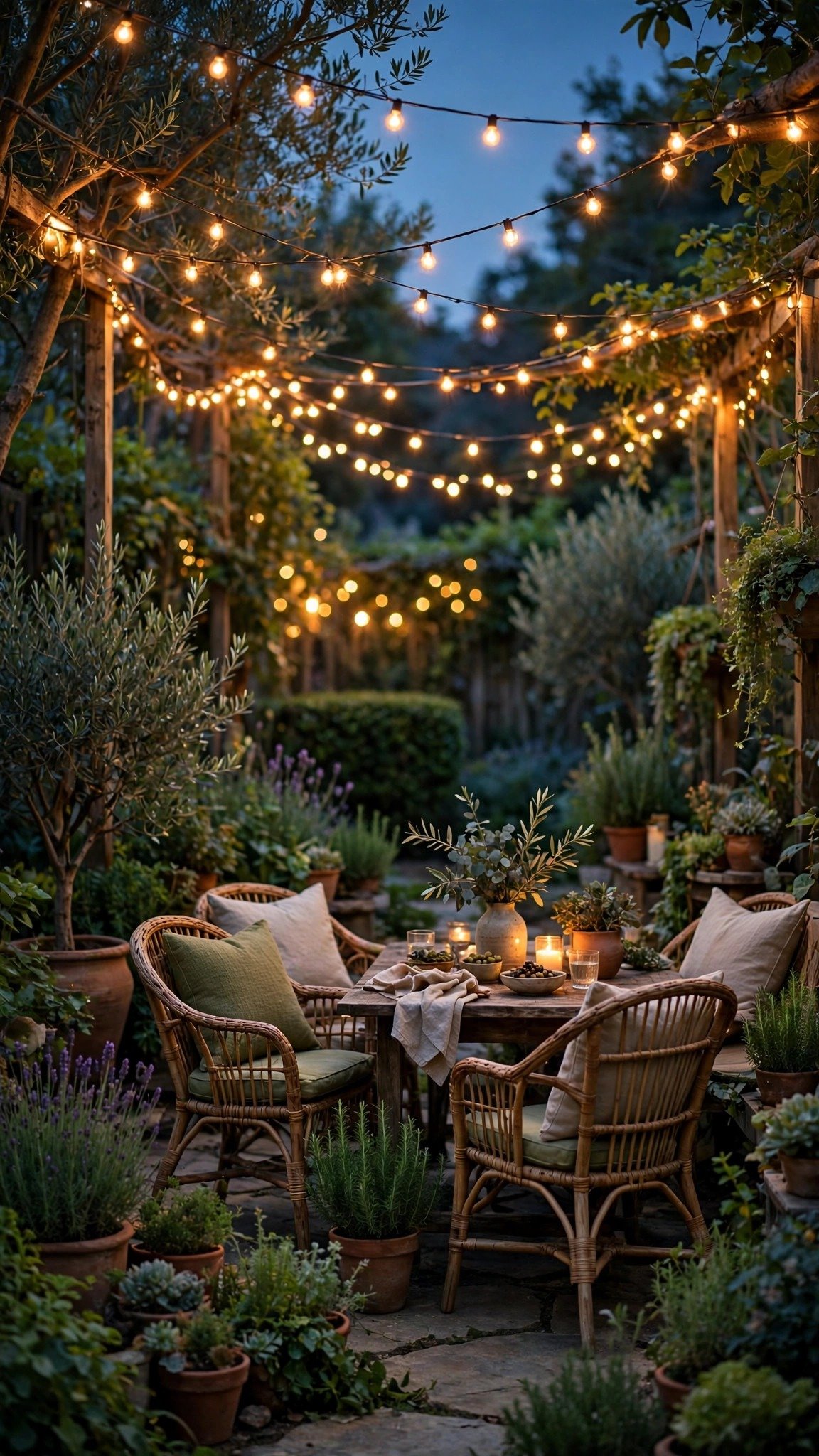
Lighting changes how a garden feels after sunset more than almost anything else. Warm string lights create a cosy atmosphere and highlight garden features without overwhelming the space. They extend outdoor evenings well past dark and strengthen the dreamy boho feel.
Run lights above seating areas, along pathways, or across a pergola, and secure them with cable clips so they stay put in the wind. Use warm-white bulbs rather than bright cool lighting for a softer, more inviting glow. Solar lights work well where there is no outdoor socket, and a timer means the lights switch on at dusk without you remembering. Test the layout at night before fixing everything in place, so you can see which corners need more light. A few lanterns on the ground finish the effect.
- What you need: outdoor string lights, support poles, extension cords, cable clips, solar lights, timer.
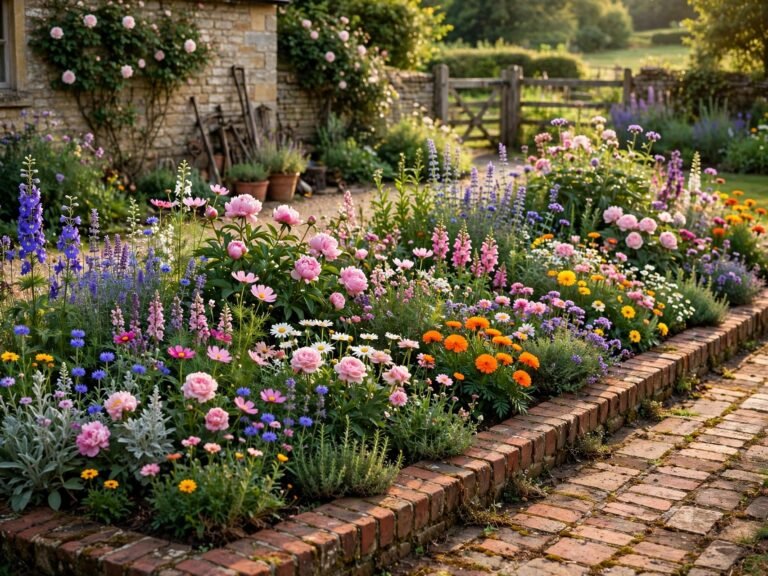
7. Wildflower Meditation Space

A wildflower-filled retreat brings movement, colour, and wildlife into the garden. Unlike formal flower beds, wildflower areas embrace a natural look. The result is a peaceful setting that attracts pollinators and fits the carefree spirit of hippie garden design perfectly.
Prepare the soil and sow a wildflower seed mix suited to your sun and climate. Place a simple bench nearby and let the plants grow naturally with very little intervention. Choose varieties with staggered bloom times so the colour lasts all season, and leave the seed heads standing through winter for the birds. Water regularly until the plants establish, then let them self-seed year after year. A wildflower space needs less care than a formal bed — just a cut back in early spring and a check for weeds. Sitting on the bench at sunset, with bees moving through the flowers, is the quietest moment a garden can offer.
- What you need: wildflower seeds, garden bench, mulch, watering can, garden markers, decorative stones.
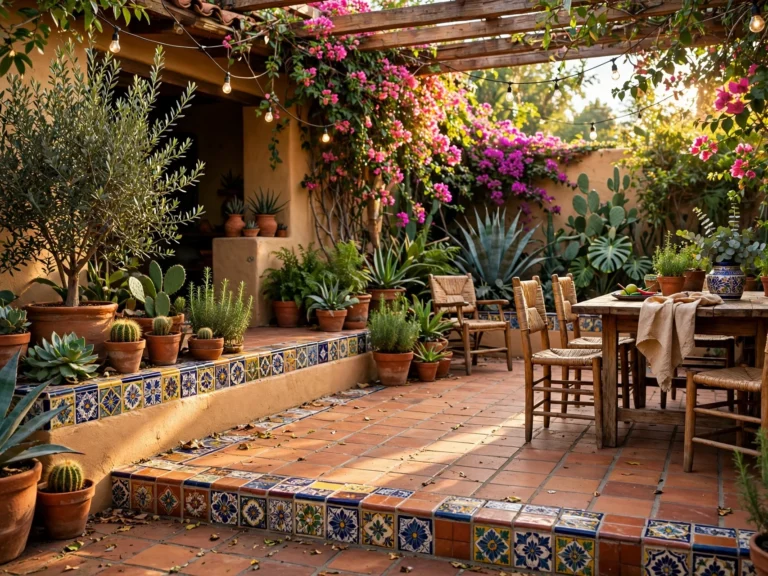
8. Hand-Painted Terracotta Pots
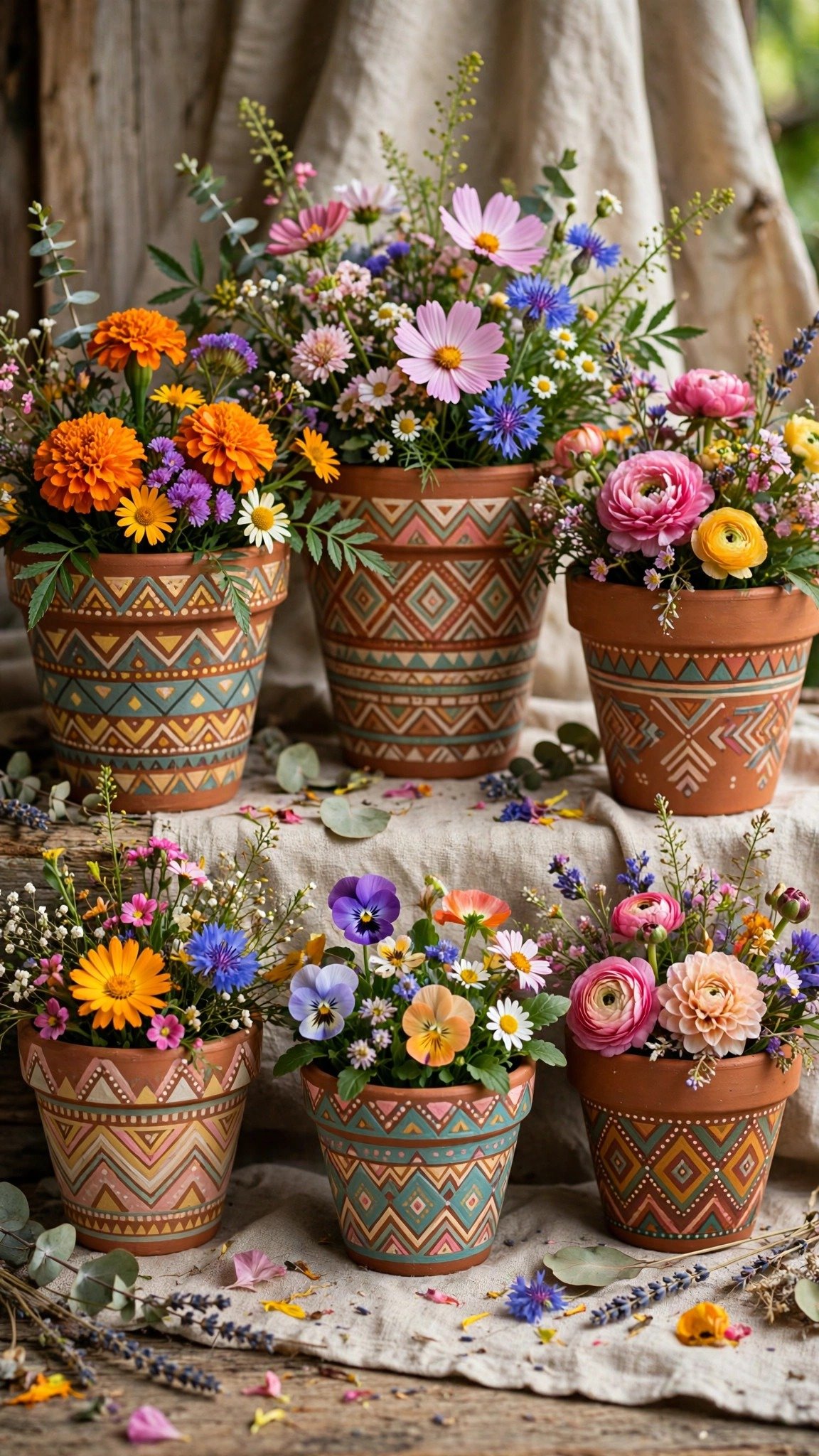
Hand-painted pots are an easy way to bring artistic expression into a garden. Patterns, symbols, and bright colours turn ordinary containers into decorative accents. Since each pot can be unique, the whole display feels personal and collected rather than mass-produced.
Clean the terracotta pots first, then paint them with simple boho-inspired designs — dots, waves, sun shapes, or geometric patterns. Use outdoor paint and seal the pots after drying so the colours survive rain and sun. Plant flowers, herbs, or succulents in them, and repeat one or two colours across several pots to keep the display cohesive. Group pots of different sizes together near a seating area or along a path. Painted pots are a good first project for a boho garden because they are cheap, quick, and easy to change.
- What you need: terracotta pots, outdoor paint, paintbrushes, sealer, potting mix, plants.
9. Natural Driftwood Display
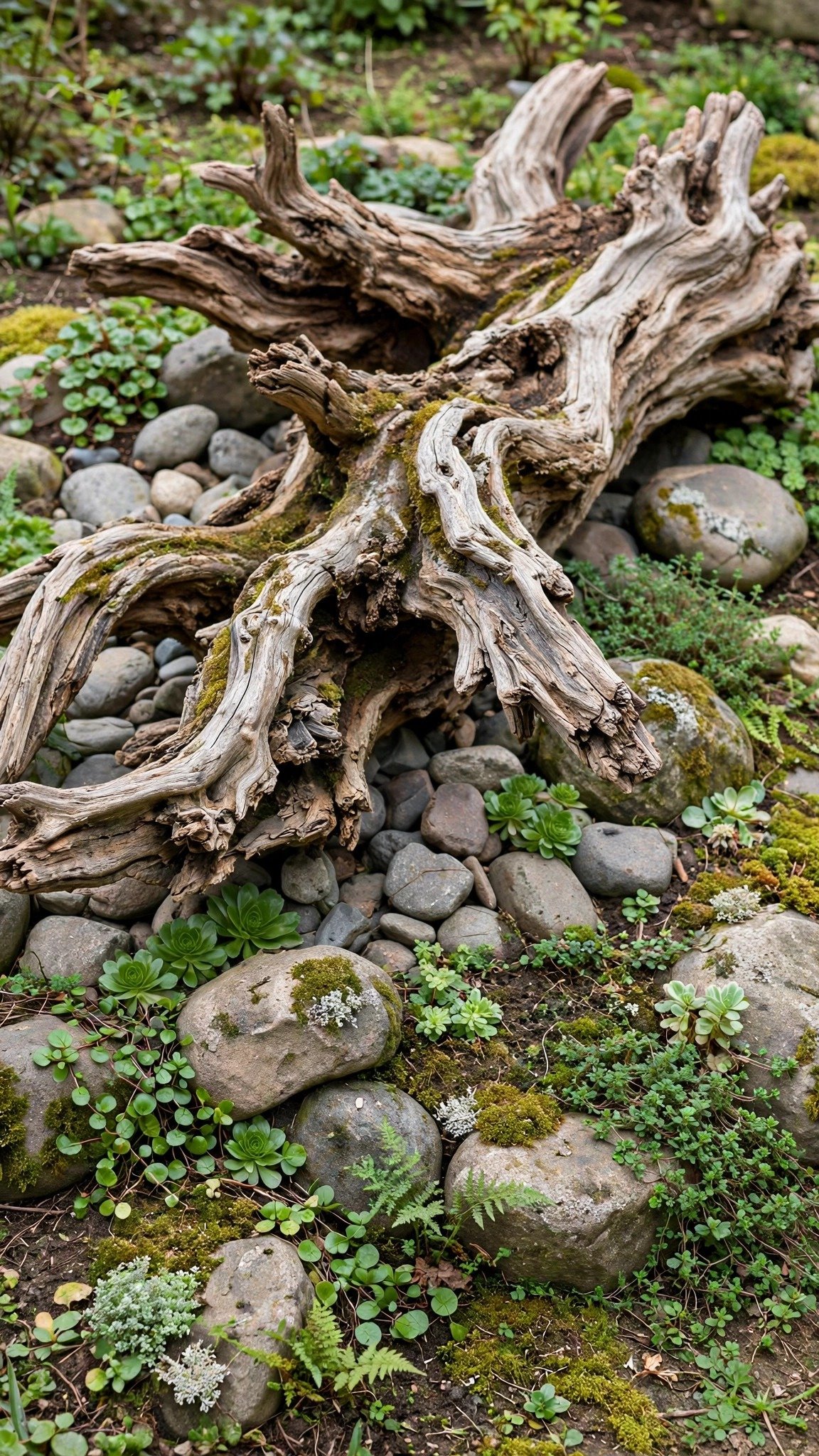
Driftwood brings organic sculpture into a garden and suits the natural materials at the heart of boho decor. Each piece has a unique shape, so it becomes an artistic focal point without looking forced. It works especially well with surrounding greenery.
Position large driftwood pieces among planting beds and secure them with landscape anchors if they are tall or heavy. Add decorative stones and low-growing ground cover plants around the base, and let the plants grow partly around the wood for a natural look. A driftwood piece can also hold small air plants or trailing vines, which softens its shape further. Keep the display simple — one strong piece beats a pile of small ones. Check the wood once a year and replace any piece that has rotted through.
- What you need: large driftwood pieces, decorative stones, ground cover plants, garden gloves, landscape anchors, mulch.
10. Dreamy Outdoor Canopy

Flowing fabric can turn a simple seating area into a bohemian escape in a single afternoon. An outdoor canopy creates shade while adding softness and movement. Light fabrics that catch the breeze give the space the relaxed feel that defines hippie-inspired gardens.
Suspend outdoor fabric panels above a seating area using support poles, a pergola, or tree branches. Secure the corners with rope and curtain clips, and let some fabric drape naturally for a soft, lived-in look. Use neutral fabrics paired with colourful cushions and accessories for balance, so the canopy feels calm rather than busy. Add decorative lanterns underneath for the evening. Take the fabric down in strong storms and wash it a few times a season to keep it fresh. On a breezy afternoon, the moving fabric turns a plain corner into the prettiest spot in the garden.
- What you need: outdoor fabric panels, support poles, rope, curtain clips, seating, decorative lanterns.
11. Herbs in Eclectic Containers
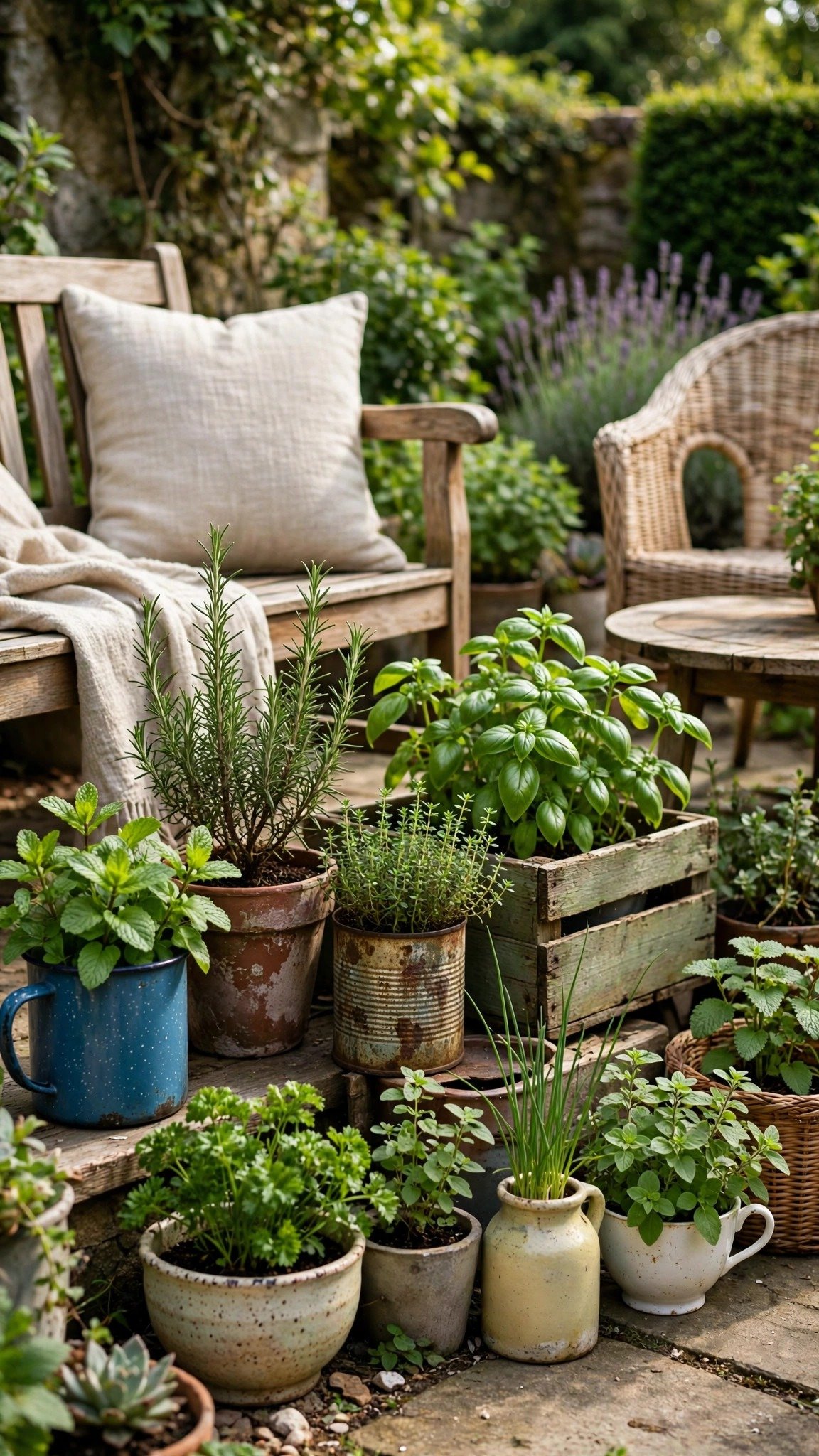
Herb gardens fit the hippie lifestyle perfectly because they mix beauty with practical use. Planting herbs in mismatched containers adds personality and creates an informal display. The result feels creative and functional rather than strictly decorative.
Plant herbs in containers of different shapes, sizes, and materials — metal, clay, ceramic, and wood all work together. Group them near a seating area or a kitchen entrance so they are easy to reach when cooking. Add drainage stones at the bottom of each pot and use a light potting soil so the roots never sit wet. Label each herb with a simple plant label, and harvest regularly to keep the plants bushy. A herb corner also smells wonderful on warm evenings and attracts bees to the garden.
- What you need: herb plants, assorted containers, potting soil, drainage stones, watering can, plant labels.
12. Mosaic Garden Feature

Mosaic art brings colour, craft, and individuality to outdoor spaces. Whether you apply it to a tabletop, a stepping stone, or a planter, a mosaic gives the garden a handmade element that reflects the creative spirit at the heart of bohemian design.
Choose a base surface and arrange mosaic tiles in a freeform pattern, embracing imperfect shapes rather than aiming for strict symmetry. Secure the tiles with outdoor adhesive, let them dry fully, then apply grout and clean the surface with a damp sponge. Wear gloves while working, since tile edges can be sharp. A mosaic tabletop makes a lovely centrepiece for a lounge corner, while mosaic stepping stones add surprise along a garden path. Seal the finished piece so it survives frost and rain.
- What you need: mosaic tiles, adhesive, grout, gloves, base surface, sponge.
13. Fire Pit Gathering Circle
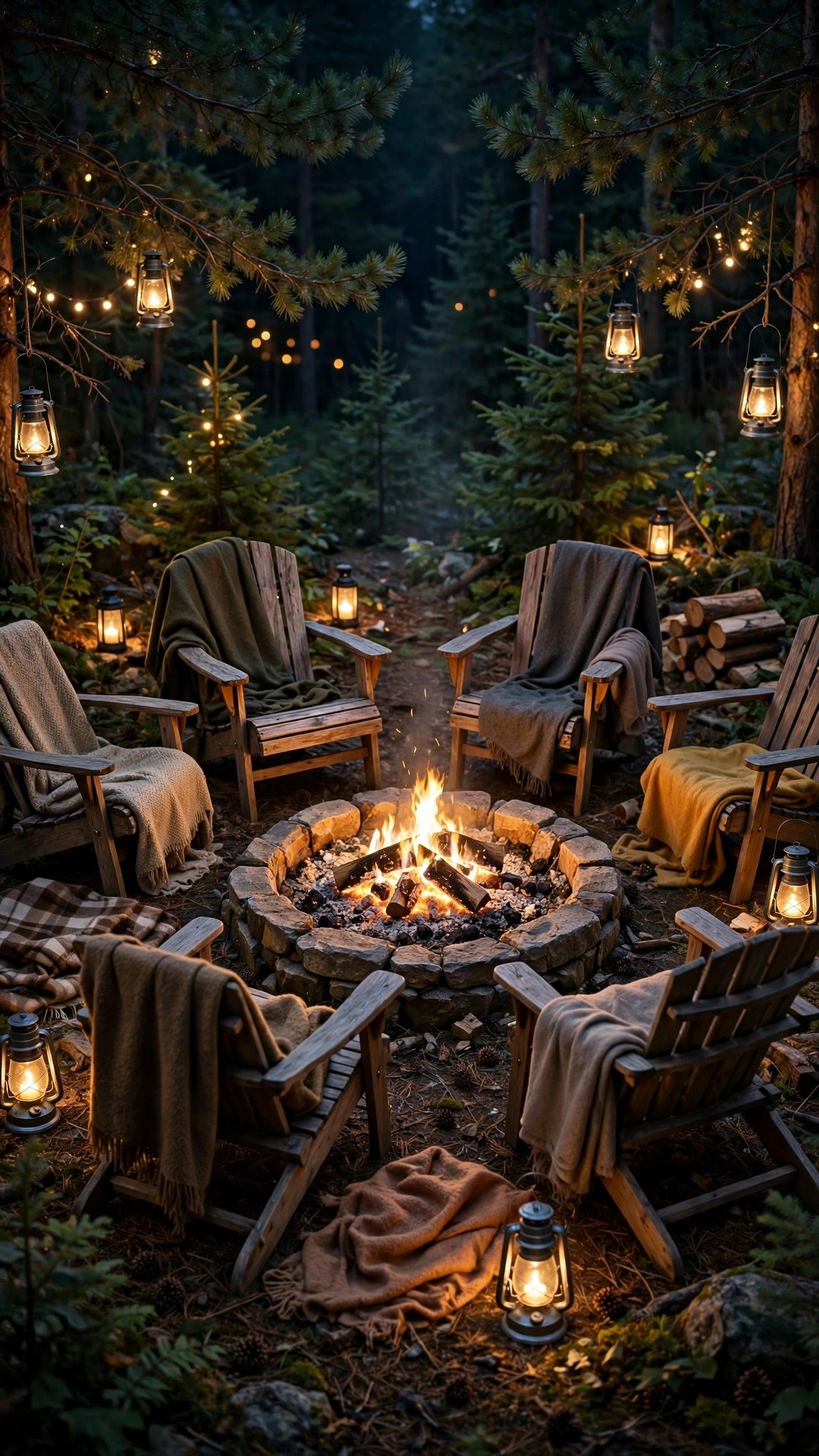
A fire pit naturally becomes the heart of a hippie garden. It encourages conversation, relaxation, and connection with nature. A circular seating arrangement works best because it creates a welcoming space where everyone feels included.
Install the fire pit in a safe, open location away from trees, fences, and fabric canopies. Surround it with movable outdoor chairs so the space adapts to small gatherings or larger groups. Lay gravel under and around the pit for safety, and ring it with fire-safe stones. Add decorative lanterns and keep blankets nearby for cooler evenings. Always keep water or sand close by, and never leave the fire unattended. A fire pit gathering circle turns an ordinary evening into the best part of the day. Friends will remember the nights around your fire pit long after they forget the rest of the garden.
- What you need: fire pit, outdoor chairs, gravel, decorative lanterns, fire-safe stones, blankets.
Which Hippie Garden Idea Is Right for Your Yard?
The best hippie garden idea for you depends on your space, your budget, and how you use the garden. A large yard suits a fire pit circle or a hammock retreat. A small patio needs macramé hangers, painted pots, or a compact lounge corner. A sunny spot suits wildflowers and herbs, while a shady corner is better for a lounge or a canopy. Think about who uses the garden too: a family with children needs open play space, while a couple who loves evenings outside will use a fire pit far more.
If you are still unsure, start small. A lounge corner and a few painted pots give you the boho feel in a single weekend, and you can add layers over time. The best boho gardens grow slowly, one handmade piece at a time.
- Large yard: Fire Pit Gathering Circle or Bohemian Hammock Retreat — room to gather and relax.
- Small patio or balcony: Macramé Plant Hangers or Hand-Painted Terracotta Pots — big style in a tiny footprint.
- Low budget: Colourful Outdoor Lounge Corner or Hand-Painted Terracotta Pots — thrifted pieces and paint do the work.
- Evening garden: Warm String Lights or Fire Pit Gathering Circle — the garden glows after dark.
- Quiet retreat: Wildflower Meditation Space or Dreamy Outdoor Canopy — calm, soft, and private.
- Creative project: Mosaic Garden Feature or Natural Driftwood Display — handmade and one-of-a-kind.
- Practical and pretty: Herbs in Eclectic Containers — beautiful, useful, and fragrant.
Plan Your Hippie Garden in 4 Simple Steps
- Pick your spot and style. Look at your sun, space, and budget, then choose one or two ideas to start with. A shady corner needs a lounge, not sun-loving wildflowers.
- Build the base first. Lay rugs, place the main furniture, and set the big pieces such as a hammock or fire pit before adding small decor.
- Layer colour and texture. Add cushions, throws, plants, and lights in layers. Mix at least three patterns but keep one colour palette so the space feels curated.
- Finish and care. Seal painted pots and mosaics, bring cushions inside in heavy rain, and check lights and fabric a few times a season.
Take photos as you build. They help you see which corner needs more colour and which area already feels complete.
Hippie Garden Mistakes to Avoid
- Buying everything at once. A boho garden should feel collected over time. Buying a full matching set in one trip makes it look like a shop display.
- Mixing too many colours. More than one strong palette creates visual clutter. Pick one colour family and repeat it across textiles, pots, and accessories.
- Using indoor fabrics outside. Regular cushions and throws fade and rot outdoors. Use weather-resistant fabrics and bring pieces inside in bad weather.
- Overcrowding a small space. Too many pieces on a small patio make it feel cramped, not cosy. Leave open space on purpose.
- Forgetting safety around fire. A fire pit too close to a canopy, fence, or dry plants is dangerous. Keep a clear space and water nearby.
- Skipping drainage in pots. Herbs and succulents rot in pots without drainage holes. Always add holes and drainage stones.
The best hippie gardens are the ones that feel like they grew slowly, one piece at a time. Take your time, enjoy the process, and let the garden reflect you.
FAQs
What defines a hippie garden?
A hippie garden is defined by creativity, natural materials, colourful decor, comfortable seating, and a relaxed atmosphere. It mixes vintage items, handmade decorations, and abundant plants into a space that feels personal and free-spirited rather than formal or perfectly planned.
Can I create a boho garden in a small space?
Yes, even a balcony or a small patio can feel bohemian. Use macramé hangers, painted pots, floor cushions, lanterns, and a compact lounge corner. Vertical planting and layered textiles add the boho feel without taking up floor space, and one bright rug can change the whole look.
What colours work best for boho garden decor?
Earth tones, terracotta, mustard yellow, turquoise, rust, cream, and deep jewel tones all work well. Pick one warm base colour and one bright accent, then repeat them across cushions, pots, and rugs so the garden feels connected rather than random.
Are boho gardens expensive to create?
Not necessarily. Many of the best boho gardens use thrifted furniture, repurposed materials, handmade decorations, and plants grown from seed. A lounge corner and a few painted pots can cost very little, and you can add pieces slowly over time.
Which plants suit a hippie garden style?
Wildflowers, lavender, ornamental grasses, succulents, trailing vines, herbs, and flowering perennials all suit the relaxed bohemian look. Choose plants that fit your sun and soil, and mix tall, trailing, and low-growing types for a natural, layered feel. Native plants work especially well because they need less water and care.
How can I make my garden feel more cosy?
Layer textiles such as rugs, cushions, and throws, add warm lighting with string lights and lanterns, include comfortable low seating, and create distinct areas for relaxing and socialising. A canopy or a fire pit also makes the space feel sheltered and warm.
How do I keep outdoor boho fabrics and cushions looking good?
Choose weather-resistant fabrics and store cushions indoors during heavy rain. Wash covers a few times a season, keep them out of strong midday sun when possible, and bring throws inside in winter. A storage box near the seating area makes this easy.
Conclusion
A hippie garden has no strict rules, and that is its beauty. The most memorable boho spaces are the ones that reflect the people who made them — a thrifted chair, a hand-painted pot, a hammock hung between two old trees. Start with one or two ideas that inspire you, then build layers of colour, texture, and comfort over time. The garden will never feel finished, and that is exactly the point.
Small changes often have the biggest impact, and every handmade detail adds character to your outdoor retreat. Enjoy the process, experiment freely, and create a space that makes you happy every time you step outside.