
13 Burgundy Couch Living Room Ideas for a Warm, Dramatic Home
A burgundy couch can instantly give a living room a rich, warm, and sophisticated look. Its deep red tone makes a beautiful statement, but the wrong colour combinations or heavy furniture can make the space feel dark. The key is to balance the sofa with lighter neutrals, natural materials, and carefully chosen accent colours.
Whether you love modern interiors, vintage details, cozy cottage style, or colourful eclectic spaces, these burgundy couch living room ideas will show you how to style your sofa and create a room that feels balanced, comfortable, and inviting.
1. Soften a Burgundy Couch With Warm Cream Layers
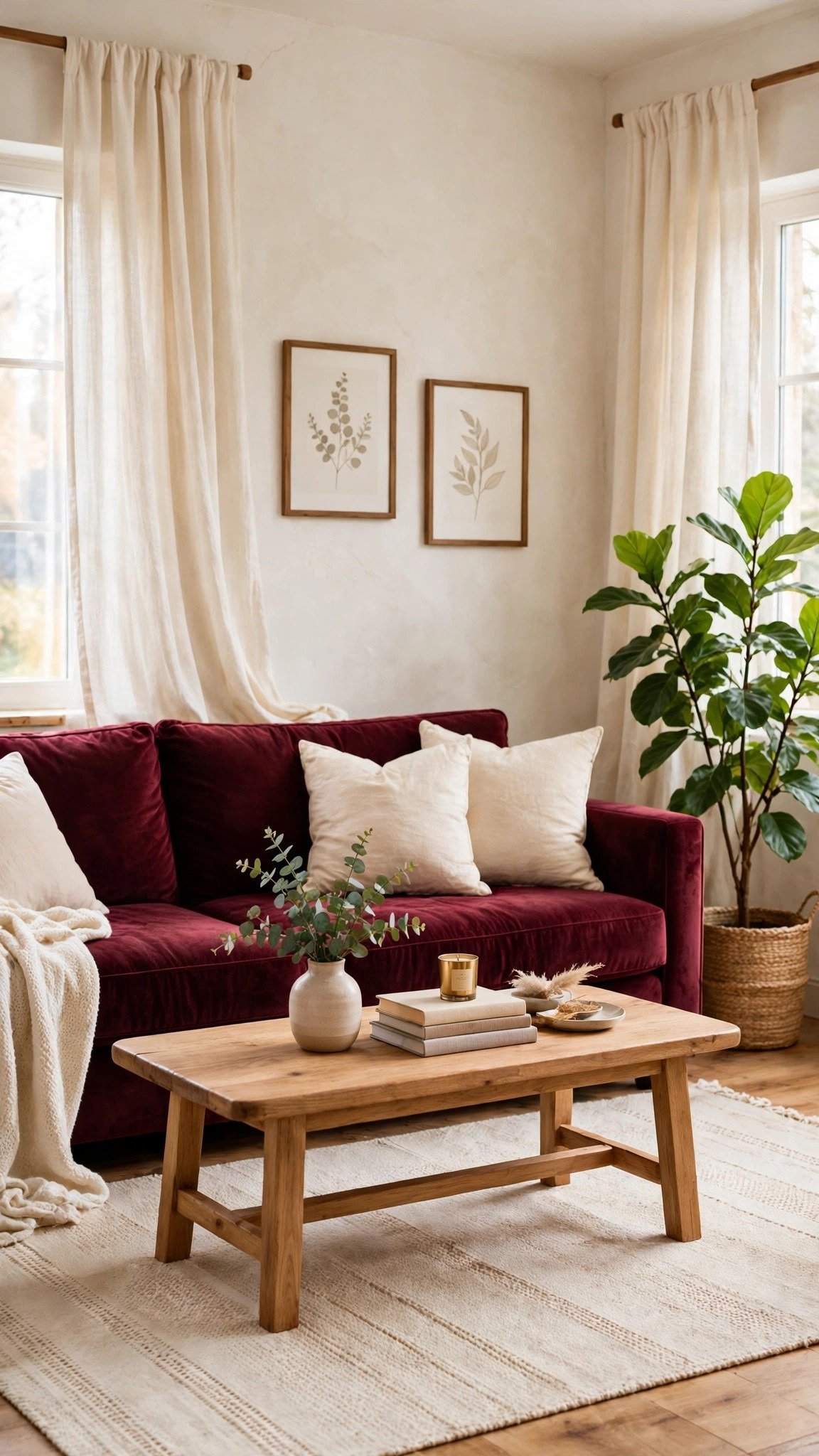
Pairing a burgundy couch with cream is one of the easiest ways to soften such a deep colour. Use a warm ivory rug, cream curtains, and textured cushions instead of stark white pieces. Slightly warm neutrals keep the burgundy from looking harsh while the room stays bright.
Add natural wood furniture for another warm element without overwhelming the sofa. Place the rug under the front legs of the sofa, then layer cream cushions in different textures. Choose cream with warm undertones, not icy white, for a comfortable result.
2. Pair a Burgundy Couch With Moody Green Accents

Deep green and burgundy make a sophisticated pair that works well in rooms with natural materials. Keep the walls and larger surfaces neutral, and bring green in through cushions, artwork, plants, or an accent chair. This keeps the room from feeling crowded while giving the sofa a richer, layered look.
Spread the green accents around the room instead of placing them all beside the couch. Use two or three shades of green so the room feels collected, not overly matched. A large leafy plant beside the sofa adds life and softens the deep red.
3. Style a Burgundy Sofa With Natural Wood Furniture

Natural wood works well beside a burgundy couch because it adds warmth without competing for attention. A medium or light wood coffee table, woven baskets, and wooden shelving can make the sofa feel relaxed and friendly. This helps in homes where burgundy might otherwise look too formal.
Start with one strong wooden piece, then repeat the material through smaller accessories. Keep the other finishes slightly varied for a natural, lived-in look. A ceramic vase with greenery on the coffee table finishes the arrangement.
4. Lighten a Burgundy Couch With Soft Pink Accents

Soft blush and dusty pink can make a burgundy couch feel lighter and more modern. Use muted pink, not bright bubblegum shades, which can make the room look overly themed. Add pink through pillows, artwork, flowers, or a small accent chair while keeping larger pieces neutral.
Use burgundy as the dominant colour and bring pink in through small repeated details around the room. Mix pink with beige and warm wood to keep the palette grounded. The result is colourful but still mature and calm.
5. Let a Burgundy Couch Lead a Modern Neutral Room

A burgundy sofa can be the single strong colour in an otherwise neutral living room. This works well with beige walls, simple furniture, and quiet accessories. Instead of adding many colours, let the couch provide the drama. In smaller spaces, this also keeps the room organised, because the eye has one clear focal point.
Keep most large surfaces neutral, then place the burgundy couch where it naturally becomes the room’s focus. Repeat a small amount of burgundy in artwork or a cushion, so the sofa does not feel cut off from the rest of the room.
6. Add Brass and Gold Details to a Burgundy Couch

Burgundy and warm metallic finishes make an elegant pair, especially in traditional or transitional living rooms. Brass lighting, gold-framed artwork, and small metallic accessories highlight the richness of the sofa without making the room feel too formal. The key is moderation — a few well-placed metallic pieces look better than a whole matching set.
Choose one main metallic finish and repeat it in two or three places around the room. Aged brass or brushed gold blends better with burgundy than bright, shiny gold. A brass floor lamp beside the sofa is a good place to start.
- What you need: brass floor lamp, gold-framed artwork, neutral rug, wooden table, small metallic accessories
7. Soften a Burgundy Couch With Layered Textures
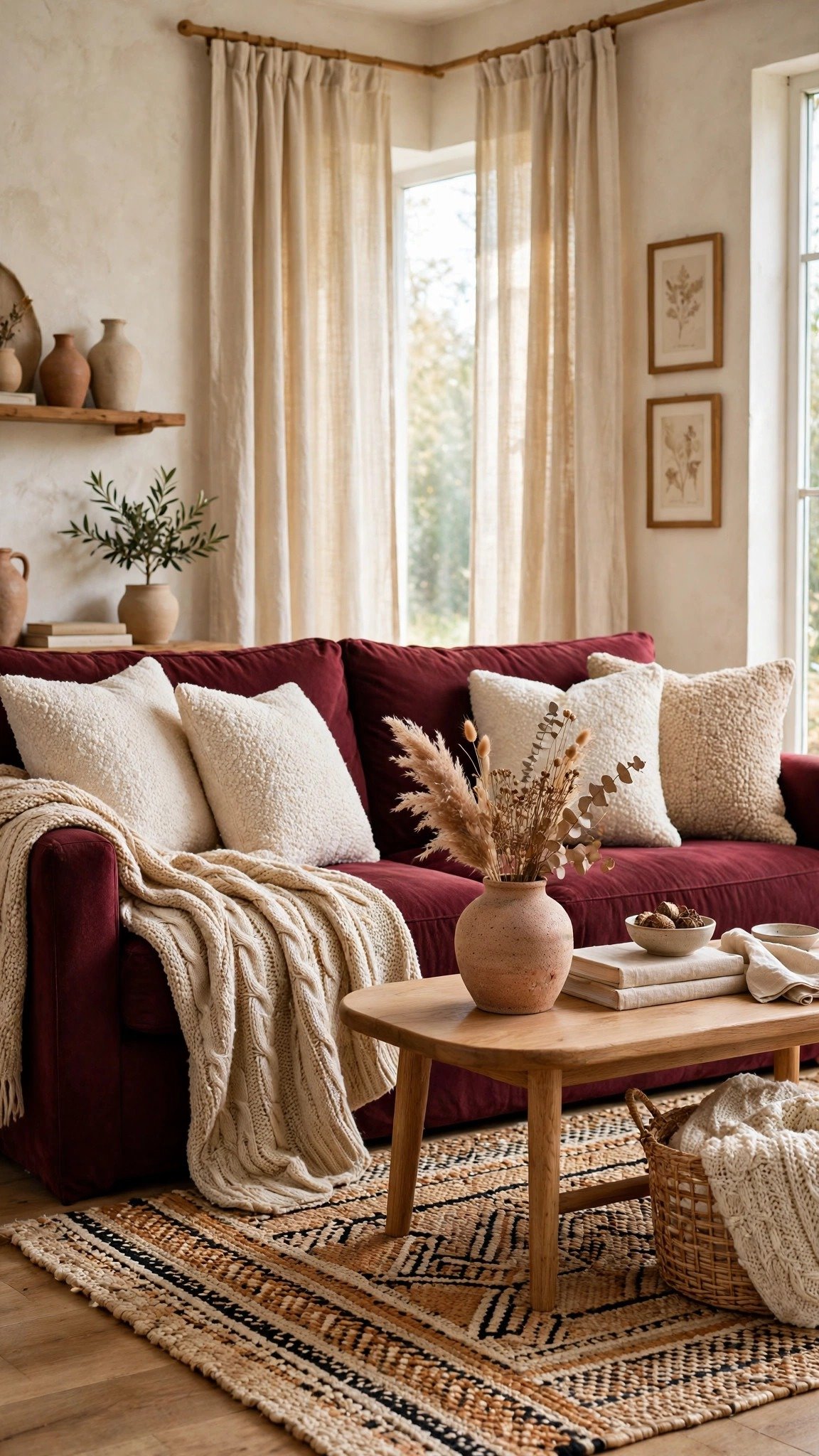
When a burgundy couch feels visually heavy, texture can make it feel softer and more inviting. Combine boucle, linen, cotton, wool, woven materials, and ceramic finishes around the room. The goal is not to add more colours but to create contrast through surfaces. This helps most in simple rooms where a limited palette might otherwise feel flat.
Layer three or four contrasting textures while keeping the colour palette calm and coordinated. Use different textures in similar tones to create depth without making the room look busy. A knitted throw and a woven rug do most of the work here.
8. Balance a Burgundy Couch With a Gallery Wall
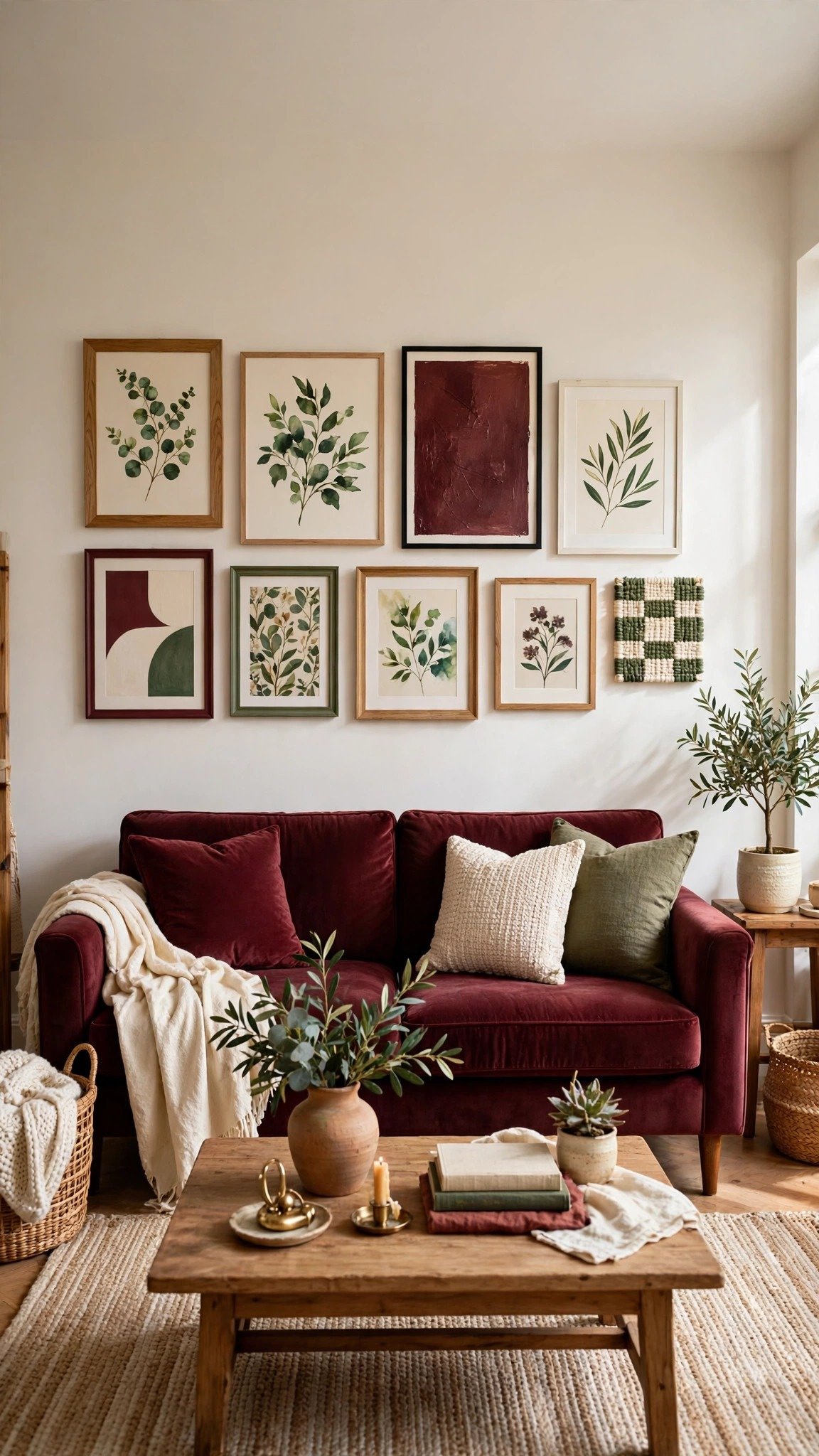
A gallery wall can help a burgundy sofa fit into the larger room instead of letting it dominate. Choose artwork with small touches of burgundy, cream, brown, green, or muted pink. Mix frame sizes and styles for a collected look. The wall should complement the sofa, not simply repeat it.
Arrange the artwork on the floor first, try different spacing, then move the arrangement to the wall. Include at least one or two pieces with burgundy details to create a quiet link with the sofa. Do not fill every frame with the same colour.
9. Give a Burgundy Couch a Vintage-Inspired Look

Burgundy suits vintage-inspired rooms because its deep tone works well with antique wood, traditional patterns, aged brass, and classic artwork. To keep the room from looking dated, mix older-looking pieces with simpler modern ones. A modern rug or a clean-lined coffee table gives enough contrast to make the vintage details feel intentional.
Choose two or three vintage elements and balance them with clean, modern shapes elsewhere. Do not fill the whole room with vintage furniture — contrast is what keeps the look fresh. A patterned cushion or two is enough to set the mood.
10. Warm a Burgundy Couch With Terracotta and Rust Accents
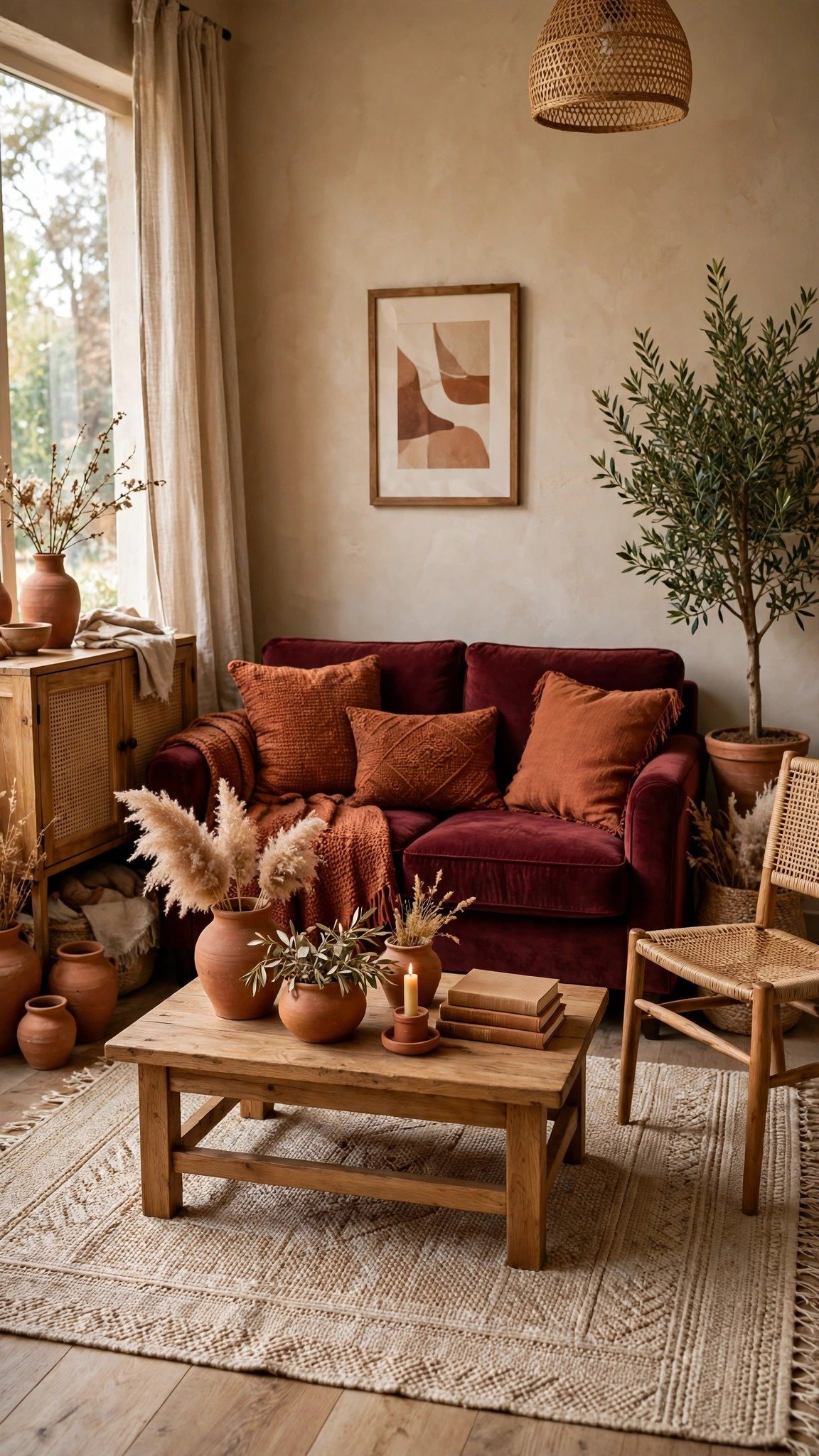
Terracotta, rust, and burgundy make a warm, earthy palette that works well in autumn but stays attractive all year. Use terracotta pottery, rust-coloured cushions, natural wood, and warm beige textiles to build the palette slowly. Because all these shades have warm undertones, they blend naturally without exact colour matching.
Start with burgundy as the main colour and bring rust and terracotta in through smaller accessories. Keep the walls and floor fairly light, so the warm palette does not make the room feel too dark. A terracotta pot with a green plant adds a fresh note.
11. Place a Burgundy Couch by a Cozy Fireplace
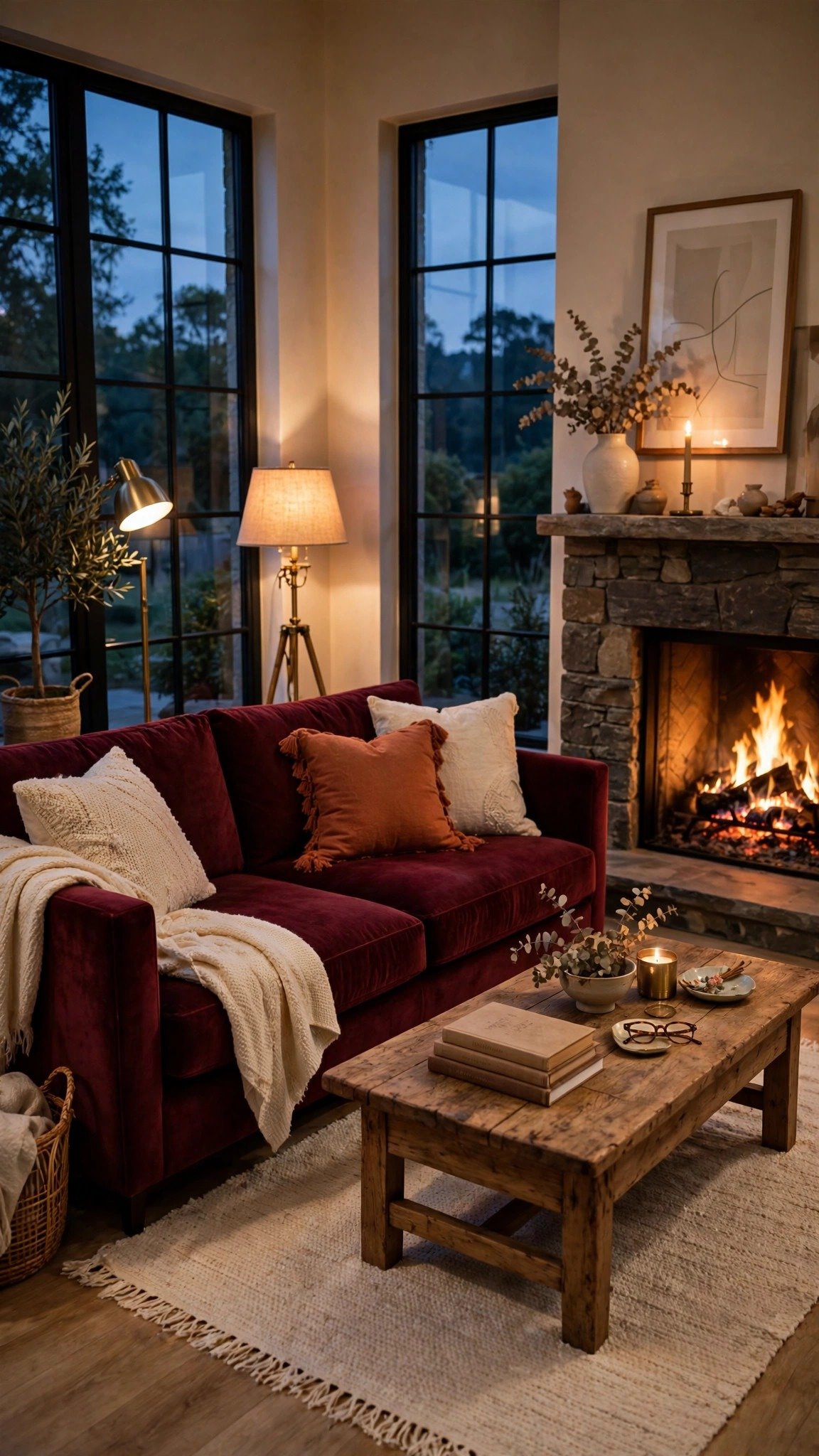
A fireplace gives a burgundy couch a natural feature to work around. Place the sofa so it faces or angles slightly toward the fireplace, making a comfortable conversation area. Neutral stone, cream walls, wood accents, and warm lighting help balance the strength of the burgundy.
Arrange seating around the fireplace first, then add the rug and coffee table to define the conversation zone. In the evening, soft lamplight around the fireplace makes the rich burgundy glow. Keep mantel decor simple so the sofa and fireplace stay the main features.
12. Build a Colourful Eclectic Room Around a Burgundy Couch

If you like expressive rooms, a burgundy couch can be the base for a colourful eclectic living room. Add mustard, muted blue, green, pink, or terracotta through artwork and accessories. The trick is to repeat each accent colour at least twice, so the room feels connected. Keep the largest furniture simple so the smaller colourful details bring the personality.
Choose three supporting colours, then spread them across cushions, artwork, rugs, and accessories. Repeat colours instead of matching everything — repetition creates unity while variety keeps the room interesting. Plants help tie the colours together.
13. Make a Burgundy Couch Glow With Soft Evening Lighting

Lighting can change how burgundy fabric looks through the day. Warm table lamps, floor lamps, wall lights, and soft indirect light bring out the depth of the fabric without making the room feel dark. Do not rely on one bright ceiling light. Several smaller light sources create comfortable zones and make the couch feel especially inviting at night.
Place lighting at different heights around the seating area instead of putting every fixture in one spot. Choose warm-white bulbs and lampshades that spread light softly across the room. In the evening, the burgundy looks rich and warm, not dark.
Plan Your Burgundy Couch Living Room in 4 Simple Steps
Step 1: Let the couch lead. Treat the burgundy sofa as the room’s anchor. Everything else should support it, not compete with it.
Step 2: Pick 2-3 supporting colours. Choose colours that suit burgundy, such as cream, forest green, or terracotta. Repeat them across cushions, art, and accessories.
Step 3: Layer textures. Add a knitted throw, a woven rug, linen curtains, and ceramic pieces. Texture softens the deep colour and adds depth.
Step 4: Light it warmly. Use lamps at different heights with warm-white bulbs. Good lighting makes burgundy look rich instead of dark.
Burgundy Couch Mistakes to Avoid
Surrounding it with dark colours. Burgundy beside black, charcoal, and dark brown can make the room feel heavy. Keep walls, rugs, and large pieces light.
Matching everything. Curtains, rug, and cushions in the same burgundy look flat. Mix tones and let neutrals breathe.
Using one harsh ceiling light. A single bright light flattens burgundy fabric. Use several warm lamps instead.
Forgetting scale. A huge dark rug under a burgundy couch can swallow the room. Choose a rug that leaves floor showing around the edges.
Hiding the couch. Do not push the sofa against a dark wall or behind tall furniture. Give it space so it can be the focal point.
FAQs
Is burgundy a good colour for a living room couch?
Yes. Burgundy works well when balanced with warm neutrals, natural wood, cream, beige, muted green, or soft pink. Because it is a strong colour, choose the surrounding palette with care so the room feels intentional and not too dark. It can be the warm heart of the room.
What colours go best with a burgundy couch?
Cream, beige, warm white, forest green, dusty pink, terracotta, rust, brown, and natural wood all work well. Metallic accents such as aged brass can also suit burgundy beautifully. Pick two or three of these and repeat them around the room.
How can I make a burgundy couch look less dark?
Use lighter rugs, curtains, walls, and cushions around the sofa. Add layered lighting with warm bulbs at different heights. Light walls and a cream rug help most. Avoid placing the burgundy couch against several other very dark surfaces unless you want a moody room.
Does burgundy work in a small living room?
Yes. In a small room, use the burgundy couch as the main statement piece and keep the other furniture visually lighter. A neutral rug and light curtains help the room feel open, and a slim coffee table keeps walkways clear.
Should my curtains match my burgundy couch?
They do not need to match. Cream, beige, oatmeal, warm white, or muted neutral curtains are often easier to style and stop the room from becoming too one-colour. A small burgundy detail in the curtain trim can tie the look together.
What rug looks good with a burgundy sofa?
Cream, beige, vintage-style neutral patterns, muted terracotta, and soft green designs can all work well. Choose the rug based on the room’s full palette rather than trying to find an exact burgundy match. A light rug keeps the seating area bright and open.
What size rug should I use with a burgundy couch?
Choose a rug large enough for the sofa’s front legs to sit on it, with some floor showing around the edges. In most living rooms, a rug about 20-30 cm wider than the sofa on each side works well. A rug that is too small makes the seating area feel cramped.
Conclusion
A burgundy couch gives you a strong starting point for a living room with warmth, personality, and depth. The best rooms do not try to hide the richness of burgundy. They balance it with thoughtful neutrals, natural materials, well-chosen colours, layered textures, and comfortable lighting.
Start with one idea that fits your space instead of trying to change everything at once. Add a few supporting details, live with the arrangement, and adjust what does not feel natural. Your living room should feel like a place you genuinely enjoy spending time in.