38 Best Coffee Table Centerpiece Ideas You’ll Love
A coffee table can easily become cluttered or look unfinished, even in a beautifully decorated living room. The right coffee table centerpiece ideas help bring everything together with simple details like decorative trays, books, plants, candles, and personal accents without sacrificing everyday space.
The secret is to combine different heights, textures, and materials while leaving enough room for cups, remotes, and daily essentials. In this guide, you’ll discover 38 coffee table centerpiece ideas, from simple everyday arrangements to seasonal decorations, small-table solutions, and budget-friendly styling tricks.
1. The Rule of Three, Styled for Real Life
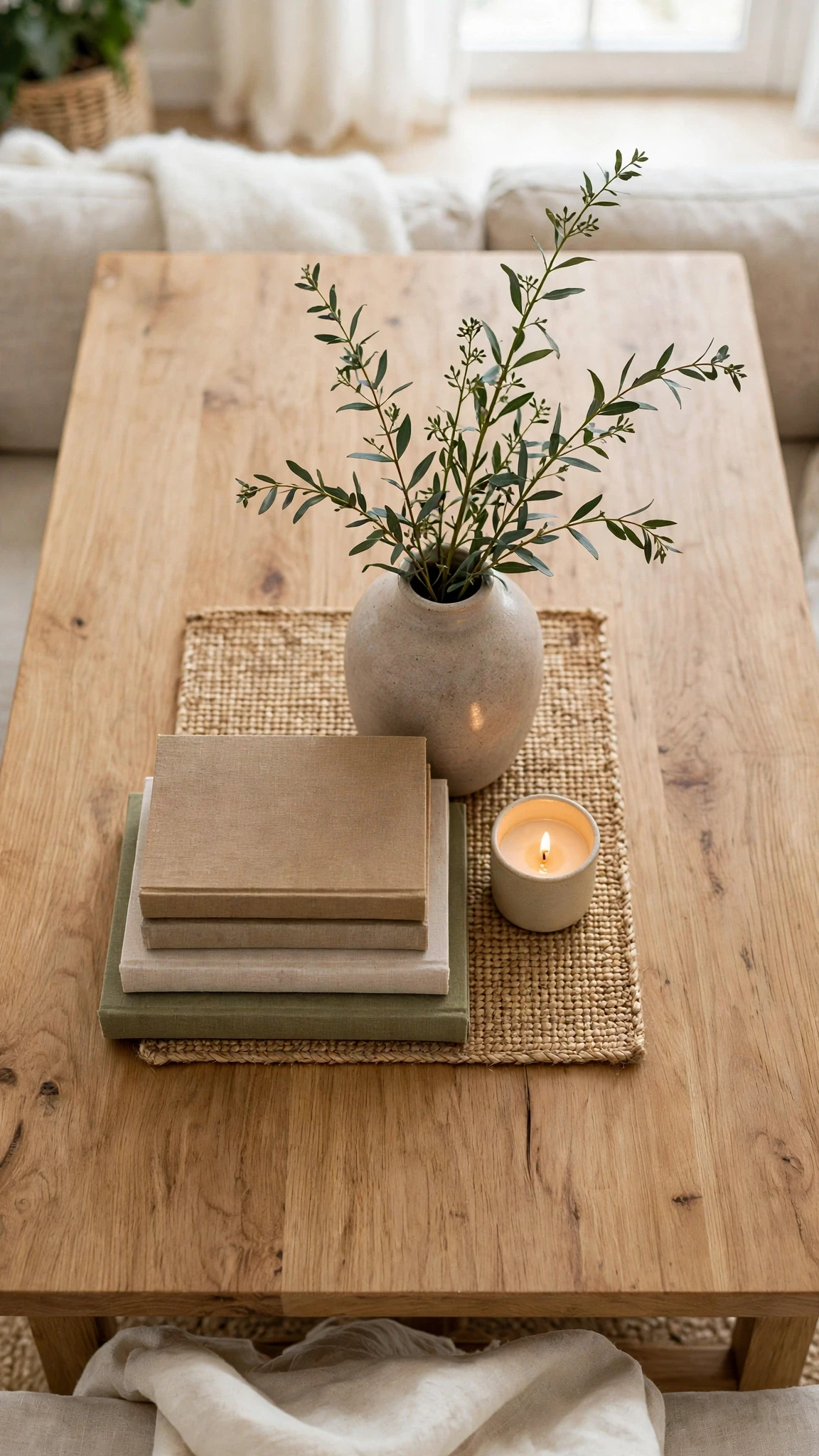
The rule of three is one of the easiest ways to create a coffee table arrangement that feels natural and visually balanced. Instead of scattering several unrelated decorations across the surface, group three different pieces together, such as a short stack of books, a ceramic vase, and a small candle. Their different heights and textures give the arrangement depth without making it look overly styled.
For a more cohesive result, choose objects that share at least one detail, such as a similar color, finish, or material. For example, a wooden book stack, a cream ceramic vase, and a brass candleholder can create a warm combination that works beautifully in traditional and modern living rooms.
-
- Height variation: Combine one tall, one medium, and one low object.
- Texture contrast: Mix ceramic, wood, glass, or woven materials.
- Color connection: Repeat one shade already present in your living room.
- Styling tip: Keep the three objects close enough to look like one intentional grouping.
2. One Tray to Hold the Whole Look Together
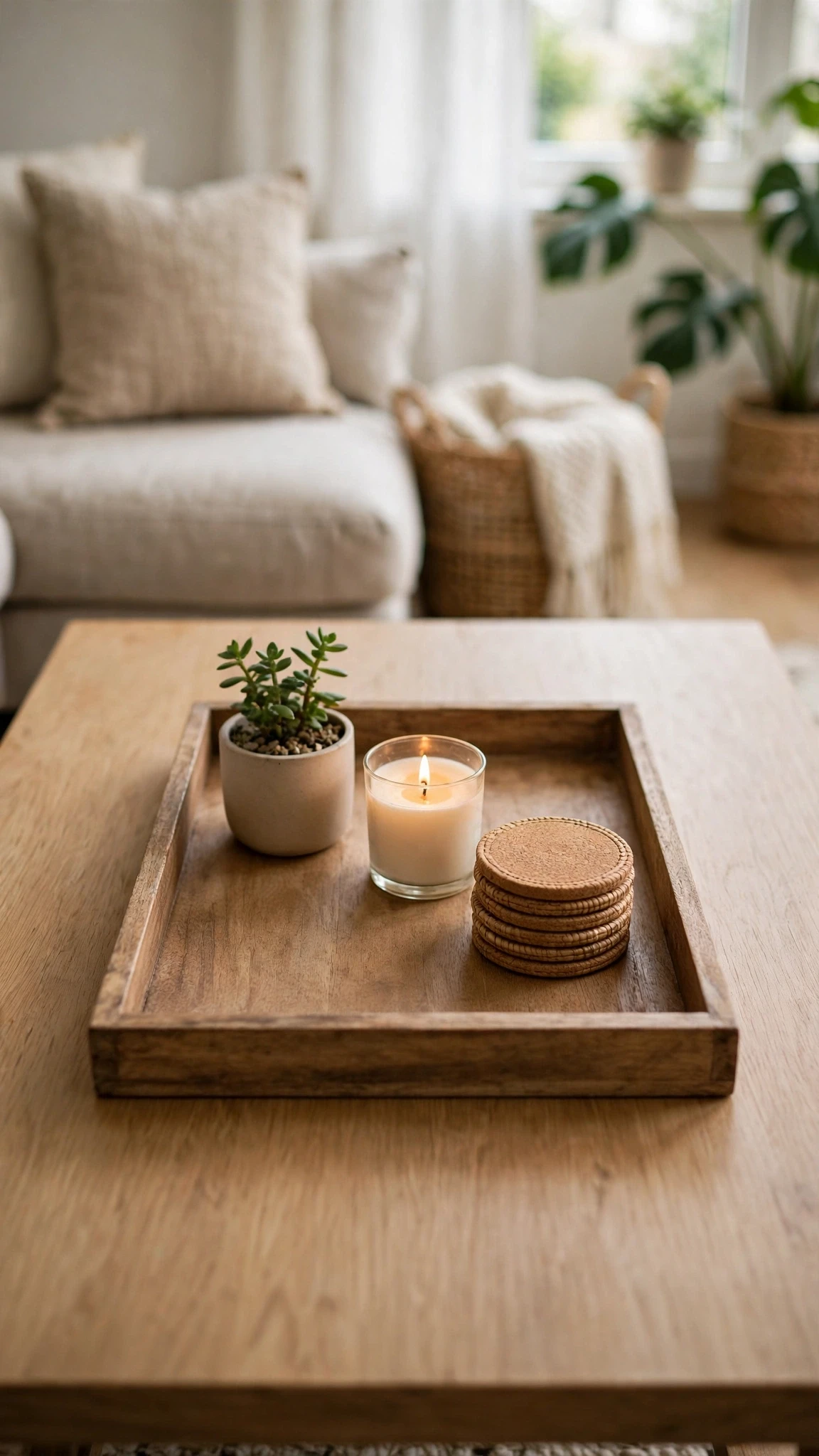
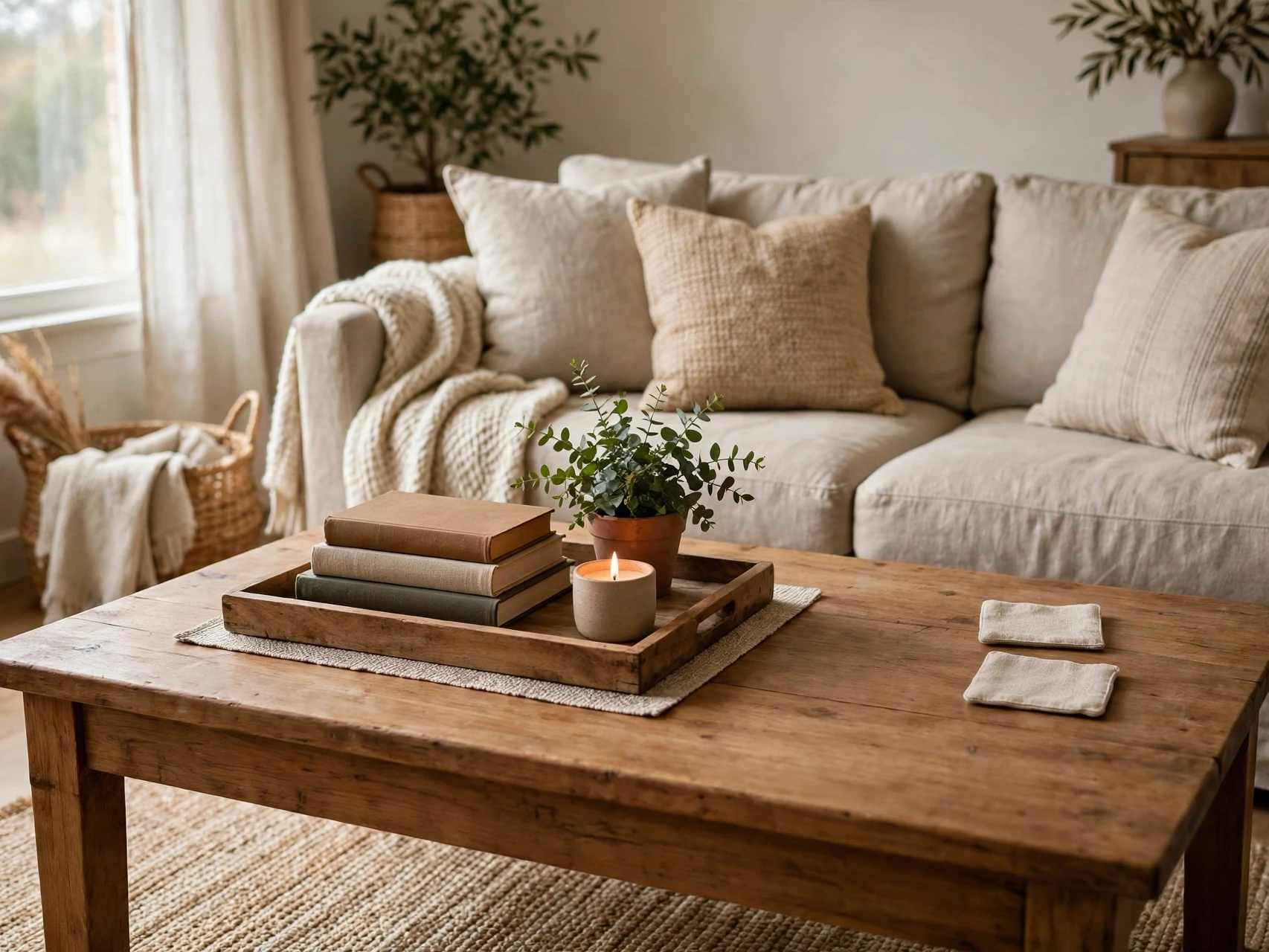
A decorative tray is a simple way to make coffee table decor look organized rather than scattered. It creates a defined space for smaller accessories and helps different objects feel connected, even when they have different shapes and finishes. A wooden tray with a candle, a small plant, and a set of coasters is an easy arrangement for everyday living.
Choose a tray that takes up roughly one-third to half of your tabletop, depending on its size and shape. Natural wood adds warmth, while marble, metal, and mirrored finishes can create a more polished look. Trays with handles are especially useful because you can move the entire arrangement whenever you need extra space.
- Wooden trays: Bring warmth to modern and neutral interiors.
- Metal trays: Add a refined accent to traditional or contemporary spaces.
- Marble trays: Work beautifully with elegant, minimalist decor.
- Practical detail: Leave some tabletop space uncovered for drinks and everyday essentials.
3. Add Different Heights for a Layered Look
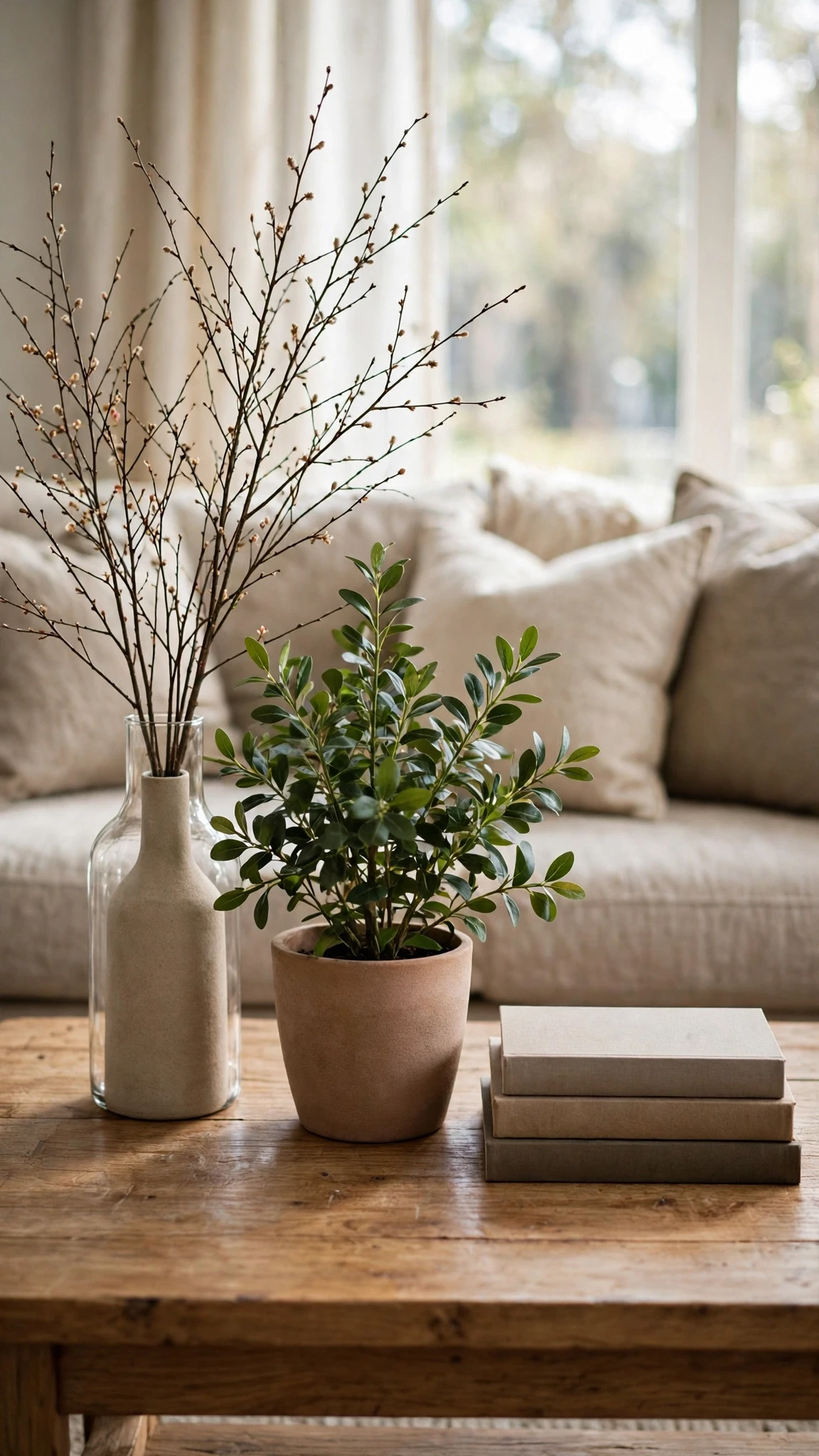
A coffee table arrangement becomes more interesting when the decorative pieces do not all sit at the same height. A tall vase, a medium-sized plant, and a low decorative bowl create a gentle visual flow that makes the centerpiece feel thoughtfully arranged. This technique works particularly well on larger coffee tables that have enough space for multiple accessories.
You can create height without buying additional decor. Place a small object on top of two decorative books or use a raised candleholder to lift one element above the others. Just remember to consider the view from your sofa. Very tall decorations can interrupt conversation, especially in smaller living rooms.
- Tall element: Try a vase with branches or a slender candlestick.
- Medium element: Add a small potted plant or decorative container.
- Low element: Use a bowl, book stack, or sculptural accessory.
- Sightline tip: Keep the tallest piece low enough to avoid blocking people’s view across the table.
4. Protect the Table With a Decorative Base Layer
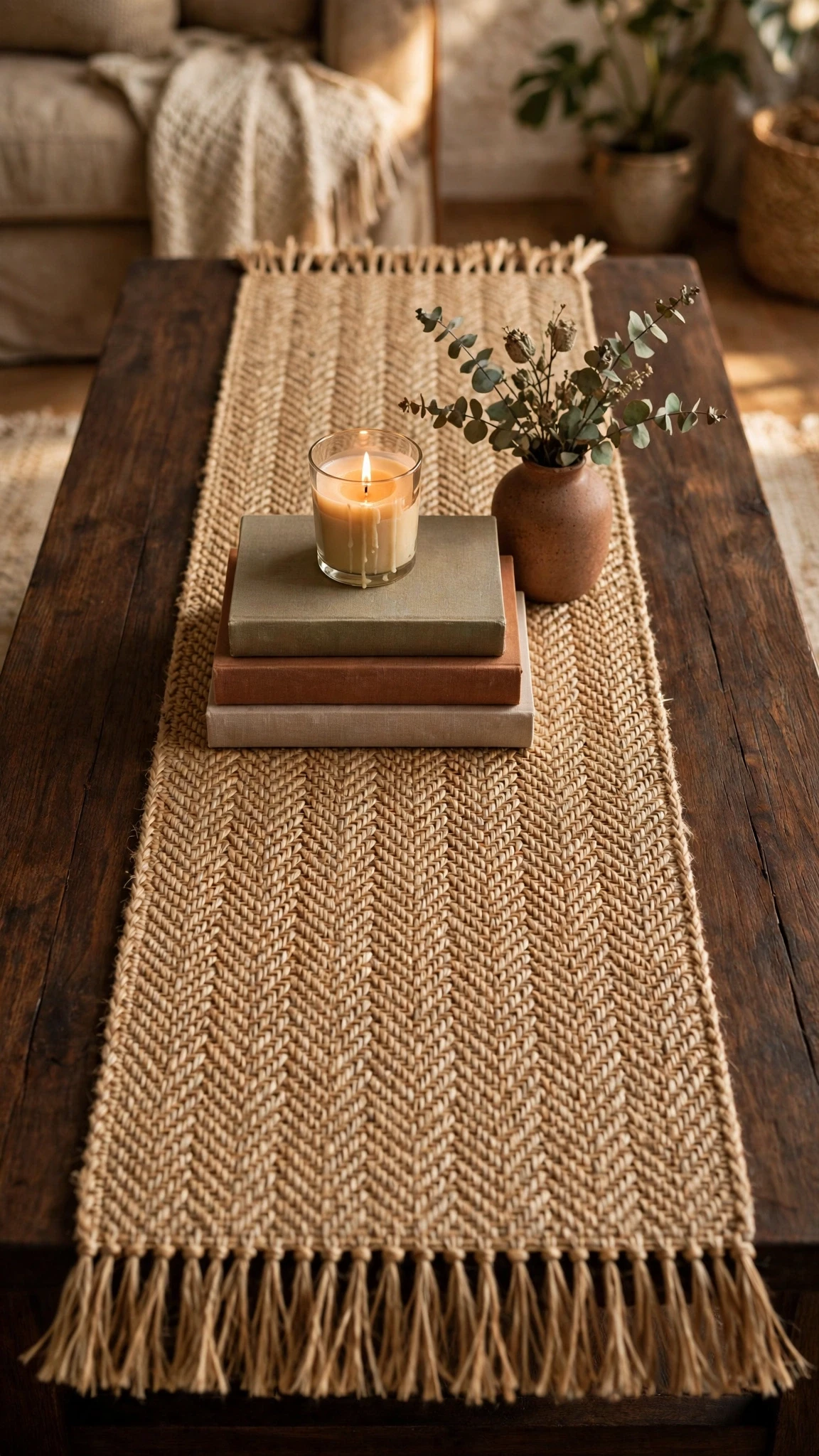
A fabric runner, woven mat, or wooden board can give your coffee table centerpiece a more finished appearance. These base layers create visual separation between the tabletop and the decorations, making the entire arrangement feel intentional. They are also practical because they can help protect delicate surfaces from minor scratches and moisture.
For a warm, relaxed look, choose a natural linen runner or a textured woven mat. A wooden board works well in rustic, farmhouse, and organic-inspired living rooms. Make sure the base is easy to clean and large enough to support your arrangement without covering the entire tabletop.
- Runner pick: linen or cotton for a soft look, woven fiber for texture
- Board option: a large wooden board doubles as a serving surface
- Size guide: the base should extend an inch or two past the arrangement
- Care note: washable bases beat fussy ones in homes with kids or pets
5. Leave Breathing Room for Cups and Remotes
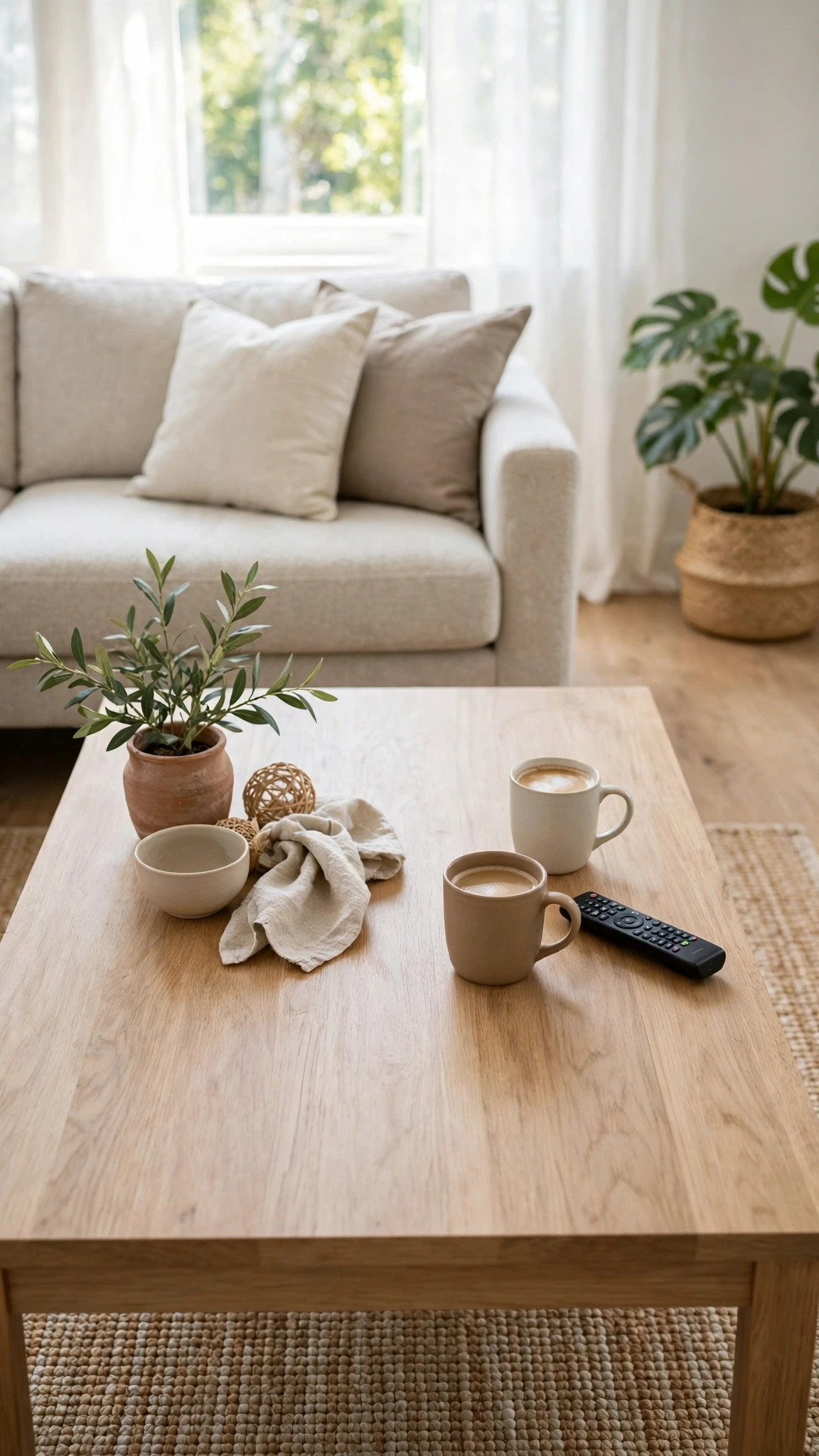
One of the biggest coffee table styling mistakes is filling every available inch with decorations. Although a full arrangement might look attractive in a photograph, it can quickly become frustrating when there is nowhere to put a coffee cup, remote, or magazine. A practical centerpiece should leave enough open space for the table to serve its everyday purpose.
Try keeping roughly one-third of the tabletop free, adjusting the amount according to your table size and household needs. If you regularly entertain guests, leave an accessible area near the sofa for drinks and snacks. You can still make the table look beautifully decorated without covering its entire surface.
-
- Clear zone: Reserve an open section for drinks and daily essentials.
- Coaster placement: Keep coasters inside the tray for easy access.
- Clutter control: Remove objects that do not contribute to the arrangement.
- Everyday test: Make sure two coffee cups can fit comfortably without moving everything.
6. Anchor One Side, Let the Other Side Breathe
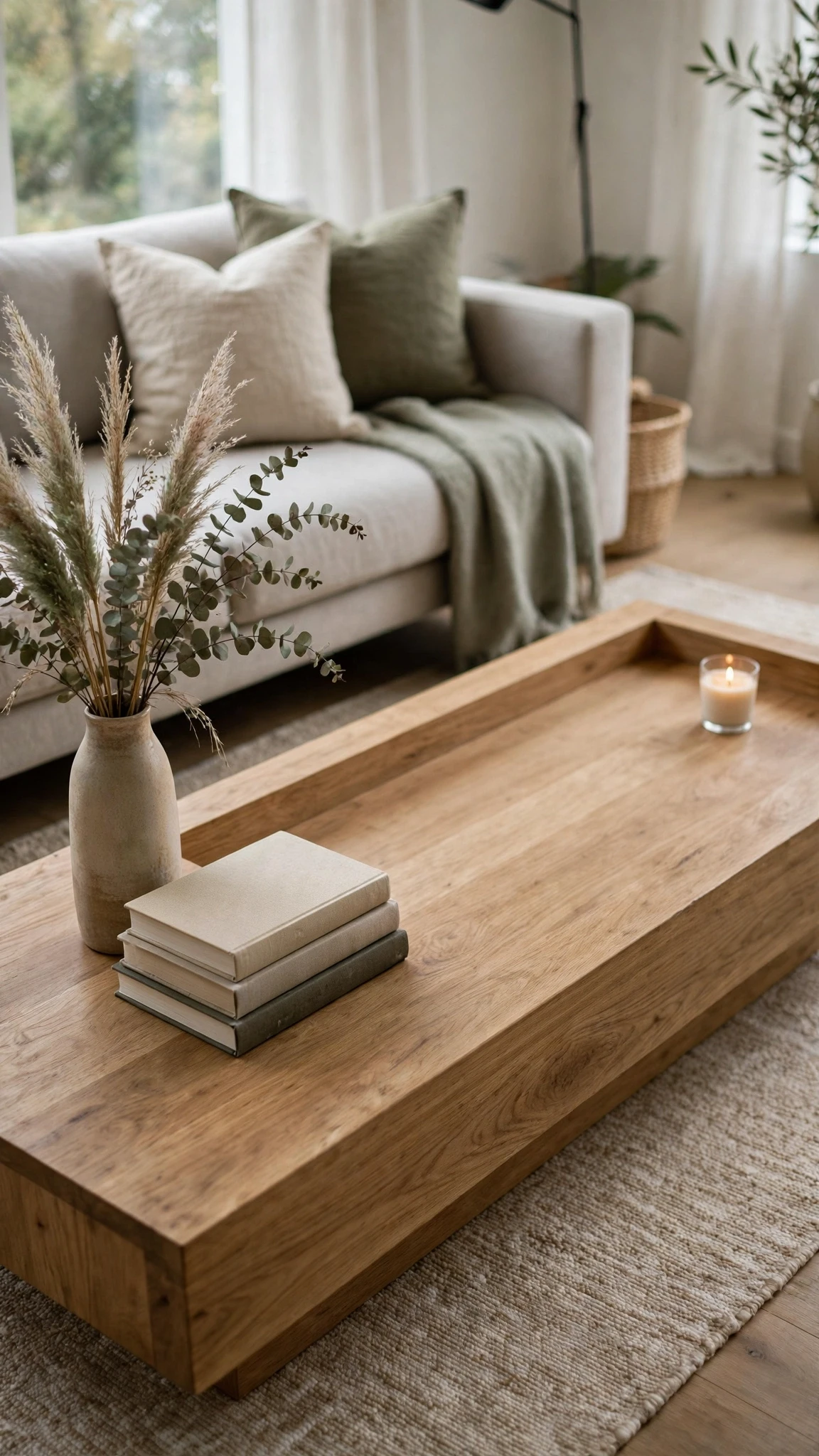
A perfectly centered arrangement can sometimes make a coffee table feel too formal. An asymmetrical layout creates a more relaxed appearance by placing the main decorative grouping slightly to one side instead. This approach is especially effective on long rectangular coffee tables, where a centered display can look small against the surrounding surface.
Start with a tray or a stack of books on one side, then balance the composition with a smaller decorative object on the opposite end. You do not need identical accessories on both sides. Instead, use similar visual weight, such as balancing a tall vase with a wider decorative bowl.
- Main grouping: Position the largest arrangement slightly off center.
- Secondary accent: Add one smaller piece on the opposite side.
- Rectangular tables: Use the length of the tabletop to create visual balance.
- Round tables: Offset the arrangement slightly while keeping enough room around it.
7. A Stack of Books That Invites Browsing
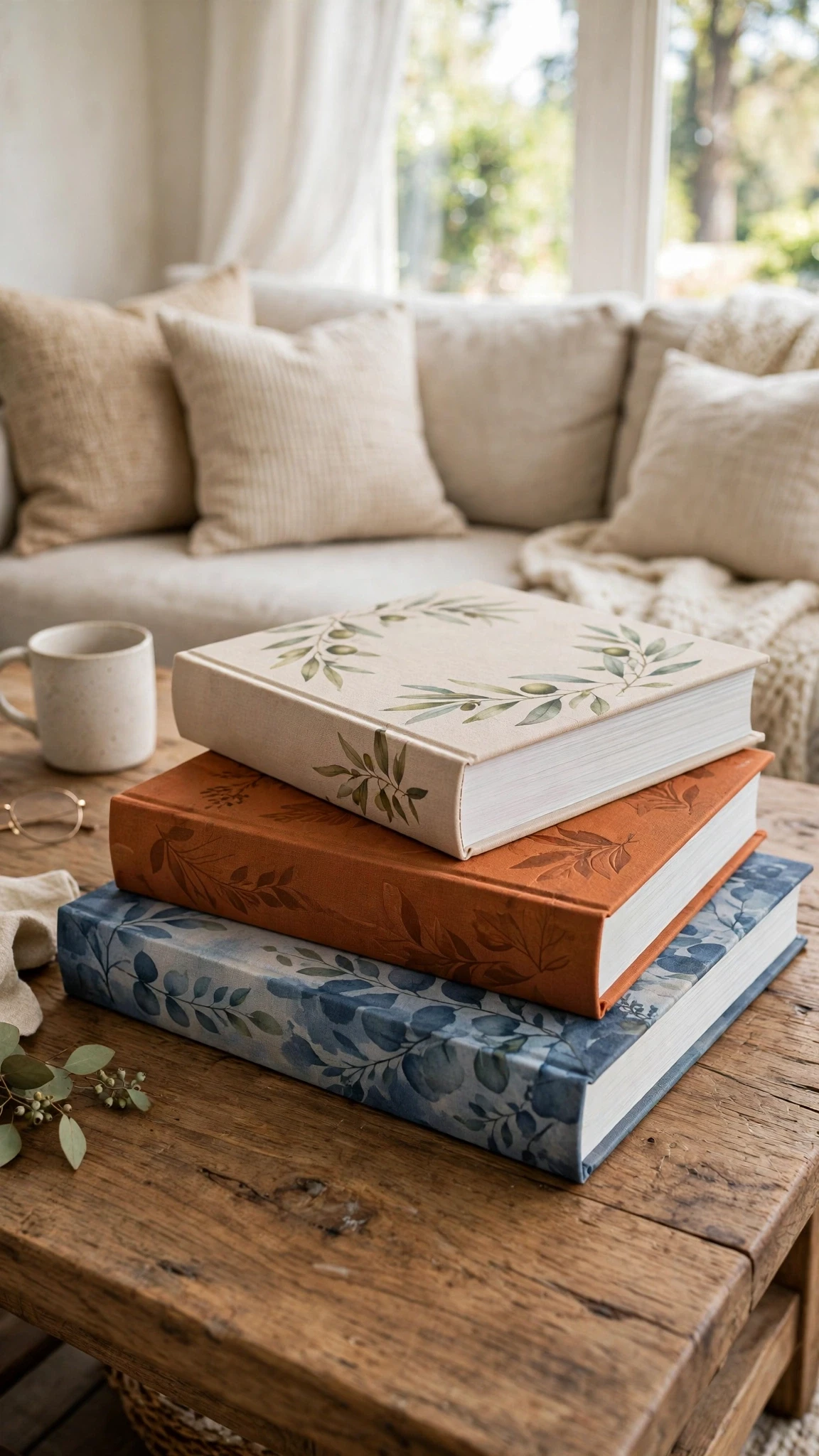
Coffee table books are decorative accessories that also give guests something interesting to browse. Large books featuring photography, architecture, travel, fashion, or art can introduce color and personality while creating a useful base for smaller decorations. A stack of two or three books instantly adds structure to an otherwise empty tabletop.
Choose books with covers that complement your living room rather than selecting them only for their appearance. For example, a photography book with deep green tones can connect beautifully with plants and natural wood furniture. Place the largest book at the bottom and add a small decorative object on top for extra height.
- Stack size: two to four books, largest at the bottom
- Topic pick: subjects guests can enjoy without reading a full chapter
- Angle trick: rotate the top book a few degrees for a casual feel
- Topper rule: one small object on top, never a second stack
8. Books Under Glass, Topped With Something Small
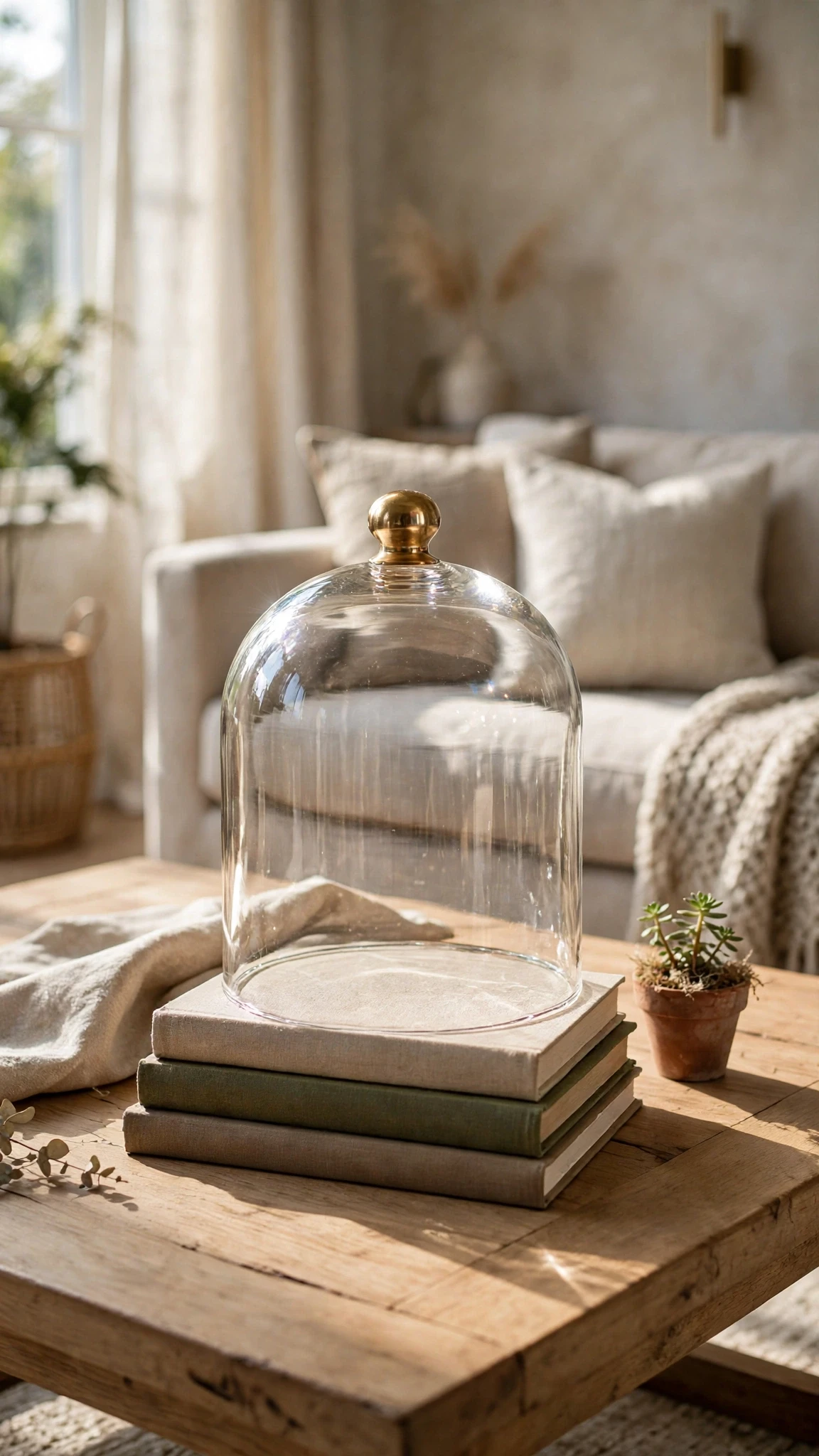
A glass cloche can turn a small decorative object into an attractive focal point. Its transparent shape adds a delicate, almost gallery-like quality to a coffee table while allowing the object underneath to remain visible. You could display a small ceramic sculpture, a preserved natural element, or a treasured souvenir that deserves a little extra attention.
For a balanced arrangement, choose a simple cloche with a wooden, marble, or brass base. Keep the object underneath relatively small because the glass dome itself already creates visual interest. This idea works especially well in traditional, vintage, cottage-inspired, and elegant living rooms.
- Base material: Choose wood or brass for a warmer appearance.
- Display object: Use one meaningful piece rather than several small accessories.
- Placement: Position the cloche where it can be appreciated from the seating area.
- Safety: Keep glass domes away from children and pets or choose a sturdy alternative material.
- Dome pick: clear glass with a wooden or brass base for warmth
- Inside rule: one object only, so the eye knows where to rest
- Dust bonus: the dome keeps the display clean between cleanings
- Safety note: skip glass domes at toddler height or use sturdy acrylic
9. A Single Oversized Book as the Whole Display
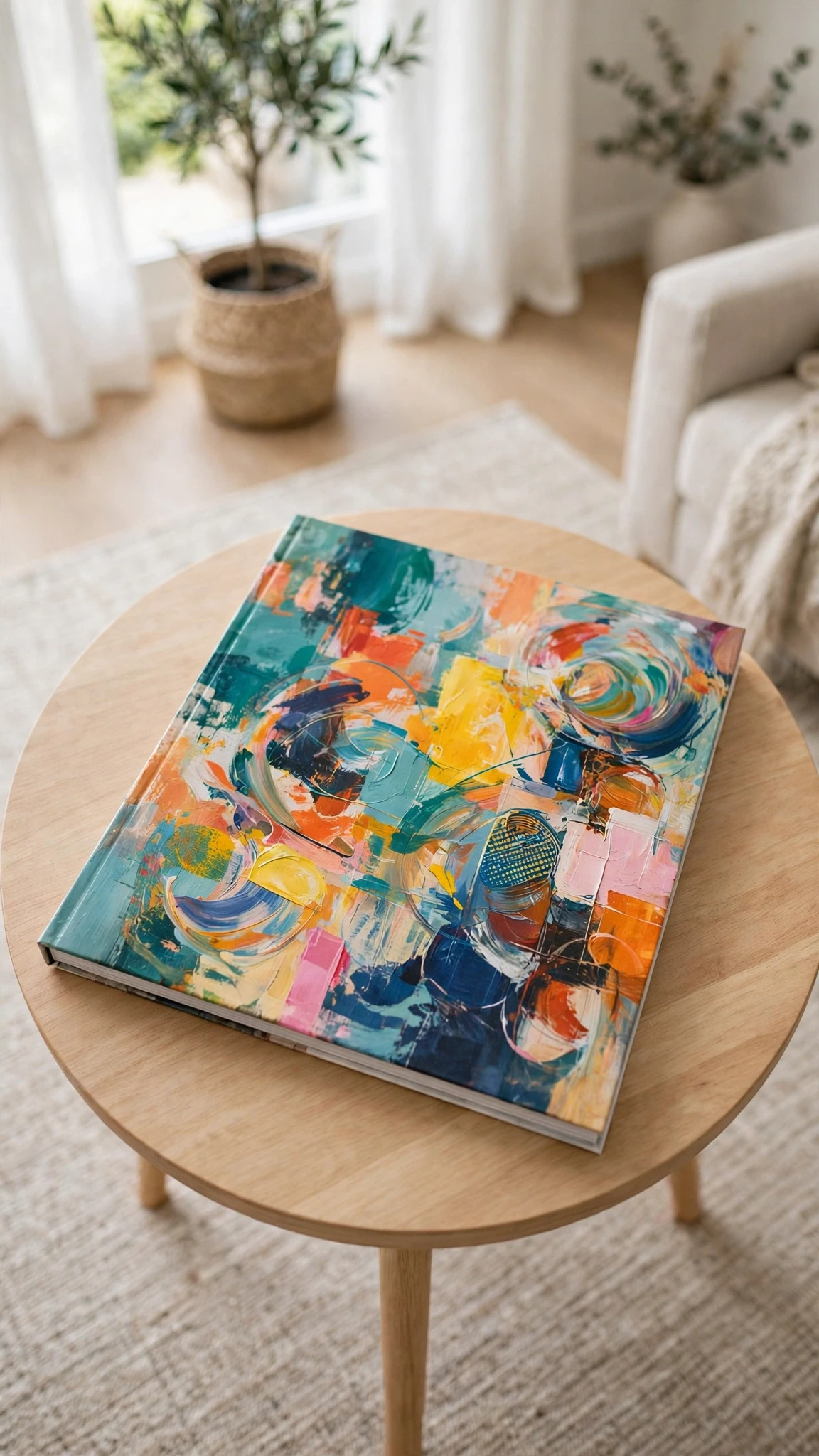
Sometimes a single decorative item is all a small coffee table needs. An oversized art, photography, or architecture book can act as the main focal point without requiring additional accessories. This approach is particularly useful when you prefer simple interiors or have limited tabletop space.
Choose a book with an attractive cover and enough visual interest to stand on its own. Place it flat on the table, either in the center or slightly off to one side. If the surface still feels empty, add one small accent such as a smooth stone or a simple bookmark rather than building an entire arrangement around it.
- Cover test: pick a book whose cover you would frame on a wall
- Placement: lay it flat, slightly angled, near the center of the table
- Pairing rule: leave the rest of the table empty or add one candle at most
- Swap habit: change the featured book when the season changes
10. Books in a Color Story, Not a Rainbow
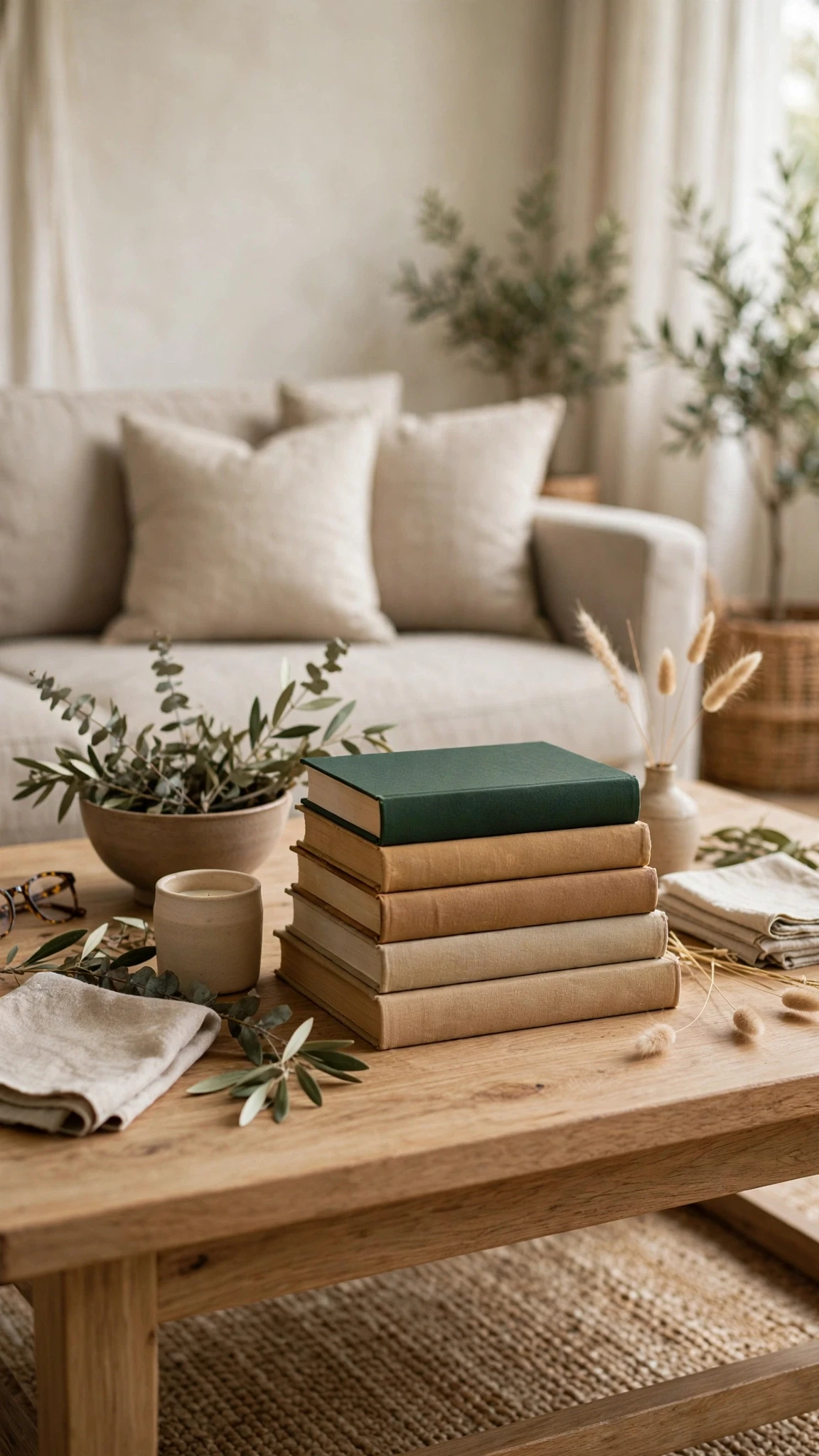
A collection of books can look much more polished when their colors work together. Instead of choosing several covers with unrelated shades, gather books that share a similar color palette. Warm beige, forest green, navy blue, terracotta, and charcoal can all create attractive combinations depending on your living room’s existing decor.
You can also use your books to introduce a subtle accent color. For example, a mostly neutral stack with one burgundy or dark green cover can add personality without making the table look busy. If you already own books with colorful covers, turn a few spines inward or arrange them with their covers facing upward.
- Palette pick: match the stack to one color already in the room
- Accent spine: one contrasting book keeps the stack from looking flat
- No-buy fix: turn loud spines to the wall or wrap them in kraft paper
- Height order: tallest book at the bottom keeps the stack steady
11. A Reading Nook Stack With a Bookmark and a Candle
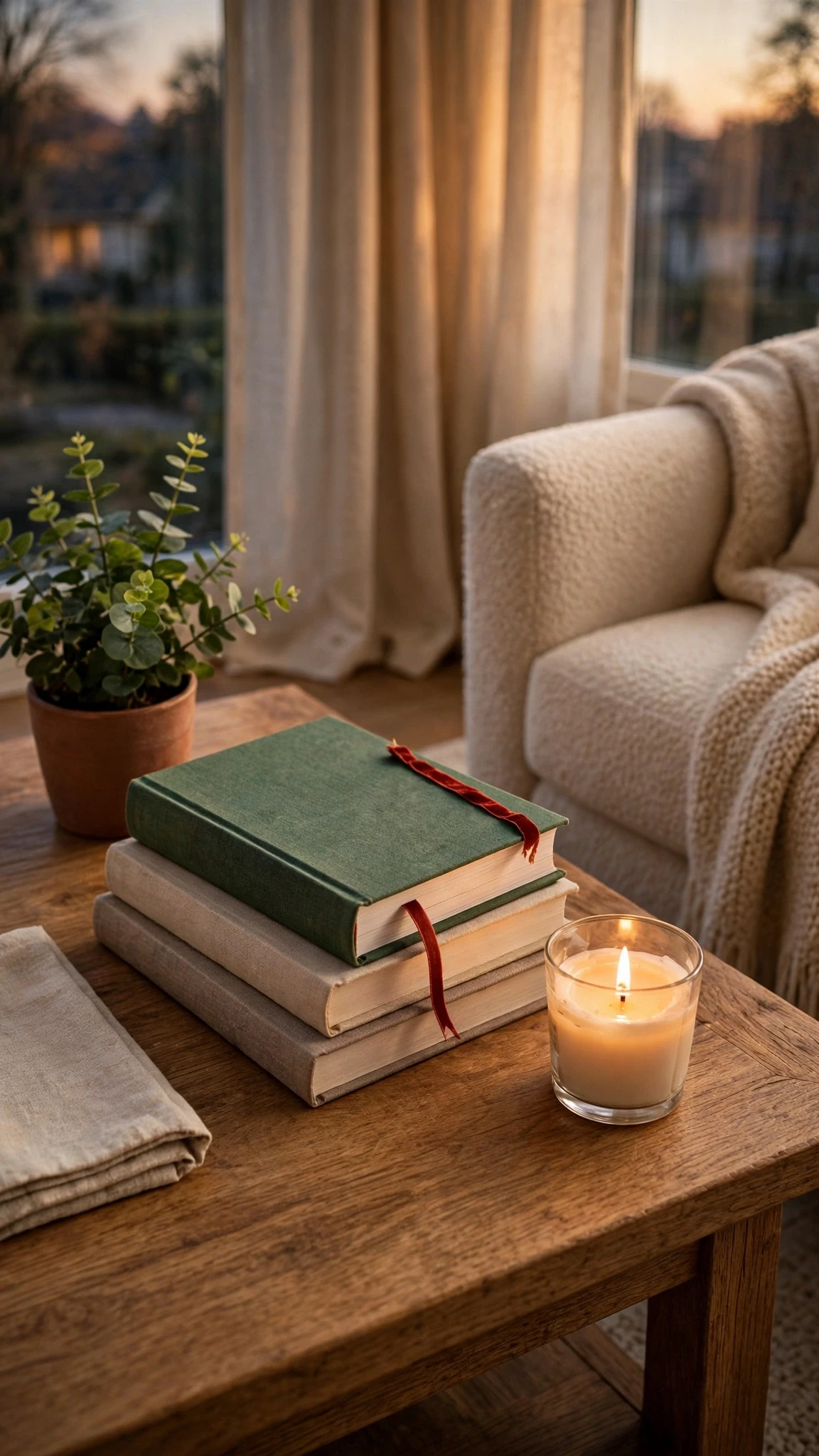
If your living room is a place where you enjoy reading, let your coffee table reflect that habit. A small stack of books, a bookmark, and a decorative candle can create a comfortable arrangement that feels personal rather than purely decorative. It also makes your current read easy to reach whenever you sit down.
Place the books near your favorite sofa seat or armchair so you can pick one up without stretching across the table. A fabric bookmark or a small ceramic dish for reading glasses can add another thoughtful detail. If you enjoy candlelight while reading, choose a flameless candle or keep a burning candle well away from books and paper.
- Seat side: place the stack on the side of your favorite chair
- Candle safety: use a lidded candle or a flameless one near paper
- Bookmark touch: a ribbon or dried flower marks your place beautifully
- Rotation habit: swap the book when you finish it, not on a schedule
12. A Woven Tray That Warms a Neutral Room
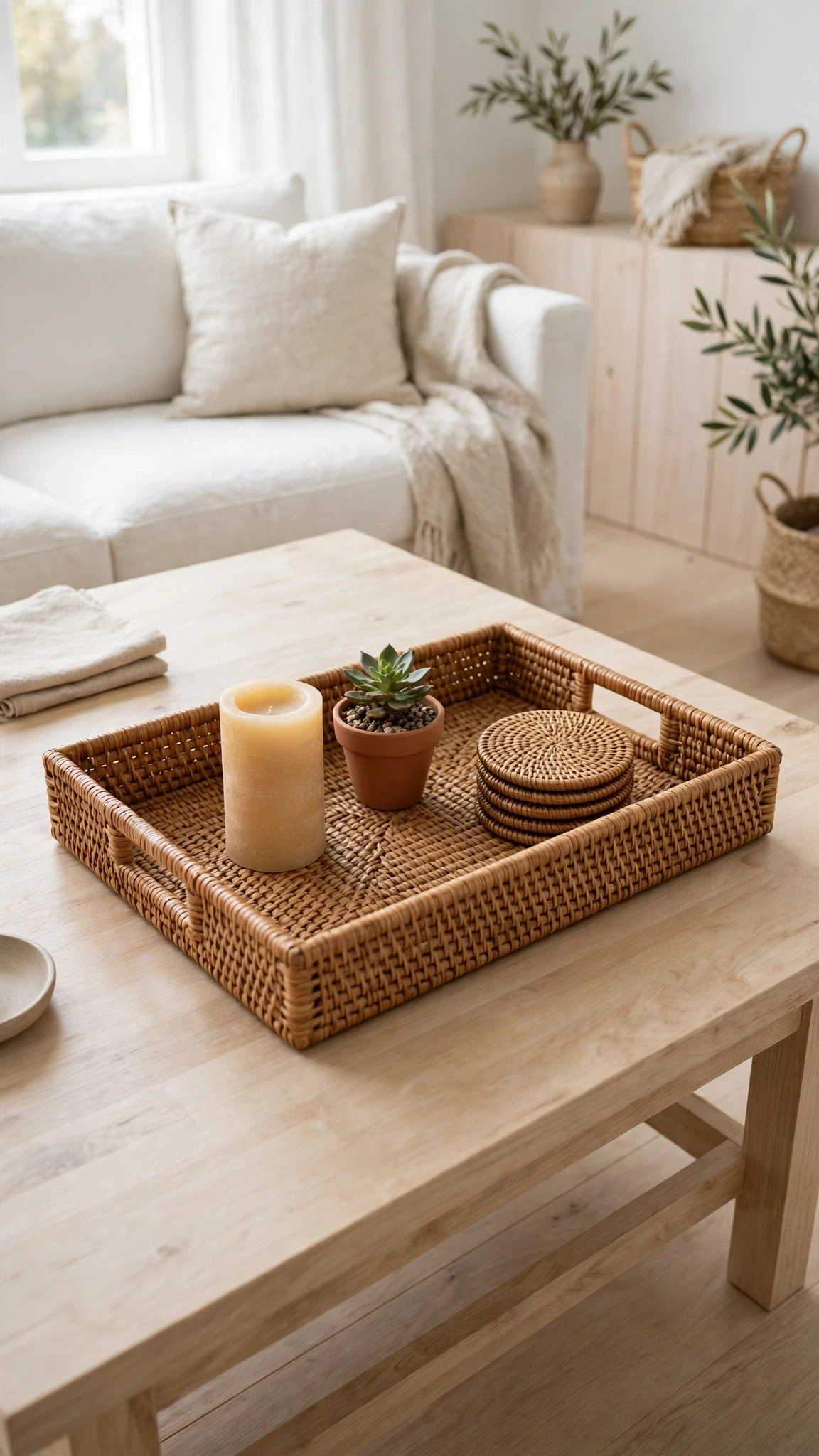
A woven tray made from rattan, seagrass, or wicker can bring warmth and texture to a coffee table. Its natural surface creates an attractive contrast against smooth glass, polished wood, and metal furniture. This makes it especially useful in neutral living rooms that need a little more character.
Style the tray with a simple combination of a ceramic candle, a small plant, and a set of coasters. Keep the arrangement relatively low so the woven material remains visible. You can also choose a tray with handles if you frequently move decorations aside when serving snacks or drinks.
- Material: Rattan and seagrass create a relaxed, organic appearance.
- Color: Natural brown and honey tones work well with warm interiors.
- Accessories: Combine the tray with ceramic, wood, or glass pieces.
- Maintenance: Keep woven materials dry and clean them gently with a soft brush.
13. Brighten a Dark Living Room With a Mirrored Tray
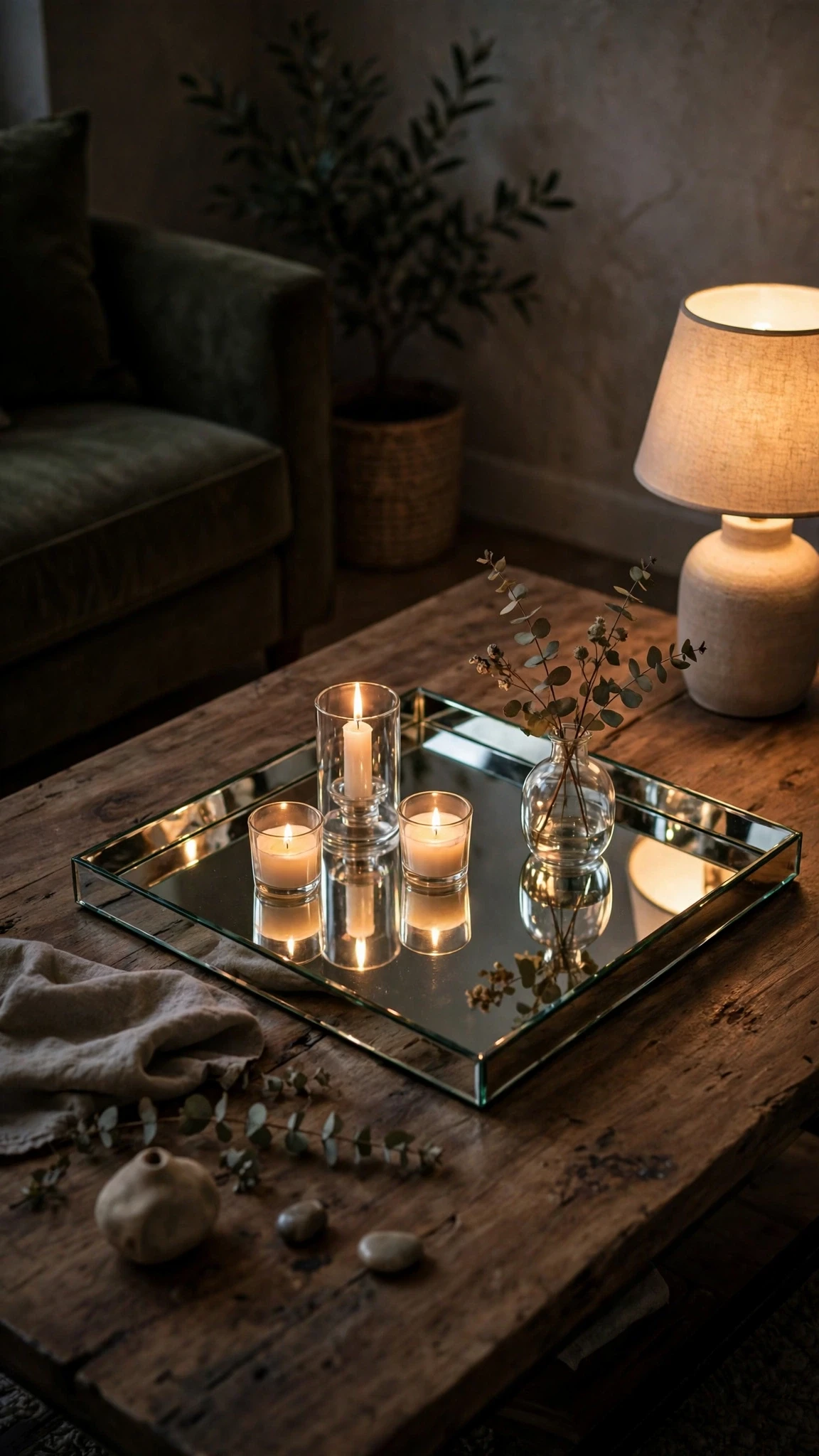
A mirrored tray can add a little sparkle to a coffee table, particularly in living rooms that receive limited natural light. Its reflective surface catches nearby window light and lamps, making metallic decorations and glass accessories stand out. It also introduces a glamorous touch without requiring a large decorative centerpiece.
For a coordinated look, pair the tray with brass candleholders, a small glass vase, or a decorative bowl. Avoid filling the entire surface with reflective objects, as too many shiny finishes can make the arrangement feel busy. A few carefully selected pieces are usually enough.
- Placement: Position the tray where it can catch natural or artificial light.
- Decor pairing: Combine mirrored surfaces with brass, glass, or polished metal.
- Balance: Use one or two statement accessories instead of many small pieces.
- Cleaning: Wipe the mirror regularly to remove fingerprints and dust.
14. A Round Metal Tray That Breaks Up a Square Table
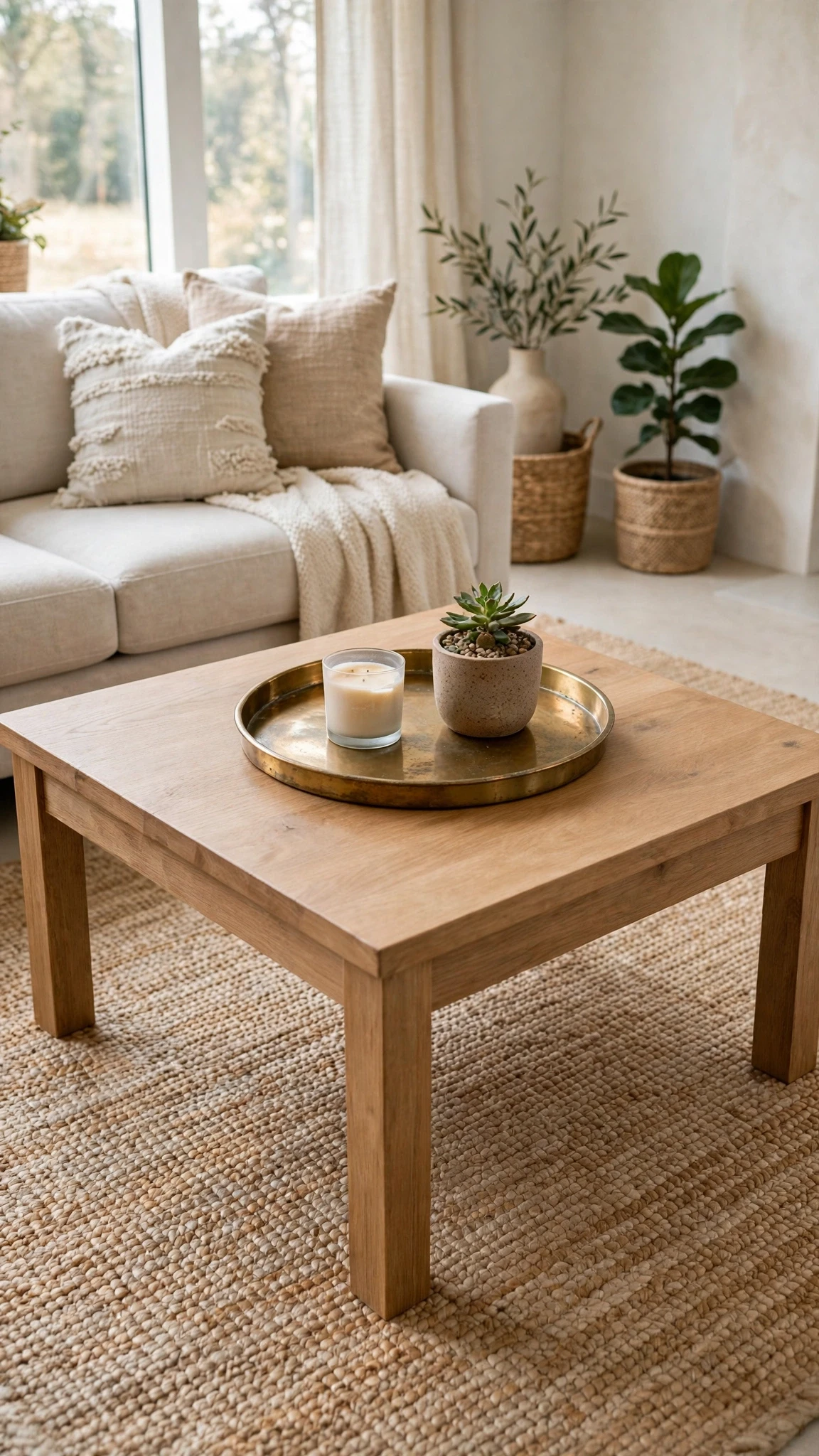
If your coffee table has sharp corners or a boxy shape, a round metal tray can introduce a softer contrast. The curved outline breaks up straight furniture lines and gives the arrangement a more balanced appearance. Brass and brushed gold create warmth, while black metal provides a stronger contemporary look.
Keep the decorative objects inside the tray relatively low so its shape remains visible. A small candle, a decorative bowl, and a couple of coasters are enough to create a finished display. This combination works particularly well with square wooden coffee tables and modern upholstered furniture.
- Shape contrast: round tray on a square or rectangular table
- Metal pick: brass warms a room, black metal sharpens a pale one
- Low grouping: keep pieces under six inches so the tray edge shows
- Edge bonus: the rim stops candles and remotes from drifting away
15. A Wooden Board as a Casual, Movable Base
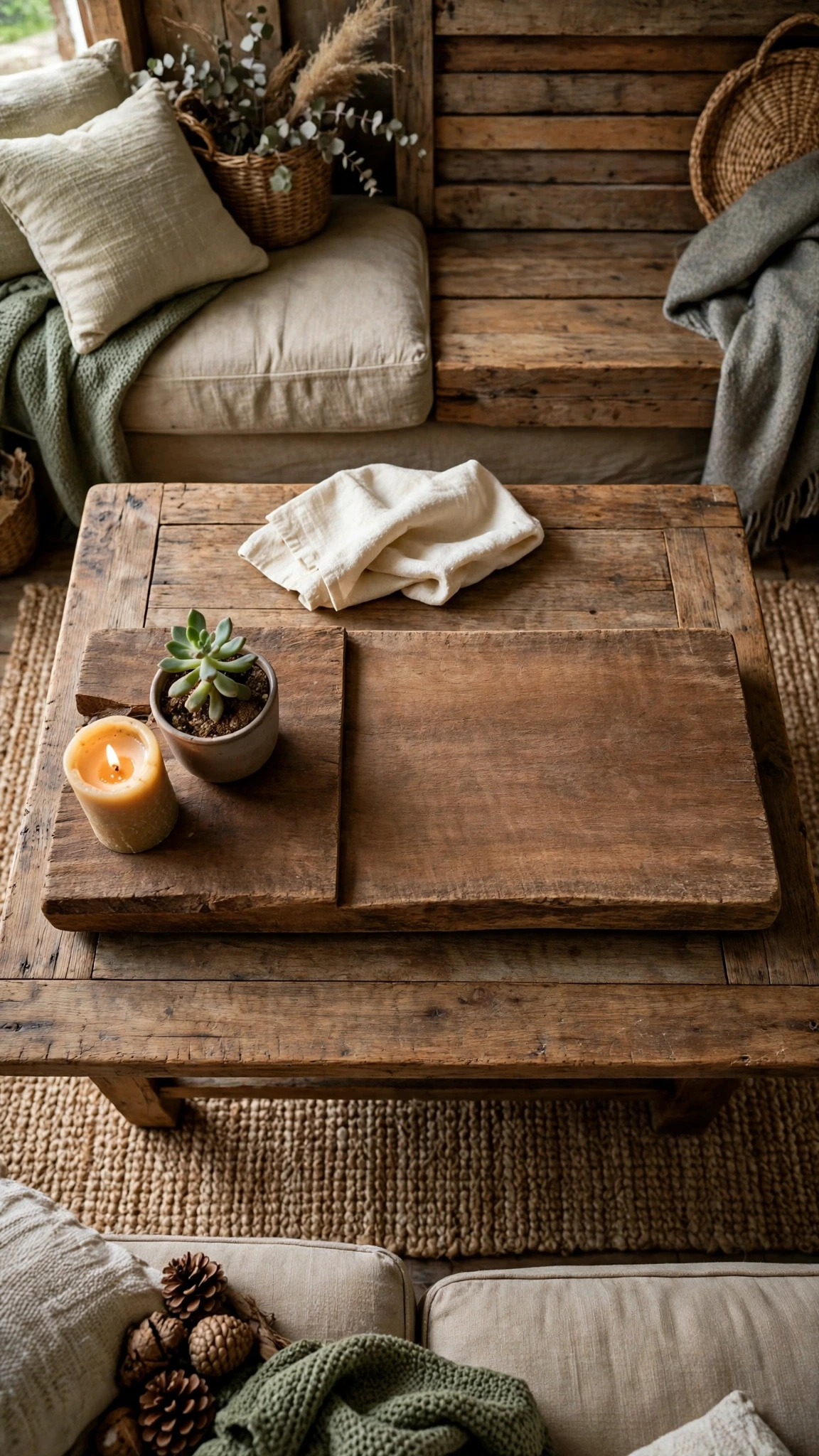
A wooden serving board can make a coffee table feel warm and welcoming without looking overly formal. Its natural grain adds character, while the simple shape provides a convenient surface for decorative accessories. Unlike a traditional tray, a serving board can also be used when guests arrive and you need somewhere to place snacks.
Choose a board with a finish that complements your existing furniture. A warm walnut board works beautifully with leather seating, while lighter oak suits airy, contemporary interiors. Arrange a candle and a small plant toward one end, leaving the other side available for practical use.
- Wood selection: Match the board’s tone with your coffee table or nearby furniture.
- Layout: Keep decorative accessories toward one end.
- Extra function: Use the board as a serving surface when entertaining.
- Care: Clean and maintain the board according to its finish and material.
16. Two Small Trays Instead of One Big One
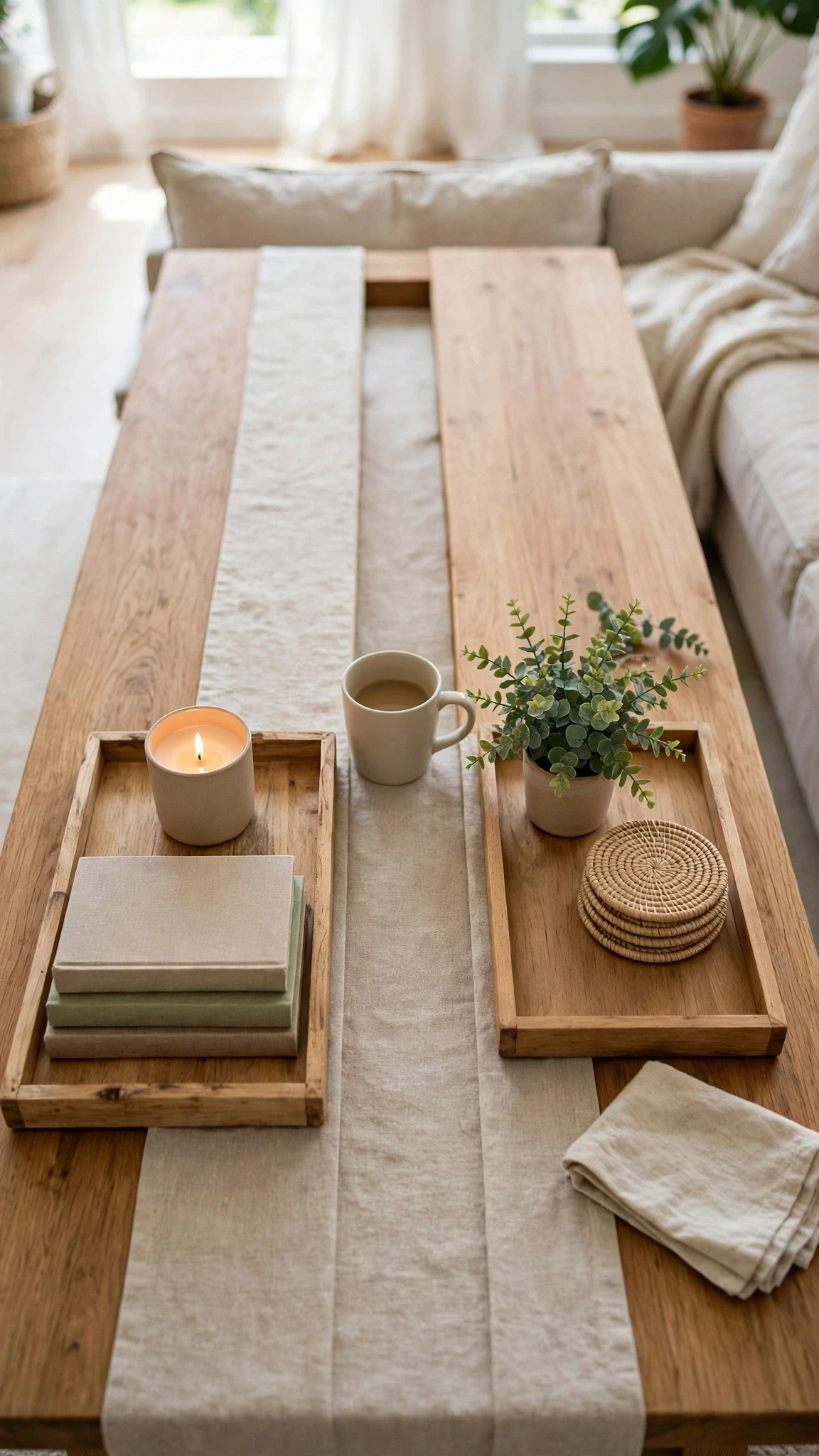
One large tray can swallow a small table, but two small trays create two little scenes that feel collected rather than staged. Place one tray with a candle and books on one side, and a second tray with a plant and coasters on the other, leaving a gap between them for cups. The pair works well on long tables, where a single tray would leave awkward empty ends.
- Pairing rule: trays in the same material but different sizes or shapes
- Gap space: leave a hand’s width between trays for mugs
- Long tables: one tray per seating zone feels natural
- Balance check: keep the heavier-looking tray on the less-used side
17. A Tray That Travels From Coffee Table to Ottoman
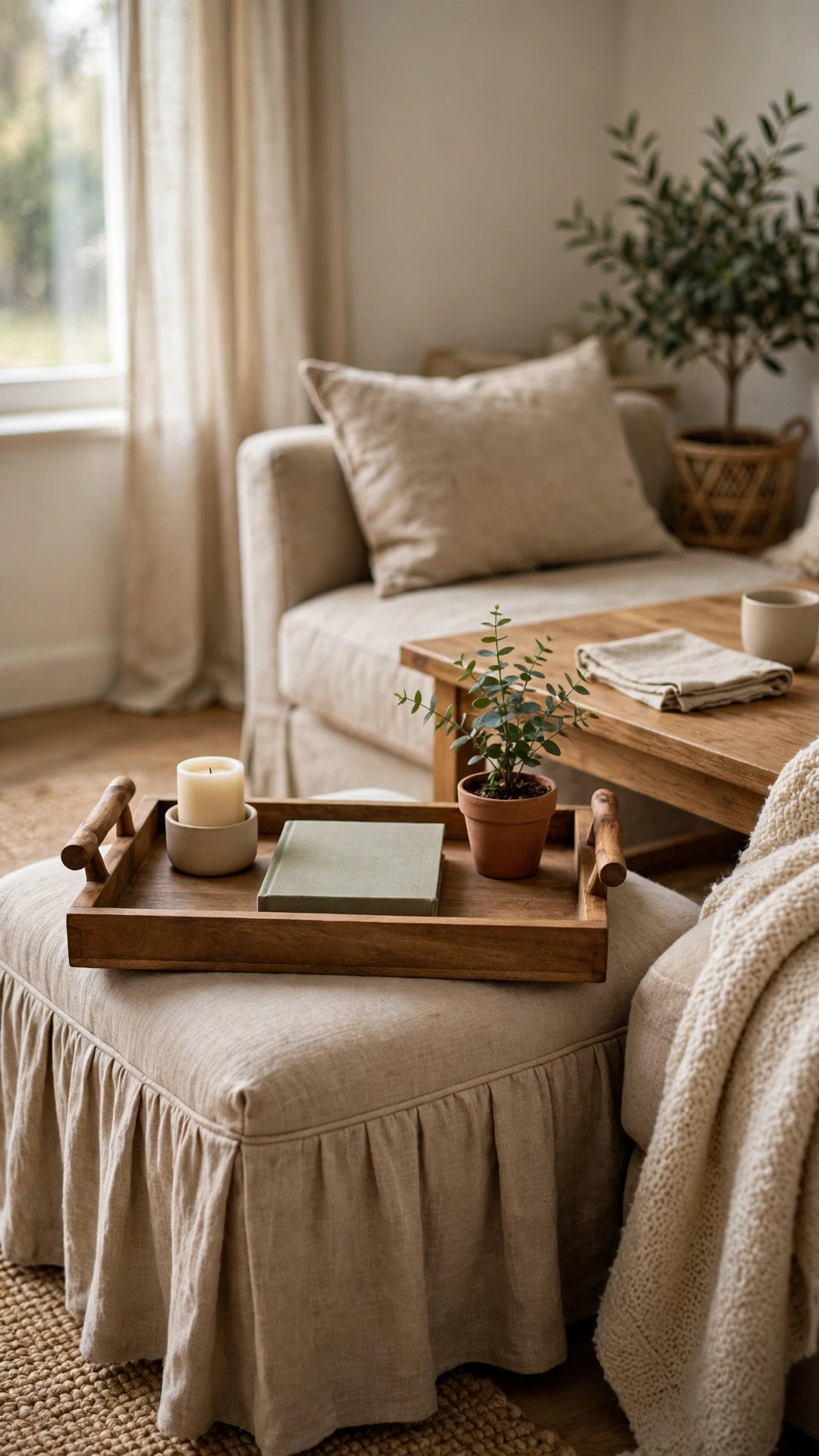
In living rooms where the ottoman doubles as a table, a sturdy tray with handles becomes a centerpiece you can carry from one surface to the other. Style it once with a candle, a small plant, and a book, then move the whole scene wherever people gather. This trick suits open-plan rooms and homes where seating shifts with the occasion, and it keeps the table clear when you need the space.
- Handle test: the tray should carry one-handed without wobbling
- Weight rule: keep pieces light so the tray stays portable
- Ottoman fit: measure the ottoman top before choosing tray size
- Dual use: the same tray serves drinks when guests arrive
18. One Low Plant That Survives Real Living Rooms
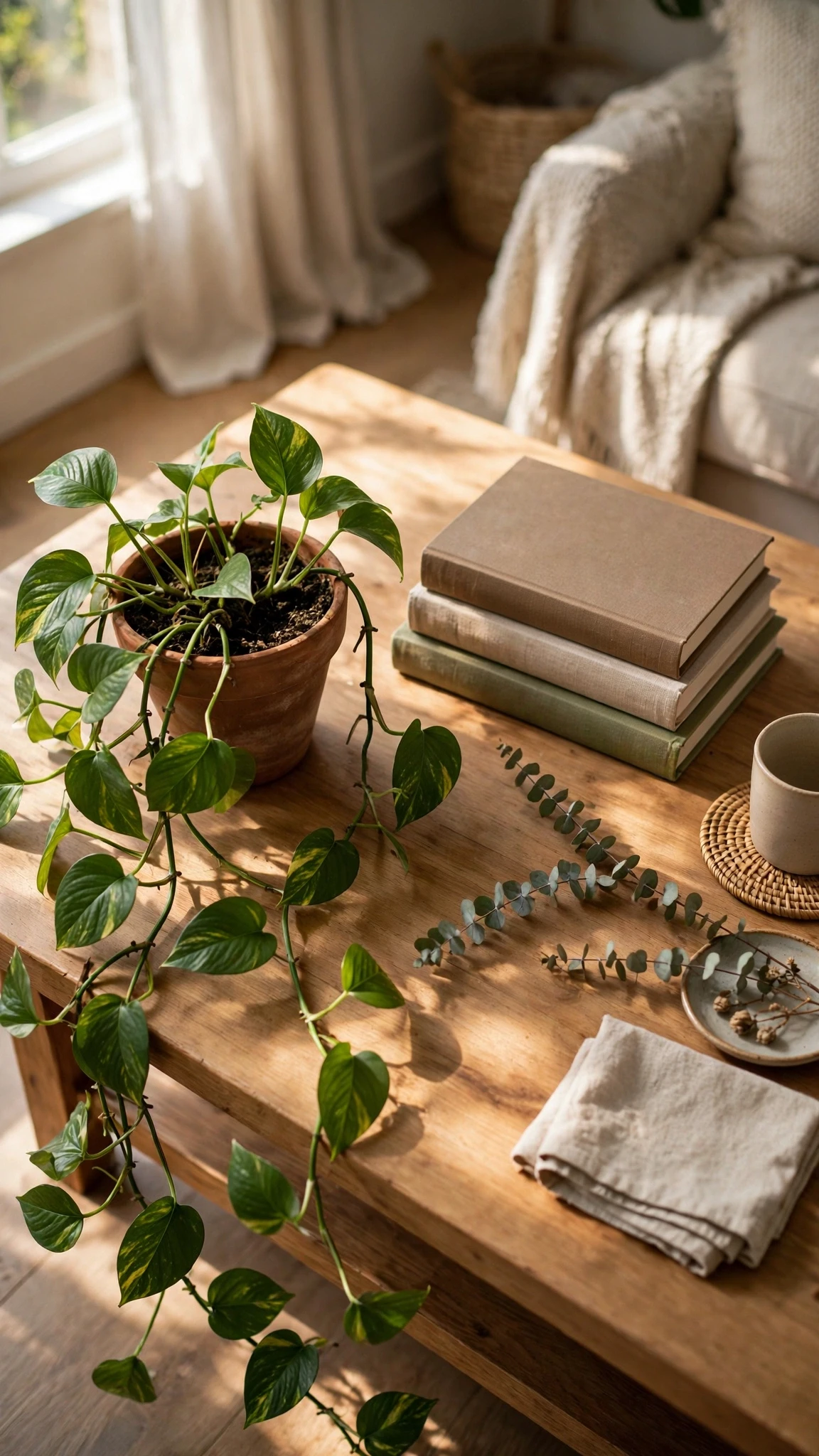
A single low plant brings life to a coffee table without blocking conversation, and it forgives the occasional missed watering better than a fussy bouquet. Pick a hardy plant like a small pothos, a snake plant pup, or a succulent in a pretty pot, and place it where it gets indirect light. The green softens hard furniture lines and makes the whole arrangement feel alive rather than arranged.
- Hardy picks: pothos, snake plant, ZZ plant, or a sturdy succulent
- Height rule: keep the plant under ten inches so sightlines stay open
- Pot match: a ceramic or terracotta pot adds warmth to the green
- Water habit: check the soil weekly, water only when dry
19. A Cluster of Small Pots at Different Heights
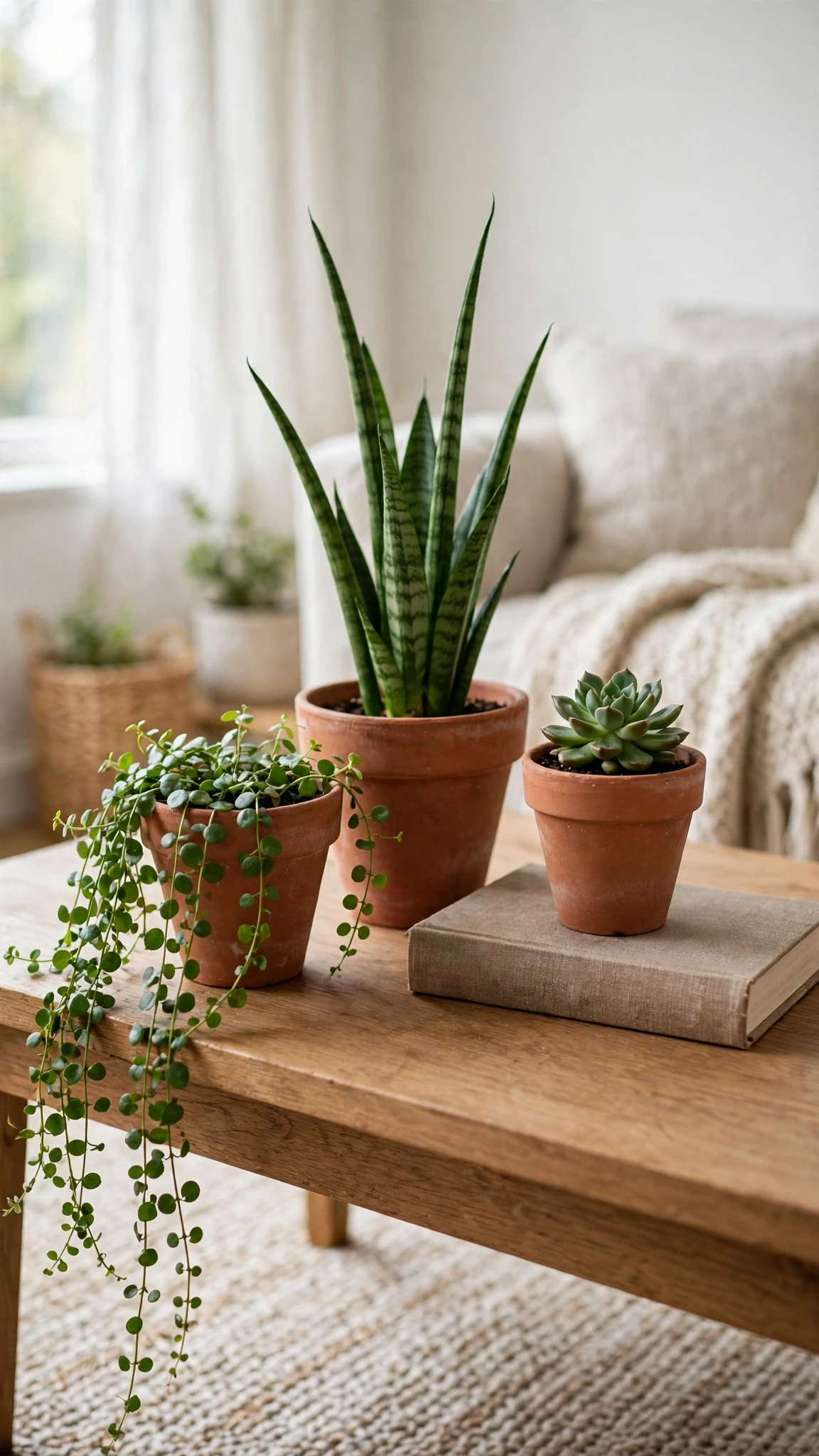
Three small pots at staggered heights create a miniature garden on the table, and the repetition of green ties the group together even when the plants differ. Use pots in one material, like terracotta or matte ceramic, and vary the plant shapes: one trailing, one upright, one round. The cluster reads as one lush piece from across the room, yet each pot rewards a closer look.
- Pot rule: same material, different sizes for a collected feel
- Plant mix: one trailing, one upright, one compact shape
- Height trick: a small stand or a book under one pot adds a level
- Water care: pots with drainage holes protect the tabletop
20. A Moss Bowl for Soft Green Without the Upkeep
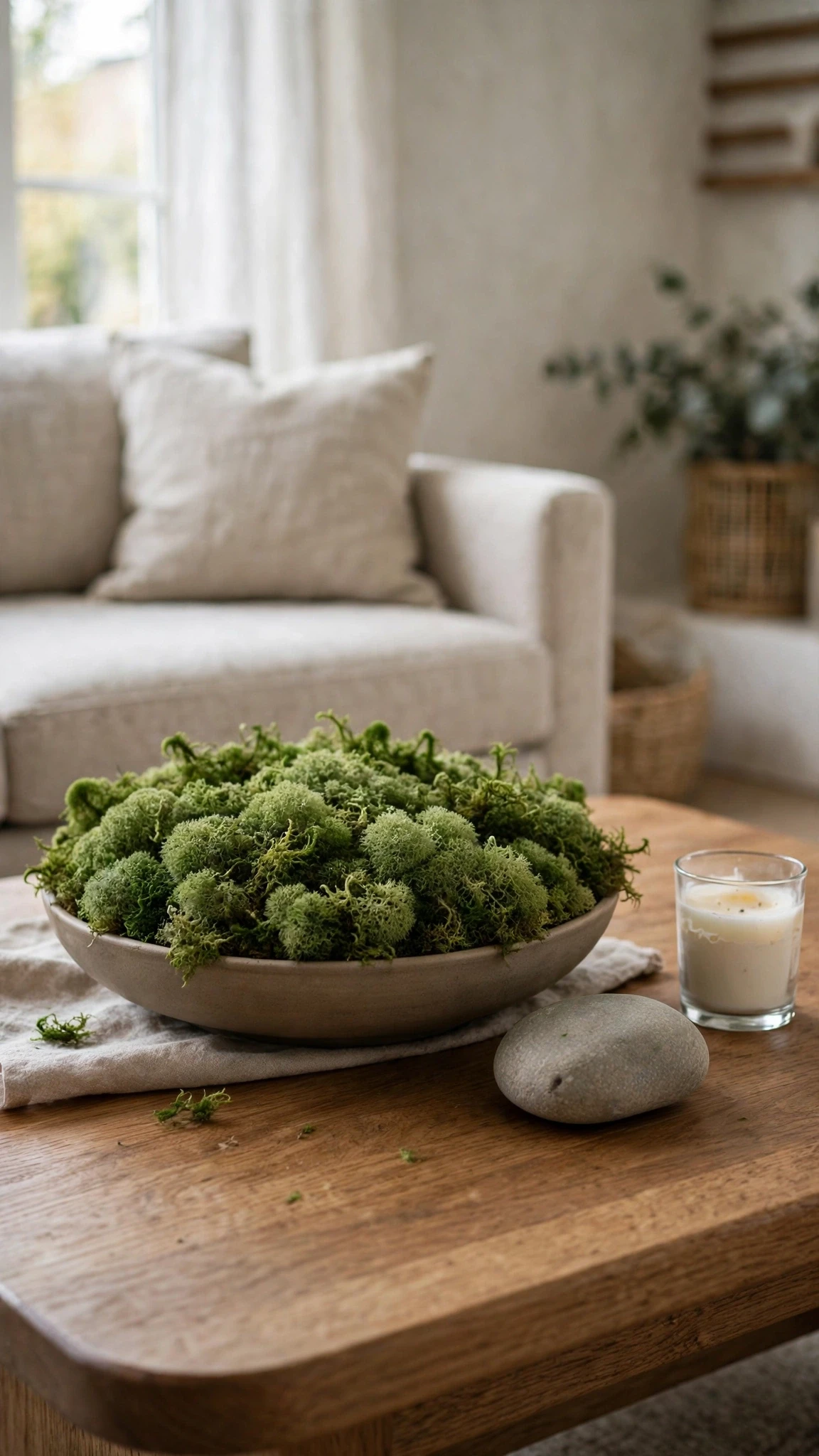
A bowl of preserved moss gives you the soft green of a living plant with none of the watering, light, or pruning, which makes it ideal for dark rooms and busy schedules. The pillowy texture looks gentle next to hard materials like glass and metal, and it never drops leaves on the table. Tuck a small stone or a candle beside it, and the bowl becomes a calm focal point.
- Moss type: preserved moss keeps its color without water or light
- Bowl pick: a low, wide bowl shows the texture best
- Pairing rule: one stone or candle beside the bowl is enough
- Dust care: a soft brush now and then keeps the moss fresh
21. Dried Stems for a Look That Lasts All Year
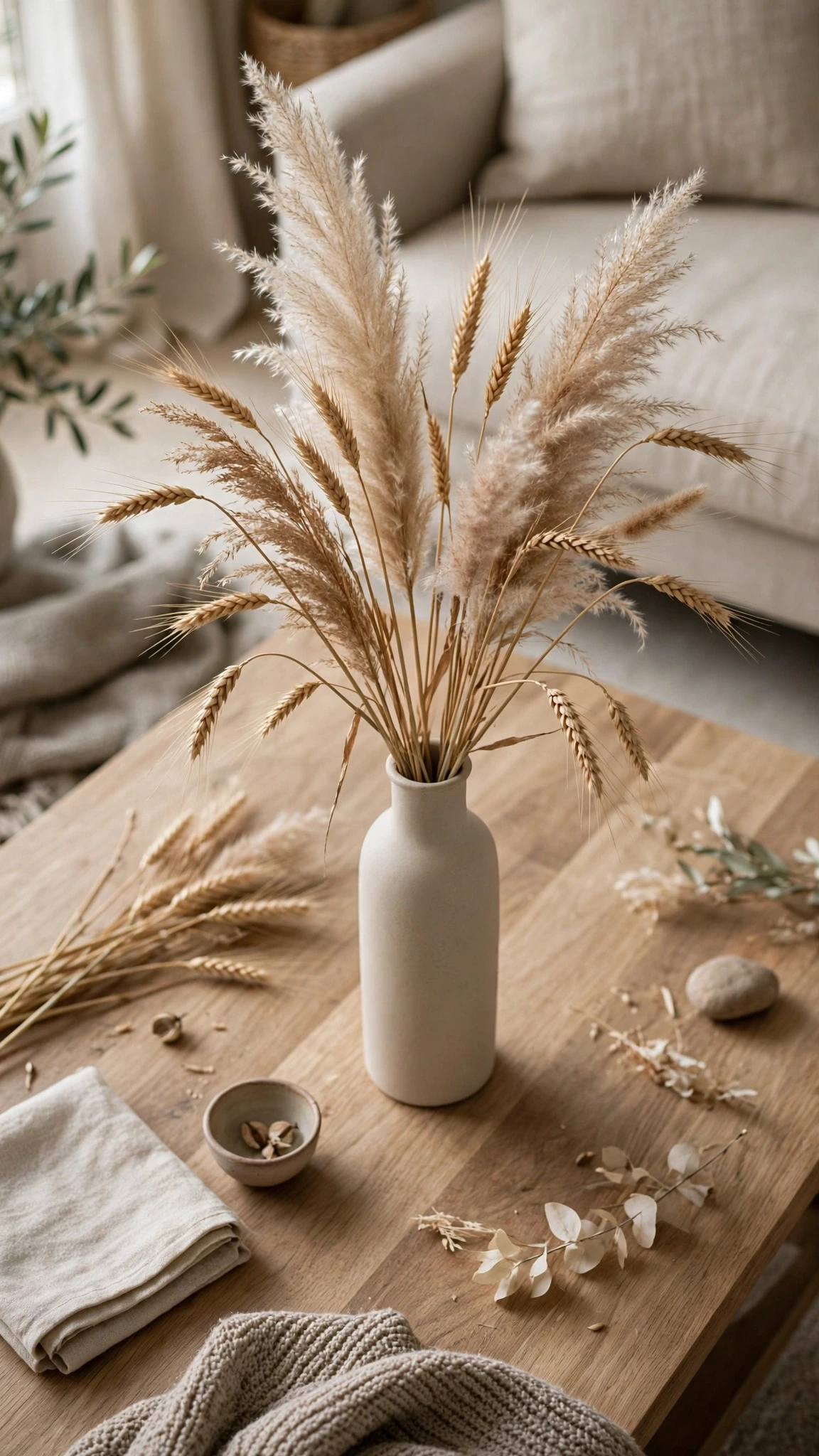
Dried stems, grasses, and seed heads hold their shape for months, so they suit anyone who loves flowers but not the weekly bouquet run. A tall vase of pampas, wheat, or dried lavender brings height and softness to the table, and the muted colors sit calmly with almost any room palette. Keep the bunch loose and airy rather than packed tight, so light passes through the stems.
- Stem picks: pampas, wheat, dried lavender, or bunny tails
- Vase match: a tall, simple vase lets the stems be the feature
- Bunch rule: five to seven stems look full without crowding
- Longevity tip: keep dried stems out of direct sun to slow fading
22. A Fruit Bowl That Doubles as a Snack Station
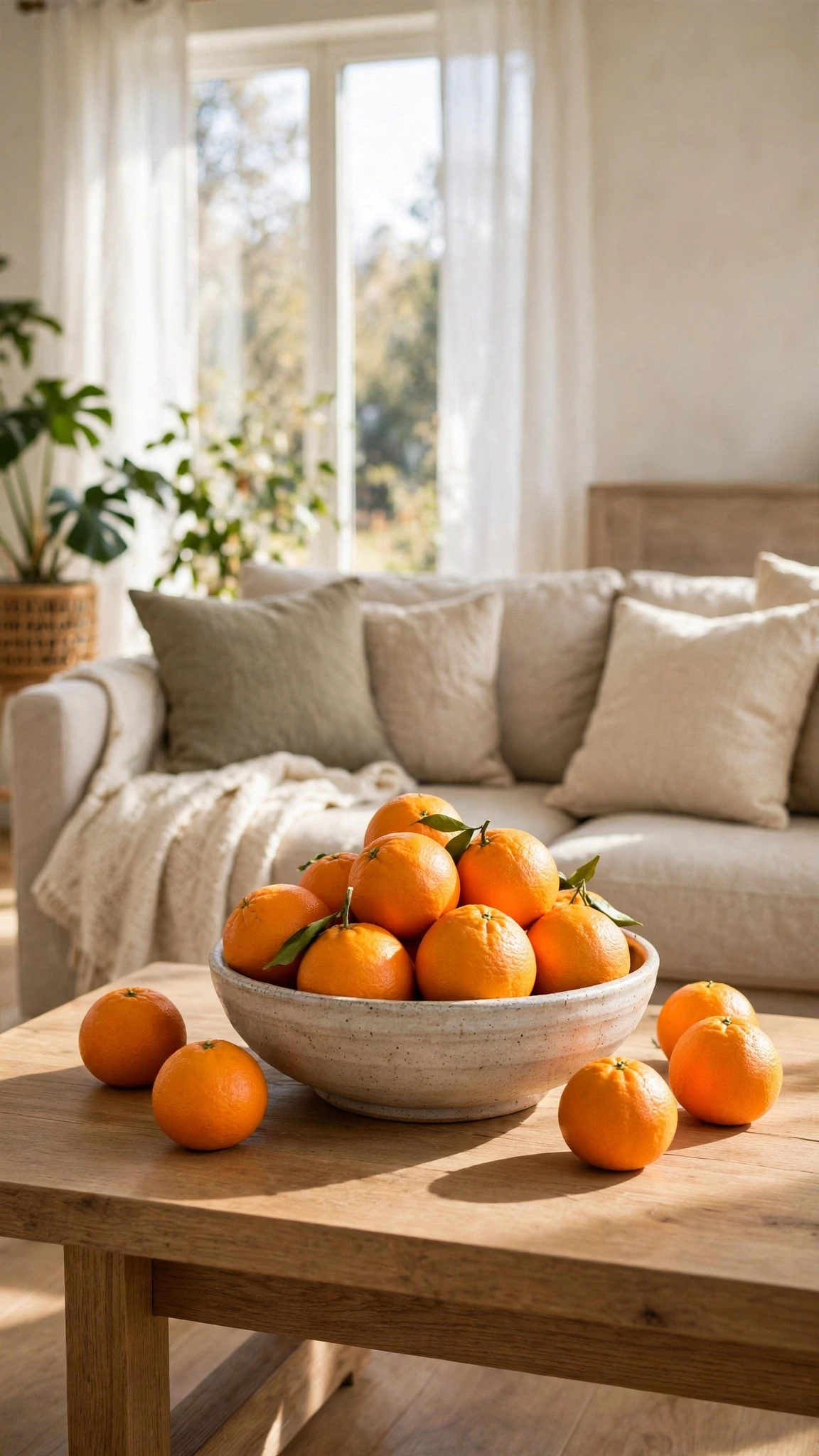
A bowl of fresh fruit is the rare centerpiece that gets used every day, and its natural colors brighten the table without any styling effort. Choose a bowl with a shape you love, fill it with oranges, lemons, or apples, and let the fruit do the decorating. When guests arrive, the bowl is already a welcome gesture, and refilling it becomes part of the weekly shop rather than a chore.
- Fruit pick: citrus and apples hold up best at room temperature
- Bowl shape: a low, wide bowl shows the fruit and stays stable
- Color trick: one fruit color reads calmer than a mixed jumble
- Refresh habit: top up the bowl when you unpack groceries
23. Fresh Herbs in a Pot by the Sofa
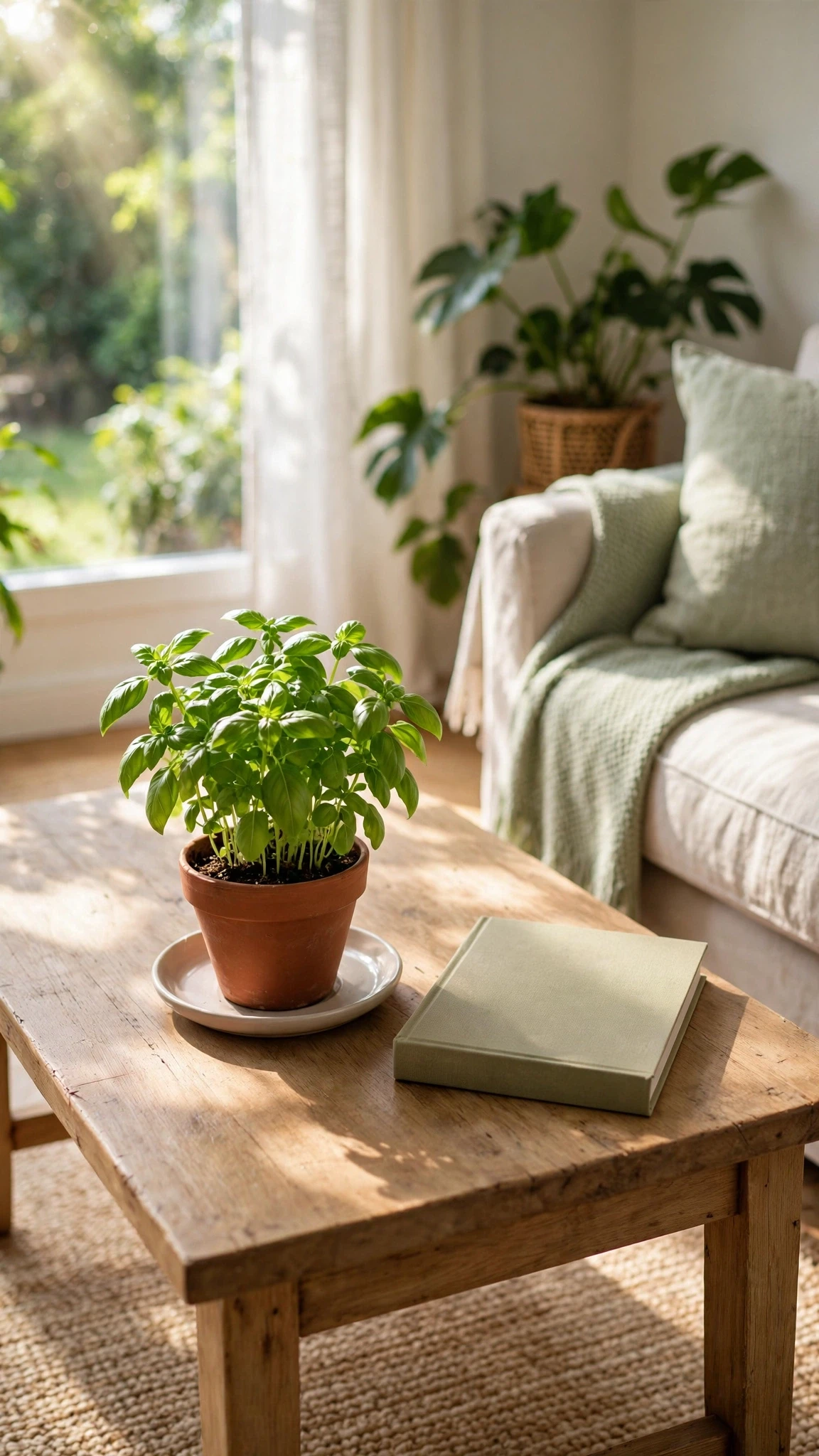
A pot of fresh herbs on the coffee table smells wonderful, looks green and alive, and earns its place in the kitchen when you cook. Basil, mint, or rosemary in a small terracotta pot brings a garden feeling indoors, and snipping a few leaves for dinner feels like a small daily luxury. Keep the pot on a saucer to protect the table, and give it the brightest spot near the table.
- Herb picks: basil and mint grow fast; rosemary smells best
- Saucer rule: always use a saucer to catch water and soil
- Light tip: place the pot on the table side nearest a window
- Kitchen link: snip leaves for cooking, and the plant stays useful
24. A Single Branch in a Tall Vase for Drama
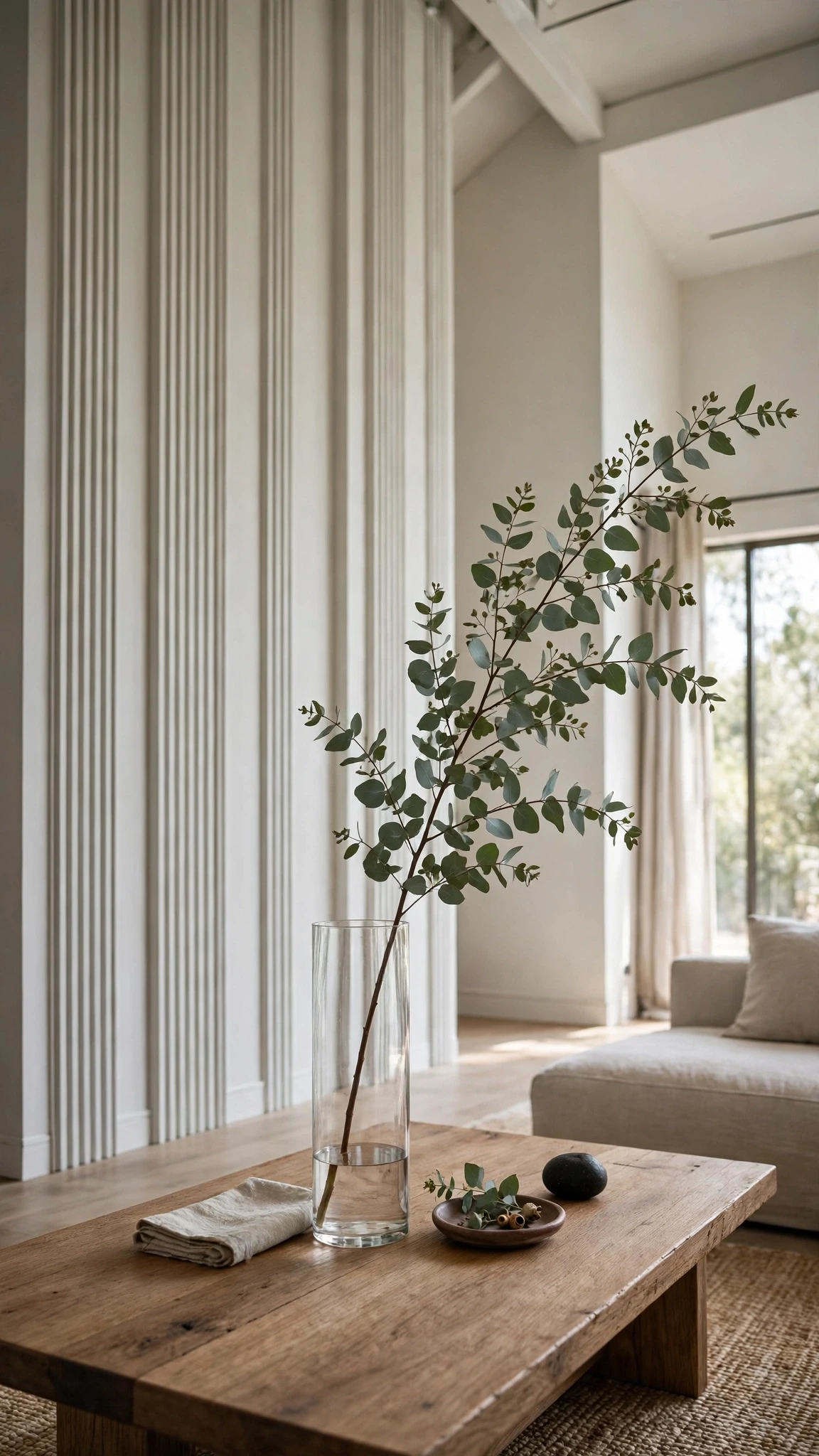
One long branch in a tall vase creates drama with almost no effort, because the height draws the eye upward and the bare or budding stem adds a sculptural line to the room. Cut a branch from the garden, or buy a faux one that looks real, and let it lean slightly instead of standing stiffly straight. This idea shines on tall tables and in rooms with high ceilings, where low arrangements can disappear.
- Branch sources: garden cuttings, eucalyptus, or curly willow
- Vase height: the vase should be at least a third of the total height
- Lean trick: let the branch angle gently for a natural look
- Season swap: bare branches in winter, budding ones in spring
25. A Sculptural Piece That Starts Conversations
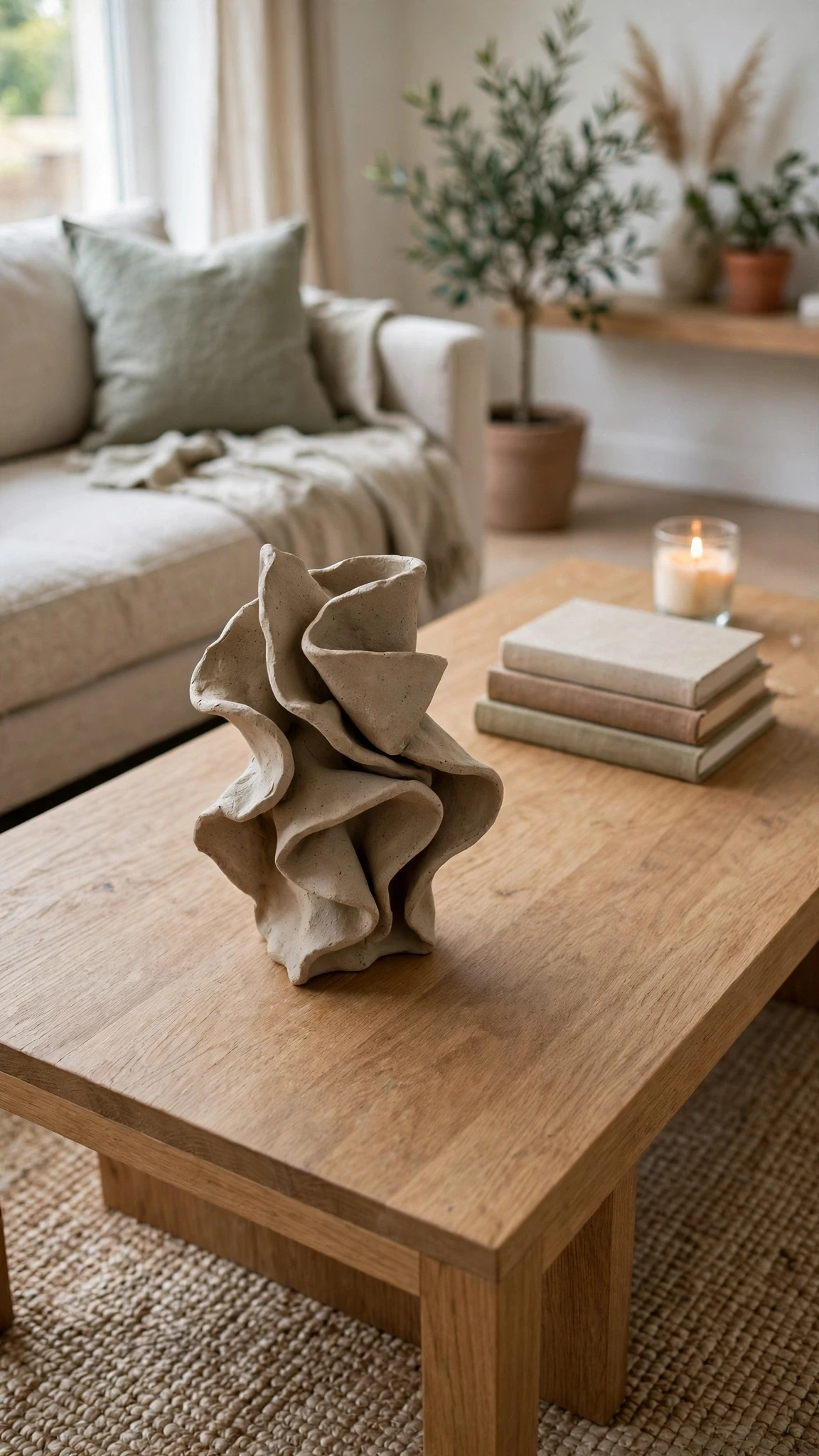
A single sculptural object, like a carved figure, an abstract form, or a handmade ceramic piece, gives the table a personality that no stack of books can match. Guests notice it, ask about it, and remember it, which is exactly what a centerpiece should do. Choose a piece with a shape you love rather than one that matches the room perfectly, and give it space so it can be seen from every seat.
- Piece pick: one object with a strong shape or handmade feel
- Space rule: leave clear space around it so it reads as the star
- Story value: pieces from travels or makers spark conversation
- Scale check: the piece should be smaller than a shoebox on most tables
26. Clear Glass That Keeps a Small Table Feeling Open
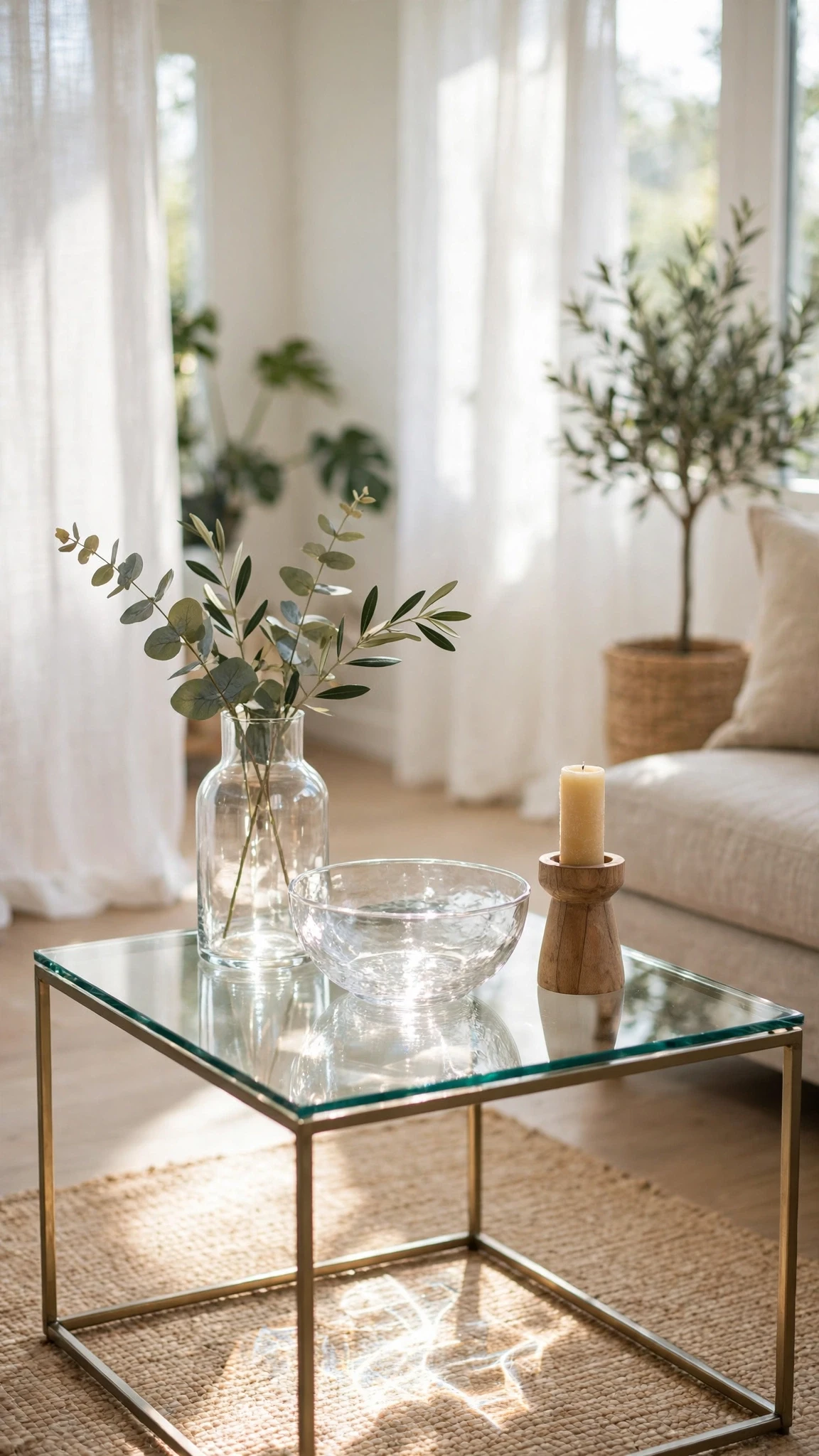
Clear glass objects, like a glass vase, a glass bowl, or a glass tray, add sparkle without visual weight, which makes them perfect for small tables that would feel crowded with solid pieces. Light passes through glass, so the table looks open even when it holds several objects. Pair glass with one warm material, like wood or brass, so the arrangement does not feel cold.
- Glass picks: a clear vase, a footed bowl, or a glass tray
- Warm partner: one wood or brass piece stops the lookfrom feeling icy
- Small table win: glass keeps sightlines open across the room
- Cleaning note: glass shows fingerprints, so wipe it weekly
27. Brass Accents for a Warm Metallic Glow
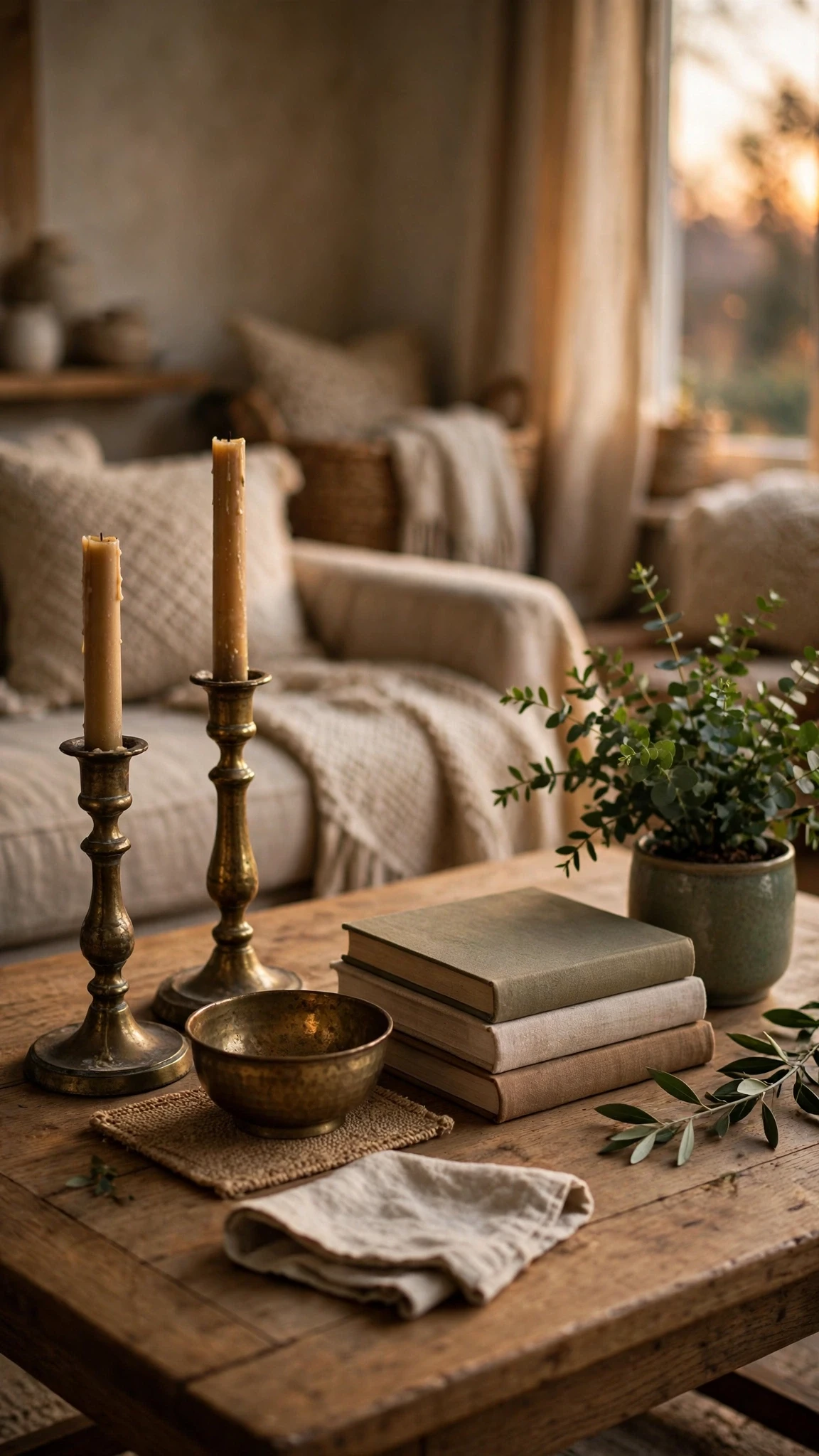
Brass brings a warm, golden glow to a coffee table, and it pairs beautifully with wood, leather, and deep green plants. A brass tray, a pair of candlesticks, or a small brass bowl adds a touch of polish without the formality of silver. Use brass in small doses, one or two pieces, so the glow feels warm rather than flashy, and let the metal age naturally for a softer patina.
- Dose rule: one or two brass pieces per table, not a full set
- Pairing picks: brass with wood, leather, or dark green plants
- Finish choice: aged brass looks softer than bright polished brass
- Cleaning tip: leave the patina alone unless you prefer a bright shine
28. Black and White Contrast for a Crisp Look
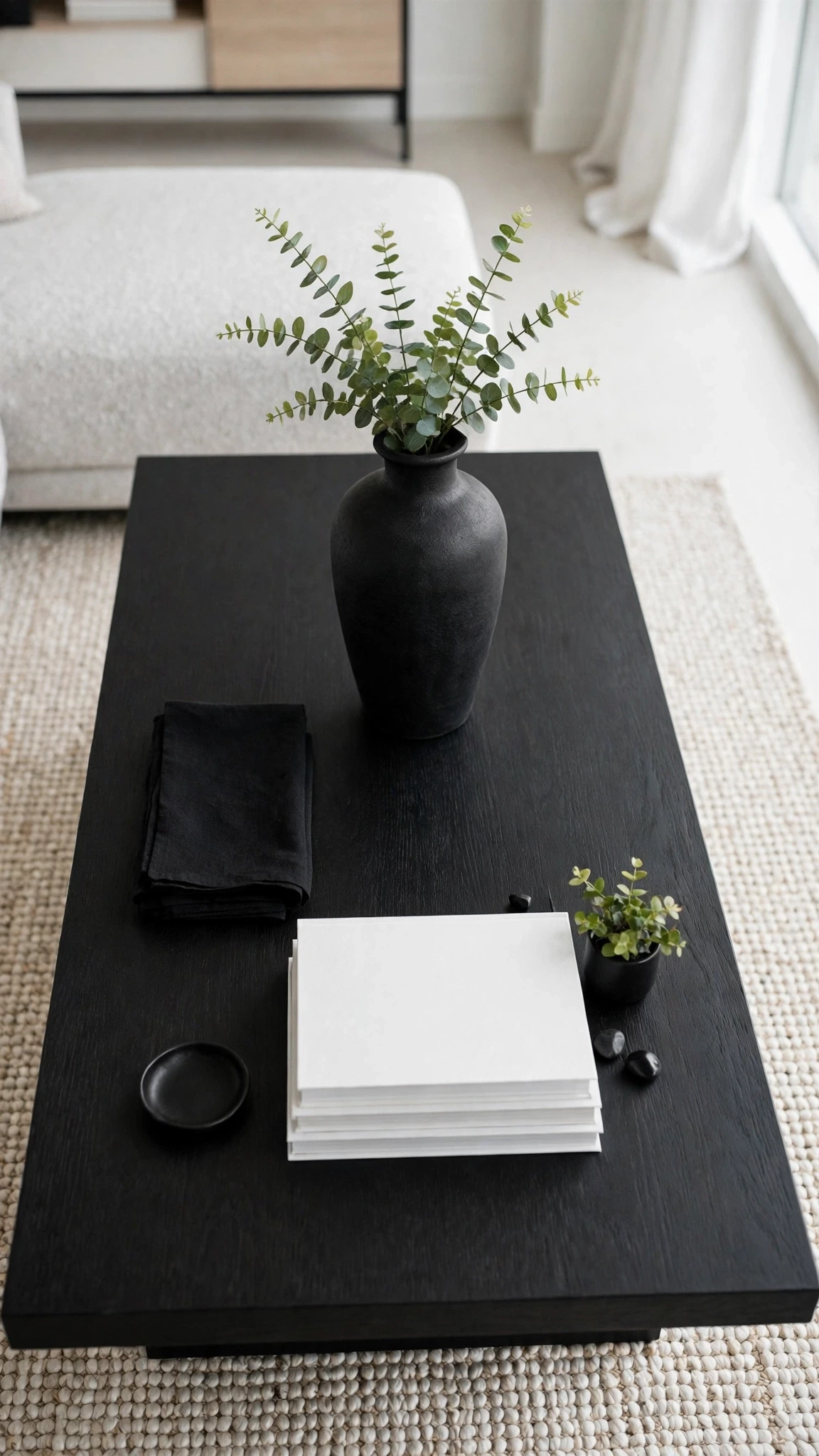
A black and white arrangement feels crisp and modern, and it works in nearly any room because the contrast itself is the decoration. Pair a black vase with white books, or a white bowl on a black tray, and let the two tones sharpen each other. Add one natural texture, like wood or a green plant, so the scheme feels warm rather than stark.
- Contrast pair: black vase with white books, or the reverse
- One texture: wood, rattan, or a plant softens the graphic look
- Pattern limit: one patterned piece at most, the rest solid
- Room fit: this scheme suits modern, minimal, and monochrome rooms
29. A Shell or Stone Piece for Coastal Calm
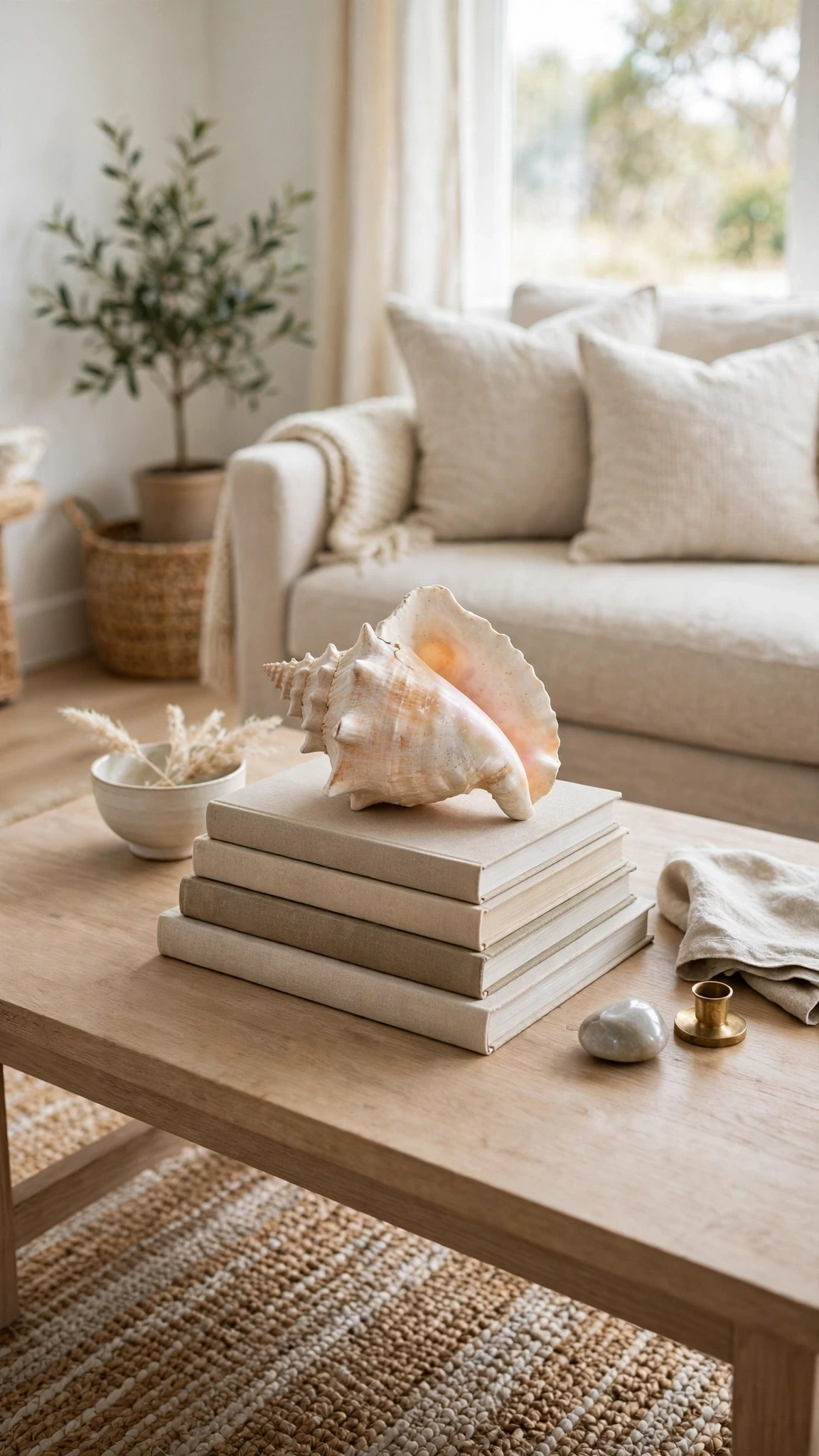
A large shell, a smooth stone, or a piece of driftwood brings a calm, coastal feeling to the table, and its organic shape softens all the straight lines of furniture. Place it on a stack of books or in a shallow bowl, and let its natural texture be the focus. This idea suits beach-inspired rooms, but it also calms a busy modern room with a touch of nature.
- Piece pick: one large shell, smooth stone, or driftwood fragment
- Display base: books or a shallow bowl; lift it above the surface
- Texture partner: linen or woven fiber echoes the natural feel
- One only: a single natural piece reads calm; a collection reads busy
30. A Beaded Garland Draped Over Books
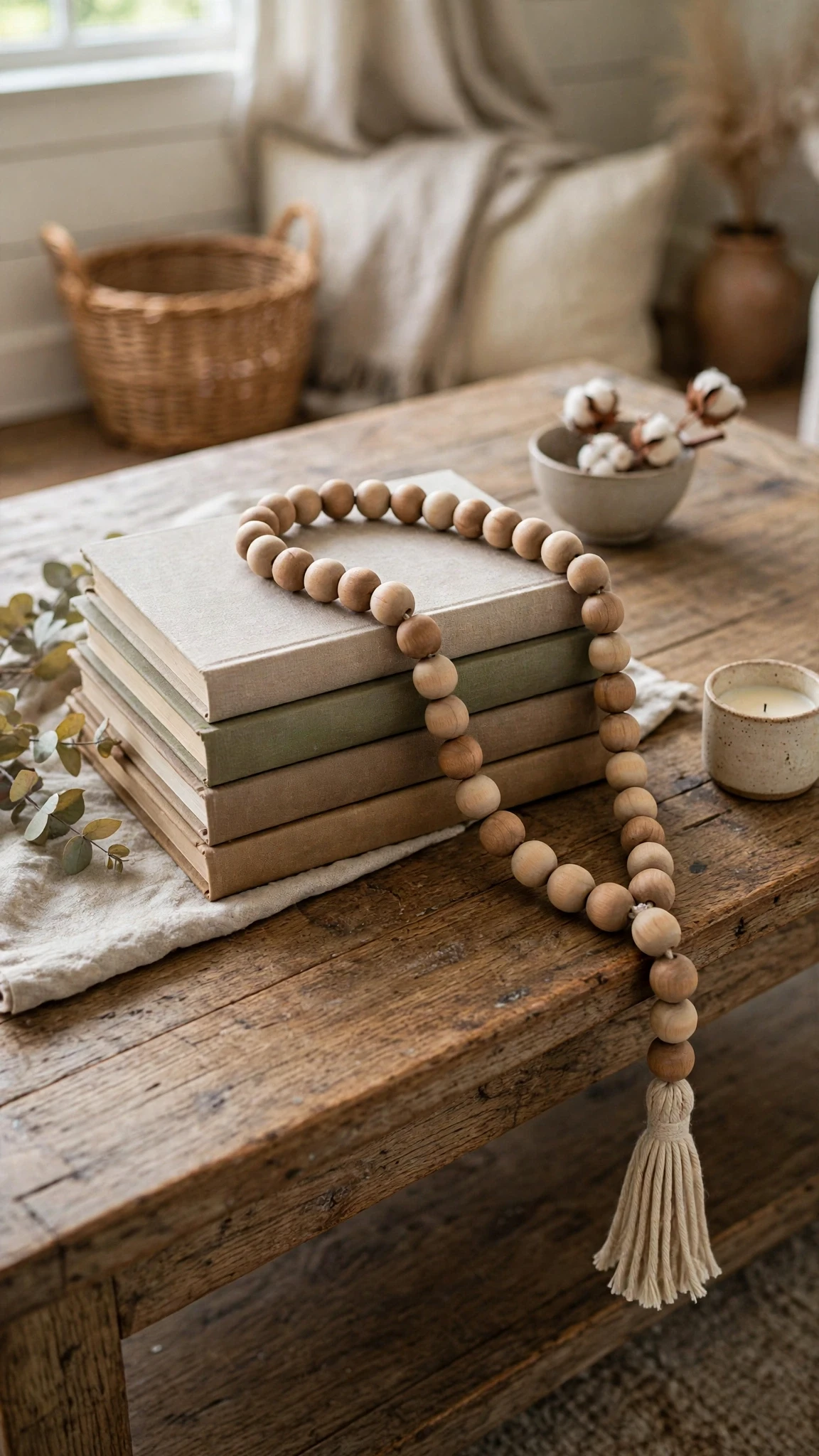
A wooden beaded garland draped loosely over a stack of books adds a soft, handmade touch that makes a formal stack feel relaxed. The beads catch light, add a gentle curve, and give the arrangement a finished feeling without adding bulk. Choose natural wood beads for a farmhouse feel, or painted beads to echo a color in the room, and let the tassel hang over the edge of the stack.
- Bead pick: natural wood for warmth, painted beads for a color echo
- Drape rule: let the garland fall naturally, never coil it tightly
- Stack partner: books, a tray edge, or a bowl rim all suit a garland
- Tassel tip: let the tassel hang free over the stack’s edge
31. A Handcrafted Chain Link as a Soft Statement
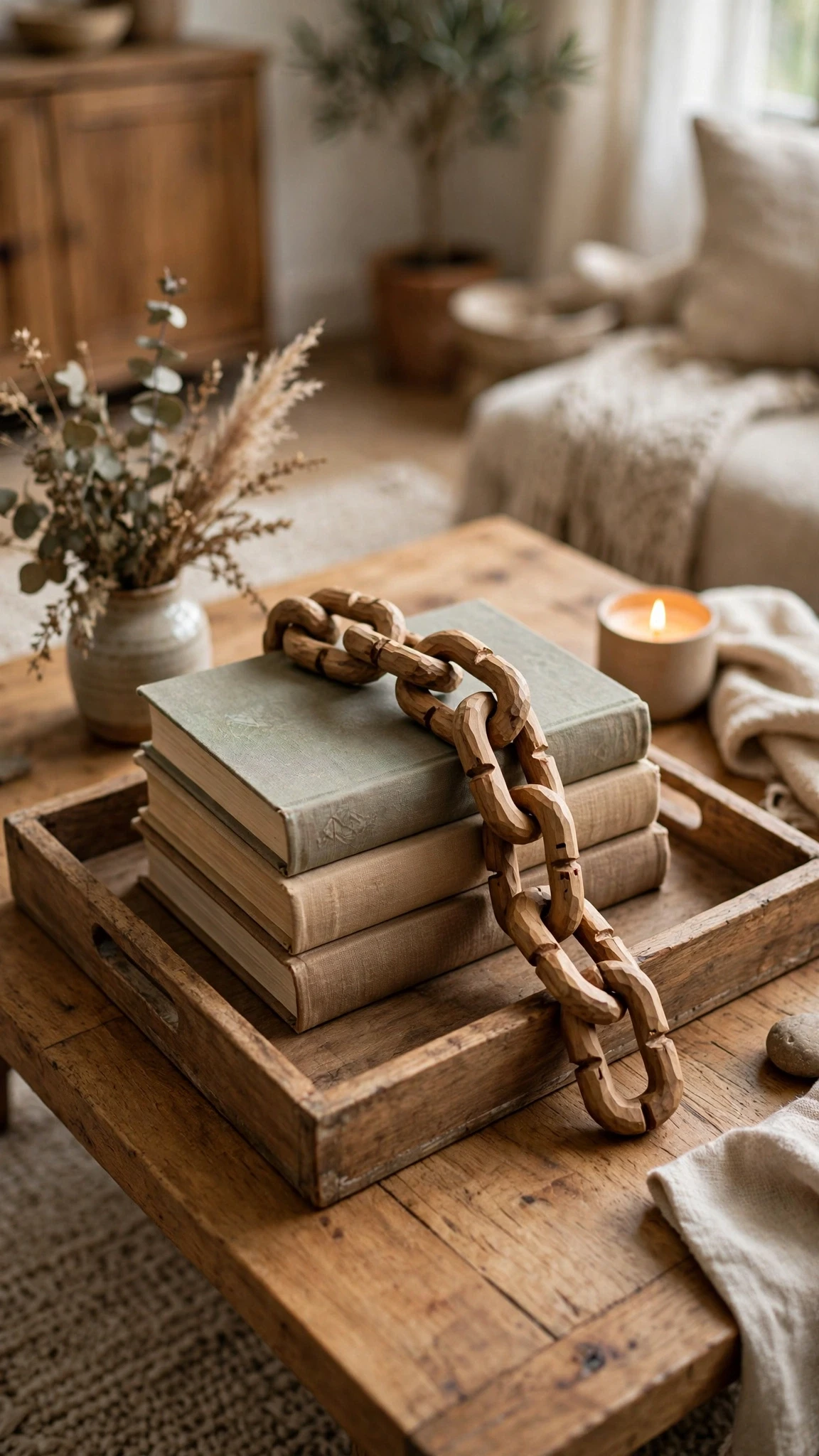
A hand-carved wooden chain link laid across books or inside a tray adds a warm, crafted feeling that mass-produced decor rarely achieves. The linked shape draws the eye along the table, and the wood tone connects with other natural pieces in the room. This piece works best as a quiet accent rather than the star, so pair it with a simple stack or tray and let it add texture.
- Placement: draped over books or coiled loosely in a tray
- Wood tone: match the chain to the table or tray wood for harmony
- Quiet role: let it be the texture, not the tallest piece
- Handmade value: small carving marks prove it was made by hand
32. Candles at Three Heights for Evening Glow
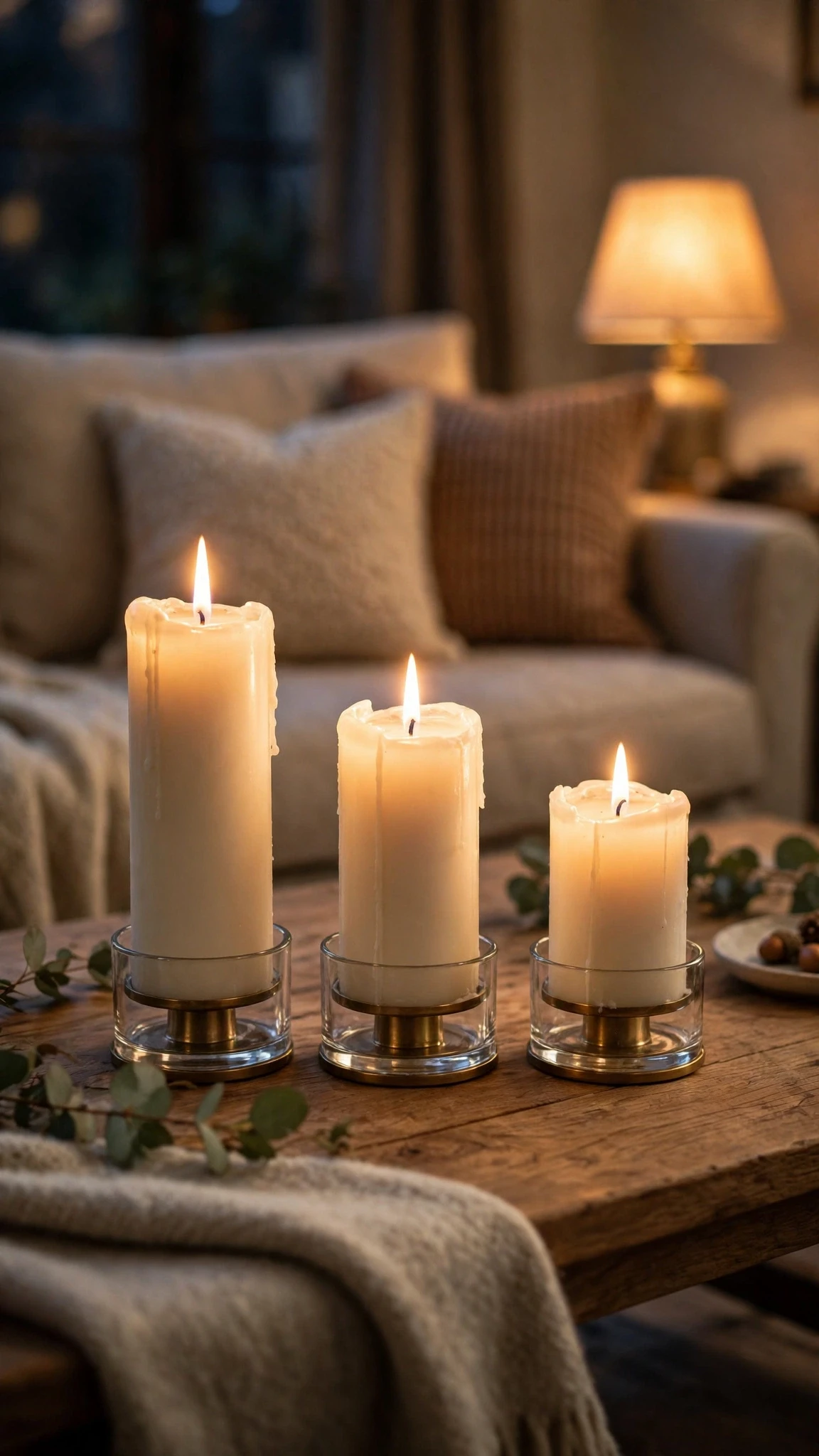
Candles at three heights turn an ordinary evening into a warm one, because the staggered flames create layers of light that a single candle cannot match. Use pillar candles on holders of different heights, or mix pillar, votive, and taper candles in a safe grouping. Keep the tallest candle away from curtains and the grouping away from the table edge, and you have instant atmosphere for very little money.
- Height set: tall pillar, medium pillar, and a low votive
- Holder mix: same material holders tie the group together
- Safety rule: never leave burning candles unattended; keep clear of fabric
- Scent tip: one scented candle per group avoids a muddled smell
33. A Lantern That Works Day and Night
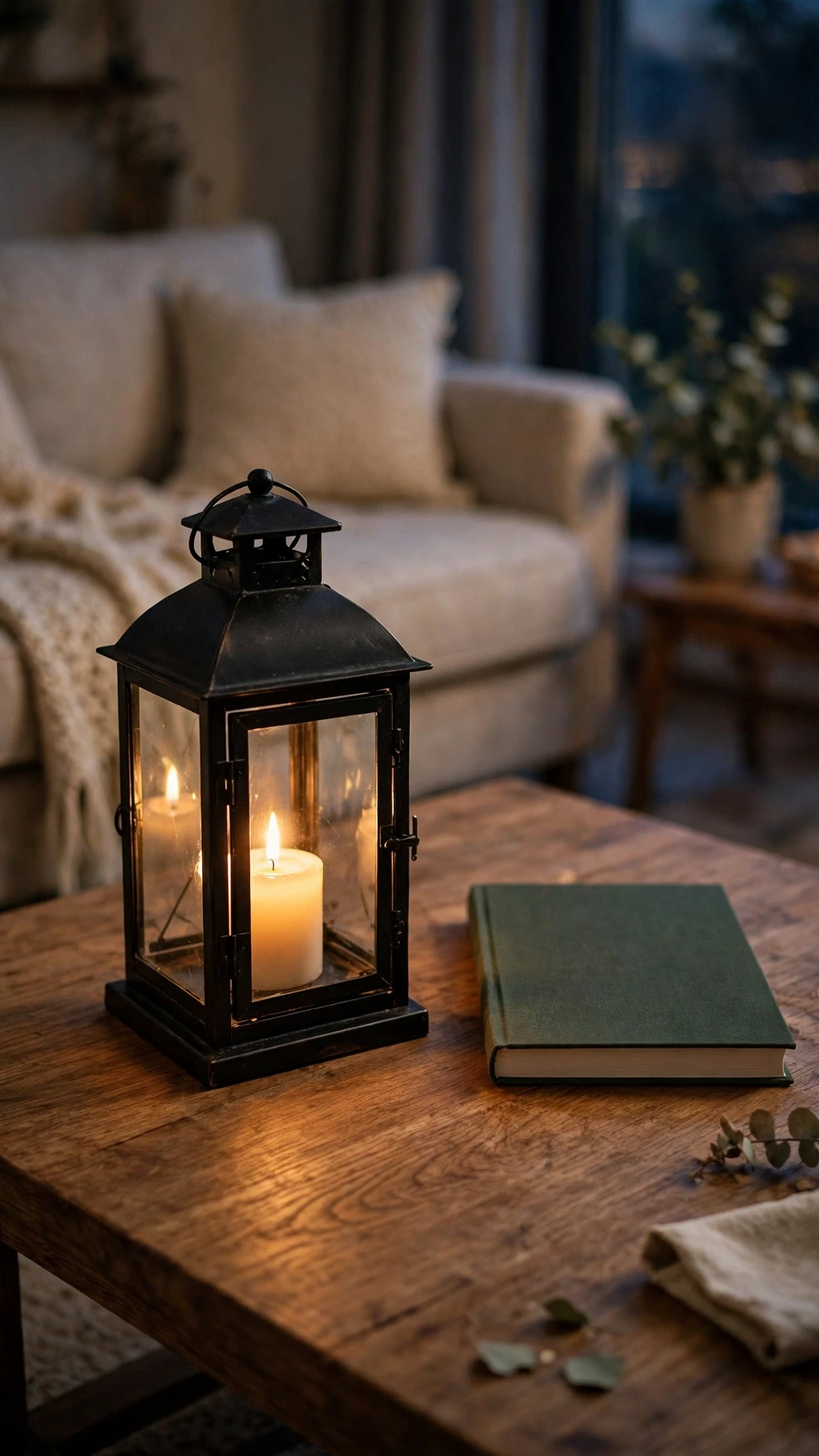
A lantern earns its place twice: by day it is a pretty object with glass panels and a metal frame, and by night it holds a candle that glows through the glass. Choose a lantern sized to the table, not a floor lantern squeezed onto it, and place it where its light will fall on the seating area. A lantern also protects the flame from drafts, which makes it a practical pick in homes with ceiling fans or open windows.
- Size rule: the lantern should be under twelve inches tall for most tables
- Candle inside: a pillar candle or a flameless candle both work
- Frame pick: black metal suits modern rooms, brass warms traditional ones
- Day role: the lantern still looks good unlit as a sculptural piece
34. A Diffuser Tucked Into the Arrangement
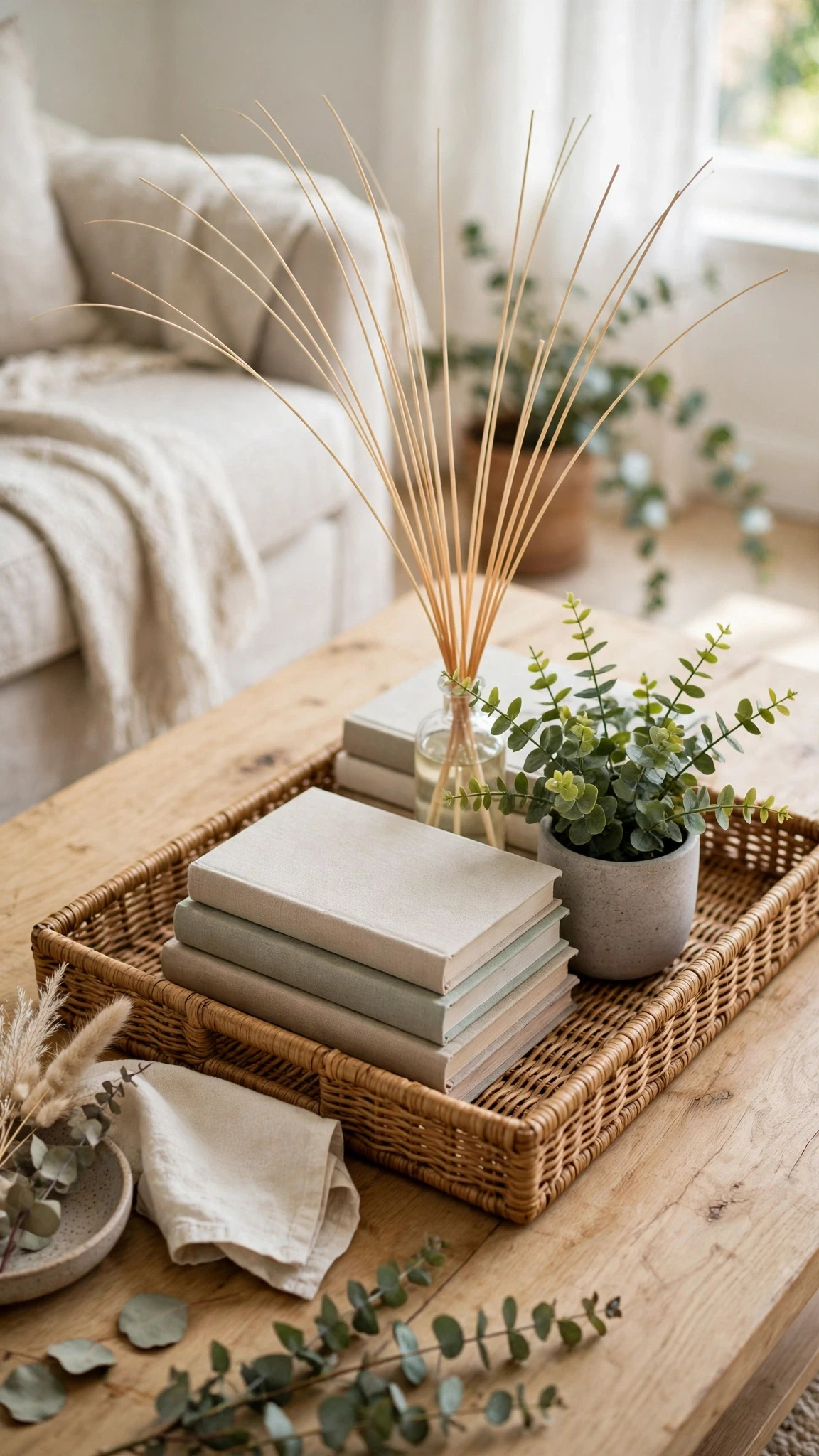
A reed diffuser can make your living room feel welcoming while also working as a decorative accessory. Its bottle and slender reeds introduce another shape to the coffee table, and the fragrance adds an experience that goes beyond visual styling. Scents such as cedar, citrus, or lavender can create different moods depending on your preference.
Place the diffuser inside a tray so any accidental spills do not damage the tabletop. Choose a bottle that complements your other accessories instead of one with overly decorative packaging. Keep it away from direct sunlight, heat sources, and areas where children or pets could knock it over.
- Bottle style: Choose glass or ceramic that suits your decor.
- Scent selection: Try cedar, citrus, or lavender.
- Placement: Keep it upright on a stable tray.
- Practical detail: Follow the product’s safety and care instructions, especially around pets and children.
35. Fairy Lights in a Jar for a Gentle Evening Sparkle
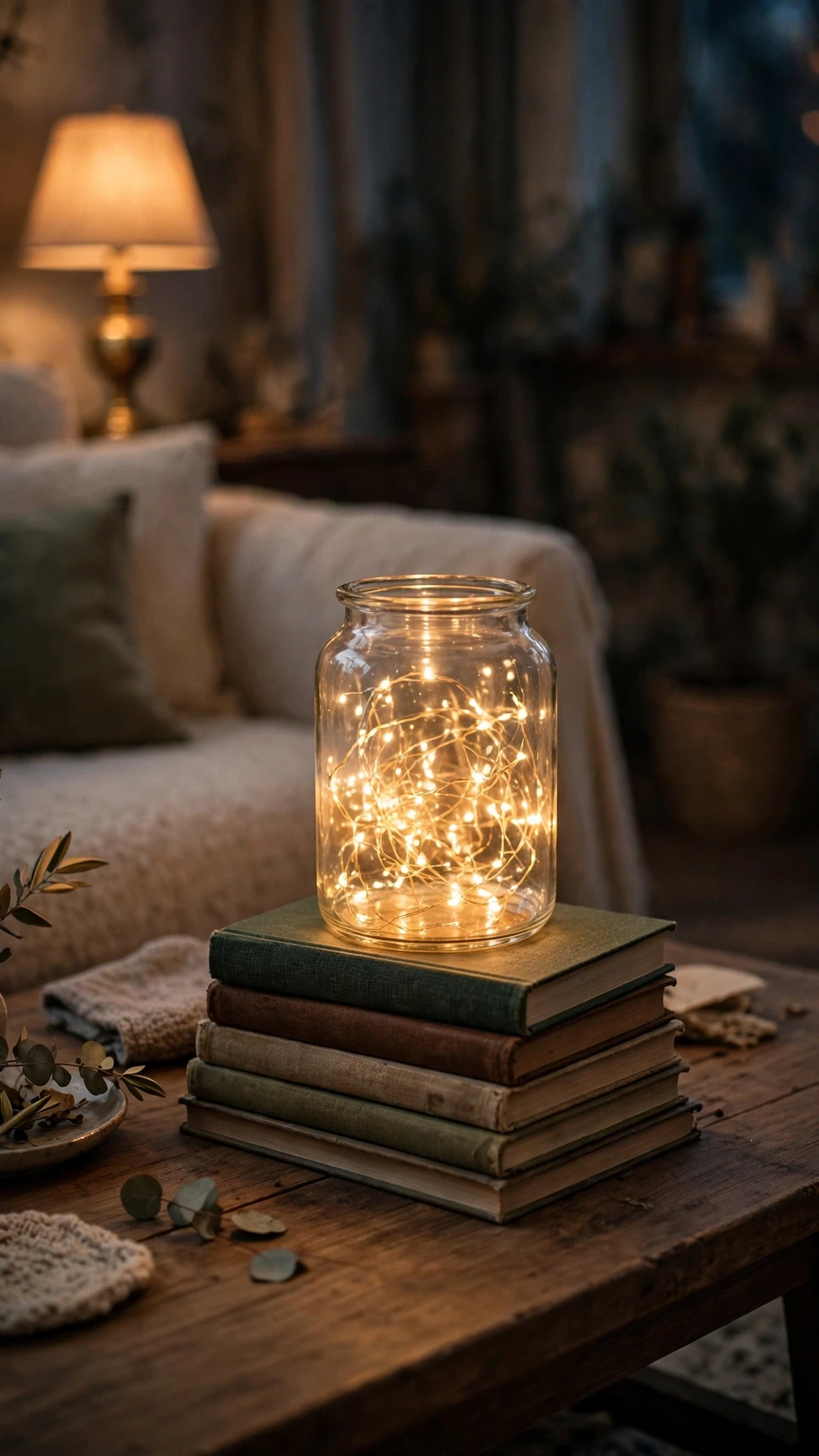
A jar of fairy lights gives the table a gentle sparkle in the evening without the fuss of candles, and it delights kids and adults alike. Use a battery-operated string in a clear jar, and set the jar on a tray or a stack of books so the light sits at eye level from the sofa. The glow is soft enough for conversation, and the jar itself looks charming by day when the lights are off.
- Light type: warm white fairy lights feel cozier than bright white
- Jar pick: a clear mason jar or a simple glass canister
- Battery spot: hide the battery pack behind the jar or under books
- Timer tip: a timer plug saves you switching the lights nightly
36. A Game Ready for Family Night
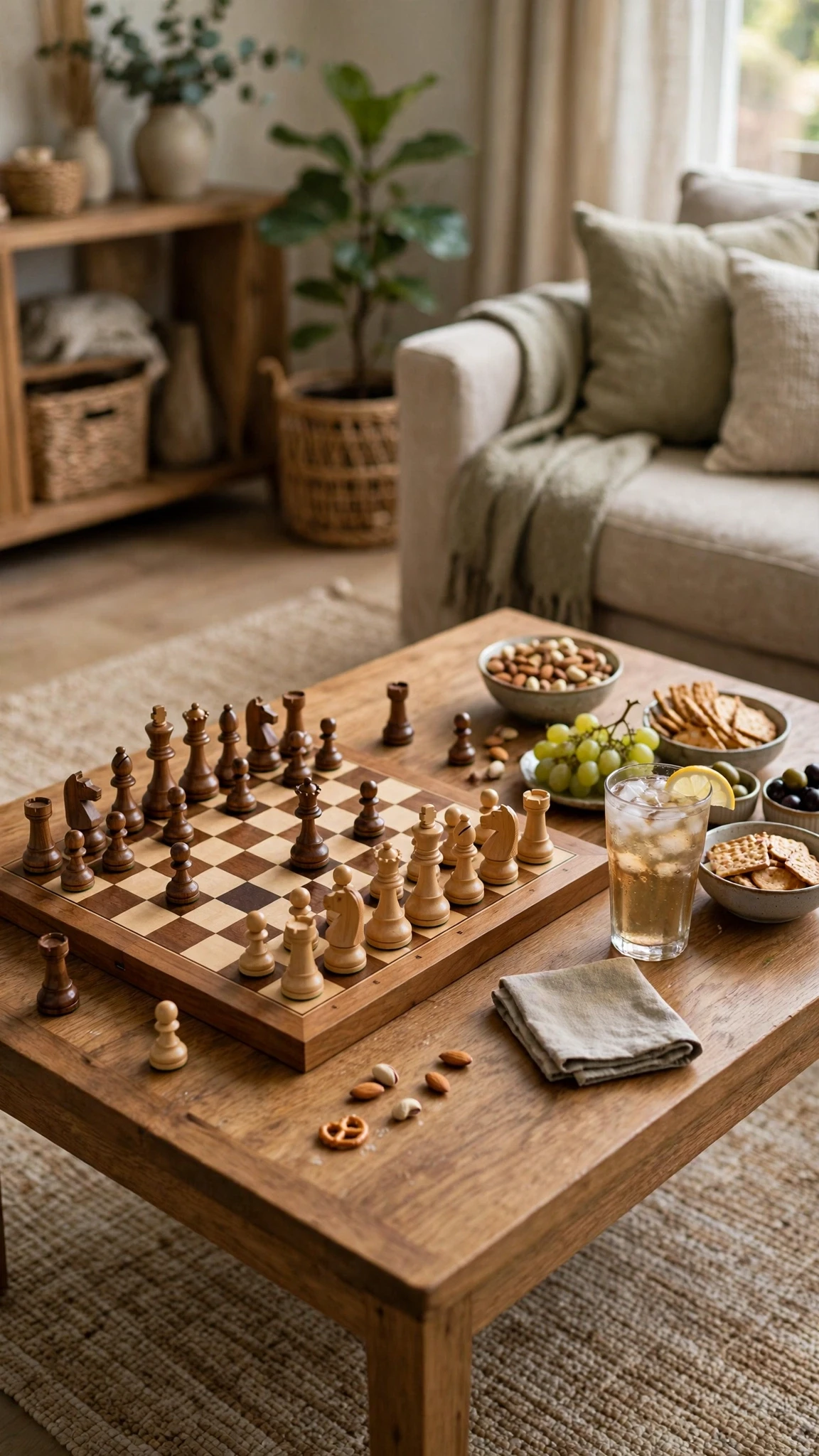
A board game left out on the coffee table is an invitation, and it makes the living room feel like a place where people actually gather. Choose a game with a beautiful box or board, like chess, Scrabble, or a favorite card game, and place it where it can stay without blocking the whole table. When game night comes, everything is already in place, and when it is over, the box slides back into its spot.
- Game pick: a game with a handsome box or board doubles as decor
- Placement: one end of the table, leaving room for snacks and drinks
- Storage trick: keep the game in a tray so it moves aside easily
- Family win: a visible game gets played more than one on a shelf
37. A Collection That Shows What You Love
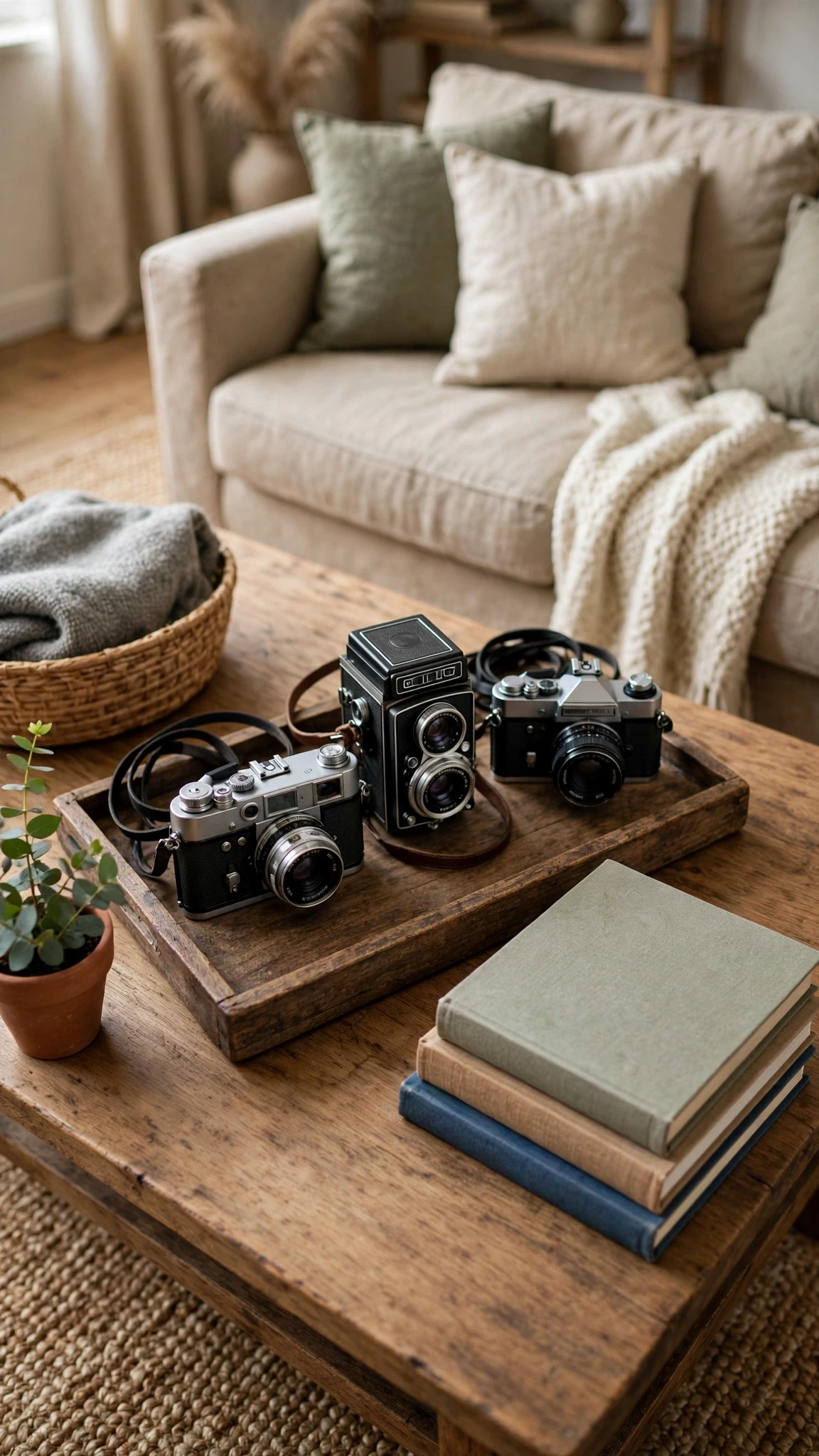
A small collection on the coffee table, whether it is vintage cameras, ceramic birds, or stones from favorite walks, tells guests who you are in a way that generic decor never can. Limit the collection to three or four pieces so it reads as curated rather than cluttered, and group them on a tray or a stack of books. Rotate the display now and then so the table always feels fresh without buying anything new.
- Piece limit: three or four items, grouped tightly on a tray or books
- Theme rule: one clear theme ties the collection together
- Rotation habit: swap pieces seasonally from a shelf or cabinet
- Personal test: if a piece has no story, leave it off the table
38. A Vintage Find With a Story to Tell
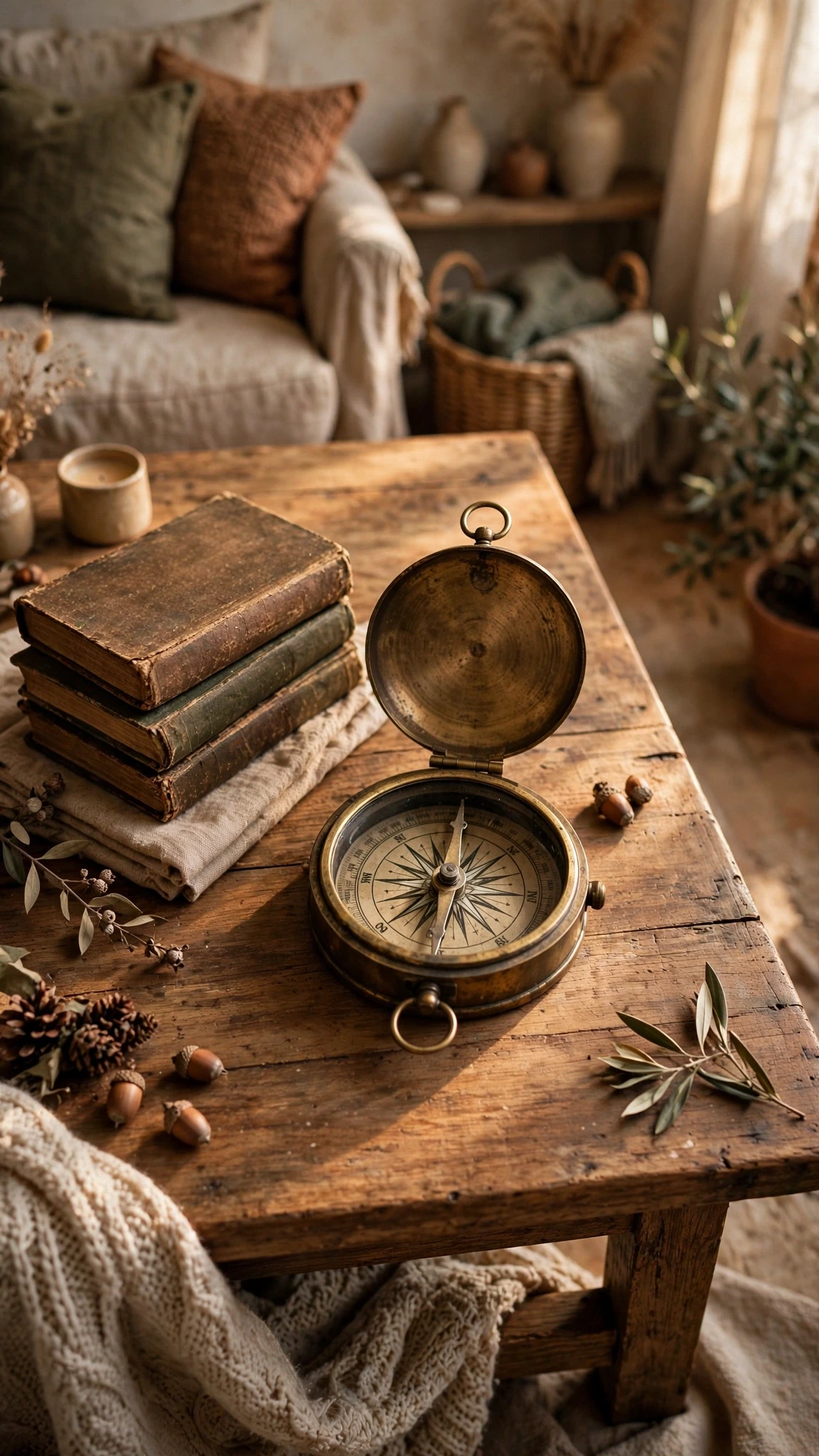
A vintage find, like an old clock, a brass compass, or a flea market vase, brings character to a table full of new furniture, because its age and wear add depth that new pieces lack. Place it where guests can see it up close, and let it be the one piece people ask about. One vintage piece is enough; a table full of antiques can feel like a shop rather than a home.
- Find pick: one piece with visible age, patina, or a maker’s mark
- Placement: near the center or the seating side for easy viewing
- One only: a single vintage piece reads special; many read cluttered
- Care note: check old pieces for sharp edges or loose parts
FAQS
What should you put in the center of a coffee table?
Put a low grouping in the center: a tray or stack of books as the base, one medium piece like a plant or vase, and a candle for warmth. Keep the tallest piece below your seated sightline so conversation flows across the table, and leave clear space on at least one side for cups and remotes.
How many items should be on a coffee table?
Three to five pieces usually look best, grouped in odd numbers so the eye reads them as one arrangement. A tray counts as the container, not an item, so a tray plus three objects still feels calm. On small tables, three pieces are plenty, while large tables can handle five without looking crowded.
How do you style a round coffee table?
Use a round tray or a circular grouping that echoes the table’s shape, with one tall piece in the middle and lower pieces around it. Avoid long rectangular trays, which fight the curve. Leave the outer edge clear for cups, and let the arrangement sit slightly off center for a relaxed, natural feel.
How do you style a small coffee table without clutter?
Choose one tray that covers no more than half the table, and limit the display to three pieces: a candle, a tiny plant, and a stack of coasters. Keep at least half the surface empty for daily use, use a tall, thin candle for height without a footprint, and remove anything that has not earned its place.
What is the best tray for a coffee table centerpiece?
The best tray depends on your room: wood warms a cool space, mirrored trays brighten dark corners, rattan adds texture to neutral rooms, and metal sharpens a soft palette. Size matters most, so pick a tray covering about a third to half of the tabletop, with handles if you need to move it often.
How do you keep a coffee table centerpiece practical for everyday use?
Build the arrangement on a movable tray so you can lift the whole display aside in seconds, and keep one third of the table permanently clear for cups, remotes, and books. Use coasters inside the tray, skip fragile pieces at toddler height, and choose items you enjoy using, not just looking at.
How often should you change coffee table decor?
Refresh the table with the seasons, about three or four times a year, by swapping just two or three pieces like the candle scent, vase stems, or a tray. The base arrangement can stay all year. Small swaps keep the table feeling current without a full restyle or new purchases.
Conclusion
A beautiful coffee table is not about filling every inch with expensive decorations. It is about choosing a few pieces that work together through color, texture, height, and personal meaning. These 45 coffee table centerpiece ideas offer plenty of inspiration, whether you prefer natural greenery, decorative books, elegant trays, seasonal accents, or simple budget-friendly arrangements.
Start with what you already have at home. Add a tray or a stack of books, introduce one interesting decorative piece, and leave enough room for everyday use. With a little creativity and thoughtful styling, even a simple coffee table can become one of the most inviting details in your living room.