
13 Indoor House Plants Decor Ideas to Refresh Every Room
Indoor plants do more than fill an empty corner. The right plant in the right spot can soften a hard room, add colour to plain walls, and make a home feel calm and lived in. You do not need dozens of plants to get that feeling. A few well-placed plants, styled with care, can change a whole room.
These 13 indoor house plants decor ideas work in real homes, big or small. Each one shows you where to place your plants, which plants suit the spot, and how to keep the look neat instead of cluttered. Start with one idea, see how it feels, and add more as you grow confident.
1. Living Room Plant Corner Retreat

Pick one empty corner in your living room and turn it into a green retreat. Group three to five plants of different heights together. Put a tall plant like a fiddle leaf fig at the back, medium leafy plants in front, and one trailing plant at the edge. The mix of heights and leaf shapes gives the corner depth and makes it look styled, not random.
Keep the pots in similar colours but different textures, such as woven baskets, ceramic, and stone. Leave a few inches between pots so each plant has room to breathe. Place the group near natural light, and add a small stool or floor cushion beside it to make the corner feel like a place to sit and relax.
2. Cascading Plants on Open Shelves

Open shelves can look bare when they hold only books and objects. Trailing plants fix that fast. Pothos, string of pearls, and heartleaf philodendron spill over shelf edges and add soft movement to the wall. Put trailing plants on the upper shelves and let the vines hang down at uneven lengths for a natural look.
Do not fill every shelf with greenery. Leave some empty space between plants, books, and candles so the shelves look styled on purpose. Too many plants on one shelf can look messy, especially in a small room. Two or three trailing plants across a whole shelf unit is usually enough.
3. Sunny Window Plant Display
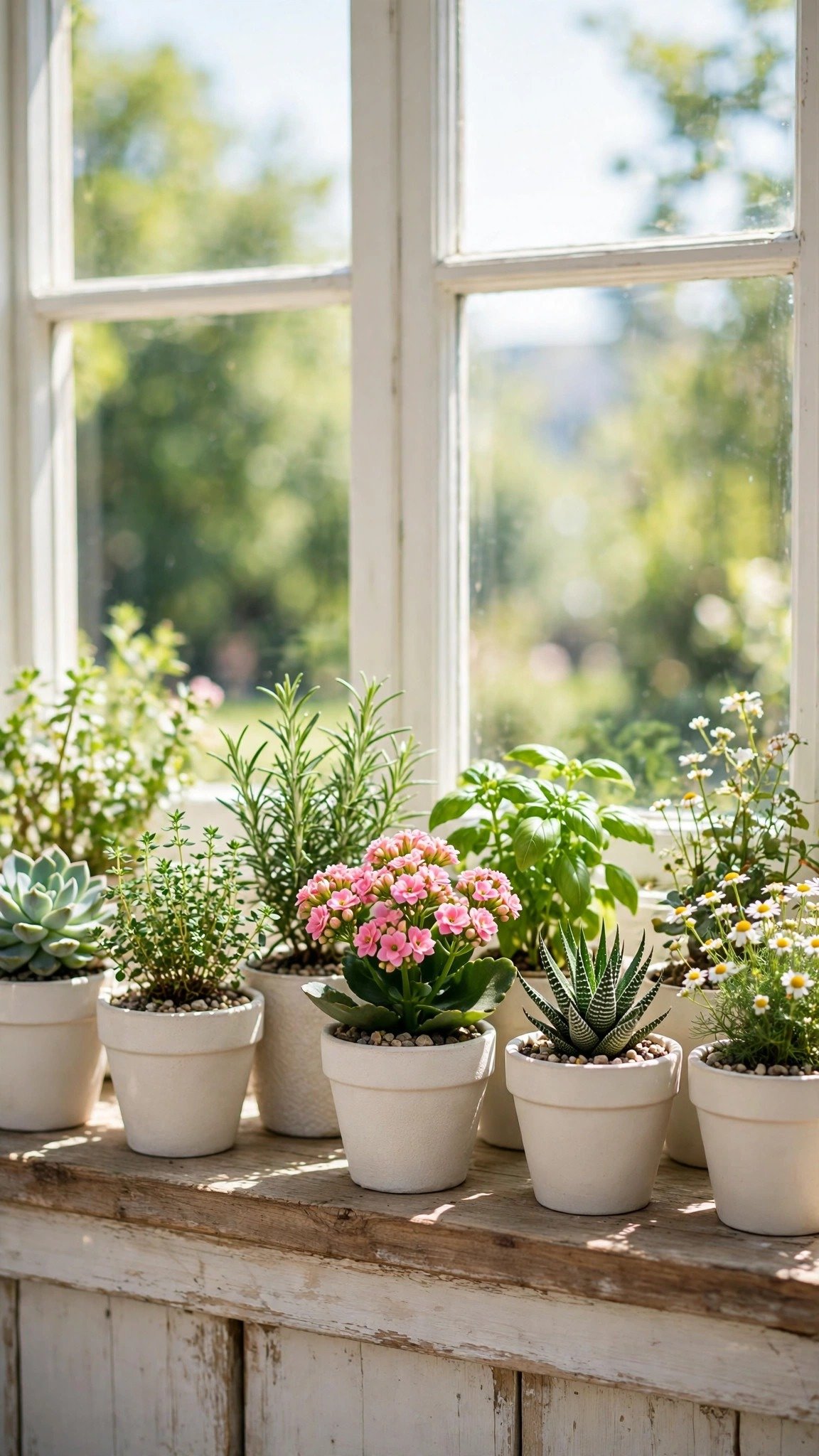
A sunny window is one of the best spots for indoor plants, and it is often left empty. Layer small succulents, herbs, and flowering plants along the sill in pots of different heights. Taller plants work well at the ends, with smaller ones in front, so each plant still gets light.
Do not crowd every inch of the sill. Leave breathing room between pots so light reaches each plant and watering stays easy. Rotate the pots once a week so plants grow evenly instead of leaning toward the glass. Matching ceramic pots in one colour give the whole display a clean, finished look.
4. Hanging Plants for Vertical Interest
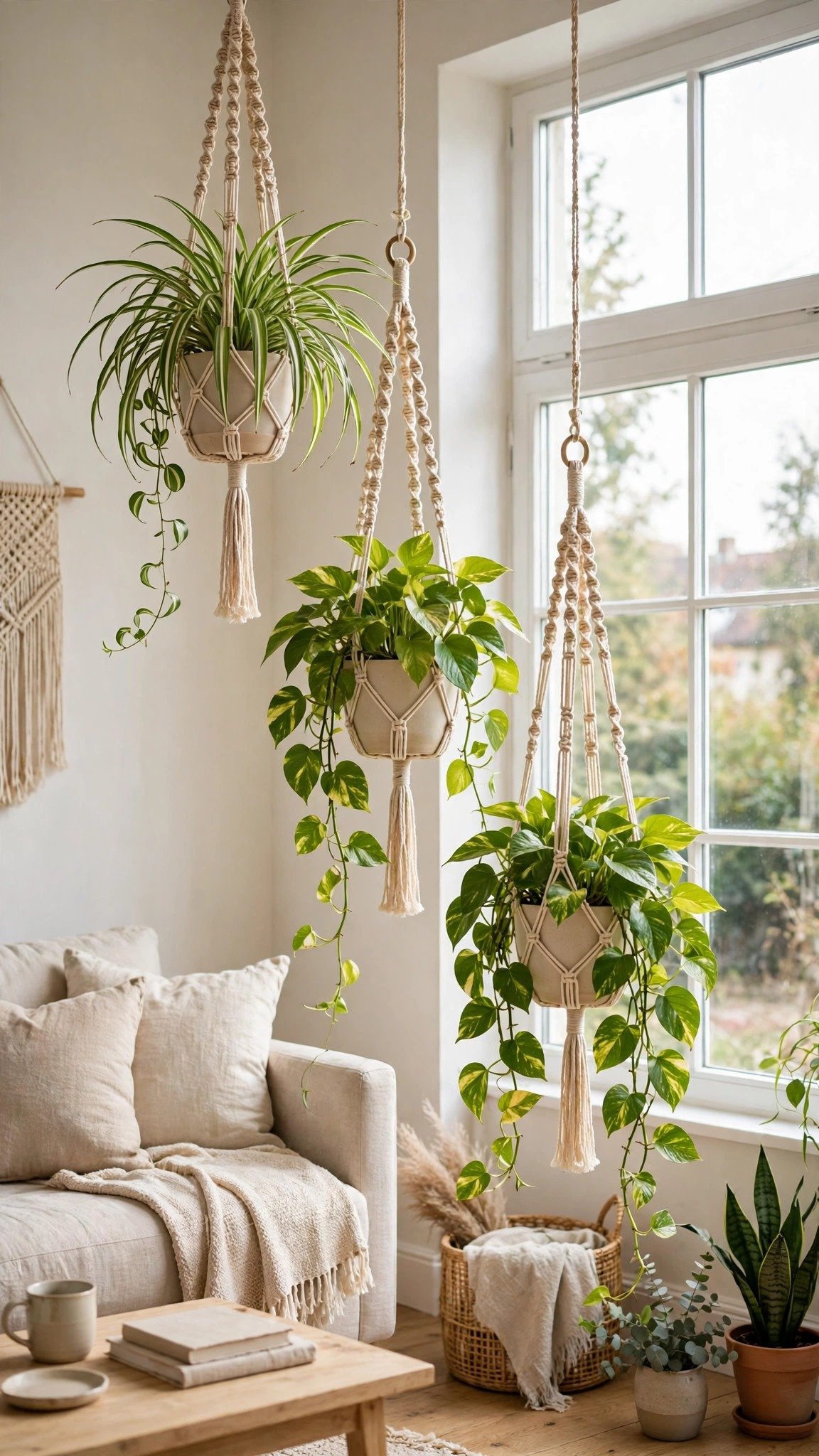
When floor space is tight, look up. Hanging plants draw the eye upward and make a room feel taller and larger. Spider plants, pothos, and ivy are good choices because they are forgiving and look full fast. Hang them near a window where they get bright, indirect light.
Hang two or three plants together at different heights instead of one alone. A small group looks planned and full, while a single plant can look lost. Keep hanging planters away from seats you use often, so watering does not drip on anyone. Use a tray inside each planter to catch extra water.
5. Bathroom Spa with Humidity-Loving Plants
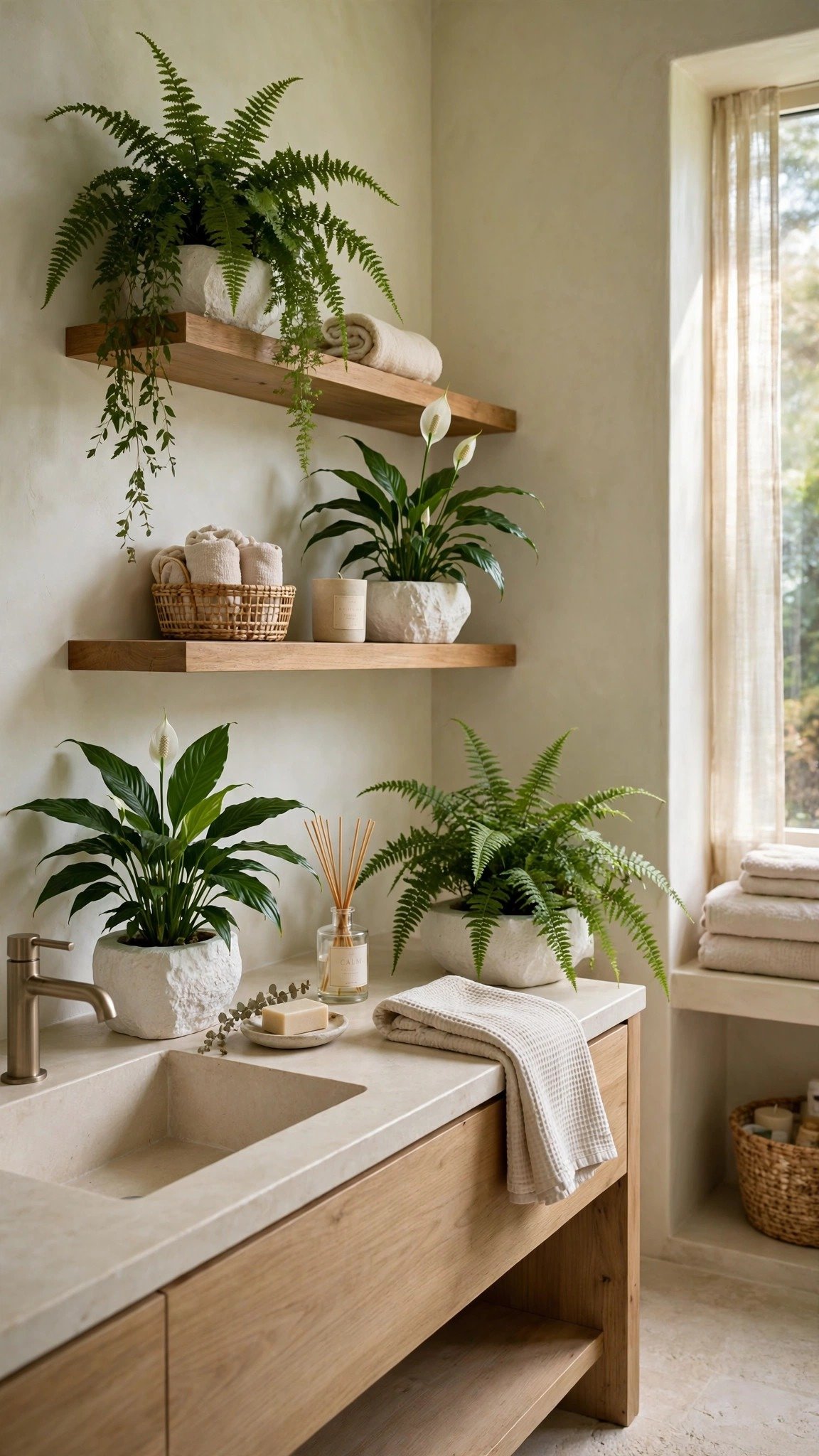
Bathrooms are perfect for tropical plants because the air stays humid after showers. Ferns, peace lilies, and orchids love that moisture and can turn a plain bathroom into a calm, spa-like space. Put them on the counter, a shelf, or the window ledge where they get soft, indirect light.
If your bathroom has no window, add a small grow light so the plants still get what they need. Choose white or natural stone pots to keep the spa feeling calm and clean. Just one or two plants are enough here. A crowded bathroom counter feels messy, not relaxing.
6. Large Statement Plant as a Focal Point
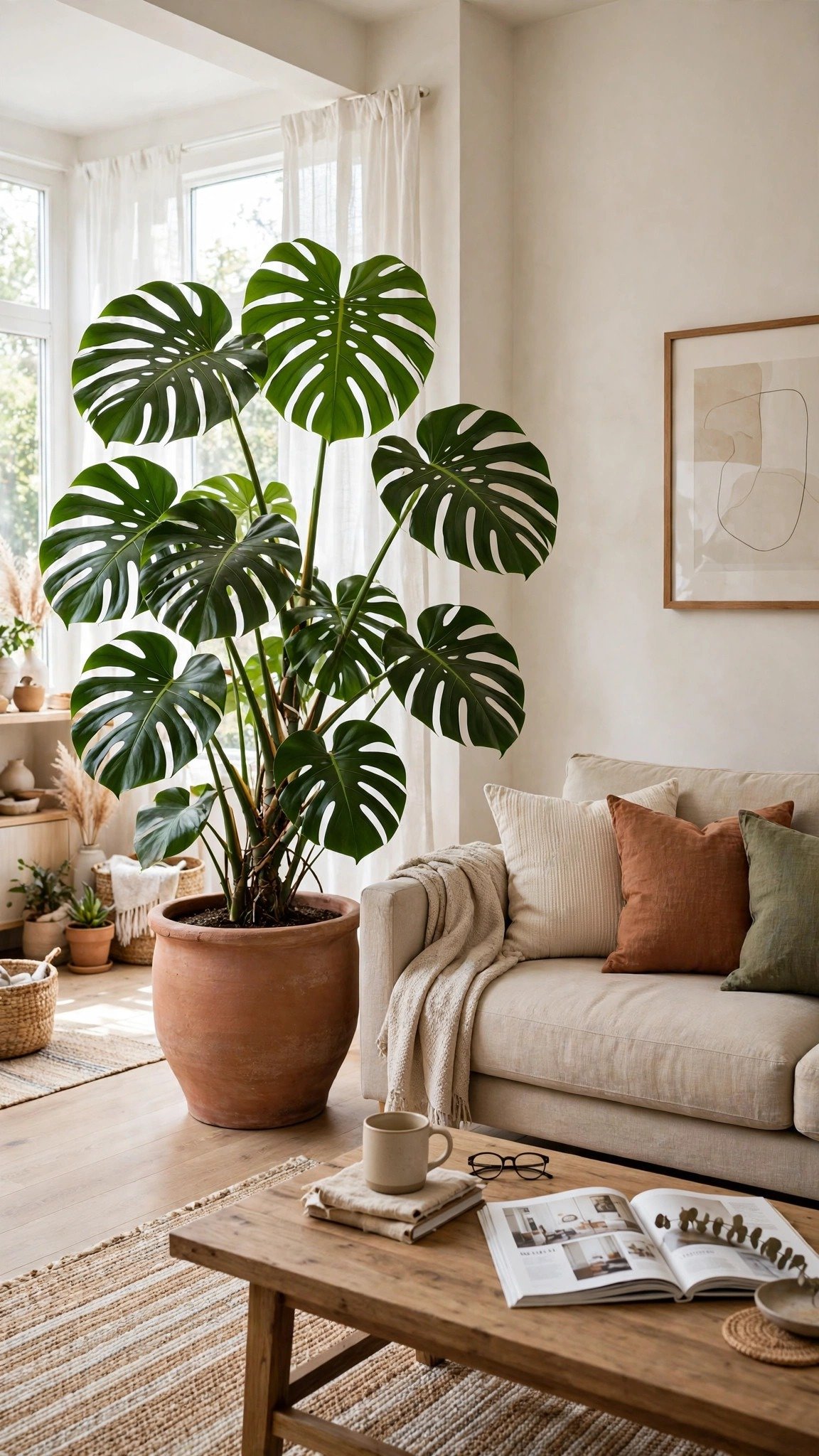
One big plant can do more than ten small ones scattered around a room. A bird of paradise, rubber tree, or monstera fills an empty corner and gives the eye somewhere to rest. Put it beside a sofa, near the fireplace, or in an awkward empty spot that never looked quite right.
Scale matters, so match the plant to the room. A giant plant can overwhelm a tiny room, while a small plant disappears in a large one. Give a statement plant an oversized pot and a saucer, and lift it slightly on a hidden riser so it stands a little taller. One strong plant, well placed, is all you need.
7. Dining Table Mini Plant Collection
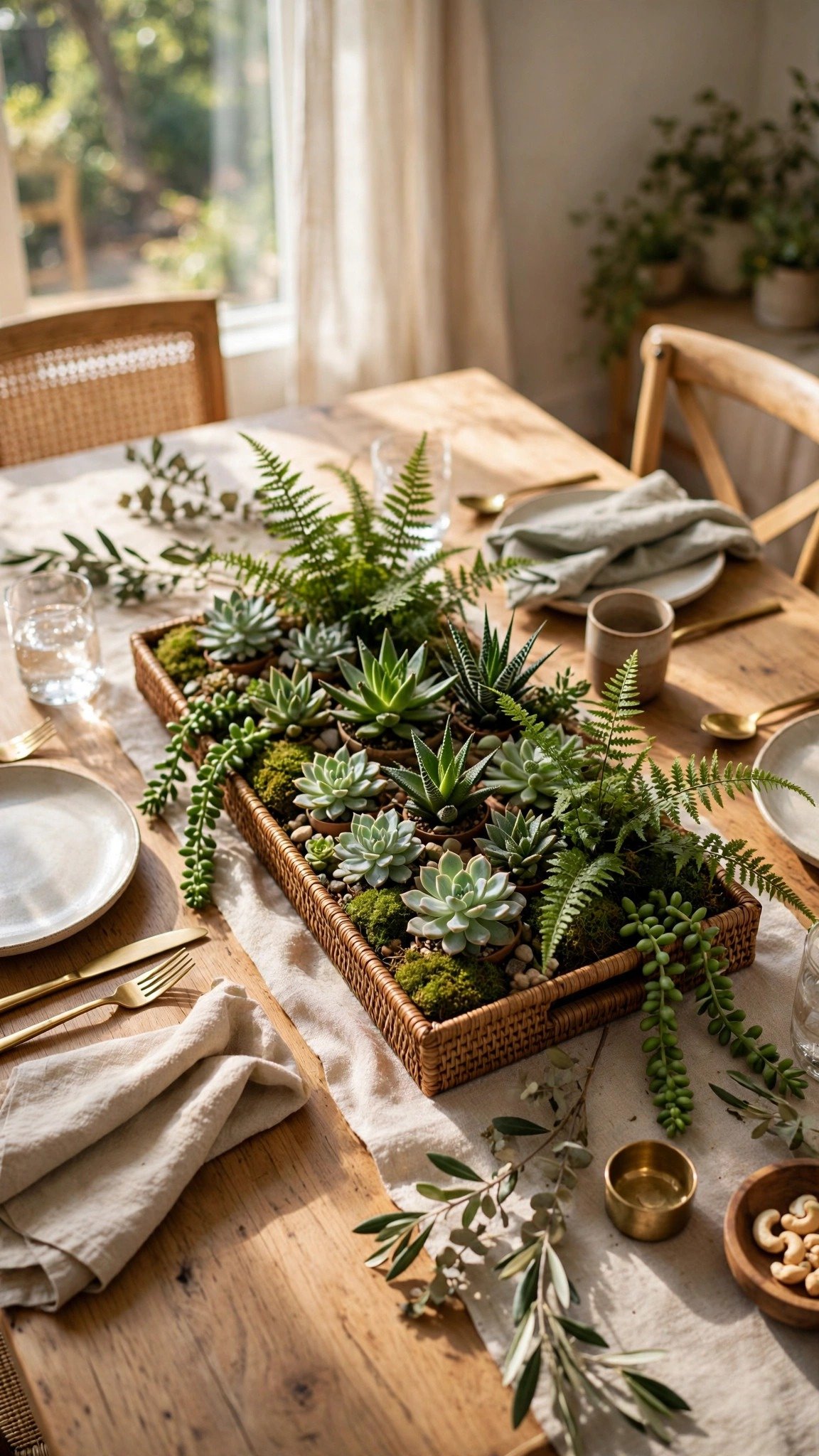
You do not need flowers to make a dining table feel fresh. A small group of succulents, tiny ferns, or herbs on a tray gives the table life all year, with very little care. Arrange three to five small plants on a tray so the whole display can move aside easily at mealtimes.
Keep the arrangement low so people can talk across the table without plants blocking the view. Odd numbers look best, so try three or five plants instead of four. A simple table runner under the tray ties the display together and protects the table from water marks.
8. Layered Plants on Decorative Stands
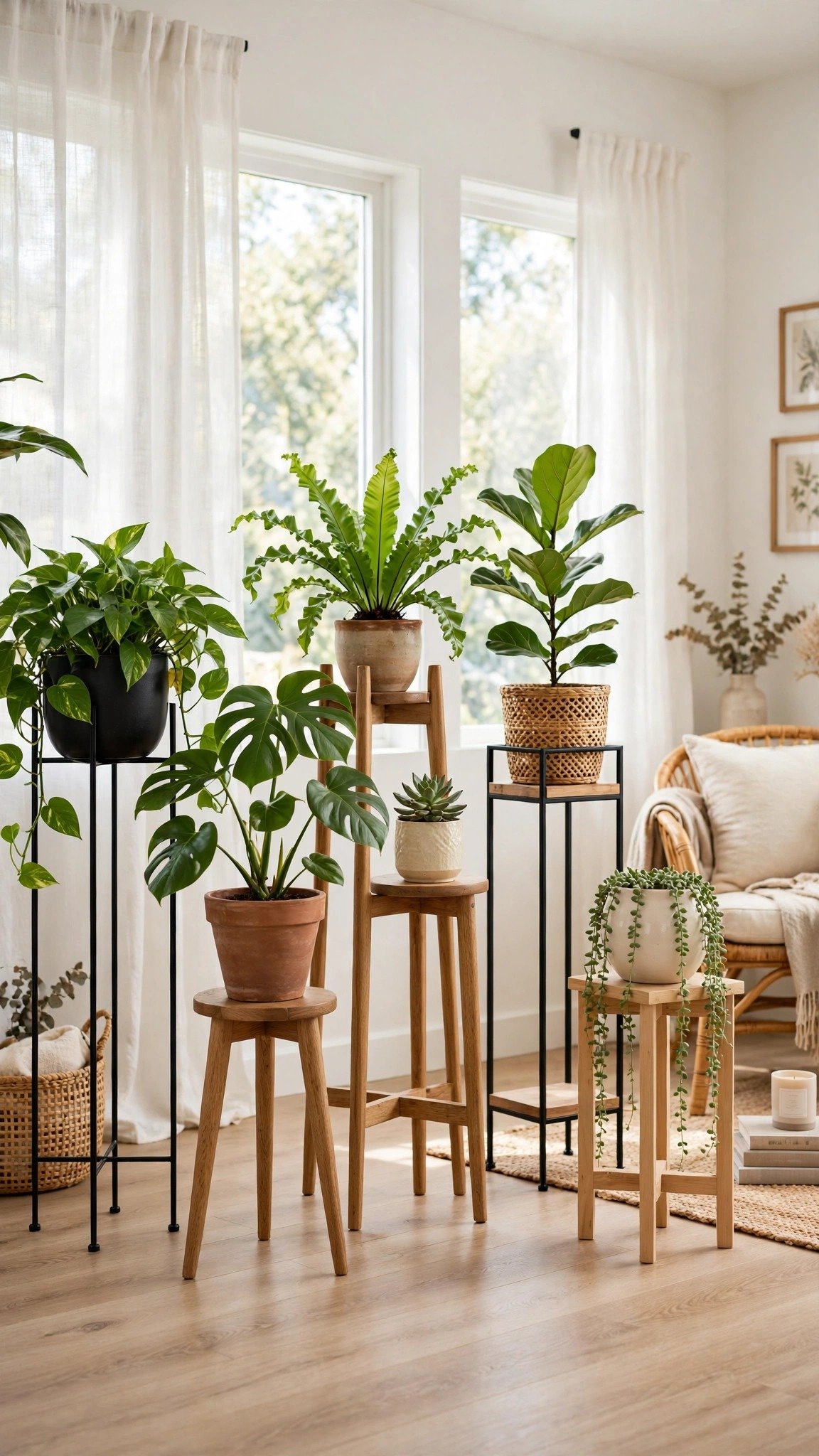
Plant stands are a simple way to add height and shape to a display. Raising some plants off the floor stops the arrangement from looking flat. Mix floor plants with plants on stands of different heights, and the whole group feels layered and full, like a display in a plant shop.
Do not use identical stands all through the room. A little variation in wood, metal, and woven materials keeps the look collected and real. Match the colours loosely, so the stands feel like a family even when their shapes differ. Leave space between stands so each plant can be seen on its own.
9. Kitchen Counter Herb Garden
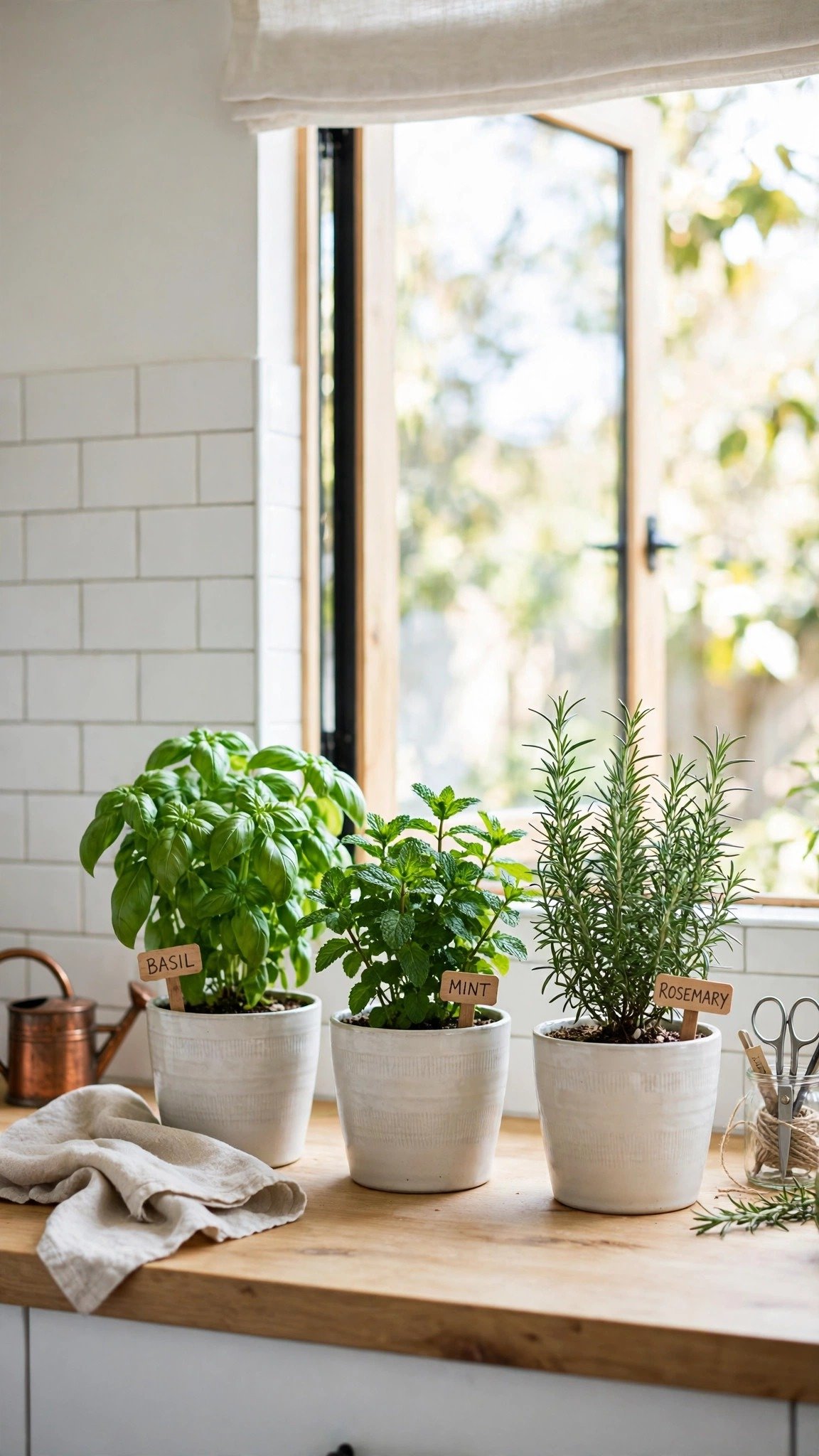
Herbs are plants that work for you. Basil, mint, rosemary, and parsley look lovely in pots on a kitchen counter, and you can snip them fresh while you cook. Put them near the brightest window in the kitchen, and use matching pots so the row looks tidy instead of scattered.
Do not overcrowd the counter. Three or four herb pots on a tray or in a wooden planter box are enough, and they leave room to work. Water them when the top of the soil feels dry, and let the soil dry a little between waterings. Fresh herbs make the kitchen smell good and feel alive every day.
10. Plant Ladder Display
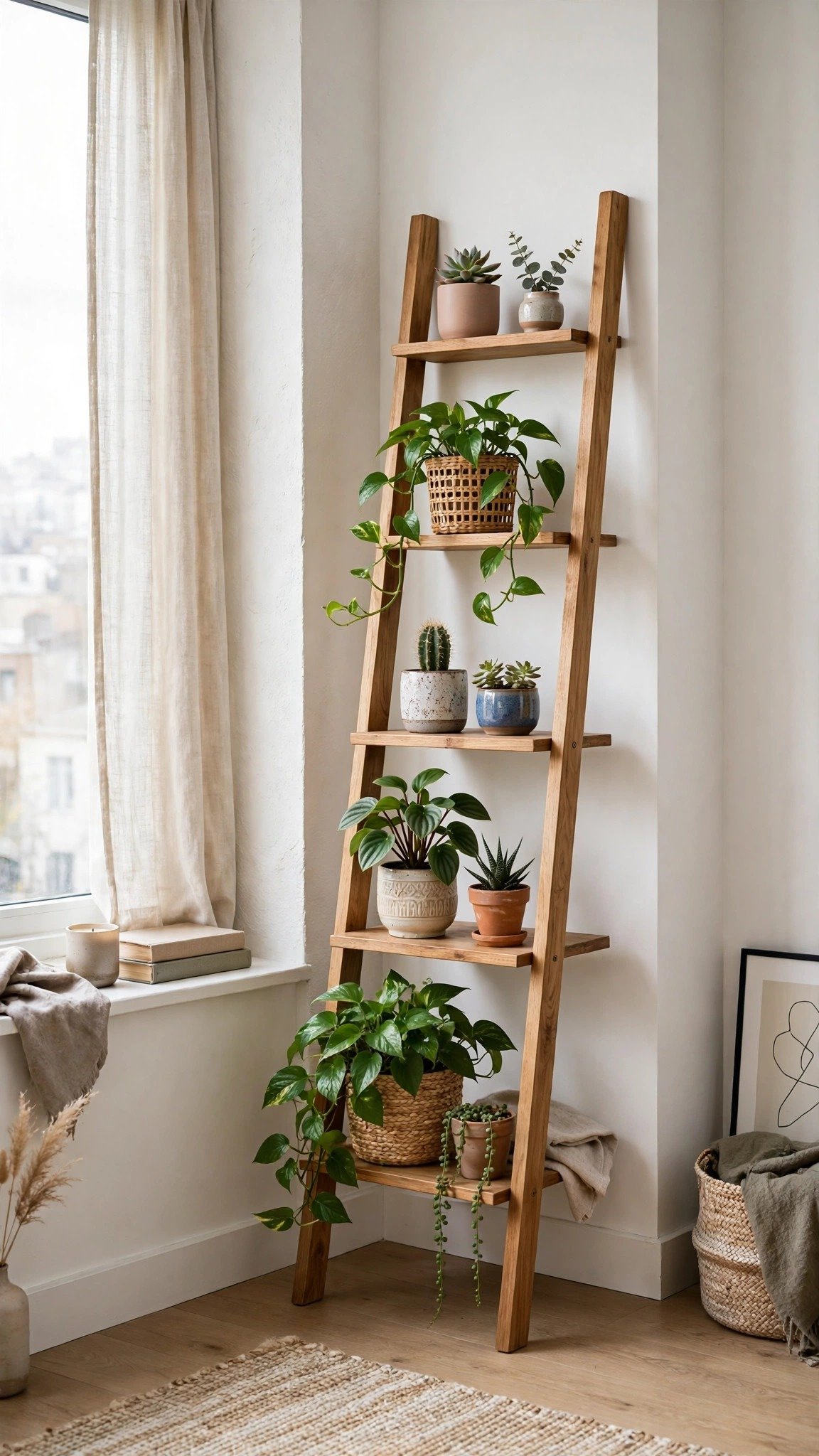
A decorative ladder shelf is a smart way to show many plants in very little floor space. It works well in apartments and small homes. Put heavier, larger plants on the lower rungs for stability, and lighter, smaller plants higher up. Leave some rungs partly empty so the display breathes.
Mix in a few books or small objects between the plants so the ladder does not look like a greenhouse shelf. Keep the pots in one colour family for a calm look, and turn the plants now and then so they grow evenly. A ladder display can hold a whole collection without taking over the room.
11. Plants That Divide Open Spaces
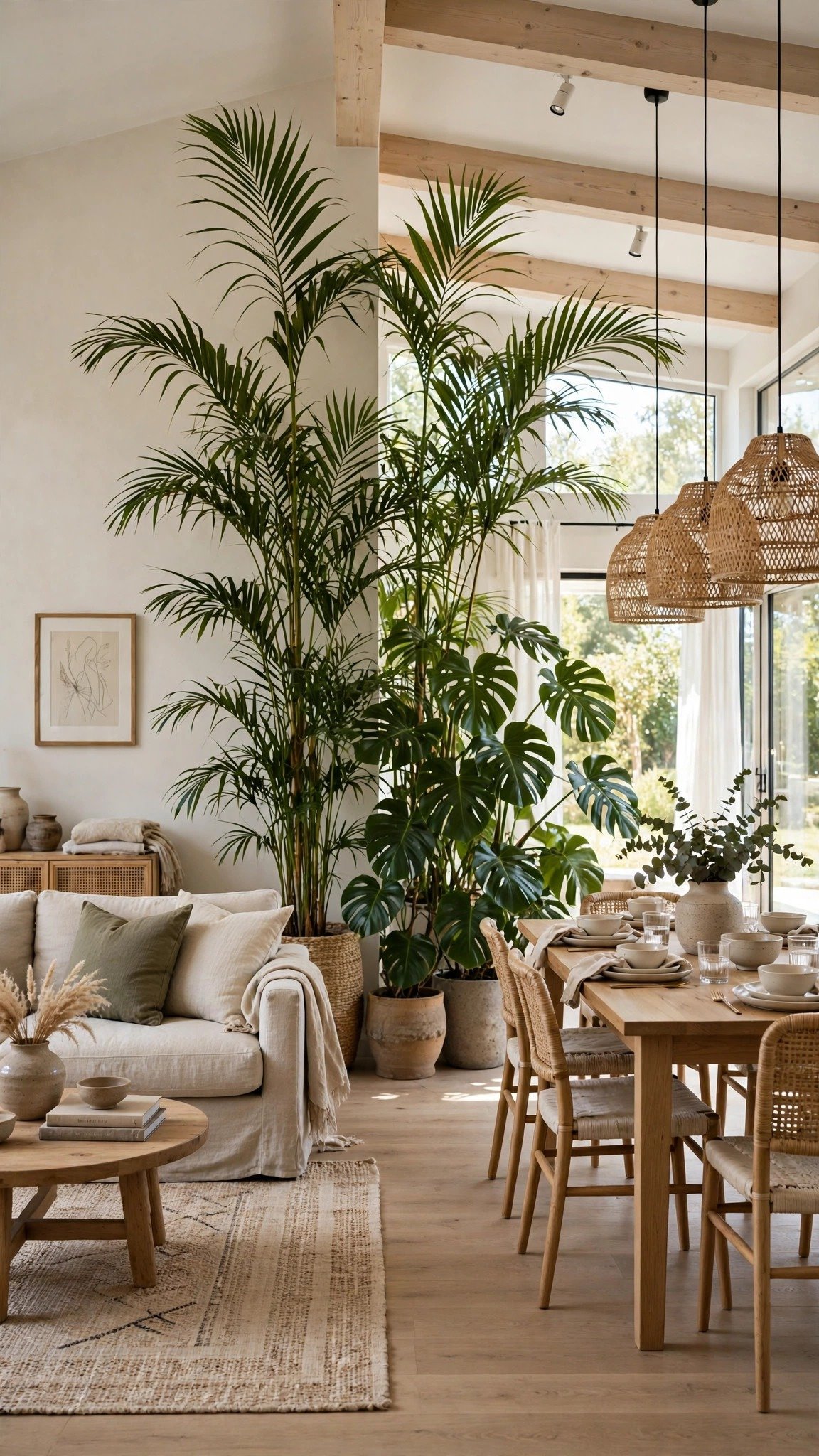
Open-plan homes often need a soft way to mark where one area ends and another begins. Tall plants can do that job without blocking light or building a wall. Two or three tall monsteras, palms, or rubber trees between the living and dining areas create a green boundary that still feels airy.
Choose similar plants for the divider so it looks planned, not random. Put them in large matching planters, and use stands to lift some higher than others. The plants will shape the room gently, and the open feeling of the space stays. This idea works best when the plants are healthy and full.
12. Bedroom Plant Sanctuary
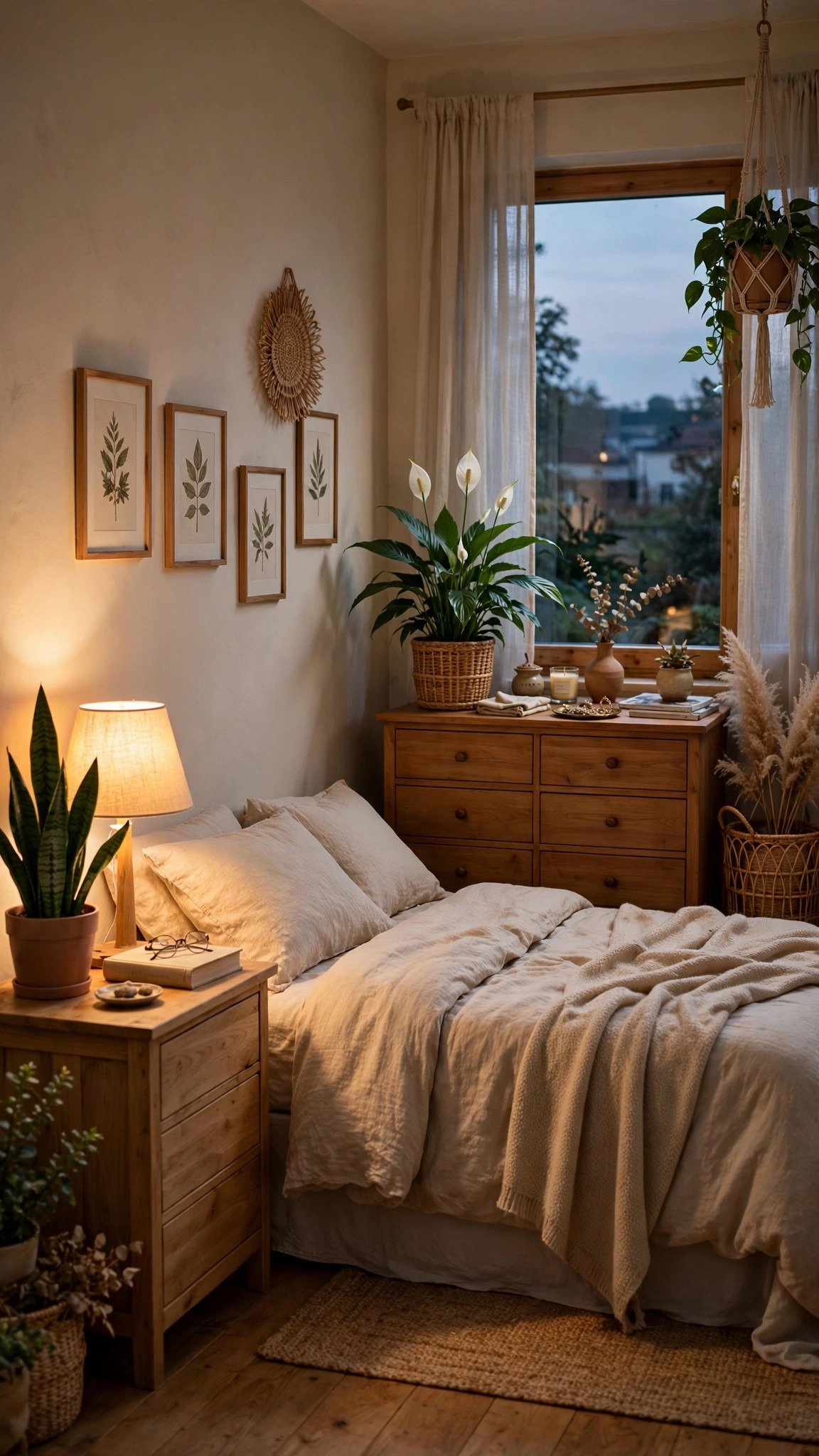
A few calm plants can make a bedroom feel restful and soft. Snake plants, ZZ plants, and peace lilies are good bedroom choices because they are low maintenance and look good with little care. Put one plant on the nightstand, one on the dresser, and a larger plant in a bright corner if you have space.
Keep the number small. An overcrowded bedroom feels busy, not restful. Use soft, neutral pots in white, cream, or stone so the plants blend into the calm mood of the room. At dusk, the green leaves against warm lamplight make the whole room feel quiet and welcoming.
13. Indoor Plant Wall

A plant wall turns a blank wall into living art. Floating shelves, wall-mounted planters, or a modular grid system can hold a whole collection in one bold display. Pick plants that need similar light and water, so caring for the wall stays simple. Mixing plants with very different needs leads to trouble over time.
Install shelves firmly with proper wall anchors, and arrange plants by their light needs, with sun lovers higher and shade lovers lower. Leave space between plants for growth and for your hands when you water. Add a few small objects between the leaves so the wall looks styled, not overcrowded.
Plan Your Indoor Plant Decor in 4 Simple Steps
- Check your light first. Look at each spot through the day. Bright indirect light suits most houseplants. Direct sun suits succulents and herbs. Low light suits snake plants and ZZ plants.
- Pick one room to start. Begin where you spend the most time, such as the living room. One finished corner beats five half-done rooms.
- Choose plants for the spot, not the other way round. Match the plant to the light and the space you have. A plant that fits its spot will grow well with less work.
- Style the pots last. Use pots in one colour family with different textures. Similar pots make mixed plants look like one planned display.
Indoor Plant Decor Mistakes to Avoid
- Too many small plants. Dozens of tiny pots look cluttered. Fewer, larger plants look calm and styled.
- Wrong light for the plant. A sun-loving plant in a dark corner will fade. Check the light before you buy.
- Crowding every surface. Empty space is part of good styling. Leave gaps so each plant can be seen.
- Mixing plants with different water needs. Plants that share a pot or shelf should need similar water, or one will suffer.
- Forgetting drainage. Every pot needs a hole or a tray. Standing water rots roots fast.
- Ignoring scale. A tiny plant in a big room disappears. A huge plant in a small room takes over.
FAQs
What are the easiest indoor plants for beginners?
Snake plants, pothos, ZZ plants, spider plants, and peace lilies are the easiest indoor plants for beginners. They forgive missed watering, grow in low to medium light, and need little care. Start with one or two of these, learn their rhythm, and add more plants once you feel confident.
How many plants should I place in one room?
Most rooms look best with three to seven thoughtfully placed plants, not dozens of small scattered pots. One tall plant, two medium plants, and a trailing plant can fill a living room corner well. Fewer, well-placed plants look styled, while too many make a room feel crowded and hard to care for.
How can I decorate with plants in a small apartment?
Use vertical ideas in a small apartment, such as hanging planters, wall shelves, ladder stands, and windowsill displays. These use wall and window space instead of floor space. Choose a few medium plants rather than many tiny ones, and keep pots in one colour family so the room feels calm.
Which rooms are best for indoor plants?
Living rooms, bedrooms, kitchens, bathrooms with natural light, and home offices all work well for indoor plants. Living rooms suit large statement plants, kitchens suit herbs near bright windows, and bathrooms suit humidity-loving ferns and orchids. Any room with some natural light can hold at least one happy plant.
How do I keep indoor plant decor from looking cluttered?
Focus on quality over quantity, vary plant heights, leave empty space between displays, and keep your pots in one colour family. Group plants in odd numbers, such as three or five, and give each display room to breathe. A few strong plants with space around them always look better than many crowded pots.
How often should I water indoor plants?
Most indoor plants need water about once a week, but the real rule is to check the soil first. Push your finger an inch into the soil. If it feels dry, water well and let the extra drain away. If it still feels damp, wait a few more days. Overwatering kills more houseplants than underwatering does.
Do indoor plants need direct sunlight?
Most indoor plants prefer bright, indirect sunlight, not direct sun through glass, which can scorch their leaves. Succulents, cacti, and herbs are the exceptions and enjoy a few hours of direct sun. Low-light plants like snake plants and ZZ plants grow well even in a dim corner away from windows.
Conclusion
Indoor plants are one of the simplest ways to make a home feel fresh, calm, and personal. You do not need a large collection or a green thumb to start. One well-placed plant, in the right light and a pot you love, can change how a whole room feels.
Start small, try one idea from this list, and see how your home responds. Move plants around until each one finds its spot. With a little light, a little water, and a little patience, your rooms will grow greener and more welcoming every week.