
Moroccan Bathroom Ideas: 18 Ways to Use Zellige Tile and Brass
A Moroccan bathroom depends less on pattern than on surface. Glossy, slightly uneven zellige tile catches light differently across every tile. Warm brass fixtures and natural wood soften the room, and a few well-placed details give it a handmade feel. These Moroccan bathroom ideas cover where to put tile, which colors and finishes work, and how to pair vanities and lighting. They also cover how to adapt the look for a small bathroom or a tight budget. You can use one idea or combine several.
What Makes a Bathroom Look Moroccan
A Moroccan-style bathroom combines handmade-looking tile, usually zellige, with warm metals like brass, natural wood, textured plaster-like walls, and soft, layered lighting. Arches, niches, and pierced-metal lanterns often finish the look.
You do not need all of these. Tile and one warm metal create the look. The rest add depth.
1. Floor-to-Ceiling Zellige in the Shower

Tiling one shower wall, or the whole enclosure, from floor to ceiling gives a Moroccan bathroom its clearest focal point. The uneven glaze reflects light in patches rather than one flat sheen, which keeps a large tiled area from looking flat.
Pick one color for the whole enclosure. Let the tile carry the pattern through its natural variation instead of adding a second design. A clear glass panel keeps the tile visible from the doorway.
The trade-off is cost and labor. Handmade tiles vary in size and thickness, so installation takes longer. Use an installer who has set zellige before.
2. A Zellige Wall Behind the Vanity

If a full shower is too much tile, put it behind the sink. A tile wall behind the vanity is the first thing people see when they enter, and it frames the mirror and faucet.
Run the tile at least to the height of the mirror, or all the way to the ceiling for more impact. Keep the countertop plain so the wall does the talking. Zellige’s irregular edges make a narrow grout line look more deliberate than a wide one.
This works well in a powder room, where one wall of tile gives a lot of character for a small area.
3. A Tiled Niche With a Slight Arch

A shower niche is useful storage, and a tiled niche is also a decorative detail. Lining it in a contrasting zellige color makes a small, quiet focal point inside the shower.
An arched top gives the niche a more Moroccan look than a plain rectangle. It takes more tile cutting, so ask your installer before you commit. If an arch is too complex, a standard rectangle in a contrasting tile still works.
Keep the contents simple. A few bottles in matching containers show off the tile without competing with it.
Need more room than one niche offers? These bathroom shelf ideas show 20 ways to add storage in any size bathroom. Some work beautifully with tile and brass.
4. A Tile “Rug” in the Floor
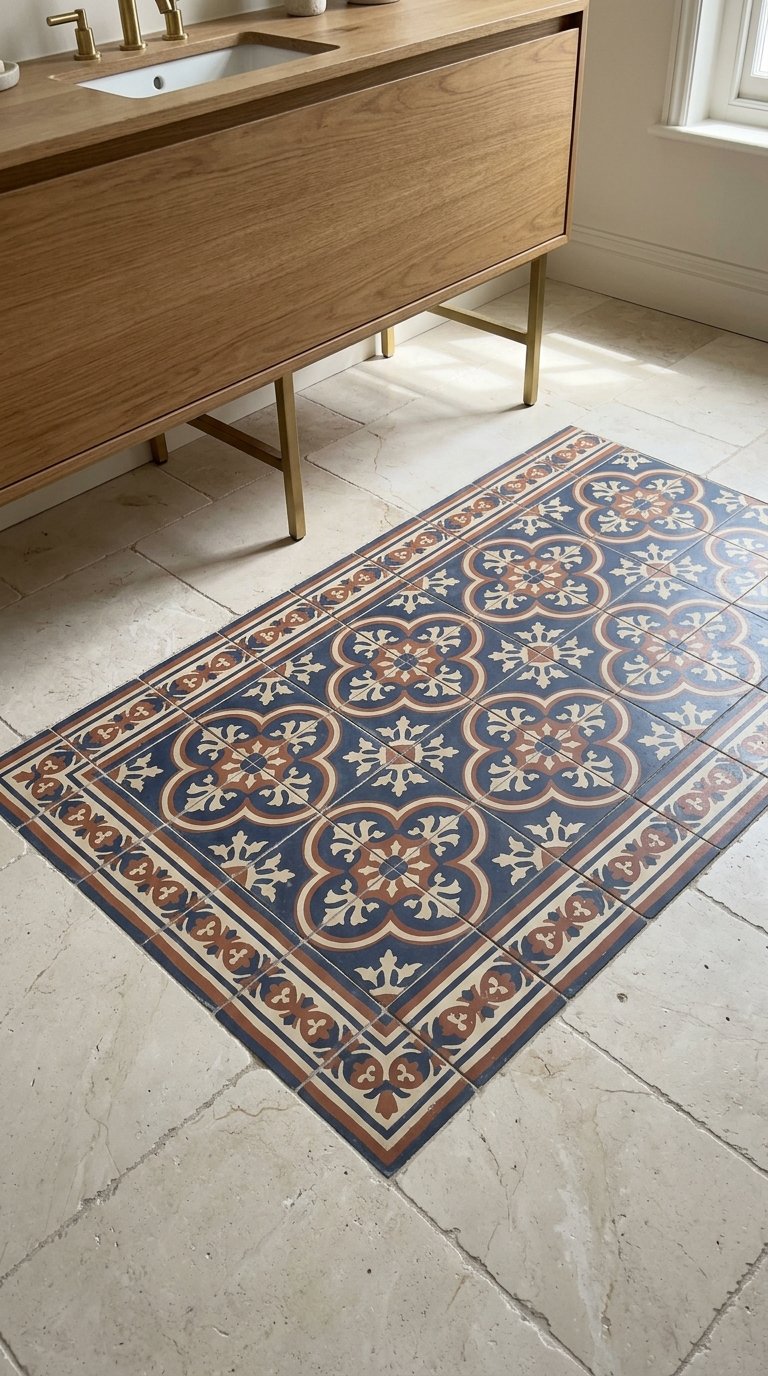
A tile rug is a patterned panel set into a plainer floor, usually in front of the vanity or tub. It marks out a zone and adds pattern where you can see it from above.
Choose a border that echoes the wall color so the floor and walls feel linked. Keep the surrounding floor simple, in plain stone, cement, or a single tone of tile.
A tile rug is permanent, so choose a pattern you will still like in ten years. If you want something less committed, a washable bath runner in a Moroccan-inspired pattern gives a similar effect.
5. Half-Height Zellige With Plaster Above
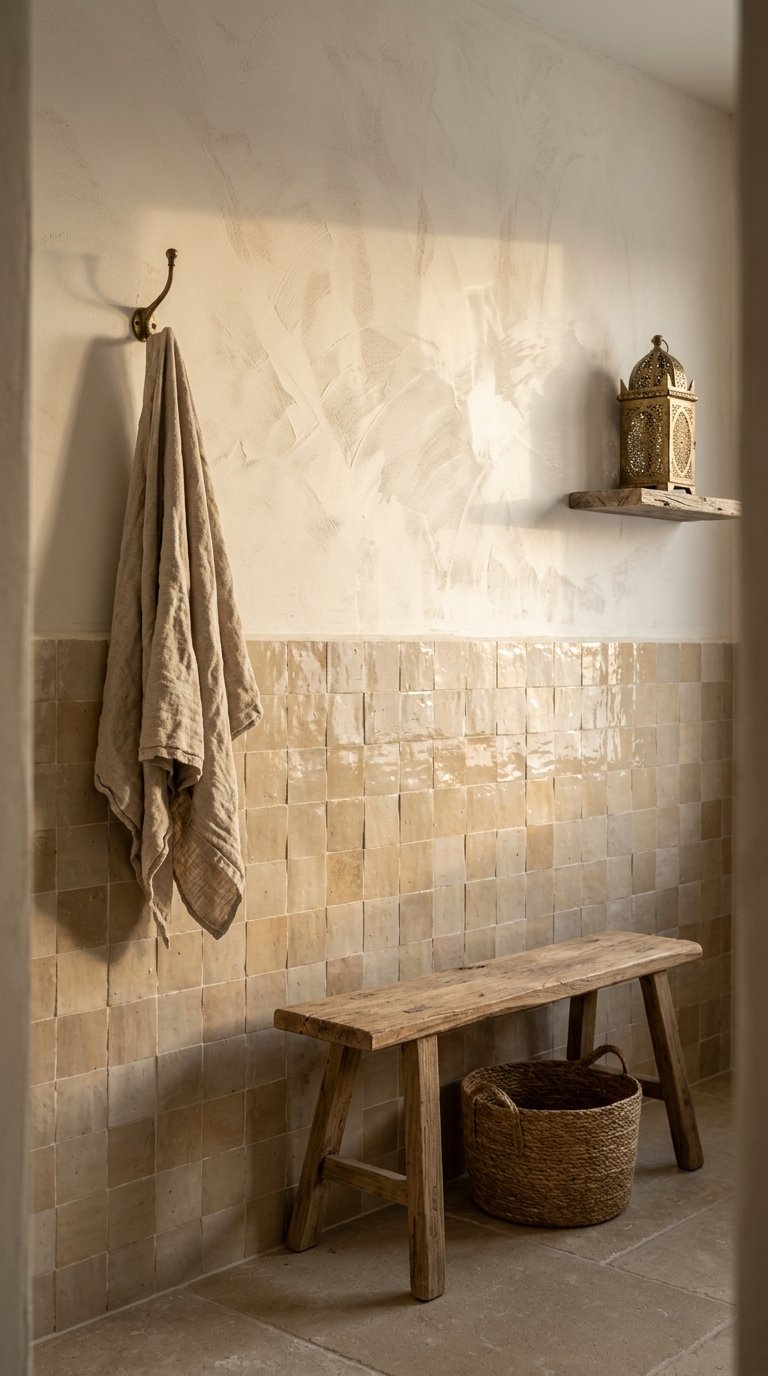
You can get the Moroccan look without covering every wall. Tile the lower half and finish the upper half in plaster, limewash, or a plaster-look paint rated for bathrooms.
The contrast between glossy tile and soft matte wall is the point. It adds texture while saving money on tile and keeping the room calmer. Put the tile line at around the height of the vanity or chair rail so it looks planned.
Check the finish for moisture resistance if the wall is near the shower. Matte plaster finishes are less forgiving of splashes than tile.
6. Deep Green Zellige With Antique Brass

Green is one of the most familiar zellige colors, and for good reason. It looks calm, pairs well with brass, and reads as natural rather than loud. Deeper emerald or bottle greens give a more dramatic room, while soft sage reads lighter.
Antique or aged brass suits green best. Bright, shiny brass can look flashy against it. Add white or cream towels and a wood element so the green does not feel heavy.
Glossy green tile can show water spots. A quick wipe after showering keeps it looking clean.
7. Indigo and Blue Zellige

Blue ties back to traditional Moroccan color schemes and feels cool and calm in a bathroom. Choose a deeper indigo for drama or a faded blue-gray for something softer.
Blue tile looks best with warm accents, since brass, wood, and cream balance the cool color. Pale grout keeps a blue wall light, while a darker grout adds contrast and emphasizes every tile’s edge.
Test a few tiles in your own light first. Blue tiles look different in daylight than under warm bulbs.
8. White Zellige for a Quieter Look

White zellige is the best choice if you want Moroccan character without color. The glaze still ripples and shifts, so the wall feels alive even in a single shade.
White works well in smaller rooms because it reflects light. Warm brass or aged bronze keeps it from looking cold. Choose a cream or warm white rather than a stark one for a softer feel.
The trade-off is that plain white shows less pattern from far away, so the texture and warm accents have to carry the style.
9. Terracotta, Sand, and Clay Tones
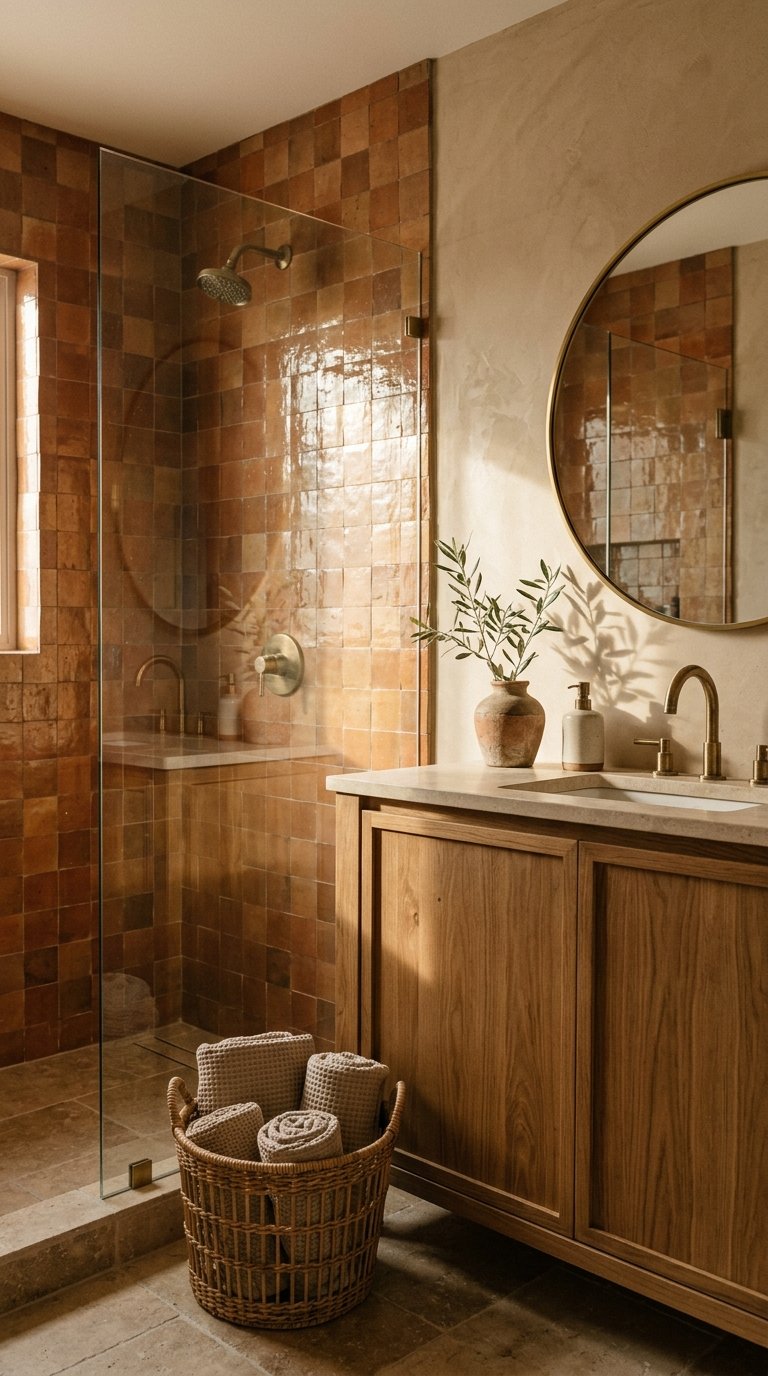
Earth tones give a Moroccan bathroom a warm, sun-baked feel. Terracotta, clay, sand, and olive suit the style and age well.
Use them as the main tile color or as a border against cream. Brass fits naturally, as do wood, rattan, and linen.
Terracotta can overwhelm a room with little natural light. If the room is dim, use it on one wall or the floor and keep the rest lighter.
10. Black or Charcoal Zellige for a Moody Room

Dark zellige turns a bathroom into a snug, dramatic space. The glaze keeps it from looking flat, and brass pops against it.
This works best with good lighting. Use wall sconces and a mirror to bounce light around, and balance the dark tile with pale stone or a light floor.
The trade-off is that dark glossy surfaces show water marks and soap film more easily. Matte or lightly glazed charcoal tile is easier to live with.
11. Matte or Unglazed Zellige

Not all zellige is glossy. Matte and unglazed versions look softer and more earthy, with muted color and less reflection.
They suit calm, spa-like bathrooms and make a good choice when you want texture without shine. They also hide water spots better than glossy tile.
Unglazed tile is more porous than glazed tile, so check the maker’s guidance on sealing and wet areas before you use it in a shower..
12. Moroccan Pattern Cement Tile on the Floor
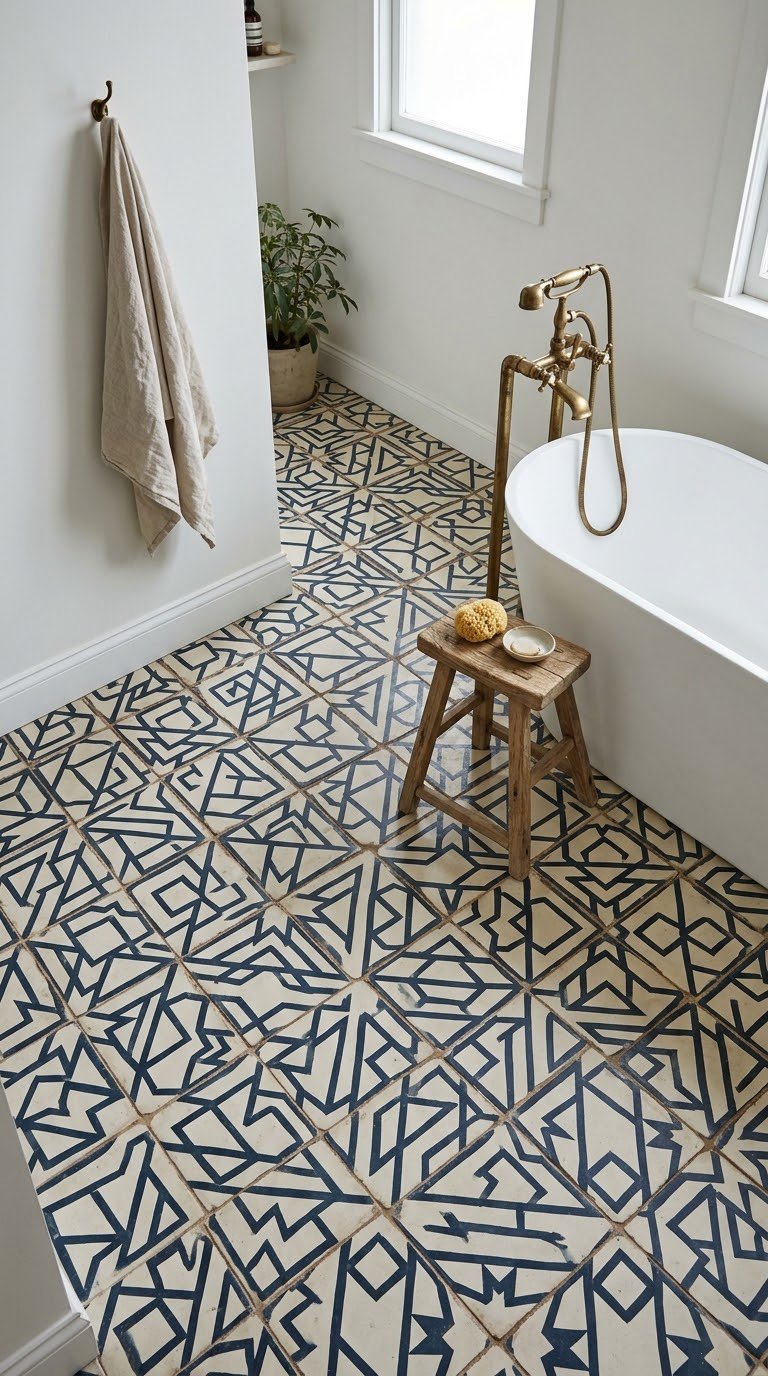
Zellige is mainly a wall tile. For floors, a patterned cement tile is the classic Moroccan choice, with geometric stars, crosses, and repeating motifs in a limited palette.
Keep the walls plainer so the floor leads. Choose two or three colors that already appear in the room, such as cream, indigo, or terracotta.
Pattern can overwhelm a very small bathroom, so choose a smaller repeat or a softer color contrast there. Also confirm that the tile is suitable for floors and wet areas.
13. Checkerboard and Gradient Layouts

Checkerboard is common in Moroccan-inspired bathrooms, but black and white is only one choice. Cream with terracotta, or two shades of green, feels warmer and less stark.
A gradient is another option. Shift from light to dark across a wall using several shades of one color. It suits zellige well because the tiles already vary.
Plan the layout on paper first. Handmade tiles vary in size, so a perfect grid can be difficult, and an installer can tell you how much variation to expect.
14. A Wood Vanity With Brass Hardware and a Stone Top

The vanity connects tile and fixtures. Light woods like oak or ash keep a bathroom bright, while walnut makes it feel richer and warmer.
Add a stone top, such as limestone or a honed marble, and the room feels grounded. Brass pulls and a matching faucet tie it to the rest of the scheme.
Wood in a bathroom needs a good sealed finish. Wipe up splashes so the wood and the stone stay in good condition.
15. Pierced-Brass Pendants and Wall Sconces

Lighting gives a Moroccan bathroom much of its atmosphere. A pierced-brass pendant throws patterned shadows across the ceiling and walls. Wall sconces on either side of the mirror give softer, flattering light for the face.
Use pendants where there is enough ceiling height, and keep them out of direct splash zones. Check that any fixture is rated for the bathroom zone where you plan to install it.
Warm bulbs make tile and brass look richer. Cooler bulbs flatten them.
16. Arched Mirrors and Arched Alcoves

Arches are one of the simplest ways to bring a Moroccan shape into a bathroom. An arched mirror over the vanity is the easy version. A recessed arched alcove for a tub or towel storage is the more committed one.
Use one arch motif and repeat it once or twice, such as the mirror and the niche, so the room feels connected without becoming busy.
An arched mirror is an easy swap for renters or anyone avoiding construction.
17. Moroccan Bathroom Ideas for Small Spaces

A small bathroom can handle the Moroccan look if you keep it focused. Choose one feature, such as a tiled vanity wall or a tiled shower, and keep the rest quiet.
Light colors make the room feel larger. A floating vanity shows more floor. One mirror with warm sconces avoids clutter. Skip a busy floor pattern and choose a plain or small-scale one instead.
A single zellige wall in a powder room gives the same character with far less tile. A small bathroom still needs everyday storage. This guide to bathroom storage ideas breaks 23 smart solutions down by zone, so you know what goes near the sink, shower, and toilet.
18. Moroccan Bathroom Ideas on a Budget (and for Renters)

You can get a Moroccan feel without a full renovation. Zellige-look porcelain or ceramic tile gives similar variation at a lower cost and often installs more easily.
For renters, swap the hardware and lighting. Add brass-finish pulls, an arched mirror, a pierced-metal lantern, and linen towels in warm tones. Peel-and-stick tile in a Moroccan pattern is an option for a small area like a vanity backsplash, as long as the surface is suitable.
Start with the parts that are easiest to change, then add tile only where you can.
How to Care for Moroccan Tile and Brass
- Wipe tile after use. This reduces water spots on glossy glaze.
- Use gentle cleaners. Avoid harsh abrasives, which can dull glaze or damage porous tile.
- Check grout and sealing. Follow your tile maker’s guidance, especially for unglazed tile.
- Decide how you want your brass to age. Lacquered brass keeps its shine, while unlacquered brass develops a patina over time.
FAQs
Is zellige tile good for a bathroom?
Yes, glazed zellige works well on bathroom walls, and many people use it in showers. Handmade tile varies in thickness and size, so it needs careful installation. Floors and unglazed tile need extra attention to suitability and sealing.
How much does zellige tile cost compared with other tile?
Real handmade zellige is generally more expensive than machine-made tile, and installation can also cost more because of the variation. Zellige-look porcelain or ceramic is a lower-cost way to get a similar effect.
What color grout works best with zellige?
A grout close to the tile color blends in and keeps the surface calm. A contrasting grout emphasizes each tile’s edges and handmade look. Ask your installer to test options on a few tiles first.
Can I use zellige on a bathroom floor?
Some zellige is not suitable for floors. Patterned cement tile or a floor-rated tile is usually a better choice, so check the product specifications before you buy.
What fixtures go best with zellige tile?
Brass is the classic match, especially aged or antique brass. Copper adds a more rustic warmth. Matte black works for a modern look, and stainless steel is a cooler option.
Does brass tarnish in a humid bathroom?
Unlacquered brass develops a patina over time, which many people like. Lacquered brass keeps its original finish for longer. Choose according to the look you want.
Can Moroccan tile work in a modern bathroom?
Yes. Pair it with clean-lined fixtures, a floating vanity, and frameless glass. The tile adds texture while the simple fixtures keep the room from feeling busy.
How do I stop a Moroccan bathroom from feeling dark or busy?
Use pattern in one area only, keep other surfaces plain, and choose lighter colors where natural light is limited. Warm bulbs and mirrors help bounce light around.
What is the difference between matte and glossy zellige?
Glossy zellige reflects light and shows water spots more easily. Matte zellige looks softer and hides marks better, but may need more attention to sealing.
How do I get a Moroccan look in a rental?
Focus on removable elements: brass-finish hardware, an arched mirror, a pierced-metal lantern, warm-toned linens, and a washable patterned runner.
Conclusion
You do not need every idea here to get the look. Start with the tile, since it sets the color and mood, then choose one warm metal and one natural material. Add lighting and an arch if you want more character.
If your bathroom is small or your budget is tight, one tiled wall, a brass faucet, and an arched mirror go a long way. Pick the part of the room people see first, and start there.


4 Comments