17 Flower Garden Ideas for a Beautiful, Blooming Yard
A garden full of flowers is one of the simplest joys of a home — colour at the window, scent by the door, bees moving through the blooms on a summer morning. But most people who search for flower garden ideas get stuck at the same place: which flowers to plant, where to put them, and how to keep the colour going after spring fades.
This article answers all three questions with 17 flower garden ideas for a whole yard, not just one bed. Every idea is simple and beginner-friendly, and it works in a sunny yard, a shady corner, or even on a small patio. You will find layouts, colour plans, containers, borders, and a simple plan for blooms from spring to fall.
3 Best Flower Garden Ideas to Start With
If you only start three flower gardens this year, start with these. First, a cottage border with layered perennials: tall flowers at the back, short ones at the front, and colour from spring to fall. Second, a container flower garden on the patio: pots and planters you can move, fill, and change with the seasons. Third, a pollinator patch with native flowers: easy, low-care planting that brings bees and butterflies to the whole garden.
1. A Cottage Border That Blooms All Season
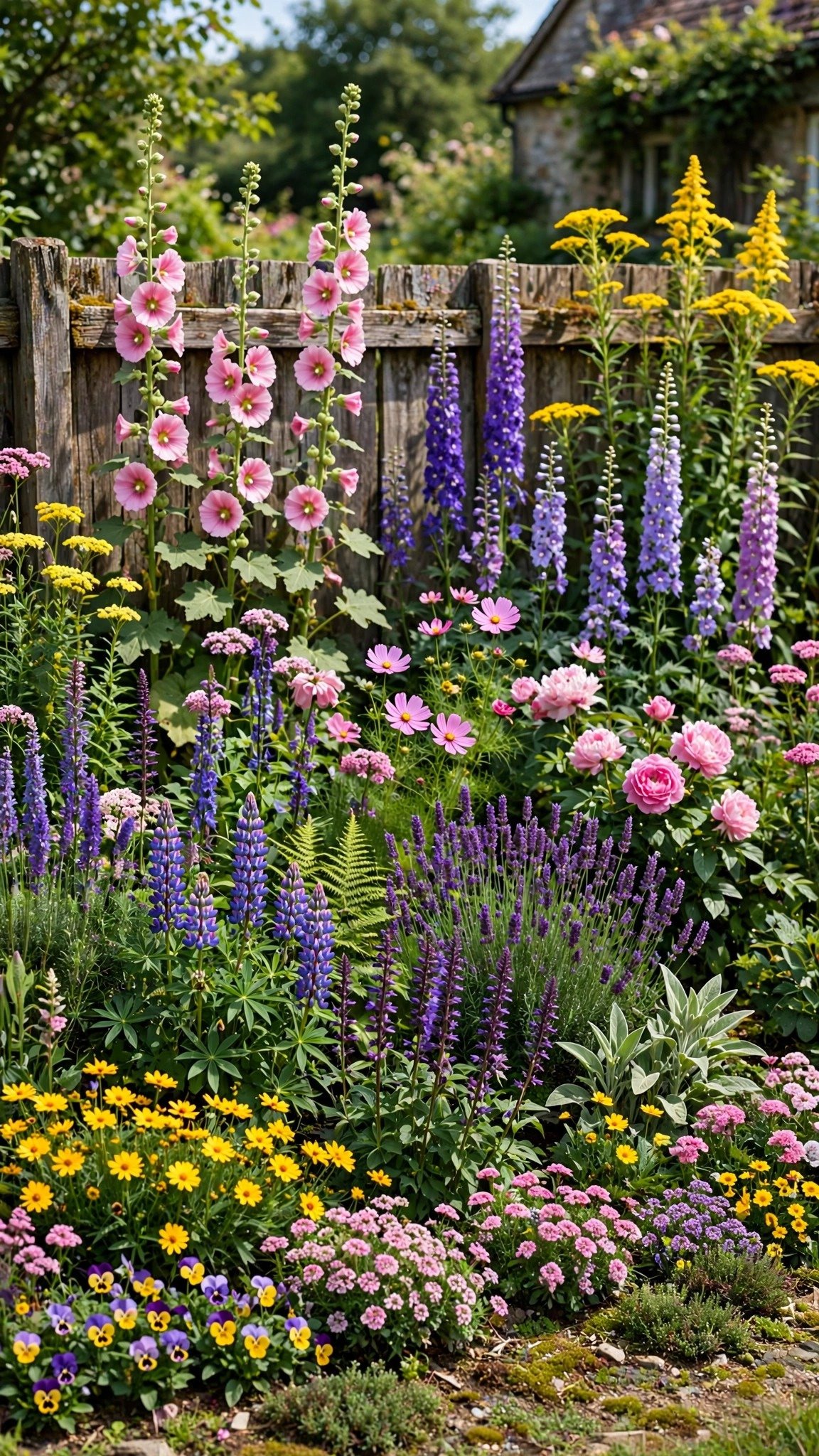
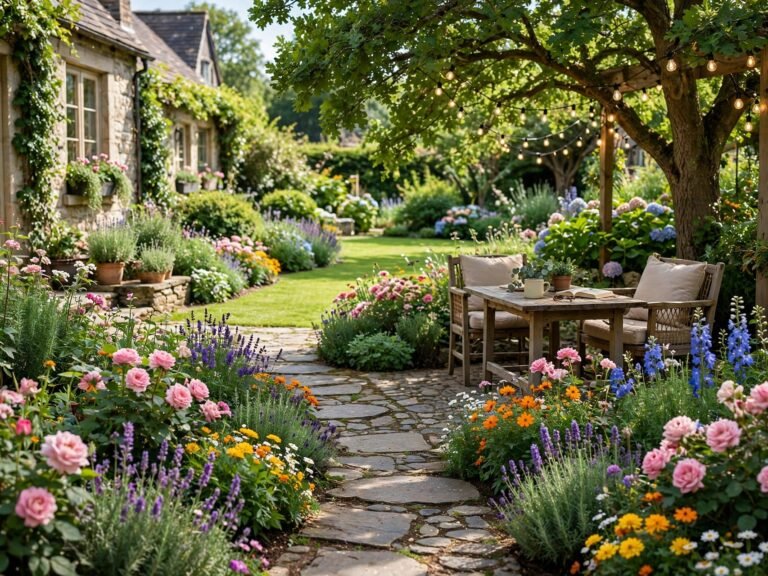
A cottage border is the classic flower garden idea, and it is still the best place to start. Plant a deep border along a fence or the side of the house, and layer it so something is always in bloom: tall flowers at the back, medium ones in the middle, and low ones at the front. Mix perennials that come back every year with a few annuals for instant colour in the first season.
The trick is to plant in groups of three or five, not one of everything. Three clumps of the same flower look calm and full, while twenty single plants look messy. Choose flowers that bloom at different times — spring bulbs, summer perennials, a few fall bloomers — and the border will change through the seasons instead of fading after June. This is the heart of garden with flowers ideas: one long border, planted once, that looks better every year.
- What you need: Deep border soil, tall, medium and low perennials, a few annuals, and compost.
2. A Colour-Blocked Bed in Two Bold Colours
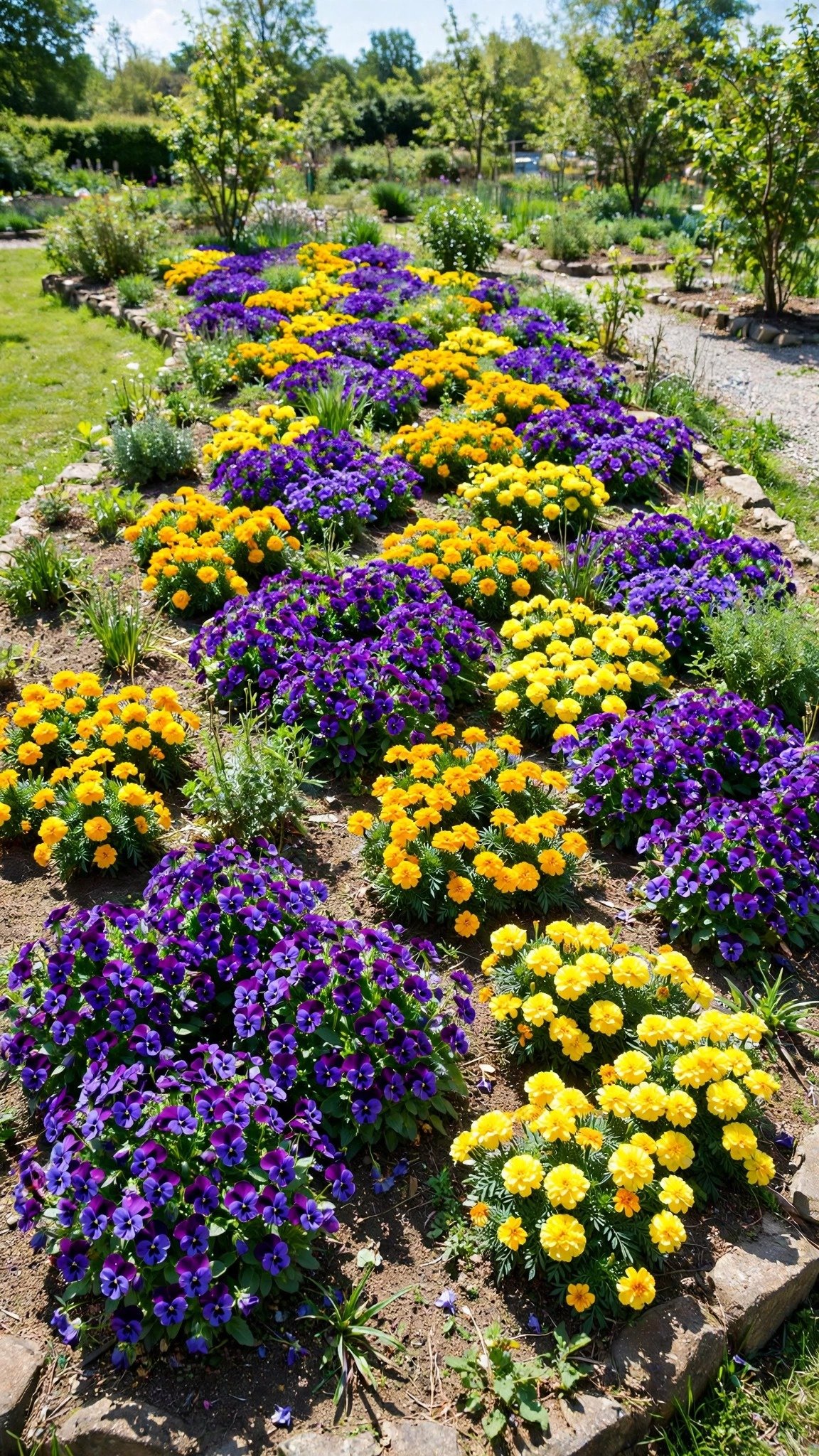
Colour blocking is the easiest way to make a flower garden look designed. Pick two colours that stand apart — purple and yellow, pink and white, or red and orange — and repeat them in loose groups across the garden. Two colours look planned and calm, while ten mixed colours often look busy, even when the flowers are beautiful on their own.
Use the same two colours in the border, in pots by the door, and along the path, so the whole garden feels like one design. This is where garden arrangements ideas really help: think of the yard as one arrangement, not a set of separate beds, and repeat your colours in every part of it. A small garden looks bigger with two colours, because the eye moves smoothly from one group to the next instead of stopping at every new shade.
- What you need: Flowers in two bold colours, repeated in groups, plus matching pots by the door.
3. A Sunny Perennial Border That Comes Back Every Year
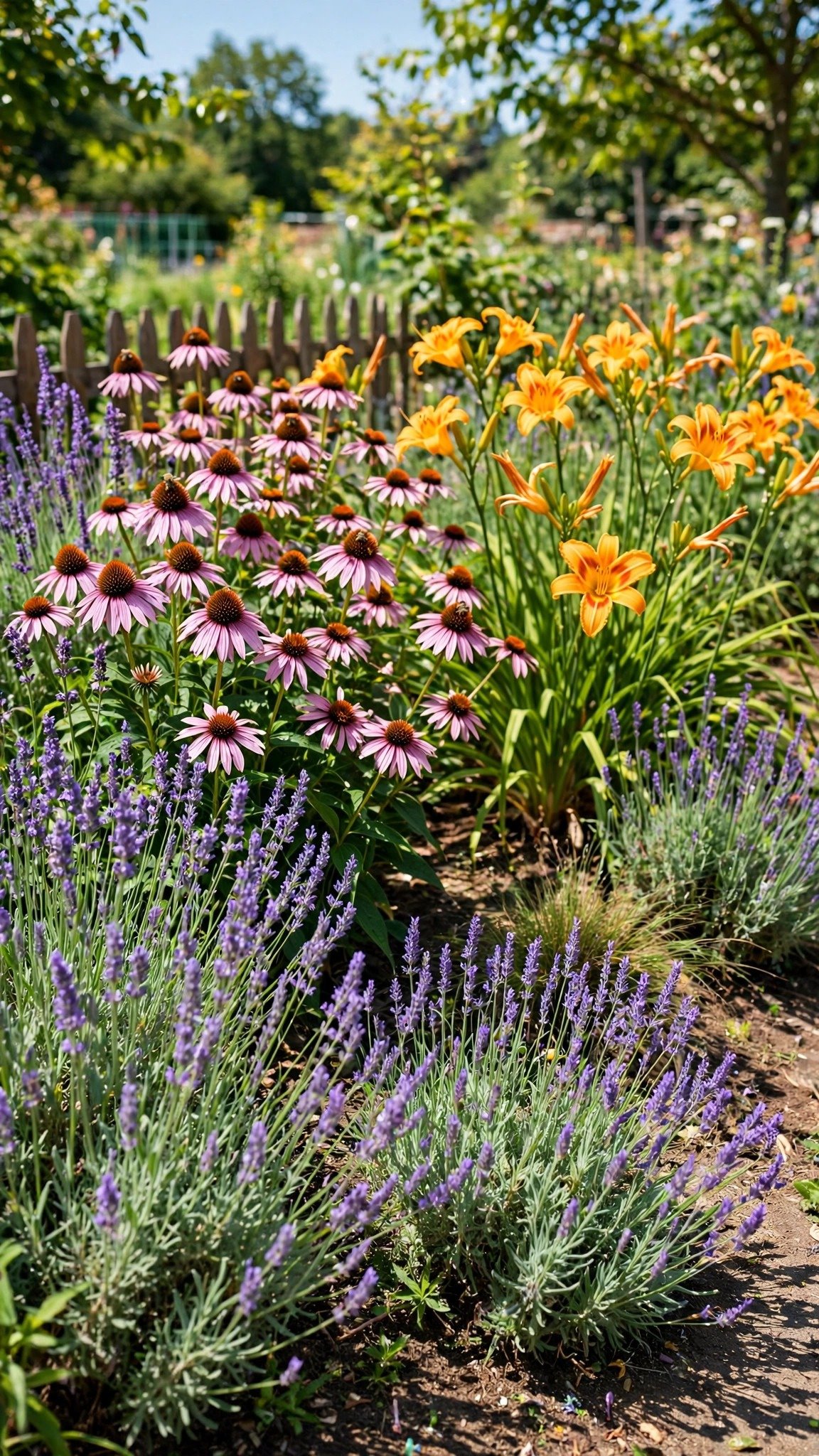
Perennials are the backbone of a sunny flower garden. They cost a little more at first, but they come back every spring, so the garden gets fuller and cheaper over time. Plant them in the sunniest spot in the yard — six or more hours of direct sun — and group them in threes or fives so each type makes a clear patch of colour.
Choose sun-lovers that suit your yard, like coneflowers, daylilies, lavender and black-eyed Susans, and give each plant room to grow to its full size. Cut the whole border back in late fall, mulch it before winter, and next spring it will come back stronger. This is the lowest-work flower garden you can build: plant once, cut back once a year, and enjoy it again and again.
- What you need: Sun-loving perennials, a sunny spot, compost, and mulch for winter.
4. A Shade Flower Garden for Cool, Dark Corners
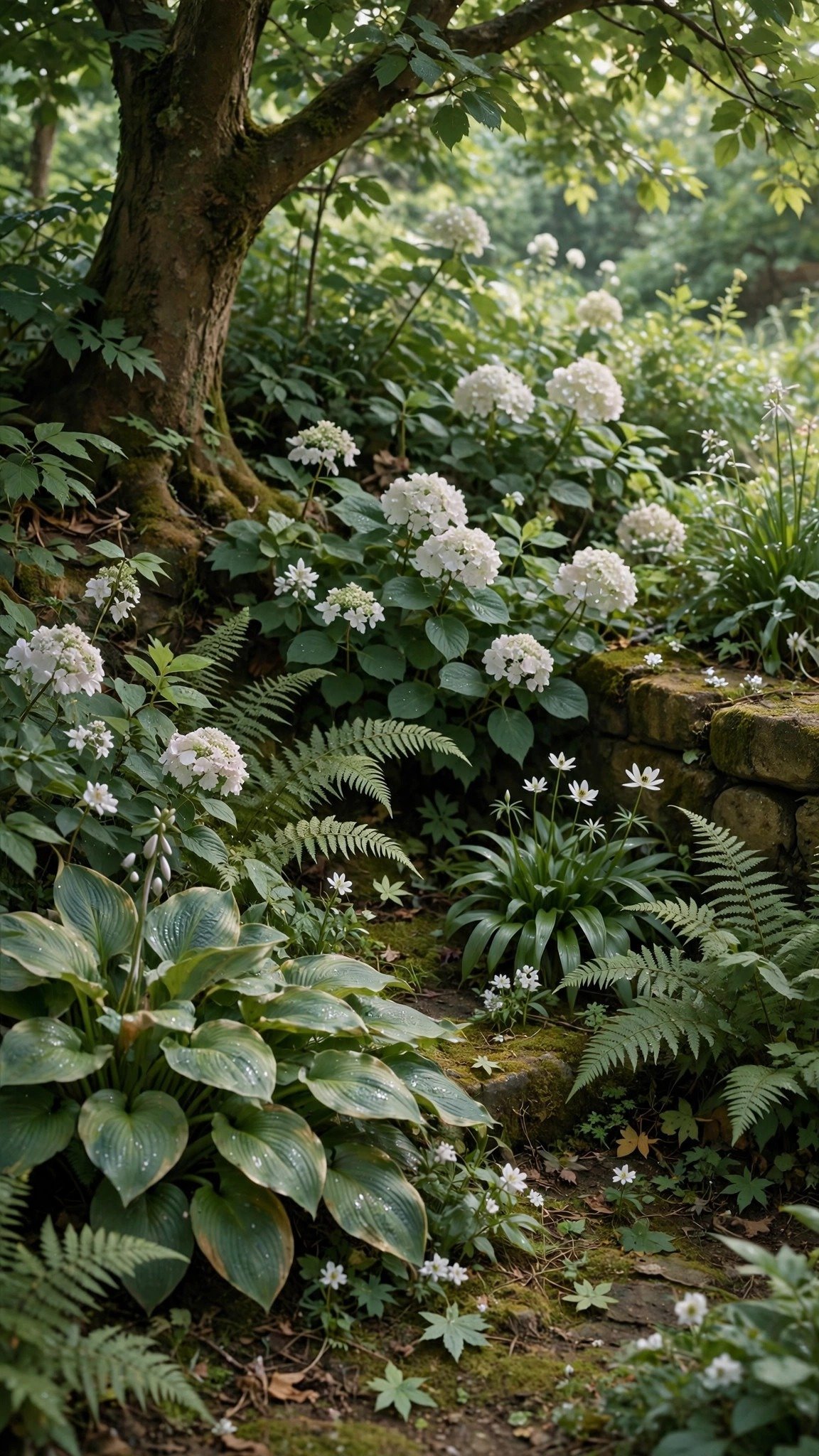
A shady corner is not a dead corner. Under a big tree or on the north side of the house, shade-loving flowers and leafy plants turn a dark spot into the coolest, quietest part of the garden. Hostas, ferns and pale blooms like white impatiens or astilbe glow softly in dim light, where bright colours would disappear.
Keep the palette light so the flowers show up in the shade — white, pale pink and soft blue work best. Add a bench or a flat stone path so the corner feels like a place to sit, not a leftover space. Mulch thickly to hold moisture, because tree roots drink a lot of water. A shade flower garden needs less watering than a sunny bed, and it stays cool even on the hottest days.
- What you need: Shade-loving flowers, hostas and ferns, mulch, and a bench or stone path.
5. A Pollinator Garden That Brings Bees and Butterflies
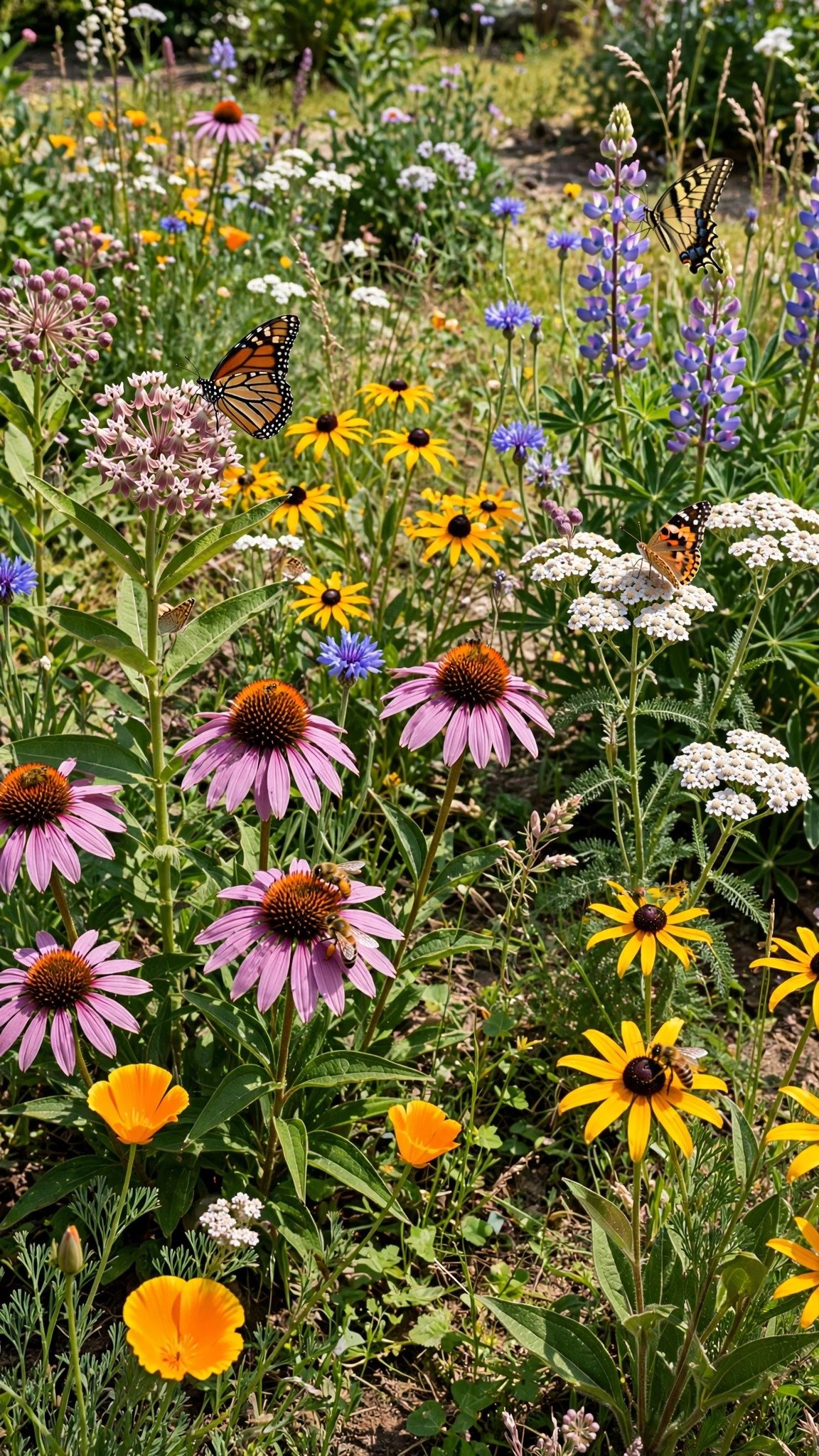
A pollinator garden is one of the easiest flower garden ideas, and it makes the whole yard feel alive. Plant a sunny patch with nectar-rich native flowers in groups — coneflowers, milkweed, bee balm and asters — and the bees and butterflies will find it within days. Native flowers need less water and less care than fussy imports, because they belong where they grow.
Leave a small bare patch of soil for ground-nesting bees and a shallow dish of water with a few pebbles in it, so butterflies can drink safely. Skip the sprays, because they kill the very visitors you want. A pollinator garden does not need to be big — even a few square feet of native flowers will bring colour and movement to the whole garden, all summer long.
- What you need: Native nectar flowers, a sunny patch, a shallow water dish, and no sprays.
6. A Cutting Garden for Fresh Bouquets All Summer
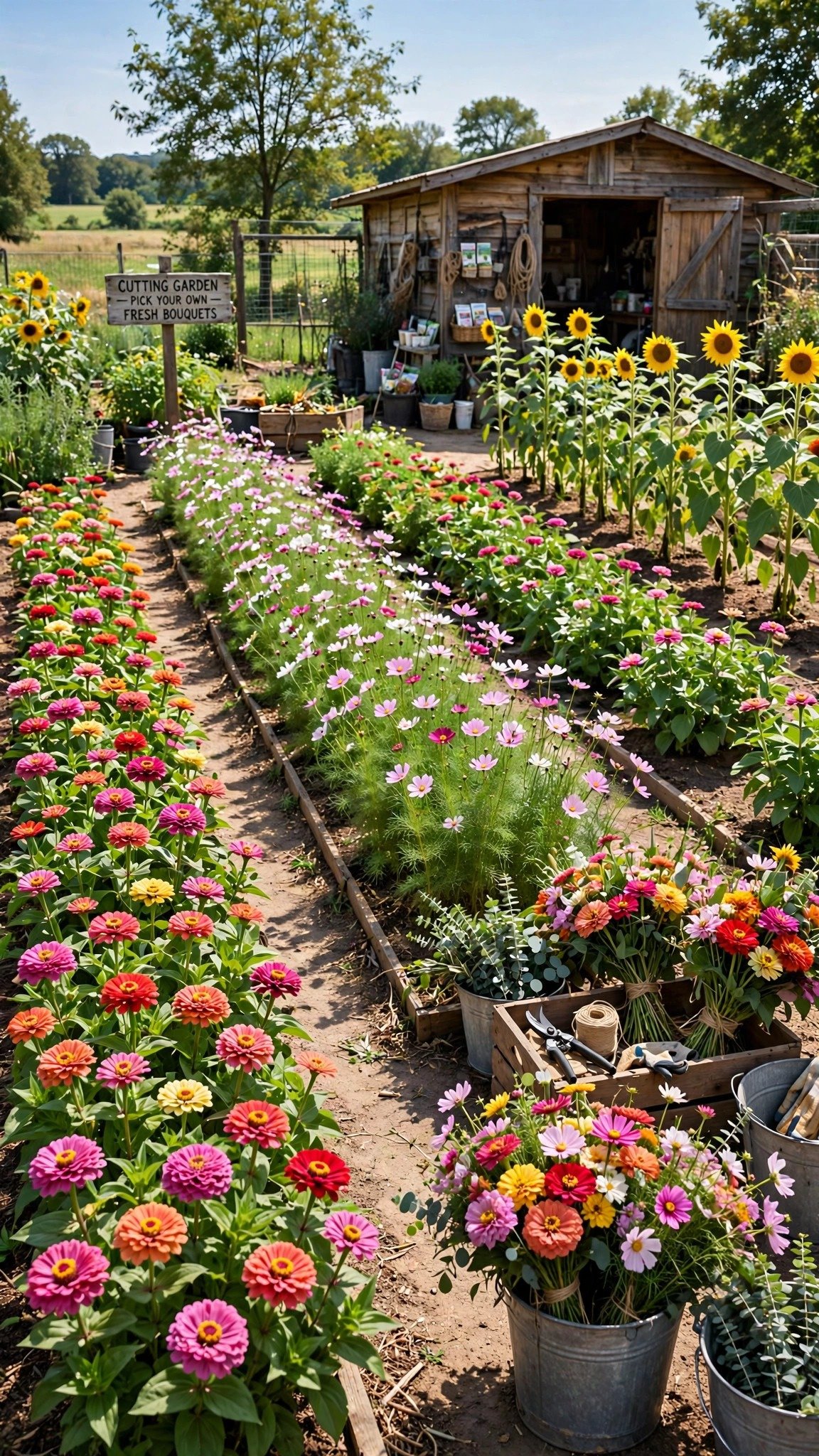
A cutting garden is a small bed grown just for picking. Plant long-stemmed flowers like zinnias, cosmos, sunflowers and sweet peas in neat rows in a sunny corner, and cut them often — the more you cut, the more they bloom. One small bed will fill the house with fresh flowers for months, and it costs far less than buying bouquets every week.
Keep the cutting bed separate from the flower borders, so you never feel guilty about picking from the display beds. Plant in blocks rather than single rows, so you always have something ready to cut. Cut in the morning when the stems are full of water, strip the lower leaves, and put the stems straight into a bucket of water. Fresh flowers on the table, all summer, from one sunny strip of soil.
- What you need: Sunny soil, zinnia, cosmos and sunflower seeds, and sharp scissors.
7. A Container Flower Garden for Patios and Small Yards
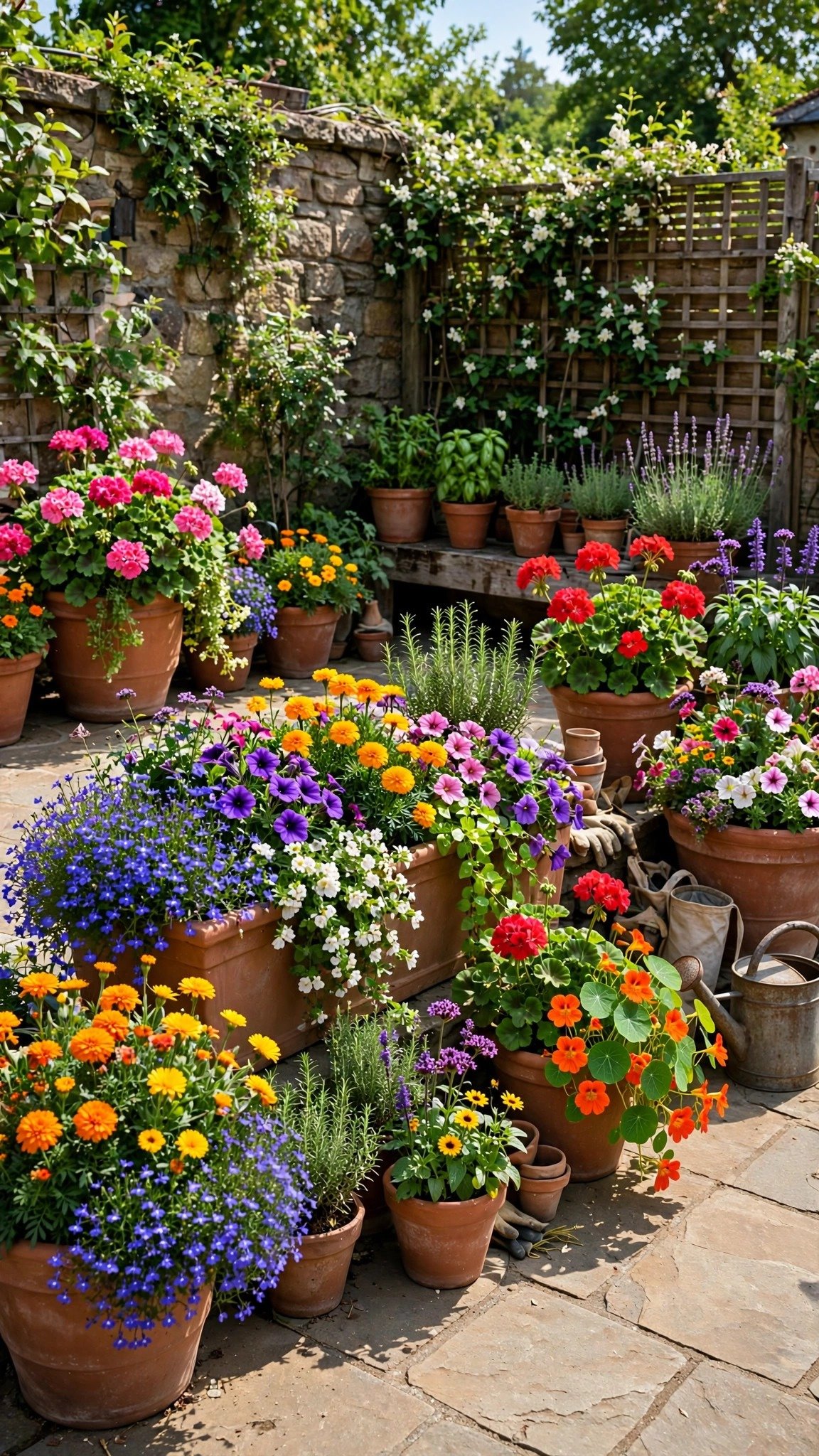
No ground, no problem. Pots, planters and window boxes turn a patio, balcony or small yard into a real flower garden. Use one large pot as the anchor, then smaller pots around it, and mix three shapes in each pot: a tall flower in the middle, a full flower around it, and a trailing flower spilling over the edge. That mix is what makes a group of pots look like a garden instead of a row of planters.
Containers are the best flower garden idea for renters too, because you can take them with you when you move. Use good potting soil, water more often than beds in the ground, and feed the plants once a month in summer. Move the pots into the sun or out of the wind as the seasons change — a container garden is the only garden you can rearrange whenever you like.
- What you need: Large pots, potting soil, and tall, full and trailing flowers.
8. A Raised Bed Flower Garden for Easy Care
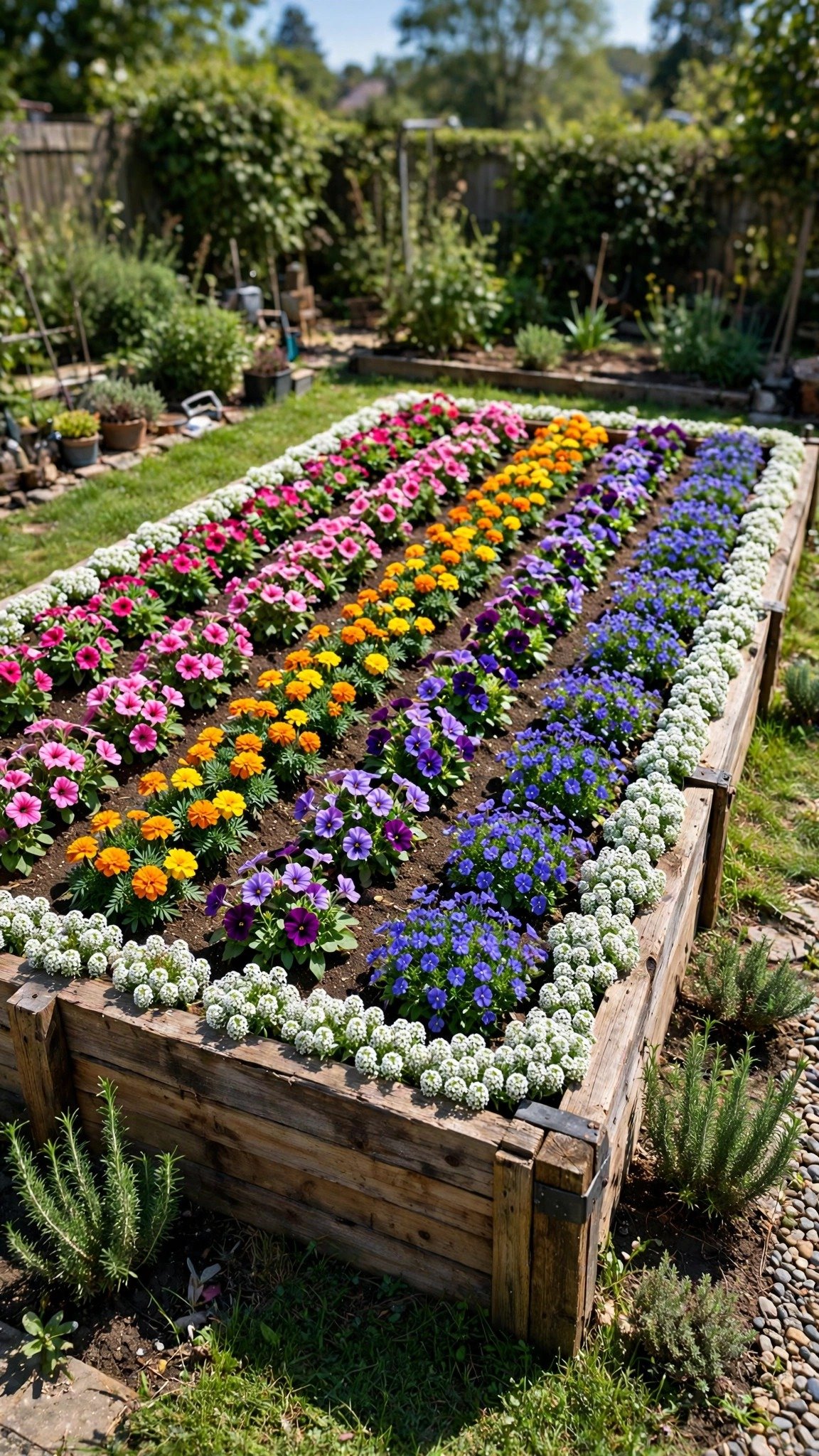
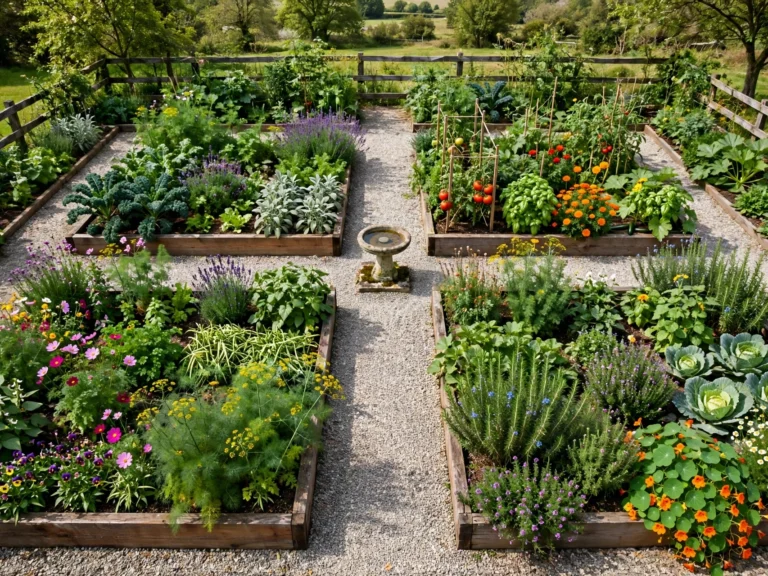
A raised wooden bed lifts the flowers to a comfortable height, so there is less bending and the soil stays loose and warm. Fill it with good soil and compost, plant in rows or loose drifts, and edge it with low flowers like alyssum or lobelia. Raised beds suit older gardeners, bad soil, and anyone who wants a tidy flower garden that is easy to water and weed.
Keep the bed about four feet wide so you can reach the middle from both sides without stepping on the soil. Plant the tallest flowers in the centre or at the back, and the lowest ones along the edge, so every layer shows. A raised bed also drains well after rain, which keeps the roots healthy. One bed is enough to start, and you can add more next year when you know what grows well for you.
- What you need: Wood boards, good soil, compost, and flowers in tall, medium and low layers.
9. A Wildflower Meadow Corner for a Natural Look
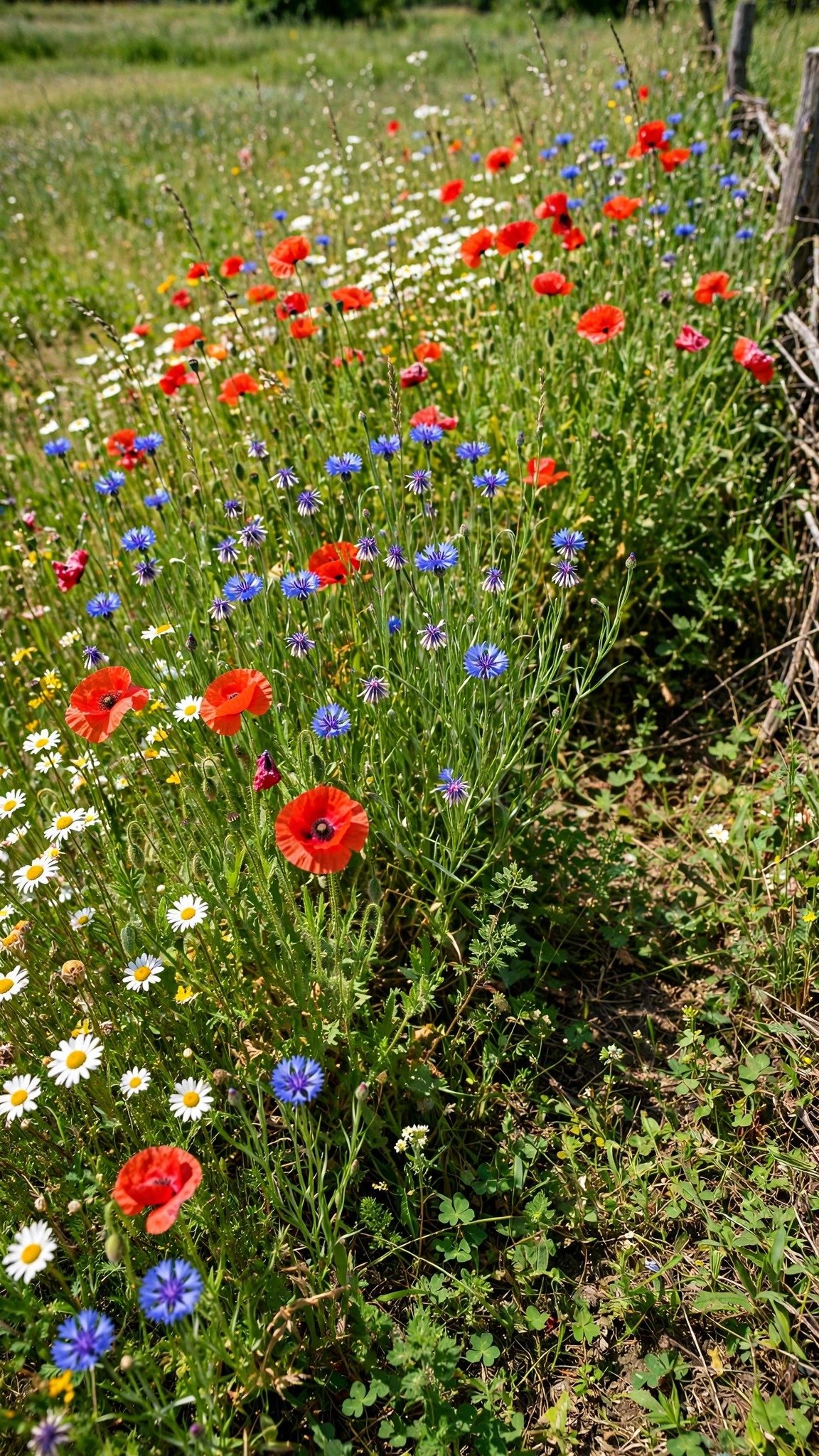
Turn one sunny corner into a loose wildflower meadow. Scatter seed on bare soil, rake it in lightly, water it, and let it grow — no rows, no measuring, no fuss. Poppies, cornflowers and daisies will fill the corner with colour, and the bees and butterflies will follow. A meadow corner needs almost no care once it is going.
Keep the edges mown so it looks planned, not forgotten, and mow the whole patch once in late fall. The seed will drop and come back next year, often thicker than before. A wildflower meadow is perfect for a corner of the yard that is too awkward for lawn or beds. It turns a problem spot into the liveliest part of the garden, and it costs less than almost any other planting you can try.
- What you need: Wildflower seed mix, a sunny patch of bare soil, and a rake.
10. A Front Walk Lined With Long-Blooming Flowers
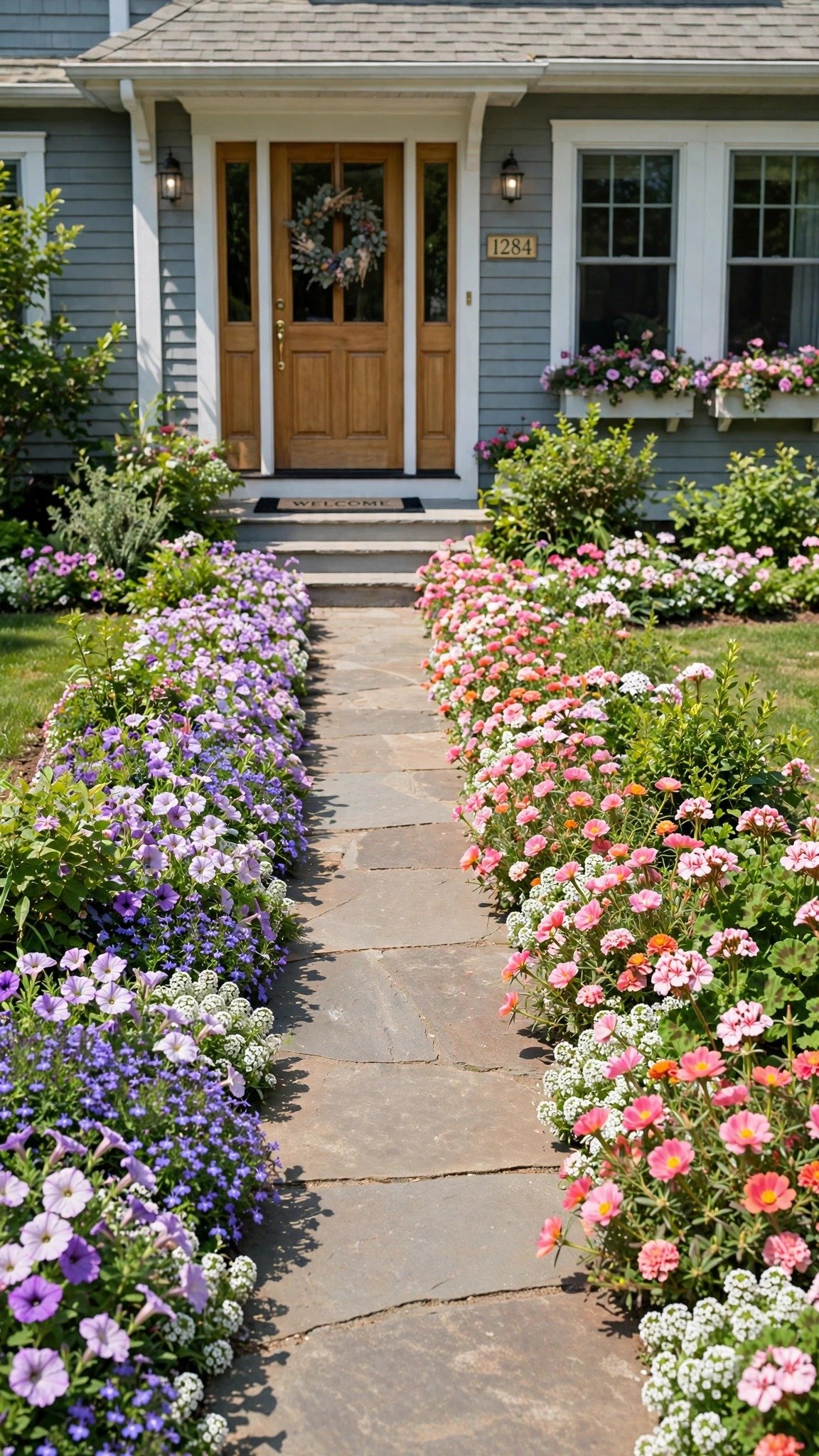
The walk to the front door is the first thing people see, so line it with low, long-blooming flowers on both sides. Plant in repeated groups so the walk looks tidy from the street, and keep the flowers low enough that they never block the path or hide the door. This is the simplest way to use planting ideas for front of house: a welcoming walk, not a big project.
Choose flowers that bloom for months, not weeks — lavender, catmint, geraniums or low daylilies all work well along a path. Repeat the same few flowers on both sides so the walk feels balanced, and leave the edges neat with a clean cut along the lawn. A flower-lined walk makes the whole front of the house look cared for, even if the rest of the yard is still a work in progress.
- What you need: Low, long-blooming flowers, compost, and mulch to hold moisture.
11. A Fragrant Flower Garden by the Door or Patio
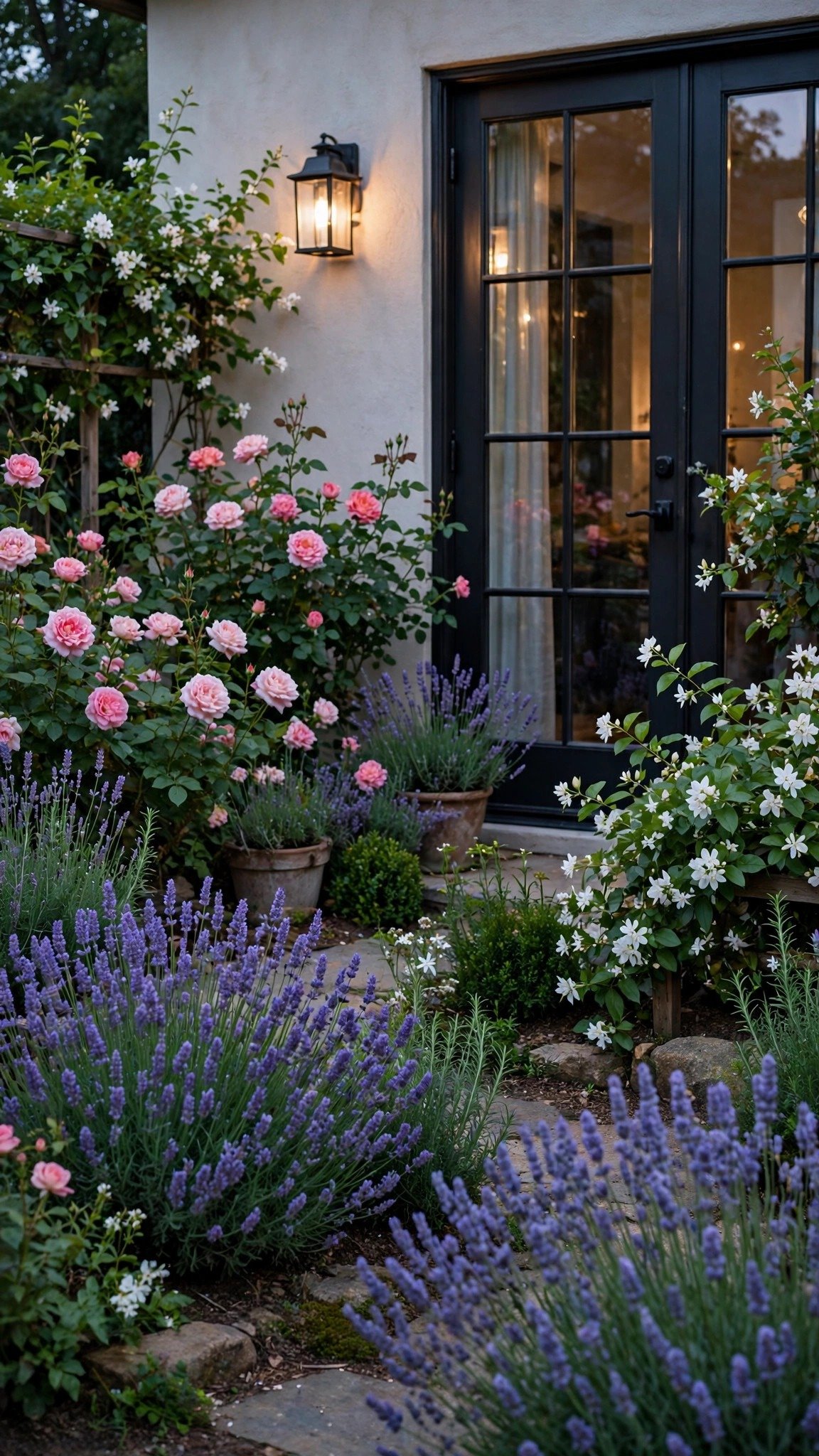
Scent is the part of a flower garden most people forget, and it costs nothing extra. Plant scented flowers where you actually sit and walk — by the front door, beside the patio, or under a window you open in summer. Roses, jasmine, lavender and sweet peas all give their scent freely, and a few plants are enough to fill the air.
Choose flowers that smell strongest in the evening if you sit outside after dinner, and plant them close to the path or the chairs so you brush past them. Night-scented flowers like jasmine and nicotiana open their scent after sunset, which makes a summer evening on the patio feel special. A fragrant garden is one you notice with your eyes closed, and it is the easiest luxury a yard can offer.
- What you need: Roses, jasmine or lavender, planted close to the door, patio or path.
12. A White Flower Garden That Glows at Dusk
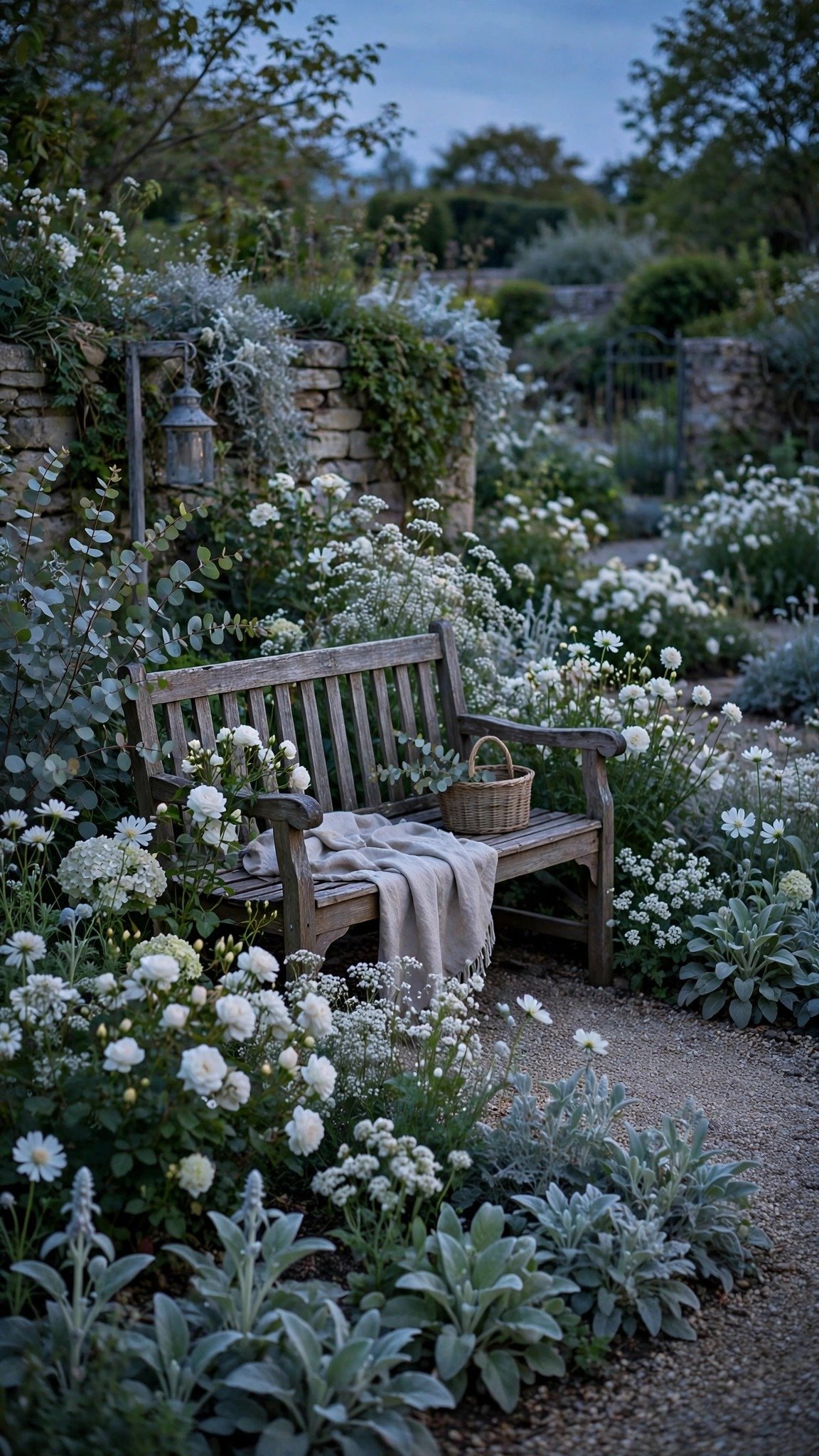
A garden of white and pale flowers looks simple in the day and glows in the evening light. Plant white flowers near the seating area or along the path, with silver-green leaves between them, and the whole garden seems to light up at dusk. This is the quietest of all flower garden ideas — one colour, repeated everywhere, and it makes small gardens look bigger and calmer.
White roses, white phlox, white daisies and pale lavender all work well together, because the shapes change even when the colour stays the same. Add a bench or a pale stone path so the light bounces around the garden. A white flower garden is also easy to plan: pick one colour, repeat it in different heights and shapes, and the garden looks designed without any effort at all.
- What you need: White and pale flowers in different heights, silver-green leaves, and a bench.
13. A Rock Garden With Flowers for Dry, Sunny Spots
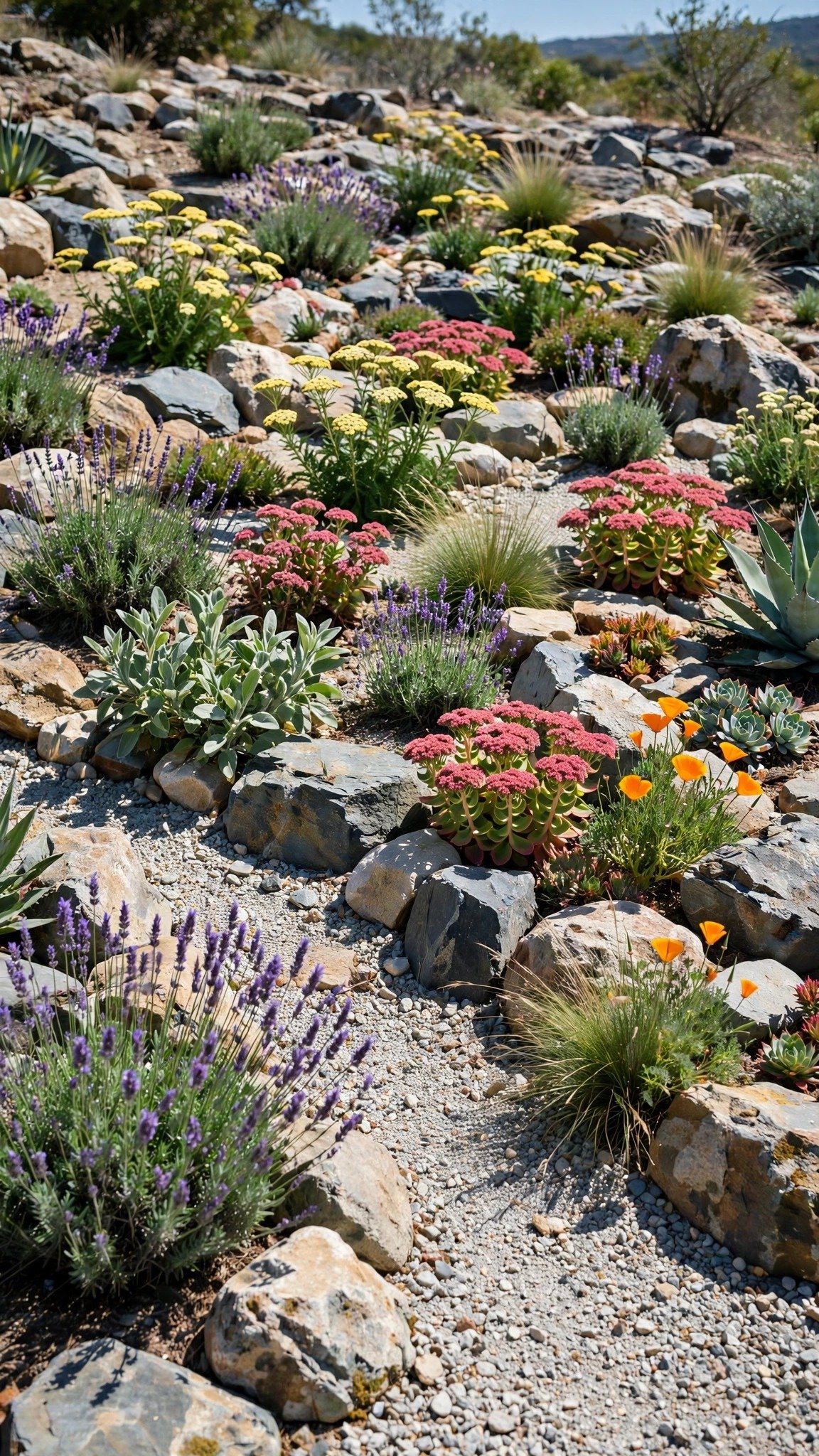
For a hot, dry slope or a sunny corner where nothing else grows, build a rock garden. Set stones and gravel into the soil, then plant tough flowers that love sun and need little water — lavender, sedum, creeping thyme and rock cress. The stones hold heat, drain water fast, and make the flowers stand out against the pale gravel.
A rock garden needs less watering than any other flower garden, which makes it perfect for dry summers and busy people. Use a weed barrier under the gravel if the spot has been weedy before, and leave space between the plants so air moves freely around them. The best rock gardens look like a little hillside that was always there — a few stones, a few tough flowers, and nothing fussy at all.
- What you need: Stones and gravel, lavender or sedum, and a weed barrier.
14. A Vertical Flower Garden on a Fence or Wall
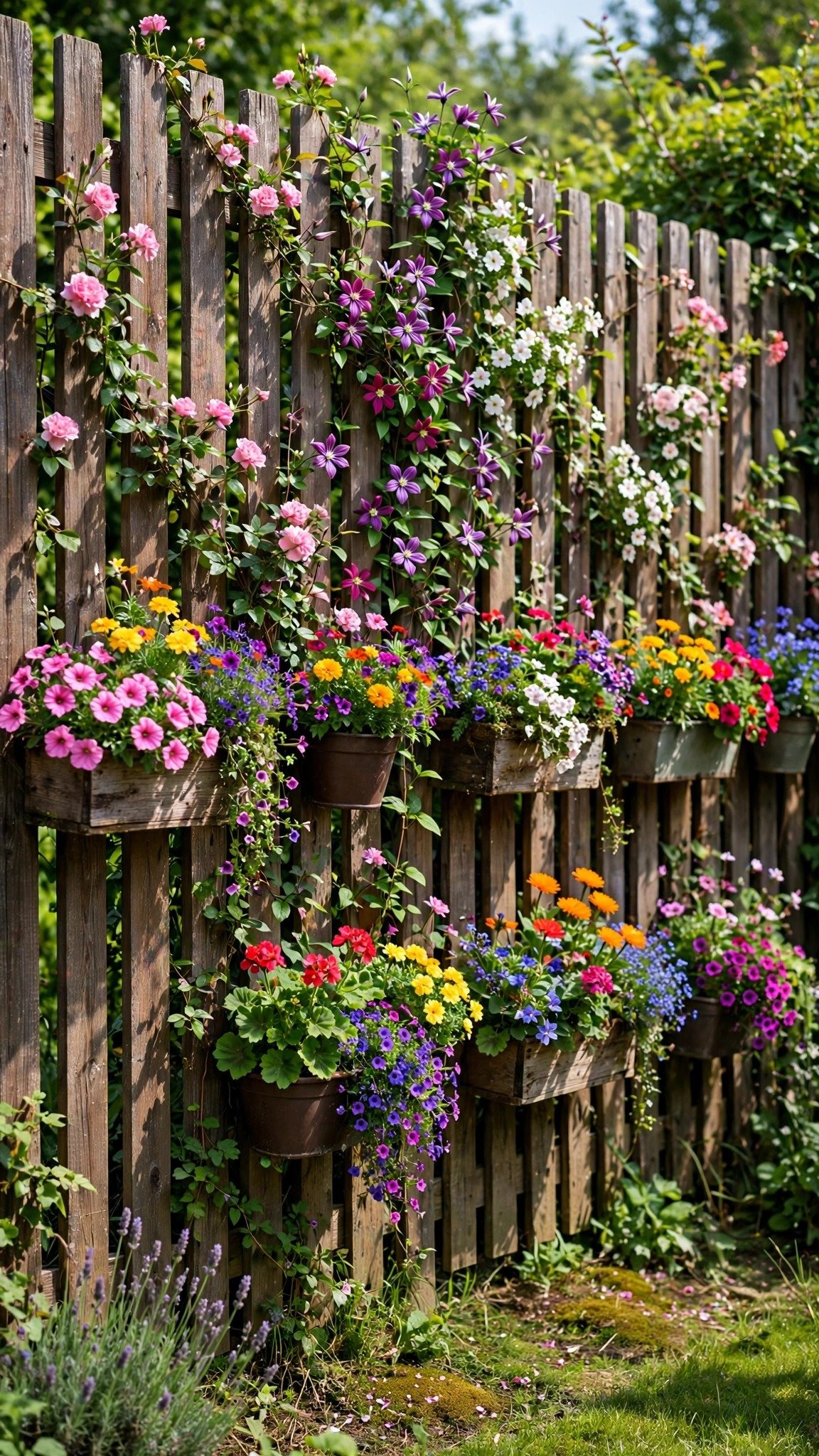
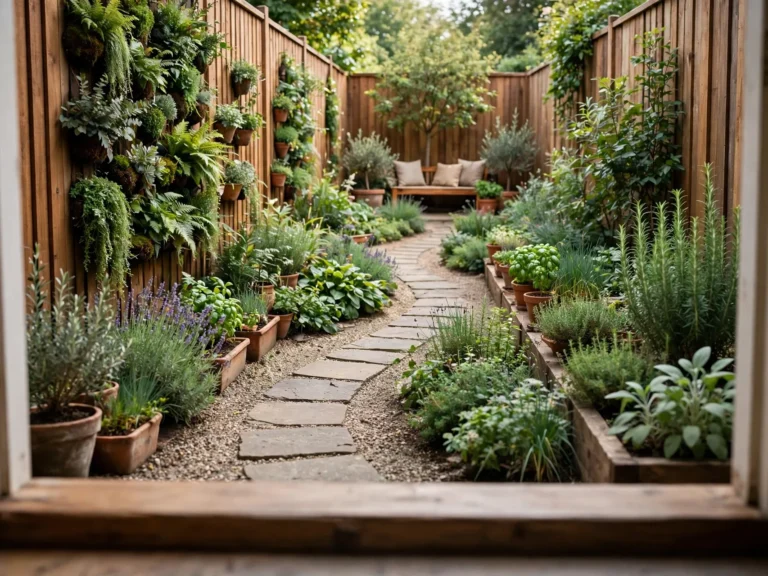
When the ground is full, grow up. A trellis, a wall planter or a row of hanging pots turns a plain fence into a wall of flowers. Climbing roses, clematis and jasmine cover a fence in one season, and wall planters suit small flowers and herbs near the door. Vertical planting is the best way to add flowers to a small yard without losing any ground space.
Fix the trellis firmly to the wall or fence before planting, guide the young stems along it with soft ties, and prune after flowering so it stays tidy. Mix a climber with a few hanging pots at different heights, so the wall has flowers from the ground to the top. A fence covered in flowers is one of the prettiest sights a small garden can have, and it takes up no ground at all.
- What you need: A trellis or wall planters, a climbing rose or clematis, and soft plant ties.
15. A Water-Wise Flower Garden That Needs Less Watering
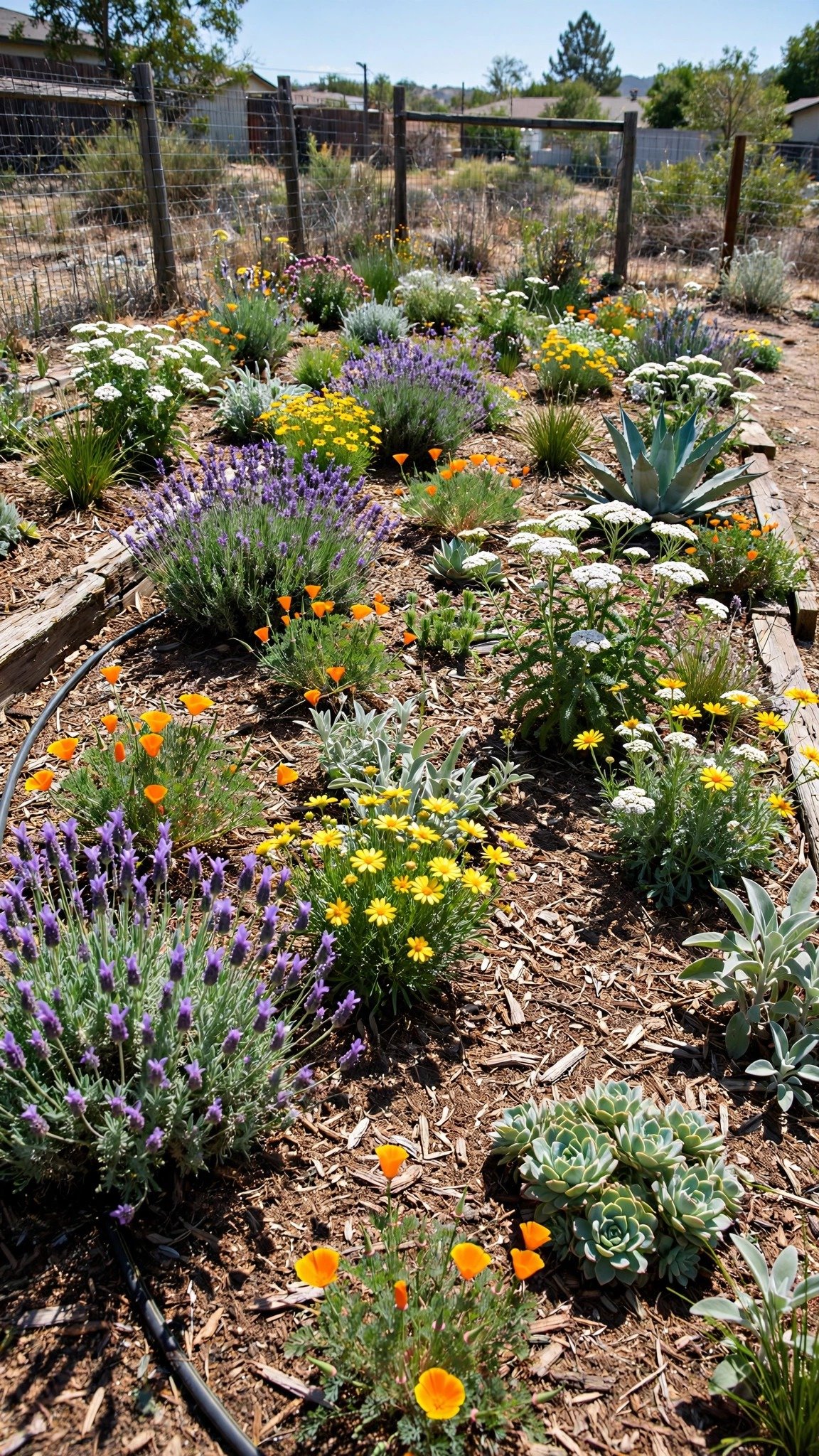
A water-wise flower garden stays colourful with half the watering of a thirsty garden. Group flowers that need the same amount of water together, mulch thickly, and choose tough plants that handle dry spells — lavender, coneflowers, yarrow and ornamental grasses all do well with less water. Water in the morning, so the plants drink before the sun gets hot.
Mulch is the real secret here: a thick layer of bark or straw keeps the soil cool and moist for days after watering. Never mix thirsty plants like hydrangeas with dry-lovers like lavender in the same bed, or one of them will always struggle. A water-wise garden suits hot summers and busy people, and it mostly looks after itself once the plants settle in.
- What you need: Drought-tolerant flowers, thick mulch, and a watering can.
16. A Seasonal Succession Plan: Spring Bulbs to Fall Asters
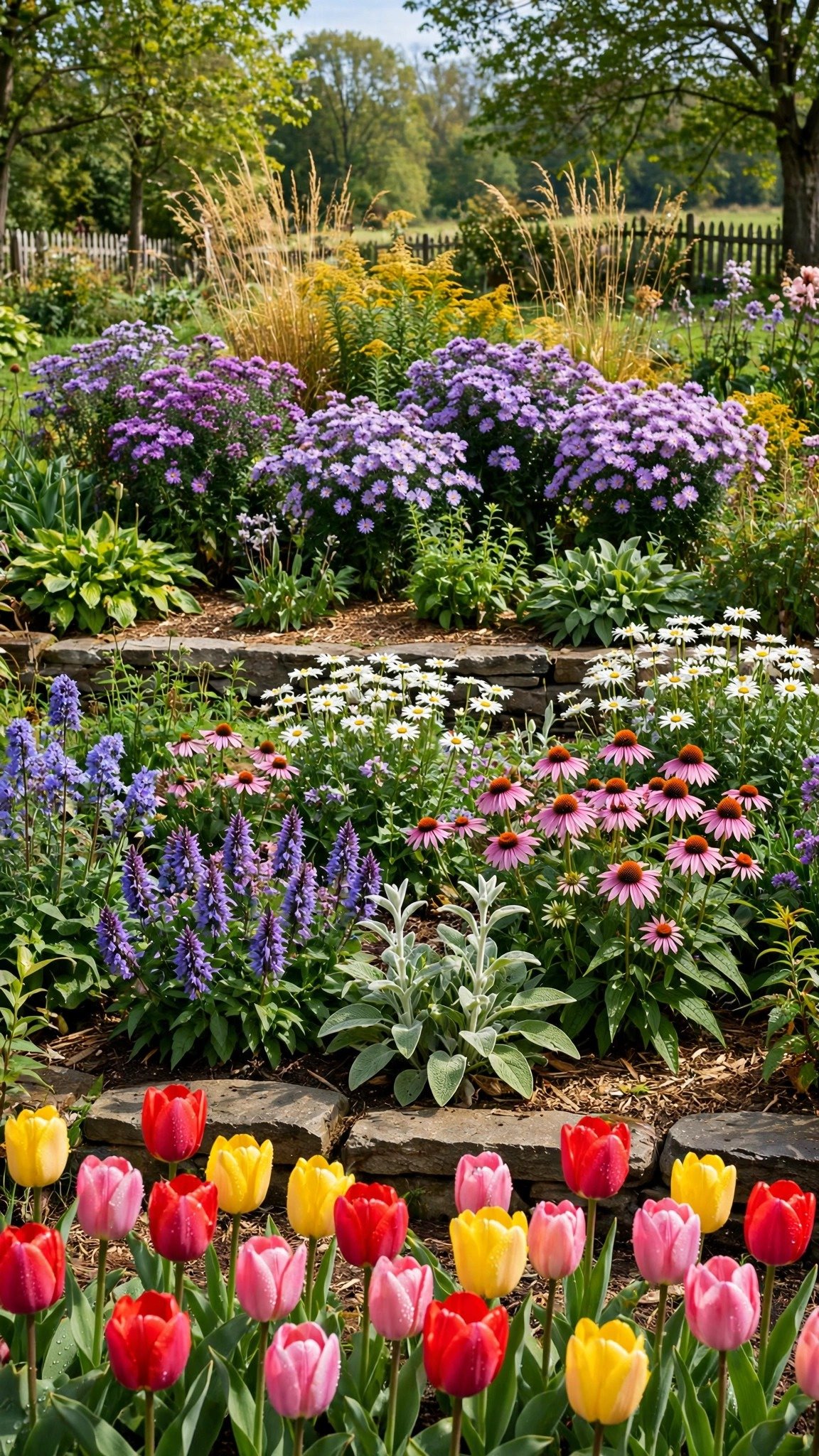
The trick to a garden that never looks empty is planting in seasons. Start with spring bulbs like tulips and daffodils, then summer perennials and annuals such as zinnias and coneflowers, then fall flowers like asters and mums that bloom when everything else fades. Each group starts blooming as the last one finishes, so the garden hands over from one season to the next.
Plan the year on paper before you plant, and mark where each season’s flowers will go. Plant the bulbs in fall, the perennials in spring, and the fall flowers in early summer, so nothing is rushed. This one idea turns 16 separate ideas into a garden with colour from March to October — and it is the difference between a garden that blooms for a month and one that blooms all year.
- What you need: Spring bulbs, summer perennials, fall asters, and a simple year plan on paper.
17. A Flower Garden Around a Focal Point
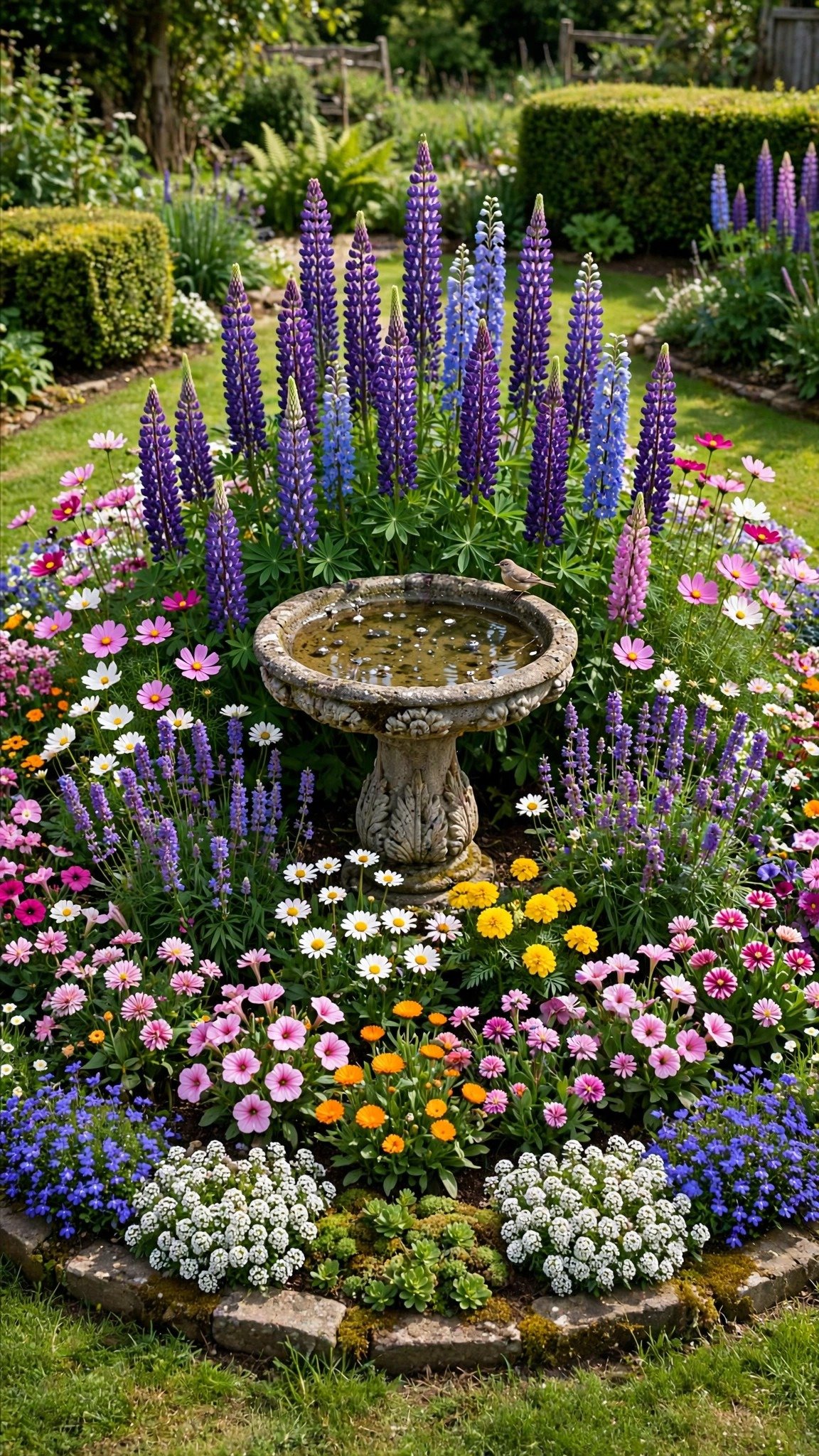
Give the garden a centre — a small tree, a birdbath, a fountain or a large pot — and plant the flowers around it in rings, tallest near the centre and lowest at the edge. A focal point makes the whole garden look designed, even if the planting is simple. It also gives the eye somewhere to rest, so the flowers feel arranged instead of scattered.
Pick one focal point, not three, and keep it in scale with the yard: a small birdbath suits a small garden, while a large tree suits a big one. Plant the same few flowers in every ring, so the rings feel connected. Walk around the garden and check the view from the house window too — the focal point should look good from inside as well as outside.
- What you need: A birdbath, fountain or small tree, and flowers in tall, medium and low rings.
FAQS
What is the easiest flower garden for a beginner?
Start with a container flower garden or one small sunny border. Fill pots or a short bed with easy flowers like marigolds, zinnias, and petunias, plant them in groups, and water in the morning. One small start teaches you sun, soil and watering before you take on a bigger garden.
How do I plan a flower garden that blooms all season?
Plant in seasons so colour never stops. Start with spring bulbs like tulips and daffodils, add summer perennials and annuals such as zinnias and coneflowers, then finish with fall flowers like asters and mums. When each group fades, the next one opens, and the garden stays in bloom from spring to fall.
What flowers should I plant in a sunny garden?
Choose sun-loving flowers that need six or more hours of direct sun, such as coneflowers, daylilies, lavender, zinnias and black-eyed Susans. Plant them in groups of three or five, water them well in the first year, and mulch around them to hold moisture. Sunny flowers grow strongest when they get full sun all day.
How do I start a flower garden on a budget?
Start from seed, buy small plants, and build one border at a time. Seeds cost very little, small plants grow fast, and you can split perennials from friends or neighbours for free. Mulch with leaves or grass clippings, and skip fancy edging. A small garden done well beats a big garden left half-finished.
What is the best layout for a flower garden?
Put tall flowers at the back, medium ones in the middle, and low ones at the front, so every layer shows from the lawn. Repeat the same flowers in groups of three or five instead of planting one of everything. This simple layered layout keeps the garden calm, full and easy to look after all season.
How can I make a flower garden low maintenance?
Choose perennials that come back every year, and plant the right flower in the right spot — sun-lovers in sun, shade-lovers in shade. Mulch thickly to stop weeds and hold moisture, and group plants by how much water they need. A garden planted this way needs less watering, less weeding and less work.
Can I have a flower garden in a small yard or on a patio?
Yes. Containers, window boxes, raised beds and a vertical garden on a fence give you flowers without any open ground at all. Use one large pot as the anchor, mix tall, full and trailing flowers in each pot, and move them into the sun. A small patio can hold more flowers than you think.
Conclusion
A flower garden does not need to be big or perfect to be beautiful. Start with one border or a few pots, plant what loves your sun, and let the colour build year by year. The first season is the hardest, and every season after that gets easier.
These 17 flower garden ideas all work the same way: a little planning, the right plants in the right spots, and a garden that keeps blooming from spring to fall. Pick your two or three favourites, plant them this weekend, and watch the yard turn into a place you want to spend time in.