
13 Taj Mahal Quartzite Kitchen Ideas for Timeless Luxury
Taj Mahal quartzite has become a favourite for kitchens because it combines the soft, luxurious look of marble with the practical strength of a hard natural stone. Its creamy white background, soft beige undertones, and flowing taupe or gold-grey veining work well with warm woods, painted cabinets, brass hardware, and modern finishes.
But using Taj Mahal quartzite well takes more than choosing the slab. The colours, cabinet layout, edge shape, backsplash, and lighting all affect how the stone looks once it is installed. These 13 Taj Mahal quartzite kitchen ideas explore different ways to use the material without making the room feel predictable.
1. Pair Warm Wood Cabinets With Taj Mahal Quartzite
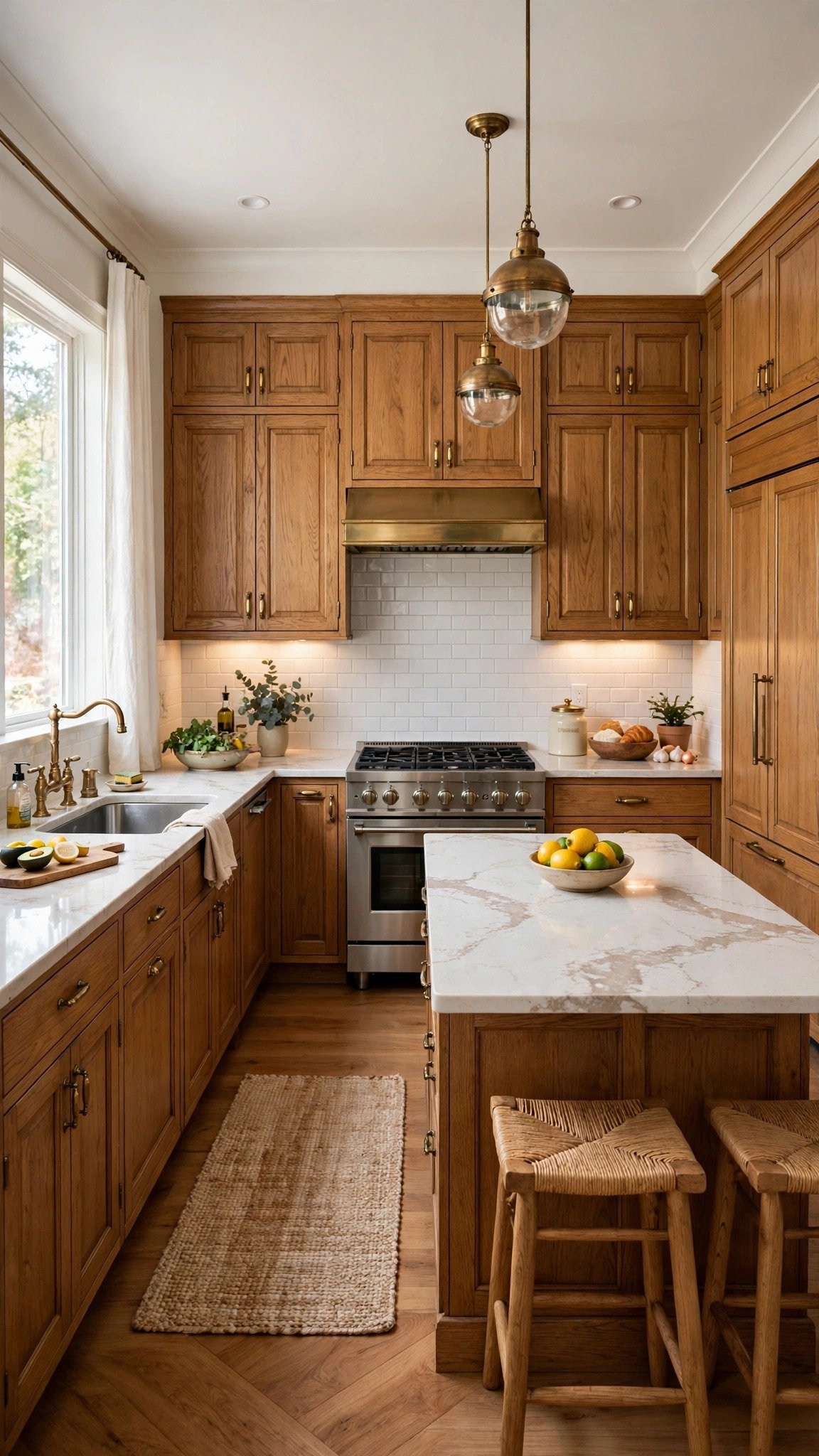
Pairing Taj Mahal quartzite with natural or lightly stained wood cabinets makes a kitchen feel warm without losing its refined look. The creamy stone suits oak, walnut, and other warm wood tones naturally. Avoid a cabinet stain that is too yellow, because it can bring out the warmer tones in the quartzite too much and make the room feel dated.
Choose a cabinet finish with enough contrast against the quartzite to keep the stone visible. Put the countertop in first as the main light surface, then hold cabinet samples directly against the actual slab before choosing the stain. Simple hardware in aged brass or brushed bronze connects the warmth of the wood with the soft movement in the stone.
2. Make a Statement With a Waterfall Island
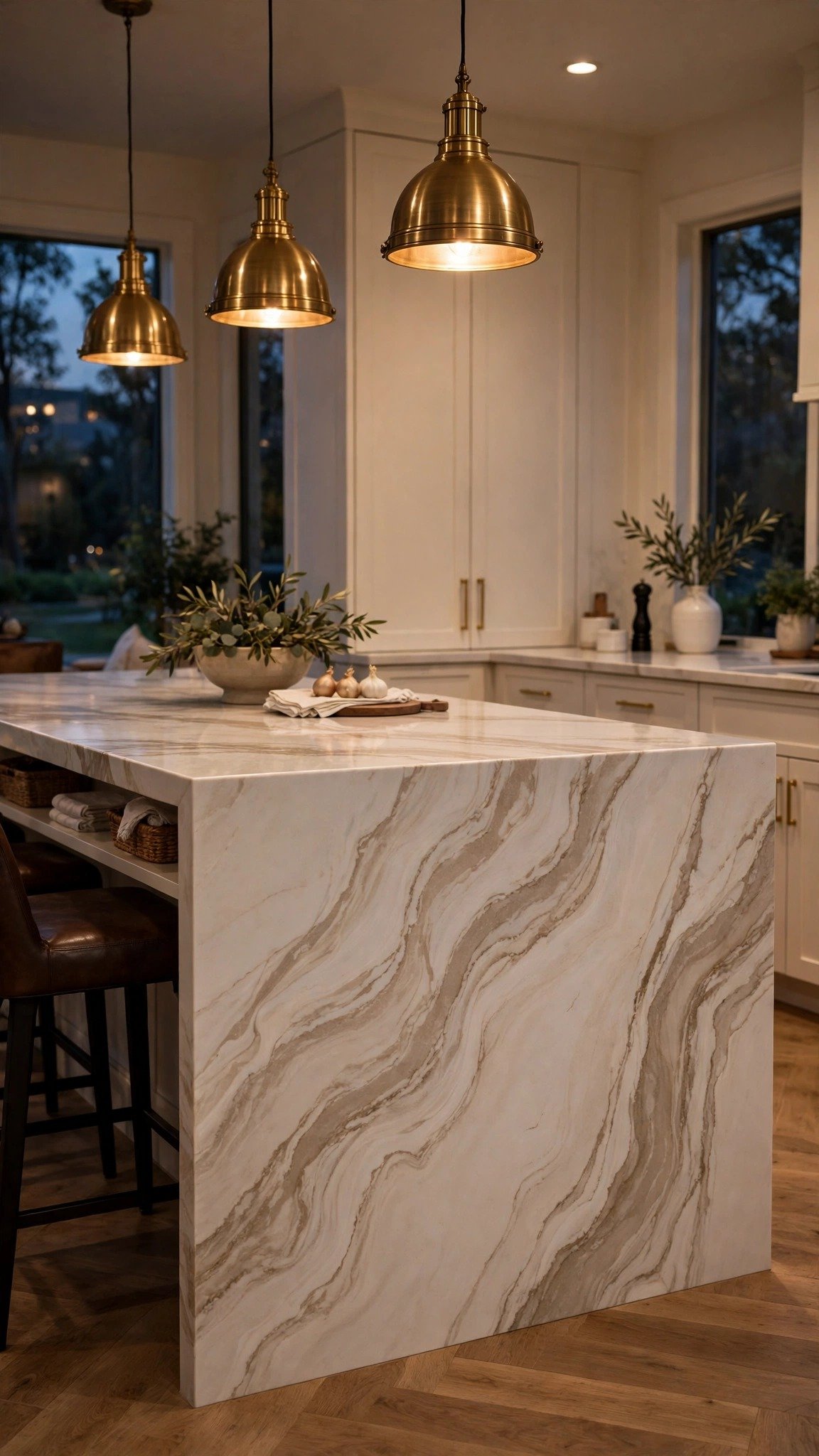
A waterfall island gives Taj Mahal quartzite a strong architectural presence by letting the slab run down both ends of the island. This works best when the island is large enough to show the stone’s natural veining. A common mistake is using a small waterfall island with heavily patterned stone, which can make the design look crowded instead of intentional.
Plan the island size around the available slab so the veining can be placed on purpose. Ask the fabricator to create a bookmatched or visually balanced layout where possible. Keep the island cabinets simple and let the waterfall edge become the main visual feature of the kitchen. In the evening, warm pendant lights make the stone glow.
3. Run Taj Mahal Quartzite Up as a Full-Height Backsplash
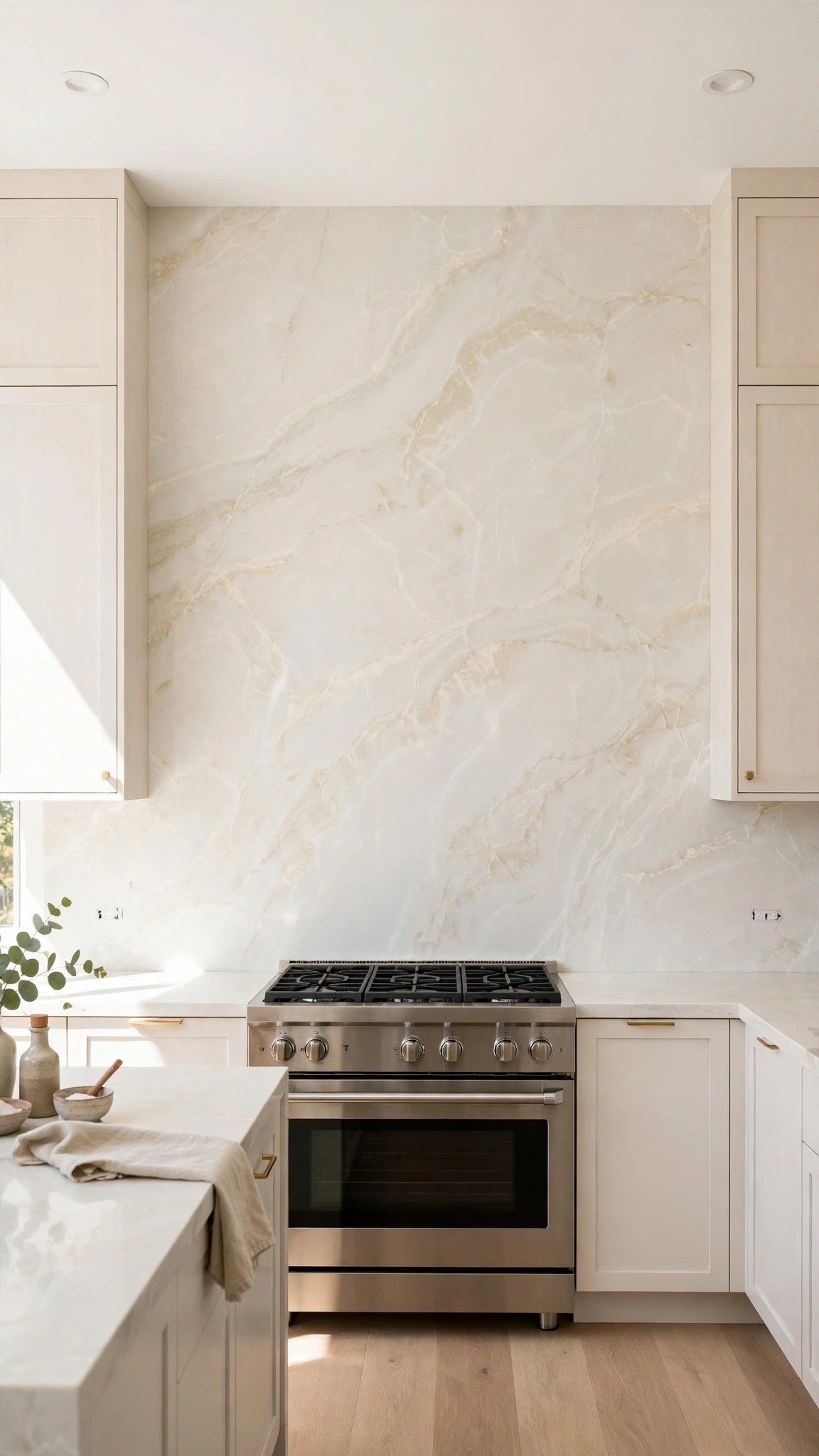
Using Taj Mahal quartzite from the countertop all the way up the wall creates a smooth, upscale look and removes many of the grout lines that come with tile. This works especially well behind a range or cooktop. Before installation, confirm outlet locations carefully, because moving electrical boxes later can be expensive and may break the stone’s visual flow.
Measure the wall carefully and plan the backsplash layout with the countertop seams. Ask the fabricator to mark electrical cutouts and key details before the slab is installed. Using the same stone on the counters and backsplash makes a calm, continuous surface that can make the kitchen feel larger.
4. Choose Cream Cabinets for a Soft Monochromatic Kitchen

Cream or warm-white cabinets can make Taj Mahal quartzite feel especially refined, because they repeat the stone’s creamy base without fighting its natural movement. The key is choosing undertones with care. Bright blue-white cabinets can clash with the warmer stone, while a creamy paint colour gives a much more cohesive result.
Compare several cabinet samples beside the actual quartzite under both daylight and artificial light. Choose the colour that blends naturally with the slab instead of matching only from a small online photo. Add contrast through dark wood accents, woven accessories, or darker light fixtures rather than another competing countertop colour.
5. Let Taj Mahal Quartzite Shine Around the Range
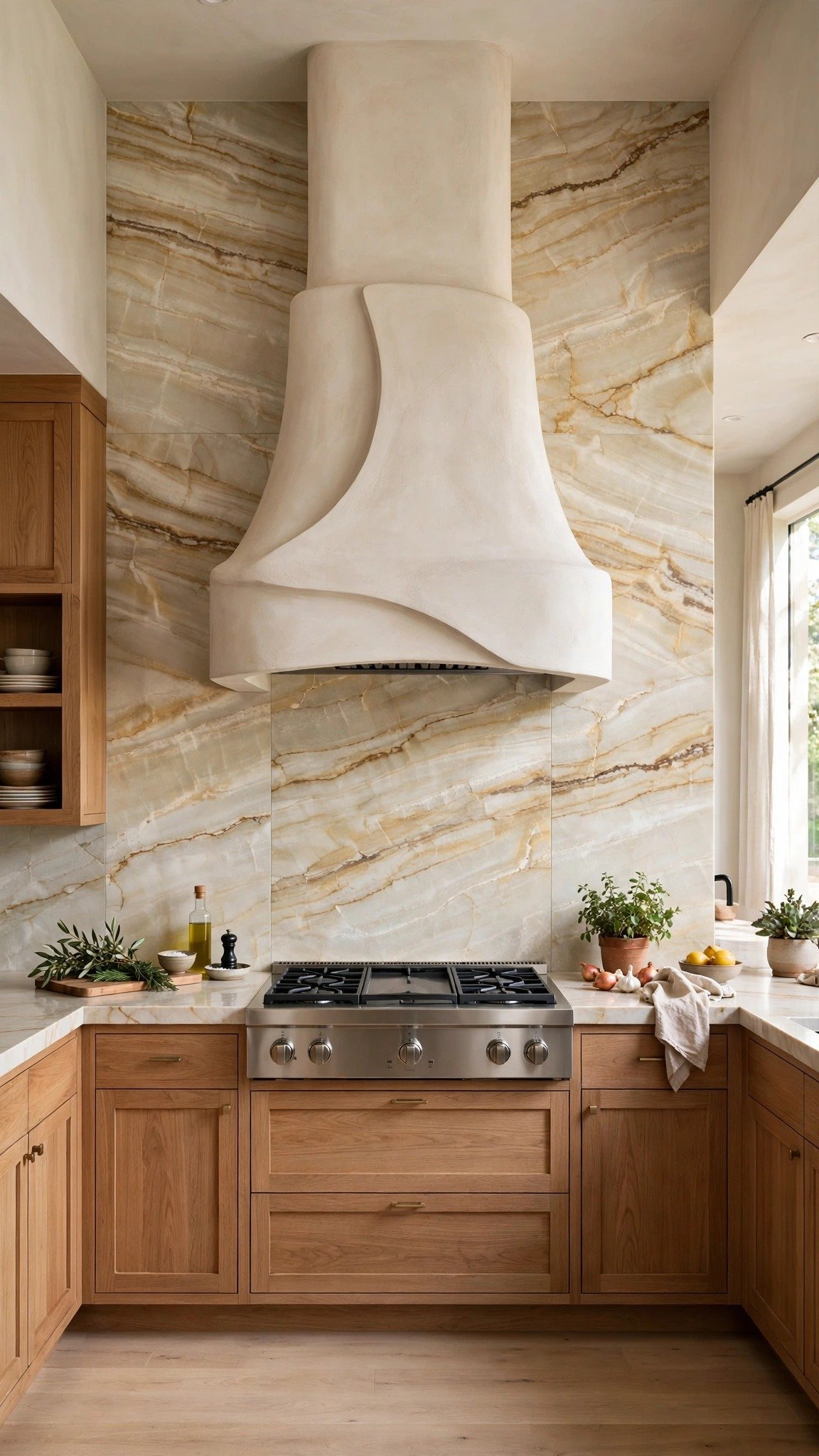
Making the cooking area the focal point with a large Taj Mahal quartzite backsplash creates a luxurious but practical centerpiece. The smooth slab is especially useful around a range because it is easier to wipe down than many small tile joints. Proper installation and sealing matter here, especially around areas exposed to cooking oils, steam, and frequent cleaning.
Center the stone layout around the cooking surface and plan the hood size before fabrication. Talk about heat exposure and installation needs with the stone professional before finalising the design. Choose a sculptural range hood or a simple metal hood that frames the stone without covering too much of its natural veining.
6. Pair Dark Cabinetry With Light Quartzite

Deep green, charcoal, navy, or espresso cabinets can create striking contrast against Taj Mahal quartzite while keeping the kitchen grounded. This mix works well in larger kitchens, where darker cabinets will not overwhelm the space. To avoid a heavy look, balance the lower cabinets with lighter walls, flooring, or upper cabinets.
Use the quartzite as the main light-reflecting surface and place darker cabinets around it. Test cabinet colours beside the slab, because undertones can change a lot under warm and cool lighting. Add warm metallic fixtures to soften the contrast and stop the dark cabinets from feeling too formal.
7. Keep It Minimal With Quiet Veining

Taj Mahal quartzite can also work beautifully in minimalist kitchens when the rest of the room is intentionally simple. Instead of competing with the stone through decorative accessories, use flat-front cabinets, clean hardware, and clear surfaces. The biggest mistake in this style is adding too many finishes, which takes attention away from the natural movement that makes the quartzite interesting.
Limit the palette to a few coordinated finishes and let the quartzite provide most of the visual texture. Keep countertop appliances stored whenever possible. Choose one or two carefully selected decorative pieces rather than filling the counters with accessories.
- What you need: simple cabinetry, Taj Mahal quartzite, integrated appliances, minimal hardware, simple pendant or recessed lighting
8. Make a Cozy Farmhouse-Inspired Kitchen
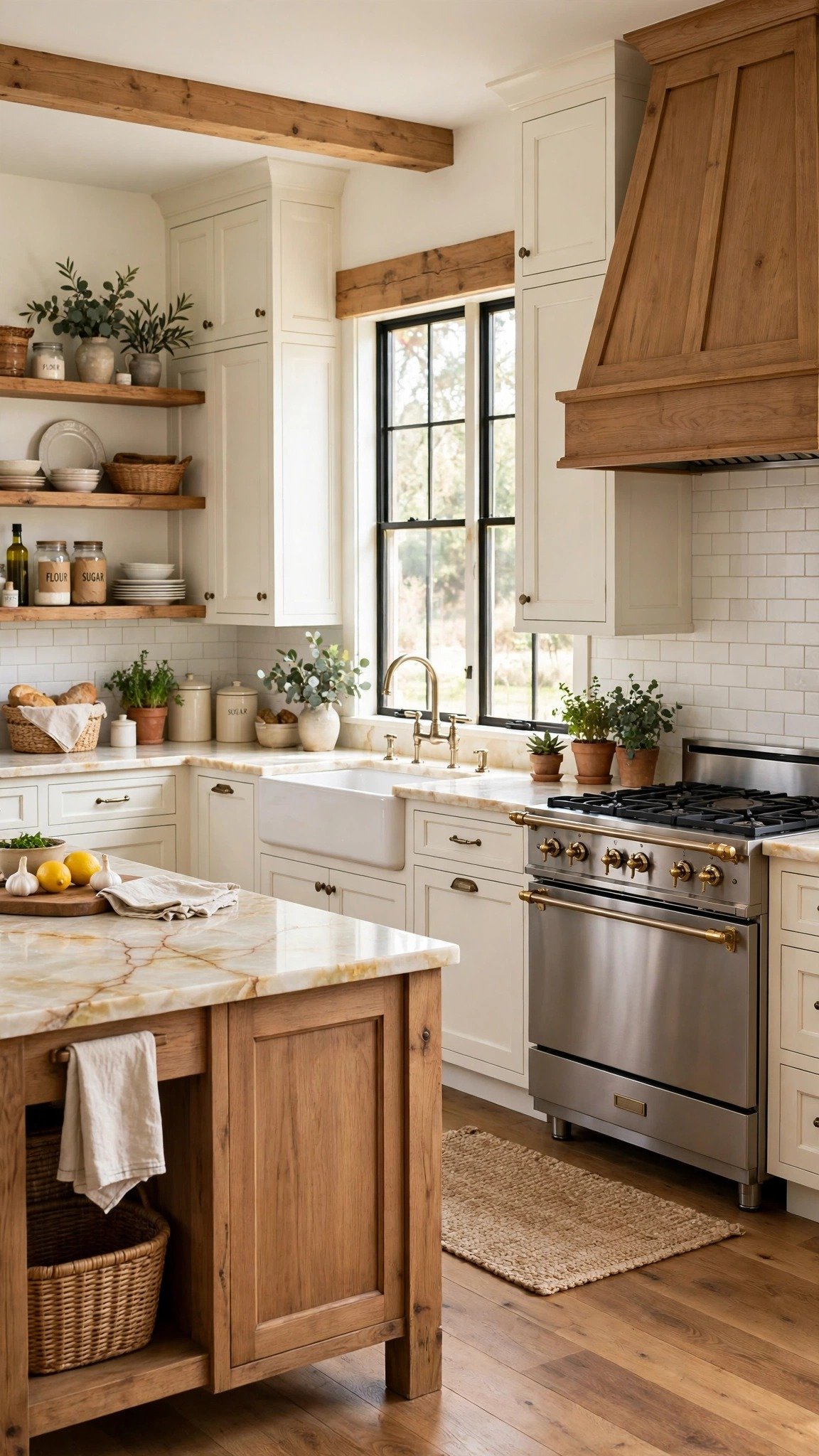
Taj Mahal quartzite fits naturally into farmhouse kitchens because its warm background works beautifully with painted cabinets, natural wood, and traditional details. Instead of relying on too much rustic decoration, combine the stone with practical pieces such as a deep sink, simple shaker doors, and durable wood accents for a more timeless result.
Start with the quartzite and cabinets as the foundation, then add farmhouse details one by one. Keep the backsplash simple so the stone stays the main visual texture. A reclaimed-wood cutting board or a natural wood stool can add warmth without making the kitchen look overly themed.
9. Create Drama With Bookmatched Quartzite Behind the Cooktop

Bookmatching can turn Taj Mahal quartzite into a dramatic focal point by mirroring two slabs so the veining flows outward from the center. This needs more planning and fabrication than a standard installation, but it can create a custom architectural effect. Always inspect the whole slabs before approving the layout, because natural stone patterns vary a lot.
Ask the fabricator to dry-lay or digitally map the slabs before cutting. Place the strongest natural veining where it will be visible instead of hiding it behind cabinets. Keep the surrounding finishes understated so the bookmatched stone stays the main feature.
10. Add Brass and Cream Details to Taj Mahal Quartzite
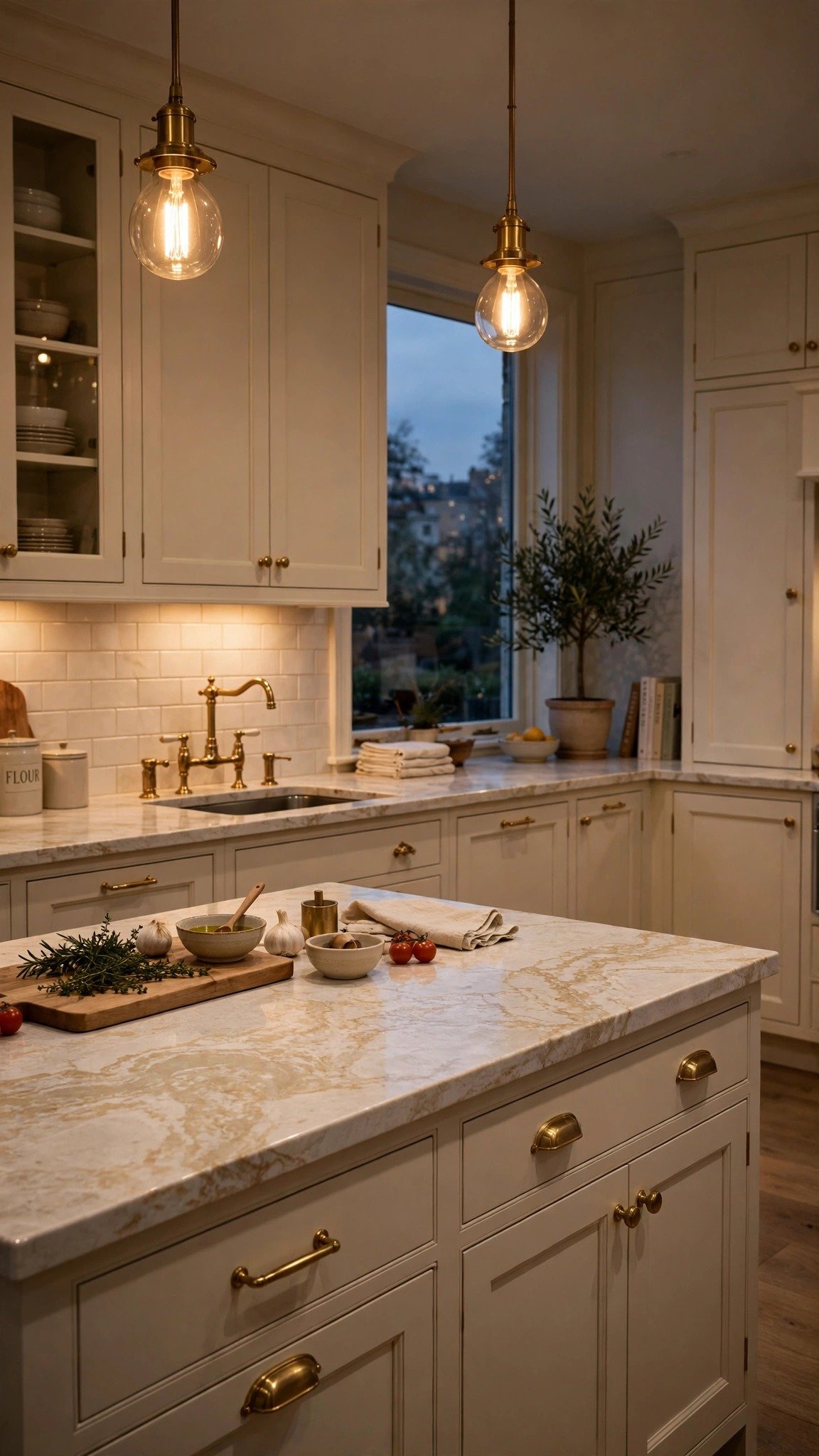
Brass hardware and fixtures can bring out the warm undertones in many Taj Mahal quartzite slabs. The mix feels polished without becoming too flashy when the brass is used consistently. Avoid mixing several unrelated metal finishes, because the natural variation in the stone already gives plenty of visual interest.
Select one main metal finish and repeat it across the faucet, cabinet pulls, lighting, and smaller details. Compare brass samples with the slab before ordering fixtures. Choose a softer aged or brushed brass when you want a relaxed look rather than a highly polished luxury feel. In the evening, warm brass and soft light make the stone glow.
11. Use Continuous Stone Surfaces in a Small Kitchen
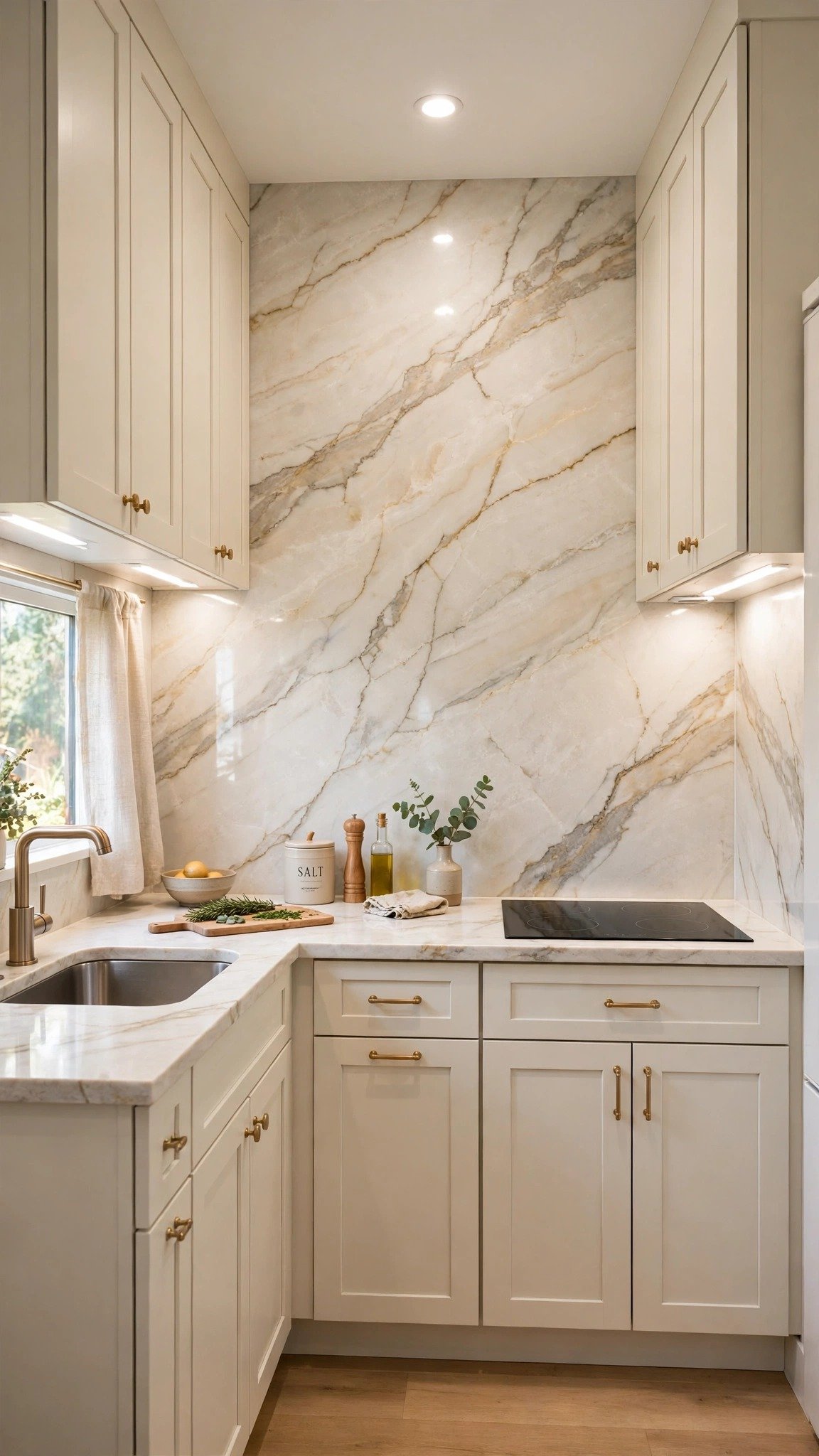
Taj Mahal quartzite can make a compact kitchen feel more connected when the same stone appears across the counters and backsplash. The smooth surface reduces visual breaks and can make a small room feel more spacious. In smaller kitchens, though, heavy veining can feel overwhelming, so choosing a calmer section of the slab often works better.
Use the stone consistently on the main work surfaces and keep the cabinets fairly simple. Plan seams and appliance cutouts carefully so the limited wall area stays visually clean. Use open shelving sparingly and display only a few attractive everyday items to keep the feeling of openness.
12. Build a Transitional Kitchen With Layered Neutrals
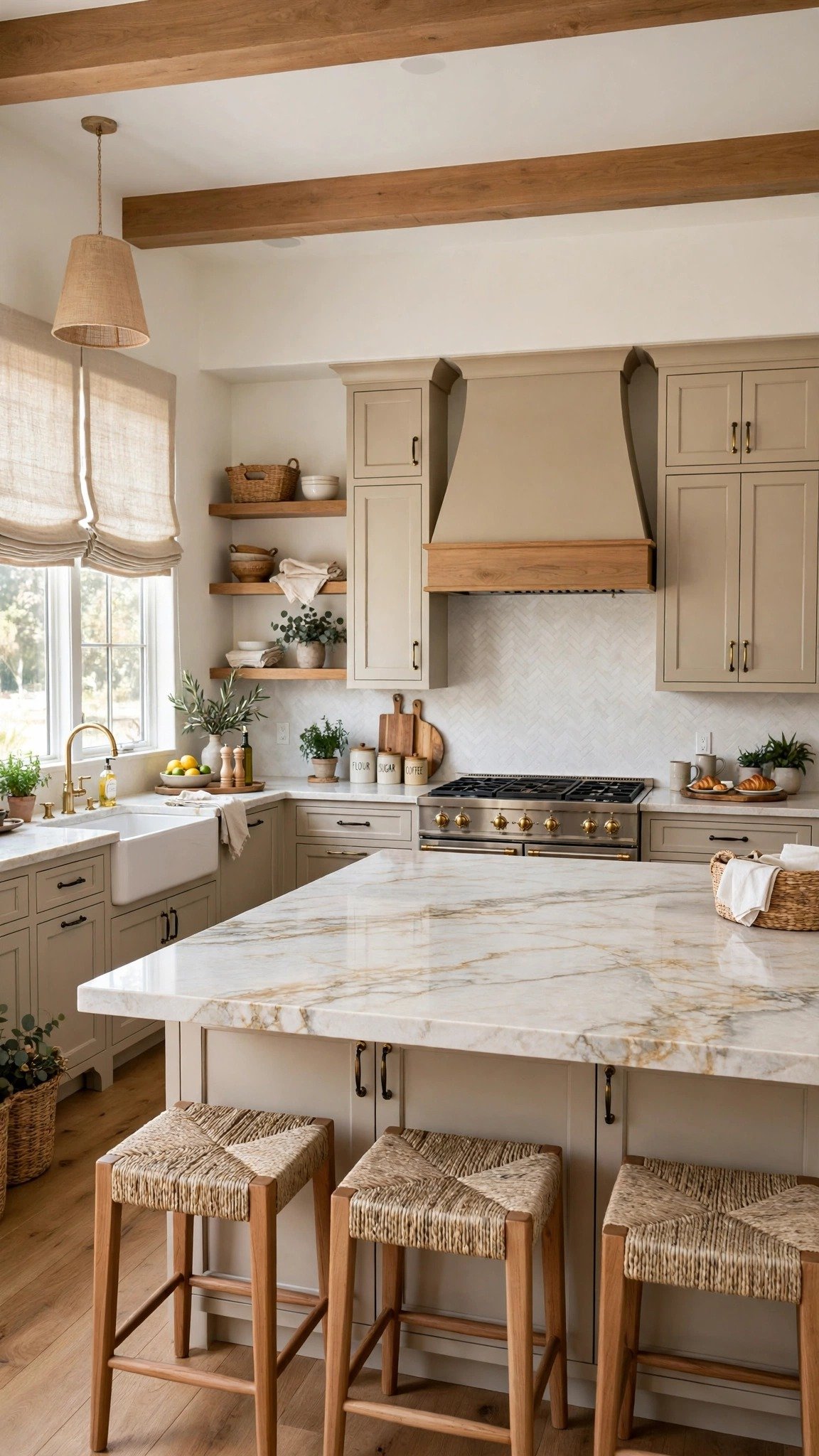
A transitional kitchen can combine Taj Mahal quartzite with beige, greige, ivory, warm grey, and natural wood for a layered look that feels neither strictly traditional nor ultra-modern. The practical trick is varying texture instead of adding many colours. Too many nearly identical beige finishes can make the kitchen look flat, so include small differences in wood, metal, and fabric.
Build the palette around the undertones of the actual quartzite slab. Add contrast through cabinet texture, flooring, hardware, and lighting rather than adding unrelated colours. Use woven counter stools, linen shades, or natural wood accessories to bring texture into an otherwise neutral kitchen.
13. Repeat the Stone for Floor-to-Counter Luxury
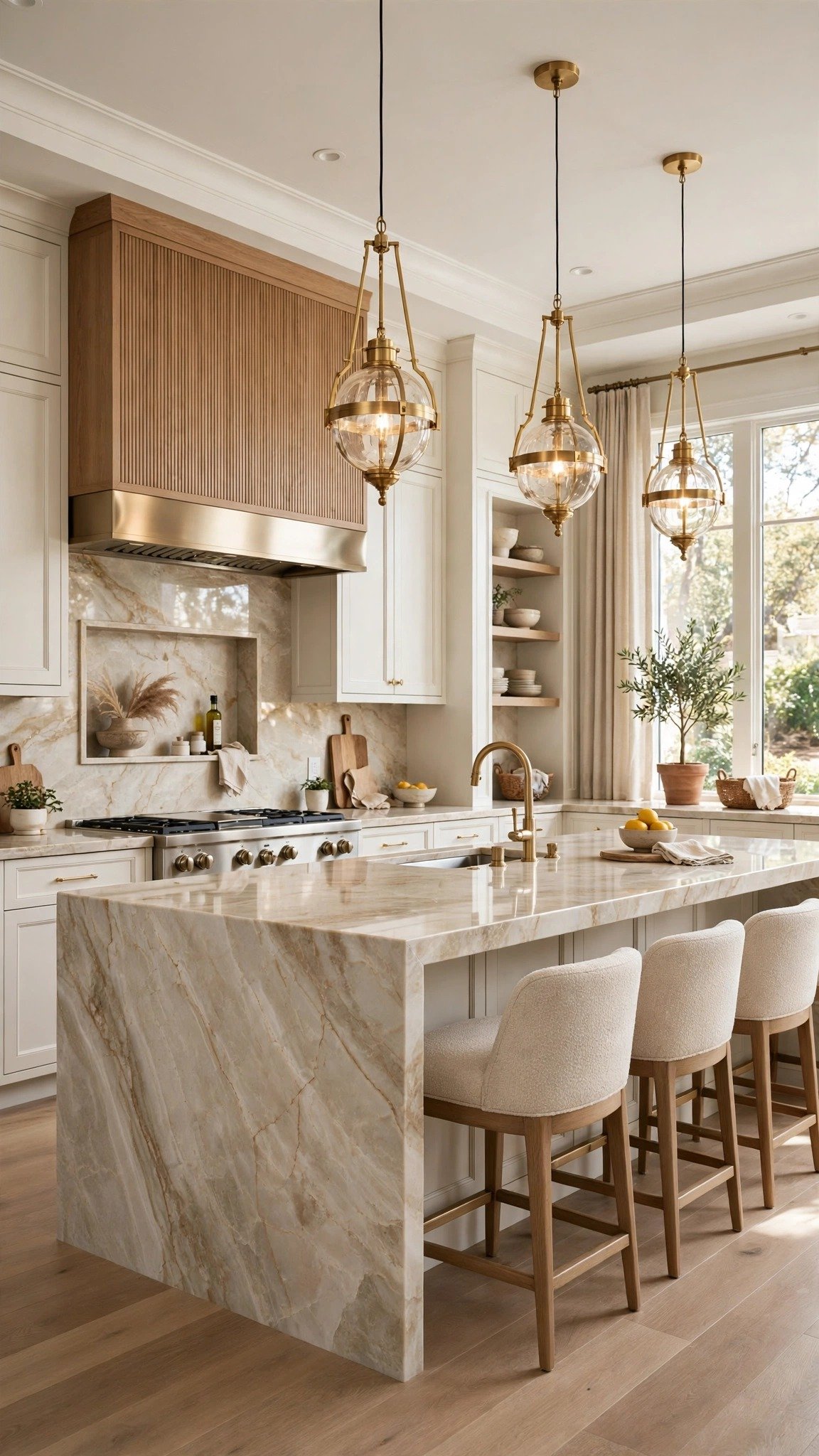
For a high-end kitchen, Taj Mahal quartzite can be repeated carefully across several architectural features instead of being limited to the countertop. A matching backsplash, island edge, or small niche can create a coordinated look without covering every surface. The goal is repetition with restraint — using the stone too much can make the kitchen feel more like a showroom than a comfortable home.
Choose two or three places where the stone will have the greatest visual impact. Plan the slab layout across these areas so the natural veining feels intentional instead of randomly placed. Balance the stonework with comfortable seating, natural materials, and practical everyday accessories so the finished kitchen still feels inviting.
Plan Your Taj Mahal Quartzite Kitchen in 4 Simple Steps
Step 1: See the actual slab first. Visit the stone yard and choose from the real slab, not a photo. Veining and colour vary a lot from slab to slab.
Step 2: Choose cabinets against the slab. Hold cabinet samples, flooring, and hardware directly beside the stone under daylight and warm light before deciding.
Step 3: Plan the backsplash and lighting. Decide where the stone runs up the wall, confirm outlet spots, and plan warm under-cabinet and pendant lighting.
Step 4: Seal and care for the stone. Ask your stone professional about sealing and simple daily care, and follow their guidance so the stone stays beautiful.
Taj Mahal Quartzite Mistakes to Avoid
Choosing from photos only. Photos hide the real colour and veining of a slab. Always view and approve the actual stone before fabrication.
Using a too-yellow wood stain. Very yellow wood can bring out the warm tones in the quartzite too much and make the room feel dated.
Picking busy veining for a small kitchen. Heavy movement can overwhelm a compact space. Choose a calmer section of the slab for small kitchens.
Forgetting outlet locations. Moving outlets after the backsplash is installed is costly and breaks the stone’s flow. Plan them first.
Mixing many metal finishes. Several unrelated metals fight with the stone’s natural variation. Pick one main finish and repeat it.
FAQs
Is Taj Mahal quartzite a good choice for a kitchen countertop?
Yes. Taj Mahal quartzite is commonly chosen for kitchen countertops because it combines a natural-stone look with strong durability. As with any natural stone, proper fabrication, installation, care, and sealing practices are important for long-lasting results. Ask your stone professional about care.
Does Taj Mahal quartzite look more white or beige?
It generally has a creamy or warm-white background, but the exact look varies a lot from slab to slab. Some pieces look more ivory, while others show stronger beige, taupe, grey, or golden movement. Always choose from the actual slab rather than relying only on photographs.
What cabinet colours work with Taj Mahal quartzite?
Warm white, cream, natural oak, walnut, greige, deep green, charcoal, and some navy tones can all work well. The best choice depends on the specific undertones and veining of your slab, so compare samples beside the stone before deciding. Light cabinets keep the kitchen bright.
Can Taj Mahal quartzite be used as a backsplash?
Yes. A full-height quartzite backsplash can create a seamless look and highlight the natural veining. It works especially well behind a range or cooktop, provided the installation is properly planned with outlet locations and seams in mind. Plan outlets before the stone is cut.
Should the backsplash match the Taj Mahal quartzite countertop?
A matching backsplash is one option, but it is not required. Using the same quartzite can create a more luxurious continuous look, while a complementary tile can add extra texture and visual contrast to the kitchen. Both options can look beautiful.
How can I make Taj Mahal quartzite feel less formal?
Pair it with natural wood, comfortable counter stools, woven textures, simple cabinets, and warm lighting. These elements help balance the polished look of the stone and make the kitchen feel more lived-in and welcoming. A wood stool or woven basket adds warmth.
Does every Taj Mahal quartzite slab look the same?
No. Natural quartzite varies in colour, veining, movement, and overall pattern. This variation is one reason it is important to view and approve the actual slabs before fabrication begins. Two slabs from the same quarry can look very different indeed.
Conclusion
Taj Mahal quartzite can completely shape the personality of a kitchen, but the most successful designs use it thoughtfully instead of simply covering every available surface. Whether you prefer warm wood, dramatic dark cabinets, a seamless backsplash, or a minimalist palette, the key is to let the natural stone guide the surrounding finishes.
Take your time comparing the actual slab with cabinet samples, flooring, hardware, and lighting before making final decisions. Natural stone is full of variation, and seeing those materials together is often the easiest way to discover what truly works in your space. I hope these ideas inspire you to create a Taj Mahal quartzite kitchen that feels beautiful, practical, and genuinely yours.