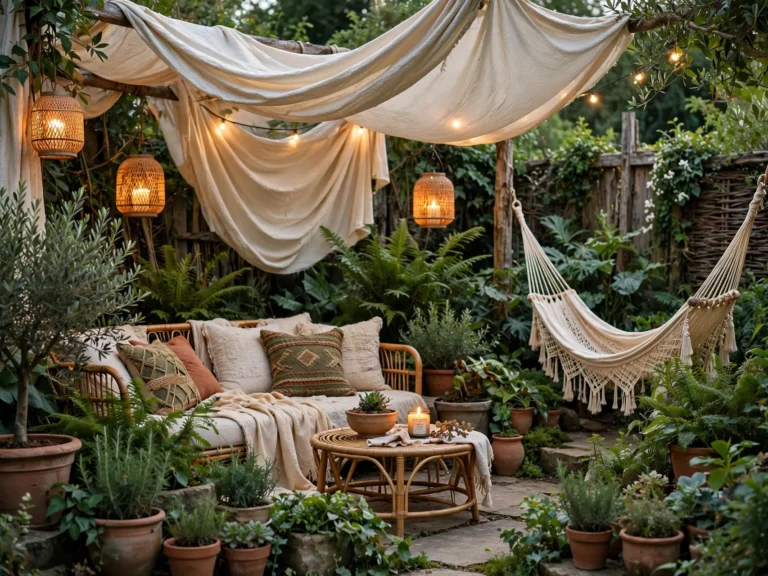
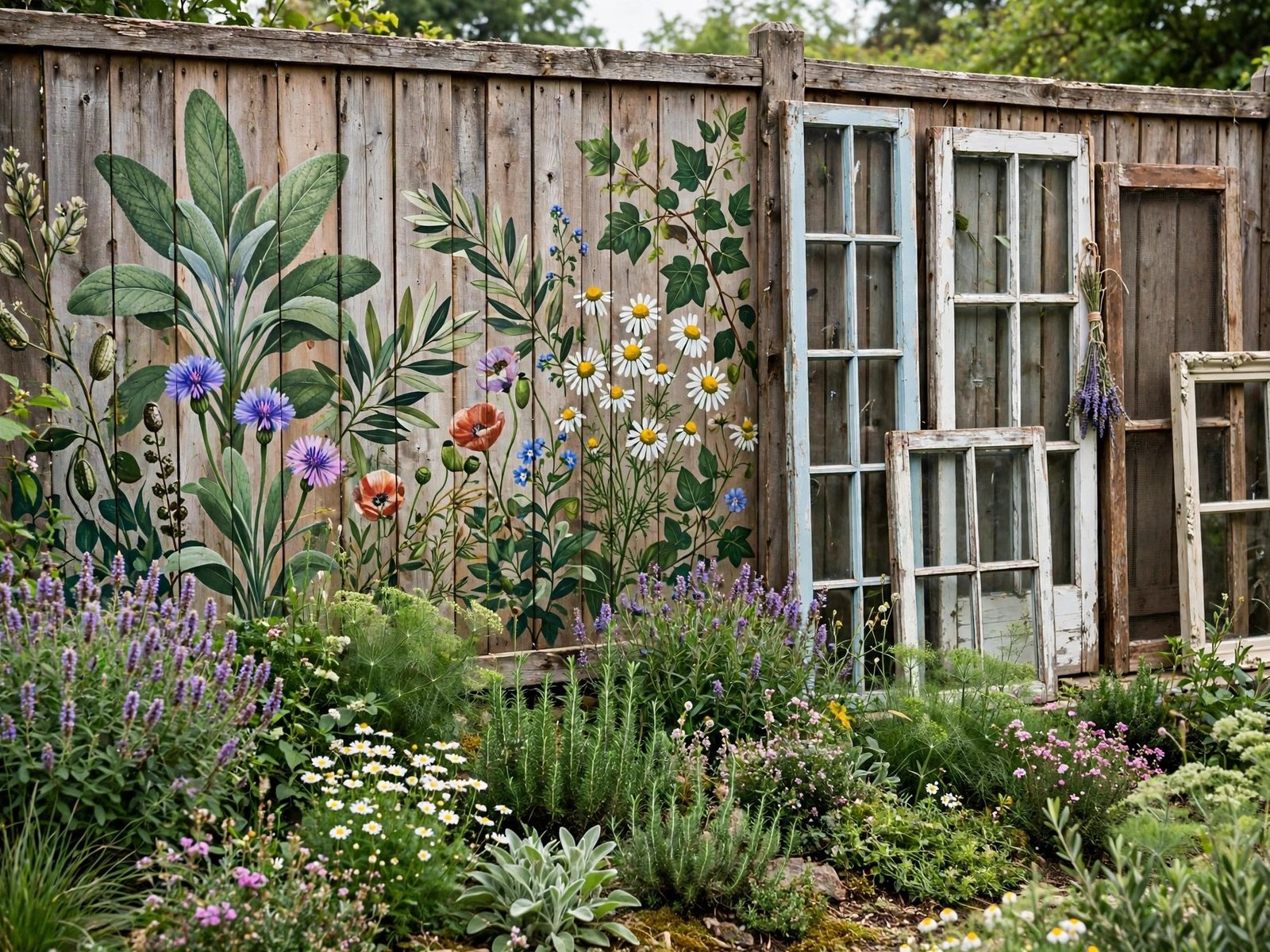
13 Garden Fence Art Ideas to Turn a Plain Fence Into a Focal Point
A garden fence does much more than mark where your yard ends. It is the backdrop for everything in front of it — the plants, the seating, the paths. When the fence is plain, the whole garden can feel flat, even if the planting is beautiful. When the fence has art on it, the whole space changes. The eye has somewhere to rest, the garden feels finished, and a bare boundary becomes a feature you actually enjoy looking at.
These 13 garden fence art ideas work on real fences: wood, vinyl, and metal, big yards and small ones. Each idea explains what it is, why it works, which fence and garden style it suits, and what you need to make it. You will also find a quick answer at the top, a guide to choosing the right idea for your fence, and the mistakes to avoid. Start with one idea, see how it feels, and build from there.
Best Garden Fence Art at a Glance
If you want a fast answer, here it is. For most fences, a painted botanical mural or a hanging metal sculpture is the best place to start: both make a big visual change and suit almost any garden. If you are a beginner, try a lantern wall, a sign collection, or hanging baskets — they need little skill and look good the same day. If your garden is small, a mirror or a vertical succulent frame adds interest without taking any floor space. And if you love a collected, personal look, a layered art wall mixing two or three styles is the most memorable choice.
- Best all-round idea: painted botanical mural or hanging metal sculptures — big impact, suits most fences.
- Easiest for beginners: lantern wall, sign collection, or hanging baskets — little skill, fast result.
- Best for small gardens: outdoor mirror or vertical succulent frame — interest without taking space.
- Best for weather and long life: mosaic tile panels or metal sculptures — durable for years outdoors.
- Most personal: layered garden art wall — mix mirrors, signs, metal, and planters in your own style.
1. Vintage Window Frame Gallery
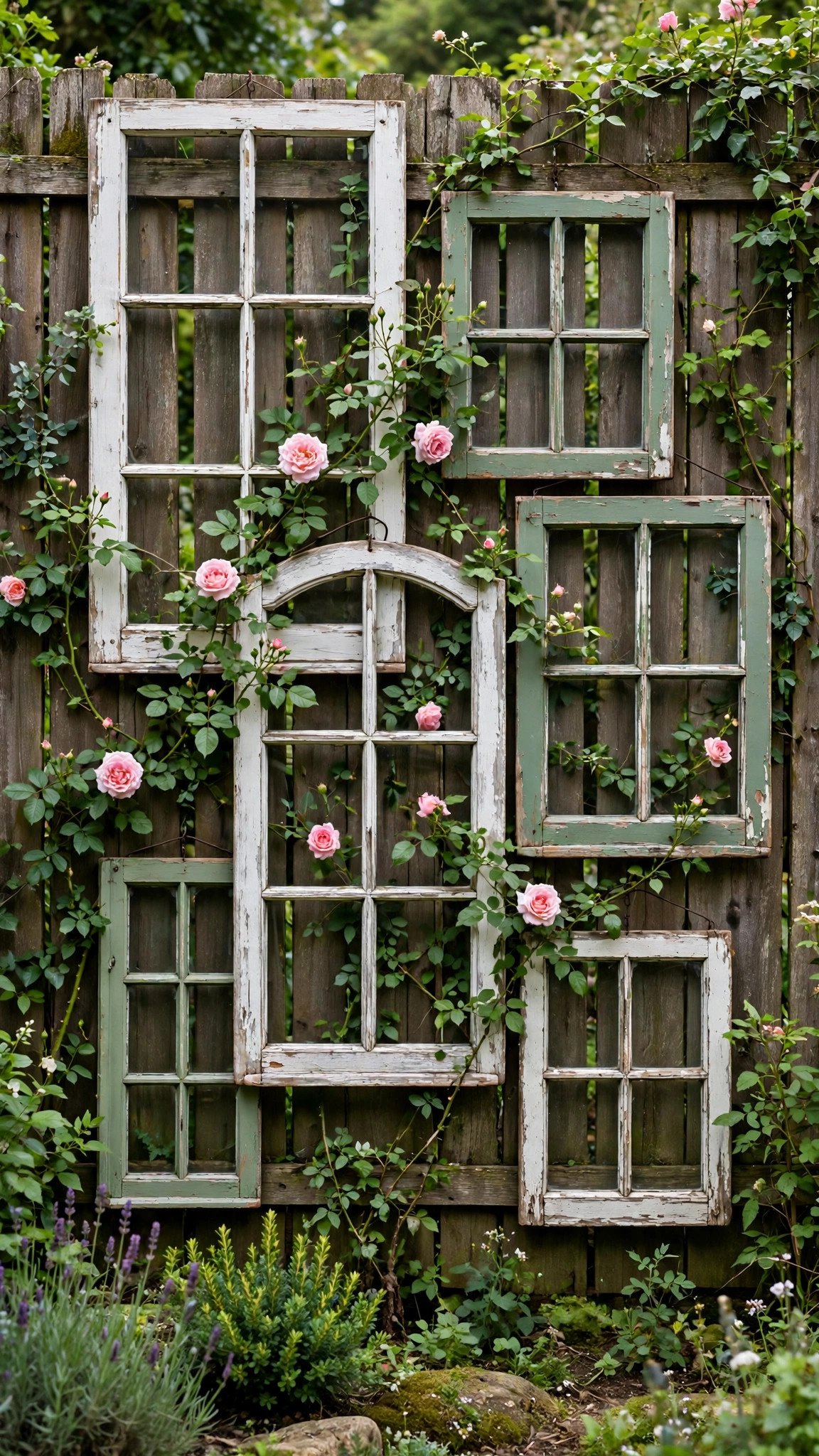
Old window frames bring instant charm to a garden fence. Hung in a group, they create the feeling of looking through windows into another space, which makes a long, flat fence feel much less heavy. Frames with peeling paint or a weathered finish work best, because they look like they have always belonged in the garden. The trick is to keep the colours calm — two or three matching tones — so the display feels collected rather than cluttered.
Lay the frames on the ground first and try a few layouts before you drill anything. Mix tall and wide frames, leave uneven gaps between them, and hang them at eye level so they read as a gallery, not as storage. Remove loose glass for safety, or replace it with mirror panels for a better effect. Over time, climbing plants will weave around the frames and soften the edges, which makes the whole display look more natural. This idea suits cottage and rustic gardens best, and it works on any solid fence that can hold the weight.
- What you need: vintage window frames, exterior screws, drill, measuring tape, exterior paint (optional), climbing plants.
2. Painted Botanical Mural
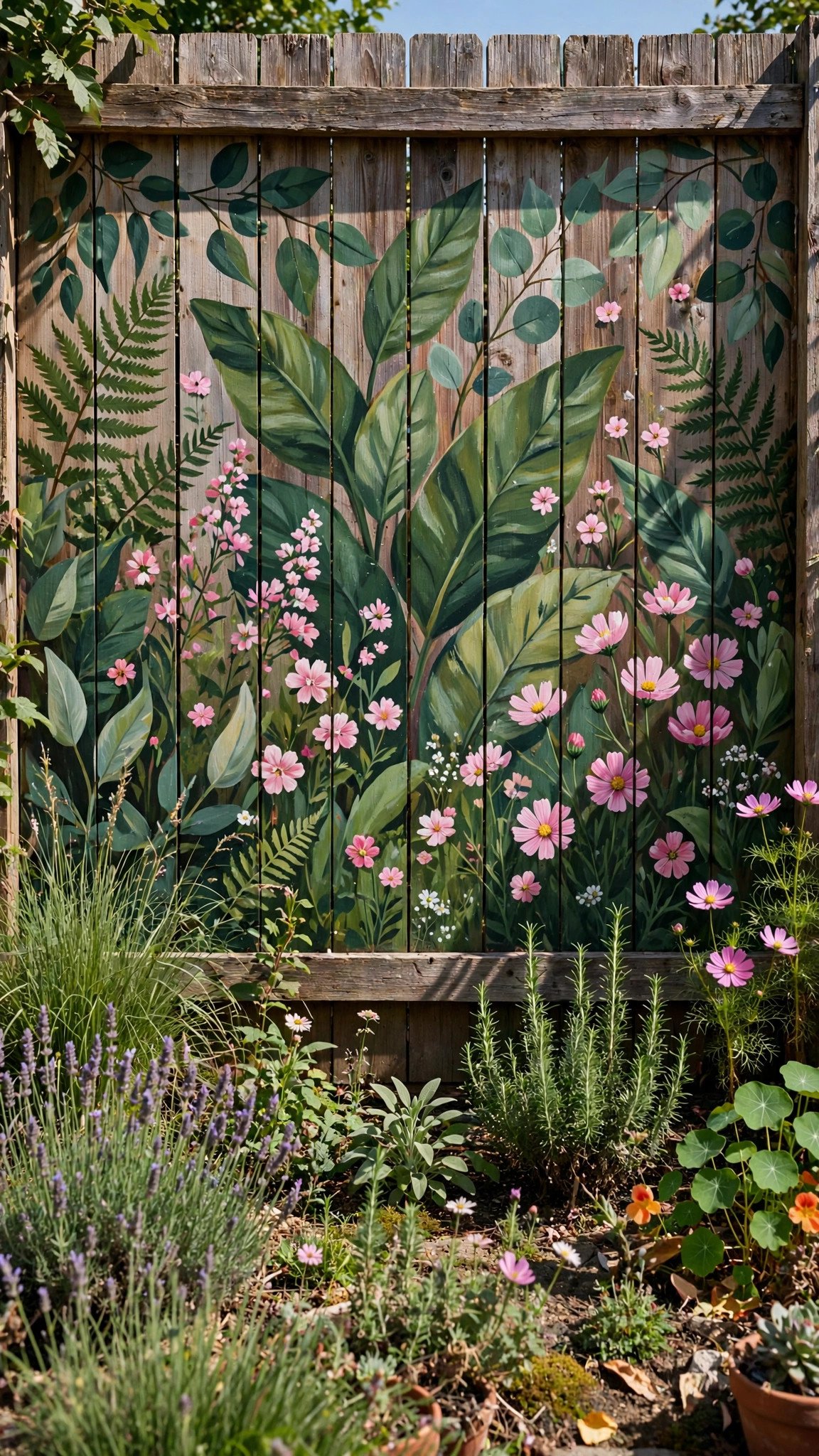
A hand-painted botanical mural turns a plain fence into a one-of-a-kind garden feature. Large leaves, wildflowers, and soft organic shapes blend into the planting in front of the fence, so the art and the garden feel like one design. Simple shapes usually age better than fine detail, and they are far easier to paint if you have never done a mural before. Choose colours from the flowers already growing nearby, so the mural repeats the garden instead of competing with it.
Sketch the design lightly on the fence with a pencil first, then paint the big shapes before adding any detail. Work in dry weather and let each layer dry fully before you move on. When the painting is finished, seal it with a weather-resistant sealant so sun and rain do not fade it quickly. A mural is a bigger weekend project than hanging art, but it costs very little, and the result is completely yours. It works on any flat wooden fence, and it is especially good on long fences that need a strong focal point.
3. Hanging Metal Garden Sculptures
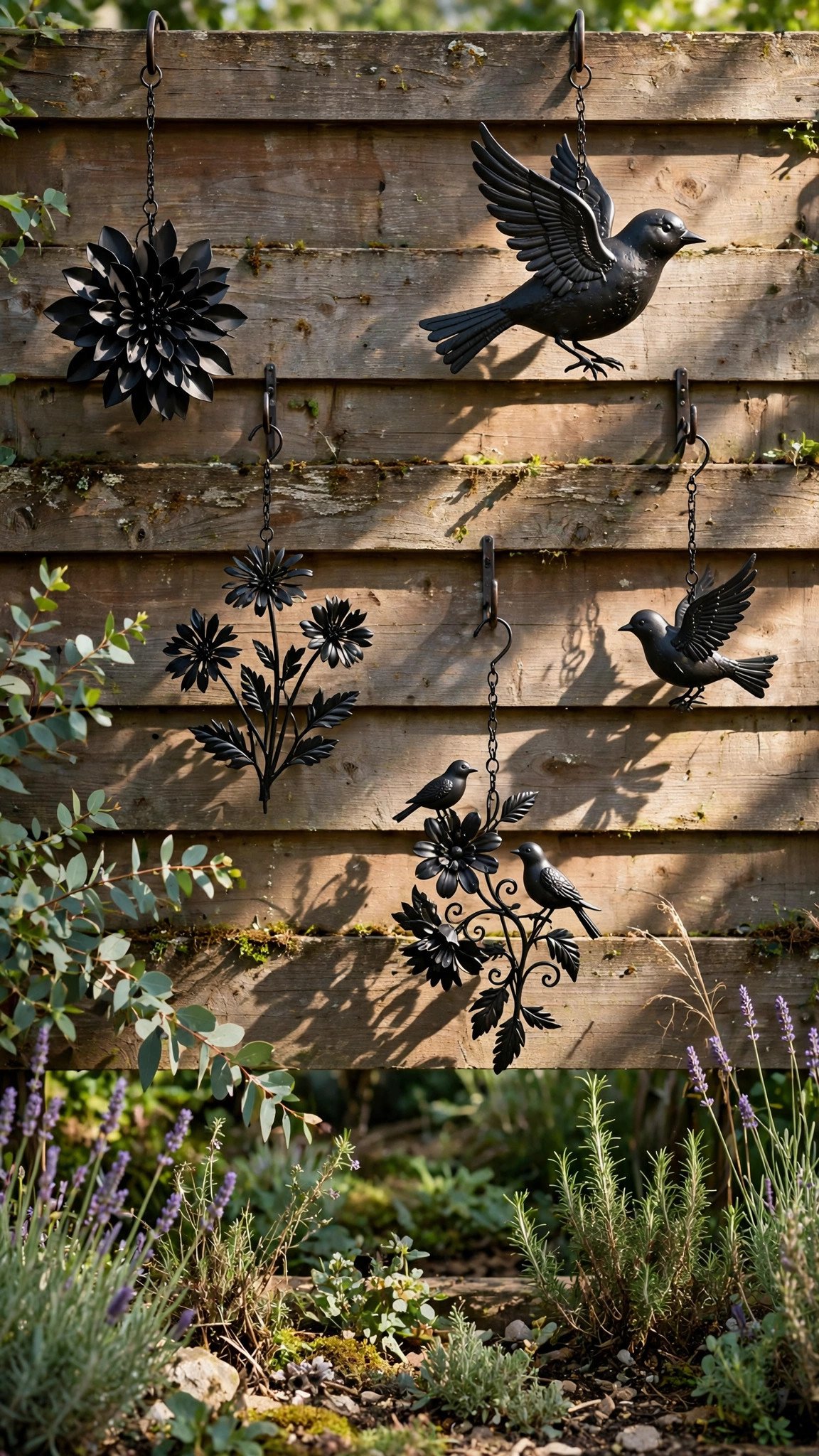
Metal art adds texture and depth that paint alone cannot give. Flowers, birds, leaves, and abstract shapes catch the sunlight during the day and throw soft shadows on the fence, so the display changes as the light moves. A few larger pieces usually look stronger than many small ones scattered across the fence, so resist the urge to fill every gap. One bold piece at eye level can carry a whole fence section.
Plan the placement on the ground first, then mark the spots with tape before you drill. Hang each piece at eye level and use weather-resistant mounting hardware, because ordinary screws will rust and stain the fence. Mixing two metal finishes is fine, but keep it restrained — black with a touch of copper, or rusted steel on its own. Metal sculptures suit modern, rustic, and cottage gardens, and they last for years with almost no care beyond a seasonal wipe and a check that the fixings are still firm.
What you need: metal wall art, exterior mounting hardware, drill, measuring tape, level.
4. Recycled Plate Display Wall

Decorative plates make a playful outdoor gallery that feels personal and a little bit joyful. Vintage floral plates, bold modern patterns, or a mix of the two can turn a dull fence into a wall of colour. The key is a limited colour scheme — pick two or three colours and stick to them — so the collection looks intentional rather than random. Weatherproof mounting is essential, because plates are heavy and outdoor conditions are hard on fixings.
Arrange the plates on the ground first and play with the layout until the sizes and patterns feel balanced. Vary the sizes, keep even gaps, and mount each plate with outdoor-rated hangers and hooks. Check the fixings every few months, especially after strong wind or heavy rain. This idea works best on a sheltered fence section near a seating area, where people can enjoy the detail up close. It suits cottage, vintage, and eclectic gardens, and it is a lovely way to use plates you already own.
What you need: decorative plates, outdoor plate hangers, exterior mounting hooks, drill, measuring tape.
5. Wooden Flower Wall Art
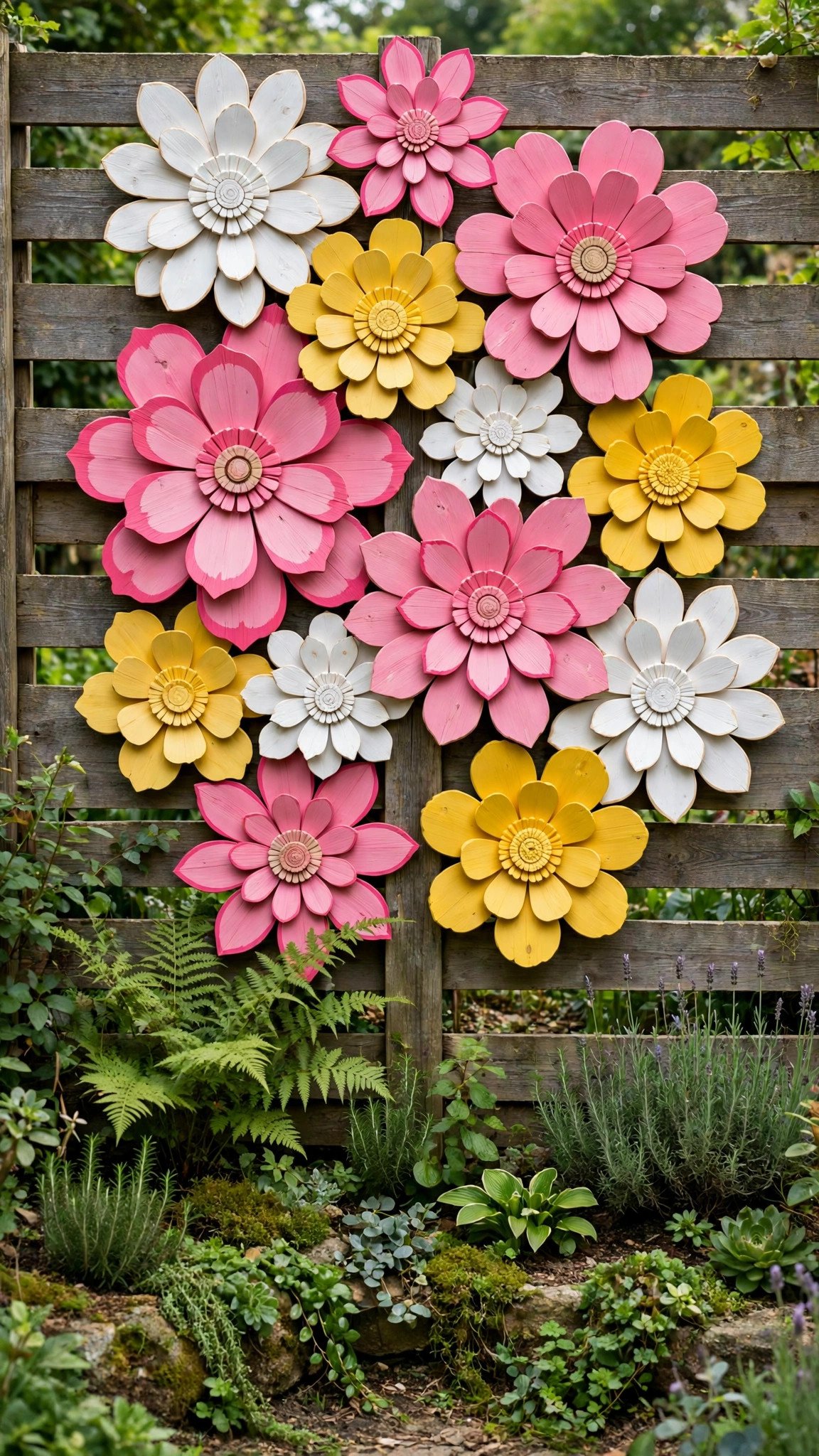
Oversized wooden flowers give a fence a cheerful, garden-inspired look that works in many styles. Paint them in bright colours for a playful feel, or stain them for a softer, more natural look. Big pieces work better than lots of small ones, because they stay visible even when the plants in front grow tall in summer. Odd numbers — three or five flowers — usually look more natural than even rows.
Paint or stain the flowers before you hang them, and let them dry fully so the finish lasts. Seal the wood for outdoor use, then attach each flower firmly with exterior screws. Place them at different heights rather than in a straight line, and leave space between them so each flower stands out. Wooden flowers suit family gardens, cottage gardens, and any fence near a children’s play area. They are a simple weekend project, and you can repaint them whenever you want a fresh look.
What you need: wooden flower cutouts, exterior paint or stain, brushes, screws, drill, outdoor sealant.
6. Mirror Garden Illusion
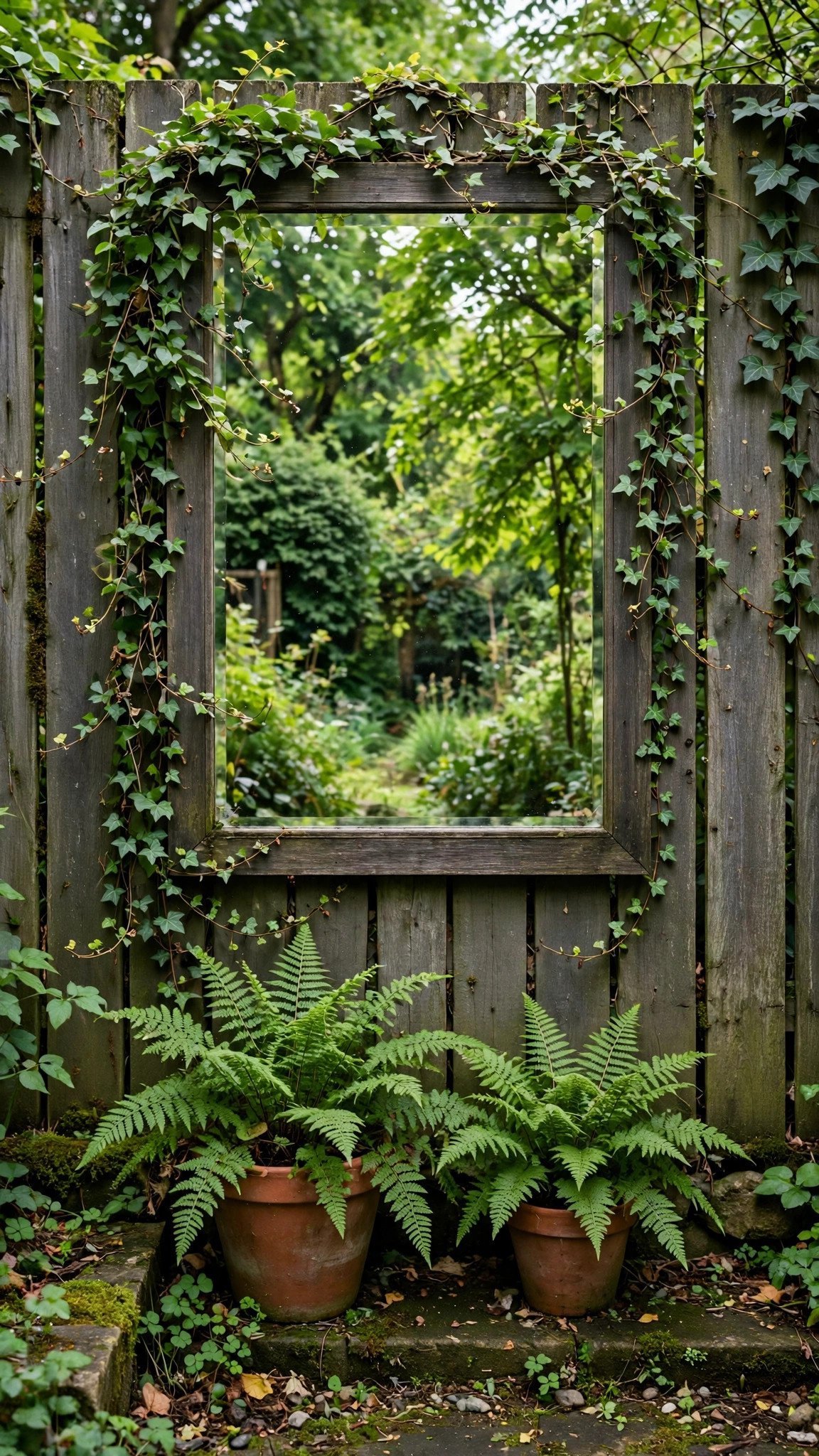
An outdoor mirror can make a small garden feel larger and brighter in an instant. It reflects plants, flowers, and sunlight, and it creates the impression of another garden beyond the fence. Placement matters more than size: a mirror that reflects greenery looks magical, while one that reflects a neighbour’s wall or an empty sky does not. Always use mirrors made for outdoor use, with a weatherproof frame and strong fixings, because an ordinary mirror will not survive the weather.
Hang the mirror where it catches a view of leaves and flowers, then frame it with plants so the edges disappear into the greenery. A climbing plant on one side and a potted fern below are usually enough to sell the illusion. Fix the mirror firmly so wind cannot move it, and check the brackets twice a year. Mirrors suit small gardens best, but they also work in shady corners of larger gardens, where they bounce light into dark spots and help nearby plants grow.
What you need: outdoor-safe mirror, heavy-duty mounting brackets, drill, screws, level, plants.
7. Mosaic Tile Art Panels

Mosaic panels add colour, texture, and real craftsmanship to a fence. Broken tiles, ceramic pieces, and glass fragments can be arranged into flowers, animals, or simple abstract patterns. The best part is how long they last — a well-made mosaic panel can stay beautiful outdoors for years with almost no care. Simple designs with bold shapes usually look better from a distance than fiddly, detailed ones.
Build the panel on a sturdy backing board first, then fix the tiles with adhesive, let them set, and grout the gaps before you mount the finished panel on the fence. Use colours already found in your garden — the blue of a hydrangea, the terracotta of a pot — so the panel feels connected to the landscape. Wear gloves while you work with broken tile, and seal the grout for outdoor use. Mosaic panels suit Mediterranean, cottage, and colourful gardens, and they are a good choice for a sunny fence that gets a lot of wear.
- What you need: mosaic tiles, tile adhesive, grout, backer board, safety gloves, mounting hardware.
8. Hanging Basket Art Display
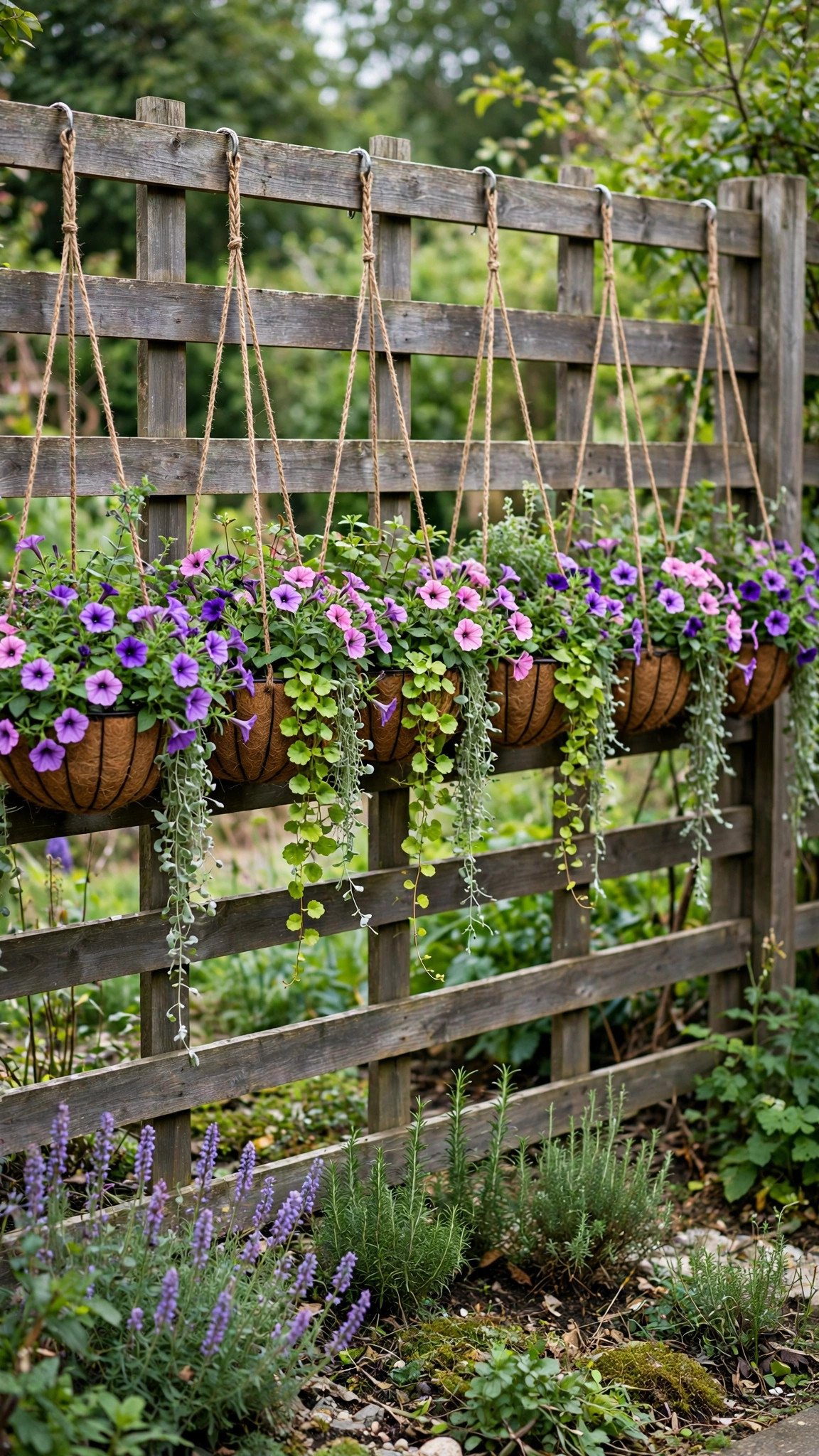
Hanging baskets can be living artwork. Filled with trailing plants and seasonal blooms, they add movement and colour that changes through the year — something no painted art can do. The challenge is care: baskets dry out fast in sun and wind, so choose plants that suit your climate and the light on that fence. A sunny fence needs tough, drought-tolerant plants, while a shady fence suits ferns and trailing ivy.
Install sturdy brackets at even spacing across the fence, and use the same basket style throughout so the display looks consistent. Plant each basket with a mix of trailing and upright varieties, water well, and feed lightly through the growing season. Swap the planting twice a year — spring and autumn — to keep the colour fresh. This idea suits almost any garden style, and it is one of the best choices if you want the fence to change with the seasons instead of staying the same all year.
- What you need: hanging baskets, wall brackets, potting mix, plants, watering can.
9. Decorative Garden Sign Collection
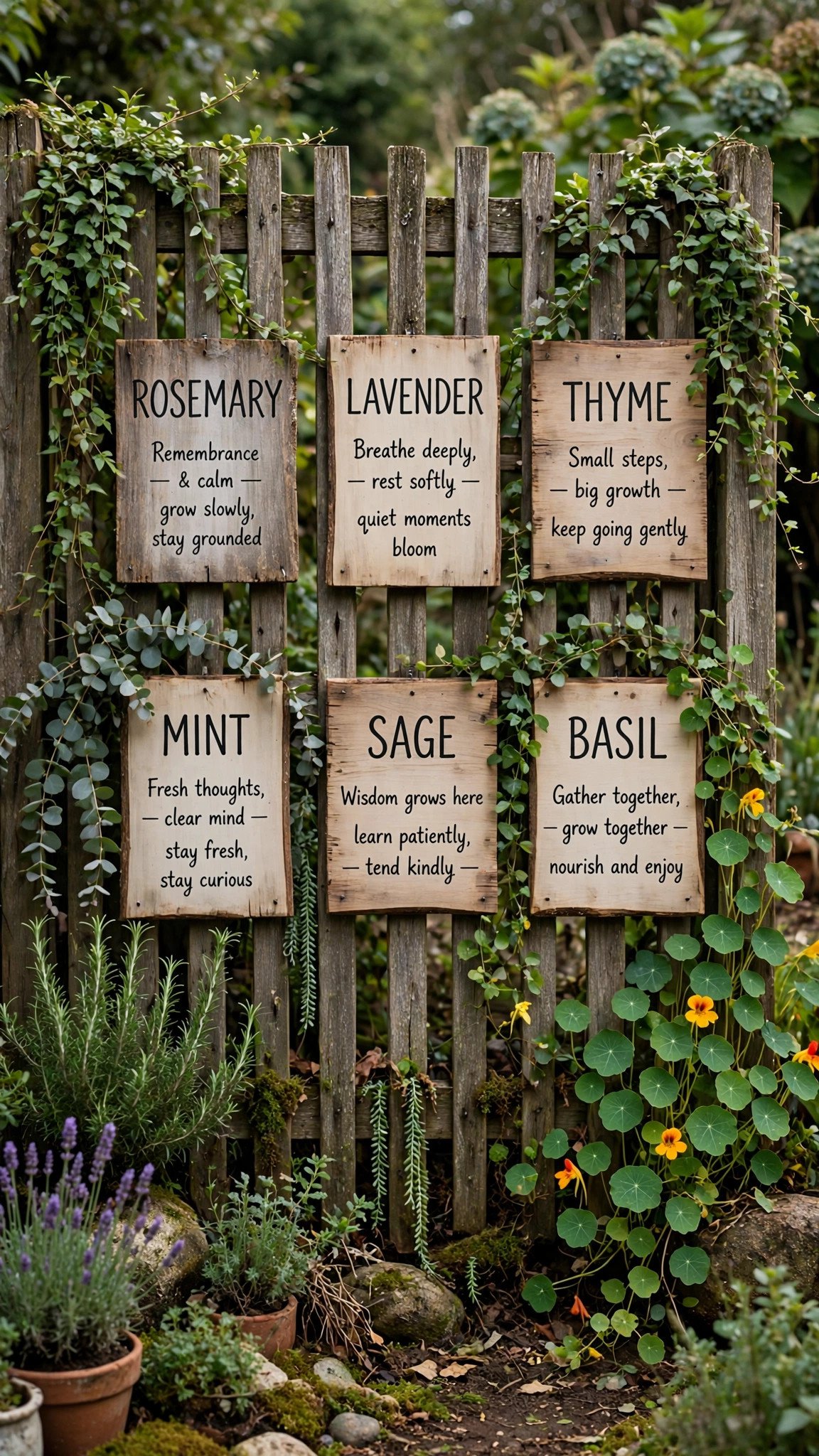
A collection of handmade signs brings personality and a story to a garden fence. Plant names, gentle quotes, or vintage-style designs make the space feel welcoming, and the display is easy to change whenever you want a fresh look. The most successful sign collections keep one consistent style — the same wood, the same lettering, the same colours — while varying the sizes and the spacing so the wall feels lively rather than flat.
Make or buy signs that fit your garden theme, seal them for outdoor use, and hang them with balanced spacing across the fence. Mix the signs with live plants to soften the look: a trailing plant above a sign, or a potted plant below it, stops the display from feeling too hard or flat. Signs suit cottage, farmhouse, and family gardens, and they are a good first project if you are new to fence art, because nothing is permanent and you can move things around until it feels right.
- What you need: wooden signs, exterior paint, stencils, sealant, mounting hardware.
10. Vertical Succulent Art Frames
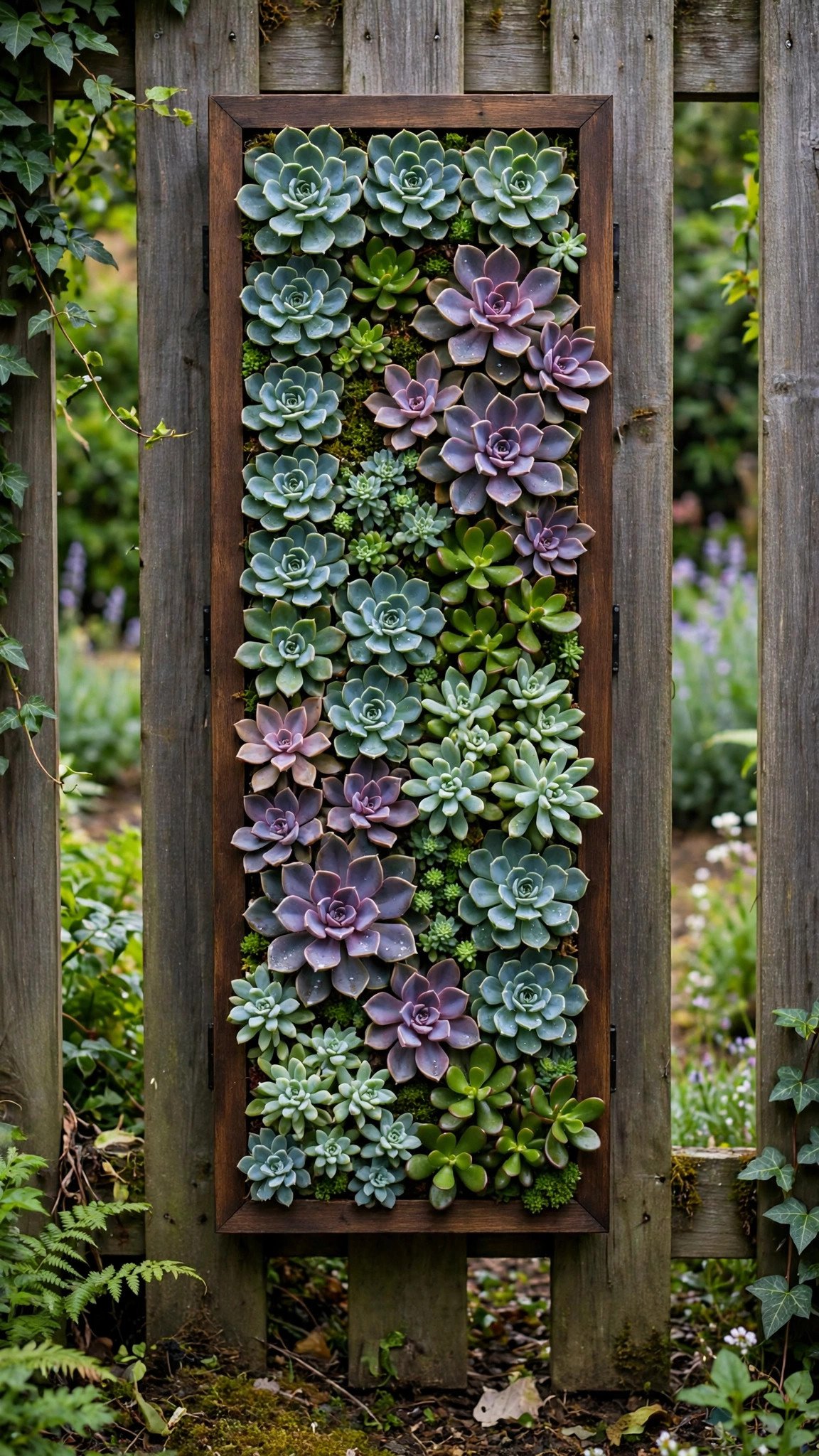
Succulent frames combine gardening and artwork in one project. The rosettes, colours, and textures of succulents create natural visual interest, and because succulents need very little water, these frames are easier to manage than most vertical gardens. A frame of mixed succulents looks like a living painting, and it stays attractive through dry summers when other plants struggle.
Prepare a shadow box frame with soil and mesh, plant the succulents closely together, and let the roots establish for a few weeks before you hang the frame. Use a mix of colours and shapes — pale blue echeveria, dark sedum, trailing string of pearls — to create contrast and depth. Hang the frame in a sunny spot and water sparingly, only when the soil is fully dry. Succulent frames suit modern, desert-style, and small gardens, and they are one of the best fence art ideas for a hot, sunny fence.
What you need: shadow box frame, succulent plants, potting mix, hardware cloth, mounting brackets.
11. Rustic Farm Tool Display
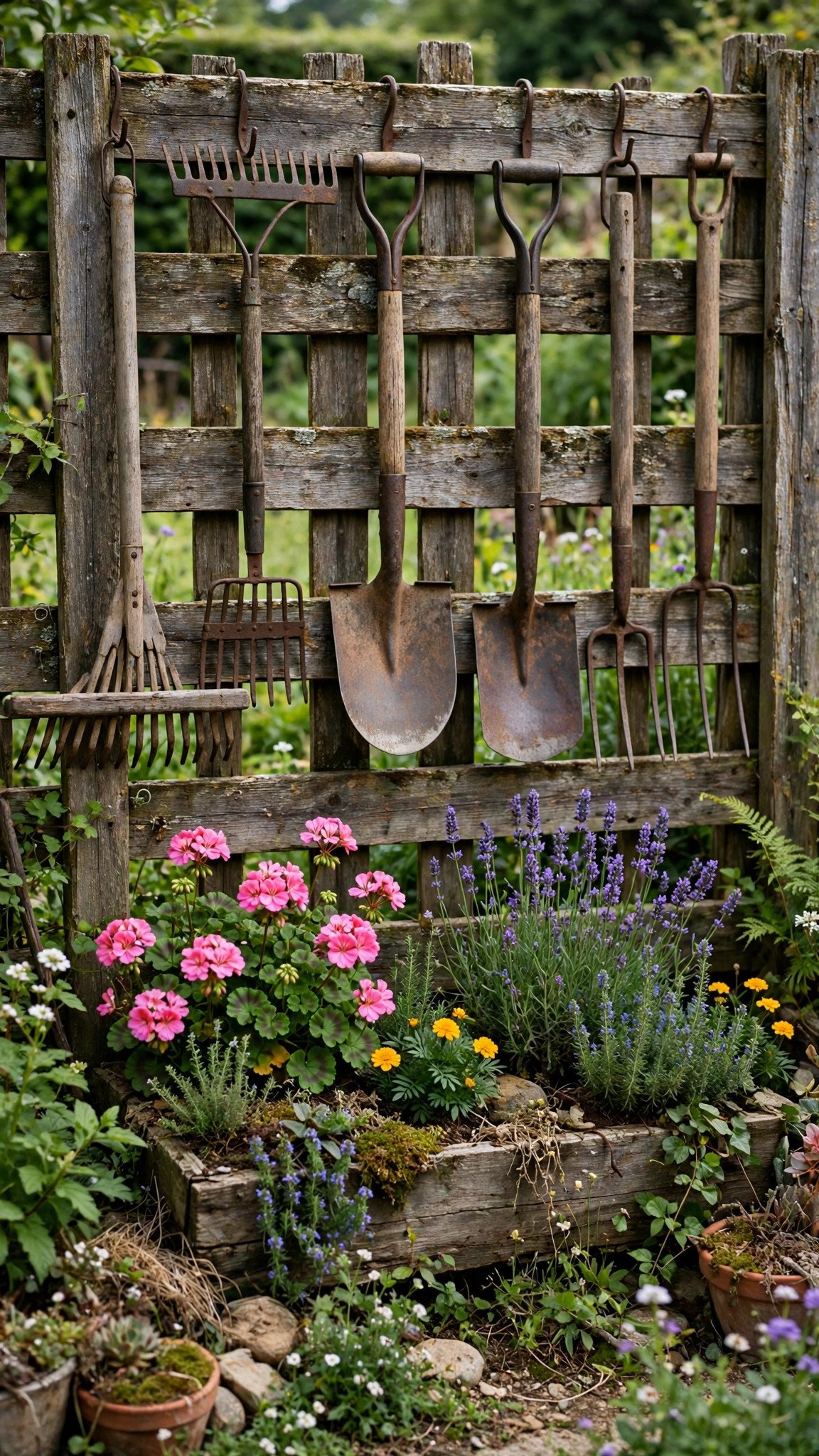
Old garden tools make meaningful fence art, especially in cottage and farmhouse gardens. Vintage rakes, shovels, and hand tools tell a story while adding texture and a sense of history. The display works best when the tools show real age — worn handles, gentle rust — rather than artificial distressing. Keep the arrangement simple and organised, with even spacing, so it reads as a display rather than a pile of old tools.
Clean off loose rust with a wire brush, but leave the character in place. Apply a clear protective coat to slow further rust, then hang each tool on sturdy hooks with exterior screws. Pair the tools with flowering plants below or beside them, so the hard metal is softened by soft blooms. This idea suits rustic, cottage, and farmhouse gardens, and it is a lovely way to honour tools that belonged to a family member or came from a flea market.
- What you need: vintage garden tools, wire brush, protective clear coat, mounting hooks, screws.
12. Colorful Outdoor Lantern Wall
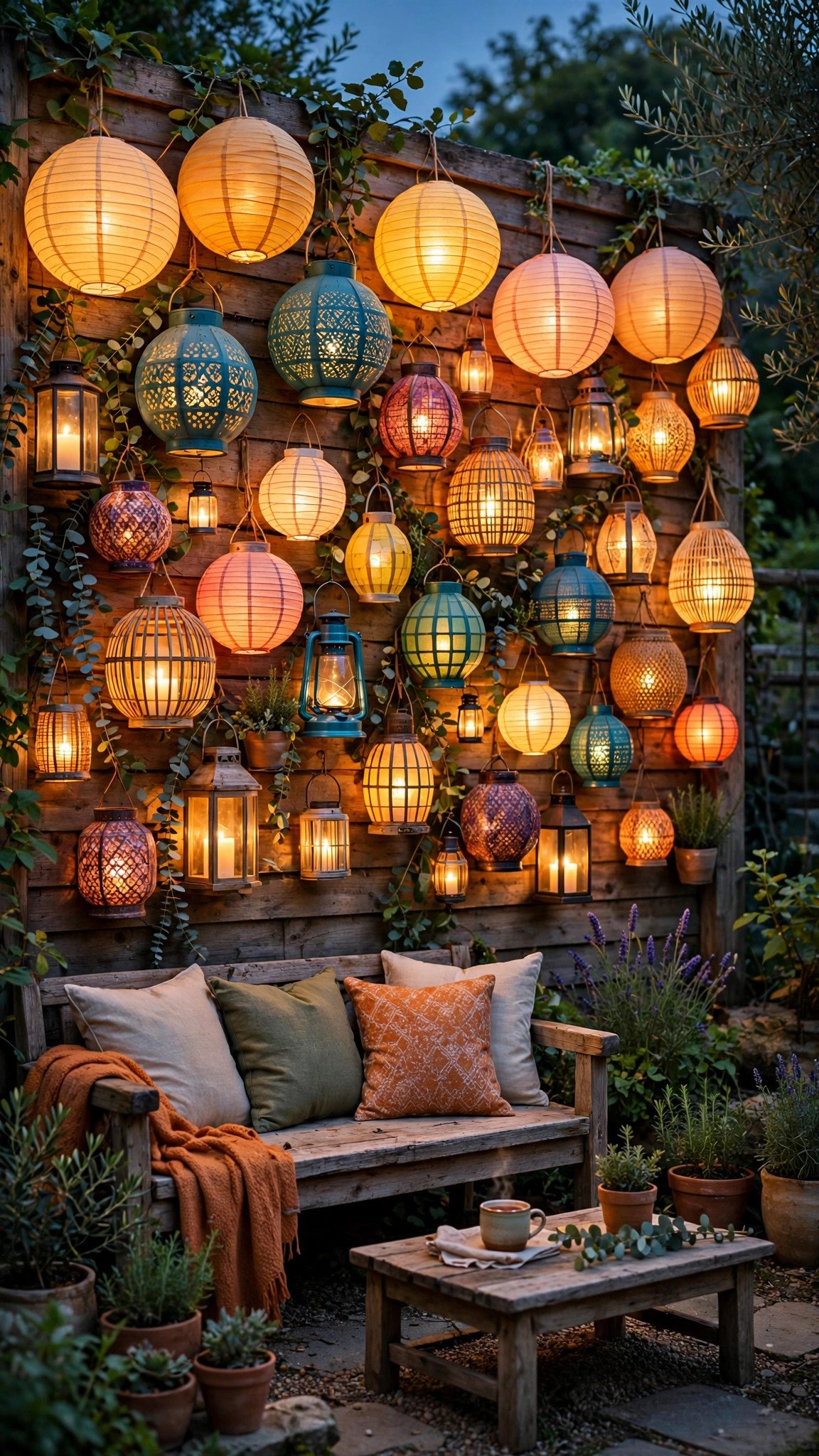
Lanterns work twice: by day they are attractive wall art, and by night they fill the garden with a warm glow. That evening light changes the whole feeling of a fence, turning a boundary into a backdrop for slow summer evenings. Solar-powered lanterns are the easiest choice, because there is no wiring and no running cost — they charge by day and glow by themselves at dusk.
Install hooks at even spacing across the fence and hang the lanterns securely, varying the sizes while keeping one finish or colour so the display stays calm. Test the lighting before you fix everything in place: stand back at dusk and check that the glow is even and that no lantern is hidden behind a plant. Lanterns suit almost any garden style, and they are especially good on a fence near a seating or dining area, where the light is actually used and enjoyed.
- What you need: outdoor lanterns, mounting hooks, solar lights or candles, drill, measuring tape.
13. Layered Garden Art Wall
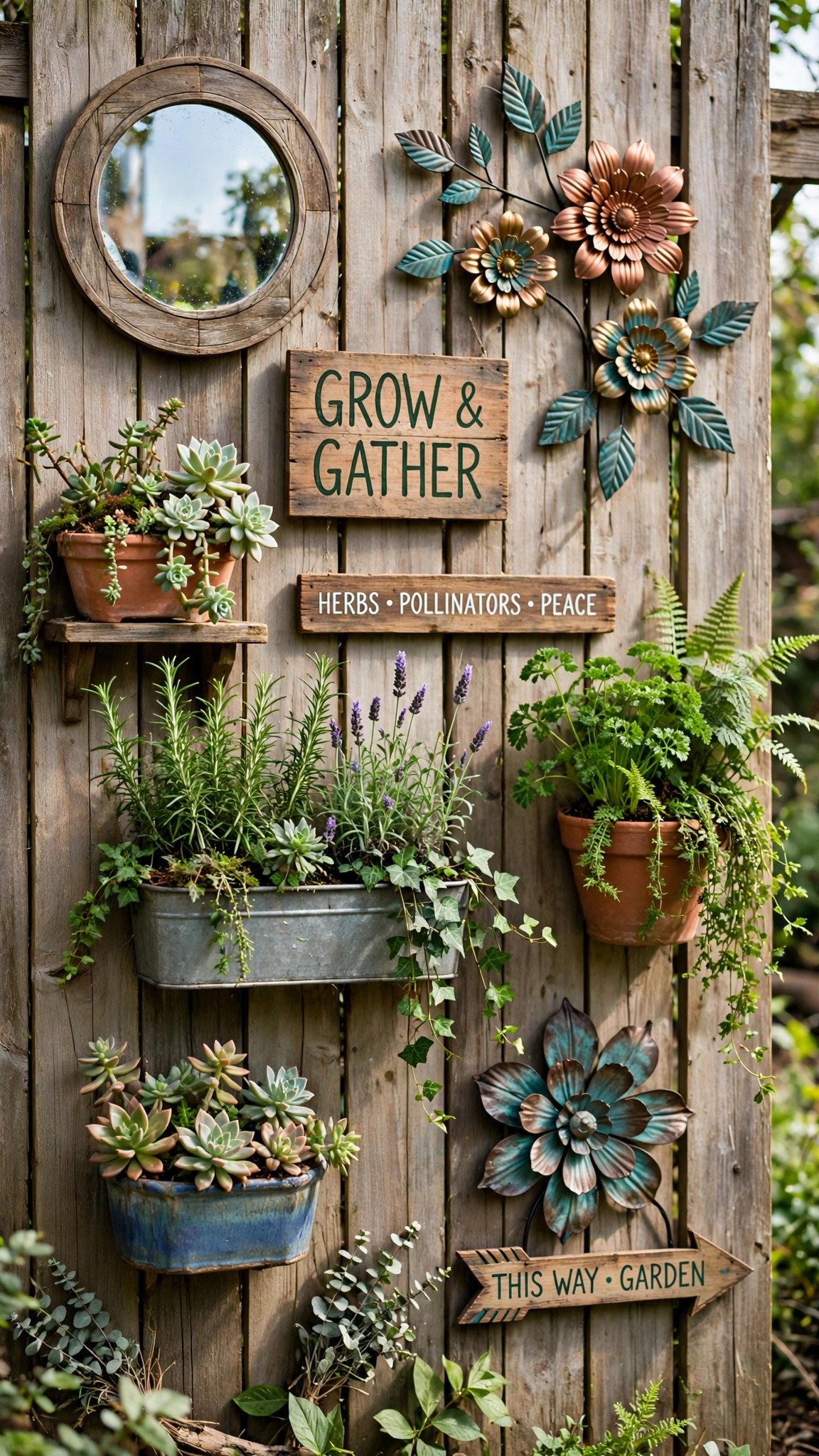
Combining several art styles into one curated display creates the most personal fence feature of all. Mirrors, signs, metal art, and planters can work together beautifully — but only if the arrangement is thoughtful. Start with the largest pieces, then fill the gaps with smaller accents, and leave enough space so each piece can be appreciated. The empty space is what stops a layered wall from looking cluttered.
Lay the whole design out on the ground first, or sketch it on paper, before you drill a single hole. Limit the colour palette to two or three colours so the mix feels intentional, and repeat one material — wood, metal, or terracotta — across the display to tie it together. A layered wall suits eclectic and cottage gardens best, and it is a good choice if you already own several pieces and want them to live together on one fence. Take your time with it; a layered wall built slowly usually looks better than one hung in an afternoon.
- What you need: mixed decorative elements, mounting hardware, drill, measuring tape, level.
Which Garden Fence Art Idea Is Right for Your Fence?
Start with your fence material. Wooden fences hold almost anything — paint, screws, heavy panels — so every idea on this list works. Vinyl fences are lighter, so choose hanging pieces with adhesive hooks or light brackets, and avoid drilling where you can. Metal fences suit wire-mounted pieces, hanging baskets, and lanterns better than heavy panels. If you rent, pick no-drill options: adhesive hooks, hanging baskets on over-the-fence brackets, or a leaning mirror.
Then think about budget and skill. The lowest-cost ideas are a sign collection, wooden flowers, or a lantern wall. Mid-range choices are metal sculptures, a plate display, or hanging baskets. The biggest projects are a painted mural and a mosaic panel — both take a full weekend but cost little in materials. For the least maintenance, choose metal, mosaic, or a mirror. For the most seasonal change, choose hanging baskets or a succulent frame. And if you want the strongest first impression, start with one large focal piece rather than many small ones.
Plan Your Garden Fence Art in 4 Simple Steps
- Walk your fence and find the best section. Look for the stretch you see most from your seating area or kitchen window. That is where the art belongs — start there.
- Pick one idea that fits your fence and skill. Choose the idea that matches your fence material, your budget, and the time you have. One finished display beats five half-done ones.
- Lay it out on the ground first. Arrange every piece before you drill or hang anything. Step back, check the balance, and move things until it feels right.
- Hang it, seal it, and step back. Use weather-resistant hardware, seal wood and paint, and check the fixings after the first storm. Then enjoy it — and adjust it next season if you want.
Garden Fence Art Mistakes to Avoid
- Filling every gap. A fence covered edge to edge looks cluttered, not decorated. Leave space so each piece can breathe.
- Using indoor materials outdoors. Ordinary paint, glue, and screws fail fast in rain and sun. Always choose exterior-grade products.
- Hanging art too high or too low. Art at eye level gets seen and enjoyed. Art near the top of a tall fence disappears.
- Ignoring the weight. Heavy panels and plates need strong fixings into the fence posts or rails, not just the thin boards.
- Forgetting the plants in front. Tall plants can hide fence art by midsummer. Keep the art visible, or prune the planting in front of it.
- Mixing too many styles at once. One theme with a few accents looks calm and intentional. Five themes on one fence looks like a sale table.
FAQs
What is the best type of art for an outdoor fence?
Weather-resistant materials such as metal, treated wood, outdoor-safe mirrors, ceramic mosaics, and exterior-painted artwork tend to perform best outdoors. They resist rain, sun, and frost far better than indoor decor. Always check that paints, sealants, and fixings are rated for outdoor use before you hang anything.
How do I decorate a fence without making it look cluttered?
Focus on one main theme, use larger statement pieces instead of many small items, and leave some epace between decorations. One bold mural or a single large metal sculpture usually looks stronger than ten small pieces. Step back from a distance and check the balance before you add more.
Can fence art work in a small garden?
Yes. Mirrors, vertical displays, and carefully placed statement pieces can actually make small gardens feel larger and more interesting. A mirror reflects greenery and adds depth, while a vertical succulent frame or a single lantern adds interest without taking any floor space at all.
How can I protect fence art from weather damage?
Use exterior-grade paints, sealants, rust-resistant hardware, and materials specifically designed for outdoor use. Seal wood and grout, choose stainless or coated fixings, and inspect the display twice a year for loose hardware, fading finishes, rust, and weather damage, then repair small problems early.
Should fence art match my garden style?
Ideally, yes. Fence decorations should complement the overall design of the garden rather than compete with it. Consistent colours and materials create a more cohesive look. A rustic tool display suits a cottage garden, while clean metal art suits a modern garden — but one contrasting accent can still work.
How often should outdoor fence art be maintained?
Most fence art benefits from a seasonal inspection. Check for loose hardware, fading finishes, rust, and weather damage at least twice a year, in spring and autumn. Clean the pieces, tighten fixings, and reseal wood or paint when the finish starts to look tired.
How much does garden fence art cost?
The cost varies widely by the idea you choose. A sign collection, wooden flowers, or a lantern wall costs very little, especially if you use materials you already own. A painted mural costs little in paint but takes a full weekend. Metal sculptures and mosaic panels cost more, mainly for the materials and hardware.
Conclusion
Garden fence art is one of the easiest ways to add personality and character to an outdoor space. Whether you prefer vintage finds, handmade creations, living plant displays, or artistic statement pieces, the right fence decor can completely change how your garden feels. You do not need a big budget or a big fence — you need one good idea and a weekend to make it happen.
Start with the idea that fits your fence and your style. Lay it out first, hang it carefully, and give it a season to settle in with the plants around it. Before long, the plain fence you used to ignore will be one of the features you love most about your garden.