21 Cape Cod House Exterior Ideas Without Dormers for a Clean, Classic Look
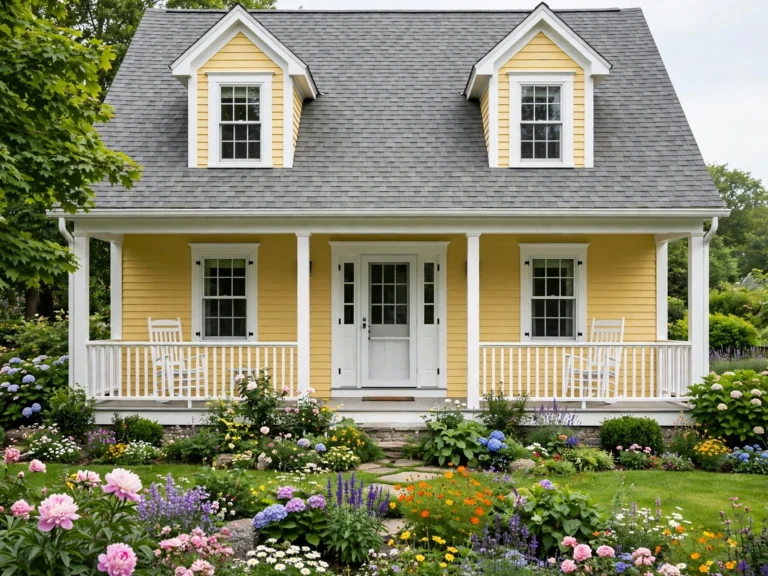
A Cape Cod house exterior without dormers has a quiet kind of charm. Its simple gabled roof creates a clean outline, allowing the eye to follow the roof from the ridge to the eaves without interruption. Rather than looking unfinished, this traditional shape can give a home a balanced and timeless appearance.
The key is to make the other exterior features work together. Siding adds texture, windows bring balance, and details such as a welcoming front door, attractive porch, and thoughtfully planted walkway give the house personality. Even small updates can make a noticeable difference when they suit the home’s original style.
If you’re looking for ways to improve your home’s appearance, these 21 Cape Cod house exterior ideas without dormers offer inspiration for different budgets and property sizes. From classic cedar shingles to outdoor seating and layered lighting, you’ll find practical ways to create a welcoming exterior without changing the roofline.
1. Clean Gabled Roofline with Crisp White Trim
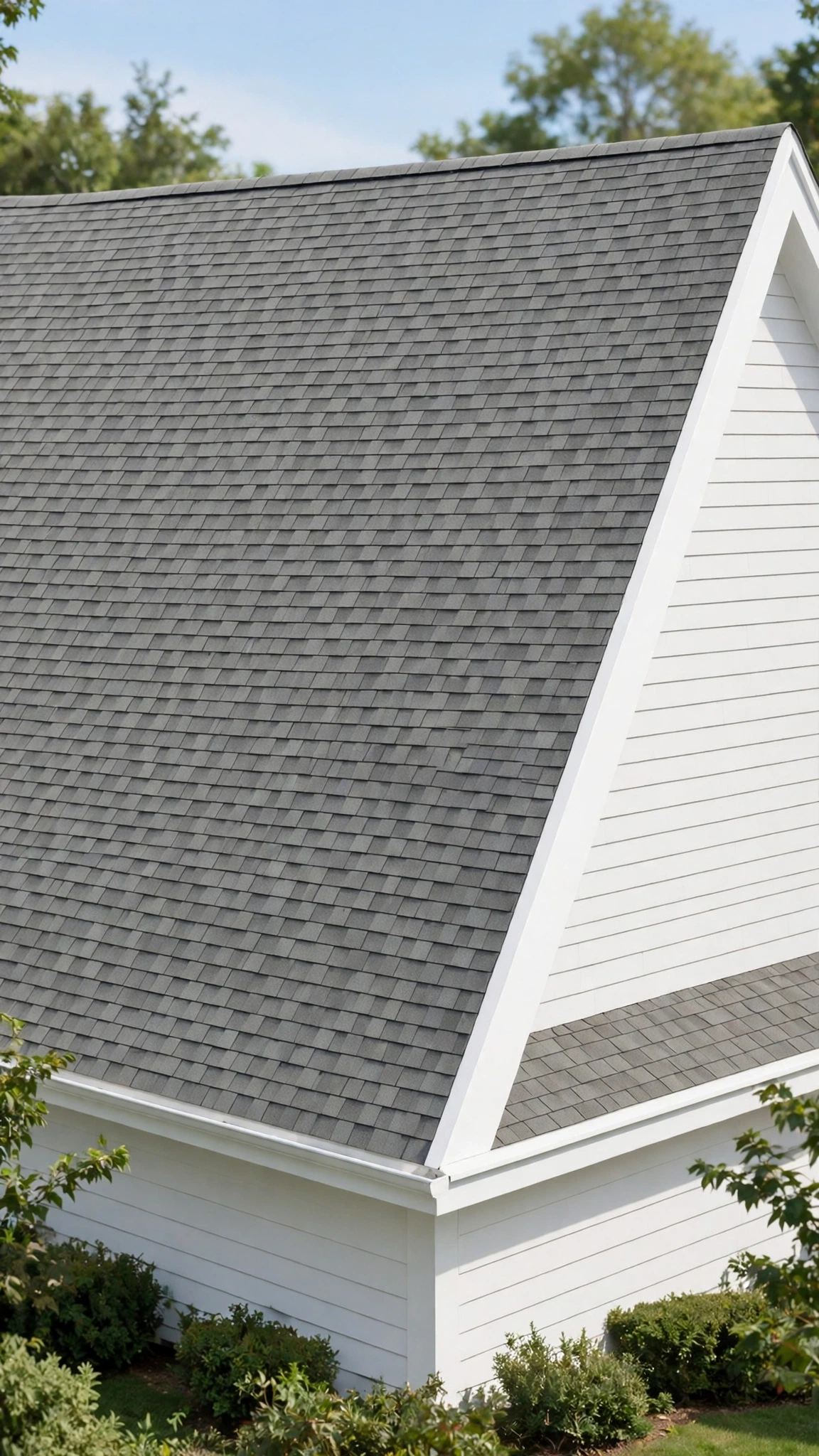
Start with the roof itself, because on a dormer-free house it is the largest single surface people see. A straight gabled roof with even eaves and a tidy ridge gives the house a sense of order, and white trim along the fascia, rake boards, and corners sharpens that outline. The contrast between a gray or soft-colored roof and bright trim is what keeps a simple roofline from fading into the background.
Keep the details consistent: one trim color, one gutter style, and shutters that match the trim. When every edge is painted the same clean white, the roof looks deliberate rather than plain. A fresh coat of paint on the trim alone can lift the whole facade, which makes this one of the most affordable first steps.
2. Weathered Cedar Shingles for Texture Without Dormers
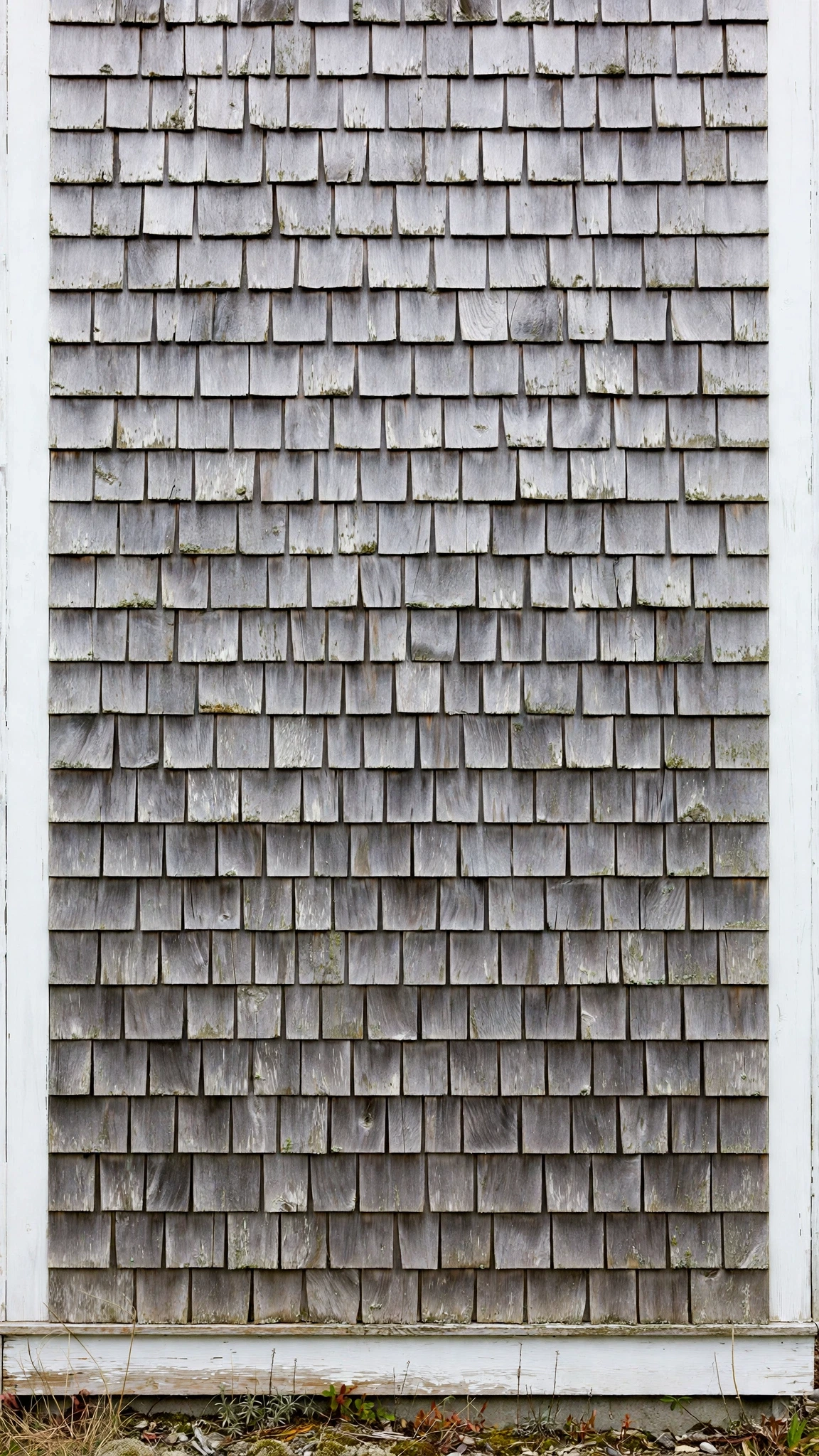
Cedar shingles are a natural fit for a house without dormers, because their texture does the work that roof bumps used to do. Each shingle catches light a little differently, so the walls never look flat, even in bright sun. Left to weather, they settle into a soft silver-gray that suits a coastal setting perfectly.
A clear, breathable finish protects the wood while letting it silver at its own pace. If full re-siding is out of reach, start with the street-facing wall, since that is the view that shapes first impressions. Pair the shingles with white trim and the texture stands out even more.
3. Classic White Clapboard with Soft Coastal Color
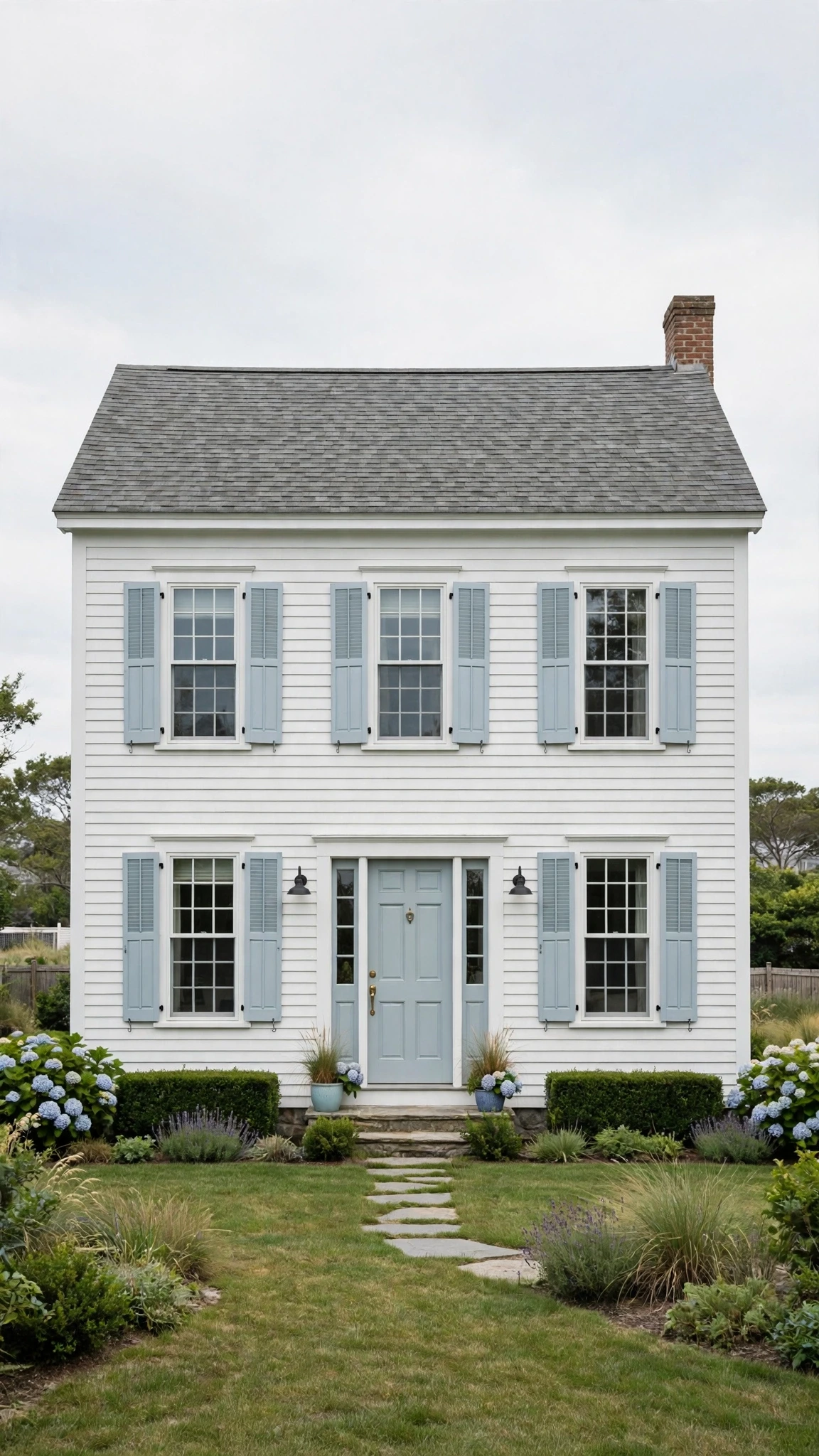
White clapboard gives a dormer-free Cape Cod a bright, tidy presence that reads well from the street. The horizontal boards add a gentle rhythm to the walls, and a soft coastal accent — pale blue shutters, a sage bench, a gray porch floor — keeps the white from feeling stark.
The key is restraint. One or two soft accent colors are plenty, and they work best when repeated in small doses: shutters, a planter, a porch chair. Wash the siding once or twice a year and touch up the paint before it peels, and the house will keep its fresh look with little effort.
4. Symmetrical Facade with a Centered Entry
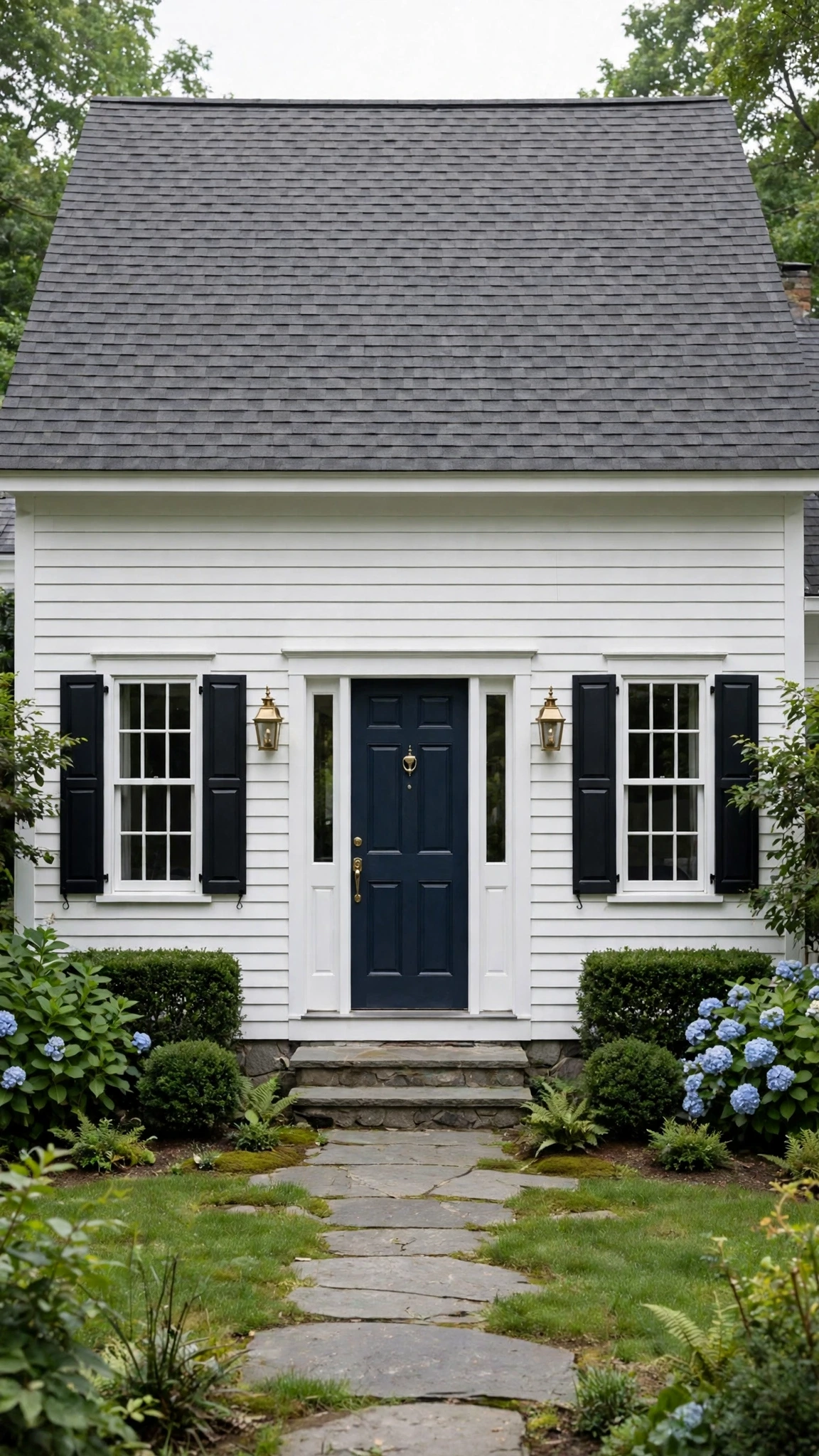
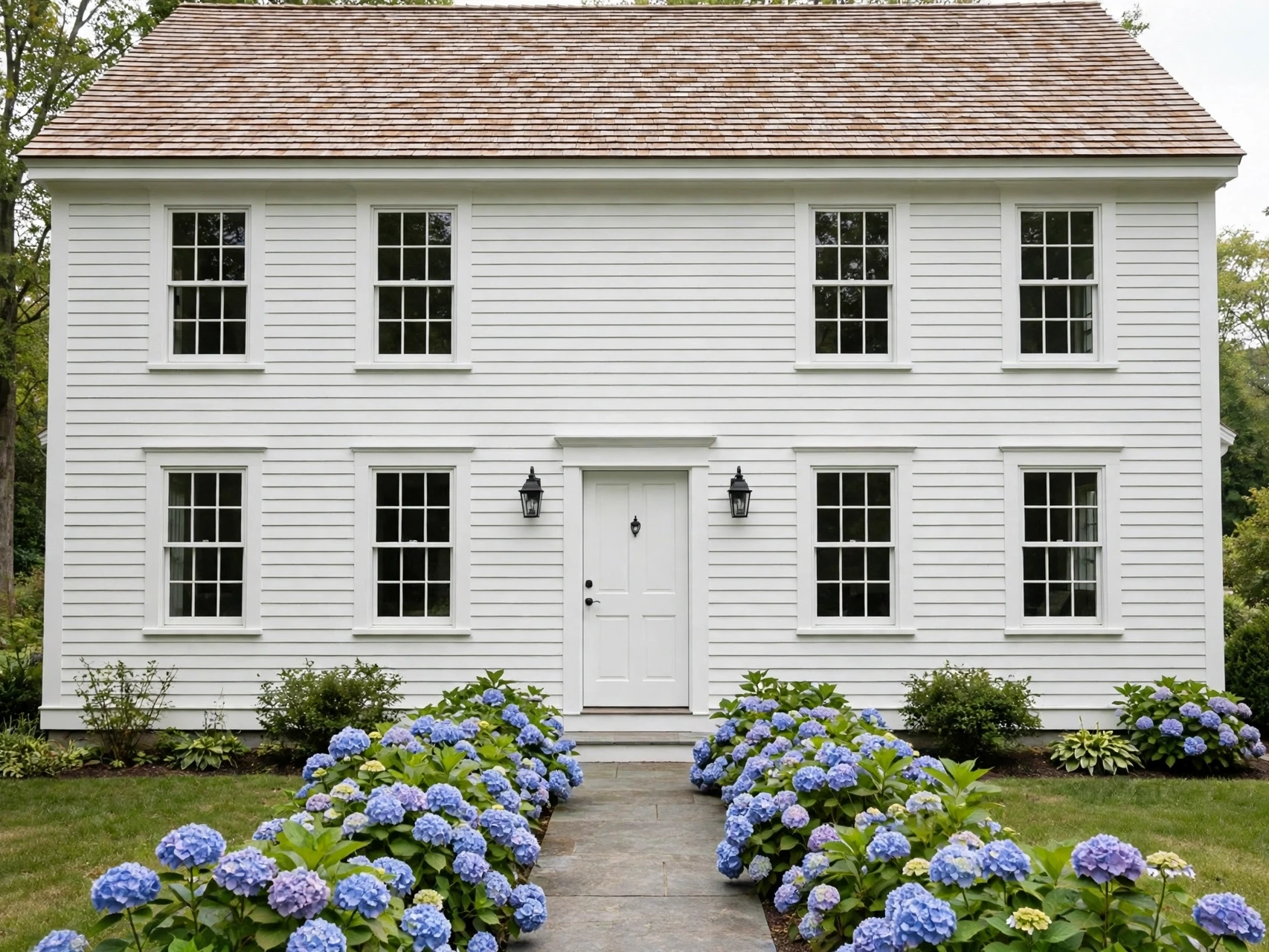
Balance is the cheapest form of curb appeal. A centered front door with matching windows on either side tells the eye exactly where to look, and the house feels settled even before any decoration is added. Shutters, lanterns, and planters placed in pairs strengthen that balance without adding clutter.
You do not need to move walls to get closer to this look. Matching the shutters, using one lantern style on both sides of the door, and planting mirrored shrubs along the walk can pull an off-center facade into harmony. A single well-placed tree can do the same job for a door that sits slightly to one side.
5. Bold Front Door in Navy, Black or Deep Green
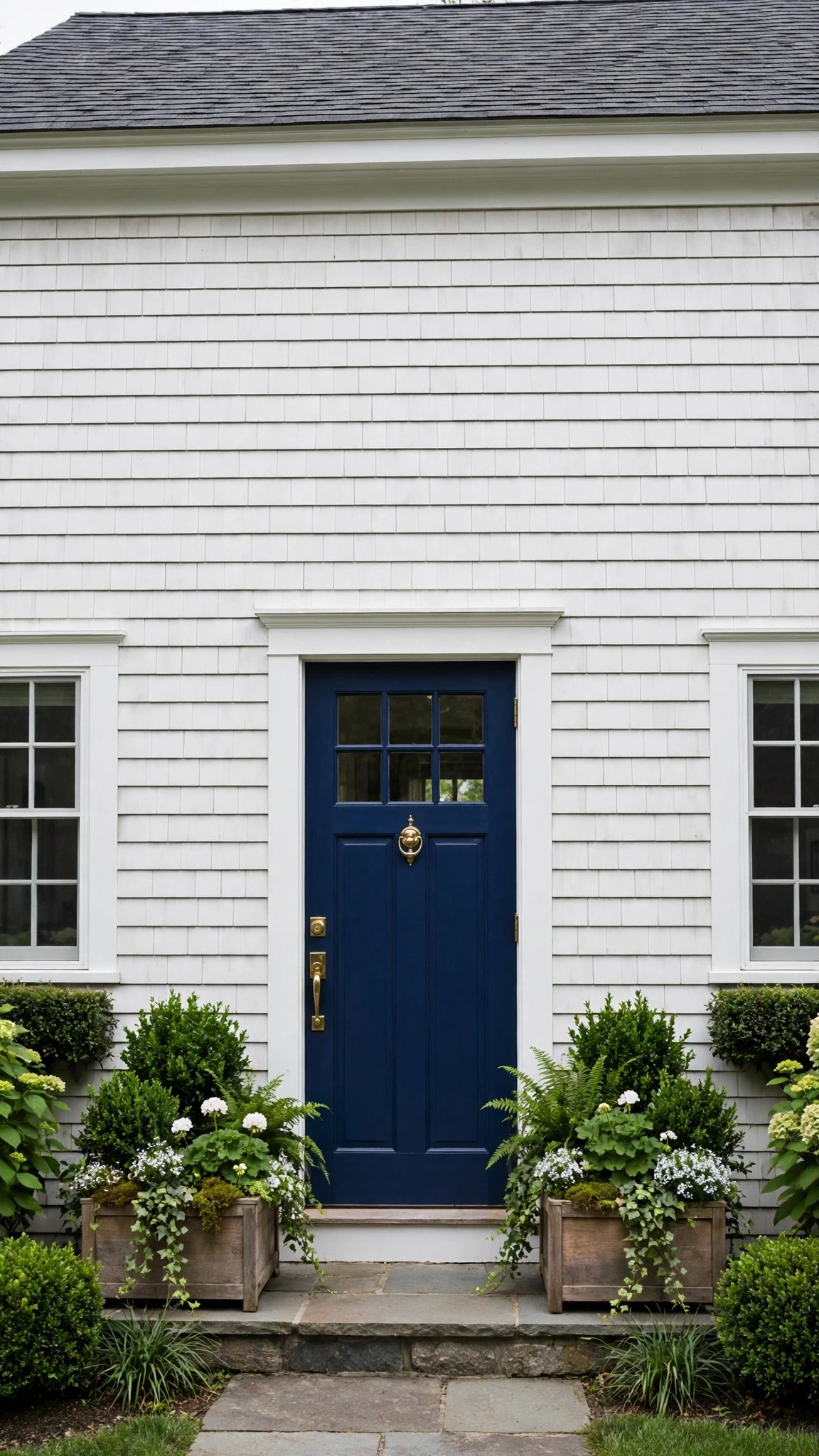
If the facade feels plain, the front door is the fastest place to add character. Navy feels coastal and relaxed, black reads as quietly formal, and deep green sits beautifully against gray shingles or white siding. Against a pale wall, any of these colors pulls the eye straight to the entrance and makes the house feel more deliberate.
A soft sheen finish catches light better than a flat one and stands up to weather. Brass or oil-rubbed bronze hardware completes the entry, and a simple wreath or a pair of planters keeps it from feeling bare. When you are unsure about color, paint a test board and lean it against the house for a few days.
6. Wide Front Porch with Rocking Chairs
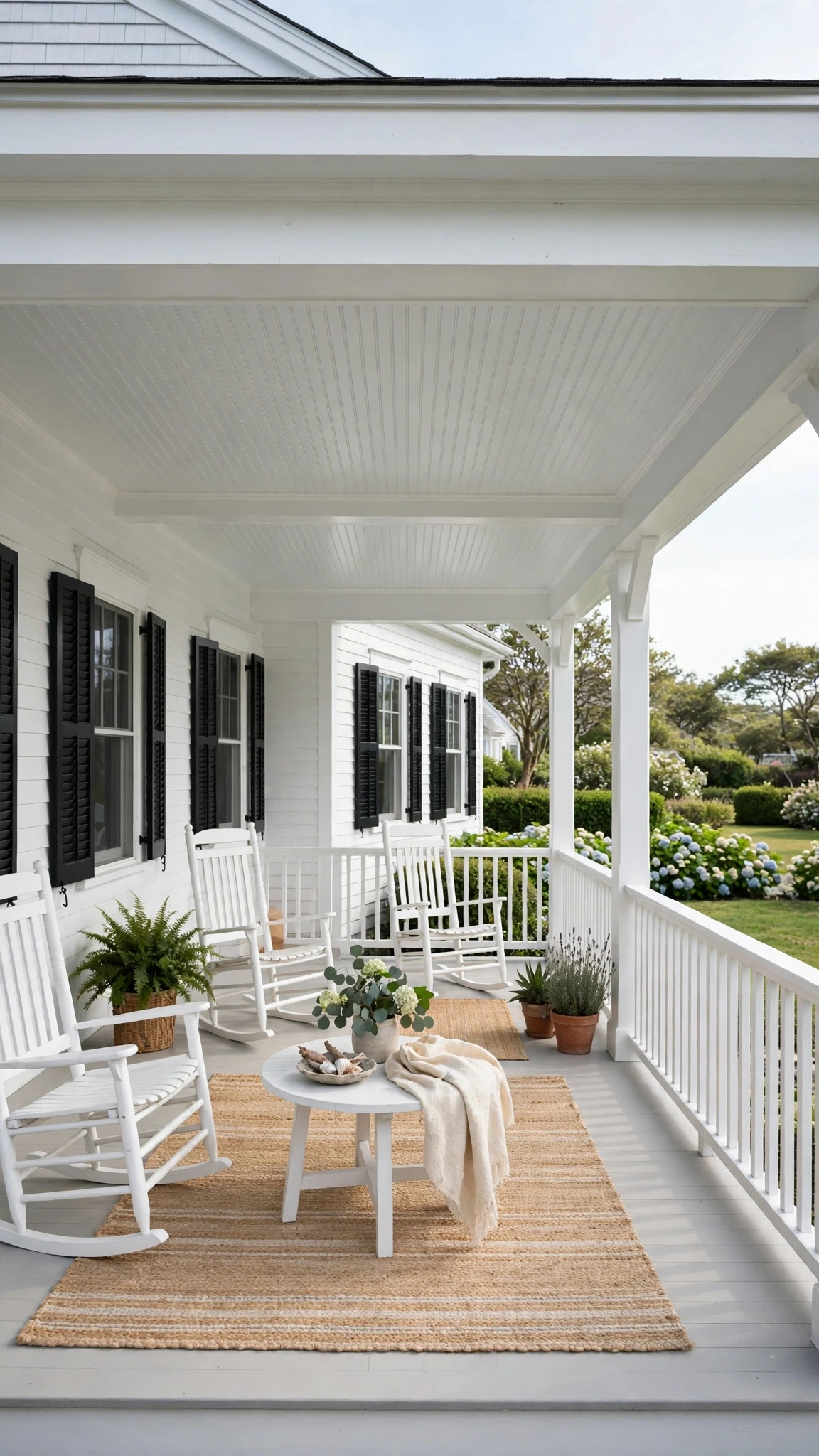
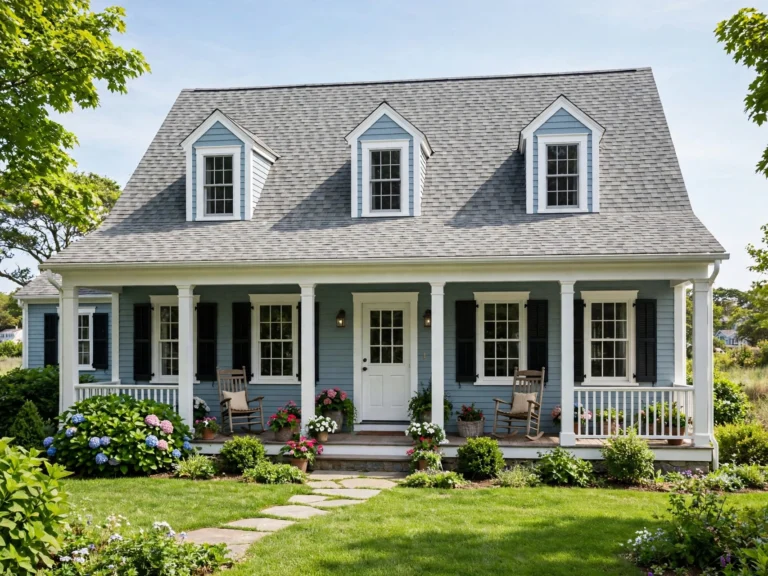
A wide front porch gives a dormer-free Cape Cod the welcoming layer its roofline does not provide. Deep enough for rocking chairs and a small table, it turns the front of the house into a room of its own, and the horizontal lines of the porch rail and ceiling add structure to an otherwise plain facade.
Keep the porch furnishings simple: two chairs, a small table, and cushions in a soft coastal color that can handle weather. A beadboard ceiling painted white brightens the space, and a ceiling fan keeps the air moving on still summer evenings. Even a modest porch changes how the whole house feels from the street.
7. Large Windows That Bring Light Inside
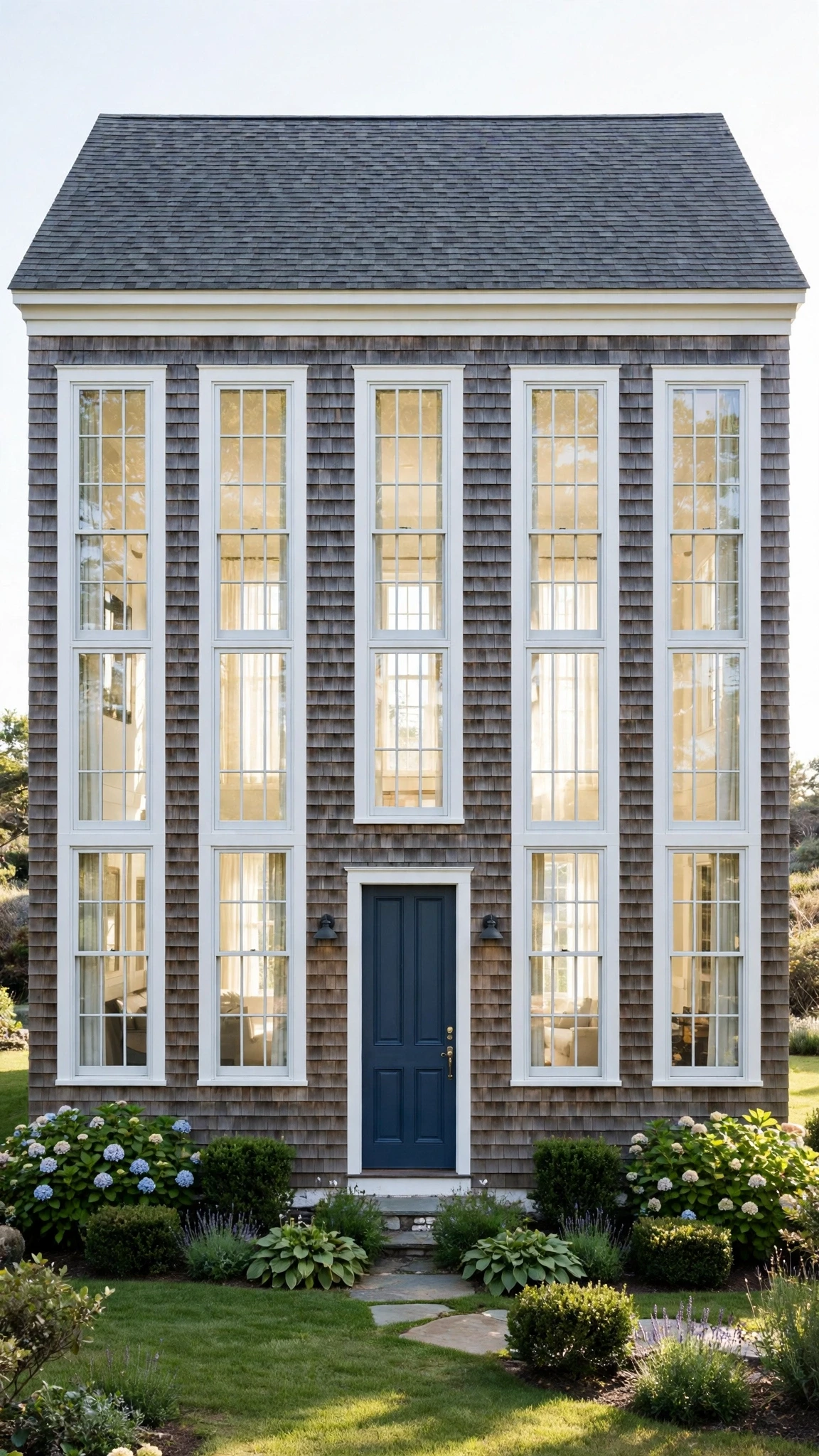
Without dormers, the windows carry the job of lighting the upstairs, so size matters. Tall, evenly spaced windows on the front and gable ends pull daylight deep into the rooms, and when they share the same trim and muntin pattern, they give the facade a neat rhythm of its own.
Inside, the payoff is just as real: rooms feel larger and brighter without any structural work. Keep window treatments light — sheer curtains or simple shades — so the glass does as much work as possible. If you are replacing windows, matching the style across the whole house matters more than any single fancy feature.
8. Skylights for Upstairs Light Without Dormers
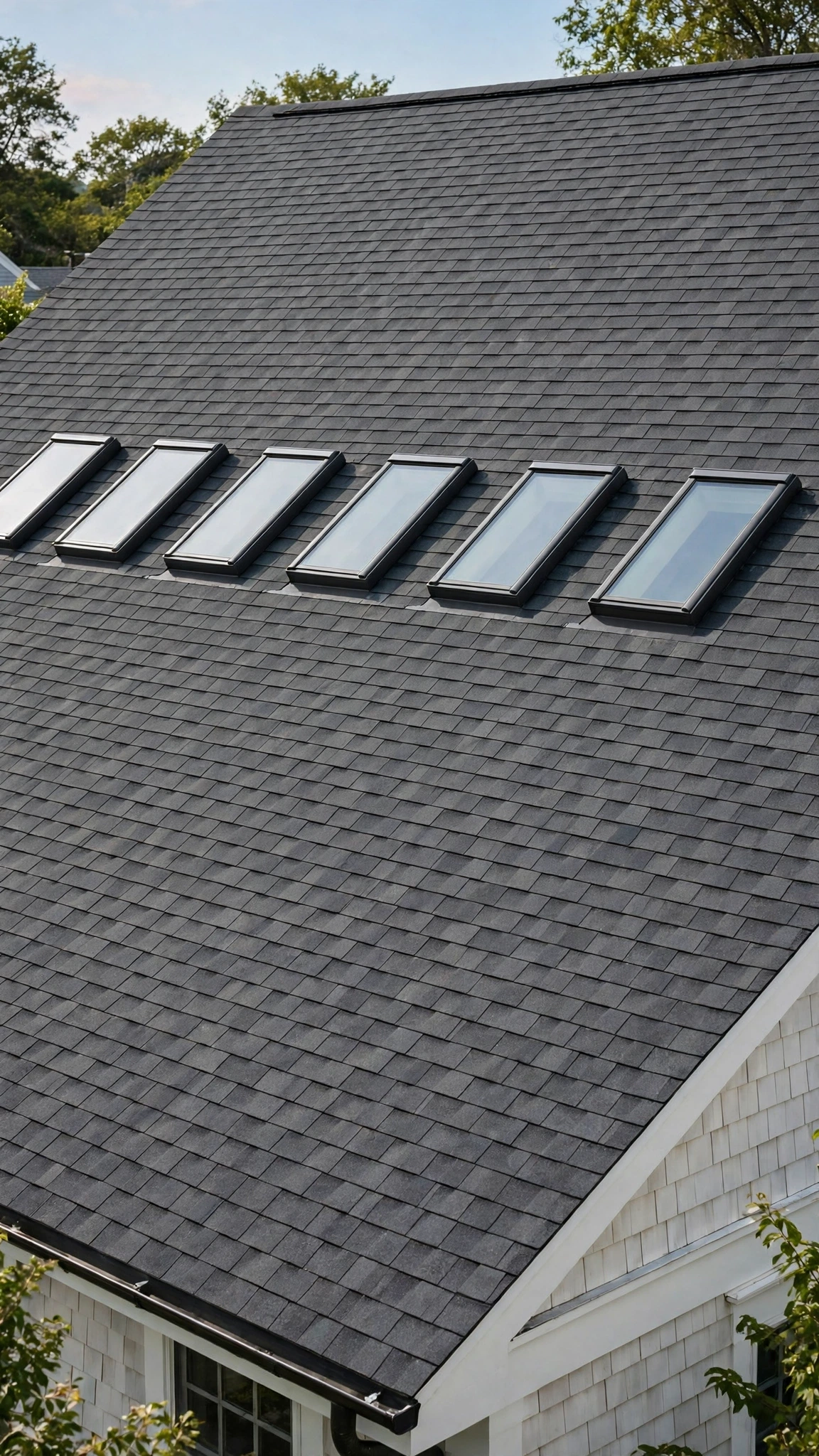
Skylights are the most practical answer to the darkest problem of a dormer-free Cape Cod: a dim upstairs. Set into the roof slope, they bring daylight straight down into bedrooms and hallways without changing the shape of the roof at all. From the street, they sit almost flat and barely interrupt the clean roofline.
Choose fixed skylights for rooms that only need light, and venting ones for spaces that also need fresh air. Good flashing and a skilled installer matter here, since a skylight is only as good as its seal against rain. With that handled, an upstairs that once felt like an attic can feel like a proper bedroom.
9. Shutters in a Contrasting Coastal Color
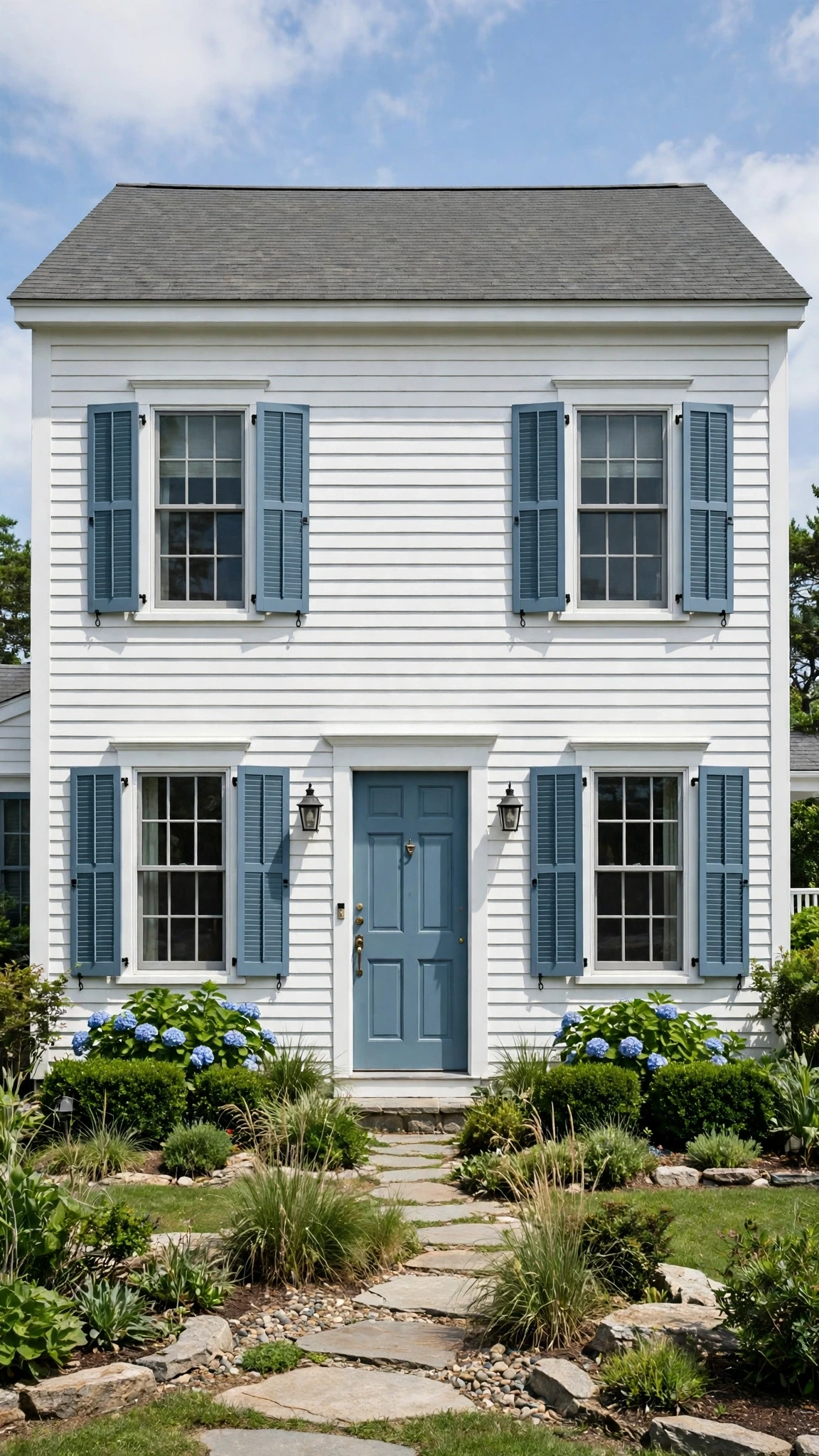
Shutters are a small change with an outsized effect on a plain facade. A contrasting coastal color — soft blue, sage green, or even black — breaks up long stretches of siding and frames each window like a picture. The color draws the eye across the facade instead of letting it slide past.
Size matters more than style: shutters should look wide enough to actually cover the window, even if they stay fixed in place. Match the shutter color to one other accent, such as the door or a planter, so the palette feels intentional. A coat of exterior paint on existing shutters is one of the cheapest weekend updates you can make.
10. Standing-Seam Metal Roof Accent
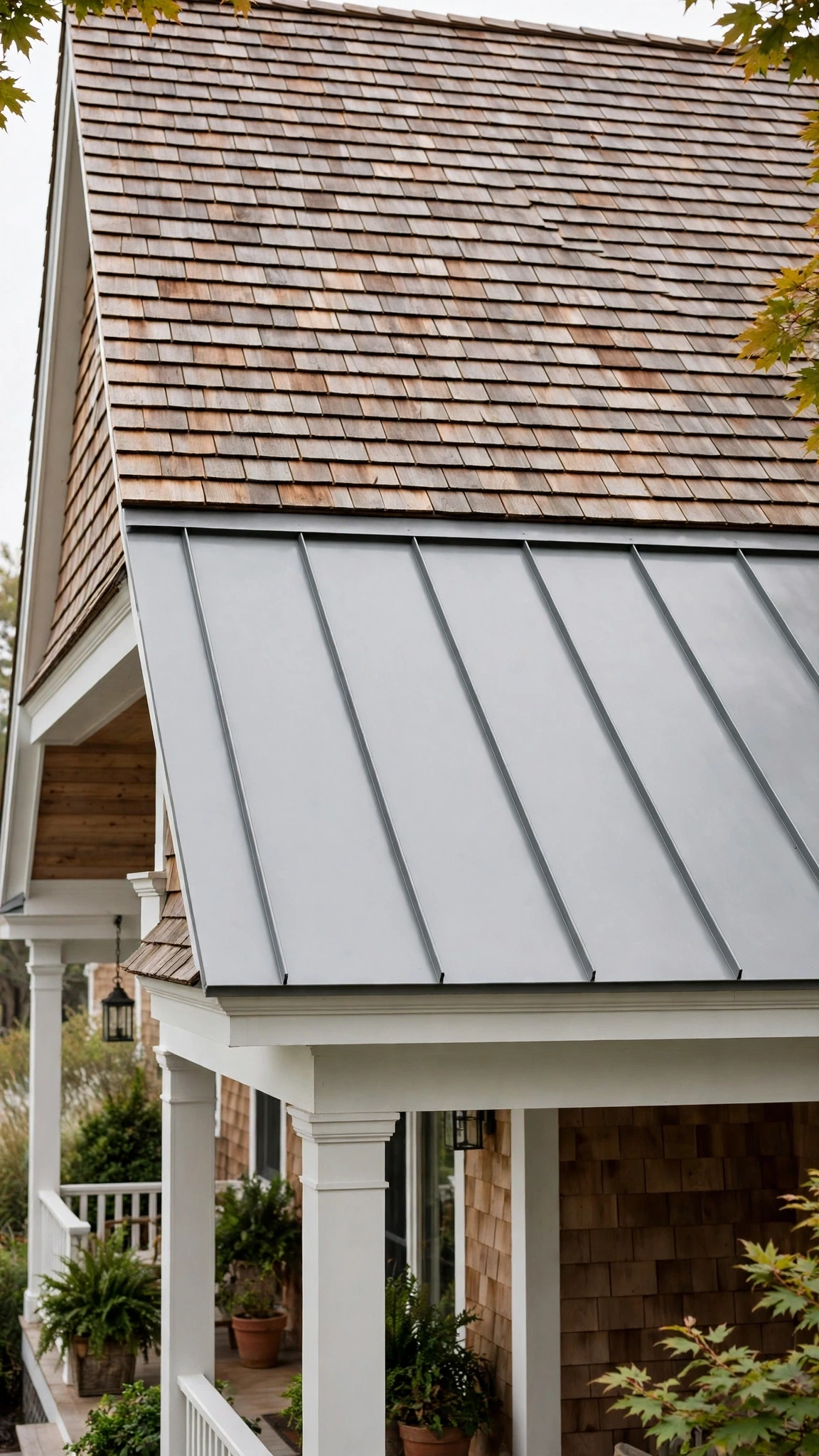
A strip of standing-seam metal on a porch roof or wing adds a crisp line to a traditional house without fighting its classic character. The vertical seams catch light through the day, and in soft gray or charcoal, the metal sits calmly beside shingles or clapboard.
Keep the metal as an accent so the house holds onto its shingle character. Porch roofs and bay tops are natural spots for it, and the contrast with the surrounding material is what makes the detail feel deliberate. Neat seams and proper flashing keep it looking sharp for decades.
11. Natural Stone Chimney as the Focal Point
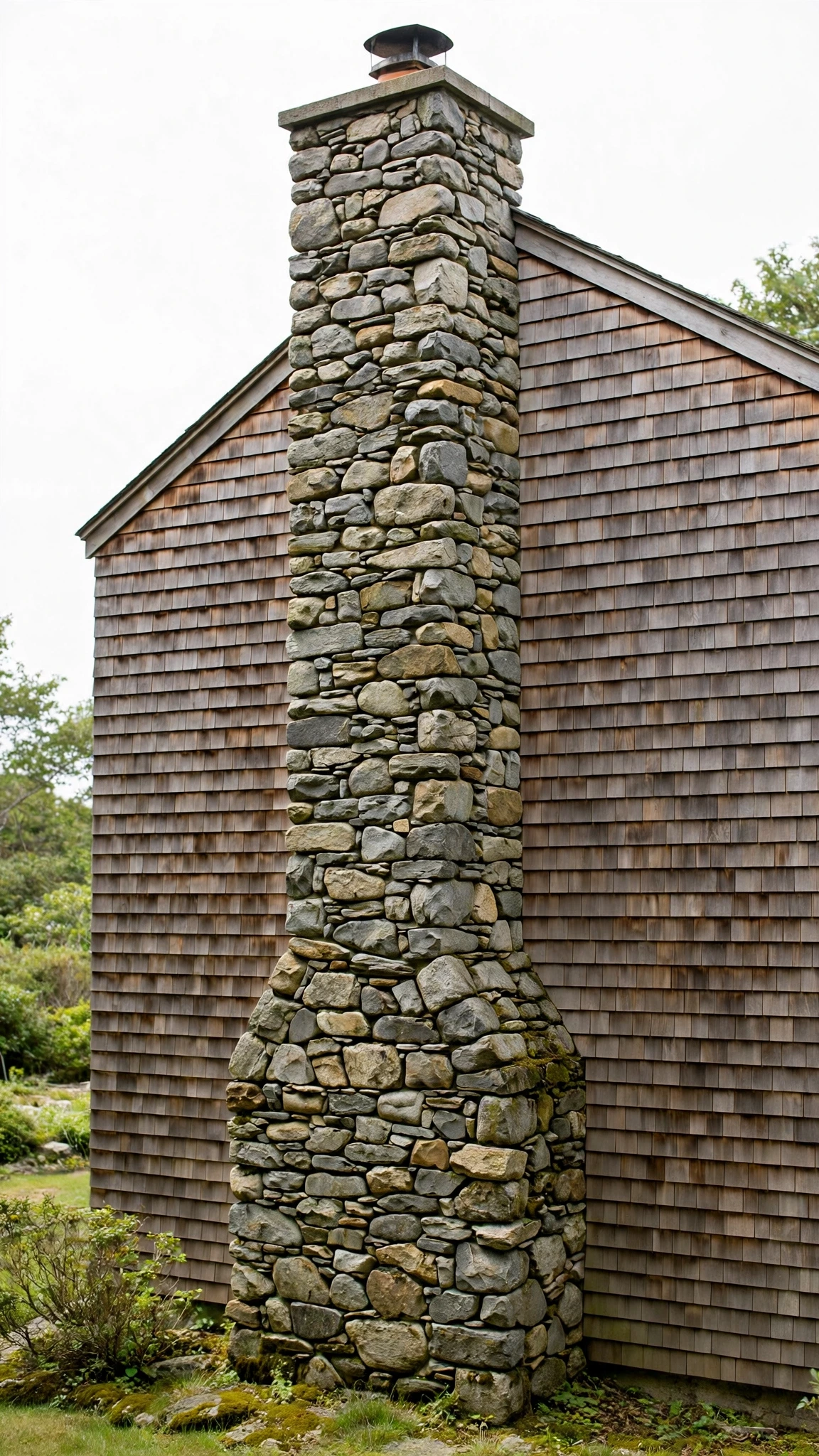
Without dormers, the roofline has no vertical punctuation — a stone chimney supplies it. Fieldstone or granite in soft gray and tan tones rises against the siding and anchors the whole facade, giving the eye a natural place to rest. It is the detail visitors tend to remember after driving past.
An existing chimney can be clad in thin stone veneer, and a stone base on the porch piers echoes the same material at ground level. Keep the palette to two or three tones so it reads as one material, and let the mortar lines stay slightly irregular for a hand-built feel.
12. Bluestone Walkway with Hydrangea Borders
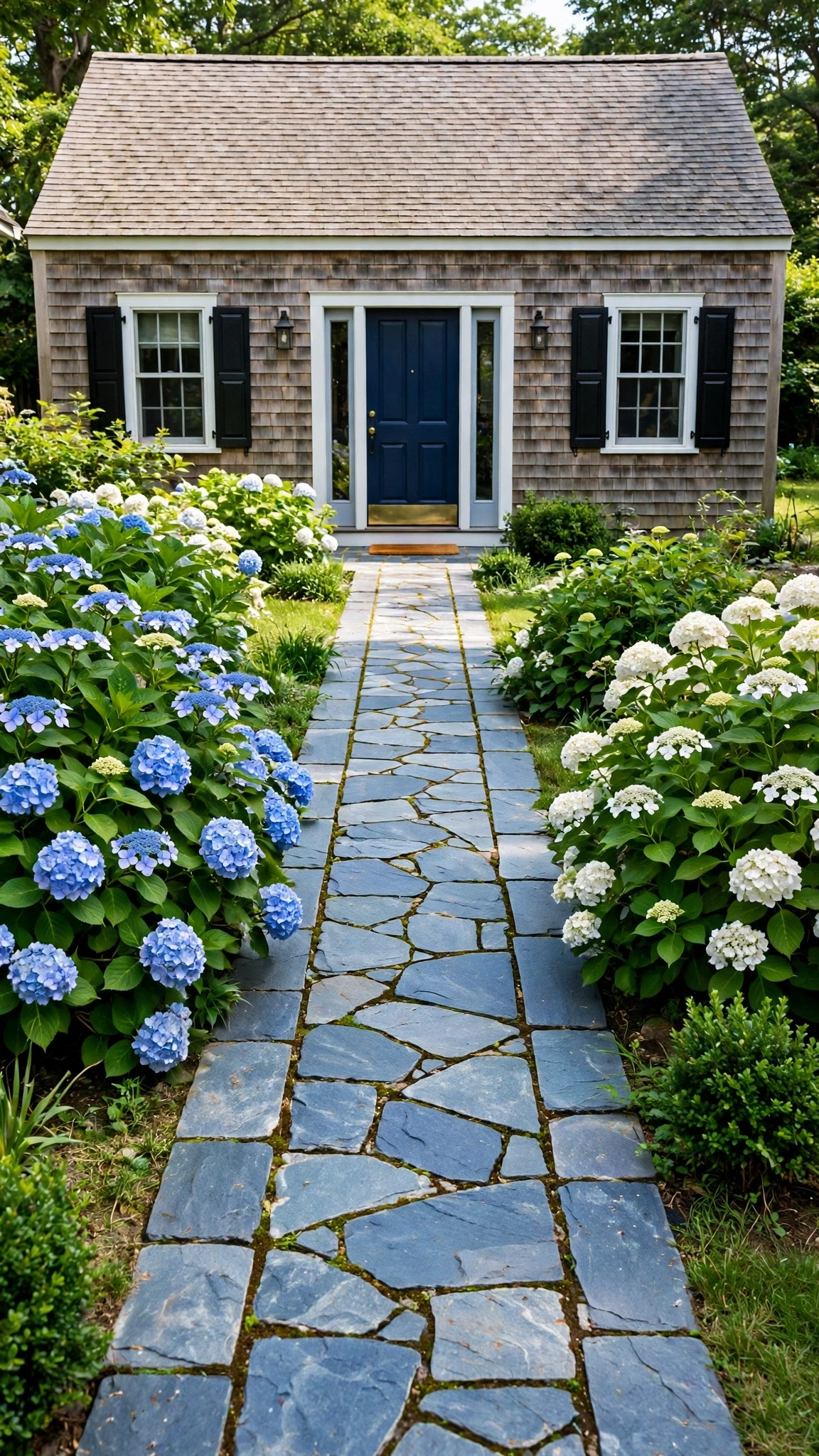
A bluestone walk turns the trip to the front door into part of the garden. Large, irregular slabs in blue-gray tones lead the eye forward, and hydrangeas in blue and white blooming on both sides make the path feel like a destination rather than a chore to cross.
Narrow joints filled with fine gravel or low groundcover let the path drain well after rain. Hydrangeas want steady water and a little afternoon shade, so plant them where they catch morning sun and shelter from harsh wind. The result looks generous because it is layered and alive, not because any single piece costs a fortune.
13. Low White Picket Fence and Gate

A low white picket fence frames a dormer-free Cape Cod the way a picture frame finishes a photograph. It marks the boundary of the yard without hiding the house, and the repeating vertical lines add a rhythm that the plain facade can use. A simple gate, centered on the walk, completes the invitation.
Keep the fence low — waist height or below — so the house stays visible from the street. White paint needs touching up every few years, but the upkeep is modest, and a fence that matches the trim color ties the whole property together. A climbing rose on one fence post adds color without any extra structure.
14. Boxwood and Rose Garden Entry
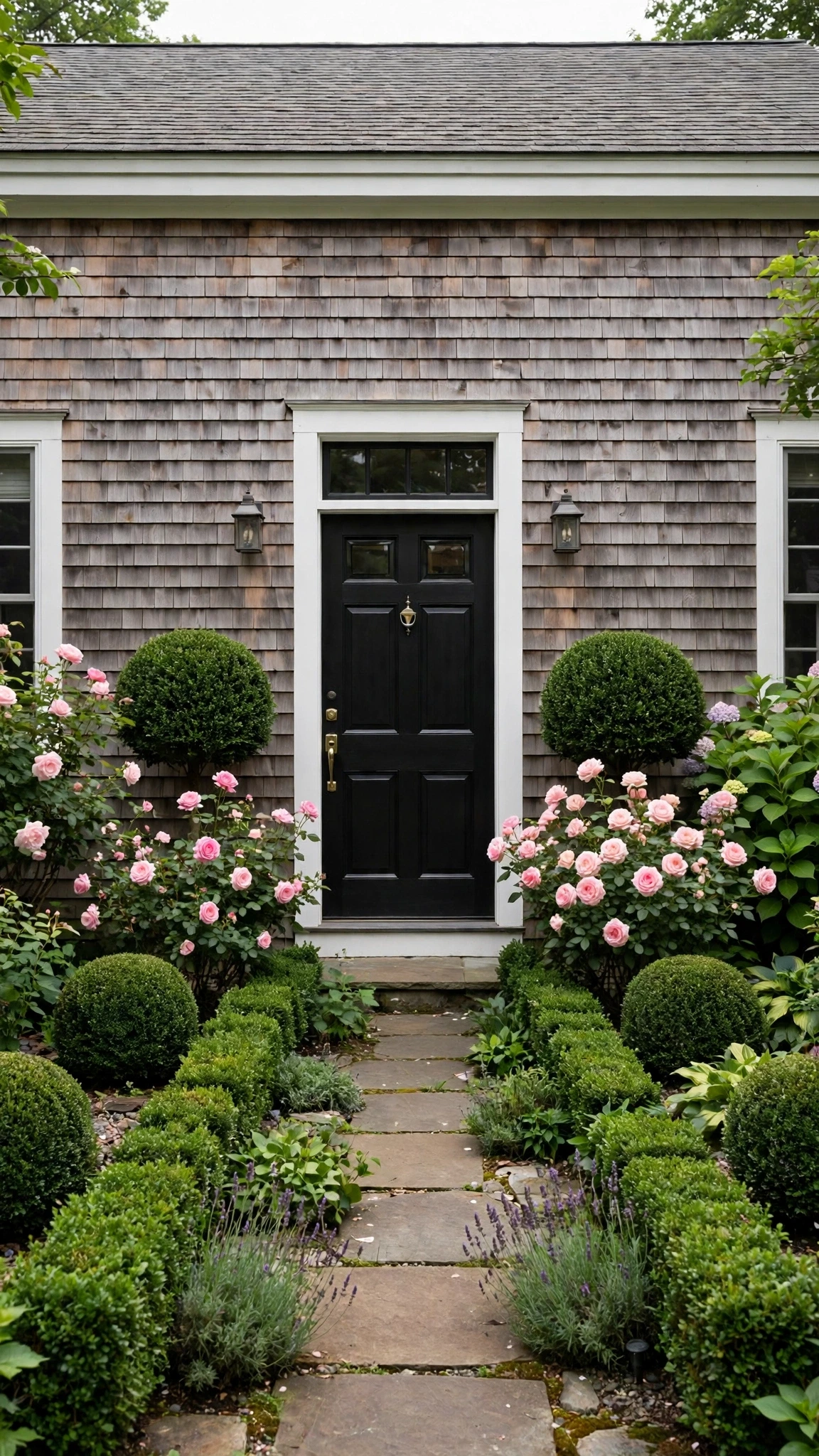
Boxwood and roses are a classic pairing for a reason. The boxwood holds its deep green shape through winter and gives the entry structure all year, while roses bring color and scent when the weather warms. Together they make even a modest entry feel cared for.
Keep the boxwood shapes simple — rounded balls or low hedges — so the pruning stays manageable, and choose disease-resistant rose varieties suited to coastal air. A gravel or stone edge keeps the bed tidy, and a single stone bench near the entry gives visitors a place to pause.
15. Brick Steps with Lantern Lighting
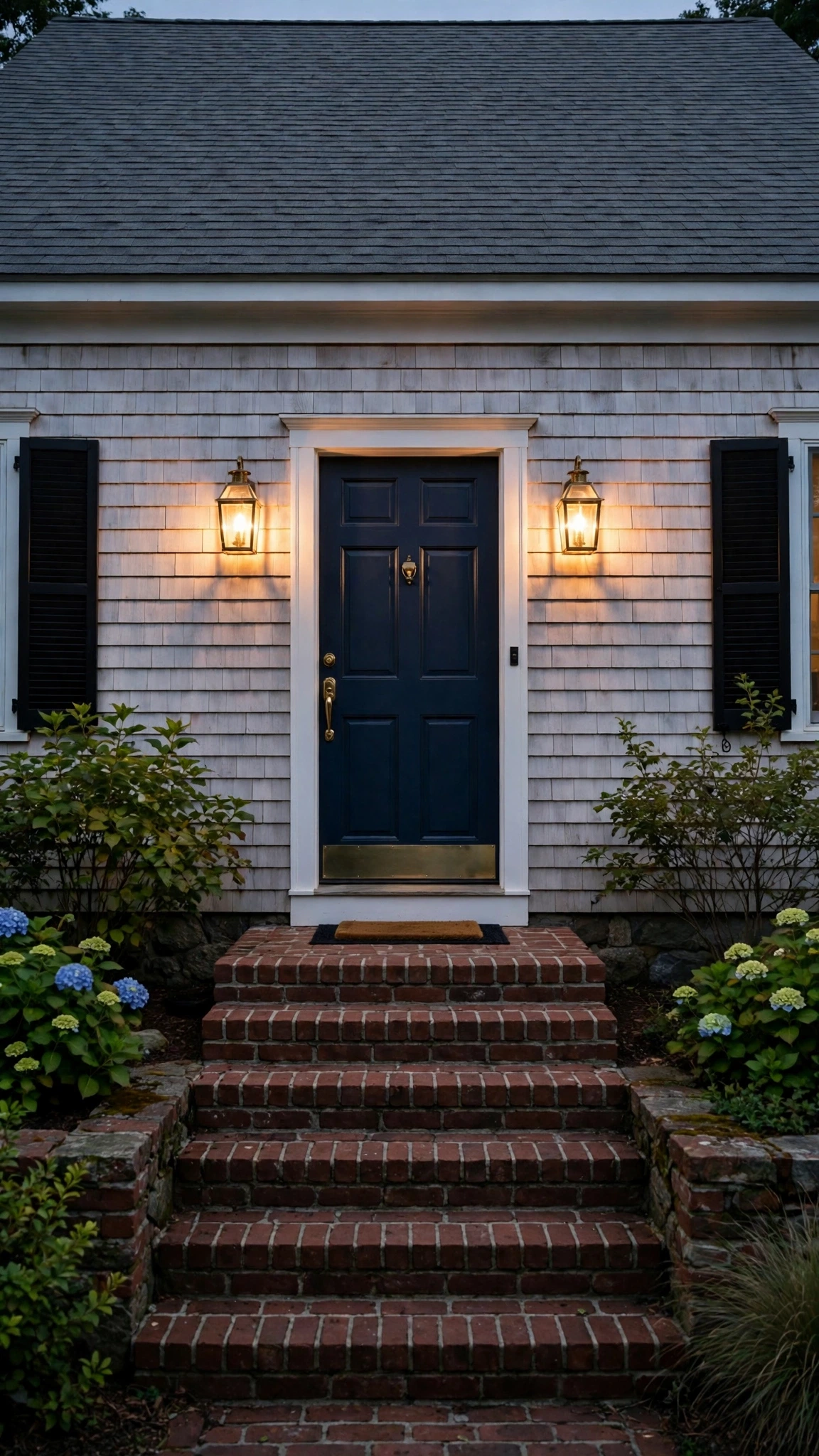
Brick steps give the entry a warm, grounded feel that pairs well with both shingles and clapboard. The color of the brick adds a natural accent to the facade, and the solid, slightly uneven texture of real brick feels hand-built in a way poured concrete never quite manages.
Lanterns on either side of the steps finish the entry and make it safe after dark. Brass or black lanterns with warm bulbs suit a coastal house best, and a timer or dusk sensor means they switch on by themselves each evening. Keep the steps wide and the risers even, so the entry feels generous as well as safe.
16. Side Porch or Deck for Outdoor Living

When the front of the house stays simple, a side porch or deck gives the family its outdoor living space without changing the street view. Tucked along the side of the house, it catches afternoon sun or evening shade depending on the orientation, and it becomes the natural spot for meals, reading,g and summer evenings.
Keep the decking in a weathered tone that matches the siding, and use simple railings that do not compete with the house. A pergola or a shade sail overhead makes the space usable in midday sun, and planters with tall grasses give privacy from neighbors while leaving the view open.
17. Fire Pit Patio in the Front or Side Yard
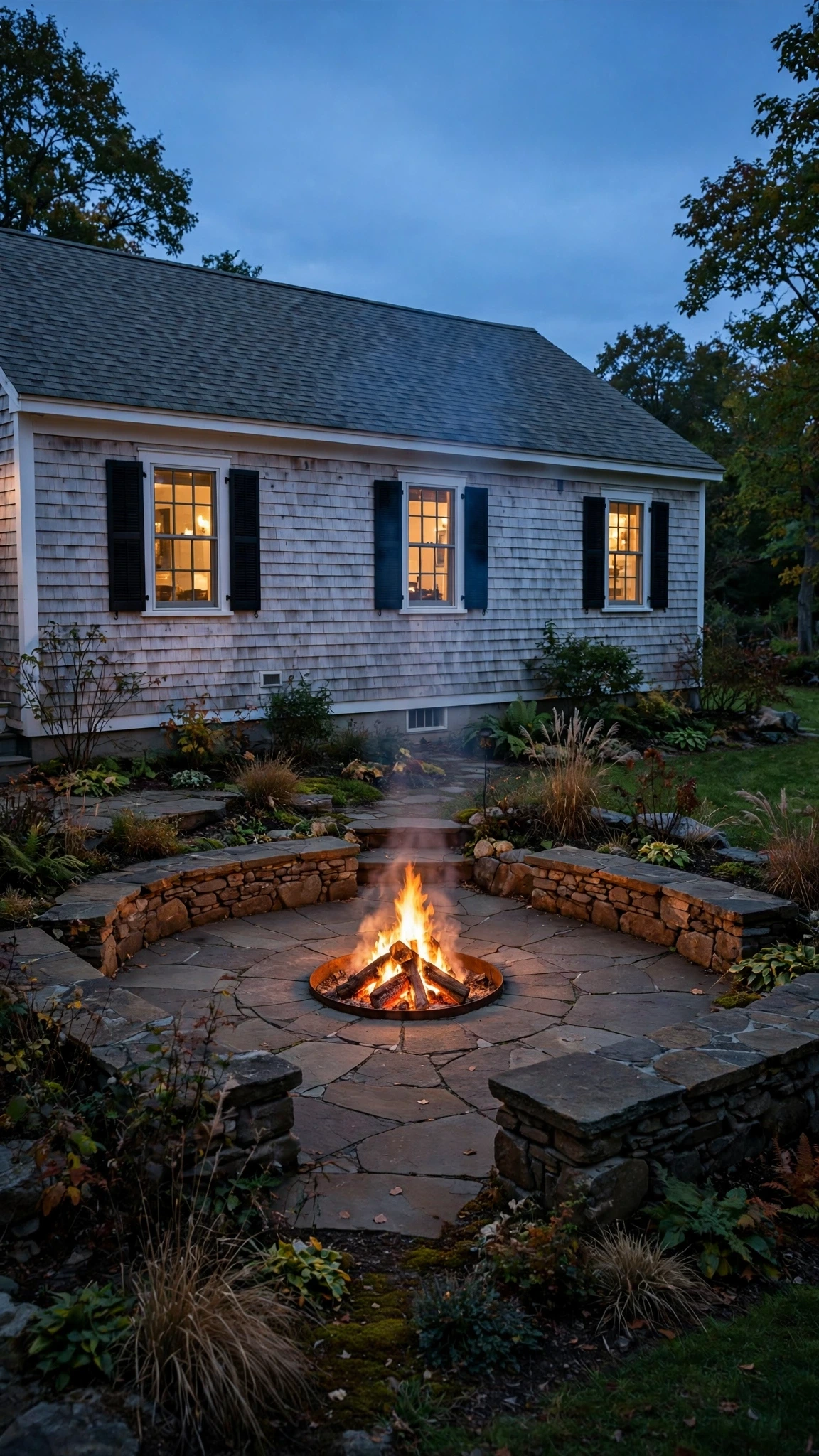
A fire pit patio gives a yard a natural gathering point after sunset, and it works in a front or side yard just as well as in the back. Low stone walls curving around the fire make the space feel enclosed and deliberate even when no one is sitting there.
A level pad of gravel or stone pavers handles drainage, and seating walls at seat height double as a place to set a drink. Where open flames are restricted, a gas fire table gives the same glow with less fuss. Grasses or low shrubs around the edges shelter the space without blocking the breeze.
18. Garage Doors That Match the House Trim
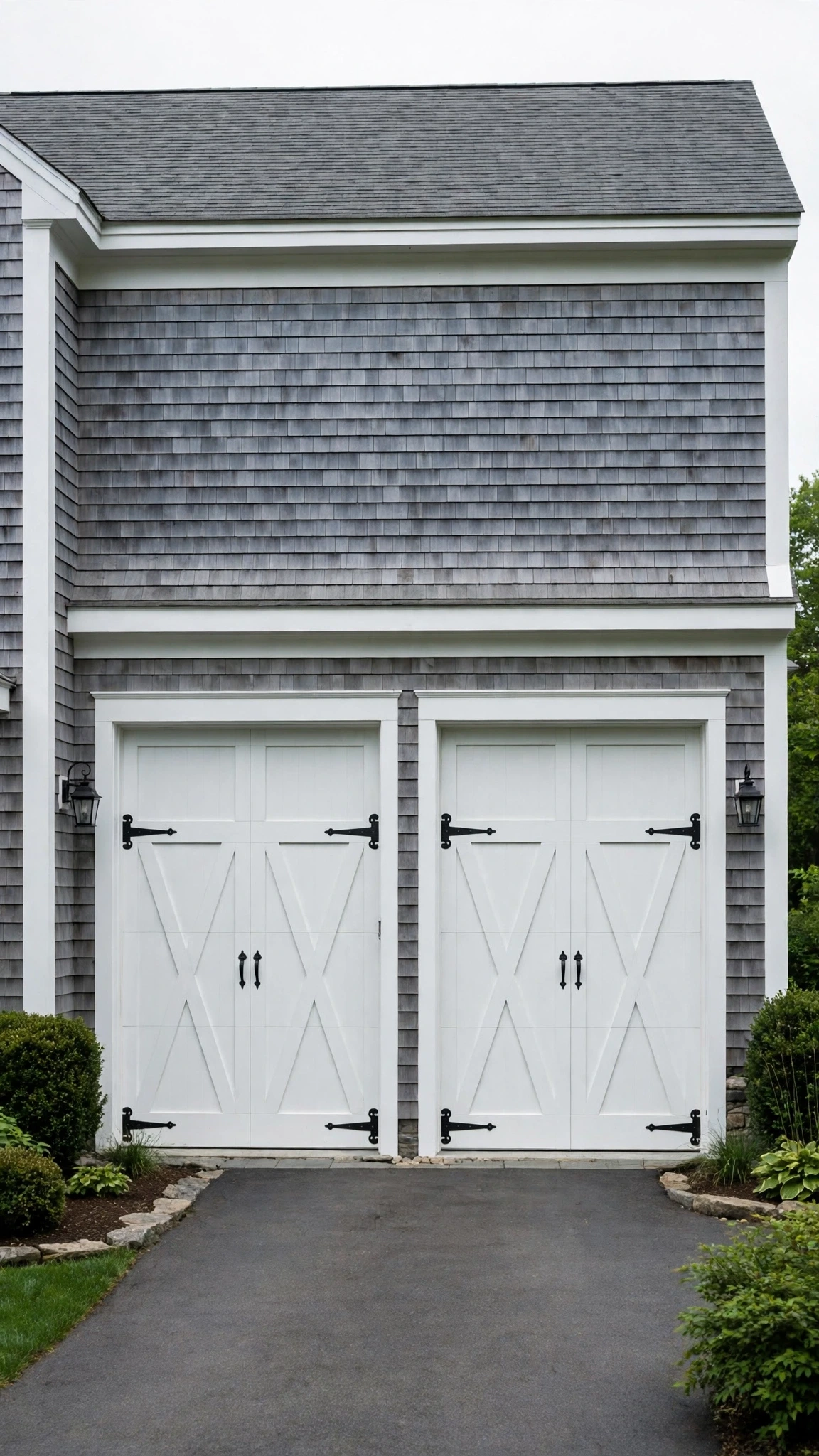
Garage doors take up a large share of many facades, so when they clash with the house, the whole street view suffers. Doors painted to match the trim — usually white or a soft gray — blend into the facade instead of competing with it, and simple panel details keep them from looking blank.
Carriage-style details, such as crossbuck panels and iron-style hinges, can add coastal character if you want more than a plain door. Match the hardware finish to the front door and lanterns for a cohesive look, and keep the driveway planting simple so the doors stay visible rather than hidden.
19. Solar Panels Tucked on the Rear Roof Slope
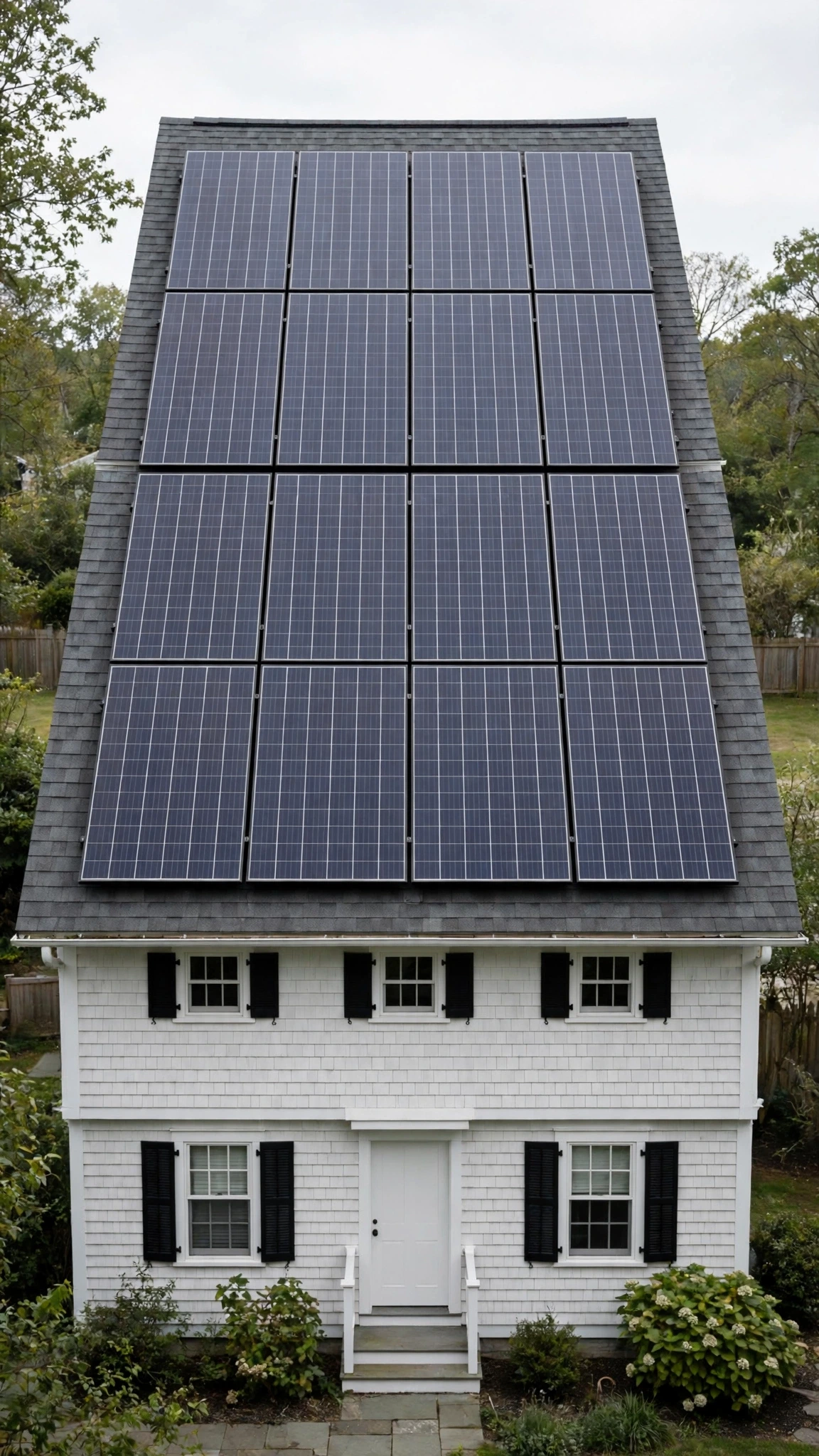
Solar panels are a practical addition to a dormer-free roof because the clean, unbroken slope is ideal for them. Placed on the rear slope, they stay out of the street view entirely, so the classic front facade is untouched while the house quietly produces its own power.
A clean roof also means a simpler, cheaper installation, since there are fewer cuts and obstacles to work around. If your roof faces away from the sun, a ground-mounted array in the side yard is worth discussing with an installer. Either way, the panels read as a thoughtful choice rather than a compromise.
20. Coastal Decor Touches: Wreaths, Planters and a Star
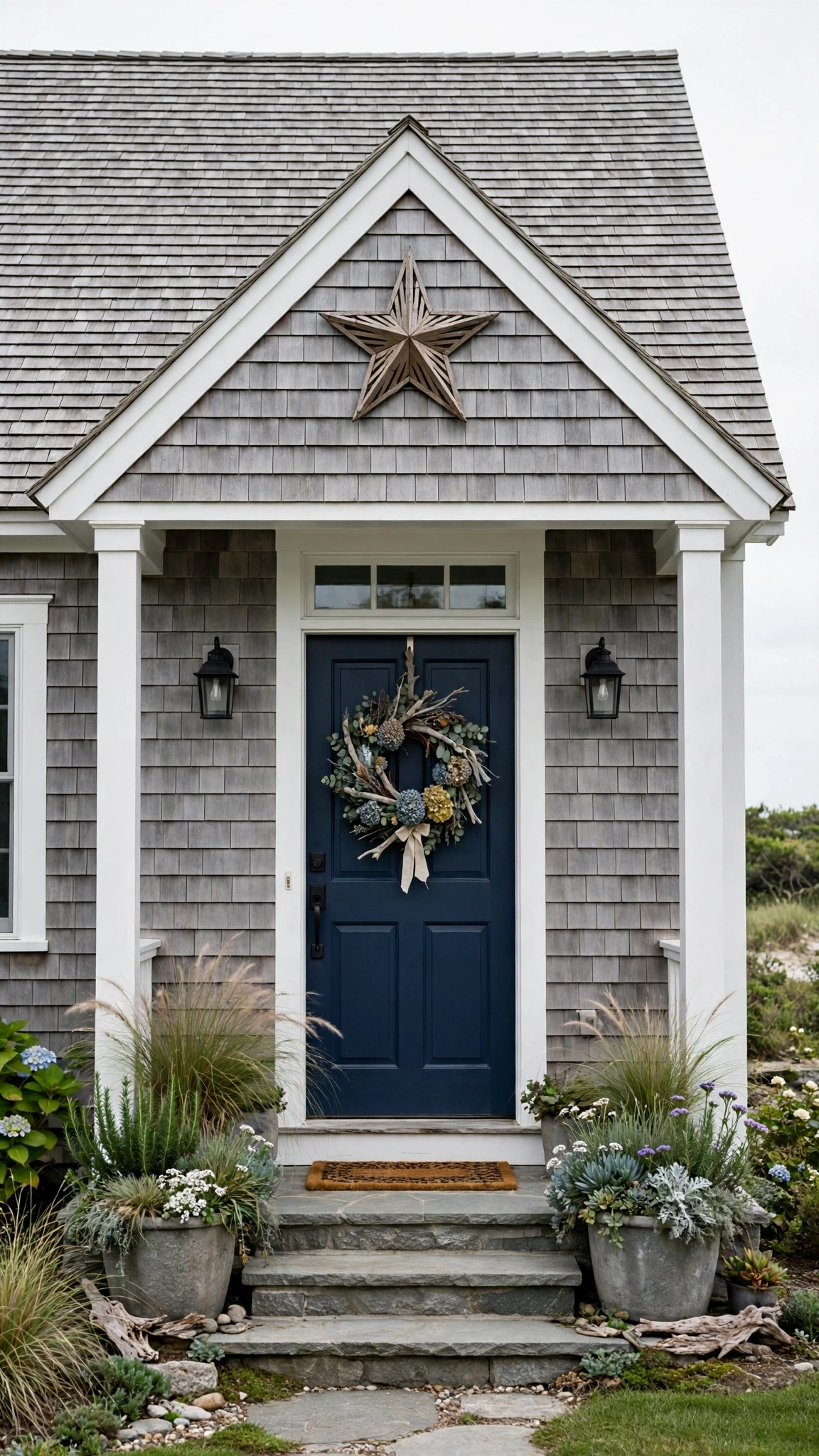
Small coastal touches are the finishing layer on a simple exterior. A wreath on the door, a pair of planters flanking the steps, and a wooden star or anchor on a gable end add personality without any construction at all. Each piece is small, but together they tell visitors the house is loved and lived in.
Change the wreath and planters with the seasons — evergreen in winter, hydrangeas in summer, pumpkins in fall — and the facade never looks tired. Keep the total number of decorations modest, since a simple house looks best when each touch has room to breathe.
21. Evening Lighting Plan for a Glowing Facade
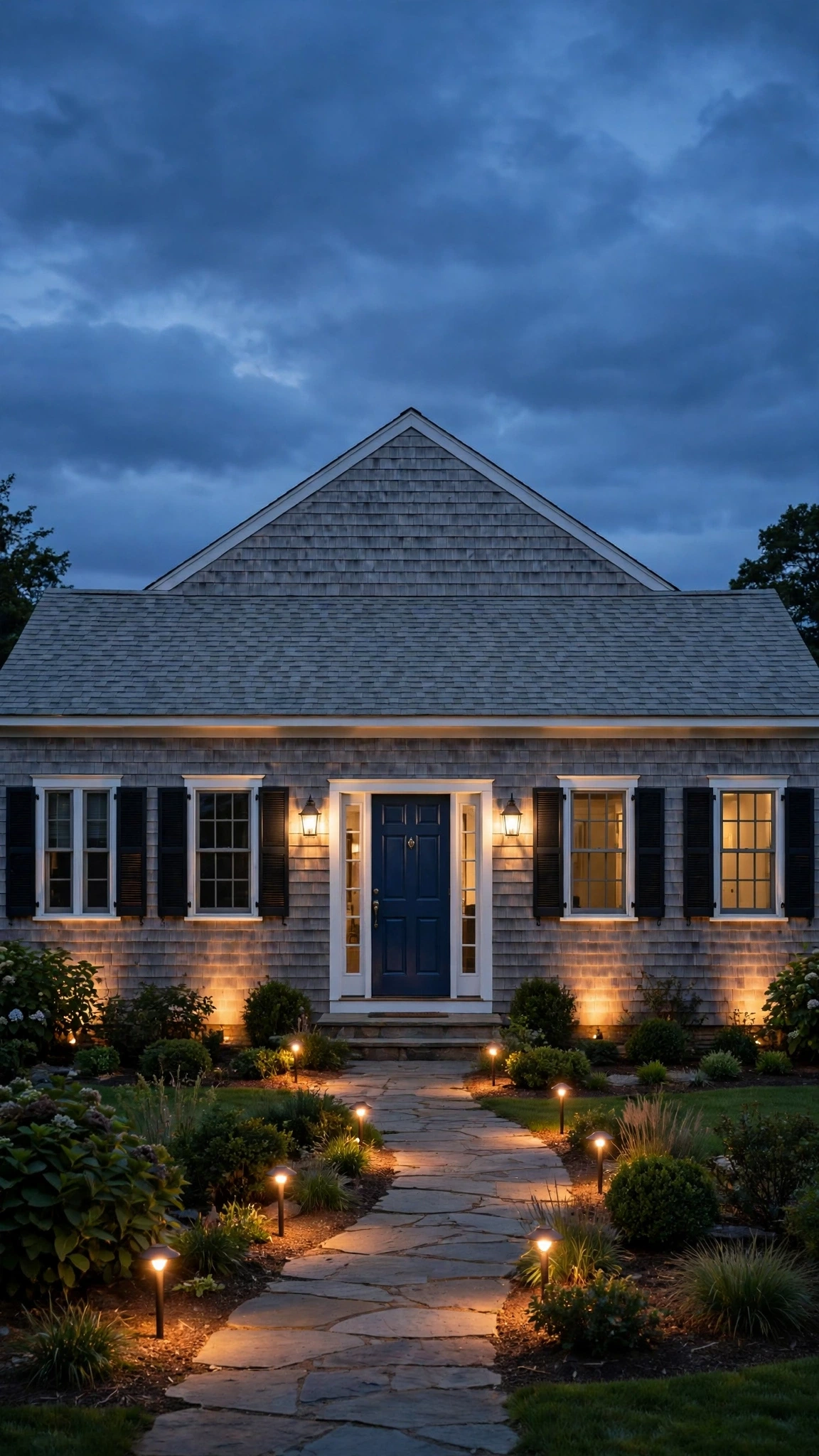
Evening light is what carries a simple facade after sunset. Warm path lights guide visitors to the door, a soft wash of uplight brings out the texture of the siding, and lanterns at the entry give the house a welcoming focal point. Together they make the house feel alive in the evening, long after the sun has gone.
Layer the light in three levels: low path lights for safety, mid-level lanterns and sconces for warmth, and a few uplights to highlight trees, stone, or the facade itself. Warm white bulbs suit coastal homes better than cool ones, and timers or dusk sensors mean the display happens on its own each night.
How to Plan a Dormer-Free Cape Cod Exterior That Still Feels Complete
Begin with the problem that bothers you most — a dark upstairs, a plain wall, a tired entry — and fix that one thing first. Live with the change for a season before adding the next, so you can see what the house actually needs rather than guessing. A photo of the front of your house with notes scribbled on it is a surprisingly good planning tool: mark where the eye lands first, where evening shadows fall, and which parts already work.
That simple plan keeps the project honest. Work from the roof down — roofline, siding, windows, entry, yard — and check each new idea against what is already there, so the finished house reads as one design instead of a collection of separate features. The goal is a facade where nothing competes for attention, because every part already belongs.
Keeping a Simple Coastal Exterior Looking Its Best
Salt air is kind to live in and hard on a house, so a short routine protects everything you add. Rinse siding and windows a few times a year, repaint trim before it peels rather than after, and clear gutters and drains before storm season. Each of these jobs takes an afternoon, and together they keep shingles, stone,ne and metal aging gracefully instead of wearing out early.
Pay attention to the parts that age fastest: lantern finishes, door hardware, deck boards and the edges of painted trim. One walk around the house each year with a notebook, listing what needs a touch-up, turns maintenance into a short list instead of a surprise repair bill. Houses that look effortlessly classic usually have an owner who treats upkeep as part of the design, not an afterthought.
FAQS
Can a Cape Cod house look good without dormers?
Yes, a Cape Cod house can look beautiful without dormers. A clean gabled roofline, balanced windows, crisp white trim, and a well-kept yard give the house a calm, classic character. Dormers add charm, but they are not required — many of the most elegant coastal homes rely on proportion, color, and landscaping instead.
What roof style suits a Cape Cod without dormers?
A simple gabled roof suits a Cape Cod without dormers best. Keep the pitch moderate, the ridge line lean, and the eaves neat so the roof reads as intentional rather than bare. A standing-seam metal accent on a porch or wing can add interest without breaking the classic shape.
How do you add light upstairs without dormers?
You can add upstairs light without dormers by using skylights, larger gable-end windows, and a light color palette inside. Skylights bring daylight straight into the roof space, while tall windows on the gable ends pull light across the room. Mirrors and pale walls then help that light travel further.
What siding looks best on a Cape Cod house without dormers?
Cedar shingles and white clapboard both look excellent on a Cape Cod without dormers. Cedar shingles add texture and weather to a soft gray that suits the coast, while white clapboard gives a brighter, more formal look. Either way, crisp trim and a contrasting door color keep the facade from looking flat.
How do you stop a dormer-free facade from looking plain?
Layer the facade with texture, color, and detail. Combine shingle or clapboard siding with shutters, a bold door color, lantern lighting, and and planted walkway so the eye finds something interesting at every level. A porch, a stone chimney, or a picket fence adds one more layer without crowding the house.
Is a Cape Cod without dormers cheaper to build or remodel?
Yes, a Cape Cod without dormers is usually cheaper to build and remodel. Skipping dormers means fewer roof cuts, less flashing, and a simpler framing job, which lowers both labor and material costs. The savings can then go toward better windows, siding,g or a porch that improves the whole exterior.
What colors work best for a simple Cape Cod exterior?
Soft coastal colors work best on a simple Cape Cod exterior. White, weathered gray, pale blue,ue and sage green all suit shingle and clapboard siding, while a navy, black, or deep green door adds a focal point. Keep the palette to three colors at most so the house looks calm rather than busy.
Conclusion
A Cape Cod house exterior without dormers proves that a simpler roof can still carry a great deal of character. The clean roofline, the texture of the siding, the color of the door, and the planting along the walk each do a small job, and together they create a home that feels calm, welcoming, ing and quietly confident in every season.
Pick the change that would make the biggest difference to your own house first — a brighter entry, a better walkway, or light upstairs — and build from there. Simple exteriors reward patience: each thoughtful layer adds up, and before long the house you once thought of as plain will be the one neighbors stop to admire.