
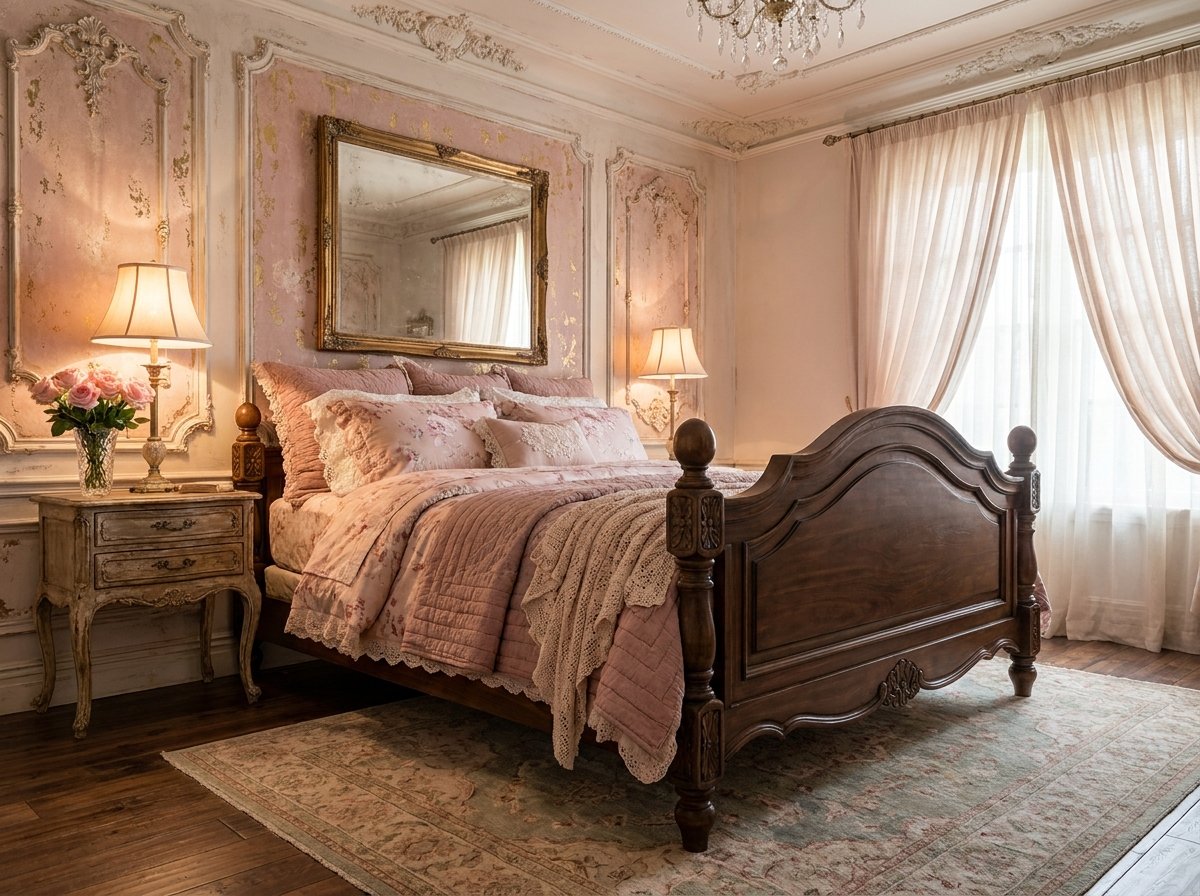
Shabby Chic Bedroom Ideas: 18 Soft, Lived-In Looks That Don’t Feel Dated
The best shabby chic bedroom ideas make a room look collected over time: a pale iron bed, a dresser with softly sanded edges, linen that has relaxed in the wash. It falls flat when everything is new, matching, and ruffled to the corners. The difference lies in a handful of decisions, not in the budget.
This guide walks through those decisions, from color palettes and bed frames to bedding layers, distressed furniture, lighting,g and small-room layouts. You’ll also find renter-friendly options, a modern take on the style, and the mistakes that make a room feel cluttered or dated.
What Makes a Bedroom Shabby Chic?
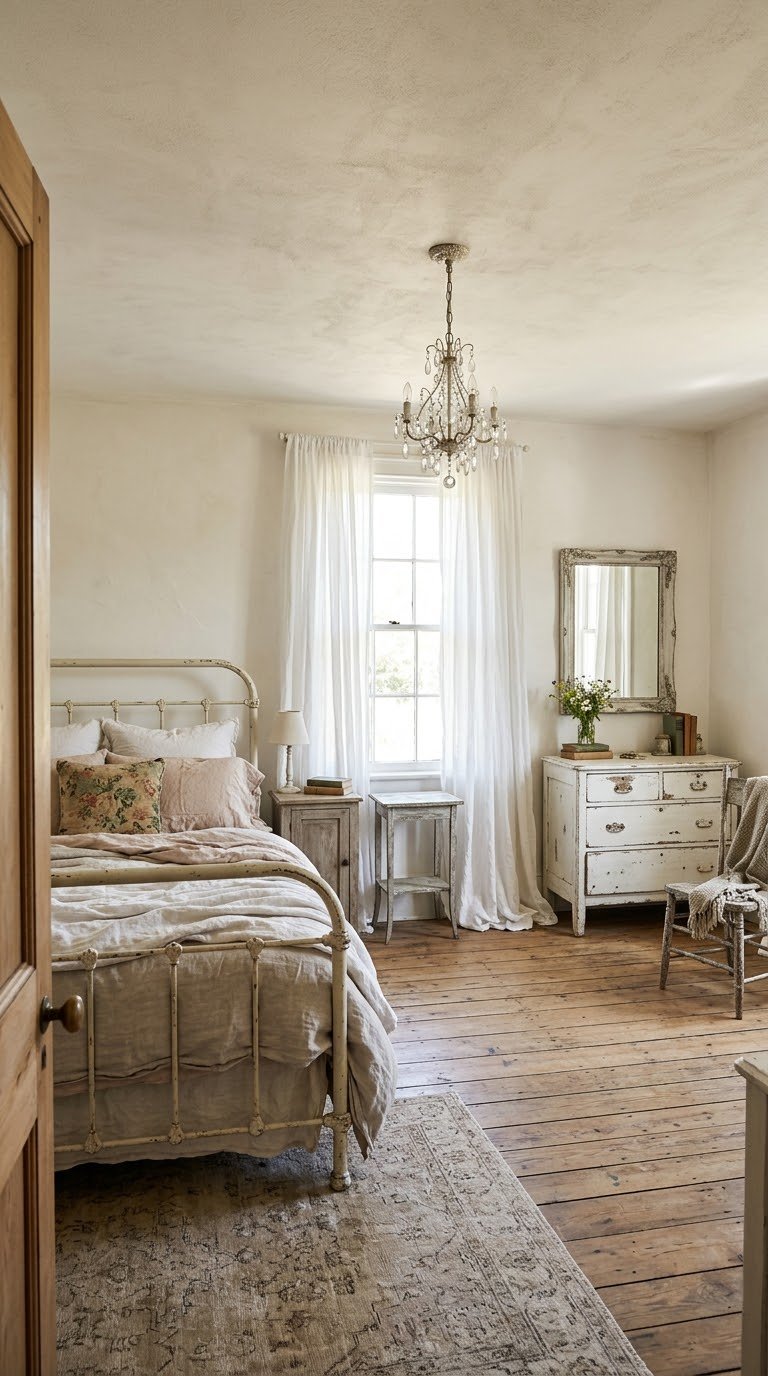
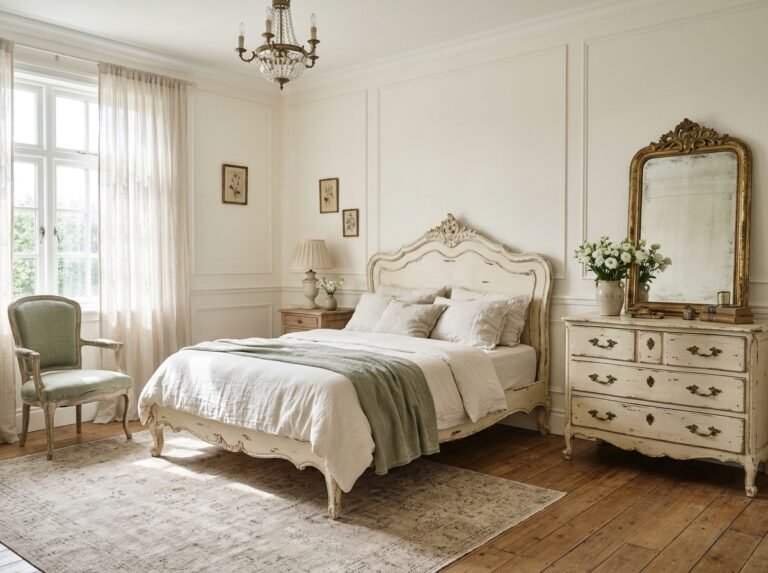
Shabby chic is a relaxed, romantic decorating style built on soft colors, worn or painted vintage furniture, and layered, washed fabrics. It borrows from French country and cottage looks but stays lighter, softer, er and a little more feminine.
Five things define it:
- A pale, warm base of whites, creams, and muted pastels
- At least one furniture piece with visible age or a worn painted finish
- Soft, wrinkle-friendly fabrics such as washed linen and cotton
- Mixed, not matching, furniture and lamps
- A few romantic details, like florals, crystal, or old mirrors
1. Start With Three Whites, Not One
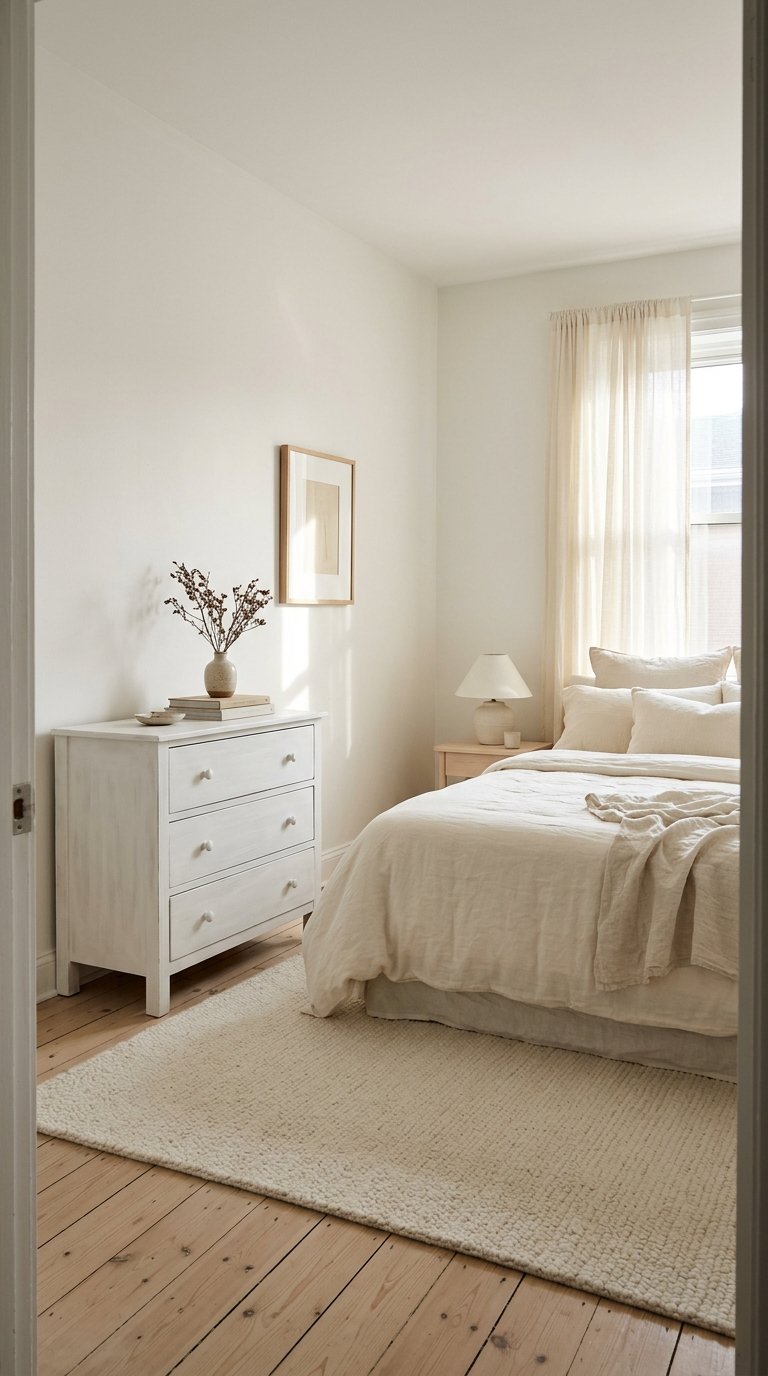
One flat white can look stark, almost clinical. Three slightly different whites look aged and soft, which is exactly the shabby chic effect.
Try warm white on the walls, cream on the bedding, and a chalky off-white on the furniture. The small differences create depth without adding a single color. Hold paint chips next to your bedding in morning and evening light before you commit, because north-facing rooms pull whites cool and gray. If your room faces north, choose whites with a creamy or slightly yellow undertone.
The trade-off is upkeep. White shows marks, so choose washable bedding covers and a scrubbable satin or eggshell finish on trim and furniture.
2. Move Beyond Blush With a Softer Palette
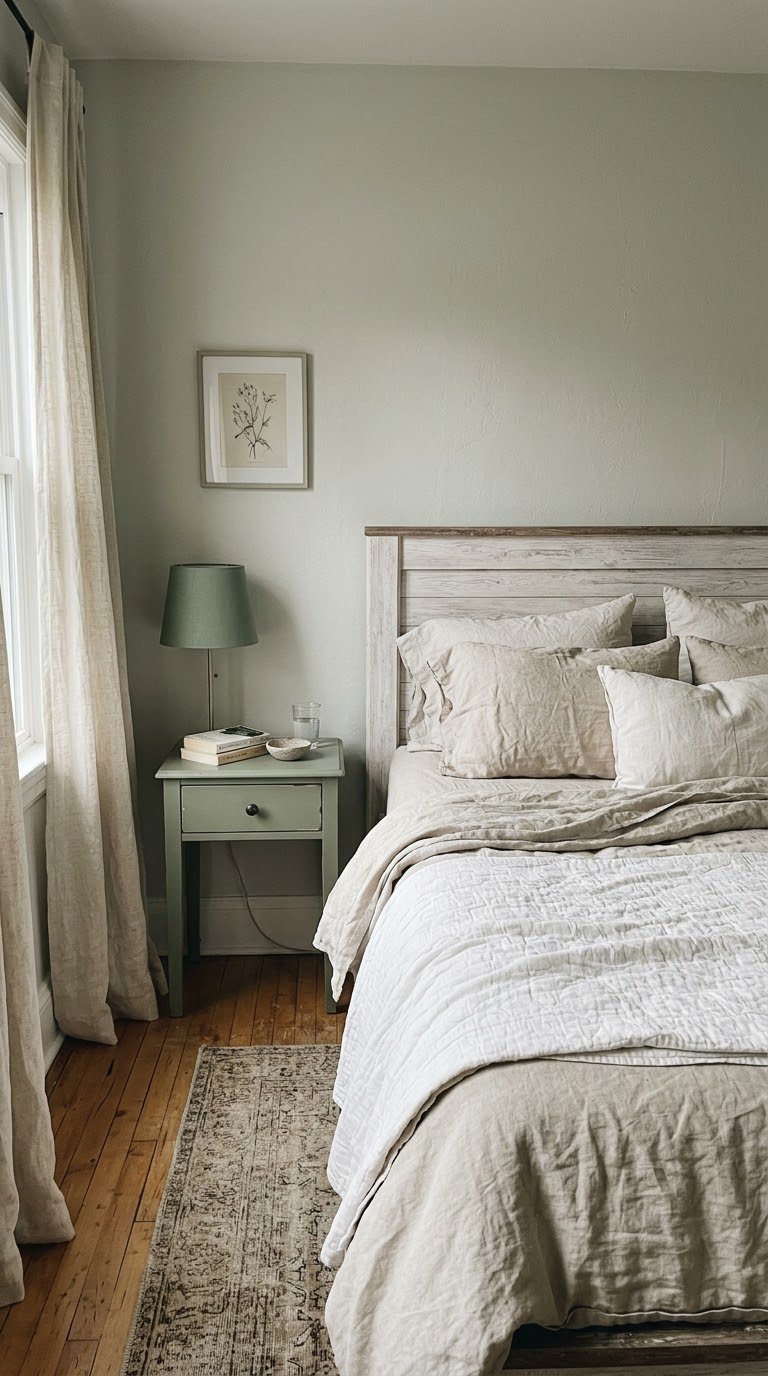
Pink is the classic shabby chic color, but it isn’t the only one that works. The key is a faded, chalky finish, never a saturated one.
- Sage and oat: gray-green walls or bedding, oatmeal linen, and white trim. It works best in rooms with good daylight. It can look flat, so add texture.
- Dusty blue and cream: faded blue, cream, and whitewashed wood. It suits small or sunny rooms. Cool blues feel chilly in low light, so use warm bulbs.
- Faded clay and ivory: muted terracotta-pink, ivory and aged brass. It works in rooms with cool or northern light. Strong saturation reads modern, so keep it chalky.
Pick one main color and let it appear in three places: bedding, one painted piece, and a small accent like a lampshade. Repeating a color three times feels planned. Scattering five colors feels busy.
3. Choose an Iron or Spindle Bed Frame
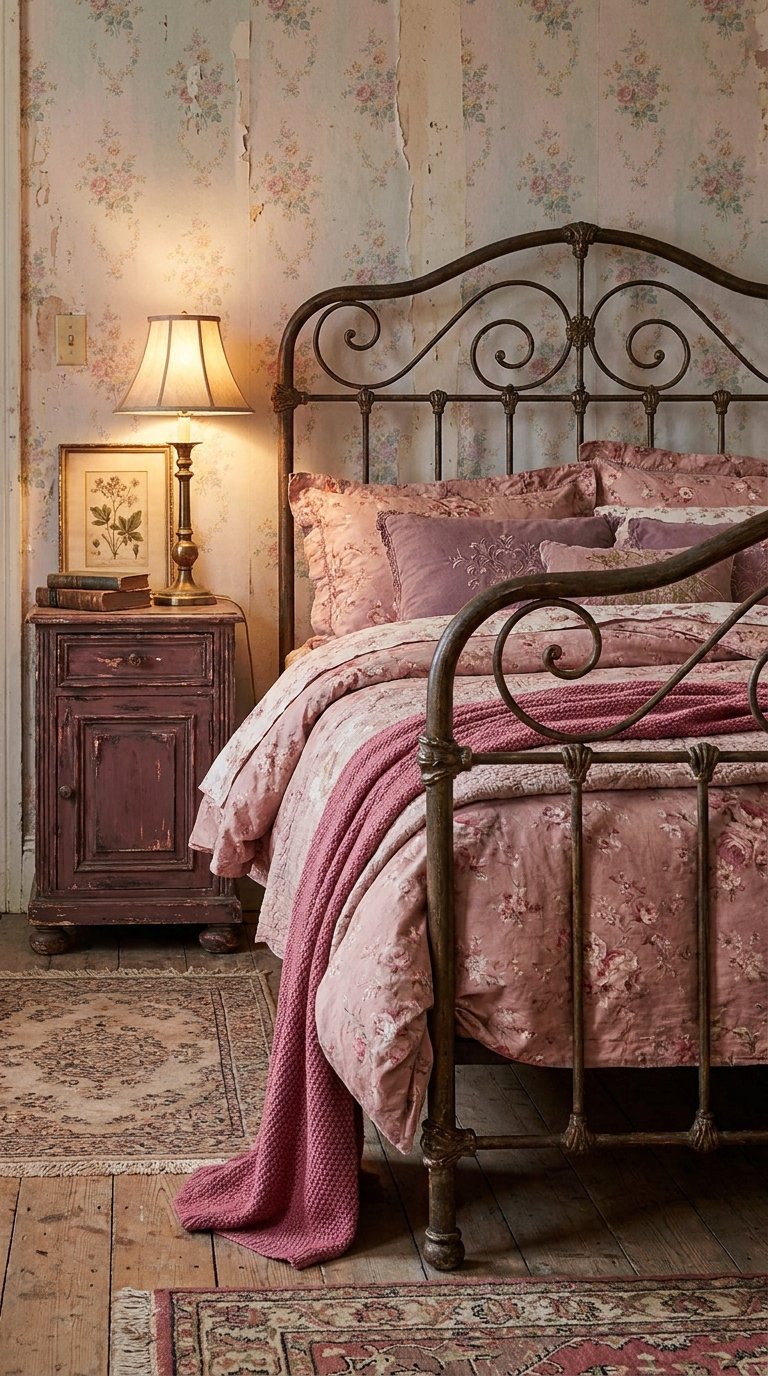
The bed is the biggest object in the room, so it sets the tone. A painted iron frame or a wood spindle bed instantly signals age and craft.
White or cream iron suits a romantic room, while a black iron frame gives a slightly more modern, cottage-style look. Painted wood spindle beds feel softer and work well in guest rooms.
Check the frame’s slat or support system before buying secondhand, because many antique frames are sized for older mattress dimensions, and you may need a bed-rail kit or a custom slat set to fit a modern queen. A modern queen mattress measures about 60 by 80 inches.
Iron frames are visually light, which helps in small rooms because you can see through the footboard and headboard.
Also read small shabby chic bedroom ideas.
4. Build a DIY Headboard From a Salvaged Door
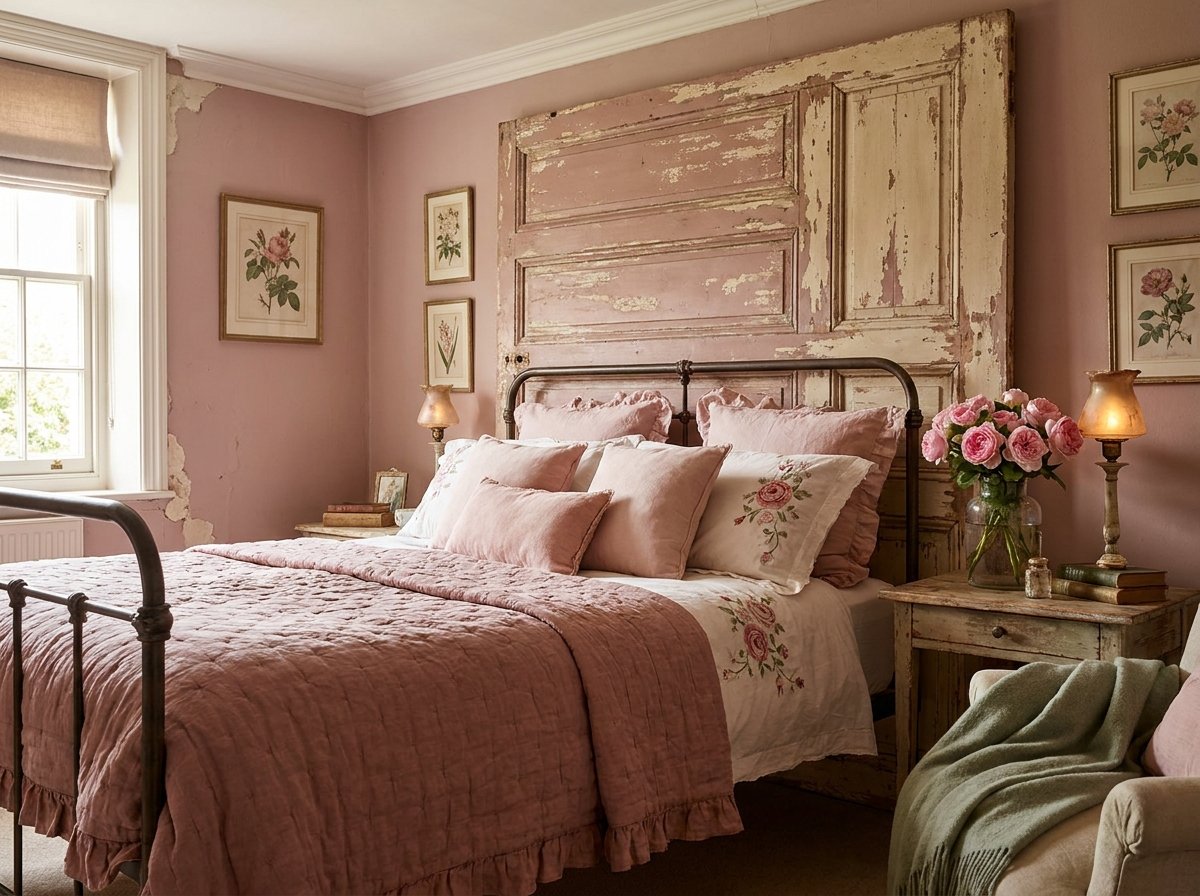
An old paneled door makes a headboard with real age and personality, and it costs far less than a new statement bed. Standard interior doors often run roughly 24 to 36 inches wide, so two 30-inch doors set side by side match the width of a queen bed.
Here is the basic process:
- Measure your bed width and decide on height, usually 40 to 55 inches from the floor.
- Clean the door and lightly sand it.
- Test old paint for lead before sanding if your home or the door predates 1978, and use a test kit.
- Paint or wax it, then sand edges and panel details for wear.
- Secure it to the wall studs with a French cleat or L-brackets rather than leaning it.
A leaning door can tip forward, so always anchor it.
5. Add Soft Drapery Above the Bed
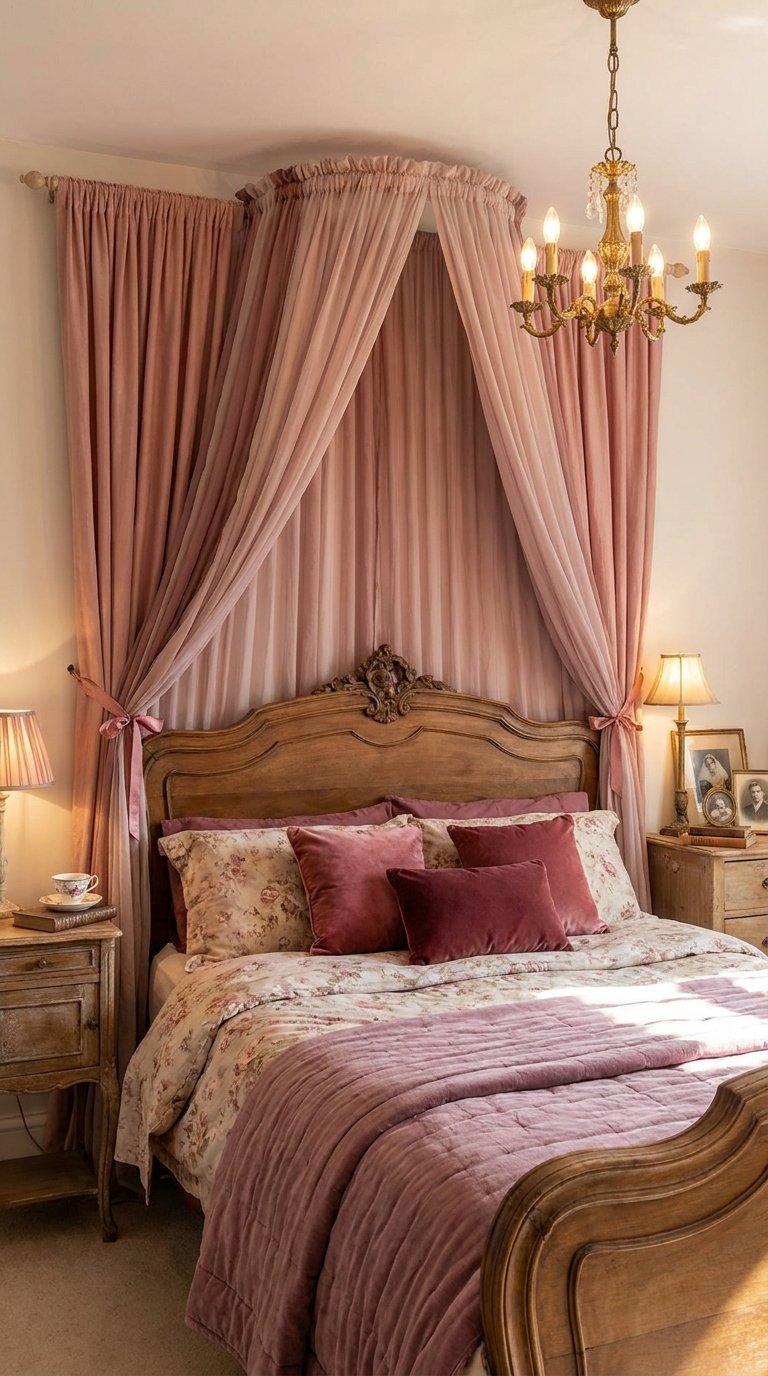
A light canopy gives the bed a sense of enclosure without the bulk of a four-poster frame. A ceiling-mounted curtain rod or wooden hoop above the headboard holds two sheer panels that fall to each side of the pillows.
Use lightweight cotton gauze or linen-look sheers, and keep the fabric loose so it drapes naturally. Hang the rod centered over the headboard, leaving enough room for the panels to fall past the pillows without touching the lamps. The look suits rooms with ceilings of 8 feet or higher.
Sheer fabric collects dust, so choose machine-washable panels, and keep drapery clear of candles and any hot bulb.
6. Layer the Bedding in the Right Order
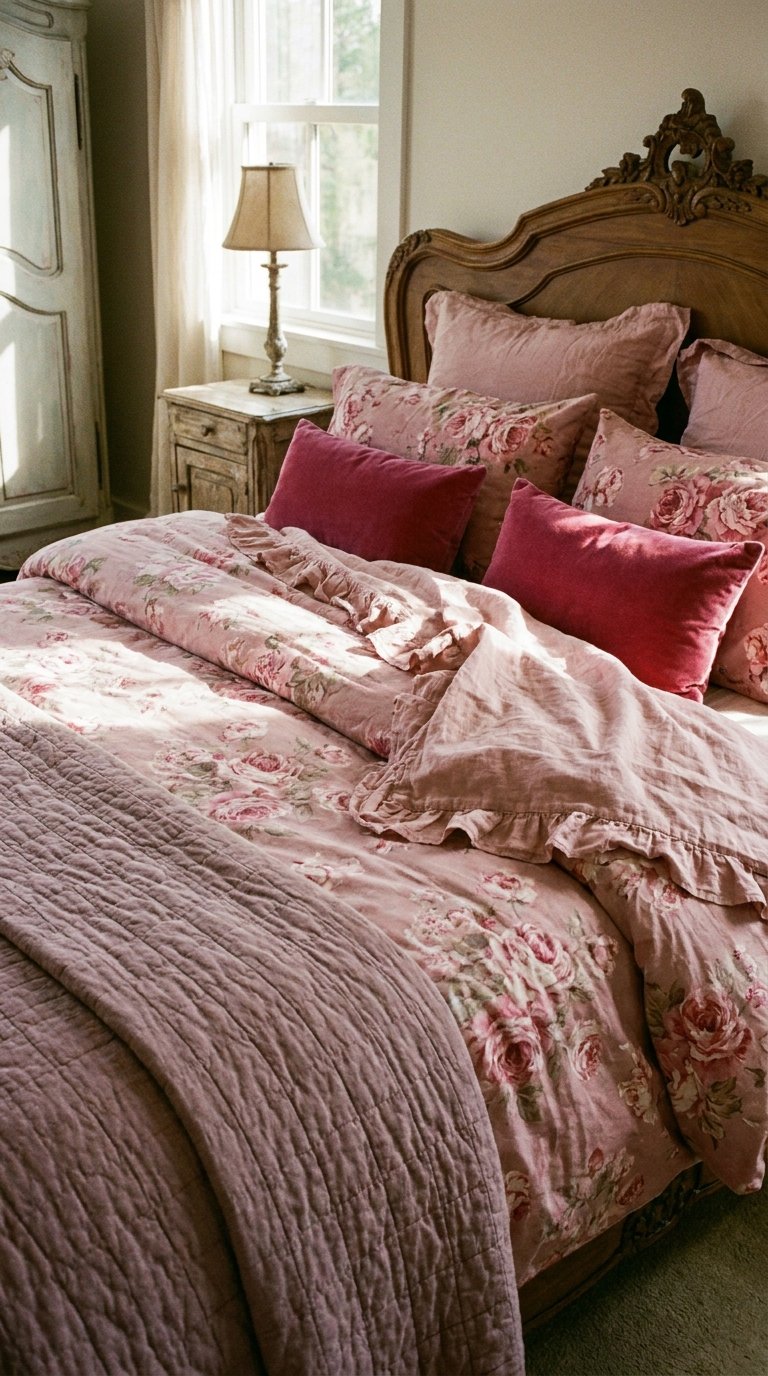
Shabby chic bedding should look generous and slightly undone. That’s easier to achieve when you layer in a set order:
- Fitted sheet and a washable mattress protector
- A duvet or comforter in a solid color
- A quilt or matelassé coverlet folded across the bottom third
- Two sleeping pillows against the headboard
- Two European (square) pillows behind them
- One accent pillow or small throw, not five
Choose washed linen or soft cotton so the fabric wrinkles gracefully, and let it stay that way. A pressed, hotel-tight bed works against the style. If you love florals, choose one scale, either small and ditsy or large and painterly, and keep the rest of the layers solid.
This layered approach also works in rooms where you want the bed to be the star without adding extra decor.
7. Distress a Dresser Without Making It Look Messy
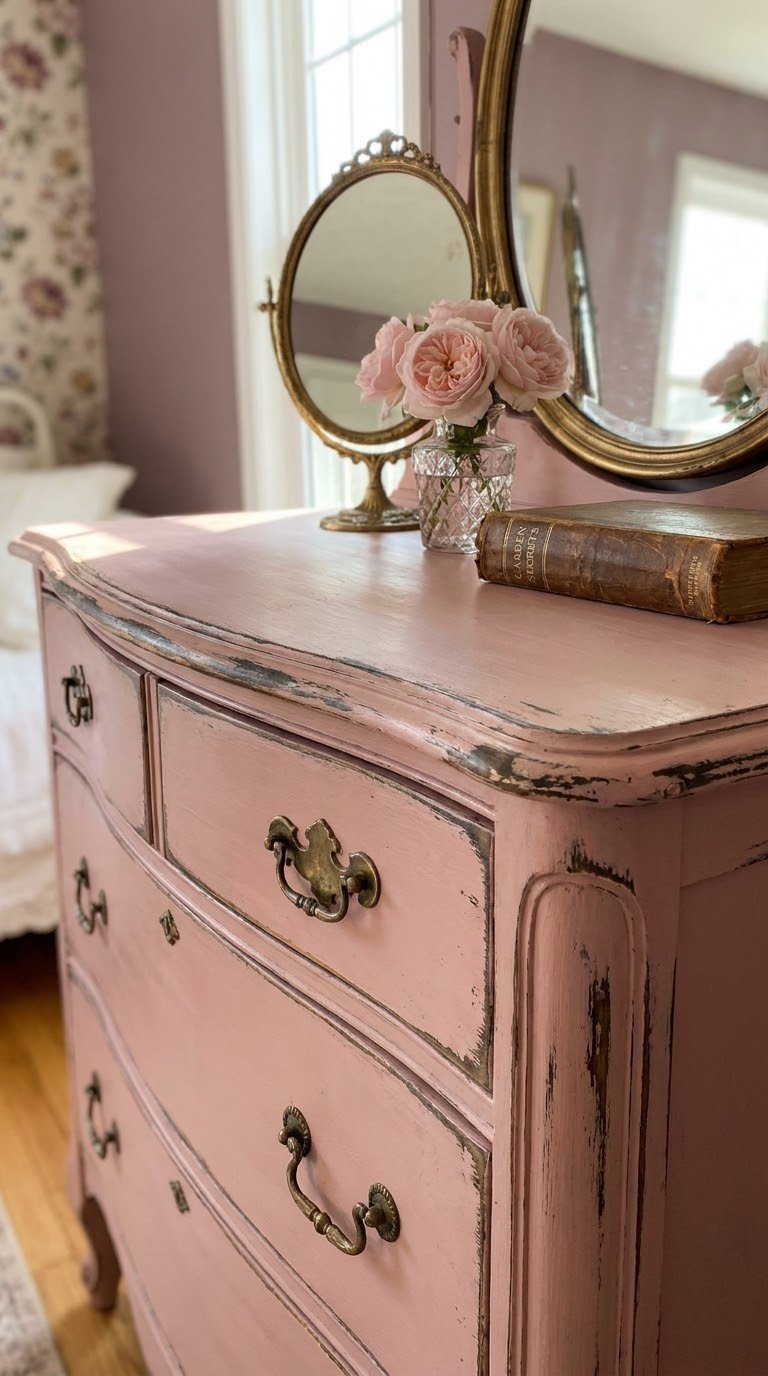
Good distressing mimics natural wear. Real furniture wears at corners, drawer edges,s and around handles, so that’s where you sand.
Here’s the process:
- Clean the piece with a degreasing cleaner and remove the hardware.
- Scuff-sand the surface lightly.
- If the wood is dark or stained, apply a stain-blocking primer so tannins don’t bleed through the paint.
- Paint two thin coats of chalk-style or mineral paint, letting each dry.
- Sand the edges, corners, and areas near the pulls to reveal the wood or old finish beneath.
- Seal with a clear wax or water-based topcoat.
- Replace the knobs with ceramic or aged brass pulls.
Stop sooner than you think. Heavy, even sanding looks fake, while a few light worn spots look earned.
8. Use Mismatched Nightstands and Style Them With a Formula
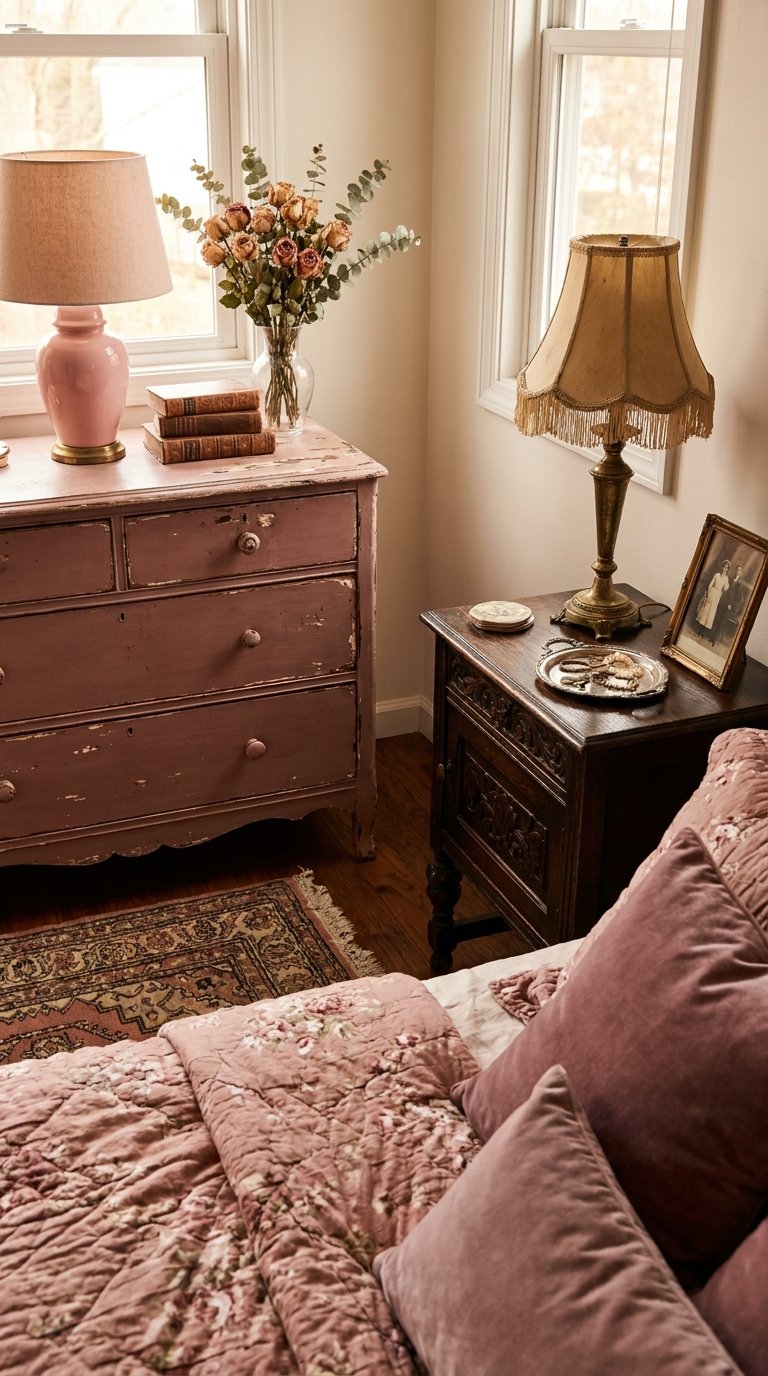
Two identical nightstands feel like a furniture-store set. Two different ones feel collected.
The trick is to match height, not style. Aim for both pieces to sit within a couple of inches of your mattress top so a lamp and a glass of water are easy to reach. Pair a small three-drawer chest with a round side table, or a painted stool with a slim vintage cabinet. Tie them together with a shared color, such as the same off-white paint, or a repeated material like aged brass.
If one side has open space underneath, add a lidded basket for extra storage.
Then style each surface with three things at different heights: a lamp, something low like a stack of books on a small brass tray, and one soft touch like dried hydrangea or lavender in a vintage pitcher. Three objects look intentional. Seven look cluttered. Keep a lidded box or drawer nearby for chargers, glasses, and lotion.
9. Turn an Old Desk Into a Vanity
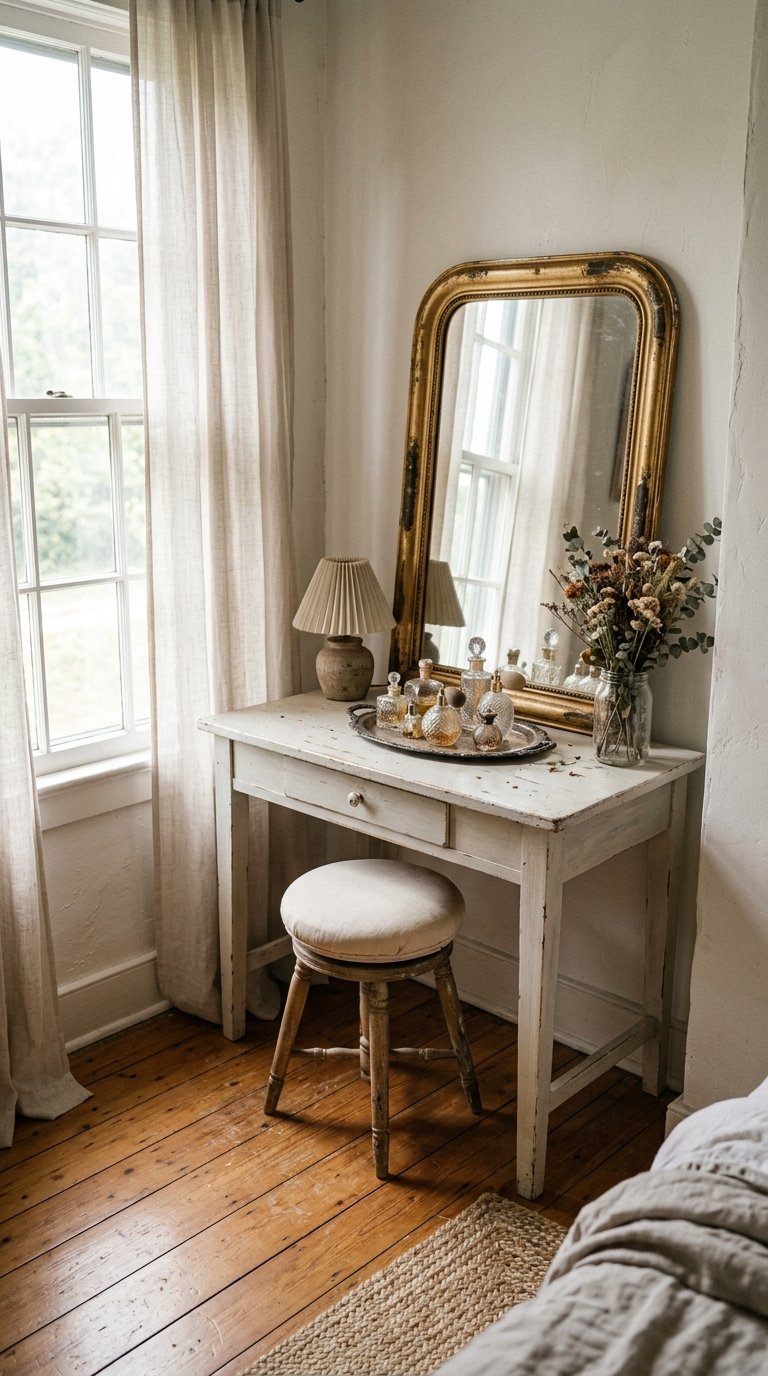
A vanity gives a bedroom a place for getting ready and keeps jewelry and skincare off the dresser. A vintage writing desk about 40 to 48 inches wide works well, paired with a small stool or cushioned chair.
Paint or wax the desk to match the rest of the furniture. Hang an oval or arched mirror above it and keep the surface clear except for a tray for perfume bottles and a small lamp. Place the vanity near a window if you can, because natural light shows your face more accurately than a bulb.
Watch cord placement for lamps and hair tools. Mount an outlet strip behind the desk so wires stay out of sight.
10. Put a Trunk or Bench at the Foot of the Bed
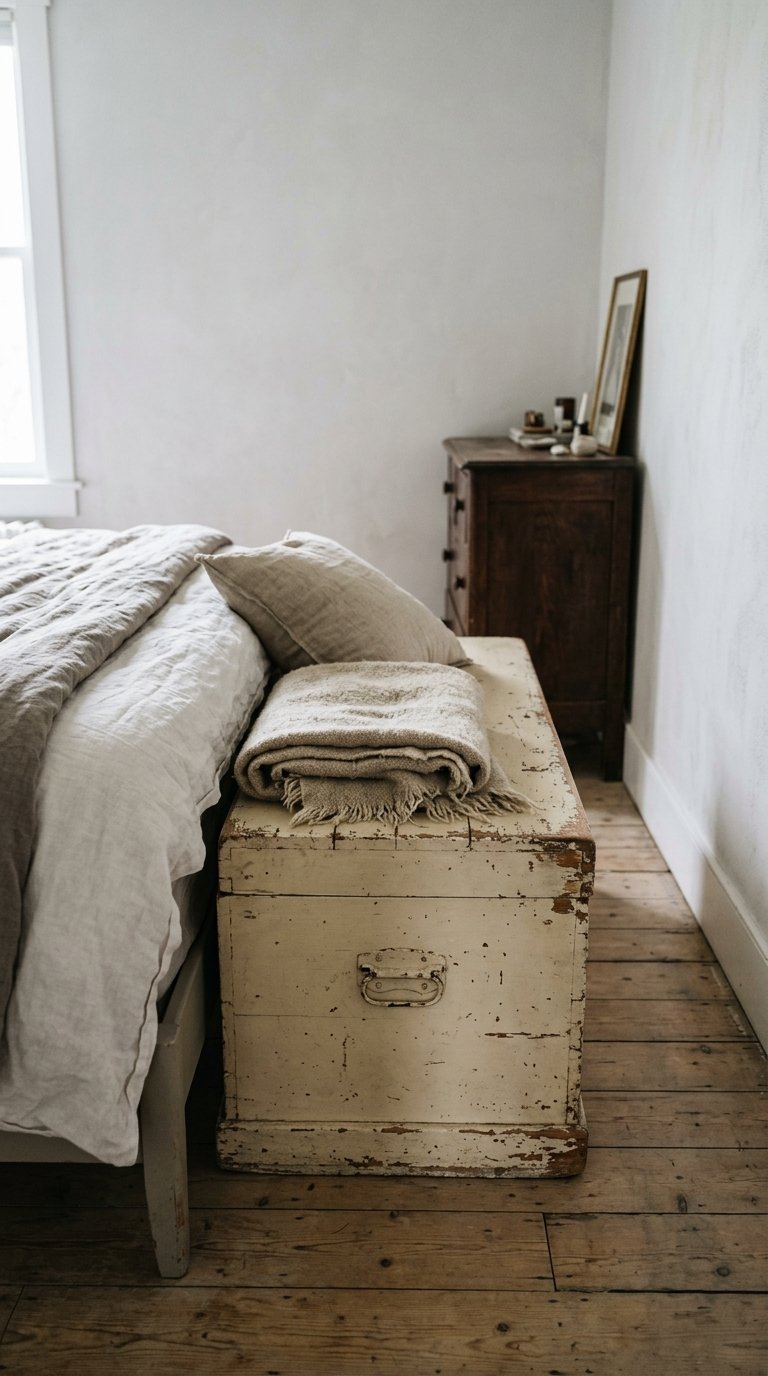
A wooden trunk, an old blanket chest, or a slim painted bench fills the space at the foot of the bed and hides spare bedding. It also gives you somewhere to sit while putting on shoes.
Choose a piece roughly two-thirds the width of the bed, so it looks balanced rather than crowded. Leave at least 24 inches of walkway between the trunk and any other furniture. A worn leather-strapped trunk suits a rustic edge, while a painted chest with a cushion fits a softer look.
If the lid is heavy, add a soft-close hinge or lid support so it can’t slam on fingers.
For more ways to hide extras, browse these small bedroom storage ideas.
11. Hang Floral Wallpaper, Even in a Rental
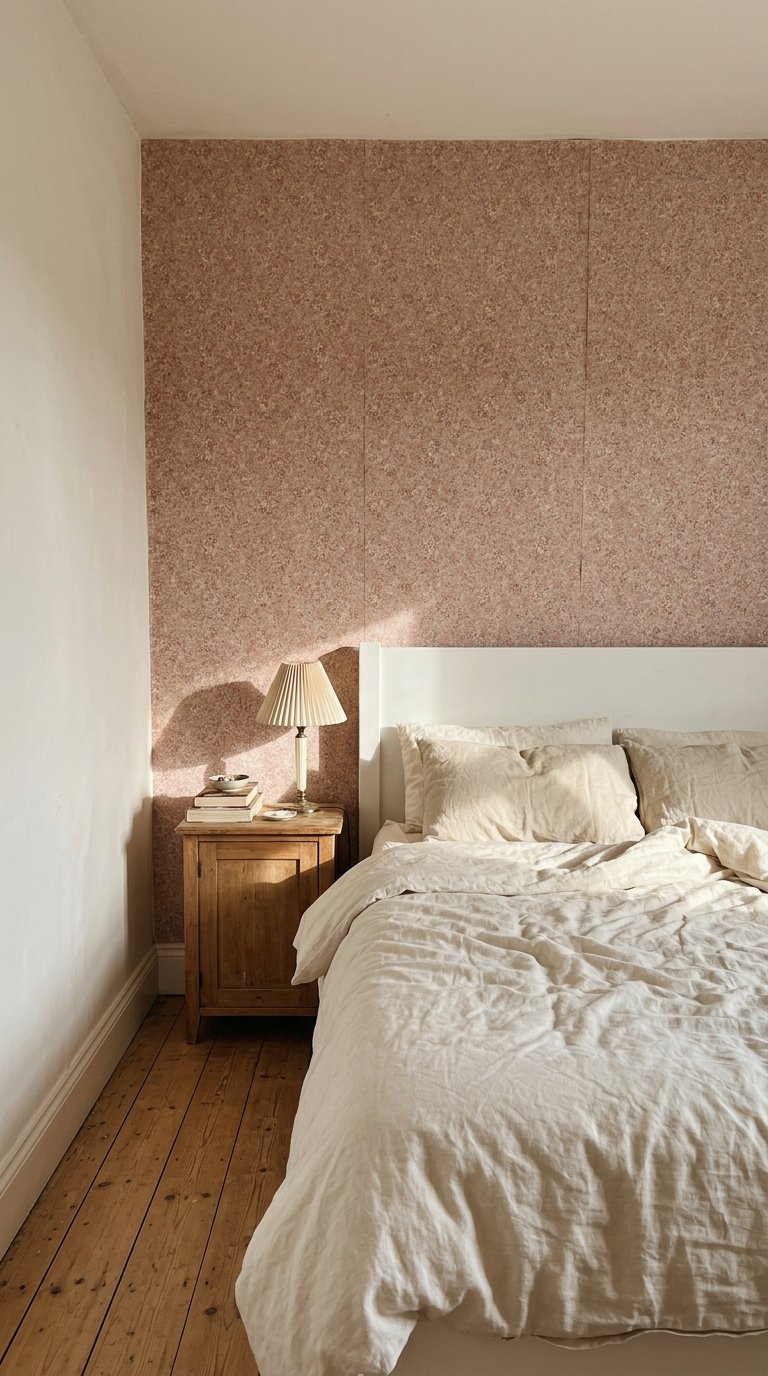
Floral wallpaper is the quickest way to add romance, and a single wall behind the bed is enough. Choose a small or medium-scale pattern in faded tones, since huge blooms can overwhelm a small room.
Renters can use peel-and-stick wallpaper, which comes off without damaging paint in most cases. Order a sample first and stick it on the wall for a few days to check both the color in your light and the adhesion. Textured walls often hold peel-and-stick paper poorly, so smooth them or choose traditional paper for those surfaces.
Keep the rest of the room quiet. Solid bedding lets the wallpaper do the work.
If you’d like something bolder than wallpaper, these peel-and-stick mural ideas also work in rentals.
12. Add Painted Beadboard or Wall Paneling
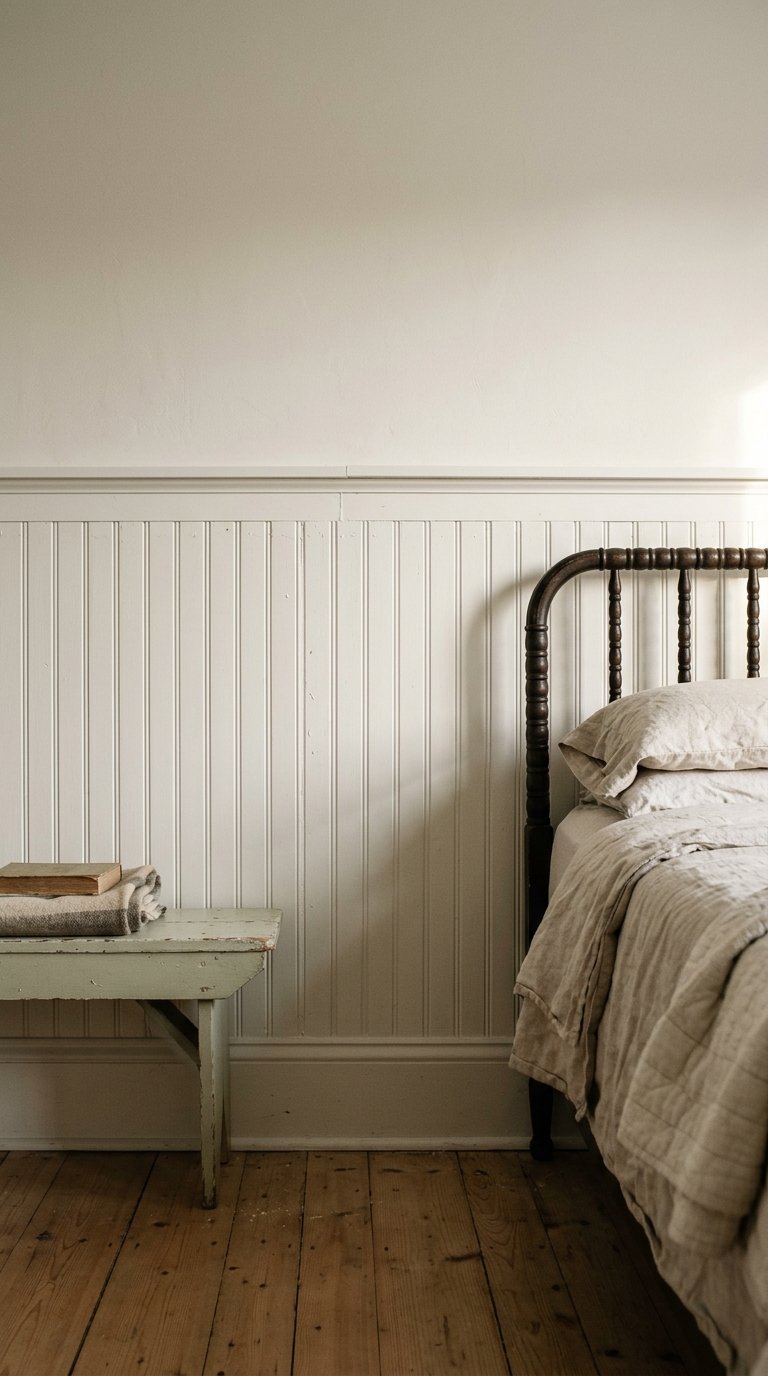
Beadboard and simple paneling add texture to the walls without adding pattern. Panels typically rise about one-third of the way up the wall, so on an 8-foot wall they reach roughly 32 to 36 inches, then finish with a simple cap rail.
Paint the paneling in a satin white or soft cream, and let the upper wall be in a slightly different tone. Sheet beadboard is cheaper and faster than individual planks, though planks give cleaner lines. Caulk the seams before painting, because gaps show up quickly in white.
Paneling works well behind a headboard or beneath a window, and it helps protect walls from scuffs.
13. Hang Sheer Curtains High and Wide
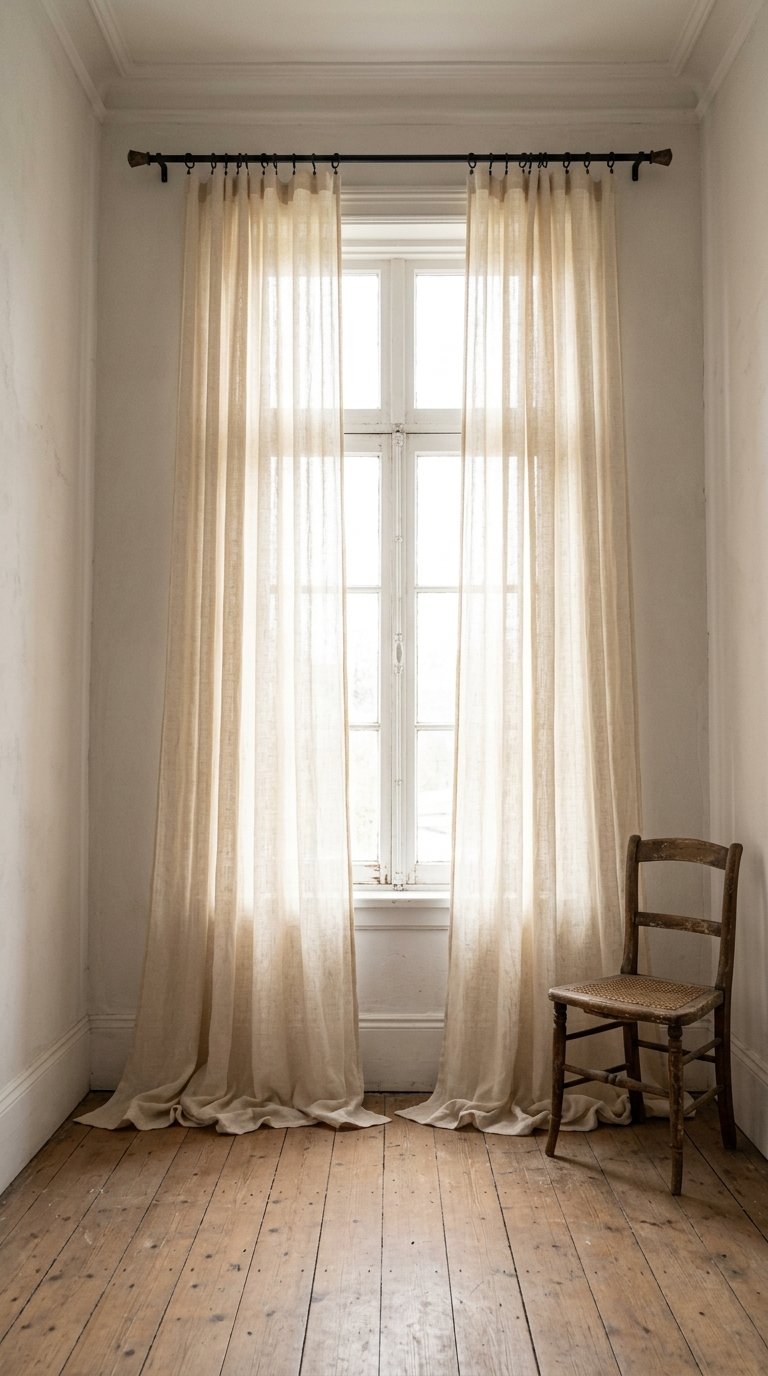
Curtains do more in a shabby chic bedroom than frame the window. They soften light, add height, and bring texture.
Hang the rod close to the ceiling and extend it several inches beyond the window frame on each side. That makes the window look larger and lets the curtains stack to the side without blocking light. Choose linen-look sheers or lightweight cotton in white or cream. If you need privacy or darkness, layer them over a roller shade or blackout liner.
Let the panels just brush or lightly puddle on the floor. That relaxed length suits the style better than a tailored, exact hem.
14. Mix Lamps and Add a Plug-In Chandelier
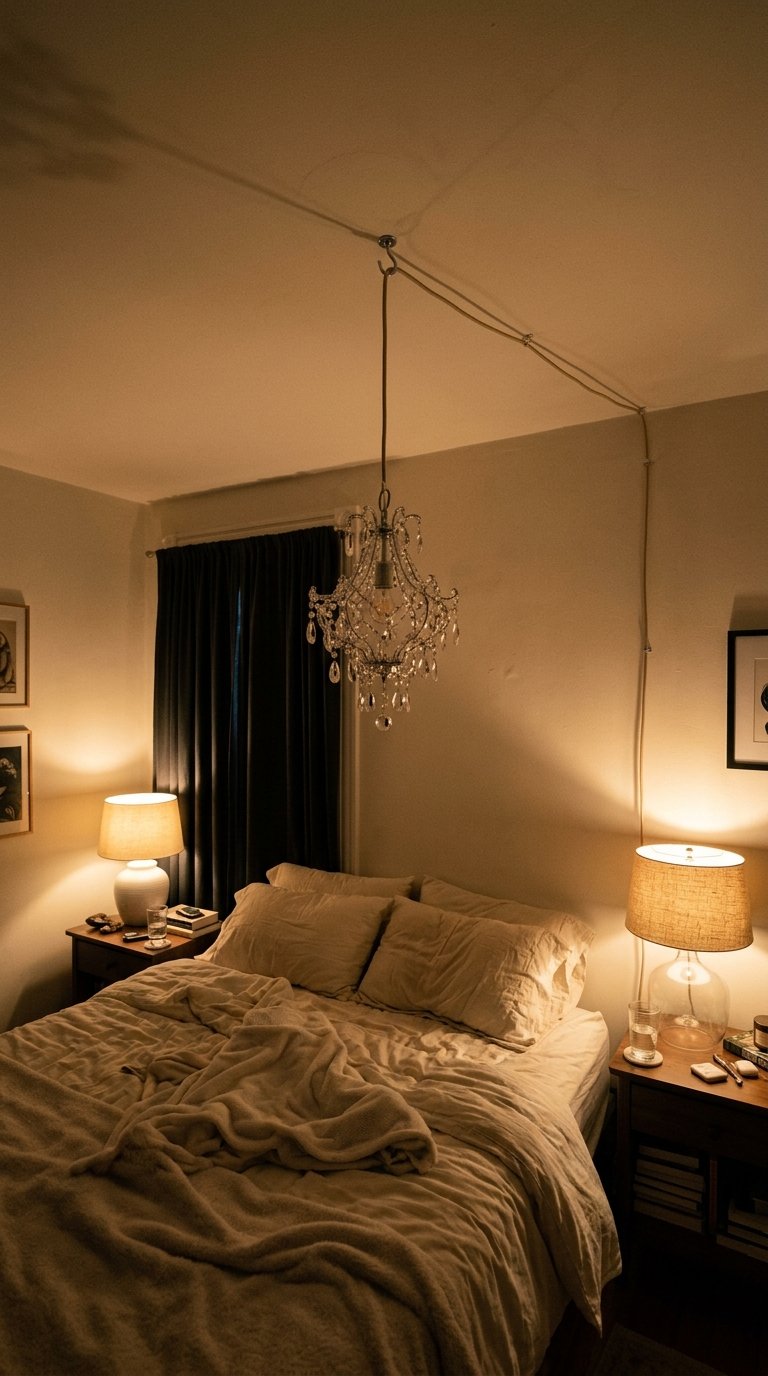
Lighting finishes the mood. A crystal chandelier is a classic shabby chic touch, but many bedrooms don’t have a ceiling box for one. A plug-in swag chandelier solves that: hang it from a ceiling hook and run the cord along the wall using a paintable cord cover.
On the bedside tables, use two different lamps with similar scale, like a ceramic base and a glass one. Choose warm bulbs around 2700K so the light stays soft and cozy, and add a dimmer if you can.
The trade-off with swag chandeliers is the visible cord, so plan its route before drilling.
15. Lean a Vintage Mirror and Group Mismatched Frames
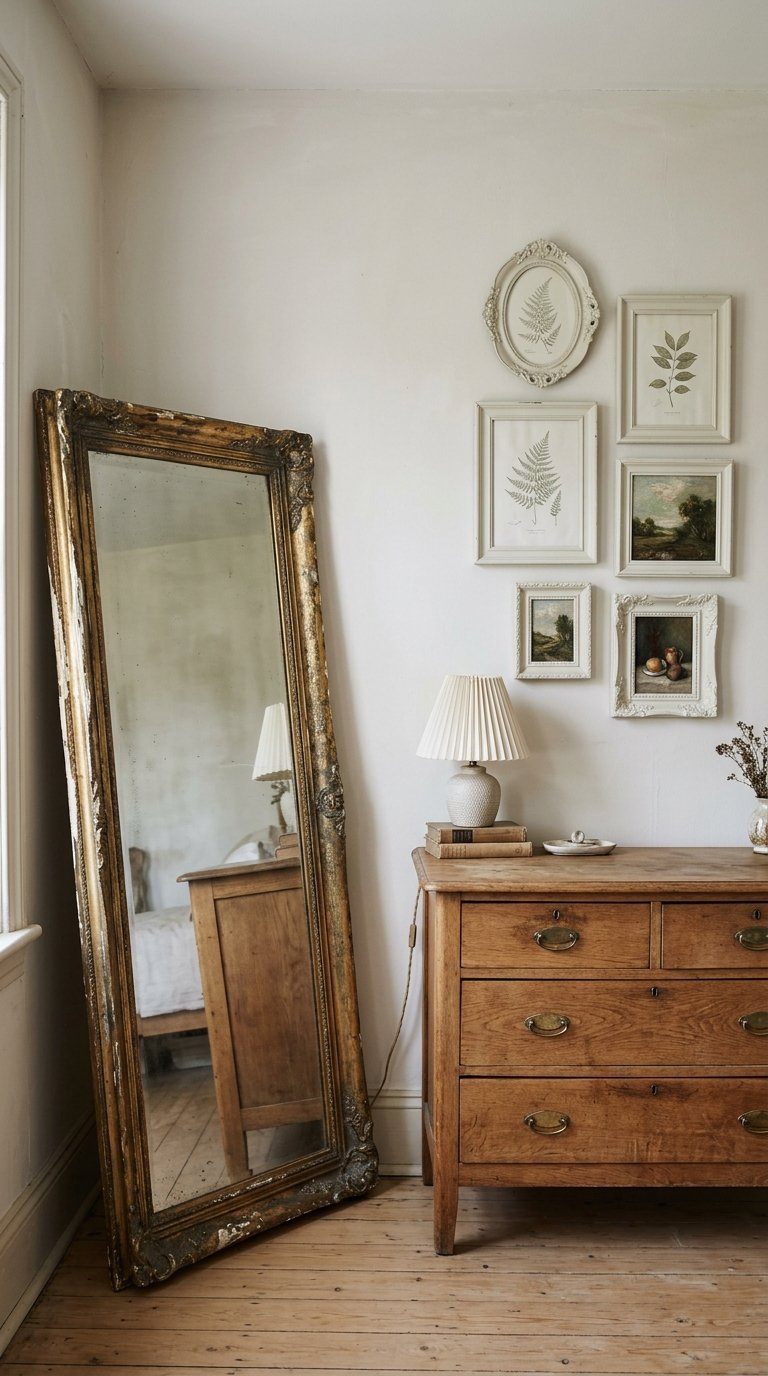
Old mirrors add age and bounce light around the room. A tall floor mirror with a chipped gilt or painted frame leans against a wall and doubles as a dressing mirror.
For art, gather five to seven frames in different sizes and paint them all the same off-white, so they feel like a set without matching. Fill them with botanical prints, small paintings, or fabric scraps. Hang the group at a comfortable height above a dresser or bed.
Place mirrors opposite a window so they reflect daylight, not a clutter-filled corner.
Also read shabby chic bedroom furniture ideas.
16. Create a Slipcovered Chair Corner
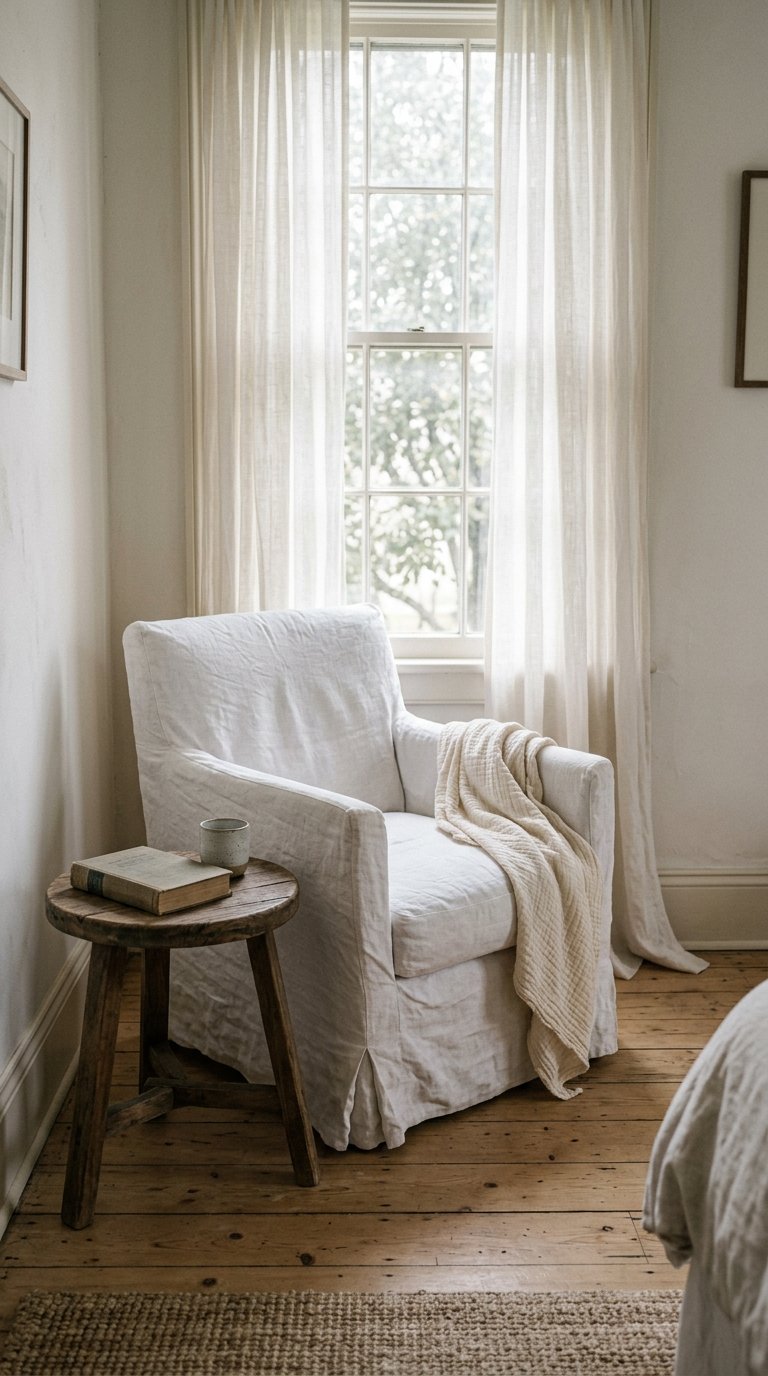
A chair gives the bedroom somewhere to sit that isn’t the bed. A slipcovered armchair in white or natural linen suits the style, because the loose, washable cover looks relaxed and hides everyday wear. Place it in a corner near a window or beside the dresser, where it won’t block the walkway.
Add a small side table within arm’s reach and drape a lightweight cotton or linen throw over one arm. A chair roughly 30 to 36 inches wide fits most corners. In a small room, choose a slim accent chair or a painted wooden chair with a seat cushion instead.
Slipcovers can shift, so tuck the fabric in and choose a snug fit. Heavy leather tends to fight the soft, faded look, so save it for other styles.
17. Fit Shabby Chic Into a Small Bedroom
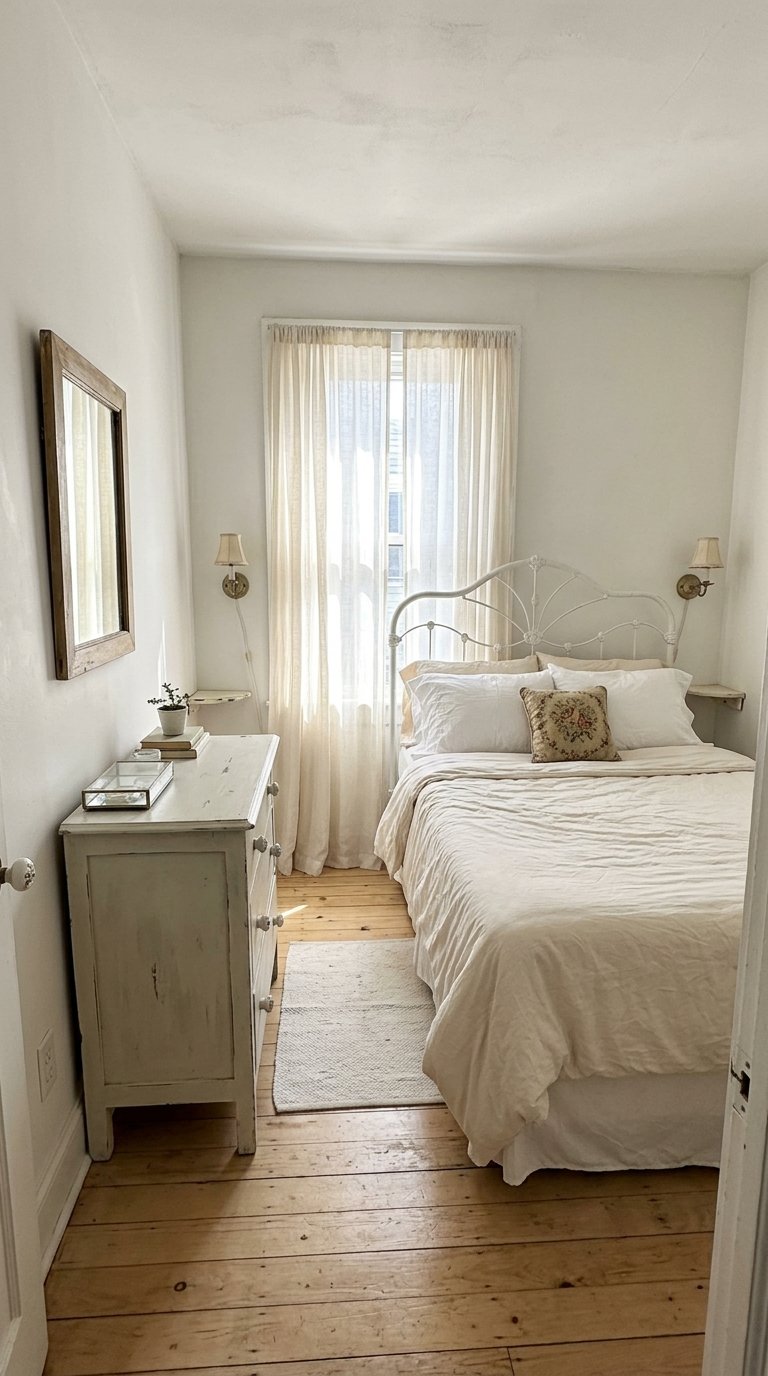
A small shabby chic bedroom needs edited charm. Keep the bed against the longest wall and use a slim, light frame so the room doesn’t feel heavy. Choose one standout piece, like a painted dresser, and keep the rest simple.
In a room about 10 by 10 feet, a full or queen bed leaves limited floor space, so aim for at least 24 inches of walkway on the sides you use most. Choose a narrow dresser around 16 to 18 inches deep, and use wall-mounted sconces instead of bedside lamps to free up the nightstand surface.
Stick to a pale palette and one pattern. Too many layers make a small room feel crowded.
For more help with the floor plan, see these small bedroom layout ideas and our wider guide to small bedroom ideas.
18. Try a Modern or Less Feminine Version
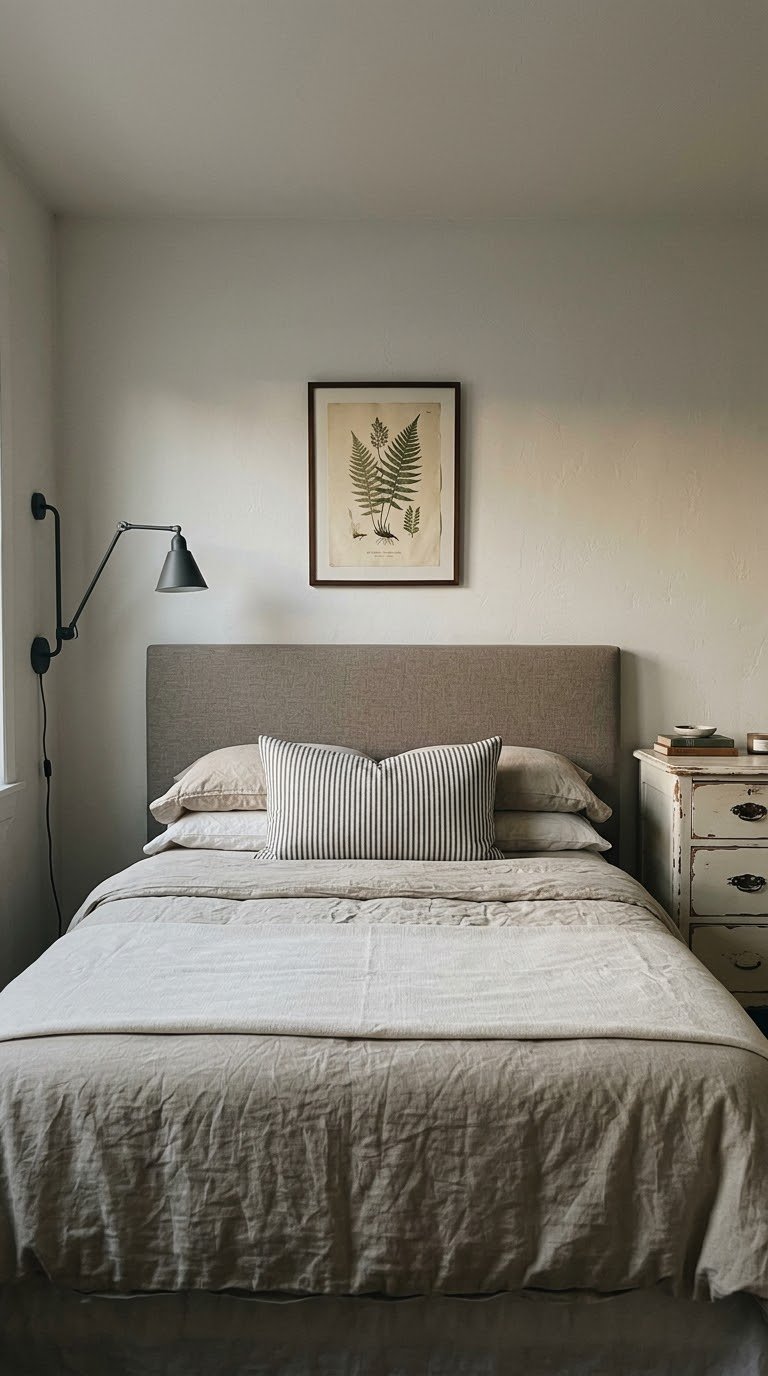
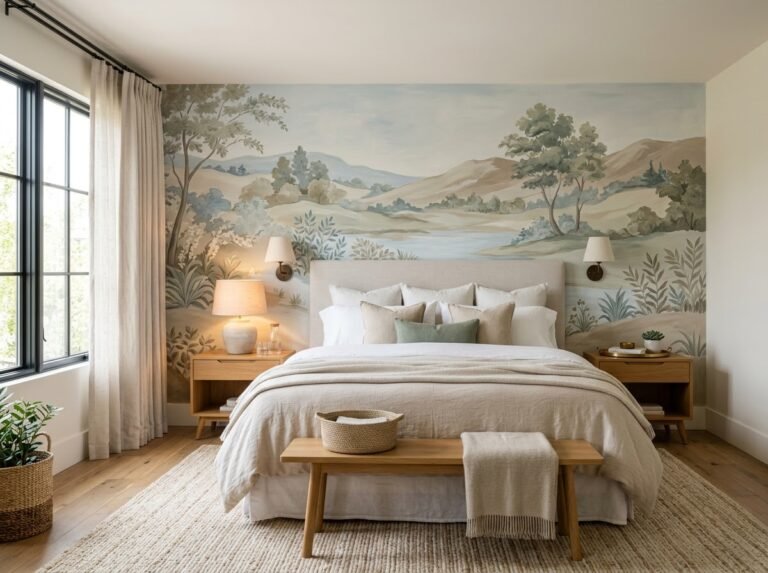
Shabby chic doesn’t have to mean roses and ruffles. For a calmer, more modern bedroom, keep the worn furniture and soft fabrics but change the details.
- Swap florals for ticking stripes, plaid, or botanical prints
- Use a soft charcoal or black iron bed instead of white
- Choose a clean-lined bed frame, then add one distressed piece
- Stick with linen in warm gray, oat, or muted mauve
- Limit ruffles to one pillow or none
The result is gender-neutral and works for couples or a guest room. Pair modern lighting with vintage furniture, so the room feels collected rather than themed.
Mistakes That Make Shabby Chic Look Cluttered or Dated
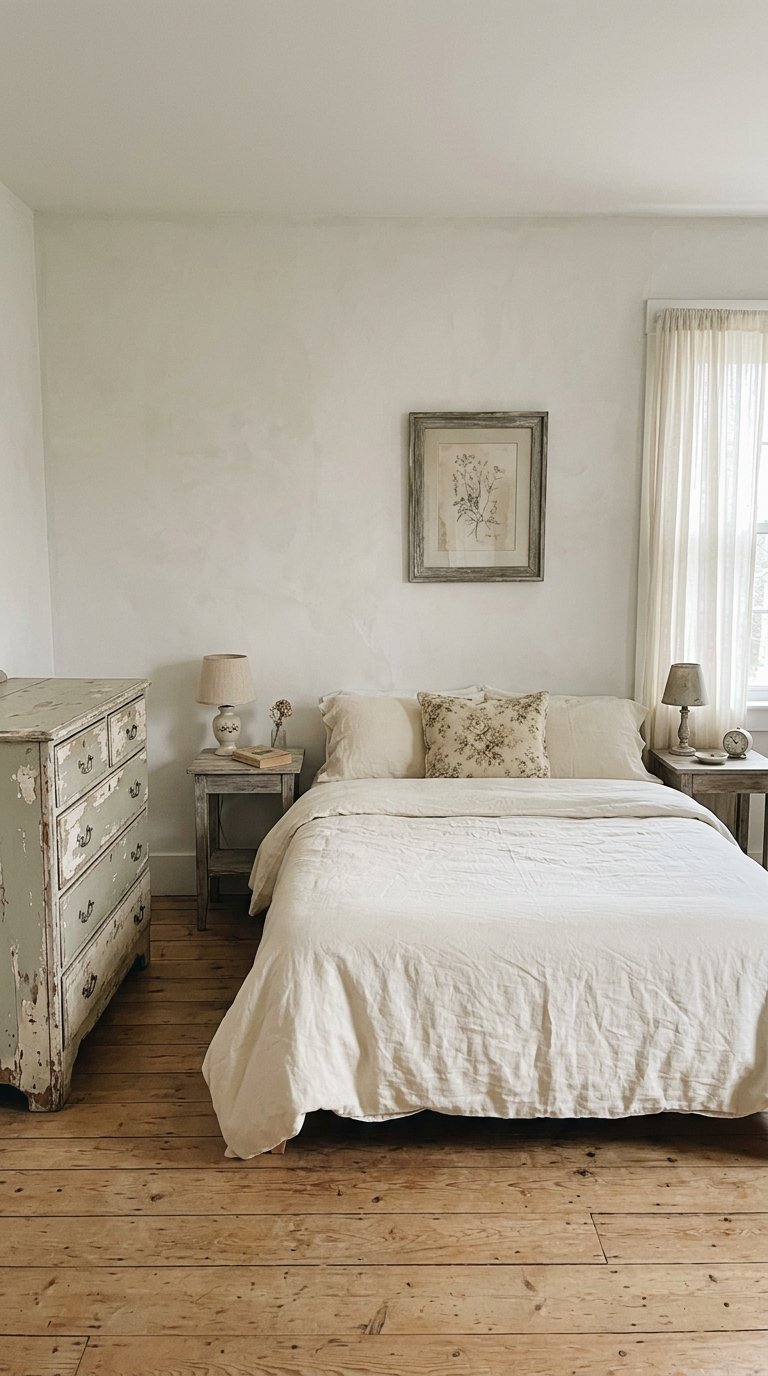
Most shabby chic problems come from too much, not from the style itself.
- Matching sets: a matching bed, nightstands,s and dresser looks showroom-new
- Pattern overload: florals, stripes, es and plaids all in one room compete
- Faking age everywhere: if everything is distressed, nothing stands out
- Too many small objects: keep decor to a few meaningful pieces
- Mass-produced “aged” decor: real wear looks more convincing than a printed one
- Skipping function: a pretty room still needs working drawers and reachable lamps
Where to Find Shabby Chic Pieces on a Budget
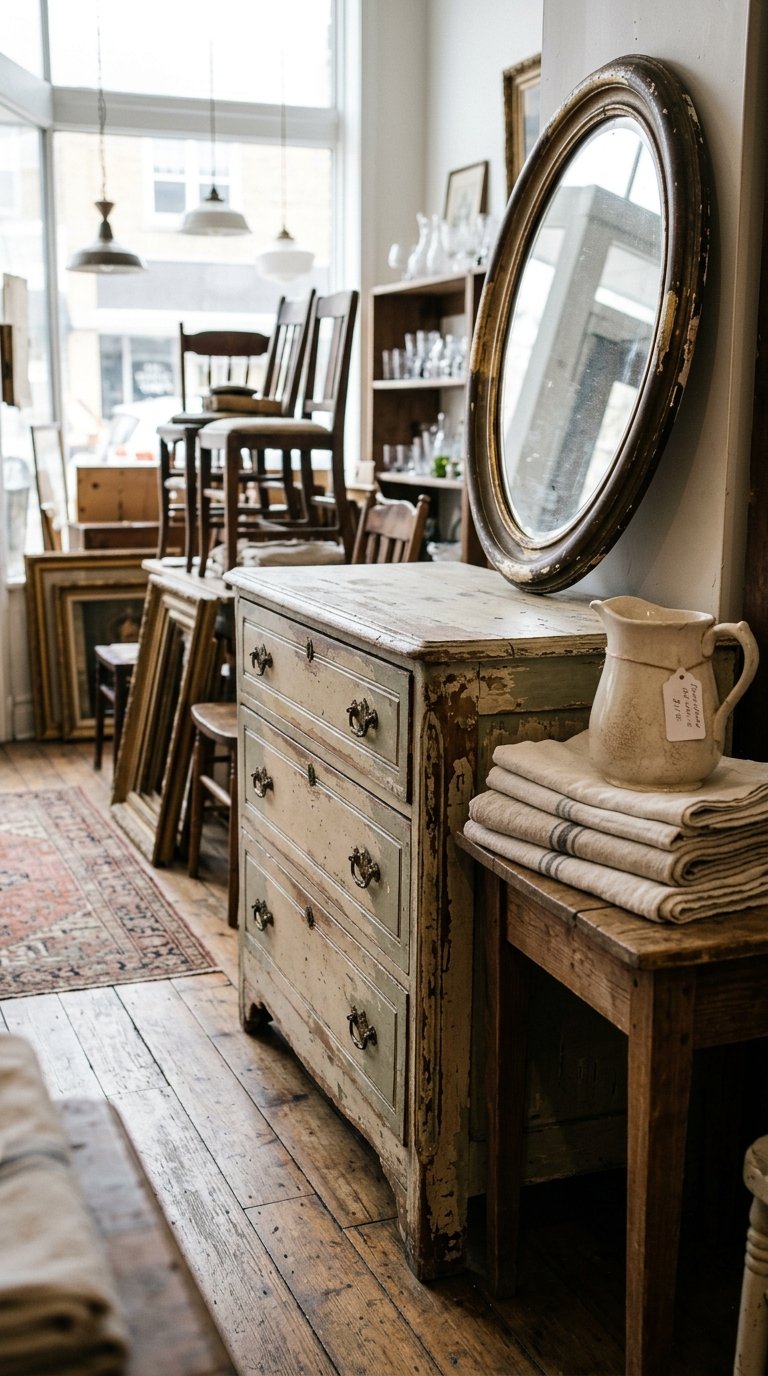
Real vintage furniture often costs less than new reproductions, especially when you do the painting yourself.
- Thrift stores and estate sales: best for dressers, chests and lamps
- Online marketplaces: search “vintage dresser,” “antique bed,” or “solid wood desk”
- Flea markets: good for mirrors, frames and linens
- Curbside finds: worth checking if you’re willing to repaint
When inspecting a piece, open every drawer, push on the frame to check for wobble, and sniff for mildew or heavy smoke odor. Choose solid wood over particleboard, which swells with moisture and sands poorly.
FAQs
Is shabby chic still in style?
The frilly, all-pink version has faded, but softer elements like washed linen, painted vintage furniture and muted palettes still appear in cottage and French country-inspired rooms. The dated feel comes from overdoing it, so edit with care.
What is the difference between shabby chic and cottage style?
Shabby chic leans pale, romantic,ntic and worn, with a lot of whites and soft pastels. Cottage style is generally fresher and brighter, with more color and simple details like gingham or beadboard.
Can I do shabby chic without florals?
Yes. Florals are common but not required. Use texture instead, like washed linen, lace, matelassé, ticking stripes, and aged wood.
How do I make shabby chic less feminine?
Choose warm gray, oat, and charcoal in place of pink, use stripes or botanical prints, and keep ruffles minimal. A black iron bed with worn wood nightstands feels balanced.
Can I do a shabby chic bedroom in a rental?
Yes. Peel-and-stick wallpaper, plug-in lighting, sheer curtains on tension rods, and furniture makeovers all work without altering the walls.
How do I distress furniture so it looks natural?
Sand only where wear would naturally happen, such as edges, corners, rs and around handles. Stop early and seal the finish with wax or a clear topcoat.
What paint works best for a shabby chic dresser?
Chalk-style and mineral paints require little prep and sand easily for a worn look. Use a stain-blocking primer under them on dark or stained wood.
What lighting suits a shabby chic bedroom?
Use warm 2700K bulbs, mismatched bedside lamps,mps and, if possible, a small chandelier or wall sconces. A dimmer makes the room feel softer at night.
How do I keep shabby chic from looking cluttered?
Limit patterns to one, keep nightstand items to three, and use one statement distressed piece per area. Put extras in lidded baskets or a trunk.
Conclusion
You don’t need every idea here. Start with one decision: a palette. Then choose one piece with real age, like a dresser or an iron bed, and build around it with soft linen and warm light.
If you’re short on space or renting, begin with bedding, curtains, and lamps, and add furniture slowly. A shabby chic bedroom looks best when it grows over time, one thoughtful piece at a time.



2 Comments