
17 Backyard Playground Ideas for Kids
Every parent knows the feeling. The kids are bouncing off the walls inside, the screens have been on too long, and the backyard is just sitting there — empty grass, maybe a lonely chair. A backyard playground changes all of that. It does not need to be big or fancy. A few good play spots, placed well, can turn an ordinary yard into the place your kids ask to go every single day.
These 17 backyard playground ideas cover all of it: swings and slides, water play, quiet corners, messy play, and sporty fun. Some cost almost nothing. Some are weekend projects. A few are bigger spends worth saving for. Each idea tells you what age it suits, what you need, and the one safety thing to get right. Pick two or three to start with — that is honestly enough — and let the playground grow as your kids do.
1. A Classic Wooden Swing Set With a Slide
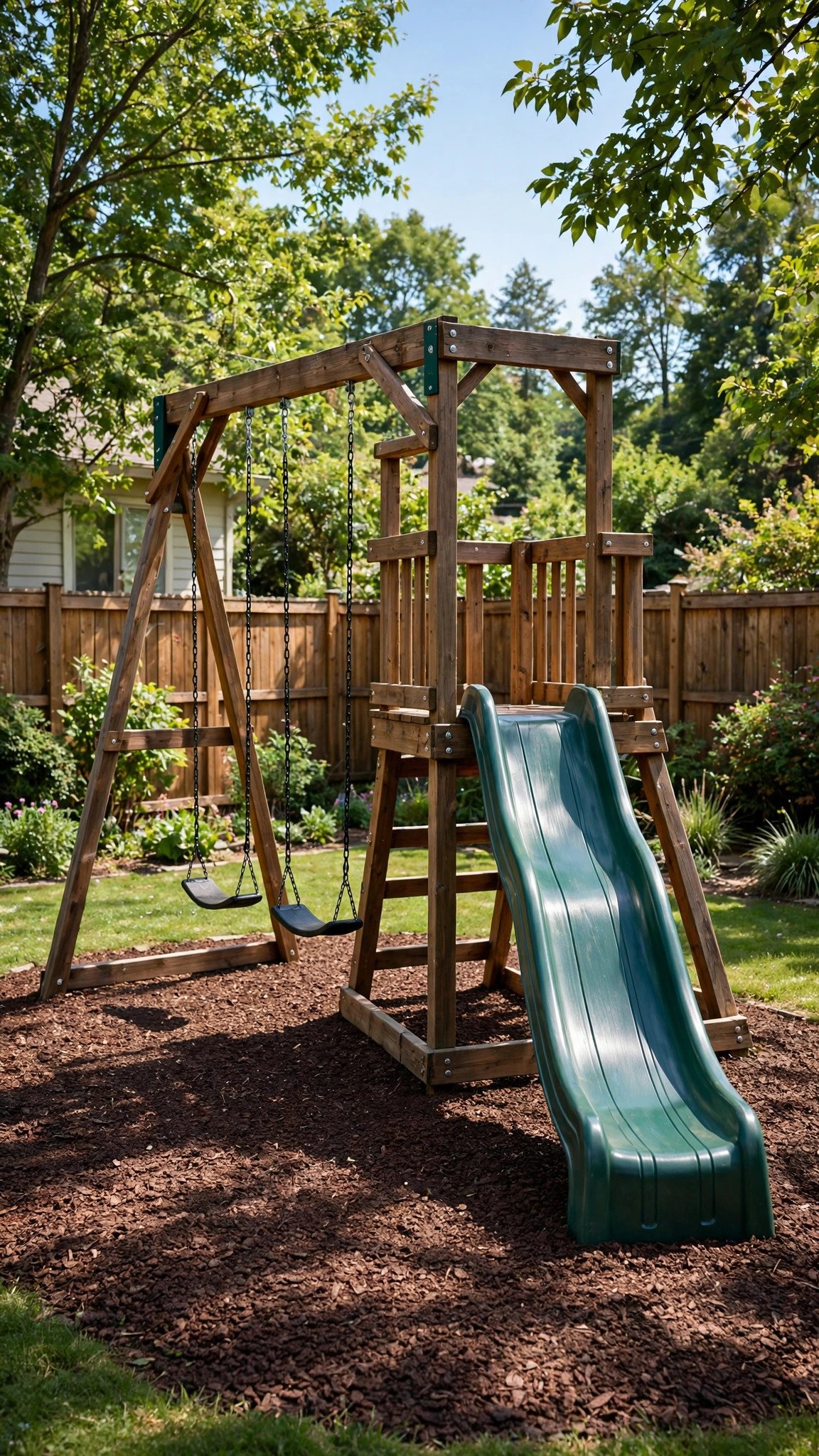
Nothing says backyard playground quite like a swing set. Kids pump their legs, race to see who can swing highest, and slide down a hundred times without getting bored. A wooden set with two swings, a small fort or deck, and a slide covers most ages at once — toddlers use the baby swing, older kids take the big swings and the slide.
Put the set on flat ground with soft landing underneath. Rubber mulch, wood chips, or sand all work — plain grass gets worn down to hard dirt fast, and that is not a soft landing. Leave about six feet of clear space on every side so nobody swings into a fence. Wood needs a quick check each spring: tighten the bolts, look for splinters, and oil the swing hangers so they move quietly.
2. A Sandbox With a Lid That Doubles as a Seat
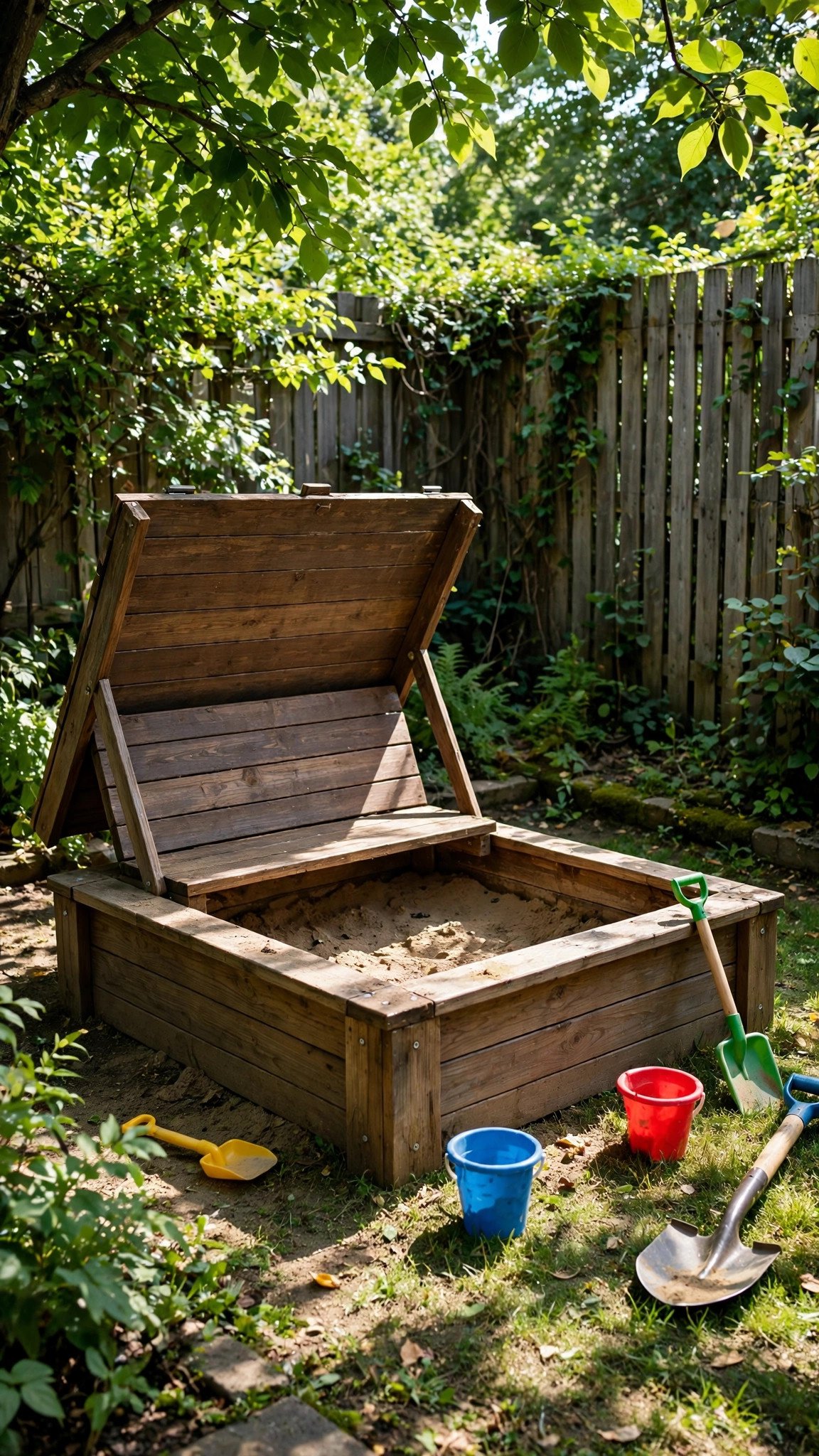
A sandbox is the quiet hero of backyard play. Kids dig, pour, build, and make whole little worlds with nothing but sand and a few buckets. It suits toddlers best, but even seven-year-olds will sit in one with trucks and moulds for an hour. The lid matters more than most parents expect — it keeps rain, leaves, and neighbourhood cats out.
Build the box low so small kids can climb in easily, and pick a spot with partial shade so the sand does not bake in the afternoon sun. A lid that folds back into a bench seat is the smartest version: it covers the sand at night and gives kids (and you) somewhere to sit during play. Play sand from a garden centre is clean and soft; fill the box about two-thirds full, so it does not spill everywhere.
3. A Climbing Wall on the Fence

A climbing wall sounds like a big project, but a small one is simple: a sheet of weatherproof plywood fixed to a sturdy fence, with colourful handholds bolted on. Kids climb a little higher each week, and that slow progress builds real confidence. It fits yards where a full playset would never fit, and it suits kids aged four and up.
Keep the wall low — about five or six feet at most — and put a thick mat or deep mulch underneath. Space the holds close together at the bottom so small hands and feet always find the next grip, and spread them wider higher up for a challenge. Check the holds every month; they work loose with use. A wall on the fence also means you can watch from the patio while the kids climb.
4. A Mud Kitchen for Messy Play
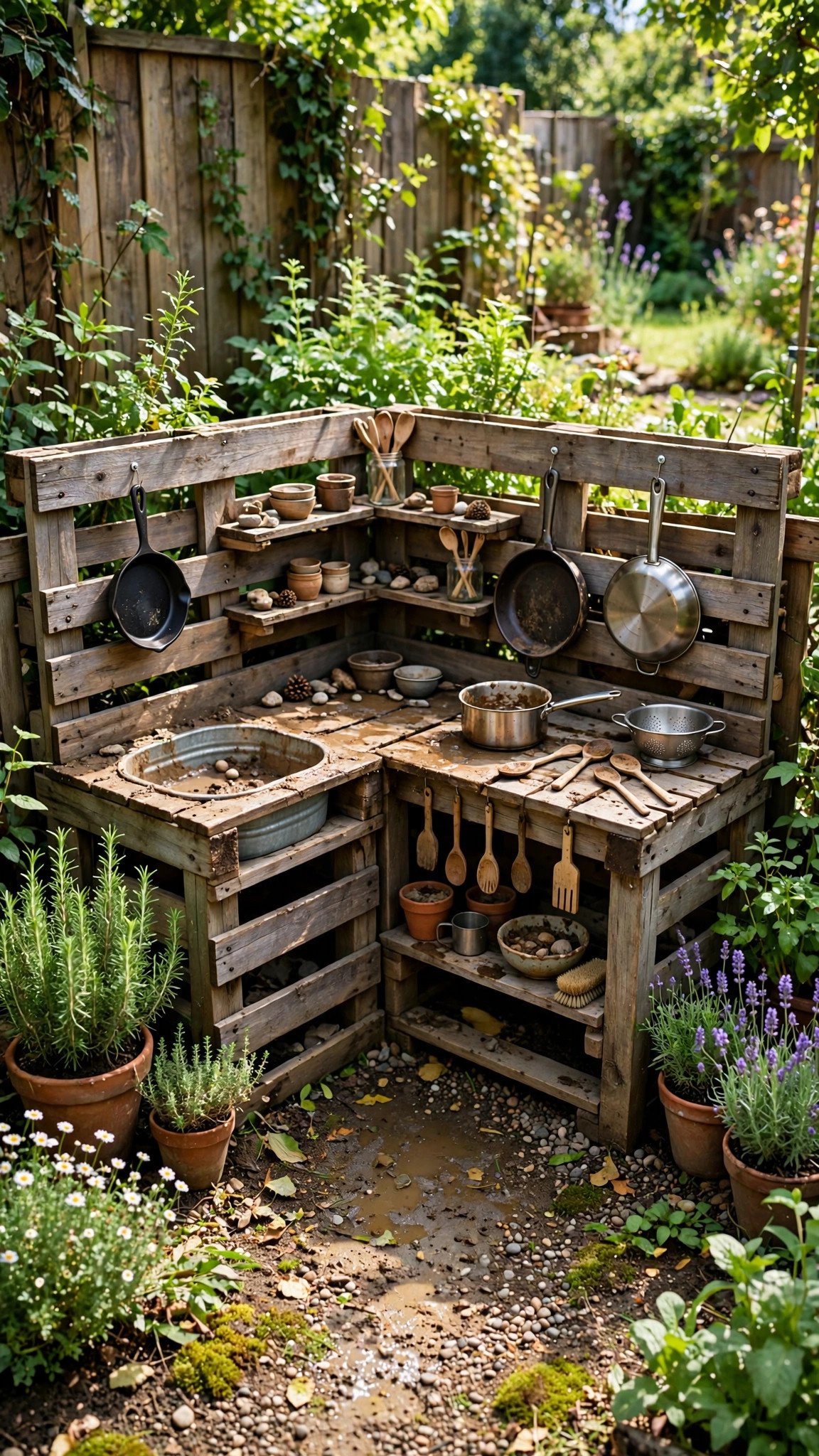
A mud kitchen is just an outdoor counter where kids can mix mud, water, leaves, and petals into “soup” and “cakes.” It sounds messy, and it is — that is the whole point. Kids stir, pour, and serve their creations for hours, and all the mess stays outside. It costs almost nothing if you build it from old pallets and second-hand pots.
Set it near a tap or a rain barrel so water is easy to reach, and put it on grass or gravel that can handle mud. Old pots, pans, wooden spoons, and muffin tins are all you need for equipment. A small shelf for “ingredients” — pine cones, leaves, pebbles — makes it feel like a real kitchen. Toddlers love it, and so do five- and six-year-olds. Just keep a towel by the back door.
5. A Backyard Obstacle Course You Can Rearrange
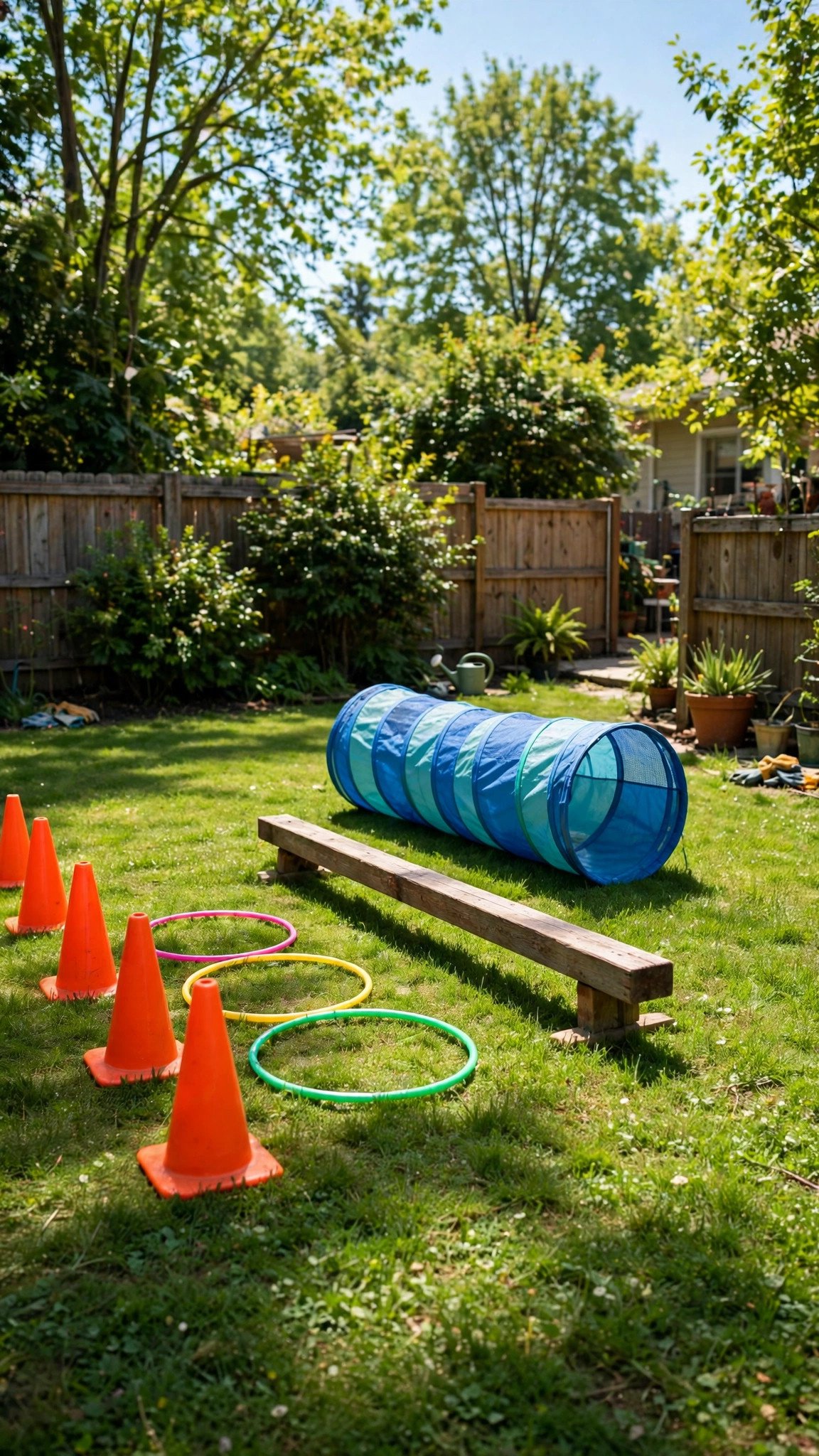
An obstacle course turns the whole yard into a game. Balance beam, tunnel, cones to weave through, a rope to climb — kids run it again and again, timing themselves and daring each other to go faster. The best part is that it never gets old, because you can move the pieces around every week and it feels brand new.
Use portable pieces so the course changes shape: a low wooden beam, a fabric play tunnel, cones, hula hoops, and a few stepping stones. Keep the beam no higher than a foot off the ground for younger kids. Soft grass or mulch underneath cushions the inevitable tumbles. Let the kids design the course themselves sometimes — deciding the order of the obstacles is half the fun.
6. A Splash Pad for Hot Days
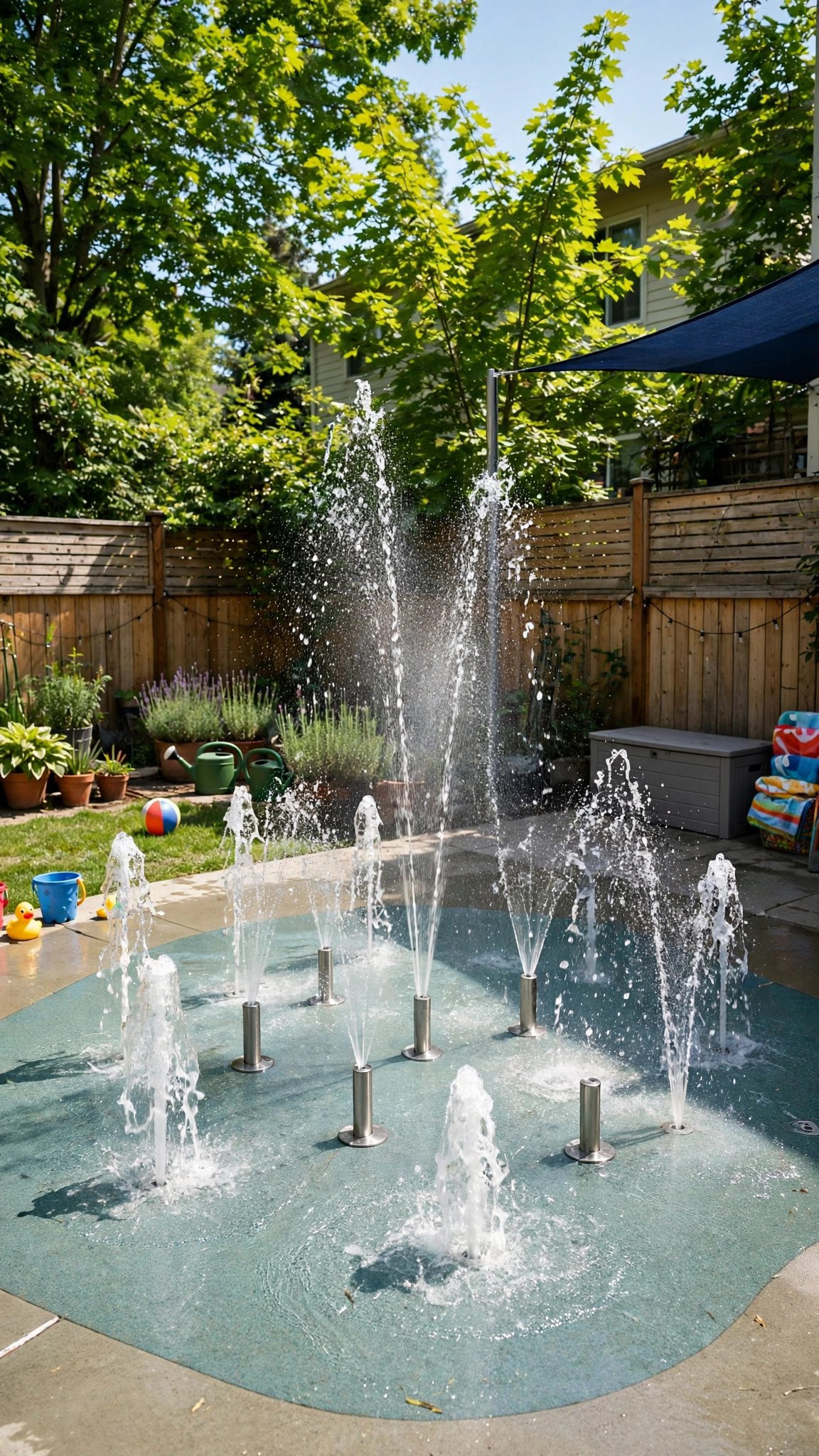
On a hot afternoon, nothing beats water. A splash pad is a flat area with small jets that spray up from the ground — no deep water, no pool to maintain, just cool spray and happy kids. Toddlers can toddle through the gentle jets, and older kids will run through them screaming with joy. It is the simplest water play there is.
You can buy a simple splash pad mat that connects to a garden hose, or build a small permanent one with a few spray heads. Either way, put it on a surface that drains well and does not get slippery — textured paving or grass works. Keep the water pressure gentle for little ones. Shade helps too: a pad in full sun gets hot under bare feet by midday, so a tree or a shade sail nearby makes it usable all afternoon.
7. A Treehouse Reading Nook
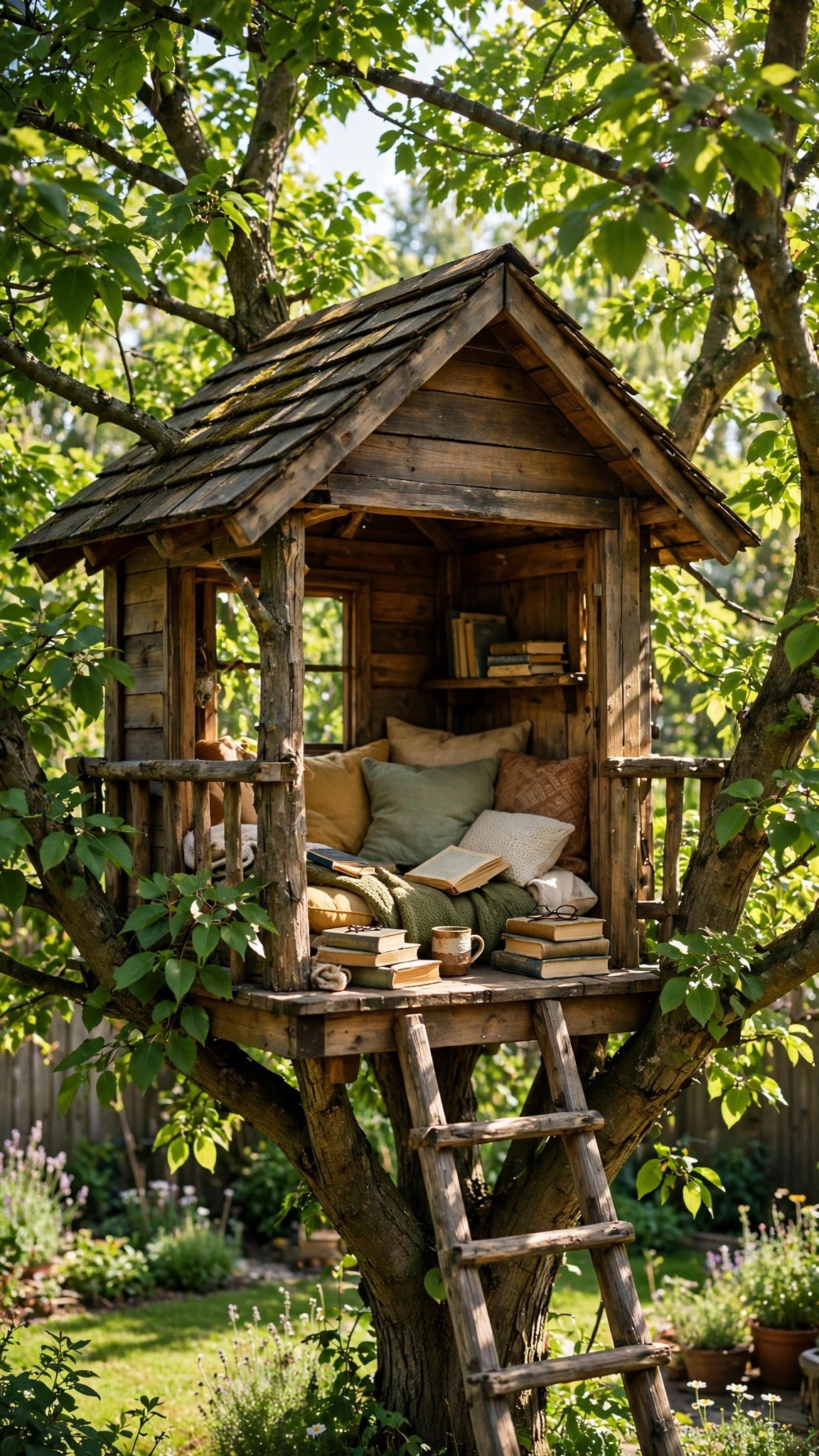
A treehouse does not have to be a huge wooden castle. A small platform among the branches with a railing, a few cushions, and a box of books becomes a reading nook kids will fight over. It feels secret and special — their own place above the world — and it gives quiet kids a spot that is truly theirs.
Build it low, no higher than five or six feet, with a solid railing all the way around and a safe ladder or steps. A simple roof or a piece of shade cloth keeps the rain off the books. Fill a weatherproof box with picture books and a couple of soft toys. The rule that works in most families: the treehouse is for calm play — reading, drawing, talking — not for wild jumping.
8. A Playhouse for Make-Believe

A playhouse is a small house where kids run the show. One day it is a shop, the next a school, the next a pirate hideout. That kind of pretend play is gold for little minds — they practise talking, sharing, and solving tiny problems without even knowing it. It suits kids from about two to eight, and siblings of different ages play in it together easily.
A simple wooden playhouse with a door, a window, and a small porch is enough. Put it where you can see it from the kitchen window, and leave a few props inside: a toy kitchen set, some dress-up clothes, a small table. Let the kids paint the door or hang a little sign with the house name — when they help make it, they love it twice as much.
9. A Zipline Across the Yard

A zipline is the one idea that makes every kid on the street want to come over. Kids sit on the seat, push off, and glide across the yard with the wind in their hair. It suits confident kids aged six and up, and it is genuinely thrilling without being dangerous — as long as it is set up right.
You need two strong trees or posts at least 30 feet apart, a proper zipline kit with a steel cable, and a clear landing zone with soft ground underneath. The cable must be tight and level, and an adult should test it first. A seat with handles is safer than a handle-only bar for younger riders. Check the cable and the tree anchors every spring — trees grow, and fittings loosen.
10. A Trampoline With a Safety Net
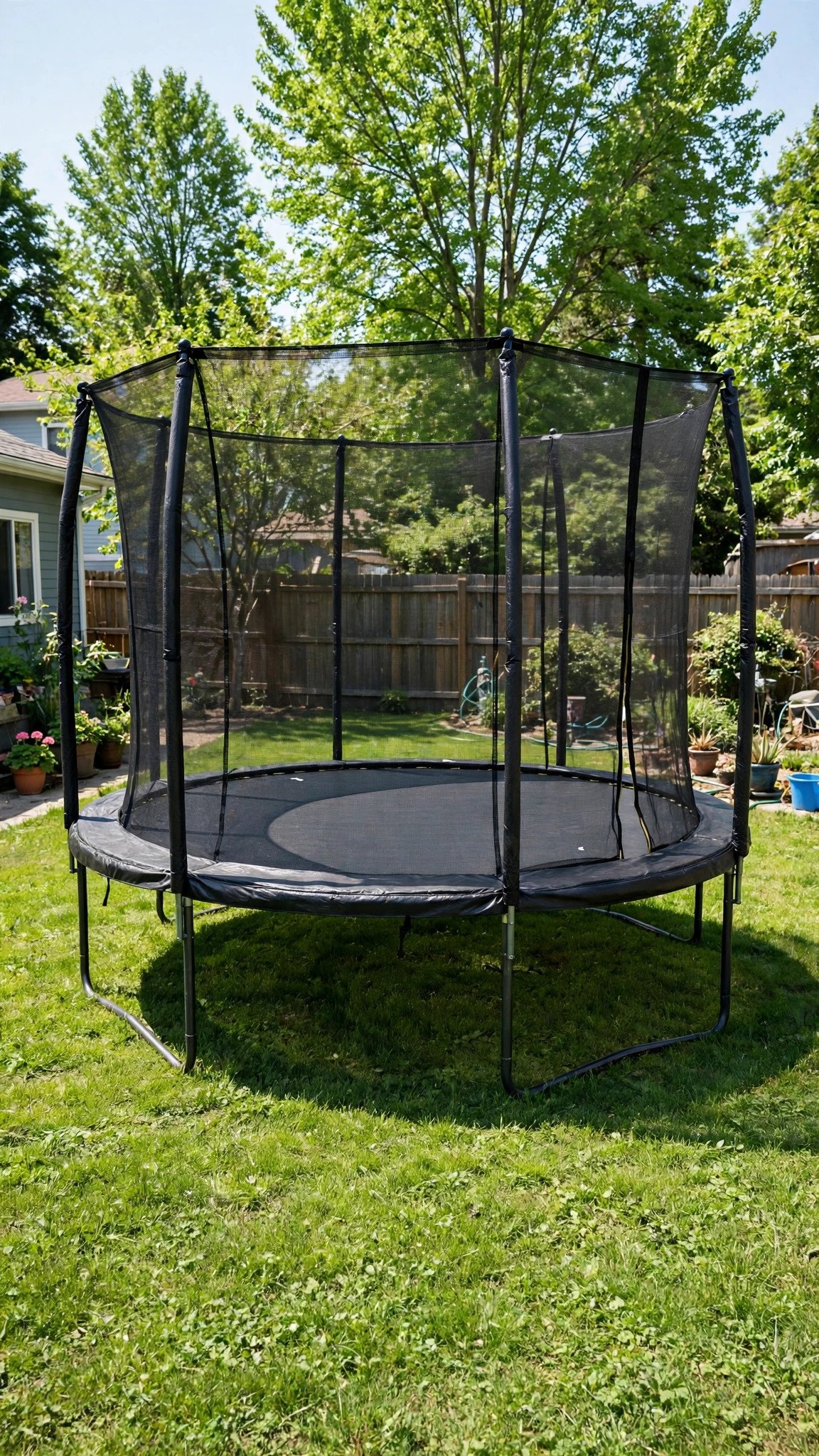
A trampoline is pure joy for kids — bouncing, flipping, and burning off energy that would otherwise bounce off your walls. The safety net is not optional. It keeps jumpers inside, and it is the single thing that turns a trampoline from risky to reasonable. One jumper at a time is the other rule that matters.
Place it on flat grass with clear space all around, away from fences and trees. A ladder helps small kids climb in safely. Check the springs and the mat for wear every few months, and replace a torn net straight away. Kids aged six and up get the most from a full-size trampoline; for toddlers, a small indoor-style one with a handlebar is the safer choice.
11. A Chalkboard Wall for Outdoor Art

Some kids would rather draw than climb, and a chalkboard wall gives them a huge canvas. Bolt a big weatherproof chalkboard to a fence or a garden wall, add a tray for chalk, and let them cover it with drawings, games, and messages. It wipes clean with a damp cloth, so the art never runs out of space.
Put it at kid height — the bottom edge about knee-high for a four-year-old — and in a spot with some shade so the sun does not wash out the colours. Chunky chalks are easier for small hands and show up brighter. A little shelf for chalk and a sponge keeps everything tidy. It is also a sneaky learning tool: hopscotch grids, letter games, and counting drawings all happen naturally on a big board.
12. A Mini Race Track for Ride-On Toys

Kids who love cars and bikes will spend hours on a little race track. Paint a loop on a paved area, add a few curves, a “pit stop” corner, and some simple signs, and suddenly the driveway or patio becomes a speedway for ride-on cars, scooters, and tricycles. It teaches them to steer, stop, and wait their turn — all while they think they are just racing.
A flat paved patch or a smooth concrete area works best. Use outdoor paint or chalk for the track lines so you can change the layout when they get bored of it. Add a couple of traffic cones and a small start line. Keep the track away from the road and the main walkway, and make sure there is a soft edge — grass, not a wall — at the end of the straight.
13. A Garden Patch Kids Can Grow Themselves
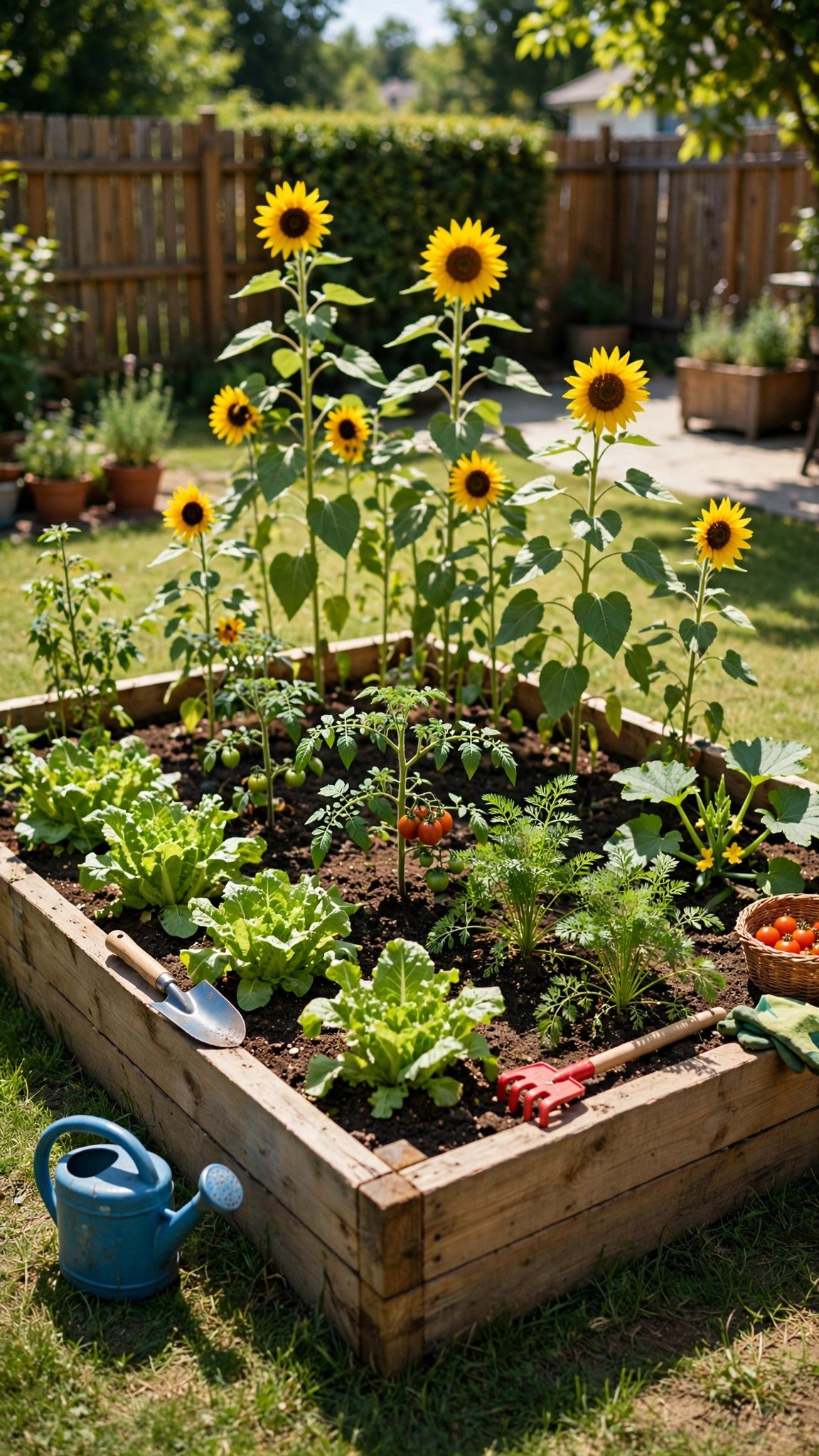
Give a child a small patch of dirt and a packet of seeds, and you give them a whole summer of wonder. Sunflowers that grow taller than they are, cherry tomatoes they pick and eat straight off the plant, carrots they pull up like treasure — gardening teaches patience in a way nothing else does. It suits every age: toddlers water and dig, older kids plan and harvest.
A raised bed about four feet long is the perfect size for small hands to reach across. Let the kids choose what to plant — sunflowers, beans, strawberries, and herbs are all fast and forgiving. Child-sized tools make the work feel real. Put the bed in a sunny spot near the house so watering becomes part of the daily routine, not a chore to forget.
14. A Camping Corner With a Fire Pit
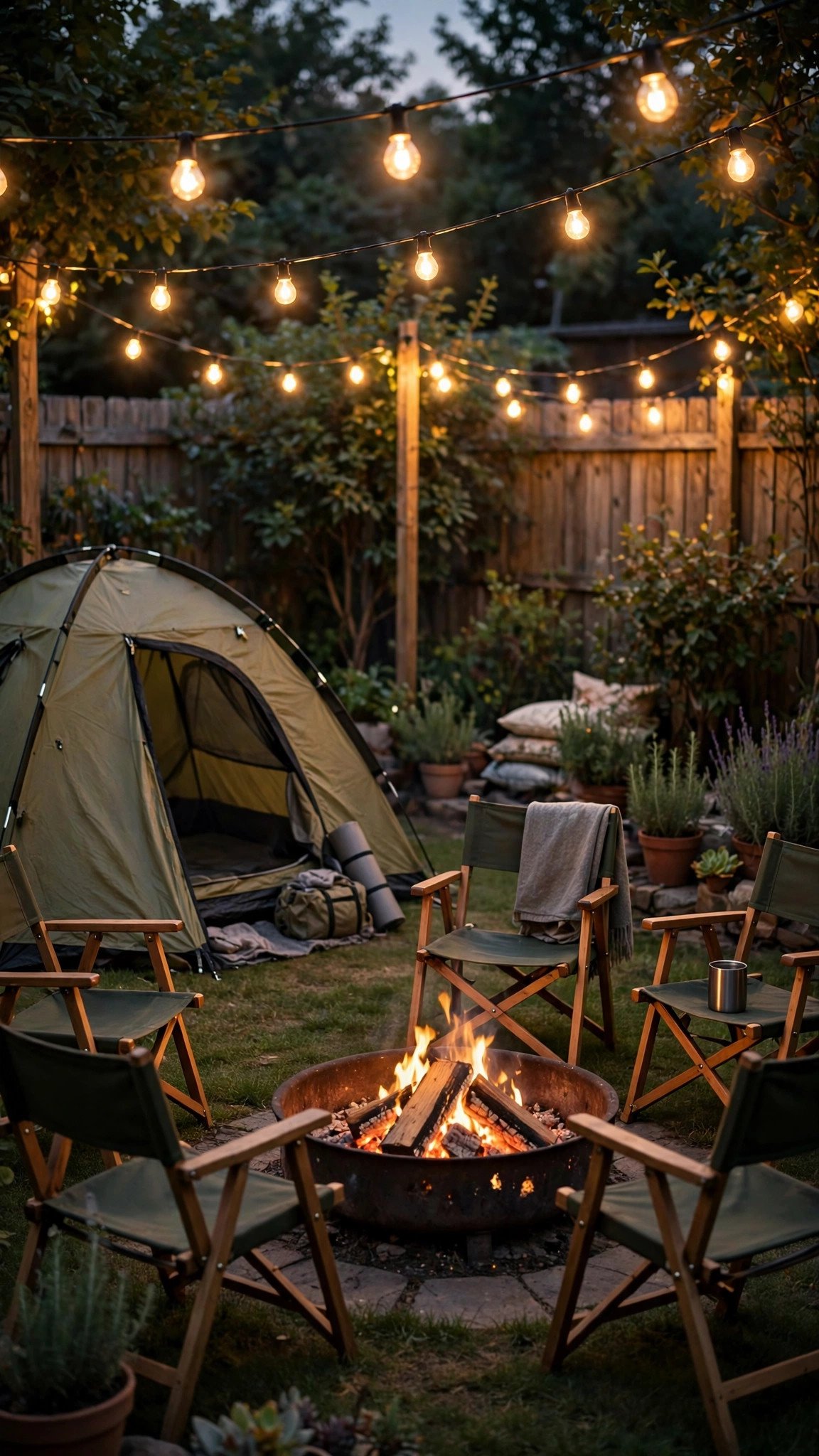
A camping corner brings the adventure of a campout into your own backyard. A small tent, a fire pit ring, and a few chairs are all it takes — kids roast marshmallows, tell stories, and beg to sleep outside. It is the idea that creates the family memories everyone talks about for years.
Keep the fire pit small and low, ringed with stones, and always have an adult in charge of the fire. A bucket of water or sand should sit right next to it. The tent can stay up all summer as a daytime hideout, or come out just for weekend campouts. Add a few solar string lights around the corner, and it glows beautifully after dark — the kids will not want to come inside.
15. A Sensory Garden Path
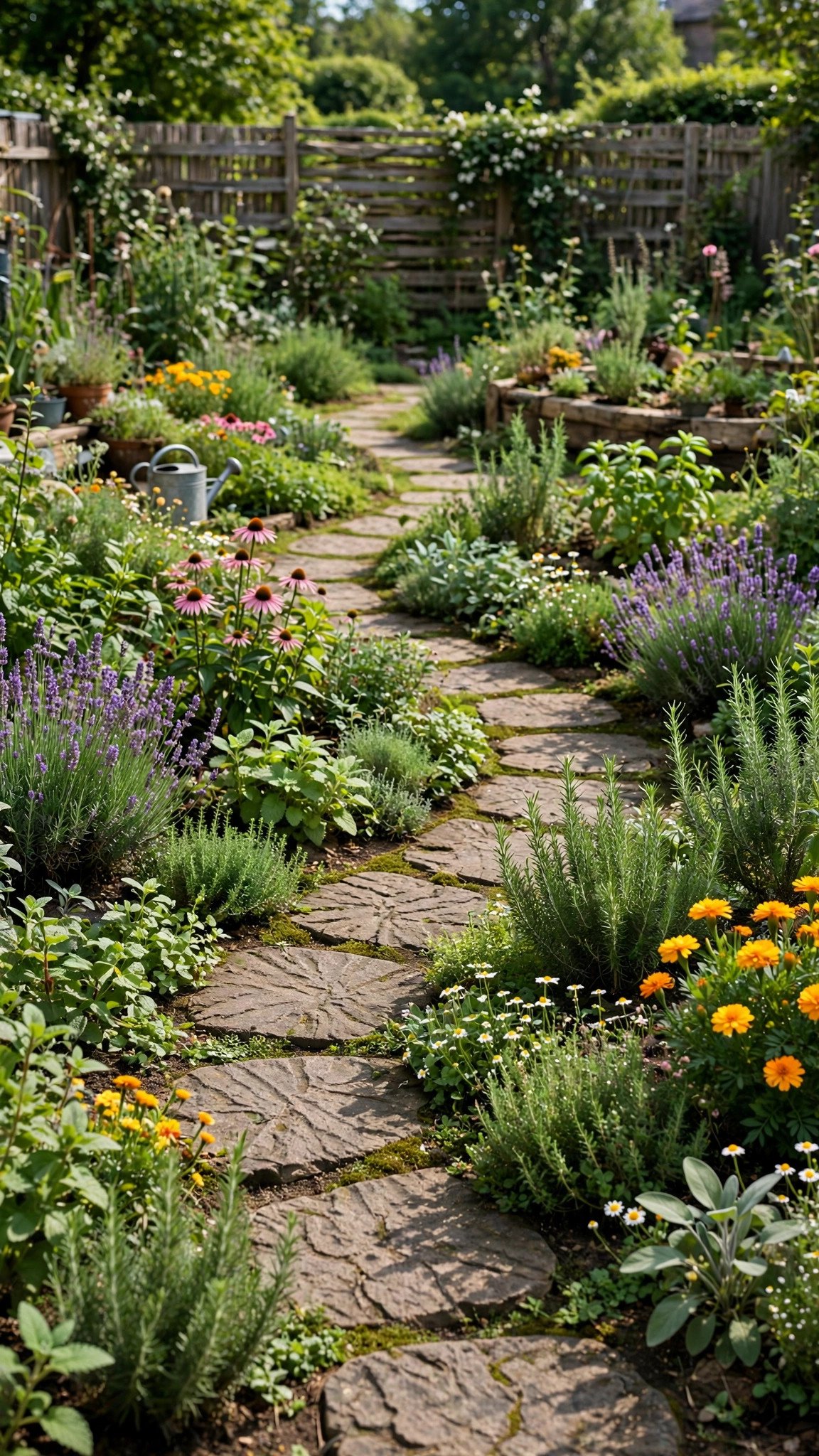
A sensory garden path is a winding walkway made of different textures — smooth stones, soft bark, bumpy pebbles, fragrant herbs — that kids explore with bare feet and curious hands. It calms busy kids down and wakes curious ones up. It is especially lovely for toddlers and for children who love to touch and smell everything.
Lay the path as a gentle curve through a garden bed, with a different material every few steps. Plant lavender, mint, and rosemary along the edges so the air smells wonderful when kids brush past. Add a wind chime or two for sound. Keep the path wide enough for little feet and free of anything sharp. It needs almost no maintenance — the plants do the work.
16. A Sports Corner With a Hoop and Goals
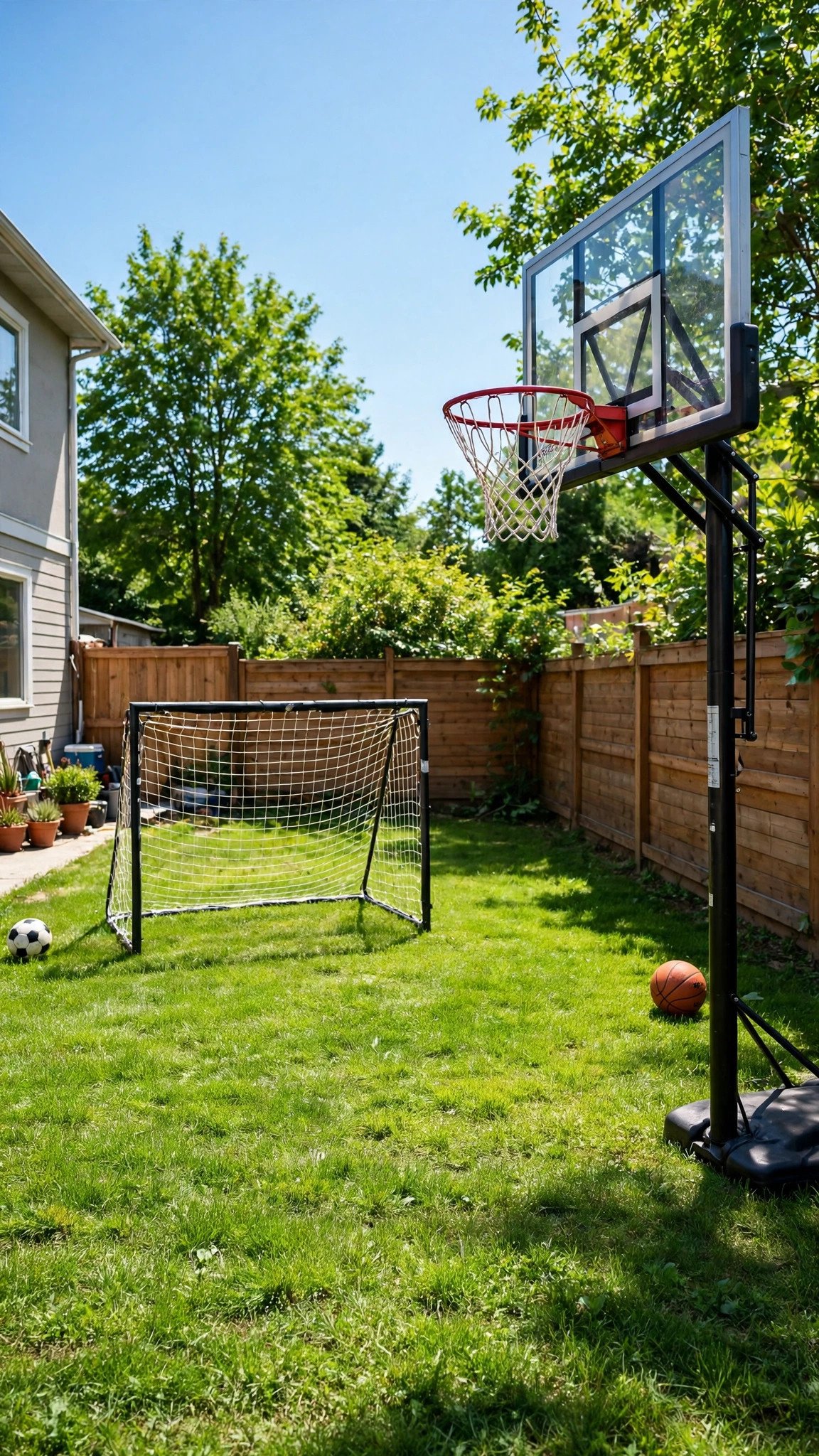
If your kids love ball games, give them a proper corner for it. A basketball hoop on the garage wall or a freestanding one, a small soccer goal, and a flat patch of lawn or paving is all a sports corner needs. Kids practise shooting, play mini matches, and invent their own games — and it keeps the ball away from your windows.
An adjustable hoop grows with the kids — lower it for little ones, raise it as they get taller. A small pop-up soccer goal folds away when the lawn needs mowing. Mark the court lines with chalk or tape so the games feel real. Store the balls in a bin right next to the corner so play starts the moment they step outside.
What you need: adjustable basketball hoop, pop-up soccer goal, flat lawn or paved area, ball storage bin.
17. An Outdoor Movie Night Setup
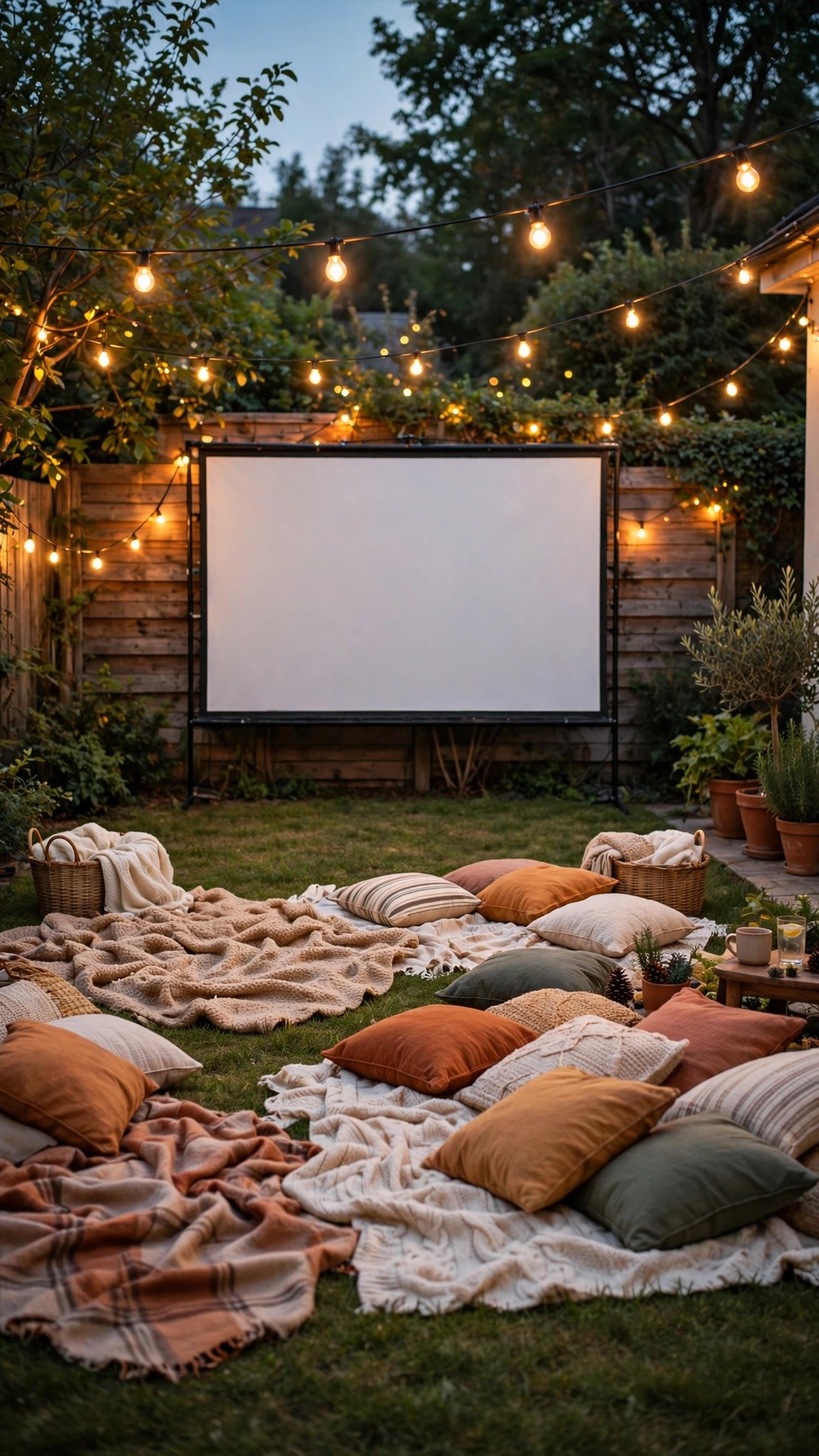
An outdoor movie night turns an ordinary Friday into an event. A white sheet or a portable screen, a small projector, blankets and cushions on the lawn, and a bowl of popcorn — that is all it takes. Kids invite their friends, everyone picks a film together, and the backyard becomes a cinema under the stars.
Set the screen where the house blocks the wind, and wait until dusk so the picture is bright. String lights around the seating area make it feel magical and help little ones find their way. Keep the setup simple: a sheet tied between two posts works just as well as a bought screen. Popcorn, juice boxes, and a blanket each — that is the whole recipe for a night they will remember.
What you need: white sheet or portable screen, small projector, blankets and cushions, string lights, popcorn.
Which Backyard Playground Idea Is Right for Your Yard?
The best backyard playground idea depends on your yard, your kids’ ages, and how much work you want to take on. A big yard with older kids can handle a zipline and a trampoline. A small yard does better with a climbing wall, a sandbox, and a chalkboard — all of them fit in a corner and still give kids plenty to do. Toddlers need low, soft, simple things: a sandbox, a mud kitchen, a sensory path. Kids aged six and up want speed and height: a zipline, a climbing wall, a sports corner.
- Big yard, older kids: Zipline, Trampoline, Sports Corner — space to run and real challenges.
- Small yard: Climbing Wall, Sandbox, Chalkboard Wall — big fun in a small footprint.
- Toddlers (2-4): Sandbox, Mud Kitchen, Sensory Garden Path — low, soft, hands-on.
- Quiet, creative kids: Treehouse Reading Nook, Playhouse, Chalkboard Wall, Garden Patch — calm play with imagination.
- Tight budget: Mud Kitchen, Chalkboard Wall, Obstacle Course — almost free, made from things you already have.
- Hot climate: Splash Pad, Movie Night Setup — water by day, films by night.
- One weekend only: Swing Set, Sandbox, Splash Pad — the fastest wins with the biggest payoff.
Plan Your Backyard Playground in 4 Simple Steps
- Watch how your kids actually play. Before you buy anything, spend a week noticing what your kids reach for. Do they climb everything? Do they love water? Do they sit and draw for hours? The playground should match the kids you have, not the catalogue picture. Pick two or three ideas that fit what you already see them doing.
- Pick one main play zone. Choose the flattest, most visible spot in the yard — ideally where you can see it from the kitchen window — and put the biggest piece there. One clear play zone looks better and works better than equipment scattered across the whole yard. Leave the rest of the lawn open for running games.
- Sort the ground first, then buy. Soft landing matters more than the equipment itself. Lay rubber mulch, wood chips, or sand under anything kids climb, swing, or jump from. Measure the space, check the ages on the box, and buy once. Add a little extra surfacing — it settles and thins over time.
- Build it, test it yourself, then set the rules. Put the equipment together properly, tighten every bolt, and try it yourself before the kids do. Then set three simple rules together: one person on the trampoline, no climbing on the outside of the net, and shoes on for the zipline. Kids follow rules they helped make.
Backyard Playground Mistakes to Avoid
- Putting equipment on hard ground. Grass wears away to bare dirt fast, and dirt is not a soft landing. Always put mulch, sand, or rubber mats under swings, slides, and climbing things.
- Buy for the age they will be, not the age they are. A zipline for a four-year-old sits unused for two years. Buy for now, and add bigger things as they grow.
- Filling every corner at once. When the whole yard is equipment, there is nowhere left to run. Leave open lawn — running, chasing, and ball games need space.
- Forgetting shade and water. Kids play hard and forget to drink. A shady spot and a water bottle station nearby keep play going safely on hot days.
- Skipping the safety check. Bolts loosen, wood splinters, nets tear. A ten-minute check at the start of each season catches most problems before they become accidents.
- No storage plan. Balls, chalk, buckets, and ride-on toys end up everywhere. One storage bin or a small shed by the play zone keeps the yard tidy and the toys in one place.
FAQs
What is the best backyard playground idea for small yards?
A climbing wall on the fence, a sandbox with a lid, and a chalkboard wall are the best choices for small yards. All three fit in a corner, cost little, and give kids very different kinds of play — climbing, digging, and drawing — without taking over the whole yard.
How much does a backyard playground cost?
It depends on what you build. A mud kitchen, chalkboard wall, or obstacle course can cost almost nothing if you use pallets and things you already own. A good wooden swing set is a mid-range spend, while a zipline, trampoline, or treehouse costs more. Start with two or three low-cost ideas and add bigger pieces over time.
What is the safest surface under a swing set or slide?
Rubber mulch, engineered wood chips, sand, or rubber mats are the safest surfaces under swings and slides. They cushion falls far better than grass or bare dirt. Lay the surface at least six inches deep and spread it about six feet out in every direction from the equipment.
What age is a backyard playground good for?
Backyard playgrounds suit kids from about two to twelve. Toddlers love sandboxes, mud kitchens, and sensory paths. Kids aged four to seven enjoy swings, slides, playhouses, and obstacle courses. Older kids aged eight and up want climbing walls, ziplines, trampolines, and sports corners. Pick ideas that match your children’s ages now.
How do I keep a backyard playground safe?
Check bolts, ropes, and nets at the start of each season, and replace anything worn. Put soft landing material under anything kids climb or jump from. Keep the play zone where you can see it from the house. Set a few clear rules — one jumper on the trampoline, helmets for the zipline area — and stick to them.
Can I build a backyard playground myself?
Yes, many backyard playground ideas are easy DIY projects. A sandbox, mud kitchen, chalkboard wall, obstacle course, and sensory path can all be built in a weekend with basic tools. Bigger pieces like swing sets often come as kits with clear instructions. Leave ziplines and tall treehouses to a professional if you are not confident with heights and fixings.
How do I keep kids interested in the backyard playground?
Change something small every few weeks. Rearrange the obstacle course, add new chalk colours, plant something new in the garden patch, or set up a movie night. Kids get bored with the same setup, but a tiny change makes the whole yard feel new again. Letting them choose the next addition works best of all.
Conclusion
A backyard playground does not need to be the biggest one on the street. It needs to fit your yard, your kids, and your life. A swing set and a sandbox will keep a toddler happy for years. A climbing wall and a zipline will keep an eight-year-old outside until dinner. A mud kitchen costs almost nothing and still becomes the most-used spot in the garden.
Start with two or three ideas from this list — the ones your kids would run to first — and build from there. Check the bolts, lay the soft ground, and put a shady seat nearby for yourself. Then step back and watch. The best backyard playground is the one where you hear laughing, splashing, and make-believe drifting in through the kitchen window on a sunny afternoon. That is the whole point.