13 Tree Flower Bed Ideas for a Beautiful, Easy-Care Yard
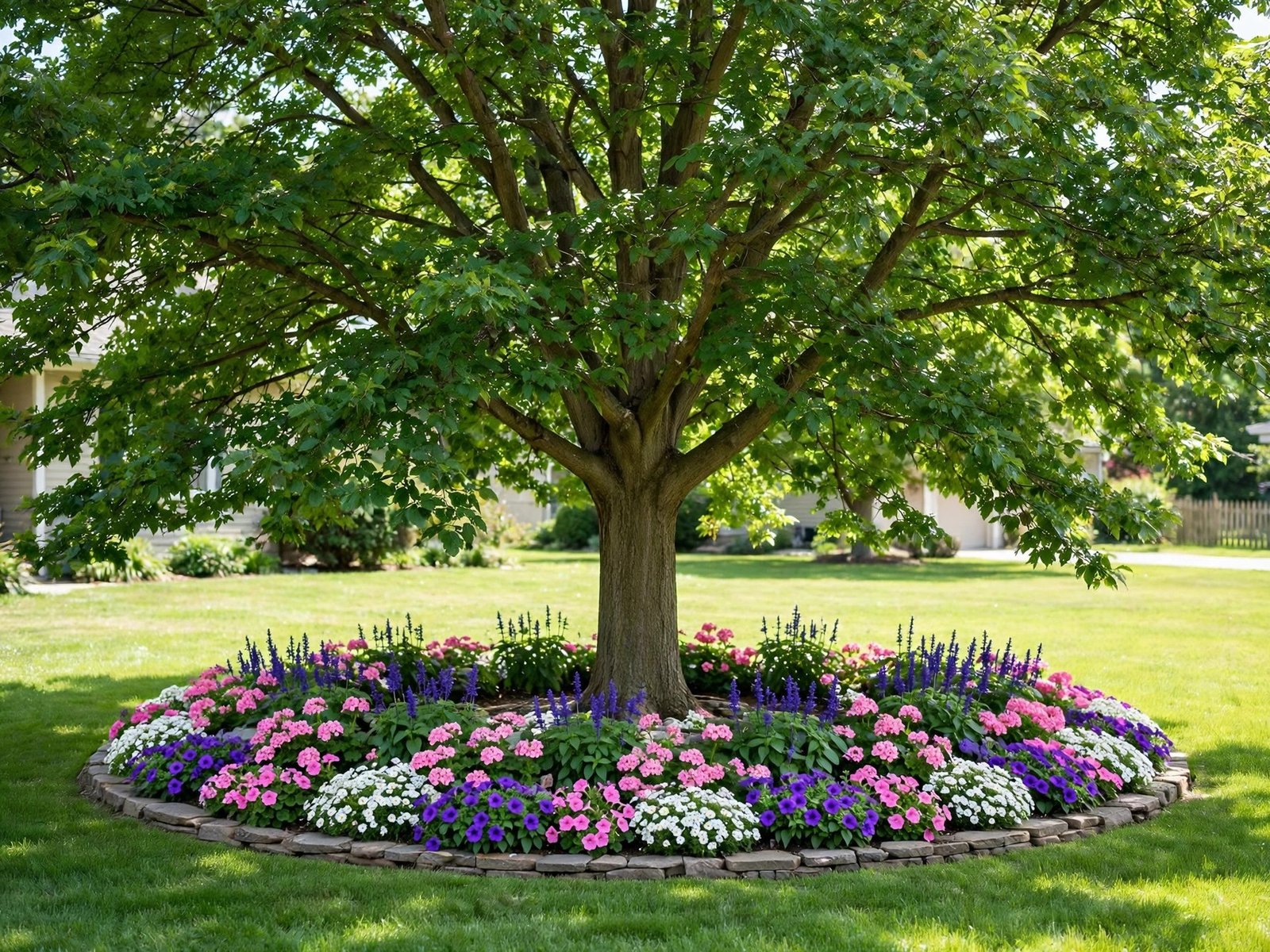
Trees naturally bring structure, shade, and character to a yard, but the bare ground around their trunks can sometimes look unfinished. It may become a muddy patch, collect weeds, or create an awkward area that is difficult to mow. With the right tree flower bed ideas, you can turn this overlooked space into a beautiful landscape feature while keeping the tree healthy.
The best flower beds around trees combine attractive borders, suitable plants, and thoughtful landscaping. From rustic stone circles and cottage-inspired blooms to modern minimalist designs and whimsical fairy gardens, there are plenty of ways to make the area look inviting. The key is choosing plants that suit the available sunlight, avoiding unnecessary digging, and keeping soil and mulch away from the trunk.
Whether you are updating your front yard, improving a shady backyard, or looking for low-maintenance landscaping, these 13 tree flower bed ideas offer practical inspiration for creating a space that looks beautiful throughout the seasons.
Quick Answer: What Is the Best Tree Flower Bed Idea?
A rustic stone circle is one of the easiest ways to create an attractive flower bed around a mature tree. It gives the area a defined shape, requires minimal materials, and works with many landscape styles. For heavily shaded areas, a woodland garden with ferns and suitable shade-loving plants creates a natural appearance, while an evergreen bed provides year-round structure with less seasonal replanting.
Whatever design you choose, protect the existing tree roots. Avoid adding deep layers of soil, digging through major roots, or piling mulch against the trunk. A shallow layer of mulch and carefully selected plants are usually enough to create a beautiful bed without unnecessary disturbance.
1. Rustic Stone Circle Flower Bed
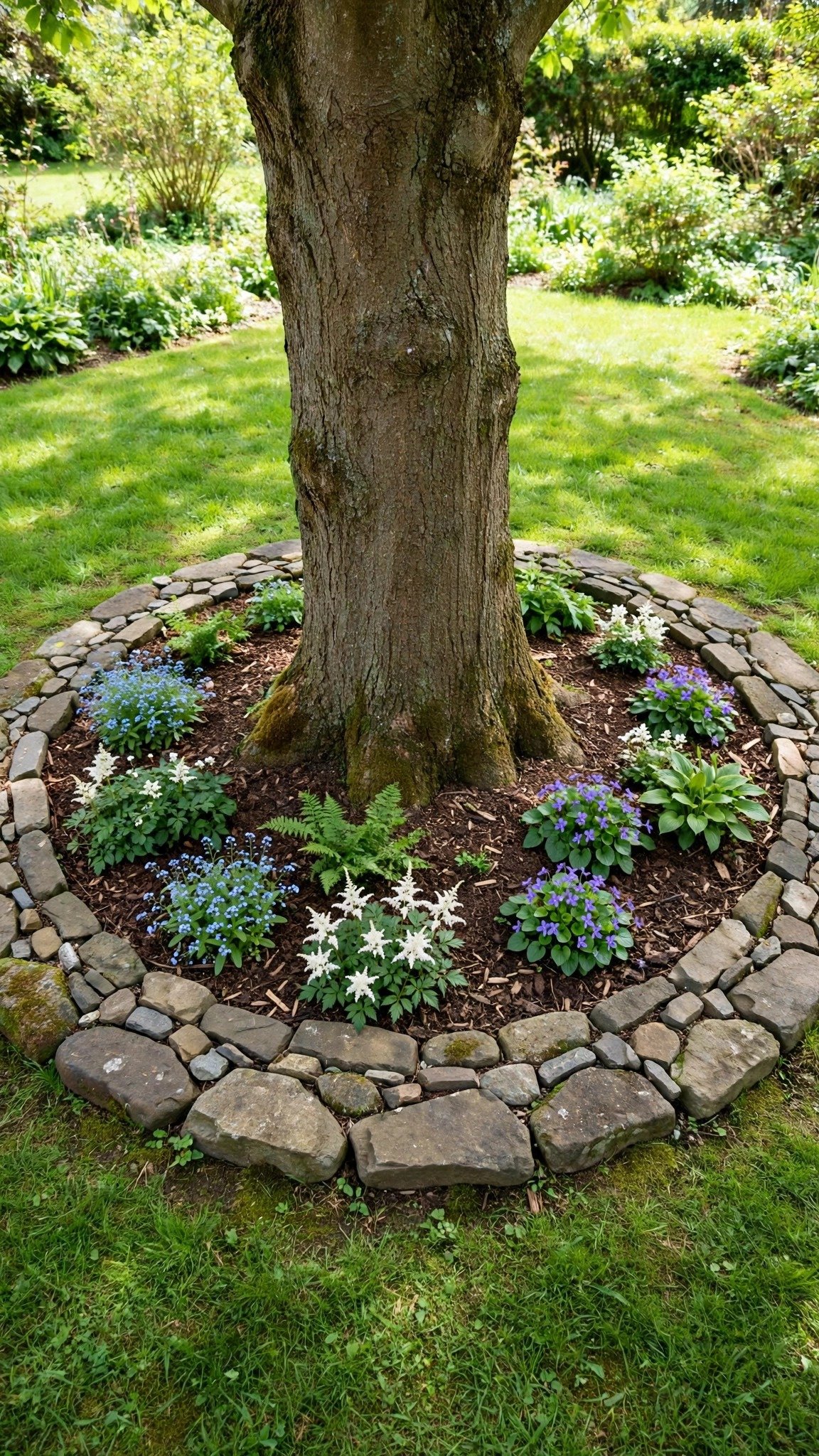
A rustic stone circle is a timeless way to landscape around a tree. Natural stones create a defined border while giving the surrounding yard a relaxed, organic appearance. This design works particularly well in front yards, where a simple circular bed can make an ordinary lawn feel more thoughtfully landscaped.
Arrange natural stones or flat rocks in a loose circle around the tree, following the existing ground level rather than building a tall raised wall. Fill the area with a thin layer of mulch and add small groups of plants that tolerate the available shade and root competition. Ferns, woodland groundcovers, and other suitable low-growing plants can soften the stone edges.
For a more natural finish, combine stones of slightly different sizes instead of using identical pieces. You can also leave small spaces between selected stones for groundcover plants to spread. Keep the trunk and root flare visible, and avoid digging trenches through established roots when positioning the edging.
2. Cottage Garden Tree Ring
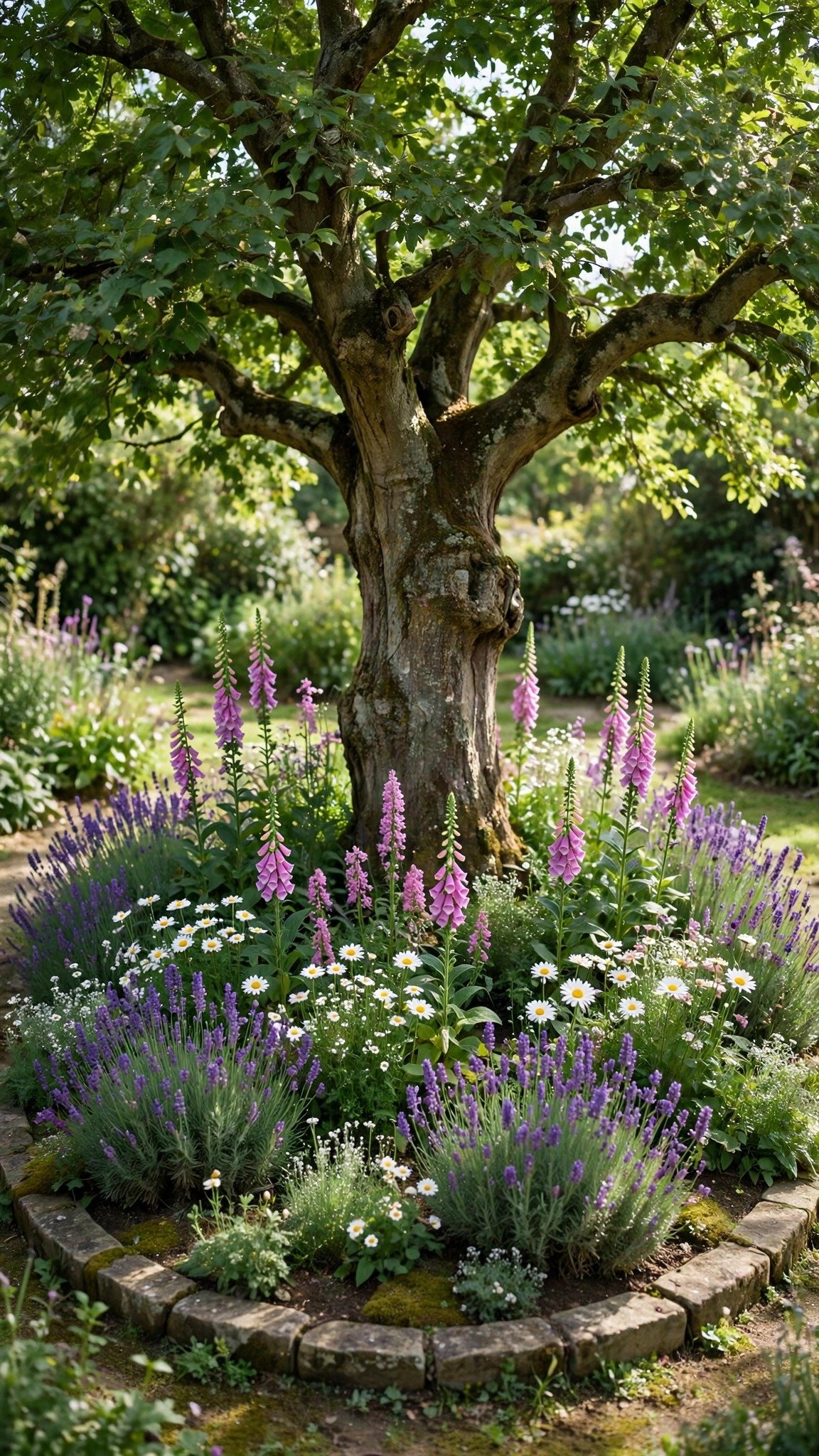
A cottage-style tree flower bed brings a romantic, relaxed feeling to the landscape. Instead of perfectly arranged rows, this design uses informal planting, layered greenery, and colourful blooms to create a garden that feels naturally established. It is especially attractive around mature trees with filtered sunlight.
Start by selecting flowers according to the amount of sunlight reaching the area. Shade-tolerant begonias, woodland flowers, and suitable hardy perennials can work in partially shaded locations, while lavender and other sun-loving plants are better placed along brighter outer edges. Combine different flower heights and leaf textures to give the bed a fuller appearance without overcrowding it.
Curved edging, weathered stones, or a simple mulch border can complete the cottage look. Choose two or three complementary flower colours, such as soft pink, purple, and white, to create a coordinated appearance. A small garden trellis placed nearby can add extra height without attaching anything to the tree.
What you need: lavender, foxgloves, daisies, mulch or compost, curved edging.
3. Raised Brick Flower Bed
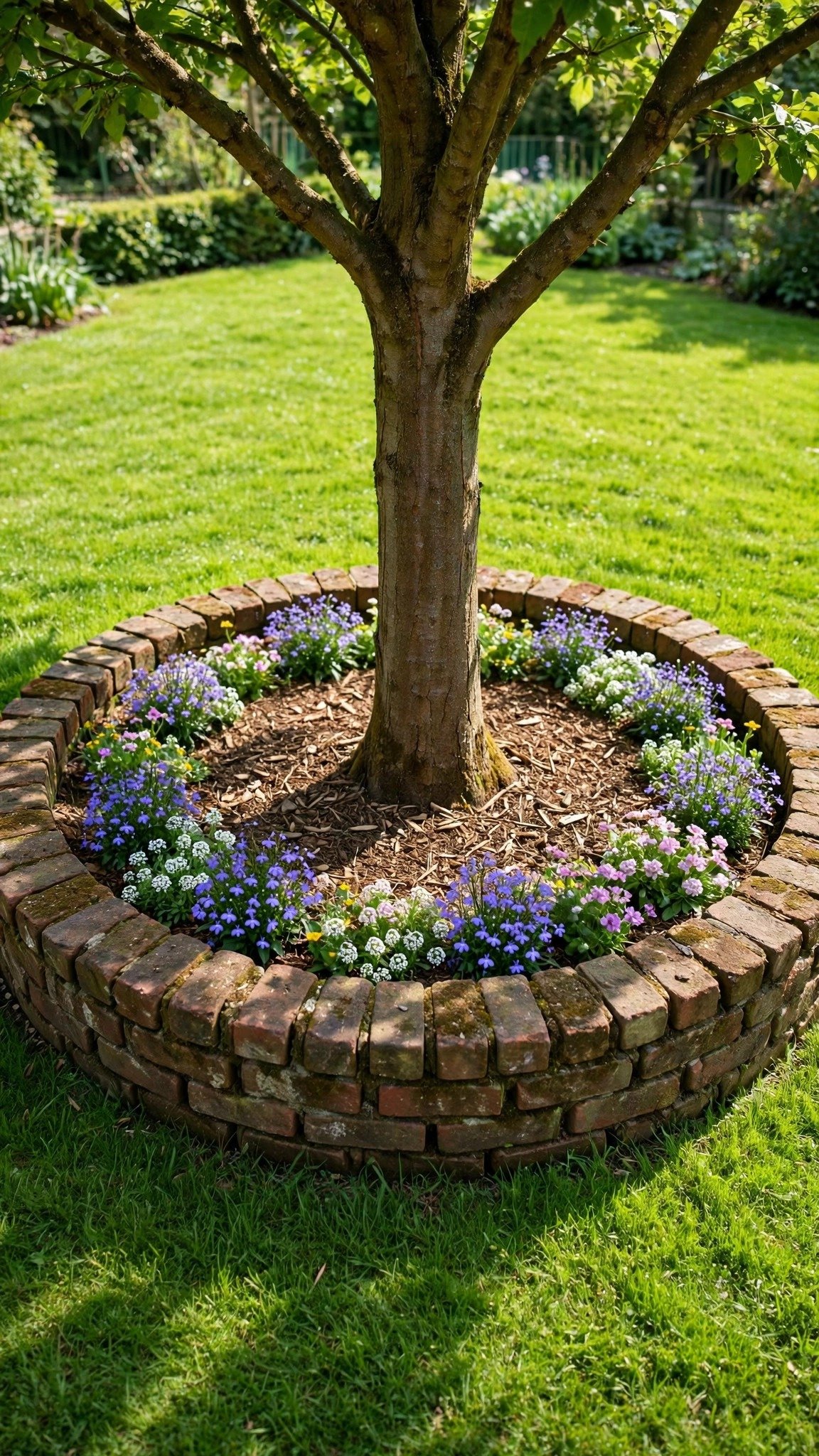
A brick border gives a tree flower bed a structured, traditional appearance. Its clean lines work beautifully with classic homes, formal front yards, and lawns that need a little more definition. Weathered bricks can also add warmth and character to an otherwise simple landscape.
Instead of building a tall raised bed filled with additional soil, arrange bricks as a low decorative edging around the planting area. Position them carefully on the existing ground, avoiding deep excavation or damage to large surface roots. You can use the brick border to separate a mulched area from the lawn and create a neat space for shallow-rooted plants.
Choose aged or reclaimed bricks for a softer, more established look. Small flowering plants along the outer edge can make the design feel less formal, while a gravel or stone pathway nearby creates a cohesive landscape. Most importantly, keep the existing root flare uncovered and never use the brick structure to bury the tree’s base.
What you need: landscaping bricks, gravel base, soil mix, low-growing flowers, mulch.
4. Woodland Shade Garden
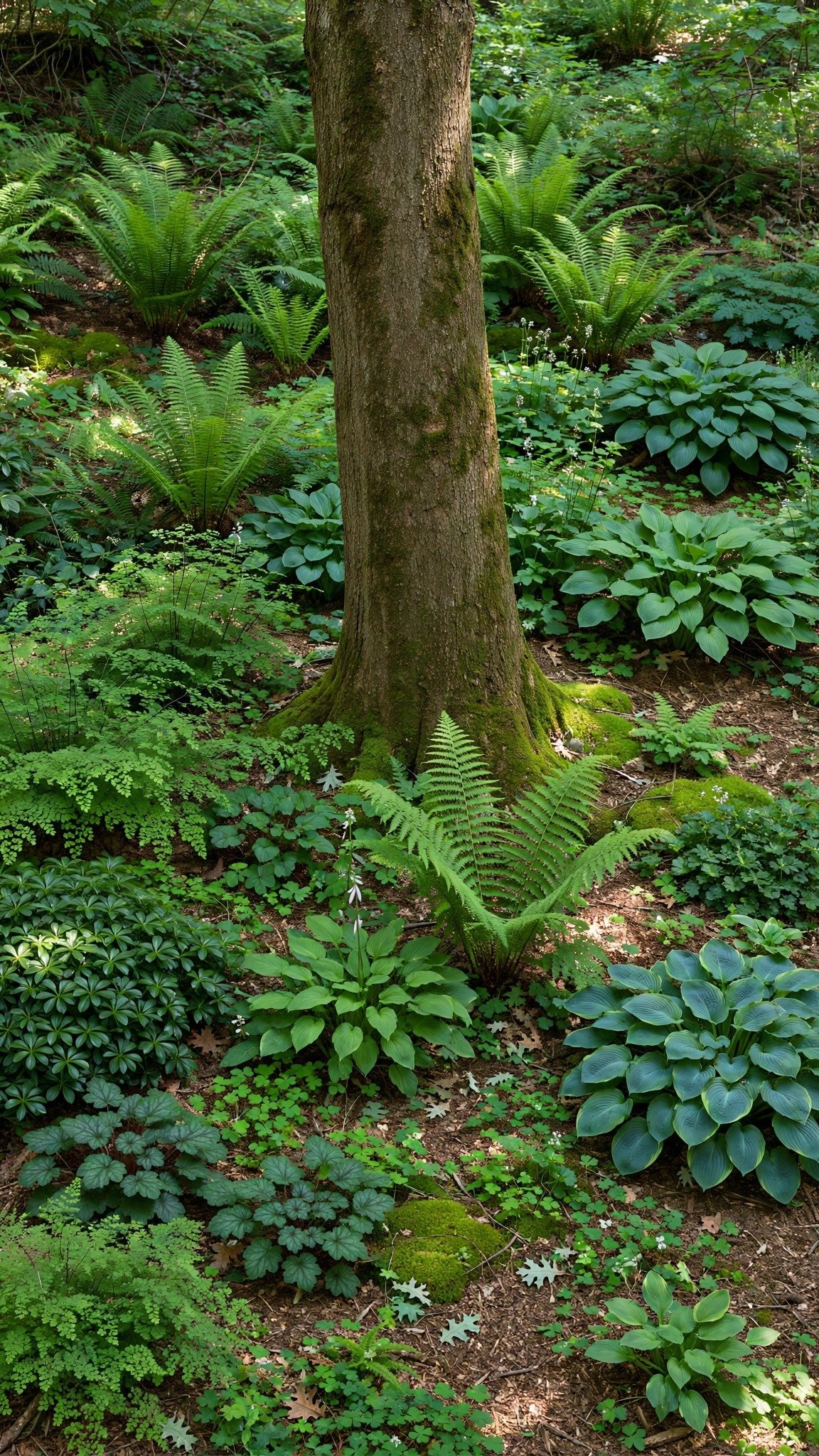
A woodland shade garden is a natural choice for trees with dense canopies that block much of the sunlight. Instead of filling the area with colourful flowers, this design focuses on beautiful foliage, different leaf shapes, and soft layers of greenery. The result feels peaceful and blends naturally into the surrounding landscape.
Ferns, hostas, and suitable woodland groundcovers can add texture beneath trees where their growing conditions match the soil and moisture levels. Arrange plants in small, irregular groups rather than straight lines to create a more natural forest-inspired appearance. Use plants with different leaf sizes and shades of green so the bed remains interesting even when flowers are not blooming.
You can also introduce spring bulbs in suitable locations where enough light reaches the ground before the tree canopy fills out. Add a thin layer of organic mulch to help retain moisture, but avoid covering the tree’s root flare. Once established, a woodland garden can provide a beautiful, relatively low-maintenance alternative to traditional flower beds.
What you need: ferns, hostas, woodland mulch, shade plants, compost.
5. Color-Themed Flower Bed
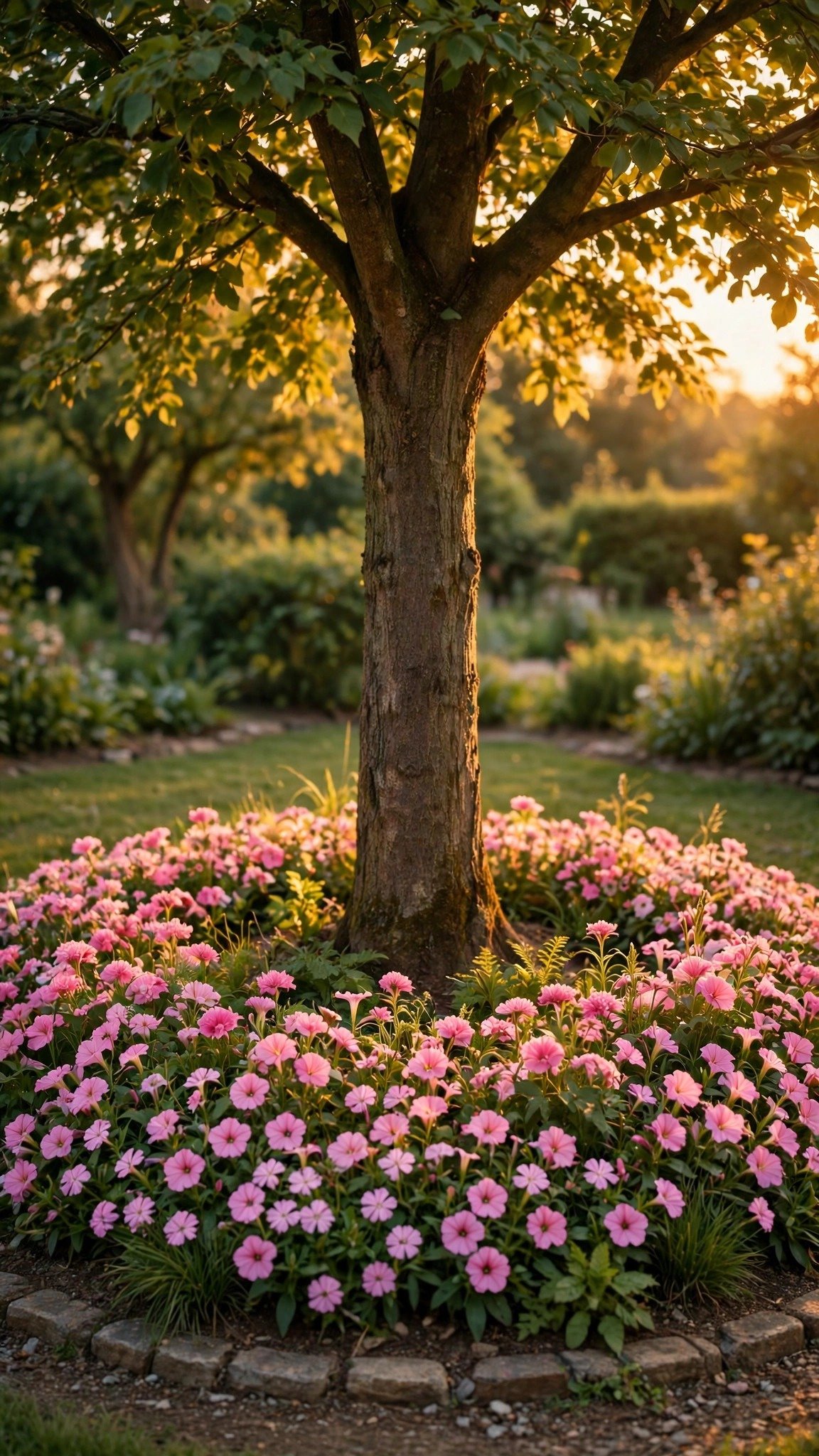
A colour-themed flower bed creates a coordinated look around a tree without requiring an elaborate landscaping design. Choosing one main flower colour and repeating it throughout the bed makes the arrangement feel intentional. This approach is particularly useful in smaller yards where too many colours can make the landscape look visually busy.
Start by deciding on a colour combination that complements your home’s exterior and the surrounding garden. White flowers can brighten a shaded area, while purple and pink blooms create a softer, romantic appearance. Yellow and orange flowers add cheerful contrast in brighter locations. Combine flowering plants with different shades of green to keep the arrangement balanced.
Plant flowers in small clusters instead of placing individual plants far apart. Repeating the same colour in different parts of the bed helps create a cohesive design, even when the plants have different heights or textures. You can also coordinate the flower colours with nearby planters, garden furniture, or stone edging for a more finished landscape.
What you need: flowers in matching tones, edging material, mulch, garden soil, watering can.
6. Natural Mulch and Wildflower Bed
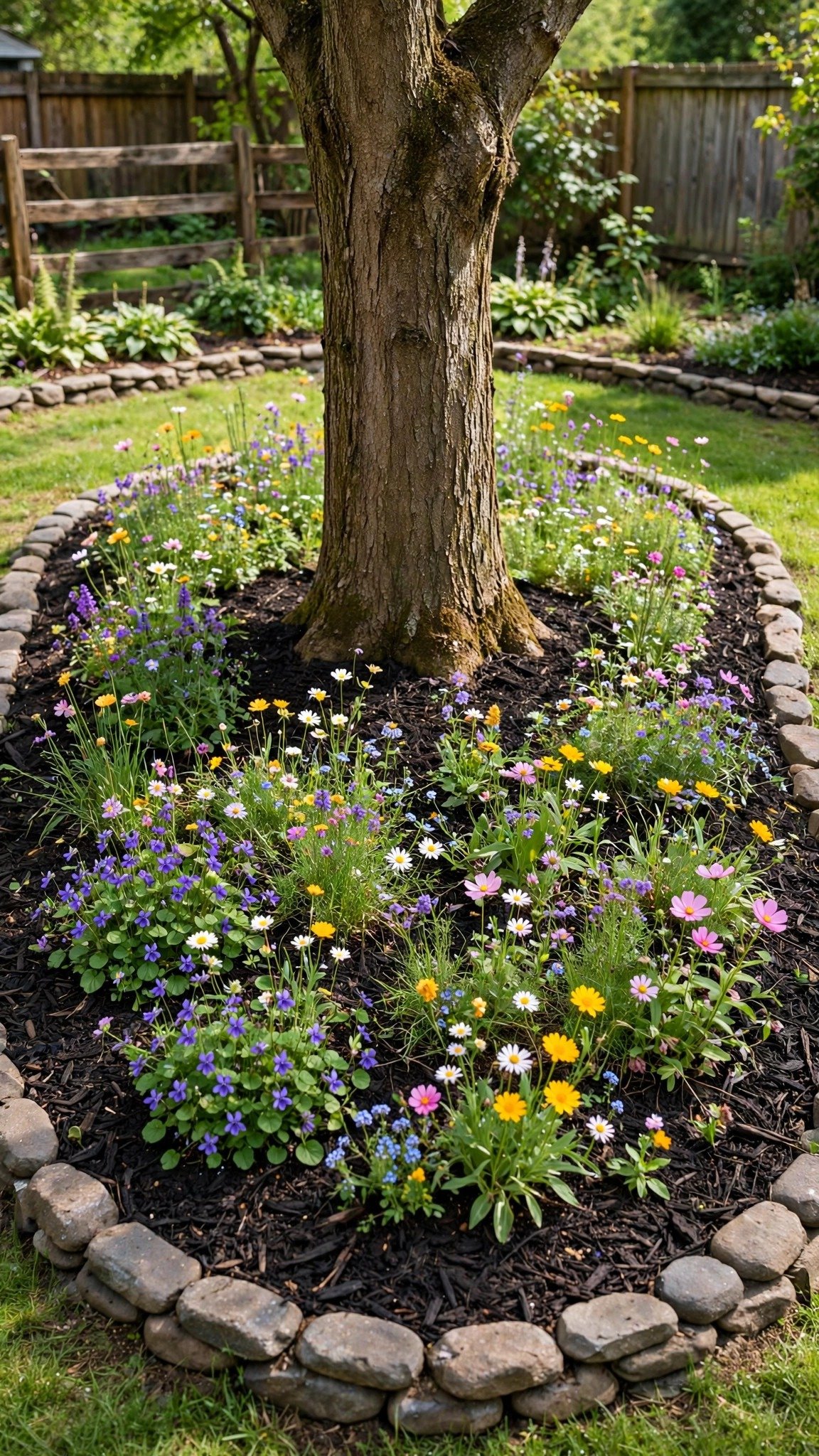
If you prefer a relaxed garden that feels connected to nature, a wildflower bed is a beautiful option. This design combines natural mulch, informal planting, and regional wildflowers to create a softer landscape around the tree. It works especially well in larger backyards, where a slightly untamed appearance can complement the surrounding lawn and garden.
Choose a regional wildflower seed mix that matches your local climate, soil, and available sunlight. Many wildflowers need more sun than the area directly beneath a dense tree canopy provides, so the brighter outer edge of the tree bed may be a better planting location. Prepare the planting area carefully without disturbing major roots, then follow the seed supplier’s instructions for sowing depth and watering.
A simple stone border or natural edging can keep the design looking intentional rather than messy. Allow suitable flowers to produce seed heads at the end of the season, as they can add winter interest and provide food for birds. The result is a garden that changes naturally throughout the year.
What you need: wildflower seed mix, mulch, garden rake, edging stones, compost.
7. Modern Minimalist Tree Bed
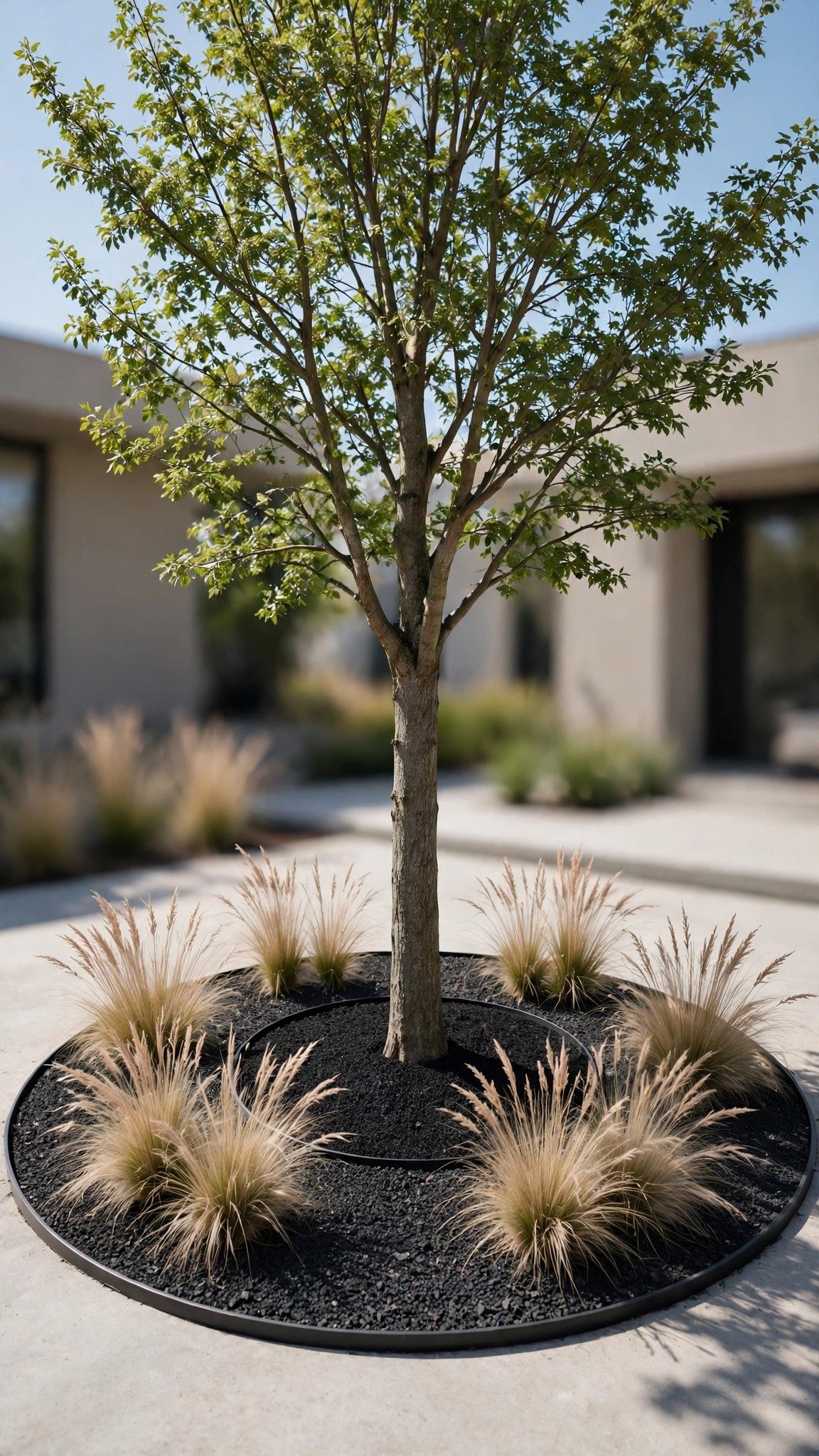
Minimalist flower beds focus on clean lines, restrained planting, and strong visual contrast. This approach works extremely well with modern homes, where traditional flower beds can feel overly busy. Repetition matters here — too many plant varieties quickly ruin the sleek appearance.
Create a simple circular or square border around the tree. A square border suits a modern home especially well, since its straight lines echo the architecture. Plant repeating groups of ornamental grasses or low shrubs instead of mixed flowers, then finish with dark mulch or gravel for contrast. Use odd-numbered plant groupings for a cleaner, more balanced modern layout. A single sculptural plant, like a tall grass or a small Japanese maple, can anchor the whole bed without breaking the minimalist feel.
What you need: black mulch or gravel, ornamental grasses, simple edging, neutral-toned plants, landscape fabric.
8. Seasonal Bloom Rotation Bed
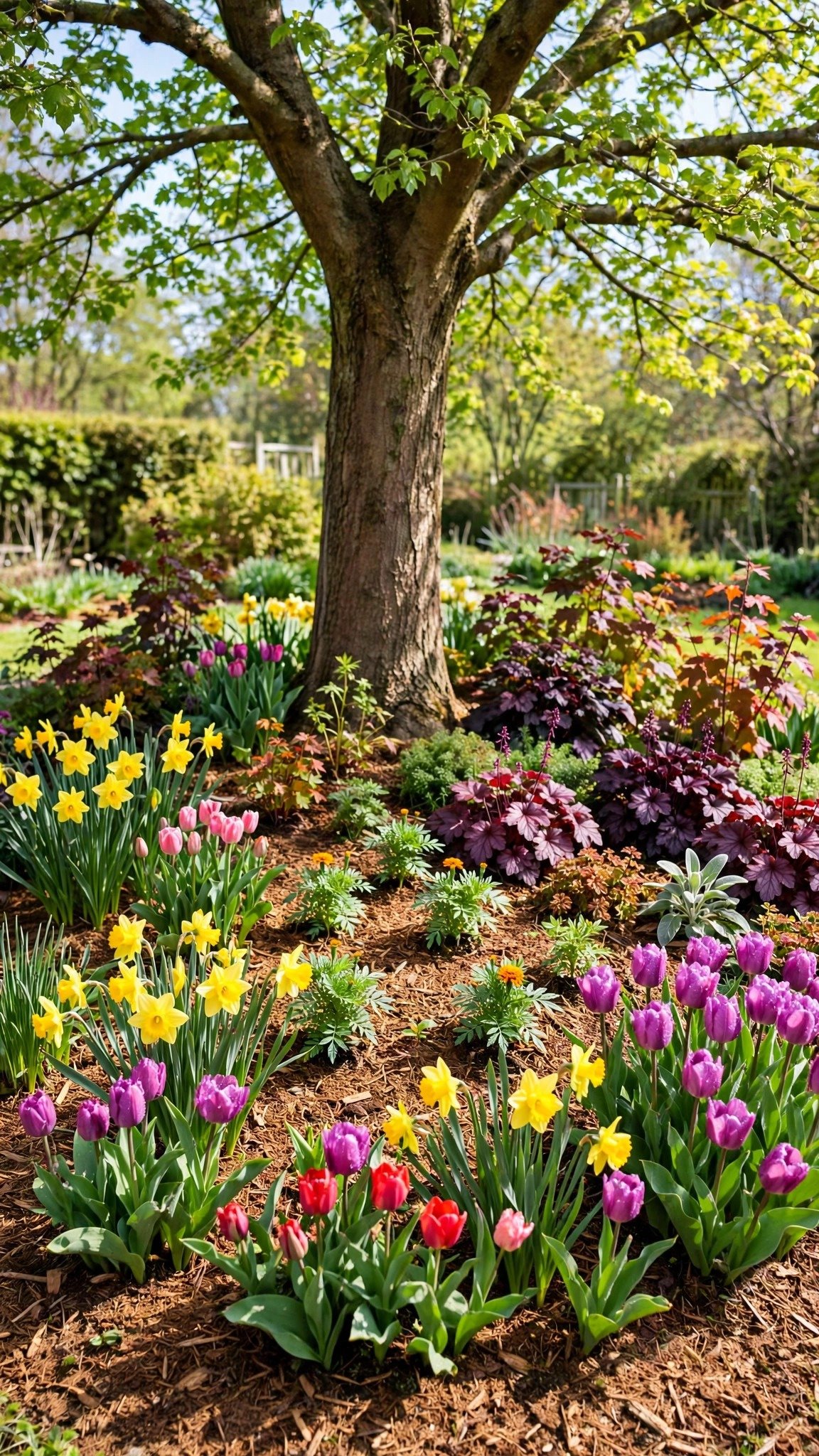
A seasonal flower bed keeps the area around the tree changing through the year instead of peaking for only a few weeks. Combining spring bulbs, summer flowers, and autumn foliage plants creates long-lasting interest without a complete redesign every season.
Layer bulbs beneath seasonal flowers so different plants emerge at different times. This layering means something is always coming into bloom, even in the quiet weeks of early spring. Remove fading blooms promptly to keep the bed looking fresh, and refresh the mulch yearly for a polished finish. Plant bulbs in irregular clusters instead of straight rows for a more natural appearance. Mark where you planted the bulbs with small sticks so you never dig into them by accident in spring.
What you need: spring bulbs, summer annuals, fall foliage plants, mulch, hand shovel.
9. Bench-Centered Tree Flower Bed
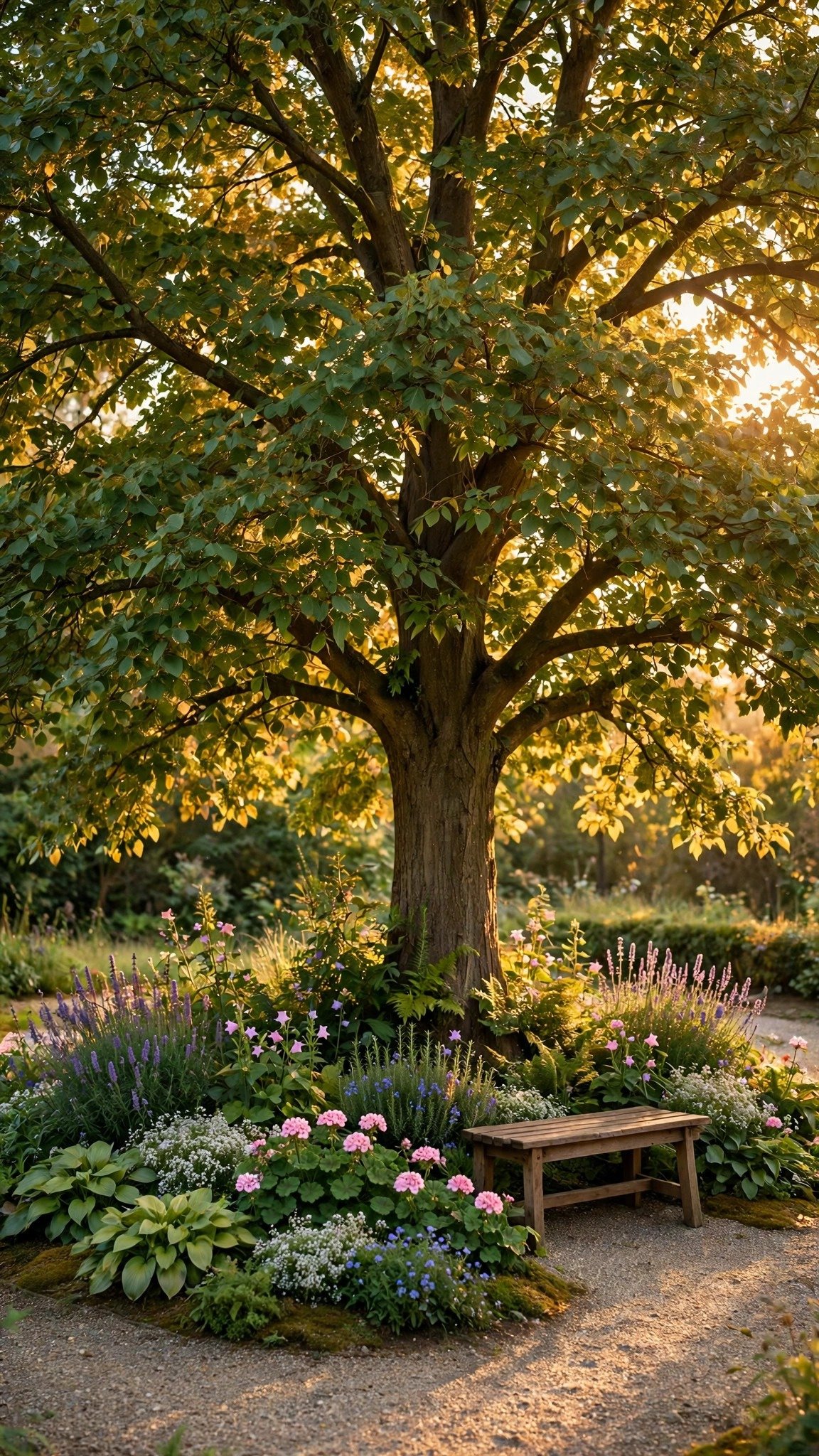
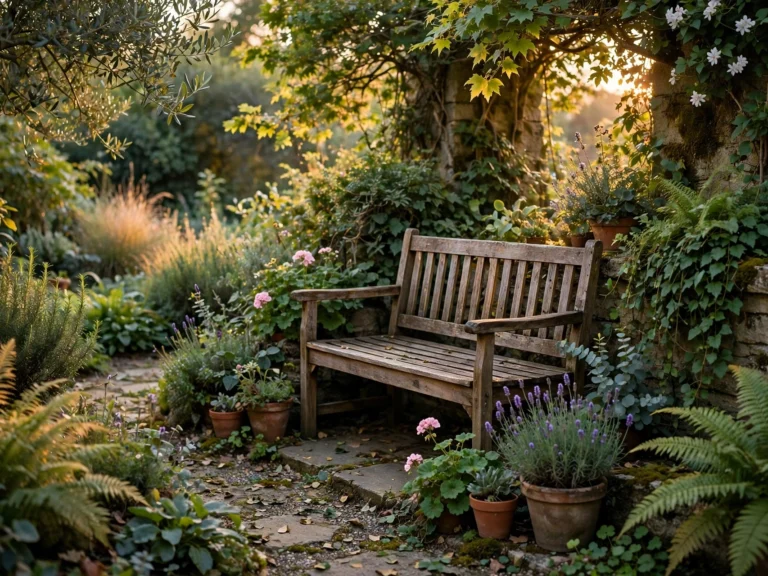
Adding a small bench beneath a tree turns the flower bed into a usable garden retreat instead of purely decorative landscaping. This idea works best beneath large shade trees that naturally create cooler seating areas during warm months. On a hot afternoon, the shade under a big tree can feel ten degrees cooler than the open lawn.
Place the bench slightly off-centre rather than directly against the trunk. Surround it with layered plantings while leaving enough open space for easy movement, and use gravel or pavers beneath the seating area to reduce mud. Choose flowers with a subtle fragrance near seating areas for a more immersive garden experience. A small side table beside the bench holds a book or a cup of tea and makes the spot feel like a real retreat.
What you need: garden bench, shade plants, pavers or gravel, mulch, decorative edging.
10. Tiered Flower Bed Design
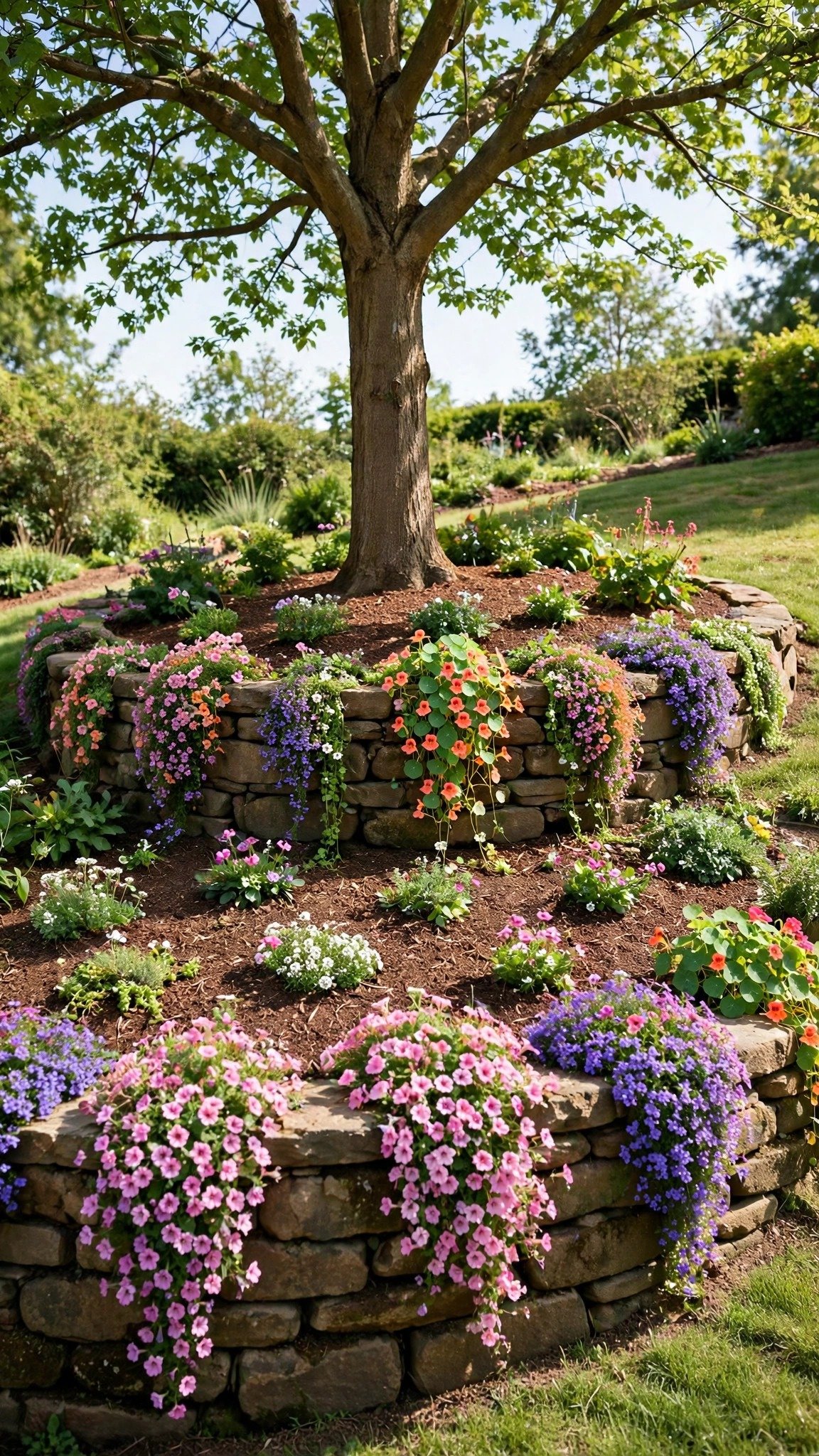
Tiered beds add dimension around trees, especially in sloped yards where flat landscaping feels awkward. Gradual levels create visual depth while helping control soil erosion. Keeping the tiers low and wide prevents the area from looking bulky or artificial.
Build shallow levels around the tree using retaining stones. Plant trailing flowers along the edges so they soften the structure naturally, and mulch each layer evenly to hold moisture in place. Use cascading plants sparingly — too wide trailing varieties can make the tiers look cluttered instead of elegant. One trailing plant per tier is usually enough to soften the stone without hiding it.
- What you need: retaining stones, soil, cascading flowers, mulch, garden level.
11. Tropical-Inspired Tree Bed

Tropical-style flower beds bring dramatic texture and bold foliage into the landscape. Even in cooler climates, combining large-leaf plants with vibrant flowers creates a lush, vacation-like atmosphere around ordinary trees.
Plant larger foliage plants first to establish structure, then fill the empty spaces with colourful annuals for contrast. Water consistently, since tropical-style plants often need more moisture than traditional flower beds. Limit the colour palette to two or three bold shades to keep the tropical design sophisticated rather than chaotic. Dark mulch makes the bright flowers and big leaves stand out even more in the midday sun.
What you need: elephant ears or cannas, bright annual flowers, dark mulch, compost, watering hose.
12. Fairy Garden Tree Bed

A whimsical fairy garden can turn the base of a tree into a magical focal point for families and children. The best versions stay subtle and blend naturally into the landscape rather than looking crowded with accessories.
Create tiny pathways with pebbles and place miniature accents carefully throughout the bed. Add moss and compact flowers to soften the design, and keep decorations weather-resistant so they last outdoors. Use only a few decorative pieces — too many miniatures can make the flower bed feel cluttered very quickly. Change one small piece each season, and the fairy garden will feel fresh without ever looking crowded.
What you need: miniature garden decor, moss, small flowers, pebbles, mulch.
13. Low-Maintenance Evergreen Bed
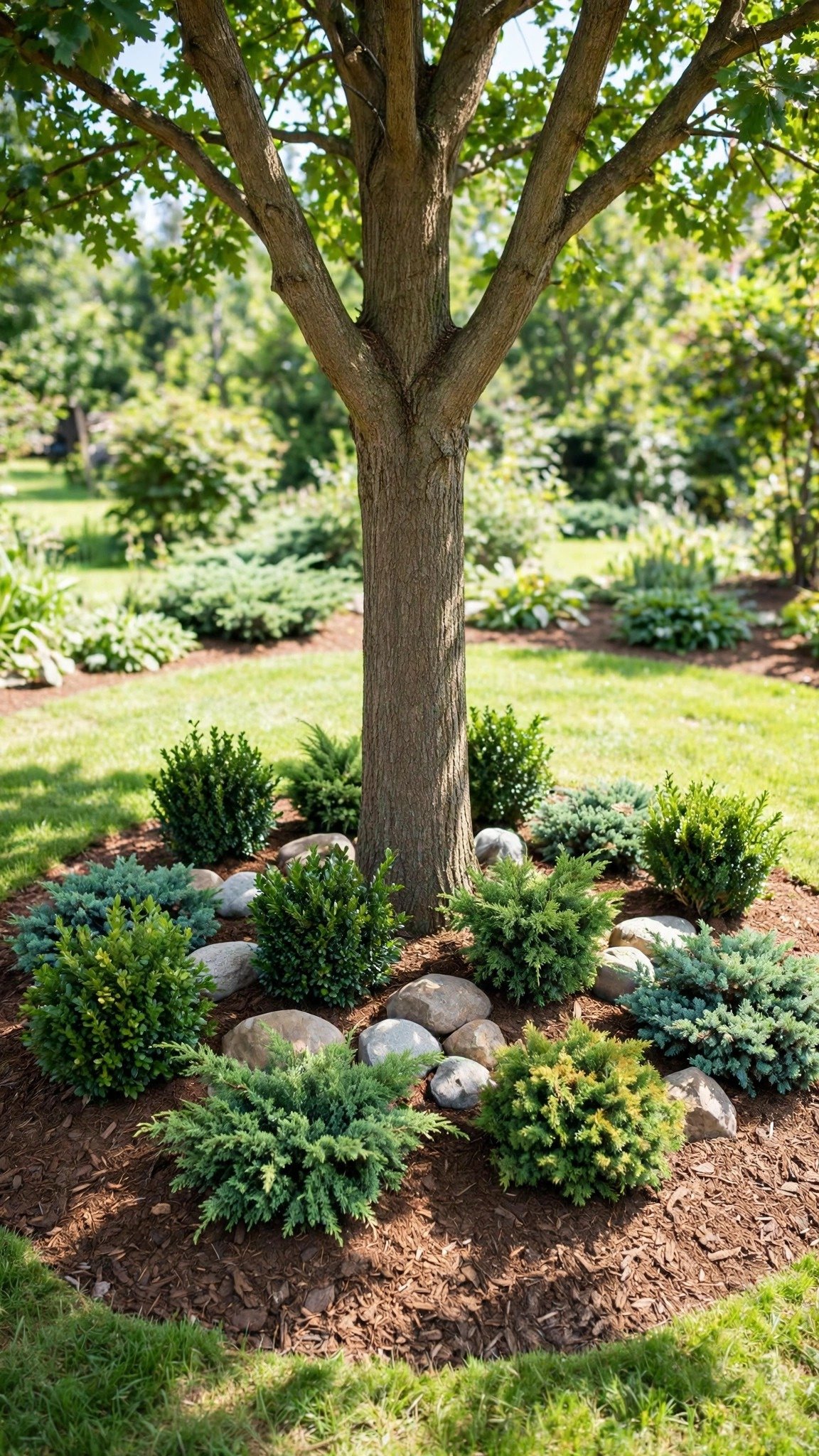
Evergreen-focused flower beds provide structure and colour throughout the entire year with far less upkeep than seasonal blooms. This design is perfect for homeowners who want a polished landscape without constant replanting and watering.
Space evergreen plants carefully to allow future growth, and add rocks between shrubs for texture and reduced maintenance. Refresh the mulch once a year to keep the bed looking clean. Mix different shades of green to prevent the bed from appearing flat or overly uniform. A few variegated leaves or a single flowering evergreen adds just enough variety to keep the bed interesting all year.
What you need: small evergreen shrubs, mulch, decorative rocks, soil conditioner, pruning shears.
Which Tree Flower Bed Is Right for Your Yard?
The best tree flower bed depends on your shade, your tree, and how much care you want to give it. A large front yard suits a rustic stone circle or a raised brick bed that looks polished from the street. A shady backyard suits a woodland shade garden or an evergreen bed. A small yard suits a colour-themed bed or a modern minimalist design that keeps things calm. A sloped yard suits a tiered bed that controls erosion while looking beautiful.
Shade matters more than style. Deep shade under a dense canopy needs ferns, hostas, and evergreens. Dappled light under a lighter canopy suits cottage flowers, wildflowers, and seasonal blooms. Sunny edges around the outer ring can hold brighter flowers, while the centre near the trunk should stay simple with mulch and groundcover. Getting the shade right matters more than the style — the prettiest bed will fail if its plants cannot live under your tree.
- Large front yard: Rustic Stone Circle Flower Bed or Raised Brick Flower Bed — polished and structured.
- Deep shade: Woodland Shade Garden or Low-Maintenance Evergreen Bed — plants made for shade.
- Small yard: Color-Themed Flower Bed or Modern Minimalist Tree Bed — calm and uncluttered.
- Relaxed backyard: Natural Mulch and Wildflower Bed or Cottage Garden Tree Ring — soft and natural.
- Sloped yard: Tiered Flower Bed Design — controls erosion and adds depth.
- Family garden: Fairy Garden Tree Bed or Bench-Centered Tree Flower Bed — fun and usable.
- Lowest maintenance: Low-Maintenance Evergreen Bed — green all year with little work.
Plan Your Tree Flower Bed in 4 Simple Steps
- Look at your tree and shade. Check how much light reaches the ground and how wide the canopy is. Deep shade needs ferns and hostas; dappled light suits cottage flowers and wildflowers.
- Choose the bed style. Match the style to your yard — a stone circle for a front yard, a woodland bed for deep shade, a tiered bed for a slope.
- Build the edge first. Lay the stones, bricks, or edging in place and keep the bed shallow. Never pile soil high against the trunk, and leave a gap around the bark.
- Plant, mulch, and water. Plant in small clusters, spread mulch evenly while keeping it away from the trunk, and water deeply during the first season until plants establish. New plants under a tree need more water than you expect, since the tree roots drink first.
Take photos as you build. They help you see which corner needs more colour and which area already feels complete.
FAQs
What flowers grow best around trees?
Shade-tolerant plants like hostas, ferns, impatiens, begonias, and woodland flowers usually perform best. Tree roots compete heavily for water and nutrients, so choose plants that tolerate dry shade and shallow soil, and avoid sun-loving flowers that will struggle under a canopy.
Is it safe to build raised flower beds around trees?
Yes, but only if the soil depth stays shallow. Deep layers of added soil can damage roots and trap moisture against the trunk. Keep the raised section low, use only a few inches of soil, and leave a gap around the bark so the tree can breathe.
How do I stop weeds in tree flower beds?
A thick layer of mulch is the most effective solution. It suppresses weeds while also helping retain moisture and improve soil quality. Spread mulch evenly across the bed, keep it away from the trunk, and refresh it once a year to keep weeds down.
Should mulch touch the tree trunk?
No. Always leave a small gap around the trunk to prevent rot, pests, and moisture buildup. Mulch piled against bark — often called a mulch volcano — slowly damages the tree, so pull the mulch back a few inches from the trunk.
What is the easiest tree flower bed to maintain?
Evergreen beds and woodland-style gardens typically require the least maintenance. They rely more on foliage and natural layering than on constant blooming flowers, so they stay attractive with only occasional watering and a yearly mulch refresh, which makes them ideal for busy homeowners.
Can flowers hurt tree roots?
Aggressive plants with deep roots can compete with the tree for water and nutrients, and digging deep holes can cut surface roots. Shallow-rooted flowers are usually the safest option, and planting in small clusters with a hand trowel keeps root damage to a minimum.
How often should tree flower beds be watered?
Newly planted beds need regular watering during the first season, since tree roots take water first. Once established, most shaded beds require less frequent watering, unless weather becomes extremely hot or dry, when a deep weekly soak keeps plants healthy.
Conclusion
Tree flower beds can completely change the feeling of a yard, turning overlooked spaces into some of the most beautiful parts of the landscape. Whether you prefer rustic stone borders, colourful cottage gardens, or modern minimalist designs, the best results come from working with the tree naturally instead of forcing complicated layouts.
Start with one simple idea, give plants time to establish, and adjust as the seasons change. The first year is about settling in, and by the second year the bed will look like it has always been there. Gardening always improves through small experiments and personal touches. Try the ideas that fit your space best, and enjoy creating a flower bed that makes your tree feel truly special.