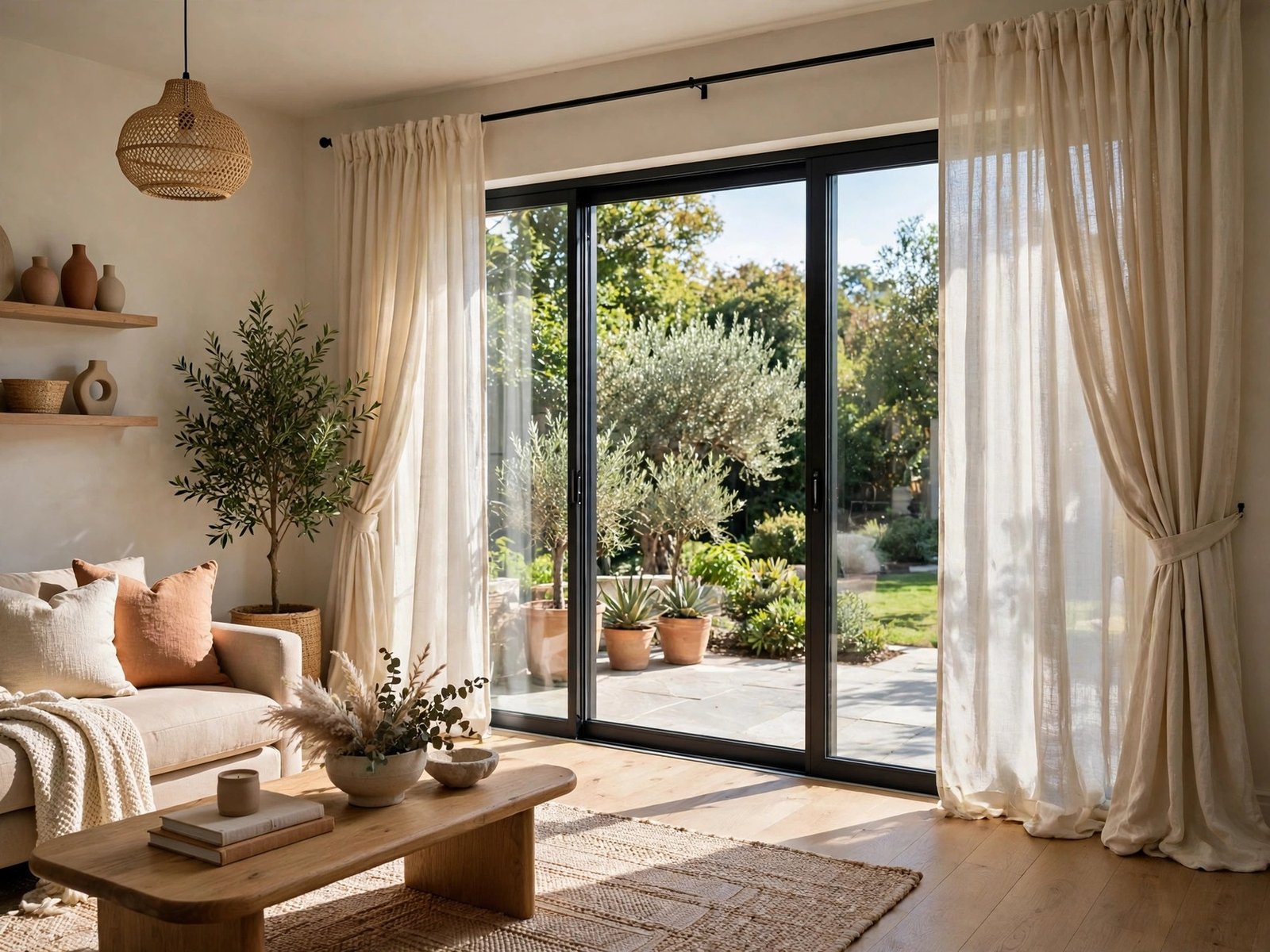
13 Sliding Glass Patio Door Curtain Ideas for a Modern, Elegant Home
Sliding glass patio doors bring beautiful natural light into a home, but decorating them can feel tricky. Standard curtain setups often look awkward, block the doorway, or become frustrating to open and close every day. The best patio door curtains balance style, privacy, light control, and practicality without making the room feel heavy.
Sliding glass patio door curtain ideas work in real homes with real daily use. Whether your space is modern, cozy, minimalist, coastal, or traditional, the right curtains make the room feel polished and intentional. This guide covers 13 sliding glass patio door curtain ideas, from ceiling-to-floor linen to ripple folds and bamboo, plus how to choose the right one, plan it in four simple steps, and avoid the mistakes that make patio door curtains a daily annoyance.
Quick Answer: Best Sliding Glass Patio Door Curtain Idea at a Glance
If you want the easiest start, hang ceiling-to-floor linen drapes on an extra-wide rod. They soften the hard lines of the glass, keep the room airy, and work with almost any furniture style. For bedrooms, layer sheers behind blackout curtains so you get privacy and light control in one setup. For a modern home, ripple fold curtains on a track slide the smoothest and look the cleanest.
The most important rule is to hang the rod high and wide. Mount it 6 to 10 inches above the door frame and extend it at least 12 inches past each side, so the curtains stack neatly beside the glass instead of covering it. Buy panels at least twice the width of the door for proper fullness — skimpy curtains are the most common reason patio doors look unfinished. Get the measurements right first, and every style on this list will look better.
1. Ceiling-to-Floor Linen Drapes
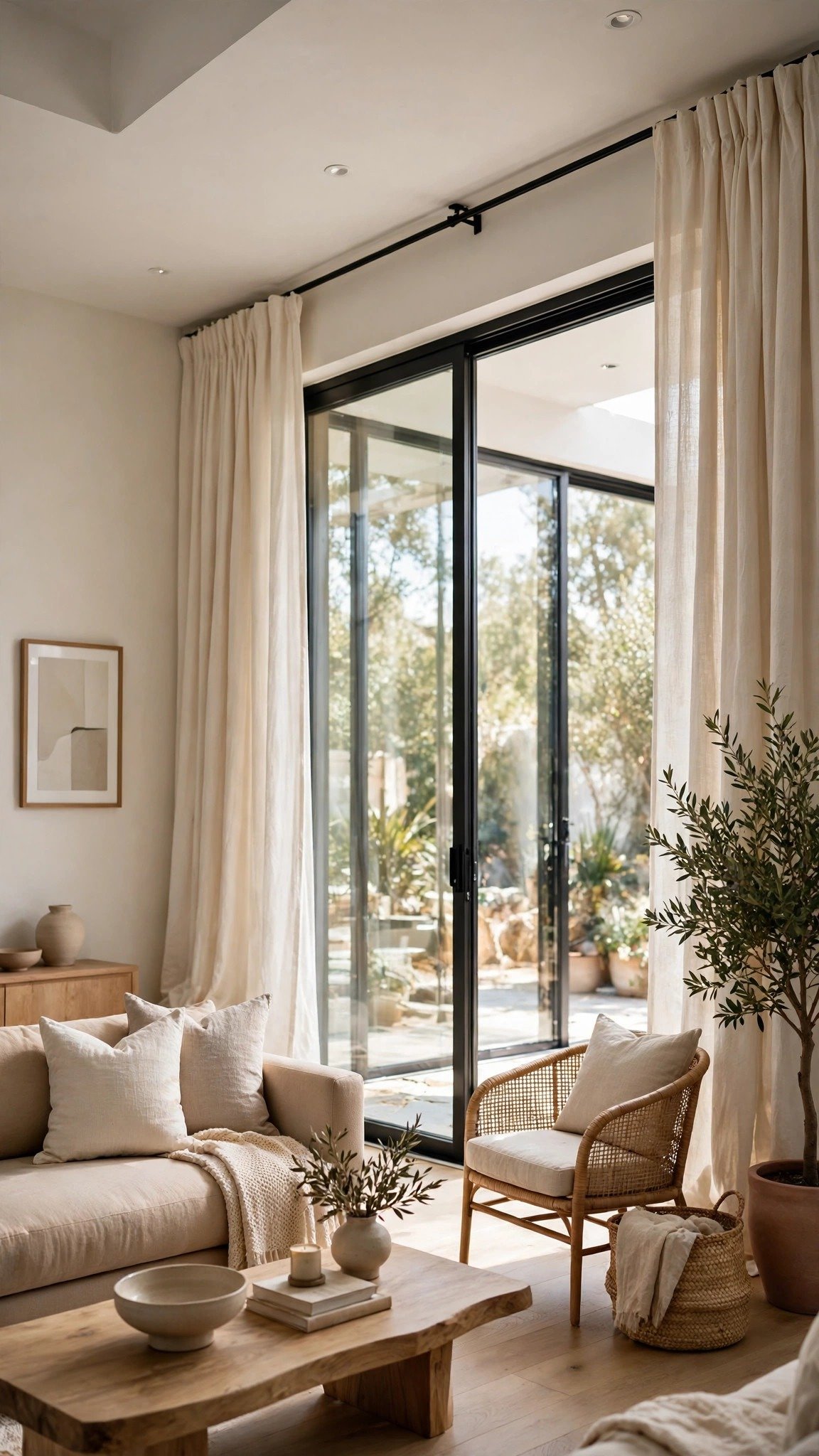
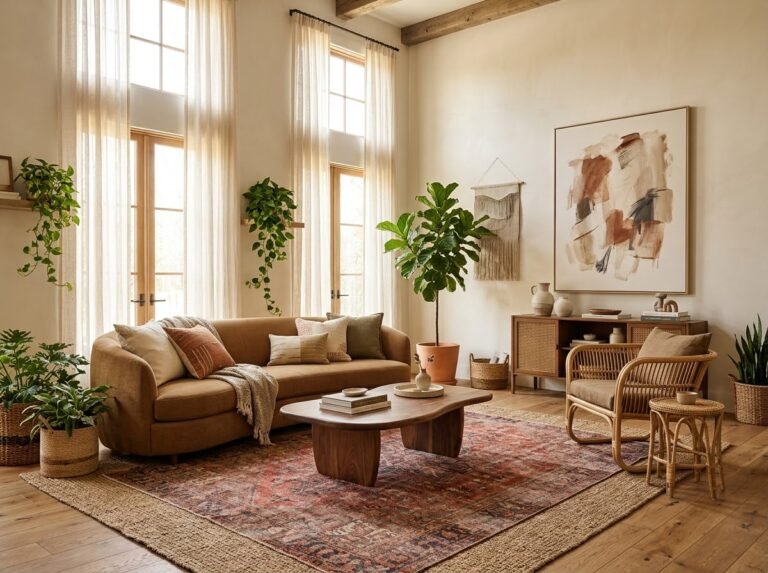
Long linen curtains instantly soften the hard lines of sliding glass doors while keeping the space airy and relaxed. The gentle folds of linen also catch the light in a way that makes the whole wall feel softer. This works especially well in living rooms where the patio doors are the main light source. The natural texture of linen adds warmth without making the room feel heavy.
Install the rod 6 to 10 inches above the door frame and extend it at least 12 inches past each side. Hang floor-length linen panels and let them lightly graze the floor for a tailored look, then keep tiebacks nearby for easy daytime opening. Choose warm white, oatmeal, or soft greige linen for a timeless look that works with almost any furniture style. A blackout lining behind the linen gives you the same airy look by day and full privacy at night.
2. Layered Sheers and Blackout Curtains
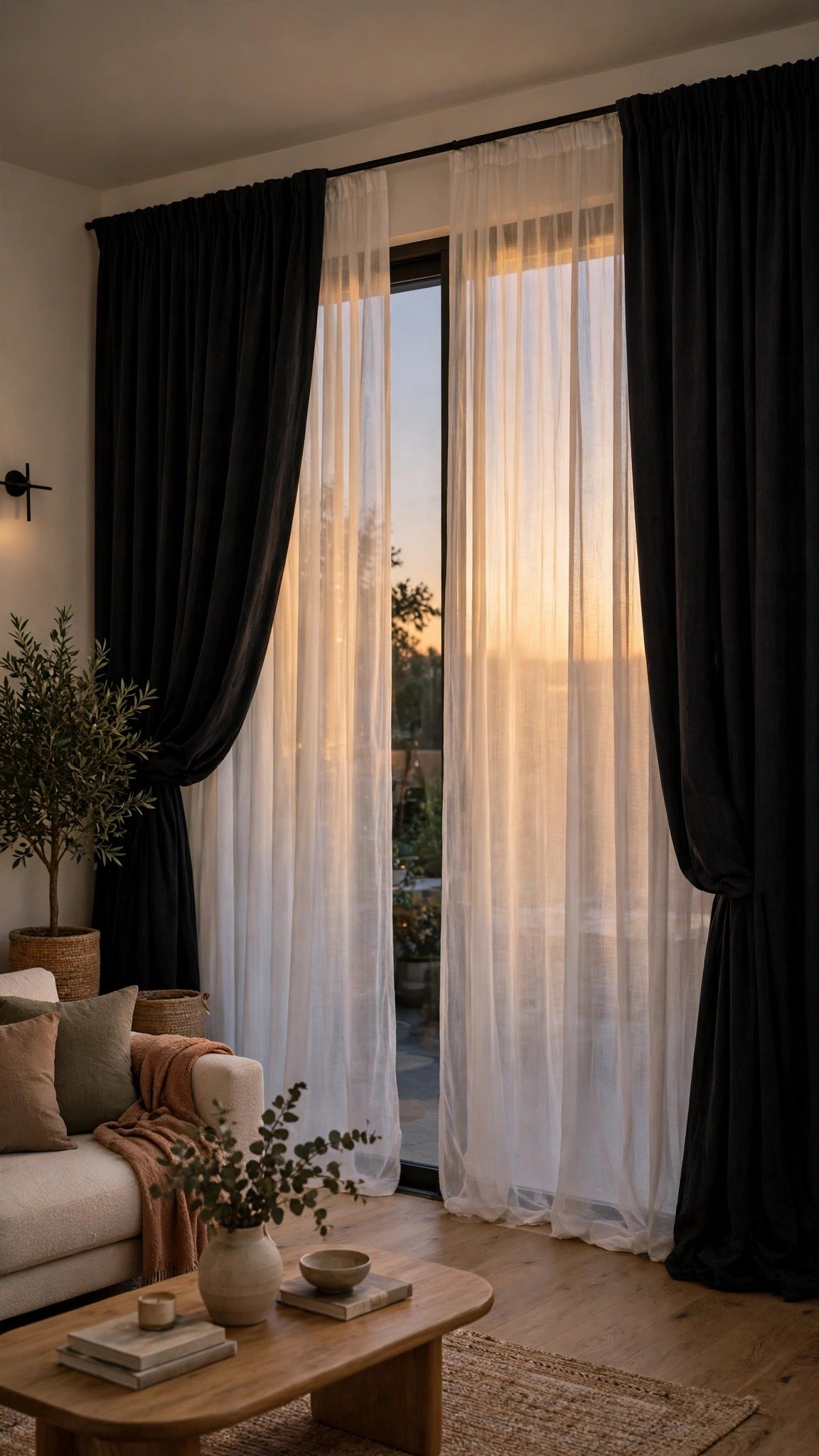
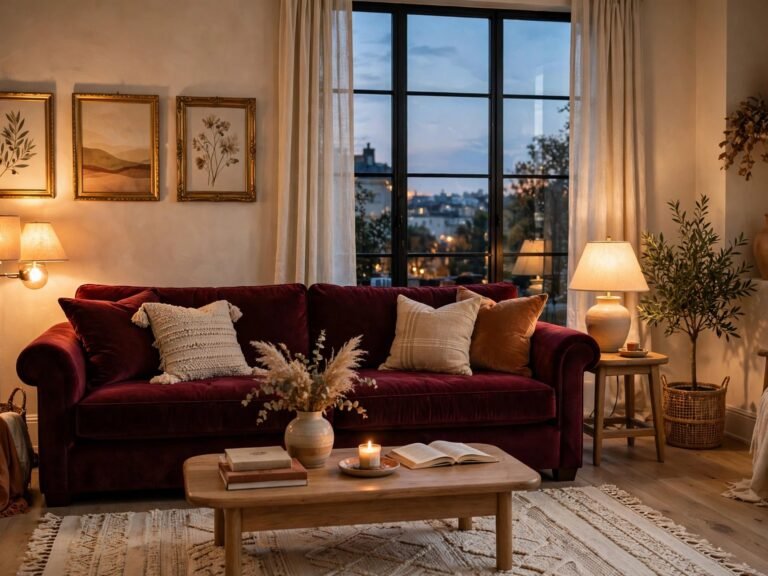
Layering sheer curtains behind heavier drapes gives patio doors flexibility through the day. You can close the sheers for privacy, open everything for full light, or close the blackout panels at night. Sheers keep privacy while letting light filter through, and blackout panels help with heat control and evening privacy. This setup feels luxurious without expensive materials and works particularly well in bedrooms or open-concept homes.
Mount a double rod system above the sliding doors. Place the sheers closest to the glass and the heavier curtains on the outer rod, keeping the blackout panels wide enough to fully close without gaps. Mix textures instead of colours — neutral layered fabrics create a more expensive designer look than bold contrasting patterns. A linen sheer over a cotton blackout panel is a combination that works in almost any home.
3. Ripple Fold Curtains for a Modern Look
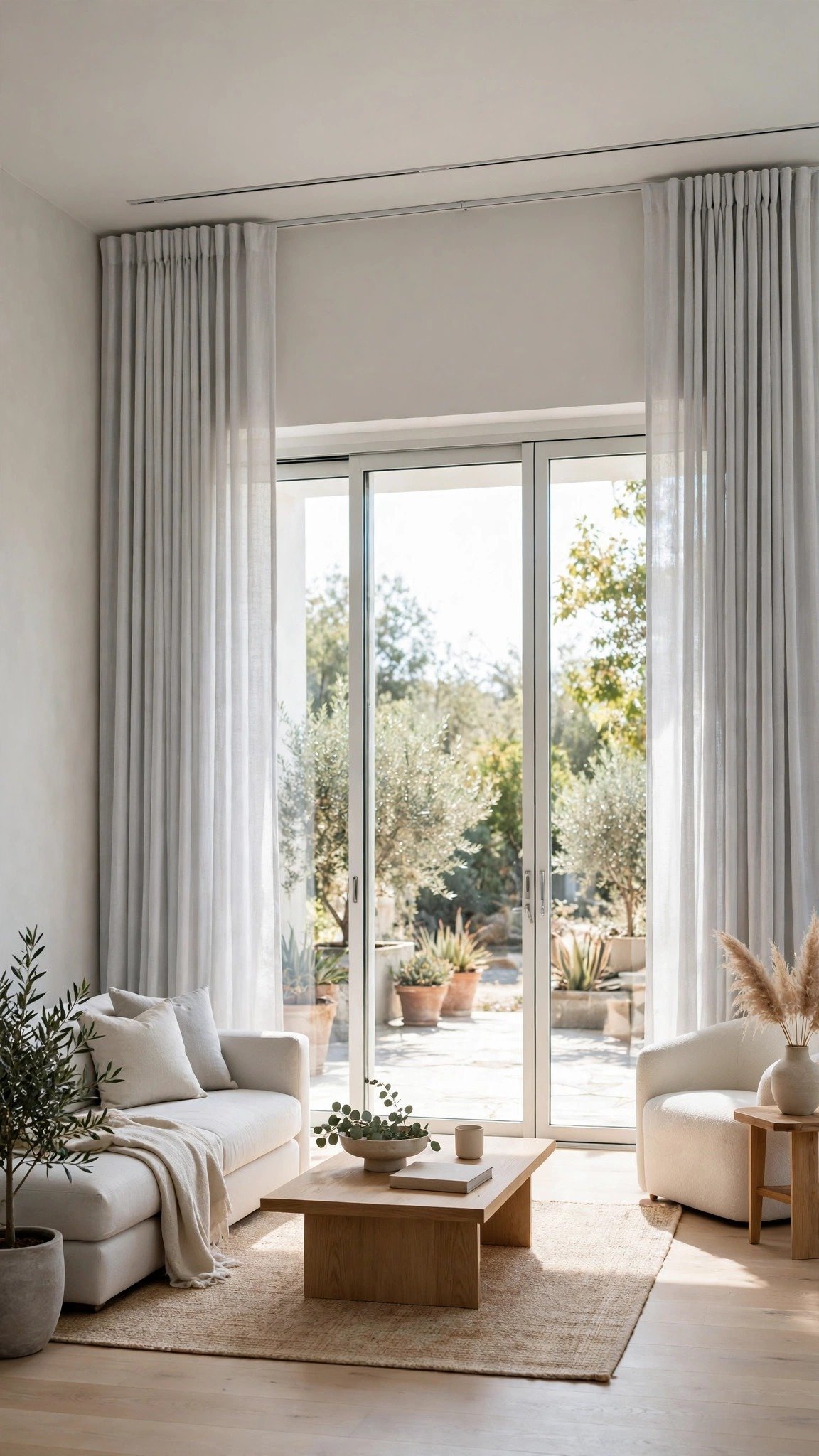
Ripple fold curtains create smooth, even waves that slide effortlessly across wide patio doors. The even spacing of the folds is what makes them look so calm and architectural, even on a very wide wall. They look clean, architectural, and uncluttered, making them ideal for modern interiors. Unlike traditional pleated curtains, they keep a streamlined appearance even when partly open.
Install a track system rather than a standard rod for smoother movement. Measure carefully so the fabric stacks compactly at the sides without covering too much glass. Choose solid fabrics in soft matte finishes to highlight the elegant folds without overwhelming the room. A ceiling-mounted track makes the curtains look like part of the architecture, not an addition to it.
4. Bamboo Curtains for Natural Texture
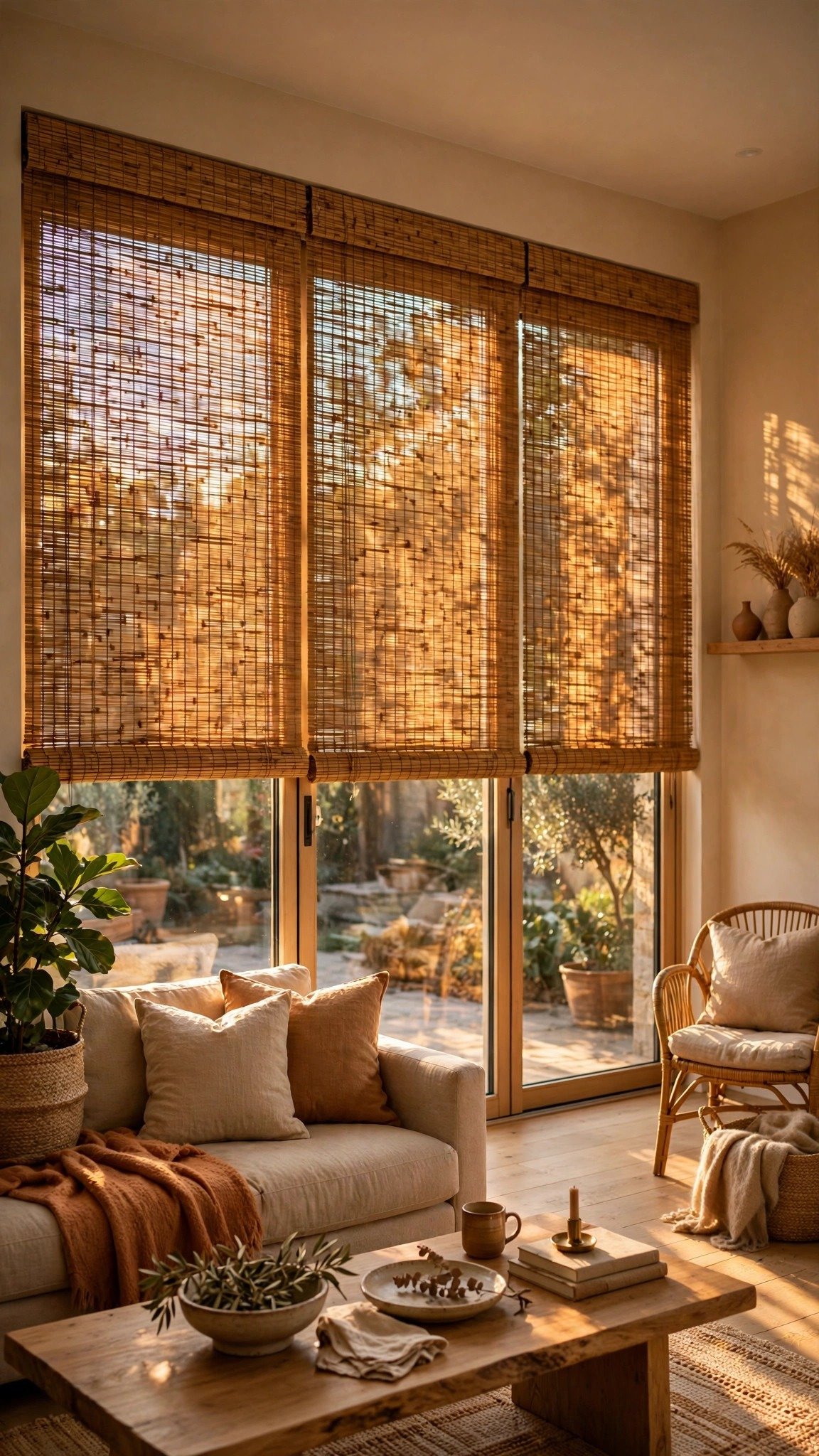
Bamboo curtains add warmth and texture that many fabric curtains lack. The natural slats filter the afternoon sun into soft stripes of light that move slowly across the floor. They work especially well in coastal, bohemian, or organic modern homes. Bamboo also filters sunlight beautifully during the afternoon, creating a soft glow instead of harsh glare.
Install bamboo panels directly above the sliding door frame. For a softer appearance, layer lightweight fabric curtains on each side to frame the natural texture. Keep the surrounding decor simple — bamboo already provides strong visual texture, so avoid busy rugs or patterned furniture nearby. A woven rug in a plain tone picks up the same natural texture without competing with the curtains.
5. Neutral Velvet Drapes for a Cozy Feel
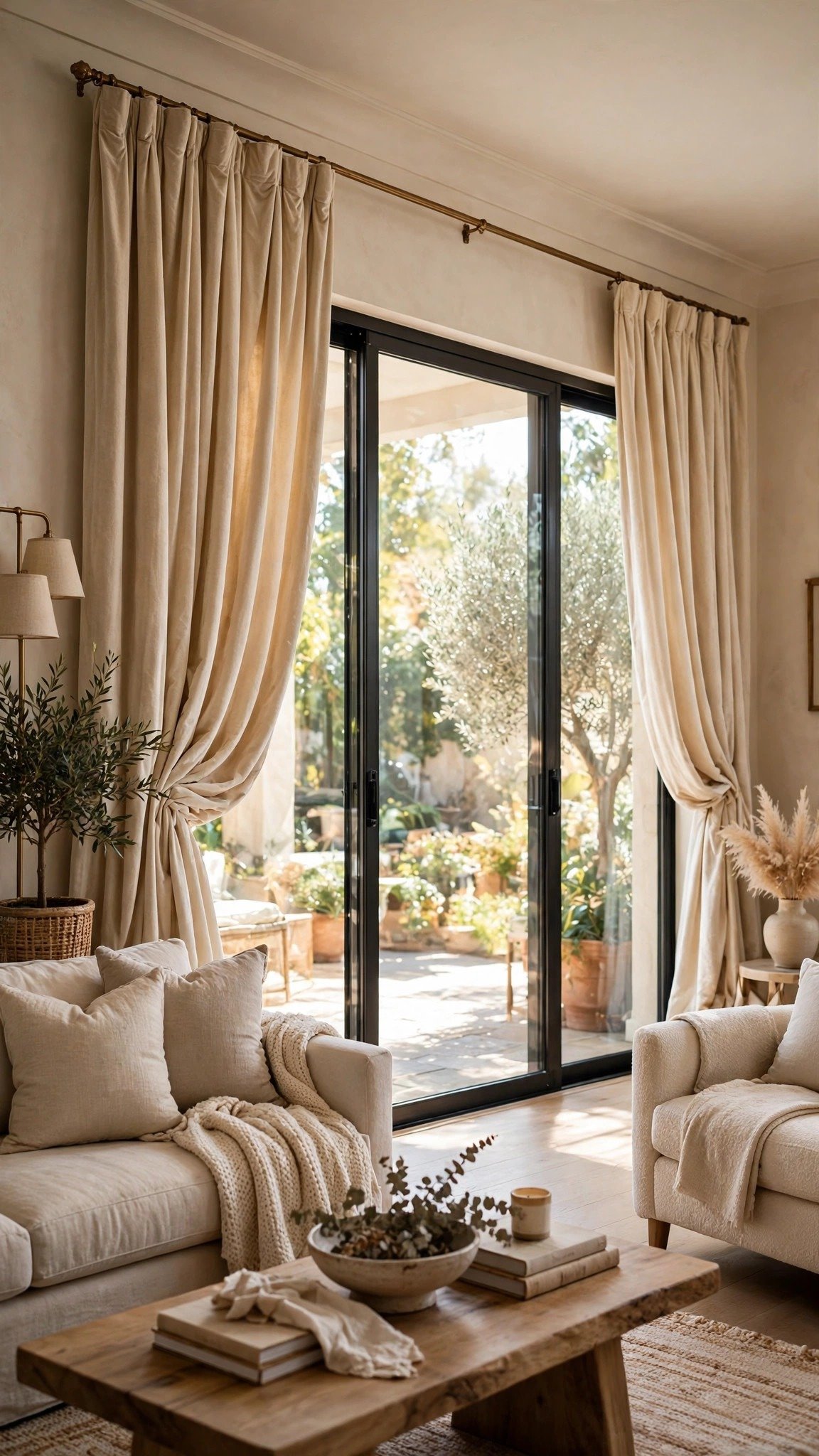
Velvet curtains can make large sliding doors feel intentional and luxurious rather than cold or oversized. The soft pile of the fabric catches the light differently as you move around the room. They also help reduce drafts and improve insulation during cooler months. Neutral velvet adds depth without darkening the room too much.
Use extra-wide panels to create full folds even when the curtains are closed. Steam the velvet after hanging so the fabric drapes naturally and the pile looks even. Stick with earthy neutrals like taupe, olive, caramel, or charcoal instead of bright jewel tones for a more current look. A velvet curtain in a deep neutral also hides dust and marks far better than a pale fabric.
6. Patterned Curtains as a Focal Point

If your room feels visually flat, patterned patio door curtains can become the main design feature. A wide glass wall is the largest surface in the room, so the pattern there sets the tone for everything else. Large-scale patterns work best because small prints often look cluttered across wide glass doors. This idea works especially well in neutral rooms that need personality.
Choose one dominant pattern colour that already appears somewhere else in the room. Install the curtains high and wide to prevent the pattern from overwhelming the doorway. Balance bold curtains with simpler furniture and solid-coloured throw pillows to keep the room feeling cohesive. One patterned cushion that repeats the curtain print is enough to tie the whole room together.
7. Soft Gray Curtains for Minimalist Spaces
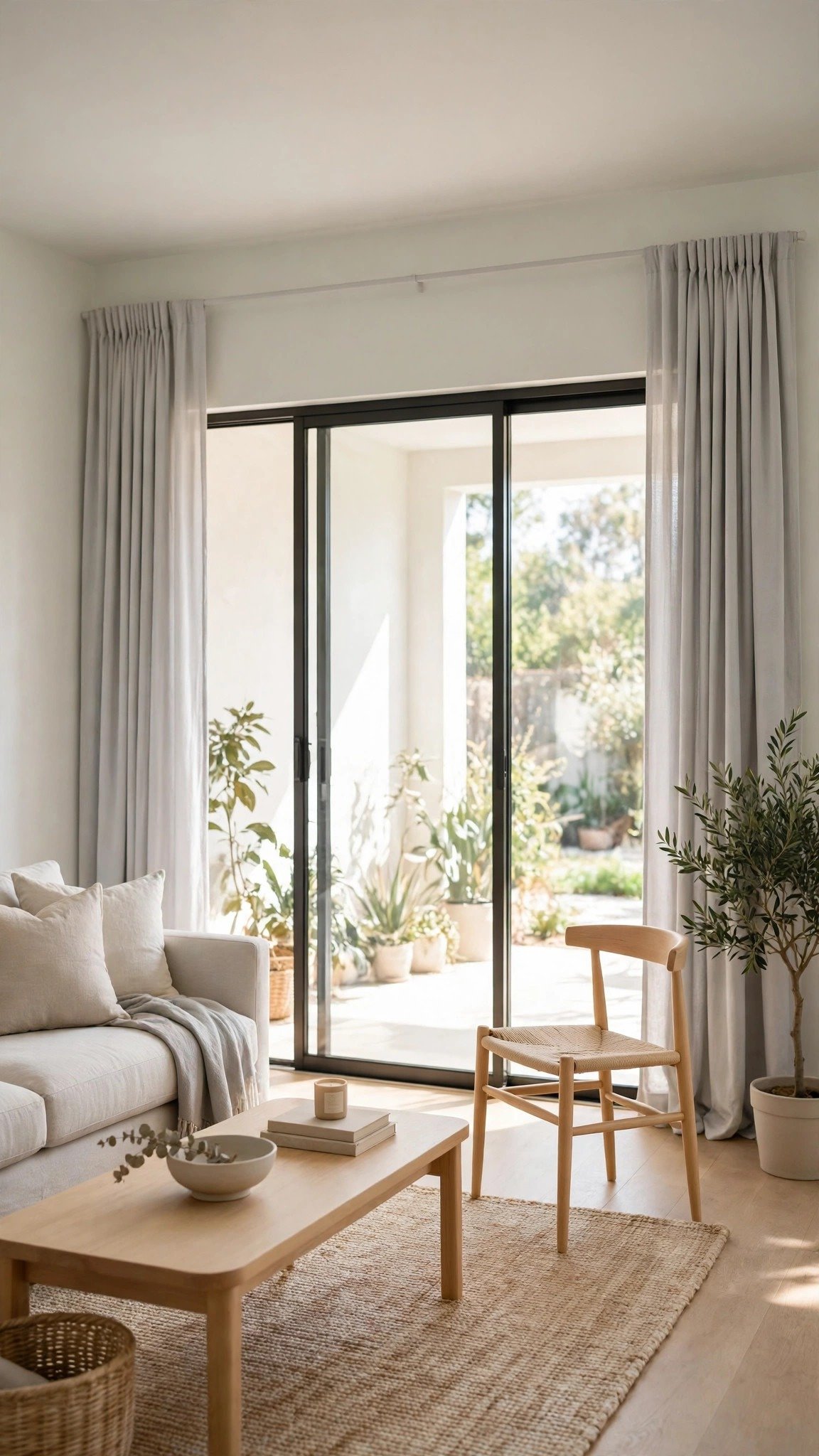
Soft gray curtains create a clean, calming backdrop that works beautifully with minimalist interiors. Gray is one of the few colours that looks good with both warm wood and cool metal furniture. Gray tones reduce visual contrast around large glass doors and help the space feel more connected and peaceful. The effect is subtle but very polished.
Choose medium-weight fabric that hangs smoothly without stiffness. Install the rod several inches wider than the sliding door for a balanced appearance. Use different shades of gray throughout the room to create depth without relying on bold accent colours. A light gray curtain with a charcoal sofa and a silver lamp creates depth with just one colour family.
8. Pinch Pleat Curtains for a Classic Look
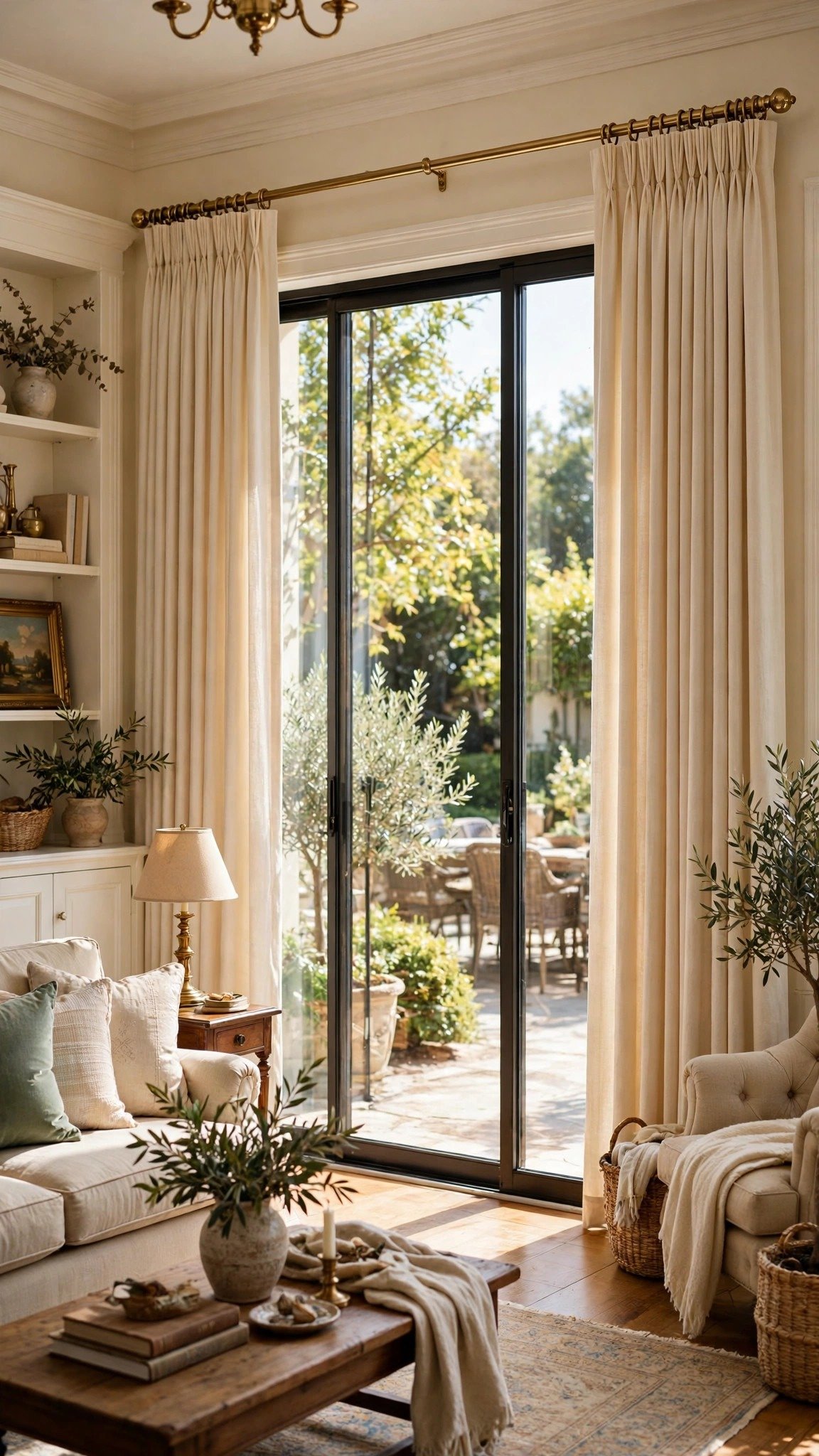
Pinch pleat curtains bring structure and elegance to patio doors, especially in traditional or transitional homes. The neat, regular pleats hold their shape for years, even with daily opening and closing. The tailored pleats keep the fabric evenly distributed and prevent the curtains from looking messy after repeated daily use.
Hang the curtains so they just touch the floor. Use rings or hooks that glide smoothly to make opening the patio door easier during everyday use. Choose understated hardware — simple rods let the tailored pleats remain the visual focus. Brushed nickel or matte black hardware suits pinch pleats best, since shiny brass can distract from the tailored lines.
9. Coastal White Curtains With Blue Accents

White curtains paired with subtle blue accents create a breezy coastal atmosphere around patio doors. This combination reflects natural light beautifully and keeps the room feeling fresh year-round rather than overly themed.
Use lightweight white curtains with soft movement. Add blue accents through trim, tiebacks, or nearby accessories instead of using heavily patterned coastal prints. Natural wood furniture and woven textures help coastal curtains feel sophisticated instead of overly beachy. A driftwood mirror or a rattan basket nearby adds the coastal feel without a single seashell in sight.
10. Two-Tone Curtains for Added Dimension

Two-tone curtains create visual interest without requiring loud patterns. This style works especially well on tall patio doors because the colour blocking naturally emphasizes ceiling height while adding subtle contrast.
Install the darker portion of the curtain near the bottom to ground the room visually. Keep the upper section lighter to maintain an open feeling around the glass. Choose tones from the same colour family for a softer designer-inspired look. A pale gray top with a charcoal bottom, for example, feels calm and modern rather than stark.
11. Extra-Wide Curtains for Full Coverage

Many patio door curtains look skimpy because the panels are too narrow. Extra-wide curtains solve this problem by creating fuller folds and proper coverage when closed. The room immediately feels more balanced and intentional.
Measure the full width of the sliding doors and multiply by at least two for proper fullness. Use centre supports for long rods to prevent sagging over time. Even inexpensive curtains look more luxurious when they have generous fullness and soft folds. Fullness is the cheapest way to make budget curtains look custom-made.
12. Black Curtain Rods for Contrast

Sometimes the curtain hardware makes more impact than the fabric itself. Black curtain rods create crisp contrast around sliding glass doors and help frame the entire wall. This small detail can make basic curtains feel far more custom.
Install the rod slightly higher than standard height to draw the eye upward. Pair it with simple curtain panels so the hardware remains visible. Repeat black accents elsewhere in the room through lighting, frames, or furniture legs for a cohesive design. Just two or three black touches are enough — a lamp, a frame, and the rod itself.
13. Light Filtering Curtains for Everyday Living

Light filtering curtains are one of the most practical choices for busy homes because they soften sunlight without completely darkening the room. They reduce glare on TVs and floors while still allowing patio doors to feel bright and open during the day.
Choose fabrics labelled light filtering rather than sheer for better daytime privacy. Install panels wide enough to fully cover the glass when needed. Warm-toned fabrics often create a softer glow indoors compared to cool white materials. A warm cream or soft peach filter makes the whole room feel sunny even on a cloudy day.
Which Patio Door Curtain Is Right for Your Home?
The best patio door curtain depends on your room, your style, and how you use the door every day. A living room suits ceiling-to-floor linen, ripple fold, or patterned curtains that frame the main light source. A bedroom suits layered sheers with blackout panels or neutral velvet for privacy and insulation. A modern home suits ripple fold, soft gray, or black rods, while a coastal home suits bamboo or white curtains with blue accents.
Light and privacy matter more than style. If the door faces strong afternoon sun, choose blackout lining or light filtering fabric to control heat and glare. If the door is used constantly, choose a track or smooth-gliding rings so the curtains move easily. If the room feels flat, choose a pattern or two-tone design that adds personality without overwhelming the space. The right curtain should solve a problem — too much sun, too little privacy, or a room that feels unfinished.
- Living room: Ceiling-to-Floor Linen Drapes or Ripple Fold Curtains — airy and polished.
- Bedroom: Layered Sheers and Blackout Curtains or Neutral Velvet Drapes — privacy and warmth.
- Modern home: Ripple Fold Curtains or Soft Gray Curtains — clean and architectural.
- Coastal or boho home: Bamboo Curtains or Coastal White Curtains With Blue Accents — natural and breezy.
- Traditional home: Pinch Pleat Curtains — tailored and classic.
- Neutral room needing personality: Patterned Curtains or Two-Tone Curtains — a focal point without clutter.
- Busy family home: Light Filtering Curtains or Extra-Wide Curtains — practical and forgiving.
FAQs
What type of curtains work best for sliding glass patio doors?
Floor-length curtains with wide panels usually work best because they move easily and provide full coverage. Ripple fold, pinch pleat, and layered curtain styles are especially practical for everyday use, since they glide smoothly and stack neatly beside the glass.
Should patio door curtains touch the floor?
Yes, lightly touching the floor creates a cleaner and more polished appearance. Curtains hanging too short often make the room feel unfinished, while curtains that puddle on the floor collect dust and get caught in the door track, so a light graze is the perfect middle ground.
Are blackout curtains good for patio doors?
Blackout curtains are excellent for privacy, insulation, and reducing heat from direct sunlight. They work particularly well in bedrooms or rooms with strong afternoon sun, and layering them behind sheers gives you light control during the day too, plus extra insulation on cold nights.
How wide should patio door curtains be?
Curtains should typically measure at least twice the width of the sliding glass doors for proper fullness and smooth folds. Measure the full door width, multiply by two, and split that total across your panels so the curtains never look skimpy when closed.
Can curtains make a small room look bigger?
Yes. Hanging curtains higher and wider than the door frame visually expands the wall and makes ceilings appear taller. Mount the rod close to the ceiling and extend it well past each side so the eye reads the whole wall as one tall, open surface.
What curtain color is most timeless?
Soft neutrals like white, beige, greige, taupe, and light gray remain timeless because they adapt easily to changing decor styles. They work with almost any furniture and wall colour, and they keep large glass doors feeling bright rather than heavy.
How do I keep sliding door curtains easy to open every day?
Use a smooth track or gliding rings, hang the panels so they stack fully clear of the glass, and use tiebacks during the day. Keep the bottom of the panels clear of the door track, and choose medium-weight fabric that slides easily instead of heavy fabric that drags.
Conclusion
Sliding glass patio doors can completely transform a room when styled thoughtfully. The right curtains do more than provide privacy — they soften the space, improve light control, and make the entire room feel more finished and welcoming. Small choices like rod placement, fabric texture, and curtain fullness often make the biggest difference in the final result.
Try one of these ideas based on your home’s style and daily needs, and do not be afraid to mix practicality with personality. The best rooms are the ones that work hard during the day and still look beautiful in the evening. Sometimes a simple curtain update is all it takes to make a living room or bedroom feel entirely refreshed. Enjoy creating a space that feels comfortable, functional, and beautifully your own.