
16 English Cottage Garden Ideas to Create a Charming Storybook Yard
An English cottage garden brings a storybook feel to any outdoor space, with climbing roses, colorful flowers, winding paths, and greenery growing in relaxed layers. Its charm comes from the mix of plants, textures, and old-fashioned details rather than perfectly arranged flower beds.
You don’t need a large property to create this look. A small patio with terracotta pots, a flower-lined walkway, or a simple picket fence can bring cottage charm to your yard. These 16 English cottage garden ideas show you how to choose the right flowers, arrange different planting heights, and add practical details that make your garden feel lush, welcoming, and easy to enjoy.
Quick Answer: The 3 Best English Cottage Garden Ideas to Start With
If you want the classic cottage look fast, start with a flower-lined brick path and a picket fence. One weekend of work gives you the whole storybook feel. A curved flower island under a shade tree is the best choice for a big yard, because it fills empty lawn with color and needs little digging. A patio full of potted flowers and raised beds is the easiest start for a small yard — no digging at all, and you can move the pots until the layout feels right.
1. A Twilight Walkway Lined With Flowers
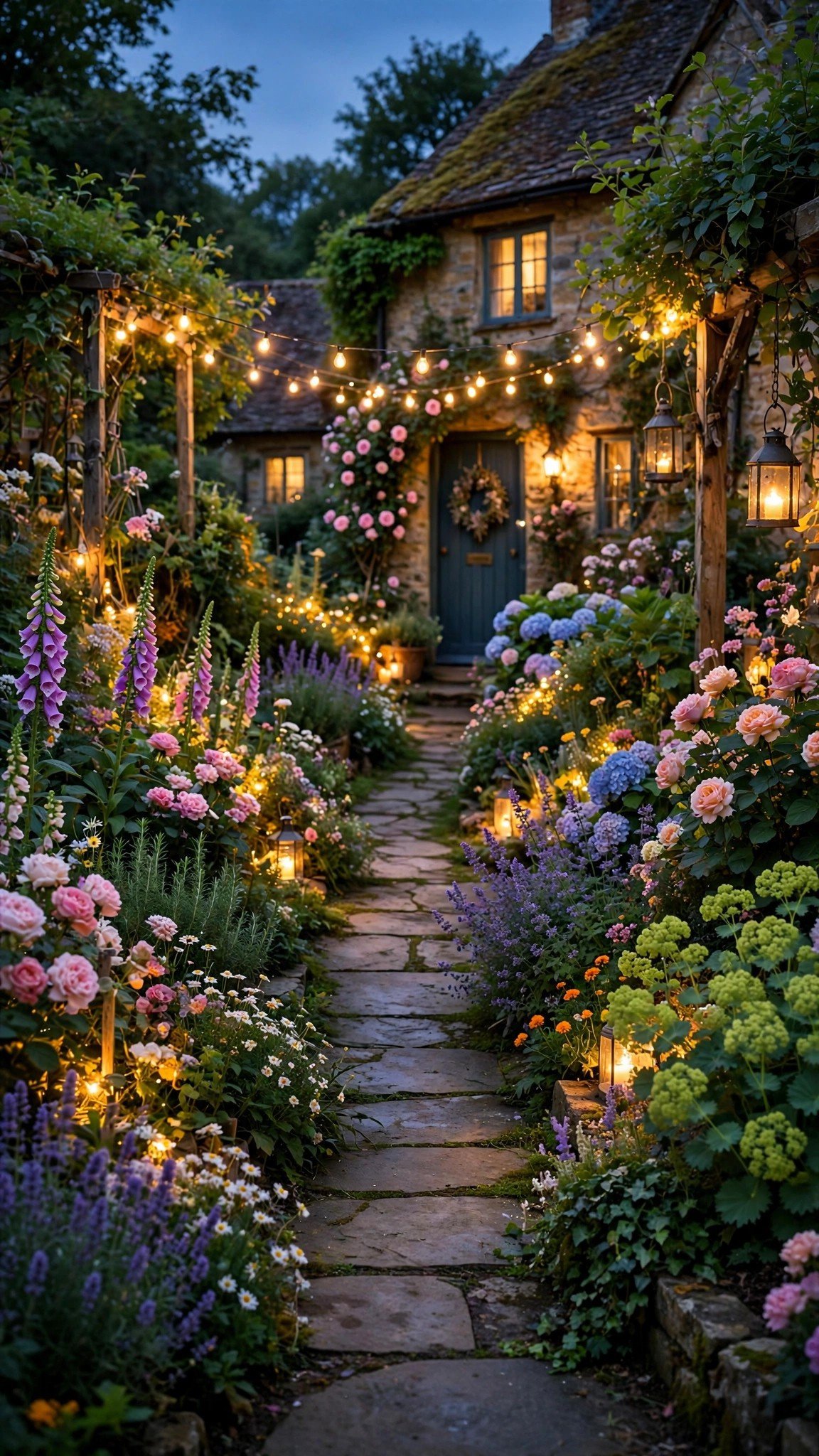
A flower-lined walkway can turn an ordinary garden path into one of the most charming features of your outdoor space. Imagine lavender and catmint growing along the edges, small roses adding height, and warm lights illuminating the flowers as evening approaches. The combination creates a welcoming entrance without requiring an elaborate landscape design.
For a balanced look, plant low-growing flowers near the path and place taller plants slightly farther back. Lavender, catmint, and hardy geraniums work well in sunny locations because they add color and attract pollinators. Leave enough room for comfortable walking, and use brick, gravel, or natural stone to define the route. Solar lights can highlight the edges without requiring complicated wiring.
Styling tip: Choose warm-white lighting rather than bright white bulbs. It creates a softer atmosphere and makes the flowers look beautiful after sunset. Trim plants regularly so they don’t spread across the walking surface.
2. A Curved Flower Island Under a Big Shade Tree
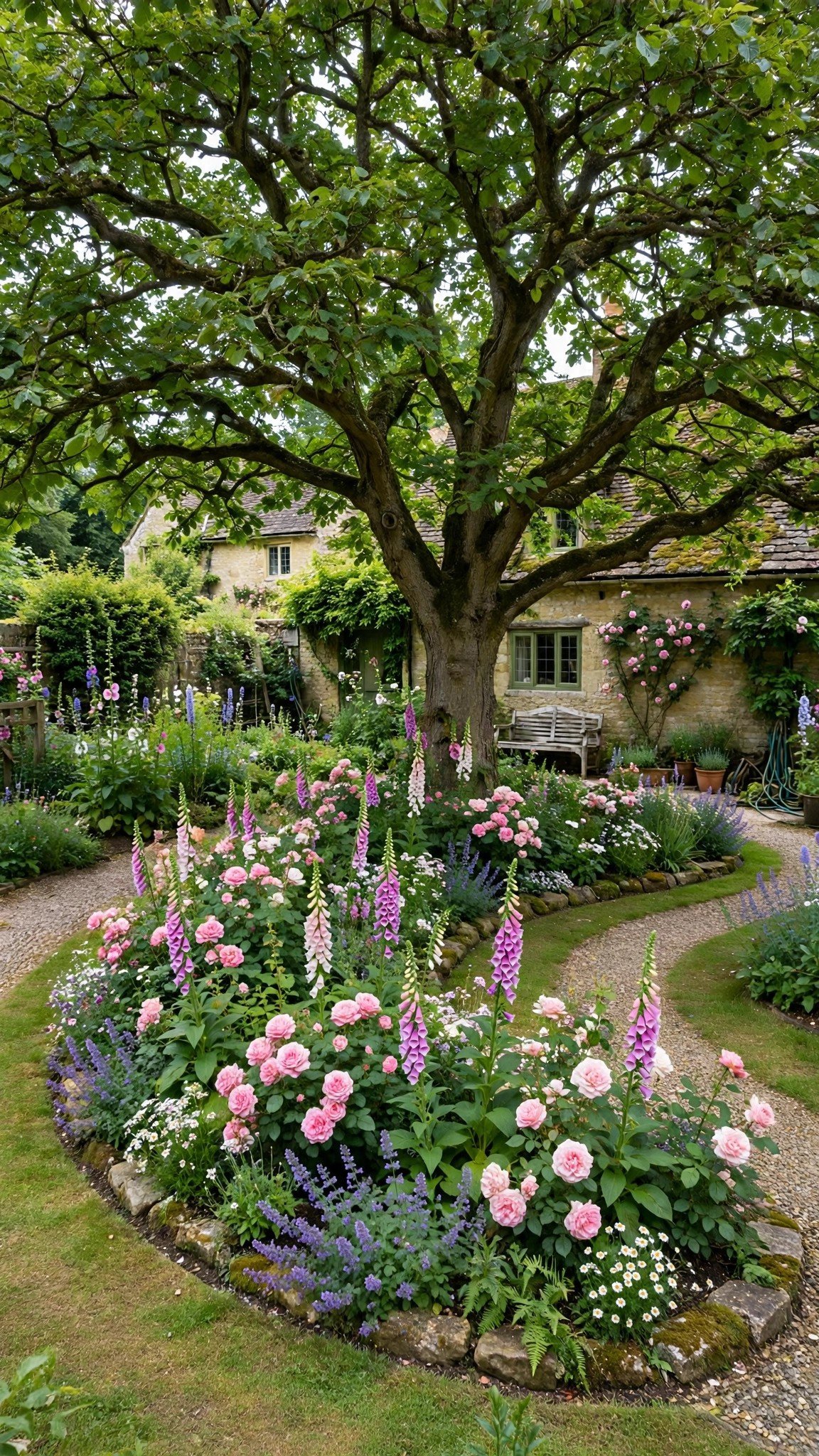
The space beneath a mature tree doesn’t have to remain an empty patch of grass. You can turn it into a beautiful English cottage garden feature by creating a curved flower bed filled with plants that enjoy partial or dappled shade. The natural tree canopy provides height, while different layers of foliage make the ground look fuller.
Hostas, ferns, and shade-tolerant hardy geraniums are useful choices for this type of planting. Foxgloves can add vertical interest, although they are toxic if eaten and should be placed carefully around children and pets. Before planting, check how much sunlight reaches the area and whether the soil stays moist or becomes dry beneath the tree.
Avoid digging deeply around established roots or piling soil against the trunk. Instead, use small planting pockets between roots and apply a light layer of organic mulch. This protects the soil while helping the new plants settle in.
Design tip: Combine different leaf shapes and shades of green instead of relying entirely on flowers. This keeps the bed attractive even when fewer plants are blooming.
3. Turn a Small Patio Into a Cottage Garden With Pots and Raised Beds
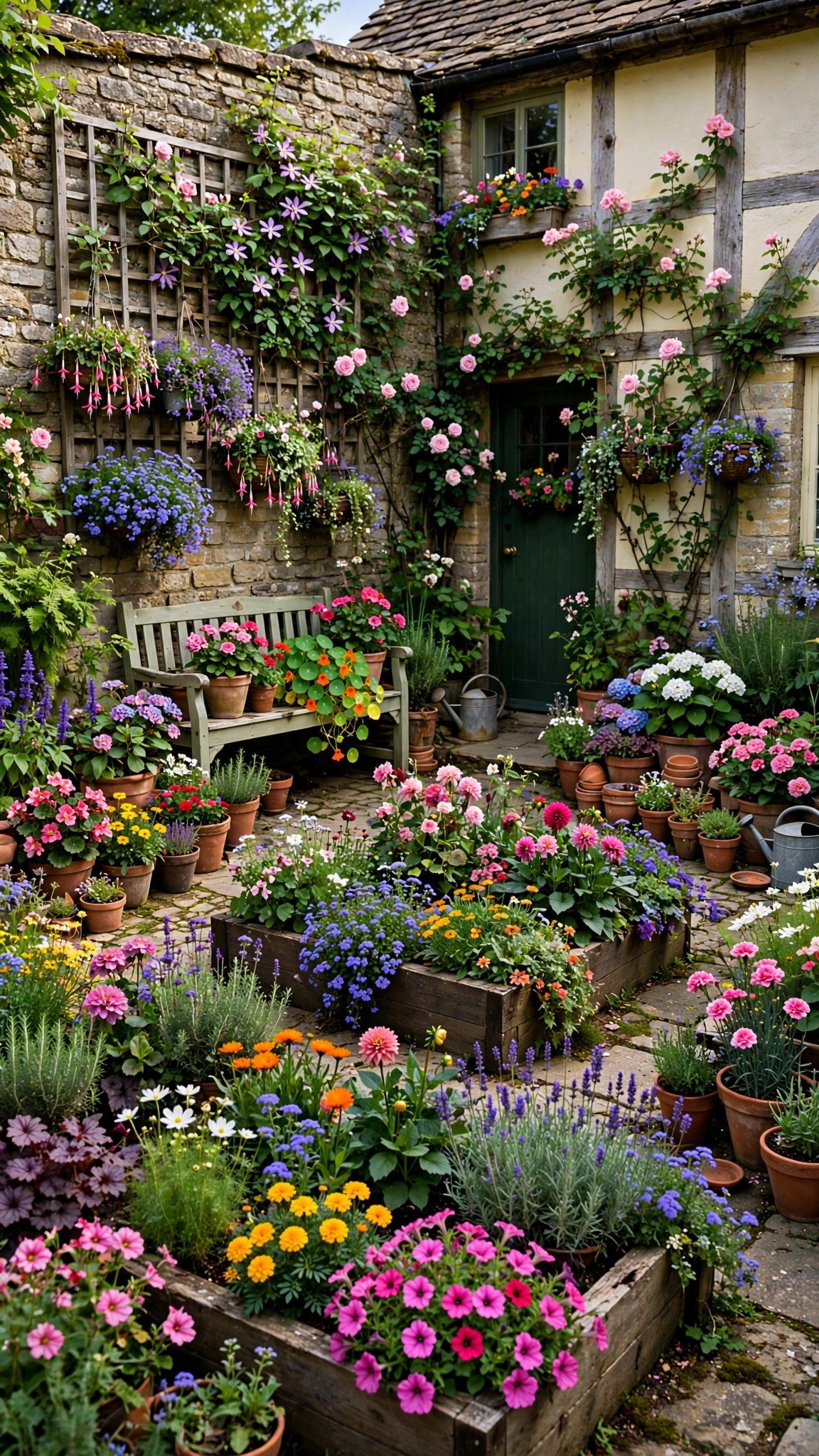
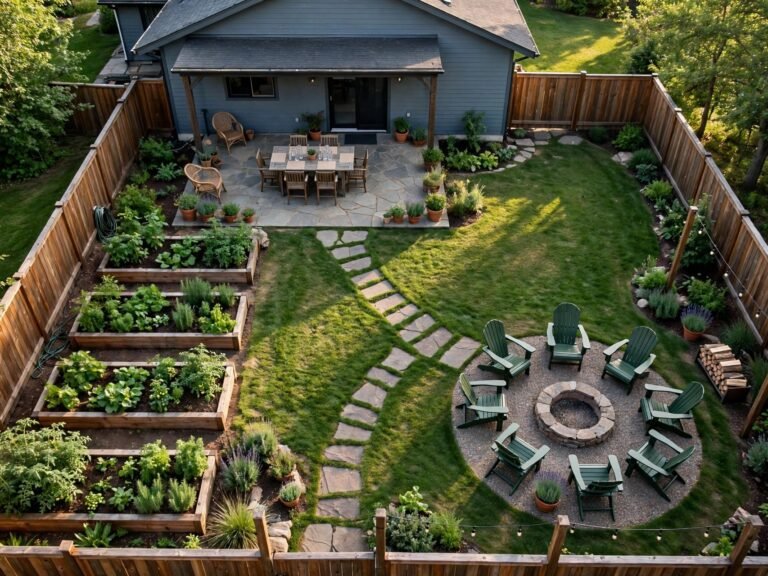
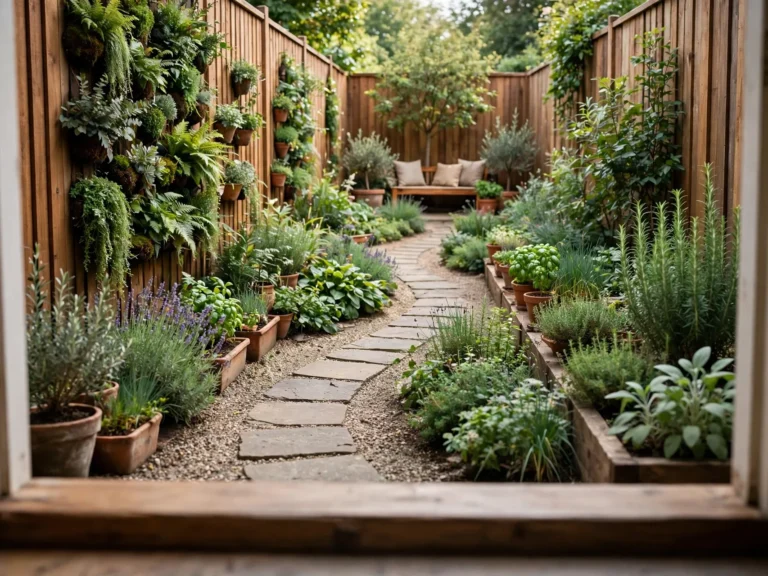
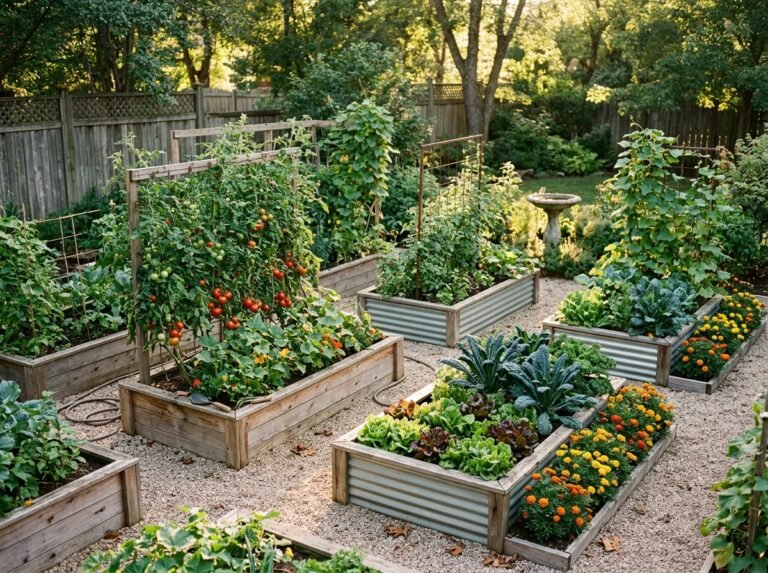
A small patio can become a beautiful English cottage garden even when you don’t have space for traditional flower beds. Terracotta containers, wooden planters, and compact raised beds allow you to grow flowers, herbs, and even a few vegetables close to your home.
Start by arranging larger pots near the walls or corners and keep the middle area open for chairs and comfortable movement. Plant compact roses or geraniums in larger containers, grow herbs such as thyme and rosemary in smaller pots, and add trailing flowers to soften the edges. You can also combine edible plants with ornamental flowers for a relaxed, traditional cottage look.
Choose containers with drainage holes and use a suitable potting mix rather than ordinary garden soil. Larger pots generally hold moisture longer than smaller ones, but all containers need regular watering during hot weather. Raised beds are useful for growing several plants together and can make gardening easier without bending too much.
Small-space tip: Use plant stands or shelves to add height without taking up more floor space. A mixture of different container sizes will make the patio feel collected and natural rather than overly arranged.
4. Tulips Along a Classic White Farmhouse Porch

Tulips are an easy way to bring seasonal color to a farmhouse-style porch. Their bright blooms look especially attractive against white siding, natural wood, or a dark front door. Planting them in groups along the porch steps or in garden borders creates a cheerful spring display that feels right at home in a traditional cottage setting.
For the best results, plant tulip bulbs in autumn in well-drained soil. Grouping several bulbs together creates a fuller display than spacing individual bulbs far apart. You can also choose early-, mid-, and late-flowering varieties to extend the blooming period.
After the flowers fade, remove the spent flower heads but allow the leaves to turn yellow naturally. The foliage helps the bulbs store energy for the next growing season. In warmer climates, tulips may need special pre-chilled bulbs or may perform better as seasonal displays.
Styling tip: Mix pink, soft yellow, red, and white tulips for a traditional farmhouse look. Plant them in repeated groups rather than scattering different colors randomly.
5. A Mediterranean Corner With Lemon Trees and Bougainvillea
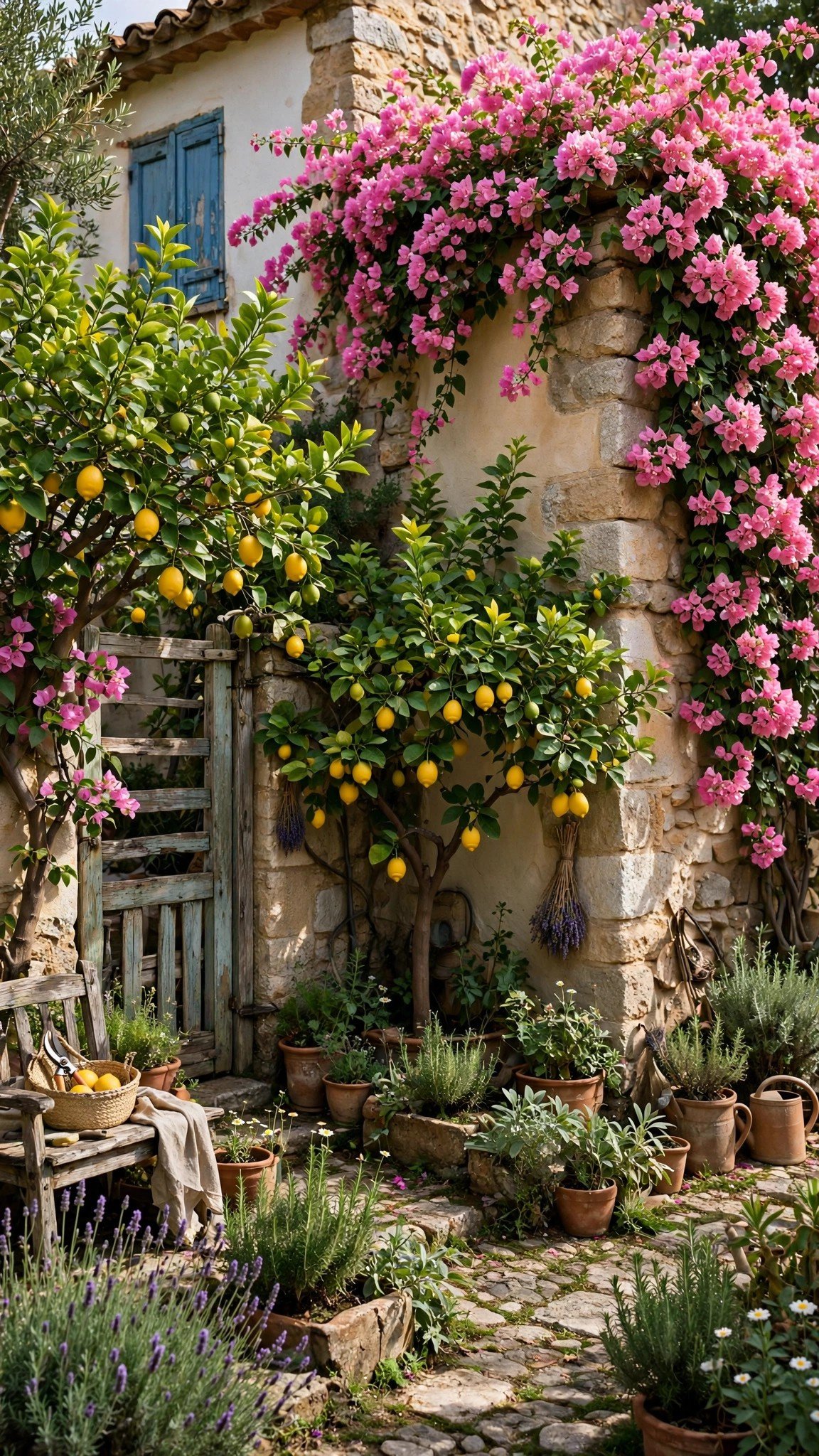
A Mediterranean corner brings sunshine into an English cottage garden. A lemon tree in a big pot, bougainvillea climbing a sunny wall, and lavender at the base create a warm, bright corner that smells of citrus and summer. The pink and orange flowers against a white or stone wall look like a holiday garden, and the lemons are a bonus you can actually use.
Lemon trees need full sun and a sheltered spot, so put this corner against the warmest wall you have, facing south if you can. In cold areas, keep the lemon in a pot so you can move it inside for winter. Bougainvillea also loves heat and sun, and it blooms best when the soil is a little dry — do not overwater it. Lavender ties the corner together and fills the gaps at the base. This is a mid-range idea, and it suits a sunny, sheltered corner best.
- What you need: a lemon tree in a large pot, bougainvillea plant, lavender plants, a sunny wall or trellis, well-draining potting mix.
6. A Modern Yard With an English Cottage Garden Twist
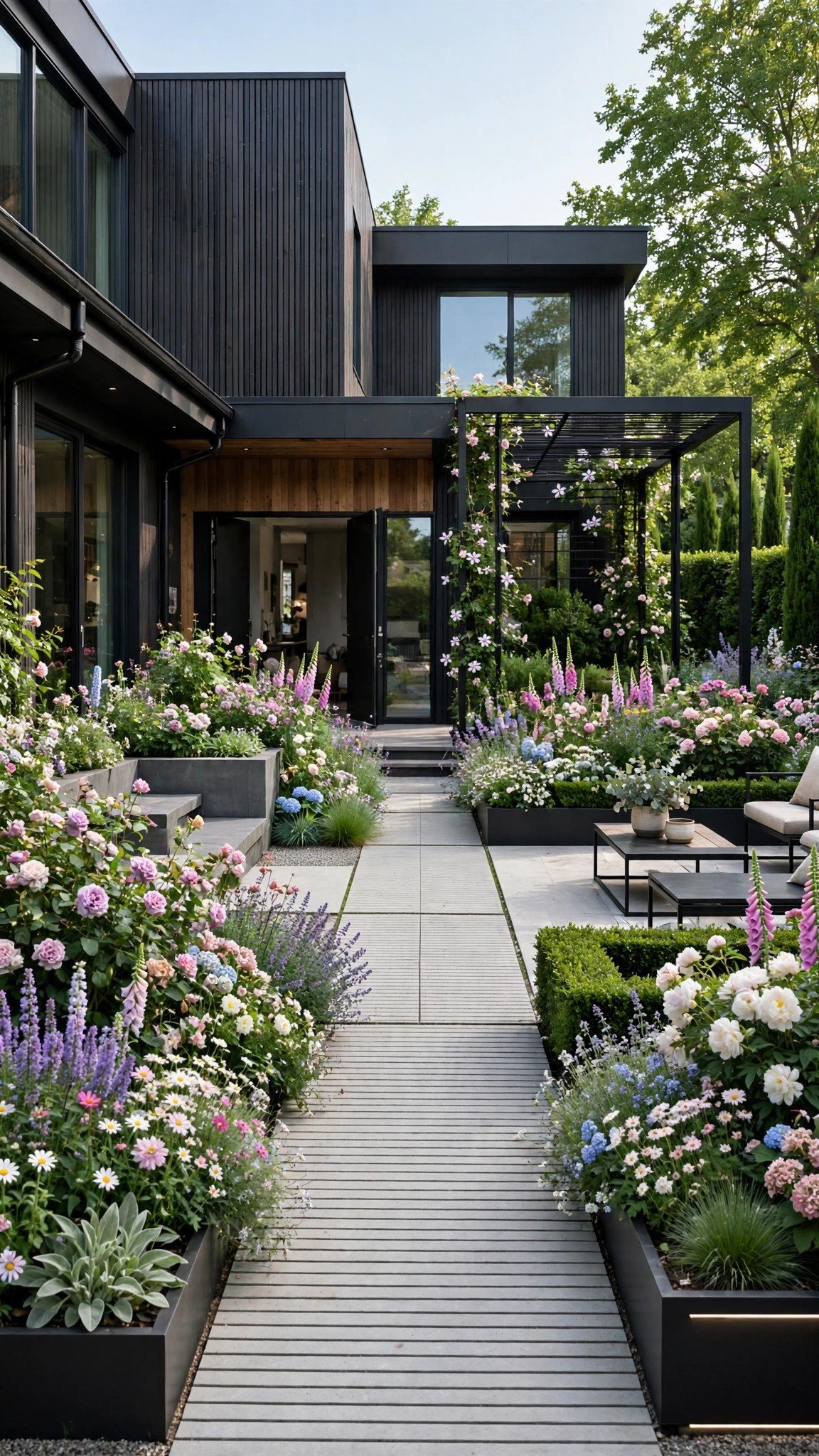
You don’t need an old farmhouse to enjoy the charm of an English cottage garden. A modern outdoor space can achieve the same relaxed atmosphere by combining simple landscaping with generous flower planting. Keep the main structure clean with a lawn, straight walkway, or simple fence, then soften the edges with colorful flower borders.
Roses, lavender, delphiniums, and hardy geraniums can add traditional cottage character. Instead of filling the entire yard with plants, create one or two generous borders along the fence or beside the walkway. This gives the garden a lush appearance while preserving enough open space for everyday use.
A limited color palette can also make the design feel more intentional. Pink and white flowers create a romantic combination, while purple and blue blooms offer a cooler, calmer look. Repeat a few plants throughout the borders to connect different parts of the yard.
Design tip: Use natural materials such as timber edging, brick, or stone to soften modern hard surfaces. The contrast between simple architecture and informal planting is what makes this style work.
7. String Lights Over a Flower-Lined Path to the Patio
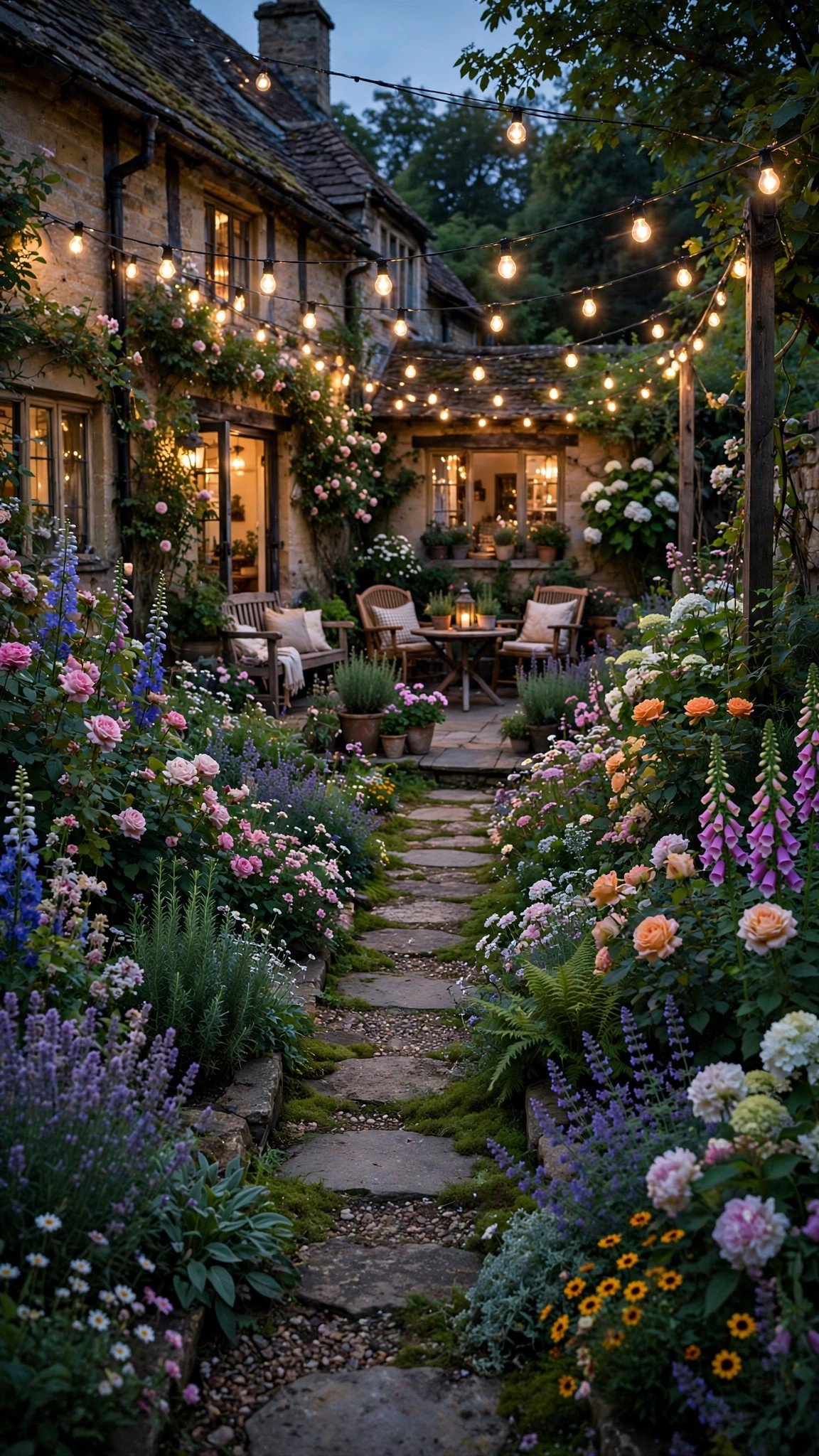
If you enjoy spending evenings outdoors, combine a flower-lined walkway with overhead string lights. This idea creates a cozy connection between your home, garden, and patio while making an ordinary path feel more inviting after sunset.
Start by choosing a clear route to your seating area. Plant compact flowers such as alyssum, hardy geraniums, or suitable low-growing annuals along the edges. Add a few larger pots near the patio entrance to create a natural transition between the walkway and the seating space.
For the lighting, use outdoor-rated festoon lights attached to suitable posts or approved mounting points. Keep the cables secure and high enough to avoid people walking into them. Make sure the lights are rated for outdoor use and installed according to the manufacturer’s instructions.
Evening garden tip: Add a small bench or two garden chairs near the end of the walkway. This creates a comfortable stopping point where you can enjoy the flowers and lighting without needing a large outdoor entertainment area.
8. A Blooming Cherry Tree Ringed With Spring Bulbs

A flowering cherry tree can become the centerpiece of an English cottage garden. Its spring blossoms provide height and seasonal beauty, while smaller bulbs planted nearby add another layer of color. When the tree flowers, the combination of pink or white blossoms with spring bulbs creates a beautiful display.
Daffodils, crocuses, and suitable tulip varieties can be planted beneath the tree, depending on the amount of sunlight and the growing conditions. Many spring bulbs bloom before the tree develops its full canopy, allowing them to receive more light during their growing season.
Choose a planting area away from the immediate trunk and avoid disturbing major roots. Small planting pockets are usually better than digging a continuous trench around an established tree. Use bulbs that suit your local climate and soil conditions, and allow their foliage to die back naturally after flowering.
Planting tip: Combine early- and late-flowering bulbs to extend the spring display. Daffodils can also provide reliable seasonal color in suitable growing conditions, often returning year after year.
9. A Tiny Green Cottage Tucked Into the Trees
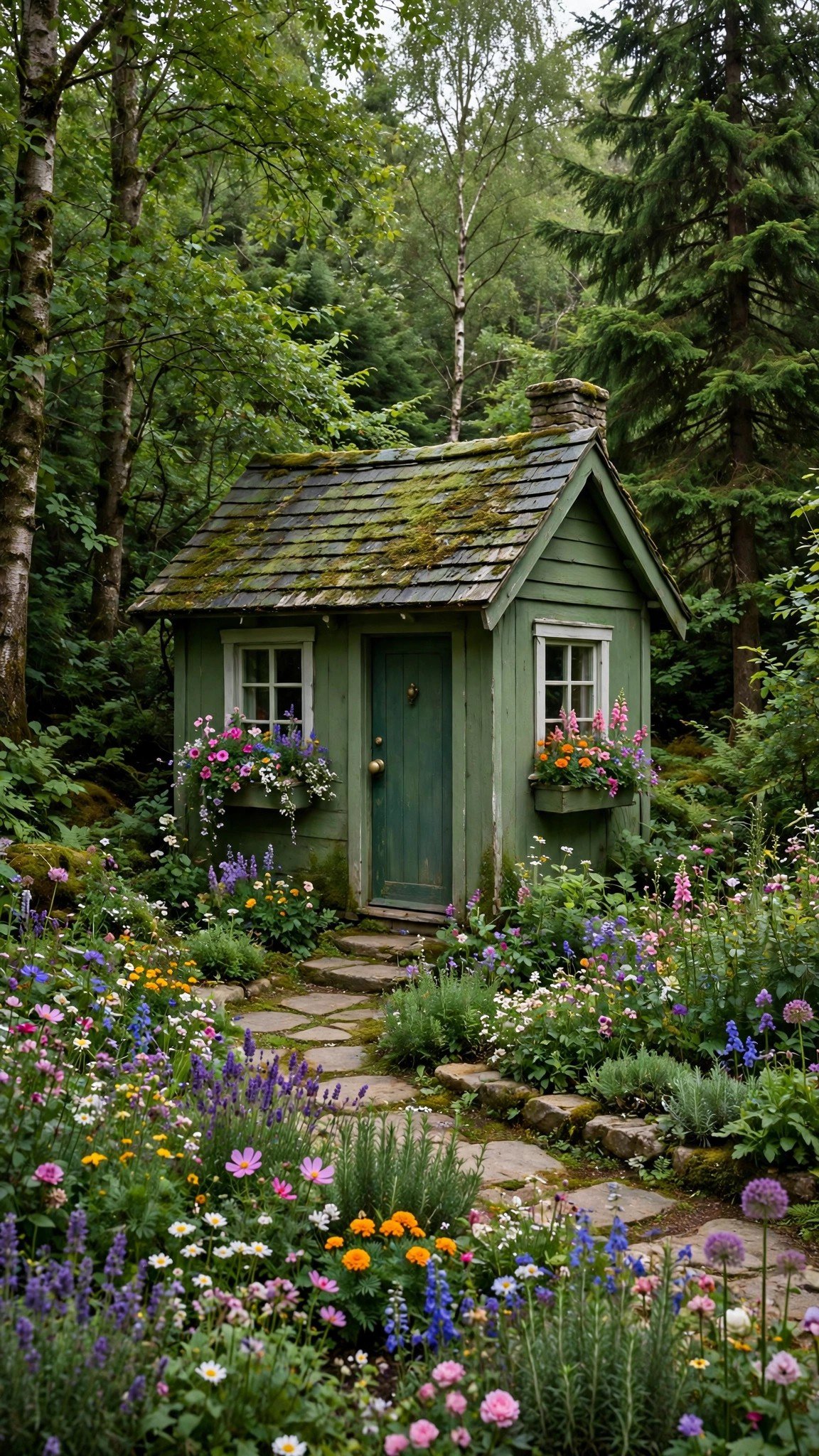
A garden shed doesn’t have to look like a separate storage building. With a little creativity, you can turn it into a charming focal point that blends naturally with the surrounding greenery. A sage-green exterior, climbing flowers, and simple window boxes can give even a basic garden structure a cottage-inspired appearance.
Start by painting the shed in a soft green shade that complements the plants around it. Add a trellis near the entrance for climbing roses or clematis, making sure the structure can support the mature plant. Place containers beside the door and use window boxes to introduce extra color at eye level.
Think about sunlight before choosing climbing plants. Roses generally need several hours of direct sunlight to flower well, while some clematis varieties tolerate different light conditions. Keep the area around the shed entrance clear so that plants don’t block doors or windows.
Budget-friendly tip: If you already have an old shed, focus on repainting it, adding a few containers, and improving the entrance. These smaller changes can create the cottage look without the cost of building a new garden structure.
10. Hollyhocks and a Picket Gate at a Sage Green Cottage
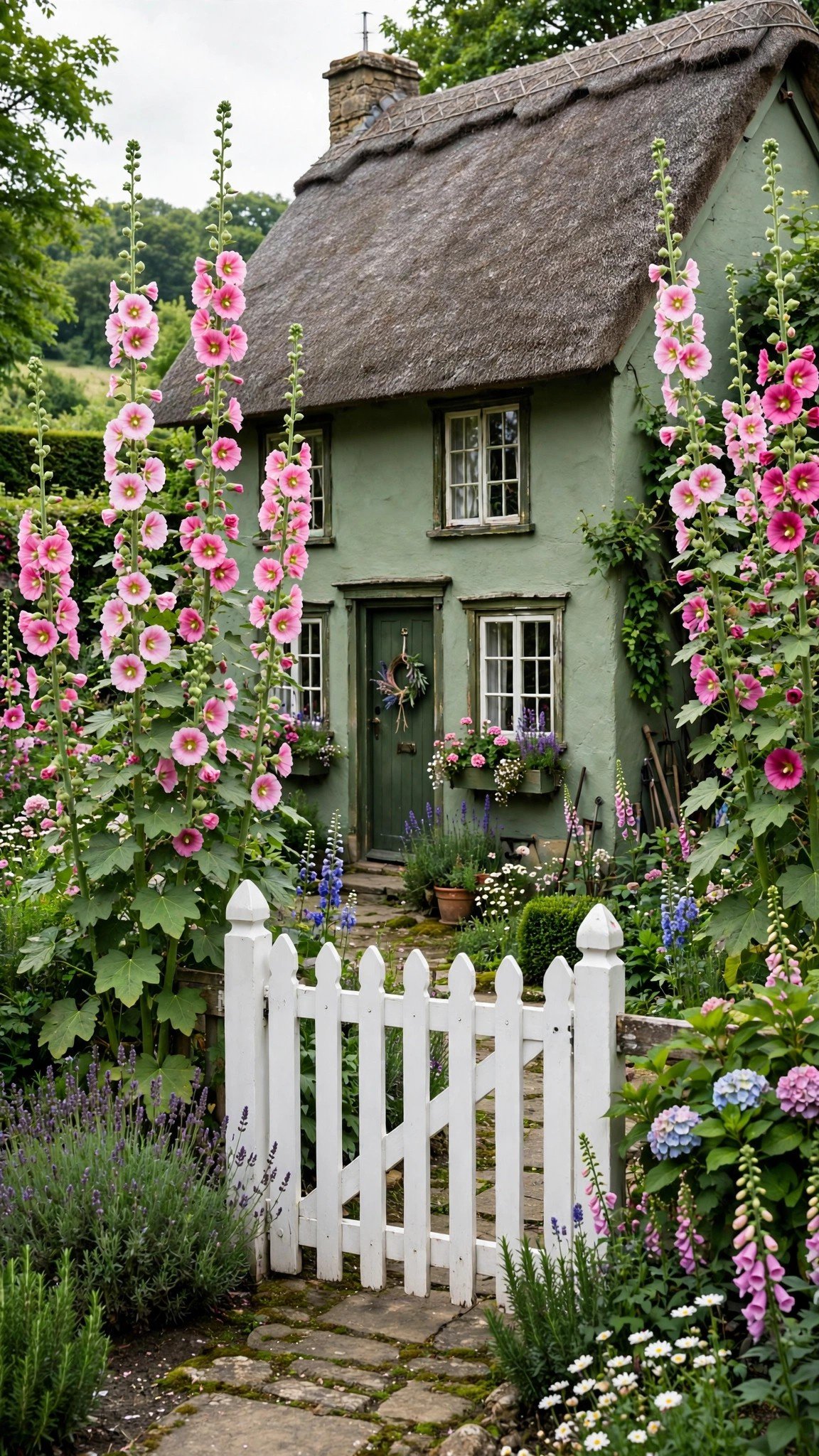
Tall hollyhocks growing beside a traditional picket gate create one of the most recognizable English cottage garden scenes. Their upright flower spikes bring height and color, while a simple gate provides a welcoming entrance to the garden.
Plant hollyhocks along the fence or behind shorter flowers so their blooms remain visible. They are generally biennial or short-lived perennial plants, depending on the variety. Some flower in their first year, while others produce leaves before flowering in the following season. Allowing suitable plants to self-seed can help maintain the display over time.
Choose a sunny location with reasonably fertile, well-drained soil. Give the plants enough room for airflow, as crowded hollyhocks can be more susceptible to rust and other foliage problems. A low picket fence painted white or a natural timber gate can complete the look without overwhelming the flowers.
Styling tip: Combine pink, burgundy, and pale cream hollyhocks for a traditional cottage palette. Add low-growing flowers along the entrance path to create a softer transition.
11. A Stone Cottage Patio for Lounging
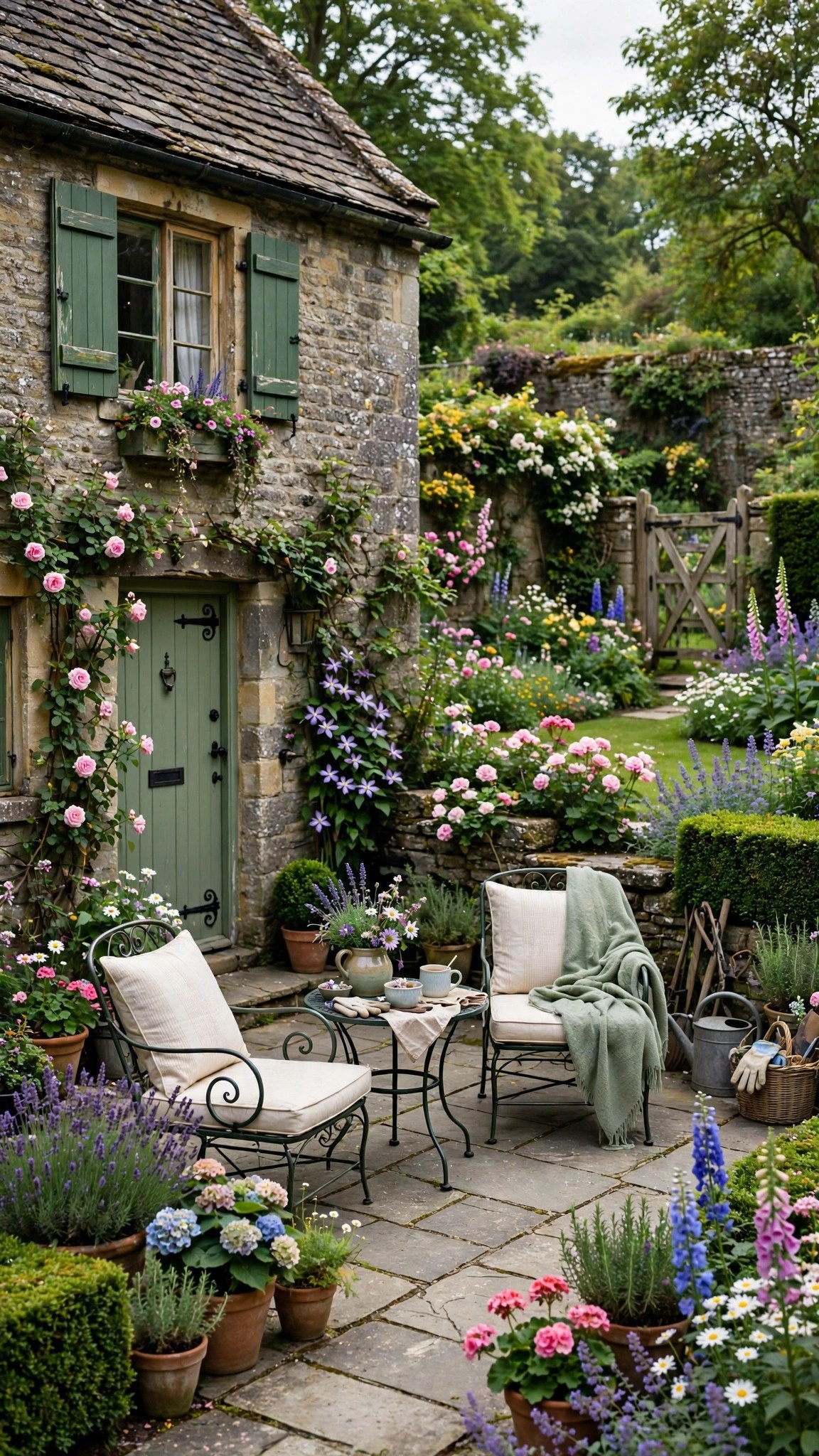
A stone patio surrounded by flowers provides a peaceful place to enjoy your garden. Unlike a large paved entertainment area, a small seating corner can feel intimate and naturally connected to the surrounding plants. Natural stone, wooden furniture, and colorful containers work particularly well together.
Choose a level area with good drainage and enough room for comfortable seating. Reclaimed stone or natural paving slabs can add an aged appearance, while gravel joints can soften the overall design. Creeping thyme may be suitable for planting between paving stones in sunny, well-drained areas, provided the gaps are appropriate for its growth.
Add a small outdoor table, comfortable chairs, and a few pots of lavender or seasonal flowers. If the patio receives strong afternoon sun, consider placing it near a tree or adding a light pergola for shade.
Decorating tip: A birdbath, simple water feature, or vintage-style planter can give the patio extra character. Keep accessories limited so the flowers and natural materials remain the main focus.
12. A Backyard Built for Grilling, Fire, and Flowers
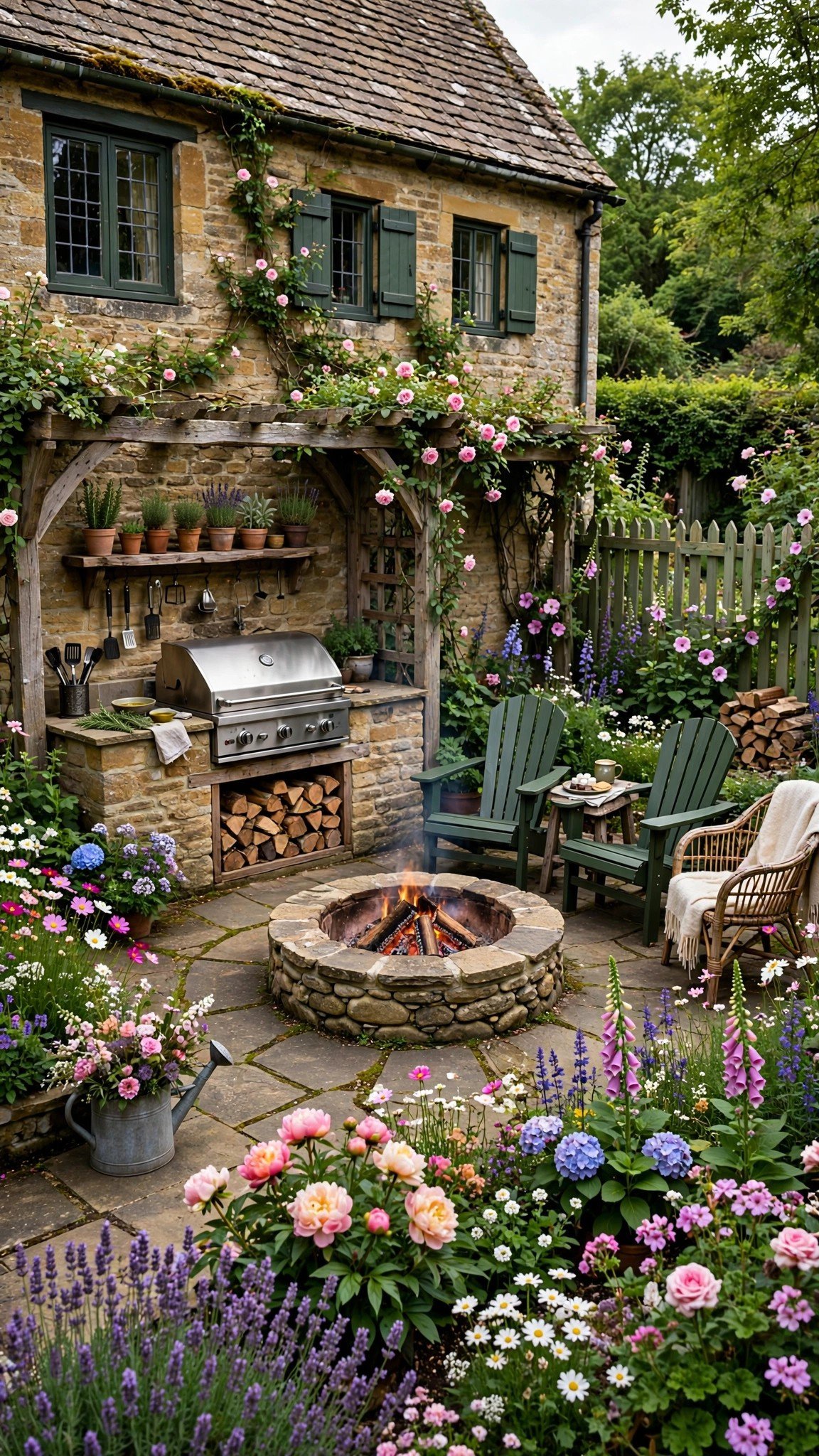
An outdoor cooking area can still feel warm and welcoming when surrounded by cottage-style planting. Instead of treating the grill as a separate feature, connect it visually with the rest of the garden through stone surfaces, comfortable seating, and carefully placed flower beds.
Begin by deciding where the cooking and seating areas should go. Keep grills and fire pits on suitable non-combustible surfaces, with the clearances required by their manufacturers and local fire regulations. Avoid placing dry flowers, overhanging branches, or combustible materials close to heat sources.
Once the practical layout is established, use flower beds to soften the edges of the outdoor space. Lavender, hardy geraniums, and daisies can add color in suitable sunny locations. Choose plants that are easy to maintain and won’t spread into the cooking area.
Outdoor living tip: Use matching natural stone or brick around the patio to connect the grill area with the rest of the cottage garden. Comfortable seating and subtle outdoor lighting will make the space more useful for evening gatherings.
13. A Tree Swing and Tulips at a Sweet White Cottage

A wooden tree swing brings a nostalgic touch to a cottage garden, especially when spring flowers grow nearby. It can create a lovely place for children to play or for adults to sit and enjoy the surroundings. Combined with a flowering tree and a few colorful flower beds, the swing becomes a charming garden feature.
Before installing one, have the tree and proposed attachment point assessed for suitability. A branch that looks thick may still be weak, damaged, or poorly positioned for a swing. Use hardware designed for the intended load and follow professional installation guidance. Check the equipment regularly for wear and damage.
For the planting around the swing, choose spring bulbs such as daffodils or suitable tulips. Keep the landing and swinging area free from hard objects, raised edging, and sharp garden ornaments. This is especially important if children will use the swing.
Design tip: Add a small seating area nearby so adults can relax while keeping the swing within view. Keep the flower beds outside the main movement area to protect both the plants and the people using the swing.
14. A Picket Fence Cottage With a Brick Path
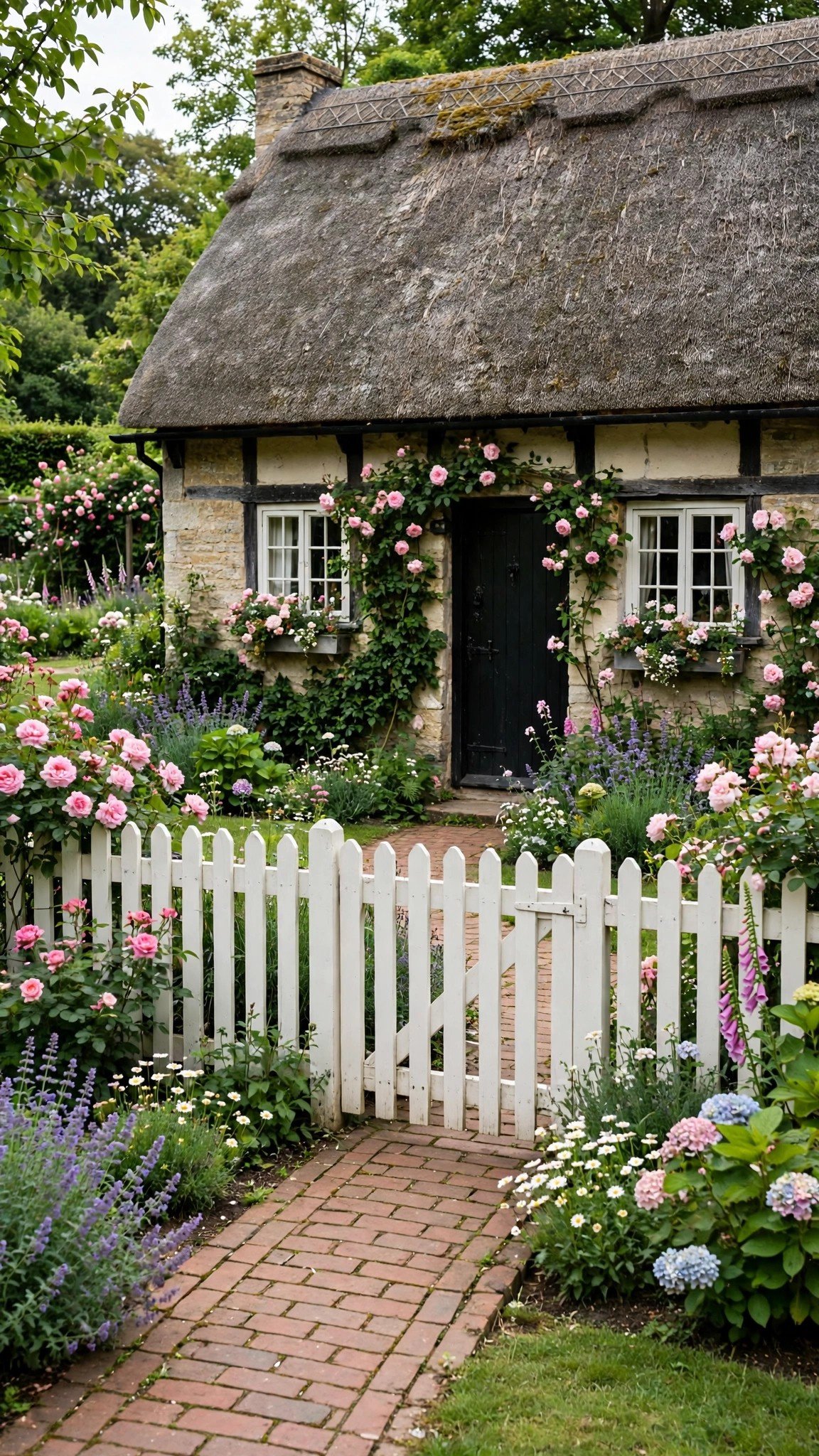
A white picket fence and winding brick path can give almost any front garden a traditional English cottage feel. The fence defines the garden boundary, while the path creates a welcoming route to the entrance. Colorful flower borders on both sides soften the hard edges and make the space feel established.
When planning the path, consider how people will use it before deciding on its shape. A gentle curve can look charming in a larger front garden, but a more direct route may be practical for a narrow entrance. Choose a stable paving base and make sure rainwater can drain away rather than collecting on the surface.
Plant taller flowers toward the back of the borders and shorter varieties near the path. Roses, lavender, hardy geraniums, and other suitable cottage flowers can provide different heights and flowering periods. If you want greenery between paving stones, choose low-growing plants that can tolerate the available foot traffic.
Landscaping tip: Repeat the same flower varieties along both sides of the path to create a connected appearance. You can still mix colors and textures without making the entrance feel cluttered.
15. Porch Swings and Stone Paths at a Green Craftsman Cottage

A Craftsman-style home can look beautiful with an English cottage garden when natural materials and relaxed planting are used together. A wooden porch swing, stone stepping paths, and generous flower borders create a welcoming transition between the house and the garden.
Start by choosing a comfortable place for the porch swing. Make sure the porch structure and mounting hardware are suitable for the intended load, and allow enough clearance for safe movement. In the garden, use natural stepping stones to connect the porch with different areas of the yard.
Peonies, roses, and lavender can add traditional cottage character where the growing conditions suit them. Peonies are especially useful for adding seasonal color and substantial flowers in late spring or early summer, depending on the variety and climate. Combine them with lower-growing plants to fill gaps without hiding the stepping stones.
Styling tip: Keep the porch furniture simple and use natural wood, soft cushions, and a few flowering containers. This allows the home’s architecture and garden planting to work together rather than compete.
16. A Tiny Tucked-Away Cottage With Window Boxes
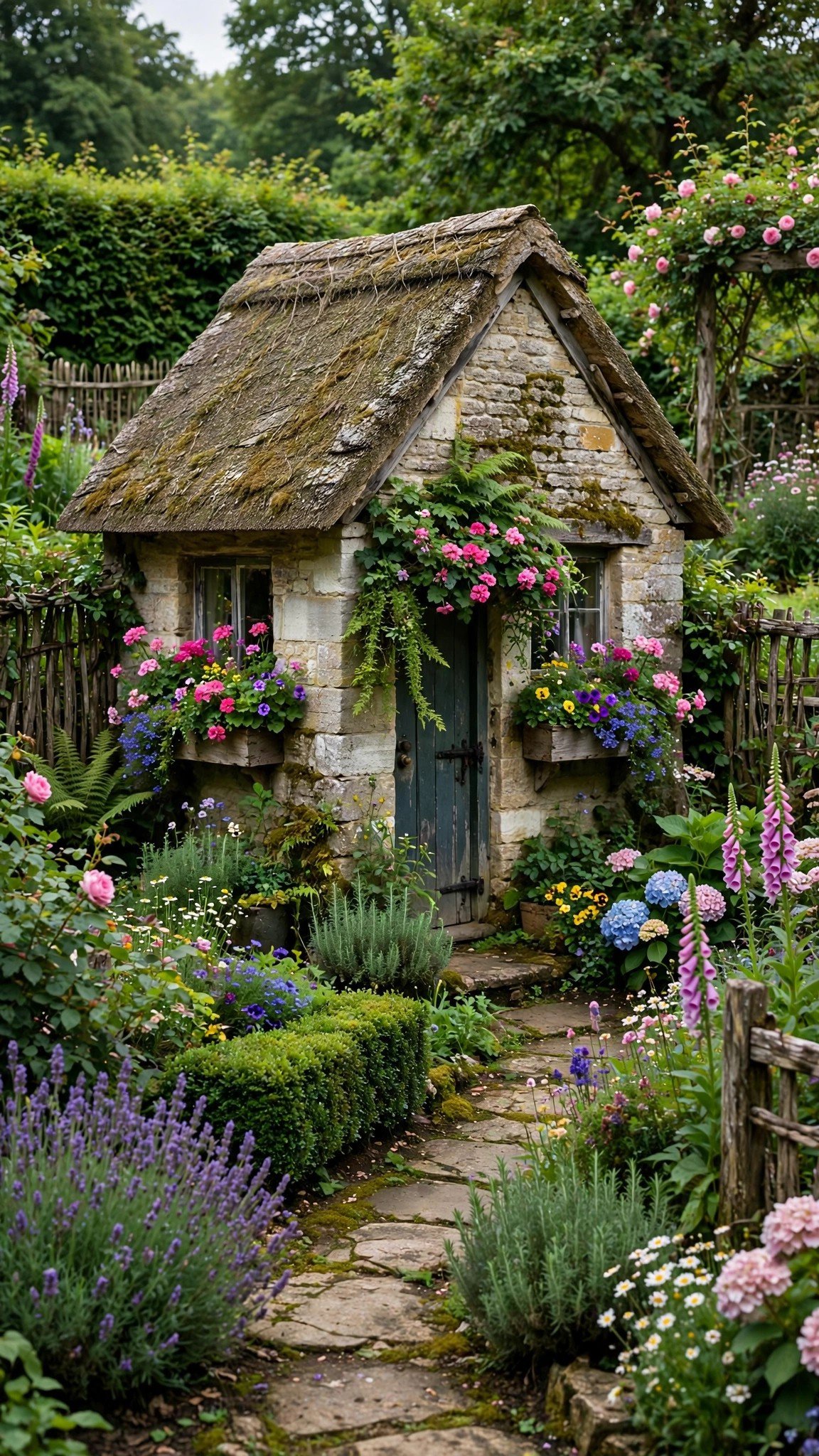
You don’t need a large garden to enjoy the beauty of English cottage garden design. Window boxes can bring flowers to small homes, narrow yards, balconies, and properties where planting directly in the ground isn’t possible.
Choose window boxes that are appropriately sized for the window and securely attached using suitable brackets. Make sure they have drainage holes so excess water can escape. A combination of upright and trailing plants creates a fuller appearance, with geraniums or compact flowering plants in the middle and trailing lobelia or suitable petunias near the edges.
Consider the direction your windows face before choosing plants. Sunny windows can support many flowering annuals, while shaded locations need plants that tolerate lower light levels. Window boxes also dry out faster than garden beds, so check soil moisture regularly, particularly during warm weather.
Small-garden tip: Repeat the same window-box colors on the porch or entrance steps. This simple detail connects the flowers around the house and creates a coordinated cottage appearance.
Which English Cottage Garden Idea Is Best for Your Yard?
The best English cottage garden design depends on how much space you have, the amount of sunlight your garden receives, and how much maintenance you can manage. You don’t need to copy an entire garden from a photograph. Choosing one or two suitable features is often enough to create the atmosphere you want.
Here are some ways to narrow down your options:
- For a small yard: Start with window boxes, terracotta pots, raised planters, or a compact flower-lined path. These features add color without taking up too much space.
- For a shady yard: Consider hostas, ferns, and shade-tolerant hardy geraniums. Check the moisture levels and light conditions before selecting plants.
- For a sunny garden: Roses, lavender, and many flowering perennials can create beautiful borders where the soil and climate suit them.
- For a rental property: Use movable containers, portable planters, and window boxes that can be removed when necessary.
- For a traditional cottage entrance: Combine a picket gate, climbing plants, and a brick or gravel path.
- For outdoor entertaining: Create a stone patio with comfortable seating, flowers around the edges, and suitable outdoor lighting.
- For a lower-maintenance garden: Use established perennial plants, group plants with similar watering needs, and mulch exposed soil to reduce weeds and moisture loss.
Before purchasing plants, consider your local growing zone, soil type, rainfall, and seasonal temperatures. A plant that thrives in a cool English garden may need extra protection or a different location in a hotter climate.
FAQS
What is an English cottage garden?
An English cottage garden is an informal garden full of flowers, herbs, and vegetables planted close together around a cottage. It looks lush, romantic, and a little wild, with roses, hollyhocks, lavender, and brick paths, and no straight lines or empty lawns.
What plants grow best in an English cottage garden?
Roses, hollyhocks, foxgloves, lavender, delphiniums, peonies, and geraniums grow best in an English cottage garden. They are classic cottage plants that bloom for months, come back every year, and fill a garden with color and scent.
How do I start an English cottage garden?
Start with the bones — a path, a fence, or a patio — then plant in layers with tall flowers at the back and low ones at the front. Pick a simple color palette, mulch well, and plant close together so the garden looks full and lush.
Can I make a cottage garden in a small yard?
Yes, a small yard can hold a beautiful cottage garden. Use a patio full of potted flowers, raised beds, window boxes, and a flower-lined path. Choose compact plants and let them spill over edges so a small space looks full.
How do you keep a cottage garden from looking messy?
Plant in layers with tall plants at the back and short ones at the front, and keep a clear color palette of two or three colors. Mulch the beds, edge the paths, and cut back dead flowers so the garden looks lush but cared for.
What is the easiest cottage garden flower to grow?
Geraniums and marigolds are the easiest cottage garden flowers to grow. They bloom for months, need little care, and grow well in pots or beds. Lavender is also easy once it is settled, and it comes back every year.
When should I plant a cottage garden?
Plant most cottage garden flowers in spring after the last frost, so they have a full summer to grow. Plant spring bulbs like tulips and daffodils in fall, and plant trees and shrubs in fall or early spring when the soil is cool and moist.
Conclusion
An English cottage garden does not need a big yard or a perfect plan. It needs a path, a few classic flowers, and the courage to plant close and let things grow. Start with one idea — a brick path, a picket fence, or a patio full of pots — and let the garden grow around it.
The best cottage garden is the one that feels like yours. When the roses climb the gate, the lavender hums with bees, and the path glows at dusk, the yard becomes a place you love to be. Pick three ideas from this list, start this spring, and let your yard slowly turn into the storybook garden you have been picturing.